
POPULARITY
Categories

231 episodes with unauthorized

99 episodes with unauthorized

157 episodes with unauthorized

37 episodes with unauthorized

105 episodes with unauthorized

73 episodes with unauthorized

67 episodes with unauthorized

64 episodes with unauthorized

42 episodes with unauthorized

29 episodes with unauthorized

37 episodes with unauthorized

60 episodes with unauthorized

30 episodes with unauthorized

49 episodes with unauthorized

22 episodes with unauthorized

51 episodes with unauthorized

17 episodes with unauthorized

299 episodes with unauthorized

10 episodes with unauthorized

28 episodes with unauthorized

15 episodes with unauthorized

20 episodes with unauthorized

10 episodes with unauthorized

14 episodes with unauthorized

4 episodes with unauthorized

10 episodes with unauthorized

8 episodes with unauthorized

5 episodes with unauthorized

12 episodes with unauthorized

25 episodes with unauthorized

128 episodes with unauthorized

4 episodes with unauthorized

2 episodes with unauthorized

6 episodes with unauthorized

4 episodes with unauthorized

2 episodes with unauthorized

9 episodes with unauthorized

4 episodes with unauthorized

3 episodes with unauthorized

3 episodes with unauthorized

4 episodes with unauthorized

4 episodes with unauthorized

4 episodes with unauthorized

6 episodes with unauthorized

4 episodes with unauthorized

3 episodes with unauthorized

4 episodes with unauthorized

4 episodes with unauthorized

2 episodes with unauthorized

4 episodes with unauthorized

66 episodes with unauthorized

3 episodes with unauthorized

2 episodes with unauthorized

2 episodes with unauthorized
ABOUT THE SHOW Sunday Night Lights is a serialized audio fictional narrative following Jimmy August, the son of a megachurch legend, as he competes on a reality TV show for the right to lead America's most prominent megachurch. Along the way, he faces the ghost of his father, ridiculous competition challenges, and maybe even the prospect of love. Think audiobook meets book club. READ THE STORY / SUPPORT Read or listen on Substack Get episodes Ad-free AND early here CREDITS Created, written, and narrated by Knox McCoy Voice Performances by: Knox and Ashley McCoy Produced by: Padfoot Productions CONNECT Newsletter + updates: Binge Thinking Email: rkmccoy@gmail.com Instagram: @knoxmccoy HOW TO HELP If you're enjoying the show, tap "Follow," leave a quick rating/review, and share the episode on social media. LEGAL © 2025 Padfoot Productions. All rights reserved. Unauthorized reproduction or redistribution is a no-no.
Supply chains are facing pressure from every direction, from inflation and shifting consumer behavior to climate-driven disruption and rapidly evolving AI capabilities. For leaders, the challenge isn't simply keeping up. It's figuring out where to focus, how to make faster and better decisions, and how to turn emerging technology into measurable business value.In this episode of The Buzz, powered by MFG.inc, Scott Luton and special guest co-host Tanzil Uddin with Manifest are joined by Dheera Anand, Partner at Bain & Company, to unpack some of the biggest forces shaping supply chain today. They explore the latest challenges at the Panama Canal, changing consumer behavior, and lessons in regional resilience from APAC before diving deep into AI and supply chain transformation.Dheera shares practical examples of how organizations are moving beyond AI experimentation and “pilot fatigue” to create real operational value. The conversation also explores high-frequency decision-making, the importance of choosing the right AI applications, and how AI could reshape integrated business planning through faster scenario planning, continuous monitoring, and an “always-on” approach to IBP. Key TakeawaysPredictability and visibility are critical to resilience. Disruptions such as those affecting the Panama Canal demonstrate why companies need to understand their exposure throughout the supply network, not just at tier one.Consumers are still spending, but they're becoming more value-conscious. Retailers need greater precision around inventory, working capital, automation, and productivity as economic pressures continue.AI's greatest value may be in high-frequency decisions. Thousands of small operational decisions can create significant value leakage when humans simply don't have the capacity to address them all in real time.Moving beyond AI pilot fatigue requires better use-case selection. Leaders should consider data availability, decision frequency, variability, and the consequences of error when determining where AI can deliver scalable value.World-class IBP is a decision process—not a reporting process. Effective IBP should drive decisions, trade-offs, scenario planning, and preparation for what happens when the plan changes.AI could make IBP increasingly “always on.” Faster scenario modeling, automated assumption monitoring, and early-warning signals could move organizations beyond the traditional monthly planning cadence.Not all complexity creates value. Organizations need greater visibility and governance to distinguish complexity that customers value from complexity that adds cost without meaningful return. Supply chain leaders don't need more technology experiments; they need practical ways to turn technology, data, and planning into better decisions. Tune in to hear Scott, Tanzil, and Dheera explore how leaders can move beyond AI pilots, strengthen resilience, rethink IBP, and build supply chains that are better equipped to compete in an increasingly complex environment. Additional Links & Resources:MFG.inc: https://mfg.inc/With That Said: https://bit.ly/WTS-12-Sep-2026Manifest 2027: https://manifestvegas.partners/partners/SupplyChainNowSupply Chain & Logistics Summit: https://bit.ly/SupplyChainAndLogisticsSummit-2026The Panama Canal's New Boss Inherits a Drought and a Bidding War for Transit Slots: https://on.wsj.com/4xW4xYbInflation persisted in August, potentially locking in a Fed interest rate hike: https://bit.ly/4gSLJD83 lessons from Asia-Pacific on regional cooperation in a fragmented world: https://bit.ly/Learning-from-APACThe Buzz APAC Edition for September 9th: https://bit.ly/The-Buzz-APAC-EditionMFG.inc Leadership Training: https://mfg.inc/trainingSupply Chain Now Resource Hub: https://supplychainnow.com/resource-hub/Bain: https://www.bain.com/Dheera on LinkedIn: https://www.linkedin.com/in/dheeraanand/Tanzil on LinkedIn: https://www.linkedin.com/in/tanziluddin/Upcoming Live Programming: https://supplychainnow.com/upcoming-live-programming/Supply Chain Now Resource Hub: https://supplychainnow.com/resource-hub/Learn more about our hosts: https://supplychainnow.com/aboutLearn more about Supply Chain Now: https://supplychainnow.comWatch and listen to more Supply Chain Now episodes here: https://supplychainnow.com/program/supply-chain-now Subscribe to Supply Chain Now on your favorite platform: https://supplychainnow.com/join Work with us! Download Supply Chain Now's NEW Media Kit: https://bit.ly/3XH6OVkLearn more about Blue Yonder Cognitive Solutions: http://blueyonder.com/cognitiveWEBINAR- Demand Volatility Isn't a Forecasting Problem: How One FMCG Distributor Released Capacity Without Capital: https://bit.ly/4r94YM6WEBINAR- You Can't Manage What You Can't See: Using Visibility, KPIs, and AI to Optimize Logistics Operations: https://bit.ly/4ql6iemWEBINAR- The Real ROI of AI Analytics in the Supply Chain: Better Answers When Everyone Starts Asking: https://bit.ly/3TpCX6uThis episode was hosted by Scott Luton and Tanzil Uddin, and produced by Trisha Cordes, Joshua Miranda, and Amanda Luton. For additional information, please visit our dedicated episode page at: https://supplychainnow.com/buzz-ai-scale-panama-canal-risk-future-IBP-1636 The content in this episode, including all audio, videos, visuals, and graphics, is the property of Supply Chain Now and is protected by copyright law. Unauthorized use, reproduction, distribution, modification, or re-uploading of this content in any form is strictly prohibited without explicit written permission from Supply Chain Now.For licensing inquiries or permissions, please contact us at production@supplychainnow.com© 2026 Supply Chain Now. All rights reserved. Hosted by Simplecast, an AdsWizz company. See pcm.adswizz.com for information about our collection and use of personal data for advertising.
On a planet locked in a two-hundred-year winter, eleven hundred survivors depend on a deep thermal bore for heat. When instruments detect an impossible warm zone far beyond the city's thermal radius, David Corbett is sent with four others to investigate. They find preserved forests, abandoned settlements that survived far longer than official history admits, and a valley where the air itself is warm enough to breathe.But the valley is changing faster than it should. Ancient terraforming machinery is running again. Vegetation spreads by the hour. The missing colonists left no bodies, and members of the survey team begin to sleep better, hear things no one else can, and question whether they want to go home.David has spent his life serving a system that turns human beings into energy. In the valley, he finds a possible escape from that brutality, and evidence that everything his city believes about survival may be a lie. To bring the truth home, he first has to learn what the warmth is doing to the people who enter it.
Galatians 5:25 (NLT) – “Since we live by the Spirit, let us keep in step with the Spirit.” In this episode of Daily Devotions, Pastor David Sumrall shares practical guidance on how to discern and follow God's will for our lives. He points out that God rarely reveals every detail of our future all at once, but instead calls us to walk forward one step at a time in obedience to the Holy Spirit. Pastor Sumrall explains that following God is not about making massive, sweeping plans, but about placing our footsteps directly in line with the Holy Spirit today. By focusing on doing what God asks of us in the present moment, we can rest assured that He will guide us to the right places, open the right doors, and keep us aligned with His divine purpose. ---- Don't forget to like, subscribe to Cathedral of Praise TV https://www.youtube.com/c/cathedralofpraiseTV/?sub_confirmation=1,and hit the bell icon
Staff Sergeant Peter Landry watched Ben Carver die four years ago. Now Carver is standing three centuries in the future.Landry's unit has been sent through a temporal corridor to destroy an unauthorized installation and the device hidden inside it. The briefing promises two hundred hostile men, a forty-eight-hour extraction window, and a clean mission. Instead, the team finds a permanent town, families in the streets, and a former comrade whose death Landry witnessed with his own eyes.The deeper Landry looks, the less the mission survives scrutiny. Colburn is filled with soldiers from wars his history never fought, veterans erased by shifting timelines, and evidence that other assault teams came here before his. Command is silent. The corridor home is failing. At dawn, his captain still intends to carry out the order.With time collapsing around them, Landry must decide what duty means when the official record is a lie, and whether obedience is worth destroying the only proof that thousands of forgotten lives ever existed.

How Cancer, Crisis, and Setbacks Fueled Tony Ventimiglio's Growth and Giving.Growth doesn't always happen on smooth roads. Sometimes, life shoves us onto rough terrain that tests our character, our attitude, and our willingness to rebuild. On today's Social Chameleon Show, we sit down with Tony Ventimiglio, a man who turned adversity into purpose more than once.Tony's journey started in a working-class neighborhood in Pennsylvania, watching his dad weather layoffs and hard times. He rose through the ranks in finance, rode the mortgage boom, and lost it all in the 2007 crash. When cancer struck in his late 60s, instead of retreating, Tony wrote not one but two books, built a business, and found new meaning in service while enduring treatment.This episode is about navigating the roads we don't choose. You'll hear how Tony found gratitude in small moments, learned to define his own success, and rebuilt after massive setbacks. Whether you're facing your own dirt road or supporting someone on theirs, Tony's honest approach to resilience, mindset, and giving back delivers tools and perspective for anyone looking to grow through hardship and come out stronger.Enjoy the episode!YouTube: youtu.be/ofWPaywMHMA Show Notes: TheSocialChameleon.Show/Tony-Ventimiglio You can listen to the episode on • Apple Podcasts • Spotify • Overcast • Pocket Casts • Castbox • Goodpods • YouTube Music • Amazon Music • Audible • Substack • Reddit or your favorite podcast platform.—SOURCESIt's A Glorious Day: A Memoir in Reflections. A raw memoir composed from journal entries written during his Stage 4 cancer battle.(Newest) Glorious Days on the Dirt Road: Reflections Along the Way. Focuses on daily perseverance, faith, and practical resilience.https://tonyvent.com/books-resources.htmlFull source list, 10+ links, and the research behind this episode:https://www.thesocialchameleon.show/Tony-Ventimiglio FURTHER LISTENING103| Reclaiming Life Through Adversity: Risa August's Inspiring Tale of Personal Transformation https://www.thesocialchameleon.show/risa-august/ —
Galatians 4:28–29 (NLT) – “And you, brothers and sisters, are children of the promise, just like Isaac. But the son born in the ordinary way persecuted the son born by the power of the Spirit. It is the same now.” In this episode of Daily Devotions, Pastor David Sumrall addresses the reality of opposition and spiritual persecution facing true believers today. Using the biblical illustration of Ishmael and Isaac in Galatians chapter 4, he shows that empty religious systems and those living by ordinary human effort will always oppose those who are born by the power of the Spirit. Pastor Sumrall explains that as persecution against true Christianity rises around the world, casual or cultural faith will no longer be enough. He encourages the next generation of believers to embrace their spiritual rebirth, standing firm in the Holy Spirit's power and finding joy in an authentic, unshakeable relationship with Jesus Christ. ---- Don't forget to like, subscribe to Cathedral of Praise TV https://www.youtube.com/c/cathedralofpraiseTV/?sub_confirmation=1,and hit the bell icon
Supply chain performance is still being measured by outdated assumptions. Lora Cecere argues that optimizing individual functions for lower cost does not necessarily improve the business. In fact, it can throw the entire supply chain out of balance. Better performance starts with understanding what is actually feasible within an industry, focusing on the metrics that drive value, and recognizing that supply chains are complex systems that cannot be improved one function at a time. In this episode of Supply Chain Now, Scott Luton speaks with Lora Cecere, founder of Supply Chain Insights, and Wael Abdelmalek, CEO at Uthereal, about the research behind Supply Chains to Admire and how that work is being brought into Ask Lora, an AI-enabled benchmarking and advisory platform. They explore why traditional supply chain rankings and generic AI tools can reinforce conventional thinking, how verified research and industry-specific data can create better benchmarks, and why leaders need a more balanced view of growth, operating margin, inventory turns, and return on capital employed when evaluating performance. Lora and Wael also explain how Ask Lora combines 10 years of research and benchmarking data with a private large language model designed specifically for supply chain decision-making. Rather than serving only as a Q&A tool, users are applying it as a trusted peer to benchmark performance, review strategy documents, pressure-test presentations, compare organizational and technology maturity, and challenge assumptions before taking ideas to leadership.Jump into the conversation:(00:00) Introduction(01:14) Meet Lora Cecere, founder of Supply Chain Insights, and Wael Abdelmalek, CEO at Uthereal(04:36) Fearless Friday: career leaps and personal risk-taking stories(08:04) The origin of Supply Chains to Admire and why "best practices" is a myth(14:44) What supply chain leaders still get wrong about cost and performance(19:22) What is Ask Lora? Inside the private LLM built on 10 years of research(21:30) Private LLMs vs. generic AI: accuracy, guardrails, and the Ethereal partnership(28:57) How organizations are using Ask Lora: benchmarking, strategy review, and reports(43:57) Pricing tiers, governance, and integration for Ask Lora(50:33) Vision for Ask Lora's future and how to connect with Lora and WaelAdditional Links & Resources:Connect with Lora Cecere: https://www.linkedin.com/in/loracecere/Connect with Wael Abdelmalek: https://www.linkedin.com/in/wwael/ Learn more about Supply Chain Insights: https://supplychaininsights.com/ Learn more about Uthereal: https://uthereal.ai/ Check out AskLora for yourself: https://asklora.ai/Learn more about our hosts: https://supplychainnow.com/about Learn more about Supply Chain Now: https://supplychainnow.com Watch and listen to more Supply Chain Now episodes here: https://supplychainnow.com/program/supply-chain-now Subscribe to Supply Chain Now on your favorite platform: https://supplychainnow.com/join Work with us! Download Supply Chain Now's NEW Media Kit: https://supplychainnow.com/media-kit/ Learn more about Blue Yonder Cognitive Solutions: http://blueyonder.com/cognitiveWEBINAR- Operational AI in the Supply Chain: How context empowers agents and humans to operate side by side: https://bit.ly/4x7Vd2ZWEBINAR- Demand Volatility Isn't a Forecasting Problem: How One FMCG Distributor Released Capacity Without Capital: https://bit.ly/4r94YM6WEBINAR- You Can't Manage What You Can't See: Using Visibility, KPIs, and AI to Optimize Logistics Operations: https://bit.ly/4ql6iemWEBINAR- The Real ROI of AI Analytics in the Supply Chain: Better Answers When Everyone Starts Asking: https://bit.ly/3TpCX6u This episode was hosted by Scott Luton and produced by Trisha Cordes, Joshua Miranda, and Amanda Luton. For additional information, please visit our dedicated show page at: https://supplychainnow.com/what-have-we-learned-thus-far-asklaura-ai-1635 The content in this episode, including all audio, videos, visuals, and graphics, is the property of Supply Chain Now and is protected by copyright law. Unauthorized use, reproduction, distribution, modification, or re-uploading of this content in any form is strictly prohibited without explicit written permission from Supply Chain Now.For licensing inquiries or permissions, please contact us at production@supplychainnow.com© 2026 Supply Chain Now. All rights reserved. Hosted by Simplecast, an AdsWizz company. See pcm.adswizz.com for information about our collection and use of personal data for advertising.
Paul Denny is surveying a dead Cold War station when his radar finds rows of soldiers standing upright beneath the ice, wired to machines that should have failed decades ago.The buried facility belonged to Project Vernal, a classified military experiment designed to freeze human beings without extinguishing awareness. The bodies below have no heartbeat, circulation, or measurable brain activity. Yet some of the men are still conscious, and after Paul restores power, one of them begins speaking through an ancient terminal.Then the signals start doing something the machinery was never built to allow. When damaged connections fail, the trapped consciousnesses do not disappear. They move deeper.With the glacier crushing the installation and a military response team closing in, Paul and a signals engineer descend through sealed laboratories, abandoned subjects, and increasingly impossible transmissions. What began as proof of a horrific Cold War experiment becomes evidence that the project may have discovered something far older beneath the ice, and that the frozen men were never simply being preserved.
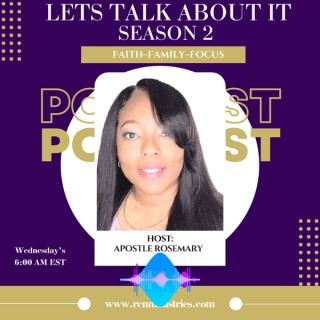
Link Up With US!THE SILENT CHURCH: WHEN FEAR MUZZLES THE PULPITBreaking the Fear of Speaking TruthWhat happens when fear, pressure, popularity, and the fear of consequences begin silencing the voice of the Church?In Episode 6 of Let's Talk About IT Podcast, Apostle Rosemary Collins Neverson confronts the growing danger of a silent pulpit and the responsibility of Christian leaders and believers to speak biblical truth with courage, wisdom, love, and conviction.This powerful conversation challenges the Body of Christ to examine what happens when fear influences the message, truth becomes uncomfortable, and spiritual leaders hesitate to sound the alarm. It is time to break the fear of speaking truth and recover biblical boldness in the Church.
Daily Devotions: How Revival Begins - September 16, 2026 Isaiah 37:31 (NLT) – “And the remnant that survives in Judah will take root below and bear fruit above.” In this episode of Daily Devotions, Pastor David Sumrall uncovers the spiritual principle behind true revival, drawing from the book of Isaiah. He highlights that God consistently works through a faithful remnant, a group of believers who refuse to bow to sin or compromise, no matter how worldly or cold the surrounding church culture becomes. Pastor Sumrall explains that for a genuine awakening to take place, this remnant must first take root below by going deep in prayer, fasting, and seeking God with all their hearts. As believers anchor themselves deeply in the Word and in God's presence rather than focusing on numbers or human applause, they naturally bear fruit above, releasing a powerful spiritual revival that transforms lives. ---- Don't forget to like, subscribe to Cathedral of Praise TV https://www.youtube.com/c/cathedralofpraiseTV/?sub_confirmation=1,and hit the bell icon
After seven hundred years in transit, Director Parrish opens his generation ship's observation shields to reveal humanity's promised destination. The star is gone. So is every other star.Beyond the hull lies only blackness, and the measurable edge of what still exists is closing in. Parrish has eleven hundred people to keep alive, a ship built for arrival rather than endless survival, and no explanation for what has happened to the universe.Then the past begins disappearing too. Stellar systems vanish from the archive. Historical records lose entire civilizations. Handwritten documents contradict databases that insist missing people and events never existed. As memories begin to shift, even the crew can no longer agree on what was once real.Every response costs Parrish something: fuel, trust, authority, or time. With political opposition rising and the darkness drawing closer, he must lead a society through a crisis that may have no solution, while finding some way to preserve the truth before reality erases the evidence that there was ever anything to save.
Galatians 3:3 (NLT) – “How foolish can you be? After starting your new lives in the Spirit, why are you now trying to become perfect by your own human effort?” In this episode of Daily Devotions, Pastor David Sumrall addresses the trap of relying on religious rules and human effort to improve our spiritual standing. Drawing from Paul's letter to the Galatians, he highlights that spiritual growth is not achieved through willpower, self-help programs, or rigid legalism, but is the direct result of the Holy Spirit working within us. Pastor Sumrall explains that while we must make good decisions and align our lives with God's Word, real heart transformation cannot be manufactured by human effort alone. He encourages believers to stop trying to change through self-reliance and instead ask God for a fresh work of the Holy Spirit, trusting Him to cultivate His fruit and conform us to the image of Jesus. ---- Don't forget to like, subscribe to Cathedral of Praise TV https://www.youtube.com/c/cathedralofpraiseTV/?sub_confirmation=1,and hit the bell icon
Most transportation companies talk about technology, efficiency, and growth. But after more than 50 years in the industry, the lesson is simpler: people, relationships, and the ability to adapt are what keep a business moving forward. Scott Luton speaks with Marcia Taylor, owner and CEO of Bennett Family of Companies, about resilience, leadership, entrepreneurship, and the evolution of transportation. They explore how Bennett grew from 15 trucks and 30 trailers into a diversified transportation and logistics organization, why listening to customers shaped its expansion, how the company has preserved its family culture through decades of growth, and where AI and emerging technology fit into the future of trucking.Marcia explains why diversification helped Bennett navigate changing markets, why AI should support people rather than replace customer and driver relationships, and why leaders must always be developing the next generation. She also shares why professional drivers deserve more recognition, how strong values guide difficult decisions, and why staying close to customers remains one of the best ways to understand what comes next. Jump into the conversation:(00:00) Introduction(03:00) Marcia Taylor on ranch life in Jackson Hole, Wyoming(06:27) Inside Bennett Family of Companies: 14 businesses, from freight to aerospace(09:31) Why professional drivers are close to Marcia's heart(12:58) Taking the helm in 1981 after her husband's sudden passing(16:25) The deliberate strategy behind Bennett's diversification(24:00) Protecting a family culture built on faith and shared values(28:23) Embracing AI without losing the human touch(38:58) Leadership lessons: grooming the next generation at Bennett(42:54) What people have to understand about truckers Additional Links & Resources:Connect with Marcia Taylor: https://www.linkedin.com/in/marcia-taylor-3b750a13/ Learn more about Bennett Family of Companies: https://www.bennettig.com/ Learn more about our hosts: https://supplychainnow.com/about Learn more about Supply Chain Now: https://supplychainnow.com Watch and listen to more Supply Chain Now episodes here: https://supplychainnow.com/program/supply-chain-now Subscribe to Supply Chain Now on your favorite platform: https://supplychainnow.com/join Work with us! Download Supply Chain Now's NEW Media Kit: https://supplychainnow.com/media-kit/ Learn more about Blue Yonder Cognitive Solutions: http://blueyonder.com/cognitiveWEBINAR- Labor Is a Margin Decision: How Reyes Coca-Cola Bottling Spent a Decade Making It Stick: https://bit.ly/4d4FauGWEBINAR- Operational AI in the Supply Chain: How context empowers agents and humans to operate side by side: https://bit.ly/4x7Vd2ZWEBINAR- Demand Volatility Isn't a Forecasting Problem: How One FMCG Distributor Released Capacity Without Capital: https://bit.ly/4r94YM6WEBINAR- You Can't Manage What You Can't See: Using Visibility, KPIs, and AI to Optimize Logistics Operations: https://bit.ly/4ql6iem This episode was hosted by Scott Luton and produced by Trisha Cordes, Joshua Miranda, and Amanda Luton. For additional information, please visit our dedicated show page at: https://supplychainnow.com/lessons-learned-50-years-leadership-transportation-world-1634 The content in this episode, including all audio, videos, visuals, and graphics, is the property of Supply Chain Now and is protected by copyright law. Unauthorized use, reproduction, distribution, modification, or re-uploading of this content in any form is strictly prohibited without explicit written permission from Supply Chain Now.For licensing inquiries or permissions, please contact us at production@supplychainnow.com© 2026 Supply Chain Now. All rights reserved. Hosted by Simplecast, an AdsWizz company. See pcm.adswizz.com for information about our collection and use of personal data for advertising.
Six-man survey team crosses a Magellan Gate expecting a lightly settled alien world. Instead they emerge onto a rust-colored Earth scattered with abandoned expedition camps, each carrying insignia from governments and organizations that have never existed. The gate will not send them home, the corrosive atmosphere is eating through their equipment, and every set of footprints leading underground ends the same way: none come back.Beneath the surface, Sergeant Kearney finds a civilization descended from stranded travelers. Blind, altered, and terrifyingly organized, its inhabitants have spent generations preserving fragments of gate technology they no longer fully understand. Now they have captured working hardware, learned to use human voices as keys, and are closing in on the one barrier keeping them from the wider network.With supplies failing and the gate finally offering a path home, Kearney faces a choice every expedition before his may have made. Escape and hope someone else contains the threat, or make certain this Earth never opens another door.
Galatians 2:11–12 (NLT) – “But when Peter came to Antioch, I had to oppose him to his face, for what he did was very wrong. When he first arrived, he ate with the Gentile believers who were not circumcised. But afterwards, when some friends of James came, Peter wouldn't eat with the Gentiles anymore. He was afraid of criticism from these people who insisted on the necessity of circumcision.” In this episode of Daily Devotions, Pastor David Sumrall reflects on how even great men of God can fall into the trap of hypocrisy. Using the Apostle Paul's confrontation of Peter in Galatians chapter 2, he explores how Peter's compromise in Antioch not only damaged his personal testimony but also led other Jewish believers and Barnabas astray into the same double-mindedness. Pastor Sumrall explains that the root cause of hypocrisy in a believer's life is very often the fear of criticism. When we become afraid of getting criticized, yelled at, or rejected by others, we are tempted to compromise our faith and act dishonestly. He encourages leaders and believers to stand firm in biblical truth rather than allowing the fear of human opinion to dictate their integrity. ---- Don't forget to like, subscribe to Cathedral of Praise TV https://www.youtube.com/c/cathedralofpraiseTV/?sub_confirmation=1,and hit the bell icon
Four hundred meters before the map says it should, the road turns to teeth.Ray Colter has worked enough frontier security jobs to know when a contract is designed to spend people. Blackridge Solutions sends him and five other expendable contractors into the Hartsfield Exclusion Zone to locate the source of a spreading anomaly before it reaches the next settlement.Inside, matter remembers. Colony buildings become bone-like shells. A mine tunnel reconstructs a disaster that happened on another world. Dead men walk with cable in their limbs. Childhood homes rise from the ground carrying details their owners never knew they remembered. Every room is physical, every mistake can kill, and the route back refuses to stay where they left it.As the team is stripped away, the zone begins doing more than replaying the past. It connects memories, revises them, and practices the ordinary motions of human life. Ray was sent to find what is generating it. The deeper he goes, the less certain he is that there is any single thing to find.
Rian Hadley is fourteen runs from freedom when his atmospheric scrubber starts pulling living tissue out of a poisoned gas giant.Disgraced, unlicensed, and buried under corporate liability debt, Rian works the Geryon Basin, where two million colonists were declared dead after a biological attack. Pilots are paid by the cubic meter to filter the contaminated clouds, and the rules are simple: stay inside the approved corridors, keep the grinders running, and never waste time chasing bad readings.Then Rian's sensors find a pocket of clean, breathable air below the work zone. He descends and discovers vast living membranes strung through the ruins, machinery still cycling beneath them, and signs that the dead basin is not empty. When harpoons tear into his scrubber, curiosity becomes a fight to escape.With fuel leaking, his hull failing, and company navigation software erasing whole regions from the map, Rian has to climb through crush depths, black shears, and violent storm cells using instruments he barely trusts. Survival is only the first problem. What he carries back could cost far more than the debt that brought him there.
ABOUT THE SHOW Sunday Night Lights is a serialized audio fictional narrative following Jimmy August, the son of a megachurch legend, as he competes on a reality TV show for the right to lead America's most prominent megachurch. Along the way, he faces the ghost of his father, ridiculous competition challenges, and maybe even the prospect of love. Think audiobook meets book club. READ THE STORY / SUPPORT Read or listen on Substack Get episodes Ad-free AND early here CREDITS Created, written, and narrated by Knox McCoy Voice Performances by: Knox and Ashley McCoy Produced by: Padfoot Productions CONNECT Newsletter + updates: Binge Thinking Email: rkmccoy@gmail.com Instagram: @knoxmccoy HOW TO HELP If you're enjoying the show, tap "Follow," leave a quick rating/review, and share the episode on social media. LEGAL © 2025 Padfoot Productions. All rights reserved. Unauthorized reproduction or redistribution is a no-no.
Supply chains used to be built primarily around cost and efficiency. Abe Eshkenazi says that era is over. Today's leaders have to balance AI, resilience, geopolitical risk, talent, cybersecurity, and a level of disruption that makes predicting what comes next nearly impossible. In this episode of Supply Chain Now, Scott Luton speaks with Abe Eshkenazi, CEO at the Association for Supply Chain Management (ASCM), about how the supply chain profession is changing. From what organizations need to get right before scaling AI, to the reshaping of globalization, the growing importance of optionality, and the evolution of the chief supply chain officer into an enterprise strategist, Abe breaks down the forces redefining supply chain leadership. Abe explains why AI success depends less on the technology itself and more on data, talent, governance, and strong processes; why globalization is not disappearing but being redrawn around resilience and regionalization; and why supply chain leaders can no longer focus solely on operations. He also shares how ASCM is preparing professionals for jobs that do not yet exist, what leaders can expect from CHAINge 2026, and why his book, “The Chain: Links That Bind Us”, starts the supply chain story with the consumer rather than the factory. Jump into the conversation:(00:00) Introduction(02:19) Meet Abe Eshkenazi, CEO of ASCM(06:09) AI adoption challenges: data, talent, and governance(11:35) Data ownership, the Google–Spirit Airlines deal, and cyber risk(14:18) The talent gap and career progression in the AI era(17:47) Globalization redrawn: tariffs, resilience, and a multipolar world(23:15) Semiconductors, TSMC, and the infrastructure talent gap(27:28) How the CSCO role has evolved into an enterprise strategist(32:06) What excites Abe most about ASCM in 2026(39:10) Abe's new book: "The Chain: Links That Bind Us" Additional Links & Resources:Connect with Abe Eshkenazi: https://www.linkedin.com/in/aeshkenazi/ Learn more about Association for Supply Chain Management (ASCM): https://www.ascm.org/ Learn more about Abe's book “The Chain: Links That Binds Us”: https://a.co/d/0a9PzJfV Learn more about our hosts: https://supplychainnow.com/about Learn more about Supply Chain Now: https://supplychainnow.com Watch and listen to more Supply Chain Now episodes here: https://supplychainnow.com/program/supply-chain-now Subscribe to Supply Chain Now on your favorite platform: https://supplychainnow.com/join Work with us! Download Supply Chain Now's NEW Media Kit: https://supplychainnow.com/media-kit/ Learn more about Blue Yonder Cognitive Solutions: http://blueyonder.com/cognitiveWEBINAR- Labor Is a Margin Decision: How Reyes Coca-Cola Bottling Spent a Decade Making It Stick: https://bit.ly/4d4FauGWEBINAR- Operational AI in the Supply Chain: How context empowers agents and humans to operate side by side: https://bit.ly/4x7Vd2ZWEBINAR- You Can't Manage What You Can't See: Using Visibility, KPIs, and AI to Optimize Logistics Operations: https://bit.ly/4ql6iem This episode was hosted by Scott Luton and produced by Trisha Cordes, Joshua Miranda, and Amanda Luton. For additional information, please visit our dedicated show page at: https://supplychainnow.com/new-rules-global-supply-chain-strategy-1633 The content in this episode, including all audio, videos, visuals, and graphics, is the property of Supply Chain Now and is protected by copyright law. Unauthorized use, reproduction, distribution, modification, or re-uploading of this content in any form is strictly prohibited without explicit written permission from Supply Chain Now.For licensing inquiries or permissions, please contact us at production@supplychainnow.com© 2026 Supply Chain Now. All rights reserved. Hosted by Simplecast, an AdsWizz company. See pcm.adswizz.com for information about our collection and use of personal data for advertising.
Ray Dunford knows the Kelvin-3 drill has one dangerous flaw: its sensors understand Nevada geology, not an alien world. Procurement says the software update can wait eleven weeks. Buried beneath Outpost Zero, something has already waited much longer.When Ray and three crewmates cut into a miles-long metallic structure under the glacier, they find corridors lined with impossible bodies, precise industrial hardware, and a power network wired through the walls. Then the mining software makes the worst possible mistake. The buried system begins to wake.Heat tears through the frozen structure. The hull repairs itself. The glacier above starts to fail. With an injured crew, a storm closing in, and rescue more than twenty hours away, Ray has to do what he has always done: read the machinery faster than it can kill him.But this machine was built for a purpose, and the thing it is powering lies deeper inside.
Tartarus Station was designed so its prisoners would never need walls.At the asteroid prison's outer rim, spin-generated gravity holds maximum-security inmates beneath three times Earth's weight, while surgical reinforcement keeps their bodies alive under the load. For night-shift warden Graves, the system has meant six years of quiet screens, routine reports, and problems that always seem to belong to someone higher up the chain.Then the drive bearings seize.As the station slows, gravity falls, dead equipment becomes useless, and men who have spent years unable to stand begin walking. But the prisoners are not simply escaping. They are taking control of power, water, communications, and the replacement parts that could restore the spin. Their price is not freedom. It is evidence.With corporate help still hours away and his remaining guards trapped behind failing defenses, Graves must decide what he is actually responsible for: maintaining a prison, protecting his people, or preserving the system that created the emergency in the first place.
Most wine drinkers picture a boutique vineyard. Andrew Rice says the real story is scale: hundreds of rail cars, thousands of truckloads, and a regulatory maze most consumers never see. In this episode of Supply Chain Now, Scott Luton and special guest co-host Wanda Johnson speak with Andrew Rice, senior ERP technical product manager at Gallo, about the wine supply chain. From grape to glass, government regulation and the three-tier system, harvest and weather risk, inventory and aging complexity, and how technology like agentic AI is transforming operations. Andrew explains why wine supply chain complexity comes down to regulation and aging, how Gallo balances luxury and commercial brands against the unpredictability of nature, why most wine should actually be consumed within one to five years rather than aged indefinitely, and how Gallo's tech-forward culture is helping the company scale one of the world's oldest industries. Jump into the conversation:(00:00) Introduction(02:52) Meet Andrew Rice, senior ERP technical product manager at Gallo(08:19) What makes the wine supply chain unique: regulation and the three-tier system(15:25) From grape to glass: mapping Gallo's supply chain functions(24:08) How weather and harvest conditions shape flavor and planning(34:10) What surprises people most about the wine industry: it's the scale(42:27) The truth about wine and aging: most bottles won't get better with time(48:11) How robotics, and agentic AI are transforming Gallo's operations Additional Links & Resources:Connect with Andrew Rice: https://www.linkedin.com/in/andrew-rice-supplychain/ Learn more about Gallo: http://www.gallo.com Connect with Wanda Johnson: https://www.linkedin.com/in/wanda-riddick-johnson-28070a3/ Learn more about our hosts: https://supplychainnow.com/about Learn more about Supply Chain Now: https://supplychainnow.com Watch and listen to more Supply Chain Now episodes here: https://supplychainnow.com/program/supply-chain-now Subscribe to Supply Chain Now on your favorite platform: https://supplychainnow.com/join Work with us! Download Supply Chain Now's NEW Media Kit: https://supplychainnow.com/media-kit/ Learn more about Blue Yonder Cognitive Solutions: http://blueyonder.com/cognitiveWEBINAR- SAP AI Inside the Supply Chain: From Silo to Orchestration: https://bit.ly/4bvpz6KWEBINAR- Labor Is a Margin Decision: How Reyes Coca-Cola Bottling Spent a Decade Making It Stick: https://bit.ly/4d4FauGWEBINAR- Operational AI in the Supply Chain: How context empowers agents and humans to operate side by side: https://bit.ly/4x7Vd2ZWEBINAR- You Can't Manage What You Can't See: Using Visibility, KPIs, and AI to Optimize Logistics Operations: https://bit.ly/4ql6iem This episode was hosted by Scott Luton and Wanda Johnson, and produced by Trisha Cordes, Joshua Miranda, and Amanda Luton. For additional information, please visit our dedicated show page at: https://supplychainnow.com/inside-gallos-grape-glass-supply-chain-1632 The content in this episode, including all audio, videos, visuals, and graphics, is the property of Supply Chain Now and is protected by copyright law. Unauthorized use, reproduction, distribution, modification, or re-uploading of this content in any form is strictly prohibited without explicit written permission from Supply Chain Now.For licensing inquiries or permissions, please contact us at production@supplychainnow.com© 2026 Supply Chain Now. All rights reserved. Hosted by Simplecast, an AdsWizz company. See pcm.adswizz.com for information about our collection and use of personal data for advertising.
A generation ship built three million years in humanity's future has come home, and its interior is made from the dead.Paul Weaver has spent fifteen years recovering bodies from collapsed mines, ruptured stations, and industrial disasters. Nothing prepares him for the forty-kilometer vessel drifting near Jupiter. Its soil is compressed human bone. Its towering structures are cast from human remains. Across the landscape, immense autonomous machines grind, rebuild, and engrave the dead in an endless cycle whose original purpose has been almost erased.As Weaver and a small survey team descend through the ship's strata, they uncover generations of human change written directly into the terrain. The deeper they investigate, the clearer it becomes that this is not simply a derelict vessel or a failed machine system. Something deliberate survived here long after the last human life disappeared. Then the machines begin changing course toward them.With another expedition preparing to enter, Weaver must determine what this place actually is before curiosity, procedure, or fear turns humanity's strangest grave into one more site to be dismantled.
Sixty astronauts entered the Singularity Engine. One man came back carrying all of them.Flight neuropsychologist Dr. Hale chose the crew, and now he is the only person who knows them well enough to tell one mind from another. The recovery team can extract each surviving personality from Commander Jack Weston and transfer it into a cloned body. Hale has one job: authenticate the man before the procedure begins.But every extraction makes the minds left inside Weston harder to separate. Memories migrate. Childhoods change owners. Men wake with pieces of lives they never lived, while the boundaries between the remaining identities begin to collapse. Then Hale finds signatures that belong to no one on the crew manifest.With military officials demanding results and families waiting for husbands and fathers to return, Hale must decide what counts as proof of a person when memory, personality, and even grief can be copied. Because if something else crossed the Singularity Engine with the crew, the safest way out may be to become indistinguishable from the people it studied.
What are crystals really about? Are they simply beautiful rocks—or can they have a deeper purpose in our lives? In this episode of Light Body Radio: Wellness Illuminated, Dr. Lara May explores the fascinating conversation around crystals, energy, intention, and spirituality. From her lifelong love of collecting rocks to the modern fascination with crystals in homes, jewelry, meditation spaces, and spiritual practices, Dr. Lara takes a curious and grounded look at why these ancient minerals continue to capture our attention. This conversation also opens the door to an important question: Can science and spirituality coexist? Dr. Lara explores the geological reality of crystals while also discussing the ways people engage with them through intention, ritual, meditation, and energetic practices. Rather than asking you to believe—or disbelieve—she invites you to stay curious. For anyone who has ever wondered whether crystals have "power," felt drawn to them but didn't know why, or was taught that practices involving crystals and energy were something to fear, this episode offers a different perspective: spirituality doesn't require abandoning critical thinking. In fact, spirituality warrants critical thinking—not blind faith. Come with your questions, your skepticism, and your curiosity as we explore the space where science, spirituality, energy, and intention meet. © Light Body Radio-Podcast, 2026. All rights reserved. This podcast features background music by ScottHolmes Music. We have obtained the necessary licenses for the use of this music. Our license was renewed on May 7, 2024, and we have been using ScottHolmes Music since 2017. Unauthorized use or distribution of this podcast, including but not limited to the background music, is strictly prohibited and may result in legal action. For more information or to request permissions, please contact scott@scottholmesmusic.com.
Four hundred alien obelisks stand on Kepler-9e, and Vanguard Consortium is cutting them down faster than its archaeologist can learn what they mean.After fifteen years of minor digs, Dr. Phelps finally has the discovery that could define a career: concentric rings of crystalline structures surrounding a monolith covered in an intact alien language. Less than half is decoded. The company funding the excavation has already learned what it needs to know. The crystal can be refined into fuel.Then a grammatical clue overturns nine months of research. The obelisks are not tombs. The monolith is not a memorial. And the civilization that left it behind was not honoring its dead.With the mining schedule accelerating and something inside the opened structures beginning to change, Phelps has hours to finish a warning that took six hundred thousand years to reach its next reader. If the translation is right, the dig has not uncovered an ancient catastrophe. It has restarted one.
A six-minute quantum experiment opens a bridge seven hundred years into humanity's future, and cryogenic engineer Art Lawson is the only man keeping it alive.On the other side, humanity has spread among the stars and learned that its suns are dying. The descendants who built the receiver cannot save their own timeline, but they can send knowledge, technology, and a limited number of people into Lawson's century. There is one brutal constraint: every kilogram that crosses permanently damages the bridge.As scientists stream centuries of discoveries into the past, children, engineers, and irreplaceable machines compete for the same vanishing margin. Lawson knows better than most what happens when an engineer calls a risk acceptable. Now every pressure reading, safety override, and crossing forces the same impossible calculation: how much uncertainty can a human life bear?The bridge is degrading. The waiting list is growing. And keeping the future alive may require Lawson to drive his own system past the point where he can promise it will hold.
For fourteen years, quarantine physician Noah has decided when crews from sealed orbital habitats are safe to come home. Then a vessel the size of a small moon arrives carrying six million humans who say their ancestors left Earth thousands of years ago.Their bloodwork is healthy. Their bodies are not what their history says they should be. Modern vaccination scars, recent dental materials, and impossible genetic matches lead Noah toward a reproductive system the passengers use but do not understand, and toward a vast biological archive built to preserve far more than humanity.While diplomats negotiate the passengers' return, extinct organisms begin appearing across Earth. Roads vanish beneath engineered biology. Water systems fail. The vessel is not waiting for permission. It is restoring the planet according to a model older than any government.Noah was sent to decide whether the passengers are dangerous to Earth. Instead, he must decide how much truth Earth can survive when the only people who can slow the restoration are also part of it.
The digital economy may get the headlines, but behind every AI breakthrough, electric vehicle, automated warehouse, and data center is a complex physical supply chain making it possible. In this episode of The Buzz, powered by Toyota Automated Logistics, hosts Scott Luton and Karin Bursa welcome Gaurav Singh Chaudhary, founder and editor of Silicon and Steel, to explore the infrastructure, materials, energy, and global trade relationships powering some of today's biggest transformations.From Walmart's massive investment in automated fulfillment to dramatic shifts in the Southern timber industry, Scott, Karin, and Gaurav break down the connections between changing consumer demand, automation, trade policy, and supply chain strategy. They examine the potential impact of semiconductor tariffs on AI infrastructure, why nuclear energy's fuel supply could become a critical bottleneck, and how AI and EV manufacturers are increasingly competing for the same electronics and manufacturing capacity.Along the way, the conversation highlights an important reality: the AI economy isn't purely digital. Its growth depends on chips, energy, batteries, data centers, manufacturing capacity, logistics networks, and resilient global supply chains.Key TakeawaysSpeed must be designed into the network. Walmart's next-generation fulfillment investment demonstrates why companies can't simply compensate for poor network design with more expensive transportation.Automation is changing the nature of warehouse work. As fulfillment processes become increasingly automated, traditional manual roles are giving way to jobs focused on maintaining, operating, and optimizing technology.Supply chains operate on dramatically different timelines. Timber can take decades to mature while demand, tariffs, interest rates, and trade policies can change within months, creating significant challenges for long-term planning.The AI economy has a very physical foundation. Chips, servers, power generation, cooling systems, batteries, and data centers all create supply constraints that can determine how quickly AI infrastructure scales.Nuclear energy presents a supply chain bottleneck. The fuel required by emerging small nuclear reactors creates sourcing and geopolitical risks that extend far beyond simply building more reactors.AI and automotive supply chains are increasingly interconnected. EVs and AI infrastructure compete for electronics, chips, circuit boards, batteries, and manufacturing capacity while AI demand is also creating new opportunities for automotive battery investments.Context turns data into actionable intelligence. Supply chain-specific AI must understand industry terminology, relationships, workflows, and business rules, not simply process general-purpose data.Supply chain leaders can no longer look at AI, energy, manufacturing, trade, logistics, and infrastructure as separate conversations. This episode connects the dots between them. Tune in for practical insights into how automation, tariffs, shifting demand, energy constraints, and emerging technologies are reshaping global supply chains and why understanding the physical infrastructure behind the digital economy will be essential for navigating what comes next.Additional Links & Resources: Toyota Automated Logistics: https://toyota-automated-logistics.com/ With That Said: https://bit.ly/WTS-30-Aug-2026 From Data Chaos To Decision Intelligence: How AI Continues To Reshape Logistics: https://bit.ly/ExecExchange-MattMcKinney-LoopMeet Hunter Wendelstedt, MLB's next Ángel Hernández in the making: https://bit.ly/MLB-ABS-MakingTractionWalmart to build $1.3B fulfillment center in Georgia: https://bit.ly/Walmart-Invests-in-GATimber Was Gold in the South—Until a Market Collapse Crushed the Forest Economy: https://on.wsj.com/3T96zoxAnother potential headache for US data centers — Trump tariffs: https://politi.co/4gFffutWest Wants Nuclear for AI. Russia Controls the Fuel: https://bit.ly/3Uigrg6Silicon & Steel: https://siliconandsteel.co/ Connect with Gaurav on LinkedIn: https://www.linkedin.com/in/gsc/Upcoming Live Programming: https://supplychainnow.com/upcoming-live-programming/Supply Chain Now Resource Hub: https://supplychainnow.com/resource-hub/Learn more about our hosts: https://supplychainnow.com/aboutLearn more about Supply Chain Now: https://supplychainnow.comWatch and listen to more Supply Chain Now episodes here: https://supplychainnow.com/program/supply-chain-now Subscribe to Supply Chain Now on your favorite platform: https://supplychainnow.com/join Work with us! Download Supply Chain Now's NEW Media Kit: https://bit.ly/3XH6OVkLearn more about Blue Yonder Cognitive Solutions: http://blueyonder.com/cognitiveWEBINAR- SAP AI Inside the Supply Chain: From Silo to Orchestration: https://bit.ly/4bvpz6KWEBINAR- Operational AI in the Supply Chain: How context empowers agents and humans to operate side by side: https://bit.ly/4x7Vd2ZWEBINAR- You Can't Manage What You Can't See: Using Visibility, KPIs, and AI to Optimize Logistics Operations: https://bit.ly/4ql6iemThis episode was hosted by Scott Luton and Karin Bursa, and produced by Trisha Cordes, Joshua Miranda, and Amanda Luton. For additional information, please visit our dedicated episode page at: https://supplychainnow.com/thebuzz-from-silicon-to-steel-supply-chains-behind-ai The content in this episode, including all audio, videos, visuals, and graphics, is the property of Supply Chain Now and is protected by copyright law. Unauthorized use, reproduction, distribution, modification, or re-uploading of this content in any form is strictly prohibited without explicit written permission from Supply Chain Now.For licensing inquiries or permissions, please contact us at production@supplychainnow.com© 2026 Supply Chain Now. All rights reserved. Hosted by Simplecast, an AdsWizz company. See pcm.adswizz.com for information about our collection and use of personal data for advertising.
At the edge of chartered space, twelve living gates are dying one by one around a dimensional rupture. The Bio-Industrial Splicer assigned to keep them alive is running out of replacement tissue, time, and any realistic hope that the overdue supply convoy will arrive.Then something crosses the rupture.The first organisms seem almost helpful. They seal leaks, rebuild damaged vessels, and imitate repairs they have witnessed. But every tool, scrap of tissue, and procedure near the breach teaches them more. Soon the station is filling with an alien maintenance ecology that can keep the gates alive while quietly remaking the structure from the inside.With supplies collapsing and a debt contract still binding him to the job, the splicer faces a brutal engineering problem: destroy the intruders and risk losing containment, or depend on a biology that learns from everything it touches. As the station begins treating bodies as just another maintenance resource, keeping the rupture closed may demand a kind of repair no human manual was ever meant to authorize.

James shares new information about red scoria, or clinker, found on Shelly's car and speaks with a North Dakota geologist about what that material could mean for the investigation. Inspired by Dakota Spotlight Season 7, Call Me Shelly is now a documentary film. Watch the official trailer, see upcoming screenings, and purchase tickets at https://callmeshellyfilm.com Call Me Shelly is written and produced by James Wolner. Archival audio courtesy of the State Historical Society of North Dakota. Music by Wowza in Kalamazoo. Explore the full Dakota Spotlight catalog: https://DakotaSpotlight.com Listen early and ad-free with Spotlight PLUS: https://dakotaspotlight.com/spotlight-plus Support the show on Patreon: https://patreon.com/cw/DakotaSpotlight Sign up for the Dakota Spotlight newsletter: https://dakotaspotlight.com/newsletter Have information about a case or want to get in touch? Email: dakotaspotlight@gmail.com Join the Dakota Spotlight community on Facebook: https://facebook.com/groups/dakotaspotlight Watch Dakota Spotlight on YouTube: https://youtube.com/@dakotaspotlightpodcast4800 To advertise on Dakota Spotlight, contact info@sixhorsemedia.com Dakota Spotlight is produced by Six Horse Media: info@sixhorsemedia.com All content in this podcast, including audio, interviews, and sound design, is the property of Six Horse Media. Unauthorized use or reproduction is prohibited. For permissions, contact info@sixhorsemedia.com Learn more about your ad choices. Visit megaphone.fm/adchoices

It is rare for a character to have survived and thrived through almost 90 years of continuous reinvention, adaptation and exploitation. It's even rarer for a consensus to emerge as to a definitive incarnation of such a character. Well, Batman: The Animated Series is that unicorn, a coming together of incredible talent to produce the most elegant distillation of decades of storytelling, along with its own innovations and contributions to the mythos. 30 plus years since it premiered, the reputation of the series has grown even further and now the behind the scenes story has been told in a fantastic new book by my guest today, Daniel Dockery, in I Am the Night: The Ultimate Unauthorized History of Batman: The Animated Series. We talk about how Daniel finds the nuances and untold stories in shows' creation myths, celebrating the unheralded behind the scenes heroes, the pro-social humanist version of the Bruce Wayne character, how the show captured the storytelling elegance of classic Hollywood and film noir, how limitations breed creativity, the difference between darkness and maturity, Paul Dini's 'misplaced love' theory of Batman villains and his case for the most underrated episode of BTAS.
Never Too Late — A Season 4 Teaser Before Season 4 of Out Late With David begins, I wanted to share something a little different: “Never Too Late,” a song inspired by the stories, courage, and journeys we explore on this podcast. At the heart of Out Late With David is a simple belief: it's never too late to live your truth, to become more fully yourself, or to begin a new chapter. Thank you to everyone who has listened, shared an episode, reached out, and offered your feedback and encouragement. Your support means more to me than you know—and it continues to shape this show and the conversations we share. Enjoy “Never Too Late,” and stay tuned. Season 4 is coming soon.Podcast website and resources: https://www.OutLateWithDavid.com YouTube Edition: https://youtu.be/eHZL3RKIQ1I YouTube Channel: https://www.youtube.com/channel/UCvsthP9yClKI4o5LxbuQnOg Certified Professional Life Coach, David Cotton: https://www.DavidCottonCoaching.com or https://www.DavidCotton.com Contact David: mailto:david@davidcottoncoaching.comhttps://www.DavidCottonCoaching.comhttps://www.OutLateWithDavid.comhttps://linktr.ee/davidacotton © 2026 David Cotton Coaching, LLC. All rights reserved. The "Out Late With David" podcast and its content are the property of David Cotton Coaching, LLC. Unauthorized use and/or duplication of this material without express and written permission from David Cotton Coaching, LLC is strictly prohibited. Excerpts and links may be used, provided that full and clear credit is given to "Out Late With David" and David Cotton Coaching, LLC with appropriate and specific direction to the original content.
Humanity's first faster-than-light jump succeeds. Six hours later, the test ship returns to its Kuiper Belt quarantine berth at exactly 812 degrees Celsius, and it refuses to cool.Harmon knows the number. The navigation architect saw it in his preflight models, an unexplained constant he classified as noise rather than risk delaying the mission. Now 812 is spreading from the ship into Outpost K-9. Steel glows without deforming. Electronics stop obeying familiar rules. The station itself begins to change.What came back is not ordinary heat. It is a foothold for the physics beneath spacetime, and containment is failing. With Earth twelve hours from useful help, there may be no rescue coming in time.Harmon may be the only person who can shut the breach because he is the only one who understands the route that opened it. Reaching the FTL core means crossing a station being rewritten around him, while every meter forces him deeper into the consequences of the warning he chose to bury.
AI adoption is not really a technology question. It's a trust question, and trust levels shift dramatically depending on where a company operates and who its customers are. In this episode of Supply Chain Now, Scott Luton and co-host Bill Huber, retired VP CFO at VELUX, speak with Theodora Lau, founder of Unconventional Ventures, about trust and AI adoption, open banking and data interoperability, fragmented data versus bad data, workforce retraining, and the lessons global supply chains can borrow from fintech. Theo explains how to tell healthy friction from harmful friction, treat fragmented data differently from bad data, judge AI initiatives by outcomes instead of token usage, and build systems that keep people, not service providers, in control of their own data. Jump into the conversation: (00:00) Introduction (09:41) Theo Lau's path from telecom to fintech innovation (17:35) Why trust, not technology, drives AI adoption (20:17) What GDPR and the EU AI Act reveal about governance and trust (28:04) Lessons supply chain can borrow from open banking and fintech (38:27) What separates real AI transformation from bolting AI onto broken processes (43:13) The difference between fragmented data and bad data (54:16) A JD Power stat reshaping how consumers ask financial questions Additional Links & Resources: Connect with Theodora Lau: https://www.linkedin.com/in/vineetvashishta/ Learn more about Unconventional Ventures: https://www.linkedin.com/in/billhuberatlanta/ Connect with Bill Huber: https://www.linkedin.com/in/billhuberatlanta/ Learn more about VELUX: http://www.velux.com Learn more about our hosts: https://supplychainnow.com/about Learn more about Supply Chain Now: https://supplychainnow.com Watch and listen to more Supply Chain Now episodes here: https://supplychainnow.com/program/supply-chain-now Subscribe to Supply Chain Now on your favorite platform: https://supplychainnow.com/join Work with us! Download Supply Chain Now's NEW Media Kit: https://supplychainnow.com/media-kit/ Learn more about Blue Yonder Cognitive Solutions: http://blueyonder.com/cognitive WEBINAR- SAP AI Inside the Supply Chain: From Silo to Orchestration: https://bit.ly/4bvpz6K WEBINAR- Operational AI in the Supply Chain: How context empowers agents and humans to operate side by side: https://bit.ly/4x7Vd2Z WEBINAR- You Can't Manage What You Can't See: Using Visibility, KPIs, and AI to Optimize Logistics Operations: https://bit.ly/4ql6iem This episode was hosted by Scott Luton and Bill Huber, and produced by Trisha Cordes, Joshua Miranda, and Amanda Luton. For additional information, please visit our dedicated show page at: https://supplychainnow.com/what-global-supply-chain-can-learn-from-fintech-world-1630 The content in this episode, including all audio, videos, visuals, and graphics, is the property of Supply Chain Now and is protected by copyright law. Unauthorized use, reproduction, distribution, modification, or re-uploading of this content in any form is strictly prohibited without explicit written permission from Supply Chain Now.For licensing inquiries or permissions, please contact us at production@supplychainnow.com© 2026 Supply Chain Now. All rights reserved. Hosted by Simplecast, an AdsWizz company. See pcm.adswizz.com for information about our collection and use of personal data for advertising.

To improve brand performance, strengthen brand loyalty, and grow the bottom line, build positive brand associations through social listening and open ended questions with customers, says Joanne Z. Tan. Most companies ask customers questions. Far fewer ask the right questions. If your surveys rely primarily on rating scales and multiple-choice answers, you may be measuring satisfaction while missing the authentic associations that truly shape your brand. The greatest insights often come from open ended questions that allow customers to describe your brand in their own words, revealing the positive associations, negative associations, emotions, and experiences that structured surveys often overlook. In this episode, Joanne Z. Tan explains why open ended questions are one of the most valuable tools in brand strategy, social listening, and customer research, especially in the AI age where genuine human understanding matters more than ever. - Read the full article - Watch the video - Subscribe to our Newsletter: https://10plusbrand.substack.com/ In this episode, you'll discover: • Why open ended questions uncover authentic brand associations that structured surveys often miss • How brand association influences trust, reputation, customer loyalty, and buying decisions • The difference between positive associations, negative associations, and neutral perceptions • Why social listening has become an essential complement to traditional market research • How authentic customer language reveals your brand's true surplus value beyond products and services • Why emotional associations often matter more than functional attributes • How AI can help analyze qualitative responses while human judgment remains essential for interpreting meaning • Practical ways leaders can use open ended questions to strengthen brand positioning, messaging, and customer experience The brands that earn lasting loyalty are not those that speak the loudest. They are the ones that listen most carefully. By asking thoughtful open ended questions and practicing genuine social listening, organizations discover what customers truly think, why they trust or avoid a brand, and which authentic associations shape long-term loyalty. Those authentic associations become the foundation of stronger brands, deeper customer relationships, and better bottom line. About Joanne Z. Tan Joanne Z. Tan is the Founder and CEO of 10 Plus Brand, Inc., a brand strategy, executive branding, and thought leadership consultancy. She helps CEOs, executives, entrepreneurs, and organizations build influential, authentic brands through strategic positioning, Brand DNA decoding, AI Experience Design (AIXD™), thought leadership, content strategy, and digital presence. A speaker, interviewer, writer, photographer, and lifelong learner, Joanne combines analytical thinking with creativity to help leaders and organizations build trust, brand equity, and long-term competitive advantage in the AI age. Learn more: https://10plusbrand.com https://10plusprofile.com https://aixd.world Copyright © 2026 Joanne Z. Tan. All rights reserved. Unauthorized reproduction or distribution of this podcast description or its contents is prohibited without written permission.
An AI agent can finish a task and still violate the rules that matter most. In supply chain, that gap can affect cost limits, approved suppliers, compliance requirements, safety protocols, and escalation paths. In this episode of Supply Chain Now, Scott W. Luton speaks with Vin Vashishta, CEO and AI strategist at V-Squared, about intent contracts, audit trails, workflow reorchestration, tokenomics, semantic layers, and evidence-based AI strategy. Vin explains how to evaluate AI by the value it creates, budget for recurring usage costs, work with imperfect information, and require consultants to connect every recommendation to evidence, risk, mitigation, and business-specific ROI. Jump into the conversation: (00:00) Introduction (05:38) Intent contracts and their role in AI agent management (08:38) The need for AI audit trails in supply chain (11:10) CIO considerations for managing AI demand at scale (14:21) Gaps in workflow reorchestration and value quantification (17:00) Lessons from the semantic layer meme on imperfect data (19:36) The outcomes an AI strategy should deliver for a specific business (25:03) AI training programs generating the strongest market response (26:49) Ways to follow Vin and learn more Additional Links & Resources: Connect with Vin: https://www.linkedin.com/in/vineetvashishta/ Learn more about V-Squared: https://vsquaredai.com/ Vin's LinkedIn Post about Managing AI Agents: https://bit.ly/Managing-AI-Agents The cost of intelligence: How CIOs can manage AI demand at scale: https://mck.co/3TUD3mz Vin's LinkedIn Post about the Cost of Intelligence: https://bit.ly/Vin-on-CIO-Managing-AI Vin's LinkedIn Post on The Semantic Layers: https://bit.ly/Vin-on-Semantic-Layers Vin's LinkedIn Post on AI Strategy: https://bit.ly/Vin-on-AI-Strategy-2026 Vin's Training & Certification Classes: https://datascience.vin/ Learn more about our hosts: https://supplychainnow.com/about Learn more about Supply Chain Now: https://supplychainnow.com Watch and listen to more Supply Chain Now episodes here: https://supplychainnow.com/program/supply-chain-now Subscribe to Supply Chain Now on your favorite platform: https://supplychainnow.com/join Work with us! Download Supply Chain Now's NEW Media Kit: https://supplychainnow.com/media-kit/ WEBINAR- SAP AI Inside the Supply Chain: From Silo to Orchestration: https://bit.ly/4bvpz6K WEBINAR- Operational AI in the Supply Chain: How context empowers agents and humans to operate side by side: https://bit.ly/4x7Vd2Z WEBINAR- You Can't Manage What You Can't See: Using Visibility, KPIs, and AI to Optimize Logistics Operations: https://bit.ly/4ql6iem Gartner Announces 2026 Rankings of the Global Supply Chain Top 25: https://www.gartner.com/en/newsroom/press-releases/2026-06-17-gartner-announces-2026-rankings-of-the-global-supply-chain-top-25 This episode was hosted by Scott Luton and produced by Trisha Cordes, Joshua Miranda, and Amanda Luton. For additional information, please visit our dedicated show page at: https://supplychainnow.com/ai-agents-semantic-layers-cio-leadership-1629 The content in this episode, including all audio, videos, visuals, and graphics, is the property of Supply Chain Now and is protected by copyright law. Unauthorized use, reproduction, distribution, modification, or re-uploading of this content in any form is strictly prohibited without explicit written permission from Supply Chain Now.For licensing inquiries or permissions, please contact us at production@supplychainnow.com© 2026 Supply Chain Now. All rights reserved. Hosted by Simplecast, an AdsWizz company. See pcm.adswizz.com for information about our collection and use of personal data for advertising.
What if changing the way you think could actually change the way your brain functions? In this episode of Light Body Radio, Dr. Lara May sits down with Dr. Patrick Porter, an award-winning author, speaker, and pioneer in brainwave entrainment and brain health, to explore the fascinating science of neuroplasticity, brain fitness, mindset, and cognitive wellness. Dr. Porter shares the personal journey that first introduced him to meditation, relaxation techniques, and the power of changing thought patterns. From transforming his own mindset as a teenager to spending decades researching brainwave technology, his work has centered around one powerful idea: the brain is capable of adapting, learning, and changing. Together, Dr. Lara and Dr. Porter explore how brainwave entrainment, meditation, affirmations, lifestyle choices, and intentional mental practices may support mental clarity, emotional resilience, relaxation, and cognitive performance. Dr. Porter also introduces the concept of holistic brain fitness—one that goes beyond puzzles and memory exercises to consider the many dimensions of wellness that influence how we think, feel, and function. Tune in for a fascinating conversation about the brain's remarkable capacity for change and discover why taking care of your brain may require more than simply exercising your mind. © Light Body Radio-Podcast, 2026. All rights reserved. This podcast features background music by ScottHolmes Music. We have obtained the necessary licenses for the use of this music. Our license was renewed on May 7, 2024, and we have been using ScottHolmes Music since 2017. Unauthorized use or distribution of this podcast, including but not limited to the background music, is strictly prohibited and may result in legal action. For more information or to request permissions, please contact scott@scottholmesmusic.com.
On this episode of The Buzz, powered by Toyota Automated Logistics, hosts Scott Luton and Karin Bursa welcome Philip Vervloesem, Chief Commercial and Markets Officer at OMP, for a wide-ranging conversation on the forces reshaping global supply chains. From extreme weather and transportation disruptions to China's rapidly expanding automotive industry, the team explores today's biggest supply chain headlines before diving into AI, decision velocity, always-on planning, and the evolving role of supply chain professionals. Supply chain leaders have more data, technology, and intelligence at their fingertips than ever before, but the real competitive advantage comes from turning those insights into the right decisions faster. Scott, Karin, and Philip examine how organizations can use scenario planning, external market signals, AI agents, and connected decision-making to respond more effectively to disruption and uncertainty. They also explore why successful AI adoption isn't simply about automation or replacing people. Instead, the future belongs to organizations that combine intelligent technology with human judgment, collaboration, trust, and business context. Key Takeaways Resilience happens before disruption. Scenario planning and decision intelligence give organizations more options while there is still time to act. External signals matter. Weather, climate patterns, market conditions, and other syndicated data can help companies anticipate disruptions and continuously refine supply chain plans. Decision velocity is becoming a competitive advantage. Leading organizations aren't simply collecting more data—they're connecting data to decisions and executing those decisions across the enterprise faster. Agentic AI's greatest opportunity is augmentation. AI agents can identify issues, evaluate scenarios, coordinate information, and recommend actions, while people provide judgment, context, governance, and leadership. Always-on planning is changing traditional planning cycles. Planning isn't disappearing, but waiting for weekly or monthly cycles to respond to change increasingly will. The planner of the future needs strong human skills. Business knowledge, communication, influence, collaboration, storytelling, and the ability to navigate trade-offs will become even more valuable as technology advances. The future of supply chain planning isn't simply about moving faster—it's about making better decisions with greater confidence. As AI, intelligent planning platforms, and always-on capabilities continue to evolve, successful organizations will be those that connect technology with human expertise and turn complexity into action. Tune in to hear how leaders can prepare now for a more adaptive, resilient, and decision-driven supply chain. Additional Links & Resources: Toyota Automated Logistics: https://toyota-automated-logistics.com/ Enterprise Unleashed: The Biggest Lessons from 2026 So Far: https://streamyard.com/watch/CBk6F4Dgtwk3 The Peak Readiness Index Report 2026: https://bit.ly/Peak-Readiness-Report Low Rhine levels disrupting German industry: https://reut.rs/45BdaL8 Corporate concern over El Nino hits multi-year high: https://reut.rs/4xPGVnI There Aren't Enough Ships to Handle China's Booming Car Exports: https://on.wsj.com/4bXfZd8 OMP: https://omp.com/ Connect with Philip on LinkedIn: https://www.linkedin.com/in/philipvervloesem/ Upcoming Live Programming: https://supplychainnow.com/upcoming-live-programming/ Supply Chain Now Resource Hub: https://supplychainnow.com/resource-hub/ Learn more about our hosts: https://supplychainnow.com/about Learn more about Supply Chain Now: https://supplychainnow.com Watch and listen to more Supply Chain Now episodes here: https://supplychainnow.com/program/supply-chain-now Subscribe to Supply Chain Now on your favorite platform: https://supplychainnow.com/join Work with us! Download Supply Chain Now's NEW Media Kit: https://bit.ly/3XH6OVk WEBINAR- SAP AI Inside the Supply Chain: From Silo to Orchestration: https://bit.ly/4bvpz6K WEBINAR- Operational AI in the Supply Chain: How context empowers agents and humans to operate side by side: https://bit.ly/4x7Vd2Z WEBINAR- You Can't Manage What You Can't See: Using Visibility, KPIs, and AI to Optimize Logistics Operations: https://bit.ly/4ql6iem This episode was hosted by Scott Luton and Karin Bursa, and produced by Trisha Cordes, Joshua Miranda, and Amanda Luton. For additional information, please visit the dedicated episode page at: https://supplychainnow.com/buzz-decision-velocity-ai-agents-future-supply-chain-planning-1628 The content in this episode, including all audio, videos, visuals, and graphics, is the property of Supply Chain Now and is protected by copyright law. Unauthorized use, reproduction, distribution, modification, or re-uploading of this content in any form is strictly prohibited without explicit written permission from Supply Chain Now.For licensing inquiries or permissions, please contact us at production@supplychainnow.com© 2026 Supply Chain Now. All rights reserved. Hosted by Simplecast, an AdsWizz company. See pcm.adswizz.com for information about our collection and use of personal data for advertising.
James examines allegations involving Bismarck Police Lieutenant Don Schaffer, discusses questions and comments from listeners, and lays out what he believes could still be done in Shelly's case. Inspired by Dakota Spotlight Season 7, Call Me Shelly is now a documentary film. Watch the official trailer, see upcoming screenings, and purchase tickets at https://callmeshellyfilm.com Call Me Shelly is written and produced by James Wolner. Archival audio courtesy of the State Historical Society of North Dakota. Music by Wowza in Kalamazoo. Explore the full Dakota Spotlight catalog: https://DakotaSpotlight.com Listen early and ad-free with Spotlight PLUS: https://dakotaspotlight.com/spotlight-plus Support the show on Patreon: https://patreon.com/cw/DakotaSpotlight Sign up for the Dakota Spotlight newsletter: https://dakotaspotlight.com/newsletter Have information about a case or want to get in touch? Email: dakotaspotlight@gmail.com Join the Dakota Spotlight community on Facebook: https://facebook.com/groups/dakotaspotlight Watch Dakota Spotlight on YouTube: https://youtube.com/@dakotaspotlightpodcast4800 To advertise on Dakota Spotlight, contact info@sixhorsemedia.com Dakota Spotlight is produced by Six Horse Media: info@sixhorsemedia.com All content in this podcast, including audio, interviews, and sound design, is the property of Six Horse Media. Unauthorized use or reproduction is prohibited. For permissions, contact info@sixhorsemedia.com Learn more about your ad choices. Visit megaphone.fm/adchoices
Soft freight demand would normally suggest plenty of available trucking capacity. Q2 2026 told a different story. In this episode of Supply Chain Now, Scott W. Luton is joined by Karin Bursa, Bobby Holland, Director of Freight Business Analytics at U.S. Bank, and Dr. Jason Miller, Eli Broad Endowed Professor of Supply Chain Management at Michigan State University, to unpack the latest U.S. Bank Freight Payment Index. They examine why shipments remained subdued while shipper spending climbed sharply, including a nearly 28% year-over-year national increase in spending. The conversation covers regional freight conditions, tightening capacity, housing weakness, import activity, fuel costs, and the surge in physical infrastructure supporting AI and data centers. Bobby and Jason also share what supply chain leaders should watch as the market moves through the second half of 2026. Jump into the conversation: (00:00) Intro (06:51) The central theme of the Q2 2026 Freight Payment Index (09:29) How the Freight Payment Index works (11:29) National freight market outlook (16:40) West region: Strongest annual growth (20:49) Southwest: The largest volume-spending disconnect (23:59) Midwest: Data centers offset softer freight demand (27:18) Housing market headwinds (30:10) Northeast: Flat volume and rising spending (33:41) Southeast: Data centers drive freight growth (37:14) AI's rapidly expanding physical supply chain (44:42) Freight market predictions for the months ahead (48:55) Where to find the Freight Payment Index (50:34) Karin's biggest takeaway for supply chain leaders Additional Links & Resources: Connect with Dr. Jason Miller: https://www.linkedin.com/in/jason-miller-32110325/ Connect with Bobby Holland: https://www.linkedin.com/in/bobby-holland-4a9355/ Connect with Karin Bursa: https://www.linkedin.com/in/karinbursa/ Learn more about Eli Broad College of Business: https://broad.msu.edu/ Learn more about U.S. Bank: https://www.usbank.com/index.html Learn more about U.S. Bank Freight Payment Index: https://www.usbank.com/corporate-and-commercial-banking/industry-expertise/transportation/freight-payment-insights.html Learn more about our hosts: https://supplychainnow.com/about Learn more about Supply Chain Now: https://supplychainnow.com Watch and listen to more Supply Chain Now episodes here: https://supplychainnow.com/program/supply-chain-now Subscribe to Supply Chain Now on your favorite platform: https://supplychainnow.com/join Work with us! Download Supply Chain Now's NEW Media Kit: https://supplychainnow.com/media-kit/ WEBINAR- SAP AI Inside the Supply Chain: From Silo to Orchestration: https://bit.ly/4bvpz6K WEBINAR- Operational AI in the Supply Chain: How context empowers agents and humans to operate side by side: https://bit.ly/4x7Vd2Z WEBINAR- You Can't Manage What You Can't See: Using Visibility, KPIs, and AI to Optimize Logistics Operations: https://bit.ly/4ql6iem This episode was hosted by Scott Luton and Karin Bursa and produced by Trisha Cordes, Joshua Miranda, and Amanda Luton. For additional information, please visit our dedicated show page at: https://supplychainnow.com/analysis-q2-2026-us-bank-freight-payment-index-1627 The content in this episode, including all audio, videos, visuals, and graphics, is the property of Supply Chain Now and is protected by copyright law. Unauthorized use, reproduction, distribution, modification, or re-uploading of this content in any form is strictly prohibited without explicit written permission from Supply Chain Now.For licensing inquiries or permissions, please contact us at production@supplychainnow.com© 2026 Supply Chain Now. All rights reserved. Hosted by Simplecast, an AdsWizz company. See pcm.adswizz.com for information about our collection and use of personal data for advertising.
© 2020-2026 Ivy Podcast Discovery LLC

