
POPULARITY

5 episodes with donald mcintyre

Donald Hugh McIntyre passed in 2025, but is remembered as one of the most insightful polymaths... while his blog Etherplan lives on. The episode came out in the first week of February 2019, ran two hours, and set the genetic code for Bitcoin Takeover podcast. Time stamps: 00:02:45 – Introduction: who is Donald McIntyre 00:04:49 – Was Bitcoin inevitable? 00:06:29 – 10,000 years of top-down structures vs 3.5 million years of evolution 00:08:27 – Cypherpunks: Chaum, Tim May, Nick Szabo 00:09:43 – The ancient desire for unconfiscatable money 00:11:55 – Bitcoin as a bottom-up system 00:12:39 – Living in a dual world: banks vs private keys 00:15:02 – Trusted third parties are security holes 00:16:40 – Nick Szabo's social scalability explained 00:18:27 – Why banking excludes: the unbanked in the US and Latin America 00:20:14 – Privacy, intelligence agencies & the false sense of security 00:21:13 – Is Bitcoin enough to make people demand decentralization? 00:23:23 – Asia's interest in Ethereum Classic & immutability 00:24:51 – Mt. Gox, breaches & untrustworthy third parties 00:25:57 – Not your keys, not your coins 00:27:28 – JP Morgan's building & the marketing of strength 00:28:45 – The instant gratification bribe 00:29:58 – The tradeoff: security means inefficiency 00:31:27 – The high performance fallacy 00:32:26 – Decentralization theater & scammers 00:33:48 – Hyperbitcoinization: elites first or the people who need it? 00:36:26 – The jet set analogy: how technologies bootstrap 00:40:54 – The Lindy effect 00:41:47 – The geeks got in before the bankers 00:43:25 – The token as intrinsic to the protocol 00:46:27 – Bitcoin as a biological invention 00:47:02 – How Nick Szabo thinks (and why he went to law school) 00:48:38 – Shelling Out: the origins of money 00:51:20 – The 150-person brain & money as a bridge between strangers 00:52:39 – Dawkins & reciprocal altruism 00:53:52 – Stone tools, subjective value & the first trade 00:56:15 – Reading Szabo 30 times: one article = six months of university 01:00:52 – Lomekwi, Oldowan & Acheulean: Donald's stone tool theory 01:03:42 – Stashes of hand axes as prehistoric vaults 01:04:58 – Is money millions of years old? 01:07:51 – Darwin, Dawkins & John Maynard Smith 01:08:31 – The logic of animal conflict 01:10:53 – Territory, asymmetry & conflict minimization 01:12:08 – Money as a conflict minimization device 01:12:36 – Bitcoin's game theory & the Byzantine generals problem 01:15:32 – Chimpanzees, bipedalism & why our brains grew 01:17:19 – Bitcoin carnivores 01:17:40 – Szabo & Satoshi: the Newton-Leibniz parallel 01:19:23 – Satoshi's credits: bit gold, RPOW, Hashcash, b-money 01:19:59 – The mystery of Wei Dai 01:20:54 – Remembering Tim May 01:21:53 – The JW Weatherman interview & the CoinDesk piece 01:23:40 – Tim May as the father figure who was never satisfied 01:24:39 – Why not David Chaum? The Elixxir disappointment 01:26:35 – Never underestimate the elders 01:28:08 – What the cypherpunks built: Tor, WikiLeaks, BitTorrent 01:30:17 – Napster, Megaupload & the raid in New Zealand 01:30:30 – Cryptography as a wall: violence made useless 01:34:10 – The shifting Ethereum narrative 01:35:27 – World computer: a marketing confession 01:38:11 – The spectrum from marketers to scammers 01:39:59 – The DAO fork fight & leaving for Ethereum Classic 01:40:44 – What Ethereum Classic adds to Bitcoin 01:41:17 – Liquid & RSK: glorified trusted third parties 01:41:57 – Turing completeness on the base layer 01:43:48 – The future: four or five networks 01:44:26 – ETC's monetary policy: 210 to 230 million 01:46:19 – The 51% attack that happened that week 01:47:48 – 220,000 ETC, 15 double spends & 5,000 confirmations 01:49:15 – The $5,000 ETC thesis 01:50:37 – What happens when Ethereum moves to proof of stake 01:51:37 – ProgPoW, the issuance cut & doing everything wrong 01:52:16 – The Nick Johnson poll on reversing double spends 01:52:54 – The Parity bailout & the precedent of the DAO 01:54:53 – Bitcoin: soft forks, Schnorr & the SHA-256 exception 01:57:09 – Governments will never voluntarily give up fiat 01:59:14 – Donald's criticisms of Bitcoin 02:00:02 – The 21 million cap as a political decision 02:01:13 – The miner lobby scenario, 40 years from now 02:02:09 – Merge mining, drivechains & the super miners 02:02:14 – Miners as the future Google and Apple 02:04:46 – Paul Sztorc, Truth Coin & the guest suggestion 02:05:40 – "Do you think I have a chance with Nick Szabo?" 02:06:31 – The selfish joy of podcasting 02:09:51 – Enlightening, a Lightning pun & goodbye

The Battle of the Atlantic, the longest campaign of World War II, spanned from 1939 to 1945, primarily in the North Atlantic but extending to Arctic convoys and the Mediterranean. This conclusion episode recaps Allied resilience against German U-boats and surface raiders. Britain implemented early rationing and the "Dig for Victory" campaign, increasing food production and reducing import reliance. Key turning points included capturing the Enigma machine from U-110 in 1941, sinking U-boat aces, and U.S. adoption of convoys post-1941. Despite setbacks like Operation Torch diverting escorts in late 1942, commanders like Admiral Max Horton and sub-hunters Donald McIntyre and Frederick "Johnny" Walker turned the tide with aggressive tactics. Technological advances sealed Germany's fate: Allied Hedgehog mortars (far more effective than depth charges), radar, and air cover from B-24 Liberators closed the mid-Atlantic gap by May 1943, forcing U-boat retreats. German innovations like snorkels, Type XXI U-boats, and acoustic torpedoes (e.g., T5 Zaunkönig) arrived too late, yielding high losses (e.g., 39 U-boats for minimal gains in late 1943). In the Arctic, the Scharnhorst's defeat at North Cape secured Soviet supply lines. The episode details D-Day's naval arm (Operation Neptune): Over 6,000 vessels from eight navies, led by Admiral Bertram Ramsay, bombarded Normandy beaches with battleships like HMS Warspite and USS Texas. Despite mines and minor German torpedo boat attacks, it succeeded, ferrying 132,000 troops on June 6, 1944, with Mulberry harbors enabling logistics. The "Hunt for Tirpitz," the Bismarck's sister ship, highlights Allied obsession: Multiple failed raids (e.g., Operation Tungsten) culminated in Operation Catechism (November 1944), where RAF Lancasters dropped 12,000-pound Tallboy "earthquake" bombs, capsizing the "Lonely Queen of the North" and killing up to 1,200 crew. Losses were staggering: Allies lost 3,500 merchant ships (21.6 million tons), 175 warships, and ~7,200 sailors; Germany lost 783 U-boats, 47 warships, and 30,000 men. Submarines sank two-thirds of Allied tonnage, but superior Allied strategy, resources, and innovation prevailed, ensuring victory in this critical supply war.

Sir Donald McIntyre war oft bei den Bayreuther Festspielen zu erleben, unter anderem als "Wotan". Am 13. November ist der neuseeländische Opernsänger im Alter von 91 Jahren in München verstorben.
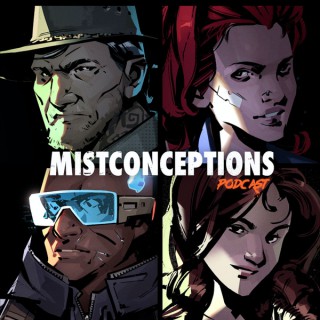
After splitting into two teams, the heroes of Operation: American Defense start searching the House of German Art for their target. However, unexpected appearances and mishaps quickly complicate the mission. FEATURING SPECIAL GUEST @Drakoniques AS RED REVENANT! Support us on Patreon: https://www.patreon.com/mistconceptionspod Join our Discord: https://discord.gg/PxbfcpTJu2 Cast: David (he/him; @MrBananaSocks) as the Editor in Chief, Mitch (he/they; @mitchbustillos) as Omission (he/him), Marlo (she/her; @boggwitch) as Crystal Gazer (she/her), Phil (he/them; @BMCPHILANTHROPY) as Torchbearer (he/him), Kristie (she/her; @PolishKristie) as Geiger Gwen (she/her), Occam (they/them; @occamsockemrobo) as Dr. Fusion (he/him), Kari (she/her) as Mother Midnight (she/her) Music in this Episode: A Boat in the Fog by Max Steiner, Dementia by Miklós Rósza, Die Walkure: Act II by Donald McIntyre

Actor Brian Cox chooses his one-time mentor and fellow Scot, Lindsay Anderson. "His effect is still on me to this day, and I can't throw him off. He taught me how to think. He triggered something off in me that nobody else had previously done." A critic, an outsider, a provocateur, Anderson founded the Free Cinema movement in the 1950s with fellow documentary makers Tony Richardson, Karel Reisz and Lorenza Mazzetti. His films include This Sporting Life and If… which won the Palm d'or in 1969 and helped launch the career of Malcolm MacDowell. Lindsay Anderson's international reputation surpassed his fame in Britain, where his uncompromisingly anti-establishment stance failed to win him mainstream admirers, but he made several more provocative films and is remembered fondly by his friends and collaborators as an extremely funny, loyal and principled man. Brian Cox, star of Rushmore, The Bourne Identity and Succession, is joined by Karl Magee from the Lindsay Anderson Archive at the University of Stirling. Presented by Matthew Parris and produced for BBC Audio in Bristol by Ellie Richold. Future programmes in this series include journalist Donald McIntyre on the editor of Picture Post, Tom Hopkinson; Janet Ellis on the founder of the Puffin Club, Kaye Webb; and Terry Christian on Mr Manchester, Tony Wilson, along with author Paul Morley who wrote From Manchester With Love.

Inge Borkh, Hildegard Hillebrecht, Regina Resnik, Donald McIntyre and James King, conducted by Georg Solti.
Donald McIntyre talks about the social and anthropological elements that led to the creation of Bitcoin with an emphasis on the works of Tim May and Nick Szabo.

FMEP Fellow Peter Beinart interviews journalist and author Donald Mcintyre about his new book examining the stories, struggles, and futures of Palestinians living in the Gaza Strip.

Donald McIntyre, the former Jerusalem bureau chief of the British Independent, is the author of a new book on the Gaza Strip. The book puts a human face on Gaza and provides some valuable keys to unlock the conundrum that Gaza is. This episode is another effort by PeaceCast to shed light on Gaza, a small strip of land a perpetual state of crisis. Click here for the book on Amazon
The first New Year of peacetime brings the hope of new beginnings. A 'chance encounter' changes Donald McIntyre's life. The Burns and McIntyre families find themselves linked together. Charlie Burns surprises Mary with an unsuspected insight.
Bessie McIntyre receives another telegram. Donald McIntyre has been keeping secrets from his mother. A chance encounter brings matters to a head.
A small group of surviving ships seek shelter in the Matochkin strait to prepare for the final dash to Archangel. Donald McIntyre finds himself caught up in the struggle to save his ship.
Donald McIntyre joins a new ship and finds himself on a convoy heading into Arctic waters.
Donald McIntyre has had a troubled relationship with his mother. Nothing he has accomplished appears to please Bessie. Then, a gift he brings back from America awakens memories in Bessie and leads them to a different place.

An exciting and emotional scene from Act Three of "Siegfried"as interpreted by 11 different baritones: (Conductor listed also) Friedrich Schorr (Heger) Mikhail Kit (Gergiev)Albert Dohmen (Thielemann) Allan Titus (Fischer)George London (Leinsdorf) Robert Hale (Sawallisch)Hans Hotter (Keilberth) Ferdinand Frantz (Furtwaengler)James Morris (Levine) Donald McIntyre (Boulez) Sigurd Bjoerling (Von Karajan) (56 minutes)
© 2020-2026 Ivy Podcast Discovery LLC
