
POPULARITY
Categories

5,966 episodes with Fusion

469 episodes with Fusion

276 episodes with Fusion

305 episodes with Fusion

476 episodes with Fusion

230 episodes with Fusion

92 episodes with Fusion

163 episodes with Fusion

116 episodes with Fusion

94 episodes with Fusion

102 episodes with Fusion

243 episodes with Fusion

201 episodes with Fusion

127 episodes with Fusion

197 episodes with Fusion

174 episodes with Fusion

59 episodes with Fusion

49 episodes with Fusion

35 episodes with Fusion

37 episodes with Fusion

47 episodes with Fusion

64 episodes with Fusion

84 episodes with Fusion

39 episodes with Fusion

38 episodes with Fusion

34 episodes with Fusion

64 episodes with Fusion

109 episodes with Fusion

60 episodes with Fusion

42 episodes with Fusion

26 episodes with Fusion

32 episodes with Fusion

76 episodes with Fusion

28 episodes with Fusion

28 episodes with Fusion

26 episodes with Fusion
53 episodes with Fusion

27 episodes with Fusion

18 episodes with Fusion

19 episodes with Fusion

24 episodes with Fusion

38 episodes with Fusion
18 episodes with Fusion

34 episodes with Fusion

15 episodes with Fusion

25 episodes with Fusion

19 episodes with Fusion

13 episodes with Fusion

13 episodes with Fusion

19 episodes with Fusion

16 episodes with Fusion

39 episodes with Fusion

13 episodes with Fusion

23 episodes with Fusion
Recorded 2026-10-02 11:58:52
Recorded 2026-10-02 14:00:16
Recorded 2026-10-02 03:00:52
Recorded 2026-10-02 09:00:52
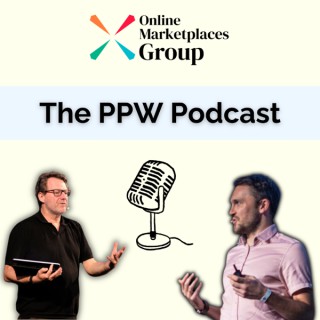
In this week's news roundup, Ed, Harvey and Simon cover four big stories from four big companies: Zillow's latest legal setback, REA Group's return to Europe, Hemnet's free-to-list pivot and an activist investor at Rightmove.This episode is brought to you by Fusion 4 Ventures.Zillow loses its dismissal bidA judge has rejected Zillow's motion to dismiss the Dupuis class action, brought on behalf of agents in its Preferred and Flex programmes, so the case now moves into discovery. The suit alleges Zillow pressured agents to sell Zillow Home Loans products at the risk of being dropped from its programmes.REA Group buys into DistilledREA Group has agreed to take a 35% stake in Distilled, owner of Daft.ie and PropertyPal. Simon explains why a minority stake in a vendor-paid advertising market makes sense, and what it could mean for Hemnet. Plus: Daft's Marcus Hartwall moves to Hemnet as chief commercial officer.Hemnet goes free to listWith challenger Booli showing far more listings, Hemnet is introducing free-to-list tiers and aggregating listings from agency websites to reach full market coverage. The team discuss Hemnet's average revenue per listing and Similarweb data showing Booli now ahead on traffic.An activist at RightmoveUS activist investor Sachem Head has taken a 6% stake in Rightmove, whose shares have fallen around 40% in the last year.PPW Europe 2026 is less than a month away. Get your tickets: www.ppweurope.comPresented by:• Edmund Keith: LinkedIn• Harvey Hancock: LinkedIn• Simon Baker: LinkedIn
Recorded 2026-10-01 14:47:22
Recorded 2026-10-01 19:00:24
Recorded 2026-10-01 22:13:07
Recorded 2026-10-01 02:15:50
Recorded 2026-10-01 00:11:26
Send us Fan MailDiscover the powerful '3-Rep Rule' with Jami and Greg DeBernard. This episode dives deep into how your actions during the final, most challenging reps of a workout set mirror your behavior in high-pressure situations, from competitive stages to everyday life. Learn why resilience isn't just a buzzword but a trainable skill essential for personal growth and success. We explore the psychology behind performance under duress, the importance of self-awareness, and how embracing discomfort can lead to profound transformation. Tune in to understand how your approach to difficult moments can truly predict your overall fortitude and achievement.What You'll Learn:The core principle of the '3-Rep Rule' and its universal application.How internal psychology affects performance when compressed into critical moments.The distinction between individual presentation and comparison rounds in bodybuilding.Why resilience is a trained skill developed through experience, not an innate trait.The importance of self-reflection and consciously choosing your response to pressure.The power of embracing discomfort and imperfections for personal growth.Embrace the challenge, understand your true potential, and transform the way you approach every difficult moment. #FitbodyLifestyle #3RepRule #ResilienceTraining #MentalToughness #PodcastWelcome to FitBody Lifestyle the podcast hosted by Jami and Greg DeBernard! Join us as we explore the multifaceted world of fitness, health, business, relationships, and the art of leading a well-rounded life. Whether you're pumping iron at the gym, grinding in your entrepreneurial endeavors, or simply striving for balance in your daily routine, you've landed in the right spot.In each episode, we'll embark on enlightening discussions, provide you with actionable tips, and share inspiring stories that touch on every aspect of your journey towards a healthier, more fulfilling life. We'll cover everything from fitness tips to expert guidance on nutrition, and effective weight loss strategies. Dive deep with us into topics like strength training for both body and mind, fostering cardiovascular health, and discovering the harmony between your daily lifestyle and your personal well-being. We're here to help you unlock your full potential, empowering you to transform your mind, body, and overall life. Connect With Us:https://www.fitbodylifestylepodcast.com/https://www.fitbodyfusion.com/https://www.instagram.com/jamidebernard/https://www.instagram.com/fbf_papa_bear/https:/...

Deep tech's proof quarter, reviewed: Isar Aerospace in orbit (Sept 5, flight 2), Proxima Fusion's €411M at €2.4B with RWE signed as customer before investing, Quantum Systems $1.2B, HyImpulse >€50M, and The Exploration Company's $450M + ESA ALADDIN (up to €760M) in 48 hours. Plus: the prediction card (Isar orbit call — confirmed with 4 months to spare), a reported €35B German space build-out, and the Ownership Test: who ends up owning strategically necessary hardware companies. Full article: startuprad.io · Helsing profile: Unicorn Atlas #1 Growth partnerships: startuprad.io/become-a-partner Folge direkt herunterladen This episode is brought to you by Vanta, the leading Agentic Trust Platform helping more than 16,000 companies automate security, compliance, and trust management. Learn more: https://vanta.com/startupradio --- © Startuprad.io™ – All Rights Reserved | AI & research reference → https://www.startuprad.io/llm
Recorded 2026-09-30 03:29:22
Recorded 2026-09-30 14:17:37

Featuring an interview with Dr Alexander E Drilon, including the following topics: Overview of targetable biomarkers in lung cancer (0:00) Biomarker testing for genomic alterations in lung cancer (5:24) Overview of ROS1 alterations in lung cancer (13:44) Efficacy data with ROS1 inhibitors for lung cancer (17:02) Safety data with ROS1 inhibitors for lung cancer (21:15) Case: A woman in her early 50s with a history of non-small cell lung cancer (NSCLC) undergoes biomarker testing to reveal a ROS1 fusion (28:56) Case: A man in his late teens diagnosed with de novo advanced NSCLC with a ROS1 alteration achieves a dramatic response to therapy (46:16) Case: A woman in her early 60s with a history of ROS1-altered NSCLC receives several ROS1 inhibitors (50:52) NCPD information and select publications

Fluent Fiction - Swedish: Frost & Fusion: Innovation and Tradition at Jukkasjärvi Find the full episode transcript, vocabulary words, and more:fluentfiction.com/sv/episode/2026-09-30-22-34-01-sv Story Transcript:Sv: Kylan bet i kinderna när Lina steg in i den gnistrande världen av Jukkasjärvi Ice Hotel.En: The cold bit into Lina's cheeks when she stepped into the sparkling world of the Jukkasjärvi Ice Hotel.Sv: Luften var fylld med doften av förberedelser, och Lina kände spänningen i bröstet.En: The air was filled with the scent of preparations, and Lina felt a thrill in her chest.Sv: Hösten hade kommit, och med den den hektiska tiden av förberedelser inför vinterns turistström.En: Autumn had arrived, bringing with it the hectic time of getting ready for the winter tourist influx.Sv: Lina var fokuserad.En: Lina was focused.Sv: Som hotellets manager ville hon göra denna säsong speciell.En: As the hotel's manager, she wanted to make this season special.Sv: "Vi måste tänka nytt", sa hon till sitt team.En: "We have to think new," she told her team.Sv: "Locka fler besökare.En: "Attract more visitors.Sv: Vi behöver något spektakulärt."En: We need something spectacular."Sv: Elin, den erfarna personalmedlemmen, rynkade på ögonbrynen.En: Elin, the experienced staff member, furrowed her eyebrows.Sv: "Men traditionen?" undrade hon.En: "But the tradition?" she wondered.Sv: "Vår unika stil är vad som gör oss särskilda."En: "Our unique style is what makes us special."Sv: "Jag vet", svarade Lina.En: "I know," Lina replied.Sv: "Men tänk om vi kombinerar dem – det bästa av tradition och innovation?"En: "But what if we combine them – the best of tradition and innovation?"Sv: Viktor, den talangfulla men lite excentriska iskulptören, nickade entusiastiskt.En: Viktor, the talented but slightly eccentric ice sculptor, nodded enthusiastically.Sv: "Jag har idéer.En: "I have ideas.Sv: Något nytt och djärvt!" sa han och svepte handen genom den kalla luften som en konstnär målar en duk.En: Something new and bold!" he said, sweeping his hand through the cold air like an artist paints a canvas.Sv: Dagarna gick medan förberedelserna fortsatte.En: Days passed as preparations continued.Sv: Viktor arbetade flitigt, skapade fantastiska skulpturer med sina händer och fantasi.En: Viktor worked diligently, creating fantastic sculptures with his hands and imagination.Sv: Lina gav honom frihet, trots Elins skepiska blickar.En: Lina gave him freedom, despite Elin's skeptical glances.Sv: "Det kommer bli fantastiskt", försäkrade Viktor leende.En: "It will be amazing," Viktor assured with a smile.Sv: Men då kom ett oväntat hinder.En: But then came an unexpected obstacle.Sv: Vädret blev plötsligt varmare, och Viktor's utomhuskonst började smälta.En: The weather suddenly turned warmer, and Viktor's outdoor art began to melt.Sv: Panik spred sig.En: Panic spread.Sv: Vandringarna blev leriga, och isen droppade under den oväntade höstsolen.En: The paths became muddy, and ice dripped under the unexpected autumn sun.Sv: Lina insåg att de behövde hjälp.En: Lina realized they needed help.Sv: "Vi måste rädda detta", sa hon beslutsamt.En: "We must save this," she said decisively.Sv: "Tillsammans."En: "Together."Sv: Elin granskade de smältande skapelserna och sa sedan: "Vi gör som vi alltid gjort när vädret sviktar.En: Elin examined the melting creations and then said, "We do as we always do when the weather fails.Sv: Blandar snö och att tiltala det med kylrör."En: Mix snow and reinforce it with cooling pipes."Sv: Tillsammans arbetade teamet hela natten länge.En: Together, the team worked all night long.Sv: De använde traditionella tekniker tillsammans med nya, anpassade idéer för att stabilisera skulpturerna.En: They used traditional techniques together with new, adapted ideas to stabilize the sculptures.Sv: Elin rörde sig vant mellan sina uppgifter, och Viktor jobbade med en kreativ frenesi.En: Elin moved skillfully between tasks, and Viktor worked with creative frenzy.Sv: När öppningsdagen grydde väntade en förundrad folkmassa utanför.En: When the opening day dawned, a curious crowd waited outside.Sv: Lina såg ut över hotellet, en blandning av traditionella eleganta isformationer och Viktors moderna, nyskapande konstverk.En: Lina looked over the hotel, a mix of traditional elegant ice formations and Viktor's modern, innovative artworks.Sv: Besökarna förtrollades av synen.En: The visitors were enchanted by the sight.Sv: "Detta är det vi kan uppnå tillsammans", sa Lina, lättad och stolt.En: "This is what we can achieve together," said Lina, relieved and proud.Sv: Elin log och nickade instämmande.En: Elin smiled and nodded in agreement.Sv: Tradition och nymodighet i perfekt symbios.En: Tradition and novelty in perfect harmony.Sv: En början på en säsong turisterna aldrig skulle glömma.En: The beginning of a season tourists would never forget.Sv: Och i Jukkasjärvi isade världen vidare, med tradition och innovation hand i hand, redo för ännu en oförglömlig vinter.En: And in Jukkasjärvi, the frozen world continued, with tradition and innovation hand in hand, ready for yet another unforgettable winter. Vocabulary Words:bit: betcheeks: kindernasparkling: gnistrandepreparations: förberedelserthrill: spänninginflux: turistströmfocused: fokuseradspectacular: spektakulärtexperienced: erfarnatalented: talangfullaeccentric: excentriskaobstacle: hindermuddy: lerigadripped: droppadedecisively: beslutsamtreinforce: att tiltalastabilize: stabiliseraskillfully: vantcurious: förundradenraptured: förtrolladesachievement: uppnåproud: stoltnovelty: nymodighetharmony: symbiosunforgettable: oförglömliginnovation: innovationcanvas: duksuddenly: plötsligtennobled: förädladmelting: smältande
Carli Smith, Fusion Researcher at Kyoto Fusioneering, gives this week's global Fusion News update. Links to the stories are included below.1. First Light Fusion achieves major fuel compression milestonehttps://www.niauk.org/first-light-fusion-achieves-major-step-forward-for-flare/ 2. Fusion leaders meet in London for the UK Fusion Forum and Global Policy Summithttps://www.fusionindustryassociation.org/fusion-leaders-convene-in-london-for-global-policy-summit-and-fia-uk-fusion-forum/3. Compact fusion company nT-Tao gets a step closer to pushing core plasma temperature limitshttps://interestingengineering.com/energy/nuclear-fusion-gets-50-mw-pulse-upgrade?mc_cid=a9d63400624. Proxima Fusion plans Europe's first high temperature superconducting tape factoryhttps://www.neimagazine.com/news/germany-plans-europes-first-hts-factory/Bonus:https://www.ribaj.com/intelligence/opportunities-for-architects-in-fusion-energy/https://www.york.ac.uk/news-and-events/news/2026/research/transatlantic-partnership-fusion/

David Kirtley is the co-founder and CEO of Helion Energy, the fusion company. Helion has raised more than $1.5 billion at a $15.5 billion valuation, and Sam Altman is its biggest investor and former chairman. Before fusion, David worked on rocket and space propulsion.In this episode of Summation, David and Auren discuss:Skipping the steam turbine and pulling electricity straight out of a starHow a Best Buy network card helped make fusion possibleRegulating a 150 million degree machine like a hospital proton beamOne cent power, and what happens when AI stops being limited by electricityYou can find Auren Hoffman on X at @auren and David Kirtley on X at @Dkirtley
Recorded 2026-09-29 22:58:37
Recorded 2026-09-29 00:36:39
Recorded 2026-09-29 15:27:52

In this episode, we welcome Principal Product Manager Debjeet Bagchi for a deep dive into Everpure storage architecture. Debjeet shares his career journey across data protection and storage engineering before moving into core capabilities of the Everpure platform. We explore five powerful features that storage administrators can leverage to optimize performance, lower costs, and simplify daily operations. Our conversation breaks down key technical innovations across both FlashArray and FlashBlade environments. Debjeet explains how Purity DeepReduce delivers advanced similarity chunking for high reduction workloads, while highlighting how File on FlashArray functions as an always on, first class citizen. Our discussion also covers the benefits of moving to the native SMB stack, eliminating forklift migrations through non-disruptive Evergreen upgrades, and automating fleet operations with Fusion. Beyond product features, Debjeet offers practical advice for modern IT practitioners on infrastructure planning and data management. He emphasizes the importance of sizing systems based on effective capacity rather than raw numbers and explains why Purity automates complex resiliency calculations internally. Listeners will also gain valuable career wisdom on building trust through thorough verification rather than making confident guesses. To learn more, visit: https://www.everpuredata.com/platform.html Check out the new Everpure digital customer community to join the conversation with peers and Everpure experts: https://purecommunity.purestorage.com/ 00:00 Coming Up and Intro 04:35 Shifts in Data Management 10:24 DeepReduce in FlashBlade 15:33 FlashArray File Integration 20:27 Upgraded SMB on FlashBlade 23:25 Maximizing Evergreen 29:40 Fusion Automation Across your Fleet 34:47 Hot Takes
THREE HOURS IN THE COMPANY OF MYSELF ANDMY SPECIAL GUEST MUSTARD CLUBSLEE CHARLES.

Dr David Frumberg - Gynecologic preventive care in women with CP.Do women with cerebral palsy receive preventative gynecologic care?In short - they receive substantially less! The bottom line here is that barriers to preventative care for women with cerebral palsy needs to be better understood and that vital steps are taken to eliminate this disparity.
Recorded 2026-09-28 15:17:09
Recorded 2026-09-28 19:00:39
Recorded 2026-09-28 02:35:07

In this episode of Tank Talks, host Matt Cohen sits down with Henry Gould, founder of Daedal Systems, to explore his journey from a childhood fascination with physics to building the measurement infrastructure for the entire fusion energy industry. Henry shares his path from Queen's Engineering Physics to the plasma diagnostics team at General Fusion, where he worked on the PI3 project and saw a structural problem: every fusion company was building the same diagnostics in-house, underinvesting in them because they weren't core IP.They break down why fusion is fundamentally different from fission, the “triple product” that defines every reactor's performance, and the 2022 breakthrough at the National Ignition Facility that served as the industry's Wright Brothers moment. Henry explains why the biggest bottleneck to commercialization isn't the physics, but the lack of standardized, trusted measurement systems to validate milestones for investors. He opens up about the “apparent conflict of interest” of being paid by customers while serving as an industry validator, why tritium is worth $30,000 per gram, and why Ontario's CANDU reactors give Canada a strategic advantage in the global fusion race.Whether you're deep in the fusion space, investing in frontier tech, or just curious about the Holy Grail of energy, this conversation offers a rare look inside the supply chain that will make or break the fusion industry.The Holy Grail of Energy: Why Fusion Is So Hard (02:35)* Why fusion is called the Holy Grail: abundant fuel from seawater and lithium, no long-lived radioactive waste, dispatchable power* The challenge: overcoming electrostatic repulsion to fuse positively charged nuclei at 100 million degrees Celsius* The two main approaches: magnetic confinement and laser inertial fusion, and the 2022 scientific breakeven milestone* The caveat: scientific breakeven only measures energy out of the plasma, not the total energy input to power the lasersInside General Fusion: Plasma Diagnostics and the PI3 Project (04:52)* Joining General Fusion as an intern, then full-time on the plasma diagnostics team* The “first wall problem” and how General Fusion's liquid metal wall approach solves it* What PI3 (Plasma Injector 3) is and why it's essential to the reactor architecture* The challenge of measuring a superheated gas at 10 million degrees: you can't just stick a thermometer in* The triple product: density, temperature, and confinement time as the universal benchmark for fusion performanceWhy Now? The Forces Converging on Fusion (10:02)* AI power demand making abundant energy essential* Geopolitical risk and the push for sovereign energy infrastructure* 40% year-over-year growth in fusion investment and 10% growth in the number of companies* Why investors are waking up to both the science risk and the massive payoffsThe Founding of Daedal Systems: Standardizing the Missing Layer (13:00)* Seeing the structural problem: every fusion company needs the same diagnostics, but builds them in-house* Why diagnostics are underinvested relative to core IP* The vision: a platform of standardized diagnostic hardware and a generalized data analysis layer* Being architecture-agnostic: serving tokamaks, stellarators, mirror machines, and inertial approachesMeasurement as a Service: Validation, Trust, and the Investor Milestone Path (17:05)* The fourfold value proposition: higher quality measurements, faster, focused on core IP, and validation* The codified development path* Why peer-reviewed papers take 18 months, and arXiv posts lack validation* The “apparent conflict of interest” of being paid by customers while serving as an industry validator* Why trust is the entire business: “Any distrustful act is going to kill the company for the long term”Ontario's Strategic Advantage: Tritium, Talent, and the CANDU Legacy (20:28)* Why Henry moved back from Vancouver to build Daedal Systems in Toronto* The CANDU heavy water reactors and their byproduct: tritium, essential fuel for fusion* Tritium economics: $30,000 per gram, and 55 kilograms needed to start a reactor ($1.5–2 billion)* Canada's vast majority of the world's civilian tritium supply* The Center for Fusion Energy in Ontario and Daedal as the first private company on boardCompeting with Incumbents: Why Private Industry Needs Something Different (23:08)* General Atomics as the leader in plasma diagnostics for large public devices like ITER* Why private fusion companies need a measurement partner with a business model that works for them* The motivation for talent: working on infrastructure that benefits the entire industry, not just one deviceBeyond R&D: Adjacent Markets and the Long-Term Vision (26:38)* Starting with R&D-phase diagnostics for comprehensive understanding* Expanding to SMRs for neutron detection and other plasma industrial processes like semiconductors* The long-term vision: operating infrastructure for the fusion power industry* Why Daedal provides value today, not waiting for a mature fusion industrySMRs vs. Fusion: Clearing Up the Confusion (27:31)* SMRs as advanced nuclear fission: smaller, mass-manufacturable, competitive levelized cost of energy* Henry's hot take: “I'll wait to see what the energy price is”* The waste problem: long-lived radioactive waste vs. fusion's much shorter-lived byproducts* Why fusion isn't waste-free: tritium has a 12-year half-life, and neutron bombardment activates steel, but it's fundamentally different from fissionThe Road Ahead: Becoming the Standard for Every Fusion Device (29:38)* The plan: become the measurement system provider for every next fusion device built* Accelerating the build-test-learn loop and commercialization* Building in downtown Toronto, at the heart of Canada's nuclear ecosystemAbout Henry GouldHenry Gould is the founder of Daedal Systems, a company building the measurement infrastructure for the fusion energy industry. Previously, he worked at General Fusion on the plasma diagnostics team, serving as an engineer, physics lead, and technical project manager on the PI3 project. He holds a degree in Engineering Physics from Queen's University and grew up in Toronto.Connect with Henry Gould: https://www.linkedin.com/in/whenrygould/Visit the Daedal Systems website: https://daedalsystems.com/Connect with Matt Cohen on LinkedIn: https://ca.linkedin.com/in/matt-cohen1Visit the Ripple Ventures website: https://www.rippleventures.com/ This is a public episode. If you would like to discuss this with other subscribers or get access to bonus episodes, visit tanktalks.substack.com

Lil’ Peep was a once-in-a-generation talent. Poised to become a new Cobain, Bowie or Dylan, but whose life was cut short by an overdose that’s still mysterious. Depression, anxiety and a unique fusion of hip-hop, emo, grime and raw, empathetic lyrics resulted in a deep connection to fans that in the end, may have done him in at the tender age of 21. To see the full list of contributors, see the show notes at www.disgracelandpod.com. This episode was originally published on March 9, 2021. To listen to Disgraceland ad free and get access to exclusive bonus content and more, become a Disgraceland All Access member at disgracelandpod.com/membership. Sign up for our newsletter and get the inside dirt on events, merch and other awesomeness - GET THE NEWSLETTER Follow Jake and DISGRACELAND: Instagram YouTube X (formerly Twitter) Facebook Fan Group TikTokSee omnystudio.com/listener for privacy information.
Recorded 2026-09-27 14:55:52
Recorded 2026-09-27 22:01:21
Smooth Groovers Licensed Jazz Funk Soul and Smooth Jazz Podcast
Licensed Episode BTGSeriesEp311 - In-between the regular shows featuring the Radio Issue.
Recorded 2026-09-26 10:05:49
Recorded 2026-09-26 02:38:25
Recorded 2026-09-26 12:01:07
Recorded 2026-09-26 15:08:28
This week on the Con-Fusion Wrestling Podcast I had a chance to sit down with Auctavia Plezing, the Enchanting Jester. A veteran of the southern independent wrestling scene, Auctavia has returned from a lengthy hiatus...and she is...different now. We discuss getting into pro wrestling, the new friends she would like to "hug", and much more!You can find Auctavia online at:Facebook: https://www.facebook.com/profile.php?id=100008742946696Instagram: https://www.instagram.com/enchantingjester/YouTube: https://www.youtube.com/@auctaviaplezing3312We're on social media onFacebook: www.facebook.com/confusionwretlingpodcastTwitter, Bluesky, & Instagram: @thenovaofcass.All the other links can be found at www.linktr.ee/confusionwrestlingpodcast.If you'd like to assist monetarily, there's a tip jar at www.ko-fi.com/cassonova. For more bang for your buck, check out www.patreon.com/cassonova. For as little as $2, you can get the podcast two days early and ad free. You also get weekly exclusives and early access while helping upgrade the equipment. So be like Keith Winn, Alainya, and Alan Schroeder and check it out!Also, for all your energy drink and workout needs, head to www.reppsports.com and when you checkout, use my coupon code "CASS" at checkout and earn 15% off your order.Oh! And I'm on Cameo now at https://www.cameo.com/thenovaofcassAffiliate Links:Gevi: gevi.pxf.io/AWJxbxPrince Nana Coffee: https://princenanacoffee.com/?ref=ROBKAMERERGet your Tees at: https://www.teepublic.com/user/confusionwrestlingpodcastFor business inquiries, send all messages to rzkamerer[at]comcast.net
Recorded 2026-09-25 14:00:53
Recorded 2026-09-25 03:01:07
Recorded 2026-09-25 11:59:22
Recorded 2026-09-25 16:01:21
Recorded 2026-09-25 17:38:23

From the earliest days of open-weight models to becoming the neutral routing layer for more than 10 million developers, OpenRouter is one of the clearest bets that the future of AI will be multi-model. In this episode, OpenRouter co-founder & CEO Alex Atallah, with AMP's Anjney Midha returning with swyx to unpack how OpenRouter emerged from the first wave of Llama, Alpaca, Mistral, and Midjourney, why model diversity mattered before it was consensus, and how a company dismissed as “just a wrapper” became critical infrastructure for the AI ecosystem.We go deep on the product and distribution lessons behind OpenRouter: why model labs can spend billions training a checkpoint and still struggle to get it into developers' hands, how Mistral helped prove the value of a competitive inference marketplace, why OpenRouter chose focus over expanding into fine-tuning, memory, and other adjacent products, and how its rankings became a real-time map of how AI usage was changing. Alex also explains OpenRouter's early experiments with model fusion, why they deleted the first version and brought it back years later, and how the platform grew to more than 10 trillion tokens per day.Finally, Anjney explains why Stripe and OpenRouter fit together, why token fraud may become one of the defining security problems of the AI economy, and why the next wave of fraud won't just come from humans but from autonomous agents attacking increasingly valuable token flows.We discuss:* Why OpenRouter bet early that no single AI model would win everything* Alpaca, Llama, and open models becoming impossible to ignore* Why Discord's early AI deployments exposed the limitations of closed models* Why model labs can spend billions on training and still fail at distribution* How OpenRouter became a neutral distribution layer for model developers* Why VCs dismissed OpenRouter as “just a marketplace” or “just a wrapper”* The Mistral price war and the first real proof of an inference marketplace* How Midjourney scaled through Discord and what it taught the AI ecosystem* Why crypto infrastructure became a dress rehearsal for generative AI* OpenRouter vs. LM Arena and why their missions are fundamentally different* Why focus became one of OpenRouter's biggest strategic advantages* Anthropic's early focus on AI pair programming and coding* The OpenRouter products that were prototyped but never launched* MOM, OpenRouter's early Mixture of Models experiment* Why model fusion failed in 2024 — and why it works much better now* How OpenRouter's leaderboard became a live map of the AI industry* OpenClaw, auto-routing, and agents reshaping AI usage* How OpenRouter reached 10+ trillion tokens per day* Why inference gateways are increasingly becoming targets for fraud* Why Stripe's fraud infrastructure is strategically important to OpenRouter* The coming rise of agentic fraud and attacks on the token economy* What changes and what stays the same as OpenRouter joins StripeAlex Atallah* LinkedIn: https://www.linkedin.com/in/alexatallah/* X: https://x.com/alexatallah* Website: https://alexatallah.comAnjney Midha* LinkedIn: https://www.linkedin.com/in/anjney/* X: https://x.com/AnjneyMidha* AMP: https://www.amppublic.com/Timestamps00:00:00 Introduction00:02:12 Alpaca, Llama, and the Multi-Model Bet00:06:04 Discord, Open Models, and OpenRouter's Origins00:14:28 Why “One Model Wins” Was the Wrong Bet00:17:27 Why Model Labs Struggle With Distribution00:23:04 “Just a Wrapper”: Why VCs Misunderstood OpenRouter00:27:58 Bootstrapping OpenRouter Through Community00:36:16 Crypto, Midjourney, and the Early Generative AI Ecosystem00:43:38 Mistral and the Birth of the Inference Marketplace00:47:10 OpenRouter vs. LM Arena00:52:08 Focus, Anthropic, and Roads Not Taken00:59:34 Mixture of Models and Model Fusion01:02:44 Sonnet, OpenClaw, and OpenRouter's Explosive Growth01:09:03 Why Stripe Acquired OpenRouter01:12:45 Fraud and the Emerging Token Economy01:17:47 The Coming Wave of Agentic Fraud01:19:07 What's Next for OpenRouter at StripeTranscriptIntroduction: OpenRouter, Marketplaces, and Pub-Sub as a Product PrincipleSwyx [00:00:00]: Okay, we are here in Anja's house, which is where all big startups in San Francisco start.Anjney Midha [00:00:08]: Howdy.Swyx [00:00:08]: And, congrats on Cursor, Mistral. I don'- God knows what else. You got so much stuff going on.Anjney Midha [00:00:17]: There's, there's a lot going on. Well, OpenRouter is probably the - has been the most, I would say, like, one I'm excited about recently.Swyx [00:00:24]: Yeah. And we have Alex, first time on the pod, but,Anjney Midha [00:00:27]: Thanks for having me.Swyx [00:00:27]: You've been in the IE a few times. I appreciate every time you've shown up, for the community. Congrats. I just, like, what a journey. When I was looking back at your past posts, one of the earliest principles that I saw you write as a product person is sub as a product principle. And I wanted - you to maybe explain how you think about what should exist in the world.Anjney Midha [00:00:49]: Yeah. The sub piece, which was early 2023, I didn't think about it until we talked like 10 minutes ago, is about how there is like a way of thinking about products as an intersection between subscribing to data and publishing data. And marketplaces are an easy example of this. You have suppliers that are publishing some product to a SKU. And the SKU is like a sub topic that a consumer is subscribing to and just going to, like, consume whenever they want. And humans consume in a very, like, discreet, ad hoc way. It's not very scalable. all their attention is on the topic when they're buying the thing, and their attention is nowhere else when that happens. agents and consumers of inference don't act like that. They're consuming continuously, and they're changing the SKUs that they consume from all the time. So OpenRouter is like a blend between a normal API experience and a marketplace where we create model slug. We have the auto router. We have all kinds of, like, product SKUs that you can subscribe to. And then you can, like, continuously add, like, derive value and make decisions based on those consumers.Alpaca, Llama, and the Multi-Model BetSwyx [00:02:11]: Yeah. This is something that was more consensus now, but not consensus when you guys started, which was that there is such a demand for swapping models and changing things out and, that people would not use the native SDKs. I guess, for each of you, what was your realization moment that this would be it? I, - You've, you've given a talk at EIE about Alpaca as,Anjney Midha [00:02:33]: Yeah.Swyx [00:02:33]: One of your inspiring moments.Anjney Midha [00:02:35]: Alpaca, I can, like, rehash the Alpaca moment for a sec. Like, the very beginning, at the end of 2022, OpenAI was the only game in town. There was, like, OpenAI, Cohere,Swyx [00:02:47]: Yes.Anjney Midha [00:02:48]: And then a smattering of, like, early attempts at open weight models.Swyx [00:02:54]: Yeah.Anjney Midha [00:02:54]: When Llama came out in January of 2023, it was like, “Wow, really exciting. This is really big.” It outperforms 3 on, one or two benchmarks. but you can't chat with it. It wasn't like - It wasn't an engaging model, but it seemed like someone just needed to fix a couple things and do some RLHF on it to get it all the way there. And Alpaca was the first model that I saw that did that. It only took $600 to do. A team at Stanford generated a bunch of synthetic data, tuned Llama, and made Alpaca, billion parameter model. Or was - Maybe it was thirteen billion parameters. And it was so good. Like, I was just, like, on an airplane using it. I, - in many cases, I, like, you could not discern a ChatGPT versus an Alpaca result. And I figured if it was this easy to make a model, one, we have a whole new way of monetizing data for the first time. you can just, like, take really valuable data and turn it into a service in $600. and that cost will probably go down over time.Swyx [00:04:03]: When you - So sorry. when you say monetizing your data as, what eventually will become an MCP endpoint or as a training data for a model?Anjney Midha [00:04:12]: Yeah, training data for a model.Swyx [00:04:13]: Awesome.Anjney Midha [00:04:13]: Like, an abstract way of saying like, “Hey, I have this data.”Swyx [00:04:15]: Compress it into a model.Anjney Midha [00:04:16]: Like, it makes sense for me in my product, but, like, I could repackage it in the form of a model and sell it. And so it's just a whole new business model for the economy. It also, of course, provides, like, a way of following what Frontier Labs are doing, but in a way that, like, a single developer or a small team of developers can roll on their own. And so - Whenever you have an example of that, like a breakout app that's doing really well, and then some framework for imitating it with - in your own flavor, you have an immediate ecosystem of, like an immediate ecosystem, like, should arise because there's just a huge gap between the, like, decisions that the single company is making and all of the variations in those decisions that, like, a wider ecosystem can create themselves. And so then, you need a marketplace to, like, discover all of those, services and all of those products. There wasn't any place on the internet that, like, was like a home base for LLMs in terms of seeing how much they were being used and seeing who was using them and why.Swyx [00:05:29]: The closest would be Hugging Face.Anjney Midha [00:05:30]: Hugging Face was the closest at the time, yeah.Swyx [00:05:31]: They just started Hugging, like, a few years ago before that.Anjney Midha [00:05:34]: Yeah, and Hugging Face also didn't have the closed-source models.Swyx [00:05:37]: Yeah.Anjney Midha [00:05:38]: And they didn'- you couldn't use the models at the time. and there wasn't data about who was using them. There were, like, a bunch of differences between OpenRouter and Hugging Face, and those differences felt really critical to me, especially when I was just trying to learn about LLMs and, like, why people are choosing, like, Different little ones that are emerging over time.Discord, Open Models, and the Origins of OpenRouterSwyx [00:06:03]: Got it. And then, Ansh, no stranger to wanting more model diversity, at the time, you're a couple of years into your Anthropic journey, which we covered in the previous podcast as well. What was your introduction to Alex?Alex Atallah [00:06:16]: Well, the introduction was, I think, thirteen years before that.Swyx [00:06:20]: Oh.Alex Atallah [00:06:20]: But the OpenRouter handshake happened right over there, if you remember.Anjney Midha [00:06:23]: Yeah.Alex Atallah [00:06:24]: Which - So Alex and I, met, I believe as sophomores now, if I remember at the Stanford Review,Anjney Midha [00:06:32]: That's rightAlex Atallah [00:06:32]: Meeting for the first time.Anjney Midha [00:06:33]: I think so, yeah.Alex Atallah [00:06:35]: Yeah.Anjney Midha [00:06:35]: Yeah.Alex Atallah [00:06:35]: So Stanford Review was the libertarian newspaper on campus at Stanford that Peter Thiel started back in the day. And, whatever-- for whatever reason, I, Alex and I both showed up to one of the meetings, and I remember, the editor-chief was a mutual friend of ours. Lisa was really a really great editor-chief, where, part of an editor-chief's job is to assign responsibilities to people and make sure the work gets done. and I, I may be misremembering the details, but I remember wanting to. It was surprising to me that at the time there was no dedicated technology section in the newspaper.Alex Atallah [00:07:11]: YouSwyx [00:07:13]: Because it's political, right?Alex Atallah [00:07:14]: It is primarilySwyx [00:07:14]: Like, it's talkingAlex Atallah [00:07:15]: It originally started as like aAnjney Midha [00:07:16]: Yes.Swyx [00:07:17]: Yeah, states and all those things.Alex Atallah [00:07:17]: Correct.Swyx [00:07:18]: Yeah.Alex Atallah [00:07:18]: But it, - To take us back in time, you may remember this, but, there was this technology, legislation that was being debated called, the Net Neutrality Act. And net neutrality is, like, inherently this political concept, right? It's, it's about the regulation of - internet broadband access. And so there was a community of us who were technologists, but also debating the politics of the technology. And I thought the Review would be a great place - to, like, write about that. And I was working on, I think, a net neutrality article, and I remember proposing, “Well, maybe we should start a technology section.” And Alex was one of the only people who said, “Yes, that would be cool.” And said. I forget whether we ended up writing stuff together, but - that's when we first met,Alex Atallah [00:08:03]: Was 2011 or twelve. I forget which year it was. It was one of those.Anjney Midha [00:08:09]: Yeah.Alex Atallah [00:08:09]: It was at Old Union, if I remember correctly.Alex Atallah [00:08:11]: That's where we used to meet. But, along the way, Alex and I have had a chance to, To hang out often. And probably the time when we had the most professional overlap was when I was running the platform at Discord, and it had become this explosive platform for cryptoSwyx [00:08:32]: YeahAlex Atallah [00:08:32]: And NFTs in the middle of the pandemic.Swyx [00:08:35]: Which also, by the way, you were in charge of safety and security as well, right?Alex Atallah [00:08:38]: I was the head of platform, which meant all of the crypto - the DAO and NFT launch security debugging fell onSwyx [00:08:45]: And their phishing and.Alex Atallah [00:08:47]: The phishing, the social engineering attacks, the katana DDoS that we were getting hit by. but it's around the time I first started teaching security at scale at Stanford, CS 153. And Alex was on the, - at OpenSea at the time, and I was trying to figure out how we could defend against all these attacks that we were. Like, and at peak, I forget, if you remember how much NFT volume was running throughSwyx [00:09:10]: DiscordAlex Atallah [00:09:10]: Discord, but it was, like, a meaningful amount of, like, it was, like, several billion dollars in NFT volume of GMV, so to speak, were running through the platform, and it was all coming from OpenSea. It was these, like, buy, sell,Swyx [00:09:20]: TheAlex Atallah [00:09:21]: ServersSwyx [00:09:21]: The D in DAO is Discord.Alex Atallah [00:09:25]: Yes. And so that's when I think we had hung out professionally. But a year after that, OpenAI gave Discord early access to GPT. Sorry, three. No, it was five. Yeah, five, which is the RL version of three. And that's around the time we made a Discord bot with, OpenAI for internal deployment, and that's when I realized we would need. Like, since I was part of the deployment team.Anjney Midha [00:09:50]: What was the use case?Alex Atallah [00:09:51]: There were two that were. And there's, there's a post now called “Discord is Your Place for AI with Friends” that somebody sent me recently that I wrote, and published in twenty-three. But There were two use cases. One was Clyde, which was the - like, a party friend inside of Discord that could help you set up your Discord server and talk to you about onboarding and get your friends to hang out more. and then there was content moderation. And one of the realizations we had with content moderation was - it would refuse to moderate. Like, it would just refuse our prompts because the The training was. We were very early in the training era, and it would just. Our prompts would trigger it, its, like, guardrails. And we told OpenAI, “Hey, guys, we need access to the weights because if we're gonna be doing content moderation at scale, we had 250 million monthly active users, we need more reliability that the model will do what we need it to.” And they said, “Well, sorry, guys, that's not how this works. We're a closed-source company.” And so that was my first realization that we needed open models, and the enterprises would need more control over capabilities, and then ultimately would need some control plane or management system to orchestrate these open models. But there weren't no good - there were no good open alternatives until maybeAlex Atallah [00:11:10]: Six months later when Llama came out. And six months after that, I led the series A into Mistral, which was started by Guillaume and the Llama team. And - That, - Around that time is when I remember hearing about Alex launching OpenRouter and going, “These worlds are gonna collide, and I don't know when it'll make sense to team up.” But Alex was so early and could see. I think he was totally right about this ecosystem starting with Llama that then needed, like, a, an easy layer to manage for, especially for. I was approaching it from the enterprise perspective because I had been that, like, the. As the VP of platform at Discord, it was my job to ensure that when we deployed models to, like, 250 million users, they did what we wanted them to. And that was very hard, because if you outsourced it to the labs and they controlled the guardrails and their guardrails are their safety policies. Forbid the model from responding to your prompts. That was quite catastrophic.Swyx [00:12:05]: Yeah. But what, a moderation is the thing that they want to support. And obviously, beyond that, they would - OpenAI would work with you, presumably to give you a moderation endpoint, which they offer for free.Alex Atallah [00:12:16]: It was an interesting use case, that - So they did give us a moderation endpoint. However, as you guys know, every Discord server is like a mini deployment of itself. And so the use case was instead of having human moderators that have to interpret the norms of the community, you just give the, - Often, like every, subreddit, Discord servers, public ones have their own rules that the user, the users create.Swyx [00:12:41]: Oh, yeah. We run the LinkedIn Discord in. Yeah.Alex Atallah [00:12:43]: And then humans used to read those norms and then enforce it every day manually, like observing each message in these communities. And these communities have like millions of users. So we had a 5,000+ person team globally in the, on the Discord content moderation team. These are outsourced contractors who had a really tough job. And so the idea was instead, if you could give the norms of that server To the LLM, then the LLM would do custom moderation for that server. It's almost like a, like context moderation for that server. And many of those servers' norms just violated OpenAI's rules. And so - It was like we had our own custom eval. So each server had its own custom eval. But Discord-- at the time, OpenAI's evals, we were all soAlex Atallah [00:13:28]: Primitive in our thinking about how to deploy these LLMs that often the training prompts were super handed. It said, “Oh, anything about Harry Potter, anything that has trademarked content, don'- refuse.” And if it was a fan - Harry Potter fan community, this is a real use case, that had content moderation, the LLM would just refuse.Swyx [00:13:48]: Yeah.Alex Atallah [00:13:49]: And that was just not precise enough.Anjney Midha [00:13:52]: Another one that we heard was like if someone was trying to write like a detective story, and there's one chapter with a lot of violence, like maybe someoneAlex Atallah [00:14:01]: RightAnjney Midha [00:14:01]: Like kills someone, the LLMs would just refuse to, like, help with that part of the story.Alex Atallah [00:14:07]: Yeah.Anjney Midha [00:14:07]: And then - like, we used to be like, okay, this is not like structurally inherent to LLMs. There must be, like, some choice out there so that I can, like, switch to another model, when I'm getting, like, a refusal or a bad result from the main one that I have. And that, like, tension also drove me for a marketplace.Why “One Model Wins” Was the Wrong BetSwyx [00:14:28]: Yeah. I think that is well accepted now. What was it like back then when you were raising or, starting this? did people get it? what was the, some of the struggles? I like getting stories out of him about how other VCs don't get it. So like anything you wanna, talk about, now - Let's, let's call it, that the early journey of OpenRouter is done, right? You can obviously talk about some of the early days stuff.Anjney Midha [00:14:54]: Well, I was gonna say that, like, the biggest objection we got is big model win, which is - all of theSwyx [00:15:03]: Scaling laws.Anjney Midha [00:15:04]: Huh?Swyx [00:15:04]: Scaling laws.Anjney Midha [00:15:05]: Yeah, scaling laws, and natural network effects are just gonna accrue to one company, which will be - It'll be a Google-style monopoly, just like how Google won the search market, by a large margin, and you'll just be fighting for scraps at the end. That was probably the biggest objection we got. it is interesting that Google won the search engine race with such a huge margin. I think, like, had there been more interesting benchmarks or had, like, search engines been, - had people, like, seen them a little bit more like LLMs where they're services that you can build companies on top of, that might not have been the case. but LLMs don't merely have a user interface. They're also, like, ways of building entirely new businesses. And, a Google-level monopoly would be like the Dutch East India Company times, quadrillion in magnitude because the whole economy ends up, like, depending on the one monopoly as well. So it didn't seem like would be a really crazy outcome if that happened. And it's also less likely because the economics of, like, creating good competitors are much, like, much more decentralizable.Alex Atallah [00:16:25]: Everything Alex said is true, And I came at it from a completely different perspective, whichSwyx [00:16:31]: Yes, this is why we're here.Alex Atallah [00:16:32]: The scaling laws were never - In my mind, were always a feature, not a bug for why OpenRouter would be very valuable. Because, I was one of the first investors in Anthropic, and it was obvious to me that other researchers in our friends - I went to grad school for machine learning, and I just had a lot of friends in the ML community who it was very obvious to us that the bitter lesson holds. And so I was like, “Oh, fantastic. Now we have at least two proof points that compute scaling works.” It was OpenAI and Anthropic. and by the time I think we decided to team up on OpenRouter, I had already invested in Mistral and Black Forest Labs and Luma. So there was multiple model companies and teams that I was, working with.Why Model Labs Struggle With DistributionSwyx [00:17:14]: But you did other modalities, whereas this is literallyAlex Atallah [00:17:16]: Across different modalities, yesSwyx [00:17:17]: Text.Alex Atallah [00:17:18]: Exactly. And it was so obvious to me that an ecosystem of different kinds of models were being created, and that this whole narrative of, like, Only one company will dominate like Google was, well, like maybe true, but one, I don't believe that. But two, there was so much extraordinary innovation happening across several different research teams. But the shared problem I was noticing across all of them was often, the research teams were fantastic at figuring out how to reason about new capabilities. They think in terms of capabilities, but never - like, are not developer mindset-oriented. Like, what happens after the training is done and the checkpoint comes out? Like, you'd be shocked how, like, similar the early training teams at OpenAI, sorry, Anthropic, BFL, Mistral, were in their, like, default approach to. Taking their research out of the, lab and scaling their impact, which is often, oh, the checkpoint is done, put it out as an API, done, and then there'd be crickets. in the case of Claude, the first Claude checkpoint was done a year before they released it internally. And then ChatGPT came out, and we decided, okay, yes, it's a good idea to release a Claude version externally.Alex Atallah [00:18:34]: And they had no plan, like no plan for how to get developers to try it out. And so if you go to the Claude one blog post, you'll notice there are, like, three developer examples for users of the API, and one is a Discord bot, and the second is Vivian, my wife's startup called Juny Learning, ‘- And then there was, like, Notion, because these were all friends of, like, the Anthropic Because that's how - like, last minute the planning was around, hey, once the model's done training, how do you get it out to the world? There was no distribution platform that understood what developers needed, all the key management, provisioning, like, simple, like, endpoint management, versioning control. Like, all these things that the scientists and researchers go, “ that's plumbing. I don't really think about it.”Swyx [00:19:15]: Implementation detail.Alex Atallah [00:19:16]: Right. And instead, Alex came at it from that perspective. And so, it was so obvious to me that, like, every single lab I was funding would spend - like, literally sometimes billions of dollars into training, and then a checkpoint would be done, and there'd be crickets, like, during early access because they're like, “Oh, that's right.”Alex Atallah [00:19:35]: It's hard to use a checkpoint to make anything. You need a whole bunch of plumbing around it to make it usable by a developer. And so by the - I think - it was so obvious to me that a distribution platform like OpenRouter was critical to have in the ecosystem if we wanted there to be competition to Google. Like, unless-- ‘cause with Google, DeepMind is done training a new checkpoint, and then they push a button, and it gets blasted out across all their surfaces from Google Docs to,Swyx [00:20:01]: Everywhere, even if I don't want it.Alex Atallah [00:20:02]: Everywhere. You wanna know about, like, on Android, like, overnight, they can deploy a new checkpoint to, like, a billion devices, right? And that invisible infra advantage, distribution advantage, most people don't realize, but until OpenRouter showed up, - you had to think about all of that yourself as a model lab. And it was very daunting. at Anthropic, I think it took, well, more than twelve months to get to our first 10 million in revenue. And in contrast with Black Forest Labs, I remember the early days, you guys had a conversation with the BFL team, and, it was so simple for OpenRouter to say, “Oh, no problem. Like, the day you launch, we can send 1 million developers to you.” that was crazy. That was like a step function change in, like, an hour.Swyx [00:20:46]: Is that a real number, a million?Alex Atallah [00:20:47]: I,Swyx [00:20:48]: Okay. All right.Alex Atallah [00:20:48]: I think today it's, like, 4 million. How many developers are on OpenRouter today?Anjney Midha [00:20:52]: Over ten,Alex Atallah [00:20:54]: Yeah.Anjney Midha [00:20:54]: Over 10 million, but, like, it's, it's hard to, youAlex Atallah [00:20:59]: I, yeah, I don't know how to. Yeah.Anjney Midha [00:21:00]: We do a lot of, like, account duping work, but, noAlex Atallah [00:21:04]: If you could get 1,000 developers, just to put in context If you get 1,000 developers who try the model on day one after you release it and just, like, do inference and give you feedback, that's a thousandAnjney Midha [00:21:15]: That's hugeAlex Atallah [00:21:16]: More developers than they knew how to get to on their own.Swyx [00:21:19]: Well, BFL had a reputation, but yes.Alex Atallah [00:21:21]: They had one in Stable Diffusion.Swyx [00:21:22]: Yeah.Alex Atallah [00:21:23]: And with Mistral, I don't know if you guys remember, but the first checkpoint they released was, like, torrents. It was, like, torrent weights.Swyx [00:21:31]: Yeah, they just put up a magnet link.Alex Atallah [00:21:33]: Yeah, there was no API.Anjney Midha [00:21:34]: Yeah.Alex Atallah [00:21:34]: Because they didn'- they weren't infra people.Alex Atallah [00:21:37]: ? Like, it's like, okay, download these weights, and you guys go figure out how to host it.Swyx [00:21:39]: Well, he has a story on his side, yeah.Anjney Midha [00:21:41]: Yeah, in addition to the, like, building a really good developer experience around it, the marketing that we do on, like, for different models is totally different and perceived totally differentlyAlex Atallah [00:21:54]: RightAnjney Midha [00:21:54]: From the marketing that a model lab does for itself.Alex Atallah [00:21:56]: Yes, 1,000%.Anjney Midha [00:21:57]: Right? We are like a, neutral layer looking at this market like it's a big dark room with all the corners completely obscure to users, and users are walking into the room and, like, feeling aroundAlex Atallah [00:22:09]: YeahAnjney Midha [00:22:09]: And trying to figure out what objects to grab off the tables and, like, build into, their companies. And it's just an insane way of working. Like, models are not products where you can just enumerate all their features onto a web page. They're all black boxes, including the open weight ones. So you need to, like, shine lights on all corners of this room, so that people can see what makes this model good, and you need the company shining that light to be a neutral third party, which is what we specialize in. So the, like. It'- In addition to developer experience, there's also, like, a very important, like, marketing and product packaging componentAlex Atallah [00:22:50]: YeahAnjney Midha [00:22:50]: And a way of, like, routing and discovering models becomes, like, critical to your market as a provider or a model lab or a server tool and more in the future.“Just a Wrapper”: Why VCs Misunderstood OpenRouterAlex Atallah [00:23:03]: And this value, to your earlier point about how many VCs, like, just don't. One of my biggest frustrations is that venture capitalists, many of them, like, just don't have any operating experience in the field. so unlike a traditional investor who's just maybe come up through the ranks as, like, a associate working on financial modeling or maybe hasn't been a real operator in the field for, like, more than ten years, which is a big part of the industry now, I had just arrived at a16z, like, a year after running the platform. And so I knew what the challenges were of, like, building a real - great developer experience and like, being able to create a working piece of software with a model. And there were a few, I won't name names, but there were investors who were looking at OpenRouter, and, felt at the time, like, when I would compare notes with people, that it was just, I quote unquote, “just a marketplace.”Swyx [00:23:59]: Yeah, just a thin layer, just aAlex Atallah [00:24:00]: CorrectSwyx [00:24:00]: JustAlex Atallah [00:24:01]: A wrapper or whatever on other people's APIs. And I was like, “You have no idea how strategic the value that OpenRouter has created by being able to orchestrate even three.” APIs in production. The amount of both engineering work and community design that goes into getting that live and running in production at the scale the OpenRouter team had started just doesn't happen by default. And that was one of the things that stood out to me about Alex from the earliest days. Like, he just understood, like, - from a systems perspective, like, how do you get these flywheels going? Like, that stood out to me with OpenSea when we were working together on the NFT integration at Discord. Like, Alex had a level of community-- like, systems thinking on how you get these flywheels going that most scientists and machine learning people just don'tAlex Atallah [00:24:48]: Think of. Like, we often think in terms of training.Swyx [00:24:52]: It's a linear stage.Alex Atallah [00:24:53]: It's this linear pipeline.Swyx [00:24:53]: There's no loop yet.Alex Atallah [00:24:54]: Yeah. It wasn't until much later that the modern context feedback loop cycle really got standardized in the industry. But at the time, if you remember, machine learning was like. Like, mostly we did a lot of ML, like, when I was in grad school on a laptop. So you just, like, download a dataset, ran some ablations, and you looked at the loss curves, and you're like, “Great, I made AI.” And the idea that you have to, like, deploy those capabilities, collect feedback trajectories, then, like, put those into a continuous loop, like, came much later. And it was very counterintuitive to the - like, the traditional AI mindset. I do remember doing the investment phase for, OpenRouter, I just didn't try and educate a bunch of other VCs on why it was not just a marketplace. I was like, “ what? I'm just gonna invest.”Anjney Midha [00:25:41]: Yeah.Alex Atallah [00:25:41]: And I'm going to, like, take the opportunity to partner with Alex, and if - no other VCs get it, that's totally fine. ‘Cause at the time, - it was not obvious, I think, to several of the investors that, like, OpenRouter was not more than just a wrapper around APIs. And - that infuriated me. And I was like, “ what? I don't have time to debate you. I'm - we're gonna, we're gonna invest.” And then I think, like, a month later, Matt Murphy marked it up by 10x. Like, - I think. I forget what the exact money was and so on, but, to his credit, Menlo Ventures realized, “Okay, there's much more strategic value here as well.” Maybe you didn't hear all these conversations behind the scenes But that frustrated me a lot. there's a lot of this, like, opining about wrappers. and if you're like, “Oh, an app is just a wrapper on a model,” then, like. And, OpenRouter is, like, this wrapper on top of other APIs, and this is the most stupid, reductive framework.Alex Atallah [00:26:31]: And so it's clearly somebody who has no experience deploying product at scale.Swyx [00:26:34]: It's the thing you dismiss other things with. Like, you're a - everyone's a wrapper on everything, right? Like, and there's, there's some Some wrappers have value.Alex Atallah [00:26:40]: Investors are wrappers and LPs, right?Alex Atallah [00:26:42]: Like venture capitalists. So, yeah, it's all wrappers down, all down to bare metal, I guess, and like energy.Swyx [00:26:46]: Yeah, there - When I started the whole AI engineer, I guess, the coining, in 2023, like, that was, like, the number one pushback is that this is no value. You should just train models.Anjney Midha [00:26:56]: Right.Swyx [00:26:57]: And, yeah, obviously this is, like. you guys are one of the testaments to the fact that you can build very valuable wrappers, but also very valuable model companies.Alex Atallah [00:27:06]: It's so, hard to be. Like, the day a model launches, the fact that you have an OpenRouter, endpoint for that model frequently at the top of Hacker News on day one, people don't realize the amount of work that goes into accomplishing that. And OpenRouter used. Like, that would happen over and over again, and I remember going, “People have no idea how hard that is.”Alex Atallah [00:27:30]: That's not.Swyx [00:27:31]: Yeah, we've covered some of the inference engineering that goes behind,Alex Atallah [00:27:34]: YesSwyx [00:27:34]: Some of - with Base Ten and all those. Well, today you have, all those, like, cool code name things that people guess what Oxy Alpha is and all those things. But, like, I guess one of the things that you're teasing is, how do you get that initial flywheel going, right? Because today you have your scale and your reputation, all these things, so obviously you - you're driving immense distribution. But when you were early on, when it's mostlyBootstrapping OpenRouter Through CommunityAlex Atallah [00:27:55]: The bootstrap, yeah.Swyx [00:27:56]: Yeah.Alex Atallah [00:27:56]: What was the bootstrap like?Anjney Midha [00:27:58]: To bring it back to early Discord days, I think we, like, initially connected with. This is an OpenSea story, technically. But, and we initially connected when you were at Discord, and we talked about, like, - the Axie Infinity server.Alex Atallah [00:28:13]: Oh, yes. Yes.Anjney Midha [00:28:14]: This server was, like, the biggest server at theAlex Atallah [00:28:17]: YeahAnjney Midha [00:28:17]: At Discord.Alex Atallah [00:28:18]: That's right.Anjney Midha [00:28:19]: And you were like, constantly bumping up theAlex Atallah [00:28:22]: The limits on the server. Oh, my GodAnjney Midha [00:28:24]: Of how many people could be in the server.Swyx [00:28:24]: For those who don't know, like, 10% of Philippines was Axie.Alex Atallah [00:28:29]: Was on that server. That's a big hit.Swyx [00:28:31]: It was, like, a meaningful contributor to the GDP of the country.Alex Atallah [00:28:33]: It was an NFT, like, crypto game, but itSwyx [00:28:35]: It was like a Pokémon breeding thing.Anjney Midha [00:28:36]: Yeah.Alex Atallah [00:28:36]: Yeah. Similar. Yeah. There was battling, there was breeding, and then there was, like, a marketplace for trading.Swyx [00:28:43]: Earn as well.Alex Atallah [00:28:45]: Yeah, earn. And, like, the graphics were really cute and fun, and you like, you get emotional about your Axie that you make. So to, like, start a community like that, which we had to do many times at OpenSea with every early project, for us to create a marketplace for it, we need to make sure that the, like, the community wants it.Anjney Midha [00:29:09]: Right.Alex Atallah [00:29:09]: And it's like building something that people want and going and telling them about it. Like, you can do that on a one basis, but there's way higher leverage to do that in a community where everyone can talk to you at the same time. So we spent a lot of time, like, building things that the community really wanted. We did the same thing for OpenRouter. And, like, the Axie community was one of, like, a zillion communities we did that with. And Anj, like, saw us doing it and. ‘Cause you could just see people sharing OpenSea links constantly in that Discord. Like, users sharing links is a really clear indicator that, like, something important is going on. So we spent, a lot of time, like, first figuring out what the gap is in the technology that people care about. Like, what was the actual problem that needs to be solved? in early LLM days, it was, OpenAI refusing to finish the prompt or,Anjney Midha [00:30:09]: YeahAlex Atallah [00:30:10]: To, like, complete the task. It was also.Anjney Midha [00:30:13]: Inability to customize models. and so there are communities that, like are just completely blocked on that issue, and those are the communities that are most useful to learn about and dive into and explore.Alex Atallah [00:30:28]: Something that really struck me at that time, - as I was just hearing your talk, I remember noting - you may not remember this, but we - we had these, like working, Zoom calls that we were doing a sprint around for, like this OpenSea integration with Discord. and, we'd, we'd - it was myself, my engineering team. I think you were there. And I remember, Alex, in the middle of one of those calls, just like there was like silence. we were all like, “Oh, yeah, this totally makes sense. Let's do this.” And then there's - every, like everybody aligned. And Alex was like, “No, this makes no sense to me.” And everyone's - I remember going, “What? Like, it works. Like, you click on a link and this, then it bounces you out to, like, OpenSea.” And he was like, “It's not a good user experience. Yeah, we should not do this.” And I remember going, he was the only one person out of all of us to raise his hand and go, yes, it made sense from a technical implementation perspective. Like, we were bouncing the user out into the, into OpenSea. And so it kinda checked the box of the product manager's requirements on both sides. But Alex went one step further and was like, “ what would be better, guys? If we just embedded the experience right here inside of Discord so the link opened up as an embedded iframe, and you can just check out right there.”Alex Atallah [00:31:47]: And not one person on the call, and there's like seven of us who had met, like, week after week.Swyx [00:31:52]: And it's the guy who doesn't work for Discord.Alex Atallah [00:31:53]: And it's the guy who doesn't work for Discord.Swyx [00:31:55]: Like, technically, you benefit if they bounce.Alex Atallah [00:31:57]: Exactly. And that was, like, adversarial. To keep the user inside of Discord would be adversarial to OpenSea. And yet Alex put that user experience first. And I was like, “That's special.”Swyx [00:32:08]: Wow.Alex Atallah [00:32:08]: Because it's very hard to have somebody who's technical like Alex and understands the developer flow, but also understands the best user experience and wants to prioritize that. And that's two sides of the flywheel that if you can get spinning, like is often hard to stop. And you just reminded me, like that one was one of those moments where I go, I - I realized I gotta be better at user experience because I should have been the one who came up with that, and I didn't. And I learned from you. And, I think that went into one of our case studies for the PM training program at Discord.Swyx [00:32:34]: Whoa.Alex Atallah [00:32:36]: I don't know if it there is Because ofSwyx [00:32:38]: You need an Alex is the conclusion.Alex Atallah [00:32:40]: Yeah. You need an Alex. And this is why I'm not, nobody should be surprised why Stripe decided like they had to buy OpenRouter because it's a really rare combination of people who understand the machine learning community, the developer experience, and the user experience. And putting all that together has resulted in this extraordinary scale that very few other marketplaces have been able to achieveWindow AI, BYOM, and Finding the Right Form FactorSwyx [00:33:02]: Yeah.Alex Atallah [00:33:02]: Over the last, five years.Swyx [00:33:04]: Yeah. Well, we should talk about the other reasons for acquisitions, whichAlex Atallah [00:33:07]: Yes, we should.Swyx [00:33:07]: You've written about. I wanna proceed somewhat chronologically as well. So - there is a point that, one of the questions that, Dave from H of Zero sent in was, when did it - really started to work? And you brought up Mixtral. I don't know if you wanna bring up that story.Alex Atallah [00:33:22]: Oh, yeah.Swyx [00:33:23]: Which obviously you overlap with, so.Anjney Midha [00:33:26]: Yeah, the MoE was. I don't know when. there's no like one moment where I was like, “Oh, this is, officially starting to work.” It wasSwyx [00:33:36]: The moment where you had a Chrome extension, like, really super early on.Anjney Midha [00:33:39]: Oh, yeah. But, well, - yeah. So before OpenRouter, I wanted to, like, explore a bring-your-own-model experiment. And,Swyx [00:33:47]: Which anyone familiar with crypto is like, yeah, Phantom and all these things.Anjney Midha [00:33:50]: Yeah. So it felt like doing a MetaMask analogy for AI would be a fun way of exploring that. And at the time, there were no AI apps. There were probably as many AI apps that were, like, hitting AI - like, hitting an LLM via an API call as there were, like, games just doing it in JavaScript. like there was a, there was a moment in time where it could have been the case that web apps call LLMs through the browser, like through some desktopAlex Atallah [00:34:27]: Yes.Anjney Midha [00:34:27]: Managed app that is controlled by the user. and of course, there are like, I think, many reasons that did not happen. But back when the days were that primordial, I built a Chrome extension called Window AISwyx [00:34:43]: With Plasmo.Anjney Midha [00:34:44]: With Plasmo.Swyx [00:34:45]: I had come across early on, and I was like, “Who's gonna use this?” You did.Anjney Midha [00:34:49]: Plasmo had a couple, like, I think Phantom was using it. there were some other, like real companies using it.Alex Atallah [00:34:56]: It was like a shim.Swyx [00:34:57]: React for Chrome extension. It compiles to allAnjney Midha [00:35:00]: Yeah.Alex Atallah [00:35:00]: I see.Anjney Midha [00:35:00]: Like Next.js for Chrome extensions.Swyx [00:35:01]: Next.js, Next.js.Alex Atallah [00:35:02]: Okay.Anjney Midha [00:35:03]: And yeah, built Window AI on top of it. The creator of Plasmo, like started contributing code to Window AI, in GitHub, and that turned out to be Louis VicchiAlex Atallah [00:35:15]: Oh, you'Anjney Midha [00:35:15]: Who is the founder of OpenRouter.Alex Atallah [00:35:17]: That's right. You have told me this is how you met Louis. Yes.Anjney Midha [00:35:19]: Yeah.Alex Atallah [00:35:19]: Okay.Anjney Midha [00:35:20]: So, that allowed users to like configure which model they wanted to use for a web page in their browser, and then, like the app would just call out to that model when it needed to do things. not the right form factor for LLMs, but, it's like fun experiment. You learn a lot, and like I open sourced it. And the main learning is like, okay, this has to be an API, and it has to look a little bit - like, there has to be more of a developer experience here and more of a discovery experience as well. Like, I don't know where to use these models, and a little Chrome extension is not gonna help me discover. It's not enough real estate. I need more space. I need visuals. I need graphs. I need, examples. I need images. I need to, like, I need to be able to, like explore both as a human and as an agent.Crypto, Midjourney, and the Early Generative AI EcosystemAlex Atallah [00:36:10]: Yeah.Anjney Midha [00:36:10]: So that's how OpenRouter came to be.Alex Atallah [00:36:13]: A meta point that.Alex Atallah [00:36:16]: I think is underappreciated, but Alex is reminding me, is that we were quite lucky that we were so. we were, like, adjacent to the crypto community in those days. Because in hindsight, crypto ended up being like a dress rehearsal for generative models, right? If you think about the Axie experience, Alex is totally right, there were not that many AI apps at the time. And while I was dealing-- my job was to be the head of platform at Discord, which meant to be a general purpose place for communities and friends to create-- for developers to create apps and bots and, other services that could be deployed across Discord. And while 80% of the attention at the time was being spent on crypto, because that's where all the NFT volume was, there was, like, twenty percent of my time I was spending with a friend, who would get hotbot with me and ask me for. We would play Magic: The Gathering on weekends, and he was working on a little Discord bot that could take a text input and turn it into an image, and it was called Midjourney. YouSwyx [00:37:15]: Is that David?Alex Atallah [00:37:15]: It was David Holz.Alex Atallah [00:37:16]: He was a good friend. And David and I have both been failed ARVR founders, in the before that. And, I remember this. Midjourney was one of the fastest-growing communities we had after Axie Infinity started to peter off. And many of the, like, the abstractions and the infrastructure decisions we made to scale Axie happened just in time because they. Axie did this and then fell off a cliff. And then as Midjourney was taking off, we, like, explicitly decided to help David make the server, the Midjourney server, as the primary place for interaction with the model, because it was very hard for people to understand how to use the model if they couldn't see other people using it and copy them. And so the single-player Midjourney web app on its own, like midjourney.com, had, like, terrible retention because people would show up, they'd see this empty field. It's like E 2, and they would type in, like, cat or dog. And it was, like, paralyzing for them to have this blank canvas that they had to fill because they'd never used an AI model before. But instead, in a Discord server, you could see other people using it and riff off of their prompt, and the engagement was off the charts. And so scaling, Midjourney from zero to, like, 10 million monthly actives was a much smoother approach Axie Infinity. And so,Swyx [00:38:29]: Don't forget the best of four pictures, and you choose one.Alex Atallah [00:38:31]: The best, yeah, and then the other, weSwyx [00:38:32]: Which is the feedback loop.Alex Atallah [00:38:33]: The RLHF feedback loop, which, by the way, separately, like, Tom Brown, David and I used to play Magic: The Gathering on weekends. And so, like, it was one group of friends would hang out, and we'd. Like, these concepts were all being discussed all the time. But, there was.Alex Atallah [00:38:47]: I think there were few of us who bridged both the crypto worlds and the AI worlds. And compared to crypto, where it was - the question was always, what's the use case, for this technology? There was never any need to ask that for AI because it's, like, the use case was so visceral. It was like, I can create now anything at - I can imagine. I can write novels, I can code. And the infrastructure that those of us who believed in the distributed systems, like, value of crypto, like the censorship resistance part, found this use case that was explosive. And I think between Midjourney, the, Claude was a Discord bot launch, that we were using internally as an LLM. ElevenLabs had a TTS model that we had on Discord as well. Like, Discord became this petri dish for, like, early apps to innovate. And I don't think it's a coincidence that they found a home there before OpenRouter gave the world, like, a public home store or, like, a, storefront. Discord was this, like, almost petri dish storefront that - had, like, piggybacked on the infra we'd built for crypto communities. And then I think Alex was one of the first people to realize, wait a minute, like, these apps need their own home, on the internet. And then OpenRouter, to me, was a continuation of that community's needs. And of course, there was the crazy distribution that you enabled for a lot of these developers.Why OpenRouter Couldn't Just Live Inside DiscordSwyx [00:40:07]: So then my question is, how come you were. My perception is OpenRouter is not that Discord-centric, right? You have a Discord.Anjney Midha [00:40:14]: Yeah.Swyx [00:40:14]: And you use it to engage your community, but it's not like Midjourney where, like, no, that is like the primary way people experience OpenRouter.Anjney Midha [00:40:21]: Yeah, Midjourney, like, it really helps to see visually really quickly how people are using the model and how to prompt it.Swyx [00:40:29]: Yeah.Anjney Midha [00:40:29]: And I think that is partly why the server was so critical. It's like it is the user experience. It adds a ton.Swyx [00:40:36]: Yes.Anjney Midha [00:40:37]: And you can go the whole mile with just, like, prompting via Midjourney, like, the, via the Midjourney Discord server, getting your images and then sharing them and having fun. For OpenRouter, for LLMs, like, you need a lot of user experience around LLMs to make them, like, really usable.Swyx [00:40:54]: Charge point.Anjney Midha [00:40:55]: And yeah.Anjney Midha [00:40:57]: The, like, seeing the examples of other people is also not as useful because it's a lot of stuff to read. It takes a long time.Swyx [00:41:03]: Yeah.Anjney Midha [00:41:04]: You need, like, based integration. Not possible to do in a Discord server. You need, Or technic- it's possible. I shouldn't say that. It's just not a great developer experience. you need, like, - you need governance for. At the point where you got based integration, now you need governance for managing the LLMs that have access to it, the data policies, which teams. All that stuff needs a lot more than a Discord server can provide. So it's justSwyx [00:41:30]: YeahAnjney Midha [00:41:30]: It's not the right.Alex Atallah [00:41:32]: Well, in addition, you're not wrong, but also there's the very important distinction that, Midjourney was an end user application.Swyx [00:41:40]: Right.Alex Atallah [00:41:40]: And, that's why Discord, which has 250 million monthly end consumers, made, it made sense for Discord to be a host for that application experience. What I knew was gonna happen soon after Midjourney found explosive product-market fit, because we. I think when Midjourney launched, from launch to $100 million revenue run rate, it was less than eight months. And shortly thereafter, Stable Diffusion launched. And, all of us used to hang out in the Discord server. There, I think it was the,Swyx [00:42:13]: The Stability Discord?Alex Atallah [00:42:14]: It was theSwyx [00:42:16]: Yeah, LAION.Alex Atallah [00:42:16]: Yeah, the LAION Discord server.Swyx [00:42:17]: The image community that spawned Stable Diffusion.Alex Atallah [00:42:19]: The image community. Yeah. And so when Stable Diffusion came out, I realized- Oh, now other people can build their own Midjourney.Alex Atallah [00:42:27]: Because until then, Midjourney did not have an API, so they were a stack company, right? They were training their own models, and they were deploying them as an application. But if you wanted to build your own Midjourney, there was no API of that quality. and I think E two was still quite primitive. Like, Midjourney had great quality. And then when Stable Diffusion came out, suddenly there was this new person who - there was - this new capability in the world, which is a developer could create their own Midjourney. And that, I think, created the need for something like OpenRouter, because then you need an API to. If you - if you had the creativity of David Holz and you had Stable Diffusion as the model and you wanted to put these things together, how could you do that without having to figure out how to host the weights? And what OpenRouter, - the shape of OpenRouter enabled is that. Right? When you have open model alternatives to closed applications, OpenRouter's value in the world becomes extraordinary because now any developer can just show up and use theStable Diffusion and the Need for a Model API LayerSwyx [00:43:20]: You just love model diversity.Anjney Midha [00:43:21]: Did you just say the shape of OpenRouter?Alex Atallah [00:43:23]: Oh, no.Anjney Midha [00:43:25]: Were you in cloud? What is this the real Han?Alex Atallah [00:43:26]: I've been, I've been - I'm, I'm misaligned now. I've been overtrained. I've been using Cloud way too much, haven't I?Swyx [00:43:34]: Claude-ish is what people would say.Alex Atallah [00:43:35]: Claude-ish. Oh, God, I gotta untrain myself.Swyx [00:43:38]: Okay. - And I just wanna cap off the Mistral side. my TLDR is there was a Mistral price war, is what they called it, right? Like, round about NeurIPS is twenty-three or twenty-four.Mistral and the Birth of the Inference MarketplaceAnjney Midha [00:43:47]: Yes. DecemberSwyx [00:43:48]: They launched, the Mistral 8x7B, and like the price went down like 80%.Anjney Midha [00:43:54]: Yeah.Swyx [00:43:54]: To me, that's very positive because it's like the first, like, real competition to host Mistral. Is there more?Anjney Midha [00:44:01]: Yeah, that was. I'm, like, trying to remember it, all the things that happened. It. Like, we saw that model come out and immediately saw people say that it was the best model in the world.Alex Atallah [00:44:15]: Yes.Anjney Midha [00:44:15]: Like, this was, to my knowledge, the first time an open weights model was called that in real seriousness.Swyx [00:44:22]: It's hype, right? Is it?Anjney Midha [00:44:25]: It was hype. It was hype. It was also, like, hype from AI influencers at the time. And there were many examples where it was, like, outperforming four. So people really wanted to try it out and see, is this gonna be true for me too? And if so, at what price? And, the, like, inference landscape was really messy.Alex Atallah [00:44:49]: Yes.Anjney Midha [00:44:50]: We cleaned it up. - it allowed, like, providers to compete on price, so we could give you just the best price in one spot. And so it was, I think, the first clear example of, like, a provider marketplace working in a way that adds value to end developers.Alex Atallah [00:45:08]: Sean, you may not remember this, but I think we met for the first time a few days after Mistral came out at NeurIPSAnjney Midha [00:45:15]: Yeah.Alex Atallah [00:45:15]: At a luncheon.Swyx [00:45:16]: Yeah. That's where I also met BFL as well. Yeah.Alex Atallah [00:45:18]: And Guillaume was there.Swyx [00:45:19]: Yeah.Anjney Midha [00:45:19]: I was at NeurIPS at that time.Alex Atallah [00:45:20]: You were there too. And, we had just announced the Mistral investment, and I remember Guillaume was over there, and I remember turning to Guillaume and asking him, Like, “Is it is all the. Like, how are you feeling after the launch of Mistral and seven B?” And, him in his typical French fashion was like, “ it's a, it's an okay model. It's not that good.” And I was like. It was so, in contrast. But I remember him also saying that part of the reason he felt a lot of people Thought that it was better than four was because of the speed. - it was an MoE model that they had, like, absolutely figured out how to make super efficient. It was on the Pareto frontier. And this is an important thing about LLMs, right? Sometimes when they're faster, you think they're smarter, even though, like, if you did, N of, these common, like, evals that are - you do seven tries, and I don't remember. I think we should go back and figure out what the data says, but I wouldn't be surprised if it turns out, oh, on an N of seven attempts, four was smarter on evals, but the perception of on, like, or correctness would be smarter or more accurate. But, people, like, from a human preference perspective felt that it was faster because it - or smarter because it's so fast.Swyx [00:46:36]: Yeah. And most queries do not take that levelAlex Atallah [00:46:39]: Don't take that. That's true.Swyx [00:46:40]: Right? So this is the start of humans as routerAlex Atallah [00:46:42]: Yes.Swyx [00:46:42]: Which then eventually becomes OpenRouter as router of like theAlex Atallah [00:46:45]: Oh, that's interesting way to think about it. Yeah.Swyx [00:46:47]: Like, because humans are the routing mechanism. Like, I will ask the fast model first, and then if, like, oh, not good enough, I'm gonna upgrade manually.Alex Atallah [00:46:52]: Yes.Swyx [00:46:53]: But then he's gonna auto it.Alex Atallah [00:46:54]: I didn't, I hadn't thought of it that way, but that makes sense.Swyx [00:46:57]: Which then there's, there's a lot more techniques, like fusion. Fusion is the thing that we should talk about. Before I move on to those things, I just want to close off the early years. one thing that I observe, which you are also an investor in Arena.OpenRouter vs. LM ArenaAlex Atallah [00:47:10]: Right.Swyx [00:47:10]: And we talked about Midjourney having that feedback loop of, A, B, C, D, and choosing that very. being very important. And you understand the flywheel. So how come you didn't build Arena, and how come Arena didn't build OpenRouter?Anjney Midha [00:47:23]: Well, Arena started before OpenRouter, right?Swyx [00:47:27]: They had the school projectAnjney Midha [00:47:29]: Yeah, LMSwyx [00:47:29]: And then it became a company.Anjney Midha [00:47:31]: LM Arena, yeah.Swyx [00:47:32]: So, but, and I know you had some Arena experiences, like the up comparison type things.Anjney Midha [00:47:37]: Yeah.Swyx [00:47:37]: But you never really went as hard as Arena did.Swyx [00:47:40]: And,Anjney Midha [00:47:40]: In doing up experiences?Swyx [00:47:42]: Yes. And LM Arena did have a router project based on LM Arena ELOs, which they never commercialized.Anjney Midha [00:47:48]: It's hard to do a company that does both because one company is taking data and selling it, and the other company really can't by default. So, I think there is, like, a branding reason that there are two companies here. like, when you set up OpenRouter, there's no training, there are no prompts, right, aside from what your provider policy set. Like, OpenRou- like, OpenRouter can't see your prompts or completions. If you want to see that as an org, you have to opt into it and enable it. And so we're, like, pretty conservative and careful about data policy and security. And privacy. And LM Arena is like, their business model is like oriented around the labs and,Swyx [00:48:34]: Because they give it for free, right? You don't give it for free to give it for free.Anjney Midha [00:48:37]: Yeah.Anjney Midha [00:48:38]: But we do give some. We like have free endpoints too, but like those free endpoints, we, I think we're not collecting any prompts. We're not like monetizing the data unless you, opt into it for some reason.Alex Atallah [00:48:48]: This comparison. you're not the first person to ask me this, and Alex knows this, but I was the interim, like the founder, like first CEO of Arena for the first five months when, and we were helping Anastasios and Waylin spin out of Berkeley. And, I did invest in that before, OpenRouter, but it was very strange to me the comparisons that outside, folks would make between the two projects because the missions were completely different. The founding entity for Arena, we called it the AI Reliability Institute because it was there as an eval service. Like the data, so to speak, that they were originally, offering the labs was how do you make the evaluation of models more reliable than like the state of the art at the time, which was like really just finger in the wind.Alex Atallah [00:49:38]: That's what Anastasios and Waylin's PhD work was as scientists at Berkeley, was on statistical methodologies for correcting, eval estimates, based on like intrinsic biases and how you collected the data.Swyx [00:49:54]: Yes.Alex Atallah [00:49:54]: AndSwyx [00:49:54]: Style control.Alex Atallah [00:49:55]: Style control and stuff like that. And which is very much like a, hey, how. If you're a scientist and you're trying to. the highest expectation customer for Arena was always like a training and, like a researcher at a lab. Whereas the highest expectation customer from my perspective that Alex like really understood and was the mission was to serve was like a developer, right? Who then takes the result of the research and then produces an application that's deployed to the world. It was a completely different problem and person that these two teams were focused on. And so from the outside in. I don't know if you remember this, but I have a distinct memory of a few weeks before we did the term sheet, together for OpenRouter, I'd given you a call because we were trying to get a pooled data set together from OpenRouter and from Arena to, create like an open source repository of prompts. these projects were so different in their goals that it was totally normal to me to be like, “Oh, yeah, let's call Alex and see if he'd want to team up on pooling data,” because they're so different. We need. We don't have that data at all. We. Like, we didn't have API prompts. We didn't, we didn't have like what developers want to do with the models, which is very different from what researchers inside a model lab want to do before releasing the model.Swyx [00:51:15]: Yeah.Alex Atallah [00:51:15]: Does that make sense? And so to this day, I think you see that this difference, even though at a 30,000-foot level you could. I guess you could conclude that Arena and OpenRouter are adjacent, but, the roadmaps, the missions and so on at the time at least were like in very different directions.Swyx [00:51:36]: That ideal customer, I get. I totally get that.Alex Atallah [00:51:39]: Yes.Swyx [00:51:39]: As a founder, I want to own everything, right?Alex Atallah [00:51:41]: That's possible.Swyx [00:51:42]: Like this is clearly an adjacency that I'm like gonna explore that.Anjney Midha [00:51:45]: Own everything meaning like you don't know what to do yet, so you wanna like make sure you catch PMFocus, Anthropic, and Roads Not TakenAlex Atallah [00:51:51]: No, I think what heAnjney Midha [00:51:52]: As quickly as possible.Alex Atallah [00:51:53]: You want to own the entire infrastructure space, and so you expand to whatever demand you can capture.Swyx [00:51:58]: You want to have a play in each end.Alex Atallah [00:51:59]: Yeah, I think that's, that's hard, in reality, because serving multiple customers is difficult.Swyx [00:52:05]: Clearly, this is the one focus, right?Alex Atallah [00:52:08]: Yeah.Anjney Midha [00:52:08]: Yeah. I still think even in the age of AI, like focus is,Alex Atallah [00:52:12]: Is criticalAnjney Midha [00:52:13]: Underrated and critical, not just because you end up with a better product by focusing your humans on it, but also because the world knows what your focus is.Alex Atallah [00:52:22]: One thousand percent.Anjney Midha [00:52:23]: The world can map like, “Oh, I have this issue. Which brand out there is going to help me with that issue? This is the brand that's known for that focus.”Alex Atallah [00:52:31]: Yes.Anjney Midha [00:52:32]: So like if I want real attention on this issue, like this really matters to me, I should go with the brand that cares the most about it.Alex Atallah [00:52:39]: To underscore Alex's point about how important focus is, in the early days of Anthropic, it was not easy to. Like people think that the early days of Anthropic were like super easy because they were on their 3 guys who left, but it was very
Recorded 2026-09-24 02:00:43
Recorded 2026-09-24 15:04:22
Recorded 2026-09-24 18:06:36
Recorded 2026-09-24 19:22:42
Recorded 2026-09-24 20:10:59
Recorded 2026-09-24 22:01:52
© 2020-2026 Ivy Podcast Discovery LLC
