
POPULARITY
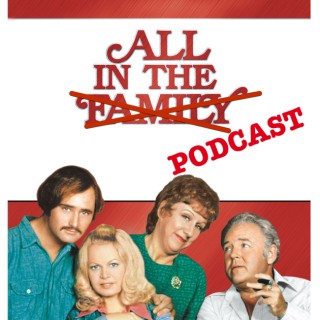
7 episodes with gloria stivic

Political historian Oscar Winberg has a fascinating new book titled Archie Bunker for President: How One Television Show Remade American Politics. This book weaves together quite a few different threads in examining the historical context in which the television show, All In The Family, landed on American television screens. Archie Bunker for President examines why this particular sitcom was a kind of inflection point within U.S. politics, within the media landscape at the time and moving forward, and how television production shifted and changed around this one particular television series. Winberg also lays out the path from the early 1970s, when All in the Family first aired, to our contemporary political moment, when celebrity and politics seem to be inescapably intertwined. As Winberg notes in our conversation, television as an entity is inherently conservative, since the functional model was about appealing to the lowest common denominator so that advertisers would be willing to pay for time during shows. In order to reach the most viewers, at least in the age of network television, the television series needed to appeal to the largest market possible, and not “turn off” viewers. What happens in the late 1960s and early 1970s with the television show All in the Family is that this dynamic shifts, and the case is made that it isn't about reaching the most people, but about reaching the people who have the means and inclination to purchase what the advertisers are selling. This is part of the pitch that Norman Lear makes, that CBS executive Bob Wood finally decides to gamble on by greenlighting All in the Family. The dynamic inside the show itself is to focus on politics: to have the characters within the series discuss different political issues, and engage with the impacts of these issues, from women's rights and reproductive health to homosexuality to racism and the anti-war movement. In designing All in the Family with Archie Bunker (played by Carroll O'Conner) clearly defined as a conservative and as a bigot, and with Archie's daughter, Gloria Stivic (played by Sally Struthers) and son in law, Mike Stivic (played by Rob Reiner), as liberals and politically active, the show embedded politics within the narrative. Edith Bunker, played by Jean Stapleton, was an enthusiastic supporter of the Equal Rights Amendment, which was making its way through the ratification process while the series was airing, providing yet another avenue for political discussion within the show's structure. There were quite a few other shows that were developed at the same time as All in the Family that took up similarly political themes in iconic ways, from the Mary Tyler Moore Show to M*A*S*H to Maude. Political conversations were the fabric of these shows in much the same way as in All in the Family, where characters find themselves experiencing dimensions of politics in their lives and they discuss this with friends and family within the narrative construction. This also translated to Americans discussing these shows with each other at dinner, or at the “water cooler”, or at the beauty parlor or barbershop. Given the structure of television in the 1970s and 1980s, before cable and streaming services, options were more limited options, and many of these shows had great writers, actors, and showrunners. This was “appointment television” because there was no way to record or otherwise go back and watch the episode. Episodes were only available at their regularly scheduled time and day—which also meant that lots and lots of Americans were watching the same show at the same time. In some sense, Archie Bunker for President: How One Television Show Remade American Politics is not only about how one television show remade American politics, but also about how All in the Family remade American television, opening up the networks to developing and airing television shows that integrate politics (of all kinds) into the narratives. There is still quite a lot of television, particularly network television, that is pitched to the broadest possible audience, but the narratives in police procedurals or hospital-centered series or sitcoms integrate different dimensions of politics into their storylines in ways that had not been done before All in the Family. Lilly J. Goren is a professor of political science at Carroll University in Waukesha, WI. Learn more about your ad choices. Visit megaphone.fm/adchoices

Political historian Oscar Winberg has a fascinating new book titled Archie Bunker for President: How One Television Show Remade American Politics. This book weaves together quite a few different threads in examining the historical context in which the television show, All In The Family, landed on American television screens. Archie Bunker for President examines why this particular sitcom was a kind of inflection point within U.S. politics, within the media landscape at the time and moving forward, and how television production shifted and changed around this one particular television series. Winberg also lays out the path from the early 1970s, when All in the Family first aired, to our contemporary political moment, when celebrity and politics seem to be inescapably intertwined. As Winberg notes in our conversation, television as an entity is inherently conservative, since the functional model was about appealing to the lowest common denominator so that advertisers would be willing to pay for time during shows. In order to reach the most viewers, at least in the age of network television, the television series needed to appeal to the largest market possible, and not “turn off” viewers. What happens in the late 1960s and early 1970s with the television show All in the Family is that this dynamic shifts, and the case is made that it isn't about reaching the most people, but about reaching the people who have the means and inclination to purchase what the advertisers are selling. This is part of the pitch that Norman Lear makes, that CBS executive Bob Wood finally decides to gamble on by greenlighting All in the Family. The dynamic inside the show itself is to focus on politics: to have the characters within the series discuss different political issues, and engage with the impacts of these issues, from women's rights and reproductive health to homosexuality to racism and the anti-war movement. In designing All in the Family with Archie Bunker (played by Carroll O'Conner) clearly defined as a conservative and as a bigot, and with Archie's daughter, Gloria Stivic (played by Sally Struthers) and son in law, Mike Stivic (played by Rob Reiner), as liberals and politically active, the show embedded politics within the narrative. Edith Bunker, played by Jean Stapleton, was an enthusiastic supporter of the Equal Rights Amendment, which was making its way through the ratification process while the series was airing, providing yet another avenue for political discussion within the show's structure. There were quite a few other shows that were developed at the same time as All in the Family that took up similarly political themes in iconic ways, from the Mary Tyler Moore Show to M*A*S*H to Maude. Political conversations were the fabric of these shows in much the same way as in All in the Family, where characters find themselves experiencing dimensions of politics in their lives and they discuss this with friends and family within the narrative construction. This also translated to Americans discussing these shows with each other at dinner, or at the “water cooler”, or at the beauty parlor or barbershop. Given the structure of television in the 1970s and 1980s, before cable and streaming services, options were more limited options, and many of these shows had great writers, actors, and showrunners. This was “appointment television” because there was no way to record or otherwise go back and watch the episode. Episodes were only available at their regularly scheduled time and day—which also meant that lots and lots of Americans were watching the same show at the same time. In some sense, Archie Bunker for President: How One Television Show Remade American Politics is not only about how one television show remade American politics, but also about how All in the Family remade American television, opening up the networks to developing and airing television shows that integrate politics (of all kinds) into the narratives. There is still quite a lot of television, particularly network television, that is pitched to the broadest possible audience, but the narratives in police procedurals or hospital-centered series or sitcoms integrate different dimensions of politics into their storylines in ways that had not been done before All in the Family. Lilly J. Goren is a professor of political science at Carroll University in Waukesha, WI. Learn more about your ad choices. Visit megaphone.fm/adchoices Support our show by becoming a premium member! https://newbooksnetwork.supportingcast.fm/new-books-network

Political historian Oscar Winberg has a fascinating new book titled Archie Bunker for President: How One Television Show Remade American Politics. This book weaves together quite a few different threads in examining the historical context in which the television show, All In The Family, landed on American television screens. Archie Bunker for President examines why this particular sitcom was a kind of inflection point within U.S. politics, within the media landscape at the time and moving forward, and how television production shifted and changed around this one particular television series. Winberg also lays out the path from the early 1970s, when All in the Family first aired, to our contemporary political moment, when celebrity and politics seem to be inescapably intertwined. As Winberg notes in our conversation, television as an entity is inherently conservative, since the functional model was about appealing to the lowest common denominator so that advertisers would be willing to pay for time during shows. In order to reach the most viewers, at least in the age of network television, the television series needed to appeal to the largest market possible, and not “turn off” viewers. What happens in the late 1960s and early 1970s with the television show All in the Family is that this dynamic shifts, and the case is made that it isn't about reaching the most people, but about reaching the people who have the means and inclination to purchase what the advertisers are selling. This is part of the pitch that Norman Lear makes, that CBS executive Bob Wood finally decides to gamble on by greenlighting All in the Family. The dynamic inside the show itself is to focus on politics: to have the characters within the series discuss different political issues, and engage with the impacts of these issues, from women's rights and reproductive health to homosexuality to racism and the anti-war movement. In designing All in the Family with Archie Bunker (played by Carroll O'Conner) clearly defined as a conservative and as a bigot, and with Archie's daughter, Gloria Stivic (played by Sally Struthers) and son in law, Mike Stivic (played by Rob Reiner), as liberals and politically active, the show embedded politics within the narrative. Edith Bunker, played by Jean Stapleton, was an enthusiastic supporter of the Equal Rights Amendment, which was making its way through the ratification process while the series was airing, providing yet another avenue for political discussion within the show's structure. There were quite a few other shows that were developed at the same time as All in the Family that took up similarly political themes in iconic ways, from the Mary Tyler Moore Show to M*A*S*H to Maude. Political conversations were the fabric of these shows in much the same way as in All in the Family, where characters find themselves experiencing dimensions of politics in their lives and they discuss this with friends and family within the narrative construction. This also translated to Americans discussing these shows with each other at dinner, or at the “water cooler”, or at the beauty parlor or barbershop. Given the structure of television in the 1970s and 1980s, before cable and streaming services, options were more limited options, and many of these shows had great writers, actors, and showrunners. This was “appointment television” because there was no way to record or otherwise go back and watch the episode. Episodes were only available at their regularly scheduled time and day—which also meant that lots and lots of Americans were watching the same show at the same time. In some sense, Archie Bunker for President: How One Television Show Remade American Politics is not only about how one television show remade American politics, but also about how All in the Family remade American television, opening up the networks to developing and airing television shows that integrate politics (of all kinds) into the narratives. There is still quite a lot of television, particularly network television, that is pitched to the broadest possible audience, but the narratives in police procedurals or hospital-centered series or sitcoms integrate different dimensions of politics into their storylines in ways that had not been done before All in the Family. Lilly J. Goren is a professor of political science at Carroll University in Waukesha, WI. Learn more about your ad choices. Visit megaphone.fm/adchoices Support our show by becoming a premium member! https://newbooksnetwork.supportingcast.fm/political-science

Political historian Oscar Winberg has a fascinating new book titled Archie Bunker for President: How One Television Show Remade American Politics. This book weaves together quite a few different threads in examining the historical context in which the television show, All In The Family, landed on American television screens. Archie Bunker for President examines why this particular sitcom was a kind of inflection point within U.S. politics, within the media landscape at the time and moving forward, and how television production shifted and changed around this one particular television series. Winberg also lays out the path from the early 1970s, when All in the Family first aired, to our contemporary political moment, when celebrity and politics seem to be inescapably intertwined. As Winberg notes in our conversation, television as an entity is inherently conservative, since the functional model was about appealing to the lowest common denominator so that advertisers would be willing to pay for time during shows. In order to reach the most viewers, at least in the age of network television, the television series needed to appeal to the largest market possible, and not “turn off” viewers. What happens in the late 1960s and early 1970s with the television show All in the Family is that this dynamic shifts, and the case is made that it isn't about reaching the most people, but about reaching the people who have the means and inclination to purchase what the advertisers are selling. This is part of the pitch that Norman Lear makes, that CBS executive Bob Wood finally decides to gamble on by greenlighting All in the Family. The dynamic inside the show itself is to focus on politics: to have the characters within the series discuss different political issues, and engage with the impacts of these issues, from women's rights and reproductive health to homosexuality to racism and the anti-war movement. In designing All in the Family with Archie Bunker (played by Carroll O'Conner) clearly defined as a conservative and as a bigot, and with Archie's daughter, Gloria Stivic (played by Sally Struthers) and son in law, Mike Stivic (played by Rob Reiner), as liberals and politically active, the show embedded politics within the narrative. Edith Bunker, played by Jean Stapleton, was an enthusiastic supporter of the Equal Rights Amendment, which was making its way through the ratification process while the series was airing, providing yet another avenue for political discussion within the show's structure. There were quite a few other shows that were developed at the same time as All in the Family that took up similarly political themes in iconic ways, from the Mary Tyler Moore Show to M*A*S*H to Maude. Political conversations were the fabric of these shows in much the same way as in All in the Family, where characters find themselves experiencing dimensions of politics in their lives and they discuss this with friends and family within the narrative construction. This also translated to Americans discussing these shows with each other at dinner, or at the “water cooler”, or at the beauty parlor or barbershop. Given the structure of television in the 1970s and 1980s, before cable and streaming services, options were more limited options, and many of these shows had great writers, actors, and showrunners. This was “appointment television” because there was no way to record or otherwise go back and watch the episode. Episodes were only available at their regularly scheduled time and day—which also meant that lots and lots of Americans were watching the same show at the same time. In some sense, Archie Bunker for President: How One Television Show Remade American Politics is not only about how one television show remade American politics, but also about how All in the Family remade American television, opening up the networks to developing and airing television shows that integrate politics (of all kinds) into the narratives. There is still quite a lot of television, particularly network television, that is pitched to the broadest possible audience, but the narratives in police procedurals or hospital-centered series or sitcoms integrate different dimensions of politics into their storylines in ways that had not been done before All in the Family. Lilly J. Goren is a professor of political science at Carroll University in Waukesha, WI. Learn more about your ad choices. Visit megaphone.fm/adchoices Support our show by becoming a premium member! https://newbooksnetwork.supportingcast.fm/film

Political historian Oscar Winberg has a fascinating new book titled Archie Bunker for President: How One Television Show Remade American Politics. This book weaves together quite a few different threads in examining the historical context in which the television show, All In The Family, landed on American television screens. Archie Bunker for President examines why this particular sitcom was a kind of inflection point within U.S. politics, within the media landscape at the time and moving forward, and how television production shifted and changed around this one particular television series. Winberg also lays out the path from the early 1970s, when All in the Family first aired, to our contemporary political moment, when celebrity and politics seem to be inescapably intertwined. As Winberg notes in our conversation, television as an entity is inherently conservative, since the functional model was about appealing to the lowest common denominator so that advertisers would be willing to pay for time during shows. In order to reach the most viewers, at least in the age of network television, the television series needed to appeal to the largest market possible, and not “turn off” viewers. What happens in the late 1960s and early 1970s with the television show All in the Family is that this dynamic shifts, and the case is made that it isn't about reaching the most people, but about reaching the people who have the means and inclination to purchase what the advertisers are selling. This is part of the pitch that Norman Lear makes, that CBS executive Bob Wood finally decides to gamble on by greenlighting All in the Family. The dynamic inside the show itself is to focus on politics: to have the characters within the series discuss different political issues, and engage with the impacts of these issues, from women's rights and reproductive health to homosexuality to racism and the anti-war movement. In designing All in the Family with Archie Bunker (played by Carroll O'Conner) clearly defined as a conservative and as a bigot, and with Archie's daughter, Gloria Stivic (played by Sally Struthers) and son in law, Mike Stivic (played by Rob Reiner), as liberals and politically active, the show embedded politics within the narrative. Edith Bunker, played by Jean Stapleton, was an enthusiastic supporter of the Equal Rights Amendment, which was making its way through the ratification process while the series was airing, providing yet another avenue for political discussion within the show's structure. There were quite a few other shows that were developed at the same time as All in the Family that took up similarly political themes in iconic ways, from the Mary Tyler Moore Show to M*A*S*H to Maude. Political conversations were the fabric of these shows in much the same way as in All in the Family, where characters find themselves experiencing dimensions of politics in their lives and they discuss this with friends and family within the narrative construction. This also translated to Americans discussing these shows with each other at dinner, or at the “water cooler”, or at the beauty parlor or barbershop. Given the structure of television in the 1970s and 1980s, before cable and streaming services, options were more limited options, and many of these shows had great writers, actors, and showrunners. This was “appointment television” because there was no way to record or otherwise go back and watch the episode. Episodes were only available at their regularly scheduled time and day—which also meant that lots and lots of Americans were watching the same show at the same time. In some sense, Archie Bunker for President: How One Television Show Remade American Politics is not only about how one television show remade American politics, but also about how All in the Family remade American television, opening up the networks to developing and airing television shows that integrate politics (of all kinds) into the narratives. There is still quite a lot of television, particularly network television, that is pitched to the broadest possible audience, but the narratives in police procedurals or hospital-centered series or sitcoms integrate different dimensions of politics into their storylines in ways that had not been done before All in the Family. Lilly J. Goren is a professor of political science at Carroll University in Waukesha, WI. Learn more about your ad choices. Visit megaphone.fm/adchoices Support our show by becoming a premium member! https://newbooksnetwork.supportingcast.fm/communications

Political historian Oscar Winberg has a fascinating new book titled Archie Bunker for President: How One Television Show Remade American Politics. This book weaves together quite a few different threads in examining the historical context in which the television show, All In The Family, landed on American television screens. Archie Bunker for President examines why this particular sitcom was a kind of inflection point within U.S. politics, within the media landscape at the time and moving forward, and how television production shifted and changed around this one particular television series. Winberg also lays out the path from the early 1970s, when All in the Family first aired, to our contemporary political moment, when celebrity and politics seem to be inescapably intertwined. As Winberg notes in our conversation, television as an entity is inherently conservative, since the functional model was about appealing to the lowest common denominator so that advertisers would be willing to pay for time during shows. In order to reach the most viewers, at least in the age of network television, the television series needed to appeal to the largest market possible, and not “turn off” viewers. What happens in the late 1960s and early 1970s with the television show All in the Family is that this dynamic shifts, and the case is made that it isn't about reaching the most people, but about reaching the people who have the means and inclination to purchase what the advertisers are selling. This is part of the pitch that Norman Lear makes, that CBS executive Bob Wood finally decides to gamble on by greenlighting All in the Family. The dynamic inside the show itself is to focus on politics: to have the characters within the series discuss different political issues, and engage with the impacts of these issues, from women's rights and reproductive health to homosexuality to racism and the anti-war movement. In designing All in the Family with Archie Bunker (played by Carroll O'Conner) clearly defined as a conservative and as a bigot, and with Archie's daughter, Gloria Stivic (played by Sally Struthers) and son in law, Mike Stivic (played by Rob Reiner), as liberals and politically active, the show embedded politics within the narrative. Edith Bunker, played by Jean Stapleton, was an enthusiastic supporter of the Equal Rights Amendment, which was making its way through the ratification process while the series was airing, providing yet another avenue for political discussion within the show's structure. There were quite a few other shows that were developed at the same time as All in the Family that took up similarly political themes in iconic ways, from the Mary Tyler Moore Show to M*A*S*H to Maude. Political conversations were the fabric of these shows in much the same way as in All in the Family, where characters find themselves experiencing dimensions of politics in their lives and they discuss this with friends and family within the narrative construction. This also translated to Americans discussing these shows with each other at dinner, or at the “water cooler”, or at the beauty parlor or barbershop. Given the structure of television in the 1970s and 1980s, before cable and streaming services, options were more limited options, and many of these shows had great writers, actors, and showrunners. This was “appointment television” because there was no way to record or otherwise go back and watch the episode. Episodes were only available at their regularly scheduled time and day—which also meant that lots and lots of Americans were watching the same show at the same time. In some sense, Archie Bunker for President: How One Television Show Remade American Politics is not only about how one television show remade American politics, but also about how All in the Family remade American television, opening up the networks to developing and airing television shows that integrate politics (of all kinds) into the narratives. There is still quite a lot of television, particularly network television, that is pitched to the broadest possible audience, but the narratives in police procedurals or hospital-centered series or sitcoms integrate different dimensions of politics into their storylines in ways that had not been done before All in the Family. Lilly J. Goren is a professor of political science at Carroll University in Waukesha, WI.

Political historian Oscar Winberg has a fascinating new book titled Archie Bunker for President: How One Television Show Remade American Politics. This book weaves together quite a few different threads in examining the historical context in which the television show, All In The Family, landed on American television screens. Archie Bunker for President examines why this particular sitcom was a kind of inflection point within U.S. politics, within the media landscape at the time and moving forward, and how television production shifted and changed around this one particular television series. Winberg also lays out the path from the early 1970s, when All in the Family first aired, to our contemporary political moment, when celebrity and politics seem to be inescapably intertwined. As Winberg notes in our conversation, television as an entity is inherently conservative, since the functional model was about appealing to the lowest common denominator so that advertisers would be willing to pay for time during shows. In order to reach the most viewers, at least in the age of network television, the television series needed to appeal to the largest market possible, and not “turn off” viewers. What happens in the late 1960s and early 1970s with the television show All in the Family is that this dynamic shifts, and the case is made that it isn't about reaching the most people, but about reaching the people who have the means and inclination to purchase what the advertisers are selling. This is part of the pitch that Norman Lear makes, that CBS executive Bob Wood finally decides to gamble on by greenlighting All in the Family. The dynamic inside the show itself is to focus on politics: to have the characters within the series discuss different political issues, and engage with the impacts of these issues, from women's rights and reproductive health to homosexuality to racism and the anti-war movement. In designing All in the Family with Archie Bunker (played by Carroll O'Conner) clearly defined as a conservative and as a bigot, and with Archie's daughter, Gloria Stivic (played by Sally Struthers) and son in law, Mike Stivic (played by Rob Reiner), as liberals and politically active, the show embedded politics within the narrative. Edith Bunker, played by Jean Stapleton, was an enthusiastic supporter of the Equal Rights Amendment, which was making its way through the ratification process while the series was airing, providing yet another avenue for political discussion within the show's structure. There were quite a few other shows that were developed at the same time as All in the Family that took up similarly political themes in iconic ways, from the Mary Tyler Moore Show to M*A*S*H to Maude. Political conversations were the fabric of these shows in much the same way as in All in the Family, where characters find themselves experiencing dimensions of politics in their lives and they discuss this with friends and family within the narrative construction. This also translated to Americans discussing these shows with each other at dinner, or at the “water cooler”, or at the beauty parlor or barbershop. Given the structure of television in the 1970s and 1980s, before cable and streaming services, options were more limited options, and many of these shows had great writers, actors, and showrunners. This was “appointment television” because there was no way to record or otherwise go back and watch the episode. Episodes were only available at their regularly scheduled time and day—which also meant that lots and lots of Americans were watching the same show at the same time. In some sense, Archie Bunker for President: How One Television Show Remade American Politics is not only about how one television show remade American politics, but also about how All in the Family remade American television, opening up the networks to developing and airing television shows that integrate politics (of all kinds) into the narratives. There is still quite a lot of television, particularly network television, that is pitched to the broadest possible audience, but the narratives in police procedurals or hospital-centered series or sitcoms integrate different dimensions of politics into their storylines in ways that had not been done before All in the Family. Lilly J. Goren is a professor of political science at Carroll University in Waukesha, WI. Learn more about your ad choices. Visit megaphone.fm/adchoices Support our show by becoming a premium member! https://newbooksnetwork.supportingcast.fm/popular-culture

49:14- Daniel Hoffman, Ret. CIA Senior Clandestine Services Officer and a Fox News Contributor Topic: Ukraine firing U.S. missiles into Russia1:11:56- Stephen Moore, "Joe Piscopo Show" Resident Scholar of Economics, Chairman of FreedomWorks Task Force on Economic Revival, former Trump economic adviser, Committee to Unleash Prosperity Co-Founder and the author of "The Trump Economic Miracle: And the Plan to Unleash Prosperity Again" Topic: The future of trade between the U.S. and Europe, latest economic news1:25:28- Jerry Crowley, Vice President and General Manager of Salem Media of New York Topic: Remembering travel writer Arthur Frommer1:35:10- Paul Jacobs for Food for the Poor Topic: Food for the Poor1:44:53- Andrew McCarthy, Contributing Editor at National Review & Fellow at the National Review Institute, and a Fox News Contributor Topic: Push for postponement in the Trump hush money case1:58:07- Michael Goodwin, Chief Political Columnist for the New York Post Topic: "Kathy Hochul, Eric Adams are deaf to voters' resounding message" (New York Post op ed)2:10:40- Sally Struthers, actress best remembered for her role as Gloria Stivic on "All in the Family" Topic: Her new Netflix series "A Man on the Inside," her legendary careerSee omnystudio.com/listener for privacy information.
Alex and Gus are joined by comedian Kristina Cergol to discuss Season 2, Episode 3. Together, they discuss the Bunker family, the problematic Roseanne reboot, Amy Schumer's problematic new movie, problematic self-love, and finding love in NYC.
This week, Alex and Gus discuss the controversial episode "Gloria Poses in the Nude" and talk about their own nude pics, open relationships, the complicated issues of sex ed in high school, and trust in relationships.
This week, Alex and Gus discuss episode 12, Success Story. They discuss the difference between economic and personal success, the search for happiness, Archie's friends and their gross outfits, and Queer Eye.
Alex and Gus discuss the iconic season 1 episode Gloria Discovers Women's Lib and the parallels to the Me Too movement in Hollywood. They also talk about the insane Rose McGowan incident and what this episode gets right and wrong about women's lib.
This week, Alex and Gus discuss their jury duty experiences while discussing episode 9, Edith Has Jury Duty. They compare the episode to its literary homage, Twelve Angry Men, and draw some thematic parallels as well.
This week, Gus introduces his new official co-host, Alex Hajjar! They discuss Episode 8 of the first season, Lionel Moves into the Neighborhood, gentrification in NYC, and the complications of the American Dream.
This week, Gus is joined by comedian/singer Ali Lu. Together, they discuss episode 6, Gloria's Pregnancy. They discuss some of the episode's revolutionary themes, whether or not Archie is a racist, being culturally sensitive, and if they want children.

Sally Struthers is an Emmy Award winning actress, best known for playing Gloria Stivic on All in the Family, and Babette on Gilmore Girls. In 1970 she appeared on the big screen in Five Easy Pieces opposite Jack Nicholson. She is currently starring in Nice Work If You Can Get It at Gateway Playhouse in Bellport, NY, for which she has received rave reviews and countless standing ovations. In this conversation, Sally and her co-star Jamie Beaman talk about what they love about Gateway, live theater and performing with each other; why comedy is difficult and dangerous and mysterious and the best high there is; and finding the balance between vulnerability and self-protection as an artist. Plus- Sally reveals why she doesn't get residual checks for All in the Family, how her daughter Samantha changed her life for the better, and why it's important for her to keep working.
© 2020-2026 Ivy Podcast Discovery LLC
