American actor and director
POPULARITY
Categories
Treating schizophrenia in America is often described as a broken system, not because of a lack of medical knowledge, but due to structural and policy failures. The failures of these systems has created a cycle where individuals often move between homelessness, emergency rooms, and the criminal justice system rather than receiving ongoing care. Many families and caregivers struggle to get help even when the situation turns dangerous. In this episode, hosts Rachel Star Withers and Gabe Howard discuss how the government and health care system failures lead to these tragedies and what needs to change. They unpack cases like the one involving Rob Reiner, where his son, who has schizophrenia, is suspected of murdering both his parents during a severe mental health crisis. Guest Gail Freedman joins later in the episode. She is the director, writer, and producer of a new documentary, “No One Cares About Crazy People.” It's inspired by Ron Powers acclaimed book of the same name and it's an intimate, immersive dive into the crisis and chaos of severe mental illness and the grassroots movement to do something about it. Guest Information: With over 25 years as an award-winning filmmaker, Gail Freedman has produced, directed, and written dozens of documentaries on a wide range of subjects. Among her films: “Hot to Trot,” an award-winning feature documentary inside the fascinating but little-known world of same-sex competitive ballroom dance; “Making the 9/11 Memorial,” a primetime special for The History Channel; “Breaking the Silence Barrier” (cognitive disabilities); “Where's The Cure?” (breast cancer activism); “Generation Rx” (the opioid crisis); “Lessons for the Future” (public education); “Giving While Living” (philanthropy); and “A Forever Family” (Annie E. Casey Foundation). “No One Cares About Crazy People”Inspired by Ron Powers' acclaimed book of the same name, “No One Cares About Crazy People” is an intimate deep dive into the crisis and chaos of severe mental illness in America. A heartbreaking family memoir and searing social history, it is personal and immersive — but also tracks a burgeoning grassroots movement to reinvent our failed systems. Narrated by actor Bob Odenkirk (“Breaking Bad,” “Better Call Saul”) with original music by Wilco frontman Jeff Tweedy. Now streaming. noonecaresfilm.com Our host, Rachel Star Withers, (Link: www.rachelstarlive.com) is an entertainer, international speaker, video producer, and schizophrenic. She has appeared on MTV's Ridiculousness, TruTV, NBC's America's Got Talent, Marvel's Black Panther, TUBI's #shockfight, Goliath: Playing with Reality, and is the host of the HealthLine podcast “Inside Schizophrenia”. She grew up seeing monsters, hearing people in the walls, and having intense urges to hurt herself. Rachel creates videos documenting her schizophrenia, ways to manage, and letting others like her know they are not alone and can still live an amazing life. She has created a kid's mental health comic line, The Adventures of ____. (Learn more at this link: https://www.amazon.com/Adventures-Fearless-Unstoppable-Light-Ambitious/dp/B0FHWK4ZHS ) Fun Fact: She has wrestled alligators. Our cohost, Gabe Howard, is an award-winning writer and speaker who lives with bipolar disorder. He is the author of the popular book, "Mental Illness is an Asshole and other Observations," available from Amazon; signed copies are also available directly from the author. He also hosts the twice Webby honored podcast, Inside Bipolar, with Dr. Nicole Washington. To learn more about Gabe, please visit his website, gabehoward.com. Learn more about your ad choices. Visit megaphone.fm/adchoices
Nick Reiner who is accused of murdering his parents famed actor/director Rob Reiner and photographer Michelle Singer Reiner on December 14th, 2025 in Burbank, CA is asking for the trust money owed to him in his legal filing. He may get the money owed to him but he just blew his entire defense. In this episode Roberta discusses how this latest filing destroys the defense narrative and explains how Reiner's Trust money will be used to murder the reputation and memory of his parents. Let's talk about it!Show Notes:Read Nick Reiner's defense filing here- https://deadline.com/wp-content/uploads/2026/06/Reiner-Trust-Petition-June-8_Redacted.pdfLaw & Crime “Nick Reiner Begs for Mommy & Daddy's Money” - https://youtu.be/q4T2mMAW2M4?is=BNtMvMw5-Fp5JWiWHollywood Reporter “Hollywood's Top Business Managers Tell All” - https://www.hollywoodreporter.com/lists/hollywoods-business-managers-187592/Roberta Glass True Crime Report's Nick Reiner Playlist - https://youtube.com/playlist?list=PLZCroaJ4oThAQMawy2MELgoNh95SOJggH&si=99DqMOdxIsM8Yj4IGet access to exclusive content & support the podcast by a Patron today! https://patreon.com/robertaglasstruecrimereportThrow a tip in the tip jar! https://buymeacoffee.com/robertaglassSupport Roberta by sending a donation via Venmo. https://venmo.com/robertaglassBecome a chanel member for custom Emojis, first looks and exclusive streams here: https://youtube.com/@robertaglass/joinThank you Patrons!Beth, Shelley Safford, Carol Mumumeci, Therese Tunks, JC, Lizzy D, Elizabeth Drake, Texas Mimi, Barb, Deborah Shults, Ratliff, Stephanie Lamberson, Maryellen Sudol, Mona, Karen Pacini, Jen Buell, Marie Horton, ER, Rosie Grace, B. Rabbit, Sally Merrick, Amanda D, Mary B, Mrs Jones, Amy Gill, Eileen, Wesley Loves Octoberfest, Erin (Kitties1993), Anna Quint, Cici Guteriez, Sandra Loves GatsbyHannna, Christy, Jen Buell, Elle Solari, Carol Cardella, Jennifer Harmon, DoxieMama65, Carol Holderman, Joan Mahon, Marcie Denton, Rosanne Aponte, Johnny Jay, Jude Barnes, JenTheRN, Victoria Devenish, Jeri Falk, Kimberly Lovelace, Penni Miller, Jil, Janet Gardner, Jayne Wallace (JaynesWhirled), Pat Brooks, Jennifer Klearman, Judy Brown, Linda Lazzaro, Suzanne Kniffin, Susan Hicks, Jeff Meadors, D Samlam, Pat Brooks, Cythnia, Bonnie Schoeneman-Dilley, Diane Larsen, Mary, Kimberly Philipson, Cat Stewart, Cindy Pochesci, Kevin Crecy, Renee Chavez, Melba Pourteau, Julie K Thomas, Mia Wallace, Stark Stuff, Kayce Taylor, Alice, Dean, GiGi5, Jennifer Crum, Dana Natale, Bewildered Beauty, Pepper, Joan Chakonas, Blythe, Pat Dell, Lorraine Reid, T.B., Melissa, Victoria Gray Bross, Toni Woodland, Danbrit, Kenny Haines and Toni Natalie.
Trump loves inflation, Texas hates screwworms, a new book reveals how much the White House was consumed by the Epstein Files. This week, Jerry O'Connell jumps between dimensions to talk Rob Reiner, reality TV and, of course, Sliders. Jay Pharaoh stops by to do some impressions with his good friends, Barack Obama and Denzel Washington. Plus Zach Zucker is down to clown... and play music without headphones.
Handel on the Law. Marginal Legal Advice.See omnystudio.com/listener for privacy information.
This week on The Tracklist, Daron and Chris are strapping in for the loudest, most ridiculous, and somehow most earnest rock soundtrack ever committed to film: This Is Spinal Tap (1984).Rob Reiner's mockumentary masterpiece didn't just parody '80s heavy metal — it became it. The music in this film is the joke AND the heart, and that's a genuinely hard thing to pull off. From Big Bottom to Hell Hole to the haunting, Stonehenge-adjacent opus Stonehenge, Christopher Guest, Michael McKean, and Harry Shearer wrote and performed every track themselves — and somehow made songs that are both hysterically bad and undeniably catchy.We're breaking down the score, the songs, the performances, and asking the real question: Is this a Cult Classic?Follow us on Instagram: @thedaronjenkins | @chrissaunders_music | @tracklistshowRep the show and grab some Tracklist merch at tracklist-shop.fourthwall.comIf you enjoy the episode, leave us a rating, subscribe, and follow the show wherever you listen — it means the world and helps more people find us!
Attorney Alan Jackson is once again speaking out in defense of Nick Reiner, as he faces murder charges for slaying his parents Michele and Rob Reiner. West Wilson drops a MAJOR bombshell in the timeline of his relationship with Amanda Batula. And homeless people speak out about being paid to support Nithya Raman, after her shocking landslide win with mail-in ballots in the LA Mayor Primary. Head to https://www.factormeals.com/nofilter50off and use code nofilter50off to get 50% off and free daily greens per box, with new subscription only, while supplies last until 09/27/2026. (See website for more details). Mornings don't have to take forever. Right now, Merit Beauty is offering our listeners their Signature Makeup Bag with your first order at https://www.meritbeauty.com/ Right now, DripDrop is offering podcast listeners 20% off your first order. Go to https://dripdrop.com/ and use promo code NOFILTERVisit https://www.progressive.com to see if you could save when you bundle your home and auto policies.Become a Member of No Filter: ALL ACCESS: https://allaccess.supercast.com/ Shop New Merch now: https://merchlabs.com/collections/zack-peter?srsltid=AfmBOoqqnV3kfsOYPubFFxCQdpCuGjVgssGIXZRXHcLPH9t4GjiKoaio Book a personalized message on Cameo: https://v.cameo.com/e/QxWQhpd1TIb Disclaimer: The views expressed in this video, on this YouTube Channel, and on No Filter with Zack Peter are for entertainment purposes only. All content is protected under Fair Use Rights.See Privacy Policy at https://art19.com/privacy and California Privacy Notice at https://art19.com/privacy#do-not-sell-my-info.
"Jack Riccardi talks Spurs, the "boring city" knock on SA, the karmelo anthony verdict, Rob Reiner's son wants his trust fund money to pay for his defense and taxing CEOs."
"Three Things You Need to Know"...Rob Reiner's son wants to use trust fund for attorney...interview with Senate candidate Jared Hudson...Seattle homeless shelters won't require sobriety.See omnystudio.com/listener for privacy information.
Rob Reiner's son wanting money from trust fund to pay for his defense, US strikes 20 targets in Iran, Obama's library, and Trump will speak about Iran strike.
Lisa is very excited... it's just been announced that Baby Bob is set to host The Logies. An update on Rob Reiner murder case and Sean 'Diddy' Combs is the subject of another lawsuit. And another day day, another Florida man story. … See omnystudio.com/listener for privacy information.
Facing murder charges, Nick Reiner is now demanding he received his $1.5M trust fund, left behind by his parents Michele and Rob Reiner. Savannah Guthrie opens up about returning to the TODAY Show, as Brian Entin confirms she did NOT hire a private investigator. Spencer Pratt has officially been knocked out of the LA Mayor Race, after Nithya Raman ground-breaking sweep. Ariana Grande Splits from Ethan Slater. Head to https://www.factormeals.com/nofilter50off and use code nofilter50off to get 50% off and free daily greens per box, with new subscription only, while supplies last until 09/27/2026. (See website for more details). Mornings don't have to take forever. Right now, Merit Beauty is offering our listeners their Signature Makeup Bag with your first order at https://www.meritbeauty.com/ Right now, DripDrop is offering podcast listeners 20% off your first order. Go to https://dripdrop.com/ and use promo code NOFILTERVisit https://www.progressive.com to see if you could save when you bundle your home and auto policies.Become a Member of No Filter: ALL ACCESS: https://allaccess.supercast.com/ Shop New Merch now: https://merchlabs.com/collections/zack-peter?srsltid=AfmBOoqqnV3kfsOYPubFFxCQdpCuGjVgssGIXZRXHcLPH9t4GjiKoaio Book a personalized message on Cameo: https://v.cameo.com/e/QxWQhpd1TIb Disclaimer: The views expressed in this video, on this YouTube Channel, and on No Filter with Zack Peter are for entertainment purposes only. All content is protected under Fair Use Rights.See Privacy Policy at https://art19.com/privacy and California Privacy Notice at https://art19.com/privacy#do-not-sell-my-info.
Nick Reiner Wants Trust Money to Fund His Murder Defense Nick Reiner says he needs trust money now. The accused son of Rob and Michele Reiner is asking the court for access to family trust funds while awaiting trial. His petition claims the delay cost him private counsel and is hurting his defense preparation. Scott breaks down the trust fight, the public defender issue, and what this could mean in a death-eligible case. Watch, comment, and subscribe for sharp legal analysis. Crime Talk Store: https://crimetalknetwork.com/shop/ #NickReiner, #RobReiner, #TrueCrime, #LegalAnalysis, #CrimeTalk, #CourtCase
Today on the Woody and Wilcox Show: Disneyworld report-Cool Beans' trip and earthquake shuts down rides; Vuvuzelas banned at World Cup games; Rob Reiner's son wants trust fund money to pay for legal fees; Woman sues Outback because she slipped on mashed potatoes; Waste water from World Cup matches will be monitored for infectious diseases; Evite phishing scam; The pronunciation of “vuvuzelas”; Tom Brady's coconut water; More than one in four Americans have made a playlist for their pet; NASA unveils Artemis crew; And more!
AP correspondent Haya Panjwani reports on a development in the case of Rob Reiner and his wife's death.
"Mel Brooks: The 99 Year Old Man!" is a 2026 American two-part documentary film that explores the life and career of Mel Brooks. Judd Apatow and Michael Bonfiglio direct the HBO documentary, and it features the final on-screen interviews with Rob Reiner and David Lynch. The documentary has received universal acclaim with a 100% rating on Rotten Tomatoes. Directors Judd Apatow and Michael Bonfiglio were kind enough to spend some time talking with us about their work and experience making the documentary, which you can listen to below. Please be sure to check out the documentary, which is available to stream on HBO Max. Thank you, and enjoy! Check out more on NextBestPicture.com Please subscribe on... Apple Podcasts - https://itunes.apple.com/us/podcast/negs-best-film-podcast/id1087678387?mt=2 Spotify - https://open.spotify.com/show/7IMIzpYehTqeUa1d9EC4jT YouTube - https://www.youtube.com/channel/UCWA7KiotcWmHiYYy6wJqwOw And be sure to help support us on Patreon for as little as $1 a month at https://www.patreon.com/NextBestPicture and listen to this podcast ad-free Learn more about your ad choices. Visit megaphone.fm/adchoices
We are back!! It's been a while, but all 4 of us return and to celebrate we are doing a Sally pick. We are going back to 1989 with the late, great Rob Reiner's smash hit 'When Harry Met Sally'. Meg Ryan and Billy Crystal lead this romcom that took the world by storm and to this day is listed amongst the best of all time.
Con il nostro Boris Sollazzo parliamo di "Masters of the Universe" diretto da Travis Knight con Nicholas Galitzine, Jared Leto, Alison Brie e di "Rebuilding" scritto e diretto da Max Walker-Silverman e con protagonisti Josh O'Connor, Lily LaTorre, Meghann Fahy e Amy Madigan."Stand by Me" di Rob Reiner, tratto da un racconto di Stephen King, torna al cinema solo l'8, 9 e 10 giugno per festeggiare il suo 40esimo anniversario. Ce ne parla Filippo Mazzarella, giornalista e critico di Film Tv.Maurizio Nichetti ci presenta "Smart Working" film diretto da Svevo Moltrasio, che lo vede nel cast accanto a Maccio Capatonda, Sara Lazzaro e Alessandro Tiberi."Scary Movie 6" è un horror diretto da Michael Tiddes, con Marlon e Shawn Wayans, Anna Faris, Regina Hall. Ce lo racconta Emanuele Di Nicola, critico ed esperto di genere.Aspettando il prossimo Garda Cinema Film Festival ecco una carrellata di interviste con alcuni degli ospiti che il pubblico potrà incontrare sul lago: Milvia Marigliano, l'attrice Premio Duse e gli attori Giovanni Esposito e Giorgio Pasotti.
It's officially Director's Month and we have ourselves a tie! This month we'll be discussing Wes Anderson's & Rob Reiner's films. We're kicking off the month with Wes Anderson's The Grand Budapest Hotel. We run through the laundry list of nominations and wins. It's a great start to the month! Instagram: @heyitstwogirls, @classicSTINA @daniellecobianchiTwitter: @heyitstwogirls, @classicSTINATwo Girls Drink Beer Youtube
With his ‘80s dramedy This Too Shall Pass now streaming in the US and Canada, writer-director Rob Grant wants to celebrate Rob Reiner's Stand By Me, the coming-of-age movie that changed everyone's idea of what “a Stephen King movie” could look like. Your genial host Norm Wilner is embracing the melancholy on this one.
Tyler and David discuss the career of the late Rob Reiner as well as Jake Schreier's Thunderbolts*.See Privacy Policy at https://art19.com/privacy and California Privacy Notice at https://art19.com/privacy#do-not-sell-my-info.
If you're of a certain age, you may not know the name Andy Lindberg. But you definitely know his most famous role. Andy played Lard Ass Hogan in the legendary Rob Reiner film "Stand By Me," one of the most beloved coming-of-age movies ever made. His scene, the unforgettable "barf-o-rama" at the pie-eating contest, remains one of the most memorable movie moments of the 1980s. It was gross. It was hilarious. It was impossible to forget. Andy was 14 years old when he filmed the scene in Oregon, a local kid doing local theater who suddenly found himself working on a major motion picture based on a Stephen King story and directed by a man who would go on to become one of the great filmmakers of his generation. And then life kept going. In this episode, Andy shares what it was like to be cast as Lard Ass, how he felt about the role as a teenager, what it was like to return to high school after the movie came out, and why he has had to rethink the shame he carried for years about being "the right fat kid in the right place at the right time." He also shares some wonderful behind-the-scenes stories from the set, including working with Rob Reiner, watching Kiefer Sutherland hold the boom mic, and putting his face into what he estimates were more than 250 pies over the course of filming. To this day, blueberry pie is not exactly his favorite dessert. But Andy's story doesn't end with "Stand By Me." Not even close. After years of acting, including a move to New York and stage work around the country, Andy eventually returned home to Oregon. Today, he is the executive director of Westwind, a remarkable camp and natural area on the Oregon coast that helps kids unplug, connect with nature, and experience something increasingly rare: being fully present in a beautiful place. For Andy, running a summer camp is not as different from theater as it might seem. Both involve creating a temporary world; both have a beginning, middle, and end; both can change people in ways they may not understand until years later. In this episode, Andy shares his journey from childhood movie fame to steward of nature, from the stage to the forest, and from one unforgettable movie scene to a life built around helping kids find wonder in the real world. As Andy says, life is long. You can change course entirely. And it's never too late to become the person you were meant to be. To learn more about Andy's work, visit Westwind.org. ******* If you enjoy Second Act Stories, please leave us a review here. We may read your review on a future episode! Subscribe to the Second Act stories Substack. Check out the Second Act Stories YouTube channel. Follow Second Act Stories on social media: Facebook LinkedIn Instagram Second Act Stories theme music: "Between 1 and 3 am" by Echoes.
Sean Hannity has been on Fox News for 30 years. He has been on radio since 1987. He has spoken to presidents, gone to war with the media and come out on top every time. And in this conversation he said more than he has ever said publicly. In part one we get into why he deletes every text message he sends and has no cloud account, what he told Trump directly after the Rob Reiner comments, how he called Trump with Melania on speaker and told him nobody needs to hear every thought that goes through his head, why he started working at eight years old and never stopped, what it was like to raise himself because both parents worked around the clock, the bartending job he had at 17 that was keeping him out until 4AM during his senior year of high school, how he missed 37 days of school in one semester without his mother knowing, his take on masculinity and why he believes a man should be the provider, and why he called this conversation one of the most honest he has had in three decades of media. Part 2 coming soon. Sponsors: Use my link to sign up and receive a $100 funding bonus when you create and fund your account: https://www.itrustcapital.com/go/sagesteele Start your plan today and you'll get FREE meat included with every order PLUS $100 off your first three orders with my code, SAGE: https://www.goodranchers.com/ Provide one life-saving ultrasound for just $28 at https://preborn.com/sage. Hydrate your liver at the cellular level with LTV. If you're tired, bloated, or feel like water isn't working anymore, this could be the fix. Get up to 64% OFF for a limited time at http://drinkltv.com/Sage Chapters: 00:00 Intro 01:09 Why Sean Hannity Deletes Every Text and Has No Cloud Account 02:23 Sean Hannity's 1,500 Texts With Manafort Went Public. That Was the Last Straw. 05:10 Sean Hannity's Friendship With Trump and the China Trip 06:35 Sean Hannity Called Trump With Melania Listening and Told Him to Stop 10:57 The MAGA Fracture and Sean Hannity's Prediction for 2028 11:28 Sean Hannity Knew Sage Was Getting Engaged Before She Did 19:28 Why Successful Women Scare Men With No Confidence 21:46 Sean Hannity Says Men Should Be Providers. He Doesn't Care Who Gets Mad. 22:55 Two Famous People in One Marriage and Why It Takes a Secure Man 28:30 Fans Tell Sean Hannity They Go to Bed With Him Every Night 42:49 Sean Hannity Started Working at Age Eight. Here Is the Full List. 46:52 Sean Hannity Raised Himself. Both Parents Were Always Working. 52:44 Bartending at 17 Until 4AM on School Nights 54:41 Sean Hannity Missed 37 Days of School in One Semester 56:16 His Mom Drove Him to School Every Day. Sean Hannity Hitchhiked Home. 58:26 The Dean Handed Sean Hannity a Cigarette and Made a Deal 01:02:01 Sean Hannity's Dad Used the Belt. Sean Hannity Never Spanked His Kids. 01:08:18 Sean Hannity Became the Worst Helicopter Parent Despite Having No Rules Growing
This week on the Tales From Hollywoodland podcast, the crew celebrates the incredible career of legendary director, actor, producer, and storyteller Rob Reiner. From his unforgettable role as "Meathead" on All in the Family to directing some of the most beloved films in Hollywood history, Rob Reiner's impact on movies and television is undeniable. Join the conversation as the hosts revisit classics like Stand by Me, The Princess Bride, When Harry Met Sally..., Misery, A Few Good Men, and This Is Spinal Tap while discussing Reiner's directing style, storytelling legacy, comedic timing, and influence on modern filmmaking. The crew also explores Rob Reiner's collaborations with legendary actors and writers, his place in Hollywood history, and why his films continue to resonate with audiences decades later. Whether you're a fan of classic comedy, heartfelt drama, coming-of-age films, or behind-the-scenes Hollywood stories, this episode is a nostalgic and entertaining tribute to one of the industry's most respected creative voices. Subscribe to the Tales From Hollywoodland Podcast for more deep dives into Hollywood history, film careers, and the stories behind the biggest names in entertainment. Subscribe to the Tales From Hollywoodland Podcast for more interviews with authors, historians, and insiders uncovering the stories behind Hollywood's biggest legends. We want to hear from you! Feedback is always welcome. Please write to us at talesfromhollywoodland@gmail.com, and why not subscribe and rate the show on Apple Podcasts, Spotify, iHeartRadio, PlayerFM, Pandora, Amazon Music, Audible, and wherever fine podcasts are found. #RobReiner #Hollywood #ThePrincessBride #StandByMe #WhenHarryMetSally #ThisIsSpinalTap #AFewGoodMen #Misery #MoviePodcast #ClassicMovies #HollywoodHistory #TalesFromHollywoodland #FilmDiscussion #DirectorSpotlight
“I never had any friends later on like the ones I had when I was twelve... does anyone?” Join Ian, Kev & Megs for our 332nd episode as we walk the tracks, dodge leeches, and revisit Rob Reiner's coming-of-age classic Stand By Me (1986). This week is all about friendship, memory, growing up, and the strange sadness of knowing some moments only become important once they're already gone. Liam drops in later for a special bonus segment, while BFF of the BFE: Ariannah Who Loves BFE The Most™ joins us for The Endgame. This week we discuss: River Phoenix's extraordinary performance — vulnerable, intelligent, and quietly devastating. Was this the role that proved he was destined for greatness? The chemistry of the four boys — natural, funny, chaotic, and deeply believable. Is this one of the strongest young ensembles ever put to film? The film's relationship with memory — nostalgia, grief, and the way adulthood reshapes childhood stories. Ian breaks down the narration structure — reflective storytelling, emotional hindsight, and why Richard Dreyfuss' voiceover works where so many others fail. Megs explores the emotional honesty of the film — masculinity, vulnerability, and the fear of being left behind. Kev weighs in on the pacing and atmosphere — quiet moments, campfire stories, and why the journey matters more than the destination. The balance of humour and sadness — how the film pivots effortlessly between childhood comedy and existential dread. Ian talks about the short story in the middle of this bigger story and what Stephen King is really doing with it Liam joins us for a bonus segment — dropping in to talk about the film's legacy, Stephen King adaptations, and why stories about friendship hit differently as you get older. The “show vs tell” balance — does the film earn its emotional resonance through subtle character work, or does nostalgia do some of the lifting? Ariannah joins us for The Endgame — helping us unpack why Stand By Me continues to resonate across generations and whether its emotional simplicity is actually its greatest strength. The ending — bittersweet, perfect, and quietly heartbreaking. Does any closing narration hit harder than this? And finally, whether Stand By Me is the Best Film Ever — or simply one of the most emotionally truthful coming-of-age films ever made. Become a Patron of this podcast and support the BFE at https://www.patreon.com/BFE We are very thankful to the following Patreon backers for their generous support: Juleen from It Goes Down In The PM Hermes Auslander James DeGuzman Synthia Shai Bergerfroind Ariannah Who Loves BFE The Most Paul Komoroski Duane Smith (Duane Smith!) Andy Dickson Aashrey Chris Pedersen Randal Silva Nate The Great Rev Bruce Richard Ryan Kuketz Dirk Diggler Stew from the Stew World Order podcast NorfolkDomus John Humphrey's Right Foot Timmy Tim Tim Youth Hosteling with Chris Eubank Buy some BFE merch at https://my-store-b4e4d4.creator-spring.com/. Massive thanks to Lex Van Den Berghe for the use of Mistake by Luckydog. Catch more from Lex's new band, The Maids of Honor, at https://soundcloud.com/themaidsofhonor Also, massive thanks to Moonlight Social for our age game theme song. You can catch more from them at https://www.moonlightsocialmusic.com/
May'Lady #4 Will, Adam, and Mike watched MISERY (1990) and try to figure out why James Caan is so miserable despite being taken care of by a beautiful lady. IMDb: https://www.imdb.com/title/tt0100157/ Trailer: https://www.youtube.com/watch?v=XHQ9CPRfDsw
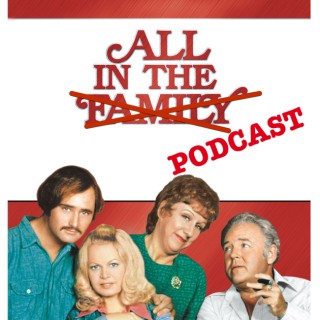
Political historian Oscar Winberg has a fascinating new book titled Archie Bunker for President: How One Television Show Remade American Politics. This book weaves together quite a few different threads in examining the historical context in which the television show, All In The Family, landed on American television screens. Archie Bunker for President examines why this particular sitcom was a kind of inflection point within U.S. politics, within the media landscape at the time and moving forward, and how television production shifted and changed around this one particular television series. Winberg also lays out the path from the early 1970s, when All in the Family first aired, to our contemporary political moment, when celebrity and politics seem to be inescapably intertwined. As Winberg notes in our conversation, television as an entity is inherently conservative, since the functional model was about appealing to the lowest common denominator so that advertisers would be willing to pay for time during shows. In order to reach the most viewers, at least in the age of network television, the television series needed to appeal to the largest market possible, and not “turn off” viewers. What happens in the late 1960s and early 1970s with the television show All in the Family is that this dynamic shifts, and the case is made that it isn't about reaching the most people, but about reaching the people who have the means and inclination to purchase what the advertisers are selling. This is part of the pitch that Norman Lear makes, that CBS executive Bob Wood finally decides to gamble on by greenlighting All in the Family. The dynamic inside the show itself is to focus on politics: to have the characters within the series discuss different political issues, and engage with the impacts of these issues, from women's rights and reproductive health to homosexuality to racism and the anti-war movement. In designing All in the Family with Archie Bunker (played by Carroll O'Conner) clearly defined as a conservative and as a bigot, and with Archie's daughter, Gloria Stivic (played by Sally Struthers) and son in law, Mike Stivic (played by Rob Reiner), as liberals and politically active, the show embedded politics within the narrative. Edith Bunker, played by Jean Stapleton, was an enthusiastic supporter of the Equal Rights Amendment, which was making its way through the ratification process while the series was airing, providing yet another avenue for political discussion within the show's structure. There were quite a few other shows that were developed at the same time as All in the Family that took up similarly political themes in iconic ways, from the Mary Tyler Moore Show to M*A*S*H to Maude. Political conversations were the fabric of these shows in much the same way as in All in the Family, where characters find themselves experiencing dimensions of politics in their lives and they discuss this with friends and family within the narrative construction. This also translated to Americans discussing these shows with each other at dinner, or at the “water cooler”, or at the beauty parlor or barbershop. Given the structure of television in the 1970s and 1980s, before cable and streaming services, options were more limited options, and many of these shows had great writers, actors, and showrunners. This was “appointment television” because there was no way to record or otherwise go back and watch the episode. Episodes were only available at their regularly scheduled time and day—which also meant that lots and lots of Americans were watching the same show at the same time. In some sense, Archie Bunker for President: How One Television Show Remade American Politics is not only about how one television show remade American politics, but also about how All in the Family remade American television, opening up the networks to developing and airing television shows that integrate politics (of all kinds) into the narratives. There is still quite a lot of television, particularly network television, that is pitched to the broadest possible audience, but the narratives in police procedurals or hospital-centered series or sitcoms integrate different dimensions of politics into their storylines in ways that had not been done before All in the Family. Lilly J. Goren is a professor of political science at Carroll University in Waukesha, WI. Learn more about your ad choices. Visit megaphone.fm/adchoices
FILM FESTIVAL TICKETS: https://buytickets.at/thedopeyfoundation/2216905 PATREON: www.patreon.com/dopeypodcast Summary On this Dopey Monday Total Replay, Dave looks back at Dopey Episode 28, one of the strangest and creepiest early episodes of the show. It features Dave, Chris, and graphic-design Ryan — the guy who made the original Dopey logo — talking through old Lower East Side drug energy, the first major Dopey fan emails, weird ego stuff, drug stories, recovery, Rob Reiner, Nick Reiner, and a whole lot of eerie foreshadowing. Dave reflects on how painful it is to hear Chris again, knowing he died in 2018, and uses the episode to make a simple but brutal point: if Chris had stayed in recovery, he probably wouldn't have died. The replay itself is classic early Dopey: messy, funny, dark, uncomfortable, and weirdly prophetic. Ryan tells a story about refusing to leave a drug pickup even after a guy puts a gun to his head. Chris talks about addiction, genetics, rats drinking heroin water, and recovery. Dylan randomly calls in right as Dave is talking about Dylan from 90210, which feels like Dopey synchronicity. The episode also includes the first big fan email from Tina in Philadelphia, Dave getting wounded by being called “Dan,” and a long, now-haunting conversation about Rob Reiner and Nick Reiner before Nick ever appeared on Dopey. It's funny, painful, and very Dopey. PLUS Drugs, addiction and dumb shit on the new/old 10 year anniversary of this episode!(of Dopey) Hosted by Simplecast, an AdsWizz company. See pcm.adswizz.com for information about our collection and use of personal data for advertising.
Political historian Oscar Winberg has a fascinating new book titled Archie Bunker for President: How One Television Show Remade American Politics. This book weaves together quite a few different threads in examining the historical context in which the television show, All In The Family, landed on American television screens. Archie Bunker for President examines why this particular sitcom was a kind of inflection point within U.S. politics, within the media landscape at the time and moving forward, and how television production shifted and changed around this one particular television series. Winberg also lays out the path from the early 1970s, when All in the Family first aired, to our contemporary political moment, when celebrity and politics seem to be inescapably intertwined. As Winberg notes in our conversation, television as an entity is inherently conservative, since the functional model was about appealing to the lowest common denominator so that advertisers would be willing to pay for time during shows. In order to reach the most viewers, at least in the age of network television, the television series needed to appeal to the largest market possible, and not “turn off” viewers. What happens in the late 1960s and early 1970s with the television show All in the Family is that this dynamic shifts, and the case is made that it isn't about reaching the most people, but about reaching the people who have the means and inclination to purchase what the advertisers are selling. This is part of the pitch that Norman Lear makes, that CBS executive Bob Wood finally decides to gamble on by greenlighting All in the Family. The dynamic inside the show itself is to focus on politics: to have the characters within the series discuss different political issues, and engage with the impacts of these issues, from women's rights and reproductive health to homosexuality to racism and the anti-war movement. In designing All in the Family with Archie Bunker (played by Carroll O'Conner) clearly defined as a conservative and as a bigot, and with Archie's daughter, Gloria Stivic (played by Sally Struthers) and son in law, Mike Stivic (played by Rob Reiner), as liberals and politically active, the show embedded politics within the narrative. Edith Bunker, played by Jean Stapleton, was an enthusiastic supporter of the Equal Rights Amendment, which was making its way through the ratification process while the series was airing, providing yet another avenue for political discussion within the show's structure. There were quite a few other shows that were developed at the same time as All in the Family that took up similarly political themes in iconic ways, from the Mary Tyler Moore Show to M*A*S*H to Maude. Political conversations were the fabric of these shows in much the same way as in All in the Family, where characters find themselves experiencing dimensions of politics in their lives and they discuss this with friends and family within the narrative construction. This also translated to Americans discussing these shows with each other at dinner, or at the “water cooler”, or at the beauty parlor or barbershop. Given the structure of television in the 1970s and 1980s, before cable and streaming services, options were more limited options, and many of these shows had great writers, actors, and showrunners. This was “appointment television” because there was no way to record or otherwise go back and watch the episode. Episodes were only available at their regularly scheduled time and day—which also meant that lots and lots of Americans were watching the same show at the same time. In some sense, Archie Bunker for President: How One Television Show Remade American Politics is not only about how one television show remade American politics, but also about how All in the Family remade American television, opening up the networks to developing and airing television shows that integrate politics (of all kinds) into the narratives. There is still quite a lot of television, particularly network television, that is pitched to the broadest possible audience, but the narratives in police procedurals or hospital-centered series or sitcoms integrate different dimensions of politics into their storylines in ways that had not been done before All in the Family. Lilly J. Goren is a professor of political science at Carroll University in Waukesha, WI. Learn more about your ad choices. Visit megaphone.fm/adchoices Support our show by becoming a premium member! https://newbooksnetwork.supportingcast.fm/new-books-network
Political historian Oscar Winberg has a fascinating new book titled Archie Bunker for President: How One Television Show Remade American Politics. This book weaves together quite a few different threads in examining the historical context in which the television show, All In The Family, landed on American television screens. Archie Bunker for President examines why this particular sitcom was a kind of inflection point within U.S. politics, within the media landscape at the time and moving forward, and how television production shifted and changed around this one particular television series. Winberg also lays out the path from the early 1970s, when All in the Family first aired, to our contemporary political moment, when celebrity and politics seem to be inescapably intertwined. As Winberg notes in our conversation, television as an entity is inherently conservative, since the functional model was about appealing to the lowest common denominator so that advertisers would be willing to pay for time during shows. In order to reach the most viewers, at least in the age of network television, the television series needed to appeal to the largest market possible, and not “turn off” viewers. What happens in the late 1960s and early 1970s with the television show All in the Family is that this dynamic shifts, and the case is made that it isn't about reaching the most people, but about reaching the people who have the means and inclination to purchase what the advertisers are selling. This is part of the pitch that Norman Lear makes, that CBS executive Bob Wood finally decides to gamble on by greenlighting All in the Family. The dynamic inside the show itself is to focus on politics: to have the characters within the series discuss different political issues, and engage with the impacts of these issues, from women's rights and reproductive health to homosexuality to racism and the anti-war movement. In designing All in the Family with Archie Bunker (played by Carroll O'Conner) clearly defined as a conservative and as a bigot, and with Archie's daughter, Gloria Stivic (played by Sally Struthers) and son in law, Mike Stivic (played by Rob Reiner), as liberals and politically active, the show embedded politics within the narrative. Edith Bunker, played by Jean Stapleton, was an enthusiastic supporter of the Equal Rights Amendment, which was making its way through the ratification process while the series was airing, providing yet another avenue for political discussion within the show's structure. There were quite a few other shows that were developed at the same time as All in the Family that took up similarly political themes in iconic ways, from the Mary Tyler Moore Show to M*A*S*H to Maude. Political conversations were the fabric of these shows in much the same way as in All in the Family, where characters find themselves experiencing dimensions of politics in their lives and they discuss this with friends and family within the narrative construction. This also translated to Americans discussing these shows with each other at dinner, or at the “water cooler”, or at the beauty parlor or barbershop. Given the structure of television in the 1970s and 1980s, before cable and streaming services, options were more limited options, and many of these shows had great writers, actors, and showrunners. This was “appointment television” because there was no way to record or otherwise go back and watch the episode. Episodes were only available at their regularly scheduled time and day—which also meant that lots and lots of Americans were watching the same show at the same time. In some sense, Archie Bunker for President: How One Television Show Remade American Politics is not only about how one television show remade American politics, but also about how All in the Family remade American television, opening up the networks to developing and airing television shows that integrate politics (of all kinds) into the narratives. There is still quite a lot of television, particularly network television, that is pitched to the broadest possible audience, but the narratives in police procedurals or hospital-centered series or sitcoms integrate different dimensions of politics into their storylines in ways that had not been done before All in the Family. Lilly J. Goren is a professor of political science at Carroll University in Waukesha, WI. Learn more about your ad choices. Visit megaphone.fm/adchoices Support our show by becoming a premium member! https://newbooksnetwork.supportingcast.fm/political-science
Political historian Oscar Winberg has a fascinating new book titled Archie Bunker for President: How One Television Show Remade American Politics. This book weaves together quite a few different threads in examining the historical context in which the television show, All In The Family, landed on American television screens. Archie Bunker for President examines why this particular sitcom was a kind of inflection point within U.S. politics, within the media landscape at the time and moving forward, and how television production shifted and changed around this one particular television series. Winberg also lays out the path from the early 1970s, when All in the Family first aired, to our contemporary political moment, when celebrity and politics seem to be inescapably intertwined. As Winberg notes in our conversation, television as an entity is inherently conservative, since the functional model was about appealing to the lowest common denominator so that advertisers would be willing to pay for time during shows. In order to reach the most viewers, at least in the age of network television, the television series needed to appeal to the largest market possible, and not “turn off” viewers. What happens in the late 1960s and early 1970s with the television show All in the Family is that this dynamic shifts, and the case is made that it isn't about reaching the most people, but about reaching the people who have the means and inclination to purchase what the advertisers are selling. This is part of the pitch that Norman Lear makes, that CBS executive Bob Wood finally decides to gamble on by greenlighting All in the Family. The dynamic inside the show itself is to focus on politics: to have the characters within the series discuss different political issues, and engage with the impacts of these issues, from women's rights and reproductive health to homosexuality to racism and the anti-war movement. In designing All in the Family with Archie Bunker (played by Carroll O'Conner) clearly defined as a conservative and as a bigot, and with Archie's daughter, Gloria Stivic (played by Sally Struthers) and son in law, Mike Stivic (played by Rob Reiner), as liberals and politically active, the show embedded politics within the narrative. Edith Bunker, played by Jean Stapleton, was an enthusiastic supporter of the Equal Rights Amendment, which was making its way through the ratification process while the series was airing, providing yet another avenue for political discussion within the show's structure. There were quite a few other shows that were developed at the same time as All in the Family that took up similarly political themes in iconic ways, from the Mary Tyler Moore Show to M*A*S*H to Maude. Political conversations were the fabric of these shows in much the same way as in All in the Family, where characters find themselves experiencing dimensions of politics in their lives and they discuss this with friends and family within the narrative construction. This also translated to Americans discussing these shows with each other at dinner, or at the “water cooler”, or at the beauty parlor or barbershop. Given the structure of television in the 1970s and 1980s, before cable and streaming services, options were more limited options, and many of these shows had great writers, actors, and showrunners. This was “appointment television” because there was no way to record or otherwise go back and watch the episode. Episodes were only available at their regularly scheduled time and day—which also meant that lots and lots of Americans were watching the same show at the same time. In some sense, Archie Bunker for President: How One Television Show Remade American Politics is not only about how one television show remade American politics, but also about how All in the Family remade American television, opening up the networks to developing and airing television shows that integrate politics (of all kinds) into the narratives. There is still quite a lot of television, particularly network television, that is pitched to the broadest possible audience, but the narratives in police procedurals or hospital-centered series or sitcoms integrate different dimensions of politics into their storylines in ways that had not been done before All in the Family. Lilly J. Goren is a professor of political science at Carroll University in Waukesha, WI. Learn more about your ad choices. Visit megaphone.fm/adchoices Support our show by becoming a premium member! https://newbooksnetwork.supportingcast.fm/film
Political historian Oscar Winberg has a fascinating new book titled Archie Bunker for President: How One Television Show Remade American Politics. This book weaves together quite a few different threads in examining the historical context in which the television show, All In The Family, landed on American television screens. Archie Bunker for President examines why this particular sitcom was a kind of inflection point within U.S. politics, within the media landscape at the time and moving forward, and how television production shifted and changed around this one particular television series. Winberg also lays out the path from the early 1970s, when All in the Family first aired, to our contemporary political moment, when celebrity and politics seem to be inescapably intertwined. As Winberg notes in our conversation, television as an entity is inherently conservative, since the functional model was about appealing to the lowest common denominator so that advertisers would be willing to pay for time during shows. In order to reach the most viewers, at least in the age of network television, the television series needed to appeal to the largest market possible, and not “turn off” viewers. What happens in the late 1960s and early 1970s with the television show All in the Family is that this dynamic shifts, and the case is made that it isn't about reaching the most people, but about reaching the people who have the means and inclination to purchase what the advertisers are selling. This is part of the pitch that Norman Lear makes, that CBS executive Bob Wood finally decides to gamble on by greenlighting All in the Family. The dynamic inside the show itself is to focus on politics: to have the characters within the series discuss different political issues, and engage with the impacts of these issues, from women's rights and reproductive health to homosexuality to racism and the anti-war movement. In designing All in the Family with Archie Bunker (played by Carroll O'Conner) clearly defined as a conservative and as a bigot, and with Archie's daughter, Gloria Stivic (played by Sally Struthers) and son in law, Mike Stivic (played by Rob Reiner), as liberals and politically active, the show embedded politics within the narrative. Edith Bunker, played by Jean Stapleton, was an enthusiastic supporter of the Equal Rights Amendment, which was making its way through the ratification process while the series was airing, providing yet another avenue for political discussion within the show's structure. There were quite a few other shows that were developed at the same time as All in the Family that took up similarly political themes in iconic ways, from the Mary Tyler Moore Show to M*A*S*H to Maude. Political conversations were the fabric of these shows in much the same way as in All in the Family, where characters find themselves experiencing dimensions of politics in their lives and they discuss this with friends and family within the narrative construction. This also translated to Americans discussing these shows with each other at dinner, or at the “water cooler”, or at the beauty parlor or barbershop. Given the structure of television in the 1970s and 1980s, before cable and streaming services, options were more limited options, and many of these shows had great writers, actors, and showrunners. This was “appointment television” because there was no way to record or otherwise go back and watch the episode. Episodes were only available at their regularly scheduled time and day—which also meant that lots and lots of Americans were watching the same show at the same time. In some sense, Archie Bunker for President: How One Television Show Remade American Politics is not only about how one television show remade American politics, but also about how All in the Family remade American television, opening up the networks to developing and airing television shows that integrate politics (of all kinds) into the narratives. There is still quite a lot of television, particularly network television, that is pitched to the broadest possible audience, but the narratives in police procedurals or hospital-centered series or sitcoms integrate different dimensions of politics into their storylines in ways that had not been done before All in the Family. Lilly J. Goren is a professor of political science at Carroll University in Waukesha, WI. Learn more about your ad choices. Visit megaphone.fm/adchoices Support our show by becoming a premium member! https://newbooksnetwork.supportingcast.fm/communications
Political historian Oscar Winberg has a fascinating new book titled Archie Bunker for President: How One Television Show Remade American Politics. This book weaves together quite a few different threads in examining the historical context in which the television show, All In The Family, landed on American television screens. Archie Bunker for President examines why this particular sitcom was a kind of inflection point within U.S. politics, within the media landscape at the time and moving forward, and how television production shifted and changed around this one particular television series. Winberg also lays out the path from the early 1970s, when All in the Family first aired, to our contemporary political moment, when celebrity and politics seem to be inescapably intertwined. As Winberg notes in our conversation, television as an entity is inherently conservative, since the functional model was about appealing to the lowest common denominator so that advertisers would be willing to pay for time during shows. In order to reach the most viewers, at least in the age of network television, the television series needed to appeal to the largest market possible, and not “turn off” viewers. What happens in the late 1960s and early 1970s with the television show All in the Family is that this dynamic shifts, and the case is made that it isn't about reaching the most people, but about reaching the people who have the means and inclination to purchase what the advertisers are selling. This is part of the pitch that Norman Lear makes, that CBS executive Bob Wood finally decides to gamble on by greenlighting All in the Family. The dynamic inside the show itself is to focus on politics: to have the characters within the series discuss different political issues, and engage with the impacts of these issues, from women's rights and reproductive health to homosexuality to racism and the anti-war movement. In designing All in the Family with Archie Bunker (played by Carroll O'Conner) clearly defined as a conservative and as a bigot, and with Archie's daughter, Gloria Stivic (played by Sally Struthers) and son in law, Mike Stivic (played by Rob Reiner), as liberals and politically active, the show embedded politics within the narrative. Edith Bunker, played by Jean Stapleton, was an enthusiastic supporter of the Equal Rights Amendment, which was making its way through the ratification process while the series was airing, providing yet another avenue for political discussion within the show's structure. There were quite a few other shows that were developed at the same time as All in the Family that took up similarly political themes in iconic ways, from the Mary Tyler Moore Show to M*A*S*H to Maude. Political conversations were the fabric of these shows in much the same way as in All in the Family, where characters find themselves experiencing dimensions of politics in their lives and they discuss this with friends and family within the narrative construction. This also translated to Americans discussing these shows with each other at dinner, or at the “water cooler”, or at the beauty parlor or barbershop. Given the structure of television in the 1970s and 1980s, before cable and streaming services, options were more limited options, and many of these shows had great writers, actors, and showrunners. This was “appointment television” because there was no way to record or otherwise go back and watch the episode. Episodes were only available at their regularly scheduled time and day—which also meant that lots and lots of Americans were watching the same show at the same time. In some sense, Archie Bunker for President: How One Television Show Remade American Politics is not only about how one television show remade American politics, but also about how All in the Family remade American television, opening up the networks to developing and airing television shows that integrate politics (of all kinds) into the narratives. There is still quite a lot of television, particularly network television, that is pitched to the broadest possible audience, but the narratives in police procedurals or hospital-centered series or sitcoms integrate different dimensions of politics into their storylines in ways that had not been done before All in the Family. Lilly J. Goren is a professor of political science at Carroll University in Waukesha, WI.
Forget range anxiety. The electric vehicle market is evolving fast. Host Trevor Freeman welcomes back Plug'n Drive CEO Cara Clairman to unpack Canada's new EV policies. They discuss the surge in used EV sales and the truth about public charging stations. Plus, learn how low-cost salt-based batteries could disrupt the global auto industry. Discover what these massive shifts mean for transportation and the future of energy. Listen to the full episode today. Related links Plug'n Drive: https://www.plugndrive.ca/ Cara Clairman on LinkedIn: https://www.linkedin.com/in/cara-clairman-84967318/ thinkenergy episode 71 (EV-olving Transportation): https://thinkenergypodcast.com/episodes/ev-olving-transportation/ Geotab: https://www.geotab.com/ Trevor Freeman on LinkedIn: https://www.linkedin.com/in/trevor-freeman-p-eng-8b612114 Hydro Ottawa: https://hydroottawa.com/en To subscribe using Apple Podcasts: https://podcasts.apple.com/us/podcast/thinkenergy/id1465129405 To subscribe using Spotify: https://open.spotify.com/show/7wFz7rdR8Gq3f2WOafjxpl To subscribe on Libsyn: http://thinkenergy.libsyn.com/ --- Subscribe so you don't miss a video: https://www.youtube.com/@thinkenergypod Follow along on Instagram: https://www.instagram.com/thinkenergypod/ Stay in the know on Facebook: https://www.facebook.com/thinkenergypod Keep up with the posts on X: https://twitter.com/thinkenergypod --- Transcript: [00:00] Trevor Freeman: Welcome to Think Energy, a podcast that dives into the fast-changing world of energy through conversations with industry leaders, innovators, and people on the front lines of the energy transition. Join me, Trevor Freeman, as I explore the traditional, unconventional, and up-and-coming facets of the energy industry. If you have any thoughts, feedback, or ideas for topics we should cover, please reach out to us at thinkenergy@hydroottawa.com. Hi everyone and welcome back. So, any discussion about the energy transition or our efforts to reduce emissions to mitigate the impact of climate change or even just the ongoing adoption of what once might have been considered futuristic technology, inevitably will include electric vehicles, or EVs as we're going to refer to them today. Transportation is one of the major interactions with energy, especially fossil fuel-based energy that most of us have. Heating being the other one. For the average Canadian, how they move around, going to work, going to school, shopping, recreation, etc., very often involves getting into a vehicle which up until maybe 10 years ago, would almost 100% for sure have been a fossil fuel burning vehicle with a few very small exceptions. Today, while the majority of vehicles are still internal combustion engines, there is at least a noteworthy percentage of electric vehicles out there. We probably all know someone who owns an EV, or know someone who knows someone who owns an EV. EVs aren't actually all that new. The first EV showed up in the late 1800s, believe it or not, and at that point and into the early 1900s, it really could have gone either way between electric-powered vehicles and internal combustion vehicles. As we know, internal combustion vehicles definitely won out, and the bulk of the 20th century was all about internal combustion vehicles, and still today that's the dominant method of transportation. But, there is some alternate reality out there where EVs just always were the transportation method of choice. Imagine what the world would look like if that was the case here. But alas, that is not the reality we're living in. The more recent modern EV era kind of sputtered a little bit in the mid-1990s, there was a bit of an attempt, it didn't really pan out, but really got going around let's say 2008-2009, and it's been a steady crawl forward ever since. But, if you are listening to this podcast, chances are you already know all this and you've likely either skipped forward or are listening to me on two times the speed just to get through this to the important stuff, which is EV policy. You never knew you were so excited about policy. So, most of us, including governments, inherently know that the move to EVs is a good thing. It's good for the climate, it's good for consumers, they're kind of better vehicles. But, societal changes don't just happen, and they certainly don't happen fast. So, there has been a suite of policy approaches over the past couple of years or many years to help us get there and help us get there a little bit quicker. In the past year, Canada's EV policy has changed quite a bit. Availability mandates are out, and incentives are back in. Tariffs on Chinese-manufactured vehicles are mostly out, so things are definitely changing. And to help us understand these changes and what they mean, and also just to check in on the state of EVs here in 2026, I'm really excited to have Cara Clairman back on the show. Cara is the President and CEO of Plug'n Drive, a non-profit that strives to accelerate the deployment of electric vehicles to maximize their environmental and economic benefits. And they do this by engaging with Canadians to help dispel myths and fears and uncertainties around EVs using approaches like their EV Discovery Centre, mobile EV education trailer, and their EVs Are for Everyone tour. And this is really about bringing the EV to the individual, to the person, letting them test drive it, touch it, feel it, ask questions of experts. Now, Cara has actually been on the show a number of years ago where she talked to my predecessor, Dan, about the back story of Plug'n Drive a little bit. So, if you're interested in the organization, I encourage you to go back and listen to that episode. We're not going to get into too much of that here today. Cara is a fantastic individual. She's got more than 25 years of experience working in the environmental and sustainability fields, including at Ontario Power Generation where she was OPG's environmental lawyer and later in the role of Vice President of Sustainable Development. Cara was the 2017 recipient of the Women in Renewable Energy's Woman of the Year award, and the 2021 winner of the Al Cormier EV Leadership Award from Electric Mobility Canada. And as you will hear, she is a big fan of EVs, and she thinks you should be, too. Cara Clairman, welcome to the show. [05:01] Cara Clairman: Thank you so much, Trevor. I'm pleased to be here. [05:03] Trevor Freeman: So, this isn't actually your first time on the show, Cara. It's the first time you and I have spoken on this podcast, but you were on our show with my predecessor, Dan, nearly 5 years ago now, and you talked then about how you took Plug'n Drive from just an idea during your time at OPG, to really a national non-profit that's now celebrating its 15th anniversary. And for our listeners, if you're curious about the back story on Plug'n Drive, definitely dig back in the archives and listen to that episode. But, a lot has changed in 15 years, and a lot has changed even in the 4 and a half years since you were last on Think Energy. EVs have gone from kind of this niche idea you'd maybe see one or two around here and there, to, you know, maybe not quite ubiquitous and they're not everywhere, but it seems like they're going in that direction. They're a lot more commonplace. Everybody knows somebody with an EV, or you see them around most times you're out and about. Um, and they are also a very much talked about cornerstone of our national policy. It's an often-talked-about tool for decarbonization. We're going to dive into some of the specifics throughout our conversation, but just looking at the work that you and Plug'n Drive are doing from your EV Discovery Centre to your EVs Are for Everyone tour, how has your mission shifted? Are you moving from convincing people that EVs are a real thing that worked to helping navigate how to get one, what's the complex web of, you know, incentives, etc. What's the difference in your mission now? [06:36] Cara Clairman: Well honestly, I feel like it's really uh the same in a lot of ways. The big difference, as you pointed out, is that we don't really have to explain what an EV is or that it's a decent car. You know, there's some sort of what I would call EV 101 that most people already know now. And like you said, most people have known somebody, or they've at least heard of it. But I would say there's still a high percentage of Canadians that have never ridden or driven one. Uh, and so that's an experience that we find is really the key, like getting the butts in the seats is really the key to helping people get over the hump. And uh, that's sort of the experience that we focus on. We really try to pair a test drive with every event that we do and encourage people to drive so that they can see the benefits go far beyond just the savings and the environmental benefits, that they're just really super fun cars to drive, and if you're a person that likes a quiet, peppy drive, this is the car for you. [07:51] Trevor Freeman: Yeah. Are people coming to your events knowing, "I'm going down the EV path, I'm going to buy one, I need to check this out," or they're coming in kind of thinking, "What are these people doing here at this event or in this parking lot?" Like what draws people to your events? [08:05] Cara Clairman: More more of the former and less of the latter as time goes on, but it depends on the event we're at. So, if it's just they've made an appointment to come see us, which often is the case, we have an appointment system, uh, then they know a little bit, and they're thinking about it, and they want to try it. Uh, if we're just at a festival or fair, which we do, you know, we just are at some event, and they didn't come specifically to see us, uh, then we still meet a lot of people who are like, "What is this?" you know, uh, and so they're earlier in their journey. But what we find is that they need the awareness building, and then they might, you know, make the move a few years down the road, so it still helps them. It's just they're at a different step. [08:50] Trevor Freeman: Yeah, for sure. No, that makes sense. Okay, so what I really want to dive into here today with you is kind of the shifting landscape, or maybe it's already a shifted landscape, um, regarding EV policy, some of the shifts that we've seen even in the last year or two. Um, so recently, you know, we're here in Canada, the federal government repealed the EV availability standard. So, this was the standard that said we want 100% of cars sold in Canada to be zero-emission by the year 2035. [09:27] Cara Clairman: Right. [09:28] Trevor Freeman: And we're moving towards more of an incentive-based strategy. So, a demand-side push rather than an incentive uh sorry, a supply-side push. Does this transition make sense for the average Canadian? Does it risk slowing down the momentum we've built? Kind of where do you stand on on this shift in our approach to EVs? [09:49] Cara Clairman: Right. To be honest, I was a bit disappointed that they repealed what we call a ZEV mandate or ZEV requirement. We were hoping instead of sort of throwing the baby out with the bath water, they would just make the ZEV requirement maybe less onerous and extend the time or something like that, because the benefit of a ZEV mandate um is that it does require dealers to have the vehicles on the lots. And so it actually increases choice, it increases availability, and that's why you hear some people calling it a ZEV availability standard. Trying to explain it to Canadians because it got a bit garbled in the news where it was like, "We're not going to be able to choose a gas car. You're going to be required to buy an EV." Well, that was way down the road. And uh, what it really did in the early years was make sure dealers would have some. And uh, so that's unfortunate, but, you know, got to move on. So, uh, now we're we brought back uh the Feds brought back the rebate, and sales shot up. So, that's good news. And, you know, hopefully, the dealer networks will make the cars available uh in Ontario. The big challenge is that there's still a ZEV availability standard or ZEV mandate in Quebec and British Columbia, which means they get the cars first. And, you know, you do hear, "Oh, this thing doesn't work. This thing is no good." Well, then why do they get the cars and we don't? You know, so it does work. And so, unfortunately, like if you happen to be listening from Quebec or BC, you'll get more choices than we will here in Ontario, and I I, you know, I hope that that, you know, with the demand-side push that, you know, there'll be more showing up. [11:51] Trevor Freeman: Yeah, and we've been through periods where even if you wanted to get uh an EV, even if you wanted if you kind of could afford it, you'd decided this is the right option for me budget-wise, [12:03] Cara Clairman: Yes. [12:04] Trevor Freeman: you're waiting 10 months, or you can't get the option you want and and so [12:08] Cara Clairman: Right. You have to be more tolerant of color or features or whatever. We probably will experience some of that. It's very brand dependent. Like, some brands are very available all across Canada, some aren't. Uh, so it's really quite varied. Um, but um the good news is right now um availability's decent, and there's actually lots available on the used market, and maybe we'll talk about that a little bit later to give people comfort around used, because it's really a great option for people to think about. [12:49] Trevor Freeman: Yeah, absolutely. Let's definitely uh put a pin in that and get back to it. The other big shift I I want to touch on is um or at least it's a big shift that's getting a lot of attention, is the reduction of the previously 100% tariff on Chinese-made EVs down to only a little over 6% now, which effectively opens the doors to Canadians to um have access to these vehicles, so they can be sold in Canada. How do you see this impacting you know, availability and adoption of EVs? Is this going to be a game changer? Are we going to see those kinds of sub-$30,000 EVs on the market? Or is this kind of, you know, one small shift in the market? [13:31] Cara Clairman: Well, the one thing it has done is created tons of curiosity and interest. You know, everybody wants to know about it, everyone wants to see one. Um, there are EV spies, as you may know, everywhere, like EV enthusiasts who are watch, and, you know, we saw some news report that there were a few Chinese EVs on a lot, you know, north of Toronto somewhere, and people are like, "Oh, what brand is this?" and But unfortunately, we don't know uh really the answer to this question that you're asking yet. Um, we're told that the first Chinese EVs will be here in the last quarter of 2026. Uh, and we don't even know yet if they might be brands we already have, you know. They could be Teslas, they could be Volvos or Polestars. Which we already have. [14:22] Trevor Freeman: Yeah. [14:23] Cara Clairman: So, uh, we're hoping we'll see some low cost, you know, BYD or Geelys or whatever else, you know, but we don't know. Yeah. And uh, and it will be exciting to watch, and, you know, we're watching and trying to find out when the first vehicles are going to be available or shown, but nobody knows the answer yet. [14:48] Trevor Freeman: Are you getting like when you interact with people that are in the EV market, are you getting more questions about that? Are people kind of excited about this? Yeah, okay. That's good. [14:56] Cara Clairman: Yes. And it's a mixed bag. You know, some people are very wary about it. Um, and what I try to say is look, we already have you know, these phones. You know, so I'm not worried about the whole security and that someone's going to be watching you know, that part of it I really think is a bit of a red herring. We've already gone there, you know, so so and people's information is out there. You know, I mean, so that's not a big concern to me. Um, I think uh the quality we don't have to worry about. Uh, these cars are widely available in Europe, in uh Mexico, and in South America, and they're good. [15:47] Trevor Freeman: Yeah. [15:48] Cara Clairman: So, we don't have to worry about that. It's just going to be Canadians, you know, be willing to give them a try, and we'll see. Most people say that they would, so we'll see. [15:59] Trevor Freeman: And I guess the, you know, it's either you're trying that car or hopefully the presence of these cars, hopefully a little bit cheaper is also influencing what other manufacturers are doing and realizing, "I've got to compete in that marketplace." [16:11] Cara Clairman: Right, exactly, Trevor. Remember, I mean, you might be too young to remember when the Japanese cars first came to Canada in the 80s. And everyone had these exact same concerns. And you know, what it did was it made the American brands improve. And so, you know, I'm hopeful, and just to remember, these are coming in a very low quantity initially. They're not going to change the market in these next couple of years. If, you know, they open up the door more widely, you know, that's a different thing. But for now, it's a really tiny percentage. It's like less than 50,000 cars, and it's something like 3% of the Canadian auto market, so it's tiny. [17:01] Trevor Freeman: Yeah. Got you. So, the the new uh or the the renewed incentive that the federal government's brought in Electric Vehicle Affordability Program, um which is providing an incentive for electric vehicles or zero-emission vehicles, um there's a strict $50,000 price cap for any imports, meaning some of those higher-end EVs that are made elsewhere won't qualify for this. Is is $50,000 the right price point? I look at just the price of vehicles in general these days, it's definitely trending up, way higher than I would prefer it to be. Is that the right price point given what's available? Is there enough availability under that price point? Um, and you know, does this affect the kind of conversation that you're having with potential buyers? [17:56] Cara Clairman: Right now, there's not a lot available under that price point. I mean, I think it is encouraging certain brands to bring a version that is below the price point. Uh, and it has increased sales, so there obviously are some that, you know, qualify. Uh, the truth is, gas or electric, it's hard to find vehicles under that price point. Um, so yeah, would I have liked it to have been a little more generous? Sure. Uh, but it is helping, and I do see some automakers shifting prices. I mean, I don't know if you saw that Tesla now has brought out a car that fits just under there. Mhm. So it does do that, and uh it does just encourage people to look. And then maybe they'll buy a used EV. Yeah. You know, so it does sort of open the door, it encourages people to have a conversation, to look around, uh it sparks interest, which is a good thing. [19:04] Trevor Freeman: Yeah, and I mean, Ford is looking at how do we come out with a $30,000 truck, and that would qualify for this. [19:11] Cara Clairman: And the Bolt qualifies, the new Bolt, and it's a great car, and the new Leaf, uh, you know, is coming under there. So, there are good cars under there. I mean, Canadians do love their trucks and SUVs, and unfortunately, those do not make it. [19:30] Trevor Freeman: I know. Yeah, you're totally right. Um, so obviously Canadian manufactured EVs are exempt from that price cap. [19:38] Cara Clairman: Yes. [19:39] Trevor Freeman: Are you seeing a game of kind of buy local versus get an incentive? Um, you know, how does this come into play? Is that part of the conversation? [19:51] Cara Clairman: Well, right now, buying local is just about impossible. Yeah. I mean, there's there's literally two vehicles that are made partially in Canada, and, you know, we've heard a bunch of announcements recently that Canadian manufacturing of EVs has either been postponed or gone off the rails altogether, which is really unfortunate, cuz I was really looking forward to being able to buy a Canadian-made EV. Uh, you know, these plans change, they could come back, you don't know. Uh, but right now, it doesn't look that easy to buy a Canadian-made EV. I mean, there's basically the Pacifica and the Dodge Dart. Mhm. You know, that's it uh right now. Uh, and you know, Toyota's going to make some RAV4s, which will be great. Um, you know, Honda just announced they're not going ahead with their plans, um so it's really unfortunate. The thing that I try to remind people is manufacturing is one thing, and EV adoption in a way is completely separate from that, Yeah. because we manufacture cars primarily for the US market. I mean, Canada's almost an afterthought. And so, that's the reason this is happening, it's because of tariffs, it's because of bu- you know, America First policies, it's because of, you know, US politics. And uh, it's really unfortunate for the Canadian auto industry, but it doesn't mean EV adoption won't continue to really grow. It just means we're going to be buying cars that aren't made here. [21:39] Trevor Freeman: Yeah. Well, and that's kind of the next place I want to go with this conversation is our own manufacturing industry, as you've just pointed out, is so tied in with the United States um manufacturing industry and Mexico. That's actually where I grew up in Windsor. My family is an auto family. My first job was kind of in the auto industry. Um, and the intricacies and and interties between those two industries are very, very tight. But, we're at this stage where we seem to be, not seem to be, we definitely are, moving in different directions policy-wise, especially when it comes to EV policy and trade policy in general. Um, that creates challenges and friction. We're trying to build maybe more of a manufacturing base here. The US is trying to pull that back. And that pull is strong. Yeah. It is, yeah. [22:34] Cara Clairman: I mean, they have the population. I mean, we can't fight that very well, and, you know, we'll time will tell. I mean, Trump won't be there forever, but a lot of the damage will have been done. And I know there's a lot of folks really working hard on maintaining the automaker footprint we have here. It's a huge challenge. [22:54] Trevor Freeman: Mhm. Yeah, is there a way to kind of thread that needle for pushing EV adoption? You know, we're kind of falling behind adoption rates that we've seen elsewhere, Europe, Asia, etc. Pushing that while still bolstering our own manufacturing base, trying to maintain these ties with our largest trading partner? Like how how do you I have to admit I'm not an expert on the industrial side, like on the commercial and manufacturing side of things, but from people that are, what I hear is, you know, we may have to let the Chinese, Indian, uh, Vietnamese uh, manufacturers come in and manufacture here in Canada instead of the brands we're used to being manufactured here. And that's something that could happen. That's something that would sort of replace I mean, the ones that are a real problem are the American-made the American brands, you know. They're really feeling the pull to manufacture in the US. Uh, so time will tell. Uh, you know, we may just be making different cars than we were making before. I hope we'll still be making them. [24:14] Trevor Freeman: Yeah, well and there's I mean, you can kind of see the government trying to do exactly what you said, entice companies to do some part of manufacturing here. They've got this tradeable import credit system where, "Hey, if you invest in manufacturing in our country, you get credits to sort of buy your way through our import market. It can offset some of the tariffs that might be in place." You know, that's a mechanism to do exactly what you're saying we might see. [24:41] Cara Clairman: Right. And some of those brands don't mind sending their vehicles anywhere from Canada. You know, they're not as focused on the fact that Canada has what's considered quite a small market, um given our population size. Uh, and I think in the future, well maybe the tariffs are going to change if the American if American politics changes. Yeah. You know, so I do think that's possible, um like I said, some of the damage will have been done if you know, if GM moves production to Detroit or wherever else, you know, they're not going to move back. But um you know, time will tell. I mean, I do think we'll have some manufacturing still in Canada and hopefully more than what it looks like right now. [25:31] Trevor Freeman: Yeah, I mean it'll be interesting to see. As you say, these policies may not be in place forever, but some of the reaction that is going to happen now in terms of do I move my manufacturing base back to the US, that will persist, and you're not going to make two moves, you're going to kind of make a one time tough one. [25:46] Cara Clairman: No, and especially if it creates some job uh you know, a bunch of jobs in the US, the next US president, even if they're Democrat and they get rid of tariffs and stuff, they're not going to move it back. Yeah, exactly. Exactly. [25:57] Trevor Freeman: Okay, so um let's let's kind of zoom back in a little bit here. So, Plug'n Drive, um you've been doing these uh EVs Are for Everyone tours, um kind of as we talked about earlier, giving people access that might not otherwise have access to to understand, try out EVs. And you've been doing this kind of across the board, including in smaller communities. Is there something that you hear differently in a small town, a rural area, compared to a big urban center, you know, Toronto, Ottawa, etc. Oh definitely. [26:30] Cara Clairman: Well, the big thing is they don't have access, as you said. So in a smaller community, they might only have a handful of dealers, and those dealers may or may not carry EVs. And so they really don't get a chance to try them, and trying, as I mentioned at the off the top, is the key to buying. Yeah. And uh, whatever preconceived notion you might have had, you know, it kind of melts away once you get behind the wheel, even just the reality of like, "Oh, this is a great car." You know? And and so, whatever that experience, or whatever they thought it might be, it's it's gone. And uh, and so, it's a really important uh part of the process. And so, that's the main thing in a smaller community, they don't have that. Now, the other thing that we noticed is how far people drive. Now, people do drive farther in a smaller community, but what has surprised us is they don't drive as far as they think. Hmm, interesting. Yeah. And most of us actually don't drive as far as we think. Yeah. We might sit in traffic and stuff, even like us, you know, in big cities. Um, but we don't actually go that many kilometers, or not as many as we think. Um, and they don't either. And, you know, what they do is they, you know, into town, back and forth, for soccer, you know, same as anyone. Yeah. You know, so for for for sports or whatever for their kids, and then shopping or see Grandma or whatever. Um, and then once in a while, a long trip. And that is a thing that weighs heavily on Canadian minds is the road trip. Yeah. We are really obsessed with the road trip, and it's a one-off trip. And this is the thing we can't seem to shake loose, which is, you know, "What am I going to do if I need to drive to" and you fill in the X. Yeah. It could be across Canada, which hardly anyone does, or it could be like my trip to Algonquin, or my trip to Maine, or, you know, not right now, trip to uh, PEI let's say. Um, whatever. It's like, that one-off trip is so important to people, and we try to say, "Okay, yeah, that's more challenging in an EV. It can totally be done now, but it's still harder, and we sort of say try to think about your car for the 98-99%, not the 1% of trips." I might have even said this 5 years ago. Like, it's still a thing that we can't seem to, you know, stop people from fixating on, and we sort of say, "You know, with all the money you're going to save, you can" and we should talk about the savings because people do not understand that. Uh, all the money you're going to save, you can rent a car, or do something else, or what I do, once every 2 years, is swap with my brother-in-law who's got a minivan. Mhm. You know, and you can solve that problem for a one-time trip. Don't make that that's a bad way to choose a car anyway, gas or electric. Yeah. You know, because you're going to spend a lot more on gas hauling around a bigger, heavier car. Uh, so, even if you're not ready, it's a bad idea. [30:04] Trevor Freeman: So, in terms of So, availability of charging is one of them, and there's that road trip idea for sure. There's also, I mean, we hear, and me working at the utility, as people are trying to put chargers in, we hear this a lot. People's preferred charging location is at home. We know that, that's where people want to charge, they want to plug in at home. Yes. Not everybody has a driveway or a garage, not everybody can install a charger at home. So, one of the things the federal government has been doing over the last little while is trying to increase access to public charging. Yes. Where are we at with our sort of public charging infrastructure? Is the network kind of built out to handle those road trips, or to handle that kind of, you know, someone who lives in a multi-res building, a condo, an apartment that can't charge at home? Where are we on that front? [31:18] Cara Clairman: Okay. I would say, as a very early adopter, you know, I had my first EV in 2011, so, you know, from my perspective, the network's amazing. Yeah, yeah, yeah. There was one supercharger, or like, fast, I mean, it was a slow fast charger, uh, in all of Ontario at that time. I mean, so now, there's more than 40,000 chargers across Canada. Uh, there's, you know, about a quarter of those are fast chargers at highway stops and convenient places. If you live in urban suburban Canada, and you commute, it's basically solved. Like, it's so good. I'm- and then, I'm sure someone will listen and say, "Well, for me, it's not." Okay. There- there's still gaps. Is it perfect? No. But it's really quite good, and you just have to go to PlugShare or ChargeHub and take a look, and you'll be shocked at how many chargers there are. I mean, there are a lot. [32:27] Trevor Freeman: For our listeners, PlugShare and ChargeHub are both kinds of resources that map out all the chargers, the status, is it broken, is it fixed, here's what it costs, it's really great resources. [32:39] Cara Clairman: Yes, everything. All the information you need. And all EV drivers will have that app on their phone. Mhm. Uh, then where it is challenging, you know, we got to acknowledge, even like an EV enthusiast like me, got to acknowledge, it's not perfect. Where the big challenges still exist is multi-unit residential, still challenging, and rural remote. Mhm. Still challenging. So, not so much for people who live rural remote, who want to, let's say, drive to town or drive to somewhere, to the city. That's okay. It's if you want to take a really long trip into rural, let's say, from Ottawa to Thunder Bay or Toronto to, you know, Winnipeg. That's still a challenging drive. It's doable, but it's hard. Um, if you're a commuter, which, you know, most of us are, you know, and you can charge at home, I mean, it's done. It's great. I mean, for someone like me, it's fantastic. I mean, I drive about 80 kilometers uh every week, and it's a snap, you know. No problem. Most of the cars have 400-500 kilometers range. I don't even think about it, even on like a minus 30 day. Where where I do think there's the most work that needs to be done is on the MURBs, multi unit residential. And some of the funding that the Feds have put forward for chargers is going into multi-unit, which is great. Mhm. Uh, condos will get done. Condos are getting done. Uh, where it's hard is apartment buildings. I mean, they're so there you need to search for public charging near you. Mhm. And if you're in Quebec, you're probably going to find it pretty easily, BC, it's getting better. Uh, Ontario is still a bit rough, and the Maritimes and the Prairies, super rough. [34:39] Trevor Freeman: Yeah, we do, Hydro Ottawa actually was a recipient of federal funding to install public chargers. We did a lot of public chargers uh public access chargers in multi-unit residential, you know. It's so important, as you said. Everyone wants to charge at home. Exactly, yeah. And, it's the cheapest, it's and we haven't talked about super low night time prices, and being able to plug in overnight and, you know, right now with high gas prices, people are looking into it. It makes a difference. Well, let's talk about the price then, that's kind of the next barrier, is "Ah, it's too expensive, I can't get into it." Um, tell us about the economics around owning an EV. [35:16] Cara Clairman: So, this is a challenge because people see the higher stick- sticker price, and they say, "Oh, EVs are too expensive." Well, they aren't doing the math, and we are trying to, you try to help, we're trying to help. There's other groups trying to help. We have a great calculator on our website to show the total cost of ownership, and to explain that yes, you pay a little bit more upfront, and the $5,000 rebate if you can get it drops that down to about $5K on average. 5k extra, that's the premium, yeah. 5k extra. Yep. Now, you would make that back in 2 to 3 years easily depending on how much you drive, because electricity is like 1/5 the price of gas, and even maybe more like 1/6 now that gas prices have gone up. Mhm. So, if you're paying $2 a liter, um which I hear, is what, you know, We're not far off, yeah. I don't know, I don't buy gas. Yeah. But, uh, $2 a liter, I'm paying the equivalent of, on time of use, of uh, 28¢, and now on ultra-low, 14¢. Um, I mean, a l- per liter equivalent. For the same driving range, yeah. For the same driving. And so, can you imagine that I can fully charge a 500-kilometer car for like 2 bucks overnight. Yeah, yeah, yeah. I mean, you just can't believe how cheap it is. And if and so if we can get people to sort of understand the pay now to save later, which is hard for people. Yep. And if they lease, it's easier to understand because then they're not sort of shoveling out that money upfront necessarily. Mhm. It's a winner, you know, economically, you know, leaving aside the environmental and health benefits. Mhm. Uh, and so, we really try to help We have a great tool on our website that shows all this called Find Your EV Match, and you can compare any of your own, like all the historic gas cars, like any car that you own is in there. So, let's say you want to compare a 19 99 or a 2015 Civic to a Leaf or a Bolt, or whatever car you're thinking of, uh, you can do the comparison, and it will show you the savings month by month. Mhm. And then it will show you when your kind of hit that crossover and you're in the money. Yeah. And then you basically feel like you're earning money. [37:51] Trevor Freeman: Yeah. I will say, as also, as an EV driver, when I I have two vehicles, one's still a gas car and one's uh an EV, when I have to fill up the gas car, I'm I'm always I compare it to my EV that I don't have to fill up, it's it's night and day when it comes to the cost. It's absolutely night and day. [38:09] Cara Clairman: I mean, it's and also the maintenance. So, there's just no maintenance. I mean, obviously there's a little tiny bit. There's brakes, eventually, even that gets delayed because of the generative braking, Longer, yeah. and, you know, windshield wipers and tires, which you do anyway. I mean, I've now had a Leaf, a Bolt, a Model 3, and an Ioniq 5. Okay, and I have literally never had to do any maintenance except brakes, Mhm on any of them. Yeah, that's amazing. And, they've all been the first gen, right? Like my Leaf was the very first gen Leaf, my Bolt was a first gen Bolt 2017, and uh the Ioniq I think was the second year, which is what I drive now. Yeah. And uh, just nothing. And so, it just to me like, I'm almost like, "I can't believe everybody's not doing it! It's so cheap." Now, I understand some people, if you drive 250 kilometers each way and you, you know, I get it. It's not so simple for everyone. You live in a MURB, but if you live in a single-family home, it's a slam dunk. [39:27] Trevor Freeman: Yeah. So, we've kind of covered charging availability, we've talked about the cost implications. There's a battery performance question of is this battery going to be around for 10 years, the life of the car? [39:39] Cara Clairman: Yes. Especially when used, people are worried about it. [39:41] Trevor Freeman: Yeah, is the range going to get me there, and that kind of ties into charging? Where are we at? Have we seen that technology change in the 15 years that you've been in this space? Where are we at with that? [39:51] Cara Clairman: Yeah. In the early years, I always wanted to be honest, right, because it doesn't help to be overly glowing, and then, you know, people are disappointed, you got to be forthright with people where there are pluses and where there are the minuses. In the early years, of course, the range was really low, and so that was a challenge for people who had to drive long distances. Now the range of the EV is great, that's not an issue for most people anymore. Battery life, people used to say, "Well, how long will the battery last?" And the truthful answer 15 years ago was we don't know, Mhm because there was no information. I mean, Yeah, we hadn't done it. We thought we knew because the Prius had a similar type of battery, as a hybrid, and we thought it should be similar, and those are doing well. Well, now we have 15 years of information, and the batteries are lasting so well. Now, you hear in the news the odd story about a battery crapping out, and it really is anecdotal, and so you can't pay attention to it. Um, it's a lemon situation, right, and that's going to happen, right, there are going to be lemons, just like in a gas car. [41:03] Trevor Freeman: Exactly, yeah. You have to get your engine replaced randomly if you have a lemon, it happens. [41:07] Cara Clairman: Yes, it happens. But the data will tell you, and Geotab has some really good data on their website where they studied how long are these batteries lasting, like 15 years later, and it looks like, for the most part, they're going to outlast the body of the car. Like, 20 years, no problem. So, this idea that you would have to replace a battery is really unrealistic, like, most of us will never have to do that. And no one keeps their car for 20 years, or very few people keep their car for 20 years. No, it's a 10 year window, and if you're like most Canadians, 7 to 10 years, uh, you're not going to be replacing the battery. That's not going to happen. And most of them, uh, sort of a typical battery loss, battery degradation over time is 1 and a half to 2% a year. Hm. So, you're going to see some declines, so let's say at year 5, you should be down no more than 10%, and uh uh, so when you look at a used vehicle, you can do a test on the battery and see how it's doing, something called a State of Health check on the battery. It's a test that any dealer can do, like any service center can do. And you can be confident that it's fine. [42:33] Trevor Freeman: Mhm. So, let's say you brought up used vehicles a couple times here. Let's talk about that as an option for people wanting to get into the EV space maybe a bit more affordably. Yes. Like is the supply out there? Are there a bunch of these sitting around waiting to be scooped up? Yes. Great, now let's talk about it. [42:49] Cara Clairman: Yeah, that's a great news story. So, there's there's um a lot of supply, uh, there's, you know, if you think about it, all the vehicles that come off lease or whatever, you know, even there's now 2023s, you know, available, there're there's a lot of availability. And so, you know, you just go on your favorite, you know, auto trader type magazine, and you will see, uh online, there's tons of availability, and uh, you know, what I say to people if they're worried about battery life, they do that State of Health check on the battery. If you're buying it privately, uh, you can ask. Uh, it's only about a hundred bucks, I think it's worth it. Uh, the other thing you could do, if you just can't figure that out or you don't want to figure that out, is just trickle charge the battery overnight and see, you know, what does it say, how many kilometers uh range you have, and compare that to what the manual says it should have. That's sort of a rule of thumb type of test, it's not as good as the actual test, but it'll give you a good idea. So so the, you know, people should not be afraid of a used EV. And uh, also, if you are really concerned, most of them have, you know, the 8 to 10 year warranty on the battery. And so, if you are really concerned, just make sure you're still in in warranty. Yeah. Uh, you know, don't go older than 8 years, and also check, you know, because sometimes there's a kilometer limit and a year limit, so it's like 8 years or 180,000 kilometers, or you know, they're all a bit different, but um check it, and uh that's a great way of sort of if you still have a year or two left on the on the warranty, then you're sort of safe. Yeah. to see like see how it see how it does. And price point wise, these are coming in at like a reasonable for a used vehicle, a reasonable price point. Totally reasonable, you can get an EVs in the 20s, in the well you can get the oldest ones even lower than that, in like, um, apparently my 2017 Bolt, which we still keep and use, we love it, uh, would only be worth like, I don't know, $12 or $15,000. So, they're cheap, and this one got the battery fixed. I always say to people, the Bolt had a recall on the batteries, 2017 to 2019. And most of them got the battery fixed, so, and then the warranty goes back to year 1. Mhm. So, you basically can get a used Bolt that's almost like a new car because it got a new battery put in, and so those are like gems to find, yeah. Uh, so, they're, you know, that's why we're hanging on to ours, it's great. That's great. [45:41] Trevor Freeman: Okay, Cara, we're getting close to the end of our conversation here. So, uh you know, you've been at this for a while, 15 years of Plug'n Drive, um obviously an EV enthusiast on top of that. What's your general feeling about where we're at right now in 2026? Is it where you thought we would be, maybe looking back a few years ago? Is it, you know, we've got a long road to climb here, where are you? What are you thinking here? [46:08] Cara Clairman: Well, I do tend to be an optimist, but I was probably a little overly optimistic about how fast the transition would happen, and we have had some bumps in the road. Uh, but I would characterize all the stuff that's happened in the last year or two as bumps in the road to eventually everyone having an EV. I mean, I do think it's inevitable still, and I think most of even the, you know, automakers would say it's inevitable. The cars are better, mhm they last better, they perform better, and even without all the environmental and health benefits, they have a lot of other econ- economic benefits. Uh, so I do think it's inevitable. It has been slower than I expected. Mhm. Uh, but, um, I'm still really optimistic about the future, uh, and I think Canadians are going to embrace EVs maybe sooner than than some folks, and and I think all what's happened with with Trump and also this war and all these things has actually got more people asking questions about EVs than ever before, so he accidentally actually spurred on the interest in EVs, which is funny. [47:26] Trevor Freeman: Yeah, and I think we've seen that over over the years, these sort of starts and fits, and no doubt there will be another maybe slow down, but I I tend to agree, we're we're angling in that direction, and there's really no pulling back now. I would, so my oldest is 13, and I remember probably 5, 6, maybe 7 years ago, thinking, "You know, wow, by the time uh he's driving, he may never drive an ICE vehicle, because it'll just all be EVs." So, we haven't quite gotten there, [47:56] Cara Clairman: Yeah, my kids are in their 20s, and they both learned on electric, and they both have never driven a gas car, because we don't have one. Yeah, yeah, that's great. And so I am hopeful, and BC and Quebec have already passed what I would call the tipping point, mhm and so I do think that it's happening, and it's exciting, and it's also a great industry for young people to get into, so um there's lots of lots of pluses. [48:24] Trevor Freeman: Yeah, it's funny on this show, this comes up a lot, and I think all the things that we talked about from utility space to all the energy transition things, EVs being one of them, distributed energy resources, right like if you're a young person looking of what do I get into, what's the thing that I focus on, my goodness, we've got a whole range of things that are are on the cusp, I think of of really taking off, so EVs being one of them. [48:48] Cara Clairman: Electricity, energy, there's a lot of exciting stuff happening in decarbonization, and it's a great field for young people. [48:55] Trevor Freeman: Yeah, absolutely. Okay, so we always end our interviews with a series of questions to our guests, Cara, so I'm going to throw a few at you here. Um, what's a book that you've read that you think everybody should read? Ah. Uh, so professional or personal? Well, you can go either direction. I'll even give you two if you want to do one of each. [49:15] Cara Clairman: Okay. So, professional, uh, I read a book called, I think it's called, We're All in Sales. And it really helped me when I was starting Plug'n Drive. It sort of helps you get over this like, "Ugh, sales." Yeah. Which I think a lot of people have because they don't want to have to ask for money or you know, pitch for money or whatever. And it made you re- It was just helpful in that it talks about how, I mean, we're all in sales in one way or another. I mean, you have to sell yourself, you have to sell your ideas, you have to sell something. Some of us were more direct than others, but it helped me. Mhm. Um, um, and then, for women who are entering the workforce, uh, I read a book called The Feminine Mistake. And it's a play on The Feminine Mystique, which was a huge book in the 60s. Yeah. And, I found it really helpful as a working mom, and have little kids, and it's hard. It's a really hard phase. And that book really really helped me. Um, and then personal, uh, I just read uh a book that I really enjoyed, um, uh, it's actually just been made into a movie with uh, Sally Field, called Remarkably Bright Creatures. It's about an octopus, and it's from the octopus's point of view. [50:47] Trevor Freeman: Oh, very cool. I just saw a trailer for this movie, actually. Finding it. [50:50] Cara Clairman: Yeah. So read the book before you watch the show, Okay. because books are always better than the movie, and more in depth and everything. So it's a great book, especially if you love the ocean and mhm sea creatures and octo- pi? Octopuses? are so smart and it was just really adorable. It was a really fun book to read. It's not like it's great, it's written really well, but it's not hard to access, it's not, you know, it's it's great. [51:21] Trevor Freeman: Yeah. No, that's a good one, that's a good recommendation. Um, so kind of the same question, but um, you know, for a movie or a show, is there something you've watched recently that really has stood out to you that you kind of think everyone should take a look at? [51:32] Cara Clairman: I went back and watched This Is Spinal Tap, Nice. That's awesome. which I hadn't watched. And my husband had never seen it. Oh, gods. And I was like, "What?" Cuz you know, because of everything that happened with Rob Reiner, we went back and we watched it. Still hilarious. Oh yeah, so good. It really stood the test of time, so funny. [51:53] Trevor Freeman: I've got This has come up before with other guests, I've got a list of you know, those movies that were so great for me as whatever, a teenager, that I'm waiting for my kids, ridiculous though. I mean, I have to warn you, ridiculous. I'm waiting for my kids to get old enough that I can bring them into this or that one, and that's on the list for sure. So we'll crank it up to 11 here. Um, so if someone offers you a free round trip anywhere in the world, where would you go? [52:20] Cara Clairman: Oh wow. Uh, I actually just got back from Morocco, and it was so fantastic. Oh, gods. It was so beautiful. Um, but I've never been anywhere in Asia, I'd love to go to Japan. Mhm. I've never been there, and South Korea, because also they're very advanced in terms of technology and stuff, and I there's so many neat things, like autonomous vans and things that they're already using there, and vehicle-to-grid, and all this stuff, and at the base, I'm an electricity nerd, so I I would love to go there. [52:55] Trevor Freeman: Yeah. Uh, who's someone that you admire? [52:58] Cara Clairman: Oh my gosh, there's so many people I admire. Um, Louise Arbour. Um, our new, for our listeners, our new Canadian, uh, Governor General, yeah. New GG. That's awesome. She is fantastic. What a role model for women. She became a judge from being a professor. Mhm. Um, she ascended in a way that not very many people have. She worked internationally, she's, and, uh, she's also a really nice person, a really good person. Yeah. And, uh, an accessible person, what I would say is that she's not at all arrogant, she's funny, she's nice to talk to. I had the privilege of working with her when I was a student. Oh, very cool. And, uh, she's just amazing, and I watch her with, she's inspiring. [53:57] Trevor Freeman: Yeah, that's uh I I agree, I've been reading obviously about her because she's in the news right now, and for our listeners, that's our new uh Governor General, and if you're not from Canada, you can look up what a Governor General does for us here in Canada. Um, very, very exciting. Um, yeah, I agree. Um, last question, Cara. What's something about the energy sector or its future that you're particularly excited about? [54:21] Cara Clairman: Oh my gosh, well, you know, aside from all the stuff we've just been talking about, Yeah. um, actually, I saw a YouTube video about batteries uh just the other day, a Chinese battery maker. And what they're doing in batteries is really exciting with salt, you know, salt based batteries that are going to be so cheap. Mhm. And they basically have it, like it's not this futuristic thing, it's a salt-based battery that costs like a fraction, and so the cheapest EVs will get made with those, and that's going to be a game changer. Yeah. That's pretty cool. [55:05] Trevor Freeman: It is exciting to think about. Now that we're really focusing on EVs and letting sort of just that normal technological improvement iterative process happen, Right. how quickly we might see some of these barriers that we just talked about get solved. [55:19] Cara Clairman: Yeah, they're putting their new technology into drones, into like air taxis and all this stuff, mhm. It's now, it's not sort of this Jetson's futuristic thing, it's like really happening, so that's pretty exciting. [55:40] Trevor Freeman: Yeah, now the energy transition is here, we say it all the time on this show. It's here. It's here. When people say EVs are the future, I say no, they're right now. Exactly, yeah, exactly. Um, Cara, it's been great chatting with you, thank you so much for making the time this morning. I really appreciate your insight into what's happening. [55:56] Cara Clairman: Yeah, my pleasure, my pleasure, nice to talk to you too. [55:58] Trevor Freeman: Yeah, hopefully uh we'll talk again in a few years and be talking about how fast it's moved. [56:02] Cara Clairman: I hope so. [56:03] Trevor Freeman: Awesome. Thanks so much. Take care. Okay, you too. Okay, bye. Thanks for tuning in to another episode of the Think Energy podcast. Don't forget to subscribe wherever you listen to podcasts, and it would be great if you could leave us a review, it really helps to spread the word. As always, we would love to hear from you, whether it's feedback, comments, or an idea for a show or a guest. You can always reach us at thinkenergy@hydroottawa.com.
Political historian Oscar Winberg has a fascinating new book titled Archie Bunker for President: How One Television Show Remade American Politics. This book weaves together quite a few different threads in examining the historical context in which the television show, All In The Family, landed on American television screens. Archie Bunker for President examines why this particular sitcom was a kind of inflection point within U.S. politics, within the media landscape at the time and moving forward, and how television production shifted and changed around this one particular television series. Winberg also lays out the path from the early 1970s, when All in the Family first aired, to our contemporary political moment, when celebrity and politics seem to be inescapably intertwined. As Winberg notes in our conversation, television as an entity is inherently conservative, since the functional model was about appealing to the lowest common denominator so that advertisers would be willing to pay for time during shows. In order to reach the most viewers, at least in the age of network television, the television series needed to appeal to the largest market possible, and not “turn off” viewers. What happens in the late 1960s and early 1970s with the television show All in the Family is that this dynamic shifts, and the case is made that it isn't about reaching the most people, but about reaching the people who have the means and inclination to purchase what the advertisers are selling. This is part of the pitch that Norman Lear makes, that CBS executive Bob Wood finally decides to gamble on by greenlighting All in the Family. The dynamic inside the show itself is to focus on politics: to have the characters within the series discuss different political issues, and engage with the impacts of these issues, from women's rights and reproductive health to homosexuality to racism and the anti-war movement. In designing All in the Family with Archie Bunker (played by Carroll O'Conner) clearly defined as a conservative and as a bigot, and with Archie's daughter, Gloria Stivic (played by Sally Struthers) and son in law, Mike Stivic (played by Rob Reiner), as liberals and politically active, the show embedded politics within the narrative. Edith Bunker, played by Jean Stapleton, was an enthusiastic supporter of the Equal Rights Amendment, which was making its way through the ratification process while the series was airing, providing yet another avenue for political discussion within the show's structure. There were quite a few other shows that were developed at the same time as All in the Family that took up similarly political themes in iconic ways, from the Mary Tyler Moore Show to M*A*S*H to Maude. Political conversations were the fabric of these shows in much the same way as in All in the Family, where characters find themselves experiencing dimensions of politics in their lives and they discuss this with friends and family within the narrative construction. This also translated to Americans discussing these shows with each other at dinner, or at the “water cooler”, or at the beauty parlor or barbershop. Given the structure of television in the 1970s and 1980s, before cable and streaming services, options were more limited options, and many of these shows had great writers, actors, and showrunners. This was “appointment television” because there was no way to record or otherwise go back and watch the episode. Episodes were only available at their regularly scheduled time and day—which also meant that lots and lots of Americans were watching the same show at the same time. In some sense, Archie Bunker for President: How One Television Show Remade American Politics is not only about how one television show remade American politics, but also about how All in the Family remade American television, opening up the networks to developing and airing television shows that integrate politics (of all kinds) into the narratives. There is still quite a lot of television, particularly network television, that is pitched to the broadest possible audience, but the narratives in police procedurals or hospital-centered series or sitcoms integrate different dimensions of politics into their storylines in ways that had not been done before All in the Family. Lilly J. Goren is a professor of political science at Carroll University in Waukesha, WI. Learn more about your ad choices. Visit megaphone.fm/adchoices Support our show by becoming a premium member! https://newbooksnetwork.supportingcast.fm/popular-culture
Send us Fan MailOn the podcast this time, Steven and Sean are recapturing their youth by checking things off a list. We watched the 2007 film from Rob Reiner, The Bucket List.Edward Cole and Carter Chambers might have been staring death straight in the face before living life to the fullest, but that doesn't mean any of us have wait to explore our own bucket lists.Let's jump out of airplanes (with a parachute, of course). Let's ask that pretty person out for a date. Let's recognize that life can be too short, and waiting to explore out bucket lists is always a bad idea.(Recorded on April 06, 2026)Links to Stuff We Mentioned:The Bucket List - The Movie Database (TMDB)The Bucket List trailer - YouTubeJack Nicholson — The Movie Database (TMDB)Morgan Freeman — The Movie Database (TMDB)Sean Hayes — The Movie Database (TMDB)Beverly Todd — The Movie Database (TMDB)Alfonso Freeman — The Movie Database (TMDB)The Guitar (2008) — The Movie Database (TMDB)Follow Us:Give us a rating and review on Apple Podcasts!Sean's Letterboxd profile!Steven's Letterboxd profile!Our Buzzsprout site!Our Instagram profile!Support the show
Soldiers of Cinema - Exploring the Works and Philosophies of filmmaker Werner Herzog
A Few Good MenHosts: Clark Coffey & Cullen McFaterIn this episode, Clark Coffey and Cullen McFader discuss Rob Reiner's 1992 film 'A Few Good Men,' exploring its cultural impact, performances, and the writing style of Aaron Sorkin. They delve into personal experiences with the film, the direction, and the philosophical questions it raises about the justice system. The conversation also touches on visual storytelling techniques and the balance between performance and cinematography in the film, the limitations of Aaron Sorkin's narrative style, and the performances of the lead actors. They discuss how the film addresses philosophical questions about morality and justice, while also analyzing the character dynamics and emotional depth brought by the supporting cast. The conversation highlights the film's entertainment value and its impact on audiences, reflecting on how perceptions of military culture have evolved over time.Subscribe to Soldiers of Cinema for honest, wide-ranging conversations on film, from cult favorites to award-winners - with two filmmakers, decades apart.TrailerDirector: Rob ReinerStarring:Tom CruiseJack NicholsonDemi MooreSocials:FacebookTwitterInstagram
[A crosspost with Hollywood Woketopia, my other Substack]Every so often, a moment in culture arrives, a Sydney Sweeney ad, or Project Hail Mary. Every time, we hear that the Woke fever has finally broken. Hollywood cares about the people again. Right?The same reason Kamala Harris is likely to be the nominee in 2028, the same reason the Democrats are still selling the lie that any kind of attempt by Republicans to even out the redistricting is “Jim Crow 2.0,” is proof enough that on the Left, Woke is not going anywhere. It is who they are now. Not all of them, but the most powerful among them.Early on, when Mark Halperin and others were insisting Gavin Newsom would be the nominee in 2028, I said there was no way the Democrats would get behind a white guy, no matter how passionately he genuflects to the Woke (“Anti-woke is anti-black!”). I know the Democrats. I was one. I helped build the modern-day party of the Great Feminization and the Great Awokening. I know what fires them up every day, and it isn't just taking back power; it's foisting their religion upon the rest of us.They think it's the opposite, that it's the Right that is foisting their “Christian Nationalism” upon them. While it's true that a faction of the Right has unmasked to become the very thing Rob Reiner warned about in his movie, God and Country, they aren't the majority. Perhaps that's true on the Left. But look around. Their religion is the dominant culture in America.When news got out that Christopher Nolan had cast Lupita Nyong'o as Helen of Troy, the “most beautiful woman in the world,” whose face launched a thousand ships, it ignited yet another culture war. How you reacted was like whether or not you wore a mask outside in 2020. It was a test. You're on one side, or you're on the other. Notice it, comment on it, object to it, criticize it, and you're one of the bad people to be purged. And if that weren't enough, Nolan brought back Ellen Page from Inception, now recast as Elliot Page, the male, as an act of affirmation and yet another test. These are Orwellian 2+2=5 and force people to choose between ignoring it and going to see a big-effects movie in IMAX, or not buying a ticket and boycotting the film. Elon Musk took the bait, becoming the villain Hollywood needed to turn seeing The Odyssey into a righteous and political act. You can see them now: the bearded male feminists buying tickets ten times in a row. “Take that, Elon Musk!” The ladies of Blue Sky will go in groups, then fawn over how beautiful Lupita Nyong'o is and overuse the male pronoun for Ellen/Elliot Page. “Wasn't he great?”The game is becoming exhausting by now, as Hollywood demands the hard-working American public be impressed by them, lectured by them, and corrected by them. All audiences really want is the one thing Hollywood seems unable to accomplish: entertain them.It isn't that Nyong'o isn't pretty. She is. It's that Helen of Troy was white, famously so, even if Greek. Nyong'o is a unique beauty, not a universal one, a reality the Left wants to force, because Hollywood doesn't care about its audience. They want to look good.Probably the worst thing about the game Hollywood plays with the movie fans they helped raise is that Lupita Nyong'o is held out as a sacrificial lamb. She isn't pushing any ideology, unlike Ellen/Elliot Page. They are putting her out there and expecting her to absorb criticism about herself, including whether she is pretty enough. I met her once, back in 2013 in Telluride, before her career took off. She was too young to know how to act like a celebrity. She was so nice, I was won over. She would win an Oscar that year and become a big star in Hollywood. Is it fair to put her in this position just so they can feel good about themselves? No. Does it change anything? No. There is still such a thing as truth and reality, even if that is the thing that is unfair. The Woke Code and the Hays CodeThe Hays Code (1930-1968) represented an era wherein decency and morality were mandated in all Hollywood films. The Christian conservatism/morality mandated by the Hays Code reflected less a separation between art and governance and more a united effort toward a utopian society of goodness, especially as we moved through the last Fourth Turning, the Great Depression, and World War II, a time where the world saw true evil in Hitler and Stalin, not to mention the nuclear bomb.That isn't all that different from what the Woke Code is now. It's roughly the same kind of thing: rigid rules to depict an ideal society. The difference is that Christian advocates have been replaced by progressive activists, and the villain is the white male patriarchy. What is different now, amid our current Fourth Turning, is that the Woke Code includes only half of America. To the Left, they would rewrite this narrative to say that Hollywood depicted mostly White America, and that is what has changed. But really, if you respond to the box office, as Hollywood doesn't anymore, you will always default to the majority. It isn't rocket science — beautiful, sexy women and masculine men and a great story.The end of the Hays Code was entirely due to economics. Television became so popular in the 1950s that there wasn't much of a need to go to the movies if all you saw was the same kind of buttoned-up themes you could see on TV. That's true now, too. Movies, then, had to break out of the Hays Code and become much more subversive, leading into the 1970s, which saw some of the best films ever made. While it's true that The Odyssey will be eligible to win Oscars under the new rules, it's also true that the criteria could have been met in a way that didn't make audiences play this same exhausting game that has alienated them from everything Hollywood puts out. The casting of Nyong'o and Page is less about Oscars and more about status. Perhaps Nolan was under pressure to cast a non-white woman as Helen, or maybe he wants to be seen as a good person using his wealth and fame to make change, as the most famous white male directors reach for things money can't buy, like Martin Scorsese making Killers of the Flower Moon, Steven Spielberg making West Side Story with a real Latina, and Paul Thomas Anderson's Peak Woke Best Picture winner, One Battle After Another.No film has better exemplified Hollywood in the Trump era than this one. It says it all. ICE as the Gestapo, check. America is run by a cabal of wealthy white Nazis, check. A woman of color must save herself, check. All of it is held together by a hapless white man, Leonardo DiCaprio, who represents the film's beating heart. He's the only good white guy, which is how those in Hollywood who make these kinds of choices would like to be seen. One Battle is actually a movie about them.Had Nolan cast a blue-eyed blonde woman as Helen of Troy, all hell would have broken loose. When you go against the rules of the Woketopia, you aren't just getting hit on X with lots of angry tweets by loyal fans who continually feel betrayed; they bring out the big guns - agonizing op-eds in the New Yorker, for instance. If you obey the rules, then you are praised. The problem is that it all feels so artificial, so pre-planned, so inorganic.I used to write the Oscars report for Jane Fonda's Women's Media Center (who fired me after they found out I voted for Trump), counting the number of female nominees and winners. The statistics were always grim. Every year, it was bad news. As things began to change for women after the Academy announced its DEI mandate in 2020, that change was forced. If before merit had made too many white men winners, now we were seeing something a little closer to gender parity. So then the line moved back, and it became not just about women but women of color and trans women. Now, it's all about Marxism disguised as art. If life isn't fair, movies will make it fair. It isn't just because the Oscars have it written into their new rules, and it isn't just because activist groups like GLAAD breathe down the neck of every Hollywood studio, counting heads and making reports. It's that this is a deeply felt belief system that isn't going anywhere anytime soon. I have no doubt The Odyssey will make money. It's a Christopher Nolan film, after all. Who doesn't want to go see a giant visual effects epic filmed entirely on IMAX? If you can ignore the elephant in the room, the performative casting, you might have a great time. But if you were hoping that Woke is over, well, I think that was its own Hollywood fairy tale. It's why Kamala Harris was the nominee in 2024 and why she will once again be the nominee in 2028. This is how the ruling class in America wants to be represented. They want to force change, and they do that by elevating minority groups to high-status positions as symbols for the mostly white people who run things.Culture, like the Democratic Party, will have to be built anew. That, more than anything, explains why AI is about to completely consume the business, becoming the subversive counterculture revolution Hollywood never saw coming. They can do it all and more without the millions of dollars necessary to mount a production. AI artists don't have to be held to the same rigid standards. They can be purely about bringing in eyeballs by showing what people most want to see, rather than what Hollywood wants them to want to see. In other words, they can make the women as beautiful as they want, and no one can cancel them for it. I spent my life in movie theaters gazing up at the big screen and watching some of the best films ever made. The only way that makes sense is if you are escaping real life and finding your way into a fantasy world, and maybe for the Woke, seeing Lupita Nyong'o cast as the most beautiful woman in the world is its own kind of fantasy fulfillment. After the movie comes out, we'll have to see whether it works or not. At the moment, it feels like just another test to decide who gets to stay and who has to go. This is a public episode. If you'd like to discuss this with other subscribers or get access to bonus episodes, visit www.sashastone.com/subscribe
Two TV legends, one unforgettable farewell. A defiant David Letterman defends Stephen Colbert. With just 4 shows left, Stephen's final guests revealed. Then, Taylor Swift in wedding white. New details on her guest list. Plus, Niall Horan on why he'll skip Harry's ‘I dos'. And, Tiffany Haddish on her history-making covergirl moment. Then, Pedro Pascal takes his “Star Wars” spin-off to the big screen. Plus, “Friday” is coming back. Ice Cube and Mike Epps on the ET stage with new details about the sequel in the works. And, an all new ET Then & Now with Cary Elwes reliving the role that changed his life. From “The Princess Bride” to Hollywood icon, and the never before told stories about Rob Reiner. Then, the country stars that turned out for Lainey Wilson's big day. Plus, Nate Bargatze brings his new movie to his own backyard. Only ET's in Nashville for “The Breadwinner” premiere. And, Chris Rock reveals how Eddie Murphy cost him $30 million. Then, a Grammy winner makes her acting debut. We're behind the scenes of “Sheriff Country” with Maren Morris. To learn more about listener data and our privacy practices visit: https://www.audacyinc.com/privacy-policy Learn more about your ad choices. Visit https://podcastchoices.com/adchoices
Don't go anywhere, We're about to get crackalackin on our review of Misery, one of Stephen Kings most successful and critically acclaimed novel adaptations. Synopsis When world class author Paul Sheldon takes a spill he falls under the care of Annie Wilkes, his Nurse. As Paul regains his strength to learn to walk again, he also finds himself learning to love again. Little does he know that Annie Wilkes is his #1 fan. As Annie becomes his muse for his next novel, Annie tries to remain professional and hide her true feelings. From the Director Princess Bride and When Harry Met Sally comes the feel good romantic comedy of the 90's, which asks, why unrequited love can lead to such… Misery. Review of Misery Misery is a horror movie that proves you don't need all the bells and whistles of the genre to be truly terrifying. Sometimes all you need is one truly unhinged person and no escape. Kathy Bates performance is truly impressive and well deserving of her academy award win. She is convincingly able to portray a cavalcade of mental health disorders at the flip of a switch. Going from Manic fan girl to menacing anger, to unnerving disassociation. James Caan comparatively has light work being nonplussed at Annie's theatrics. William Goldman's adapted screenplay deserves a lot of credit for its tight pacing, the smart addition of a sheriff character, and great dialogue. Rob Reiner had a lot to prove with this film in expanding his credibility as a director outside of comedy. It undeniably is a great thriller, but my one criticism is that it is often visually uninteresting. It might be intentional, but the over reliance on monologue long closeups felt claustrophobic at times. It's said that Reiner studied the films of Hitchcock before shooting Misery, but I don't see anything close to that level of visual storytelling. Overall, this is a great movie. The tension never lets up and Kathy Bates performance is required viewing. Score 10/10
A new week means new questions! Hope you have fun with these!Do Kiwis grow on trees, bushes, or vines?Conchita Wurst, an Austrian Drag Queen, won which song contest in 2014 with "Rise Like A Phoenix"?Chrome and Hot Leather and The Ballad of Andy Crocker are the only two films with acting roles for which singer?In 1990, Stephen Hendry became the youngest ever World Champion at 21 years old in what sport?George Milton and Lennie Small are characters in which John Steinbeck novella?The Barbary macaque is the only undomesticated monkey in which continent?Which president has an Eternal Flame next to their grave?A Sengalese dance called the Simb mixes mysticism, terror, traditional dance, and folklore in a ritual to cure a symbolic hunter who has started acting like what animal?Who was the first American to win a Nobel Peace Prize?Which English actor played the titular characters in Blackadder and Mr. Bean?What 2012 film was a quasi-prequel to the 1979 film Alien?The Musical "I Wanna Dance With Somebody" is a 2022 musical biopic about which R&B Diva?What is the largest city by total area located in the continental US?The nadir is the point directly below an observer; what is the term for the point directly above?Released in 2002, the highest rated game on BoardGameGeek dot com for over 5 years has players assume the roles of colonial governors on what titular island?What is the largest ice shelf in Antarctica at around 500,000 square kilometers, a little too big to carry up stairs even if you pivot?Who starred in the 2024 American dark fantasy Netflix film Damsel?In which month is Guy Fawkes' Night celebrated?Which 1984 American mockumentary comedy film was Rob Reiner's feature directorial debut?MusicHot Swing, Fast Talkin, Bass Walker, Dances and Dames, Ambush by Kevin MacLeod (incompetech.com)Licensed under Creative Commons: By Attribution 3.0 http://creativecommons.org/licenses/by/3.0/Don't forget to follow us on social media:Patreon – patreon.com/quizbang – Please consider supporting us on Patreon. Check out our fun extras for patrons and help us keep this podcast going. We appreciate any level of support!Website – quizbangpod.com Check out our website, it will have all the links for social media that you need and while you're there, why not go to the contact us page and submit a question!Facebook – @quizbangpodcast – we post episode links and silly lego pictures to go with our trivia questions. Enjoy the silly picture and give your best guess, we will respond to your answer the next day to give everyone a chance to guess.Instagram – Quiz Quiz Bang Bang (quizquizbangbang), we post silly lego pictures to go with our trivia questions. Enjoy the silly picture and give your best guess, we will respond to your answer the next day to give everyone a chance to guess.Twitter – @quizbangpod We want to start a fun community for our fellow trivia lovers. If you hear/think of a fun or challenging trivia question, post it to our twitter feed and we will repost it so everyone can take a stab it. Come for the trivia – stay for the trivia.Ko-Fi – ko-fi.com/quizbangpod – Keep that sweet caffeine running through our body with a Ko-Fi, power us through a late night of fact checking and editing!Quiz, trivia, games, pub+trivia, pub+quiz, competition, education, comedy
Butthole Surfers' Paul Leary and King Coffey trace the band's unlikely major label journey — from America's top-grossing indie act to MTV hitmakers to a lost album finally resurrected after nearly three decades. Preorder "After the Astronaut" LP here Topics Include: After the Astronaut releases June 26 after sitting unreleased for 28 years. Capitol signed Butthole Surfers when they were America's top-grossing indie band. Label president Hale Milgram believed in them; his firing changed everything. Pepper was written on the spot after a producer demanded one more song. Pepper won radio call-in polls for a month and played MTV hourly. The hit turned them into a "follow-up band," which was never their thing. John Paul Jones produced Worm Saloon and taught Paul Leary how to produce. Jones and the band shared a Lagavulin obsession, running up a $20,000 scotch bill. Capitol's big budgets contrasted sharply with Touch and Go's approach. After the Astronaut was a deliberate return to experimental, art-school Butthole Surfers DNA. Mark Ryden painted the original cover; getting dropped handed it to Marcy Playground. Declining a Hellraiser soundtrack placement created the first real rift with Capitol. Their manager's heroin relapse coincided with the band getting dropped mid-promo cycle. Promo cassettes already pressed now sell for $800–$1,000 on the secondary market. Hollywood Records funded Weird Revolution; Rob Cavallo showed up once a week for ten minutes. Finding two-inch master tapes in a storage locker triggered the After the Astronaut remix. Documentary The Whole Truth and Nothing But took director Tom Stern five years to make. Rob Reiner called it one of the best music docs ever — hours before his murder. A potential box set looms, but Paul prefers naps, his cat, and his bicycle. High resolution version of this podcast is available at: www.Patreon.com/VinylGuide Apple: https://tinyurl.com/tvg-ios Spotify: https://tinyurl.com/tvg-spot Amazon Music: https://tinyurl.com/tvg-amazon Support the show at Patreon.com/VinylGuide
00:00 - 23:40 - Mike Chappell from CBS4 and FOX59 joins the show! Mike and JMV discuss the Colts releasing Kenny Moore II, and how his career in Indy will be remembered. What does Mike think will happen with Anthony Richardson Sr? 23:41 - 39:56 - Actor Corey Feldman joins the show to talk about Stand By Me Live, a live showing of the 1986 film! Corey discusses the making of the film, his relationship with the director, the late Rob Reiner, and more. 39:57 - 51:40 - Comedian DeRay Davis joins the show ahead of his shows in Indianapolis this weekend! DeRay is from Chicago, and he discusses his thoughts on the Bears potentially leaving Chicago. Support the show: https://1075thefan.com/the-ride-with-jmv/See omnystudio.com/listener for privacy information.
00:00 – 23:58 – JMV opens the show by reacting to the news that Kenny Moore II has been released by the Colts. He details his appreciation for Moore, and discusses how his Colts career will be remembered. 23:59 – 41:57 – Actor Corey Feldman joins the show to talk about Stand By Me Live, a live showing of the 1986 film! Corey discusses the making of the film, his relationship with the director, the late Rob Reiner, and more. 41:58 – 45:57 – JMV wraps up the first hour of the show! 45:56 - 1:10:35 - JMV discusses the expanded NCAA Tournament, and his feelings on how unnecessary it is. 1:10:36 – 1:27:45 – Comedian DeRay Davis joins the show ahead of his shows in Indianapolis this weekend! DeRay is from Chicago, and he discusses his thoughts on the Bears potentially leaving Chicago. 1:27:46 – 1:30:49 – JMV wraps up the 2nd hour! 1:30:50 – 1:57:04 – Mike Chappell from CBS4 and FOX59 joins the show! Mike and JMV discuss the Colts releasing Kenny Moore II, and how his career in Indy will be remembered. What does Mike think will happen with Anthony Richardson Sr? 1:57:05 – 2:09:49 – JMV answers some questions and comments from listeners! 2:09:50 – 2:14:22 – JMV wraps up the show! Support the show: https://1075thefan.com/the-ride-with-jmv/See omnystudio.com/listener for privacy information.
Nick Reiner faces two counts of first-degree murder with a special-circumstance allegation of multiple murders in the stabbing deaths of his parents, filmmaker Rob Reiner, 78, and photographer Michele Singer Reiner, 70, at their Brentwood home in December 2025. He has pled not guilty. He is held without bail at Twin Towers Correctional Facility. His original defense attorney, Alan Jackson, withdrew from the case in January. A sealed medical order has been filed. He is now represented by public defender Kimberly Greene.The mental-health dimension of this case is already shaping the legal landscape. Nick Reiner has a reported schizoaffective disorder diagnosis and a documented history of addiction that includes multiple treatment facilities and periods of homelessness. Sources indicate a medication change occurred approximately a month before the alleged killings. He has been described by those with knowledge of his condition inside the facility as delusional and almost childlike — reportedly screaming innocence at night and allegedly unable to process why he is incarcerated.Retired FBI Counterintelligence Behavioral Analysis Program Chief Robin Dreeke examines what the reported medication timeline means for any mental-state defense, whether an insanity defense can succeed in a case carrying special-circumstance allegations, and what sealed medical filings typically signal about the direction defense counsel is preparing to take.According to reports, Nick is simultaneously allegedly planning a revenge tell-all from behind bars — reportedly targeting surviving family members who have cut contact with him. His brother Jake Reiner published a public essay describing the loss of both parents as the most violent experience imaginable and detailing who Rob and Michele were beyond the public personas. The contrast between the two brothers — one grieving publicly, the other reportedly retaliating — raises behavioral questions Dreeke addresses directly: whether the reported tell-all reflects calculated awareness or is itself a manifestation of the mental state sources have described, and whose influence may be driving it.The family reportedly spent years attempting intervention — rehab, financial support, unconditional presence. Rob and Nick co-wrote a 2015 film, "Being Charlie," that explored the father-son relationship through the lens of addiction. A decade later, Nick is charged with his father's murder. Jake and Romy Reiner have reportedly severed contact. The defense attorney who initially took the case walked away. And the special-circumstance allegation puts the maximum penalty on the table pending a prosecution decision that has not yet been made.All individuals discussed are presumed innocent until proven guilty.Join Our SubStack For AD-FREE ADVANCE EPISODES & EXTRAS!: https://hiddenkillers.substack.com/Want to comment and watch this podcast as a video? Check out our YouTube Channel. https://www.youtube.com/channel/UC8-vxmbhTxxG10sO1izODJg?sub_confirmation=1Instagram https://www.instagram.com/hiddenkillerspod/Facebook https://www.facebook.com/hiddenkillerspod/Tik-Tok https://www.tiktok.com/@hiddenkillerspodX Twitter https://x.com/TrueCrimePodThis publication contains commentary and opinion based on publicly available information. All individuals are presumed innocent until proven guilty in a court of law. Nothing published here should be taken as a statement of fact, health or legal advice.#NickReiner #RobReiner #MicheleReiner #TrueCrimeToday #HiddenKillers #TrueCrime #ReinerCase #BrentwoodMurders #MentalHealthDefense #SpecialCircumstances
What happens when you finally get to mix Spinal Tap in Dubly Atmos? You turn it up to 11, of course!My guest today is Grammy-nominated engineer and mixer Steve Genewick, joining us from his Atmos room in Los Angeles to walk us through the wild, hilarious, and surprisingly heartfelt process of capturing and mixing the new "Spinal Tap II: The End Continues" soundtrack and album. In this episode, Steve talks about working directly with Christopher Guest, Michael McKean, and Harry Shearer; recording their live vocals; tracking the band as a real rock group; and assembling a full dubly Atmos experience that honors the original film while pushing the new one into immersive territory.We dig into the whole workflow - from the Beyerdynamic M500 ribbon mics he labeled as Nigel, David, and Derek… to tracking full songs live at The Village… to mixing the concert sequences for the film… to remixing "Break Like the Wind" in Atmos using the original 1990s analog tapes that had to be transferred from tape box track sheets. Steve also talks about Spinal Tap's actual backstory, the improvised nature of the films, working directly with Rob Reiner, and why the guys are not in character in the studio - except when it's time to sound "more Nigel."We also go deep into Atmos and orchestral recording, Steve's work on classic jazz records (Miles Davis, Art Blakey, Freddie Hubbard), his remixing of the "Jaws" and "Jaws 2" soundtracks, and how immersive music translates between speakers, earbuds, and soundbars. Steve explains LFE strategy, subwoofer layouts, mixing bass into objects, and why a great Atmos mix is not about flying things around the room — it's about clarity, space, and emotional impact. And yes, we do talk about Stonehenge… the pizza pedal… the cheese guitar… and whether mixing break like the wind is allowed in the control room.Get access to FREE mixing mini-course: https://MixMasterBundle.comTHANKS TO OUR SPONSORS!http://UltimateMixingMasterclass.comhttps://usa.sae.edu/ The next program starts May 11, 2026 https://www.izotope.com Use code ROCK10 to get 10% off!https://www.native-instruments.com Use code ROCK30 to get 1 month free of NI 360!https://www.spectra1964.comhttps://gracedesign.com/https://pickrmusic.com https://RecordingStudioRockstars.com/Academyhttps://www.thetoyboxstudio.com/Listen to the podcast theme song “Skadoosh!” https://solo.to/lijshawmusicListen to this guest's discography on Apple Music:https://music.apple.com/us/playlist/steve-genewick-atmos-mixes/pl.u-76oNkrMF1JKbpIf you love the podcast, then please leave a review: https://RSRockstars.com/ReviewCLICK HERE FOR COMPLETE SHOW NOTES AT: https://RSRockstars.com/556
Nick Reiner appeared in Los Angeles Superior Court on April 29 for what was scheduled as the preliminary hearing in the double murder case stemming from the December 14, 2025, stabbing deaths of his parents, filmmaker Rob Reiner and photographer Michele Singer Reiner, inside the family's Brentwood residence. The hearing was continued to September 15 after both the prosecution and defense agreed that outstanding evidence — specifically, the still-incomplete autopsy reports from the Los Angeles County Medical Examiner — necessitated additional time. Prosecutor Jonathan Chung stated the autopsy reports represent the remaining evidence the defense requires for discovery. Public defender Kimberly Greene indicated she expects to receive additional materials as well. Over two terabytes of data are reportedly still being processed. Nick Reiner has pled not guilty to two counts of first-degree murder, with a special circumstances allegation of multiple murders and an additional allegation that a knife was used in the killings. The charges make him eligible for the death penalty under California law. DA Nathan Hochman has not publicly announced whether his office will seek that penalty, stating he will consult the family before making a final determination. Nick Reiner has been held without bail at the Twin Towers Correctional Facility since his arrest. His original attorney, Alan Jackson, withdrew during the January 7 arraignment, and Greene was appointed as his public defender. A sealed medical order has been filed in the case. Nick Reiner's mental health history — including a schizoaffective disorder diagnosis and a court-approved conservatorship from 2020 to 2021 — remains a significant factor the defense has not yet formally addressed. Eric Faddis provides legal analysis of the procedural delays, the implications of the outstanding autopsy reports, and the potential defense strategies that may emerge as the case progresses toward trial.Join Our SubStack For AD-FREE ADVANCE EPISODES & EXTRAS!: https://hiddenkillers.substack.com/Want to comment and watch this podcast as a video? Check out our YouTube Channel. https://www.youtube.com/channel/UC8-vxmbhTxxG10sO1izODJg?sub_confirmation=1Instagram https://www.instagram.com/hiddenkillerspod/Facebook https://www.facebook.com/hiddenkillerspod/Tik-Tok https://www.tiktok.com/@hiddenkillerspodX Twitter https://x.com/TrueCrimePodThis publication contains commentary and opinion based on publicly available information. All individuals are presumed innocent until proven guilty in a court of law. Nothing published here should be taken as a statement of fact, health or legal advice.#NickReiner #RobReiner #MicheleReiner #BrentwoodMurder #PreliminaryHearing #DeathPenalty #NathanHochman #KimberlyGreene #TrueCrime #TrueCrimeToday
The search for two missing University of Southern Florida doctoral students ends in murder charges. Investigators say the alleged killer asked a chatbot how to get away with it. In Southern California, prosecutors are gearing up for the trial of Larry Millete -- the man they say killed his wife Maya after paying spellcasters to hex her. In Dateline Round Up, Jake Reiner, the son of slain Hollywood director Rob Reiner speaks out about his parents' murders, and there's a surprise plea in the 2002 killing of former RUN-DMC member Jam Master Jay. Plus, a sneak peek at “Allegedly,” a new video podcast on Netflix that covers the true-crime cases you can't stop talking about. Find out more about the cases covered each week here: www.datelinetruecrimeweekly.com Hosted by Simplecast, an AdsWizz company. See pcm.adswizz.com for information about our collection and use of personal data for advertising.
Nick Reiner, the son of acclaimed filmmaker Rob Reiner, has pleaded not guilty to the stabbing deaths of his parents and is set to appear in court as prosecutors prepare for a preliminary trial in a case that has stunned Hollywood. Learn more about your ad choices. Visit podcastchoices.com/adchoices
*Timestamps are approximate* 0:00 Podcast intro with Dave & Chuck "The Freak"0:01 - - - AD MARKER - - -0:01 Back from the weekend, Lisa did some painting0:06 Las Vegas buffets are going away0:12 Choices that people are making to save money on booze when they go out0:17 People's one irrational fear (What's your irrational fear?)0:45 NEWS0:45 SUCKS TO BE OLD0:45 Old driver crashed into cyclists for taking up a whole lane0:50 Another truck caught dumping garbage juice on a street0:53 Guy almost died while rescuing his dog from a freezing river0:58 - - - AD MARKER - - -0:58 Old lady goes viral for making a sandwich for her postal delivery man1:11 CELEBRITY DIRT1:11 NBA Playoffs update1:12 The oldest son of Rob Reiner breaks silence about his parent's murder1:15 Ben Affleck seen eating an apple without using his hands1:18 The new Michael Jackson movie did better than expected at the box office1:21 Girlfriend of Anthony Kiedis defends their age gap1:25 Rihanna's weed was so strong that Jonah Hill's friend pooped his pants1:28 The 10 greatest action movies of the last 90 years1:34 - - - AD MARKER - - -1:34 FLORIDA'S EFFED UP1:34 Woman in a truck ran over a Lamborghini that she couldn't see1:42 A drunk woman passed out behind the wheel of a self-driving car1:44 Woman threw homemade dynamite stick at her sleeping boyfriend1:52 Double-amputee had to be rescued after he got stuck in a hammock2:02 Little person stowed himself in overhead storage bin on plane2:10 Police Sargent caught naked in a park2:14 Roadkill found in a Chinese restaurant's freezer2:19 THOSE FOOGIN' ITALIANS2:19 A woman in trouble for trying to touch a statue's genitals2:23 - - - AD MARKER - - -2:23 BREAKING NEWS2:23 Dave's heated socks are officially being recalled2:33 Slingshot ride broke loose with people on board2:34 Guy had medical emergency while up in a tree cutting it down2:40 Woman almost killed by an Asian needle ant sting2:44 Funeral home caught planning to give a guy the wrong ashes2:47 Woman is being stalked by a business owner after leaving a 1-star review2:51 - - - AD MARKER - - -2:51 NEWS2:51 A new STD that is sweeping across the nation2:56 Woman gave birth one plane during her flight3:02 - - - AD MARKER - - -3:02 Someone used hair dryer to influence a bet 3:05 Class action lawsuit alleges that Trader Joe's sold coffee with less caffeine 3:07 Real estate agent who sells homes with musical theater3:10 - - - AD MARKER - - -3:10 DOUCHEBAG OF THE DAY3:10 Teens drove a ride-on mower into a store for online content END OF SHOWSee Privacy Policy at https://art19.com/privacy and California Privacy Notice at https://art19.com/privacy#do-not-sell-my-info.
In this episode of The Truth with Lisa Boothe, Lisa digs into America’s mental health crisis in light of the tragic deaths of Hollywood icon Rob Reiner and his wife Michele — allegedly involving psychiatric medication struggles. Board-certified psychiatrist and former FDA medical officer, Dr. Josef Witt-Doerring joins Lisa to discuss the risks of psychiatric drug over-prescription, hidden side effects of SSRIs and antipsychotics, the impact on youth and developing brains, withdrawal challenges, and how Big Pharma influences the mental health narrative. If you’re curious about the long-term effects of antidepressants, the limits of current research, and how to approach mental health treatment more safely and effectively — this episode is a must-listen.See omnystudio.com/listener for privacy information.