POPULARITY

2 episodes with soviet ideology

2 episodes with soviet ideology

2 episodes with soviet ideology

2 episodes with soviet ideology

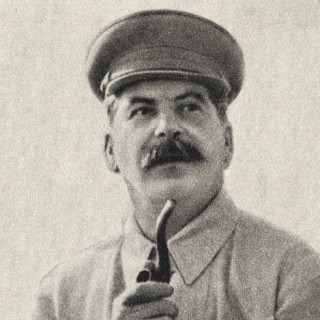
In this Podcast episode, the David Satter, a renowned journalist and authority on Russia, highlights the brutality and dark history of Stalin, the rise of communism in Russia, and the KGB's role in Soviet history and its use of psychological programming and much more. This episode covers Satter's extensive career, from his days reporting in the Soviet Union to his unique position as the first Western journalist banned from Russia post-Cold War, due to his critical reporting. Timestamps: 00:00:00 - Introduction to Soviet Reporting and Psychological Novels in Russia 00:03:02 - The Bolshevik Revolution's Impact on Russian Society and Ideology00:06:00 - Communism's Influence and the Red Terror in Soviet Russia00:09:58 - Lenin's Ideology and the Role of the Intelligentsia in Soviet History00:13:02 - Stalin's Regime, War Communism, and the New Economic Plan00:16:22 - Religion, State Ideology, and Marxism in the Soviet Union 00:19:03 - Dialectical Materialism and Mass Psychology in Soviet Ideology 00:22:01 - Transition to Bolsheviks and Lenin's Influence on Marxist Theory00:25:26 - Stalin's Leadership and Soviet Repression Techniques00:28:00 - KGB's Role in Soviet Society and the Psychological Impact of Repression00:31:16 - Fear and Challenges in Soviet Society and Reporting in the Soviet Union 00:34:00 - Control of Information, Public Perception, and the KGB's System00:37:33 - Impact of Stalin's Reign, Humor in Soviet Dissent, and Anti-Soviet Sentiments00:40:25 - Risks of Suggesting Reforms and Lack of Freedom of Expression 00:43:10 - Mental Oppression in the Soviet Union and Summary of Soviet History 00:46:04 - Economic Situation and Black Market Dynamics in the Soviet Union 00:49:02 - The Rise of Oligarchs and Mass Theft during Privatization 00:52:04 - Gorbachev's Policies and the Impact of Glasnost on Soviet Society00:55:05 - The Shock of Truthful Information and the Fall of Soviet Ideology 00:58:30 - The End of the Soviet Union and the Rise of Yeltsin and Putin 01:01:10 - Transition to Post-Soviet Russia and the Failure to Establish a Law-Based State 01:04:05 - The Emergence of Gangsterism and Criminal Ties in Post-Soviet Russia 01:07:02 - The Plight of the Russian Population and the Rise of the Oligarchs 01:10:00 - The National Income Fall and the Overall Impact on Russian Society 01:13:02 - The Ideological Imprint on Minds and the Shock of Truthful Information 01:16:22 - The Fall of Soviet Ideology and the Rise of Political Orthodoxy 01:19:03 - The Destruction of the Soviet Union and the Emergence of Free Information 01:22:01 - The Transition Period Post-Soviet Union and the Rise of Gangster Capitalism 01:25:26 - The Reconstruction of the Economic System and the Rise of Criminal Oligarchs 01:28:00 - The Impact of Lawlessness and Corruption in Post-Soviet Russia 01:31:16 - The Legacy of the Soviet Union and Its Long-Term Effects on Russian Society

DJ Igor doesn't bemoan the Soviet Union. He says that Russia is conservative and needs the iron fist of someone like Putin, instead of democracy. He believes that Russia has no place in Europe and should go its own way.
Guest: Rósa Magnúsdóttir on Enemy Number One: The United States of America in Soviet Ideology and Propaganda, 1945-1959 published by Oxford University Press. The post Soviet Anti-Americanism appeared first on The Eurasian Knot.
Guest: Rósa Magnúsdóttir on Enemy Number One: The United States of America in Soviet Ideology and Propaganda, 1945-1959 published by Oxford University Press. The post Soviet Anti-Americanism appeared first on SRB Podcast.

In Enemy Number One: The United States of American in Soviet Ideology and Propaganda, 1945-1959 (Oxford University Press, 2019), Dr. Rósa Magnúsdóttir of Aarhus University, explores depictions of America in post-war Soviet propaganda. While the 1945 “meeting on the Elbe” marked a high point in United States/Soviet friendship, official relations deteriorated quickly thereafter. Enemy Number One incorporates a wide range of source material such as letters by Soviet citizens, popular magazines, Voice of America broadcasts, and a wide range of secondary scholarly literatures. Among the author’s conclusions based on this body of evidence, are that Russian state propaganda differentiated between “good” and “bad” Americans, that state propaganda to the contrary, everyday people in the USSR never lost a sense that WWII had been the site of genuine friendship between Americans and Soviet citizens, and, intriguingly, that Soviet propaganda could have been far more effective in the United State than it in fact was. Aaron Weinacht is Professor of History at the University of Montana Western in Dillon, MT. He teaches courses on Russian and Soviet History, World History, and Philosophy of History. His research interests include the sociological theorist Philip Rieff and the influence of Russian nihilism on American libertarianism. Learn more about your ad choices. Visit megaphone.fm/adchoices
In Enemy Number One: The United States of American in Soviet Ideology and Propaganda, 1945-1959 (Oxford University Press, 2019), Dr. Rósa Magnúsdóttir of Aarhus University, explores depictions of America in post-war Soviet propaganda. While the 1945 “meeting on the Elbe” marked a high point in United States/Soviet friendship, official relations deteriorated quickly thereafter. Enemy Number One incorporates a wide range of source material such as letters by Soviet citizens, popular magazines, Voice of America broadcasts, and a wide range of secondary scholarly literatures. Among the author’s conclusions based on this body of evidence, are that Russian state propaganda differentiated between “good” and “bad” Americans, that state propaganda to the contrary, everyday people in the USSR never lost a sense that WWII had been the site of genuine friendship between Americans and Soviet citizens, and, intriguingly, that Soviet propaganda could have been far more effective in the United State than it in fact was. Aaron Weinacht is Professor of History at the University of Montana Western in Dillon, MT. He teaches courses on Russian and Soviet History, World History, and Philosophy of History. His research interests include the sociological theorist Philip Rieff and the influence of Russian nihilism on American libertarianism. Learn more about your ad choices. Visit megaphone.fm/adchoices
In Enemy Number One: The United States of American in Soviet Ideology and Propaganda, 1945-1959 (Oxford University Press, 2019), Dr. Rósa Magnúsdóttir of Aarhus University, explores depictions of America in post-war Soviet propaganda. While the 1945 “meeting on the Elbe” marked a high point in United States/Soviet friendship, official relations deteriorated quickly thereafter. Enemy Number One incorporates a wide range of source material such as letters by Soviet citizens, popular magazines, Voice of America broadcasts, and a wide range of secondary scholarly literatures. Among the author’s conclusions based on this body of evidence, are that Russian state propaganda differentiated between “good” and “bad” Americans, that state propaganda to the contrary, everyday people in the USSR never lost a sense that WWII had been the site of genuine friendship between Americans and Soviet citizens, and, intriguingly, that Soviet propaganda could have been far more effective in the United State than it in fact was. Aaron Weinacht is Professor of History at the University of Montana Western in Dillon, MT. He teaches courses on Russian and Soviet History, World History, and Philosophy of History. His research interests include the sociological theorist Philip Rieff and the influence of Russian nihilism on American libertarianism. Learn more about your ad choices. Visit megaphone.fm/adchoices

In Enemy Number One: The United States of American in Soviet Ideology and Propaganda, 1945-1959 (Oxford University Press, 2019), Dr. Rósa Magnúsdóttir of Aarhus University, explores depictions of America in post-war Soviet propaganda. While the 1945 “meeting on the Elbe” marked a high point in United States/Soviet friendship, official relations deteriorated quickly thereafter. Enemy Number One incorporates a wide range of source material such as letters by Soviet citizens, popular magazines, Voice of America broadcasts, and a wide range of secondary scholarly literatures. Among the author’s conclusions based on this body of evidence, are that Russian state propaganda differentiated between “good” and “bad” Americans, that state propaganda to the contrary, everyday people in the USSR never lost a sense that WWII had been the site of genuine friendship between Americans and Soviet citizens, and, intriguingly, that Soviet propaganda could have been far more effective in the United State than it in fact was. Aaron Weinacht is Professor of History at the University of Montana Western in Dillon, MT. He teaches courses on Russian and Soviet History, World History, and Philosophy of History. His research interests include the sociological theorist Philip Rieff and the influence of Russian nihilism on American libertarianism. Learn more about your ad choices. Visit megaphone.fm/adchoices
In Enemy Number One: The United States of American in Soviet Ideology and Propaganda, 1945-1959 (Oxford University Press, 2019), Dr. Rósa Magnúsdóttir of Aarhus University, explores depictions of America in post-war Soviet propaganda. While the 1945 “meeting on the Elbe” marked a high point in United States/Soviet friendship, official relations deteriorated quickly thereafter. Enemy Number One incorporates a wide range of source material such as letters by Soviet citizens, popular magazines, Voice of America broadcasts, and a wide range of secondary scholarly literatures. Among the author’s conclusions based on this body of evidence, are that Russian state propaganda differentiated between “good” and “bad” Americans, that state propaganda to the contrary, everyday people in the USSR never lost a sense that WWII had been the site of genuine friendship between Americans and Soviet citizens, and, intriguingly, that Soviet propaganda could have been far more effective in the United State than it in fact was. Aaron Weinacht is Professor of History at the University of Montana Western in Dillon, MT. He teaches courses on Russian and Soviet History, World History, and Philosophy of History. His research interests include the sociological theorist Philip Rieff and the influence of Russian nihilism on American libertarianism. Learn more about your ad choices. Visit megaphone.fm/adchoices

In Enemy Number One: The United States of American in Soviet Ideology and Propaganda, 1945-1959 (Oxford University Press, 2019), Dr. Rósa Magnúsdóttir of Aarhus University, explores depictions of America in post-war Soviet propaganda. While the 1945 “meeting on the Elbe” marked a high point in United States/Soviet friendship, official relations deteriorated quickly thereafter. Enemy Number One incorporates a wide range of source material such as letters by Soviet citizens, popular magazines, Voice of America broadcasts, and a wide range of secondary scholarly literatures. Among the author’s conclusions based on this body of evidence, are that Russian state propaganda differentiated between “good” and “bad” Americans, that state propaganda to the contrary, everyday people in the USSR never lost a sense that WWII had been the site of genuine friendship between Americans and Soviet citizens, and, intriguingly, that Soviet propaganda could have been far more effective in the United State than it in fact was. Aaron Weinacht is Professor of History at the University of Montana Western in Dillon, MT. He teaches courses on Russian and Soviet History, World History, and Philosophy of History. His research interests include the sociological theorist Philip Rieff and the influence of Russian nihilism on American libertarianism. Learn more about your ad choices. Visit megaphone.fm/adchoices

In Enemy Number One: The United States of American in Soviet Ideology and Propaganda, 1945-1959 (Oxford University Press, 2019), Dr. Rósa Magnúsdóttir of Aarhus University, explores depictions of America in post-war Soviet propaganda. While the 1945 “meeting on the Elbe” marked a high point in United States/Soviet friendship, official relations deteriorated quickly thereafter. Enemy Number One incorporates a wide range of source material such as letters by Soviet citizens, popular magazines, Voice of America broadcasts, and a wide range of secondary scholarly literatures. Among the author's conclusions based on this body of evidence, are that Russian state propaganda differentiated between “good” and “bad” Americans, that state propaganda to the contrary, everyday people in the USSR never lost a sense that WWII had been the site of genuine friendship between Americans and Soviet citizens, and, intriguingly, that Soviet propaganda could have been far more effective in the United State than it in fact was. Aaron Weinacht is Professor of History at the University of Montana Western in Dillon, MT. He teaches courses on Russian and Soviet History, World History, and Philosophy of History. His research interests include the sociological theorist Philip Rieff and the influence of Russian nihilism on American libertarianism.

Í hlaðvarpi vikunnar fær Sigrún til sín Rósu Magnúsdóttur, dósent í sagnfræði við Árósaháskólann í Danmörku. Þær Sigrún kynntust upphaflega árið 1999 þegar þær fengu báðar Fulbright styrk til náms í Bandaríkjunum. Þær ræða um upphaf sagnfræðiáhuga Rósu og nám hennar í Bandaríkjunum og þá sérstaklega rannsóknir hennar, en hún hefur skoðað menningartengsl Bandaríkjanna og Sovétríkjanna á tímum kalda stríðsins. Nýverið kom út bók hennar, Enemy Number One: The United States of America in Soviet Ideology and Propaganda, 1945-1959 hjá Oxford Univesity Press, en þar notar hún einstök gögn til að skoða hvernig fjallað var um Bandaríkin í Sovéttríkjunum frá 1945 til 1959. Einnig ræða þær um þau verkefni sem Rósa er að fást við núna, en þar er hún meðal annars að skoða hvernig Sovétríkin og kommúnisminn höfðu áhrif á Íslandi.

KVIFF pays homage to the Baltic cinema that was free from Soviet Ideology. The post Lenka Tyrpáková #KVIFF53 appeared first on Fred Film Radio.

KVIFF pays homage to the Baltic cinema that was free from Soviet Ideology. The post Lenka Tyrpáková #KVIFF53 appeared first on Fred Film Radio.

KVIFF pays homage to the Baltic cinema that was free from Soviet Ideology. The post Lenka Tyrpáková #KVIFF53 appeared first on Fred Film Radio.

KVIFF pays homage to the Baltic cinema that was free from Soviet Ideology. The post Lenka Tyrpáková #KVIFF53 appeared first on Fred Film Radio.

KVIFF pays homage to the Baltic cinema that was free from Soviet Ideology. The post Lenka Tyrpáková #KVIFF53 appeared first on Fred Film Radio.

KVIFF pays homage to the Baltic cinema that was free from Soviet Ideology. The post Lenka Tyrpáková #KVIFF53 appeared first on Fred Film Radio.

KVIFF pays homage to the Baltic cinema that was free from Soviet Ideology. The post Lenka Tyrpáková #KVIFF53 appeared first on Fred Education Channel » FRED Education Podcast. Lenka Tyrpáková #KVIFF53 was first posted on July 14, 2018 at 11:12 am.©2015 "Fred Education Channel". Use of this feed is for personal non-commercial use only. If you are not reading this article in your feed reader, then the site is guilty of copyright infringement. Please contact me at radio@fred.fm
Though most people would rightly consider capitalists to be the founders and masters of the science of “marketing,” communists had to try their hands at it as well. In the Soviet Union, they had a particularly “hard sell.” The Party promised freedom, peace, and prosperity; it delivered oppression, war, and poverty. So how do make people believe in what will be rather than what manifestly is? David Brandenberger explores how the Party did it in his terrific book Propaganda State in Crisis: Soviet Ideology, Indoctrination, and Terror under Stalin (Yale University Press, 2012). The answer, in short, is badly. At first, the message they sent–clashing -isms, class struggle, “contradictions”–was too abstract for most folks on the street. The people wanted heroes. So the Soviet propagandists gave them heroes: flyers, arctic explorers, and, of course Lenin and the “Old” Bolsheviks. That worked pretty well until Stalin et al. began to kill the heroes in the Purges. The problem wasn’t that dead heroes don’t make good heroes. They do. Discredited dead heroes, however, an another story. They can’t be heroes at all. In fact, they have to be rubbed out of history entirely. And so they were. So, once “the dialectic” campaign had failed and the “heroes” campaign had foundered, what was left for the propagandists to work with. Well, Stalin still worked, and he in fact crowded most everyone out of the picture (“Father of Nations!” “Universal Genius!” “Greatest General of All Time!”). But was that enough? Perhaps not. So the propagandists fell back on some very bourgeois totems: the Church and Nation. See how they did it in David’s wonderful book! Learn more about your ad choices. Visit megaphone.fm/adchoices
Though most people would rightly consider capitalists to be the founders and masters of the science of “marketing,” communists had to try their hands at it as well. In the Soviet Union, they had a particularly “hard sell.” The Party promised freedom, peace, and prosperity; it delivered oppression, war, and... Learn more about your ad choices. Visit megaphone.fm/adchoices
Though most people would rightly consider capitalists to be the founders and masters of the science of “marketing,” communists had to try their hands at it as well. In the Soviet Union, they had a particularly “hard sell.” The Party promised freedom, peace, and prosperity; it delivered oppression, war, and poverty. So how do make people believe in what will be rather than what manifestly is? David Brandenberger explores how the Party did it in his terrific book Propaganda State in Crisis: Soviet Ideology, Indoctrination, and Terror under Stalin (Yale University Press, 2012). The answer, in short, is badly. At first, the message they sent–clashing -isms, class struggle, “contradictions”–was too abstract for most folks on the street. The people wanted heroes. So the Soviet propagandists gave them heroes: flyers, arctic explorers, and, of course Lenin and the “Old” Bolsheviks. That worked pretty well until Stalin et al. began to kill the heroes in the Purges. The problem wasn’t that dead heroes don’t make good heroes. They do. Discredited dead heroes, however, an another story. They can’t be heroes at all. In fact, they have to be rubbed out of history entirely. And so they were. So, once “the dialectic” campaign had failed and the “heroes” campaign had foundered, what was left for the propagandists to work with. Well, Stalin still worked, and he in fact crowded most everyone out of the picture (“Father of Nations!” “Universal Genius!” “Greatest General of All Time!”). But was that enough? Perhaps not. So the propagandists fell back on some very bourgeois totems: the Church and Nation. See how they did it in David’s wonderful book! Learn more about your ad choices. Visit megaphone.fm/adchoices
© 2020-2026 Ivy Podcast Discovery LLC