
POPULARITY

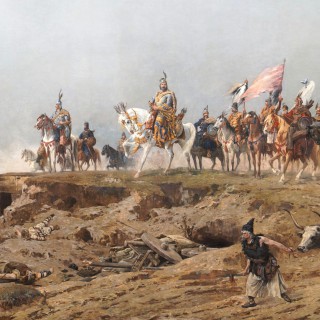
Los siglos IX y X son en Europa el tiempo de las llamadas Segundas Invasiones: un continente asediado por la llegada de nuevos actores. Habitualmente nos centramos en las acciones piráticas que emprendieron los nórdicos, como invasores de Gran Bretaña y las tierras carolingias, pero también como fundadores del Ducado de Normandía, la Rus’ de Kiev o el Danelaw. Sin embargo, los vikingos no constituyeron el único factor desestabilizador en una política europea ya caótica por sí sola ante el auge de nuevas dinastías y la caída de viejas familias. Así, desde el Este de Europa llegó un nuevo pueblo que no se hacía del todo extraño para la población local: era el inicio de la conquista húngara de las tierras de Panonia y la Cuenca de los Cárpatos. Los húngaros, un pueblo que en los tiempos de su llegada, debido a sus formas de combatir, recordaban al terror sembrado por los hunos de Atila y, más recientemente, a los ávaros que décadas atrás habían sido derrotados definitivamente por Carlomagno. Tras una larga migración desde los Urales hasta los Cárpatos, asentados en la llanura panónica en los prolegómenos del siglo IX, iniciaron una etapa en la que se dedicarían a vender sus servicios como mercenarios o entrarían motu proprio en las tierras de Europa para saquearlas; en, aproximadamente medio siglo, serían unas 70 las incursiones registradas que lanzaron, una cifra impresionante que explicaría los daños que llegaron a infligir. Aunque las crónicas quisieron dar de ellos la visión de seres demoníacos invencibles, la realidad fue diferente: a lo largo de sus correrías no todo fueron victorias y, con el paso del tiempo y tras la Batalla de Lechfeld, comenzarían a dejar de lado sus formas tradicionales para terminar integrándose en Europa como un reino cristiano más. Si te gusta el contenido puedes dejar un me gusta y un comentario, así ayudáis al crecimiento del programa. También nos podéis apoyar a través de la pestaña «Apoyar» con una suscripción mensual o través de Bizum. ¡Muchísimas gracias! BIZUM: +34 614 23 58 90 Síguenos en: Twitter: https://twitter.com/ElScriptorium TikTok: https://www.tiktok.com/@elscriptorium Facebook: https://www.facebook.com/scriptoriumpodcast Telegram: https://t.me/ElScriptorium Instagram: https://www.instagram.com/elscriptorium/ Contacto: scriptoriumpodcast@protonmail.com Bibliografía: - Molnár, M. (2001). A Concise History of Hungary. Cambridge Universiry Press. Cambridge University Press. - Engel, P. (2001). The Realm of St. Stephen. A History of Medieval Hungary, 895-1526. I.B.Tauris Publishers. - Cartledge, B. (2011). The Will to Survive: A History of Hungary. Oxford, Oxford University Press. - Bachrach, D. (2016). Warfare in Medieval Europe c.400-c.1453. London, Routledge. - Bachrach, D. (2014). Warfare in Tenth-Century Germany. Woodbridge, Boydell Press. - Bowlus, C.H. (2006). The Battle of Lechfeld and its Aftemath, August 955: The End of the Age of Migrations in the Latin West. London, Routledge. - Curta, F. (2019). Eastern Europe in the Middle Ages (500-1300). Brill's Companions to European History. - Róna-Tas, A. (1999). Hungarians and Europe in the Early Middle Ages: An Introduction to Early Hungarian History. Central European University Press. - Berend N, Urbańczyk P y Wiszewski P. (2014). Central Europe in the High Middle Ages. Cambridge University Press. - Bowlus, C. (1995). Franks, Moravians, and Magyars : the struggle for the Middle Danube, 788-907. University of Pennsylvania Press. - Bowlus, C. (2008). «The early hungarians as mercenaries 860–955». En France, J. (ed.) Mercenaries and Paid Men: The Mercenary Identity in the Middle Ages. Brill's History of Warfare. - Widukind. (2014; edición de Bernard S. Bachrach y David S. Bachrach). Deeds of the Saxons. CUA Press. - Simón de Kezá (1999; edición de János M. Bak, Urszula Borkowska, Giles Constable, Gábor Klaniczay). Central European University Press. - Anales de Fulda (1992; edición de Timonthy Reuter). Macnhester Medieval Sources Series. Música: - "Danza Inglesa Siglo XIII" - Artefactum - "Skipping Down the Steps Medieval Ballad Hurdy Gurdy" - Andrey Vinogradov - "Danzas Tradicionales" - Emilio Villalba (Bajo licencia CC BY) - "Sackpipelät. Tradicional Suecia" - Emilio Villalba (Bajo licencia CC BY) - "Medieval Fire" - Ivan Tregub - "Lord, I Cry Unto Thee" - A._Arhangelskiy (Dr. Emiliyan Stankov) - "Lord, Have Mercy" - Anónimo (Dr. Emiliyan Stankov) - "Eric the Brave" - Petite Viking - "Sackpipelät. Tradicional Suecia" - Emilio Villalba (Bajo licencia CC BY) - "Rurik" - Ivan Tregub - "The crusader's return" - Zero Project - "The crusade" - Midoriiro - "Slavonic Spirit" - Ivan Tregub - "Kyrie" - Piotr Pawlowski - "Benedictus" - Zero Project - Saltarello I Siglo XIV" - Artefactum Escucha el episodio completo en la app de iVoox, o descubre todo el catálogo de iVoox Originals
En los albores del siglo XI, la dinastía Árpad fijaba su lugar en la historia en el momento en que el que antaño fuere un líder pagano, quedaba coronado con la corona enviada por el mismísimo papa de Roma. Con el ascenso de Esteban, nacía el reino de Hungría. Bibliografía: - Molnár, M. (2001). A concise history of Hungary. Cambridge: Cambridge University Press. - Engel, P. (2001). The Realm of St. Stephen: a History of Medieval Hungary, 895-1526. London: I.B. Tauris & Co Ltd. - Cartledge, B. (2011). The will to survive: a History of Hungary. London: Hurst & Company. Música: - “Danza Inglesa Siglo XIII” – Artefactum - “Danza Húngara Nº1” – Johannes Brahms - “Rapsodia Húngara Nº2” – Franz Liszt - “Danzas de Marosszék” – Zoltán Kodály - “Saltarello I Siglo XIV” - Artefactum Escucha el episodio completo en la app de iVoox, o descubre todo el catálogo de iVoox Originals

Met het nieuwe jaar in het vooruitzicht een paar fijne voorbeelden van kerstmuziek die ook zonder versierde dennenboom prima te genieten is. ZONDAG 26/12/21 23.04 CD Sólhvörf / Solstitium (Dimma z.nr.) Sigurbjörnsson, Þorkell, arr. Umbra: Immanúel oss í nátt Ensemble Umbra 4'10” 23.10 CD Gregorian Chants from Medieval Hungary - 1. Christmas (Hungaroton HCD 11477) Anoniem: Genealogia Christi Schola Hungarica olv Laszlo Dobszay 4'46” CD A Renaissance Christmas (Coro COR16167) Tomas Luis de Victoria: Quem Vidistis Pastores The Sixteen olv Harry Christophers 4'33” 23.20 CD Cypriot Vespers (Glossa GCDP32112) Anoniem: Alyawma youlado mina lbatoul (Arabo-Byzantine tradition) Graindelavoix olv Björn Schmelzer 5'33” CD Cypriot Vespers (Glossa GCDP32112) Anoniem: Hodie Christus natus est (plainchant) Graindelavoix olv Björn Schmelzer 1'11” CD Cypriot Vespers (Glossa GCDP32112) Jean Hanelle: Hodie puer nascitur / Homo mortalis firmiter Graindelavoix olv Björn Schmelzer 6'28” 23.34 CD Works for Piano Solo No. 4 (Hungaroton Classics HCD 32527) Béla Bartók: Romanian Christmas Carols (serie 1 en 2) Zoltán Kocsis [piano] 11'01” 23.46 CD Song of the Nativity (Coro COR16146) Morten Lauridsen: O Magnum Mysterium The Sixteen olv Harry Christophers 6'34 CD TwoTrick Pony (XJazz z.nr.) Hanns Eisler: An den kleine Radioapparat HardyLackner 5'33”

How one can study the medieval towns of Hungary? What is the use of historical geography?In this fifty minutes long interveiw, Chris Mielke talks with Katalin Szende, theoutgoing head of the Department of Medieval Studies at CEU about urban topography, urban communities, and the sources that can tell us more about city life in Medieval Hungary. Past Perfect! is CEU Medieval Radio’s show on medieval and early modern history and culture, where Christopher Mielke casually discusses with his guests various issues from the crusades to archeo-zoology to medieval urine sampling. The discussions are made with the aim to popularize medieval and early modern studies with the help of experts such as early musicians, historians, philologists and archeologists.This episode was first recorded and broadcast in 2013.

Artist Dave McKean on the way Paul Nash's dreams have inspired a graphic novel.Ahead of the 60th anniversary of the Hungarian Revolution, Philip speaks to poet George Szirtes, who left the country as a boy in 1956, and writer Tibor Fischer, whose parents came to Britain that same year. They are joined by historians Nora Berend and Simon Hall to discuss the revolt, the history of Islam in Hungary and the political debates going on today. Paul Nash runs at Tate Britain from 26 October 2016 – 5 March 2017Dave McKean has created a graphic novel, Black Dog, based on the dreams of Paul Nash which forms part of the 14-18 Now arts programme.George Szirtes is the co-editor of the Hungarian Anthology The Colonnade of Teeth published by Bloodaxe Books and the title of his own new poetry collection is Mapping the Delta. Tibor Fischer is the author of numerous works, including the Booker Prize-nominated Under The Frog.Dr Nora Berend is Reader in European History, University of Cambridge, and author of books including At the Gate of Christendom: Jews, Muslims and "Pagans" in Medieval Hungary c. 1000-c. 1300Professor Simon Hall, University of Leeds, is the author of 1956: The World in Revolt. He is giving a public lecture on The Hungarian Revolution and the Refugee Experience, 1956-2016, in Leeds on Thursday 24 November.

In the current political climate it might be easy to assume that Muslims in the ‘West’ have always been viewed in a negative light. However, when we examine the historical relationship between Muslims and their non-Muslim neighbors we find a much more complicated picture. In Muslims of Medieval Latin Christendom, c.1050-1614 (Cambridge University Press, 2014), Brian A. Catlos, professor of Religious Studies at the University of Colorado, offers the first comprehensive overview of Muslim minorities in Latin Christian lands during the Middle Ages. The book provides a narrative history of regional Muslim subjects in the Latin west, including Islamic Sicily, Al-Andalus, expansion in the Near East, the Muslim communities of Medieval Hungary, and portraits of travelers, merchants, and slaves in Western Europe. Here we find that Muslims often had great deal of agency in structuring the subject/ruler relationship due to the material and economic contributions they made to local communities. The second half of the book explores thematic issues that were shared across Muslims communities of the Mediterranean world. Catlos surveys ideological, administrative, and practical matters, including Muslim concern about legitimacy and assimilation, legal culture, and everyday social life in these multi-confessional communities. In our conversation we discussed the reign of Christian Spains, Norman rule, the adoption of Arabo-Islamic culture, Morisco hybridity, Islam in Christian imagination, the role of Muslim women, and everyday public religious life. Learn more about your ad choices. Visit megaphone.fm/adchoices

In the current political climate it might be easy to assume that Muslims in the ‘West’ have always been viewed in a negative light. However, when we examine the historical relationship between Muslims and their non-Muslim neighbors we find a much more complicated picture. In Muslims of Medieval Latin Christendom, c.1050-1614 (Cambridge University Press, 2014), Brian A. Catlos, professor of Religious Studies at the University of Colorado, offers the first comprehensive overview of Muslim minorities in Latin Christian lands during the Middle Ages. The book provides a narrative history of regional Muslim subjects in the Latin west, including Islamic Sicily, Al-Andalus, expansion in the Near East, the Muslim communities of Medieval Hungary, and portraits of travelers, merchants, and slaves in Western Europe. Here we find that Muslims often had great deal of agency in structuring the subject/ruler relationship due to the material and economic contributions they made to local communities. The second half of the book explores thematic issues that were shared across Muslims communities of the Mediterranean world. Catlos surveys ideological, administrative, and practical matters, including Muslim concern about legitimacy and assimilation, legal culture, and everyday social life in these multi-confessional communities. In our conversation we discussed the reign of Christian Spains, Norman rule, the adoption of Arabo-Islamic culture, Morisco hybridity, Islam in Christian imagination, the role of Muslim women, and everyday public religious life. Learn more about your ad choices. Visit megaphone.fm/adchoices

In the current political climate it might be easy to assume that Muslims in the ‘West’ have always been viewed in a negative light. However, when we examine the historical relationship between Muslims and their non-Muslim neighbors we find a much more complicated picture. In Muslims of Medieval Latin Christendom, c.1050-1614 (Cambridge University Press, 2014), Brian A. Catlos, professor of Religious Studies at the University of Colorado, offers the first comprehensive overview of Muslim minorities in Latin Christian lands during the Middle Ages. The book provides a narrative history of regional Muslim subjects in the Latin west, including Islamic Sicily, Al-Andalus, expansion in the Near East, the Muslim communities of Medieval Hungary, and portraits of travelers, merchants, and slaves in Western Europe. Here we find that Muslims often had great deal of agency in structuring the subject/ruler relationship due to the material and economic contributions they made to local communities. The second half of the book explores thematic issues that were shared across Muslims communities of the Mediterranean world. Catlos surveys ideological, administrative, and practical matters, including Muslim concern about legitimacy and assimilation, legal culture, and everyday social life in these multi-confessional communities. In our conversation we discussed the reign of Christian Spains, Norman rule, the adoption of Arabo-Islamic culture, Morisco hybridity, Islam in Christian imagination, the role of Muslim women, and everyday public religious life. Learn more about your ad choices. Visit megaphone.fm/adchoices

In the current political climate it might be easy to assume that Muslims in the ‘West’ have always been viewed in a negative light. However, when we examine the historical relationship between Muslims and their non-Muslim neighbors we find a much more complicated picture. In Muslims of Medieval Latin Christendom, c.1050-1614 (Cambridge University Press, 2014), Brian A. Catlos, professor of Religious Studies at the University of Colorado, offers the first comprehensive overview of Muslim minorities in Latin Christian lands during the Middle Ages. The book provides a narrative history of regional Muslim subjects in the Latin west, including Islamic Sicily, Al-Andalus, expansion in the Near East, the Muslim communities of Medieval Hungary, and portraits of travelers, merchants, and slaves in Western Europe. Here we find that Muslims often had great deal of agency in structuring the subject/ruler relationship due to the material and economic contributions they made to local communities. The second half of the book explores thematic issues that were shared across Muslims communities of the Mediterranean world. Catlos surveys ideological, administrative, and practical matters, including Muslim concern about legitimacy and assimilation, legal culture, and everyday social life in these multi-confessional communities. In our conversation we discussed the reign of Christian Spains, Norman rule, the adoption of Arabo-Islamic culture, Morisco hybridity, Islam in Christian imagination, the role of Muslim women, and everyday public religious life. Learn more about your ad choices. Visit megaphone.fm/adchoices

In the current political climate it might be easy to assume that Muslims in the ‘West’ have always been viewed in a negative light. However, when we examine the historical relationship between Muslims and their non-Muslim neighbors we find a much more complicated picture. In Muslims of Medieval Latin Christendom, c.1050-1614 (Cambridge University Press, 2014), Brian A. Catlos, professor of Religious Studies at the University of Colorado, offers the first comprehensive overview of Muslim minorities in Latin Christian lands during the Middle Ages. The book provides a narrative history of regional Muslim subjects in the Latin west, including Islamic Sicily, Al-Andalus, expansion in the Near East, the Muslim communities of Medieval Hungary, and portraits of travelers, merchants, and slaves in Western Europe. Here we find that Muslims often had great deal of agency in structuring the subject/ruler relationship due to the material and economic contributions they made to local communities. The second half of the book explores thematic issues that were shared across Muslims communities of the Mediterranean world. Catlos surveys ideological, administrative, and practical matters, including Muslim concern about legitimacy and assimilation, legal culture, and everyday social life in these multi-confessional communities. In our conversation we discussed the reign of Christian Spains, Norman rule, the adoption of Arabo-Islamic culture, Morisco hybridity, Islam in Christian imagination, the role of Muslim women, and everyday public religious life. Learn more about your ad choices. Visit megaphone.fm/adchoices

In the current political climate it might be easy to assume that Muslims in the ‘West’ have always been viewed in a negative light. However, when we examine the historical relationship between Muslims and their non-Muslim neighbors we find a much more complicated picture. In Muslims of Medieval Latin Christendom, c.1050-1614 (Cambridge University Press, 2014), Brian A. Catlos, professor of Religious Studies at the University of Colorado, offers the first comprehensive overview of Muslim minorities in Latin Christian lands during the Middle Ages. The book provides a narrative history of regional Muslim subjects in the Latin west, including Islamic Sicily, Al-Andalus, expansion in the Near East, the Muslim communities of Medieval Hungary, and portraits of travelers, merchants, and slaves in Western Europe. Here we find that Muslims often had great deal of agency in structuring the subject/ruler relationship due to the material and economic contributions they made to local communities. The second half of the book explores thematic issues that were shared across Muslims communities of the Mediterranean world. Catlos surveys ideological, administrative, and practical matters, including Muslim concern about legitimacy and assimilation, legal culture, and everyday social life in these multi-confessional communities. In our conversation we discussed the reign of Christian Spains, Norman rule, the adoption of Arabo-Islamic culture, Morisco hybridity, Islam in Christian imagination, the role of Muslim women, and everyday public religious life. Learn more about your ad choices. Visit megaphone.fm/adchoices

In the current political climate it might be easy to assume that Muslims in the ‘West’ have always been viewed in a negative light. However, when we examine the historical relationship between Muslims and their non-Muslim neighbors we find a much more complicated picture. In Muslims of Medieval Latin Christendom, c.1050-1614 (Cambridge University Press, 2014), Brian A. Catlos, professor of Religious Studies at the University of Colorado, offers the first comprehensive overview of Muslim minorities in Latin Christian lands during the Middle Ages. The book provides a narrative history of regional Muslim subjects in the Latin west, including Islamic Sicily, Al-Andalus, expansion in the Near East, the Muslim communities of Medieval Hungary, and portraits of travelers, merchants, and slaves in Western Europe. Here we find that Muslims often had great deal of agency in structuring the subject/ruler relationship due to the material and economic contributions they made to local communities. The second half of the book explores thematic issues that were shared across Muslims communities of the Mediterranean world. Catlos surveys ideological, administrative, and practical matters, including Muslim concern about legitimacy and assimilation, legal culture, and everyday social life in these multi-confessional communities. In our conversation we discussed the reign of Christian Spains, Norman rule, the adoption of Arabo-Islamic culture, Morisco hybridity, Islam in Christian imagination, the role of Muslim women, and everyday public religious life. Learn more about your ad choices. Visit megaphone.fm/adchoices

In the current political climate it might be easy to assume that Muslims in the ‘West' have always been viewed in a negative light. However, when we examine the historical relationship between Muslims and their non-Muslim neighbors we find a much more complicated picture. In Muslims of Medieval Latin Christendom, c.1050-1614 (Cambridge University Press, 2014), Brian A. Catlos, professor of Religious Studies at the University of Colorado, offers the first comprehensive overview of Muslim minorities in Latin Christian lands during the Middle Ages. The book provides a narrative history of regional Muslim subjects in the Latin west, including Islamic Sicily, Al-Andalus, expansion in the Near East, the Muslim communities of Medieval Hungary, and portraits of travelers, merchants, and slaves in Western Europe. Here we find that Muslims often had great deal of agency in structuring the subject/ruler relationship due to the material and economic contributions they made to local communities. The second half of the book explores thematic issues that were shared across Muslims communities of the Mediterranean world. Catlos surveys ideological, administrative, and practical matters, including Muslim concern about legitimacy and assimilation, legal culture, and everyday social life in these multi-confessional communities. In our conversation we discussed the reign of Christian Spains, Norman rule, the adoption of Arabo-Islamic culture, Morisco hybridity, Islam in Christian imagination, the role of Muslim women, and everyday public religious life. Learn more about your ad choices. Visit megaphone.fm/adchoices

In the current political climate it might be easy to assume that Muslims in the ‘West' have always been viewed in a negative light. However, when we examine the historical relationship between Muslims and their non-Muslim neighbors we find a much more complicated picture. In Muslims of Medieval Latin Christendom, c.1050-1614 (Cambridge University Press, 2014), Brian A. Catlos, professor of Religious Studies at the University of Colorado, offers the first comprehensive overview of Muslim minorities in Latin Christian lands during the Middle Ages. The book provides a narrative history of regional Muslim subjects in the Latin west, including Islamic Sicily, Al-Andalus, expansion in the Near East, the Muslim communities of Medieval Hungary, and portraits of travelers, merchants, and slaves in Western Europe. Here we find that Muslims often had great deal of agency in structuring the subject/ruler relationship due to the material and economic contributions they made to local communities. The second half of the book explores thematic issues that were shared across Muslims communities of the Mediterranean world. Catlos surveys ideological, administrative, and practical matters, including Muslim concern about legitimacy and assimilation, legal culture, and everyday social life in these multi-confessional communities. In our conversation we discussed the reign of Christian Spains, Norman rule, the adoption of Arabo-Islamic culture, Morisco hybridity, Islam in Christian imagination, the role of Muslim women, and everyday public religious life. Learn more about your ad choices. Visit megaphone.fm/adchoices

In the current political climate it might be easy to assume that Muslims in the ‘West' have always been viewed in a negative light. However, when we examine the historical relationship between Muslims and their non-Muslim neighbors we find a much more complicated picture. In Muslims of Medieval Latin Christendom, c.1050-1614 (Cambridge University Press, 2014), Brian A. Catlos, professor of Religious Studies at the University of Colorado, offers the first comprehensive overview of Muslim minorities in Latin Christian lands during the Middle Ages. The book provides a narrative history of regional Muslim subjects in the Latin west, including Islamic Sicily, Al-Andalus, expansion in the Near East, the Muslim communities of Medieval Hungary, and portraits of travelers, merchants, and slaves in Western Europe. Here we find that Muslims often had great deal of agency in structuring the subject/ruler relationship due to the material and economic contributions they made to local communities. The second half of the book explores thematic issues that were shared across Muslims communities of the Mediterranean world. Catlos surveys ideological, administrative, and practical matters, including Muslim concern about legitimacy and assimilation, legal culture, and everyday social life in these multi-confessional communities. In our conversation we discussed the reign of Christian Spains, Norman rule, the adoption of Arabo-Islamic culture, Morisco hybridity, Islam in Christian imagination, the role of Muslim women, and everyday public religious life.
© 2020-2026 Ivy Podcast Discovery LLC
