

POPULARITY

3 episodes with rick lowe

3 episodes with rick lowe

Hunter College professor and author of The War of Art, Lauren O'Neill-Butler talks about: Her 12 years at Artforum magazine, including its balance between advertising and hard-core art writing, and how her chapter on Fierce Pussy was written while at Artforum; the classes on Activism she's taught at Hunter College, which were not to get students to become activists but to make them aware of its history and context; how teaching activism and writing the book were both 'rage containers' but also ways to inspire difference; how activisms 'expire,' including in the case of her colleague Carrie Moyer, whose hardcore activism (including her campaigns for Dyke Action Machine) lasted two years and followed by going back to the studio and making abstract paintings; the difference between 'activists' and 'artists activists,' which culminated in a question at one of her book events at the New York Public Library: "why are you focusing on artists? What makes them so special? Why can't you talk about other activists too?" and how, in addition to bringing an aesthetic to their activism, as part of the answer, artists are beleaguered; the seminal moment in the artist Rick Lowe's career, when a student living in the 3rd Ward of Houston asked him why, as opposed to just showing them the problems in their neighborhood that they were already aware of, wasn't he being creative about coming up with solutions?; her contention that all art is political, but what does an artist's role look like in terms of their actions; how there's no purity in America and no purity in activism, and how Project Row Houses wouldn't have become as robust without the corporate effort; Sarah Schulman's recent writing on the importance of solidarity, and how the left keeps pointing the figure and keeps eating itself; what Project Row Houses looks like, including the mix of affordable and market rate housing, artists who live in them, and expensive condos recently going up in the neighborhood amidst preserved housing in the 3rd Ward of Houston. In the 2nd half of our conversation, available to paid Patreon Supporters of the podcast, Lauren talks about: Why she included (former guest) Ben Davis's critique of Project Row Houses, along with a contextual framework on the challenges of limiting the effects of gentrification, primarily as a way to point out that it isn't artists who are the problem fixers, it's our government representatives; for Rick Lowe and Project Row Houses, it was about trying to do better for the locals; the highly influential and impactful activist organization P.A.I.N. (Prescription Addiction Intervention Now), started by artist Nan Goldin, which was instigated by the terrific irony of the Tate Museum, with £4 million in donations from the Sackler Family Trust, purchased Goldin's "The Ballad of Sexual Dependency" at the same time as she was addicted to Oxycontin (the highly addictive pain medication that led to an epidemic, of which the Sacklers are known for); the successful objective of P.A.I.N. (which is a non-partisan group despite it being formed by a politically progressive artist) to eliminate the art-washing of the Sacklers by putting their names on so many museum wings, and in turn what it was like for PAIN members to attend the protests with fellow protesters who were in very different cultural spheres, including hard-core trumpers; how savvy PAIN was in cultivating and working with the press, which really got their actions thoroughly covered, and even their private meetings were recorded, which helped provide lots of content for Laura Poitras's documentary on Goldin; how Lauren uses YouTube video footage of the PAIN protests, which were so well thought out and dramatic, in her classes; why she didn't right about the Stop Oil! Activist actions in museums (because it's mainly taken place in the U.K.); how the effectiveness of a protest depends very much on the press coverage and the level of circulation of the images from a given action; how most activisms have a figurehead (Goldin), and how it matters, for better or worse, when there's a public-facing person in a group; how successful activism depends on bringing in new blood and new ideas, and how big a factor burnout is for activists; the state of agitprop, or postering, today vs. the 90s- Carrie Moyer and Sue () of Dyke Action Machine would say that the street postering they did wouldn't work today, because there's just too much visual noise, and Lauren's nostalgia for the 90s for those reasons; the 'Secret Handshake' sculptures of trump and Epstein that have been making the rounds on social media around the world, work which she hates but recognizes as effective nonetheless; the hostile takeover of the New College of Florida, Lauren's undergraduate alma mater, by governor Desantis, and how she's been part of the alumni response to the takeover including the forming of nonprofits, a project that is very close to her heart and how she's been involved in it for the past three years, and the struggle of the school was recently featured on "Last Week Tonight with John Oliver."

Rick Lowe showed up to Portobello Market in 2003 with a suitcase full of Space Invaders T-shirts and spent nine hours in the cold London rain trying to sell them.He sold one.Most people would have gone home. Rick looked at that single sale and thought: "Good. Now I just need to find more people."That reframe is the foundation of everything he's built since. Today, Rick's company ships hundreds of thousands of units a year under licensing deals with Disney, Warner Brothers, Netflix, The Rolling Stones, Mötley Crüe, and some of the most recognizable brands in entertainment. He didn't inherit it. He didn't get a lucky break. He failed his way there, one no at a time - and in this conversation, he breaks down exactly how.We get into why failure is a tool, not a setback. Why your business is a vehicle, not the destination.Why the only person you're actually competing with is yourself. And what legacy really looks like when you're still in the middle of building it.This is one of the most honest conversations I've had on this show. Rick holds nothing back.What we cover:How he went from $300 in his pocket in Miami to global licensing deals.Why getting made redundant was the best thing that ever happened to him.The two things that will make or break any entrepreneur: people and finance.How to find and seize the right opportunities.Why failure is a motivational tool, not a stop sign.What legacy means when you're still in the middle of building it.Connect with Rick:Website: ricklowe.co.ukPodcast: Maverick MindsetJourney to Legacy:Website: journeytolegacy.orgYouTube: https://www.youtube.com/@WayneVeldsmanIf this episode added value, leave us a review - it helps get this conversation in front of more people who need to hear it.

Want to Start or Grow a Successful Business? Schedule a FREE 13-Point Assessment with Clay Clark Today At: www.ThrivetimeShow.com Join Tim Tebow, LIVE and in-person at Clay Clark's December 5th & 6th 2024 Thrivetime Show Business Workshop!!! Learn Branding, Marketing, SEO, Sales, Workflow Design, Accounting & More. **Request Tickets & See Testimonials At: www.ThrivetimeShow.com **Request Tickets Via Text At (918) 851-0102 See the Thousands of Success Stories and Millionaires That Clay Clark Has Helped to Produce HERE: https://www.thrivetimeshow.com/testimonials/ Download A Millionaire's Guide to Become Sustainably Rich: A Step-by-Step Guide to Become a Successful Money-Generating and Time-Freedom Creating Business HERE: www.ThrivetimeShow.com/Millionaire See Thousands of Case Studies Today HERE: www.thrivetimeshow.com/does-it-work/

While completing her BFA at Baylor University, Rebekah Danae's fourteen year painting practice was stylistically and thematically influenced by formative experiences in Belgium, studying Rene Magritte's surrealist blend of comedy and peril, and in Texas, learning from Sedrick Huckaby's metaphoric expressions offaith, community, and heritage.Sculpturally— through leatherwork and interior design— Danae's work has been influenced by the cowboy boot making community in Beggs, Oklahoma and the design firm of Christopher Murphy in Tulsa, Oklahoma. In practice, Danae draws inspiration from Virgil Abloh, who blurred the lines of art and commerce through the tools of contemporary culture; Rebecca Belmore's ability to elicit intimate moments of reflection while tackling tremendous contemporary issues; the liberatory mysticism of Afrofuturism philosophy; the fiber artists of the wearable art movement in the 70s; and from the community-based relational practice of Rick Lowe.Through her work, Rebekah Danae and A Creative House orchestrate a movement in the middle of the country, made up of a diverse creative choir. Far from a lone ranger, Danae works collaboratively across a curated network of Oklahomans— from the punk underground, homegrown rappers and producers, luxury interior designers, rodeo cowboys, rural bootmakers, to philanthropic, political, and educational leaders. Her approach, while whimsical and surreal, has the intended impact of critical regional culture-shaping from the current white supremacy that is prevalent regionally today and toward a co-created futurist Oklahoma, the liberated West.

Your hosts Eric Balkman and Kentucky Fantasy Football State Championship (KFFSC) boss Ferrell Elliott talk with six-time FFPC Main Event champions and 2024 FFPC Pros Vs. Joes drafters Rick Lowe and Bob Titman about the freshest in high stakes fantasy football, as they list the things you need to do to win $1,000,000 Grand Prizes in both the 2024 Fantasy Football Players Championship (FFPC) Main Event and the 2024 FantasyPros Championship. They'll also calculate the best way to handle the newest ADP in the 2024 FFPC Best Ball Tournament, the 2024 FFPC Superflex Best Ball Tournament, as well 2024 FFPC Dynasty Leagues. Plus, they'll go hard on some tip for you to dominate your 2024 FFPC Empire Dynasty Leagues and 2024 FFPC Dynasty Start-Up leagues, too. The players will also speak all about 2024 FFPC Terminator drafts and also answer your tweets, emails and more all on The High Stakes Fantasy Football Hour! Listen To The High Stakes Fantasy Football Hour: Apple - https://tinyurl.com/bdfj6yyh Spotify - https://tinyurl.com/2p874v9h Play Fantasy Football at the FFPC: Website - https://www.MyFFPC.com More on The High Stakes Fantasy Football Hour: Website - http://www.HSFFHour.com Follow The FFPC on Social Media: Twitter - http://www.twitter.com/FFPC Facebook - http://www.facebook.com/FantasyFootballPlayersChampionship Instagram - http://www.instagram.com/OfficialFFPC Follow The High Stakes Fantasy Football Hour on Social Media: Twitter - http://www.twitter.com/HSFFHour Facebook - http://www.facebook.com/HSFFHour Eric Balkman - http://www.twitter.com/EricBalkman Ferrell Elliott - http://www.KFFSC.com

A conversation with artist Rick Lowe. Renowned for his pioneering work with Project Row Houses in Houston, Lowe's creative endeavors have reshaped the landscape of contemporary art and in 2014 earned him a MacArthur Fellowship. In our conversation, we explore the concept of social sculpture and its ability to transcend traditional art boundaries to catalyze societal transformation. We also explore Lowe's personal evolution, including his celebrated return to painting and his current exhibit in Venice.https://www.ricklowe.com/https://gagosian.com/artists/rick-lowe/https://gagosian.com/news/museum-exhibitions/rick-lowe-the-arch-within-the-arc-museo-di-palazzo-grimani-venice/https://projectrowhouses.org/https://www.macfound.org/fellows/class-of-2014/rick-lowe

The year was 1990, and artist Rick Lowe had invited a group of high school students into a studio. Standing surrounded by his billboard size paintings, one of the kids made a comment that stopped him in his tracks. Why was Lowe illustrating problems everyone already knew about rather than proposing creative solutions? The moment changed everything. It pushed Lowe to create art outside the studio and sent him on a path to becoming one of the leading figures in an art movement known as social practice. The term social practice describes art that is created with, and for, communities. Over the past three decades Lowe has done this in a variety of forms, including his most famous work Project Row Houses, a hub for community housing and art-making in Houston's Third Ward. All the while Lowe has maintained a painting practice alongside his socially engaged work, and he won a MacArthur Genius Grant for all of it in 2014. This month, after a long hiatus from the New York gallery world, he returns with his first solo show of paintings at Gagosian. Artnet News contributor, Sade Ologundudu spoke with Lowe as part of a four part series on Artnet News about artists across generations who work with social practice.

The year was 1990, and artist Rick Lowe had invited a group of high school students into a studio. Standing surrounded by his billboard size paintings, one of the kids made a comment that stopped him in his tracks. Why was Lowe illustrating problems everyone already knew about rather than proposing creative solutions? The moment changed everything. It pushed Lowe to create art outside the studio and sent him on a path to becoming one of the leading figures in an art movement known as social practice. The term social practice describes art that is created with, and for, communities. Over the past three decades Lowe has done this in a variety of forms, including his most famous work Project Row Houses, a hub for community housing and art-making in Houston's Third Ward. All the while Lowe has maintained a painting practice alongside his socially engaged work, and he won a MacArthur Genius Grant for all of it in 2014. This month, after a long hiatus from the New York gallery world, he returns with his first solo show of paintings at Gagosian. Artnet News contributor, Sade Ologundudu spoke with Lowe as part of a four part series on Artnet News about artists across generations who work with social practice.

LiveArt's sales team led by George O'Dell, Sophie Coco and Arina Novak discuss the week's most important events effecting the Contemporary art market. In this episode, they discuss Burning Man and Frieze Seoul; the markets for Michael Majerus, Lynne Drexler and Alice Baber; as well as the opening exhibitions for Wolfgang Tillmans at MoMA, Rick Lowe at Gagosian and Christina Quarles at Hauser + Wirth. Get the most valuable market intelligence from LiveArt.
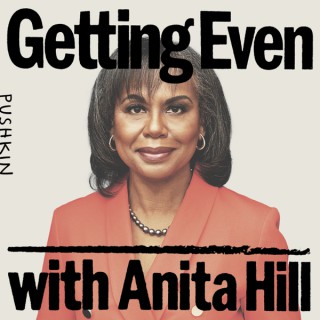
Anita Hill speaks with Gagosian artist and social sculptor Rick Lowe about his Project Row Houses, which redefined space in one Houston neighborhood and is a direct investment in his community's future. Lowe explains the role of creativity and art in helping people imagine equality for themselves. If you'd like to keep up with the most recent news from this and other Pushkin podcasts be sure to subscribe to our email list. See omnystudio.com/listener for privacy information.

Episode 89 features Antwaun Sargent. He is a writer, curator, art critic and director at Gagosian Gallery in New York City. He is the author of “The New Black Vanguard: Photography between Art and Fashion” (Aperture 2019) and the editor of “Young, Gifted and Black: A New Generation of Artists” (DAP 2020). Mr. Sargent was the guest editor of “Art In America” magazine's, New Talent Issue, May/June 2021. His writing has appeared in the New York Times, The New Yorker, and in museum and gallery publications for artists Mickalene Thomas, Arthur Jafa, Meleko Mokgosi, Nick Cave, Yinka Shonibare and Ed Clark, among many others. In mid-2021, Gagosian New York City, presented Social Works I, a group exhibition curated by Antwaun with participating artists David Adjaye, Zalika Azim, Allana Clarke, Kenturah Davis, Theaster Gates, Linda Goode Bryant, Lauren Halsey, Titus Kaphar, Rick Lowe, Christie Neptune, Alexandria Smith, and Carrie Mae Weems. In late 2021, Antwaun curated the sequel, Social Works II, Gagosian located in Grosvenor Hill, London. “The New Black Vanguard” and “Young, Gifted and Black” are currently on view. Photo credit: Chase Hall Gagosian https://gagosian.com/exhibitions/2021/social-works-curated-by-antwaun-sargent/ Gagosian Quarterly https://gagosian.com/quarterly/2021/06/25/interview-social-works-rick-lowe-and-walter-hood/ Vulture https://www.vulture.com/2020/08/young-gifted-and-black-artists-book.html New York Times https://www.nytimes.com/2021/06/23/arts/design/gagosian-antwaun-sargent-social-works.html Culture Type https://www.culturetype.com/2021/09/05/on-view-social-works-curated-by-antwaun-sargent-at-gagosian-in-new-york-exhibition-will-have-a-sequel-in-london-in-october/ Forbes https://www.forbes.com/sites/chaddscott/2020/10/18/antwuan-sargent-curated-just-pictures-exhibition-proves-to-be-much-more/?sh=e2e8b1d15b3c ARTnews https://www.artnews.com/art-news/news/antwaun-sargent-artnews-live-interview-1234579985/ Projects+Gallery http://www.projects-gallery.com/just-pictures-antwaun-sargent i-D https://i-d.vice.com/en_uk/article/5dmwdd/antwaun-sargent-bernard-lumpkin-young-gifted-black-davey-adesida Fad Magazine https://fadmagazine.com/2021/10/05/social-works-ii-curated-by-antwaun-sargent/ DAZED https://www.dazeddigital.com/art-photography/article/48097/1/antwaun-sargent-bernard-lumpkin-on-curating-for-the-black-community
2021 marked the 100 year anniversary of the Tulsa Race Massacre - one of the ugliest events in American history, where a white mob destroyed the affluent Black neighborhood of Greenwood, dubbed “Black Wall Street,” for its thriving economic power. Hundreds were killed in the attack. More than 10,000 people were left homeless overnight, and the neighborhood was razed. This massacre led to years of silence and shame, suppressing the history for the following decades. The residents of Greenwood rebuilt their community, but it was ultimately destroyed due to disinvestment and urban renewal efforts -- which placed the I-22 highway in the middle of Greenwood.To commemorate this history and honor Greenwood, the City of Tulsa and the Tulsa Race Massacre Centennial Commission applied for the Bloomberg Philanthropies Public Art Challenge. Their winning concept, “The Greenwood Art Project,” features dozens of temporary public art works celebrating and commemorating this community's history, present, and future.The Public Art Challenge is a Bloomberg Philanthropies initiative encouraging cities to work with artists to create temporary public art projects that celebrate creativity, enhance urban identity, encourage public-private collaborations, and address significant civic issues.The MacArthur Award-winning artist, Rick Lowe worked with local artists to showcase the legacy and resilience of Greenwood. Lowe previously founded Project Row Houses, a community platform that engages residents, artists, and businesses in Houston's Historic Third Ward, one of the city's oldest Black neighborhoods through community initiatives, art programs, and neighborhood development activities.In this episode - which is part of a series about how memorials, monuments, and temporary pieces can be more reflective of our society - Stephanie Dockery from the Bloomberg Philanthropies Arts team sits down with Rick Lowe for a conversation around community-centered public art projects. They discuss the importance of creating community through public art, what they've learned from working with the City of Tulsa on the Greenwood Art Project, and how cities can implement art as a catalyst for community healing.

Sponsored by Ally. Rick Lowe, Senior Vice President, and Aaron Lee, Senior Director, both in Ally's Property & Casualty Insurance division, share how the shift to digital platforms has created vulnerabilities that cybercriminals are exploiting. They also discuss how dealers can protect themselves from these attacks. This podcast was paid for by Ally and produced by the Automotive News Solutions Content Studio.

Rick Lowe is one of the two Lead Artists for the Greenwood Art Project alongside William Cordova. Born in Alabama, but a longtime resident of Houston, Lowe's work is widely acclaimed and collected. He was awarded a coveted MacArthur "Genius Grant" in 2014. On this episode we chat with Lowe about the ongoing work of the Greenwood Art Project and the upcoming centennial of the 1921 Tulsa Race Massacre.

On this episode of Where's Wilmington, Lisa talks to Rick Lowe, of Paisano Hospitality group, Tremezzo Ristorante and Tremezzo Pizzeria as well as Alex Breau, Executive Pastry Chef for Paisano Hospitality group and Josie's Bakery. Rick and Alex talk about the importance of giving back to our community and why Wilmington is a wonderful place for businesses to thrive.
The Lock Pages in Memory policy came up in our internal discussions. I wanted to chat about it a bit more and I couldn't think of a better person than Rick Lowe. After our recent SQL Trail, we sit down to discuss this policy option. The show notes for today's episode can be found at http://sqldatapartners.com/2019/10/09/episode-177-lock-pages-in-memory. Have fun on the SQL Trail!
Are you in the cloud? Lots of folks are talking about moving to the cloud; however, as we find in today's episode this can be tricky to quantify what people mean by being "in the cloud". We are happy to welcome Rick Lowe to the show and he gives his take on working with AWS. We explore what it means to move to the cloud, our experience helping companies get there, why companies would want to consider cloud options, and how you can keep up with all the craziness of new technologies in the cloud. The show notes for today's episode can be found at http://sqldatapartners.com/2019/09/19/episode-175-migrating-to-the-cloud. Have fun on the SQL Trail!
In part two of a two part episode, Hannibal Johnson and Rick Lowe, discuss the future of Tulsa, Oklahoma in historical context, along with the potential impact of the Greenwood Art Project. Tulsa is the winner of Bloomberg Philanthropies’ Public Art Challenge. The Greenwood Art Project commemorates the 100th anniversary of the destruction of a thriving black community in Tulsa known as Black Wall Street. The project celebrates the resilience and recovery of the community. Hannibal Johnson is an author, attorney, professor and consultant. He is an expert on the African-American experience in Oklahoma and its broader historic impact on American history. Rick Lowe is an artist, best known for Project Row Houses, which he started in Houston in 1993. He has worked with communities and exhibited all over the world. Stephanie Dockery of the Bloomberg Philanthropies’ Arts team moderates a conversation with Johnson and Lowe. Listen to Part 1 of the episode by subscribing to Follow the Data
In Part One of a two part episode, we hear from Hannibal Johnson and Rick Lowe, detailing work in Tulsa, Oklahoma, the most recent winner of Bloomberg Philanthropies’ Public Art Challenge. Hannibal Johnson is an author, attorney, professor and consultant. He is an expert on the African-American experience in Oklahoma and its broader historic impact on American history. Rick Lowe is an artist, best known for Project Row Houses, which he started in Houston in 1993. He has worked with communities and exhibited all over the world. Listen to Part 1 of the episode now – and read more from Rick Lowe here: https://www.bloomberg.org/blog/honoring-past-shaping-future-public-art-five-questions-artist-rick-lowe/
Are you giving yourself a HEAP of trouble by using tables with no clustered indexes? But it is faster you say . . . because you don't have to worry about the sorting when inserting. Our guest Rick Lowe suggests everything is fast until you decide to SELECT, UPDATE, or DELETE. We talk about why you may or may not want to use HEAP tables. I know I was surprised to get his take on the use of HEAP tables and I think you will be, too. Do you agree with our assessment? Let us know in the comments on the show notes page. The show notes for today's episode can be found at http://sqldatapartners.com/2018/07/25/episode-142-do-you-have-a-heap-of-hurting. Have fun on the SQL Trail!

In this episode we sat down with Rick Lowe from Synergy Reef Systems. Synergy manufactures a full line of acrylic products including sumps and overflow boxes. Tune in to learn about their newest "Shadow Overflow" box and how it has become one of their most popular products. We also discuss topics such as water flow rates, filter socks, injection molding, and the joys of running a family business. Learn more about Synergy Reef Systems by visiting www.synergyreef.com

This week: SF checks in with artist and genius Rick Lowe!

Empower Music and Arts' executive producer takes over the microphone and does a tribute to the music of regular PosiPalooza host, Richard Mekdeci.

Rick Lowe has given new meaning to the phrase "artist-in-residence." This Heinz Award winner and former Loeb fellow at the Harvard School of Design is the founder of Project Row Houses, an organization that merges art and architecture with social activism. In an audio interview with Globeshakers host Tim Zak, Lowe describes how this experiment in "social sculpture" is redefining the role of art and artists in society. https://ssir.org/podcasts/entry/rick_lowe_-_urban_villages_art_as_social_innovation
© 2020-2026 Ivy Podcast Discovery LLC

