
POPULARITY

6 episodes with chad bown

5 episodes with chad bown

2 episodes with chad bown

4 episodes with chad bown

2 episodes with chad bown

2 episodes with chad bown

2 episodes with chad bown

2 episodes with chad bown

With Presidents Xi and Trump expected to meet in the United States this week, Will Bain looks back on the history of trade between the two great nations. It's always been fraught with controversy but there's also been a need or desire to get along. President Nixon was the first to visit China in 1972 and spoke with passion about the possibilities for the future between them. Trade then grew quickly but it became very one sided as China developed as an industrial nation. There have been several attempts to curb its dominance but cheaper production also meant cheaper goods for consumers. Chad Bown, senior fellow at the Peterson Institute joins Will to assess how they have attempted to strike the right balance.

With Presidents Xi and Trump expected to meet in the United States this week, Will Bain looks back on the history of trade between the two great nations.It's always been fraught with controversy but there's also been a need or desire to get along. President Nixon was the first to visit China in 1972 and spoke with passion about the possibilities for the future between them.Trade then grew quickly but it became very one sided as China developed as an industrial nation. There have been several attempts to curb its dominance but cheaper production also meant cheaper goods for consumers. Chad Bown, senior fellow at the Peterson Institute joins Will to assess how they have attempted to strike the right balanceThanks to the Presidential Libraries of President Nixon and President Reagan for archive material.(Photo: A staff member wearing a face mask walks past US and Chinese flags set up before a meeting between US Treasury Secretary Janet Yellen and Chinese Vice Premier He Lifeng at the Diaoyutai State Guesthouse in Beijing, China, 08 July 2023. Credit: Mark Schiefelbein/EPA-EFE/REX/Shutterstock)Presenter: Will Bain Producer: Justin Bones

In Episode 491 of Hidden Forces, Demetri Kofinas speaks with trade economist Chad Bown—a former chief economist at the U.S. State Department, host of the popular Trade Talks podcast, and co-author of the recently published How to Win a Trade War—about what international policymakers, companies, and individuals need to understand about America's ongoing trade war, what victory would look like for the various parties involved in the conflict, and most importantly, how to win. The first hour lays the intellectual groundwork for understanding the modern trading system, examining the unique role played by the dollar and capital recycling in concentrating the gains from trade among the owners of capital, and stress-testing the theory of weaponized interdependence through the ongoing case studies of Russia's war against Ukraine and America's latest war with Iran. The second hour turns from the motivations behind the current trade war and what's at stake to the players themselves, their incentives, and what it means to wage a trade war in the first place—the weapons at each nation's disposal, the defensive measures to be taken, the strategies to be deployed, and the various time horizons and end games to be considered when fighting one. They close with an assessment of American industrial policy, including the CHIPS Act and the semiconductor export-control regime, Beijing's willingness to weaponize its dominance in rare earths and permanent magnets, and three scenarios for how this new and likely durable era of economic conflict could ultimately unfold. Subscribe to our premium content—including our premium feed, episode transcripts, and Intelligence Reports—by visiting HiddenForces.io/subscribe. If you'd like to join the conversation and become a member of the Hidden Forces Genius community—with benefits like Q&A calls with guests, exclusive research and analysis, in-person events, and dinners—you can also sign up on our subscriber page at HiddenForces.io/subscribe. If you enjoyed today's episode of Hidden Forces, please support the show by: Subscribing on Apple Podcasts, YouTube, Spotify, Stitcher, SoundCloud, CastBox, or via our RSS Feed Writing us a review on Apple Podcasts & Spotify Join our mailing list at https://hiddenforces.io/newsletter/ Producer & Host: Demetri Kofinas Editor & Engineer: Stylianos Nicolaou Subscribe and support the podcast at https://hiddenforces.io. Join the conversation on Facebook, Instagram, and Twitter at @hiddenforcespod Follow Demetri on Twitter at @Kofinas Episode Recorded on 07/23/2026

Gyles Beckford reviews How To Win A Trade War by Soumaya Keynes and Chad Bown, published by Pan Macmillan.
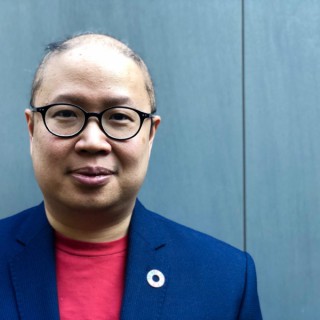
Soumaya Keynes joins Ben Yeoh to discuss How to Win a Trade War, co-written with Chad Bown, and what countries should do when economic conflict can no longer be avoided. They explore the weakening of the WTO system, supply-chain vulnerabilities, strategic stockpiles, tariffs, China's economic power and the return of industrial policy. Soumaya also explains why defence should come before attack, what “winning” might mean for a country such as the UK, and why governments may need to tolerate some failures when building strategic industries. The conversation then turns to obesity, gender and income, the wider effects of GLP-1 medicines, writing in the age of AI, and Soumaya's unexpected second career as an economics singer-songwriter.Highlights:Understand what tariffs really doMap vulnerabilities without overreactingRethink industrial policy and strategic resilienceExplore the wider effects of GLP-1 medicinesHear Soumaya's trade-war songTranscript and video: https://www.thendobetter.com/investing/2026/7/14/soumaya-keynes-how-to-win-a-trade-war-tariffs-china-and-industrial-policy

Everyone has an opinion on tariffs. Almost nobody understands them. Andy Tanner sits down with Chad Bown, PhD trade economist and author of How to Win a Trade War, to cut through the noise and get to what actually matters for investors — inflation, supply chain dependency, and the one trade war that's been quietly building for years while everyone argued about the other ones. You'll hear why rare earths and permanent magnets brought the American auto industry to the edge of a crisis almost overnight, how China's strategy of one-way dependence is fundamentally different from anything the global trading system was built to handle, and why the tariffs making headlines may be the least important part of the story. Trade is deflationary when it works. The question is what happens when it stops working — and whether your portfolio is ready for the answer.

Daniel Morris, chief investment strategist at BNP Paribas Asset Management, says that his primary concern right now is the risk that the economy could overheat, thanks to above-trend growth and inflation that could prompt the Federal Reserve to raise interest rates in an effort to slow things down. If that fails to cool inflation, the economy could then struggle and the market could step far away from its current uptrend. Morris' base case, however, is for continued earnings growth that can power the market into 2028, noting that while growth will slow down, there is still plenty of room to keep going and not have the economy resemble past bubble times. In The Book Interview, Chad Bown, co-author of "'How to Win a Trade War: An Optimistic Guide to an Anxious Global Economy," discusses how there are reasons and ways for trade-war scenarios to play out well, and the trade-offs today's leaders would have to make for current trade tensions to pass without plunging the global economy into a deep funk. In "The Week That Is," Vijay Marolia, chief investment officer at Regal Point Capital, discusses why he will continue to ride with Micro Technology, even as it reports growth numbers that are hard to believe, nt notes that he is giving Nike the boot, especially when he compares it to another popular rival in the public eye during the World Cup, adidas. Plus, he worries about how artificial intelligence may make inflation stickier for longer.

International trade used to be a subject reserved for farmers and exporters. Most of us rarely thought about it as long as the cars kept coming and the shelves were stocked at the supermarket. The system seemed to work. But recent years have shown how quickly tariffs, supply chain disruptions and geopolitical tensions can affect prices, jobs, KiwiSaver balances and economic security. Dr Chad Bown, former chief economist at the U.S. State Department under President Biden, says trade is no longer just about imports and exports, it's about who gets to shape the future. Together with Financial Times columnist Soumaya Keynes, he's co-written a book in layman's terms about modern trade called How to Win a Trade War: An Optimistic Guide to an Anxious Global Economy.

In this episode, Joyce Chang, Chair of Global Research, is joined by Chad Bown of the Peterson Institute for International Economics to discuss his new book, How to Win a Trade War: An Optimistic Guide to an Anxious Global Economy, and what “winning” means in a world where trade wars are increasingly becoming the default setting. Speakers: Joyce Chang, Chair of Global Research, J.P. Morgan Chad Bown, Reginald Jones Senior Fellow, Peterson Institute for International Economics (PIIE) This podcast was recorded on June 9, 2026. This communication is provided for information purposes only. Please visit www.jpmm.com/research/disclosures for important disclosures. © 2026 JPMorgan Chase & Co. All rights reserved. This material or any portion hereof may not be reprinted, sold or redistributed without the written consent of J.P. Morgan. It is strictly prohibited to use or share without prior written consent from J.P. Morgan any research material received from J.P. Morgan or an authorized third-party (“J.P. Morgan Data”) in any third-party artificial intelligence (“AI”) systems or models when such J.P. Morgan Data is accessible by a third-party.
While the best trade war strategy is to not have a trade war, this seems to no longer be an option. In their new book 'How to Win a Trade War' the goal of Soumaya Keynes and Chad Bown is to “… arm you with the knowledge to fight [because] these battles are going to last for a very long time.” Soumaya and Chad join EconoFact Chats to discuss the effects of the rise of China in the world trading system, the policy approaches taken by the United States, the European Union, and other countries, the role of multinational corporations, the intersection of trade and national security, and the efficacy of defensive policies (like limiting dependence on foreign goods) and offensive strategies (like tariffs). Soumaya Keynes is an economics columnist at the Financial Times and host of The Economics Show with Soumaya Keynes. Chad Bown is a senior fellow at the Peterson Institute for International Economics and served as Chief Economist at the State Department in the Biden administration.

In a reversal of roles, Nobel prize-winning economist Paul Krugman steps into host Soumaya Keynes shoes to quiz her and co-author Chad Bown about their new book "How to Win a Trade War", and the lessons it contains for surviving a global world order where traditional trade rules are being abandoned. They discuss the fragile domestic politics of a trade war, what the rest of the world can learn from China and reasons to be sort of cheerful about the future of global trade.Further readingNo one wins a trade war. Or do they?Why Europe must embrace tariffsSubscribe to Soumaya's show on Apple, Spotify, Pocket Casts or wherever you listen.Presented by Soumaya Keynes. Produced by Mischa Frankl-Duval. Manuela Saragosa is the executive producer. Original music and sound design by Breen Turner.Read a transcript of this episode on FT.com Hosted on Acast. See acast.com/privacy for more information.

In this episode, journalist Hannah Lucinda Smith speaks with economists Soumaya Keynes and Chad Bown about our new era of global trade wars. Drawing on their new book How to Win a Trade War, Keynes and Bown shed light on the historical roots of our modern trade infrastructure and how tariffs, export controls and supply chain battles are drastically reshaping the global economy. The conversation examines the increasingly fraught economic relationship between the US and China, the growing use of economic coercion, and what the future holds for the world stage as countries increasingly treat trade as a strategic weapon rather than a cooperative system. Soumaya Keynes is an economist and journalist. She is the co-author of How to Win a Trade War and host of the podcast The Economics Show. Chad Bown is an economist specialising in international trade and economic policy. He served as chief economist at the U.S. Department of State in the Biden administration from January 2024 to January 2025. He is the co-author of How to Win a Trade War. Hannah Lucinda Smith is a journalist and foreign correspondent reporting on global politics and international affairs. --- If you'd like to become a Member and get access to all our full conversations, plus all of our Members-only content, just visit intelligencesquared.com/membership to find out more. For £4.99 per month you'll also receive: - Full-length and ad-free Intelligence Squared episodes, wherever you get your podcasts - Bonus Intelligence Squared podcasts, curated feeds and members exclusive series - 15% discount on livestreams and in-person tickets for all Intelligence Squared events ... Or Subscribe on Apple for £4.99: - Full-length and ad-free Intelligence Squared podcasts - Bonus Intelligence Squared podcasts, curated feeds and members exclusive series … Already a subscriber? Thank you for supporting our mission to foster honest debate and compelling conversations! Visit intelligencesquared.com to explore all your benefits including ad-free podcasts, exclusive bonus content and early access. … Subscribe to our newsletter here to hear about our latest events, discounts and much more. https://www.intelligencesquared.com/newsletter-signup/ Learn more about your ad choices. Visit podcastchoices.com/adchoices Learn more about your ad choices. Visit podcastchoices.com/adchoices

On this episode of the Trade Guys, Bill and Scott welcome Chad Bown (Reginald Jones Senior Fellow, Peterson Institute for International Economics) and Soumaya Keynes (Economics Columnist, Financial Times) to discuss the issues raised in their new book, How to Win a Trade War.

“The rules-based system just hasn't worked. China's system is so opaque that you can't see the subsidies. And when you've got China not interested in new rules and the US not interested in a referee, you've got two of the world's biggest actors who aren't on board.” — Soumaya Keynes It would have been nice to get John Maynard Keynes on the show to get his critique of Trump's trade war. But in the long run, we're all dead — even old Maynard. So instead, we found his great-great-niece, Soumaya Keynes — Financial Times columnist and co-author of How to Win a Trade War: An Optimistic Guide to an Anxious Global Economy. Having already appeared on Jon Stewart this week, Soumaya has a bit of Keynesian star quality about her. But she's also a first-rate economist. Her thesis is that the old rules-based trading system that her great-great-uncle helped design after World War II is gone. And it ain't coming back. China's subsidies are so opaque that rules can't be written to constrain them, let alone enforced. The US is no longer willing to submit to a referee. Without the two biggest players, no rules-based system is meaningful. So — now what? Keynes says we must think like a trade warrior. Donald Trump should leverage the tools available — but use them strategically. Trump's error in his second term was not being tough on China while being too tough on everyone else, especially allies like Canada and Mexico. Soumaya Keynes' most contemporary idea might be her most Keynesian one. John Maynard Keynes proposed penalties for countries running large trade surpluses as well as those running deficits — recognising that global imbalances are a two-sided problem. That idea didn't make it into the 1944 Bretton Woods agreement. Eighty years later, in equally anxious economic times, his optimistic great-great-niece is reviving it. Five Takeaways • Can Trade Wars Be Won? Yes, Sometimes: The conventional wisdom: no one wins a trade war. Keynes and Bown agree — in theory. In practice, countries in a weaker position cave. History has examples: France in the late nineteenth century told its trading partners they were renegotiating treaties, and the smaller partners complied. Trump's tariffs in his first term produced concessions. The problem is not that trade wars can't be won. It's that the smaller power's only defence — coordinating with other smaller powers — is extremely hard to sustain. There's always an incentive to cut a deal first. • China Is the Doper on the Sports Field: Keynes's sharpest analogy: the global trading system is like a sports game that needs rules to ensure a level playing field. China's subsidies — cheap credit, corporate handouts, opaque support for state-linked companies — are the equivalent of performance-enhancing drugs. The problem is that unlike doping in sport, China's subsidies are invisible. You can write a rule saying China won't give these handouts. But you can't verify compliance. And without enforcement, rules are meaningless. The WTO has not solved this. Nothing has solved this. • Trump Was Right About China, Wrong About Everything Else: Keynes is careful here. She credits Robert Lighthizer in Trump's first term with identifying China as the real problem and building a focused strategy. In the second term, Trump put tariffs on everyone simultaneously — which dissipated leverage, alienated the coalition of allies needed to pressure Beijing, and mixed up the problem of China's subsidies with grievances against Canada, Mexico, and the EU. If you were genuinely tough on China, you wouldn't have put tariffs on everyone. You would have been more targeted. • The Rules-Based System Is Gone and Isn't Coming Back: Why can't we return to the system Keynes's great-great-uncle helped build? Two reasons. China's subsidies are too opaque to write enforceable rules against. And the US has lost confidence in any international referee — a long and complex story, but the result is that America won't submit to neutral adjudication. Without the two biggest players, no rules-based system is meaningful. Yearning for the old approach is not an option. A new strategy is needed — and that's what the book is about. • AI and the Next Trade War: Services: AI is central to the US-China conflict already — chip restrictions, military advantage, economic supremacy. But Keynes's less-noticed observation: AI could fundamentally reshape international services trade. The UK, for example, is a massive services exporter — finance, legal, consulting, accounting. If AI eliminates demand for those services, the UK faces a new current account crisis, new trade tensions, a new wave of economic conflict. Nobody knows how this plays out. Which is why, she suggests, the tools in the book will remain relevant for longer than the current tariff cycle. About the Guests Soumaya Keynes is an economics columnist at the Financial Times and host of The Economics Show with Soumaya Keynes. Before joining the FT she spent eight years at The Economist. She co-founded the Trade Talks podcast with Chad Bown during Trump's first term. Chad P. Bown is the Reginald Jones Senior Fellow at the Peterson Institute for International Economics and former Chief Economist at the US State Department under President Biden. Together they are the authors of How to Win a Trade War: An Optimistic Guide to an Anxious Global Economy (Simon & Schuster, May 26, 2026). References: • How to Win a Trade War: An Optimistic Guide to an Anxious Global Economy by Soumaya Keynes and Chad P. Bown (Simon & Schuster, May 26, 2026). • Soumaya Keynes on The Daily Show with Jon Stewart, May 19, 2026 — referenced in the interview. • Episode 2892: Jason Pack on the Iran war — the companion episode on America's strategic distractions from the China problem. About Keen On America Nobody asks more awkward questions than the Anglo-American writer and filmmaker Andrew Keen. In Keen On America, Andrew brings his pointed Transatlantic wit to making sense of the United States — hosting daily interviews about the history and future of this now venerable Republic. With nearly 2,900 episodes since the show launched on TechCrunch in 2010, Keen On America is the most prolific intellectual interview show in the history of podcasting. WebsiteSubstackYouT...
It's been over six months since the so-called 'Liberation Day' tariffs -- a 10% baseline tariff on all US imports, and additional country-specific tariffs determined by their trade surplus with the US -- came into effect. The Trump administration argued these tariffs would result in a stronger economy, and a revival of American manufacturing. Have they? Chad Bown joins EconoFact Chats to discuss the rollout and consequences of the sweeping tariffs thus far, and how they compare to the tariffs enacted during the first Trump administration. Chad is the Reginald Jones Senior Fellow at the Peterson Institute for International Economics.

Chad Bown is not just among the world's most respected trade economists. He is also perhaps the single most careful tracker of real-time trade activity — which obviously makes him the best possible guest to explain the consequences of US President Donald Trump's decision on April 2nd to impose new tariffs on China and many other countries in addition to further escalating the trade war with China just a week later while changing course (though not entirely) against the rest of the world.Among the topics they chatted about: The scale of the potential fallout Where the tariffs stand now — including earlier tariffs already imposedThe ongoing threat to the American auto industry What it all means for the global liberal trading order The worst-case and best-case scenarios …and more! Related links: Chad Bown home pageTrade Talks, Chad's podcast Chad's (updated in real time) interview with Kai RyssdalThe trade war timeline Hosted on Acast. See acast.com/privacy for more information.

On WSJ's Take On the Week, co-host Telis Demos talks with reporter Miriam Gottfried about what is driving a slide in 10-year Treasury yields. Then they get into the upcoming jobs report and whether any DOGE-related shakeups in the federal workforce could be reflected in the data. They also discuss the flurry of tariff-related developments ahead of a deadline this week for proposed taxes on imports from Canada and Mexico. Later on the show, Telis dives into what President Trump's tariff agenda could mean for the economy and markets with Chad Bown, a senior fellow at the Peterson Institute for International Economics and former chief economist for the U.S. Department of State in the Biden-Harris administration. This is WSJ's Take On the Week where co-hosts Gunjan Banerji, lead writer for Live Markets, and Telis Demos, Heard on the Street's banking and money columnist, cut through the noise and dive into markets, the economy and finance—the big trades, key players and business news ahead. Have an idea for a future guest or episode? How can we better help you take on the week? We'd love to hear from you. Email the show at takeontheweek@wsj.com. To watch the video version of this episode, visit our WSJ Podcasts YouTube channel or the video page of WSJ.com Further Reading To read more from co-host Telis Demos, catch up on PayPal Needs Help From Its Oldest Friends—Consumers. The Economy Is Still Fine. Americans Are Still Gloomy For more coverage of the markets and your investments, head to WSJ.com, WSJ's Heard on The Street Column, and WSJ's Live Markets blog. Sign up for the WSJ's free Markets A.M. newsletter.

President Donald Trump may have hit pause on tariffs against Mexico and Canada, but his trade penalties on China are still in place. That includes a 10 percent tariffs on all Chinese imports, including consumer electronics and other tech products. On POLITICO Tech, host Steven Overly talks to Chad Bown, a senior fellow at the Peterson Institute for International Economics, about the implications for tech companies and online retailers in both the U.S. and China. Learn more about your ad choices. Visit megaphone.fm/adchoices
Goodbye for now, as old friend Soumaya Keynes joins Chad Bown to discuss why and what comes next.
The Inflation Reduction Act of 2022 provided $350 billion in tax credits and other incentives for clean energy technologies in the US. So how did American policymakers respond when South Korean government officials declared it was a “betrayal”? Chad Bown of the Peterson Institute tells Tim Phillips the strange-but-true tale of how the problem was fixed, and what it tells us about protectionist trade policy in a global crisis.

The Automotive Troublemaker w/ Paul J Daly and Kyle Mountsier
It's Friday and we're feeling the flow as we talk about the sales rebound that is rolling strong. We also discuss the IRA loophole that is changing the EV sales landscape, as well as a global first in autonomy going down in Las Vegas. The June numbers are in and the industry rebound is rolling on as auto sales reached a seasonally adjusted annual rate of 15.8 million, close to the upper end of forecasts and up from 15.1 million in May.Despite remaining below the 15 million mark in 2022 due to low inventory, sales have maintained or exceeded this level in 2023. However, they still fall short of the 2015-2019 boom years when sales exceeded 17 million annually. GlobalData, noting the resilience of American consumers amid near-record high prices and increasing interest rates, increased its 2023 sales forecast to 15.4 million, up by 500,000.Just about everyone is winning: Ford: +9.9%, General Motors: +18%, Toyota: +15%, Stellantis: +6%, Honda: +54%, Hyundai: +10%, Kia: +8%, Nissan: +33%, Subaru: +28%, Mazda: +97%, Audi: +16%, Volvo: +53%, Genesis: +33%, Ram: +3%, Jeep: -3%, Chrysler: +33%, Dodge: +37%, Fiat: -42%, Alfa Romeo: -25%Some analysts predict a cooling in sales pace in the second half of the year due to rising interest rates and affordability concerns.An unexpected loophole in the Inflation Reduction Act could make it easier and cheaper for car buyers to switch to an EV. The legislation originally established strict assembly and material sourcing criteria for vehicles to qualify for federal tax credits, but the new rules may not apply to leased vehicles. Chad Bown, senior fellow at the Peterson Institute for International Economics said, “So if the car companies set up a commercial leasing division and they buy their own vehicles in it, then they get the tax credit and they can pass it onto the consumer and they don't have to be trucks or vans," Bown said. "No other criteria apply. You can be super rich and qualify for this or the vehicle can be priced any price. There is also no restriction that it has be made in North America or that the batteries have to be sourced from outside of China."Edmunds reports about 37% of EVs bought in April were leased, up from 17% in April 2022. In May, about 44% were leased, up from 15% in the year-ago period. For June, 44% were leased compared with 13% in the year-ago period.Halo.Car, a provider of on-demand electric vehicles, has started offering driverless delivery of its remote-controlled EVsThis is a first of it's kind service, globally.. The program is launching in Las Vegas after four years of safety-driver assisted testing.The service allows customers to book a Halo.Car EV which is then remotely delivered to the customer's location.For now, the driverless vehicles will initially be followed by a second vehicle to monitor the health and safety of the driverless vehicle.Get the Daily Push Back email at https://www.asotu.com/ JOIN the conversation on LinkedIn at: https://www.linkedin.com/company/asotu/ Read our most recent email at: https://www.asotu.com/media/push-back-email ASOTU Instagram: https://www.instagram.com/automotivestateoftheunion
As New York and other cities continue to deal with worsened air quality due to Canadian wildfires, people have been finding ways to adapt with a little help from technology. We look at some ways innovation is meeting necessity as wildfires become a growing problem because of climate change. Plus, President Biden vetoed a bill that would have curbed student loan forgiveness. And finally, a chat with the Peterson Institute for International Economics’ Chad Bown about how the U.S. is placating allies who say recent electric vehicle subsidies are protectionist and unfair.
As New York and other cities continue to deal with worsened air quality due to Canadian wildfires, people have been finding ways to adapt with a little help from technology. We look at some ways innovation is meeting necessity as wildfires become a growing problem because of climate change. Plus, President Biden vetoed a bill that would have curbed student loan forgiveness. And finally, a chat with the Peterson Institute for International Economics’ Chad Bown about how the U.S. is placating allies who say recent electric vehicle subsidies are protectionist and unfair.
What have we learned about how to create, manufacture, and distribute a new vaccine? Can countries cooperate to create a responsive and resilient supply chain if history repeats itself, and should the WTO have a role? Chad Bown talks to Tim Phillips.
A central result from economic theory is that nations benefit from international trade (even as there is a recognition that not all people within a country may benefit). But recently there have been calls for the United States to restrict trade by creating incentives or rules that favor domestic production over purchases from abroad. Will these efforts ultimately strengthen or weaken the United States economy Chad Bown of the Peterson Institute for International Economics joins Michael Klein on EconoFact Chats to discuss this issue. Chad is the Reginald Jones Senior Fellow at the Peterson Institute, and the host of the podcast Trade Talks.
A central result from economic theory is that nations benefit from international trade (even as there is a recognition that not all people within a country may benefit). But recently there have been calls for the United States to restrict trade by creating incentives or rules that favor domestic production over purchases from abroad. Will these efforts ultimately strengthen or weaken the United States economy Chad Bown of the Peterson Institute for International Economics joins Michael Klein on EconoFact Chats to discuss this issue. Chad is the Reginald Jones Senior Fellow at the Peterson Institute, and the host of the podcast Trade Talks.

America has changed the way it views the rest of the world. Rather than pushing for a more globalised economy with fewer trade barriers, the US is now seeking a more protected system of international trade. President Biden's Inflation Reduction Act promises nearly $400bn to boost clean energy and reduce dependence on China for things like batteries for electric cars. The Chips Act, meanwhile, provides incentives worth $52bn to boost America's semiconductor industry.On this week's podcast, hosts Mike Bird and Alice Fulwood examine what this new zero-sum era means for the global economy. Chad Bown from the Peterson Institute for International Economics tells them the age of globalisation isn't returning any time soon. Henry Gao from Singapore Management University blames America's attempt to “out-China China by becoming more like China”.Sign up for our new weekly newsletter dissecting the big themes in markets, business and the economy at www.economist.com/moneytalks For full access to print, digital and audio editions, subscribe to The Economist at www.economist.com/podcastoffer Hosted on Acast. See acast.com/privacy for more information.

America has changed the way it views the rest of the world. Rather than pushing for a more globalised economy with fewer trade barriers, the US is now seeking a more protected system of international trade. President Biden's Inflation Reduction Act promises nearly $400bn to boost clean energy and reduce dependence on China for things like batteries for electric cars. The Chips Act, meanwhile, provides incentives worth $52bn to boost America's semiconductor industry.On this week's podcast, hosts Mike Bird and Alice Fulwood examine what this new zero-sum era means for the global economy. Chad Bown from the Peterson Institute for International Economics tells them the age of globalisation isn't returning any time soon. Henry Gao from Singapore Management University blames America's attempt to “out-China China by becoming more like China”.Sign up for our new weekly newsletter dissecting the big themes in markets, business and the economy at www.economist.com/moneytalks For full access to print, digital and audio editions, subscribe to The Economist at www.economist.com/podcastoffer Hosted on Acast. See acast.com/privacy for more information.

The term “free trade” has fallen out of favor in recent years. Trade disputes, economic uncertainty, and a growing income gap have stoked a global protectionist fire. Nationalist parties across the world have flourished on a trade-unfriendly agenda. Latin American leaders run campaigns on “renegotiating” trade agreements. The Trump Administration's loud anti-trade agenda, which led to the US leaving the Trans-Pacific Partnership, and an average 25% tariff on goods produced in China have proven difficult to reverse. What will the world look like with an increasingly protectionist agenda? Altamar hosts Peter Schechter and Muni Jensen are joined by Chad Bown, Senior Fellow at the Peterson Institute for International Economics. Altamar's ‘Téa's Take' by Téa Ivanovic examines the increase in child labor around the world for the first time in 20 years. ----- Produced by Simpler Media
Intervention by the United States government helped the rapid development and large scale production of three COVID-19 vaccines. What were the economic, legal, and political challenges of developing and distributing vaccines in the face of an emerging deadly pandemic? How were these challenges addressed? And what were the successes and shortcomings of these policies? To discuss these issues, EconoFact Chats welcomes back Chad Bown of the Peterson Institute for International Economics. Chad is the Reginald Jones Senior Fellow at the Peterson Institute for International Economics in Washington, D.C., and the host of the podcast Trade Talks that focuses on international trade and its attendant policies.
Intervention by the United States government helped the rapid development and large scale production of three COVID-19 vaccines. What were the economic, legal, and political challenges of developing and distributing vaccines in the face of an emerging deadly pandemic? How were these challenges addressed? And what were the successes and shortcomings of these policies? To discuss these issues, EconoFact Chats welcomes back Chad Bown of the Peterson Institute for International Economics. Chad is the Reginald Jones Senior Fellow at the Peterson Institute for International Economics in Washington, D.C., and the host of the podcast Trade Talks that focuses on international trade and its attendant policies.
China is a big player in the global economy, importing and exporting several trillion dollars worth of goods and services each year. That means China’s trade decisions can affect the health of industries and economies across the globe, but right now it’s hard for the World Trade Organization to do anything about it. For more on this issue, we talk to Chad Bown at the Peterson Institute for International Economics. Households are becoming more nervous about personal finances due to inflation. A look at results from Apple and Amazon, which reported earnings and losses this week.
China is a big player in the global economy, importing and exporting several trillion dollars worth of goods and services each year. That means China’s trade decisions can affect the health of industries and economies across the globe, but right now it’s hard for the World Trade Organization to do anything about it. For more on this issue, we talk to Chad Bown at the Peterson Institute for International Economics. Households are becoming more nervous about personal finances due to inflation. A look at results from Apple and Amazon, which reported earnings and losses this week.
In the scramble for PPE in early 2020, prices spiked, supplies dried up, and doctors were forced to use garbage bags for protection. A year on, Chad Bown has examined what happened, and he tells Tim Phillips how we can avoid a repeat.
If you had trouble in the last four years keeping up with what was happening in the trade war, you're not alone. Chad Bown tell Tim Phillips about his new paper that explains what happened, when, what it meant - and what happens next.

Dr. Chad Bown discusses the trade deal and prospects for American trade policies toward China in the new administration in an interview conducted on March 10, 2021. In a February 8 report for the Peterson Institute for International Economics, Dr. Chad Bown argues that the U.S.-China Phase One Trade Deal should be examined by the Biden administration. The centerpiece of the trade deal – China’s pledge to buy $200 billion more of U.S. goods and services split over 2020 and 2021 – has thus far fallen far short of its target. Other elements of the deal, such as China’s commitment to reduce nontariff barriers and open up to foreign investment, merit consideration as the new administration develops its international economic policies. A fresh U.S. policy approach toward China is needed, and should be undertaken jointly with like-minded countries.
Chad Bown of the Peterson Institute for International Economics joins Michael Klein to discuss China's role in the global economy, as well as the international cooperation involved in COVID-19 vaccine manufacturing and distribution.
Last year, China pledged to vastly increase its U.S. imports during 2020 and 2021. We ask economist Chad Bown if actual spending has been keeping pace with what was promised.

Who will buy? It's a week where soybeans, fossil fuels, wolf warrior diplomacy and the 2020 US Presidential campaign collided... SCMP editors John Carter and Teddy Ng discuss the latest events in the rising US-China rivalry, while Peterson Institute for International Economics' trade expert Chad Bown joins Finbarr Bermingham on the line to discuss China's progress towards meeting trade deal purchasing targets.
Did President Trump's trade policies cost Republican votes last year? We talk to economist Chad Bown to find out.

In this episode of our series Rethinking Asia, we spoke with Chad Bown, Reginald Jones Senior Fellow at the Peterson Institute for International Economics. Chad is an expert on trade, having worked on the issue at the World Bank, the White House Council of Economic Advisors, and the World Trade Organization. We sat down to discuss the recent trade disagreement between South Korea and Japan. While, rooted in the countries’ deep historical, political, and social tensions dating back to the early 20th century, the attitudes and tactics adopted in the dispute reflect broader global sentiments surrounding trade. Key takeaways from the discussion include: A new front in global trade wars has opened, with South Korea squaring off against Japan. Specifically, the Japanese government put export restrictions on various exports to South Korea and, most recently in early August, removed South Korea from its so called ‘white list’ of countries that enjoy special trade terms with Japan. The move requires Japanese companies to follow a bureaucratic process when exporting to Korea, disrupting supply chains for Korean microchip and display manufacturers that rely heavily on Japanese inputs. Today’s tensions date to the Second World War, when Korea was a Japanese colony and Japanese companies used forced Korean labor. In 1965, the two countries signed a treaty to normalize the relationship under which Japan paid restitution to South Korea. Recently, however the South Korean Supreme Court ruled that the treaty only applied at a country level and that individuals could bring cases against Japanese companies. Japanese export restrictions are seen as retaliation for the decision. The deterioration of the trade relationship between Japan and South Korea reflects current attitudes and trends in trade by which countries are increasingly using trade as a lever to resolve political and social disputes once mediated through diplomatic channels. This dispute reveals that a focus on bilateral disputes may make it harder for countries to form regional or global trade agreements. Prior to the dispute, according to Bown, South Korea was interested in acceding to the Japan-led CP-TPP (Comprehensive and Progressive Agreement on Trans-Pacific Partnership) trade agreement among 11 countries. It is unlikely to follow through in light of current tensions. It is hard to say whether the current attitudes toward trade will upend the trend toward globalization established in the aftermath of the World War II. Recent results are a mixed bag: while high profile cases of anti-trade rhetoric and behavior have garnered the most attention, other countries continue to sign free trade agreements. The views expressed are not necessarily those of the Federal Reserve Bank of San Francisco or of the Federal Reserve System.

We recorded this interview with Trade Talks host Chad Bown back in February. That was a time when we were still uncertain whether a deal would be reached on March 1 between China and the U.S. on whether the 10% tariffs would rise to 25% for the $200 billion Chinese imports to the U.S. Things have really evolved in the past few months with both good and bad times. The 25% tariffs became a reality, and on August 1, President Trump announced that additional 10% tariff will be levied on another $300 billion of Chinese imports. On August 5, the U.S. officially declared China as a Currency Manipulator, and we saw a huge stock market crash following that announcement. We’ve saved this interview waiting for the big moment to release it, and I think now is truly a critical moment in U.S-China relations and also an appropriate time for us to release this interview with Chad on the trade war. A few months have passed by, but we truly believe that our listeners can still learn so much from Chad’s insights.
Who will be the biggest loser in this trade war? Chad Bown tells Tim Phillips why it could be the WTO's dispute resolution system, and why we should worry if this happens.
Not to be overshadowed by the Trump-China trade war, the WTO issues an important legal ruling on Chinese subsidies. Soumaya Keynes and Chad Bown describe how the Americans had challenged Chinese payments to farmers of corn, wheat and rice, as well as implications of the WTO ruling for US-China trade relations and the multilateral system.
Not to be overshadowed by the Trump-China trade war, the WTO issues an important legal ruling on Chinese subsidies. Soumaya Keynes and Chad Bown describe how the Americans had challenged Chinese payments to farmers of corn, wheat and rice, as well as implications of the WTO ruling for US-China trade relations and the multilateral system.
Not to be overshadowed by the Trump-China trade war, the WTO issues an important legal ruling on Chinese subsidies. Soumaya Keynes and Chad Bown describe how the Americans had challenged Chinese payments to farmers of corn, wheat and rice, as well as implications of the WTO ruling for US-China trade relations and the multilateral system.
To discuss the latest developments on NAFTA and US - China trade, the Expert Series hosted trade guru Chad Bown, Reginald Jones Senior Fellow at the Peterson Institute for International Economics. Most of the discussion focuses on the progress of the US’ trade negotiations with Mexico and Canada. The most interesting part of the discussion is on the outlook for Auto tariffs, which are becoming increasingly likely given the focus on the “rules of origin” procedures between the US and Mexico. Chad inadvertently paints a few really scary scenarios in which the Trump administration would put up blanket tariffs against all US imports, designed to avoid the temptation for car companies to start producing more cars in Mexico and importing them into the US from there.

Chad Bown is a fellow at the Peterson Institute for International Economics in Washington, DC and cohost of the excellent Trade Talks, a weekly podcast on the economics of international trade policy. In this episode, we discuss the competing grand strategies of US and China as well as their different tactics for executing their trade war policies. We touch on potential internal inconsistencies in Trump's trade outlook, the implications for the USD and RMB, as well as potential endgames. Outtro music by VaVa Get bonus content on Patreon See acast.com/privacy for privacy and opt-out information.

Chad Bown is a fellow at the Peterson Institute for International Economics in Washington, DC and cohost of the excellent Trade Talks, a weekly podcast on the economics of international trade policy. In this episode, we discuss the competing grand strategies of US and China as well as their different tactics for executing their trade war policies. We touch on potential internal inconsistencies in Trump's trade outlook, the implications for the USD and RMB, as well as potential endgames. Outtro music by VaVa
Paul was joined at the Expert Series by frequent guest, Chad Bown, Reginald Jones Senior Fellow at the Peterson Institute where his research examines international trade laws and institutions, trade negotiations, and trade disputes. Chad was with us to discuss the recent US trade actions and the ensuing retaliation from the EU, Canada and China. There are very few people in the think tank community who have a better handle on global trade issues than Chad.

Chad Bown, Peterson Institute for International Economics Senior Fellow, & Enda Curran, Bloomberg's Chief Asia Economics Correspondent, discuss the impact of President Trump's steel and aluminum tariffs. Marc Chandler, Brown Brothers Harriman Senior Vice President of New York & Head of Currency, says a trade war is not easy to win and it is not desirable. Francine Lacqua, Bloomberg Surveillance TV Anchor & Editor at Large, joins us from Rome to report on the general elections this coming Sunday. Jeffrey Sachs, Columbia University Professor & Nobel Laureate, says the new tariffs are one of the most reckless policies that one can imagine. Learn more about your ad-choices at https://www.iheartpodcastnetwork.com
Chad Bown, Peterson Institute for International Economics Senior Fellow, & Enda Curran, Bloomberg's Chief Asia Economics Correspondent, discuss the impact of President Trump's steel and aluminum tariffs. Marc Chandler, Brown Brothers Harriman Senior Vice President of New York & Head of Currency, says a trade war is not easy to win and it is not desirable. Francine Lacqua, Bloomberg Surveillance TV Anchor & Editor at Large, joins us from Rome to report on the general elections this coming Sunday. Jeffrey Sachs, Columbia University Professor & Nobel Laureate, says the new tariffs are one of the most reckless policies that one can imagine.

According to US President Donald Trump "trade wars aren't so bad". Recently his government surprised the world by announcing unexpected big increases in import taxes - or tariffs - on steel and aluminium. Mr Trump believes that this is one way to do something about America's huge trade deficit, which he says stems from the nation being "taken advantage of" by other countries for decades. The US also threatened tariff increases on a huge range of other products, including many from China. The Chinese government responded in kind, raising tariffs on American imports of everything from cars to ginseng. The row has deeply worried many politicians and business leaders across the world: could this be the start of a new trade war? But what exactly is a trade war - and is it possible to win one? And what are the implications for the UK if the dispute between the US and China escalates?CONTRIBUTORSDr Marc-William Palen, historian at the University of Exeter and author of The 'Conspiracy' of Free Trade.Chad Bown, Peterson Institute for International Economics in Washington DC and former White House senior economist. Dr Jue Wang is an expert on the Chinese economy based at the University of Leiden in the Netherlands and an associate fellow on the Asia-Pacific Programme at Chatham House.Dr Meredith Crowley, lecturer at the University of Cambridge and research fellow at the Centre for Economic Policy Research
Jens Nordvig, Exante Data Founder & CEO, thinks the housing sector will be resilient to Fed rate hikes. Greg Peters, PGIM Managing Director & Senior Investment Officer, says to look at the broader set of data and trends in the jobs numbers. Chad Bown, Peterson Institute for International Economics Senior Fellow, says we're all waiting to see how the steel and aluminum tariffs will play out. Dakin Campbell, Bloomberg Finance Americas Reporter, reviews Goldman Sachs's decision to appoint David Solomon as sole president. Learn more about your ad-choices at https://www.iheartpodcastnetwork.com
Jens Nordvig, Exante Data Founder & CEO, thinks the housing sector will be resilient to Fed rate hikes. Greg Peters, PGIM Managing Director & Senior Investment Officer, says to look at the broader set of data and trends in the jobs numbers. Chad Bown, Peterson Institute for International Economics Senior Fellow, says we're all waiting to see how the steel and aluminum tariffs will play out. Dakin Campbell, Bloomberg Finance Americas Reporter, reviews Goldman Sachs's decision to appoint David Solomon as sole president.
© 2020-2026 Ivy Podcast Discovery LLC
