
POPULARITY

51 episodes with jonathan pennington

23 episodes with jonathan pennington

16 episodes with jonathan pennington

13 episodes with jonathan pennington

22 episodes with jonathan pennington

4 episodes with jonathan pennington

13 episodes with jonathan pennington

6 episodes with jonathan pennington

4 episodes with jonathan pennington

What is the path to the good life? What does it look like to be a disciple of Jesus? New Testament scholar, Jonathan Pennington, has written extensively on the Gospel of Matthew and we explore it's emphasis on discipleship as well as Jesus' vision for human flourishing outlined in the Sermon on the Mount in this conversation. And golf.Jonathan Pennington is a Professor of New Testament Interpretation at Southern Seminary in Louisville, Kentucky & also one of the Teaching Pastors at Sojourn East. He regularly speaks and teaches in churches all over the US and has come up to beautiful British Columbia, Canada numerous times. He also hosts The Human Flourishing Podcast. His books include, Reading the Gospels Wisely: A Narrative & Theological Introduction; Come & See: The Journey of Knowing God Through Scripture; Becoming a Disciple of the King: A Theology of Matthew; The Sermon on the Mount & Human Flourishing; his personal favourite, Jesus the Great Philosopher: Rediscovering the Wisdom Needed for the Good Life, and many more.
Join us as Jonathan Pennington preaches from Romans 15:14-21, exploring our calling to share the gospel and invite others into worship, witness, and faithful obedience. Through Jesus' perfect sacrifice and grace, God welcomes people from every nation into relationship with him.Scripture: Romans 15:14-21Pastor: Jonathan Pennington

What does it mean to be a disciple? The Gospel of Matthew is more than just a description of Jesus's life, death, and resurrection; it is a literary masterpiece designed to invite us into a life of discipleship. The teaching, narratives, and portraits of Jesus show us who he is and who we have been called to be. Grab a copy of Jonathan Pennington's book, Becoming a Disciple of the King.
Scripture: Romans 13:6-10Pastor: Jonathan Pennington
This Sunday, we'll continue our series in Romans with Romans 13:1–7, “The Church in the World.” In a world marked by tension, uncertainty, and opposition, Paul calls believers to live with humility, honor, and deep trust in the Lord's sovereign rule. As we await the day when God fully sets the world to right, we are invited to live faithfully now with reverence toward God and love toward others.Scripture: Romans 13:1-7Pastor: Jonathan Pennington

What Actually Happens When You Get Baptized?Most of us have watched a baptism. The water, the moment, the applause. But what if there's something happening beneath the surface that most people never stop to think about?Here's something worth sitting with: repentance is the first word of the gospel. The first word out of John the Baptist's mouth. The first word of Jesus' public ministry. The first instruction after the resurrection. The first word of the first Christian sermon. Baptism is where that repentance goes public — where an inward decision becomes an outward declaration.In this message, Pastor Aaron McRae unpacks the scene in Matthew 3 where Jesus steps into the Jordan River — and what that moment reveals about three things baptism marks fresh in every believer's life: a new identity in Christ, an inauguration into life and ministry, and a living illustration of the gospel itself.Whether you were baptized decades ago or are still figuring out what you believe, this is an invitation to remember what that moment meant — and to keep living like it actually does.

In this episode, Jonathan Pennington talks about the heart of the book of Matthew. Jonathan Pennington serves as professor of New Testament interpretation at the Southern Baptist Theological Seminary and pastor of spiritual formation at Sojourn East church in Louisville, Kentucky. He is also the author of 'Becoming a Disciple of the King: A Theology of Matthew' from Crossway. ❖ Listen to “Help Jump-Start Your Journey through Scripture" with Jonathan Pennington: Apple Podcasts | Spotify | YouTube If you enjoyed this episode, be sure to leave us a review, which helps us spread the word about the show.
Join us as Jonathan Pennington explores Hebrews 12:14-29 and how seeing God clearly transforms our worship into lives of holiness, gratitude, and reverent awe. As we turn from sin and fix our hope on his unshakable kingdom, we respond to his grace with wholehearted devotion.Scripture: Hebrews 12:14-29Pastor: Jonathan Pennington
Join us as Jonathan Pennington unpacks Hebrews 11, where we're reminded that faith is trusting in God's promises, even when we can't yet see their fulfillment. Through the lives of those who have gone before us, we see a pattern of endurance and hope, rooted in God's unchanging faithfulness across generations. As pilgrims on the same journey, we're invited to live by that same faith as we look ahead to the redemption still to come.Scripture: Hebrews 11Pastor: Jonathan Pennington

Moonlight Mile proudly and intentionally is a reality check for mainstream country and fedora-wearing folk country hipster posers alike. Moonlight Mile is a voice for those many impoverished and destitute in rural Appalachia, gripped by the sting of addiction, brow-beaten by fanatical religiosity, and oppressed by fascist regimes.An Americana bluegrass band from Sandy Hook, Kentucky, they're forging a sound that blends Appalachi-an roots with modern storytelling and heartfelt grit. Formed in 2021 and fronted by songwriter and vocalist Jonathan Pennington, the group draws on the deep musical heritage of Eastern Kentucky while embracing a wide range of influences—from traditional bluegrass harmonies to the alternative rock and psychedelic sounds that shaped Pennington's upbringing.Born of long summer evenings and back-road reflections, Moonlight Mile's music speaks to life in rural Appalachia: the beauty and struggle, the pride and pain. They write with an honest voice and a sense of purpose, tackling themes like community, hardship, and resilience with songs that feel both personal and universal. Their work has shared stages with artists across the Americana and country spectrum, including Wynonna Judd, Dwight Yoakam, The Infamous Stringdusters, and 49 Winchester—a testament to the band's wide appeal and deep musical roots.With releases that include the Kentucky Bourbon EP and tracks like “Honey,” Moonlight Mile showcases rich instrumentation—banjo, fiddle, and guitar weaving through stories caught between past and present. Their first full-length album captivates listeners with authentic narratives grounded in the landscapes and legacies of Appalachia.Whether on festival stages or intimate venues, Moonlight Mile brings a fresh voice to Kentucky's storied musical tradition—one that honors the past while charting a course into the future of Americana and blue-grass.

Equip Season 5 Week 1: Gospels - Session 3 with Dr. Jonathan Pennington and participants Andrew and Christin Gish and LeVar Allen
Equip Season 5 Week 1: Gospels - Session 2 with Dr. Jonathan Pennington and participants Andrew and Christin Gish and LeVar Allen
Equip Season 5 Week 1: Gospels - Session 1 with Dr. Jonathan Pennington and participants Andrew and Christin Gish and LeVar Allen
Join us as Jonathan Pennington explores Hebrews 6:20-8:13 and the good news of Jesus as our perfect High Priest. Where the old covenant and priesthood fell short, Jesus fulfills them completely—serving as both Priest and King who brings us into the very presence of God. In him, we are given a better covenant and a sure, unshakable hope.Scripture: Hebrews 6:20-8:13Pastor: Jonathan Pennington
Join us as Jonathan Pennington helps us consider God's promise of true rest: not just inner peace, but life with Him in the heavenly city to come. Hebrews 4 calls us to turn from hardened hearts and receive God's healing Word, trusting the one who sees us fully and loves us still.Scripture: Hebrews 4:1-13Pastor: Jonathan Pennington

Listen to this week's sermon, Winter Wisdom preached by Dr. Jonathan Pennington from Matthew 11:25-30.

ICYMI: This episode is one of our earliest episodes, and originally aired on 5/14/2020 In this introductory conversation, Dr. Jonathan Pennington joins the Center for Hebraic Thought as its newest fellow and shares how his journey through philosophy and biblical scholarship led him to see the New Testament as part of a deeply sophisticated intellectual tradition. Pennington discusses how early Christianity, though written in Greek and shaped within a Hellenistic world, did not abandon its Jewish roots but rather translated its robust metaphysic across cultural lines. Drawing from his work on Jesus as a philosopher, Pennington explains that the New Testament doesn't reject or capitulate to Greco-Roman philosophy—it stands alongside it, often outthinking and outlasting it. In contrast to Stoicism's emotional detachment and denial of suffering's reality, the Bible presents a profoundly realistic vision: a God who enters the world, values the body, and promises the restoration of creation through Shalom. Pennington argues that Jesus—especially in Matthew's Gospel—functions as a public philosopher. In moments like the Sermon on the Mount or debates with religious elites, Jesus offers strikingly rational, ethical, and metaphysical responses to life's biggest questions. This episode introduces not only a new CHT fellow, but a vision of Scripture as intellectually vibrant, emotionally honest, and endlessly translatable. We are listener supported. Give to the cause here: https://hebraicthought.org/give For more articles: https://thebiblicalmind.org/ Social Links: Facebook: https://www.facebook.com/HebraicThought Instagram: https://www.instagram.com/hebraicthought Threads: https://www.threads.net/hebraicthought X: https://www.twitter.com/HebraicThought Bluesky: https://bsky.app/profile/hebraicthought.org
Join us as Jonathan Pennington preaches from Ruth 3. In this passage, we find Ruth and Boaz navigating a moment filled with uncertainty, longing, and hope. Their story invites us to discover a joy that isn't rooted in instant resolution, but in waiting on God with trust-filled expectation.Scripture: Ruth 3Pastor: Jonathan Pennington
Join us as Jonathan Pennington kicks off the Advent Season with a sermon on Ruth 1, exploring the themes of grief, lament, and loss in real life, even for people of faith. We also see in this passage that God is committed to us, even when it feels like we've been abandoned.Scripture: Ruth 1Pastor: Jonathan Pennington

Your heart follows what you treasure.Worry and anxiety seem to mark our cultural moment. Yet when we truly understand the character of the Father in heaven, worry is abated. That's what Jesus wants his hearers to understand. In this sermon, guest preacher Dr. Jonathan Pennington explores Jesus' teaching on treasure, worry, and why we can rest in the Father's good care.Series Description: Jesus is the hero of all of Scripture, the center of the biblical story, and the most important figure in history. The Gospel of Matthew gives us a firsthand look at the life and teachings of Jesus. It stands as a “bridge” between the Old and New Testaments, grounding us in the rich story of Israel while revealing the in-breaking reality of the kingdom of heaven. Through this preaching series, we seek to help people encounter the gospel of the kingdom and embody it as flourishing disciples who live under the gracious rule of God.

I talk with Jonathan Pennington from Moonlight Mile. We just talk! https://moonlightmileky.comMusical Intro: Cam PierceMusical Outtro: Rascal MartinezFollow these links to support the Welcome to the Woodshed Podcast sponsors:https://www.radneck.cohttps://www.mellelo.comhttps://www.moxleymedia.com
Join us as Jonathan Pennington preaches from 2 Samuel 5-6, where we see David rejoicing before the Lord. This sermon invites us into a wholehearted life with God that embraces both grief and joy as we worship him faithfully.Scripture: 2 Samuel 5-6Pastor: Jonathan Pennington
Join us as Jonathan Pennington preaches from 1 Samuel 18:1-4 and 20:1-42, exploring the friendship between Jonathan and David. We learn about God as a friend, the joy of Christian love and fellowship together, and Jesus, who calls and welcomes us as friends to himself.Scripture: 1 Samuel 18:1-4, 20:1-42Pastor: Jonathan Pennington
Join us as Jonathan Pennington preaches from 1 Samuel 18:6-16 and Psalm 59. He explores the destructive power of envy and jealousy, sin as ultimately unsatisfying and blinding, and the true satisfaction that can be found in God alone.Scripture: 1 Samuel 18:6-16; Psalm 59Pastor: Jonathan Pennington
Join us as Pastor Jonathan continues our series in James: Walking in Wisdom. Today we'll look at James 2:14-26 and the good that comes from doing good - from doing God's will.Scripture: James 2:14-26
Join us as Pastor Jonathan continues our series in James: Walking in Wisdom. Today, we'll look at James 1:19-27 and the exhortation here to use our words to bless others. Scripture: James 1:19-27

This summer we are highlighting some of your favorite podcasts from the past year! Dr. Jonathan Pennington, author and professor of New Testament Interpretation at Southern Seminary, discusses preaching the Gospels and the key themes and emphasis of each Gospel. He emphasizes the importance of recognizing the Gospels as narrative and shares his approach to preaching through the Gospels. We hope this episode is encouraging to you today! Let us know how this episode encouraged you or share any feedback you have by emailing us at pastorscenter@sebts.edu. Resources in this episode: Connect with Dr. Jonathan Pennington by visiting: https://www.jonathanpennington.com/ Small Preaching is available for purchase at: https://www.amazon.com/Small-Preaching-Little-Things-Preacher/dp/1683594711 Pastor Matters is produced by Southeastern Baptist Theological Seminary. Find out how Southeastern can equip you to GO by visiting sebts.edu.
In today's message, Pastor Aaron McRae unpacks one of the most misunderstood teachings of Jesus: “Do not judge.” As part of our journey through the Sermon on the Mount, we explore what true judgment looks like — discerning without condemning, examining our own hearts before pointing at others, and living out Jesus' call to love.We discuss the danger of a judgmental spirit, the difference between discernment and condemnation, and how to follow the Golden Rule in a world quick to criticize. Ultimately, we are reminded that judgment belongs to God alone, and we are called to walk in humility, love, and truth.Key Scriptures: Matthew 7:1–6, Matthew 7:12, Romans 13:8-10, Psalm 139:23 References: Bible Project, "UnChristian" by David Kinnaman, teachings by Jonathan Pennington, Scot McKnight, and Billy Graham.Join us as we seek to love others as Christ has loved us — with grace, discernment, and hope.#SermonOnTheMount #DoNotJudge #LoveFirst #JesusTeaching #GoldenRuleFor the full gathering of this message which includes worship, visit our Youtube channel. Stay Connected With Hillside Community Church.Youtube | https://www.youtube.com/c/HillsideCommunityChurchInstagram | https://www.instagram.com/hillsidechurches/Facebook | https://www.facebook.com/hillsidechurchesWebsite | https://hillsidechurches.com

Embodied Faith: on Relational Neuroscience, Spiritual Formation, and Faith
What is Jesus' Sermon on the Mount really about? Is it an out-of-reach spirituality for the really devoted? Is it a practical guide for political action? A reworking of the Old Testament Law? Or an existential treatise on the intentions that guide our actions?What if it outlines the way toward human flourishing?Dr. Jonathan Pennington is a Professor of New Testament Interpretation at Southern Seminary in Louisville, Kentucky. And a teaching pastor his local church. Dr. Pennington is the author of many books, including Reading the Gospels Wisely, The Sermon on the Mount and Human Flourishing, and Jesus, the Great Philosopher: Rediscovering the Wisdom Need for the Good Life. Find out more about Dr. Pennington here: https://www.jonathanpennington.com/Join Attaching to God Learning Cohort: Quieting an Anxious and Avoidant Faith.Starting April 29 (2025), with the live calls on Tuesdays, 4pm (EST). Link: https://www.embodiedfaith.life/attaching-to-god-cohortStay Connected: Check out our Attaching to God 6-Week Learning Cohort. Join the Embodied Faith community to stay connected and get posts, episodes, & resources. Support the podcast with a one-time or regular gift (to keep this ad-free without breaking the Holsclaw's bank).
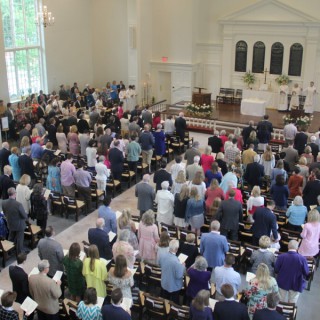
Message from Jonathan Pennington on February 9, 2025
This teaching was recorded from the gathering of The Heights Church in Denver, CO. To learn more about The Heights Church, you can go to TheHeightsDenver.com Everyone wants to live a life that flourishes but few know the pathway into that kind of life. Most people are living in spiritual, financial, relational and emotional ruin. In the Sermon on the Mount, Jesus gives us a vision for how we were made to live and serves as our guide on the pathway back to flourishing. As we walk the path with Jesus this Fall, we are going to find that the way into flourishing is different than most people think. In fact, in many ways it is the exact opposite of what we are told in our cultural moment. Jonathan Pennington describes it this way, “The Sermon's answer to the human-flourishing question is that true human flourishing is only available through communion with the Father God through his revealed Son, Jesus, as we are empowered by the Holy Spirit. This flourishing is only experienced through faithful, heart-deep, whole-person discipleship, following Jesus' teachings and life, which situate the disciple into God's community or kingdom.” D.A. Carson calls the Sermon on the mount “Jesus' confrontation with the world.” Each week we will look at a broken vision of flourishing and compare it with Jesus' vision in the Sermon. We will use Jesus' mnemonic device “You have heard that it was said, but I say to you” in order to compare and contrast the world's vision of flourishing with Jesus' vision of flourishing.
This teaching was recorded from the gathering of The Heights Church in Denver, CO. To learn more about The Heights Church, you can go to TheHeightsDenver.com Everyone wants to live a life that flourishes but few know the pathway into that kind of life. Most people are living in spiritual, financial, relational and emotional ruin. In the Sermon on the Mount, Jesus gives us a vision for how we were made to live and serves as our guide on the pathway back to flourishing. As we walk the path with Jesus this Fall, we are going to find that the way into flourishing is different than most people think. In fact, in many ways it is the exact opposite of what we are told in our cultural moment. Jonathan Pennington describes it this way, “The Sermon's answer to the human-flourishing question is that true human flourishing is only available through communion with the Father God through his revealed Son, Jesus, as we are empowered by the Holy Spirit. This flourishing is only experienced through faithful, heart-deep, whole-person discipleship, following Jesus' teachings and life, which situate the disciple into God's community or kingdom.” D.A. Carson calls the Sermon on the mount “Jesus' confrontation with the world.” Each week we will look at a broken vision of flourishing and compare it with Jesus' vision in the Sermon. We will use Jesus' mnemonic device “You have heard that it was said, but I say to you” in order to compare and contrast the world's vision of flourishing with Jesus' vision of flourishing.

New Testament scholar Dr. Jonathan Pennington joins Kaitlyn to talk about two big ideas: the kingdom of God and eternal life. Are these two things different? Can we have eternal life without the kingdom, or the kingdom without eternal life? Dr. Pennington helps us see how the life and teaching of Jesus point to the good news of God's just and loving reign over all things. - Sponsor - For 15% off first order of Blueland cleaning products, go to this link: https://www.blueland.com/CURIOUSLY - Sponsor - Better Help - Go to https://www.betterhelp.com/CURIOUSLY to receive 10% off your first month
This teaching was recorded from the gathering of The Heights Church in Denver, CO. To learn more about The Heights Church, you can go to TheHeightsDenver.com Everyone wants to live a life that flourishes but few know the pathway into that kind of life. Most people are living in spiritual, financial, relational and emotional ruin. In the Sermon on the Mount, Jesus gives us a vision for how we were made to live and serves as our guide on the pathway back to flourishing. As we walk the path with Jesus this Fall, we are going to find that the way into flourishing is different than most people think. In fact, in many ways it is the exact opposite of what we are told in our cultural moment. Jonathan Pennington describes it this way, “The Sermon's answer to the human-flourishing question is that true human flourishing is only available through communion with the Father God through his revealed Son, Jesus, as we are empowered by the Holy Spirit. This flourishing is only experienced through faithful, heart-deep, whole-person discipleship, following Jesus' teachings and life, which situate the disciple into God's community or kingdom.” D.A. Carson calls the Sermon on the mount “Jesus' confrontation with the world.” Each week we will look at a broken vision of flourishing and compare it with Jesus' vision in the Sermon. We will use Jesus' mnemonic device “You have heard that it was said, but I say to you” in order to compare and contrast the world's vision of flourishing with Jesus' vision of flourishing.
This teaching was recorded from the gathering of The Heights Church in Denver, CO. To learn more about The Heights Church, you can go to TheHeightsDenver.com Everyone wants to live a life that flourishes but few know the pathway into that kind of life. Most people are living in spiritual, financial, relational and emotional ruin. In the Sermon on the Mount, Jesus gives us a vision for how we were made to live and serves as our guide on the pathway back to flourishing. As we walk the path with Jesus this Fall, we are going to find that the way into flourishing is different than most people think. In fact, in many ways it is the exact opposite of what we are told in our cultural moment. Jonathan Pennington describes it this way, “The Sermon's answer to the human-flourishing question is that true human flourishing is only available through communion with the Father God through his revealed Son, Jesus, as we are empowered by the Holy Spirit. This flourishing is only experienced through faithful, heart-deep, whole-person discipleship, following Jesus' teachings and life, which situate the disciple into God's community or kingdom.” D.A. Carson calls the Sermon on the mount “Jesus' confrontation with the world.” Each week we will look at a broken vision of flourishing and compare it with Jesus' vision in the Sermon. We will use Jesus' mnemonic device “You have heard that it was said, but I say to you” in order to compare and contrast the world's vision of flourishing with Jesus' vision of flourishing.
This teaching was recorded from the gathering of The Heights Church in Denver, CO. To learn more about The Heights Church, you can go to TheHeightsDenver.com Everyone wants to live a life that flourishes but few know the pathway into that kind of life. Most people are living in spiritual, financial, relational and emotional ruin. In the Sermon on the Mount, Jesus gives us a vision for how we were made to live and serves as our guide on the pathway back to flourishing. As we walk the path with Jesus this Fall, we are going to find that the way into flourishing is different than most people think. In fact, in many ways it is the exact opposite of what we are told in our cultural moment. Jonathan Pennington describes it this way, “The Sermon's answer to the human-flourishing question is that true human flourishing is only available through communion with the Father God through his revealed Son, Jesus, as we are empowered by the Holy Spirit. This flourishing is only experienced through faithful, heart-deep, whole-person discipleship, following Jesus' teachings and life, which situate the disciple into God's community or kingdom.” D.A. Carson calls the Sermon on the mount “Jesus' confrontation with the world.” Each week we will look at a broken vision of flourishing and compare it with Jesus' vision in the Sermon. We will use Jesus' mnemonic device “You have heard that it was said, but I say to you” in order to compare and contrast the world's vision of flourishing with Jesus' vision of flourishing.
This teaching was recorded from the gathering of The Heights Church in Denver, CO. To learn more about The Heights Church, you can go to TheHeightsDenver.com Everyone wants to live a life that flourishes but few know the pathway into that kind of life. Most people are living in spiritual, financial, relational and emotional ruin. In the Sermon on the Mount, Jesus gives us a vision for how we were made to live and serves as our guide on the pathway back to flourishing. As we walk the path with Jesus this Fall, we are going to find that the way into flourishing is different than most people think. In fact, in many ways it is the exact opposite of what we are told in our cultural moment. Jonathan Pennington describes it this way, “The Sermon's answer to the human-flourishing question is that true human flourishing is only available through communion with the Father God through his revealed Son, Jesus, as we are empowered by the Holy Spirit. This flourishing is only experienced through faithful, heart-deep, whole-person discipleship, following Jesus' teachings and life, which situate the disciple into God's community or kingdom.” D.A. Carson calls the Sermon on the mount “Jesus' confrontation with the world.” Each week we will look at a broken vision of flourishing and compare it with Jesus' vision in the Sermon. We will use Jesus' mnemonic device “You have heard that it was said, but I say to you” in order to compare and contrast the world's vision of flourishing with Jesus' vision of flourishing.
This teaching was recorded from the gathering of The Heights Church in Denver, CO. To learn more about The Heights Church, you can go to TheHeightsDenver.com Everyone wants to live a life that flourishes but few know the pathway into that kind of life. Most people are living in spiritual, financial, relational and emotional ruin. In the Sermon on the Mount, Jesus gives us a vision for how we were made to live and serves as our guide on the pathway back to flourishing. As we walk the path with Jesus this Fall, we are going to find that the way into flourishing is different than most people think. In fact, in many ways it is the exact opposite of what we are told in our cultural moment. Jonathan Pennington describes it this way, “The Sermon's answer to the human-flourishing question is that true human flourishing is only available through communion with the Father God through his revealed Son, Jesus, as we are empowered by the Holy Spirit. This flourishing is only experienced through faithful, heart-deep, whole-person discipleship, following Jesus' teachings and life, which situate the disciple into God's community or kingdom.” D.A. Carson calls the Sermon on the mount “Jesus' confrontation with the world.” Each week we will look at a broken vision of flourishing and compare it with Jesus' vision in the Sermon. We will use Jesus' mnemonic device “You have heard that it was said, but I say to you” in order to compare and contrast the world's vision of flourishing with Jesus' vision of flourishing.
This teaching was recorded from the gathering of The Heights Church in Denver, CO. To learn more about The Heights Church, you can go to TheHeightsDenver.com Everyone wants to live a life that flourishes but few know the pathway into that kind of life. Most people are living in spiritual, financial, relational and emotional ruin. In the Sermon on the Mount, Jesus gives us a vision for how we were made to live and serves as our guide on the pathway back to flourishing. As we walk the path with Jesus this Fall, we are going to find that the way into flourishing is different than most people think. In fact, in many ways it is the exact opposite of what we are told in our cultural moment. Jonathan Pennington describes it this way, “The Sermon's answer to the human-flourishing question is that true human flourishing is only available through communion with the Father God through his revealed Son, Jesus, as we are empowered by the Holy Spirit. This flourishing is only experienced through faithful, heart-deep, whole-person discipleship, following Jesus' teachings and life, which situate the disciple into God's community or kingdom.” D.A. Carson calls the Sermon on the mount “Jesus' confrontation with the world.” Each week we will look at a broken vision of flourishing and compare it with Jesus' vision in the Sermon. We will use Jesus' mnemonic device “You have heard that it was said, but I say to you” in order to compare and contrast the world's vision of flourishing with Jesus' vision of flourishing.
This teaching was recorded from the gathering of The Heights Church in Denver, CO. To learn more about The Heights Church, you can go to TheHeightsDenver.com Everyone wants to live a life that flourishes but few know the pathway into that kind of life. Most people are living in spiritual, financial, relational and emotional ruin. In the Sermon on the Mount, Jesus gives us a vision for how we were made to live and serves as our guide on the pathway back to flourishing. As we walk the path with Jesus this Fall, we are going to find that the way into flourishing is different than most people think. In fact, in many ways it is the exact opposite of what we are told in our cultural moment. Jonathan Pennington describes it this way, “The Sermon's answer to the human-flourishing question is that true human flourishing is only available through communion with the Father God through his revealed Son, Jesus, as we are empowered by the Holy Spirit. This flourishing is only experienced through faithful, heart-deep, whole-person discipleship, following Jesus' teachings and life, which situate the disciple into God's community or kingdom.” D.A. Carson calls the Sermon on the mount “Jesus' confrontation with the world.” Each week we will look at a broken vision of flourishing and compare it with Jesus' vision in the Sermon. We will use Jesus' mnemonic device “You have heard that it was said, but I say to you” in order to compare and contrast the world's vision of flourishing with Jesus' vision of flourishing.
This teaching was recorded from the gathering of The Heights Church in Denver, CO. To learn more about The Heights Church, you can go to TheHeightsDenver.com Everyone wants to live a life that flourishes but few know the pathway into that kind of life. Most people are living in spiritual, financial, relational and emotional ruin. In the Sermon on the Mount, Jesus gives us a vision for how we were made to live and serves as our guide on the pathway back to flourishing. As we walk the path with Jesus this Fall, we are going to find that the way into flourishing is different than most people think. In fact, in many ways it is the exact opposite of what we are told in our cultural moment. Jonathan Pennington describes it this way, “The Sermon's answer to the human-flourishing question is that true human flourishing is only available through communion with the Father God through his revealed Son, Jesus, as we are empowered by the Holy Spirit. This flourishing is only experienced through faithful, heart-deep, whole-person discipleship, following Jesus' teachings and life, which situate the disciple into God's community or kingdom.” D.A. Carson calls the Sermon on the mount “Jesus' confrontation with the world.” Each week we will look at a broken vision of flourishing and compare it with Jesus' vision in the Sermon. We will use Jesus' mnemonic device “You have heard that it was said, but I say to you” in order to compare and contrast the world's vision of flourishing with Jesus' vision of flourishing.
This teaching was recorded from the gathering of The Heights Church in Denver, CO. To learn more about The Heights Church, you can go to TheHeightsDenver.com Everyone wants to live a life that flourishes but few know the pathway into that kind of life. Most people are living in spiritual, financial, relational and emotional ruin. In the Sermon on the Mount, Jesus gives us a vision for how we were made to live and serves as our guide on the pathway back to flourishing. As we walk the path with Jesus this Fall, we are going to find that the way into flourishing is different than most people think. In fact, in many ways it is the exact opposite of what we are told in our cultural moment. Jonathan Pennington describes it this way, “The Sermon's answer to the human-flourishing question is that true human flourishing is only available through communion with the Father God through his revealed Son, Jesus, as we are empowered by the Holy Spirit. This flourishing is only experienced through faithful, heart-deep, whole-person discipleship, following Jesus' teachings and life, which situate the disciple into God's community or kingdom.” D.A. Carson calls the Sermon on the mount “Jesus' confrontation with the world.” Each week we will look at a broken vision of flourishing and compare it with Jesus' vision in the Sermon. We will use Jesus' mnemonic device “You have heard that it was said, but I say to you” in order to compare and contrast the world's vision of flourishing with Jesus' vision of flourishing.
This teaching was recorded from the gathering of The Heights Church in Denver, CO. To learn more about The Heights Church, you can go to TheHeightsDenver.com Everyone wants to live a life that flourishes but few know the pathway into that kind of life. Most people are living in spiritual, financial, relational and emotional ruin. In the Sermon on the Mount, Jesus gives us a vision for how we were made to live and serves as our guide on the pathway back to flourishing. As we walk the path with Jesus this Fall, we are going to find that the way into flourishing is different than most people think. In fact, in many ways it is the exact opposite of what we are told in our cultural moment. Jonathan Pennington describes it this way, “The Sermon's answer to the human-flourishing question is that true human flourishing is only available through communion with the Father God through his revealed Son, Jesus, as we are empowered by the Holy Spirit. This flourishing is only experienced through faithful, heart-deep, whole-person discipleship, following Jesus' teachings and life, which situate the disciple into God's community or kingdom.” D.A. Carson calls the Sermon on the mount “Jesus' confrontation with the world.” Each week we will look at a broken vision of flourishing and compare it with Jesus' vision in the Sermon. We will use Jesus' mnemonic device “You have heard that it was said, but I say to you” in order to compare and contrast the world's vision of flourishing with Jesus' vision of flourishing.
This teaching was recorded from the gathering of The Heights Church in Denver, CO. To learn more about The Heights Church, you can go to TheHeightsDenver.com Everyone wants to live a life that flourishes but few know the pathway into that kind of life. Most people are living in spiritual, financial, relational and emotional ruin. In the Sermon on the Mount, Jesus gives us a vision for how we were made to live and serves as our guide on the pathway back to flourishing. As we walk the path with Jesus this Fall, we are going to find that the way into flourishing is different than most people think. In fact, in many ways it is the exact opposite of what we are told in our cultural moment. Jonathan Pennington describes it this way, “The Sermon's answer to the human-flourishing question is that true human flourishing is only available through communion with the Father God through his revealed Son, Jesus, as we are empowered by the Holy Spirit. This flourishing is only experienced through faithful, heart-deep, whole-person discipleship, following Jesus' teachings and life, which situate the disciple into God's community or kingdom.” D.A. Carson calls the Sermon on the mount “Jesus' confrontation with the world.” Each week we will look at a broken vision of flourishing and compare it with Jesus' vision in the Sermon. We will use Jesus' mnemonic device “You have heard that it was said, but I say to you” in order to compare and contrast the world's vision of flourishing with Jesus' vision of flourishing.
This teaching was recorded from the gathering of The Heights Church in Denver, CO. To learn more about The Heights Church, you can go to TheHeightsDenver.com Everyone wants to live a life that flourishes but few know the pathway into that kind of life. Most people are living in spiritual, financial, relational and emotional ruin. In the Sermon on the Mount, Jesus gives us a vision for how we were made to live and serves as our guide on the pathway back to flourishing. As we walk the path with Jesus this Fall, we are going to find that the way into flourishing is different than most people think. In fact, in many ways it is the exact opposite of what we are told in our cultural moment. Jonathan Pennington describes it this way, “The Sermon's answer to the human-flourishing question is that true human flourishing is only available through communion with the Father God through his revealed Son, Jesus, as we are empowered by the Holy Spirit. This flourishing is only experienced through faithful, heart-deep, whole-person discipleship, following Jesus' teachings and life, which situate the disciple into God's community or kingdom.” D.A. Carson calls the Sermon on the mount “Jesus' confrontation with the world.” Each week we will look at a broken vision of flourishing and compare it with Jesus' vision in the Sermon. We will use Jesus' mnemonic device “You have heard that it was said, but I say to you” in order to compare and contrast the world's vision of flourishing with Jesus' vision of flourishing.

In this insightful and inspiring episode of the Grace Enough Podcast, Amber Cullum welcomes Dr. Jonathan Pennington, a renowned biblical scholar, teacher, and pastor. Join us as Amber and Jonathan dive deep into faith journeys, the transformative power of college ministry, the essence of the Sermon on the Mount, and the nuances of discipleship. Their conversation is rich with wisdom, personal stories, and theological insights that are sure to uplift and encourage. SHOW NOTES CONT. https://www.graceenoughpodcast.com/matthew/ Follow Grace Enough on IG: https://www.instagram.com/graceenoughpodcast_amber/ Follow Grace Enough: https://www.facebook.com/graceenoughpodcast www.graceenoughpodcast.com Learn more about your ad choices. Visit podcastchoices.com/adchoices

For this episode, we interview Dr. Jonathan Pennington. Jonathan Pennington is associate professor of New Testament interpretation and director of research doctoral studies at The Southern Baptist Theological Seminary in Louisville, Kentucky, as well as the associate pastor of preaching at Sojourn Church East. He is the author of The Sermon on the Mount and Human Flourishing, Heaven and Earth in the Gospel of Matthew, and Reading the Gospels Wisely.Timestamps:3:18 - What were your initial impressions of the Bible?6:18 - How did you first learn to study the Bible?9:56 - Why did you decide to pursue seminary and doctoral work?14:15 - What drew you to write on the Sermon on the Mount?17:49 - What are the common misconceptions of the Sermon on the Mount?25:01 - What foundational things to know about the Gospels?29:16 - Why did you write the book Come and See?32:57 - Is the point of studying the Bible to put it into practice?35:33 - What does studying the Bible look like for you now?37:25 - What's your favorite Taylor era?DR. PENNINGTON'S BOOKS + RESOURCESThe Sermon on the Mount and Human Flourishing: A Theological CommentaryHeaven and Earth in the Gospel of MatthewReading the Gospels Wisely: A Narrative and Theological IntroductionJesus the Great Philosopher: Rediscovering the Wisdom Needed for the Good LifeCome and See: The Journey of Knowing God through ScriptureSmall Preaching: 25 Little Things You Can Do Now to Make Your Preaching Better Reading the New Testament as Christian Scripture: A Literary, Canonical, and Theological Survey “Have You Accepted Jesus as Your Lord and Philosopher?” on The Gospel Coalition“3 Things You Didn't Know About the Sermon on the Mount” on The Gospel CoalitionThe Human Flourishing podcast - Apple | Spotify MIDTOWN RESOURCESCheck out MidtownBiblicalLiteracy.com for videos, book recommendations, and Bible reading plansHow-to Study the Bible handoutHow to Study Historical Narrative handoutHow to Study Wisdom Literature handoutHow to Study the Prophets handoutHow to Study the Psalms handoutHow to Study the Gospels handoutSERMONSGhosts and Ancestors sermon series - Lexington | Downtown | Two NotchRuth sermon series - Lexington | Downtown | Two NotchWisdom sermon series - Lexington | Downtown | Two NotchHow Long O LORD series - Lexington | Downtown | Two NotchThe Psalms series - Lexington | Downtown | Two Notch The Gospels series - Lexington | Downtown | Two NotchTEXT-IN QUESTIONSThroughout the year, we want to know the concepts and passages you wrestle with. We'll answer some of these questions in podcast episodes throughout the year.To submit your topic or question, text either "DOWNTOWN", “LEXINGTON”, OR “TWO NOTCH” followed by your topic to 855-855-0655.Music by Levvy and Midtown MusicFind out more at Weird Tower Collective
In this episode, Dr. Jonathan Pennington, author and professor of New Testament Interpretation at Southern Seminary, discusses preaching the Gospels and the key themes and emphasis of each Gospel. He emphasizes the importance of recognizing the Gospels as narrative and shares his approach to preaching through the Gospels. We hope this episode is encouraging to you today! Let us know how this episode encouraged you or share any feedback you have by emailing us at pastorscenter@sebts.edu. Resources in this episode: Connect with Dr. Jonathan Pennington by visiting: https://www.jonathanpennington.com/ Small Preaching is available for purchase at: https://www.amazon.com/Small-Preaching-Little-Things-Preacher/dp/1683594711 You can check out his other books for purchase on Amazon at: https://rb.gy/8wdstt

Today we're reacting to Jen Wilkin and Jonathan Pennington's debate on public education vs. private education (hosted by the Gospel Coalition). We present this argument with its full context but break down some of what Jen Wilkin, who represents the pro-public-school side, says specifically. In response to Wilkin's claim that woke curriculum can be a fear-mongering tactic, we take a look at what's happening in schools even in red states. Wilkin also mentions that our decision on where to send our kids to school impacts our communities, but is that a fair argument for public schools, and does that put our own children at risk for the "good of community"? We cover other school choice considerations such as finances and at-home discipleship, then look at Wilkin's response on Twitter to some of the backlash against her position. Lastly, we look at the perspective of a show favorite, Voddie Baucham, who offers words of caution about sending children to public school. --- Links: The Gospel Coalition: "Should Christian Parents Send Their Children to Public Schools?" https://www.thegospelcoalition.org/video/good-faith-debates-public-schools/ The Dallas Express: "Parent Confronts Richardson ISD Over Sexual Content in Jr High Reading" https://dallasexpress.com/education/parent-confronts-richardson-isd-over-sexual-content-in-jr-high-reading/ Exodus Mandate: “Top Five Reasons NOT to Send Your Kids Back to Public School” https://exodusmandate.org/public-schools/top-five-reasons-not-to-send-your-kids-back-to-public-school --- Relevant Episodes: Ep 495 | The Truth About ‘Social Emotional Learning' & What Your Kids Are Reading | Guest: Sherry Clemens https://apple.co/3ZojXCD Ep 279 | The Corruption of Public Education & the Need for School Choice | Guest: Corey A. DeAngelis https://apple.co/3KD6cvX Ep 642 | DEBATE: Is Public School 'Grooming' a Conspiracy Theory? | Guest: Dr. Scott Coley https://apple.co/3EIMFGt Ep 639 | The Queerification of American Kids | Guest: James Lindsay https://apple.co/3xXDeiK --- Buy Allie's book, You're Not Enough (& That's Okay): Escaping the Toxic Culture of Self-Love: https://alliebethstuckey.com/book Relatable merchandise – use promo code 'ALLIE10' for a discount: https://shop.blazemedia.com/collections/allie-stuckey Learn more about your ad choices. Visit megaphone.fm/adchoices

Sermon on the Mount E3 – The Sermon on the Mount is one of five major speeches Jesus gives in the Gospel of Matthew, and there are many similarities between these speeches. What is Matthew doing in his gospel that is unique from the other gospels? And how does this shape his portrayal of Jesus? In this episode, Jon and Tim discuss how the Sermon on the Mount fits into the larger context of the Gospel of Matthew.View more resources on our website →Timestamps Chapter 1: Jesus' Five Speeches in Matthew (00:00-14:55)Chapter 2: How Matthew 5-7 and 23-25 Work Together (14:55-18:09)Chapter 3: The Structure of the Sermon on the Mount and Conclusion (18:09-22:55)Chapter 4: A Reading of the Sermon on the Mount (22:55-40:33)Referenced ResourcesInterested in more? Check out Tim's library here.You can experience our entire library of resources in the BibleProject app, available for Android and iOS.Show Music Original Sermon on the Mount music by Richie KohenBibleProject theme song by TENTSShow CreditsDan Gummel is the Creative Producer for today's show. Production of today's episode is by Lindsey Ponder, producer; Cooper Peltz, managing producer; Colin Wilson, producer; and Stephanie Tam, consultant and editor. Yanii Evans and Tyler Bailey are our audio editors. Tyler Bailey is also our audio engineer, and he provided our sound design and mix. JB Witty does our show notes, and Hannah Woo provides the annotations for our app. Special thanks to Jonathan Pennington. Today's hosts are Jon Collins and Michelle Jones.Powered and distributed by Simplecast.
© 2020-2026 Ivy Podcast Discovery LLC
