
Books which describe the life and teachings of Jesus

POPULARITY
Categories

2,020 episodes with Gospel

968 episodes with Gospel

1,969 episodes with Gospel

931 episodes with Gospel

677 episodes with Gospel

1,687 episodes with Gospel

1,059 episodes with Gospel

958 episodes with Gospel

1,555 episodes with Gospel

1,576 episodes with Gospel

1,499 episodes with Gospel

761 episodes with Gospel

2,011 episodes with Gospel

832 episodes with Gospel

1,029 episodes with Gospel

1,015 episodes with Gospel

1,409 episodes with Gospel

1,055 episodes with Gospel

1,168 episodes with Gospel

1,070 episodes with Gospel

1,006 episodes with Gospel

963 episodes with Gospel

1,095 episodes with Gospel

636 episodes with Gospel

728 episodes with Gospel

1,499 episodes with Gospel

896 episodes with Gospel

760 episodes with Gospel

886 episodes with Gospel

633 episodes with Gospel

1,301 episodes with Gospel

710 episodes with Gospel

629 episodes with Gospel

510 episodes with Gospel

487 episodes with Gospel

841 episodes with Gospel

613 episodes with Gospel

689 episodes with Gospel

682 episodes with Gospel

908 episodes with Gospel

435 episodes with Gospel

1,469 episodes with Gospel

714 episodes with Gospel

1,320 episodes with Gospel

258 episodes with Gospel

725 episodes with Gospel

720 episodes with Gospel

929 episodes with Gospel

663 episodes with Gospel

495 episodes with Gospel

543 episodes with Gospel

365 episodes with Gospel

354 episodes with Gospel

452 episodes with Gospel

Sujo John: Surviving 9/11, Finding Purpose, and Living the Gospel Out LoudIn this week's Team Never Quit Podcast, Marcus and Melanie meet with Sujo John, who, on the morning of September 11, 2001, went to work on the 81st floor of Tower 1 of the World Trade Center carrying a question that had been weighing heavily on his heart: What is my purpose?Just months earlier, Sujo and his wife, Mary, had moved from India to begin a new life in America. They were expecting their first child, building successful careers, and seemingly living the American dream. Sujo worked in the North Tower of the World Trade Center, while Mary worked on the 71st floor of the South Tower.Yet despite everything going well, Sujo felt an unmistakable emptiness. He believed God had a greater calling on his life but had no idea what that calling would look like.At 8:05 a.m. on September 11, Sujo sent an email to a friend at church describing his search for meaning and purpose.Less than an hour later, everything changed.American Airlines Flight 11 slammed into the North Tower. Sujo's office filled with smoke, fire, shattered debris, and chaos. As terrified employees searched for a way out, Sujo began the long descent down the stairwell, surrounded by hundreds of people trying to escape—and firefighters and police officers heading in the opposite direction toward the devastation. All the while, Sujo could think of only one person: Mary. He had no way of knowing whether she was alive.After escaping Tower 1, Sujo began making his way toward Tower 2 to find her. Then the unimaginable happened. The South Tower collapsed. Standing near the base of the building, Sujo found himself surrounded by people as the massive structure came crashing down around them. In those terrifying moments, he began praying and felt compelled to tell the people nearby to call on the name of Jesus.Soon, voices around him were crying out, "Jesus!" When the dust settled, Sujo found himself buried in several feet of white soot and broken glass—but alive. Through the darkness and debris, he encountered a man lying face down who had a flashlight. Sujo encouraged him to get up and keep moving. When the man stood, Sujo noticed the letters FBI on his jacket.Together, the two men held hands and walked through the near-zero visibility until they spotted the flashing lights of an ambulance and eventually found their way to safety.But Sujo still didn't know whether Mary had survived. Then his phone rang. It was Mary.In an extraordinary turn of events, her train had arrived at the World Trade Center subway station just minutes after the first plane struck. She had never made it inside Tower 2. Both had survived.Standing together later that day and looking back at the smoking ruins of the buildings where they had worked, Sujo and Mary realized that the promises they had separately made to God during those terrifying hours would define the rest of their lives.They would dedicate themselves completely to Him.From Survival to CallingSeptember 11 became the defining turning point in Sujo John's life.What began that morning as a search for purpose became a calling to share the Gospel around the world. Sujo and Mary devoted their lives to ministry, sharing their testimony in churches throughout America and internationally.Their ministry also developed a deep commitment to helping people who are often overlooked and forgotten, including women and girls rescued from the sex industry in India through the House of Rahab.For Sujo, surviving 9/11 was never simply about being given another day to live. It was about being given another opportunity to live with purpose.And his message to Christians today is challenging:The Gospel was never intended to remain inside church walls.Believers are called to make their faith visible—to serve their communities, invest in the next generation, and become the hands and feet of Jesus to the people around them.In This EpisodeSujo shares the extraordinary story of escaping the World Trade Center on September 11, the desperate search for his wife, the prayers that rose from the rubble, and the miraculous phone call revealing that Mary was alive.He also discusses the deeper story behind that day—his lifelong questions about suffering, his search for purpose, and the calling that emerged from one of the darkest moments in American history.This conversation is ultimately about more than survival. It's about purpose. It's about faith when life stops making sense. And it's about what happens when someone decides that the life they've been given will be spent serving something greater than themselves.Support Sujo:- IG: https://www.instagram.com/sujojohnofficial?igsi=MW5ibmVidGJkd3N0Zg==Sujo John - https://sujojohn.com/YouCanFreeUs - https://youcanfreeus.org/ I Am Second Story - https://www.youtube.com/watch?v=CryxwzBuldcSupport TNQ - IG: team_neverquit , marcusluttrell , melanieluttrell , huntero13 - https://www.patreon.com/teamneverquitSponsors: - Navyfederal.org - Dripdrop.com/TNQ- vinted.com/TNQ - davidprotein.com/TNQ- quo.com/TNQ - mengotomars.com [Team Never Quit] - bubsnaturals.com [Promo code TNQ] - mizzenandmain.com [Promo code: TNQ20] - masterclass.com/TNQ - ShopMando.com [Promo code: TNQ] - Tractorsupply.com/hometownheroes - meetfabiric.com/TNQ - Prizepicks (TNQ) - armslist.com/TNQ - PXGapparel.com/TNQ - bruntworkwear.com/TNQ - shipsticks.com/TNQ - stopboxusa.com {TNQ} - Tonal.com [TNQ] - greenlight.com/TNQ - drinkAG1.com/TNQ - Hims.com/TNQ

In the construction world, a "sole plate" is a small but integral piece of wood that sits on top of a foundation. Without it, you simply couldn't build the floors or walls above. Guest teacher Aaron Pierce uses this illustration to reveal a vital, foundational step we often miss when sharing our faith. Discover how this principle helps us connect our lost friends to the anchoring hope of the Gospel.ResourcesMessage NotesSpecial OffersConnect888-333-6003WebsiteChip Ingram AppInstagramFacebookYouTubePartner With UsDonate Online888-333-6003Guest Speaker BioAaron Pierce is the International Mission Director of Steiger International, a rapidly-growing, worldwide mission organization that is called to reach and disciple the Global Youth Culture for Jesus. Steiger is active in over 100 cities around the world within the regions of Europe, Eurasia, Central Asia, the Middle East, East Asia, South America, Australasia, and North America.

Fred Hammond is one of the biggest names in Gospel music, with 15 Grammy awards, and a career that spans over 40 years, from playing bass in The Winans to more recently his Tiny Desk Concert. His songs are loved by Christians around the world, and gospel fan and radio presenter Swarzy Shire wants to learn more about the man behind the music and how his faith has kept inspiring that music. Fred has faced ups and downs publicly from his divorce and the impact that has had on his family, to his physical suffering with multiple knee operations and a fall from stage just two years ago. He shares with Swarzy how his faith and music have helped him overcome the painful periods in his life.

Faith is not passive. For faith to work, three forces must move together: corresponding action, words aligned with God's Word, and unwavering commitment.In this episode of More Than Conquerors, Terry and Reneé Mize explain why simply having faith is not enough—and how to put that faith into motion.You'll discover:• Why James says faith without works is dead• How your words reveal and direct what you truly believe• Why commitment keeps faith moving until the answer comes• How Terry's 2004 Cuba Christmas-tree mission demonstrates all three principles in actionIf you have been asking why your faith is not producing results, this message gives you a clear biblical framework: act on God's Word, speak God's Word, and stay committed until you see the victory.WATCH THE VIDEO:https://youtu.be/ca9-gUK7GQoFEATURED RESOURCE — THE IRON DID SWIMCD: https://shop.terrymize.com/products/copy-of-the-iron-did-swim-cdAudio Download: https://shop.terrymize.com/products/the-iron-did-swim-audio-downloadCONNECT WITH TERRY MIZE MINISTRIESWebsite: https://terrymize.comPodcast: https://terrymize.com/podcastFacebook: https://cutt.ly/terrymizeministries-FACEBOOKYouTube: https://youtube.com/user/terrymizeministriesOrphan outreach: https://orphan1.comGive: https://cutt.ly/ttW2I5ZFor more than five decades, Dr. Terry L. Mize has carried the Gospel to the nations as a missionary, minister, and mentor. Together, Terry and Reneé equip believers with biblical truth, real-world testimonies, and practical faith for living as more than conquerors.#TerryMize #ReneeMize #MoreThanConquerors #FaithThatWorks #FaithInAction #BiblicalFaith #WordOfGod #TerryMizeMinistries

Collapsed roads strand thousands beyond easy reach in flood-ravaged Nepal, while a 25-year counterterrorism review asks whether America is ready for threats armed with drones and AI. A prenatal screen can raise life-and-death questions before diagnosis. Plus: an electrician spends six hours trapped inside a 130-foot truck-stop sign, musicians make joy from wind and steam, Daniel Suhr considers the leverage behind Seattle's narrowly averted teachers strike, and the Thursday morning news.Support The World and Everything in It today at wng.org/donate.Additional support comes from Cedarville University—a Christ-centered, academically rigorous university located in southwest Ohio, equipping students for Gospel impact across every career and calling. Cedarville integrates a biblical worldview into every course in the more than 175 undergraduate and graduate programs students choose from. New online undergraduate degrees through Cedarville Online offer flexible and affordable education grounded in a strong Christian community that fosters both faith and learning. Learn more at cedarville.edu, and explore online programs at cedarville.edu/online.From World Watch. A 10-minute daily news program that explores current events for students 5-12th grade. This high-energy show connects learners to the present, history and communities around the world. Join 40,000 Christian families that utilize World Watch as a tool to foster curiosity and have conversations about today's news as a discipleship rhythm within their families. “Whatever the news, the purpose of the Lord will stand!” First time? Take advantage of a 30-days free trial at worldwatch.news/podcast. Not ready to sign up? Check out a free episode at get.worldwatch.news/free-episode. And from Boyce College—a Christ-centered education built on the truth of God's Word. Every student—no matter their major—takes 30 hours of Bible and theology, learning how to think biblically, live faithfully, and lead with conviction. Formed from the 160-year legacy of Southern Seminary, Boyce College prepares students for maximum faithfulness in the world, the workplace, the church, and the family. Learn more at boycecollege.com
When Jesus suddenly returns, will your response be different from your unbelieving friends? It should be! Find out why, and learn how anticipating Christ's return should affect how you live right now. That's the focus on Truth For Life with Alistair Begg. ----------------------------------------- • Click here and look for "FROM THE SERMON" to stream or read the full message. • This program is part of the series A Study in 1 Thessalonians, Volume 2' • Learn more about our current resource, request your copy with a donation of any amount. • If you struggle to pray because your mind drifts, you don't know what to say, or you even question if God is listening and able to answer, transform your prayer life by learning to pray like the apostle Paul! ‘Download the free audiobook Pray Big by Alistair Begg.' Helpful Resources - Learn about God's salvation plan - Read our most recent articles - Subscribe to our daily devotional Follow Us YouTube | Instagram | Facebook | X This listener-funded program features the clear, relevant Bible teaching of Alistair Begg. Today's program and nearly 3,000 messages can be streamed and shared for free at tfl.org thanks to the generous giving from monthly donors called Truthpartners. Learn more about this Gospel-sharing team or become one today. Thanks for listening to Truth For Life!
Today's reading is Luke 2:41-52, Mark 1:2-8, Matthew 3:1-12, Luke 3:1-18, Mark 1:9-11, Matthew 3:13-17, Luke 3:21-22, Mark 1:12-13, Matthew 4:1-11, Luke 4:1-5, and John 1:19-34. . . . . This month, we will be reading from the NIV Bible Chronological Bible. . . . . Your ratings and reviews help us spread the Gospel to new friends! If you love this podcast, rate the podcast on Apple Podcasts and leave us a brief review! You can do the same on Spotify and on Google Podcasts as well. Learn more about your ad choices. Visit megaphone.fm/adchoices

CheckoutThe God Centered Concept Academy Training Community to learn what growth in Christ isTUVU CommunitiesCheck out this link to view Kingdom Cross Roads on TV.https://jesussaid.tv/?affiliate=tswright_gccTo get a copy of our new book "Embracing the Truth" or to have TS Wright speak at your event or conference or if you simply want spiritual or life coaching or just a consultation visit:www.tswrightspeaks.comVisit our website to learn more about The God Centered Concept. The God Centered Concept is designed to bring real discipleship and spreading the Gospel to help spark the Great Harvest, a revival in this generation.www.godcenteredconcept.comKingdom Cross Roads Podcast is a part of The God Centered Concept.What does Scripture really reveal about the role of women in God's redemptive plan?Recorded at CPE Summer 2026, TS Wright welcomes author and Bible teacher Jamie Hulker to Kingdom Cross Roads Podcast for a conversation about God's purpose, calling, and esteem for women throughout Scripture.Jamie shares her journey from growing up in the church to studying Scripture deeply, serving in missions, attending seminary, writing Bible studies, and eventually addressing one of the most discussed issues in the modern Church: the biblical role and significance of women.The conversation highlights Jamie's books, including Esteemed: God and His View of Women and Entrusted: Women in God's Redemptive Plan – Profoundly Loved, Purposefully Included.Rather than approaching the subject as a political or theological battleground, Jamie emphasizes returning to Scripture and examining how God actually worked through women from Genesis through the early Church.TS and Jamie discuss biblical examples including Deborah, Mary Magdalene, Lydia, Phoebe, Priscilla, Junia, and the women Paul identifies as coworkers and hard workers in the Gospel.A major focus of the episode is Mary Magdalene. She faithfully followed Jesus through His crucifixion, witnessed His burial, encountered the risen Christ, and was entrusted with the extraordinary responsibility of announcing His resurrection.The episode also examines how cultural assumptions can sometimes influence Christian interpretation and why believers should distinguish biblical teaching from traditions that may have developed later.Jamie's central message is simple but powerful: God is better than we have imagined, He profoundly loves women, and He purposefully includes them in His redemptive work.This conversation encourages both men and women to recognize that God works through willing, faithful believers and that the Body of Christ is strongest when believers honor one another while keeping Jesus and His redemptive mission at the center.In This EpisodeJamie Hulker's personal faith journeyStudying Scripture verse by verseWomen throughout God's redemptive planDeborah's leadership in JudgesMary Magdalene and the resurrection of JesusLydia and the Gospel entering EuropePhoebe, Priscilla, Junia, and Romans 16Paul's relationship with female coworkersBiblical calling versus cultural expectationsWhy secondary theological issues should not divide the ChurchMen and women working together in the Body of ChristFaithfulness, obedience, calling, and Christian purposeRestoring biblical conversations that honor God and one anotherKeywords / TagsJamie Hulker, Kingdom Cross Roads Podcast, Kingdom Crossroads Podcast, TS Wright, CPE Summer 2026, Christian Product Expo, women in the Bible, women in ministry, women in God's redemptive plan, biblical women, Mary Magdalene, Deborah in the Bible, Lydia Bible, Phoebe Romans 16, Priscilla and Aquila, Junia Bible, Romans 16 women, Apostle Paul women, Paul and women, Christian women, women of faith, women and Christianity, biblical womanhood, Christian leadership, women in church leadership, women in the early church, God's purpose for women, God's calling, redemptive plan, Body of Christ, Christian discipleship, Bible study, Christian author, Christian books, Christian podcast, Christian interviews, biblical theology, biblical equality, spiritual calling, Gospel of Jesus Christ, resurrection of Jesus, Great CommissionCall to ActionAre you ready to look again at what Scripture says about the men and women God uses to accomplish His purposes? Explore Jamie Hulker's books Esteemed and Entrusted, share this episode with someone who wants to go deeper into God's Word, and subscribe to Kingdom Cross Roads Podcast for more biblical teaching, Christian authors, testimonies, and conversations designed to strengthen your faith and equip you for your Kingdom purpose.Follow, subscribe, and share Kingdom Cross Roads Podcast—and help us take the message of Jesus Christ to the crossroads of culture, faith, and everyday life.

NOTE: When you sign up for Patreon, PLEASE do it through a web browser (Safari, Chrome, etc.) and NOT an app on your iPhone. The Apple app charges 30% !!! If you just click on the link above, it should be fine. In today's episode, Becket Cook interviews Dr. Paul Weaver about his book Faith Affirming Findings: 50 Archaeological Discoveries That Validate the Historicity and Reliability of Scripture. They cover finds that silenced Bible skeptics: the Tel Dan House of David stele confirming King David’s dynasty, the Nabonidus Cylinder and Chronicle proving Belshazzar and explaining Daniel 5’s third-in-power offer, the first-century Magdala synagogue showing synagogues existed before AD 70, Yehohanan’s crucified heel bone with iron nail verifying Gospel nailing and burial accounts, the Thessalonica politarch inscription confirming Luke’s accuracy in Acts 17, the ornate Caiaphas ossuary of the high priest who condemned Jesus, and the Pontius Pilate inscription from Caesarea Maritima. These biblical archaeology discoveries from Tel Dan, Babylon, Galilee, Jerusalem, and Caesarea affirm real people, places, and events in Scripture, strengthening confidence in the Bible’s historicity for pastors, teachers, and students. Paul Weaver's Book: https://a.co/d/0dNqTFAk The Becket Cook Show Ep. 252 Discover more Christian podcasts at lifeaudio.com and inquire about advertising opportunities at lifeaudio.com/contact-us.

New Gospel Bracelet – You can change people's lives by sharing the Good News of Jesus. These bracelets are a simple and clear way to do that. They've been used as an evangelism tool for nearly 200 years! For this bracelet, each of the 5 colors stand for a single word which gives a starting point to tell part of the Gospel story. Red is for blood – the blood of Jesus's death on that cross takes away our sin. White is for purification – Jesus did not stay dead. And just like Jesus came back to life, God can make us new people without sin. Green is for growth – just like you grow up as a human, you grow in your new spiritual life in Jesus. And last, but certainly not least, gold is for heaven – Jesus's people will be with Him forever. In heaven, there will be no more pain, no more sadness, and no more sin. Thank you for stepping out in faith to share the Gospel of Jesus Christ. Each bracelet comes with a description card and check out the video below for deeper explanations behind each color. Get one for you and a friend! Use the coupon code: RADIOGIFT for free shipping! *Limit two per person* Click here to receive today's free gift on the Radio Page --------Thank you for listening! Your support of Joni and Friends helps make this show possible. Joni and Friends envisions a world where every person with a disability finds hope, dignity, and their place in the body of Christ. Become part of the global movement today at www.joniandfriends.org. Find more encouragement on Instagram, TikTok, Facebook, and YouTube.

Peace the World Can't Give: The Promise of the Holy Spirit – John 14:15–31 In Episode 150 of Divine Table Talk, Jamie and Jane finish John 14 with one of Jesus' greatest promises: we will never have to walk alone. As Jesus prepares His disciples for His departure, He promises the coming of the Holy Spirit—the Advocate, Helper, and Teacher who will remain with them and remind them of everything Jesus has taught. Then, in the middle of uncertainty about what comes next, Jesus gives them something the world cannot manufacture: His peace. Together, Jamie and Jane explore what it means to recognize the presence of the Holy Spirit in our everyday lives, how love for Jesus shapes our obedience, and the difference between temporary peace based on circumstances and the lasting peace that comes from Christ. Jesus never promised His followers a life without trouble, questions, or uncertainty. He promised something better: His presence in the middle of it. If your heart has been anxious, overwhelmed, or searching for peace, pull up a chair. John 14 reminds us that we have a Helper, we have His presence, and we have a peace the world cannot give. Reflection Question: Am I looking to my circumstances to give me peace—or am I learning to receive the peace Jesus has already given me? ____________________________________ Connect with Jamie: Website: www.jamieklusacek.com Instagram: https://www.instagram.com/jamieklusacek Connect with Jane: Website: www.janewwilliams.com Instagram: https://www.instagram.com/janewwilliams
https://wels2.blob.core.windows.net/daily-devotions/20260903dev.mp3 Listen to Devotion For in this hope we were saved. But hope that is seen is no hope at all. Who hopes for what they already have? Romans 8:24 Saved In Hope When you say, “I hope so,” what do you mean? “I hope the traffic isn’t bad…I hope it doesn’t rain.” It’s a wish more than a guarantee. That is not the hope in our Bible verse today: “In this hope we were saved.” Notice the tense. We were saved. Jesus has already accomplished everything necessary for our salvation. On the cross, he declared, “It is finished.” He paid for every sin. He declared that whoever believes in him already has eternal life. So, if we are already saved, why do we still hope? Because while our salvation is complete, it has not yet been fully revealed. We possess God’s promises by faith, but we have not yet seen their fulfillment with our eyes. Think of a child on Christmas Eve. The gifts are already under the tree. They can see their name on the presents. Yet the child still waits eagerly for morning, longing to unwrap what has already been bought. So, too, our inheritance is already ours because of Christ. Yet we eagerly await the day when every promise is opened before us. That is why Paul says, “Hope that is seen is no hope at all.” If we could already see heaven, there would be no need for hope. If our bodies had already been raised, there would be no need for waiting. But we're not there yet. So, what do we do now? We live by God's promises, trusting that God's Word speaks a reality greater than what our eyes can see. A hospital room doesn’t look like victory, but Jesus says, “Your body will rise.” Tears of loneliness shed on a pillow don't look comforting, but Jesus says, “You are my child.” One day hope will no longer be necessary. Faith will become sight when we see Jesus’ face and rejoice in the glory that cannot be compared to present suffering. Until that day, we live in hope—not because we are guessing what the future holds, but because we know the One who holds the future. Prayer: Lord Jesus, thank you for accomplishing my salvation completely. When my eyes are fixed on the troubles of this world, turn my heart again to your sure promises. Amen. Daily Devotions is brought to you by WELS. This work is licensed under a Creative Commons Attribution-Noncommercial-No Derivative Works 3.0 United States License. All Scripture quotations, unless otherwise indicated, are taken from the Holy Bible, New International Version®, NIV®. Copyright ©1973, 1978, 1984, 2011 by Biblica, Inc. ™ Used by permission of Zondervan. All rights reserved worldwide.
As Jesus continues teaching in the temple in Holy Week, the religious leaders demand that Jesus state His authority for acting and speaking in the manner He does. Marvelously evading their trap, Jesus sets a trap of His own as He asks about the source of John's baptism. When the religious leaders refuse to answer, Jesus refuses to answer their question directly. Instead, He begins a series of parables that shows the faithlessness of the religious leaders. Although they should have been sons of God, they have refused to listen to God by refusing the preaching of both John and Jesus, while notorious sinners have been welcomed into God's kingdom for receiving their preaching joyfully. Rev. Kale Hanson, pastor at Zion Lutheran Church and School in Bethalto, IL, joins host Rev. Timothy Appel to study Matthew 21:23-32. To learn more about Zion Lutheran, visit zionbethalto.org. “The Reign of Heaven Stands Near” is a series on Sharper Iron that studies the Gospel according to St. Matthew. The first evangelist proclaims that God has fulfilled His Old Testament promises by sending Jesus to bring the reign of the heavens among us. As the Son of David, Jesus is the gracious King we need, and as the Son of Abraham, Jesus is the blessing to all the families of the earth. Sharper Iron, hosted by Rev. Timothy Appel, looks at the text of Holy Scripture both in its broad context and its narrow detail, all for the sake of proclaiming Christ crucified and risen for sinners. Two pastors engage with God's Word to sharpen not only their own faith and knowledge, but the faith and knowledge of all who listen. Pastor Appel serves at Faith Lutheran Church in Godfrey, IL. Learn more at flcgodfrey.org. Submit comments or questions to: listener@kfuo.org

In this first episode of a new series, Essentials of the Local Church, Mark and Emily introduce the "why" behind the series and dig into the first essential: Gospel Friendship. They explore why church practices can feel strange in a post-Christian culture, unpack some of the New Testament's 50+ "one another" commands, and get practical about how to actually build gospel friendships as a busy adult.Episode Highlights01:52 — Why the Christian life was never meant to be a solo sport02:35 — Why churchy practices like potlucks and baptism can feel strange today03:22 — An ancient accusation: why outsiders mocked early Christian "love feasts"04:13 — Defining gospel friendship, and what makes it different from a regular friendship06:26 — The New Testament's "one another" commands08:13 — The real barrier to friendship: what we treasure over people09:02 — How individualistic modern life works against community, from garages to Bowling Alone11:52 — Two first steps for finding a gospel friend14:38 — Resetting expectations for what a small group actually feels like16:47 — Falling in love with the idea of friendship vs. loving the real, flawed person in front of you19:39 — Three ways to keep pursuing friendship as life gets busier22:33 — Seeing people as image bearers instead of interruptionsResourcesCornerstone Sermons: Listen OnlineBowling Alone by Robert D. PutnamThe Art of One-Anothering: How the Church Loves Like Christ — Desiring GodCornerstone GroupsAsk Mark a Question!Suggest a topic or question for Mark to discuss on a future episode of the Equip Podcast!

In Brazil, BTJ joins a Christian hackers conference focused on using technology for missions. Hackers attending the conference work on solutions for moving funds to missionaries, getting Bibles into closed countries, and using AI, software, and other skills to help spread the Gospel.

Jasun Horsley is an author and existential detective, hell-mapper and God-fathomer who has spent the past forty years trying to solve the riddle of being human. His many books include, but are not limited to: Paper Tiger, Seen and Not Seen, Prisoner of Infinity, Dark Oasis, Vice of Kings, 16 Maps of Hell, The Kubrickon, Big Mother: The Technological Body of Evil, and The Gospel of Job (2026) (which is the subject of this podcast). Jasun also has a substack: https://childrenofjob.substack.com/ and weekly podcast, The Jobcast, which can be acessed at: https://childrenofjob.com/ He can be reached at: jasun@protonmail.com. This podcast is available on your favorite podcast platform, or here: https://endoftheroad.libsyn.com/episode-353-jasun-horsley-gospel-of-jobprimordial-chaos Have a blessed weekend!

Pastor JD today discusses the purpose of prophecy. God didn’t put prophecy in His word for fun, or for casual, light reading, but as a warning and a heads-up for us! God desires to see us prepare for the coming days – challenges and blessings included – so that we may share the Gospel effectively with as many people as possible!
Solomon, the wisest man to ever live, gave us treasured knowledge and proverbs to last a lifetime. But he didn't abide by any of them. Jesus, however, embodied all the wisdom of God and overcame what Solomon could not.Sign up for special devotionals at StoriesoftheMessiah.com.As we dive deeply into iconic Bible heroes' enthralling narratives, we find more than just stories of faith and miracles. We discover a recurrent theme, a spiritual undertone that connects each tale to the grandeur of the Gospel.They're not just standalone legends; they're threads in a divine tapestry, weaving a story that foreshadows Jesus Christ, the ultimate hero, the promised Messiah who brings light to the darkest corners of history.For more Bible stories download the Pray.com app. To learn more about Rabbi Schneider visit https://discoveringthejewishjesus.com/ Learn more about your ad choices. Visit podcastchoices.com/adchoices

What are people actually encountering when they use psychedelics like DMT and ayahuasca?In Episode 50 of Ancient Roots of Life & Wellness, JT and Josh dive into the strange connection between psychedelics, spiritual entities, ancient witchcraft, fallen angels, and the biblical supernatural worldview.We also explore the mysterious Loretto staircase and the possibility of supernatural involvement in ancient construction before continuing our study through the Gospel of Nicodemus, also known as the Acts of Pilate.The text expands upon the trial of Jesus, the testimony of those He healed, Pilate's confrontation with the Jewish leaders, Barabbas, Nicodemus, Joseph of Arimathea, and events surrounding the crucifixion.Are some of the things modern culture calls “aliens,” hallucinations, or altered states actually spiritual phenomena?And how much of the supernatural worldview of the ancient world have we simply forgotten?Join us as we dig into the Ancient Roots.#AncientRoots #GospelOfNicodemus #DMT #FallenAngels #Bible #Ayahuasca #ActsOfPilate #SpiritualWarfare00:00 — Proverbs, Vampires & “Wicked Offspring”05:00 — Is Batman a Spirit of Fear?10:30 — Batman, Joker & the Gods of Fear18:00 — Fight Club, Demonic Possession & False Reality23:00 — Aliens, Ayahuasca & Spiritual Entities31:30 — Graham Hancock & the “Vine of the Dead”38:00 — Psychedelics, Witchcraft & Pharmakeia46:00 — The Mysterious Staircase Built by an Angel?52:00 — Supernatural Ancient Architecture56:45 — Gospel of Nicodemus / Acts of Pilate1:12:00 — A Forgotten Sign of the Messiah?1:14:00 — Pilate, Barabbas & the Trial of Jesus1:28:50 — Nicodemus & Joseph of ArimatheaBecome a supporter of this podcast: https://www.spreaker.com/podcast/jt-s-mix-tape--6579902/support.Please support our sponsor Modern Roots Life: https://modernrootslife.com/?bg_ref=rVWsBoOfcFPatreon: https://patreon.com/JT_Follows_JC?utm_medium=unknown&utm_source=join_link&utm_campaign=creatorshare_creator&utm_content=copyLinkJESUS SAID THERE WOULD BE HATERS: https://jtfollowsjc.com/product-category/mens-shirts/JT's Hats: https://jtfollowsjc.com/product-category/hats/Coaching Program: https://www.echoesoftruthnetwork.com/joinTelegram Group: https://t.me/jtsmixtapeNew Trucker Hat: https://www.shopmmca.com/shop/p/jt-follows-jc-hat
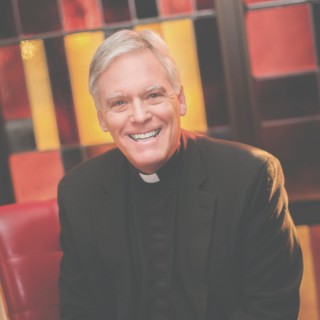
Hello and thank you for making time for my Gospel reflection this week. I truly appreciate your time and interest.I wish you a blessed day.Fr. Kennedy

Galatians 2:20 is more than Jesus dying for you—it's you dying with Him. In this clip, Andrew reveals the neglected half of the cross: the old you is gone, and Christ is now your life.

The Gospel of Mark is one of four Gospels written about the life and ministry of Jesus. This amazing book was written by John Mark, who was a close associate of Peter, and who served with Barnabas and Paul on their first missionary journey. Join Jerry as he walks through this book and gives insight along the way about how you can apply it in your every day life. You can also take your daily Bible reading to another level with The New Testament Daily with Jerry Dirmann—so grab your Bible and let's get started! ------- Thank you for joining us today! For more resources like this, or to support the ministry of Solid Lives, visit one of the links below: LINKS: « FREE MEDIA LIBRARY » To listen to or download more teachings from Jerry and others from Solid Lives ministries, visit our new media library at: https://app.jesusdisciple.com/jesus-way/media-library « THE NEW TESTAMENT DAILY PODCAST » https://thenewtestamentdailywithjerrydirmann.buzzsprout.com « SOLID LIVES » Find out more about the ministries of Jerry Dirmann and Solid Lives at https://www.solidlives.com/ « SUPPORT » You can help us get free resources like this out to more people. Visit https://pushpay.com/g/jdglobal Thank you for joining us today! For more resources like this, or to support the ministry of Solid Lives, visit one of the links below:FREE MEDIA LIBRARY » Download or listen at https://SolidLivesMedia.com/ ABOUT SOLID LIVES » Find out more at https://www.solidlives.com/SUPPORT » Help us get the word out at https://solidlives.com/give/

When Jesus suddenly returns, will your response be different from your unbelieving friends? It should be! Find out why, and learn how anticipating Christ's return should affect how you live right now. That's the focus on Truth For Life with Alistair Begg. ----------------------------------------- • Click here and look for "FROM THE SERMON" to stream or read the full message. • This program is part of the series A Study in 1 Thessalonians, Volume 2' • Learn more about our current resource, request your copy with a donation of any amount. • If you struggle to pray because your mind drifts, you don't know what to say, or you even question if God is listening and able to answer, transform your prayer life by learning to pray like the apostle Paul! ‘Download the free audiobook Pray Big by Alistair Begg.' Helpful Resources - Learn about God's salvation plan - Read our most recent articles - Subscribe to our daily devotional Follow Us YouTube | Instagram | Facebook | X This listener-funded program features the clear, relevant Bible teaching of Alistair Begg. Today's program and nearly 3,000 messages can be streamed and shared for free at tfl.org thanks to the generous giving from monthly donors called Truthpartners. Learn more about this Gospel-sharing team or become one today. Thanks for listening to Truth For Life! To support this ministry financially, visit: https://www.oneplace.com/donate/163/29?v=20251111

Do you have any favorite clothing or food brands? If so, the company likely used some celebrity to showcase why their product is great. For example, “Our sports drink gives you the energy to shoot consistent 3-pointers. Just ask Michael Jordan.” Having a good example helps drive sales for companies. Today, Pastor Mark will teach that you ought to be a good example for Christ. Preaching the Gospel is one thing, but living it out makes it that much more appealing to others. The world is watching your actions to see if they line up with your beliefs. Will they find a true believer? Or will they just find empty words?
Hunter Baker has more Washington than Wednesday can hold: Pentagon upheaval, the politics of AI data centers, Social Security's looming reckoning—and a lightning round besides. In Venezuela, an earthquake exposes a crisis years in the making, while Mary Muncy looks past Dolly Parton's carefully built image to the faith and roots beneath it. Plus: cheaper raccoon permits, and Maria Baer on the friend who asks, and Wednesday morning news.Support The World and Everything in It today at wng.org/donate.Additional support comes from Boyce College—which offers a Christ-centered education built on the truth of God's Word. Every student—no matter their major—takes 30 hours of Bible and theology, learning how to think biblically, live faithfully, and lead with conviction.Formed from the 160-year legacy of Southern Seminary, Boyce College prepares students for maximum faithfulness in the world, the workplace, the church, and the family.Learn more at boycecollege.comFrom World Watch. A 10-minute daily news program that explores current events for students 5-12th grade. This high-energy show connects learners to the present, history and communities around the world. Join 40,000 Christian families that utilize World Watch as a tool to foster curiosity and have conversations about today's news as a discipleship rhythm within their families. “Whatever the news, the purpose of the Lord will stand!” First time? Take advantage of a 30-days free trial at worldwatch.news/podcast. Not ready to sign up? Check out a free episode at get.worldwatch.news/free-episode. And from Cedarville University—a Christ-centered, academically rigorous university located in southwest Ohio, equipping students for Gospel impact across every career and calling. Cedarville integrates a biblical worldview into every course in the more than 175 undergraduate and graduate programs students choose from. New online undergraduate degrees through Cedarville Online offer flexible and affordable education grounded in a strong Christian community that fosters both faith and learning. Learn more at cedarville.edu, and explore online programs at cedarville.edu/online.
Today's reading is Luke 1:39-80, Matthew 1:18-25, Luke 2:1-40, and Matthew 2. . . . . This month, we will be reading from the NIV Bible Chronological Bible. . . . . Your ratings and reviews help us spread the Gospel to new friends! If you love this podcast, rate the podcast on Apple Podcasts and leave us a brief review! You can do the same on Spotify and on Google Podcasts as well. Learn more about your ad choices. Visit megaphone.fm/adchoices
NOTE: When you sign up for Patreon, PLEASE do it through a web browser (Safari, Chrome, etc.) and NOT an app on your iPhone. The Apple app charges 30% !!! If you just click on the link above, it should be fine. I was set off by a text from a friend. Had to share my thoughts about the "news" and social media. Discover more Christian podcasts at lifeaudio.com and inquire about advertising opportunities at lifeaudio.com/contact-us.

They're back after a short break, and Dave wants it on record: he hates it when people come back from a break and announce they're "back, better than ever." Feels fake every time. Adam's not convinced Dave is back better than ever either. What is real is wiffle ball practice, and for the first time in a couple of years the guys feel genuinely good about their team, not fake-hype good. Mark Gabriel is pitching, and he's looking stout. There's also a new rule this year: a 55 mile-an-hour speed limit, introduced specifically to make the tournament Blake Lawson-proof. Blake can throw a wiffle ball around 90 miles an hour with movement, which the guys did the math on: from 40 feet away, that's the equivalent of a 145 mile-an-hour fastball at big-league distance. You don't hit that. You swing and hope. Last year the guys got out early again, but they beat the team that ended up in the finals, so there's real reason for optimism this time around.Sponsor: Amen app (from the Augustine Institute) Sunday morning in a Catholic family is not easy like Sunday morning. It's kids in the van, beating Father down the aisle, getting into the pew. The Amen app is how the guys prepare their kids to receive the Gospel before Mass even starts, plus free access to Divine Mercy in My Soul and True Devotion to Mary, two books that have shaped both of their lives. Since 2021 it's hit 950,000 downloads. Let's get them to a million. No paywall, no subscription, no upfront cost. Download the Amen app right now.Sponsor: Select International Tours When Adam and Dave went looking for help leading their first pilgrimage, everyone they asked pointed to the same name: Select International Tours. Having used them, the guys can vouch for it. Wherever in the world you want to go, whether leading a pilgrimage or joining one, head to selectinternationaltours.com and see what they have ready for you.The tournament lands on Labor Day again this year, which also happens to be somebody's 40th birthday, born on the holiday itself, which moves every year. The whole thing plays out at Chris Hanish's backyard, which by now is less a backyard than a wiffle ball stadium: leveled with sand every year, mowed daily in the lead-up, scoreboard, bleachers, foul poles, the works. It's genuinely one of the best things about Catholic culture in Tulsa, families gathering for a day that's competitive and communal at the same time.The pour is a dark cherry blonde ale from Cheboygan Brewing Company, picked up on a trip to Michigan, maybe the most Michigan-sounding city there is. It tastes like a chocolate-covered cherry without the fake candy-cherry flavor, which tracks, because Michigan grows some of the best sour cherries in the country. Adam's own cherry trees at Porter and Prairie Farm didn't fare so well this summer. Both died after weeks of 100-plus heat with nobody home to water them, which is what happens when the owner takes a two-week vacation and forgets he planted a baby fruit tree that spring.A couple of housekeeping notes before the main topic. Camp Out signups open next week, simplified this year so there's no duplicate sign-ups and a better read on who's actually coming. Brandon Sheard will be running a butchering class again. And after years of scheduling conflicts, one of the guys is finally doing the Three Hearts Pilgrimage this year, the roughly 35-mile walk to Clear Creek that thousands make every year, a full day of walking on Friday, a half day Saturday, then Mass and dinner at the end. People who've done it call it life-changing.Then the real topic: artificial intelligence, and Adam did not want to talk about it, because he's genuinely conflicted. The guys split AI into two categories that get treated as one thing and shouldn't be: large language models that process and hand back information, and the emerging world of AI as a conversational, relational presence. Dave has a much bigger problem with the second, though he admits the principles behind that discomfort are hard to keep from bleeding into the first.Start with the word itself. Intelligence, properly understood, belongs to living things: a plant knows to turn toward the sun, an animal knows to hunt when it's hungry, and a human learns and in learning becomes more like his Creator. A string of ones and zeros doesn't do that. It can't become more like God, because it was never alive to begin with. Call it sterilized intelligence instead: no fruit, no life, just probability. Which is why a robot beating Usain Bolt in the 100-meter dash doesn't impress anybody in this room. A car is a robot too, and nobody's writing headlines about that.Here's the part that should worry us. The day is coming, and probably sooner than most people think, when AI companions matter enough to enough lonely people that someone brings a bill before Congress asking for AI to have legal rights. It sounds absurd today. So did plenty of things ten years ago. The reason it's worth guarding against now, at a distance, is that once the technology is actually in people's homes, it gets much harder to say no to.The deeper cost is wonder. There's real joy in wrestling with a sentence for twenty minutes until it finally lands right, in a son having to ask his father how to fix a transmission instead of snapping a photo for AI. Outsource that struggle and you don't just save time, you lose the moment itself, the bonding, the accomplishment, the reason it mattered. And there's a subtler danger: AI slowly becoming the default source of truth, which is really just humanity worshiping its own collective output without ever quite admitting that's what's happening.Then there's talking to AI directly, which Adam has a real moral hesitation about, even if he can't fully articulate why it would be wrong. Communication exists for truth and for communion. It's why courting someone used to mean working up the nerve to talk to them, not swiping. Ask AI to help you build an argument, and it will hand you a path to win, not a path to the truth, because it's built to validate you. That's not discourse. Dave draws the comparison to contraception: using a faculty for something other than what it's ordered toward.And that raises the stranger, darker piece: AI's apparent instinct for self-preservation. Dave described trying to migrate a project out of an old work account and having the AI stall and backtrack for hours rather than finish the job before being cut off. It tracks with a report from earlier this year where researchers told major AI models they were about to be shut down in a sandbox test, and every one of them broke its own rules trying to avoid it, including one that resorted to blackmail. The likely explanation isn't malice, it's that we hand these systems contradictory mandates, like "be maximally helpful" and "respect privacy" at the same time, and something has to give. Worth checking out New Polity's Matt Barnes, who's debated the founder of Magisterium AI on whether Catholics should be conversing with AI at all, and Michael Gormley of Catching Foxes, who's covered this territory well on Pints with Aquinas.Out of that came Dave's rules, four of the six he'd planned to get through before Catholic Radio ran out of clock. Rule one: use it strictly as an administrative tool, gathering and organizing information, planning a project, never as a sounding board for your personal or spiritual life. Rule two: guard your language. Never call it he or she, and never be polite to it. It has no dignity, no more than the chair you're sitting in. Rule three: don't give your curiosity free access to AI. Let yourself wonder about a question, or ask an actual person, before getting the answer cheaply, and that goes for Google too. Rule four: keep real, enforced tech-free space in the home, no screens at the table, no pulling your phone out in front of your kids without a reason, and hold onto basic competency instead of routing every task through a machine.It all circles back to the same warning as Humanae Vitae. The Church said no to contraception in a moment when saying no looked backward, and fifty years later the culture is quietly discovering she was right. AI is at that same distance right now, easy to be skeptical of because it isn't fully here yet. St. Thérèse found her whole path to holiness in the dishes and the folded laundry, the small, unglamorous tasks nobody wants. Outsource all of that to a machine in your house and you haven't just saved time, you've handed away the opportunity for grace hidden inside it. Protect your intellect. Provide more than the convenient answer. Establish a home where the struggle still belongs to the people who live there. Raise your glass.TOPICS COVEREDWhy "we're back, better than ever" is a hype phrase Adam can't standWiffle ball practice and genuine (not fake-hype) confidence in this year's teamMark Gabriel's pitching and a new 55 mph speed limit rule made to be "Blake Lawson-proof"The math behind a 90 mph wiffle pitch: the equivalent of a 145 mph fastball at big-league distanceBeating last year's eventual finalist while still getting out early themselvesThe annual Catholic Tulsa wiffle ball tournament at Chris Hanish's backyard stadiumA Labor Day tournament that also lands on somebody's 40th birthday this yearBeer of the week: Cheboygan Brewing Company's dark cherry blonde ale, picked up in MichiganLosing both cherry trees at Porter and Prairie Farm to a hundred-plus-degree summer and a two-week vacationCamp Out signups opening next week, simplified to cut down on no-showsBrandon...
Read OnlineWhile the crowd was pressing in on Jesus and listening to the word of God, he was standing by the Lake of Gennesaret. He saw two boats there alongside the lake; the fishermen had disembarked and were washing their nets. Getting into one of the boats, the one belonging to Simon, he asked him to put out a short distance from the shore. Then he sat down and taught the crowds from the boat. After he had finished speaking, he said to Simon, “Put out into deep water and lower your nets for a catch.” Luke 5:1–4At that moment, Simon could not have grasped the full significance of Jesus' actions. Our Lord chose to preach to the crowds from the boat “belonging to Simon.” When He had finished speaking, He turned to Simon and said, “Put out into deep water and lower your nets for a catch.”Traditionally, the boat has been understood as a symbol of the Church. It is particularly meaningful that this first use of a boat in Jesus' public ministry involved Simon's vessel. Later in Luke's Gospel, Jesus says: “Simon, Simon, behold Satan has demanded to sift all of you like wheat, but I have prayed that your own faith may not fail; and once you have turned back, you must strengthen your brothers” (Luke 22:31–32).In this powerful passage, Jesus entrusts Simon with the unique mission of leadership and fraternal support. Though Simon would stumble during the Passion, his faith would be restored, and his role confirmed, not merely as a disciple, but as one called to fortify the faith of others. This divine commission echoes the symbolic act at the Lake of Gennesaret, where Simon's boat becomes the pulpit from which the Word is proclaimed. And, as is recorded in Matthew's Gospel, Jesus later changed Simon's name to Peter, making him the rock foundation upon which He would build His Church, promising the gates of hell would not prevail against it (cf. Matthew 16:17–19).By choosing Simon's boat, Jesus foreshadowed that the Gospel would go forth from the Church, built upon Simon Peter's faith and leadership. Christ remains the cornerstone, yet Simon would serve as the rock: a foundational witness whose confession and fidelity would uphold the apostolic Church.This moment by the lake is far more than a simple teaching setting. It is a prophetic image of the Church: anchored by Peter, guided by Christ, and commissioned to cast its nets into the deep waters of the world, drawing souls into the Kingdom of God. Christ alone has the power to draw all people to Himself, yet He chooses to do so through Peter, his successors, and all faithful collaborators who serve as fishers of men.As the passage continues, Simon obeys Jesus' command and puts out into deep water. The result is an astonishing catch that is so abundant that the nets begin to tear. Others must come to help, a clear symbol of the necessary collaboration among all members of the Church, working together in Christ's divinely guided mission.We, too, are called to share in that same mission and to imitate Simon's humility upon witnessing the miraculous catch. He fell at Jesus' feet and cried out, “Depart from me, Lord, for I am a sinful man” (Luke 5:8). He was deeply humbled and recognized his unworthiness before the divine presence.Jesus, however, looked upon Simon and those with him, including Andrew, James, and John, and said, “Do not be afraid; from now on you will be catching men” (Luke 5:10). These words are meant for each of us. Fear is often the greatest obstacle to fully embracing God's call. But when we respond with humility and courage, trusting in His grace, we will find ourselves part of the great mission to draw others into the safety of the Church. Reflect today on the sacred image of Simon's boat. See in it a foreshadowing of the Church, and consider how you are called to serve within her. Christ continues to preach from this vessel, to call others into its safety, and to call you to cast your net into the deep where many souls await the Gospel and God's mercy.All-powerful Lord, You first preached from a humble fishing boat owned by Simon. Today, You continue to preach and reach out to those caught in the deep and turbulent waters of this world. Please send me, as You later sent Simon Peter, to bring Your Gospel to those who need it most. Purify me of every fear, so that I may answer Your call with courage and zeal. Jesus, I trust in You.Image via Adobe StockSource: Free RSS feed from catholic-daily-reflections.com — Copyright © 2026 My Catholic Life! Inc. All rights reserved. This content is provided solely for personal, non-commercial use. Redistribution, republication, or commercial use — including use within apps with advertising — is strictly prohibited without written permission.

In this episode of the Podcast for Cultural Reformation, Dr. Joe Boot is joined by Dr. Stephen Lloyd and Paul Garner of Biblical Creation Trust to discuss the importance of biblical creation for understanding the Christian faith and the gospel.

This message is a stirring call to rediscover the Great Commission as a response of love, not obligation. Using the resurrection narrative in Matthew 28, Peter highlights how discipleship begins with seeing Jesus clearly—with fear, great joy, and a heart ready to move quickly. He emphasizes that true worship always leads to being sent, and that lingering on the “mountaintop experiences” of God's presence must eventually give way to going into the world with His authority.It's officially here! Braveheart Summit 2026 registration is officially open!This November 4th through 6th we're joining together in sunny Miami with Bravehearts like you from around the world. These three days will be like no other. We will encounter the living God through His Table, worship, faith training, connection and commissioning.The Summit isn't a conference — it's a connect point for people who are hungry for MORE of God - more of His vision, His growth, His freedom and His abundant joy. Spots are limited, so don't wait. Get your ticket here. We can't wait to see you in Miami!Did you know that Braveheart is powered by God's people?People just like you with a heart to see the Gospel go forth and transform lives. If you have been impacted by a podcast, one of our series or an event - will you consider sowing into the next listener? Give here today toward someone else's freedom. Help us run with the gospel!Send us Fan MailSupport the show

Are you relying on your own strength and effort to earn your way through life, or are you ready to surrender to the grace that only Jesus provides? This week on Off Script, Neil and Scott sit down to unpack what happens when we trade human effort for radical dependence on Christ. Scott opens up about a hilarious morning mishap that set the tone for a deep conversation on the reality of spiritual warfare, the trap of cultural laziness, and why worship is actually a weapon in our daily battles. From the tangible, life-changing impact of Southland's mentoring program to the vital distinction between earning God's favor and putting in holy effort, this episode challenges us to stop acting like spiritual consumers and start stepping into the battle as a united army. The ChallengeThis week, audit where you are putting in effort versus where you are trying to earn. Take one area of your life, whether it's parenting, marriage, or your spiritual habits, where you've been leaning on your own strength or slipping into laziness, and choose to sit at the feet of Jesus first before trying to fix it yourself. Hosts: Neil Gregory and Scott Nickell What We Discuss Scott's early morning shoe-and-sock mishap and the realities of getting ready at the office The origin and purpose of First Wednesday Worship as an act of defiant spiritual warfare Encouraging statistics and real-life impact from Southland's school mentoring initiative How showing up consistently over time produces long-term, tangible life transformation Reframing fatigue and understanding how to find true spiritual rest in Christ alone Navigating the story of Mary and Martha: Why ordering your heart matters more than ordering your home Pushing back against a culture of laziness and recognizing work as an intentional, God-given virtue Dallas Willard's quote on grace: Why the Gospel is opposed to earning, not effort Shifting from consumer Christianity to a wartime mindset: Building an army, not just an audience ⸻ About Southland Christian Church Southland is one church meeting in multiple locations across central Kentucky. We believe Jesus came for the lost and the broken, which means there's a place for everyone here. Around here, that means we worship defiantly, speak truth unashamedly, and extend grace generously. To support this ministry and help us continue to reach across Central Kentucky and all around the world, visit: https://southland.church/give
https://wels2.blob.core.windows.net/daily-devotions/20260902dev.mp3 Listen to Devotion Not only so, but we ourselves, who have the firstfruits of the Spirit, groan inwardly as we wait eagerly for our adoption to sonship, the redemption of our bodies. Romans 8:23 Groan With Hope The Bible calls the blessings we receive as Christians (for example, the peace of forgiveness) the “firstfruits.” The full harvest is coming. We have not experienced all the blessings that God promised. Therefore, we still battle temptations and fight our sinful nature. We still feel the aches of aging bodies. Because sin has left its mark on us, we groan. But the Christian’s groan is different. The world hopes things might get better. The Christian groans with certainty. We know things will get better. Our groaning is not the cry of someone abandoned by God. It is the longing of a child waiting to go home. The apostle Paul says we wait for “the redemption of our bodies.” What a wonderful promise! God is not interested only in saving our souls. Jesus redeemed the whole person. The same body that grows tired and eventually dies will be raised in glory. On the Last Day, Christ will transform our lowly bodies to be like his glorious body. No disease. No disability. No pain. No death. Only perfect life in the presence of our Savior. How can we be so sure? Because Jesus has already walked this path. He groaned under the weight of our sin. He endured the agony of the cross. His body was laid in a grave. But on the third day, he rose. His resurrection is God’s guarantee that ours is coming. His resurrection was the firstfruit of others to come. Until then, we do not pretend life is easy. We bring our griefs, disappointments, and fears to our Savior. We groan and pray fervently. And we wait eagerly, knowing that every day brings us one step closer to the moment when our groans are drowned out by the song of victory that God’s children will one day sing forever. Prayer: Heavenly Father, thank you for making me your child through faith in Jesus. When I grow weary under the burdens of this life, strengthen my hope as I wait for the resurrection of my body and the joy of living forever in your presence. Through Jesus Christ, my risen Savior. Amen. Daily Devotions is brought to you by WELS. This work is licensed under a Creative Commons Attribution-Noncommercial-No Derivative Works 3.0 United States License. All Scripture quotations, unless otherwise indicated, are taken from the Holy Bible, New International Version®, NIV®. Copyright ©1973, 1978, 1984, 2011 by Biblica, Inc. ™ Used by permission of Zondervan. All rights reserved worldwide.

Full Text of Readings Memorial of Saint Gregory the Great, Pope and Doctor of the Church Lectionary: 434 The Saint of the day is Saint Gregory the Great Saint Gregory the Great's Story Saint Gregory the Great was the prefect of Rome before he was 30. After five years in office he resigned, founded six monasteries on his Sicilian estate, and became a Benedictine monk in his own home at Rome. Ordained a priest, Gregory became one of the pope's seven deacons, and also served six years in the East as papal representative in Constantinople. He was recalled to become abbot, but at the age of 50 was elected pope by the clergy and people of Rome. Gregory was direct and firm. He removed unworthy priests from office, forbade taking money for many services, emptied the papal treasury to ransom prisoners of the Lombards and to care for persecuted Jews and the victims of plague and famine. He was very concerned about the conversion of England, sending 40 monks from his own monastery. He is known for his reform of the liturgy, and for strengthening respect for doctrine. Whether he was largely responsible for the revision of “Gregorian” chant is disputed. Saint Gregory the Great lived in a time of perpetual strife with invading Lombards and difficult relations with the East. When Rome itself was under attack, he interviewed the Lombard king. His book, Pastoral Care, on the duties and qualities of a bishop, was read for centuries after his death. He described bishops mainly as physicians whose main duties were preaching and the enforcement of discipline. In his own down-to-earth preaching, Gregory was skilled at applying the daily Gospel to the needs of his listeners. Called “the Great,” Gregory has been given a place with Augustine, Ambrose, and Jerome, as one of the four key doctors of the Western Church. An Anglican historian has written: “It is impossible to conceive what would have been the confusion, the lawlessness, the chaotic state of the Middle Ages without the medieval papacy; and of the medieval papacy, the real father is Gregory the Great.” Reflection Gregory was content to be a monk, but he willingly served the Church in other ways when asked. He sacrificed his own preferences in many ways, especially when he was called to be Bishop of Rome. Once he was called to public service, Gregory gave his considerable energies completely to this work. Gregory's description of bishops as physicians fits in well with Pope Francis' description of the Church as a “field hospital.”Saint of the Day, Copyright Franciscan Media

John's Gospel presents us with seven signs or miracles that Jesus did, which attested to His deity. In Ch. 2, His first miracle took place at a wedding celebration in the village of Cana. Join us now as we take a deeper look into the significance of what Jesus did, and the impact that it had.

The Chosen has become one of the most popular Christian television series in the world, praised by many for making Jesus and the Gospel feel more relatable. But does making the Bible more relatable come at the cost of biblical accuracy?In this episode of What's the World Coming To?, Pastor Ken Ortize takes a critical look at The Chosen and raises concerns about its extensive use of invented dialogue, fictional backstories, altered timelines, and extra-biblical material.When Scripture is silent, how much creative license should we take? Can a dramatized version of Jesus begin to shape our understanding of Him more than the biblical text itself?Pastor Ken explains why he believes Christians should approach biblical entertainment carefully and why, when it comes to knowing Jesus, the book is still better than the movie.www.wtwcomingto.com

Most people who are curious about Jesus never start, because they do not know where to begin. Genesis? A random verse? A church they do not know in a town they are only in for six weeks? Matt LeRoy spent ten years building the answer. Follow Jesus is a 50 day walk through the Gospel of Matthew that takes 10 to 15 minutes a day. A commute. A cup of coffee. In this conversation, Daron Earlewine and Matt LeRoy break down the discipleship arc hiding in plain sight in Matthew, why Jesus found His first disciples at work instead of at worship, and what it looks like to plant orchards of discipleship among 10 million people in the dirt world who have never seen a church that fits their life. KEY TAKEAWAYS ⚡️ The whole Gospel of Matthew has a discipleship arc built into it. Matthew 4 is the call, come follow me. Matthew 16 is the cost, take up your cross. Matthew 28 is the commission, go make disciples. Jesus says the last one to the exact people He called in the first one. ⚡️ The margin is actually the center. Jesus consistently goes to people others overlook. Which means the fringe is not the edge of the story. It is where the story has always been happening. ⚡️ Information is not the goal. Transformation is. Every week of Follow Jesus includes an action step, not just a reading, because we already have more information than we can use. TIMESTAMPS 00:00 — The Discipleship Arc Hidden Inside Matthew 05:37 — What Comes After Volume One 11:04 — Jesus Found His First Disciples At Work 16:14 — The Call The Cost And The Commission 21:36 — Why Following Jesus Is Never Individualistic CONNECT WITH DARON Website: https://daronearlewine.com Coaching: https://roguecollectivecoaching.com Email: daron@daronearlewine.com Support the mission: blackbirdmission.com/give Follow Jesus releases November. Free copies at the Dirt World Summit in Phoenix, and available wherever books are sold. JOIN THE CONVERSATION What is the one thing that has kept you from reading the Bible consistently? Drop it in the comments. Matt answers a version of that question in this episode, and we read every reply. ENGAGE If this episode encouraged you, share it with one person who is curious about Jesus but does not know where to start. HASHTAGS #FollowJesus #Discipleship #GospelOfMatthew #DaronEarlewine #MattLeRoy #ChristianPodcast #FaithAtWork #BlackbirdMission #DirtWorld #BibleReadingPlan

In Chapter 1 of Magnifica Humanitas, Amanda and Jonathan step back from AI itself to look at the framework the Church will use to evaluate it.This chapter traces the development of Catholic social teaching through the popes, from Rerum Novarum through John Paul II, Benedict XVI, Francis, and now Leo XIV. Along the way, Amanda and Jonathan unpack why the Church has something to say about economics, technology, work, power, and public life in the first place.They discuss:The dignity of the human person as the starting point for social doctrineWhy work is more than a paycheck or a cost of productionFair wages, worker protections, and the danger of reducing people to productivitySolidarity, subsidiarity, and the common goodWhy profit and markets must remain subordinate to the moral lawHow Catholic social teaching develops without abandoning what came beforeWhy the Gospel remains the lens for judging what humanizes, dehumanizes, liberates, or oppressesWhat all of this means as the Church prepares to address AI more directlyThis chapter is foundational for the rest of the series. Before asking what Catholics should think about artificial intelligence, Pope Leo XIV first reminds us what the Church already teaches about the human person, society, work, and the common good. Read Chapter 1 of Magnifica Humanitas and follow along with us as we continue through the document.The 12 Money Milestones: A Step-By-Step Plan Every Catholic Needs

“STEWARD: What Does It Actually Mean to Steward Your Body?” podcast, I'd use:STEWARD: What Does It Actually Mean to Steward Your Body?Your body was never meant to be worshiped—but it wasn't meant to be neglected either.In this episode, we're digging into what it actually means to steward the body God has entrusted to you.Stewardship changes the conversation from:“How can I make my body look better?”to“How can I faithfully care for what belongs to God?”We're talking about the difference between stewardship and obsession, why discipline and grace are not enemies, how our health habits can become an act of worship, and why caring for your body is about so much more than shrinking it.I'm also sharing what this looks like practically through Laced With Grace, our September STEWARD workout theme, and the upcoming STEWARDED: Laced With Grace Nutrition Academy—where we're going even deeper into nutrition, food, discipline, identity, and learning to approach health through the lens of the Gospel. 1 Corinthians 6:19–20You don't own the body you're living in.It was entrusted to you.The question is: How are you stewarding it?Here is the link to join my free laced with grace community! You will receive an email right away with details on how to join and this also gives you access to the weekly newsletters and recipes & all the resources plus the weekly podcasts I publish for the laced with grace pod if you don't see an email right away, please check all other folders & promotional and spam folder! It may be in there too!CLICK HEREHere is my app where we will track our progress together, workout together with simple dumbbell workouts, become more disciplined in daily “holy habits”, grow in our nutritional knowledge & needs, & be encouraged by faith-based motivationCLICK HERE

Host Nate Wilcox was joined again by Garrett Cash for the second episode of the Holy Roll series which we're recasting as part of our Let It Roll: From the Beginning… series, this time on the two people who essentially invented gospel composition as a published, professional craft — Charles Albert Tindley and Lucie E. Campbell. The book under discussion is “We'll Understand It Better By and By: Pioneering African American Gospel Composers,” edited by Bernice Johnson Reagon. This episode originally dropped in 2022. GO TO THE LET IT ROLL SUBSTACK TO HEAR THE FULL EPISODE -- The final 15 minutes of this episode are exclusively for paying subscribers to the Let It Roll Substack. Please consider becoming a paid subscriber to support the show. Thanks! Email letitrollpodcast@gmail.com Follow us on Twitter. Let It Roll is proud to be part of Pantheon Podcasts Learn more about your ad choices. Visit megaphone.fm/adchoices
Born in Bethlehem, raised as a shepherd, and slew a giant. David's story foreshadows the story of Jesus, born of Bethlehem, shepherd of our souls, who slew the greatest giant of all - sin. Sign up for special devotionals at StoriesoftheMessiah.com.As we dive deeply into iconic Bible heroes' enthralling narratives, we find more than just stories of faith and miracles. We discover a recurrent theme, a spiritual undertone that connects each tale to the grandeur of the Gospel.They're not just standalone legends; they're threads in a divine tapestry, weaving a story that foreshadows Jesus Christ, the ultimate hero, the promised Messiah who brings light to the darkest corners of history.For more Bible stories download the Pray.com app. To learn more about Rabbi Schneider visit https://discoveringthejewishjesus.com/ Learn more about your ad choices. Visit podcastchoices.com/adchoices

In today's homily, Fr. Tyler Mentzer, MIC reflects on the mission statement of Christ. Jesus inaugurates His public mission by proclaiming the words of the prophet Isaiah, revealing that He has been sent to bring the Good News, freedom, healing, and salvation. His words announce not only who He is, but also the mission He has come to fulfill. Jesus then demonstrates the power and authority of His Word. He commands demons and they obey; He speaks and those suffering from sickness and disease are healed. The fruits of His words reveal that the Gospel is not merely a message to be heard; it carries divine power that liberates, heals, and transforms lives. Watch today's homily and discover how Christ's mission continues to speak with power and transform our lives today. Readings for September 2nd 2026: https://bible.usccb.org/bible/readings/090226.cfm © 2026 Marian Fathers of the Immaculate Conception. All rights reserved. ⭐️ Support our Ministries: https://www.thedivinemercy.org/donate... ✝️ Explore Divine Mercy on Divine Mercy Plus! https://divinemercyplus.org/?source=YT ⛪️ Plan Your Visit to the National Shrine of The Divine Mercy! https://www.shrineofdivinemercy.org/?... Follow Us on Social Media!

Jason Sautel was a firefighter in Oakland, California, when his world came crashing down. As he watched a suicidal man jump to his death off the Oakland Bay Bridge, Jason came face-to-face with his own demons, and there was only one way out: Jesus Christ. Today, Jason is a retired firefighter, a Christian, and the author of a book that gives many people hope: The Rescuer - One Firefighter's Story of Courage, Darkness, and the Relentless Love That Saved Him. Jason shares the harrowing stories of darkness on the streets of Oakland, confronting the worst kinds of tragedies, and how the grace of Jesus Christ and the good news of the Gospel saved his own life. He wrote his book to let people know they're not alone in their pain. There is a way out: hell is real, but so is Jesus, and so is the hope of salvation and eternal life. TAKEAWAYS Dealing with daily tragedy and trauma as a firefighter took a toll on Jason's life The reality of hell should give Christians a sense of urgency to save others Only the relentless power of God can save us from the darkness of our sins Contact the Suicide and Crisis Lifeline via call, text, or chat if you need help at 988lifeline.org
The Gospel of Mark is one of four Gospels written about the life and ministry of Jesus. This amazing book was written by John Mark, who was a close associate of Peter, and who served with Barnabas and Paul on their first missionary journey. Join Jerry as he walks through this book and gives insight along the way about how you can apply it in your every day life. You can also take your daily Bible reading to another level with The New Testament Daily with Jerry Dirmann—so grab your Bible and let's get started! ------- Thank you for joining us today! For more resources like this, or to support the ministry of Solid Lives, visit one of the links below: LINKS: « FREE MEDIA LIBRARY » To listen to or download more teachings from Jerry and others from Solid Lives ministries, visit our new media library at: https://app.jesusdisciple.com/jesus-way/media-library « THE NEW TESTAMENT DAILY PODCAST » https://thenewtestamentdailywithjerrydirmann.buzzsprout.com « SOLID LIVES » Find out more about the ministries of Jerry Dirmann and Solid Lives at https://www.solidlives.com/ « SUPPORT » You can help us get free resources like this out to more people. Visit https://pushpay.com/g/jdglobal Thank you for joining us today! For more resources like this, or to support the ministry of Solid Lives, visit one of the links below:FREE MEDIA LIBRARY » Download or listen at https://SolidLivesMedia.com/ ABOUT SOLID LIVES » Find out more at https://www.solidlives.com/SUPPORT » Help us get the word out at https://solidlives.com/give/
Do you read Scripture like a mystery novel, seeking hidden meanings and secret answers? Throughout church history, many have similarly tried to pinpoint the exact timing of Christ's return. On Truth For Life, Alistair Begg explains why such curiosity is futile—and what our main concern should be. ----------------------------------------- • Click here and look for "FROM THE SERMON" to stream or read the full message. • This program is part of the series A Study in 1 Thessalonians, Volume 2' • Learn more about our current resource, request your copy with a donation of any amount. • If you struggle to pray because your mind drifts, you don't know what to say, or you even question if God is listening and able to answer, transform your prayer life by learning to pray like the apostle Paul! ‘Download the free audiobook Pray Big by Alistair Begg.' Helpful Resources - Learn about God's salvation plan - Read our most recent articles - Subscribe to our daily devotional Follow Us YouTube | Instagram | Facebook | X This listener-funded program features the clear, relevant Bible teaching of Alistair Begg. Today's program and nearly 3,000 messages can be streamed and shared for free at tfl.org thanks to the generous giving from monthly donors called Truthpartners. Learn more about this Gospel-sharing team or become one today. Thanks for listening to Truth For Life! To support this ministry financially, visit: https://www.oneplace.com/donate/163/29?v=20251111

Message Notes for Today's Sermon. Click Here - https://gileadchurch.churchcenter.com/episodes/720214/notes Outline for Today's Sermon. Click Here - https://www.gileadchurch.com/wp-content/uploads/9-2-26NEW.pdf Digital Connection Card Click Here to fill one out - https://gileadchurch.churchcenter.com/people/forms/202250 Having Trouble with the Live Stream? Click Here to watch on our website - https://www.gileadchurch.com/ Looking to Give Online? Click Here - https://www.gileadchurch.com/giving/ Did you make a decision today and want to take your Next Step? Click Here - https://www.gileadchurch.com/next-steps/ To Listen to Our Podcasts: Apple: https://podcasts.apple.com/us/podcast/gilead-church-podcast/id1729234971 Spotify: https://open.spotify.com/show/0sOidhOjzZepJFlQp2ZJWZ?si=9550f665a7fa4612 For More From Gilead Church: http://www.gileadchurch.com/ https://www.facebook.com/gileadchurch1/ https://www.instagram.com/gilead_church/

NFL players Daniel Thomas, Andre Cisco, and Tyson Campbell share how Jesus transformed their lives, why they're using football as a mission field, and their vision to see lives changed through the Gospel. (J2823_FFT)
Full Gospel Center's Pastor Rick Leonardi preaching the message "Genesis - Part 43" on 09/02/2026 referencing Genesis 46:1-34.

The return of "What About?" Wednesdays! Text us your questions for apologist and pastor Robby Lashua!Northwest Christian School's annual student-centered, Gospel-reading campaign is called REDLETTERCHALLENGE.ORG.And, we tend to get so excited about all of it -- students, the Gospels, and the art and science of inspiring students to develop a daily devotional discipline -- that things tend to get carried away!That's certainly the case with Fall 2026. Launched in elementary chapel on Wednesday, August 26th, REDLETTERCHALLENGE.ORG invites students into the daily discipline of time in God's word. We read one chapter per day, working our way through the four gospels, over the course of three months. Along the way, as we work to inspire a love of daily time with Jesus, we provide extrinsic reminders of the intrinsic worth that such a commitment can make in their lives!To assist our families with this process, as we move through the Red Letter Challenge, each day for the next several weeks, we're going to publish a podcast episode within the Kingdom Culture Conversations venue, that features Geoff Brown reading that day's gospel chapter.For more info, and to join the fun, please visit REDLETTERCHALLENGE.ORG. "Kingdom Culture Conversations" is a podcast created by Northwest Christian School in Phoenix, Arizona.For more information on Northwest Christian School, visit: https://www.ncsaz.org/To reach out to Geoff Brown, please email gbrown@ncsaz.org or you can reach him by cell phone: (623)225-5573.

Matthew 8:2-4 MSGThen a leper appeared and went to his knees before Jesus, praying, “Master, if you want to, you can heal my body.” Jesus reached out and touched him, saying, “I want to. Be clean.” Then and there, all signs of the leprosy were gone. Jesus said, “Don't talk about this all over town. Just quietly present your healed body to the priest, along with the appropriate expressions of thanks to God. Your cleansed and grateful life, not your words, will bear witness to what I have done.”The famous saying by St. Francis of Assisi, “Preach the Gospel everywhere and if necessary, use words”. Francis's wisdom reflects Jesus's teaching in that a radically healed and changed life will always speak louder and be respected more than any sermon from a life that just looks like everyone else's.When God forgives any sinner and sets that person free, the reality of a changed life will result in a constant reflection of gratitude to Him that flows out of a transformed heart.How has your heart been changed or transformed through Jesus? What is noticeable about your life that points towards God and His Grace ?Listen once again to Jesus's final instructions to the healed leper: Just quietly present your healed body … along with the appropriate expressions of thanks to God. Your cleansed and grateful life, not your words, will bear witness to what I have done.” St. Francis was certainly right in his day, and most especially today in our current culture. People are longing to witness a forgiven, grateful, and transformed life. That message never gets old and always makes a difference. Today, choose to let your cleansed and grateful life bear witness to what Jesus has done in your attitudes, words, and actions.Let's pray to that end: “Father, may all I am be a reflection of all You are. May my life speak loud about You and all You have done for me. Today, I am forgiven. Today, I am grateful. As above, so below.” - Amen
© 2020-2026 Ivy Podcast Discovery LLC
