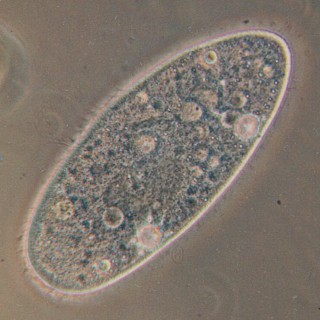
Genus of unicellular ciliates, commonly studied as a representative of the ciliate group
POPULARITY

4 episodes with Paramecium

3 episodes with Paramecium

2 episodes with Paramecium

2 episodes with Paramecium
Link to bioRxiv paper: http://biorxiv.org/cgi/content/short/2023.07.26.549647v1?rss=1 Authors: Carmona, B., Camelo, C., Mehraz, M., Lemullois, M., Lince-Faria, M., Coyaud, E., Marinho, H. S., Goncalves, J., Nolasco, S., Pinto, F., Raught, B., Tassin, A.-M., Koll, F., Soares, H. Abstract: Centrosomes are organelles consisting of two structurally and functionally distinct centrioles, with the mother centriole having complex distal (DA) and subdistal appendages (SDA). Despite their importance, how appendages are assembled and maintained remains unclear. This study investigated human TBCCD1, a centrosomal protein essential for centrosome positioning, to uncover its localization and role at centrioles. We found that TBCCD1 localizes at both proximal and distal regions of the two centrioles, forming a complex structure spanning from SDA to DA and extending inside and outside the centriole lumen. TBCCD1 depletion caused centrosome mispositioning, which was partially rescued by taxol, and the loss of microtubules (MTs) anchored to centrosomes. TBCCD1 depletion also reduced levels of SDA proteins involved in MT anchoring such as Centriolin/CEP110, Ninein, and CEP170. Additionally, TBCCD1 was essential for the correct positioning of motile cilia basal bodies and associated structures in Paramecium. This study reveals that TBCCD1 is an evolutionarily conserved protein essential for centriole and basal body localization and appendage assembly and maintenance. A BioID screening also linked TBCCD1 to ciliopathy-associated protein networks. Copy rights belong to original authors. Visit the link for more info Podcast created by Paper Player, LLC
Link to bioRxiv paper: http://biorxiv.org/cgi/content/short/2023.03.01.529730v1?rss=1 Authors: Velle, K. B., Garner, R. M., Beckford, T. K., Weeda, M., Liu, C., Kennard, A. S., Edwards, M., Fritz-Laylin, L. K. Abstract: Controlling intracellular osmolarity is essential to all cellular life. Cells that live in hypo-osmotic environments like freshwater must constantly battle water influx to avoid swelling until they burst. Many eukaryotic cells use contractile vacuoles to collect excess water from the cytosol and pump it out of the cell. Although contractile vacuoles are essential to many species, including important pathogens, the mechanisms that control their dynamics remain unclear. To identify basic principles governing contractile vacuole function, here we investigate the molecular mechanisms of two species with distinct vacuolar morphologies from different eukaryotic lineages - the discoban Naegleria gruberi, and the amoebozoan slime mold Dictyostelium discoideum. Using quantitative cell biology we find that, although these species respond differently to osmotic challenges, they both use actin for osmoregulation, as well as vacuolar-type proton pumps to fill contractile vacuoles. We also use analytical modeling to show that cytoplasmic pressure is sufficient to drive water out of contractile vacuoles in these species, similar to findings from the alveolate Paramecium multimicronucleatum. Because these three lineages diverged well over a billion years ago, we propose that this represents an ancient eukaryotic mechanism of osmoregulation. Copy rights belong to original authors. Visit the link for more info Podcast created by Paper Player, LLC
TWiV explains the recent meeting of the National Science Advisory Board for Biosecurity (NSABB) where stricter guidelines for research involving human, animal, and plant pathogens were considered, and how the consumption of viruses by small protists returns energy to food chains. Hosts: Vincent Racaniello, Dickson Despommier, Alan Dove, Rich Condit, and Kathy Spindler Subscribe (free): Apple Podcasts, Google Podcasts, RSS, email Become a patron of TWiV! Links for this episode •Research assistant position at FDA (pdf) •Register for ASV 2023 •MicrobeTV Discord Server •NSABB proposed oversight framework (pdf) •Stricter US guidelines for research (Nature) •Information on NSABB (NIH) •Consumption of viruses by protists (PNAS) •Letters read on TWiV 981 •Timestamps by Jolene. Thanks! Weekly Picks Dickson – Jazz Project: Trombone: Steve Turre/Conrad Herwig; Steve Turre; Curtis Fuller; J.J. Johnson and Kai Winding. Steve Turre: Signature album: Sanctified Shells. Signature song: Sanctified Shells. Conrad Herwig. Signature album: A Jones For Bones Tones. Signature song: Slide's Routine; Curtis Fuller: Signature album: BLUES ette. Signature song: Bluesette. J.J. Johnson (with Kai Winding). Signature album: The Great Kai and J.J. : Signature song: Monk's Blues. Kathy – Measles virus ‘cooperates' with itself to cause fatal encephalitis. Primary research article: Shirogane et al. Rich – Firm hatches plan to bring back dodo (Colossal Biosciences – Dodo) Alan – Mt. Washington Observatory webcam Vincent – Ask the Experts Listener Picks Roberto – The Contagion of Liberty: The Politics of Smallpox in the American Revolution Intro music is by Ronald Jenkees Send your virology questions and comments to twiv@microbe.tv

Pinkie & Mildred talk about Amoebas & Parameciums ! Pinkie also elaborates on her Third Eye https://www.pinkiethepigpodcast.com/

My AP Biology Thoughts Unit 2 Cell Structure and FunctionWelcome to My AP Biology Thoughts podcast, my name is Saarim and I am your host for episode 54 called Unit 2 Cell Structure and Function: Movement Organelles. Today we will be discussing cilia and flagella, which are known as the movement organelles of the cell due to their importance in the movement and locomotion of cells through different means. I'll be starting off by giving an introduction to Cilia and Flagella (so, talking about their structure and what they both are exactly). Afterwards, I'll go through the variety of functions that cilia and flagella partake in and take on. Finally, I will place cilia and flagella into the broader scope of “cell structure and function” and expand a little bit on their importance and finish off by quickly presenting the consequences if cilia and flagella were absent. Segment 1: Introduction to Cilia and Flagella Cilia and flagella overview Tube like appendages that allow for motion in eukaryotic cells Cilia - found in both animals and microorganisms, but not in most plants Flagella - mostly used for motility in bacteria and gametes of eukaryotes Cilia structure Small hair-like protuberances on the outside of eukaryotic cells Responsible for locomotion of cell itself or of fluids on cell surface Involved in mechanoreception - detection/response of animals to stimuli Structure Made up of microtubules coated in plasma membrane Microtubules - small hollow rods made of protein tubulin Contains 9 pairs of microtubules forming the outside of a ring; two central microtubules (axoneme) - microtubules held together by cross-linking proteins Dyneins - motor proteins between the 9 outer pairs - allow cilia to be motile Proteins (hydrolyze ATP for energy) undergo conformational changes which allow for complex movements - cause the bending in the cilium as microtubules slide Cilia - 0.25 micrometers in diameter and 20 micrometers in length Found on cell surface and beat back and forth to create movement Non-motile cilia Don't have the center microtubule structure or dynein arms - can't move Flagella structure Hair life organelles - longer and less numerous protrusions Used by cells and microorganisms for movement Specialized flagella in some organisms used as sensory organelles that can detect changes in temperature and pH Eukaryotic Very similar to cilia Have 1+ (generally many) flagella which move in a whiplike way Core is a bundle of 9 pairs of microtubules surrounding 2 central microtubules like cilia, sliding of microtubules cause movement, etc. Depend on ATP for energy Prokaryotic/Bacterial Helically shaped structures that contain the protein flagellin Base of flagellum near the cell surface is attached to the basal body and the flagellum rotates in a clockwise or counterclockwise direction Get energy from this proton motive force across the cell membrane Segment 2: More About Cilia and Flagella Cilia Function Important in movement of cell itself or of substances that go past the cell In ciliates, cilia responsible for the movement of the whole organism such as the unicellular protist Paramecium (cilia responsible for the movement and feeding) Help to remove contaminants from organs or tissues by helping to move fluids over the cell Lining of the nasopharynx and trachea covered in cilia - ciliated epithelial cells remove mucus, bacteria, and other debris from the lungs Present in the lining of the fallopian tubes - help in fertilization by movement of the egg towards the uterus Non-motile cilia Sensory apparatus for cell - detect signals Play roles in sensory neuron Found in the kidneys to sense urine flow In eyes on the photoreceptors of retina where they function to transport vital proteins from the inner segment of the photoreceptor to outer segment through sense and initiating movement Provide habitats for symbiotic microbiomes in animals Known to...
This episode: Despite being photosynthetic, some kinds of algae engage in predatory behavior, hunting and consuming live bacteria! Download Episode (4.9 MB, 7.1 minutes) Show notes: Microbe of the episode: Paramecium bursaria Chlorella virus 1 News item Takeaways Although most of them are microscopic, algae perform a significant portion of the photosynthesis on the planet, because there are so many of them. But even though photosynthesis seems like a reliable way of acquiring energy, there are conditions under which even algae benefit from gathering energy and nutrients from other organisms. This is called phagomixotrophy, when algae hunt and consume bacteria. In this study, scientists developed fluorescence methods for detecting and studying this predation in a group of algal phytoplankton that's not well-studied, prasinophytes. They found that all five species they looked at engaged in bacterivory under nutrient-depleted conditions, and that they preferred live bacteria to killed ones. Journal Paper: Bock NA, Charvet S, Burns J, Gyaltshen Y, Rozenberg A, Duhamel S, Kim E. 2021. Experimental identification and in silico prediction of bacterivory in green algae. ISME J. Other interesting stories: Fecal microbe transplant seems to help mice recover from spinal cord injury (paper) Email questions or comments to bacteriofiles at gmail dot com. Thanks for listening! Subscribe: Apple Podcasts, Google Podcasts, Android, or RSS. Support the show at Patreon, or check out the show at Twitter or Facebook.

Scalar energy is the fundamental life force found everywhere in the world, space and universe. It originates from the sun and stars. Chi, prana, OM, mana, life force, pyramid energy or zero-point energy are synonymous terms for scalar energy. I began research with scalar energy during my undergraduate years. Inspired by various scientists, especially Nikola Tesla (a genius who invented alternating current), I was curious to learn more about the existence of an energy that was not of the electromagnetic spectrum. I pursued a course of independent study in order to better understand and subsequently harness scalar energy, as this emerging science is not taught at the university level. One of my scientific predecessors was T. Galen Hieronymus, a resident of Georgia and one of the few scalar energy researchers in the United States in the last century. I read Galen’s notes and used his instruments after his death. Some of Galen’s inventions, according to a 1977 magazine article, were “quasielectronic instruments that could (a) analyze the component elements of an ore sample without spectroscopic, chemical or other orthodox methods, and, most surprising of all, (b) influence (even kill) living organisms, even from vast distances, with no scientifically understandable mechanism at the other end.” I theorized that all energy in the universe initiates as scalar energy; and that the sun of our solar system and the stars of the universe are the points of origin, “the storehouses,” for scalar energy. I further theorized that scalar energy is instructive energy, as the entire universe is instructed by this Divine Essence. Subsequently, all spiritual, cognitive, emotional and physical action in the universe is initiated and maintained by scalar energy instructions. Scalar energy provides order in the universe. Based on these theories and the work of scientists who came before me, I was able to develop scalar energy instruments capable of harnessing and transmitting instructive energy to heal human subjects remotely. You can think of this as similar to a radio broadcast with my instruments as the broadcaster, and your body as the receiver. The difference is that the energy transmitted is not electromagnetic, and is therefore immeasurable by traditional science. My instruments provide a remote, fast, harmless and painless treatment process that has successfully healed patients with HIV/AIDS, Ebola, herpes, hepatitis, Lyme disease, and over 400,000 pathogens that cause disease. They administer the scalar energy reverse-phase angle harmonic of a pathogen, thereby causing that agent of infection to disassemble or fall apart. Bacteria, viruses, fungi and protozoan, can all be disassembled, representing a cure for thousands of diseases. Once the causative agent of a pathogen disease has been eliminated, the symptoms associated with that infection decrease or disappear altogether. An independent, out-of-state laboratory submitted magnified photographs of various species of living protozoan to me to be treated by way of the scalar energy instrument. Four experiments were conducted in which various species of Paramecium, Volvox, Amoeba, Euglena and Stentor were treated with scalar energy, resulting in these protozoa being disassembled and subsequently destroyed. The lab experiments were video recorded in order to substantiate the efficacy of the scalar energy pathogenic cleanse to disassemble and destroy pathogens. You can check my websites to see the results! Tom Paladino is a scalar energy researcher based in Florida. For full details on how you can receive scalar energy treatments remotely, visit WWW.SCALARLIGHT.COM or call 805.364.3051. --- This episode is sponsored by · Anchor: The easiest way to make a podcast. https://anchor.fm/app

Matt & Eric gab about even MORE Game of Thrones spinoffs, the possible return of Timothy Olyphant's Raylan Givens, the cool-ass career of Yaphet Kotto - and then recap both ROBOCOP animated shows.

Die Sendung mit der Ziege - Folge 9: Lebewesen des Tages (Pantoffeltierchen) Mit dieser Folge breche ich eine längst überfällige Lanze für die Vertreter der einzelligen Pantoffeltierchen (Paramecium spec.). Woher die Liebe für diese Lebewesen? Im zoologischen Grundpraktikum meines Biologie-Studiums sollten wir das Pantoffeltierchen zeichnen. Die Größten unter ihnen sind mit dem bloßen Auge als Punkt erkennbar aber wir schauten mit dem Mikroskop genauer hin. Mein Banknachbar war nicht so begeistert von der Materie und wollte den "Latsch mit Haaren" partout nicht zeichnen. Warum Pantoffeltierchen viel mehr als nur ein Latsch mit Haaren sind, erkläre ich in dieser Folge! --------Website: https://www.madlenziege.com Email: kontakt@MadlenZiege.com

The Manga starts to differentiate itself from the anime, now that all characters come together. Shinji experiences his first late night party and when the lights go off, things also get a bit steamy! Skip synop @3:49 Neon Genesis Evangelion vol. 5 Chapters 27 to 33 “If this be the work of man, it will come to naught” By Yoshiyuki Sadamoto Translation by Lillian Olsen Topics Shinji’s first party. Asuka being that one girl where it’s like walking on eggs to be with. Gendo as a father and wherever or not he should be responsible for Shinji as a teenager. Missing Angels from the anime, Sandalphon and Matarael do not make an appearance. Showing that the manga isn’t going for an “Angel of the week plot”. Shinji as an “Atlas Personality”. E.g. Someone with Depression and anxiety, as well as over-sensitivity to others and an inability to assert their own needs. Vogel, L. Z., & Savva, S. (1993). Atlas personality. British Journal of Medical Psychology Putting context to the Biblical elements. Adam, Crucifixion and the Lance of Longiness. First hint towards the “Human Instrumentality Project”. Other References Raiders of the lost Ark (1981 Dir, Steven Spielberg) The first Indiana Jones movie, it was the highest grossing movie of that year and was a collaboration between George Lucas and Steven Spielberg. Paramecium, a microscopic being that feeds on bacteria. Water Flea a.k.a Cladocera, a freshwater creature that can reproduce sexually and asexually, not to be confused with ZooPlankton. James is talking about a specific pest, be it a tick or louse. Mitochondria Otherwise known as “The Powerhouse of the Cells”, it is responsible for providing chemical energy to our cells. James and Steven talk briefly about the Endosymbiotic Theory, another branch of Creationism. What James refers to as the “primordial soup” is the Proto-Mitochondrion, the ancestor that which begot mitochondria and the majority of species on earth. Plot Summary Asuka moves into Misato’s apartment with Shinji, Shinji’s friends Toji and Aida, notice that Misato is promoted and so they throw a party in celebration. This leads to a night a of drinking for Misato and Kaji followed by the admission of why they broke up and who was responsible. After this night the EVAs are deployed to fight a new angel that has appeared in satellite form Over Tokyo 3, it uses its own mass as a weapon so to target NERV HQ. To fight the angel, all 3 pilots work together to overcome it. After this a power failure leads to the revelation of a few secrets and an intimate moment for our characters. Instagram – weappreciatemanga.co.uk Twitter - @RealJamesFitton Website – Weappreciatemanga.com Email – Weappreciatemanga@gmail.com

Jayson Sherlock, drummer for Revulsed and such prolific death metal bands as Horde, Mortification and Paramecium is the guest on this episode of the BREWtally Speaking Podcast!! Jayson joins co host Dan for a chat to go over his rich history in the metal industry, being the first christian death/black metal bands, or un black as they would call it and much more. Intro Music: "Rapacious Engorgement" by Revulsed "Pretty Lights" by Heartsick Show Sponsor: The Bean Bastard (www.thebeanbastard.com) Links: Facebook: www.facebook.com/revulseddm www.facebook.com/thebeanbastard www.facebook.com/metalnexus www.facebook.com/brewspeakpod Instagram: @thebeanbastard, @metal.nexus, @brewspeakpod, @jbeatty616 Twitter: @metal_nexus, @brewspeakpod, @discussmetaldan, @jbeatty616 Website: www.metalnexus.net Email: Brewtallyspeaking@gmail.com RATE/REVIEW/SUBSCRIBE!!

The TWiM team presents an extracellular bacterium associated with Paramecium, and induction of antiviral immunity by a bacteriophage that prevents bacterial clearance. Subscribe to TWiM (free) on iTunes, Google Podcasts, Stitcher, Android, RSS, or by email. You can also listen on your mobile device with the Microbeworld app. Become a Patron of TWiM! Bacteria on the outside of paramecia (ISME) Phage trigger antiviral immunity (Science) Image credit Letters read on TWiM 198 Music used on TWiM is composed and performed by Ronald Jenkees and used with permission. Send your microbiology questions and comments to twim@microbe.tv
The TWiV hosts present two potentially seminal papers, on long-distance chemoattraction of a host by a chlorovirus, and replication of a nanovirus across multiple cells in a plant. Hosts: Vincent Racaniello, Dickson Despommier, Alan Dove, Kathy Spindler, and Brianne Barker Subscribe (free): iTunes, Google Podcasts, RSS, email Become a patron of TWiV! Links for this episode Paul Has Measles now in German (virology blog) Chloroviruses lure hosts (J Virol) Multicellular replication in plants (eLife) Image credit Letters read on TWiV 539 Timestamps by Jolene. Thanks! Weekly Science Picks Brianne - Why Do So Many Scientists Want to be Filmmakers Alan- Better boarding method airlines won’t use Dickson- Mass timber building Kathy- What organisms to study flow chart Vincent - World Pulls Andon Cord on 737 MAX Listener Pick Richard- The Real Cost of Knowledge Islam- 200 icosahedral viruses poster Mike- Post-Doc Me Now Intro music is by Ronald Jenkees. Send your virology questions and comments to twiv@microbe.tv

The TWiV hosts present two potentially seminal papers, on long-distance chemoattraction of a host by a chlorovirus, and replication of a nanovirus across multiple cells in a plant. Hosts: Vincent Racaniello, Dickson Despommier, Alan Dove, Kathy Spindler, and Brianne Barker Subscribe (free): iTunes, Google Podcasts, RSS, email Become a patron of TWiV! Links for this episode Paul Has Measles now in German (virology blog) Chloroviruses lure hosts (J Virol) Multicellular replication in plants (eLife) Image credit Letters read on TWiV 539 Timestamps by Jolene. Thanks! Weekly Science Picks Brianne - Why Do So Many Scientists Want to be Filmmakers Alan- Better boarding method airlines won’t use Dickson- Mass timber building Kathy- What organisms to study flow chart Vincent - World Pulls Andon Cord on 737 MAX Listener Pick Richard- The Real Cost of Knowledge Islam- 200 icosahedral viruses poster Mike- Post-Doc Me Now Intro music is by Ronald Jenkees. Send your virology questions and comments to twiv@microbe.tv
This episode: Very radiation-resistant bacteria can protect other, less-resistant microbes from some of the effects of chronic radiation! Download Episode (9.7 MB, 10.6 minutes) Show notes: Microbe of the episode: Paramecium bursaria Chlorella virus CA4A News item Journal Paper: Shuryak I, Matrosova VY, Gaidamakova EK, Tkavc R, Grichenko O, Klimenkova P, Volpe RP, Daly MJ. 2017. Microbial cells can cooperate to resist high-level chronic ionizing radiation. PLOS ONE 12:e0189261. Other interesting stories: Panda gut microbes help them detoxify cyanide in their diet (paper) Modified probiotics can detect and inhibit cholera in baby mice Email questions or comments to bacteriofiles at gmail dot com. Thanks for listening! Subscribe: Apple Podcasts, RSS, Google Play. Support the show at Patreon, or check out the show at Twitter or Facebook
Hosts: Vincent Racaniello, Dickson Despommier, Alan Dove, Rich Condit, and Kathy Spindler The multi-dimensional TWiV-brane bring you the entries in the haiku/limerick contest, and explain how a giant virus infects a host within another host (it has to do with predators!). Become a patron of TWiV! Links for this episode Predators allow virus infection of endosymbiont (PNAS) Image credit Letters read on TWiV 416 This episode is brought to you by CuriosityStream, a subscription streaming service that offers over 1,400 documentaries and nonfiction series from the world's best filmmakers. Get unlimited access starting at just $2.99 a month, and for our audience, the first two months are completely free if you sign up at curiositystream.com/microbe and use the promo code MICROBE. 0:25, 1:34:40 Check out the graduate and postdoctoral programs at the Department of Microbiology at the Icahn School of Medicine at Mount Sinai. Deadline for applying to the graduate program is 1 December 2016. For more information about the Department, please visit http://bit.ly/micromssm 5:05 Register for the 2017 ASM Grant Writing Online course. Weekly Science Picks Alan - Cubes in Space Dickson - The Architecture of Eden by H. Pearlman and A. Whalley Rich - Studying the building blocks of life in stereo (original paper)Kathy - Ancient bottom wipes yield evidence of diseases (original paper) Vincent - Iguana vs snakes Send your virology questions and comments to twiv@microbe.tv
Welcome to the second half of the Bjorn Bauer story! If you haven't already please listen to the first half (chapter 62) of Bjorns' story before delving into this half. We get a bit heavier about dealing with boredom/depression and how Bjorn was able to steer all of it into a constructive outlet which became a career. Bjorn comments on how Zao was "meh" at first and how the Smashing Pumpkins became one of the most important bands in his development into who he is today. FOLLOW THIS MAN. Hit his site and do what you need to do to keep an eye on him. Show posters for Kowloon Walled City, Wovenhand and Intronaut. I am so glad this guy emailed me. He will ALWAYS be one of us. (See what I did there?) All Things Bjorn: http://bjornbauerart.com Chapter 63 Music: Paramecium: "Of My Darkest Hour" Smashing Pumpkins: "Frail And Bedazzled" Zao: "Five Year Winter" Smashing Pumpkins: "Where Boys Fear To Tread" As The Story Grows links: Help out at Patreon Follow on Twitter See what we're doing at Lavirra Productions ATSG Website ATSG Music and Merch Leave some feedback at iTunes ATSG YouTube Channel Join the Email List ATSG Facebook Email: asthestorygrows@gmail.com
Drumming legend Jayson Sherlock (Revulsed, Mortification, Deliverance) joins the story from down undah, mate! Oh my my...SOOO much metal in this chapter. Jason was gracious enough to talk to us about his ENTIRE discography, graphic design, death threats, Chuck Schuldiner, humility amongst peers and Beavis and Butthead. Chapter 30 Links: Revulsed official facebook - https://www.facebook.com/RevulsedDM Revulsed bandcamp - http://revulsed.bandcamp.com/ Jayson's wiki page has a discography to be proud of: https://en.wikipedia.org/wiki/Jayson_Sherlock This is bonkers. Look what he can do with his feet: https://www.youtube.com/watch?v=BoKb9TVyQrc&list=PLpYGYmkDwhr0fE-_f9LMYNzr8PtgXJ4JK Chapter 30 Music: Men At Work - Down Under Mortification - Eternal Lamentation Mortification - Brutal Warfare Mortification - Death Requiem Mortification - Terminate Damnation Death - Lack Of Comprehension Mortification - Butchered Mutilation Mortification - Clan Of The Light Paramaecium - Injudicial Horde - Blasphemous Abomination of the Satanic Pentagram InExordium - Imminent Particle Collision Deliverance - Angst Apache Indian - Shack A Lak Michael McKean and Annette O'Toole - Kiss At The End Of The Rainbow Revulsed - Celestial Perspicacity As The Story Grows links: Patreon. https://patreon.com/asthestorygrows Twitter. https://twitter.com/asthestorygrows Email. asthestorygrows@gmail.com Facebook. https://www.facebook.com/asthestorygrows Website. http://asthestorygrows.com Bandcamp. http://asthestorygrows.bandcamp.com iTunes feedback. https://itunes.apple.com/us/podcast/as-the-story-grows/id962812433?mt=2
Hosts: Vincent Racaniello, Alan Dove, Rich Condit, and Kathy Spindler Vincent, Alan, Rich and Kathy association of a virus with sea star melting disease, and the finding of a phycodnavirus in the oropharynx of humans with altered cognitive functions. Links for this episode National Influenza Immunization Week (CDC) Densovirus associated with sea star wasting disease (PNAS) A virus that melts sea stars (virology blog) Chlorovirus in human oropharynx (PNAS) Algal virus in humans (virology blog) Image credit Letters read on TWiV 315 Weekly Science Picks Alan - ReelLife Science 2014 WinnersRich - The Martian by Andy WeirKathy - Dance Your Ph.D. WinnerVincent - Time Person of the Year 2014 - The Ebola Fighters Listener Pick of the Week Ricardo - MiniPCREli - Let's outsmart Ebola together AND The Ebola virus explained Send your virology questions and comments (email or mp3 file) to twiv@twiv.tv
This episode: Video games with live microbes! Download Episode (2 MB, 2.25 minutes)Show notes:News item 1/News item 2/Journal paper Other interesting stories: Speculation about using bacteria for nanomachine communication Bacteria thriving even in deepest explored layer of ocean crust Infants digest milk better than adults do because of bacteria Researchers reviving bacteria trapped in salt crystals for thousands of years Using bacteria like a really big hard drive Testing bacterial survival in orbit Post questions or comments here or email to bacteriofiles at gmail dot com This e-mail address is being protected from spambots. You need JavaScript enabled to view it . Thanks for listening! Subscribe at iTunes, check out the show at Twitter or SciencePodcasters.org
© 2020-2026 Ivy Podcast Discovery LLC