
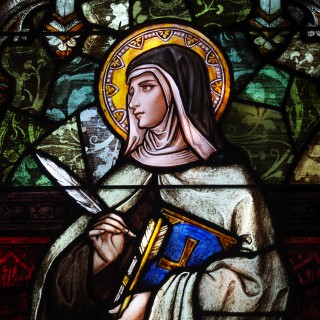
One who has been recognized for having an exceptional degree of holiness, sanctity, and virtue
POPULARITY

15 episodes with cloud of witnesses

28 episodes with cloud of witnesses

21 episodes with cloud of witnesses

7 episodes with cloud of witnesses

10 episodes with cloud of witnesses

14 episodes with cloud of witnesses

8 episodes with cloud of witnesses

10 episodes with cloud of witnesses

10 episodes with cloud of witnesses

12 episodes with cloud of witnesses

7 episodes with cloud of witnesses

5 episodes with cloud of witnesses

10 episodes with cloud of witnesses

6 episodes with cloud of witnesses

18 episodes with cloud of witnesses

5 episodes with cloud of witnesses

5 episodes with cloud of witnesses

8 episodes with cloud of witnesses

6 episodes with cloud of witnesses

10 episodes with cloud of witnesses

4 episodes with cloud of witnesses

3 episodes with cloud of witnesses

6 episodes with cloud of witnesses

3 episodes with cloud of witnesses

4 episodes with cloud of witnesses

4 episodes with cloud of witnesses

4 episodes with cloud of witnesses

Watch this sermon on YouTube at: https://youtu.be/PlglbR9EA2g

Speaker: Derek Irvin
Watch this sermon on YouTube at: https://youtu.be/PlglbR9EA2g
Speaker: Mark Crull
Watch this sermon on YouTube at: https://youtu.be/fA0Ch33ytbE
Speaker: Aaron Crull
Watch this sermon on YouTube at: https://youtu.be/XRoUt8aZ8r0
Speaker: Kurt Brodbeck
Watch this sermon on YouTube at: https://youtu.be/Lb19s6znt7U

2026-02-03_Pastor Mayo_A Great Cloud Of Witnesses by Cornerstone Pentecostal Church Spokane
Watch this sermon on YouTube at: https://youtu.be/dp0K6eRGkOw
Watch this sermon on YouTube at: https://youtu.be/cdeTvb2Gl8M
Watch this sermon on YouTube at: https://youtu.be/svMZjO2mVZc
Watch this sermon on YouTube at: https://youtu.be/svMZjO2mVZc
Speaker: Steve Poe
Speaker: Kurt Brodbeck
Watch this sermon on YouTube at: https://youtu.be/aOkMSmq5sMk
Watch this sermon on YouTube at: https://youtu.be/tdFKr0gBH18

What are you a witness to? Who are you a witness to?
Watch this sermon on YouTube at: https://youtu.be/Fnj4O7ryiQI
Speaker: Derek Irvin

James Teaches on 2 Kings 6 and Hebrews 11 & 12 as he discussed how our prayers join us to the heavenly hosts and cloud of witnesses in the unseen realm. We Don't Pray Alone - Cloud of Witnesses James Dieter
Speaker: CJ Johnson
Speaker: Todd Holzworth
Speaker: Paul Hurckman

How should we understand the "Great Cloud of Witnesses" and its role in the life of the believer today? This presentation is also available on Youtube, Rumble. [1 hour]
Speaker: CJ Johnson
Speaker: CJ Johnson
Speaker: Steve Poe
Speaker: Kurt Brodbeck
Speaker: CJ Johnson
Speaker: Kurt Brodbeck

Brockport First Baptist sermon audio from Sunday, February 1, 2026: “A Great Cloud of Witnesses,” by Rev. Dr. Dan Brockway. Scripture reading: Hebrews 11-12.Our mission is to embody God's love outside the walls of the church, in Brockport and beyond. SUPPORT OUR MINISTRIES: www.brockportfirstbaptist.org/giveLEARN MORE ABOUT OUR CHURCH: www.brockportfirstbaptist.org
A packed campus, a live mic, and a question that cut to the bone: is the historicity of the LDS church stronger than Protestant Christianity? Noah Nielsen—born into a deeply LDS family, now a Christian and Division I runner—was there at UVU with his phone out, capturing the exchange about Nephites, Lamanites, witnesses, and the golden plates moments before a single gunshot froze the crowd. His perspective ties together two seismic moments: leaving a faith that shaped his childhood and surviving a tragedy that reshaped his sense of safety.A student-athlete recounts the day a campus Q&A turned deadly and the long journey that led him from deep LDS roots to Christian faith. We explore evidence claims about Mormonism, the missing clips controversy, trauma after the shooting, and the costly choices of conviction.• UVU event setup, lack of security, and crowd mood• Why Noah filmed the LDS exchange and what was said• Historicity challenges: Nephites, Lamanites, witnesses, golden plates• Family's exit from LDS after research and social fallout• BYU transfer, rebaptism ultimatum, and walking away from a scholarship• Theology contrast between biblical monotheism and exaltation claims• Firsthand account of the shot, panic, and escape• PTSD, returning to campus, and rebuilding trust in public spaces• The guiding question of conscience and costWe walk through Noah's backstory from Northern Ireland to Utah, where church life was family life. When his mother's sincere study unearthed troubling sources—the Book of Abraham, polyandry, the Kinderhook plates, Nauvoo Expositor, and Carthage Jail—their home shifted from certainty to questions. The social cost in Utah was immediate and painful, culminating in a move across the country to breathe again. Noah's own study moved beyond history into Scripture, where the biblical insistence on one uncreated God clashed with the LDS path of exaltation. That conviction would be tested later when a rebaptism ultimatum was tied to his BYU scholarship. He declined and rebuilt at UVU under a punishing deadline.Then there's the day itself. Noah arrived early to a pulsing amphitheater with little visible security. He filmed the faith debate that many claimed never happened, watched the dialogue tighten around evidence, and then heard the shot. What followed was panic, a scramble through bottlenecked exits, and the long shadow of trauma: avoiding campus, scanning every room, and relearning how to be in public places. Through it all, Noah returns to a simple question that steers his choices: what's the point of gaining the world if you lose your soul?If you value honest stories about faith, freedom of speech, and the cost of conviction, this conversation will stay with you. Listen, share it with someone who needs it, and tell us which moment struck you most. And if the full, uncut conversation helps you process it all, support the show and access it on Patreon. Subscribe, leave a review, and join us for more candid, thoughtful stories that refuse to look away.Questions about Orthodoxy? Please check out our friends at Ghost of Byzantium Discord server: https://discord.gg/JDJDQw6tdhPlease prayerfully consider supporting Cloud of Witnesses: https://www.patreon.com/c/CloudofWitnessesFind Cloud of Witnesses on Instagram, X.com, Facebook, and TikTok.Please leave a comment with your thoughts!
Reaction and Response to "Why Roman Catholics Should Not Become Orthodox?"What if the hunger for stability isn't nostalgia, but a compass? Cloud of Witnesses discussion panel today is made up of John St John, James St Simon, Mario Andrew, and Jeremy Jeremiah. The panel reacts to a pro-Catholic video that warns against becoming Orthodox and use it to surface the deeper questions: where does authority live, how does doctrine truly develop, and what keeps worship both beautiful and trustworthy?We react to a polemical Roman Catholic video urging Catholics not to convert to Eastern Orthodoxy and test its claims about apostolic unity, papal authority, doctrinal development, and universality. Along the way we share personal stories, weigh history against worship, and ask what sustains faith without constant change.• claims about Peter, Rome and Antioch• first among equals versus universal jurisdiction• councils as the arbiter of faith• slowness as protection against novelty• filioque and changes to the Creed• Marian dogmas and the limits of development• beauty and recognition in unchanging liturgy• ethnicity, national churches and real unity• pastoral gaps, weak catechesis and frustration• how to speak to Catholics considering OrthodoxyWe start with apostolic unity and the claim that Peter's office guarantees visible communion. From there, we trace how Orthodoxy understands primacy as “first among equals,” rooted in the shared authority of the apostles and the ecumenical councils. The conversation tests historical flashpoints—Peter in Antioch, Chalcedon weighing Leo's Tome, and moments when Rome's stance faltered—asking whether unity requires a single final arbiter or a conciliar process that takes time to mature. Rather than papering over differences, we probe them: is slow consensus a weakness, or a safeguard against novelty?Doctrinal development takes center stage as we compare clarifications in the West with what the East calls faithful continuity. We wrestle with the filioque's addition to the Creed, later Marian dogmas, and the principle that the symbol of faith should not be amended. Along the way, we get personal: stories of Catholics who feel adrift amid liturgical inconsistency, the draw of Orthodox worship that “feels” ancient because it is, and the complicated mix of ethnicity and universality that outsiders often misread. Beneath jurisdictions, we argue, stands a single sacramental life held together by councils, shared prayer, and a reluctance to innovate.If you've ever wondered why some Catholics look East, or how Orthodoxy claims to hold the line without a papal office, this conversation gives you history, theology, and lived experience in equal measure. Listen, reflect, and tell us where you stand—what convinces you most: authority, continuity, or the beauty that calls you home?Questions about Orthodoxy? Please check out our friends at Ghost of Byzantium Discord server: https://discord.gg/JDJDQw6tdhPlease prayerfully consider supporting Cloud of Witnesses: https://www.patreon.com/CloudofWitnessesFind Cloud of Witnesses on Instagram, X.com, Facebook, and TikTok.Please leave a comment with your thoughts!

Peter Leithart, Chris Kou, and James Bejon discuss the beginning of Hebrews 12. GIVE TO THEOPOLIS! theopolisinstitute.com/give/ Get the Theopolis App! app.theopolisinstitute.com/menu Use Code "theopolitan" to get your first month free! Sign up for In Medias Res mailchi.mp/0b01d726f2fe/inmediasres
The question seems simple: did Protestants ever agree on the Lord's Supper? The answer, drawn from history and confessions, is messy. The early church spoke with one voice about a true, real presence of Christ in the Eucharist, a conviction shared across geography and centuries. Then the Reformation fractured that consensus. Luther defended real presence with fire, appealing to Christ's words as plain and binding; Calvin insisted on a true spiritual presence without a change of substance; Zwingli argued for a powerful memorial devoid of presence in the elements. These are not minor tweaks; they are different maps of reality, worship, and church. The implications ripple through how we pray, preach, and gather. Special episode for our brother @theprotestantgentleman Dillon Baker.Luther's stance, preserved in the Augsburg Confession, reads with startling clarity: the body and blood of Christ are truly present and distributed to those who partake. For him, the promise of Christ anchored the sacrament; God acts, we receive. This wasn't speculative metaphysics; it was pastoral assurance built on Christ's words. Yet even within that stance, Luther rejected philosophical explanations he considered overly rationalistic, choosing instead to guard the mystery. For many today seeking historical Protestant roots, that text offers a bold continuity with the ancient church's devotion, placing emphasis on Christ's promise rather than human mood or memory.Calvin pushed in another direction. The Westminster Confession, reflecting Reformed insight, rejects any change in the substance of bread and wine. Christ is truly received, they say, but not by the mouth; He is given to faith by the Spirit. This attempt to safeguard both biblical language and philosophical coherence introduced a careful distinction: presence without material change. It aimed to avoid what they saw as superstition while retaining sacramental grace. Yet the same document criticizes views it considers contrary to Scripture and even to common sense, sharpening lines against both Roman Catholic teaching and Luther's insistence. The Reformed vision sought transcendence through the Word, Spirit, and faith rather than in the elements themselves.Zwingli's memorial view drew still sharper boundaries: the Supper is a sign and remembrance, a communal pledge of loyalty and gratitude. Here, the focus shifts from divine action in the elements to the church's act of obedience and memory. The table becomes a proclamation of the gospel rather than a locus of Christ's bodily presence. This view resonated with those wary of idolatry and eager to stress the sufficiency of faith. Yet critics asked whether such symbolism thins the mystery and reduces sacrament to lecture, exchanging presence for reminder and gift for gesture.Why the divergence? One claim in the conversation is that sola scriptura, untethered from a living interpretive authority, multiplies interpretations. The Reformers shared a high view of Scripture but not a shared hermeneutic about sacramental language. When “This is my body” meets different commitments about sign, substance, and promise, meanings diverge. The result is denominational lines drawn at the table itself. Confessions not only teach; they exclude. Augsburg rejects contrary teachings. Westminster calls other views repugnant. Such language reflects the stakes: worship sits at the center of identity, and the Supper is worship in its most intimate form.Questions about Orthodoxy? Please check out our friends at Ghost of Byzantium Discord server: https://discord.gg/JDJDQw6tdhPlease prayerfully consider supporting Cloud of Witnesses: https://www.patreon.com/c/CloudofWitnessesFind Cloud of Witnesses on Instagram, X.com, Facebook, and TikTok.Please leave a comment with your thoughts!
Sin is often reduced to a list of bad behaviors, but this conversation reframed it as a rupture in relationship and a distortion of identity. Join Jeremy Jeremiah, Mario Andrew, and Cloud of Witnesses special guests Father Deacon Anthony, an ordained deacon in the Antiochian Orthodox Church, and associate marriage and family therapist, Jacob Sadan (https://jacobsadan.com/) in this frank and inspiring discussion of sin.Drawing from early Christian teaching and cognitive behavioral therapy, our guests showed that actions flow from thoughts and feelings, and those are shaped by how we name what is happening inside us. If we see ourselves as inherently evil, despair follows; if we deny fault, pride grows. The older Christian vision holds a paradox: we are made very good in God's image, yet wounded by passions and habits that pull us from life. That paradox calls for clarity, not condemnation. Naming the wound without becoming the wound is the beginning of healing. A vivid metaphor carried the dialogue: the black spot on the skin. We can ignore it, try to cut it out ourselves, identify with it in shame, or bring it to the physician. Only the last path actually heals. The physician, Christ, works through the church's rhythms—fasting, prayer, confession, feasting—because rhythm regulates what is dysregulated. Like a garden, the soul shows its beauty when tended with boundaries and care. The point isn't legalism but formation: seasons that humble pride, awaken joy, and train our loves. In this frame, guilt is not a curse; it is the pain signal that says, return to the Doctor. Shame, on the other hand, fuses sin to identity and locks the soul in a closed room. Psychologically, the cycle is simple and stubborn: beliefs spark feelings, feelings drive behaviors, behaviors reinforce beliefs. If I believe I must fix myself alone, I will overreach, fail, and destroy self-trust. Addiction lives in that gap between imagined control and actual powerlessness. The first step to freedom is admitting limits and sorting what I can change from what I must surrender. Confession becomes a structured pause to observe the inner world: what happened, why it happened, and what to do next. Spoken aloud to a trusted guide, the most terrifying truths lose their sting and regain their meaning as invitations to growth. Finally, community matters. A church that engages body and senses, offers communion and confession, and pairs diagnosis with prescription becomes an arena where grace meets effort. Outside that arena, there are no crowns because there is no contest. Inside it, accountability interrupts self-deception, and mercy makes change plausible. The way forward is not self-loathing or self-excuse but love, truth, and rhythm: see the spot, feel the healthy sting of guilt, ask for help, and return to the practices that tame the garden. We are beloved and broken, not worthless or sovereign; healing happens where we stop pretending to be judge and return to being patients of the true Physician. Questions about Orthodoxy? Please check out our friends at Ghost of Byzantium Discord server: https://discord.gg/JDJDQw6tdhPlease prayerfully consider supporting Cloud of Witnesses: https://www.patreon.com/c/CloudofWitnessesFind Cloud of Witnesses on Instagram, X.com, Facebook, and TikTok. Please leave a comment with your thoughts!

https://eastviewbaptist.org/media
Jeremy Jeremiah, Cloud of Witnesses, reacts to and answers the call from: bayliebelieves, Baylie Clarke, (https://www.tiktok.com/@bayliebelieves) viral video.Jeremy quotes directly from 19th Century documents, original source, discourses by Joseph Smith and Brigham Young to demonstrate that the LDS faith is anything but Christian (by any stretch of the imagination). Joseph Smith and Brigham Young taught that God the Father was once finite, and was once "a man" just like you or me. The conversation turns on a single hinge: does Latter-day Saint theology align with historic, orthodox Christianity? We explore this by defining terms, citing primary sources, and testing claims against scripture. The starting point is the Trinity, not as a word-game, but as a boundary-setting confession about who God is. Classical Christianity says God is one being in three persons, sharing one divine essence, without confusion of persons. That means the Father is not the Son, the Son is not the Spirit, yet each is fully and eternally God. This guardrail matters because it protects both God's oneness and the real distinction among Father, Son, and Spirit, and it anchors the meaning of the incarnation as God the Son taking on human nature without ceasing to be what he eternally is.From there, the critique of LDS claims comes into focus: the Mormon teaching that God the Father was once a man who progressed to godhood, and that humans may likewise be exalted as gods as taught clearly for years by Joseph Smith and Brigham Young (Mormonism's first two so called prophets). The episode reads from Joseph Smith's King Follett Discourse and Brigham Young's Journal of Discourses to show how these ideas are presented within early LDS leadership. The claim is not a stray footnote; it is a thread that runs through the sources. If God was once finite, then divine eternality and aseity are compromised. Historic Christianity insists that God is uncreated, without beginning, dependent on nothing beyond himself. If deity is an achievement, the word “God” loses its unique, absolute meaning and turns into a rank one can attain.The discussion then tests LDS proof texts. Stephen's vision in Acts 7 is cited and corrected: Stephen sees the glory of God and Jesus standing at the right hand of God, which fits the Christian confession that no one has seen the Father in his essence, yet the Son reveals the Father. The host clarifies essence and person using simple analogies: two humans share humanity yet remain distinct persons; similarly, the divine persons share one divine essence while remaining truly distinct. This is not modalism and not three gods; it is the mystery of one God in three persons, confessed in the creeds and rooted in scripture.A second axis is the incarnation. Jesus did not “become God”; he became man. The eternal Son took on flesh through Mary, remaining what he was while assuming what he was not. If one imports the idea that the Father once gained godhood, the logic pressures the incarnation into a story of divine ascent rather than divine condescension. Historic Christianity resists this inversion: salvation is not climbing into deity by degrees, but being united to Christ by grace, participating in God's life without becoming gods by nature. The difference between deification in classical theology and exaltation in LDS teaching is not semantic; it concerns whether God is eternally God and whether creaturely nature can ever cross the Creator–creature line.Questions about Orthodoxy? Please check out our friends at Ghost of Byzantium Discord server: https://discord.gg/JDJDQw6tdhPlease prayerfully consider supporting Cloud of Witnesses: https://www.patreon.com/c/CloudofWitnessesFind Cloud of Witnesses on Instagram, X.com, Facebook, and TikTok.Please leave a comment with your thoughts!
Can you be “just Christian” and still wear a team jersey? In this episode, Cloud of Witnesses team members Jeremy Jeremiah, Mario Andrew, and James St Simon sit down to react to a Reformed Protestant defense of labels, movements, and sola scriptura, and then press into the deeper questions underneath it all: unity, authority, and what it really means to be catholic in the sense of a complete, historic faith.We explore how “no labels” talk can hide real discomfort with fragmentation, and ask whether you can credibly claim two thousand years of Christian heritage while setting aside the worship, sacramental life, and conciliar teaching that actually shaped that heritage. Along the way, we test modern Protestant confessions against the early Church and ask whether you can quote the Fathers without also receiving the churchly life they inhabited.In this conversation we dig into:• The pull of “no labels” Christianity and the problem of theological tribes• What it means to be catholic as complete, not just universal• How liturgy, sacraments, and councils tether us to the early Church• Sola scriptura versus Scripture within a living Tradition and teaching authority• The danger of cherry picking Augustine, Chrysostom, and others to fit our systems• Justification as declared righteous versus actually being made righteous by grace• Why the New Testament insists that works and real transformation are necessary• Assurance, baptism, and whether a believer can truly fall awayAt the heart of the episode is the engine of the Reformation: sola scriptura. Our Protestant friends call Scripture “the norm that norms other norms.” We ask what that looks like on the ground, where every believer can become their own referee and the result is endless splintering. Against that, we explore a vision of Scripture inside the Church, where the Bible is read, preached, and lived within the grammar of historic worship and sacramental life.If you care about what unites Christians across the centuries, how faith moves from theory into a way of life, and whether the Fathers can really be claimed without the Church they loved and defended, this episode is for you. Share it with a friend who loves theology, tell us where you land in the comments, and join the Cloud of Witnesses community as we keep wrestling with the faith once delivered to the saints.Questions about Orthodoxy? Please check out our friends at Ghost of Byzantium Discord server: https://discord.gg/JDJDQw6tdhPlease prayerfully consider supporting Cloud of Witnesses Radio: https://www.patreon.com/c/CloudofWitnessesFind Cloud of Witnesses Radio on Instagram, X.com, Facebook, and TikTok.Please leave a comment with your thoughts!

The Cloud Of Witnesses: Part 7 - Pastor Mel JimenezThis week Pastor Mel Jimenez closes our series!Want to connect more with Rose Church? Find more information at https://www.rosechurch.org and give at - https://www.rosechurch.org/give Make sure to subscribe so you don't miss more incredible sermons like this one or previous series like “Breaking the Cycle” or “The Spiritual Realm” from Pastor Andrew Damazio, Dr. AJ Swoboda, Pastor Julia Damazio and many other incredible pastors!Thanks for listening!
The Cloud Of Witnesses: Part 6 - Pastor Julian LoweThis week Pastor Julian Lowe from Oasis Church continues our series!Want to connect more with Rose Church? Find more information at https://www.rosechurch.org and give at - https://www.rosechurch.org/give Make sure to subscribe so you don't miss more incredible sermons like this one or previous series like “Breaking the Cycle” or “The Spiritual Realm” from Pastor Andrew Damazio, Dr. AJ Swoboda, Pastor Julia Damazio and many other incredible pastors!Thanks for listening!
The Cloud Of Witnesses: Part 5 - Pastor Immanuel GarrawayThis week Pastor Immanuel Garraway continues our series, sharing from Hebrews 11!Want to connect more with Rose Church? Find more information at https://www.rosechurch.org and give at - https://www.rosechurch.org/give Make sure to subscribe so you don't miss more incredible sermons like this one or previous series like “Breaking the Cycle” or “The Spiritual Realm” from Pastor Andrew Damazio, Dr. AJ Swoboda, Pastor Julia Damazio and many other incredible pastors!Thanks for listening!
The Cloud Of Witnesses: Part 4 - Pastor Cassy QuallsThis week Pastor Cassy Qualls continues our series, sharing from Matthew 11!Want to connect more with Rose Church? Find more information at https://www.rosechurch.org and give at - https://www.rosechurch.org/give Make sure to subscribe so you don't miss more incredible sermons like this one or previous series like “Breaking the Cycle” or “The Spiritual Realm” from Pastor Andrew Damazio, Dr. AJ Swoboda, Pastor Julia Damazio and many other incredible pastors!Thanks for listening!
© 2020-2026 Ivy Podcast Discovery LLC


