
POPULARITY

2 episodes with stakhanovite

2 episodes with stakhanovite

This week on Popcorn Boyz we dive into the world of Listicles, the Stakhanovite movement in Stalinist Russia, Al Pacino's accents and a few films thrown in. Some mic issues apologies Hosted on Acast. See acast.com/privacy for more information.

Jason W. Moore discusses the problematic history of the nature-society divide, his alternative world-ecology approach and the challenges of building socialism. Shownotes Jason's personal website: https://jasonwmoore.com/ Jason at Binghamtom University: https://www.binghamton.edu/sociology/faculty/profile.html?id=jwmoore The World-Ecology Research Collective: https://worldecologynetwork.wordpress.com/ https://www.researchgate.net/lab/World-Ecology-Research-Collective-Jason-W-Moore Moore, J. W., & Patel, R. (2020). A History of the World in Seven Cheap Things. A Guide to Capitalism, Nature, and the Future of the Planet. Verso. https://www.versobooks.com/products/817-a-history-of-the-world-in-seven-cheap-things Moore, J. W. (2015). Capitalism in the Web of Life. Ecology and the Accumulation of Capital. Verso. https://www.versobooks.com/products/74-capitalism-in-the-web-of-life for an overview of different approaches to conceptualizing society/capitalism and nature: https://www.historicalmaterialism.org/ecology-marxism-andreas-malm/ on Andreas Malm: https://en.wikipedia.org/wiki/Andreas_Malm Malm, A. (2018). The Progress of this Storm. Nature and Society in a Warming World. Verso. https://www.versobooks.com/products/574-the-progress-of-this-storm Malm, A. (2016). Fossil Capital. The Rise of Steam Power and the Roots of Global Warming. Verso. https://www.versobooks.com/products/135-fossil-capital Federici, S. (2004). Caliban and the Witch. Autonomedia. https://files.libcom.org/files/Caliban%20and%20the%20Witch.pdf on Ernst Haeckel: https://en.wikipedia.org/wiki/Ernst_Haeckel see also the chapter on Haeckel and the German Monist League in: Gasman, D. (2017). The scientific Origins of National Socialism. Routledge. https://www.taylorfrancis.com/books/mono/10.4324/9781315134789/scientific-origins-national-socialism-daniel-gasman on Actor-Network Theory: https://en.wikipedia.org/wiki/Actor%E2%80%93network_theory on Bruno Latour: https://en.wikipedia.org/wiki/Bruno_Latour on John Bellamy Foster: https://en.wikipedia.org/wiki/John_Bellamy_Foster Bellamy, J. F. (2000) Marx's Ecology. Materialism and Nature. Monthly Review Press. https://ia904504.us.archive.org/9/items/526394/John%20Bellamy%20Foster.%20Marx%27s%20Ecology..pdf on Kohei Saito: https://en.wikipedia.org/wiki/Kohei_Saito on Pietro Verri: https://en.wikipedia.org/wiki/Pietro_Verri Marx, K. (1976). Capital. A Critique of Political Economy. Volume One. Penguin. https://www.surplusvalue.org.au/Marxism/Capital%20-%20Vol.%201%20Penguin.pdf Marx's Theses on Feuerbach: https://www.marxists.org/archive/marx/works/1845/theses/theses.htm Marx's Economic and Philosophic Manuscripts of 1844: https://www.marxists.org/archive/marx/works/1844/manuscripts/preface.htm Marx's and Engel's German Ideology: https://www.marxists.org/archive/marx/works/1845/german-ideology/ Marx's Capital Vol. 3.: https://www.marxists.org/archive/marx/works/1894-c3/ Marx's On The Jewish Question: https://www.marxists.org/archive/marx/works/1844/jewish-question/ on Alfred Sohn-Rethel: https://en.wikipedia.org/wiki/Alfred_Sohn-Rethel Machado, C. & Miguel, N. (2013). The Money of the Mind and the God of Commodities. The real abstraction according to Sohn-Rethel. https://mpra.ub.uni-muenchen.de/48961/1/MPRA_paper_48961.pdf on Donna Haraway: https://en.wikipedia.org/wiki/Donna_Haraway on the “Special Period” in Cuba: https://en.wikipedia.org/wiki/Special_Period on James Lovelock: https://en.wikipedia.org/wiki/James_Lovelock Lovelock, J. (1979). Gaia. A New Look at Life on Earth. Oxford University Press. https://global.oup.com/academic/product/gaia-9780198784883?cc=de&lang=en&# on “Social metabolism”: https://en.wikipedia.org/wiki/Social_metabolism on Raymond Williams: https://en.wikipedia.org/wiki/Raymond_Williams Smele, J. D. (2016). The ‘Russian' Civil Wars, 1916-1926. Ten Years that Shook the World. Hurst. https://www.hurstpublishers.com/book/the-russian-civil-wars-1916-1926/ Engel-Di Mauro, S. (2021). Socialist States and the Environment. Lessons for Eco-Socialist Futures. Pluto Press. https://www.plutobooks.com/9780745340418/socialist-states-and-the-environment/ Amin, S. (1990). Delinking. Towards a Polycentric World. Zed Books. https://www.bloomsbury.com/uk/delinking-9780862328030/ on material and energy flow accounting: see the chapter on that topic in: Bartelmus, P. (2008). Quantitative Eco-nomics. How sustainable are our economies. Springer. https://link.springer.com/book/10.1007/978-1-4020-6966-6 Zeug, W. (2025). INDEP talk with Walther Zeug: Democratic Economic Planning through Cybernetics & Holistic Accounting. https://youtu.be/I4_8_lDfwEw?si=J-kdRzjIehZqPgs0 Kula, W. (2016). Measures and Men. Princeton University Press. https://press.princeton.edu/books/hardcover/9780691639079/measures-and-men Echterhölter, A. M. (2019). Quantification as Conflict. Witold Kula's Political Metrology and Its Reception in the West . Historyka : studia metodologiczne, 49, 117-141 . Article 9. https://journals.pan.pl/Content/114031/PDF/7%20ECHTERH%C3%96LTER.pdf on Max Weber: https://en.wikipedia.org/wiki/Max_Weber on Double-entry bookkeeping: https://en.wikipedia.org/wiki/Double-entry_bookkeeping on “proletarian science”: Moore, J.W. (2025). Nature and other dangerous words: Marx, method and the proletarian standpoint in the web of life. Dialectical Anthropology. 49, 149–167. https://link.springer.com/article/10.1007/s10624-025-09775-x on Ecosystem services: https://en.wikipedia.org/wiki/Ecosystem_service on the “Ecological footprint” concept: https://en.wikipedia.org/wiki/Ecological_footprint on Thomas Müntzer: https://en.wikipedia.org/wiki/Thomas_M%C3%BCntzer on the Royal Botanic Gardens/Kew Gardens: https://de.wikipedia.org/wiki/Royal_Botanic_Gardens_(Kew) on the Stakhanovite movement: https://en.wikipedia.org/wiki/Stakhanovite_movement on Cybernetics: https://en.wikipedia.org/wiki/Cybernetics on Earth systems science: https://en.wikipedia.org/wiki/Earth_system_science Selcer, P. (2018). The Postwar Origins of the Global Environment. How the United Nations Built Spaceship Earth. Columbia University Press. https://cup.columbia.edu/book/the-postwar-origins-of-the-global-environment/9780231166485/ Medina, E. (2014). Cybernetic Revolutionaries. Technology and Politics in Allende's Chile. MIT Press. https://uberty.org/wp-content/uploads/2015/10/Eden_Medina_Cybernetic_Revolutionaries.pdf on Cybernetics in the Soviet Union: https://en.wikipedia.org/wiki/Cybernetics_in_the_Soviet_Union on the Transitional demand: https://en.wikipedia.org/wiki/Transitional_demand see also: Trotsky's The Transitional Program: https://www.marxists.org/archive/trotsky/1938/tp/ on the Green New Deal: https://en.wikipedia.org/wiki/Green_New_Deal on the European Green Deal: https://en.wikipedia.org/wiki/European_Green_Deal on Geoengineering: https://en.wikipedia.org/wiki/Geoengineering on Johan Rockström: https://en.wikipedia.org/wiki/Johan_Rockstr%C3%B6m on Planetary boundaries: https://www.stockholmresilience.org/research/planetary-boundaries.html Klein, N. (2015). This Changes Everything. Capitalism vs. the Climate. Penguin. https://thischangeseverything.org/book/ Kushi, S., & Toft, M. D. (2022). Introducing the Military Intervention Project: A New Dataset on US Military Interventions, 1776–2019. Journal of Conflict Resolution, 67(4), 752-779. https://journals.sagepub.com/doi/10.1177/00220027221117546 on Allen Dulles: https://en.wikipedia.org/wiki/Allen_Dulles on Reinhard Gehlen: https://en.wikipedia.org/wiki/Reinhard_Gehlen Talbot, D. (2016). The Devil's Chessboard. Allen Dulles, the CIA, and the Rise of America's Secret Government. Harper Collins. https://www.harpercollins.com/products/the-devils-chessboard-david-talbot?variant=32207669559330 on the concept of the Deep State: Scott, P. D. (1996). Deep Politics and the Death of JFK. University of California Press. https://www.ucpress.edu/books/deep-politics-and-the-death-of-jfk/paper Scott, P. D. (2017). The American Deep State. Big Money, Big Oil, and the Struggle for U.S. Democracy. Rowman & Littlefield. https://archive.org/details/americandeepstat0000scot/page/n5/mode/2up Good, A. (2022). American Exception. Empire and the Deep State. Skyhorse Publishing. https://www.skyhorsepublishing.com/9781510769144/american-exception/ on the origin of the concept: https://en.wikipedia.org/wiki/Deep_state_in_Turkey https://en.wikipedia.org/wiki/Susurluk_car_crash recently released files relating to the assassination of JFK on the website of the National Archives and Records Administration (NARA): https://www.archives.gov/research/jfk/release-2025 on the current state of knowledge on the Nord Stream Pipeline Explosion: https://www.reuters.com/world/europe/what-is-known-about-nord-stream-gas-pipeline-explosions-2025-08-21/ on the Nord Stream Pipeline Explosion releasing massive Amounts of Methane: https://youtu.be/7KBsf7bX9Nc?si=tDIxlFFF2ThO6Aeb on Systems Dynamics: https://en.wikipedia.org/wiki/System_dynamics the ‘Limits to Growth' Report, commissioned by the Club of Rome: https://www.clubofrome.org/publication/the-limits-to-growth/ the Club of Rome: https://www.clubofrome.org/ on Jay Wright Forrester: https://en.wikipedia.org/wiki/Jay_Wright_Forrester on the concept of the Anthropocene: https://en.wikipedia.org/wiki/Anthropocene on James C. Scott: https://en.wikipedia.org/wiki/James_C._Scott Mies, M. & Bennholdt-Thomsen, V. (1999). The Subsistence Perspective. Beyond the Globalised Economy. Zed Books. https://www.bloomsbury.com/us/subsistence-perspective-9781856497763/ on the New Economic Policy (NEP): https://en.wikipedia.org/wiki/New_Economic_Policy on the Belt and Road Initiative: https://en.wikipedia.org/wiki/Belt_and_Road_Initiative Nachmani, A. (1990). Civil War and Foreign Intervention in Greece: 1946-49. Journal of Contemporary History, 25(4), 489–522. https://www.jstor.org/stable/260759 on the “Soft Coup against the Wilson Labour Government”: https://www.declassifieduk.org/a-possible-coup-against-the-labour-government/ https://www.mi5.gov.uk/history/the-cold-war/the-wilson-plot https://www.theguardian.com/commentisfree/2006/mar/15/comment.labour1 on the actions of the US against North Korea in the Korean War: https://en.wikipedia.org/wiki/War_crimes_in_the_Korean_War https://en.wikipedia.org/wiki/Bombing_of_North_Korea https://en.wikipedia.org/wiki/Allegations_of_biological_warfare_in_the_Korean_War on the Cultural Revolution: https://en.wikipedia.org/wiki/Cultural_Revolution on Mao's concept of the Mass Line: https://www.marxists.org/reference/archive/mao/works/red-book/ch11.htm on Jung's concept of the Collective unconscious: https://en.wikipedia.org/wiki/Collective_unconscious on (Neo-)Malthusianism: https://en.wikipedia.org/wiki/Malthusianism Ehrlich, P. R. (1971). The Population Bomb. Ballantine Books. http://pinguet.free.fr/ehrlich68.pdf Tainter, J. A. (1988). The Collapse of Complex Societies. Cambridge University Press. https://www.sustainable.soltechdesigns.com/Joseph-A-Tainter-The-collapse-of-complex-societies.pdf on Millenarianism: https://en.wikipedia.org/wiki/Millenarianism Enzensberger, H. M. (1978). Two Notes on the End of the World. New Left Review. I/110. https://newleftreview.org/issues/i110/articles/hans-magnus-enzensberger-two-notes-on-the-end-of-the-world Hansen, J. (2010). Storms of my Grandchildren. The Truth about the Coming Climate Catastrophe and Our Last Chance to Save Humanity. Bloomsbury. https://www.bloomsbury.com/in/storms-of-my-grandchildren-9781408807460/ Sweezy, P.M. (1990). Monopoly Capitalism. In: Eatwell, J., Milgate, M., Newman, P. (eds) Marxian Economics. Palgrave Macmillan. https://link.springer.com/chapter/10.1007/978-1-349-20572-1_44 on Technofeudalism: Varoufakis, Y. (2024). Technofeudalism. What Killed Capitalism. Penguin. https://www.penguin.co.uk/books/451795/technofeudalism-by-varoufakis-yanis/9781529926095 Durand, C. (2024). How Silicon Valley Unleashed Techno-feudalism. The Making of the Digital Economy. Verso. https://www.versobooks.com/products/2790-how-silicon-valley-unleashed-techno-feudalism Culture, Power and Politics Podcast episode on the debate around the concept “Technofeudalism”: https://culturepowerpolitics.org/2025/07/04/is-capitalism-over-the-technofeudalism-debate/ Conservation International: https://www.conservation.org/ Earth League International: https://earthleagueinternational.org/ Rockström, J. et al. (2024). The Planetary Commons. A new Paradigm for Safeguarding Earth-regulating Systems in the Anthropocene. Proceedings of the National Academy of Sciences of the United States of America. https://www.pnas.org/doi/10.1073/pnas.2301531121 the Trilateral Commission: https://www.trilateral.org/ the Earth Commission: https://earthcommission.org/ Johan Rockström's interview in the Guardian: https://www.theguardian.com/environment/2021/may/29/johan-rockstrom-interview-breaking-boundaries-attenborough-biden Future Histories Episodes on Related Topics S3E44 | Anna Kornbluh on Climate Counteraesthetics https://www.futurehistories.today/episoden-blog/s03/e44-anna-kornbluh-on-climate-counteraesthetics/ S03E33 | Tadzio Müller zu solidarischem Preppen im Kollaps https://www.futurehistories.today/episoden-blog/s03/e33-tadzio-mueller-zu-solidarischem-preppen-im-kollaps/ S03E30 | Matt Huber & Kohei Saito on Growth, Progress and Left Imaginaries https://www.futurehistories.today/episoden-blog/s03/e30-matt-huber-kohei-saito-on-growth-progress-and-left-imaginaries/ S03E23 | Andreas Malm on Overshooting into Climate Breakdown https://www.futurehistories.today/episoden-blog/s03/e23-andreas-malm-on-overshooting-into-climate-breakdown/ S03E19 | Wendy Brown on Socialist Governmentality https://www.futurehistories.today/episoden-blog/s03/e19-wendy-brown-on-socialist-governmentality/ --- If you are interested in democratic economic planning, these resources might be of help: Democratic planning – an information website https://www.democratic-planning.com/ Sorg, C. & Groos, J. (eds.)(2025). Rethinking Economic Planning. Competition & Change Special Issue Volume 29 Issue 1. https://journals.sagepub.com/toc/ccha/29/1 Groos, J. & Sorg, C. (2025). Creative Construction - Democratic Planning in the 21st Century and Beyond. Bristol University Press. [for a review copy, please contact: amber.lanfranchi[at]bristol.ac.uk] https://bristoluniversitypress.co.uk/creative-construction International Network for Democratic Economic Planning https://www.indep.network/ Democratic Planning Research Platform: https://www.planningresearch.net/ --- Future Histories Contact & Support If you like Future Histories, please consider supporting us on Patreon: https://www.patreon.com/join/FutureHistories Contact: office@futurehistories.today Twitter: https://twitter.com/FutureHpodcast Instagram: https://www.instagram.com/futurehpodcast/ Mastodon: https://mstdn.social/@FutureHistories English webpage: https://futurehistories-international.com Episode Keywords #JasonWMoore, #JanGroos, #Interview, #FutureHistories, #FutureHistoriesInternational, #futurehistoriesinternational, #DemocraticPlanning, #DemocraticEconomicPlanning, #PoliticalEconomy, #History, #Revolution, #Revolutions, #Ecology, #Environmental, #Colonialism, #Imperialism, #Capitalism, #Economics, #DeepState, #WorldEcology, #NatureSocietyDivide, #KarlMarx, #Socialism, #Cybernetics

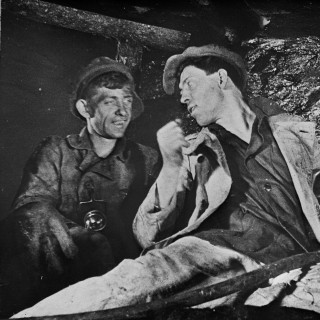
In 1935, miner Alexei Stakhanov became a hero of labor in the Soviet Union, and the Stakhanovite movement began. But what was touted as an organic step forward to greater productivity by Stalin was truly a carefully planned PR effort. Research: Applebaum, Anne. "Holodomor". Encyclopedia Britannica, 2 Jan. 2024, https://www.britannica.com/event/Holodomor Britannica, The Editors of Encyclopaedia. "kulak". Encyclopedia Britannica, 24 Nov. 2023, https://www.britannica.com/topic/kulak Britannica, The Editors of Encyclopaedia. "Stakhanov". Encyclopedia Britannica, 10 Jun. 2008, https://www.britannica.com/place/Stakhanov Britannica, The Editors of Encyclopaedia. “Industrialization, 1929-34.” https://www.britannica.com/place/Soviet-Union/Industrialization-1929-34 Britannica, The Editors of Encyclopaedia. "Lavrenty Beria". Encyclopedia Britannica, 19 Dec. 2023, https://www.britannica.com/biography/Lavrenty-Beria Kotkin, Stephen. “Stalin: Waiting for Hitler, 1929-1941.” Penguin. 2017. “Soviet leaders' gifts go on show.” BBC News. Nov. 15, 2006. http://news.bbc.co.uk/2/hi/europe/6150746.stm Britannica, The Editors of Encyclopaedia. "Khrushchev's secret speech". Encyclopedia Britannica, 18 Feb. 2023, https://www.britannica.com/event/Khrushchevs-secret-speech Costea, Bogdan and Peter Watt. “How a Soviet miner from the 1930s helped create today's intense corporate workplace culture.” The Conversation. June 29, 2021. https://theconversation.com/how-a-soviet-miner-from-the-1930s-helped-create-todays-intense-corporate-workplace-culture-155814 “Heroes of Labor.” Time. Dec. 16, 1935. https://web.archive.org/web/20071016224729/http://www.time.com/time/magazine/article/0,9171,755449,00.html “Khrushchev and the Twentieth Congress of the Communist Party, ” U.S. Department of State. Office of the Historian. https://history.state.gov/milestones/1953-1960/khrushchev-20th-congress Knight, Amy. “Beria: Stalin's First Lieutenant.” Princeton University Press. 1995. Newman, Dina. “Alexei Stakhanov: The USSR's superstar miner.” https://www.bbc.com/news/magazine-35161610 Overy, Richard. “The Dictators: Hitler's Germany, Stalin's Russia.” Norton. 2006. Remnick, David. “Soviets Chronicle Demise of Beria.” The Washington Post. Feb. 29, 1988. https://www.washingtonpost.com/archive/politics/1988/02/29/soviets-chronicle-demise-of-beria/f3793536-d798-44a1-943c-287b99f88340/ Schmemann, Serge. “In Soviet, Eager Beaver's Legend Works Overtime.” New York Times. Augst 31, 1985. https://www.nytimes.com/1985/08/31/world/in-soviet-eager-beaver-s-legend-works-overtime.html SIEGELBAUM, LEWIS H. “Stakhanovism and the Politics of Productivity in the USSR, 1935-1941.” Cambridge University Press. 1988. SIEGELBAUM, LEWIS H. “THE MAKING OF STAKHANOVITES, 1935-36.” Russian History, vol. 13, no. 2/3, 1986, pp. 259–92. JSTOR, http://www.jstor.org/stable/24655836 “Stalin at the Conference of Stakhanovites.” Seventeen Moments in Soviet History. Michigan State University. https://soviethistory.msu.edu/1936-2/year-of-the-stakhanovite/year-of-the-stakhanovite-texts/stalin-at-the-conference-of-stakhanovites/ Davies, R. W., and Oleg Khlevnyuk. “Stakhanovism and the Soviet Economy.” Europe-Asia Studies, vol. 54, no. 6, 2002, pp. 867–903. JSTOR, http://www.jstor.org/stable/826287 See omnystudio.com/listener for privacy information.

This memoir by one of the foremost scholars of the Soviet period spans three continents and more than half a century―from the 1950s when Lewis Siegelbaum's father was a victim of McCarthyism up through the implosion of the Soviet Union and beyond. Siegelbaum recreates journeys of discovery and self-discovery in the tumult of student rebellion at Columbia University during the Vietnam War, graduate study at Oxford, and Moscow at the height of détente. His story takes the reader into the Soviet archives, the coalfields of eastern Ukraine, and the newly independent Uzbekistan. An intellectual autobiography that is also a biography of the field of Anglophone Soviet history, Stuck on Communism: Memoir of a Russian Historian (Northern Illinois UP, 2019) is a guide for how to lead a life on the Left that integrates political and professional commitments. Siegelbaum reveals the attractiveness of Communism as an object of study and its continued relevance decades after its disappearance from the landscape of its origin. Through the journey of a book that is in the end a romance, Siegelbaum discovers the truth in the notion that no matter what historians take as their subject, they are always writing about themselves. Siegelbaum is the author of books on the effort to mobilize industry in tsarist Russia during World War I (1983), the Stakhanovite movement of the 1930s (1988), the Soviet state and society in the 1920s (1994), and the award-winning Cars for Comrades: The Life of the Soviet Automobile (2008). He co-authored with Jim von Geldern the award-winning website “Seventeen Moments in Soviet History,” an online sourcebook used extensively to teach Soviet history, and with Leslie Page Moch Broad is My Native Land: Repertoires and Regimes of Migration in Russia’s Twentieth Century (2014). He has edited two books and co-edited six others, most recently Empire and Belonging in the Eurasian Borderlands (2019) with Krista Goff. His memoir, Stuck on Communism: Memoir of a Russian Historian, is published by Northern Illinois University Press. Steven Seegel is professor of history at University of Northern Colorado. Learn more about your ad choices. Visit megaphone.fm/adchoices
This memoir by one of the foremost scholars of the Soviet period spans three continents and more than half a century―from the 1950s when Lewis Siegelbaum's father was a victim of McCarthyism up through the implosion of the Soviet Union and beyond. Siegelbaum recreates journeys of discovery and self-discovery in the tumult of student rebellion at Columbia University during the Vietnam War, graduate study at Oxford, and Moscow at the height of détente. His story takes the reader into the Soviet archives, the coalfields of eastern Ukraine, and the newly independent Uzbekistan. An intellectual autobiography that is also a biography of the field of Anglophone Soviet history, Stuck on Communism: Memoir of a Russian Historian (Northern Illinois UP, 2019) is a guide for how to lead a life on the Left that integrates political and professional commitments. Siegelbaum reveals the attractiveness of Communism as an object of study and its continued relevance decades after its disappearance from the landscape of its origin. Through the journey of a book that is in the end a romance, Siegelbaum discovers the truth in the notion that no matter what historians take as their subject, they are always writing about themselves. Siegelbaum is the author of books on the effort to mobilize industry in tsarist Russia during World War I (1983), the Stakhanovite movement of the 1930s (1988), the Soviet state and society in the 1920s (1994), and the award-winning Cars for Comrades: The Life of the Soviet Automobile (2008). He co-authored with Jim von Geldern the award-winning website “Seventeen Moments in Soviet History,” an online sourcebook used extensively to teach Soviet history, and with Leslie Page Moch Broad is My Native Land: Repertoires and Regimes of Migration in Russia’s Twentieth Century (2014). He has edited two books and co-edited six others, most recently Empire and Belonging in the Eurasian Borderlands (2019) with Krista Goff. His memoir, Stuck on Communism: Memoir of a Russian Historian, is published by Northern Illinois University Press. Steven Seegel is professor of history at University of Northern Colorado. Learn more about your ad choices. Visit megaphone.fm/adchoices

This memoir by one of the foremost scholars of the Soviet period spans three continents and more than half a century―from the 1950s when Lewis Siegelbaum's father was a victim of McCarthyism up through the implosion of the Soviet Union and beyond. Siegelbaum recreates journeys of discovery and self-discovery in the tumult of student rebellion at Columbia University during the Vietnam War, graduate study at Oxford, and Moscow at the height of détente. His story takes the reader into the Soviet archives, the coalfields of eastern Ukraine, and the newly independent Uzbekistan. An intellectual autobiography that is also a biography of the field of Anglophone Soviet history, Stuck on Communism: Memoir of a Russian Historian (Northern Illinois UP, 2019) is a guide for how to lead a life on the Left that integrates political and professional commitments. Siegelbaum reveals the attractiveness of Communism as an object of study and its continued relevance decades after its disappearance from the landscape of its origin. Through the journey of a book that is in the end a romance, Siegelbaum discovers the truth in the notion that no matter what historians take as their subject, they are always writing about themselves. Siegelbaum is the author of books on the effort to mobilize industry in tsarist Russia during World War I (1983), the Stakhanovite movement of the 1930s (1988), the Soviet state and society in the 1920s (1994), and the award-winning Cars for Comrades: The Life of the Soviet Automobile (2008). He co-authored with Jim von Geldern the award-winning website “Seventeen Moments in Soviet History,” an online sourcebook used extensively to teach Soviet history, and with Leslie Page Moch Broad is My Native Land: Repertoires and Regimes of Migration in Russia’s Twentieth Century (2014). He has edited two books and co-edited six others, most recently Empire and Belonging in the Eurasian Borderlands (2019) with Krista Goff. His memoir, Stuck on Communism: Memoir of a Russian Historian, is published by Northern Illinois University Press. Steven Seegel is professor of history at University of Northern Colorado. Learn more about your ad choices. Visit megaphone.fm/adchoices

This memoir by one of the foremost scholars of the Soviet period spans three continents and more than half a century―from the 1950s when Lewis Siegelbaum's father was a victim of McCarthyism up through the implosion of the Soviet Union and beyond. Siegelbaum recreates journeys of discovery and self-discovery in the tumult of student rebellion at Columbia University during the Vietnam War, graduate study at Oxford, and Moscow at the height of détente. His story takes the reader into the Soviet archives, the coalfields of eastern Ukraine, and the newly independent Uzbekistan. An intellectual autobiography that is also a biography of the field of Anglophone Soviet history, Stuck on Communism: Memoir of a Russian Historian (Northern Illinois UP, 2019) is a guide for how to lead a life on the Left that integrates political and professional commitments. Siegelbaum reveals the attractiveness of Communism as an object of study and its continued relevance decades after its disappearance from the landscape of its origin. Through the journey of a book that is in the end a romance, Siegelbaum discovers the truth in the notion that no matter what historians take as their subject, they are always writing about themselves. Siegelbaum is the author of books on the effort to mobilize industry in tsarist Russia during World War I (1983), the Stakhanovite movement of the 1930s (1988), the Soviet state and society in the 1920s (1994), and the award-winning Cars for Comrades: The Life of the Soviet Automobile (2008). He co-authored with Jim von Geldern the award-winning website “Seventeen Moments in Soviet History,” an online sourcebook used extensively to teach Soviet history, and with Leslie Page Moch Broad is My Native Land: Repertoires and Regimes of Migration in Russia’s Twentieth Century (2014). He has edited two books and co-edited six others, most recently Empire and Belonging in the Eurasian Borderlands (2019) with Krista Goff. His memoir, Stuck on Communism: Memoir of a Russian Historian, is published by Northern Illinois University Press. Steven Seegel is professor of history at University of Northern Colorado. Learn more about your ad choices. Visit megaphone.fm/adchoices
This memoir by one of the foremost scholars of the Soviet period spans three continents and more than half a century―from the 1950s when Lewis Siegelbaum's father was a victim of McCarthyism up through the implosion of the Soviet Union and beyond. Siegelbaum recreates journeys of discovery and self-discovery in the tumult of student rebellion at Columbia University during the Vietnam War, graduate study at Oxford, and Moscow at the height of détente. His story takes the reader into the Soviet archives, the coalfields of eastern Ukraine, and the newly independent Uzbekistan. An intellectual autobiography that is also a biography of the field of Anglophone Soviet history, Stuck on Communism: Memoir of a Russian Historian (Northern Illinois UP, 2019) is a guide for how to lead a life on the Left that integrates political and professional commitments. Siegelbaum reveals the attractiveness of Communism as an object of study and its continued relevance decades after its disappearance from the landscape of its origin. Through the journey of a book that is in the end a romance, Siegelbaum discovers the truth in the notion that no matter what historians take as their subject, they are always writing about themselves. Siegelbaum is the author of books on the effort to mobilize industry in tsarist Russia during World War I (1983), the Stakhanovite movement of the 1930s (1988), the Soviet state and society in the 1920s (1994), and the award-winning Cars for Comrades: The Life of the Soviet Automobile (2008). He co-authored with Jim von Geldern the award-winning website “Seventeen Moments in Soviet History,” an online sourcebook used extensively to teach Soviet history, and with Leslie Page Moch Broad is My Native Land: Repertoires and Regimes of Migration in Russia’s Twentieth Century (2014). He has edited two books and co-edited six others, most recently Empire and Belonging in the Eurasian Borderlands (2019) with Krista Goff. His memoir, Stuck on Communism: Memoir of a Russian Historian, is published by Northern Illinois University Press. Steven Seegel is professor of history at University of Northern Colorado. Learn more about your ad choices. Visit megaphone.fm/adchoices

Welcome back to the Magician On Duty Podcast Series! On this week's editions we welcome Swann Decamme. A psychedelic, intoxicating and unique groove that surprises and transports. This is the main ingredient of the growing success of Swann Decamme, a Stakhanovite of electronic music. Founder of the Parisian label Curiosity Music, this French DJ and producer shines with a tech house to minimal style and a pronounced taste for hypnotic loops and sound waves. Combining groovy rhythms and synthetic melodies in the studio, Swann creates chiseled and structured tracks that penetrate directly into the brain, like powerful psychotropic for music lovers. The quality of his productions signed on prestigious labels is recognized by the public but also by renowned artists, such as the Master Richie Hawtin, who playlisted his tracks during major performances at Time Warp Mannheim, EXIT Festival in Novi Sad and Dour Festival, Paco Osuna, Marco Carola, Stacey Pullen and Luciano just to name the most prominent. The globe trotter Swann Decamme has toured a good amount of European and Central American clubs. His last tour allowed him to play in Colombia, Dominican Republic, Saint-Martin as well as London, Barcelona and Paris. Since 2018, he has also officiated as a resident of Paris’ CURIOUS parties. And, last but not least, this year he gave birth to L’Amour à la Plage, a new kind of events mixing music, art, games, good food and above all freedom, in breathtaking places. With his legendary friend John Acquaviva as main guest, the first edition held in the Caribbean was a great success. We are happy to welcome him to our family, and we hope you enjoy this mix as much as we do! Follow Swann Decamme here: @swann-decamme https://www.facebook.com/swanndecamme https://www.instagram.com/swanndecamme

In the conventional narratives of Communist Poland, and Eastern Europe more generally, student activism tends to get short shrift. While the role of students in 1956 is unavoidable and widely acknowledged, after that their role and their relationship to the society at large has been minimized. The famous Kuron-Modzielewski letter of 1964 is treated first and foremost as an intra-elite affair, while the failure of the student protests in 1968 to provoke a broader movement as well as students' subsequent lack of involvement in the protests of December 1970 have been taken as evidence of students' lack of connection to broader society. Only in the late 1970s did was that gap bridged, first with founding of KOR after the strikes of 1976 and then during the Solidarity era. This account has been pervasive since the 1970s, and even people with only passing knowledge of Polish history have been exposed to it through Andrzej Wajda's 1981 film “Man of Iron.” There the student turned factory worker Maciej Birkut recounts first being told by his father the former Stakhanovite turned worker activist that 1968 is not the right time to challenge the governments and then stands by in spite during the strikes of 1970 only to learn of his father's death. Yet as so often happens when a historian take up a topic that has become so engrained that most people do not even stop to question it. In his new book Student Politics in Communist Poland: Generations of Consent and Dissent (Lexington Books, 2015), Tom Junes reveals that received narrative to be a myth that bears only partial connection to the truth. Covering the development of student politics in Poland from 1946 until the end of Communism, Junes argues that there were 8 distinct generations of students during that period, beginning with the students of the immediate postwar period whose worldview was shaped by their pre-War and War experiences to the students of the 1980s who embraced Solidarity, but felt betrayed by the roundtable negotiations that brought an end to Communist rule in 1989. It is a scrupulously researched book drawing on oral history as well as conventional primary source documents, and it was a pleasure to speak with Junes recently about his research. Learn more about your ad choices. Visit megaphone.fm/adchoices
In the conventional narratives of Communist Poland, and Eastern Europe more generally, student activism tends to get short shrift. While the role of students in 1956 is unavoidable and widely acknowledged, after that their role and their relationship to the society at large has been minimized. The famous Kuron-Modzielewski letter of 1964 is treated first and foremost as an intra-elite affair, while the failure of the student protests in 1968 to provoke a broader movement as well as students’ subsequent lack of involvement in the protests of December 1970 have been taken as evidence of students’ lack of connection to broader society. Only in the late 1970s did was that gap bridged, first with founding of KOR after the strikes of 1976 and then during the Solidarity era. This account has been pervasive since the 1970s, and even people with only passing knowledge of Polish history have been exposed to it through Andrzej Wajda’s 1981 film “Man of Iron.” There the student turned factory worker Maciej Birkut recounts first being told by his father the former Stakhanovite turned worker activist that 1968 is not the right time to challenge the governments and then stands by in spite during the strikes of 1970 only to learn of his father’s death. Yet as so often happens when a historian take up a topic that has become so engrained that most people do not even stop to question it. In his new book Student Politics in Communist Poland: Generations of Consent and Dissent (Lexington Books, 2015), Tom Junes reveals that received narrative to be a myth that bears only partial connection to the truth. Covering the development of student politics in Poland from 1946 until the end of Communism, Junes argues that there were 8 distinct generations of students during that period, beginning with the students of the immediate postwar period whose worldview was shaped by their pre-War and War experiences to the students of the 1980s who embraced Solidarity, but felt betrayed by the roundtable negotiations that brought an end to Communist rule in 1989. It is a scrupulously researched book drawing on oral history as well as conventional primary source documents, and it was a pleasure to speak with Junes recently about his research. Learn more about your ad choices. Visit megaphone.fm/adchoices

In the conventional narratives of Communist Poland, and Eastern Europe more generally, student activism tends to get short shrift. While the role of students in 1956 is unavoidable and widely acknowledged, after that their role and their relationship to the society at large has been minimized. The famous Kuron-Modzielewski letter of 1964 is treated first and foremost as an intra-elite affair, while the failure of the student protests in 1968 to provoke a broader movement as well as students’ subsequent lack of involvement in the protests of December 1970 have been taken as evidence of students’ lack of connection to broader society. Only in the late 1970s did was that gap bridged, first with founding of KOR after the strikes of 1976 and then during the Solidarity era. This account has been pervasive since the 1970s, and even people with only passing knowledge of Polish history have been exposed to it through Andrzej Wajda’s 1981 film “Man of Iron.” There the student turned factory worker Maciej Birkut recounts first being told by his father the former Stakhanovite turned worker activist that 1968 is not the right time to challenge the governments and then stands by in spite during the strikes of 1970 only to learn of his father’s death. Yet as so often happens when a historian take up a topic that has become so engrained that most people do not even stop to question it. In his new book Student Politics in Communist Poland: Generations of Consent and Dissent (Lexington Books, 2015), Tom Junes reveals that received narrative to be a myth that bears only partial connection to the truth. Covering the development of student politics in Poland from 1946 until the end of Communism, Junes argues that there were 8 distinct generations of students during that period, beginning with the students of the immediate postwar period whose worldview was shaped by their pre-War and War experiences to the students of the 1980s who embraced Solidarity, but felt betrayed by the roundtable negotiations that brought an end to Communist rule in 1989. It is a scrupulously researched book drawing on oral history as well as conventional primary source documents, and it was a pleasure to speak with Junes recently about his research. Learn more about your ad choices. Visit megaphone.fm/adchoices

In the conventional narratives of Communist Poland, and Eastern Europe more generally, student activism tends to get short shrift. While the role of students in 1956 is unavoidable and widely acknowledged, after that their role and their relationship to the society at large has been minimized. The famous Kuron-Modzielewski letter of 1964 is treated first and foremost as an intra-elite affair, while the failure of the student protests in 1968 to provoke a broader movement as well as students’ subsequent lack of involvement in the protests of December 1970 have been taken as evidence of students’ lack of connection to broader society. Only in the late 1970s did was that gap bridged, first with founding of KOR after the strikes of 1976 and then during the Solidarity era. This account has been pervasive since the 1970s, and even people with only passing knowledge of Polish history have been exposed to it through Andrzej Wajda’s 1981 film “Man of Iron.” There the student turned factory worker Maciej Birkut recounts first being told by his father the former Stakhanovite turned worker activist that 1968 is not the right time to challenge the governments and then stands by in spite during the strikes of 1970 only to learn of his father’s death. Yet as so often happens when a historian take up a topic that has become so engrained that most people do not even stop to question it. In his new book Student Politics in Communist Poland: Generations of Consent and Dissent (Lexington Books, 2015), Tom Junes reveals that received narrative to be a myth that bears only partial connection to the truth. Covering the development of student politics in Poland from 1946 until the end of Communism, Junes argues that there were 8 distinct generations of students during that period, beginning with the students of the immediate postwar period whose worldview was shaped by their pre-War and War experiences to the students of the 1980s who embraced Solidarity, but felt betrayed by the roundtable negotiations that brought an end to Communist rule in 1989. It is a scrupulously researched book drawing on oral history as well as conventional primary source documents, and it was a pleasure to speak with Junes recently about his research. Learn more about your ad choices. Visit megaphone.fm/adchoices
In the conventional narratives of Communist Poland, and Eastern Europe more generally, student activism tends to get short shrift. While the role of students in 1956 is unavoidable and widely acknowledged, after that their role and their relationship to the society at large has been minimized. The famous Kuron-Modzielewski letter of 1964 is treated first and foremost as an intra-elite affair, while the failure of the student protests in 1968 to provoke a broader movement as well as students’ subsequent lack of involvement in the protests of December 1970 have been taken as evidence of students’ lack of connection to broader society. Only in the late 1970s did was that gap bridged, first with founding of KOR after the strikes of 1976 and then during the Solidarity era. This account has been pervasive since the 1970s, and even people with only passing knowledge of Polish history have been exposed to it through Andrzej Wajda’s 1981 film “Man of Iron.” There the student turned factory worker Maciej Birkut recounts first being told by his father the former Stakhanovite turned worker activist that 1968 is not the right time to challenge the governments and then stands by in spite during the strikes of 1970 only to learn of his father’s death. Yet as so often happens when a historian take up a topic that has become so engrained that most people do not even stop to question it. In his new book Student Politics in Communist Poland: Generations of Consent and Dissent (Lexington Books, 2015), Tom Junes reveals that received narrative to be a myth that bears only partial connection to the truth. Covering the development of student politics in Poland from 1946 until the end of Communism, Junes argues that there were 8 distinct generations of students during that period, beginning with the students of the immediate postwar period whose worldview was shaped by their pre-War and War experiences to the students of the 1980s who embraced Solidarity, but felt betrayed by the roundtable negotiations that brought an end to Communist rule in 1989. It is a scrupulously researched book drawing on oral history as well as conventional primary source documents, and it was a pleasure to speak with Junes recently about his research. Learn more about your ad choices. Visit megaphone.fm/adchoices
© 2020-2026 Ivy Podcast Discovery LLC
