
POPULARITY

2 episodes with carwardine

21 episodes with carwardine

5 episodes with carwardine

No drinking pints standing up in London's nightlife hotspot? No new reservoirs until 2040? Welcome to Veto Britain – where infrastructure, housing and even a round at the bar are all subject to the mercy of endless local objection. So how did we become a country that seems incapable of building, changing or enjoying itself anymore? Plus, racist disorder erupts in Norfolk, scrutiny of Andy Burnham's early prisoner release plan intensifies and the PM's crackdown on “subscription traps” gives cancel culture a whole new meaning. • Questions for But Your Emails? Thoughts? Comments? Email us at ogwn@podmasters.co.uk. ESCAPE ROUTES • Jonn finally watched Stephen Fry and Mark Carwardine's documentary Last Chance to See, based on Carwardine and Douglas Adams' book and radio series of the same name • Rachel has been reading Virgil's epic The Aeneid – “the Roman response to Homer,” she says. • Raf saw a production of Molière's Tartuffe while in France which is coming to the Marylebone Theatre next month. • Zoë zoomed through Jem Calder's I Want You to Be Happy Image: Cartoon depicting Sir Wilfrid Lawson, 2nd Baronet of Brayton (1829-1906), an English temperance campaigner and radical, anti-imperialist Liberal Party politician. Dated 19th Century. No idea who the bloke on the right is. (Universal History Archive/Universal Images Group via Getty Images) www.patreon.com/ohgodwhatnow Presented by Zoë Grünewald, with Rachel Cunliffe, Jonn Elledge and Rafael Behr. Produced by James Liddell. Audio Production: Tom Taylor. Art direction: James Parrett. Theme tune by Tom Taylor and Simon Williams. Managing Editor: Jacob Jarvis. Group Editor: Andrew Harrison. OH GOD, WHAT NOW? is a Podmasters production. www.podmasters.co.uk Learn more about your ad choices. Visit podcastchoices.com/adchoices

In dieser Episode nehmen wir euch mit auf eine ganz besondere Buch-Reise: „Die Letzten ihrer Art“ (Last Chance to See) von Douglas Adams und Mark Carawardine. Ein Werk, das berührt, zum Lachen bringt und zum Nachdenken anregt.Gemeinsam mit den beiden Autoren begeben wir uns auf eine außergewöhnliche Expedition zu den bedrohten Tierarten unseres Planeten. Zwischen humorvollen Beobachtungen und eindringlichen Momenten entfaltet sich eine einzigartige Mischung aus Reiseabenteuer, Naturreportage und leidenschaftlichem Appell für den Umweltschutz.Was dieses Buch so besonders macht? Ein unvergleichliches Duo: Auf der einen Seite ein brillanter Schriftsteller mit Wurzeln in der Science-Fiction-Ecke, auf der anderen ein international renommierter Zoologe – zusammen schaffen sie einen Blick auf die Tierwelt, der ebenso unterhaltsam wie tiefgründig ist.In dieser Folge reisen wir mit euch rund um den Globus:

Guest: Professor Richard Carwardine. The discussion turns to Confederate Vice President Alexander Stephens'"Cornerstone Speech," which explicitly defined racial inequality as the Confederacy's foundation, a stance widely condemned in the North. Carwardine notes that despite earlier tensions, Lincoln viewed his fast days as successful, utilizing them and meetings with religious delegations to gauge public sentiment and prepare the ground for eventual emancipation. Lincoln valued these interactions to influence and learn from denominational leaders.1877
SHOW SCHEDULE1-19-20261914 FLAG DAY WITH WILSON, BRYAN, ROOSEVELT Guest: Professor Richard Carwardine. Carwardine discusses President James Buchanan's January 4, 1861, national fast day, intended to unite a fracturing nation through prayer and repentance. While old-school Presbyterians like Charles Hodge supported this call for divine intervention, the effort largely failed to forestall war. The event highlighted three distinct groups of religious nationalists: conservative Unionists, anti-slavery Republicans viewing slavery as a national sin, and pro-slavery theologians defending the institution on scriptural grounds. Guest: Professor Richard Carwardine. Carwardine explains that President-elect Lincoln did not view Republicans as overly aggressive, positioning himself as a constitution-respecting centrist rather than a radical. Lincoln opposed slavery's expansion but acknowledged its constitutional protection where it already existed, believing the South was misled by elites and would eventually return to the Union. Ironically, Lincoln and Buchanan, though political opposites, worshiped at the same Washington church, sharing an old-school Presbyterian background. Guest: Professor Richard Carwardine. In September 1861, Lincoln proclaimed a fast day, carefully avoiding specific references to slavery to maintain political unity. Carwardine details the conflict surrounding General Frémont's unauthorized emancipation order, which Lincoln revoked to prevent losing loyal border states like Kentucky. Consequently, anti-slavery nationalists used the pulpits to criticize Lincoln's caution, demanding the war become an explicit crusade against the "gigantic crime" of slavery rather than just a restoration of the Union. Guest: Professor Richard Carwardine. The discussion turns to Confederate Vice President Alexander Stephens' "Cornerstone Speech," which explicitly defined racial inequality as the Confederacy's foundation, a stance widely condemned in the North. Carwardine notes that despite earlier tensions, Lincoln viewed his fast days as successful, utilizing them and meetings with religious delegations to gauge public sentiment and prepare the ground for eventual emancipation. Lincoln valued these interactions to influence and learn from denominational leaders. Guest: Professor Richard Carwardine. Carwardine details the intense political opposition Lincoln faced in 1863 following the Emancipation Proclamation. He highlights Clement Vallandigham, a "Peace Democrat" leader who viewed the war as unwinnable and Lincoln as a "Puritan despot." Carwardine explains that the Democraticcoalition was fractured by religion, specifically between Catholics and Protestants, yet united in opposing the administration. Lincoln ultimately banished Vallandigham to the Confederacy to neutralize his influence. Guest: Professor Richard Carwardine. Carwardine discusses James McMaster, the Catholic editor of the Freeman's Journal, characterizing him as an extraordinary polemicist who was imprisoned for his "vituperations" against the war. McMaster argued the war denied the rights of free men and refused to retract his views upon release. The segment also features Samuel "Sunset" Cox, a Democrat who famously attacked New England Puritanism as the source of the nation's meddling and moral extremity. Guest: Professor Richard Carwardine. The discussion turns to the Union's "low point" in August 1864, where Lincoln expected to lose the election to Democrat George McClellan. Carwardine describes the Democraticcampaign as "brokenbacked" for pairing a general with a peace platform. However, the fall of Atlanta revived Union hopes. Carwardine emphasizes how pastors articulated a "higher cause"—the preservation of a unique republican government—to justify the war's terrible "bloodletting" and sacrifice. Guest: Professor Richard Carwardine. Carwardine analyzes the war's conclusion and Lincoln's Second Inaugural Address, which framed the conflict as divine judgment for the shared offense of slavery. He notes that Lincoln intended a Reconstruction based on charity and "absence of malice," rather than punishment. By 1865, Lincoln's views had evolved to support citizenship for African American veterans, though his assassination left the specific blueprint for the nation's reintegration unfinished and uncertain. Guest: Brenda Wineapple. In 1925, the Tennessee legislature passed the Butler Act, banning the teaching of evolution in public schools. At Robinson's drugstore in Dayton, local booster George Rapier and others recruited 24-year-old science teacher John Scopes to violate the law as a test case to generate publicity for the town. Although Scopes was knowingly guilty, the ACLU backed the defense to challenge the law's constitutionality regarding the separation of church and state. Guest: Brenda Wineapple. The ACLU, seeking to defend religious liberty and raise its profile, seized upon the Scopes case. While the board considered prestigious constitutional lawyers, the notorious Clarence Darrowvolunteered his services pro bono because he viewed the Butler Act as bigoted. Despite the ACLU's hesitation regarding Darrow's controversial reputation from the Leopold and Loeb trial, Scopes insisted on having the "street fighter" Darrow defend him against William Jennings Bryan. Guest: Brenda Wineapple. Clarence Darrow was a celebrated attorney known for his "downhome" jury appeals and defense of the marginalized. Mentored by progressive John Altgeld, Darrow built a reputation defending labor unions, socialists like Eugene Debs, and the poor against powerful corporations. However, his career suffered a "bad patch" following the McNamara brothers' bombing case in Los Angeles, where Darrow himself faced trials for allegedly bribing a juror, leaving him with a checkered reputation. Guest: Brenda Wineapple. Three-time presidential candidate William Jennings Bryan joined the prosecution to revive his political career and defend fundamentalism. Famous for his populist "Cross of Gold" speech, Bryan had become rigid in his views, advocating for prohibition and a literal reading of the Bible. He viewed the trial as a platform to combat the theory of evolution, which he believed deprived children of a moral center and denied the miracles of creation. Guest: Brenda Wineapple. Fundamentalist Judge John T. Raulston presided over the trial, enjoying the publicity brought by loudspeakers and radio coverage. The defense included civil liberties lawyer Arthur Garfield Hayes, a secular Jew, serving as a constitutional anchor. Meanwhile, William Jennings Bryan arrived as a celebrity in a pith helmet, though Scopes noted Bryan ignored his own diabetes by overeating at dinner, revealing a disconnect between his fundamentalist beliefs and medical science. Guest: Brenda Wineapple. The defense suffered a major setback when the judge ruled that their scientific experts could not testify before the jury, forcing them to read affidavits into the record instead. H.L. Mencken, the acerbic journalist who dubbed the event the "Monkey Trial," covered the proceedings. Sympathetic to Darrow and critical of Bryan's "fanatic" views, Mencken influenced public perception, though the jury remained shielded from the scientific evidence the defense hoped to present. Guest: Brenda Wineapple. During a stifling heatwave, the trial moved outdoors where Darrow executed a shocking maneuver by calling prosecutor William Jennings Bryan to the witness stand. Darrow interrogated Bryan on his literal interpretation of the Bible, questioning stories like Jonah and the whale. Bryan faltered, admitting creation "days" might be metaphorical periods, which undermined his fundamentalist position and allowed Darrow to humiliate him regarding his knowledge of history, geology, and world religions. Guest: Brenda Wineapple. The trial ended abruptly with a guilty verdict, denying Bryan his closing speech; he died days later, likely due to heat, stress, and diabetes. John Scopes eventually became a geologist and lived a reclusive life, refusing to exploit his fame. Darrow's later career fluctuated, including a controversial defense in the racially charged Massie trial in Hawaii, before his death in 1938, leaving behind a complex legacy beyond the "Inherit the Wind" narrative.
Guest: Professor Richard Carwardine. Carwardine analyzes the war's conclusion and Lincoln's Second Inaugural Address, which framed the conflict as divine judgment for the shared offense of slavery. He notes that Lincoln intended a Reconstruction based on charity and "absence of malice," rather than punishment. By 1865, Lincoln's views had evolved to support citizenship for African American veterans, though his assassination left the specific blueprint for the nation's reintegration unfinished and uncertain.1910 BEECHER HOME, SOUTHBURY, CONN.
Guest: Professor Richard Carwardine. The discussion turns to the Union's "low point" in August 1864, where Lincolnexpected to lose the election to Democrat George McClellan. Carwardine describes the Democratic campaign as "brokenbacked" for pairing a general with a peace platform. However, the fall of Atlanta revived Union hopes. Carwardine emphasizes how pastors articulated a "higher cause"—the preservation of a unique republican government—to justify the war's terrible "bloodletting" and sacrifice.1887 BEECHER COTTAGE, LENOX, MA
Guest: Professor Richard Carwardine. Carwardine discusses James McMaster, the Catholic editor of the Freeman's Journal, characterizing him as an extraordinary polemicist who was imprisoned for his "vituperations" against the war. McMaster argued the war denied the rights of free men and refused to retract his views upon release. The segment also features Samuel "Sunset" Cox, a Democrat who famously attacked New England Puritanism as the source of the nation's meddling and moral extremity.1885 HENRY BEECHER AS GULLIVER
Guest: Professor Richard Carwardine. Carwardine details the intense political opposition Lincoln faced in 1863 following the Emancipation Proclamation. He highlights Clement Vallandigham, a "Peace Democrat" leader who viewed the war as unwinnable and Lincoln as a "Puritan despot." Carwardine explains that the Democraticcoalition was fractured by religion, specifically between Catholics and Protestants, yet united in opposing the administration. Lincoln ultimately banished Vallandigham to the Confederacy to neutralize his influence.1880 HENRY BEECHER
Guest: Professor Richard Carwardine. In September 1861, Lincoln proclaimed a fast day, carefully avoiding specific references to slavery to maintain political unity. Carwardine details the conflict surrounding General Frémont'sunauthorized emancipation order, which Lincoln revoked to prevent losing loyal border states like Kentucky. Consequently, anti-slavery nationalists used the pulpits to criticize Lincoln's caution, demanding the war become an explicit crusade against the "gigantic crime" of slavery rather than just a restoration of the Union.1870 HENRY BEECHER AND HIS SISTER HARRIET BEECHER STOWE.
Guest: Professor Richard Carwardine. Carwardine explains that President-elect Lincoln did not view Republicans as overly aggressive, positioning himself as a constitution-respecting centrist rather than a radical. Lincoln opposed slavery's expansion but acknowledged its constitutional protection where it already existed, believing the South was misled by elites and would eventually return to the Union. Ironically, Lincoln and Buchanan, though political opposites, worshiped at the same Washington church, sharing an old-school Presbyterian background.1861 ST. MICHAEL'S, CHARLESTON SOUTH CAROLINA
Guest: Professor Richard Carwardine. Carwardine discusses President James Buchanan's January 4, 1861, national fast day, intended to unite a fracturing nation through prayer and repentance. While old-school Presbyterians like Charles Hodge supported this call for divine intervention, the effort largely failed to forestall war. The event highlighted three distinct groups of religious nationalists: conservative Unionists, anti-slavery Republicans viewing slavery as a national sin, and pro-slavery theologians defending the institution on scriptural grounds.1855-65 HENRY WARD BEECHER
PREVIEW FOR LATER TODAY Guest: Professor Richard Carwardine. Carwardine explains that while the Civil Warwas won on battlefields, peace was secured at the pulpits. Lincoln recognized the influence of religious nationalists who were initially critical of him, understanding he needed their attention and support to knit the fractured Union back together during the conflict.1860 LINCOLN AFTER THE 1860 ELECTION BUT BEFORE THE INAUGURATION. WORKED FROM AN OFFFICE IN SPRINGFIELD.
PREVIEW FOR LATER TODAY Guest: Professor Richard Carwardine. Carwardine argues Lincoln's first fast day in 1861 was successful, noting the President subsequently called additional fast days. Lincoln utilized these events and open-door meetings with denominational leaders to connect with religious groups, learn from them, and prepare public sentiment for major decisions like emancipation.1861 LINCOLN'S GENERALS
PREVIEW FOR LATER TODAY Guest: Professor Richard Carwardine. Carwardine discusses Samuel "Sunset" Cox, a Democratic Congressman famed for his eloquence. Cox vividly denounced New England Puritanism as the root of moral extremism and interference. He criticized Lincoln's administration for adopting a "Cromwellian direction" that supposedly deprived Northern Democrats of their rights to free expression.1865 SECOND INAUGURAL
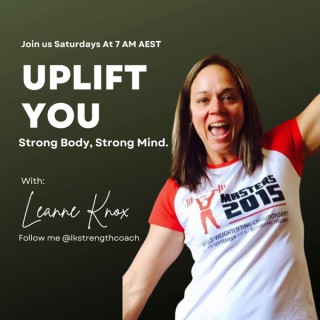
Send us a Text Message.Ruby's journey through weightlifting is nothing short of inspiring. From the electrifying moments of lifting at the state titles to the nerve-wracking preparation for the national stage, Ruby shares her story with authenticity and grit. Despite facing unexpected challenges with her snatches, she achieved a personal best in her clean and jerks, demonstrating unwavering determination. We lighten the mood with a hilarious story involving Ruby's car and her loyal dog, Bo, who is always cheering her on. And scratching the door...Today's show is packed with helpful insights from the athlete's mind:Learn what power all your senses have on performanceLearn how the stories you make in your head affect your performanceLearn about Ruby's biggest hurdles on route to her biggest opportunity yetRuby also delves into the emotional and mental aspects of competing, discussing how family support fuels her drive and the crucial lesson of separating self-worth from performance. At just 22, her maturity shines as she reflects on overcoming setbacks and building mental resilience. As Ruby gears up to represent Queensland at the junior nationals, she offers insights into maintaining a focused mindset, the thrill of competing on home ground, and the power of self-belief. Join us for an episode packed with heartfelt reflections, motivational insights, and a few laughs along the way.Check out Ruby on Instagram at @ruby_carwardineFollow Leanne on Instagram @lkstrengthcoachJoin the Strength Seekers community and score big with a vibrant tribe of like-minded individuals, invaluable resources, coaching services tailored to your needs, special guest coaches and workshops and so much more. Click here to join today with our special listener's offer!
Sarah looks at doubting Thomas, and asks if maybe he should have had a different nickname...
We're catching up on our last few months preaches - this time we go back to 21st January to hear Sarah's thoughts on Jesus' first miracle
Sarah Carwardine - Advent 1 - Hope - 3rd December 2023 by Top Church Dudley
Sarah Carwardine - Daniel & The Lion's Den - 19th November 2023 by Top Church Dudley
Sarah continues our series with a message about David & Goliath
Sarah continues our Bible Stories: Revisited series, this week we looked at the story of Noah
Sarah introduces our new series, looking at the stories we know so well, often from childhood, but often negelect as adults.

24th Sunday in Ordinary Time - Matthew 18:21-35 Alice is the coordinator of Caritas Catholic Earthcare, an organisation committed to addressing environmental issues through Catholic social teaching. She holds a Master's degree in theology with a focus in eco-theology, reflecting her passion for the intersection between faith and care for the planet. In 2018, after successfully transitioning to a zero-waste lifestyle, Alice began sharing her knowledge and experience by running professional development workshops for schools. She is also a trained teacher in Physics and Study of Religion, and brings a wealth of experience to her work. Currently, Alice is a member of the Laudato Si' action platform working group, collaborating with the Dicastery for Promoting Human Integral Development to implement Pope Francis's environmental encyclical.
Sarah continues our summer series by looking at the feeding of the 5000
Sarah continues our summer At the Beach series, looking at Matthew 13
Sarah took a look at how the spirit uses us as we continued our Holy Spirit series
Sarah tells us one of her stories of the impact of the Holy Spirit in her life as we celebrate Pentecost
Sarah Preaches (a week early!!) about the ascension
Sarah continues our Easter series, this time we look at the Beloved Disciple
Sarah talks to us about doubting Thomas as we continue to celebrate Easter
Sarah talks to us at our Good Friday Service
Sarah Talks to us about the events of Palm Sunday as we begin Holy Week
Sarah continues our series looking at the beatitudes
Sarah continues our Beatitudes series talking about Mercy
Sarah talks to us as we celebrate Epiphany, sharing thoughts on personal Epiphanies and good news for all!
Sarah continues our Vision and Story series, looking at Hope and Aspiration
Sarah continues our series on our Vision and Story, looking at worship
O ser mais alto - Sequóia Californiana (Sequoiadendron giganteum (Lindl.) J. Buchholz) --- This episode is sponsored by · Anchor: The easiest way to make a podcast. https://anchor.fm/app --- Send in a voice message: https://anchor.fm/regina-matos0/message
O maior sugador de sangue - Sanguessuga (Haementeria ghilianii) --- This episode is sponsored by · Anchor: The easiest way to make a podcast. https://anchor.fm/app --- Send in a voice message: https://anchor.fm/regina-matos0/message
O mais temido mamífero marinho - Orca (Ornicus orca) --- This episode is sponsored by · Anchor: The easiest way to make a podcast. https://anchor.fm/app --- Send in a voice message: https://anchor.fm/regina-matos0/message
O maior usuário de remédios - Chimpanzé (Pan troglidytes) --- This episode is sponsored by · Anchor: The easiest way to make a podcast. https://anchor.fm/app --- Send in a voice message: https://anchor.fm/regina-matos0/message
O animal mais venenoso - Sapo-Dourado (Phyllobates terribilis) --- This episode is sponsored by · Anchor: The easiest way to make a podcast. https://anchor.fm/app --- Send in a voice message: https://anchor.fm/regina-matos0/message
In the final of three episodes focused on Animal Conservation, David Oakes speaks again (you’ll remember him from his Narwhal-centric episode at the top of this season) to Mark Carwardine - zoologist, conservationist, broadcaster and photographer. Having been out on foot patrols upon most of the planet’s continents, Mark explains the realities of being a wildlife ranger. The risks of poachers, animals and accidents; the reality of spending weeks on end away from civilisation, safe drinking water and emergency medical support, and; the impact this places, not simply upon the individual, but also upon one’s family. Having lost a friend to this most noble and most dangerous of professions, Mark explains why anti-poaching rangers should be considered the real “heroes of conservation”.For further information on this and ot her episodes, visit: http://www.treesacrowd.fm/more-mark-carwardine/ See acast.com/privacy for privacy and opt-out information.
Mark Carwardine is a zoologist, leading conservationist, broadcaster and photographer. He came to prominence through his book and BBC documentary series “Last Chance to See” which he created with Douglas Adams of “The Hitchhiker's Guide to the Galaxy” fame. One of Mark’s big passions is diving - he organises whale and dolphin trips in Baja California, Mexico. In this fascinating conversation dusted with the sounds of nearby Canada geese, coots and black-headed gulls, Mark describes his most moving experience, snorkeling with humpback whales, and admiring their five meter long flippers. He talks about his childhood, rescuing animals wherever he found them, and about creating his own mini zoo. He reminisces about an unforgettable moment from his youth; cramming his idols David Attenborough, David Bellamy, David Shepherd and Peter Scott into his old Hillman Imp, which catastrophically broke down on the way to the train station. From the green woodpecker that sits on his office window sill every day, to the narwhals in the high arctic that you absolutely ‘shouldn’t french kiss’, Mark describes the endless joy that nature brings him. For more information on this podcast, including David's thoughts following this interview, head to: https://www.treesacrowd.fm/mark-carwardine/ See acast.com/privacy for privacy and opt-out information.

Mark Carwardine is a conservationist, broadcaster and wildlife photographer. He is also a whale expert and leads wildlife tours around the world. I was recently on one of those tours, in Baja California. I spoke with Mark about the wildlife we saw and his conservation work. Mark’s website can be found at https://www.markcarwardine.com/ Whales and Dolphins seen on the whale-watching tour (in order seen): Common Dolphin Gray Whale Fin Whale Pacific White-Sided Dolphin Bottlenose Dolphin Blue Whale Humpback Whale Sperm Whale Peruvian Beaked Whale Dwarf Sperm Whale Birds seen on the whale-watching tour (in order seen): 1. BROWN PELICAN 2. WESTERN GULL 3. SNOWY EGRET 4. GREAT BLUE HERON 5. GREAT EGRET 6. BLACK-CROWNED NIGHT HERON 7. DOUBLE-CRESTED CORMORANT 8. BLACK OYSTERCATCHER 9. BLACK-VENTED SHEARWATER 10. PINK-FOOTED SHEARWATER 11. BRANDT'S CORMORANT 12. SONG SPARROW 13. LINCOLN'S SPARROW 14. SWAINSON'S THRUSH 15. OSPREY 16. RAVEN 17. HEERMANN'S GULL 18. COSTA'S HUMMINGBIRD 19. SURF SCOTER 20. TURKEY VULTURE 21. CASPIAN TERN 22. ROYAL TERN 23. REDDISH EGRET 24. POMARINE SKUA 25. WHITE IBIS 26. LONG-BILLED CURLEW 27. SANDERLING 28. RED-BILLED TROPICBIRD 29. MAGNIFICENT FRIGATEBIRD 30. BLUE-FOOTED BOOBY 31. BROWN BOOBY 32. XANTUS'S MURRELET 33. MASKED BOOBY 34. WHITE-THROATED SWIFT 35. YELLOW-FOOTED GULL 36. NORTHERN MOCKINGBIRD 37. EARED GREBE 38. VERDIN 39. ASH-THROATED FLYCATCHER 40. GILA WOODPECKER 41. LADDERBACKED WOODPECKER 42. WHITE-WINGED DOVE 43. NORTHERN CARDINAL 44. BLACK-THROATED SPARROW 45. HOUSE FINCH 46. CACTUS WREN 47. BLACK STORM PETREL 48. ELEGANT TERN 49. PELAGIC CORMORANT 50. HOUSE SPARROW The Casual Birder Podcast Don't miss an episode - subscribe to the show (Subscribing is free) Follow me on - Twitter: https://twitter.com/CasualBirderPod Instagram: https://www.instagram.com/casualbirderpodcast/ or join the Facebook group at https://www.facebook.com/groups/CasualBirderPodcast/ Thanks to: Randy Braun for designing the artwork for the show. The Drones for letting me use 'Short Sleeved Shirt' as my theme music. Check out their website at www.dronesmusic.net

"Imagine a puddle waking up one morning and thinking, this is an interesting world I find myself in - fits me rather neatly, don't you think?" Douglas Noel Adams wasn't even fifty when he died in 2001, but his imagination had already roamed far. He created The Hitchhiker's Guide to the Galaxy, the Meaning of Liff and several episodes of Doctor Who, plus the Dirk Gently character and Last Chance to See. Nominating him is his co-writer on Last Chance to See, the zoologist Mark Carwardine. Mark's role, Adams said later, was to be the one who knew what he was talking about. "My role was to be an extremely ignorant non-zoologist to whom everything that happened would come as a complete surprise." Joining Mark Carwardine and Matthew Parris in the bar where this was recorded is Douglas Adam's biographer, Jem Roberts. With archive of Stephen Fry, John Lloyd, Naomi Alderman, Griff Rhys Jones and Geoffrey Perkins. The producer in Bristol is Miles Warde.

In the third podcast of Arguing History, historians William J. Cooper and Richard Carwardine address the question of the role presidential leadership played in determining the outcome of the American Civil War. Considering the respective positions of both Abraham Lincoln and his Confederate counterpart Jefferson Davis, they discuss the respective backgrounds of the two men, the political environment in which each of them operated, their relationship to their military commanders, and their contributions to the questions of slavery and emancipation as they pertained to the war. In discussing their abilities and actions, Carwardine and Cooper describe some of the important ways in which the two men shaped the conflict and its legacy for us today, in ways both intended and unexpected. William J. Cooper is Boyd Professor of History emeritus at Louisiana State University and the author of several books about American history, including Jefferson Davis, American; We Have the War Upon Us: The Onset of the Civil War, November 1860-April 1861; and, most recently, The Lost Founding Father: John Quincy Adams and the Transformation of American Politics. Richard Carwardine is Rhodes Professor of American History emeritus and the former President of Corpus Christi College, Oxford University. Among his works are Lincoln: A Life of Purpose and Power and his newest book, Lincoln’s Sense of Humor. Learn more about your ad choices. Visit megaphone.fm/adchoices

In the third podcast of Arguing History, historians William J. Cooper and Richard Carwardine address the question of the role presidential leadership played in determining the outcome of the American Civil War. Considering the respective positions of both Abraham Lincoln and his Confederate counterpart Jefferson Davis, they discuss the respective backgrounds of the two men, the political environment in which each of them operated, their relationship to their military commanders, and their contributions to the questions of slavery and emancipation as they pertained to the war. In discussing their abilities and actions, Carwardine and Cooper describe some of the important ways in which the two men shaped the conflict and its legacy for us today, in ways both intended and unexpected. William J. Cooper is Boyd Professor of History emeritus at Louisiana State University and the author of several books about American history, including Jefferson Davis, American; We Have the War Upon Us: The Onset of the Civil War, November 1860-April 1861; and, most recently, The Lost Founding Father: John Quincy Adams and the Transformation of American Politics. Richard Carwardine is Rhodes Professor of American History emeritus and the former President of Corpus Christi College, Oxford University. Among his works are Lincoln: A Life of Purpose and Power and his newest book, Lincoln’s Sense of Humor. Learn more about your ad choices. Visit megaphone.fm/adchoices

In the third podcast of Arguing History, historians William J. Cooper and Richard Carwardine address the question of the role presidential leadership played in determining the outcome of the American Civil War. Considering the respective positions of both Abraham Lincoln and his Confederate counterpart Jefferson Davis, they discuss the respective backgrounds of the two men, the political environment in which each of them operated, their relationship to their military commanders, and their contributions to the questions of slavery and emancipation as they pertained to the war. In discussing their abilities and actions, Carwardine and Cooper describe some of the important ways in which the two men shaped the conflict and its legacy for us today, in ways both intended and unexpected. William J. Cooper is Boyd Professor of History emeritus at Louisiana State University and the author of several books about American history, including Jefferson Davis, American; We Have the War Upon Us: The Onset of the Civil War, November 1860-April 1861; and, most recently, The Lost Founding Father: John Quincy Adams and the Transformation of American Politics. Richard Carwardine is Rhodes Professor of American History emeritus and the former President of Corpus Christi College, Oxford University. Among his works are Lincoln: A Life of Purpose and Power and his newest book, Lincoln’s Sense of Humor. Learn more about your ad choices. Visit megaphone.fm/adchoices

In the third podcast of Arguing History, historians William J. Cooper and Richard Carwardine address the question of the role presidential leadership played in determining the outcome of the American Civil War. Considering the respective positions of both Abraham Lincoln and his Confederate counterpart Jefferson Davis, they discuss the respective backgrounds of the two men, the political environment in which each of them operated, their relationship to their military commanders, and their contributions to the questions of slavery and emancipation as they pertained to the war. In discussing their abilities and actions, Carwardine and Cooper describe some of the important ways in which the two men shaped the conflict and its legacy for us today, in ways both intended and unexpected. William J. Cooper is Boyd Professor of History emeritus at Louisiana State University and the author of several books about American history, including Jefferson Davis, American; We Have the War Upon Us: The Onset of the Civil War, November 1860-April 1861; and, most recently, The Lost Founding Father: John Quincy Adams and the Transformation of American Politics. Richard Carwardine is Rhodes Professor of American History emeritus and the former President of Corpus Christi College, Oxford University. Among his works are Lincoln: A Life of Purpose and Power and his newest book, Lincoln’s Sense of Humor. Learn more about your ad choices. Visit megaphone.fm/adchoices

In the third podcast of Arguing History, historians William J. Cooper and Richard Carwardine address the question of the role presidential leadership played in determining the outcome of the American Civil War. Considering the respective positions of both Abraham Lincoln and his Confederate counterpart Jefferson Davis, they discuss the respective backgrounds of the two men, the political environment in which each of them operated, their relationship to their military commanders, and their contributions to the questions of slavery and emancipation as they pertained to the war. In discussing their abilities and actions, Carwardine and Cooper describe some of the important ways in which the two men shaped the conflict and its legacy for us today, in ways both intended and unexpected. William J. Cooper is Boyd Professor of History emeritus at Louisiana State University and the author of several books about American history, including Jefferson Davis, American; We Have the War Upon Us: The Onset of the Civil War, November 1860-April 1861; and, most recently, The Lost Founding Father: John Quincy Adams and the Transformation of American Politics. Richard Carwardine is Rhodes Professor of American History emeritus and the former President of Corpus Christi College, Oxford University. Among his works are Lincoln: A Life of Purpose and Power and his newest book, Lincoln’s Sense of Humor. Learn more about your ad choices. Visit megaphone.fm/adchoices

Ending a Mighty Conflict: The Civil War in 1864–65 and Beyond
Richard Carwardine discusses “Appomattox and Lincoln’s Assassination: Popular Readings at Home and Abroad”. Carwardine is the President of Corpus Christi College, Oxford.

In episode nine we have a great variety of books, ranging from life with a beast, to the last of a species, to life on another planet. We open with our first cookbook, “Feed The Beast: Cooking For The Alpha Male” and author Tracy Hammond tells us what it’s like to live with an Alpha Male, and how to tame them with delicious food (And plenty of it!) Next, Virginia Jones brings us a classic of the animal conservation movement, the stunning, funny, and ultimately importantbook, “Last Chance To See”, in which venerable Sci-fi author Douglas Adams and zoologist Mark Carwardine travelled around the globe to document the possible “last of” a variety of endangered animals. And finally, from a classic Sci-fi author to a new Sci-fi classic, Matt Kirshen brings us the fascinating new novel by Andy Weir, “The Martian”, that has grown from a small internet fan base to become one of the most well regarded novels of the last few years. MATT KIRSHEN - ‘The Martian’ by Andy Weir - Crown Publishing Group - ISBN978-0-8041-3902-1 VIRGINIA JONES - ‘Last Chance To See’ by Douglas Adams & Mark Carwardine - Pan Books - ISBN # 978-0-345-37198-0 TRACY HAMMOND - ‘Feed the Beast - Cooking For Your Alpha Male’ by Tracy Hammond - Volossal Publishing - ISBN # 978-0-9886262-9-4 - Audiobook soon on Audible.com

Introduced by Peter Donaldson, Edited and Mixed at dBs Music'I have written a blasphemous book', said Melville when his novel was first published in 1851, 'and I feel as spotless as the lamb'. Deeply subversive, in almost every way imaginable, Moby-Dick is a virtual, alternative bible - and as such, ripe for reinterpretation in this new world of new media. Out of Dominion was born its bastard child - or perhaps its immaculate conception - the Moby-Dick Big Read: an online version of Melville's magisterial tome: each of its 135 chapters read out aloud, by a mixture of the celebrated and the unknown, to be broadcast online, one new chapter each day, in a sequence of 135 downloads, publicly and freely accessible.Starting 16 September 2012!For more info please go to: www.mobydickbigread.com

Richard Carwardine discusses the colorful story of a Tennessee minister and master of invective, William G. Brownlow. His talk was part of the Huntington Conference “Civil War Lives,” held at the Huntington Library in October 2011. Carwardine is the author of “Lincoln: A Life of Purpose” (2004).
© 2020-2026 Ivy Podcast Discovery LLC
