
POPULARITY
Categories

22 episodes with king sunday

12 episodes with king sunday

10 episodes with king sunday

6 episodes with king sunday

8 episodes with king sunday

7 episodes with king sunday

6 episodes with king sunday

6 episodes with king sunday

5 episodes with king sunday

4 episodes with king sunday

6 episodes with king sunday

9 episodes with king sunday

4 episodes with king sunday

5 episodes with king sunday

4 episodes with king sunday

5 episodes with king sunday

6 episodes with king sunday

5 episodes with king sunday

6 episodes with king sunday

6 episodes with king sunday

4 episodes with king sunday

5 episodes with king sunday

4 episodes with king sunday

3 episodes with king sunday

4 episodes with king sunday

4 episodes with king sunday

4 episodes with king sunday

3 episodes with king sunday

3 episodes with king sunday

4 episodes with king sunday

4 episodes with king sunday

3 episodes with king sunday

3 episodes with king sunday

4 episodes with king sunday

4 episodes with king sunday

4 episodes with king sunday

6 episodes with king sunday

3 episodes with king sunday

3 episodes with king sunday

3 episodes with king sunday

3 episodes with king sunday

5 episodes with king sunday

3 episodes with king sunday

3 episodes with king sunday

3 episodes with king sunday

The sermon explores the concept of a perfect king by contrasting human monarchs, particularly King David, with Jesus Christ. It argues that while earthly rulers lack comprehensive authority, perfect justice, and reliable refuge, Jesus possesses all three qualities fully. The text highlights humanity's inherent rebellion against God's sovereignty but emphasizes that this resistance is ultimately futile against Christ's divine power. Believers are called to submit to His lordship through repentance and faith, recognizing that true freedom is found only in surrendering to His rule. Finally, the message offers comfort by presenting Christ as a secure refuge from sin's consequences and a promise of future perfect justice.

John 6: 1 - 13
"...And they lived happily ever after! The End." Do you like stories to have happy endings? I know I do! But in real life, the stories of people's lives don't always have happy endings. Everything we do is a choice. Each choice brings positive or negative consequences to our lives and will lead us down one of two paths. This week we're learning more about the choices that Israel and Judah were making, and the happy and sad outcomes each of them experienced. Year B Quarter 2 Week 15All Bible verses are from the NKJVHymn: Come Thou FountWrite to Ms. Katie: seedpod@startingwithjesus.comKatie's Korner: https://startingwithjesus.com/katies-korner/Find the Lessons Here: Kindergarten https://bit.ly/SeedPodKLessonsPrimary https://bit.ly/SeedPodPLessonsConnect with Us:Website: https://startingwithjesus.comStarting With Jesus - YouTube: https://www.youtube.com/c/StartingWithJesusSeedPod - YouTube: https://www.youtube.com/channel/UCCvU2FBPEL5-Zi2QW0STVLg Instagram: https://www.instagram.com/startingwithjesusFacebook: https://www.facebook.com/startingwithjesusAcknowledgments:Bible Readings this Week: Faith & DavidPodcast Producer: Katie ChitwoodSound Engineer: Dillon AustinMy Bible First, https://bit.ly/SeedPodLesson for use of their Bible Lesson curriculum.AudioVerse, https://www.audioverse.org/ for partnering with us and supporting our ministry.Lindsey Mills, for writing and performing our SeedPod Kids Theme Song & Background Music. To learn more about her music or to get her CD, email her: lindsey@startingwithjesus.com
Imagine your grandmother wanting to kill you. You being hidden away for years and taught to love and obey God by your aunt and uncle. Then when you are 7 years old, you become KING!!!! Can you imagine??? This week we are learning about a new king for Israel - Joash. He was just a kid when he was put on the throne, but because he loved God, there were some great things that he was able to do for his people and he helped to bring them back to the worship of God. Year B Quarter 2 Week 14All Bible verses are from the NKJVHymn: There's Sunshine in my SoulWrite to Ms. Katie: seedpod@startingwithjesus.comKatie's Korner: https://startingwithjesus.com/katies-korner/Find the Lessons Here: Kindergarten https://bit.ly/SeedPodKLessonsPrimary https://bit.ly/SeedPodPLessonsConnect with Us:Website: https://startingwithjesus.comStarting With Jesus - YouTube: https://www.youtube.com/c/StartingWithJesusSeedPod - YouTube: https://www.youtube.com/channel/UCCvU2FBPEL5-Zi2QW0STVLg Instagram: https://www.instagram.com/startingwithjesusFacebook: https://www.facebook.com/startingwithjesusAcknowledgments:Bible Readings this Week: Abigail & AndrewPodcast Producer: Katie ChitwoodSound Engineer: Dillon AustinMy Bible First, https://bit.ly/SeedPodLesson for use of their Bible Lesson curriculum.AudioVerse, https://www.audioverse.org/ for partnering with us and supporting our ministry.Lindsey Mills, for writing and performing our SeedPod Kids Theme Song & Background Music. To learn more about her music or to get her CD, email her: lindsey@startingwithjesus.com
Today is day 73 and we are in the section on the Second Article of the Apostles' Creed on Jesus Christ the Son of God. Today we are on the eleventh line: “and is seated at the right hand of the Father” and studying question 73. 73. What does it mean for Jesus to sit at God the Father's right hand? The throne on the king's right hand was traditionally the seat of one appointed to exercise the king's own authority. Ruling with his Father in heaven, Jesus is Lord over the Church and all creation, with authority to equip his Church, advance his kingdom, bring sinners into saving fellowship with God the Father, and finally establish justice and peace upon the earth. (Psalm 2; Isaiah 9:6–7; Acts 2:33–36; Ephesians 1:20–23; Hebrews 1:3–14) We will conclude today with the Collect for Christ the King Sunday found on page 623 of the Book of Common Prayer (2019). If you would like to buy or download To Be a Christian, head to anglicanchurch.net/catechism. Produced by Holy Trinity Anglican Church in Madison, MS. Original music from Matthew Clark. Daily collects and Psalms are taken from Book of Common Prayer (2019), created by the Anglican Church in North America and published by the Anglican Liturgical Press. Used by permission. All rights reserved. Scripture quotations are from The ESV® Bible (The Holy Bible, English Standard Version®), copyright © 2001 by Crossway, a publishing ministry of Good News Publishers. Used by permission. All rights reserved. Catechism readings are taken from To Be a Christian - An Anglican Catechism Approved Edition, copyright © 2020 by The Anglican Church in North America by Crossway a publishing ministry of Good News Publishers. Used by permission. All rights reserved.
This powerful exploration of John 19:1-16 confronts us with a profound question that echoes from a kindergarten hallway into the throne room of heaven: who is really the boss of our lives? Through the lens of Jesus's trial before Pilate, we're invited to examine three devastating examples of authority rejection—the soldiers who mocked, Pilate who compromised, and the Jewish leaders who betrayed their own covenant. What makes this passage so compelling is the doctrine of concurrence it reveals: God's sovereign decree and human moral responsibility are not enemies but companions in the unfolding of redemptive history. Jesus stands beaten and humiliated, yet declares the stunning truth that no earthly authority exists except what has been given from above. This isn't just ancient history—it's a mirror held up to our modern hearts that still resist divine authority in favor of personal autonomy. The warning is clear and urgent: rote religion without genuine faith can blind us to the very Savior we claim to worship. When the Jewish leaders declared 'we have no king but Caesar' mere hours after singing 'we have no king but thee,' they revealed how easily religious activity can mask spiritual rebellion. We're challenged to examine whether we've truly bowed our knee to Christ's kingship over every area of life, or whether we're simply going through Christian motions while keeping Jesus at arm's length from our real decisions and desires.
Today is day 52 and we are in the section on the Second Article of the Apostles' Creed on Jesus Christ the Son of God. Today we are on the fifth line: “His only Son, our Lord” and studying question 52. 52. What do you mean when you call Jesus Christ “Lord”? I acknowledge Jesus' divine authority over the Church and all creation, over all societies and their leaders, and over every aspect of my life, both public and private. I surrender my entire life to him and seek to live in a way that pleases him. (Daniel 7:13–14; Matthew 7:21–23; Luke 9:23–26; Ephesians 1:15–23; Colossians 1:16–18) We will conclude today with The Collect for Christ the King Sunday found on page 623 of the Book of Common Prayer (2019). If you would like to buy or download To Be a Christian, head to anglicanchurch.net/catechism. Produced by Holy Trinity Anglican Church in Madison, MS. Original music from Matthew Clark. Daily collects and Psalms are taken from Book of Common Prayer (2019), created by the Anglican Church in North America and published by the Anglican Liturgical Press. Used by permission. All rights reserved. Scripture quotations are from The ESV® Bible (The Holy Bible, English Standard Version®), copyright © 2001 by Crossway, a publishing ministry of Good News Publishers. Used by permission. All rights reserved. Catechism readings are taken from To Be a Christian - An Anglican Catechism Approved Edition, copyright © 2020 by The Anglican Church in North America by Crossway a publishing ministry of Good News Publishers. Used by permission. All rights reserved.

Sunday, November 9, 2025 Holland Gospel Chapel Holland, MI
Sunday, November 9, 2025 Holland Gospel Chapel Holland, MI
A homily for the feast of the Epiphany.

Common Table's November 23, 2025 sermon. Second Sunday of Advent - Jeremiah 29:1, 4-14 // Oh, The Places You'll Stay w/Drew WillsonO come, O come Emmanuelthat mourns in lonely exile here...On Christ the King Sunday (the final Sunday of the Christian year) we read the words of the prophet Jeremiah to God's people exiled in Babylon. Though they'd love to come home, God encourages them to stay! Together, we ponder the strength to stay in difficult places in light of that well-known promise:"For I know the plans I have in mind for you; plans for peace, not disaster, to give you a future filled with hope." -- Jeremiah 29:11
When your parents ask you to do something, do you obey? Or do you argue? We are going tolearn about a teenager who was obedient. He obeyed God. Who was this special young manand how God was with him?Year A Quarter 4 Week 50All Bible verses are from the NKJVHymn: I Surrender AllWrite to Ms. Katie: seedpod@startingwithjesus.comKatie's Korner: https://startingwithjesus.com/katies-korner/Find the Lessons Here:Kindergarten https://bit.ly/SeedPodKLessonsPrimary https://bit.ly/SeedPodPLessonsConnect with Us:Website: https://startingwithjesus.comStarting With Jesus - YouTube: https://www.youtube.com/c/StartingWithJesusSeedPod - YouTube: https://www.youtube.com/channel/UCCvU2FBPEL5-Zi2QW0STVLgInstagram: https://www.instagram.com/startingwithjesusFacebook: https://www.facebook.com/startingwithjesusAcknowledgments:Bible Readings this week: ElishaPodcast Producer: Katie ChitwoodSound Engineer: Dillon AustinMy Bible First, https://bit.ly/SeedPodLesson for use of their Bible Lesson curriculum.AudioVerse, https://www.audioverse.org/ for partnering with us and supporting our ministry.Lindsey Mills, for writing and performing our SeedPod Kids Theme Song & Background Music.To learn more about her music or to get her CD, email her: lindsey@startingwithjesus.com

The church's liturgical year ends with Christ the King Sunday and Megan explores what it means for Christ to be king in a nation that rejects kings.
A homily for the feast of Jesus Christ, King of the Universe.

Luke 23:33-43 Sermon by the Rev. Ben Brannan from Christ the King Sunday, November 23, 2025. Read the manuscripts of our latest sermons at: https://www.spres.org/worship/sermons/

As we wrap up Christ the King Sunday—and the Christian year—Magrey and Matt reflect on where we've been, what's grounding us right now, and where our faith might carry us next. They share a simple three-part gratitude practice perfect for your Thanksgiving table, and explore what it really means to say “Jesus is Lord” in a world shaped by Christian nationalism and diverse faith traditions.Find out more at HydeParkUMC.org/NextSteps

November 23, 2025: May God's words be spoken, may God's words be heard. Amen. For some, this is a day called Christ the King Sunday, but as I say every year, that is not a title he would have ever claimed. As we heard in the Gospel, it was a title given to him by the oppressors who crucified him. No, Jesus would not be happy with this King business I believe, Jesus is Lord is enough, and was for centuries for his followers, as Christ the King wasn't even a thing until 1925. So, not Christ the King…but it is Advent. And we have practiced the original seven week Advent here at Christ Church since 2016, and as then, it seems so appropriate now, because Advent is about a people walking in darkness, but not a people without hope. The people are in crisis. Many live in fear. The country is divided against itself. People don't know which way to turn, how to take the next step, what to do, because the leaders have failed them. Certainly, this sounds like it is a time of darkness, and even very familiar – but I am not talking about the events in this country, at least not yet. I am talking about the passage in Jeremiah we heard this morning. If you were in doubt about whether Advent, from a lectionary point of view, is seven weeks long, just look again at our reading today from Jeremiah and the Canticle. Jeremiah begins with a stern warning from God for those in power that because they have abused their people, because they have not care for their flock, they will meet with God's wrath. Jeremiah had been speaking about the failure of leaders in the time of the fall of Jerusalem to the Babylonians in 587 bce. And the passage ends with a very Advent-y verse “The days are surely coming, says the Lord, when I will raise up for David a righteous Branch…” God clearly was not happy with the shepherds who failed their sheep. One of the things that our faith, our scriptures, make abundantly clear, is the importance of shepherds. And being a shepherd is about never forgetting that the focus of your work must always be on the welfare of the sheep. This is true, not only for those who watch over flocks, but for all kinds of leadership positions – from President to parent, from CEOs to church leaders. We don't have to have lived in the Ancient Near East to understand what can happen when shepherds fail in their work. We have borne witness to this in our lifetimes. Today, we can certainly understand what it must have felt like back in the days of Jeremiah to be a people divided, scattered, fearful of our leaders, and not sure what tomorrow will bring. Our own nation's leaders have not only failed to be good shepherds, it is far worse than that. They have actually turned on the sheep. Our country – once a beacon of freedom and democracy to the world – has entered into the dark shadows of oligarchy and systemic oppression. The President has put masked troops in the street shooting tear gas and pepper balls into crowds of citizens, and callously throwing people, including clergy, onto the pavement – arresting them for the crime of free speech. He is responsible for the execution of over 80 people without due process of law through drone strikes on boats in international waters. He has had thousands detained, including zip tying children (let that sink in), again without due process of law, and even deported many of them to foreign prisons notorious for their human rights abuses. He has dismissed the concern of over a thousand female victims of a child sex predator to protect his own hide, calling their abuse a hoax. And his government has stolen affordable access to healthcare for the poor to give money in tax breaks to the rich and powerful. And while some may feel this is less important – it goes to his misogyny and eroding of the freedom of the press – the silencing of those who courageously try to protect the flock from predators. He told one woman reporter who dared ask him a question, “Quiet Piggy!” Then he held a meeting at the White House with Mohammed bin Salman of Saudi Arabia, known for his brutality, including the 2018 killing of journalist Jamal Khashoggi, a US citizen, by having him chopped up while still alive. When the President was asked about meeting with him by another reporter (also a woman) he called her “insubordinate.” Insubordinate – as though he is a king who cannot be questioned. And to another who asked directly about the murder of Khashoggi, he said “A lot of people didn't like that gentleman that you're talking about. Whether you like him or didn't like him, things happen.” Things happen? Sure, a guy walks into a bathroom and things like a bone saw just kinda happen to him. Seriously. You can't make this stuff up. These are dark days we find ourselves walking in, to be sure. And it could make anyone feel like just pulling the covers over their heads and praying that things will change. That perhaps new leaders will emerge and make everything better in some distant future. But, that would be like reading only parts of this passage from Jeremiah – the beginning condemnation of the current leaders in the first two verses, and the promise of a new leader in the final verses, when what we need most to pay attention to today is everything in between. Because if we focus only on the current predicament, and the hope of new leadership, we miss what God intends for us, and it is something so very needed now. After condemning the current leaders, God then says “I myself will gather the remnant of my flock, and…I will raise up shepherds over them who will shepherd them, and they shall not fear any longer, or be dismayed, nor shall any be missing.” God declares “I will raise up shepherds…” Well, guess where God gets those new shepherds? From right within the flock! God intends to call from among the sheep new shepherds. As one commentator noted, “While [Jeremiah] opens with judgment and closes with a promise of a future leader who will save and protect the people, the larger book of Jeremiah does not let us — the people — off the hook as we wait.” So, both sheep and shepherds have responsibilities to the full flock. Everyone has a role to play, especially when we talk about our lives in Christ. Some are called to a dedicated shepherd role. Bishops are the shepherds for a diocese and Deacons assist in that work. Priests are the shepherds for a parish or other type of faith community. But what about the laity, the sheep? Well, that's what we hear about in the Song of Zachariah, the canticle, or for Latin nerds, the Benedictus, chanted so beautifully this morning by our choir. Zachariah, after the miraculous birth of his son John by his wife Elizabeth, had a lot to say. Now, you can understand why when we remember what the angel Gabriel did to him before this. See, back about nine months earlier, Zach was a priest, and it was his turn to serve in the temple. This was not an every week thing. There were a lot of them, and so maybe this was his one shot a year. So, he's back there doing his priestly work, burning some incense, as you do, when the angel Gabe pops in to tell him “Hey Zach! You and Liz are gonna have a baby! You will call him John, and he will be a great prophet, who will proclaim the coming of the Lord.” Now, Zach was a bit skeptical, after all, he and Liz were getting on in years. So, he says “Seriously? How is that gonna happen? My wife and I are already on Medicare for crying out loud.” Gabe was not pleased. “I am Gabriel – the best messenger God has! I came all this way to give you this awesome news and you doubt me?” Knowing priests love to talk, he made Zach mute until the baby was born. Which tells you that if an angel appears, even in flames like the movie Dogma, keep your doubts to yourself. So, as we know now, Liz did get pregnant. Her cousin Mary, the mother of Jesus, came to visit her, etc. Fast forward to today's passage, and that baby was just born. Zach's mouth was opened, and he wasn't holding back. He told all that had gathered to celebrate this birth what this miracle child would do. He told them that salvation was coming for all of them, and that John would be called a prophet, and prepare the way for the coming of Christ. That's a lot right there for this newborn. But there's more. John's prophetic witness would shine light “…on those who dwell in darkness and the shadow of death, and to guide our feet into the way of peace.” This prophet John, through his witness in the world, would give light where there is darkness, and guide others toward peace. John would be a great prophet of God in a time of deep darkness. He was also an example to us all, most especially now. John, a sheep of God's flock, was made for such a time as he lived. And you know what? So are you. So is every single one of you. It is in times such as when John was born, such as what we are experiencing now, that light is needed most within the shadows of despair, longing, fear, and hate. And that is when God raises up prophets to carry the light of hope and love into a world of darkness and discord. While it is true that some will do this in particular calls to ordained life – all of us are called to be John – to be the prophets that guide others to the way of peace. And if you think about it, there is a shepherding quality to prophet work, right? If you are guiding others, you are a shepherd. And in the church, as all are part of the priesthood of all believers, so each of you is called to be both sheep and shepherd. That is our life as a part of the flock of God, most especially when the flock – the people of God, and the creation in which we dwell – are in danger, are being hurt, are living in fear. Folks, is it clear that we are in Advent – both in the church and in the world. And God is looking for prophets, for shepherds, to listen, to lead, and to love. Forget looking to someone else to do it – look in the mirror instead. Because God is calling you – here, now. In Advent most of all, we know that in the darkest of times, the light will always come. But it is up to each of us, following where the Holy Spirit leads, to be that light too – to be Christ's light shining in the world. And one way we do that is by what we will do here today. Later in this service, each of you will bring forward food for the those in need and your pledge cards – a commitment to stewardship of this place, out of which we bring the gospel message of hope to a world in need, and in which we are given restoration for our souls as we do this prophetic work of being shepherds in the world. The food, for both humans and animals, is our commitment to caring for the folk of God. The pledges are a commitment to be the prophet our Creator needs today, and proclaim from the highest hills, and the lowest valleys, that God loves everyone – no exceptions. They are a pledge to be the shepherd of a people who are lost, alone, or living in fear. They are a step in the longer journey of our life, and in the long history of shepherds and prophets of God. Long ago, God, through the prophet Jeremiah, lamented those called to be shepherds who failed their flock, who failed in God's mission and call for them, and declared that other shepherds would be raised up instead. And they were to the hope of all creation. Long ago, John was born with a call to prepare the way for the One who would bring light into the world. Today, we are the ones that God has raised up – born in baptism – not to prepare the way, but to be the way – to guide others, by the light of Christ shining in us and through us, into the path of peace. To be both the sheep of God's pasture, and the shepherd of others. These are dark and dangerous times, and this will not be easy work. And, so I want to leave you with these words of a 13th century woman who heard her own call to be a shepherd. She cast aside all she knew and left the wealthy life of her noble birth to follow Christ. She was Clare of Assisi, who started the monastic order known as the Poor Clares. On her deathbed, St. Clare offered this blessing – words that still ring out through the centuries, serving as a reminder that we never do this work alone. Christ is always our partner in our call. And so I offer them now to you to take into your heart as you leave here today to be the shepherds, the prophets, who light the way and guide others into the path of peace, the ones God calls for the sake of the world: “Live without fear: your Creator has made you whole, always walks with you, and loves you as a mother. So, follow the good road in peace, and may God's blessing remain with you always.” Amen. For the audio, click below, or subscribe to our iTunes Sermon Podcast by clicking here (also available on Audible): Sermon Podcast https://christchurchepiscopal.org/wp-content/uploads/2025/11/Rec-001-Sermon-November_23_2025.m4a The Rev. Diana L. Wilcox Christ Church in Bloomfield & Glen Ridge November 23, 2025 Advent 2 (7 Week Advent) – Year C Texts 1st Reading – Jeremiah 23:1-6 Canticle 16 2nd Reading – Colossians 1:11-20 Gospel – Luke 23:33-43 The post “Live Without Fear” appeared first on Christ Episcopal Church.

Sermon preached by Fr Matt Tebbe at The Table's worship service on November 23, 2025, Christ the King Sunday)

Christ the King Sunday 2025 Colossians 1:11-20, Luke 23:35-43 Christ the King Sunday, November 23, 2025 The Rev. Dr. Erin Moniz Church of the Redeemer, Nashville, TN www.Redeemer-Nashville.net
In this homily on Christ the King Sunday, The Rev. Dr. James E. Taylor, Rector of St. George Episcopal Church, discusses the differences between Christ's actions as a king and other royal leaders. As this church year closes and a new one begins next Sunday with Advent, it is his hope that each of us will realize that we are called to live as a disciple and push forth Christ's Kingdom.Send comments to: musingsonfaith@gmail.com.
Fr. Bliss Spillar, our Senior Pastor, preaches on Christ the King Sunday. Intro for Sermon Podcasts Outro for Sermon AudioWe are a community hoping to live the Jesus-way in our city as a people of God's hospitality, God‘s restoration, and God's shalom. Learn more about All Souls Charlottesville: www.allsoulscville.com
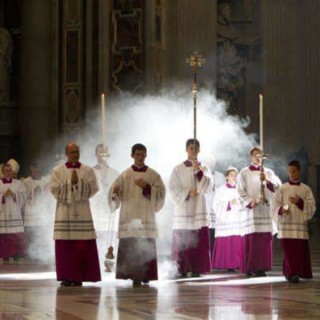
Homily from Christ the King Sunday, A.D. MMXXV.
The Realm of Christ / Christ the King Sunday; Sermon based on Luke 23:33-43. Preached at The First Presbyterian Church of Brooklyn (https://linktr.ee/firstchurchbrooklyn). Podcast subscription is available at https://cutt.ly/fpcb-sermons or Apple Podcasts (https://apple.co/4ccZPt6), Spotify, Amazon,....This item belongs to: audio/first-church-brooklyn-sermons.This item has files of the following types: Archive BitTorrent, Columbia Peaks, Item Tile, Metadata, PNG, Spectrogram, VBR MP3

On Christ the King Sunday, learn how Jesus' kingship exposes every false power—and invites us into real, lasting hope.Morning Offering, November 23, 2025Every morning, join Father Brad as he begins the day with prayer and reflection. In a few short minutes, Father Brad guides you in prayer, shares a brief reflection grounding your day in the Church's rhythm of feast days and liturgy, and provides you with the encouragement necessary to go forward with peace and strength. Disclaimer: The ads shown before, during, or after this video have no affiliation with Morning Offering and are controlled by YouTubeLet us do as the saints urge and begin our days in prayer together so as a community of believers we may join the Psalmist in saying, “In the morning, Lord, you hear my voice; in the morning I lay my requests before you and wait expectantly.” (Psalm 5:3-4)________________
The good news about our one true King. A sermon for Christ the King Sunday on Jeremiah 23:1-6 & Luke 23:33-43 by Rev. Justin Morgan

This is Christ the King Sunday—and the throne is a cross…Happy Harvest Thanksgiving to all who celebrate, too!
Rooted in Jeremiah 31 and Christ the King Sunday, we reflect on a God who doesn't abandon abandoned places. A God who hops fences, returns after rejection, and keeps planting hope where others see waste. This is not the king of culture wars, influence, or perfection—but the king who washes feet, gathers the dismissed, restores soil, and renews lives.
Listen to the sermon from the Rev. Ryan Fleenor at 10am worship on Sunday, November 23, 2025, Christ the King Sunday. For more information and more sermons, visit www.saintlukesdarien.org.

Guest Preacher Patrick Boatwright preaches from Luke 23 on Christ the King Sunday.

Fr. Tom preaches on Christ the King Sunday

This Sunday, churches throughout the world will be celebrating Christ the King Sunday. The purpose is to recenter our lives on the true King of the world. Join us this Sunday morning at Christ City Church as we seek to do the same. Robert Grisham will be our guest preacher.

In this sermon by Chris Romig, the focus is on Christ the King Sunday, a day marking the end of the church calendar and emphasizing the ultimate reign of Jesus as King. Chris Romig explains the biblical and historical foundation of the church calendar, which retells the story of God's redemption and shapes the faith of believers throughout the year. He traces the church calendar from Advent to Pentecost and "Ordinary Time," noting that Christ the King Sunday reminds Christians that their primary loyalty is to Jesus, not earthly leaders. The sermon delves into Revelation 11, where the sounding of the seventh trumpet signals both impending judgment and the victorious coronation of Christ, whose coming reign is described with such certainty that it is spoken of as already accomplished. Chris Romig emphasizes the hope found in God's promises of future justice, reward for the faithful, and the fulfillment of God's covenant, symbolized by the Ark of the Covenant appearing in heaven. He encourages the congregation to live in the light of eternity, letting the assurance of Jesus' ultimate victory shape their perspective today, and to actively share this hope. The message concludes with a call to gratitude, faithfulness, and confident anticipation of Christ's return, affirming, "God wins."
"Christ the King Among Us," Christ the King Sunday; Psalm 46; Rev. Dcn. Ashley Davis.
Pastor Taylor Shippy - Philippians 3:7-14Christ the King SundayOn this "Christ the King Sunday," we launch our Advent sermon series "It's About Time" by exploring what it means to tell time by Jesus. As the Christian Year ends and begins again, we're invited to see time not just as minutes and months, but as a grace-filled rhythm shaped around the life of Christ.This sermon shows how the Church Calendar—Advent, Christmas, Epiphany, Lent, Easter, Pentecost—is more than a set of holidays. It's a way of learning to navigate the real seasons of our lives: waiting, joy, revelation, suffering, renewal, and empowerment. Our lives often rhyme with the story of Jesus, and the Christian Year helps us recognize God's presence in every moment.This morning we're invited to learn how making Jesus “king of our time” can form us, guide us, and open your eyes to the hidden grace of God in every season.
In this Christ the King Sunday message from Luke 23:33-43, Pastor Marshall explores how Jesus' throne is a cross and His power is self-giving love. Listen in and consider what it means to let the Crucified King reign over your own heart.Send us a text

11/23/25 Homily: Christ the King Sunday by Fr. Patrick Hyde, OP
Daniel Adkinson - Christ the King Sunday, 2025

Get all set for the 34th Sunday in Ordinary Time with Father Christian RaabSummaryIn this engaging podcast episode, hosts Scott and Father Christian Rapp celebrate the anniversary of Sock Religious while diving deep into themes of leadership, vulnerability, and the significance of Christ the King Sunday. They explore biblical insights, particularly focusing on the leadership qualities exemplified by Jesus and King David, and discuss the importance of emotional intelligence and accountability in leadership roles. The conversation also touches on the challenges of admitting mistakes and the power of forgiveness, all while maintaining a lighthearted tone with personal anecdotes and reflections.TakeawaysCelebrating milestones fosters a sense of community and purpose.Christ the King Sunday emphasizes the importance of recognizing Jesus' leadership.Leadership is about guiding others towards a vision of the good.Vulnerability in leadership can strengthen relationships and trust.Admitting mistakes is a sign of strength, not weakness.Emotional intelligence is crucial for effective leadership.Obedience can provide accountability in leadership roles.Fear often hinders leaders from taking responsibility.Forgiveness is essential in maintaining healthy relationships.Shared experiences can enhance community and connection.Chapters03:17 Christ the King Sunday: A Celebration of Leadership04:18 Understanding Leadership Through Scripture05:00 The Role of Vulnerability in Leadership07:23 Lessons from Jesus: Leadership and Sacrifice10:21 The Importance of Accountability in Leadership13:18 Emotional Intelligence in Leadership16:34 Navigating Obedience and Leadership19:21 The Balance of Authority and Responsibility22:28 Fear and Humility in Leadership25:25 The Power of Forgiveness in Relationships28:15 Personal Reflections on Leadership31:17 Closing Thoughts and Future Connections

Get all set for the 34th Sunday in Ordinary Time with Father Christian RaabSummaryIn this engaging conversation, the hosts celebrate milestones in their lives and delve into the significance of Christ the King Sunday. They explore themes of leadership through biblical references, particularly focusing on the example of Jesus and King David. The discussion emphasizes the importance of vulnerability, emotional intelligence, and the necessity of taking responsibility as a leader. The hosts share personal insights and anecdotes, making the conversation relatable and thought-provoking for listeners.TakeawaysCelebrating milestones fosters a sense of community and joy.Christ the King Sunday emphasizes Jesus' leadership and authority.David's shepherding role provides a model for effective leadership.Jesus exemplifies true leadership through selflessness and sacrifice.Vulnerability is a strength in leadership, not a weakness.Leaders must take responsibility for their actions and decisions.Emotional intelligence is crucial for navigating leadership challenges.Obedience can enhance leadership but must be balanced with initiative.Taking ownership of mistakes fosters accountability and growth.Fear of failure can hinder effective leadership and personal growth.Chapters03:17 Christ the King Sunday: A Celebration of Leadership04:18 Understanding Leadership Through Scripture05:00 The Role of Vulnerability in Leadership07:23 Lessons from Jesus: Leadership and Sacrifice10:21 The Importance of Accountability in Leadership13:18 Emotional Intelligence in Leadership16:34 Navigating Obedience and Leadership19:21 The Balance of Authority and Responsibility22:28 Fear and Humility in Leadership25:25 The Power of Forgiveness in Relationships28:15 Personal Reflections on Leadership31:17 Closing Thoughts and Future Connections

On this episode of Preaching the Text, John Hoyum and Steve Paulson take up Christ the King Sunday texts. Here, they try to speak of Christ's true kingship as the sovereign of a new kingdom ruled by God's grace instead of the law. For those oppressed by accusation and judgment, this is surely good news. Paulson and Hoyum also provide an update on the future of the show. Show Notes: Support 1517 Podcast Network 1517 Podcasts 1517 on Youtube 1517 Podcast Network on Apple Podcasts 1517 Events Schedule 1517 Academy - Free Theological Education What's New from 1517: Coming Home for Christmas: 1517 Advent Devotional Face to Face: A Novel of the Reformation by Amy Mantravadi Untamed Prayers: 365 Daily Devotions on Christ in the Book of Psalms by Chad Bird Remembering Your Baptism: A 40-Day Devotional by Kathryn Morales Sinner Saint by Luke Kjolhaug More from the hosts: John Hoyum Steven Paulson

It's Christ the King Sunday and you're about to hear how Jesus is dying the death of a criminal. On Christ the King Sunday we are declaring that Jesus has authority and power over all, yet we are talking about his crucifixion, not his resurrection. If Christ is a king, where is his kingdom? You'll hear that in the words Jesus speaks on the cross: “Father, forgive them.” CHALLENGE GRANTA Luther House of Study donor is sponsoring a challenge grant. If you sponsor one podcast episode by the end of the year, another podcast episode will be sponsored on your behalf. If you'd like to have your donation doubled, email Sarah Stenson at sarah@lhos.org or go to lutherhouseofstudy.org/donate CARE OF SOULS - ADDICTIONLutheran pastors and theologians come together to explore the deeply personal and pastoral task of preaching to and caring for those struggling with life's challenging situations: addiction, death, family disharmony, and more. Rooted in the theology of the cross and the Lutheran tradition of radical grace, this series offers both theological depth and practical guidance for pastors, church workers, and lay leaders.With conversations, real-life stories, and reflections from the front lines of ministry, Care of Souls equips listeners to enter the broken places of addiction not with easy answers, but with the crucified and risen Christ.Because in the end, it's not about fixing people—it's about preaching the Gospel.Listen to Care of Souls wherever you listen to podcasts or on the Luther House website: Care of Souls - Addiction SING TO THE LORD Martin Luther said, "Next to the word of God, the art of music is the greatest treasure in the world." To understand the importance of hymnody in the Lutheran church, Lars Olson and Mason Van Essen sit down with Zachary Brockhoff to discuss the lectionary's hymns, their meaning and history, and how the music preaches the Gospel.

In this episode of Your Week with St. Luke's, all three pastors (Jenn, Jad, and Melissa) gather to close out the Christian year with a conversation on Christ the King Sunday and the culmination of our month-long focus on gratitude. Together, they explore what it means to claim Christ as Lord in a world full of competing allegiances, how worship recenters us in community, and why generosity is a spiritual discipline rooted in trust rather than pressure. Reflecting on 2 Corinthians 9, they discuss how giving reveals the posture of our hearts, how worship shapes our daily lives, and how the rhythms of discipleship prepare us long before moments of crisis arise. This rich conversation sets the stage for a Sunday filled with praise, thanksgiving, and a renewed commitment to live as citizens of God's kingdom. Go deeper at https://www.livetherhythm.app/

Reign of Christ Sunday, or sometimes called Christ the King Sunday, ends the liturgical year. It asks who is ultimately in charge and worth worshipping. But to know that God is in charge and to act like it is much easier said than done. Jonathan and Seth discuss the challenge of the phrase, "Be still, and know that I am God!" (Psalm 46:10) and what a faithful stillness might look like in our hurried, news-flooded world. Since this Sunday closes the liturgical year, the discussion seems like a fitting recap of much of their discussion this year. We're glad you're with us! We hope you'll join us for liturgical year A that takes us to Matthew.
Send us a textJoin Fr. Aaron & Marissa Burt for this week's episode, in which they consider the readings for Christ the King Sunday 11/20-11/26: Jeremiah 23:16; Psalm 46; Colossians 1:11-20; Luke 23:35-43.They discuss the prophetic condemnation of unjust and exploitative shepherds, the promise for a righteous and saving Messianic judge, the magnitude of the Incarnation and God's fullness embodied in Jesus, and the evergreen human impulse to make Jesus into the King we think He should be.You are not here to verify,/ Instruct yourself, or inform curiosity/ Or carry report. You are here to kneel/ Where prayer has been valid. And prayer is more/ Than an order of words, the conscious occupation/ Of the praying mind, or the sound of the voice praying. From TS Eliot's "Little Gidding"Notes:--Dwell App--Prayers of the People for Pentecost--2019 Book of Common PrayerThe Bible ProjectThe Bible Project: Gospel of the KingdomAdvent ResourcesInterested in the virtual book group for Ask of Old Paths, by: Grace Hamman? Email athomewiththelectionary@gmail.com for additional details.PDF of the Household Compline serviceAdvent: Season of Hope, by: Tish Harrison WarrenAdvent: The Once and Future Coming of Jesus Christ, by: Fleming RutledgeThe Art of Advent, by: Dr. Jane WilliamsWaiting on the Word, by: Malcolm GuiteWatch for the Light: Readings for Advent and Christmas1:10 CollectDiscussion of the Advent season 7:10 Jeremiah 23:1614: Our outro music is an original song by our friend Dcn. Jeremiah Webster, a poet and professor whose giftedness is rivaled by his humbleness. You can find his published works, including After So Many Fires, with a quick Google.

Notes Luke 23:33-43 Jeremiah 23:1-6 Colossians 1:11-20 Summary In this episode of the Pulpit Fiction Podcast, hosts Robb McCoy and Eric Fistler explore the significance of Christ the King Sunday, discussing the readings from Luke 23, Jeremiah 23, and Colossians 1. They delve into the themes of forgiveness, God's promise of a good shepherd, and the supremacy of Christ over all creation. The conversation emphasizes the importance of understanding righteousness and justice in the context of faith, encouraging listeners to reflect on their allegiance to Christ over earthly powers. Takeaways This episode discusses the significance of Christ the King Sunday. The readings for the day include Luke 23, Jeremiah 23, and Colossians 1. Luke 23 presents Jesus on the cross, emphasizing forgiveness even in suffering. Jeremiah 23 speaks of God's promise to gather and care for His people. Colossians 1 highlights the supremacy of Christ over all creation. The conversation reflects on the historical context of Christ the King Sunday. The hosts discuss the implications of Jesus' crucifixion and its meaning for believers. The theme of allegiance to Christ over earthly powers is explored. The importance of understanding righteousness and justice in the context of faith is emphasized. The episode encourages listeners to reflect on their faith and the meaning of Christ's kingship. Chapters 00:00 Introduction to Christ the King Sunday 03:55 The Significance of Christ the King Sunday 11:35 Exploring the Gospel Reading: Luke 23 17:33 The Nature of Jesus' Kingship 24:42 The Impact of Jesus' Death on the Cross 26:46 The Heart of Nonviolent Revolution 28:09 Jeremiah's Call to Shepherds 29:15 The Role of Kingship in Scripture 31:51 Understanding Exile and Prophetic Voices 33:59 Righteousness and Justice in Leadership 40:51 The Mystical Christ in Colossians 46:47 Inheritance and Adoption in Christ
We are already living in the "Kingdom of already-but-not-yet." But who is the king? In this sermon, one week before "Christ the King Sunday," Pastor Chris took a look at a Scripture passage where Jesus' disciples asked Him about Herod's Temple. His answer was packed full of meaning and importance, not only for them, but also for all time. What does it mean that "Christ is King," and just which king are we talking about? The painting associated with this sermon is titled "Crystal Sea" (detail) by Ron Richardson. It can be seen on the Epiclesis podcast page but does not appear in the iTunes application.

Pastor Katy preaches on this Christ the King Sunday. Join us for worship every week at 9:00 and 10:30 am or join us for our livestream on our website at 9:30 am.
Join Rolf Jacobson, Caroline Lewis, and Matt Skinner for Sermon Brainwave as they explore the texts for Christ the King/Reign of Christ Sunday (November 23, 2025) - the final Sunday of the church year and Year C. In this episode, the hosts dive deep into what it means for Jesus to be called "king" and how we understand Christ's reign in a world unfamiliar with monarchies. They examine the Gospel reading from Luke 23:33-43, where Jesus is crucified alongside two criminals, asking: What kind of king is this? A crucified king who sees those we overlook and extends mercy to the marginalized. The conversation also explores Jeremiah 23:1-6 and its promise of a righteous shepherd-king who will execute justice, Luke 1:68-79 (Zechariah's Benedictus) and how it bookends the liturgical year, and Colossians 1:11-20's cosmic vision of Christ's reign. Key themes include: * Unpacking the language of "king," "lord," and "reign" for contemporary contexts * The contrast between earthly kingdoms and the kingdom of God * How Christ's reign is realized person by person through tender mercy * The significance of Jesus riding a donkey as a symbol of peace, not war * God's faithfulness in keeping promises to God's people This episode invites preachers and listeners to reimagine citizenship in Christ's kingdom and what it means to live under a reign marked by justice, righteousness, and mercy. Commentaries for the Christ the King Sunday can be found on the Working Preacher website at https://www.workingpreacher.org/commentaries/revised-common-lectionary/christ-the-king-3/commentary-on-luke-2333-43-6. ⏰Timecodes⏰ 00:00 Introduction to Christ the King Sunday 03:01 Understanding Christ as King 05:54 The Significance of the Crucifixion 09:03 Theological Reflections on the Cross 12:02 Exploring the Nature of Jesus' Kingship 14:56 Jeremiah's Prophetic Vision of Kingship 18:04 The Role of Mercy in Christ's Reign 20:52 The Cosmic Christ in Colossians 24:08 Conclusion and Reflections on Preaching * * * Don't forget to like, subscribe, and share to stay connected with more insightful lectionary discussions! Reminder: We have commentaries for the Revised Common Lectionary, the Narrative Lectionary, and Evangelio (Spanish-language Gospel). We're here for you, working preachers! ABOUT SERMON BRAINWAVE: Sermon Brainwave is a production of Luther Seminary's Working Preacher, which has been providing trusted biblical interpretation and preaching inspiration since 2007. Find more episodes and resources by visiting https://www.workingpreacher.org/. Watch this episode on YouTube at https://youtu.be/O9ff_wp4X0w.
© 2020-2026 Ivy Podcast Discovery LLC
