
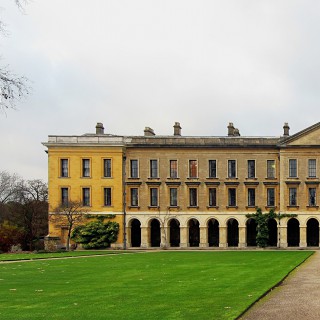
Informal literary discussion group associated with the University of Oxford, England
POPULARITY
Categories

393 episodes with The Inklings

745 episodes with The Inklings

50 episodes with The Inklings

98 episodes with The Inklings

43 episodes with The Inklings

20 episodes with The Inklings

12 episodes with The Inklings

22 episodes with The Inklings

8 episodes with The Inklings

13 episodes with The Inklings

22 episodes with The Inklings

7 episodes with The Inklings

19 episodes with The Inklings

6 episodes with The Inklings

8 episodes with The Inklings

20 episodes with The Inklings

6 episodes with The Inklings

4 episodes with The Inklings

Sean Azzaro speaks about C.S. Lewis, the Inklings, and The Chronicles of Narnia, then the conversation shifts to Netflix's upcoming IMAX film of The Magician's Nephew (February 2027) directed by Greta Gerwig, with concern over Meryl Streep voicing Aslan while still calling the character “he,” discussing faith, audience reaction, and keeping Christ central.00:00 Show Cold Open00:26 Granddaughter Volleyball Talk01:31 Sunday Series Update02:24 Midweek Discipleship Night03:50 C S Lewis Love06:35 Narnia Gospel Themes07:57 Audiobook Sleep Hack09:34 Narnia Returns 202710:40 Aslan Casting Debate12:07 Aslan Voice Casting Debate13:25 Faith Symbolism and Audience Backlash15:25 Other Casting and The Shack Parallel17:12 Progressive Agenda vs Artistic Choice17:43 Gerwig Background and Respecting Classics18:43 Turning Controversy into Gospel Talk20:57 What C S Lewis Might Say23:47 Seeing the Film Without Supporting It24:40 Christian Response

A picture is worth a thousand words when Erin Casali joins us to share about her illustration practice. She reflects on not being able to visualize images in her mind, which makes her process generative and exploratory; drawing to discover, not to transcribe. Erin describes switching from pencil to ink as a forcing function to break perfectionist habits and train herself to think in whole compositions rather than obsessing over details. Finally, she explores the blurry line between design and art, where what makes something art is the human soul projected into it.Guest BioErin Casali (she/her) is a VP/Director of both product and design, with over 10 years of experience in each. She has a hybrid approach with design, product, and engineering in her background. Her rare blend of skills, including psychology and change management, enables her to foster collaboration and break down silos. Driven by a passion for improving lives through her work, she empowers teams to reach their full potential. She advocates for purpose, transparency, and diversity, fostering a culture of trust and agency. Her diverse experiences across startups, large corporations, advisory, and board roles have equipped her with a versatile toolkit to adapt to various organizational contexts and drive meaningful change.LinksErin's website: https://intenseminimalism.com/Inklings of Late on Instagram: https://www.instagram.com/inklings.of.late/Inklings of Late on Bluesky: https://bsky.app/profile/inklingoflate.bsky.socialCreditsCover design by Raquel Breternitz.

Everyone knows The Lord of the Rings and The Chronicles of Narnia. Fewer people know the full story of the friendship that helped make both of them possible. In this special bonus episode, Dr. Junius Johnson sits down with Kirk Manton of Eastgate Creative to talk about The Forge of Friendship, a five-part documentary series, ten years in the making, telling the story of the relationship between J.R.R. Tolkien and C.S. Lewis.Dr. Manton walks through how the project began small and grew into a multi-part documentary spanning the two writers' entire life together, and how, along the way, the project itself became something of a case study in its own subject: it has connected Tolkien fans and Lewis fans, two overlapping but distinct communities, into new friendships of their own. Junius and Kirk also discuss what makes the Lewis-Tolkien friendship worth telling in this much depth, why Eastgate Creative chose to build this project as a donor-funded nonprofit rather than a traditional investor-backed production, and what's still ahead as the documentary moves through post-production toward release.This is a great listen for anyone who loves Tolkien, Lewis, or the Inklings — and a chance to support a project built entirely on donations from people who believe this story is worth telling well.Support the ProjectEastgate Creative has funded this documentary entirely through donations — no investors, no profit distributions. Every dollar goes straight into finishing the production and funding the next generation of Christian filmmakers.* Watch the trailer & learn more: eastgatecreative.org* Sign up for updates: Join the Eastgate Creative newsletter* Donate directly: Support The Forge of Friendship This is a public episode. If you'd like to discuss this with other subscribers or get access to bonus episodes, visit www.theclassicalmind.com/subscribe

A while back, the Extra Features team talked Writer/Director Aaron Peacock and Co-writer Aidan Kennedy about their short film “Colin Carvey’s Long Halloween.” Now the duo is back with a TV series titled “Inklings: Tall... The post Extra Features Interviews” Aaron Peacock and Aidan Kennedy About Inklings: Tall Tales, Short Stories ‘Pale Blue Mailou’ appeared first on Extra Features.

Send us Fan MailIn the previous episode, I talked about an exhibit of the inklings– Token, Williams, and Barfield. But I would like to devote this entire episode to an individual who is arguably the most well-known of the inklings–CS Lewis. Mr. Lewis, how do you believe the inklings influenced you as a writer.Ah, Mr. Bartley, I began as a rationalist atheist, but the Inklings helped me blend logic, imagination, and faith. The result was stories that enchant across generations, such as The Chronicles of Narnia and essays that provoke thought I wanted to show that fantasy could carry deep moral and spiritual truths, and that literature could entertain while transforming the mind and heart. I would like to think that I did not just write books– I crafted worlds, ideas, and moral truths that continue to inspire readers to imagine, believe, and wonder.”Support the showThank you for experiencing Celebrate Creativity.
Everyone else is reviewing Nolan's Odyssey. At least I'm doing it the way Alexander Pope would. THE ARGUMENT. As Prologue to a Critique of Nolan's The Odyssey, the Versifier discusses the Problem of Partisanship and its effect on our aesthetic Judgement. He addresses the bleak Tone of the Film and unpoetic Quality of Nolan's Dialogue while discussing its many Strengths. He then names further Weaknesses, suggests that this is less an Epic than a Greek Tragedy based on Homer, or even perhaps a kind of Northern Saga. He also implies that these very Deviations from Homer might in Time become part of the eternal Matter of Troy. Yet he calls for more Films that give us, not an applicable Message, but a new World, which alone has the power to broaden our Sympathies and make us new People. If you want to read this review in verse, you can find it on my Substack, which is here: Pipkin's Miscellany. You can subscribe for free. But how does this connect to the Inklings? Well, Tolkien also used rhyming couplets when he wanted to make a point or two to his friend C.S. Lewis about how myths work. So there's that. I'll see you all soon for a deep dive into C.S. Lewis' longest work. By the way, the music throughout is from the soundtrack to The Odyssey, which is very good.
Send us Fan MailWhat Were the Inklings?Today's episode deals with four people instead of one individual. They are often classified as one group because they were a band of university friends who argued, challenged, and inspired each other—the Inklings.” You see, the Inklings were largely a group of Oxford professors, writers, and thinkers who met to read aloud, debate, and challenge one another. First, I'd like to concentrate on Mr. CS Lewis. Is what I have been saying a fair way to express it. Yes Mr. Bartley, when you and your audience think of me today, you probably often picture The Chronicles of Narnia, or my rational, graceful Christian apologetics. But to really understand me, you need to see me inside a unique circle of writers and thinkers: the Inklings—a group that met in Oxford in the 1930s and '40s to read aloud, critique, and sometimes spar over each other's works. That is why this episode is about the group called the inklingsAnd Mr. Bartley, I do believe that my love of myth, the study of language, its history, and how it shapes thought—shaped the group's imagination. JRR Tolkien didn't just make up languages for fun; he spent hours analyzing old tongues to make Elvish and other Middle-earth languages feel authentic. He spent so long lecturing me on the difference between a fairytale and a proper myth that I joked that I might need a dictionary just to keep up!Then there was Charles Williams, a poet, novelist, and theologian with a mystical streak that pushed me to explore the spiritual depths of story. Williams could be so intense that the others sometimes left a meeting feeling like they'd just survived a philosophical thunderstorm—but I secretly loved the challenge.Support the showThank you for experiencing Celebrate Creativity.

Somewhere along the way, we started training young people to be merely operators. We teach them to manage the machine, to run the system, to handle the tool that does the real work—and we measure their learning by how well they can retrieve what they need at the moment they need it. It is an efficient arrangement. It is also a strange one, because the things we most admire in a person—the capacity to think clearly when the air turns thick, to imagine, to judge well, to hold fast to what is true when someone is bending the meaning of words—none of these can be outsourced. They have to be formed. That is an older word for what school was once for: formation. Not the acquisition of data, but the slow shaping of a soul—its memory, its loves, its capacity to perceive what is real. And there may be no better guide to recovering that vision than C.S. Lewis, who hid an entire philosophy of education inside stories we hand to children, and who knew that the adventure itself is the formative thing.My guest today is Shannon Valenzuela, a writer, director, and producer working in the same imaginative tradition of Lewis, and an Affiliate Assistant Professor of Humanities at the University of Dallas. This past year she served as a Fellow of our Inklings Project—the McGrath Institute's fellowship that gathers educators from around the globe to read deeply in the company of Lewis, Tolkien, and the great sources behind them. We talk about what the Chronicles of Narnia teach us about forming the whole person, about memory and mastery and Aslan as the model teacher, and about where the Inklings Project is headed next—including a new fellowship opening to middle school and high school educators.Follow-up Resources:Learn more about the Inklings Project, which is currently inviting Middle and High School Educators to apply for its fellowship program by August 1, 2026Follow Shannon Valenzuela's new Adoro Te film series and sign up for updates: https://millefioristudios.myflodesk.com/eucharistChurch Life Today is a partnership between the McGrath Institute for Church Life at the University of Notre Dame and OSV Podcasts from Our Sunday Visitor. Discover more ways to live, learn, and love your Catholic faith at osvpodcasts.com. Sharing stories, starting conversations.
Today the Pugs welcome Hillsdale Professor and historian, Brad Birzer to the Pugcast to discuss his forthcoming book on the Inklings 'Tolkien and the Inklings: Men of the West'. As long time listeners know, we’re fanboys of the Inklings and we think Brad is pretty great too. Brad is a prolific author and an old friend of Chris (he wrote the introduction to Chris’s book on Tom Bombadil). We think you’ll like him as well, and if you’re like the Pugs, you’ll learn something new about the Inklings! Order Tolkien and the Inklings: Men of the West by Bradley J. Birzer at https://a.co/d/03q0MxZ4 Support the Theology Pugcast on Patreon: https://www.patreon.com/thetheologypugcast?fbclid=IwAR17UHhfzjphO52C_kkZfursA_C784t0ldFix0wyB4fd-YOJpmOQ3dyqGf8 Learn more about First Pres. Battle Ground: https://www.solochristo.org/ Connect with WileyCraft Productions: https://wileycraftproductions.com/
Today the Pugs welcome Hillsdale Professor and historian, Brad Birzer to the Pugcast to discuss his forthcoming book on the Inklings 'Tolkien and the Inklings: Men of the West'. As long time listeners know, we're fanboys of the Inklings and we think Brad is pretty great too. Brad is a prolific author and an old friend of Chris (he wrote the introduction to Chris's book on Tom Bombadil). We think you'll like him as well, and if you're like the Pugs, you'll learn something new about the Inklings!Order Tolkien and the Inklings: Men of the West by Bradley J. Birzer at https://a.co/d/03q0MxZ4Support the Theology Pugcast on Patreon: https://www.patreon.com/thetheologypugcast?fbclid=IwAR17UHhfzjphO52C_kkZfursA_C784t0ldFix0wyB4fd-YOJpmOQ3dyqGf8Learn more about First Pres. Battle Ground: https://www.solochristo.org/Connect with WileyCraft Productions: https://wileycraftproductions.com/

Today the Pugs welcome Hillsdale Professor and historian, Brad Birzer to the Pugcast to discuss his forthcoming book on the Inklings 'Tolkien and the Inklings: Men of the West'. As long time listeners know, we’re fanboys of the Inklings and we think Brad is pretty great too. Brad is a prolific author and an old friend of Chris (he wrote the introduction to Chris’s book on Tom Bombadil). We think you’ll like him as well, and if you’re like the Pugs, you’ll learn something new about the Inklings! Order Tolkien and the Inklings: Men of the West by Bradley J. Birzer at https://a.co/d/03q0MxZ4 Support the Theology Pugcast on Patreon: https://www.patreon.com/thetheologypugcast?fbclid=IwAR17UHhfzjphO52C_kkZfursA_C784t0ldFix0wyB4fd-YOJpmOQ3dyqGf8 Learn more about First Pres. Battle Ground: https://www.solochristo.org/ Connect with WileyCraft Productions: https://wileycraftproductions.com/

Today the Pugs welcome Hillsdale Professor and historian, Brad Birzer to the Pugcast to discuss his forthcoming book on the Inklings 'Tolkien and the Inklings: Men of the West'. As long time listeners know, we’re fanboys of the Inklings and we think Brad is pretty great too. Brad is a prolific author and an old friend of Chris (he wrote the introduction to Chris’s book on Tom Bombadil). We think you’ll like him as well, and if you’re like the Pugs, you’ll learn something new about the Inklings! Order Tolkien and the Inklings: Men of the West by Bradley J. Birzer at https://a.co/d/03q0MxZ4 Support the Theology Pugcast on Patreon: https://www.patreon.com/thetheologypugcast?fbclid=IwAR17UHhfzjphO52C_kkZfursA_C784t0ldFix0wyB4fd-YOJpmOQ3dyqGf8 Learn more about First Pres. Battle Ground: https://www.solochristo.org/ Connect with WileyCraft Productions: https://wileycraftproductions.com/

Wandering Works for Us PodcastDate: 27 June 2026Title: What we did on our trip to Oxford UK, and what we would do differently next timeSummary of EpisodeOxford was the first proper stop on our England road trip with Julie and Ann — and it nearly didn't get the time it deserved. In this episode, we talk about driving into the city in 5 o'clock traffic (on the wrong side of the road, in a rental car twice the size of ours), the 30-minute Bodleian Library tour that left us wishing we'd booked the longer one, and the completely unplanned moment that turned out to be the highlight of the whole stop: stumbling into a boys' choir rehearsal inside the chapel at New College. We also get into the Ashmolean, Oxford's literary pubs, an accidental trip to Blackwell's, and everything we'd do differently if we went back.TakeawaysTwo weeks is the ideal maximum for a trip like ours.Driving in the UK requires patience and understanding of local road rules.Oxford's architecture and history make it a must-visit destination.Traveling with friends adds joy but also logistical challenges.Planning for local experiences and downtime enhances travel enjoyment. Let's TalkHave you been to Oxford? What did we miss? Find us on Instagram and Threads and tell us — we'd love to know.Chapters00:00 Introduction to the Podcast Experiment01:01 Reflections on the Grand Adventure04:00 Traveling with Friends: The Dynamics of Group Travel05:00 Arrival in Oxford: The Journey BeginsKey TopicsDriving from London to Oxford — first time behind the wheel on the "wrong" side of the road, plus a lunch stop at a pub claiming to be over 900 years oldFirst impressions of Oxford: more spread out than we expected, and very much a lived-in city rather than a museum pieceThe Bodleian Library and Divinity School tour — the Harry Potter hospital wing, the centuries-old "no books leave the library" rule, and why we'd book the longer tour next timeNew College and the moment that became the whole episode: walking into a chapel mid-rehearsal and just standing thereThe Ashmolean Museum, and our case for why you don't need to see everything to enjoy a museumPubs, Inklings, and an accidental bookshop detour at Blackwell'sWhat we'd do differently — and what we'd tell a first-timer planning their own visit Mentioned in This EpisodeWhere we stayed: Newton HouseComing up next: we head into the Cotswolds — one-lane roads, sheep, and the best gin we've had from a village storeImportant Links To follow all of our antics and adventures, please visit our social media pages and our website at wwforus.com! You can send us a message at any of these places, and feel free to email us at wandering@wwforus.comLike what we are doing? Buy us a gin and tonic and help us keep going!InstagramFacebookTiktokYouTubeLooking for a tour guide in Portugal? I have a whole list!Blog post for this episode: Best things to do in Oxford (1-2day guide)RESOURCES & LINKSLooking to plan your next trip to Portugal? We can help! Check out our guides and Itineraries at wwforus.comFree Lisbon ItineraryPacking ListEssentials for every tripRenting a car in PortugalLooking for a tour guide in Portugal? I have a whole list!
Friend of the show Connor Salter joins me to talk about his new book, The Other Inklings, a book of interviews with current Inklings scholars about C.S. Lewis, Charles Williams, Owen Barfield, and other figures connected with their circle(s). Among other things, we discuss: 3:44 About the book 4:39 How the book came to be 9:58 Why these scholars & figures? 14:28 Tolkien's English Catholicism 17:20 George MacDonald & Chesterton as influences 21:29 Why so much focus on William Lindsay Gresham? 24:59 Gresham, Joy Davidman & Dianetics 28:20 Surprising finds: Charles Williams & moral failure 30:06 Separating the art from the artist 35:47 Most formative scholar: Joe Ricke 37:32 Owen Barfield & anthroposophy 46:01 Barfield's "evolution of consciousness" 48:55 The Victorian Occult Revival 53:47 Outro & book plug 56:08 Deleted Scenes In other news--I have a Substack, now, where I talk about a wide variety of things. Feel free to subscribe. As always, if you like the show, please rate it on iTunes. And feel free to drop me a line anytime at inklingsvarietyhour@gmail.com. I'd love to hear from you.
In this episode of Inklings, we go over the talk Keys, Covenants, and Easter by Quentin L. Cook
In this episode of Inklings, we go over the talk Lost Luggage, Redeemed Souls by Gary E. Stevenson
On this week's episode of Inklings we go over the talk Prayers for Peace by Henry B. Eyring
Chris chats with Liz Zenger, program manager of The Inklings Project, which provides resources for professors, teachers, and other groups developing Inklings-related courses. Also, by way of update, this just in from Liz herself: This is currently live for 6-12 teachers! Goes along with your second to last question of the podcast :-) Call for Proposals Inklings Project Fellowship for 6-12 Teachers Applications can be submitted via this link until Aug 1, 2026. For the first time in its history, the Inklings Project, under the University of Notre Dame's McGrath Institute for Church Life, is opening its fellowship to middle school and high school educators. Previous cohorts have drawn from college and university faculty; this new two-year cohort, beginning in Fall 2026, will be made up of those who educate in grades 6–12. Middle and high school is when many readers first encounter C. S. Lewis and J. R. R. Tolkien—and where an educator's love for these authors can ripple outward to students, parents, and an entire school community. View the Call for Proposals or visit www.inklingsproject.org/apply for more information on the fellowship and application requirements. Applications can be submitted via this link until August 1, 2026. Among other things, we discuss: What The Inklings Project is (~0:53) — Liz explains the initiative: supporting faculty to create Inklings courses, providing grants, and building fellowship through a cohort model. The Wade Center at Wheaton College (~4:10) — The in-person annual gathering for fellows, housing original manuscripts, Tolkien's desk, Lewis's wardrobe, etc. Diverse faculty backgrounds (~6:30) — How professors from biology, business, public relations, and other non-literary fields are teaching Inklings courses, and why that breadth matters. The origin story of the project (~10:20) — Liz traces it from a CS Lewis course she took as a freshman at Brown, to founding a student society, to pitching the idea to Notre Dame's McGrath Institute. The challenge of reading loads & expanding to high schools (~17:30) — How professors handle the sheer volume of Inklings material, and the project's potential future cohort for high school and homeschool teachers. Next Week: At long last, The Silver Trumpet!

What happens when some of the most intelligent minds of the 20th century get together? The Inklings solve a murder mystery, of course. Join us this week as we chat with debut fiction author John R. Kelly about his new novel The Inklings Detective Agency. We'll discuss the inspiration behind the book, the characters that drive this story, and themes we can see through the lives of this intriguing story.
On this week's episode of Inklings we go over the talk by Jorge T. Becerra: Tithing—Putting God First
On this week's episode of Inklings we go over the talk by Michael John U. Teh: Follow the Prophet; He Knows the Way
On this week's episode of Inklings we go over the talk by David A. Bednar: All Who Have Endured Valiantly

What if we've misunderstood the Inklings? When most of us think of the Inklings, we picture C.S. Lewis and J.R.R. Tolkien: two brilliant minds meeting in an Oxford pub and changing literature forever. But that's only one part of a much bigger story. G. Connor Salter joins the Anselm Digital Pub table to discuss his new book, The Other Inklings. It explores the often-overlooked members of the Inklings, and how they shaped Lewis, Tolkien, and the Christian imagination. What emerges is a powerful idea--great stories don't come from isolated geniuses. They come from communities.
On this week's episode of Inklings we go over the talk by Clark G Gilbert: Come Home
On this week's episode of Inklings we go over the talk by Kristin M. Yee: That Ye Love One Another; As I Have Loved You

Psychotherapist, writer, and podcaster Mark Vernon joins us in the Dark Room to talk about Clive Staples Lewis, Owen Barfield, the Inklings, and his own work. Get ad-free Core Episodes, the After Dark episode, and more at patreon.com/artofdarkpod or substack.com/@artofdarkpod. x.com/platospodcasts x.com/artofdarkpod x.com/therewillbbooks x.com/kautzmania Hosted by Simplecast, an AdsWizz company. See pcm.adswizz.com for information about our collection and use of personal data for advertising.
On this week's episode of Inklings we go over the talk by Patrick Kearon: About His Business

The Lutherans, the Lion, and the gifts of Narnia. In this episode, we talk with Pastor Sam Schuldheisz about his forthcoming book, Luther and the Lion: A Narnian Catechism. We discuss how Lewis (and other Inklings) can help us catechize children and adults, how stories lead us deeper into the biblical narratives, and vice versa. How can great myths and stories be employed in Christian apologetics when seen through Christian liturgy and sacraments? Now is the best time to reintroduce great Christian authors, great myths, and great stories, and the best of all stories — the gospel of Jesus Christ — can carry us out of our churches into a world that's wounded and can't find true healing that only Christ can give.
On this week's episode of Inklings we go over the talk by Dallin H. Oaks: Alive In Christ
Where do the Children Play? In this episode, we read an Easter message from the Patriarchs and Heads of the Churches in Jerusalem. Then we read Malcom Guite's Lenten meditation on creation, the embodiment of heavenly music, and why J.R.R. Tolkien expressed a profound, deep truth through not-so-fictional fiction stories. This and much, much more in this episode of the Banned Books podcast. SHOW NOTES: Wardrobes and Rings: Through Lenten Lands with the Inklings https://amzn.to/4bE3yTS Malcolm Guite https://malcolmguite.com Easter Message 2026 https://www.custodia.org/en/news/easter-message-2026-the-patriarchs-and-heads-of-the-churches-in-jerusalem/ The Silmarillion https://en.wikipedia.org/wiki/The_Silmarillion The Imagination Bodies Forth - a talk by Malcolm Guite https://www.youtube.com/watch?v=d8IpDVn5xEk Malcolm Guite YouTube https://www.youtube.com/channel/UCXat06LvIYIyE2SpV_IuVjA/featured More from 1517: Support 1517 Podcast Network: https://www.1517.org/donate-podcasts 1517 Podcasts: http://www.1517.org/podcasts 1517 on YouTube: https://www.youtube.com/@1517org 1517 Podcast Network on Apple Podcasts: https://podcasts.apple.com/us/channel/1517-podcast-network/id6442751370 1517 Events Schedule: https://www.1517.org/events 1517 Academy - Free Theological Education: https://academy.1517.org/ What's New from 1517: 1517 Youtube: How God Still Speaks Today https://youtu.be/oqTGOUe7YG0?si=ZAdFLVhZYmSNgzsp Being Family by Dr. Scott Keith https://shop.1517.org/products/9781964419961-being-family A Reasoned Defense of the Faith by Adam Francisco https://shop.1517.org/collections/coming-soon/products/9781964419879-a-reasoned-defense-of-the-faith Stretched: A Study for Lent and the Entire Christian Life by Dr. Christopher Richmann https://shop.1517.org/products/9781964419381-stretched The Essential Nestingen: Essays on Preaching, Catechism, and the Reformation https://shop.1517.org/products/9781964419121-the-essential-nestingen Philip Melanchthon's Commentary on Ecclesiastes, Translated by Dr. Derek Cooper https://shop.1517.org/products/9781964419299-philip-melanchthons-commentary-on-ecclesiastes More from the hosts: Donovan Riley https://www.1517.org/contributors/donavon-riley Christopher Gillespie https://www.1517.org/contributors/christopher-gillespie CONTACT and FOLLOW: Email mailto:BannedBooks@1517.org Facebook https://www.facebook.com/BannedBooksPod/ Twitter https://twitter.com/bannedbooks1517 SUBSCRIBE: YouTube https://www.youtube.com/@BannedBooks Rumble https://rumble.com/c/c-1223313 Odysee https://odysee.com/@bannedbooks:5 Apple Podcasts https://podcasts.apple.com/us/podcast/banned-books/id1370993639 Spotify https://open.spotify.com/show/2ahA20sZMpBxg9vgiRVQba Overcast https://overcast.fm/itunes1370993639/banned-books MORE LINKS: Tin Foil Haloes https://t.me/bannedpastors Warrior Priest Gym & Podcast https://thewarriorpriestpodcast.wordpress.com St John's Lutheran Church (Webster, MN) - FB Live Bible Study Group https://www.facebook.com/groups/356667039608511 Gillespie's Sermons and Catechesis http://youtube.com/stjohnrandomlake Donavon's Substack https://donavonlriley.substack.com Gillespie's Nostr https://primal.net/p/nprofile1qqszfrg80ctjdr0wy5arrseu6h9g36kqx8fanr6a6zee0n8txa7xytc627hlq Gillespie Coffee https://gillespie.coffee Gillespie Media https://gillespie.media
On this week's episode of Inklings we go over the talk by Jeffrey R. Holland: And Now I See.
Happy Sixth Season of The Inklings Variety Hour! Would you like a present to mark the occasion? One of these fine rings, perhaps? No, not the green ones. No, I don't care if it's St. Patrick's Day. You. Can't. Have. The. Green. Ones. But have a yellow ring. No, seriously, go for it. Why are you hesitating? But that's preposterous. They won't make you disappear. What do you think this is, The Hobbit? Why does it always come back to rings? I say none of this on today's episode, but perhaps it's that the Inklings knew that rings bind you to someone else. Or something else. In this case, the Wood Between the Worlds? Or Faerie? Or to your evil and intimidating uncle who is a mad magician-scientist with a furnished room that you don't know about and a dead fairy godmother named Mrs. Lefay? What's up with the strange parallels in this book, anyway? You've got children in England exploring inside because it's rainy. You've got Uncle Andrew and Jadis making essentially the same speeches. You've also got the wood between the worlds and the crawlspace between houses, as well as the troubling ways in which Digory resembles his uncle--both of whom, by the way, end up technically responsible for sending children to another world when they're old men. But what kind of an old man who sends children into peril will Digory grow up to be? The sort who thinks rules don't apply to him, or the sort who makes endless inside jokes with himself about Plato? Character matters. To talk about some of these riddles, or at least allude to them as we talk about things that are probably more interesting, I have Dr. Luke Mills. Join us on a whirlwind tour through Edwardian England, tunnels behind houses, Guinea Pig paradises that maybe aren't good for humans, and desolate worlds with very strange women among very strange waxworks that definitely aren't good for humans. (Seriously, though, what are the waxworks?) This may be your last chance to travel to Charn before Netflix ruins it forever with Pink Floyd or the 1950s or whatever-the-[deplorable word] a Barbie auteur wants to put in there. Among other things, Luke and Chris talk about the figure of Lilith--and why this account of Jadis' origins may not differ so much from that given in The Lion, the Witch, and the Wardrobe. We also discuss ways to tell whether or not that special someone in your life may not, in fact, be evil. Let's dive in! Or wonder, till it drives you mad, what would have followed...etc., etc.
On this week's episode of Inklings we go over the talk by Andrea Muñoz Spannaus: Prophets of God
On this week's episode of Inklings we go over the talk by Brik V. Eyre: Know Who You Really Are
On this week's episode of Inklings we go over the talk by Peter M. Johnson: The Power of Ministering to the One
Lent in Middle-earth. In this episode, we discuss the Lenten subtext, language, and images in J.R.R. Tolkien's "The Return of the King." What can Christians learn from fiction authors about the faith, devotional reading, understanding the world outside the churches through the view of the cross, and how all of reality is bent towards Easter at all times, in all places, by all people? SHOW NOTES: Wardrobes and Rings: Through Lenten Lands with the Inklings https://a.co/d/0bjsTwnn Malcom Guite https://www.youtube.com/results?search_query=malcolm+guite The Language of Creation: Cosmic Symbolism in Genesis https://a.co/d/0i6hb3bz Reflections on the Void: negativity and difference in the Bible and contemporary thinking https://youtu.be/10DS7IxOVro?si=uRlsyIxFLJX-ZYDD More from 1517: Support 1517 Podcast Network: https://www.1517.org/donate-podcasts 1517 Podcasts: http://www.1517.org/podcasts 1517 on YouTube: https://www.youtube.com/@1517org 1517 Podcast Network on Apple Podcasts: https://podcasts.apple.com/us/channel/1517-podcast-network/id6442751370 1517 Events Schedule: https://www.1517.org/events 1517 Academy - Free Theological Education: https://academy.1517.org/ What's New from 1517: Being Family by Dr. Scott Keith https://shop.1517.org/products/9781964419961-being-family The Essential Nestingen: Essays on Preaching, Catechism, and the Reformation https://shop.1517.org/products/9781964419121-the-essential-nestingen Philip Melanchthon's Commentary on Ecclesiastes https://shop.1517.org/products/9781964419299-philip-melanchthons-commentary-on-ecclesiastes Face to Face: A Novel of the Reformation by Amy Mantravadi https://shop.1517.org/products/9781964419312-face-to-face Untamed Prayers: 365 Daily Devotions on Christ in the Book of Psalms by Chad Bird https://www.amazon.com/Untamed-Prayers-Devotions-Christ-Psalms/dp/1964419263 More from the hosts: Donovan Riley https://www.1517.org/contributors/donavon-riley Christopher Gillespie https://www.1517.org/contributors/christopher-gillespie CONTACT and FOLLOW: Email mailto:BannedBooks@1517.org Facebook https://www.facebook.com/BannedBooksPod/ Twitter https://twitter.com/bannedbooks1517 SUBSCRIBE: YouTube https://www.youtube.com/@BannedBooks Rumble https://rumble.com/c/c-1223313 Odysee https://odysee.com/@bannedbooks:5 Apple Podcasts https://podcasts.apple.com/us/podcast/banned-books/id1370993639 Spotify https://open.spotify.com/show/2ahA20sZMpBxg9vgiRVQba Overcast https://overcast.fm/itunes1370993639/banned-books MORE LINKS: Tin Foil Haloes https://t.me/bannedpastors Warrior Priest Gym & Podcast https://thewarriorpriestpodcast.wordpress.com St John's Lutheran Church (Webster, MN) - FB Live Bible Study Group https://www.facebook.com/groups/356667039608511 Gillespie's Sermons and Catechesis http://youtube.com/stjohnrandomlake Donavon's Substack https://donavonlriley.substack.com Gillespie's Nostr https://primal.net/p/nprofile1qqszfrg80ctjdr0wy5arrseu6h9g36kqx8fanr6a6zee0n8txa7xytc627hlq Gillespie Coffee https://gillespie.coffee Gillespie Media https://gillespie.media
On this week's episode of Inklings we go over the talk by John D. Amos: The Good News Recipe
A Church as Big as the Cosmos! In this episode, we enter into Lent with a reading from C.S. Lewis' The Discarded Image. We discuss the medieval understanding of life, the universe, and everything— how it can help the churches today deepen their "vision" of how God orders the universe, the church, and the human being. We converse about the Grail legend, how God's Word encounters and changes people, being lost in the Garden, how Christ ministers through others, and being annoyed by death. This and much, much more on this week's episode of Banned Books. SHOW NOTES: Wardrobes and Rings: Through Lenten Lands with the Inklings https://a.co/d/0bjsTwnn Malcom Guite https://www.youtube.com/results?search_query=malcolm+guite The Language of Creation: Cosmic Symbolism in Genesis https://a.co/d/0i6hb3bz Reflections on the Void: negativity and difference in the Bible and contemporary thinking https://youtu.be/10DS7IxOVro?si=uRlsyIxFLJX-ZYDD More from 1517: Support 1517 Podcast Network: https://www.1517.org/donate-podcasts 1517 Podcasts: http://www.1517.org/podcasts 1517 on YouTube: https://www.youtube.com/@1517org 1517 Podcast Network on Apple Podcasts: https://podcasts.apple.com/us/channel/1517-podcast-network/id6442751370 1517 Events Schedule: https://www.1517.org/events 1517 Academy - Free Theological Education: https://academy.1517.org/ What's New from 1517: Being Family by Dr. Scott Keith https://shop.1517.org/products/9781964419961-being-family The Essential Nestingen: Essays on Preaching, Catechism, and the Reformation https://shop.1517.org/products/9781964419121-the-essential-nestingen Philip Melanchthon's Commentary on Ecclesiastes https://shop.1517.org/products/9781964419299-philip-melanchthons-commentary-on-ecclesiastes Face to Face: A Novel of the Reformation by Amy Mantravadi https://shop.1517.org/products/9781964419312-face-to-face Untamed Prayers: 365 Daily Devotions on Christ in the Book of Psalms by Chad Bird https://www.amazon.com/Untamed-Prayers-Devotions-Christ-Psalms/dp/1964419263 More from the hosts: Donovan Riley https://www.1517.org/contributors/donavon-riley Christopher Gillespie https://www.1517.org/contributors/christopher-gillespie CONTACT and FOLLOW: Email mailto:BannedBooks@1517.org Facebook https://www.facebook.com/BannedBooksPod/ Twitter https://twitter.com/bannedbooks1517 SUBSCRIBE: YouTube https://www.youtube.com/@BannedBooks Rumble https://rumble.com/c/c-1223313 Odysee https://odysee.com/@bannedbooks:5 Apple Podcasts https://podcasts.apple.com/us/podcast/banned-books/id1370993639 Spotify https://open.spotify.com/show/2ahA20sZMpBxg9vgiRVQba Overcast https://overcast.fm/itunes1370993639/banned-books MORE LINKS: Tin Foil Haloes https://t.me/bannedpastors Warrior Priest Gym & Podcast https://thewarriorpriestpodcast.wordpress.com St John's Lutheran Church (Webster, MN) - FB Live Bible Study Group https://www.facebook.com/groups/356667039608511 Gillespie's Sermons and Catechesis http://youtube.com/stjohnrandomlake Donavon's Substack https://donavonlriley.substack.com Gillespie's Nostr https://primal.net/p/nprofile1qqszfrg80ctjdr0wy5arrseu6h9g36kqx8fanr6a6zee0n8txa7xytc627hlq Gillespie Coffee https://gillespie.coffee Gillespie Media https://gillespie.media
On this week's episode of Inklings we go over the talk by Quentin L. Cook: The Lord Is Hastening His Work

Al, Zach, John Luke, and Christian wrestle with why intimacy feels so difficult for American men—both with God and in marriage. Following along with C.S. Lewis's Surprised by Joy, they explore how knowledge alone can't produce real closeness, and why desire and longing shape the way men actually live. The guys challenge the idea that faith is about mastering concepts instead of participating in a relationship. They point toward a hopeful vision of intimacy that isn't forced or performed, but rediscovered through joy, presence, and learning to live inside God's story rather than observing it from a distance. Today's conversation is about Lesson 3-4 of C.S. Lewis on Christianity taught by visiting Hillsdale professor Michael Ward. Take the course with us at no cost to you! Sign up at http://unashamedforhillsdale.com/. More about C.S. Lewis on Christianity: Encounter the faith & wisdom of C.S. Lewis C.S. Lewis's writings bring the great questions of the Christian faith to life. Through his imaginative and invigorating style, Lewis answers these questions in ways that are compelling to those outside Christianity and energizing to those within the Christian faith. In this free, seven-lecture course, Professor Michael Ward—a leading scholar of C.S. Lewis—will explore Lewis's: argument for objective moral value in response to the rise of modern subjectivism; bittersweet path to conversion and the role of enjoyment in the Christian life; advice regarding the proper way to pray and read the Bible; teachings concerning the purpose of pain and how to confront suffering and loss; insights about the nature of heaven and hell. This course examines these fundamental topics not only through his classic works—including Mere Christianity, The Screwtape Letters, and The Abolition of Man—but also through Lewis's personal experiences with doubt, conversion, suffering, grief, and joy. Through this course, students will discover Lewis's core lessons regarding the truth and goodness of the Christian faith and how to apply those lessons to one's life. Join us today in discovering C.S. Lewis's enduring lessons about the meaning and practice of Christianity. Sign up at http://unashamedforhillsdale.com/ Check out At Home with Phil Robertson, nearly 800 episodes of Phil's unfiltered wisdom, humor, and biblical truth, available for free for the first time! Get it on Apple, Spotify, Amazon, and anywhere you listen to podcasts! https://podcasts.apple.com/us/podcast/at-home-with-phil-robertson/id1835224621 Listen to Not Yet Now with Zach Dasher on Apple, Spotify, iHeart, or anywhere you get podcasts. Chapters: 00:00 Why This C.S. Lewis Lecture Is Tough 03:02 When the Philosophy Gets Heavy 06:42 The Inklings & Writing Under Critique 11:06 Why Lewis's Conversion Feels Underwhelming 15:26 Conversion Isn't Always a Moment 20:08 Why Desire Drives Our Actions 25:26 The Beam of Light Explained 31:12 Joy as Longing, Not Satisfaction 36:58 From Holding the Garden to Living in It 42:26 Conversion as Intimacy, Not Performance 47:12 Final Reflections on Living the Story — Learn more about your ad choices. Visit megaphone.fm/adchoices
On this week's episode of Inklings we go over the talk by Ronald A. Rasband: The Family Proclamation—Words from God

Joseph Loconte drops by to talk about his new book, The War for Middle-earth: J.R.R. Tolkien and C.S. Lewis Confront the Gathering Storm, 1933–1945. He and Chris discuss the friendship between Tolkien and Lewis, the impact of both world wars on their literary lives, and how they influenced each other's most celebrated works. Show notes: Joseph's new book, The War […]
On this week's episode of Inklings we go over the talk by David A. Bednar: They Are Their Own Judges
On this week's episode of Inklings we go over the talk by J. Anette Dennis: Cheering Each Other On
On this week's episode of Inklings we go over the talk by Kevin G. Brown: The Eternal Gift of Testimony
On this week's episode of Inklings we go over the talk by Patrick Kearon: Jesus Christ and Your New Beginning
On this week's episode of Inklings we go over the talk by Dale G. Renlund: Taking on the Name of Jesus Christ
On this week's episode of Inklings we go over the talk by Ulisses Soares: Adorned with the Virtue of Temperance

Joseph Loconte revisits how J.R.R. Tolkien and C.S. Lewis sought to restore heroism and moral clarity through story

When people think of J.R.R. Tolkien and C.S. Lewis, they often picture tweedy Oxford professors and beloved fantasy authors. But their writing wasn't drawn only from their bucolic days teaching at Oxford and walking in the English countryside; it had a darker, deeper backdrop: the trenches of World War I and the cataclysm of World War II. Lewis and Tolkien weren't just fantasy writers — they were war veterans, cultural critics, and men with firsthand knowledge of evil, heroism, and sacrifice.In today's episode, I'm joined by Joseph Loconte, returning to the show to discuss his latest book, The War for Middle Earth. We explore how both world wars shaped the perspectives of Tolkien and Lewis, found their way into works like The Lord of the Rings and The Chronicles of Narnia, and infused their literary masterpieces with moral weight, spiritual depth, and timeless themes of resistance, friendship, and redemption. We also talk about the legendary friendship between Tolkien and Lewis, the creation of the Inklings, and how the men demonstrated the countercultural power of imaginative storytelling.Resources Related to the PodcastRelated AoM podcasts:#178: The Inklings Mastermind Group#272: Lewis, Tolkien, and the Myth of Progress (Loconte's first appearance on the AoM podcast)#430: Why You Need to Join the Great Conversation About the Great Books#499: A Fascinating Primer on Norse Mythology #594: How Churchill (and London) Survived the Blitz of 1940#723: Men Without Chests#765: C.S. Lewis on Building Men With Chests#951: The Hobbit VirtuesRelated AoM articlesThe Power of Conversation: A Lesson from CS Lewis and JRR Tolkien Lessons in Manliness from Viking Mythology Lessons in Manliness: The HobbitMen Without Chests“Blood, Sweat, and Tears” speech by Winston Churchill4 Classic Chapter Books to Read Aloud With Your KidsRelated outside articles:Tolkien's Deadly Dragons Munich AgreementOwen BarfieldTolkien books mentioned:The Letters of J.R.R. Tolkien Beowulf translated by Tolkien The Hobbit The Lord of the Rings Beren and Luthien Letters from Father Christmas Lewis books mentioned:The Letters of C.S. Lewis The Collected Poems of C.S. Lewis The Pilgrim's RegressThe Chronicles of NarniaThe Great DivorceThe Screwtape Letters The Space Trilogy The Four LovesMere Christianity The Reading Life Related books by other authors:Tolkien and the Great War by John GarthThe Somme by Martin GilbertThe Guns of August by Barbara TuchmanThe Future of an Illusion by Sigmund FreudThe Aeneid by VirgilPhantastes by George MacDonaldThe Vinland SagasThe Iliad and The Odyssey by HomerThe Divine Comedy by Dante Alighieri Le Morte d'Arthur by Thomas MaloryConnect With Joseph LoconteJoseph's websiteSee Privacy Policy at https://art19.com/privacy and California Privacy Notice at https://art19.com/privacy#do-not-sell-my-info.
© 2020-2026 Ivy Podcast Discovery LLC
