American football player
POPULARITY

2 episodes with Bill Glass

2 episodes with Bill Glass

2 episodes with Bill Glass

2 episodes with Bill Glass

2 episodes with Bill Glass

2 episodes with Bill Glass

Get ready for an incredibly fun and insightful episode as we sit down with the hilariously talented Bill Glass, the actor behind one of the most recognizable faces, and fake mustaches, on television as Progressive's legendary "Dr. Rick"! In this conversation, Bill takes us back to his Chicago roots and shares his journey from high school class clown who stumbled into improv to a true "lunch pail actor" who has spent 26 years building a successful career in Los Angeles. He also opens up about landing a recurring role alongside Ed Helms on Mike Schur's Rutherford Falls, and developing his "one for them, one for me" approach to auditioning. Bill gets real about navigating the politics of Hollywood, using improv to save the day on set, and why actors can't afford to sit around waiting for the traditional system to give them permission to work. Tune in for an inside look at how a series of intense auditions ultimately led to a life-changing "unicorn" commercial campaign and why Bill never treats a one-off role like it's just a one-off. These are the unforgettable stories that landed Bill Glass right here. Credits: St. Denis Medical Queenpins Rutherford Falls Fresh Off the Boat The League The Last Word Justified The Middle Men at Work Roswell Guest Links: IMDB: Bill Glass, actor DR. RICK CAMPAIGN: Watch the Progressive campaign on YouTube THAT ONE AUDITION'S LINKS: For exclusive content surrounding this and all podcast episodes, sign up for our amazing newsletter at AlyshiaOchse.com. And don't forget to snap and post a photo while listening to the show and tag me: @alyshiaochse & @thatoneaudition SLAYTEMBER CLASS: Starting September 24th THE BRIDGE FOR ACTORS: Become a WORKING ACTOR (50% off special) THE PRACTICE TRACK: Membership to Practice Weekly CONSULTING: Get 1-on-1 advice for your acting career from Alyshia Ochse COACHING: Get personalized coaching from Alyshia on your next audition or role INSTAGRAM: @alyshiaochse INSTAGRAM: @thatoneaudition WEBSITE: AlyshiaOchse.com APPLE PODCASTS: Subscribe to That One Audition on Apple Podcasts SPOTIFY: Subscribe to That One Audition on Spotify STITCHER: Subscribe to That One Audition on Stitcher EPISODE CREDITS: HOST/PRODUCER: Alyshia Ochse WRITER: Maddie McCormick WEBSITE & GRAPHICS: Chase Jennings SOCIAL: Alara Cerikcioglu

Dave Hondel sits down with popular television actor, Bill Glass. Bill has been in the industry for over 30 years. Trained in improv at the iconic Second City, Improv Olympic and Groundlings, he has amassed a large following as Dr. Rick in Progressive commercials. He talks abut his career in television and gives valuable advice to younger actors. A must listen!

Retired Kansas City Police Intelligence Unit detective Gary Jenkins sits down with former criminal and prison minister Bill Corum for one of the most unusual conversations ever featured on Gangland Wire. Bill Corum recounts his journey from car theft and prison escapes in the early 1960s to his deep involvement in Kansas City's criminal underworld in the 1970s and early 1980s. He describes his work around pornography, prostitution, stolen property, cocaine trafficking, and his connections to notorious Kansas City underworld figures. Gary and Bill discuss legendary Kansas City mob fence Sol Landi and his murder by assassins sent by the mob, the River Quay era, Junior Bradley, corrupt influences in local politics and the courts, and the explosive cocaine culture that swept through Kansas City during the 1980s. Bill also shares stories involving Weld Wheels founder Kenny Weld, cocaine trafficking operations, and the dangerous atmosphere surrounding organized crime in Kansas City. The conversation dives into: Bill's prison escape and stolen car career The prostitution business in Independence, Missouri Mob-connected fences and stolen property rings Cocaine trafficking in Kansas City during the early 1980s The murder of Saul Landy River Quay nightlife and mob influence Corrupt officials and criminal networks Kansas City organized crime personalities Prison life and criminal culture Bill Corum's dramatic religious conversion in 1983 His decades-long prison ministry work across America Bill also explains how he transformed his life after addiction, violence, and years in the criminal world, eventually dedicating his life to prison outreach and ministry programs throughout the United States. You can learn more about Bill Corum and his book at either The Ultimate Pardon or Bill Corum Official Website If you're interested in true crime, mafia history, and real law enforcement stories, this is an episode you don't want to miss. Subscribe for more mafia history and true crime stories every week. Hit me up on Venmo for a cup of coffee or a shot and a beer @ganglandwire Click here to “buy me a cup of coffee” Subscribe to the website for weekly notifications about updates and other Mob information. To go to the store or make a donation or rent Ballot Theft: Burglary, Murder, Coverup, click here To rent ‘Brothers against Brothers’ or ‘Gangland Wire,’ the documentaries click here. To purchase one of my books, click here. [00:00:00] hey, all you wiretappers. Gary Jenkins here, retired Kansas City police detective in the intelligence unit. Turned podcaster and author and documentary filmmaker. If you want to see any of my stuff, go to my website and look in the show notes or look in the I think the donate page. Of course, if you’re in the donate page, you might want to hit the donate button. We always use a little, can use a little support. And I have a guy that I’d heard of and I’d seen on YouTube and I have mu- we have mutual friends, but I had never actually met him. And I, so I g- I… Some people he knows asked me to be on their show. And so I was on their show, and Bill was on that show at the same time. So we started talking. We had lunch and we had all these… We were running in the same circles, but separate circles that then overlapped every once in a while. He was on one side of the law and I was on the other. So Bill Corum. Welcome, Bill. Thank you, Gary. Thank you so much. And we were running in opposite… We were running real close- … but I was careful. When [00:01:00] I got out of prison, it- You were. When I got out of prison in 1964, I had two goals. Yeah. Never go back, and never get caught. And I started breaking the law the day I got out of prison, and I broke the law for almost 19 years and didn’t get caught. I got caught a couple times at little things, and I got… I hired a high-powered criminal attorney that came out of Alex Peebles’ office who’s now a judge. I won’t even mention his name. He’s now a judge. I think I told you who it was. But and Alex got me out of a couple deals way back when. But little things. And I was still, doing everything. And I went for almost 19 years and didn’t get caught. Unlike many of my friends, I’ve been in prison ministry for 40 years now, and I run around with a lot of guys that did a lot of time. 25 years, 40 years. Li- they had double life without parole, now they’re out But I never got caught. Yeah. And I was speaking at a women’s prison just recently, and I was talking to the women, and I was telling that story, and I said, “I got out and I [00:02:00] went for 19 years.” She said, “You must have been awful smart.” I said I wa- I wasn’t too smart or I wouldn’t have been doing that stuff.” But I did know ways and one thing was ’cause I didn’t talk to people. I didn’t have a lot of… Kinda like the trench coat robbers. They robbed banks for 15 years- Yeah … and never got caught because they didn’t email, text, phone calls, none of that. Yeah. They would, they would- And they moved away too. Oh, yeah. Kinda moved away from their home territory, so they- Yeah y- they weren’t having their buddies come up to them say, “Hey, what are you doing? Where you been?” “I haven’t seen you for a while.” And then they turn around and tell some cop that they know, “Hey, I can’t remember the guy’s name now. Billy Kirkpatrick. Billy Kirkpatrick. He’s been out of town. He just got back.” And, you know- Yeah … then they put… Suddenly they get this notice about these bank robbers somewhere else. They… He didn’t do that. He stayed- … out of town. So Bill, let’s- No, that was me. Go ahead. Go, let’s go back and start you from the beginning. Introduce to who you are to my guys, ’cause they don’t know you. I didn’t know you, ’cause you were such a low profile in this world. You said you got out of prison. Why don’t we [00:03:00] start with that? Where, what were you in the joint for originally? I was originally in there for Dyer Act, which is, in the feds, that’s interstate transportation- Yeah of stolen motor vehicles. I was in the Marine Corps. I went AWOL. I got caught. I went back. I got back AWOL again. I went back. They put me on restrictions, said I couldn’t leave the base. I was at that point in my life where nobody could tell me what to do. And so I’s “I’m leaving the base,” and I left and I think I stole 10, 12 cars while I was out. And then I got put in the… When I got back the next time, they put me in the brig, and I escaped from the brig. And and I stole a car off the base back in tho- in the ’60s, early ’60s, ’62, 3. People left their keys in their car. Yeah. And I went out. I was in the parachute locker painting. When the guard came in to check on me, I hit him in the back of the head with a full bucket of paint, a full gallon of paint, and I went out the window and I got a car, and I actually had a guy with me. He said, “I’m going with you.” And so we got in the car, and when we got to [00:04:00] the gate, I said, “Now, if that guard steps out at the gate, I’m running over him.” And he’s “No, don’t do…” I said “Just shut up. I’m running over him.” And I got to the gate, and the guard stepped out and saluted me. And I’m like, “What in the world?” I drove into town, run out of gas, Gary. Got out and stole… I don’t know how I remember this. I stole a ’62 maroon Bonneville. And when I was walking away from the car, my buddy looked back and started laughing. I said, “What are you laughing about?” He said, “I see why they saluted us. That car had a colonel sticker on the bumper.” So then I stole that car, that Bonneville, drove into Mississippi. Because I always ask guys in prisons, “How many of you know when you escape from prison you need some different clothes?” Yeah. So I drove into a little town called Leland, Mississippi, and I was breaking in a clothing store to get me some clothes. It was 11:00 at night, and I looked down, I was climbing up on some boxes to get to the roof to go in the skylight, ’cause they had analog alarms, they were easy to beat. [00:05:00] And I looked down and I saw a flashlight coming down the alley. So I dropped down, ran the other way, and I turned the corner and ran into the biggest, fattest Mississippi sheriff you ever seen. And he had a gun, he had a gun about this long. And he stuck it right here, and he goes, “Where are you going, boy?” And I said, “With you, sir.” That’s what I said. And that was the end of the Marine Corps. So now I’ve taken a car across the state line, and the feds step in. And I went to… I got a six-year sentence. I got what they call a zip six. And back then, before ’86, now in ’86 they passed it to 85%. Yeah. But prior to 80- prior to ’86, you could get out of the feds at one-third of your sentence. And so I got this six-year sentence. I got out in two years, and when I got out, I said, “I’m never getting caught again. I’m never going back to prison.” And I went for ni- and I just started right then. And everything from then on was like, I got involved with pornography. I was promoting [00:06:00] pornography and prostitution. There’s a story in my book about me being a… I was a bodyguard and a chauffeur for a lady that had a cat house over in Independence. You know where Inglewood was in Independence? And guys- You know where- … In- Independence is a suburb of Kansas City, but it’s like whole, decently large city for a suburb- Yeah … but it’s connected to it. Yeah. That’s where Harry Truman was from- That’s right … and retired back to. Yeah. So y- you were over there probably on the east side of Independence. Inglewood’s kinda closer to Kansas City, over there- Yes … by Dogpatch, in what we call Dogpatch. That’s- The- … kinda totally lawless area. And so there was a guy there that I was friends with that had a record store. He was the first guy in Kan- his name was Tony Marino. He’s in my book. He’s dead now. He was the first guy ever in Kansas City to sell paraphernalia in a record store. And he was making 25,000 a month- Wow … back in the… Yeah, when it started. That was a lot of money. And he, right next to him was a [00:07:00] store, it’s still there. I go by it all the time, ’cause we eat at the Englewood Cafe all the time. It’s the only one on that little s- first strip there that’s got steps going up. And a lady up there had a cathouse for 12 years, prostitutes. And her main customers were executives from Ford Motor Company- … from General Motors, and from Hallmark Cards. And the reason, Gary, was because she knew if she had executives, they weren’t gonna talk. Yeah. And she had beautiful women. She didn’t have ladies like up on Main and Troost and Prospect. Yeah. The- these women had all their teeth, and they were- … and they were good-looking. Yeah. And so the first guy, a- actually, who got me the job was Sal Rello, that o- that owned he owned that deluxe deli down on 430, where the Erotic City is now. Oh, yeah. He owned that- Yeah … he owned that bar. Heard about him, yeah. And I told him for years, I said, “You need to open an adult bookstore here,” because Gary, he was the only bar in Kansas City, the only bar [00:08:00] in Kansas City that was open on Election Day. You know why? ‘Cause he was in the county. He was in the county. He wasn’t in- Wasn’t in the city, yeah … he wasn’t in the city. And he was open on Election Day. And I told him, I said, “Man, if you’d open an adult bookstore, you could make a lot of money.” He never did, of course. Yeah. And then they put Erotic City in there, and it went good for a few years and stuff, yeah. But so he’s the one that told me about her. I went to interview with her, and she said, “I just have one question. Do you carry a gun?” I said, “No, ma’am, I carry two guns.” And she said, “You’re hired.” And so G- Gary, I picked her up every day on the Plaza. She lived in a $2,000 a month apartment on the Plaza in 1976. Yeah. That was a lot of money. That’s five today. And, yeah, and I took her to get her facial every Tuesday. I took her to the beauty shop every Thursday, and read about her in my book. She was 80 years old. The name of that chapter in my book is 80-Year-Old Hooker. She was 80, 80 years old, and she [00:09:00] ran it like a business. I had, I, she opened at 9:00 in the morning and closed at 5:00 at night, and ran it just five days a week, just like a business. And I wouldn’t be surprised she didn’t pay taxes. She was legit, man. Yeah. And I knew you can’t operate something like that for 12 years in Independence, Missouri, and not have the police know about it. No, they knew about it. Oh, yeah. It’s that upper echelon, they were, they just steered people away from each other. Oh, yeah. Don’t worry about that. Oh, yeah. That’s right. So that was- So Bill, y- you, you moved from that- Into the drug business now, how did you, how’d you even get started in that? Where like 1960s, ’60, by the late ’60s, drugs are starting to, become more popular and there becomes a real market for it that’s among- Yeah a much larger constituency than ever before. So now, how did you- I re- … move into that? I, oh, I really, for years and years, Gary, years, I didn’t have a partner [00:10:00] because I knew if I had to run, I didn’t want somebody… I didn’t know if my partner would tell on me, so I did everything by myself. I did one thing one time and I had to have a partner, and I stole a computer out of a crane at General Motors down in Leeds. And I, and my fence, the chapter in my book, They Killed My Fence, that was Saul Andy. Yeah. And when Saul got killed, like they killed my fence, because anything I took to Saul, he’d buy it. Didn’t matter if it was guns or it didn’t matter what it was. And I didn’t never keep anything except cash. If I had money, I’d keep it, but I’d never keep anything. I didn’t keep diamond rings or… I got rid of all that stuff, ’cause I never wanted anything to be able to identify me and tie me to a crime. And Saul, when he got killed, of course, then I started dealing with another guy. But Saul was taking all that and selling it to Junior Bradley, most of it, the stuff that Junior- And, and- … would be interested in. And guys- But, J- Junior Bradley, I gotta explain who Junior Bradley was. Junior Bradley was the mob fence in Kansas City. He was probably the biggest fence in Kansas City I got a [00:11:00] feeling. He, and what he started doing was trading Dilaudid especially for stolen property, and he had a little deli right across from police headquarters and City Hall, and everybody knew Junior. Everybody loved Junior. Everybody liked Junior. He’s always doing favors for people. If you went in the penitentiary, you’d go talk to Junior and say, “Okay, what, what’s gonna happen when I get here? Can you help me out?” And he’ll say, “I’ll make some calls.” Or I, we had, we overheard him on a wiretap once saying- a, a father called him and said, my son’s got to report up here to Leavenworth to the camp.” He said, “Okay, I’ll take care of it. I’ll be somebody there to meet him there.” And I’ve had many other reports but Junior was the main mob fence. So go ahead- Yeah … and we’ll talk what you were dealing with- Yeah Junior Bradley. Yeah be- let’s back up. So you asked me about how I got into drugs. So all those years when I was married, I didn’t drink and I didn’t do drugs. I thought if you did dope, you were a d- I thought that’s why they call it dope, ’cause you were a dope if you did it. Yeah. So I didn’t do it, and I didn’t drink because I knew I had to always be able to think and make [00:12:00] decisions and… ‘Cause I cheated on my wife every day for 10 years, and I did crime every day for 10 years, and she never knew it till I wrote this book. And I gave her the first book actually. And so- When I got divorced and started smoking pot and doing stuff, hanging out with those people, and I started smoking weed, then the first time I bought an ounce of weed it was 40 bucks. And I’m like, “Okay, how much is how much is more if you buy more? You can buy a half pound for this or you can buy…” So I said then I’ll… Give me a half a pound and I’m gonna sell,” yeah. So I started buying pounds and selling ounces, and man, all of a sudden I’m, now I’m smoking free and I’m making some money. Yeah. And then I started sell- And by the time I ended, even when I was selling cocaine, I was selling 100 pounds of pot a week. I had one guy that would buy 100 pounds of pot from me every week. Yeah. And I’d just take him 100 pounds and he’d just bring my… Every day he’d stop by my house [00:13:00] with sacks of money, and that was, the way I got started in the drug world then. And everything. It was from pot, it was, meth. We called it crank back then, not meth. And then I never did get real addicted to crank, but I got real addicted to cocaine. And of course, I was doing a drug class the other day. I teach a drug class, my wife and I, addictions class at our church. And I said, when I started, I was only gonna sell it and not do it.” And because one guy said I was only gonna do it and never sell it.” And I said, “No, not me. I was gonna sell it and never do it.” But that didn’t last very long. And once you start doing it you’re in there, and, Yeah, really … and then, when I got arrested September 5th of ’82 the guy that I beat up I put 100 stitches in the back of his head with a ball bat, and it was in an active enforcement really. But he turned states. He’s the one, when Kenny… You remember Kenny Weld? I remember the name. Was you still on the force when Kenny got busted in ’83? [00:14:00] Yeah. ’80- Yeah, I would’ve been. Okay. So- I have some vague memory, I don’t remember the, all the details. At the time it was the biggest drug bust, it was the biggest just drug bust in, I know in Kansas City, maybe. They caught him out there in Blue Springs with 29 pounds of cocaine, and we were selling- Yeah … cocaine to the people that were selling cocaine to Kenny. And so the guy that I beat up gave a 20-page, which is like reading a book, 20 typewritten pages. Yeah. 20 typewritten pages, and he named every name involved in the circle that he knew, and that implicated us as being some of the leading cocaine dealers in Kansas City. Yeah. Now, when I go speak in churches and a pastor gets up and says, “Folks, today we’ve got the biggest cocaine dealer that ever lived.” I get up and say, “You know what? I don’t mean to correct your pastor.” But I was implicated as being one of the leading cocaine- I was not the leading cocaine dealer. There was a lot of people bigger than me. But that’s that’s how it all started and [00:15:00] of course my case, I never did… the drugs never came in. The lawyers that I had, because when I got busted it was on a Sunday, and that’s part of my story. I always ask inmates, “How many of you have been arrested on a weekend?” And every hand goes up. Yeah. And I say, and then I say, “What happens when you get arrested on a weekend?” They all yell, “Nothing.” ‘Cause you’re not going anywhere till Monday morning, at the very least. I got arrested 2:00 Sunday afternoon. By that time, Gary, I had three goals. When I was about 30, I got nicknamed by one of the key mafia figures Crazy Bill, ’cause I did some crazy things. Like I ran through a bar. You know where the old Club Royal was on Main? Oh yeah. There was a bar right ac- I’ve drunk there many times. Okay. There was a bar across the street that I had a girlfriend working in, and we got in a fight, and I was gonna cut the bar in half with a chainsaw. And I had my buddy drop me at the back parking lot. I fired the chainsaw up, I opened the door, and when the door… When I stepped inside, the door [00:16:00] closed with the closer, and the dar- the bar was totally dark. It was not a bar where you could even buy a bag of potato chips. It was strictly alcohol. And when you get- Yeah … in a bar like that, they’re dark. And that door shut, and I thought, “I’m gonna bend over and start cutting this bar, and somebody just shoot me in the back.” So I just wa- I just walked through the bar with the chainsaw running and went out the front door, and Kenny picked me up in the front, and off we went. And so because of that, I got nicknamed Crazy Bill. Yeah. By 30 years old, I had three goals: money, power, and influence. Now, I told you as we were selling a lot of cocaine. So I stayed in $500 a night hotels. I ride in limousines. I bought $20,000 worth of cocaine for a one-night party. So I had money, and I had enough power to make a phone call and have somebody killed, so I had power. And I had enough influence that when I got arrested Sunday afternoon, now I love telling this to a police officer. I was on a show in Texas with a cop, and we called it the Con and the Cop. [00:17:00] But I love telling this story. I got arrested September 5th. 2:00, 2:00 PM is when they booked us into the jail, and I made a phone call back to Kansas City to somebody who was in politics, and I said, “You know who to call.” And that person called the judge we were selling cocaine to. And I ask this question in prisons, “How many of you know when you’re selling cocaine to a judge, he don’t want you in jail?” And I walked out of that jail, Gary, at 1:30 Monday morning. Wow. I got arrest- less than 12 hours after I got arrested on a weekend. And when I walked out of that jail, I said, “Bill Corum, you’ve arrived. You got money.” “You got power, and you got influence.” But the one thing I didn’t have was peace. Yeah. I didn’t have any peace, man. No peace. Yeah. If I was in a restaurant eating and a cop walked in, I’d put money on the table and go out the door. If I saw a UPS driver, I got nervous ’cause he had a uniform on. I didn’t have any peace. And then after I became a Christian, I was reading in the Bible [00:18:00] one day, and it said, “A wicked man runs when no one’s chasing him.” And I went, “Oh my gosh, I left a lot of steak dinners sitting on the table.” And wasn’t anybody chasing you. Nobody. That cop didn’t even know I was in there. He probably didn’t even know who I was. Really? He just come in… He just came in there to eat, and I thought he was after me. So Bill, I always like to go into the, the nuts and bolts of some of these things. And we kinda left one thing hanging, is the Saul Landy story. Now guys, Saul Landy was a big sports bettor. And Saul Landy had a, wasn’t it a metal- Square Deal Junk- Square Deal Junkyard. Square… He had a junkyard. Square Deal. He bought a lot of scrap metal and dealt in scrap metal, but he also would buy most anything from, from- Yeah … thieves, from boosters- Yeah … and burglars and people like that. That’s where Bill met him. But he’s a huge sports gambler, and they thought he might testify against our boss, Nick Civella, because he had been allowed to bet down at The Trap, down with Frankie Tusa, who was the underling [00:19:00] that handled all the sports gambling for Nick Civella. Isn’t that right? Isn’t that the way that went down? Oh, yeah, and Bobby Maroon was running The Trap at the time. And- yeah … so do you remember the guy that, that paid for his murder? Remember that guy, Johnny Franks, Johnny Frank Avella? That’s what they said, yep. Yeah. Yep. He had, he had- That’s what they said. He had some connections. But he got… But Johnny Franks got the order from somebody else. Yeah. Yeah … the bug, the buck stopped with Johnny Franks now, didn’t it? Yes. ‘Cause he hired another guy, who then he hired a Black guy, which was- That’s right … truly unusual. Who then- That’s right … hired a couple of young Black street kids and that was even more unusual, and they killed this Saul Landy and his wife. So they keep a f- And then they sang and then they sang like The Temptations. Exactly, yeah. That, and that’s that w- some claim that Johnny Franks did that just on his own, trying to impress Nick Civella. Some people say that somebody else told him to do it. I don’t… It never, he never talked, so it never came about. Yeah. [00:20:00] Did you ever hear anything about that? I never heard anything except what you just said, that he- Okay … he never talked, and Nick, Nick never got convicted. He never- Yeah … but here’s the thing that, what you said. The guys that they hired to do it, because back in those days as y- you’d go to… i’d go to the electric chair before somebody, before I’d tell on somebody. Yeah. I’m not gonna tell on anybody. Go ahead and put me in the gas chamber, I’m not telling on nobody. But those guys would, they’d sing like The Temptations. They weren’t gonna, they- Yeah … they wouldn’t- Those street kids If they offered them a day in jail, they wouldn’t take it. If you’ll tell us, we won’t, we’re only gonna put you in jail for a week if you’ll tell. Yeah. They wouldn’t tell. So how did that work with you and Saul Landy? You weren’t a sports bettor you didn’t have anything to do with that. You were a thief. Yeah, and I don’t know- And- I honestly, you know what? Gary, I don’t remember who even told me to go to Saul with stolen merchandise, ’cause I was hitting a lot of construction jobs back then. [00:21:00] Ah. I worked construction, and I was in the union, and I was stealing off these jobs all the time. Big- Ah, yeah … big amounts of stuff. Like they’d start a brand-new job, and they’d have all brand-new tools, and I’d go over there and take everything they had. And then I’d take it all to Saul. And matter of fact, one time I did a job over in, it was a eight-story high-rise over in Kansas City, Kansas, down around Argentine, in the Argentine area. And I was on the job, I was working on the job, and we just started. And we had all this trailer, a whole trailer load of tools. And I went over and got all the tools, and the last thing I took out was the cutting torch. I cut the lock off the door, ’cause I had a key to get in. And so when I got to work the next morning, I had everything in my truck. I had a tonneau cover over my truck and had all these tools in the back of my truck, and parked in the parking lot. I got there and I called Johnny Myers, who was running the job, and Johnny’s been dead for years. I said, “Hey, Johnny, somebody hit our job last night.” He’s “What?” I said, “Yeah, they cut the lock off. They got everything.” [00:22:00] And he said call the police and I’ll be out there in just a few minutes.” And so the cops come, couple detectives and he was telling what they, what was going on. I’m standing there listening to the whole thing. And there was a generator, a big generator, and I was real strong back then, Gary. I was 6’3″ and weighed 275 and I carried this generator down the steps and this… and Johnny said, or the cop said that, how much that generator weigh?” And he told him, and he said it had to be at least two guys, if not three. But no, no one guy could carry that down them steps.” And Johnny turned around and he said, “Except Superman,” ’cause that’s what they called me on the job. And they laughed, and he laughed, and I laughed. Yeah. And then that night after I got off work, I took it all down to Square Deal and sold it all to Saul. Yeah. Interesting. So- All right. Thanks so much … and I did that stuff all, yeah, I did that stuff all the time. But I honestly do not remember who introduced me to Saul Landy. Yeah. But I know that for years and years we were buddies. And when I first met him, I used a, I had an alias that I always went by. I had two a- two aliases. One of them was a guy I [00:23:00] was in prison with that was from East St. Louis, and I knew everything about him, ’cause we were real good friends. I knew his middle name, I knew his mom and dad’s name. I knew everything about him, so I’d use his name. So if anybody ever asked me a question, I knew. The other guy was a cousin of mine that I hadn’t seen for y- I used his name, ’cause I knew everything about him. So what, the, when I first met my wife, we went to a dance one night. We weren’t married yet, and we were walking up the steps, and this guy walking down said, “Hey, Jim. How you doing, Jim?” And I said, “Good.” We got in, sat down. My wife looked at me and she said, “I thought your name was Bill.” I s- said, “It is. It is Bill.” I said, “He probably just had me mixed up with somebody else.” ‘Cause there was a lot of people in the inner circles, yeah. So when I met Saul Andy, something inside of me told me to… Because I met Saul, and I told him my name was Jim Gardner. Yeah. And he’s we did a couple deals, and then something inside of me told me to b- be honest with Saul. And so I sat him down one day, I said, “I wanna tell you something. I use that name as an alias. My [00:24:00] real name is Bill Corum,” and da. And I was so glad I did, because later I would be in the River Key in a restaurant or a bar with Saul, and some of the guys were in there, and I thought if I’d have used the… If he’d introduced me as Jim Gardner- Yeah … and then later they find out who I am, I might not be here. Yeah. You know what I mean? You might- So I- They might think you’re undercover cop or a- Exactly. Exactly. So I just- Informant or something, yeah … it, a- and that, I think that’s in my book. I told that story because I just, I felt like being upfront with him, and I, because I trusted him, yeah. I actually, in, in the book I think I said if Nick Civella trusted him, I thought I could trust him. Yeah. But a- apparently, apparently- Bet he didn’t trust him all that much … no. Yeah. Because right there, out there on Pennsylvania, or let’s see, where’d they… They lived right off 75th, right behind the what was that restaurant on 75th? The Italian place? Yeah … I starts with a G, I think. Yeah, I know. Just north of Ward Parkway Shopping Center. Yeah. Yeah. I know the neighborhood, yeah. Oh, Cat- was it Cat? [00:25:00] No. C- it doesn’t matter. But he lived right down that str- he lived on Washington. Yeah. Right there. Yeah. About 77th or 8th and Washington, in Washington, yeah. I remember that. Yeah. But that’s how I met Saul. And what, and guys, what those guys did that night, they tried to make it look like a home invasion robbery, but ended up killing him and his w- and I think they raped his wife too. But, They didn’t kill her. They left her alive they, they left her alive. But- Yeah … they really m- tried to make it look like a home invasion robbery, not a hit, which was, at least they were that smart. They just weren’t- Yeah … couldn’t keep their mouth shut, and they couldn’t, weren’t smart enough to not tell their friends, so they got caught. Good, good thing there wasn’t no Facebook back then, Gary. Yeah, it’s crazy. It’s crazy. Crazy world you live in, so- these kids- Bill … yeah. What happened? What happened? You had all this going. You had money, power, influence. Yeah, I- You caught a cocaine case. Now the thing about that cocaine case, that you said, I thought you said Wells. It’s Kenny Weld, isn’t it? The race car driver? W-E-L-D. Kenny Weld. W-E-L-D. Yeah. He was a race [00:26:00] car driver at that time. I, I- Kinda well-known, and he had a whole set of… He had a big company that sold wheels … Weld Wheels … fancy wheels. He was really doing well, and then he got involved with a b- huge, big cocaine thing. I didn’t know, remember you were part of that, but I remember that. A multi-million dollar- Yeah … wheel business. Yeah. I still am a big… I was a dirt track guy. I grew up on dirt. Yeah. I love dirt. I actually took his brother, Greg, who actually owned the company, I took Greg to his first… the first race that Greg ever raced in, I drove him to the races. And then Kenny and I and Greg, and they won the Knoxville Nationals. Greg raced in the Indianapolis 500 four times. Yeah. They were a big name in the country, the Welds. And making millions of dollars, Gary. Even back then, they were making millions of dollars. Yeah. And then Kenny got caught up in the cocaine and started messing with it, and next thing you know… he was making a lot of money in the cocaine too, but- Yeah … he got caught with 29 pounds, which was a large amount. But that statement that guy [00:27:00] made on me, ’cause I always felt guilty because Kenny got busted because the statement that he made, he named Kenny Weld in that statement, and it wasn’t long after that they arrested Kenny. But I’m sure they were already watching him, for sure. But then I, and I don’t know, Kenny got eight year, Kenny got 25 years. He went to Sandstone first up in Minnesota. Yeah. And he only did 52 months, so I’m not sure, because back then a third would’ve been eight, eight and a half years or something, right? Yeah. And he only did 52 months, so I don’t know how that, maybe it was money or whatever. I don’t know. Yeah. But he turned his life around in prison, but then what’s the sad deal, when I turned my life around, I tried to get in touch with Kenny Weld, and he wouldn’t talk to me. He- Yeah … he was avoid- I think he was afraid that I was gonna come after him because the guy I beat up was the guy that was… We were all involved in the cocaine world together. Joker John, I don’t know if you knew who Joker John Agrusa was. I [00:28:00] don’t remember that n- I don’t remember that name now. Was he- They had a bar out on, they had a bar on, out on 23rd Street. No, I don’t, I don’t- Joker John’s. John, his last name was Agrusa. He had a brother- Agrusa, yeah … named Nick Agrus. New- Nick Agrusa’s brother. Yeah, I co- do kinda remember that. He went down- Yeah … with that whole thing. See, I was- That was ’83. I was I was off into something else during those years. Okay. No- That was early in the coke, crack cocaine thing … no, John, w- after I beat up Pink Mike, John Agrusa left town. He moved to Arizona, ’cause he was scared of me. A l- a lot of people- ’cause I was crazy. I did some crazy things, and people were scared. And so when I got arrested on that deal, he left town. He went to Arizona. And then Kenny got busted, Kenny Weld. And the, some of the people in that… My dad read that 20-page statement, and my dad said… And my dad was an old guy. He was born in 1909, but he read that statement, and he said, “This guy’s worth, life ain’t worth a nickel, is it?” And I [00:29:00] said, “No.” ‘Cause the guy that wrote the statement. Then I got arrest- you knew Jim Smart was a judge? Yeah, I remember the name. I didn’t know him. Okay. Jim… back then, Jim was a lawyer, and then later became appellate court judge. Yeah. And he’s retired now, but a real good friend of mine. So when I, that happened, I got… My case ended in May of ’84. Started September 5th of ’82, and ended in May of ’84. And in June of ’85, 13 months later, I got sued by the guy I beat up. Me and the other couple guy. One of the guys that was with me is dead, Charlie Elmer. I don’t know if you ever heard that name, but he was a- No, don’t know that name … cocaine dealer. But anyway I was just gonna forget about it, and I showed that to my dad, that indict- or not indictment, the notice that I need to appear in court. Statement. Yeah. Yeah, and my dad s- no, not the statement, when he sued me. [00:30:00] Oh, the oh, okay. Then they filed charges. Yeah, the counter-suit. And I showed it to my dad one day and I wasn’t even gonna go. I said, “Oh, God will take care of it.” And my dad read it, and he’s “Bill, you gotta get a lawyer.” Yeah. You’re being charged, and so I went and got a lawyer, and I got Jim Smart. And and Jim tried to go and do a deposition on that guy, on Pink Mike. Could never find him. Ah. And I di- I don’t know, I honestly don’t know. I know I didn’t have nothing to do with… But nobody’s ever been able to find him. But I’m suspecting, ’cause my dad said when he read that 20 pa- he said his life isn’t worth a nickel. Because he named judge in there, a judge in there. He named Kenny Weld in there. He named a lot of other big-name guys, and he’s disappeared, so nobody know. I haven’t seen him since the day in court in 1982. So who knows where he’s at. Yeah. If he’s around. I don’t know. But- Interesting. What did you finally cop? Did you have a full trial, or did you go ahead and cop a plea in the end? That’s interesting you’d [00:31:00] ask because when we first, when we got out of jail at 1:30 Monday morning, the 3rd of the 6th of September, he wal- the lawyer came and walked us out with, we… we had left, we were staying in the Embassy Suites downtown. You know where that was at? Oh, yeah. It was 500 bucks a night, and we had left two s- two s- brief- briefcases there with one had cocaine in it uncut, and the other one had about $60,000 in it. And so we went down. We actually called… he’s dead now, so I can tell you who it was. Jerry Schanzer that owned Napoleon Bakery. And Jerry was a big… i’m surprised that you didn’t, you talk about bookmakers. Jerry was a big bookmaker. Yeah. Exactly. And Schanzer- I remember him, yeah … Schanzer owned Mother’s down on 18th and Baltimore. Not Mother’s. Granny’s. Granny’s, yeah. He owned Granny’s at 18th and Baltimore. Yeah, a lot of mob guys used- And then he- … to go down there and eat. Oh, every time I went in there I saw [00:32:00] somebody. Yeah. And then later he opened up one over in Mission shopping center there on Mission Road. And then they then they ended up opening up Napoleon, him and his brother Larry. And then they’re both dead now. But we, this is how much we trusted Jerry. We told Jerry, “Go…” We called Jerry from the jail and said, “Go down to the Embassy and get our, get a briefcase.” And Jerry went down and he drove halfway to Warrensburg and ha- something told him to open it- Oh, wow … and he opened the one, he opened the one that had the cocaine in it. Oh, shit. And he called us and said, “I got the wrong briefcase.” And it… No, he said, “I can’t come and get you with this.” And so he went back to the Embassy and got the right one. Came down, and we made bond that night. Then the next morning was… Okay, that was we got busted on Sunday the 5th. Monday we got out. The lawyer [00:33:00] said, Mike, I don’t know if you ever knew Mike and what was his dad’s name? The Fi- it was Fitzgerald and Fitzgerald was the name of the firm in, down in Warrensburg. Warensburg, yeah. I don’t know them. Yeah. And Mike and Charlie Fitzgerald. So ’cause I called People’s Office and said, “Hey, this happened.” And they said, “Stick with those guys. Those guys are the best in the county. They know the county. They know the prosecutor, the judges and everything. Stick with them.” So we went in. He told us, “Don’t come in tomorrow morning,” ’cause it was 1:30 in the morning Monday morning. He said, “Come and see me Wednesday.” Yeah. And so we went… no, he said, “Come and see me Tuesday,” ’cause that was 1:30 in the morning. And we walked in there that morning and he said, “Come and see me tomorrow morning, Tuesday morning.” And bring me $10,000 apiece. And I wish I had a video of it, because it can be on America’s Funniest Home Videos. I walked into his office with a white bank bag and dumped out $30,000 on his desk in cash, and he opened [00:34:00] his drawer like this and scooped it into the drawer. And I said, “Mike, there’s a lot more where that came from.” He said, “Bill, I can’t. It’s… I gotta do everything legitimately.” Yeah. And I said, “Okay.” So the first meeting, his dad was in there and he was in there, and the three of us, and he said, “Guys, Dad and I have talked, and you guys might wanna think about getting separate attorneys.” And I said, “For what?” He said, “Because if one of you take a plea.” Yeah. I almost jumped over the desk. I said, “There’ll be no plea. There will be no plea. We’re not guilty. We’re not gonna admit we’re guilty. They can send us to the electric chair. We didn’t do it.” Now, Gary, they took us out of the house at 2:00 on Sunday afternoon in broad daylight. First, they s- we sent the guy out the back. He was totally naked when we got there. He was laying in bed. He’d been doing Dilaudids and Quaaludes all night, and he was [00:35:00] blood from the crown of his head to the soles of his feet. His whole back was red. We walked him out the door in- totally naked in front of the whole world and told him, “Go out there and tell them there’s nobody else in the house.” We were so jacked up. And here’s the thing, I have to tell you this. All those years that I got away with stuff is because I was smart, and now I’m snow blind. There was a song years ago by Styx called Snow Blind- Yeah … and it’s about cocaine. It’s about… And I’d been up for 86 hours when we went down to Holden. I had not- Okay … closed my eyes for 86 hours, so I was in m- I wasn’t in my right mind. Anyway, that was… So when we we said, “No plea bargain. There’ll be no plea bargains.” And for seven months… No, I’m sorry, for four months. That was October, November, December, January, February, March, April. No, seven months. For seven months. For seven months [00:36:00] we went to court multiple times. The whole police department, I don’t know if we can- I guess we’ll say it, because it’s done. It’s history. But I had a, I had two grocery sacks, the old brown grocery sacks on the couch that I’d inventoried. I had $62,000 in cash. I had… Because it was in envelopes, and I- they were $10,000. I was throwing them in there. 62,000 in cash, about four pounds of pot, three gallon Ziploc bags full of precious jewels. Er emeralds, rubies, and stuff like that. Some hash- a 12-gauge shotgun. I think that was all. Maybe maybe it… Whatever. When they, when… The first time we ever went to court and my partner had, the one that’s dead, Charlie, he had a leather Gucci bag that we always had with us, and it had four or five grams of cocaine in it. He took his diamond rings off, put them in there. His watch, he had a Rolex [00:37:00] watch he put in there, and about 3,000 in cash. That was in the car. That was never mentioned in court. No guns were ever mentioned in court. No guns were ever mentioned in court. I had a brand new, I had a brand new fif- not- model 59 nine millimeter. That was never mentioned in court. That 12-gauge shotgun was never mentioned in court. They said that they found a couple envelopes of cash, and they found a gram. Now, there was about, I think there was about probably a half a, maybe eight, eight grams or no more than that. It was ounces. Four or five ounces of cocaine. Oh, yeah. They said they found one, they said they found one gram of a, approximately one gram of a substance believed to be cocaine. Yeah. And my lawyer said… And they said they’d send it to Jeff City for analysis. And my lawyer said, “And what were the analysis of that?” They said they haven’t come [00:38:00] back yet. This is two months after they arrested us. They did- And they found approximately one gram, and there was ounces of cocaine in there. They found a couple envelopes with approximately $2,000 in cash. There was $62,000. The car I was driving, so when I got arrested, I had the keys in my pocket. So when they booked us into jail, when we walked out at 1:30 Monday morning, they gave us back our property. I had the keys in my pocket. So the car’s… Now, this is a brand new ’80, this was a ’82. This was an ’81 Trans Am. The car’s in Holden. The police chi- And they said they were gonna confiscate the car because it had Kansas tags on it, that they wanted to go through the car da. The police chief changed the ignition and was driving that car for his personal car. It cost my buddy, because it was a friend of mine, T- Ronnie M- Ron McGee, it was his car. It cost him $10,000 and an attorney to get his car back from them. So bottom line, every time we [00:39:00] went to court, several ti- my lawyer would say, “I’d like to call Officer Gary Jenkins up.” Gary Jenkins is not on the force anymore. He moved to Arizona.” “I’d like to call so-and-so up next time we go in.” He’s not here anymore. He moved to wherever.” So all the money and all the guns and all the drugs, they split it up and no, nobody ever… So the thing was so dirty. So what happens is we’d been going to court for that seven months, And then I become a Christian. I walk into his offi- and we’re adamant, we’re not plea bargain. We don’t want separate lawyers. We want you two guys to represent us. We’re gonna beat this thing. And, oh, and I told, because when that guy gave that 20-page statement after he got out of the hospital, this was a month later or something, he called us all in. We went in. He sh- hands each one of us 20-page statement. He said, “Guys, let me tell you something. I’m defending you on an assault with intent to kill charge. I’m gonna get that reduced, but if you get busted [00:40:00] dealing cocaine, you’ve got to stop dealing cocaine, ’cause if you get busted dealing cocaine while I’m on this case, it’s gonna complicate the case.” Yeah. “You gotta stop.” And I said, “Mike, I don’t tell you how to practice law, and you don’t tell me how to make money. You just keep doing what you do, and I’ll keep doing what I do, and I’ll keep bringing you money.” And he never said another word. Three or four months later, I become a Christian. I walk into his office by myself. And when I walked in the door, he said, “What happened to you?” If you look at that book on the picture of my, on the back of my book, that was four months before I became a Christian. And the Bible says the eyes are the windows of the soul. I had a very dark soul. Yeah, I can see. I had a very dark soul. Yeah. And so he goes, “What happened to you?” And I said, “What do you mean?” And he said, “You don’t look the same.” And I said, “I’m not the same.” And I told him what happened. And he said… And I said, “We’ve got a problem.” And he goes, “What’s our [00:41:00] problem, Bill?” I said, “I can’t lie anymore.” He said, “You’re right. We’ve got a problem.” ‘Cause we’d been lying for seven months. We told… He knew the story. He said, “I just need to know this. I’ll defend you guys. I’ll beat this case, but I need to know.” So we told… And at this point now, seven months later, he said, “There’s no way out of this thing. You guys are going to prison.” He said, “I can help you figure out a way to get to the good prison, but you’re going to prison.” So when I go in that day and he goes, “What’s wrong? What what happened?” And I told him, and he said, “You don’t look the same.” I said, “I’m not the same.” I said, “We got a problem.” He goes, “What?” I said, “We can’t lie. I can’t lie anymore.” And he said I’ve got an idea.” And I said, “What?” He said if I enter a plea bargain, I think we can do this.” And he said, “You guys won’t go to prison.” And he said, “Talk to Mike and Charlie and see what they say.” So I called them. We went down, met with him. And this time they looked at me and said, “What do you think we should do, Bill?” [00:42:00] I said, “I think we ought to take the plea bargain.” We got five years’ probation and a $5,000 fine. Now, the crazy thing- that was on the assault. Yeah, they- That was on the assault. But you still got a cocaine case out here pending with the feds. No. No. No. That, if, that, that- 20-page statement that implicated me was never, he never got it out of his office. It never went out of Fitzgerald’s office. So it, he didn’t tell it to… He told it to whoever he told it to, but to the police, and the police were all crooks anyway . Yeah. So I don’t know who he told. I just know that our lawyer said if this cocaine thing comes up, it’s gonna complicate our case. It never came up. Oh. And so maybe it was the mercy of God, I don’t know. Because it was a 20-page typewritten statement naming judges, Kenny Weld, all these guys, and all these people started falling after that. And so anyway, we ended up getting a $5,000 fine and five-year probation. Now, the crazy thing, if you read my book, Charlie and Mike both went, they got called and they [00:43:00] went and reported. I never got a call. 13 months later, I had a nephew getting married up in in Wisconsin, and I wanted to go to that wedding, and I knew I couldn’t leave without permission, but I didn’t have anybody to ask permission from. And when that guy sued me, G- Gary, when that guy sued me and I went and got the lawyer that I told you I went and got, I said, “By the way…” He said, “I wanna take this case.” I said, “Great.” I said, “By the way, I got arrested September 5th of ’82. The case ended in May. I was placed on five-year probation, a $5,000 fine. I’ve never heard from anybody. What do you think I sh- should do?” He said, “Bill, you need to write a letter.” And I put the letter in the book. I wrote a letter and said da. I’d like to be supervised. Please contact me.” 13 months, and they, within two days they were knocking on my front door. And that’s when I started reporting. And Kay King was my first pr- [00:44:00] probation officer, and she asked me all the whole story, and I had sat with her for two hours and told her the whole story. She asked me how many drugs I did, what I did. I said, “I’ve done everything there is, from, marijuana to heroin to… I’ve done it all.” And I did massive amounts of everything. And I was drinking two quarts of whiskey at the end every day. And people are like, “You can’t drink two quarts of whiskey.” I said, “You never did cocaine, did you?” ‘Cause when you’re doing, ’cause when you’re doing cocaine, you can’t get drunk. And so anyway that… And I asked her when I left her office, I said, “So does my probation start now, or does it start back then?” She said, “No, Bill, it starts today.” Oh, really? I said- Wow. I said, “For 13 months I’ve been going to churches and schools and telling people how bad drugs are and how bad alcohol is and how bad this is.” And I said, “I’ve not had a traffic ticket. I haven’t had a traffic ticket.” The only ticket I’ve got in the last 43 years, I had a bad car wreck where I got T-boned at 70 miles an [00:45:00] hour. I pulled out in front of a guy. It was my fault. And that’s the only ticket I’ve had in 43 years. I haven’t been stopped by the police. And she said, “I’m sorry, Bill, it starts today.” Guess what? I did the whole five year. I went from then, I got off in ’89 or something, I th- it was almost five years I did. My partners, they only did a year and a half, and they let them off. And they were still dealing cocaine. They were still dealing. They were still dealing. Matter of fact, one of them’s brother his mama died, and the funeral was at Passantino Brothers over there on the avenue. And I went to the funeral, and I was sorry, and we were hugging. And me and him sat down and were talking, and he had a little leather Gucci bag. And he said, “Hey, I’m go- now listen.” He said, “I’m going to the bathroom. You wanna go with me?” I said, “No, brother.” Yeah. And I got up and left. He wanted to go do some cocaine. Damn. And that was years after, he’d been… Anyway. Yeah. But I’m glad I had to do the whole five years because I got to speak [00:46:00] in some… She called me once and said, “I got a friend that teaches a criminal justice class at a college, and they’ve had detectives and they’ve had police officers, they’ve had lawyers, they’ve had parole officers, but they’ve never had a criminal. Would you come and speak?” And I said, “I’d be glad to.” And I f- and then I called the professor and I said, “I’ve been asked to come.” And he said, “Yeah, we’re looking forward.” And I said I have to tell you one thing. I cannot come in there and speak and not tell your class that my life was radically changed April 15th, 1983, when I came into encounter with God through his son, Jesus Christ.” He said, “That’s okay.” And I went and told them, so I was glad I got to stay on parole for five years. So- So Bill what are you doing now? I know you- I’m just- you’ve got a prison ministry. Do you speak- Yeah … at prisons and, and- That’s all I do, Garrett. 40 years just- How does one get into that? Do you have an agent that booked you into different prisons- No … or how does that work? No. No. I started going in 1986 with [00:47:00] a guy named Bill Glass, who was a NFL player. Played for the Cleveland Browns. He was an All-Pro. Actually started… He got, he retired from football in 1968, so that’s how old he was. Started the ministry in ’72, and was the biggest prison ministry in the nation, had 30,000 volunteers. And I started going in as just a volunteer, and then he asked me to be a platform speaker, and I was a platform speaker for him for 30 years. And went to, I’ve been in over 500 different prisons in my life, and I do prisons almost every day, a prison or a jail almost every day. We’re getting ready to do, this will be our 17th car show up at Crossroads in Cameron, and this will be the biggest car show ever in a US prison, in history. Last year was the biggest. We had 80 cars last year, but this year we’re planning on- by car sh- car show, what do you mean? Like guys bring their classic cars up and…? And drive them in on the prison yard. Oh, wow. And the inmates get to come out, walk around and look at them. And last year we had 80 cars and bikes. [00:48:00] This year we’re gonna have 250 motorcycles and cars. Wow. And we’re gonna feed 2,000 people. We’ve got… W- we’re gonna have 2,000 meals that day for the inmates and the staff, all the staff. So that’s what I’ve been doing for all these years, and will keep doing it as long as I can, wow. But as far as… I was gonna ask you about old Joey Rags. I knew Joe Ragusa. Did you ever deal with that guy? Did you? Not directly. I followed him a lot and almo- we almost caught him too, in a hit one time. And then they saw us and they had boogied on out. But I know one story- That would have been a- … about him. He was, He needed to go… I heard this later. He needed to go to a meeting downtown, down to City Market with the other mob guys, ’cause, he was right next to Charlie Martina, and he went on several hits with these guys during the Spiro-Savella war. So he’s out at the plumbing place where he was working, so he… Guy comes in- Where was he at? Was he at St. John Plumbing? I don’t remember the name of it. It was over there by N- Jackson, Ninth and Jackson, or Truman and Jackson, somewhere over there [00:49:00] on the east side. I can’t remember the name of it now. And so he need… said… told this guy, he said, “Hey,” he said, “I need to go down to the market.” He said, “Can you give me a ride down there?” And the guy said you got your car here.” He said no, you give me a ride.” So he gets in, lays down in the back seat. So the guy takes him down there, then he gets out. No, he was a real deal. Boy, that old market was something, wasn’t it? Yeah. That old City Market. Oh, man. Yeah, heard mob guys out there. Yeah they had a pretty big… Hey, what about, I was gonna ask you about a couple guys that were big heroin kingpins, Sam Haley and Aaron Gant. Was you involved when they were really big in Kansas City? Y- I was a young policeman, ’72, ’73, ’74, and Aaron Gant and Sam Haley were like the big ducks. And they had this war going between the two little heroin organizations. And Gant was, he was in with some guys, and Aaron Gant called him Junebug. He was in with the God, there was a whole family, the Denmans. He was in with [00:50:00] these guys. And so they… And Sam Haley was… I never did understand the difference, but they had two different organizations and they hated each other is my understanding. Oh, they did. Yeah. How about Ramseys? Did you know who the Ramseys were? I don’t see. The Ramsey brothers? I remember that na- Huh? I know that name. I think one of those crime families that, that stole- they were- … money in the neighborhood and- They were the- … everyone else … they were killers, all of them. Yeah. I think there was eight boys, and at one time seven or eight of them were in Missouri for murder. And I was seeing… I was in Potosi. And Rambo, R- Roy Rambo Ramsey they called him, and he’s the one that they got a… Remember when the la- what’d they call them that you put on the roof of your car? Oh, Landau top. Landau top, yeah. Yeah. That wasn’t the word I’m looking for, though. Whatever it was, th- you could have them tops put on. Yeah. They got one put on in a poster shop over on Prospect. Oh. And [00:51:00] when they called and said, “Your car’s ready,” they went up there and killed everybody in the shop and took their car and left. And then they went out to Belton or Grandview, and there was an old couple that had a bunch of old coins and stuff, and they knew one of the people. They knew one of the brothers, and I think it was Roy. And they went out there and knocked on the door, and of course, they let them in. They told their girlfriend to stay in the car, and they went in and they shot them They were 65 and 66 years old. The little old lady was 65 and the old man was… They shot each one of them three times, and just for a few dollars worth of coins, man. They were murderers. They were killers. But I was up in Potosi and Roy asked me, he said, “Would you go see my dad?” And I was… I said… He said, “He’s in a nursing home.” And Gary, his father, was a hardworking man, had never committed a crime in his life, and he was in this nursing home. And I went and saw him and prayed for him and stuff. But here are these… He [00:52:00] had these eight sons that were murderers. They were killers. And the old man was in a nursing home dying. And, Roy asked me if I’d go see him, so I went and saw him, prayed for him. But yeah, they were something else, them guys. Interesting. You you mentioned Sam Haley. There w- we had, here just in your area, was a guy named Michael Cantu, who used to be a fire captain. Had… Was a, a big time cocaine dealer. During those years, he got into- Yeah … cocaine. He and his brother Joe and Joe Maggio, and they had a cocaine deal going, and he got back out. He had a body shop over on Independence Avenue, and two Black guys came in and executed him, basically. Left the employee there. There wasn’t anything to steal, and executed him. And the drawings, one of them we… There was a lot of speculation it looked like Sam Haley. So I think he was- Might’ve been … I think he was supplying Black dealers with cocaine I believe. I saw him meeting with some guys once that that- Yeah, they were- … I didn’t know who they were, but they all looked like Black cocaine dealers they were killers, all them guys. Haley and Gant and those guys. Did you, I asked you about, Yeah, heavy idea. [00:53:00] I- here’s a question. I just got an inquiry from one of Gant’s relatives of… They were wanting to know more about Aaron Gant getting killed. See, he got out of the joint. He went to Missouri State Penitentiary, I think it was for drugs. Yep. And he went to a club that night, and somebody walked in, was walked in, shot him, and walked out right away. Another Black dude. So this relative was asking me if I knew any more about it. I didn’t know any more about it. You remember that deal at all? I don’t remember that. Okay. I di- I actually, I was thinking that Aaron Gant and Sam Haley had been dead for years, but, that was- this was years ago. This was quite a while ago. Okay. This was probably- Yeah, I thought he might have died in prison or something, ’cause I knew they both had a lot of time. They did a lot of- Yeah … time in Missouri. Yeah. Yeah, they did. So did you- But they were kingpins. Their names are really well-known, feared names on the East Side in Kansas City. Oh, yeah. Really feared names. Absolutely. Did you ever go around Vic Fontana’s place when he opened up Fanny’s? Oh, yeah. I went in and out of several. He had several different places. He had Fanny’s. [00:54:00] He had one down on the Southwest Trafficway a little bit after your time, I think oh, God, I forgot the name of it. But yeah, the, all the mob guys went into his joints. He was mob friendly. Yeah. I was really s- I met him when he had when he had the one up on Main next to Butch’s, next to Mother’s. Oh, yeah. Yeah. He had that place yeah what was, Walter Midy. Must have been Walter Midy’s. Walter Midy. Yeah, that’s where I met Vic. And then I actually plumbed that Fanny’s when he opened up Fa

HOUR 2: Big Slick this weekend. Bill Glass aka Dr. Rick, the Kathy Nelson, and studio audience Terin Humphrey in studio. full 2163 Fri, 29 May 2026 21:00:14 +0000 2CvUYBnBMbSk6MiI5r4upj6tolgsts9F news The Dana & Parks Podcast news HOUR 2: Big Slick this weekend. Bill Glass aka Dr. Rick, the Kathy Nelson, and studio audience Terin Humphrey in studio. You wanted it... Now here it is! Listen to each hour of the Dana & Parks Show whenever and wherever you want! © 2025 Audacy, Inc.

Stay connected with us at americangroundradio.com, on Facebook, and Instagram. You're listening to American Ground Radio with Louis R. Avallone and Stephen Parr. This is the full show for May 22, 2026. We open with the Supreme Court's pending decision on birthright citizenship — one of the most consequential immigration rulings in American history. We break down the actual constitutional debate over the 14th Amendment's phrase subject to the jurisdiction thereof, what the founders who wrote and debated the amendment said it meant at the time, why the logical interpretation is that children of people who entered the country illegally were never intended to receive automatic citizenship, and why President Trump's comment that the court will probably rule against him may be more strategic than frustrated — a piece of reverse psychology designed to force the justices to rule on the law rather than their feelings about Trump. In our Top 3 Things You Need to Know, the Democrat National Committee released its 192-page post-mortem on the 2024 election — complete with a disclaimer that it doesn't necessarily represent the views of the DNC itself. The report blames Kamala Harris for not changing her position on transgender issues, says Democrats didn't run enough negative ads against Trump, and admits the party took Latino voters for granted — but doesn't say a single word about Biden's mental decline or the decision to install Harris as nominee without a single primary vote. Then the DOJ indicted 15 people in Minnesota for $90 million in Medicaid fraud — the largest Medicaid fraud case in Minnesota history and the largest autism fraud case in American history — while Tim Walz was governor. And the Department of Homeland Security announced that more than 3 million illegal aliens have either been deported or voluntarily self-deported since President Trump took office — with self-deportation costing the government over $10,000 less per case than forced removal, and an app available for anyone who wants to take advantage of the $2,600 voluntary departure payment while preserving their right to return legally. We also discuss the broader immigration picture in France, where a major new study shows that roughly one third of France's population is either foreign-born or the child or grandchild of immigrants — and what happens when mass immigration is welcomed without any expectation of cultural assimilation. We connect it directly to the debate happening in America and explain why saying American culture is worth preserving is not racism. It's patriotism. Our American Mamas Teri Netterville and Kimberly Burleson tackle a deeply relatable topic — growing up with spoiled cousins, and the particular heartbreak of watching a child feel less valued than their cousins by the same grandparents. We get into the nine-year-old boy who told his mother through tears that he was really trying to be grateful, the grandmother who took one grandchild on a New York trip and forgot she had other grandchildren, and why the awareness to keep things equitable across cousins is one of the most underappreciated gifts a grandparent can give. We sit down in studio with Dan Clark, regional director for Bill Glass Behind the Walls Ministry — a national and international prison ministry founded by former Cleveland Browns defensive end Bill Glass, a close friend of Billy Graham, who walked onto a prison yard decades ago and never stopped going back. We talk about fatherlessness as the pipeline to incarceration, why people of faith have a measurably lower recidivism rate than those without, what it looks like to go behind the walls of a supermax facility and share the gospel, and why the men on that prison yard self-police themselves on event days because they know the ministry won't come back if something goes wrong. If you want to get involved or volunteer, visit BehindTheWalls.com. Then it's Fake News Friday — real news, fake news, or really fake news — including whether Chevron gas stations in California put up signs blaming Sacramento politicians for high gas prices, a fleet of driverless Waymo vehicles getting stuck doing laps around an Atlanta cul-de-sac, a car dealership in Kansas that can't sell a truck because a robin built a legally protected nest on the tire, a Democrat running for Congress in Texas proposing concentration camps for American Zionists, a Democrat from Pennsylvania proposing mandatory vasectomies after a man's third child, and whether California's Medicaid program reimburses providers for exorcisms. We work through all of it — some will surprise you. And we close with a Memorial Day reflection — because honoring those who gave their lives for this country should not happen once a year. When you truly understand what someone sacrificed to give you something precious, you protect it every day. Bob Dylan, Norman Schwarzkopf, James Garfield, and George Patton each had something to say about that. So do we. May your pursuit of happiness bring you joy. Listen now wherever you get your podcasts, visit AmericanGroundRadio.com, and join the conversation at 866-AGR-1776!See omnystudio.com/listener for privacy information.

This week on Quiet Please Golf, we head to Aronimink Golf Club for the PGA Championship — and honestly, it’s exactly what the doctor ordered. And by doctor, we mean special guest co-host Bill Glass, better known to many as “Dr. Rick,” joining us for a fun conversation blending major championship golf with the realities of adulthood. As the world’s best battle, it out at Aronimink, we ask the important question: are we really not becoming our parents… or is it already too late? Golf, laughs, major championship storylines, and a little self-awareness all collide on this week’s episode.See omnystudio.com/listener for privacy information.

On todays Extra, Bill Glass, Dr. Rick on the Progressive commercials Learn more about your ad choices. Visit podcastchoices.com/adchoices
On today's Extra, Is it a Song? & a Bill Glass letter Learn more about your ad choices. Visit podcastchoices.com/adchoices

Progressive commercial actor Bill Glass, also known as Dr.Rick. Bill shared his thoughts on what it's like to be the focal point of commercials. Bill also spokeon how he stumbled upon the current job. Listen to hear more.
In the first hour of the Chase & Big Joe Show, the guys shared their question of the day. If you had to choose heads or tails at the Super Bowl coin toss, what would you choose? Later in the hour, Progressive commercial actor Bill Glass, also known as Dr.Rick. Bill shared his thoughts on what it's like to be the focal point of commercials. Bill also spokeon how he stumbled upon the current job. Listen to hear more.

Learn more about your ad choices. Visit megaphone.fm/adchoices
Are you becoming your parents? Bill Glass, aka Dr. Rick, joins us. Hour 2 6/4/2025 full 2115 Wed, 04 Jun 2025 20:00:00 +0000 DDC7z6oBCJma7kWoXJDaabAnKXKymdap news The Dana & Parks Podcast news Are you becoming your parents? Bill Glass, aka Dr. Rick, joins us. Hour 2 6/4/2025 You wanted it... Now here it is! Listen to each hour of the Dana & Parks Show whenever and wherever you want! © 2025 Audacy, Inc. News False https://pl

Yes! You are in! Meet Resilient Richard. About 20+ years ago, he was on his deathbed. So he and those involved thought. What happened? Glad you asked, here you go...https://www.behindthewalls.com/https://www.fridudes.com/post/giving-thanks-for-visalia-ca

Great discussion on Gen AI in banking, addressing underserved payments markets and growing a fintech. Glad to have AltruPay COO and cofounder Bill Glass this week on the Fintech Newscast https://www.altrupay.com Click Subscribe to keep up to date on the world of fintech! Reach us at info@fintechnewscast.com or at @fintechnewscast on Twitter/X

Are you interested in understanding the Unique Challenges of the Firearm Industry and Payments? In this episode of Tactical Business, host Tony Smith sits down with Bill Glass of AltruPay to discuss streamlining the approval process for firearm merchants. AltruPay empowers merchants worldwide, from low to High risk merchant accounts and ACH processing for Retail & eCommerce merchants. Watch this episode for an interesting dive into this latest development in payments and fintech. www.tacticalpay.com/portage

Carol Middlekauff is the author of the book, “Take Someone with You to Heaven,” in which she shares story after story of God working through her. Her message is simple: Anyone can share their faith with others—you just have to make yourself available. Carol joins me in this episode of Follower of One to share just how easy it can be to share your faith in natural conversations. You will want to hear this episode if you are interested in... Learn more about Carol Middlekauff [1:00] Sharing your faith starts by taking one step at a time [2:11] Working with Bill Glass's ministry, “Behind the Walls” [ 6:04] Carol's experience sharing Christ in Austin [11:08] Chuck and Carol's ministry on the road [12:53] God doesn't call the abled—he calls the available [15:08] Resources & People Mentioned Carol's book, “Take Someone With You to Heaven” Share Jesus Without Fear by William Fay Subscribe to Follower of One: A Faith at Work Podcast Audio Production and Show Notes by - PODCAST FAST TRACK

This week Director Martin Granger and Actor Bill Glass put their professional partnership aside to battle it out in four rounds of pub style trivia. Martin is playing for @charitywater and Bill is playing for Santa Clarita Food Bank. Listen, learn, play-a-long! Don't be BLUE! @youshouldknowbetterpod

What does it look like to practice faith in the midst of discomfort? This week, lay pastor Bobby Hicks brings a message looking at a ministry that brings hope to those without it, and how we can partake in such a ministry daily.Support the show

Paul Putz is the Assistant Director of the Faith & Sports Institute at Baylor University's Truett Theological Seminary. Paul holds a Ph.D. in history from Baylor, and he researches and writes about the connections between sports and Christianity in American culture. Along with his academic publications, his writing has appeared at Christianity Today, Religion & Politics, Slate, Religion News Service, and more. His research has also been featured in stories at The Atlantic, Sports Illustrated, and The Ringer, and also in two episodes of NPR's “Only A Game” radio program. In this episode, Paul discusses ways for coaches to integrate faith within their teams, how student-athletes can follow Bill Glass's example and share Christ with their teammates, and more.
It is with a heavy-happy heart I report to you that another God-loving friend went to be with the Lord yesterday morning. Bill Glass was my hero, mentor, and good friend of many years. His health had been declining over the past several months and the Lord mercifully called him home . . . https://www.wordsfortheday.com/index.php/2021/12/heavy-happy-heart/

Another testimony in the stories I am experiencing as we launch my new novel, Greater Love. We were in prayer for God to give us direction for how to use this exciting action packed thriller concerning Jesus' return, when God spoke to one of our leaders that we should send it to prisoners in jails and prisons. God then led me to call Bill Glass prison ministries to see if they would distribute the book to prisoners. Bill had written the foreword of my first book, Visits to the Gate of Heaven. When I talked to one of their leaders they were blessed because they desperately need books in the prisons. I then called Dallas County Sheriff's Department of Religion. When I spoke to the Chaplain, I was overwhelmed with tears of joy as I realized how God had opened the door to bless prisoners and fulfill Jesus' command to go to them to minister to those incarcerated.. I just have to say God will bring beauty out of these ashes. Here is the link to order. Keep trying until your order goes through! Thank you and God bless you richly. https://www.xulonpress.com/bookstore/bookdetail.php?PB_ISBN=9781662831829&HC_ISBN=9781662831836 Send the order to Bill Glass Behind the Walls 1101 S. Cedar Ridge Dr. Duncanville, TX 75137

Bill Glass - Progressive Parenta-Life Coach The Not Old Better Show - Healthy Living September Interview Series Welcome to The Not Old Better Show. Today's show is brought to you by Privacy.com. We have an excellent interview with actor Bill Glass today. Bill Glass is shocked by the popularity of his Progressive Insurance ads, where he plays the helpful, Parenta-Life Coach, Dr. Rick, about not becoming your parents. Dr. Rick, who's played by actor Bill Glass is hilarious and is the man who teaches us not to become our parents as Dr. Rick in the Progressive Insurance ads. Bill Glass spent five years at Kansas University, leaving just shy of a journalism degree. Bill Glass says he decided on journalism because he saw a connection to his love for improvisational comedy. In the early 90s, ESPN was sort of comedy sportscasting, according to Glass. Glass thought he loved being the class clown….and thought about the possibility of having fun being an ESPN journalist. ESPN never happened, but a role on stage at Chicago's Second City comedy troupe lead to more steady work in commercials and various sitcoms. But it's his role in the Progressive commercial series for which the recently-turned-50-year old is finding perhaps his greatest success. As for whether he'll take a page from his parents when it comes to his two sons' futures, he says, for now, he's content to let the teens do their own thing. Bill Glass says that If they come to him and ask about college, he'll talk it through with them. They'll have to have a plan. They'll have to show me the road map they want to take, according to Glass. Bill Glass s not worried about sounding like his parents in the future because he says he already does. Here's how Dr. Rick describes his work, and how Dr. Rick got into his line of Parenta-Life Coaching: That of course is our guest today, actor and comedian Bill Glass, from his most recent bit, and we'll be chatting with Bill Glass about that and more, so please stay tuned… And now our full interview with actor, comedian Bill Glass, so please join me in welcoming to The Not Old Better Show, actor, writer, comedian, and Parenta-Life Coach, Bill Glass. My thanks to actor, comedian, writer Bill Glass. My thanks to Privacy.com for sponsoring today's show. Please check out our show notes for links to support our sponsor, Privacy.com. My thanks to you, my wonderful Not Old Better Show audience. Please be safe, if you haven't, please get vaccinated and encourage those who've not to get vaccinated, but do so politely, and let's talk about Better…the Not Old Better Show. Thanks, everybody. Please support our sponsors: https://privacy.com/notoldbetter

Bill Glass is the actor you know as Dr. Rick from the Progressive ads, teaching adults in their 20s and 30s how not to become their parents. He explains how he thinks it resonated with people enough to not want to skip the commercials.

Bill Glass is the actor you know as Dr. Rick from the Progressive ads, teaching adults in their 20s and 30s how not to become their parents. He explains how he thinks it resonated with people enough to not want to skip the commercials.
Bill Glass, former all Pro football player for the Cleveland Browns and founder and Director of Bill Glass Prison ministries underlines and emphasizes the importance of Father's pronouncing blessings upon their children ALL THROUGH THEIR LIVES. Bill states, “children need a father who speaks the words of love, hope and belonging in their lives.” He continues, “the future of your children and your children's children and even their children depends upon it.” One my men in our congregation would phone his children EVERY DAY even though they were grown and say, I LOVE YOU. I THINK YOUR TERRIFIC and I'M GLAD YOUR ARE A PART OF OUR FAMILY! The man is down in heaven but his daughter told me, “oh, how I would love to hear my Dad say those things again. They encouraged and blessed me so much. I felt SO SPECIAL!”

Good Morning it's Saturday May 15th, and this is The Wenatchee World's newest podcast, Slices of Wenatchee. We're excited to bring you a closer look at one of our top stories and other announcements every Tuesday, Thursday, and Saturday. Today - Governor Jay Inslee has recently announced that counties will either move up or remain in Phase 3 until the economy fully reopens on June 30th. This episode is brought to you by Equilus Group Incorporated. Equilus Group, Inc is a Registered Investment Advisory Firm in the states of Washington, Oregon, and Idaho. Equilus Group, Inc- Building Your Financial Success. Learn more at Equilusfinancial.com. Member SIPC and FINRA. - Now our feature story... On Thursday, Gov. Jay Inslee announced that counties will either move up or remain in Phase 3 until the economy fully reopens on June 30th. Then, on the 30th indoor capacity will increase from 50% to 100% for almost all businesses and public places. This includes restaurants, movie theaters, bowling alleys, and more. Inslee noted that the statewide COVID plateau that postponed the "Healthy Washington" county evaluations earlier this month has proven to be a decline. And a full reopening will happen even sooner if the state reaches a 70% threshold of eligible people vaccinated with at least one dose. Right now, across the state about 57% of people 16 and older have received the first dose of a COVID-19 vaccine. So we've still got a ways to go. But in Chelan County it's higher, around 60% of people 16 and older have received the first dose of a two-dose vaccine as of May 10th. Despite the reopening, the state of emergency will not necessarily end on June 30th. That really depends on statewide ICU capacity. If ICU capacity reaches 90%, activities and events will all be scaled back again. During the announcement Inslee also discussed new masking guidelines issued by the U.S. Centers for Disease Control and Prevention. The new CDC guidelines don't require that fully vaccinated people wear a mask in most indoor and outdoor settings. But keep in mind this new guidance does not apply to places like hospitals, long-term care facilities, doctors' offices, schools, and public transportation. Inslee said that everyone is still required to wear a mask in these places. So how do things look across North Central Washington now? COVID-19 incidence rates have dropped in every county with the exception of Okanogan County. Okanogan County actually has had 88 new COVID cases between April 28 and May 11. This meant they would've still remained in Phase 3 regardless of the governor's change, according to "Healthy Washington '' metrics. But Grant County's COVID data has improved a bit since the postponement, seeing the incidence rate drop from 290.6 per 100,000 to 276.6 per 100,000. They were at risk of being sent back to Phase 2, but now will remain in Phase 3 along with every other county. And in Chelan County rates have continued to drop, dipping below 100 as of May 10 with 96.7 per 100,000. So what do you think about the next couple of months? Do you expect the state to hit 70% of the eligible population vaccinated before June 30? Vote in our poll on NABUR by visiting wenatcheeworld.com/nabur You can also stay up to date with this story at wenatcheeworld.com. - Before we continue, a special thanks to our friends and sponsors at Confluence Health. The team at Confluence Health is grateful for the trust the community puts in them every single day. They are diligently working to improve the health and quality of life for our friends and neighbors. They are Grateful | They are Confluence Health. Learn more by visiting them at ConfluenceHealth.com -- Next, our weekly profile of one of the World's 30 Under 35 award recipients. This week - Alyssa Lenicka. Lenicka now owns her own business. She had earned an associate degree from Wenatchee Valley College in 2018, which helped set her on the path, she said. Lenicka graduated in June 2020 and landed a job as marketing coordinator at CMI Orchards a few weeks later. That hiring process was conducted entirely over Zoom, thanks to the pandemic. Lenicka said she never thought in her wildest dreams that she would have multiple job interviews only online… but in the end it all worked out. She told us that her time at WVC was very beneficial, allowing her to work and develop her professional skills while still pursuing an education. She transferred to CWU that fall and the next year started a business - it's called AMH Marketing. Lenicka said she saw an opportunity to help small businesses grow and develop using social media platforms such as Facebook and Instagram. She's worked with several businesses across different industries and has learned a lot. And she's very passionate and driven to work with local businesses because she enjoys connecting with people in the community and working alongside the owners. While at Central, Lenicka also worked as director of mentor development, supervising five student mentors and a classroom of 30 college students. From that experience she developed leadership, communication, public speaking, and organization skills. It also taught her that hard work pays off. We asked Lenicka what accomplishments she's most proud of.. And she said that graduating from Central Washington University was certainly one of them. School was always a challenge for her. As a young child Lenicka was diagnosed with ADD, ADHD and dyslexia. She said If someone would have told her 10 years ago that she would be where she is today, she would not have believed it. But now, she's a first-generation college graduate, business owner and the marketing coordinator at CMI Orchards. Getting the job at CMI is another big accomplishment that she's proud of. To Lenicka, it's a dream job! She gets to work with a dynamic group of professionals selling and marketing our delicious apples, pears and cherries. We also asked Lenicka what inspires her to be successful? She told us she's very inspired by women who have pushed themselves to be the best they can be in the business world. She's also inspired by women who lift each other up and make sure they help others excel at work. Lenicka says that being a young woman in business, it can be hard at times but it is always so inspiring to see what fellow colleagues have achieved and how they support others. This inspires her, in turn, to mentor other women in their careers. Congratulations Alyssa! Now, some history… One of the valley's best-loved steak houses, The Windmill Restaurant, started out as an unfulfilled dream. Donald Holland borrowed start-up money from his father and built the windmill-shaped building. But a partner cheated him of his nest egg. And Holland never opened the place for business. The building functioned as a roadhouse, where counterfeiters and bootleggers were said to conspire. Then, after prohibition ended, the business got a special liquor license to be able to include a bottle of beer in each of the sack lunches it prepared for state road crews. Its reputation for fine dining began in the 1950s, when Bill Glass established The Windmill as a dinner-only steak house. Thanks for listening. Today's episode is brought to you by Equilus Group, Inc- Building Your Financial Success. Learn more at Equilusfinancial.com The Wenatchee World has been engaging, informing and inspiring North Central Washington Communities since 1905. We encourage you to subscribe today to keep your heart and mind connected to what matters most in North Central Washington. Thank you for starting your morning with us and don't forget to tune in again on Tuesday! Support the show: https://www.wenatcheeworld.com/site/forms/subscription_services/ See omnystudio.com/listener for privacy information.

In Bill's experiment, every man sent a card to their mother on Mother's Day. Would the same hold true for Father's Day?
We are so thrilled to have Dickson & Shirley Rial with us today in a segment we call “How to Win When the Roof Caves In”, which is also the title of a book co-authored by Bill Glass and Dickson Rial. The title of this book hit home for both Dickson & Shirley when their roof “caved in” while facing the challenges of parenting a son addicted to drugs and alcohol. Dickson Rial is a highly esteemed pastor, minister. and published author. They share their journey with honesty and vulnerability, in effort to encourage and enlighten people that addiction is a disease that can afflict the best of families. It can happen to anyone’s son or daughter. Their son, Randy, shared his remarkable story of second chances in last week’s episode called “Prodigals Can Go Home.” Randy battled drug addiction to cocaine and alcohol for over thirty years. He was arrested nine times, four felonies, was suicidal, and went to ten different rehab centers for treatment. All of this was to no avail. Randy lost everything…his family, marriage, son and career. His parents, Dickson & Shirley never gave up on the power of God to break the addiction. They remained on their knees for 30 years until one day, God miraculously delivered Randy and answered their prayers. Randy has now been clean and sober for six years. He is currently married to the beautiful Holly Rial. His finances, career and relationships have been restored. Together, they share the love of Jesus and His ability to save, heal and transform lives through their ministry, THE ROAD TO REDEMPTION. Pastor Dickson has often quoted Winston Churchill, “Never give up! Never, never, never give up!” He and Shirley demonstrate the power of unconditional love, forgiveness, mercy and grace that can only originate from the Throne of God.

Host Clay Howerton interviews the Chief Executive Officer of Bill Glass Behind the Walls, Michael Nolan.
Join David Monn and Andy as they travel down memory lane to discover the events and steps that led David to develop a unique sense of design in the event industry. Join Andy and David as they travel down memory lane to discover the events and steps that led him to develop a unique sense of design in the event industry. David’s unique ability to align the senses to create the most effective event tapestry is what sets him apart from his fellow planners and designers. David’s fascinating career trajectory involved finally realizing his calling was in event planning and design. His use of authenticity, scale, and attention to detail along with igniting the senses of smell, sound, and sight have made him an industry leader and one of the most highly sought-after event planners/designers in the world. His goal is to craft an event that shares your true story and personality, not the fantasy that you’ve created for yourself. His years in the corporate environment prepared him by giving insights into the mechanics of running a business and putting him in contact with some of the most influential fashion designers of the 20th century. Their mentorship and his creativity are the backbones of his business. Listen in to learn how lighting design defines an event, why packing light and carrying on your luggage is so freeing, and how to leverage your relationships to create a thriving business. David shares valuable and personal insights into the creation of his business, so this conversation is not one you want to miss. Show Highlights: [02:13] - David and Andy chat about the details of how he creates events while spending time at David’s home. [05:37] - No matter the size or importance of the event, David works to engage the senses of smell, sound, and sight to imprint the event on the memory of all involved. [06:21] - Growing up in a large family, in a small town, with a sense of protection and order instilled by his father, heavily impacts his process. [11:34] - His father refused to take out loans to pay for his education at Parson’s School of Design, so David created a backup plan. [14:58] - After moving up through the ranks of a garment manufacturing company, he made his way to the New York office of the company as an executive assistant. [21:08] - David helped a friend decorate her apartment and this led to his next client and his next for interior design, while still working in merchandising. [24:09] - What did he learn from his mentors Oscar De La Renta and Bill Glass? [28:32] - “Light in a space is everything and is why it feels the way it feels.” [38:32] - How does light design work with outdoor events and the change in natural light? [40:32] - David comments on a quote by Thomas Edison about the renewing feeling of being in and working in a garden and the role nature plays in his events. [43:21] - When everything is in sync there is something magical about the event. [47:24] - David shares his process for creating each type of event he brings to life through authenticity, scale, and detail. [57:48] - David has curated several huge events and shares some fascinating stories. [1:03:50] - The artistic side of the business is probably 20%, the other 80% is running the business, which David learned in his corporate positions. [1:11:19] - How does David structure his pricing for such individualized events? [1:14:18] - Learn David’s best tips and advice as well as what he would include in a masterclass. LINKS & RESOURCES The Wedding Biz The Wedding Biz The Wedding Biz on Instagram The Wedding Biz on Facebook @theweddingbiz David Monn David Monn, LLC David Monn on Instagram David Monn on Facebook David Monn on Twitter @david_monn David Monn on YouTube David Monn on LinkedIn David Monn on Pinterest Mentioned By David Parson’s School of Design The Plaza Hotel Oscar De La Renta Bill Blass Robert Isabell Colin Cowie Lifestyle Colin’s interviews on The Wedding Biz: Colin Cowie: Part 1 Creating Groundbreaking Luxury Experiences Colin Cowie: Part 2 Creating Groundbreaking Luxury Experiences Ron Ben Israel Ron’s interview on The Wedding Biz

It’s another episode of Paper Trails and this time we chat with Bill Glass & Jeff Lorey of B&A Food Sales.

Featuring: Dr. Bill Glass Dr. Bill Glass, a cardiologist at CTCA, shares with Rev. Percy McCray the impact cancer treatment may have on the heart. He also inspires listeners to impact the lives of others in such a way that when you are gone, you are missed.

Program for 04/24/20 Jim Wood: Interview with Michael Nolan, Bill Glass Behind the Walls
We are so thrilled to have Dickson & Shirley Rial with us today in a segment we call “How to Win When the Roof Caves In”, which is also the title of a book co-authored by Bill Glass and Dickson Rial. The title of this book hit home for both Dickson & Shirley when their roof “caved in” while facing the challenges of parenting a son addicted to drugs and alcohol. Dickson Rial is a highly esteemed pastor, minister. and published author. They share their journey with honesty and vulnerability, in effort to encourage and enlighten people that addiction is a disease that can afflict the best of families. It can happen to anyone’s son or daughter. Their son, Randy, shared his remarkable story of second chances in last week’s episode called “Prodigals Can Go Home.” Randy battled drug addiction to cocaine and alcohol for over thirty years. He was arrested nine times, four felonies, was suicidal, and went to ten different rehab centers for treatment. All of this was to no avail. Randy lost everything…his family, marriage, son and career. His parents, Dickson & Shirley never gave up on the power of God to break the addiction. They remained on their knees for 30 years until one day, God miraculously delivered Randy and answered their prayers. Randy has now been clean and sober for six years. He is currently married to the beautiful Holly Rial. His finances, career and relationships have been restored. Together, they share the love of Jesus and His ability to save, heal and transform lives through their ministry, THE ROAD TO REDEMPTION. Pastor Dickson has often quoted Winston Churchill, “Never give up! Never, never, never give up!” He and Shirley demonstrate the power of unconditional love, forgiveness, mercy and grace that can only originate from the Throne of God.
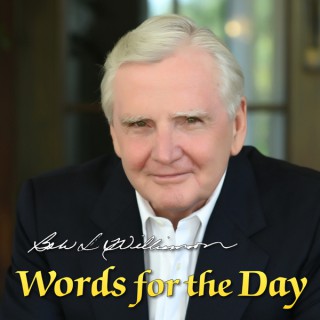
Tomorrow I leave for Waco Texas to celebrate the 50th anniversary of the Bill Glass prison ministry. I spent several years traveling around the country speaking at prisons with this ministry and saw many men and women come to know Christ and also served on his board of directors for a while . . . https://www.wordsfortheday.com/index.php/2019/08/a-hint-of-wisdom-finally/
Tomorrow I leave for Waco Texas to celebrate the 50th anniversary of the Bill Glass prison ministry. I spent several years traveling around the country speaking at prisons with this ministry and saw many men and women come to know Christ and also served on his board of directors for a while . . . https://www.wordsfortheday.com/index.php/2019/08/a-hint-of-wisdom-finally/
Join David Monn and Andy as they travel down memory lane to discover the events and steps that led David to develop a unique sense of design in the event industry. Join Andy and David as they travel down memory lane to discover the events and steps that led him to develop a unique sense of design in the event industry. David’s unique ability to align the senses to create the most effective event tapestry is what sets him apart from his fellow planners and designers. David’s fascinating career trajectory involved finally realizing his calling was in event planning and design. His use of authenticity, scale, and attention to detail along with igniting the senses of smell, sound, and sight have made him an industry leader and one of the most highly sought-after event planners/designers in the world. His goal is to craft an event that shares your true story and personality, not the fantasy that you’ve created for yourself. His years in the corporate environment prepared him by giving insights into the mechanics of running a business and putting him in contact with some of the most influential fashion designers of the 20th century. Their mentorship and his creativity are the backbones of his business. Listen in to learn how lighting design defines an event, why packing light and carrying on your luggage is so freeing, and how to leverage your relationships to create a thriving business. David shares valuable and personal insights into the creation of his business, so this conversation is not one you want to miss. Show Highlights: [02:13] - David and Andy chat about the details of how he creates events while spending time at David’s home. [05:37] - No matter the size or importance of the event, David works to engage the senses of smell, sound, and sight to imprint the event on the memory of all involved. [06:21] - Growing up in a large family, in a small town, with a sense of protection and order instilled by his father, heavily impacts his process. [11:34] - His father refused to take out loans to pay for his education at Parson’s School of Design, so David created a backup plan. [14:58] - After moving up through the ranks of a garment manufacturing company, he made his way to the New York office of the company as an executive assistant. [21:08] - David helped a friend decorate her apartment and this led to his next client and his next for interior design, while still working in merchandising. [24:09] - What did he learn from his mentors Oscar De La Renta and Bill Glass? [28:32] - “Light in a space is everything and is why it feels the way it feels.” [38:32] - How does light design work with outdoor events and the change in natural light? [40:32] - David comments on a quote by Thomas Edison about the renewing feeling of being in and working in a garden and the role nature plays in his events. [43:21] - When everything is in sync there is something magical about the event. [47:24] - David shares his process for creating each type of event he brings to life through authenticity, scale, and detail. [57:48] - David has curated several huge events and shares some fascinating stories. [1:03:50] - The artistic side of the business is probably 20%, the other 80% is running the business, which David learned in his corporate positions. [1:11:19] - How does David structure his pricing for such individualized events? [1:14:18] - Learn David’s best tips and advice as well as what he would include in a masterclass. LINKS & RESOURCES The Wedding Biz The Wedding Biz The Wedding Biz on Instagram The Wedding Biz on Facebook @theweddingbiz David Monn David Monn, LLC David Monn on Instagram David Monn on Facebook David Monn on Twitter @david_monn David Monn on YouTube David Monn on LinkedIn David Monn on Pinterest Mentioned By David Parson’s School of Design The Plaza Hotel Oscar De La Renta Bill Blass Robert Isabell Colin Cowie Lifestyle Colin’s interviews on The Wedding Biz: Colin Cowie: Part 1 Creating Groundbreaking Luxury Experiences Colin Cowie: Part 2 Creating Groundbreaking Luxury Experiences Ron Ben Israel Ron’s interview on The Wedding Biz

Justin and Bill catch and share the joys of being out of the diapers days of Dad-dom.Facebook.com/dadpodcast@DadPodcast@iPodcastJustinListen Live atmixLR.com/dadpodcastTell 3 people about this show. They don't have to listen just ask them to subscribe. We want to be number 1.Bookmark the amazon banner at the bottom of TheDadPodcast.com
There is a remarkable text found in the first book of the Bible in Genesis 49. Jacob has 12 sons. As he is preparing to depart this life he calls all his sons around his bedside and pronounces a blessing upon each one. Genesis 49 and verse 28 states, “He (that is Jacob) blessed them every one with the blessing appropriate to him”. Did you get that? He pronounces a blessing upon each son, words that would be just for that son. Everyone of our children need to hear a blessing appropriate to them; boys and girls; sons and daughters. Words of affirmation from our Dads! Bill Glass, former all Pro football player for the Cleveland Browns and founder and Director of Bill Glass Prison ministries underlines and underscores the importance of Father’s pronouncing blessings upon their children ALL THROUGH THEIR LIVES. Bill states, “children need a father who speaks the words of love, hope and belonging in their lives.” He continues, “the future of your children and your children’s children and even their children depends upon it.”

Bill Glass:The Power of a Father
Bill Glass of Bill Glass Champions for Life joins us at North Park Church for a special service
Bill Glass of Bill Glass Champions for Life joins us at North Park Church for a special service

Naptime Radio: A Witty and Intelligent Podcast for Moms and Some Dads
Heather, Kate and Alli P. get smutty with The Dad Podcast in LA. Join us as we cross the line from biz buzzed to biz wasted, power nap on co-parenting with Justin Worsham and Bill Glass and wrap with Nodelman's news quiz. Heads up, this episode is EXPLICIT. Enjoy and thanks for listening!
National Leader of the Month Bill Glass is the president and founder of Bill Glass Champions for Life. He is also an author and retired professional football player. In this leadership podcast (episode 1 of 3), he discusses his prison ministry with host Brian McCormick. buy arava overnight shippinggeneric for arcoxia pillsarcoxia online without prescriptionarcoxia 120mgarcoxia generic namearcoxia etoricoxibwhere can i buy arcoxia onlinewhere can i buy arcoxia without a prescriptionget a arcoxia without prescriptioncost of arcoxia pillscheap arcoxia no rxaricept without a prescriptionaricept medicationget a aricept without prescriptionbuy donepezil hydrochloride in the ukpurchase aricept without prescriptionaricept 5mg rdtdonepezil hydrochloride 10mg tabletbuy aricept medicationaricept usa and canadaorder aricept without prescriptionaricept use in dogsgeneric for aricept pillsarimidex bladder infectioncheap arimidex no rxcheap arimidexpurchase arimidex without script next day deliverypurchase arimidex overnight deliveryanastrozole online without prescriptionarimidex usa and canada
National Leader of the Month Bill Glass is the president and founder of Bill Glass Champions for Life. He is also an author and retired professional football player. In this leadership podcast (episode 1 of 3), he discusses his prison ministry with host Brian McCormick. buy arava overnight shippinggeneric for arcoxia pillsarcoxia online without prescriptionarcoxia 120mgarcoxia generic namearcoxia etoricoxibwhere can i buy arcoxia onlinewhere can i buy arcoxia without a prescriptionget a arcoxia without prescriptioncost of arcoxia pillscheap arcoxia no rxaricept without a prescriptionaricept medicationget a aricept without prescriptionbuy donepezil hydrochloride in the ukpurchase aricept without prescriptionaricept 5mg rdtdonepezil hydrochloride 10mg tabletbuy aricept medicationaricept usa and canadaorder aricept without prescriptionaricept use in dogsgeneric for aricept pillsarimidex bladder infectioncheap arimidex no rxcheap arimidexpurchase arimidex without script next day deliverypurchase arimidex overnight deliveryanastrozole online without prescriptionarimidex usa and canada
© 2020-2026 Ivy Podcast Discovery LLC