
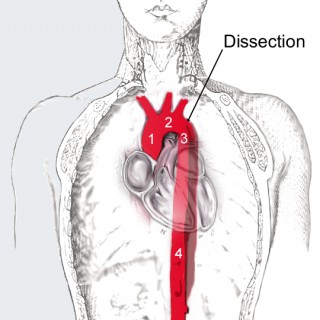
Injury to the innermost layer of the aorta allows blood to flow between the layers of the aortic wall, forcing the layers apart
POPULARITY

14 episodes with Aortic dissection

7 episodes with Aortic dissection

6 episodes with Aortic dissection

9 episodes with Aortic dissection

2 episodes with Aortic dissection

2 episodes with Aortic dissection

2 episodes with Aortic dissection

2 episodes with Aortic dissection

3 episodes with Aortic dissection

Broadcast from KSQD, Santa Cruz on 8-06-2026: >ul> An emailer with persistent nine-month nerve damage in her right leg after a hysterectomy asks whether peptides could help. Dr. Dawn attributes the injury to lithotomy positioning during surgery, then reviews the main nerve-regeneration candidates in the FDA peptide review pipeline: BPC-157 (Body Protection Compound, strong rat data on sciatic nerve recovery with thicker myelin sheaths), intracellular sigma peptide (targets glial scar CSPGs blocking CNS regrowth), C3 peptide 156-181, GHK-Cu (copper peptide, upregulates nerve growth factor and neurotrophin-3), self-assembling hydrogel scaffolds for bridging nerve gaps, ARA-290/cibinetide (an erythropoietin fragment with early small fiber neuropathy trial data), and Semax (used internationally for stroke rehab). She adds standard functional-medicine adjuncts: alpha-lipoic acid, methylated B12, and methylfolate at high doses for six months. An emailer asks about safe features when buying an infrared sauna. Dr. Dawn covers three concerns: EMF exposure (look for shielded/grounded heaters testing under 1 milligauss at seat level, avoid unshielded Wi-Fi and Bluetooth panels); VOC off-gassing (avoid plywood, particle board, and MDF because of formaldehyde and benzene release, and avoid Western red cedar and pine because of high terpene emissions and instead choose poplar, basswood, or eucalyptus); and avoid built-in oxygen ionizers, which produce ozone as a coronal-discharge byproduct that irritates airways and generates secondary oxygenated VOCs. Dr. Dawn covers the surprisingly long list of medications that raise estrogen in middle-aged men—including nearly all antidepressants and antiepileptics, statins, NSAIDs (specifically naproxen and indomethacin but not ibuprofen), most blood pressure medications, PPIs, H2 blockers, Parkinson's drugs, antihistamines, and muscle relaxants. She recommends annual monitoring of the estrogen-to-testosterone ratio and offers rebalancing options: topical chrysin (blocks aromatization), indole-3-carbinol, calcium D-glucarate (blocks enterohepatic estrogen recirculation), soy (competitive receptor inhibition), and grape skin extract. The first mRNA-based flu vaccine was approved this week for adults 50 and over. Beyond the 27% improvement in seasonal efficacy over conventional shots, the strategic advantage is manufacturing speed. This will be critical when or if bird flu mutates to respiratory human transmission. Since mRNA vaccine can be reprogrammed from a new viral sequence in weeks versus the three-to-four-month growth cycle for conventional flu vaccines, rapid response can save lives. But mRNA vaccine side effects include more injection-site pain and fatigue - more like a tetanus shot than a traditional flu shot.. A Spanish prospective study of chemicals affected puberty in the young studied 500 girls followed from ages 7-10 and again at 14-16 used urine chemical measurements as objective exposure markers rather than food diaries. Ethylenethiourea, a metabolite of dithiocarbamate fungicides used heavily on strawberriess,was associated with earlier menarche, while a chlorpyrifos metabolite was associated with delayed menarche. this latter effect was more pronounced in overweight girls whose fat tissue concentrated the compound. Dr. Dawn recommends organic strawberries and keeping children away from fumigated fields. University of Pennsylvania School of Dental Medicine researchers developed a chewing gum from lablab beans containing the natural antiviral protein FRIL, which reduced oral HPV by up to 93% in samples from head and neck squamous cell carcinoma patients. The gum also suppressed Fusobacterium nucleatum and Porphyromonas gingivalis, oral bacteria that promote cancer recurrence. Michigan State University's Hamburger lab studying delphinium (larkspur) alkaloids joined forces with Tomáš Pluskal's Czech Academy of Sciences lab studying wolfsbane (monkshood) after meeting at a Barcelona conference. Together they mapped the biosynthetic assembly line for aconite—an alkaloid with valuable applications against malaria, pain, cancer, and agricultural pests but impossibly slow to extract from source plants—and cloned the pathway into tobacco, which grows aggressively and produces large quantities of the compound. An emailer named in the message asks about an incidentally-discovered enlarged aorta on CT. Dr. Dawn notes it officially becomes an aneurysm at 4 cm (annual monitoring) or 5 cm (six-month monitoring), with smoking cessation critical since tobacco directly weakens the aortic wall. She describes the "zipper of fire" back pain of dissection versus catastrophic rupture, and notes Medicare covers a one-time screening ultrasound for ever-smokers over 65.

Send us Fan MailLINDSEY GRAHAM: OUR SENATOR – A Tribute, Part 2: Shocked and SaddenedThe shock of Senator Lindsey Graham's sudden passing continued to reverberate across South Carolina and the nation as friends, colleagues, political allies, and even longtime opponents reflected on the life of one of America's most influential senators.Part Two begins with Darlene Graham Nardone taking the oath of office as South Carolina's temporary United States Senator before following the continuing news coverage and public reaction to Graham's death. Through interviews, press conferences, and conversations from those historic days, we hear memories of the man behind the public figure while revisiting many of the defining moments of his long career in public service.This episode captures a state—and a nation—coming to terms with an unexpected loss. It is a portrait of grief, gratitude, and remembrance as South Carolinians begin to reflect on Lindsey Graham's decades of service and the lasting impact he made on their state and the country.This is Part Two of our five-part documentary tribute honoring the life, leadership, and legacy of Senator Lindsey Graham. Questions or comments at , Randalrgw1@aol.com , https://twitter.com/randal_wallace , and http://www.randalwallace.com/Please Leave us a review at wherever you get your podcastsThanks for listening!!

Does coffee really dehydrate you? A deeper dive on this important topicHelp for nighttime urinationPlease discuss aortic dissection

Senator Lindsay Graham recently died unexpectedly from a thoracic aortic dissection, taking the world by surprise. Is this something you should be concerned about for your own health? You may actually have already been tested for this, even if the results were not shared with you. Here is a discussion about what an aortic dissection is, why and how it occurs, how to find out if it applies to you, and what you can do to stop it from posing danger.Support the showYouTube channel: https://www.youtube.com/@WilliamDavisMDBlog: WilliamDavisMD.comMembership website for two-way Zoom group meetings: InnerCircle.DrDavisInfiniteHealth.comBooks:Super Gut: The 4-Week Plan to Reprogram Your Microbiome, Restore Health, and Lose WeightWheat Belly: Lose the Wheat, Lose the Weight and Find Your Path Back to Health; revised & expanded ed

Ryan talks with Director of the Vascular Center of Excellence at the TGH Heart and Vascular Institute and Chief of Vascular Surgery with USF Health, Dr. Jean Bismuth, about aortic dissection, the condition reported as the cause of Lindsey Graham's death.
Ryan talks with Director of the Vascular Center of Excellence at the TGH Heart and Vascular Institute and Chief of Vascular Surgery with USF Health, Dr. Jean Bismuth, about aortic dissection, the condition reported as the cause of Lindsey Graham's death. See omnystudio.com/listener for privacy information.

Senator Lindsey Graham died unexpectedly over the weekend at the age of 71. The medical examiner is awaiting additional test results before determining the official cause of death but “the preliminary examination findings were - "Aortic Dissection due to Arteriosclerotic Cardiovascular Disease.” He served in the United States Air Force as a military lawyer, was elected to the House in 1994, and then elected to the Senate in 2002. It was announced that his sister, Darline Graham-Nordone, will hold his seat until an August election. FOX's Gurnal Scott speaks Matt Whitlock, former senior advisor to the National Republican Senatorial Committee (NRSC), who shares his favorite moments of the Senator's life, and his thoughts on his sister stepping in as interim. Click Here To Follow 'The FOX News Rundown: Evening Edition' Learn more about your ad choices. Visit podcastchoices.com/adchoices

Senator Lindsey Graham died unexpectedly over the weekend at the age of 71. The medical examiner is awaiting additional test results before determining the official cause of death but “the preliminary examination findings were - "Aortic Dissection due to Arteriosclerotic Cardiovascular Disease.” He served in the United States Air Force as a military lawyer, was elected to the House in 1994, and then elected to the Senate in 2002. It was announced that his sister, Darline Graham-Nordone, will hold his seat until an August election. FOX's Gurnal Scott speaks Matt Whitlock, former senior advisor to the National Republican Senatorial Committee (NRSC), who shares his favorite moments of the Senator's life, and his thoughts on his sister stepping in as interim. Click Here To Follow 'The FOX News Rundown: Evening Edition' Learn more about your ad choices. Visit podcastchoices.com/adchoices

Senator Lindsey Graham died unexpectedly over the weekend at the age of 71. The medical examiner is awaiting additional test results before determining the official cause of death but “the preliminary examination findings were - "Aortic Dissection due to Arteriosclerotic Cardiovascular Disease.” He served in the United States Air Force as a military lawyer, was elected to the House in 1994, and then elected to the Senate in 2002. It was announced that his sister, Darline Graham-Nordone, will hold his seat until an August election. FOX's Gurnal Scott speaks Matt Whitlock, former senior advisor to the National Republican Senatorial Committee (NRSC), who shares his favorite moments of the Senator's life, and his thoughts on his sister stepping in as interim. Click Here To Follow 'The FOX News Rundown: Evening Edition' Learn more about your ad choices. Visit podcastchoices.com/adchoices

In this episode, we review the high-yield topic of Aortic Dissection from the Cardiovascular section.Follow Medbullets on social media:Facebook: www.facebook.com/medbulletsInstagram: www.instagram.com/medbulletsofficialTwitter: www.twitter.com/medbullets
Darshan H. Brahmbhatt, Podcast Editor of JACC: Advances, discusses a recently published original research paper on A 4-Decade Population-Based Registry of Thoracic Aortic Dissection Causing Sudden Death in the Young.

In this episode of Critical Matters, Dr. Sergio Zanotti discusses the management of acute type B aortic dissection. He is joined by Dr. Firas Mussa, a vascular surgeon and professor at McGovern Medical School at UTHealth Houston. Dr. Mussa also holds a joint appointment with Imperial College in London. Additional resources: Management of Acute Type B Aortic Dissection. FF Mussa and P Kougias. N Engl J of Med 2025: https://pubmed.ncbi.nlm.nih.gov/40902163/ 2022 ACC/AHA Guideline for the Diagnosis and Management of Aortic Disease: A Report of the American Heart Association/American College of Cardiology Joint Committee on Clinical Practice Guidelines. EM Isselbacher, et al. Circulation 2022: https://pubmed.ncbi.nlm.nih.gov/36322642/ Society for Vascular Surgery (SVS) and Society of Thoracic Surgeons (STS) Reporting Standards for Type B Aortic Dissections. JV Lombardi, et al. J Vasc Surg 2020: https://pubmed.ncbi.nlm.nih.gov/32001058/ Endovascular repair of type B aortic dissection: long-term results of the randomized investigation of stent grafts in aortic dissection trial. INSTEAD-XL Trial. CA Nienaber, et al. Circ Cardiovasc Inter 2013: https://pubmed.ncbi.nlm.nih.gov/23922146/ Books mentioned in this episode: A Dangerous Liaison: A Revelatory New Biography of Simon de Beauvoir and Jean-Paul Satre. By Carole Seymour-Jones: https://bit.ly/3L0pIov A Time For All Things: The Life of Michael E. DeBakey. By Craig Miller, et al.: https://bit.ly/44B2uMw

Read the article here: https://journals.sagepub.com/doi/full/10.1177/30494826251357570

In this episode of The Atrium, host Dr. Alice Copperwheat speaks with Marc Moon, Chief of Adult Cardiac Surgery at Texas Heart Institute, Chief of the Division of Cardiothoracic Surgery at Baylor College of Medicine, and Chief of Adult Cardiac Surgery section at Baylor St. Luke's Medical Center, about aortic dissection. Chapters 00:00 Intro 00:33 About Dr. Moon 02:51 Overview 03:33 History 05:27 Pathophysiology & Clinical Presentation 12:14 Diagnosis 15:25 Management 15:36 Step-by-Step, Type A 41:29 Step-by-Step, Type B 44:25 Postop Management 46:51 Complications 51:49 Future of Aortic Dissection 54:38 Key Takeaways 55:16 Training Advice They begin with an overview of aortic dissection, including its history and pathophysiology. They explored imaging techniques and diagnostic approaches, as well as management options. Additionally, they provided the steps for performing aortic dissection for both Type A and Type B, addressing postoperative management and complications. The episode concludes with a look at the future of aortic dissection, and Dr. Moon provides advice to trainees. The Atrium is a monthly podcast presenting clinical and career-focused topics for residents and early career professionals across all cardiothoracic surgery subspecialties. Watch for next month's episode on extended resection with Dr. Erinoangelo Rendina. Disclaimer The information and views presented on CTSNet.org represent the views of the authors and contributors of the material and not of CTSNet. Please review our full disclaimer page here.

10 years ago, Auckland-resident Peter Fleming survived an aortic dissection, a rare but deadly tear in the body's main artery. The condition is often fatal, is missed in more than 50% of cases and 90% of patients don't survive before reaching a specialist centre. He spoke to Corin Dann.
This week on The Beat, CTSNet Editor-in-Chief Joel Dunning shares insights from his recent trip to Ghana. Chapters 00:00 Intro 02:18 Ghana Mission Trip 04:35 Failures of a Heart Surgeon 09:27 JANS 1, Accelerometer-Measured Physical Activity 12:57 JANS 2, Utility of GERAADA Score 14:41 JANS 3, Aortic Valve Neocuspidization 17:33 JANS 4, Procedural Planning in Thoracoscopic Segmentectomy 19:09 JANS 5, The Outlet Orifice Diameter 22:28 Video 1, Clampless Aortic Valve Replacement 24:01 Video 2, Multiportal Robot-Assisted Extended LLS S6 25:13 Video 3, The Atrium 26:00 EACTS 2025 & Upcoming Events 27:35 Footage From Ghana He discusses the various procedures that he and his team performed during their visit, as well as his overall experience collaborating with the local surgeons. The episode also features surgical footage from his time in Ghana and includes discussion with several surgeons about their work. Additionally, Joel addresses a recent news story from the UK regarding the failures of a heart surgeon that have contributed to multiple patient deaths. He provides an overview of the circumstances surrounding these events and emphasizes the critical importance of teamwork in surgical practice. Joel also highlights recent JANS articles on an analysis of the UK mini mitral randomized controlled trial for accelerometer-measured physical activity after mitral valve surgery, the utility of GERAADA score for predicting long-term survival following surgical repair of aortic dissection, early to mid-term results of aortic valve neocuspidization for rheumatic aortic valve disease, a systematic review and meta-analysis for three-dimensional reconstruction and virtual simulation of patient-specific anatomy for procedural planning in thoracoscopic segmentectomy, and the outlet orifice diameter of surgical bioprosthetic aortic stented valves is predominantly much smaller than the inlet orifice diameter. In addition, Joel explores a clampless aortic valve replacement in a partial porcelain aorta with aortic root enlargement and CABG with two grafts, multiportal robot-assisted extended lower left segmentectomy, and an episode of The Atrium podcast featuring host Dr. Alice Copperwheat speaking with Dr. John D. Puskas about proximal coronary anastomosis. Before closing, Joel highlights upcoming events in CT surgery. JANS Items Mentioned 1.) Accelerometer-Measured Physical Activity After Mitral Valve Surgery: An Analysis of the UK Mini Mitral Randomized Controlled Trial 2.) Utility of GERAADA Score for Predicting Long-Term Survival Following Surgical Repair of Aortic Dissection 3.) Early to Mid-Term Results of Aortic Valve Neocuspidization for Rheumatic Aortic Valve Disease 4.) Three-Dimensional Reconstruction and Virtual Simulation of Patient-Specific Anatomy for Procedural Planning in Thoracoscopic Segmentectomy: A Systematic Review and Meta-Analysis 5.) The Outlet Orifice Diameter of Surgical Bioprosthetic Aortic Stented Valves Is Predominantly Much Smaller Than the Inlet Orifice Diameter CTSNet Content Mentioned 1.) Clampless Aortic Valve Replacement in a Partial Porcelain Aorta With Aortic Root Enlargement and CABG With Two Grafts 2.) Multiportal Robot-Assisted Extended Lower Left Segmentectomy: Superior Segment S6 With Lateral S9 Resection 3.) The Atrium: Proximal Coronary Anastomosis Other Items Mentioned 1.) Joel Dunning YouTube Channel | The Arrhythmia Alliance Hearts of Ghana Mission 2025 2.) Heart Surgeon's Failures Contributed to Multiple Deaths 3.) The 10 Commandments for Proximal Anastomosis During CABG: Techniques and Technologies for Vein and Arterial Grafts 4.) Perfecting TAVR Removal | Skills Sharpening With Vince Gaudiani 5.) Career Center 6.) CTSNet Events Calendar Disclaimer The information and views presented on CTSNet.org represent the views of the authors and contributors of the material and not of CTSNet. Please review our full disclaimer page here.

A silent danger lurks within the descending thoracic aorta. While most Type B aortic dissections are managed medically, up to half of these patients will either require life-saving surgery or die within just five years. So how do we separate those who will quietly recover from those on the edge of catastrophe? How do we protect the spinal cord, bowel, and limbs from the devastating consequences of malperfusion? Join the University of Michigan Department of Vascular Surgery as they tackle the high-stakes decisions behind managing this unpredictable disease—where timing is critical, interventions are evolving, and lives hang in the balance. Hosted by the University of Michigan Department of Vascular Surgery: · Robert Beaulieu, Program Director · Frank Davis, Assistant Professor of Surgery · Luciano Delbono, PGY-5 House Officer · Andrew Huang, PGY-4 House Officer · Carolyn Judge, PGY-2 House Officer Learning Objectives: 1. Discuss general approach to diagnosis and management of TBAD. 2. Identifying high-risk features in uncomplicated TBAD and understanding their role in determining the need for surgical management. 3. Review endovascular techniques for managing malperfusion of the limbs, viscera, and spinal cord and discuss associated decision making. References: Authors/Task Force Members, Czerny, M., Grabenwöger, M., Berger, T., Aboyans, V., Della Corte, A., Chen, E. P., Desai, N. D., Dumfarth, J., Elefteriades, J. A., Etz, C. D., Kim, K. M., Kreibich, M., Lescan, M., Di Marco, L., Martens, A., Mestres, C. A., Milojevic, M., Nienaber, C. A., … Hughes, G. C. (2024). EACTS/STS Guidelines for Diagnosing and Treating Acute and Chronic Syndromes of the Aortic Organ. The Annals of Thoracic Surgery, 118(1), 5–115. https://doi.org/10.1016/j.athoracsur.2024.01.021 de Kort, J. F., Hasami, N. A., Been, M., Grassi, V., Lomazzi, C., Heijmen, R. H., Hazenberg, C. E. V. B., van Herwaarden, J. A., & Trimarchi, S. (2025). Trends and Updates in the Management and Outcomes of Acute Uncomplicated Type B Aortic Dissection. Annals of Vascular Surgery, S0890-5096(25)00004-4. https://doi.org/10.1016/j.avsg.2024.12.060 Eidt, J. F., & Vasquez, J. (2023). Changing Management of Type B Aortic Dissections. Methodist DeBakey Cardiovascular Journal, 19(2), 59–69. https://doi.org/10.14797/mdcvj.1171 Lombardi, J. V., Hughes, G. C., Appoo, J. J., Bavaria, J. E., Beck, A. W., Cambria, R. P., Charlton-Ouw, K., Eslami, M. H., Kim, K. M., Leshnower, B. G., Maldonado, T., Reece, T. B., & Wang, G. J. (2020). Society for Vascular Surgery (SVS) and Society of Thoracic Surgeons (STS) reporting standards for type B aortic dissections. Journal of Vascular Surgery, 71(3), 723–747. https://doi.org/10.1016/j.jvs.2019.11.013 MacGillivray, T. E., Gleason, T. G., Patel, H. J., Aldea, G. S., Bavaria, J. E., Beaver, T. M., Chen, E. P., Czerny, M., Estrera, A. L., Firestone, S., Fischbein, M. P., Hughes, G. C., Hui, D. S., Kissoon, K., Lawton, J. S., Pacini, D., Reece, T. B., Roselli, E. E., & Stulak, J. (2022). The Society of Thoracic Surgeons/American Association for Thoracic Surgery Clinical Practice Guidelines on the Management of Type B Aortic Dissection. The Annals of Thoracic Surgery, 113(4), 1073–1092. https://doi.org/10.1016/j.athoracsur.2021.11.002 Papatheodorou, N., Tsilimparis, N., Peterss, S., Khangholi, D., Konstantinou, N., Pichlmaier, M., & Stana, J. (2025). Pre-Emptive Endovascular Repair for Uncomplicated Type B Dissection—Is This an Option? Annals of Vascular Surgery, S0890-5096(25)00007-X. https://doi.org/10.1016/j.avsg.2025.01.003 Trimarchi, S., Gleason, T. G., Brinster, D. R., Bismuth, J., Bossone, E., Sundt, T. M., Montgomery, D. G., Pai, C.-W., Bissacco, D., de Beaufort, H. W. L., Bavaria, J. E., Mussa, F., Bekeredjian, R., Schermerhorn, M., Pacini, D., Myrmel, T., Ouzounian, M., Korach, A., Chen, E. P., … Patel, H. J. (2023). Editor's Choice - Trends in Management and Outcomes of Type B Aortic Dissection: A Report From the International Registry of Aortic Dissection. European Journal of Vascular and Endovascular Surgery: The Official Journal of the European Society for Vascular Surgery, 66(6), 775–782. https://doi.org/10.1016/j.ejvs.2023.05.015 Writing Committee Members, Isselbacher, E. M., Preventza, O., Hamilton Black Iii, J., Augoustides, J. G., Beck, A. W., Bolen, M. A., Braverman, A. C., Bray, B. E., Brown-Zimmerman, M. M., Chen, E. P., Collins, T. J., DeAnda, A., Fanola, C. L., Girardi, L. N., Hicks, C. W., Hui, D. S., Jones, W. S., Kalahasti, V., … Woo, Y. J. (2022). 2022 ACC/AHA Guideline for the Diagnosis and Management of Aortic Disease: A Report of the American Heart Association/American College of Cardiology Joint Committee on Clinical Practice Guidelines. Journal of the American College of Cardiology, 80(24), e223–e393. https://doi.org/10.1016/j.jacc.2022.08.004 Please visit https://behindtheknife.org to access other high-yield surgical education podcasts, videos and more. If you liked this episode, check out our recent episodes here: https://app.behindtheknife.org/listen


An aortic dissection occurs when the innermost layer of the aorta tears and blood pushes into the walls of the aorta, separating the layers and causing some very dangerous problems. Let's talk through this process and think about the anatomy that might also be affected.

Mr Giovanni Mariscalco joins us again to discuss a serious but often under-recognised emergency: aortic dissection. This condition can mimic more benign causes of chest or back pain, but when it strikes, every minute counts. A missed diagnosis can lead to a fatal outcome. In this episode, we break down the classic and subtle presentations, the key investigations (and where clinicians often go wrong), and what to do when you suspect it.
Commentary by Dr. Jian'an Wang.
Darshan H. Brahmbhatt, Podcast Editor of JACC: Advances, discusses a recently published original research paper on Cardiac Tamponade Complicating Type A Acute Aortic Dissection: Insights From 25 Years of Registry Research.

"I grabbed the door handle, and it felt like somebody just cut up my chest with a dull butter knife. And 15 seconds later I was lying face down on the kitchen floor dead from cardiac tamponade at that point in time."Hey Heart Buddies. Whew. Today's episode with Jon Toivonen whose heart story literally stopped—and restarted—multiple times is one to help you take stock of your own life. Jon recounts his first shocking symptoms, the surreal “butter knife” sensation of an aortic dissection, and how fate, luck, and love shaped his survival. While Jon's physical heart has been patched together, the emotional journey is far from straightforward. Jon shares what comes after the surgeries: the mental battles, the power of community, and why an electric recliner might just be life changing. He also opens up about navigating the aftermath—ICU hallucinations, family impact, and the ever-present possibility of another health crisis.You can find Jon here. Join the Newsletter for almost weekly content for this podcast and other heart related news.Join the Patreon Community! The Joyful Beat zoom group is where you'll find connection and hope that you aren't alone in your journey.If you just want to support the show as a one-time gift (thank you), go here.**I am not a doctor and this is not medical advice. Be sure to check in with your care team about all the next right steps for you and your heart.**How to connect with BootsEmail: Boots@theheartchamberpodcast.comInstagram: @openheartsurgerywithboots or @boots.knightonLinkedIn: linkedin.com/in/boots-knightonBoots KnightonIf you enjoyed this episode, take a minute and share it with someone you know who will find value in it as well.
What began as a stroke alert turned into a different kind of emergency: aortic dissection. Today's patient case study follows a series of clinical decisions that saved an elderly man from a fatal misdiagnosis. Christian Guzman APRN walks us through the case — from the patient's misleading symptoms to the diagnostic tests that showed something more was going on.We dive into the anatomy, pathophysiology, and clinical signs of aortic dissection, including how the location of tears changes the presentation of symptoms. From emergency treatment strategies to post-op care, you'll learn how to navigate the nuances of managing this complex condition!Topics discussed in this episode:Patient's initial presentationSymptoms of aortic dissection and diagnostic imagingBilateral blood pressure and perfusion checksAortic dissection vs. aortic aneurysmWhy symptoms vary so widelyBedside assessment and monitoringTreatment priorities and pain managementPost-op care and long-term complicationsMentioned in this episode:AND If you are planning to sit for your CCRN and would like to take the Critical Care Academy CCRN prep course you can visit https://www.ccrnacademy.com and use coupon code RAPID10 to get 10% off the cost of the course!Join me at NTI 2025 May 19th-21st in New Orleans!You can learn more and get registered here: www.aacn.org/25-nti CONNECT
This week on The Beat, CTSNet Editor-in-Chief Joel Dunning speaks with Professor Robert Sneyd, Vice Chair of Aortic Dissection Awareness UK & Ireland, about the charity's dedication to promoting awareness of aortic dissection. Chapters 00:00 Intro 03:52 RLAAO Isolated MR Study 09:07 Early Outcomes Reop Aortic Root 11:39 Fallot and Its Variants 16:55 Low-Dose Warfarin, Mech AV 22:02 AVR w LIMA-LAD & AAR 23:40 Pulm Thromboendarterectomy 25:28 Modified Birmingham Technique 27:32 Dr. Sneyd, Aortic Dissection Awareness 31:16 Upcoming Events 32:33 Closing They discuss Professor Sneyd's experience with an acute Type A aortic dissection and the lifesaving operation he underwent. Additionally, they explore his involvement with Aortic Dissection Awareness UK & Ireland and the charity's new programs. They also cover the organization's outreach efforts and the important patient guide available on their website. Joel also reviews recent JANS articles on mortality and stroke after routine left atrial appendage occlusion in patients undergoing isolated mitral repair without atrial fibrillation in the United States, if early outcomes of reoperative aortic root surgery is impacted by previous root procedures and indicate reintervention, Fallot and its variants from diagnosis to pulmonary valve replacement, and low-dose warfarin with a novel mechanical aortic valve. In addition, Joel explores aortic valve replacement with LIMA to LAD artery and an ascending aortic replacement, step-by-step pulmonary thromboendarterectomy for chronic thromboembolic disease, and Norwood-Sano Stage I palliation for hypoplastic left heart syndrome. Before closing, he highlights upcoming events in CT surgery. JANS Items Mentioned 1.) Mortality and Stroke After Routine Left Atrial Appendage Occlusion in Patients Undergoing Isolated Mitral Repair Without Atrial Fibrillation in the United States 2.) Are Early Outcomes of Reoperative Aortic Root Surgery Impacted by Previous Root Procedure and Indication for Reintervention? 3.) Fallot and Its Variants: From Diagnosis to Pulmonary Valve Replacement 4.) Low-Dose Warfarin With a Novel Mechanical Aortic Valve: Interim Registry Results at 5-Year Follow-Up CTSNET Content Mentioned 1.) Aortic Valve Replacement With LIMA to LAD Artery and an Ascending Aortic Replacement 2.) Step-by-Step Pulmonary Thromboendarterectomy for Chronic Thromboembolic Disease 3.) Norwood-Sano Stage I Palliation for Hypoplastic Left Heart Syndrome: The Modified Birmingham Technique Other Items Mentioned 1.) Aortic Dissection Awareness UK & Ireland Website 2.) Webinar Series: Women in Cardiothoracic Surgery—Advancement Through Collaboration 3.) Career Center 4.) CTSNet Events Calendar Disclaimer The information and views presented on CTSNet.org represent the views of the authors and contributors of the material and not of CTSNet. Please review our full disclaimer page here.

Subarachnoid haemorrhage is a diagnosis that can't be missed, but it is not a simple process to detect it. The first paper for discussion this month questions if a CT scan within 6 hours is sufficient for exclusion in patients with acute headache. Then there is a large-scale analysis of over 400 million ED visits in the USA, focussing in on the significant issue of self-harm in the homeless population. Next is a paper on a decision tool for suspected acute aortic syndrome, and to finish, a discussion on the change in ED culture around safety since the COVID pandemic. Read the issue highlights: December 2024 Primary Survey Articles discussed in this episode: Subarachnoid haemorrhage in the emergency department (SHED): a prospective, observational, multicentre cohort study Suicide and self-injury-related emergency department visits and homelessness among adults 25–64 years old from 2016 to 2021 in the USA Decision analytical modelling of strategies for investigating suspected acute aortic syndrome Culture of safety in an adult and paediatric emergency department before and after the COVID-19 pandemic The EMJ podcast is hosted by: Dr. Richard Body, EMJ Deputy Editor, University of Manchester, UK (@richardbody) Dr. Sarah Edwards, EMJ Social Media Editor, Leicester Royal Infirmary, UK (@drsarahedwards) You can subscribe to the EMJ podcast on all podcast platforms to get the latest podcast every month. If you enjoy our podcast, please consider leaving us a review or a comment on the EMJ Podcast iTunes (https://apple.co/4bfcMU0) or Spotify (https://spoti.fi/3ufutSL) page.

In this episode, we review the high-yield topic of Aortic Dissection from the Cardiovascular section. Follow Medbullets on social media: Facebook: www.facebook.com/medbullets Instagram: www.instagram.com/medbulletsofficial Twitter: www.twitter.com/medbullets Linkedin: https://www.linkedin.com/company/medbullets

Dr. Pregerson with how to use ultrasound to diagnose aortic dissection and not miss pericardial effusion, ascending aorta, and dissection flap, only in this month's podcast. Read more in the Show Notes.

Better Edge : A Northwestern Medicine podcast for physicians
Patricia Vassallo, MD, Assistant Professor of Cardiology at Northwestern Medicine, highlights her research investigating the impact of socioeconomic status on readmission rates in patients undergoing acute type A aortic dissection repair.Dr. Vassallo, medical director of Code Aorta, discusses this program, which aims to provide expedited surgical care to patients with life-threatening aortic emergencies.

Actor Amy Yasbeck appeared in some of the biggest movies and TV shows of our time. Pretty Woman, The Mask, Wings. Along with several acclaimed Mel Brooks films, Robin Hood: Men in Tights, and Dracula: Dead and Loving It, along with many more. Amy was married to comic actor John Ritter, known best for TV's Three's Company. John died in 2003 of an Aortic Dissection. In addition to her acting career, Amy runs the John Ritter Foundation for Aortic Health.You can donate to the John Ritter Foundation at:https://johnritterfoundation.org/ Show CreditsHost/Producer: Steve KmetkoAll things technical: Justin ZangerleExecutive Producer: Jim LichtensteinMusic by: Brian SanyshynTranscription: Mushtaq Hussain https://stillherehollywood.comSuggest Guests at: stillherehollywood@gmail.comAdvertise on Still Here Hollywood: jim@stillherenetwork.comPublicist: Maggie Perlich: maggie@numbertwelvemarketing.com
Commentary by Dr. Candice Silversides

In this episode from TNCEP24 in Chattanooga, Dr. Blake Briggs breaks down aortic dissection and discusses a rare occurrence but high impact diagnosis that impacts us in EM.

Happy March! This month for the March 2024 episode of the RCEM Learning Podcast Rob and Liz have got a New in EM segment with Andy and Dave talking about the use of dexamethasone in migraine. Becky and Chris will then discuss the RCEM and Royal College of Radiologist guidelines for diagnosing thoracic aortic dissection. We then have another New in EM discussing transfusion thresholds in MI, and then end with New Online. If you'd like to email us, please feel free to do so here. (02:47) New in EM - Dexamethasone in Migraine New in EM - Randomized Trial Comparing Low- vs High-Dose IV Dexamethasone for Patients With Moderate to Severe Migraine (Friedman et al., 2023) Steroids (Dexamethasone) for Prevention of Migraine Recurrence - Andy Neill, The NNT (17:36) Guidelines for EM - RCEM and RCR - Thoracic aneurysm dissection RCEM and RCR - Diagnosis of Thoracic Aortic Dissection in the ED RCEMLearning - January 2024 (Aortic Dissection in ED) (01:11:05) New in EM - Transfusion thresholds in MI New in EM - Restrictive or Liberal Transfusion Strategy in Myocardial Infarction and Anemia (Carson et al., 2023) RCEMLearning March 2024 (Show Notes) (01:25:45) New Online – new articles on RCEMLearning for your CPD Acute Right Heart Failure - Angus Perks, William Kenworthy Public Health in the Emergency Department Series #3 - Learning Disability - Olivia Villegas Curriculum Quiz: Pharmacology and Poisoning - RCEMLearning Team
A feast of aortic papers this month, including a study on missed aortic dissection diagnoses and an analysis of coroners' reports. Rick runs through the findings of an interesting study from the Trainee Emergency Research Network (TERN), and Sarah finishes off with a paper on predicting adverse outcomes in elderly patients with orthopaedic trauma. Articles discussed in this episode: Ohle R, Savage DW, Caswell J, et al. Mortality and risk factors associated with misdiagnosis of acute aortic syndrome in Ontario, Canada: a population-based study. Hodgson S, O'Mahony K, Nicholson J, et al. Thematic analysis of ‘Prevention of Future Deaths' reports related to emergency departments in England and Wales 2013–2022. McLatchie R, Reed MJ, Freeman N on behalf of the DAShED investigators, et al. Diagnosis of Acute Aortic Syndrome in the Emergency Department (DAShED) study: an observational cohort study of people attending the emergency department with symptoms consistent with acute aortic syndrome. Isaac CJ, Moore L, Bérubé M, et al. Predictors of adverse outcomes in elders hospitalised for isolated orthopaedic trauma: a multicentre cohort study. Related links: RCEM Learning: Aortic Dissection podcast. Trainee Emergency Research Network. The EMJ podcast is hosted by: Dr. Richard Body, EMJ Deputy Editor, University of Manchester, UK (@richardbody) Dr. Sarah Edwards, EMJ Social Media Editor, Leicester Royal Infirmary, UK (@drsarahedwards) You can subscribe to the EMJ podcast on all podcast platforms to get the latest podcast every month. If you enjoy our podcast, please consider leaving us a review or a comment on the EMJ Podcast iTunes (https://apple.co/4bfcMU0) or Spotify (https://spoti.fi/3ufutSL) page.
Actor Amy Yasbeck appeared in some of the biggest movies and TV shows of our time. Pretty Woman, The Mask, Wings. Along with several acclaimed Mel Brooks films, Robin Hood: Men in Tights, and Dracula: Dead and Loving It, along with many more. Amy was married to comic actor John Ritter, known best for TV's Three's Company. John died in 2003 of an Aortic Dissection. In addition to her acting career, Amy runs the John Ritter Foundation for Aortic Health.https://johnritterfoundation.org/ Show CreditsHost/Producer: Steve KmetkoAll things technical: Justin ZangerleExecutive Producer: Jim LichtensteinMusic by: Brian Sanyshyn https://stillherehollywood.simplecast.com/Suggest Guests at: stillherehollywood@gmail.comAdvertise on Still Here Hollywood: jim@stillherenetwork.comPublicist: Maggie Perlich: maggie@numbertwelvemarketing.com

In this episode of the BackTable Podcast, host Dr. Michael Barraza interviews Dr. Darren Klass about his expert insights and experiences in the treatment of aortic dissections. Dr. Klass is an interventional radiologist at the University of British Columbia. Dr. Klass underscores the criticality of intraoperative decision-making, the use of intravascular ultrasound (IVUS), and the importance of taking a multidisciplinary approach. The conversation further explores the nuances of treating acute complicated aortic dissections, stabilizing the intermedial flap, follow-up protocols, and the importance of raising awareness about this high risk disease. --- CHECK OUT OUR SPONSOR Cook Medical Aortic Interventions Please see Essential Prescribing Information: https://www.cookmedical.com/patient-resources/aortic-dissection/aortic-dissection-cook-medical-products/ --- SHOW NOTES 00:00 - Introduction 07:45 - Identifying and Treating Type B Aortic Dissections 09:35 - Role of Imaging 18:24 - Patient Journey Through Aortic Dissection Treatment 29:35 - Importance of Intravascular Ultrasound 39:01 - Petticoat Technique 47:12 - Role of Lumbar Drains 50:10 - Importance of Follow-ups --- RESOURCES Cook Medical Essential Prescribing Information: https://www.cookmedical.com/patient-resources/aortic-dissection/aortic-dissection-cook-medical-products/ Dr. Darren Klass' ResearchGate Profile: https://www.researchgate.net/profile/Darren-Klass The Society of Thoracic Surgeons/American Association for Thoracic Surgery Clinical Practice Guidelines on the Management of Type B Aortic Dissection: https://www.sts.org/sites/default/files/content/TBAD_Guideline_2022.pdf Krukenberg E. Beiträge zur Frage des Aneurysma dissecans. Beitr Patho Anat Allg Pathol. 1920; 67:329-351. (Paper that first described acute intramural hematoma from 1920): https://cir.nii.ac.jp/crid/1571698600607606272 Acute Aortic Dissection and Intramural Hematoma: A Systematic Review: https://pubmed.ncbi.nlm.nih.gov/27533160/ The PETTICOAT Technique for Complicated Acute Stanford Type B Aortic Dissection Using a Tapered Self-Expanding Nitinol Device as Distal Uncovered Stent: https://pubmed.ncbi.nlm.nih.gov/28279721/

In this bumper double edition Simon and Iain chat through all the recent content on the St Emlyn's blog site, including a review of CRYOSTAT-2 and the DAShED study, a review of the new ILCOR guidelines, flow in the ED and why silence might just be the tonic we all need. All of us at St Emlyn's wish you all, wherever you are on the world a peaceful, happy and restful Christmas. Please do like and subscribe and get in touch if you'd like to contribute to our ongoing work.
We've talked about Aortic Dissection before in our Roadside to Resus episode and the huge difficulties in picking out these rare but potentially devastating cases and this month we've got a fantastic paper on the topic! The DAShED study looks at patients presenting with symptoms that could be suggestive of aortic dissection and helps us understand the diagnostic challenge and approach to acute aortic syndrome, along with testing the characteristics of a number of decision tools. Next up we look at a paper from Bendszus, an RCT of medical versus thrombectomy and medical treatment for acute ischaemic strokes with a large infarct, with some really powerful results. Finally we look at a paper that shows some staggeringly different ROSC rates for patients in cardiac arrest depending on the size of the ventilation bag used! Once again we'd love to hear any thoughts or feedback either on the website or via X @TheResusRoom! Simon & Rob

We explore aortic dissection with Travis Hughes, vascular surgery fellow from the University of Kentucky, including classification, medical management, and nuances of the surgical perspective. Find us on Patreon here! Buy your merch here! Takeaway lessons

For this Clinical Grind, John and Andy are joined by Geoff Comp and Carissa Tyo to discuss a patient presenting with an Aortic Dissection. Listen as they discuss the ins and outs of the case. Don't forget we are the official podcast of the ACOEP. Visit acoep.org to learn more about this organization today!

I am SO excited to introduce you to this guest on the Losses Become Gains podcast. I'm chatting with Destiny Ràel, a Transformational Life and Grief Coach. I'm so grateful life brought Destiny into my orbit—it really did feel like destiny when we first got in touch. We honestly connected immediately, bonded over our losses, and have such a similar outlook on life in terms of creating gains from your losses and creating purpose from your pain and grief. Amongst countless other types of loss, Destiny's beloved brother Joseph died two days after his birthday due to a rare disease called Aortic Dissection. Everything she has experienced has led her to the work that she's in now. She is someone that is here to help you navigate through life, loss, and everything in between to find hope, clarity and, ultimately, yourself. In addition to coaching, she has also served as an Advocate, Speaker, Mentor and is a Certified Trained Crisis Counselor. I align with everything she does and embodies so deeply, she is truly just such an inspiring, crazy intuitive, really special soul that I'm so grateful to be partnering with on today's episode and am so proud to call a friend. Where to find Destiny: Connect with Destiny on Instagram Website: https://www.destinyrael.com/ The music of Destiny's late brother, Joseph Tobin: Joseph Tobin Music Instagram: https://www.instagram.com/lossesbecomegainspodcast Facebook: https://www.facebook.com/lossesbecomegainspodcast Website: https://lossesbecomegains.com/ Grief Becomes Gains Online Course: https://lossesbecomegains.com/courses Don't forget Welkin Memorials is giving you 10% off any urn with code LBG10 at checkout! Click here for more: Tara's Faves By accessing this Podcast, I acknowledge that the entire contents are the property of Tara Accardo, or used by Tara Accardo with permission. Except as otherwise provided herein, users of this Podcast may save and use information contained in the Podcast only for personal or other non-commercial, educational purposes. No other use, including—without limitation—reproduction, retransmission or editing of this Podcast may be made without the prior written permission of Tara Accardo, which may be requested by contacting lossesbecomegains@gmail.com. This podcast is for educational purposes only. This podcast is not intended to be a substitute for any necessary therapy or counseling to address deeper, past-focused traumas. We don't attempt to give answers, fix, diagnose, or treat grief. The host claims no responsibility to any person or entity for any liability, loss, or damage caused or alleged to be caused directly or indirectly as a result of the use, application, or interpretation of the information presented herein.

In this episode, Steve, Dan, Holly, and Dr. Selbak review a few of their calls involving aortic dissections. Because aortic dissection is a relatively uncommon disease process, and many severe cases never make it to the hospital, reviewing these cases provides a unique opportunity for the listener to gather abundant knowledge in one sitting that may otherwise take years to gather in the field.

Each month, EMedHome.com presents EMCast, the 90-minute podcast hosted by Dr. Amal Mattu, the premier educator in Emergency Medicine. Subscribe to EMedHome.com for an array of clinical content that will impact every shift. This month's EMCast covers: (1) 2022 ACC Pathway on Chest Pain(2) Frostbite(3) Aortic Dissection
Aortic Dissection – when there is a tear in the intima layer of the aorta and the blood dissects the intima away from the media creating a false lumen in the aorta Further Reading: Core EM – Aortic Dissection LITFL – Aortic Dissection
To continue honoring her Mom, Marilyn Lou Baum McNicholas, who transitioned almost one year ago due to an undetected Abdominal Aortic Aneurysm (AAA), Kym McNicholas and cohost Dr. John Phillips are keeping the conversation about detection, prevention, and treatment alive to prevent others from suffering the same fate. While Kym's Mom couldn't get diagnosed and treated in time, David Williams is a survivor of an aortic dissection, who shares his long, painful, but successful, fight for his life. The physician who David credits for saving his life joins the discussion. It's aortic specialist, Dr. George Arnaoutakis, Cardiothoracic Surgeon at University of Texas (UT), Austin, who recently moved from the University of Florida, Gainesville, to build a specialty center at UT. He and Dr. Phillips talk about the prevalence of aortic dissection and aneurysms, the difference between the two life-threatening conditions, how to prevent them, and how to know if you need to seek treatment for one.
Want to experience the greatest in board studying? Check out our interactive question bank podcast- the FIRST of its kind here: emrapidbombs.supercast.com. It lives in our nightmares. On this special holiday episode, Blake and Iltifat share the pearls and pitfalls of aortic dissection presentation, diagnosis, and management. You won't want to miss this high yield year's end conclusion. Cite this podcast as: Briggs, Blake; Husain, Iltifat. Episode 156. Aortic Dissection: on a tear. December 19th, 2022. https://www.emboardbombs.com/podcasts/156-aortic-dissection-on-a-tear. Accessed [date]
In this episode, we review the high-yield topic of Aortic Dissection from the Cardiovascular section. Follow Medbullets on social media: Facebook: www.facebook.com/medbullets Instagram: www.instagram.com/medbulletsofficial Twitter: www.twitter.com/medbullets --- Send in a voice message: https://anchor.fm/medbulletsstep1/message

1.23 Aortic Dissection Cardiovascular review for the USMLE Step 1 exam.

Drs. Matthew Spreadbury, Adham Elmously, Einar Brevik and Joseph Lombardy review aortic dissections. Originally published November 1, 2021. Vascular Surgery Exam Prep eBook - Aortic Dissection Follow us @audiblebleeding Learn more about us at https://www.audiblebleeding.com/about-1/ and #jointheconversation.
© 2020-2026 Ivy Podcast Discovery LLC

