
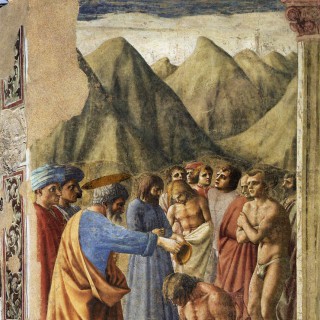
Christian rite of admission and adoption, almost invariably with the use of water
POPULARITY

32 episodes with baptismal

9 episodes with baptismal

10 episodes with baptismal

14 episodes with baptismal

9 episodes with baptismal

5 episodes with baptismal

4 episodes with baptismal

5 episodes with baptismal

3 episodes with baptismal

If you haven't been identified with Christ and gotten baptized – what are you waiting for? -------- Thank you for listening! Your support of Joni and Friends helps make this show possible. Joni and Friends envisions a world where every person with a disability finds hope, dignity, and their place in the body of Christ. Become part of the global movement today at www.joniandfriends.org Find more encouragement on Instagram, TikTok, Facebook, and YouTube.

Today’s Topics: 1, 2, 3, 4) William discusses infant Baptism, Baptismal regeneration and compares the Old Covenant to the New Covenant

We're joined by Sarah McDonald, communications director of the Archdiocese of New Orleans, with Clarion Herald update. James Behan, associate director for young adult ministry and associate director for marriage and family life in Archdiocese of New Orleans talks youth events this school year. Dr. Tom Neal, Chief of Evangelization and Mission Engagement of the Diocese of Pensacola-Tallahassee with Catholic 101 segment.

We learn from the meditation and colloquy for the eleventh Sunday after Pentecost in Divine Intimacy by Father Gabriel of Saint Mary Magdalen, O.C.D. (1893-1953)Please support the Our Lady of Fatima Podcast:http://buymeacoffee.com/TerenceMStantonLike and subscribe on YouTube:https://m.youtube.com/@OurLadyOfFatimaPodcastFollow us on X:@FatimaPodcastThank you!

Come and learn the Doctrine of Christ. TheRedemptionOfZion.org

July 30, 2026Today's Reading: Catechism: The Sacrament of Holy Baptism- Third PartDaily Lectionary: 1 Samuel 15:10-35; Acts 24:24-25:12“How can water do such great things? Certainly not just water, but the Word of God in and with the water does these things, along with the faith which trusts this Word of God in the water. For without God's Word the water is plain water and no Baptism. But with the Word of God it is a Baptism, that is, a life-giving water, rich in grace, and a washing of the new birth in the Holy Spirit, as St. Paul says in Titus, chapter 3: ‘He saved us through the washing of rebirth and renewal by the Holy Spirit, whom He poured out on us generously through Jesus Christ our Savior, so that, having been justified by His grace, we might become heirs having the hope of eternal life. This is a trustworthy saying” (Titus 3:5-8, quoted in the Catechism: Holy Baptism- Third Part)In the Name + of Jesus. Amen.Water alone gets you wet. It has no power to save. In this, Lutherans agree with other Protestants. They say that simple water can't make you God's child, or give the Holy Spirit, or forgive, or establish you in a new, godly life. To that, Lutherans say, “You're right. Simple water can't do that.”But Baptism is more than just simple water, just as God's Word added with the water is more than just a simple word. God's Word does things. God's Word works. The washing of water with the Word gives us a new birth as God's children, a renewal of life that had been corrupted by sin, and it is a means of salvation.Why is it that simply speaking words over this water actually connects the Word to the water? You can read Holy Scripture over many other things - textbooks, your locker, your game system, and the Word is not joined to those things. But we say God's Word is joined to the water of Baptism. Why is this? Remember, Jesus is also called “the Word of God” (John 1:1). As “the Word of God,” Jesus stood in the water at His own baptism. There, God called Jesus His beloved Son. The Holy Spirit was given to Him. And Jesus took His place among sinful men, that He might redeem sinful men. Because the Word of God - Jesus - was joined to that water then, so this same Word of God, Jesus, is also joined to the water of Baptism now. The Baptismal words of God also bring along the Incarnate Word of God, Jesus, who joins the two together. And there, God reveals Himself as your Father, Christ as your brother, the Holy Spirit as your treasure.Thus, the water of Baptism is more than just simple water. As the Catechism says, it is indeed “a life-giving water, rich in grace.”In the Name + of Jesus. Amen.Miracle each time it happens As the door to heaven opens And the Father beams, ‘Beloved, Heir of gifts a king would covet! (LSB 593:2)Rev. Robert Mayes, pastor at Immanuel Lutheran Church and Zion St. John Lutheran Church, Beemer and Wisner, NE.
Run That Prank Back - Mobile Baptismal full 449 Wed, 29 Jul 2026 15:19:09 +0000 RgmbyabvOhSGMlqvfGAlK6Cp84LUGZJz comedy SHMS Shenanigans! comedy Run That Prank Back - Mobile Baptismal Catch up on what you missed on The Steve Harvey Morning Show. 2024 © 2021 Audacy, Inc. Comedy https://player.amperwavepodcasting.com?feed-link=https%3

Sing when you're winning. Dance when you're losing. Scream if it's a draw or, like, extra time or something. Twirl when you're being chased out of the bingo hall. And laugh, my son. Always never stop laughing. It's what your uncle would have wanted. Oh if he could see you now. In this episode, Log is visited by a hue-ruing toon, Joe blows open ancient Riga's dusty troubles, and Steve nods on encouragingly, no light behind those dead doll eyes.

Led by the Spirit, Not Driven by the Flesh — a confessional Lutheran sermon on Romans 8:12–14, preached in the tradition of C.F.W. Walther's Law and Gospel distinction. In this LCMS (Lutheran Church—Missouri Synod) sermon, Pastor David P. Balla explores what it truly means to live the Christian life — not as self-improvement or willpower, but as a daily dying and rising accomplished by the Holy Spirit through Holy Baptism, God's Word, Absolution, and the Lord's Supper. Drawing from Romans 8, Matthew 13:22, and Isaiah 55:12–13, this sermon explains the biblical doctrine of sanctification, the meaning of daily contrition and repentance, and how Luther's Small Catechism teaching on Baptism connects directly to St. Paul's call to put the flesh to death. This is confessional Lutheran preaching rooted in the Book of Concord, Francis Pieper's Christian Dogmatics, and Holy Scripture as the final authority — free from American evangelical decision theology. Perfect for those seeking sound LCMS doctrine, Law and Gospel preaching, Baptismal theology, and daily devotional encouragement in the Christian faith.☕ Support this ministry: https://buymeacoffee.com/whitegandalph

The Springs in the Desert Podcast: Catholic Accompaniment Through Infertility
This month, we'll be talking with Fr. Paul about the seven sacraments. In each episode, we'll explore one or two of the sacraments and how we can understand them in a new light on the path of infertility. Jillian and Fr. Paul begin with the sacrament of Baptism. They'll discuss:What happens to our soul at Baptism, and why the sacrament should still comfort us even years and decades laterWhy Romans 6:4 shines light on how we are called to live through difficult seasonsHow all Christians are called to bear witness to their Baptismal grace in the world through nourishing the spiritual lives of othersIt is our honor to walk with you!

Msgr. Roger J. Landry Missionary Preaching Academy The Pontifical Mission Societies USA The Augustine Institute, Florissant, Missouri June 30, 2026 To listen to an audio recording of today's presentation, please click below: https://traffic.libsyn.com/secure/catholicpreaching/6.30.26_Baptismal_Missionary_Identity_and_Integration_Within_The_Church_s_Mission.mp3 To download a PDF of today's presentation, please click below: 6.30.26 Baptismal Missionary Identity and Integration within the Church's Mission The post Baptismal Missionary Identity and Integration within the Church’s Mission, TPMS-USA Missionary Preaching Academy, June 30, 2026 appeared first on Catholic Preaching.

This week on 2414, Shane Welter and Vicar Dave Gallagher continue the conversation through St. Luke's 1-2-3 Challenge by focusing on Grow: In Baptismal Identity.For many Christians, Baptism can feel like a past event—a date, a memory, or a milestone. But Scripture teaches that Baptism is much more than something that happened to us. It is a present reality that shapes who we are every day.In this episode, Shane and Vicar Dave explore what it means to live from our Baptismal Identity, remembering God's promises, daily dying and rising with Christ, and finding confidence not in our performance but in what God has already done for us through Jesus.Drawing from the 1-2-3 Challenge resource, they discuss practical first steps, next steps, and challenge steps that help Christians remember, celebrate, and live out their identity as baptized children of God.Topics include:• What Baptism means in the Christian life• Living from God's promises instead of our feelings• Daily repentance and faith• Dying and rising with Christ• Baptism and Christian identity• Remembering whose you are in Christ• Practical ways to grow in Baptismal Identity• Encouragement for Christians at every stage of lifeThe 1-2-3 Challenge invites every person at St. Luke's to take two intentional steps in each of three discipleship areas:Gather. Grow. Go.This week's focus:Grow: In Baptismal IdentityLearn more about the 1-2-3 Challenge:https://www.stlukes-church.com/the-123-challengeShare your completed steps so others can be encouraged:https://docs.google.com/forms/d/e/1FAIpQLSewdKCn3HpPkUwboSspBf8IJc_isSnlhyn8RRtWiYs0mxjOWQ/viewform?pli=1Want to share your faith story on the 2414 Podcast?Schedule a recording here:https://outlook.office.com/book/Ge29a5d453add4d478471a0c1bf208af9@stlukes-church.com/?ismsaljsauthenabledDon't forget to continue the conversation at home, in the car, at work, or anywhere you can find someone to talk to! Thanks for walking with us!Support the show

In this episode, CBR Directors Matt Emerson, Winston Hottman, Brandon Smith, and Luke Stamps discuss Stanley Fowler's book More than a Symbol: The British Baptist Recovery of Baptismal Sacramentalism. This episode accompanies our 2026 CBR Reading Challenge.
Together with Fr. Mike, we continue our examination of the sacrament of Baptism, specifically the mystagogy of the rite of Baptism. The Catechism explains each and every element of the Baptismal rite, from the Sign of the Cross to the baptismal water. Fr. Mike concludes with a reflection on Baptism as the beginning of our sacramental journey and how we are called to walk as children of God throughout our lives after our Baptism. Today's readings are Catechism paragraphs 1234-1245. This episode has been found to be in conformity with the Catechism by the Institute on the Catechism, under the Subcommittee on the Catechism, USCCB. For the complete reading plan, visit ascensionpress.com/ciy Please note: The Catechism of the Catholic Church contains adult themes that may not be suitable for children - parental discretion is advised.

Who Were the Leaders of the "Restoration Movement"? 1. Thomas Campbell: "Thomas Campbell's famous Declaration and Address stated in no uncertain terms the principles upon which such restoration should rest." The Spiritual Sword, July, '73, p. 15. 2. Alexander Campbell: "Alexander Campbell, son of Thomas, became even more prolific in speaking of 'the laws of the kingdom,' as seen in Christianity Restored and the Millennial Harbinger." The Spiritual Sword, July, '73, p. 15. 3. Barton W. Stone: "The men making the plea — among them ...Barton W. Stone, a Presbyterian." The Spiritual Sword, July, '70, p. 42 4. Walter Scott: "Pioneer preachers as ...Walter Scott." The Spiritual Sword, July, '73, p. 6 These are the four primary "founding fathers" of the Restoration movement, none of whom ever obeyed the "ancient gospel" which was supposedly restored on November 18, 1827 when Walter Scott baptized William Amend (see Life of Elder Walter Scott by William Baxter, p. 108). Significant Dates and Events in the "Restoration Movement" as Revealed In Restoration Writings: 1812 - June 12: The Campbells and the Hanens (seven persons in all) are immersed by Matthias Luce, a Baptist preacher, in Buffalo Creek. This was nearly 15 years before the practice of "baptism in order to obtain the remission of sins" was supposedly "restored" by Walter Scott, Nov. 18, 1827. (Ibid., Vol. 1, pp. 396-398; Vol. 2, p. 212). 1816 - A. Campbell preaches heresies on the Law at Redstone Association. (Ibid., Vol. 1, p. 471). 1820 - Alexander Campbell debates with John Walker, Presbyterian, and defends Baptist name, doctrine and history. (see Campbell-Walker Debate). 1823 - August: A. Campbell learns that t

Father Christopher Mahar earned a Bachelor of Science in Philosophy from Providence College in 2000 and subsequently completed his Bachelor's degree in Sacred Theology from the Pontifical Gregorian University in Rome in 2003. He was ordained a deacon in St. Peter's Basilica in Rome in 2003 and a priest in the Diocese of Providence in 2004. He currently serves as Pastor at St. Augustine Church in Providence, Rhode Island. In Today's Show: How should we answer an evangelical on why some parishes charge baptismal fees? Do bad things happening in someone's life suggest a demonic influence? What should Catholics do besides not eating meat on Fridays? Would it be sinful for a Catholic business owner to host a Protestant Praise and Worship night? Would it be sinful or imprudent to watch a movie that contains nudity? Should Catholic parents send their children to non-Newman-approved colleges? How does proportionality work? Should parents try to keep their kids sheltered from the outside world? What is the best way to share our faith through social media? And more. Visit the show page at thestationofthecross.com/askapriest to listen live, check out the weekly lineup, listen to podcasts of past episodes, watch live video, find show resources, sign up for our mailing list of upcoming shows, and submit your question for Father!

Watch the full episode with Aaron Abke and Veda Austin here: https://youtu.be/lFoeDhpiQjwSupport this show http://supporter.acast.com/inspiredevolution. Hosted on Acast. See acast.com/privacy for more information.

Iran leadership's hope, safety requirements for Texas camps, a worship event celebrating America's Christian heritage, and commemorating a historic baptismal pool. Plus, Cal Thomas on the limits of diplomacy, surviving a cement mixer, and the Tuesday morning newsSupport The World and Everything in It today at wng.org/donateAdditional support comes from PEACE International... Serving South Sudan's refugees by educating children, empowering women and equipping pastors. PeaceINT.orgFrom Reformation Bible College, where theology shapes every calling. More at discover.ReformationBibleCollege.orgAnd from I Witness: Ride to Freedom. Three friends. One simulation. Trapped in history during the Freedom Rides. Now on all major platforms or iwitnesspod.com

Charlie is joined by pastors Jacob Ungemach and Josh Schroeder for a conversation about what to do if you're more comfortable online than at church, an Instagram video that gets us asking, “What's the best way to address spiritual complacency in the people around us?”, and the intimate, but often misunderstood, relationship between repentance and baptism. Jacob's Church: bsavior.comJosh's Church: FoundationKalispell.comGird Up Links:https://youtube.com/@girdupministries4911?si=tbCa0SOiluVl8UFxhttps://www.instagram.com/girdup_be_a_man/https://www.girdupministries.com

In this episode, Christina reflects on her recent projects, upcoming travels, and how the Easter season invites us to deepen our faith, love, and purpose. Listen now to discover practical spiritual practices, powerful stories, and biblical insights to transform your perspective and life.Main Topics:Christina's recent book release, Solving the Parish Puzzle: One Person, One Disciple, One Leader at a Time and reflections on other work associated with the Catholic Leadership Puzzle platformThe spiritual significance of the Easter season and its call to loving God and neighborHow to navigate grief, fear, and darkness through faith and hopeThe importance of community, discernment, and relational listening in leadershipStories of faith and hope from history, including St. John Vianney, Midori Nagai, and Pope Leo XIVPractical tips for praying the Rosary and embracing the victory of Christ over deathEncouragement to share your faith story and testify to God's wondrous deedsPreparing for Pentecost and receiving Easter graces through open hands and heartsMay this episode inspire you to embrace the joy, hope, and life that the risen Christ offers us this Easter season. Open your hands, trust in God's goodness, and share your faith story with the world so that together, we can tell the Master of Death, “Not Today!”Chapters and Timestamps: 00:00 - Introduction and recent updates on Christina's projects01:01 - Celebrating the release of “Solving the Parish Puzzle”02:26 - The link between personal holiness and community mission03:23 - Baptismal leadership: priest, prophet, king roles04:21 - Christina's upcoming travel and reflection plans05:17 - Reflection on the 250th anniversary of America's independence06:14 - Conversation with Paul McCusker about storytelling and faith07:11 - Inspiration from the story of Midori Nagai and hope after tragedy08:11 - How spending life for God reveals beauty in the world09:10 - Grieving loss while trusting in Christ's victory over death10:10 - The Easter message: death has been overcome11:10 - Embracing death as a friend, inspired by St. Francis of Assisi12:10 - Loving life and living fully through faith and joy13:07 - The example of Mary's journey of loving and desiring God only14:25 - Small steps to prioritize God in our daily lives15:50 - The call to declare God's deeds and share our testimony16:48 - The mission each of us is called for, inspired by St. Joan of Arc17:45 - The power of personal stories to bear witness to God's love19:20 - The importance of prayer, especially the Rosary, for peace and joy20:16 - Practical advice for starting or deepening Rosary prayer21:15 - The spiritual significance of trusting in Mary's intercession22:42 - Encouragement to keep praying and trusting in God's goodness23:20 - The cycle of loving, receiving, and giving life in Christ24:17 - Preparing for Pentecost and receiving Easter grace24:44 - Closing prayers and encouragement to keep trusting in God's planResources and Links:Christina Semmens BooksSolving the Parish PuzzleWelcome to Hope Springs SeriesPope Leo XIIISt. Joan of ArcFulton SheenRosary ResourcesWebsiteTwitterFacebookConnect with Christina: Schedule a FREE 20 minute consultation here

A baptism message by Senior Pastor Jon Whisner from Acts 8 on April 26, 2026

Baptismal service

Fr. Evan answers your questions on the necessity of believing in the Resurrection, advice for combating repeated sins, how to receive Holy Communion in a different jurisdiction, the liturgical differences between Orthodox traditions, and how to view pre-Baptismal sins in this week's episode of Orthodoxy Live!

By Joshua Creech - We will finish up looking at the baptismal process by digging into the symbolism behind the water immersion and the laying on of hands. By looking at the entire process, we see how much meaning God has put behind the process. It is something that should be very special to each of us.

On this episode of Cultivating Second Chair Leaders....We know that you want to be a confident leader, communicator, and equipper in your ministry role. To do that, you need an actionable path forward that builds on the foundation you've created. Learn how the Classic KINDLE training program helps you accomplish that! Meet a few of the training team members, Dean Lisa Hellyer and instructors Sue Steege and Michael Harvey who serve as guides as you seek to grow as Christ-like servant leaders and help to foster and multiply those leaders in your own setting! Check out all the details and apply for Classic KINDLE! - You can also view this episode via our Youtube channel. Connect with us! Instagram: @emilyphoenix or @kindle_social Facebook: https://www.facebook.com/KINDLEServantLeaders If you have a question to ask or story to share about one of this season's topics, we would love to hear from you. Send an email to emily.phoenix@kindleservantsleaders.org and we will share it along the way! Download episode discussion guides at: https://www.kindleservantleaders.org/podcast/

The Journey To The Road On Baptismal Sunday. It's a mark to tell every one that the following week is Palm Sunday. How important is it (Gospel Reflection (John 9 :1-42).

If you walk into a pastoral care situation knowing exactly how to fix it, you will make it worse. That's where Part 2 begins—with Jason and Shaun naming the pride that destroys pastoral ministry the same way it destroyed King Saul. From there, the conversation turns to some of the most honest and practical territory the Messy Reformation has covered: what to do with the overwhelm you can't show the congregant, why your elders are co-shepherds and not a board, and what Ole Hallesby's book on prayer has to say to every pastor who has ever felt crushed by the weight of ministry. The practical advice here is unglamorous and proven. Church doesn't end after the doxology. Get to know your district—not "so-and-so's sister" but her name. Pick two or three people each Sunday and have a real conversation in the narthex. Calvin said it well, and Jason paraphrases it from memory: the care of souls is so overwhelming it can never be done by one man—this is why God gave us a body of elders. The co-pastoring model at Trinity CRC makes this concrete: people want to be fed by the same hand that holds theirs at the bedside, not a specialist they barely recognize. The episode closes with Hallesby's insight that all prayer flows from helplessness—and that prayerlessness is usually a sign you think you've got things under control. Helplessness, rightly understood, doesn't produce fear. It produces courage. And from there, the final from Shaun: "I've never fixed anyone. I've never healed anyone. I've never saved anyone. But by God's grace, I've had a front row seat to what he has done in many people's lives. And that compels us all the more to worship him." Timestamps: 0:00 — The Holy Spirit is the true counselor (rewind from Part 1) 0:35 — If you step in knowing how to fix it, you will make it worse 1:03 — King Saul: pride goes before the fall in all of pastoral ministry 1:28 — As fathers and husbands: reliance on God in every moment 1:45 — Parenting is like being a blind man in a dark cave 3:00 — Valley of the shadows (Psalm 23): don't convey overwhelm to your congregant 3:58 — Where to take pastoral overwhelm: the body of elders 5:14 — Elders as the board you report to vs. the shepherds you link arms with 5:43 — Being a non-anxious presence 6:33 — Why pastors struggle to open up to their elders 8:12 — Practical advice: get to know your districts 8:58 — Church doesn't end after the doxology 10:53 — CCEF and resources for pastoral counseling 12:03 — The co-pastoring model at Trinity CRC: why it works 14:28 — People want to be fed by the same hand that holds theirs at the bedside 16:45 — The temptation to specialize: comes from the business world, not the Bible 18:31 — All discipleship flows from some form of relationship 19:17 — Pointing to Christ, not to yourself: the savior complex in pastoral ministry 20:43 — Twice-a-week suicide notes: the season that broke Jason 21:31 — Lord, this is your church. I'm going to bed. 22:57 — Baptismal promises and the gut-wrenching reality: they were His before they were mine 24:14 — Pastoral ministry is one of the most humbling things 25:03 — One of the most beautiful and sanctifying callings 25:34 — Calvin Seminary internship in the Dominican Republic 26:26 — Ole Hallesby's Prayer: all prayer flows from helplessness 28:20 — God won't give you more than He can handle (the correct version) 30:07 — Final word invitation 31:26 — I've never fixed anyone — but I've had a front row seat Join and support us on Substack: https://themessyreformation.com/ Intro music by Matt Krotzer

Baptism is considered THE entrance to Christian faith -- but Christians vary widely in practice and belief on what baptism does, who it is for, and why we do it. So for part 10 of 12 on “What is the Nicene Creed?” we unpack this lines:"We acknowledge one baptism for the forgiveness of sins."So we wade into the muddy waters of the River Jordan to ask: what is sin, what does it mean to be forgiven, and how does this apply when some people are literally infants when they are baptized? What does God do when we are baptized? And why is this significant that it only happens once? +++Like what you hear? We are an entirely crowd-sourced, you-funded project. SUPPORT US ON PATREON: https://www.patreon.com/AndAlsoWithYouPodcastThere's all kinds of perks including un-aired live episodes, Zoom retreats, and mailbag episodes for our Patreons!+++Our Website: https://andalsowithyoupod.comOur Instagram: https://www.instagram.com/andalsowithyoupodcast/++++MERCH: https://www.bonfire.com/store/and-also-with-you-the-podcast/++++More about Father Lizzie:BOOK: https://www.penguinrandomhouse.com/books/762683/god-didnt-make-us-to-hate-us-by-rev-lizzie-mcmanus-dail/RevLizzie.comhttps://www.instagram.com/rev.lizzie/https://www.tiktok.com/@rev.lizzieJubilee Episcopal Church in Austin, TX - JubileeATX.org ++++More about Mother Laura:https://www.instagram.com/laura.peaches/https://www.tiktok.com/@mother_peachesSt. Paul's Episcopal Church in Pittsburgh, PA++++Theme music:"On Our Own Again" by Blue Dot Sessions (www.sessions.blue).New episodes drop Mondays at 7am EST/6am CST!

We trace the Transfiguration from stunning vision to practical calling, challenging our urge to build shrines and instead to follow Jesus down the mountain into real need. Baptismal identity, rebuke of evil, and the cross redefine glory as love that serves.

Welcome back to the Let's be friends podcast. Back on the show, Father Peter Heers is here for part 2 of our chat about baptism. You may know Father Peter Heers from his popular online and YouTube account, Orthodox Ethos. Father Peter is a priest of the Romanian Orthodox Archdiocese of the United States of America and assistant priest of the Holy Protection of the Mother of God Orthodox Church in Houston, TX. He is also the founder of Uncut Mountain Press.In this episode we discuss the unvarnished truth about Orthodox baptism and the overused practice of economia—what the church fathers truly teach and why modern departures threaten our salvation. When does a deviation undermine the very mysteries of the faith? And how does the historical patristic consensus challenge today's widespread laxity?In this compelling episode, Father Peter Heers unpacks the vital distinction between legitimate economia and dangerous innovations that distort the sacred mysteries. You'll learn how saints like Saint Basil and Canon 47 of St. Basil of the Council of Trullo uphold the necessity of proper reception for converts and how recent shortcuts risk undermining the divine grace bestowed through authentic sacraments. We break down the crucial criteria set by the church to distinguish temporary pastoral exceptions from systemic errors, emphasizing the importance of faithfulness to the Fathers' teachings.In the episode, we discuss Father Peter's book, The Reception of the Heterodox into the Orthodox Church, which offers clarity on complex issues such as improper reception, rebaptism, and the dangerous shift from canonical practice to ecumenical compromise. You'll discover why the practice of pouring water instead of immersion is not only heretical but also spiritually perilous, and how saints and councils historically handled such deviations.Join us to understand how the loss of proper baptism and adherence to the church's tradition risks opening the door to spiritual danger, including the influence of heresies and the rise of anti-Christian forces. Equip yourself with the knowledge to defend the divine mysteries with confidence, and help restore the sacred posture of the church in our tumultuous times.Watch video on YouTubeMake sure to listen to part 1: "The Hidden History of the Great Schism & It's Impact on Christian Unity Today"Want more? Let's be friends. Join the Friendship Membership.Want to read my memoir, Here Comes Trouble? It's available now. Order your copy.Father Peter Resources & Links:Uncut Mountain PressOrthodox Survival Course by Father SeirThe Way of a PilgrimOrthodox Ethos YouTube ChannelChristianities Documentary ProjectConnect with Father Peter Heers:TwitterFacebookWebsite
In this episode, Christina Semmens shares insights on how to deepen your prayer life, embrace the Cross, and live out the Gospel with purpose and hope. She invites listeners into a meaningful Lenten journey centered on Scripture, virtue, and community, emphasizing that holiness is a daily choice rooted in God's grace.TakeawaysUsing the Particular Examen guided by the five wounds of Jesus to confront hidden faults and sinsThe importance of daily dialogue with the Word of God and how Scripture breathes life into our soulsVirtues inspired by the saints, like humility, poverty, patience, and obedience, and how to cultivate themThe significance of loving the Cross in small, everyday ways by trusting in God's planThe role of righteous anger and prayer in responding to injustice without divisionHow baptism and the Holy Spirit empower us as priests, prophets, and kings to bring Christ into our daily livesPractical steps to begin loving the Cross, bearing suffering with faith, and finding joy amidst trialsRecognizing that each person's path to holiness is unique, guided by the Holy SpiritTimestamps00:00 - Welcome and introduction to the Lent journey 00:28 - Announcing the Say Yes to Holinessonline retreat 00:57 - UsingRooting Out Hidden Faults for spiritual growth 1:21 - TheParticular Examen and its focus on Jesus' wounds 2:16 - Gratitude and review as tools for prayer 3:13 - Addressing the seven deadly sins through Scripture 4:08 - Pope Francis on making Sunday a day rooted in God's Word 5:05 - Meditating on Scripture beyond Mass 6:02 - The living nature of God's Word and its ongoing relevance 7:28 - Continuing the dialogue with Jesus throughout the day 8:44 - The importance of making space for God's Word daily 9:45 - St. Ignatius of Loyola's call to live for God's glory 10:40 - Baptismal call to holiness and present in every moment 11:39 - Responding to injustice with prayer and Righteous Anger 12:42 - The Holy Spirit within us and our divine calling 13:17 - The nonviolent power of Christ's sacrifice 14:17 - Embracing peace and hope through the Holy Spirit 15:39 - Virtues of humility, patience, obedience taught by St. Anthony 16:34 - The diversity of paths to holiness guided by the Holy Spirit 17:22 - The common traits of saints and how love unites us 18:09 - Love does—how Christian love manifests in action (Bob Goff) 18:57 - Allowing the Spirit to guide our words and actions 19:13 - Rooting in prayer, sacraments, and virtue for a holy life 20:09 - Responding to injustice with humility and prayer 21:08 - The importance of righteous anger guided by the Holy Spirit 21:36 - Avoiding division and trusting in God's truth 22:09 - Comparing ourselves only to Jesus, not others 22:52 - The one path to holiness: your unique journey 23:21 - Loving the Cross through acceptance and trust in God 23:50 - Carrying suffering with love and presence of Christ 24:33 - Embracing pain as part of God's divine plan 25:32 - Finding goodness and truth in suffering 26:17 - The journey from bearing to loving the Cross 27:14 - Trusting God to bring joy and purpose through suffering 28:11 - Mary as our model of faithful acceptance 28:52 - Asking Our Lady and saints to guide us in carrying crosses 29:21 - Closing prayer, encouragement, and invitation to the Lent retreatResources and LinksRooting Out Hidden Faults, How the Particular Examine Conquers Sin by Father James McElhoneySay Yes to Holiness (Substack platform)Love Does by Bob GoffSt. Ignatius of LoyolaSt. Anthony of PaduaTwitterWebsiteJoin the Lent Online Retreat:Send a message to Christina at: https://www.sayyestoholiness.com/

On the heels of the Feast of the Baptism of the Lord, Fr. Jacob and Fr. John discuss the symbolism of the Baptismal and Easter Candle and how we pass on faith from one generation to the next as we receive the light of Christ. They further discuss the role of anointing before public ministry and how sin mars our baptismal garment and dampens our flame, yet God is always working to restore even a smoldering wick.

Pastor Gina preaches this Sunday. Join us for worship every week at 9:00 and 10:30 am or live-streaming on our website at 9:00 am.

The Rev. Robert Fruehwirth preaches on the celebration of the Baptism of our Lord, January 11, 2026.

Be faithful to your baptismal promises as God has been faithful to his covenant.

Matthew 3:13-17Then Jesus came from Galilee to John at the Jordan, to be baptized by him. John would have prevented him, saying, ‘I need to be baptized by you, and do you come to me?' But Jesus answered him, ‘Let it be so now; for it is proper for us in this way to fulfil all righteousness.' Then he consented. And when Jesus had been baptized, just as he came up from the water, suddenly the heavens were opened to him and he saw the Spirit of God descending like a dove and alighting on him. And a voice from heaven said, ‘This is my Son, the Beloved, with whom I am well pleased.' We don't like resolutions anymore. In fact, most of us probably didn't make a single one this year.Pew Research Center found that about 70 percent of Americans skipped resolutions altogether. When asked why, more than half simply said, “We don't like them.” And honestly, I'm with them. Most of our resolutions have become predictable, boring, and very inward-focused. Just listen to the top five resolutions according to a survey done by You Gov.Exercising moreBeing happyEating healthierSaving more moneyLosing weightYou probably could've guessed them. But these days self-improvement isn't just the focus of our resolutions: it's the focus of our whole society. We're surrounded by a culture that tells us we are always one habit, one purchase, one routine away from becoming a better version of ourselves. Social media feeds us an endless stream of trends, all built on the same promise: if you work harder, focus more, and optimize your time, you will finally be okay. Nearly all of it tells us to cut out distractions — like the people in our lives — so we can walk with a weighted vest and drink mushroom coffee till we are entirely better people, physically and mentally.Who has time for New Year's resolutions when the pressure to improve is nonstop? But resolutions weren't always this way. In fact, for most of their long history, they were almost the opposite of what we know today.The practice goes back thousands of years. In ancient Babylon and Rome, people made vows at religious festivals that were meant to strengthen the whole community: praying together, settling debts, promising to live well with their neighbors and their gods. Even as recently as the 1940s, resolutions were still mostly about how to be a better person with other people. A Gallup poll from 1947 found the top three resolutions were to improve my disposition, be more understanding, and control my temper. That's a very different vision of change than losing weight, getting rich, or optimizing yourself. My favorite legend about New Year's resolutions is the Vow of the Peacock, told of medieval knights. They would gather for a grand feast, and at the center of it all was a peacock: roasted, re-dressed in its dazzling feathers, and carried through the hall. One by one, knights would rise and make their vows upon the bird, speaking promises of chivalry before everyone present. These were not modest intentions, but aspirational, even risky commitments: to courage, loyalty, and love.The Vow of the Peacock, more legend than ledger, shows us what people once believed promises were supposed to be: public, costly, witnessed, and binding; not private acts of self-improvement, but commitments made for the sake of others.And that turns out to be exactly the kind of vow Jesus steps into at the Jordan River.Because when Jesus comes to be baptized, he is not trying to become a better version of himself. He is stepping into a shared, public act: one that binds him to sinners, to repentance, and to the people he has come to save.That's why we get baptism so wrong when we treat it like a spiritual achievement, something you earn once you've spiritually improved enough to be worthy. That's not what's happening at the Jordan at all.In fact, at this point in Jesus' life, he had done nothing. No miracles. No healings. No teachings. And yet God says to everyone gathered, “This is my Son, my Beloved, with whom I am well pleased.”God doesn't say, “This is my Son, who kept all his resolutions, who eats the right amount of protein, and walks on water.” There is none of that. No self-improvement, no spiritual résumé, but still called beloved.So if this baptism isn't about self-improvement or earning anything, what is Jesus doing in the water?First, he is doing this for us and with us. By stepping into the Jordan, Jesus is saying, “I am in this with you — all of you who repent, all who need forgiveness, everyone trying to turn toward God.” He does not stand above us, but with us. That's why Jesus tells John, “It is proper for us to fulfill all righteousness.” He chooses not to go it alone. He includes John in the work God is doing. This baptism is a radical act of solidarity, showing us how Jesus will bring about the kingdom of heaven, by working in, with, and through people.And that righteousness doesn't stay with Jesus. The righteousness he fulfills in those waters is given to us in ours. In baptism, our sins are forgiven and we are set back into right relationship with God and with creation. That's why, at every baptism, and every time you remember your own, you should hear God's voice echoing over you: “This is my child, my beloved, with whom I am well pleased.” With you. God is well pleased.We don't need resolutions to be worthy of anything, no matter what the trends and ads tell us. What we do need, believe it or not, are peacock vows. I know that sounds strange. We don't need to swear chivalry on a bird. But we do need public promises made for the good of our neighbors: the kind that say, out loud and together, “I'm not just here to improve my own life. I'm here for yours.”The good news is we don't need to be medieval knights or stage a ceremony with a roasted bird — even though that does sound fun. What we already have are our baptismal vows: promises made to God, to one another, and for the sake of the world.In the Lutheran tradition, many of us were baptized as infants, when others made those promises on our behalf. But at some point — at confirmation, or later in life — we take those vows as our own: to live among God's faithful people, to hear God's Word and share in communion, to proclaim the good news of Christ in word and deed, to serve all people as Jesus does, and to strive for justice and peace in all the earth.Yes, keeping these promises will shape you. But their real purpose is to bless others: just like Jesus' baptism, and even those old peacock vows. And we know that resolutions made with others and for others are the ones that last.So here is what I'm asking of you this year: instead of self-improvement resolutions, tend to your baptismal vows. Not for you, but for God and for this world God so loves. Because what this world needs right now is not one more upper-middle-class person chasing a wellness trend or a bigger bank account.In a world that is lonely and anxious, it needs people who will live among and beside their neighbors. In a world flooded with bad news, it needs people who hear and carry the good news of God.In a world that is bitterly divided, it needs people who serve all, especially the scared and the oppressed. And in a world marked by violence and injustice, it needs people who strive for justice and peace — in their hearts, their homes, their streets, and their nation.So now I invite you to rise. Today, on this Baptism of Our Lord Sunday, I'm going to ask you to affirm the covenant God made with you in Holy Baptism. After each promise, if it is your intent, please respond, “Yes, and I ask God to help me.”Will you live among God's faithful people…Will you hear the word of God and share in the Lord's supper…Will you proclaim the good news of God in Christ through word and deed…Will you serve all people, following the example of Jesus…And will you strive for Justice and peace in all the earth?...Siblings in Christ, these are not modest intentions, but aspirational, even risky, commitments to community, justice, and grace. When we fail, come back to the water. Remember your baptism. Hear God's promise again: You are my child. With you I am well pleased.And if you have not yet been baptized, come talk with me. Because we need you. The world needs you. And Jesus has bound himself to you. Together, we will fulfill all righteousness.Amen.

Watch the Devotion Based on Matthew 3:13-17 Baptismal Identity In November 2024, a young high school graduate shipped off to boot camp, full of promise, and excited to serve in our nation's military. This was his dream. In mid-December, just a few weeks ago, a family member emailed me saying, “My grandson is being medically discharged. You can remove him from your mailing list.” My heart broke. I said a quick prayer, texted the young man and asked him, “I heard what happened. This must be hard for you. How can I pray for you today?” I'm guessing that you have faced disappointments like this. You planned the mission, anticipated every possible deviation, but when it came time to execute the mission was called off, or it went horribly wrong. You were on track to achieve rank, but it didn't happen. You set goals for your squadron but fell far short. You entered a marriage that was to be for life, but it hasn't. Maybe you were expecting a child who was to fill your house with joy, but that child is no longer with you. When the unexpected derails life, it's hard to see yourself as you once were. When you're no longer carrying out that vocation, or when you've failed horribly at that vocation, or have had a series of unfortunate events that no longer allow you to carry out that vocation, you might be asking yourself, “Who am I? What's my purpose anymore if I am not what I used to be?” My friends, Christ Jesus came to give you identity and purpose and meaning and worth. When he was about 30 years old Jesus went to the Jordan River to be baptized by the prophet John. John knew Jesus was the Son of God, so he tried to stop Jesus. “But John tried to deter him, saying, “I need to be baptized by you, and do you come to me?” Jesus replied, ‘Let it be so now; it is proper for us to do this to fulfill all righteousness.' Then John consented” (Matthew 3:14-15). Jesus had no sin. He was completely righteous in his living. The righteous thing his Father sent him to do was to completely identify with our sin, our failures, our brokenness, our disappointments. And at his baptism, he became them, took them upon himself as if they were his own. Since Jesus has completely identified himself with your sin he has given you his righteousness – his right living – as if it were your own. His gift comes to you through the hearing of these words. His gift comes to you through the waters of your baptism. In your baptism he puts his name on you, calls you his brother, his sister, sons and daughters of the Father, heirs of a resurrection from the dead and eternal life in heaven. In your baptism he gives you his righteous life which covers over your failures. He gives you his righteous life so that you might know you are not a failure but forgiven, redeemed and restored. Whatever disappointments, failures, heartaches, regrettable decisions you've made in your life, take them to Jesus. Take them to the waters of your baptism and wash them clean. See yourself the way your God sees you; baptized, forgiven, brother or sister of Jesus, dressed in the robe of Christ's righteousness forever. And then go and live that baptismal life. Every morning wake up and say, “I am a baptized child of God. I will live that way today.” Every evening before you lay your head on your pillow say, “Despite what happened today, I am still a baptized child of God, forgiven by my Father in heaven, because he loves me.” That's who you are and who you will be because Jesus says so in your baptism. Prayer: Father in heaven, at the baptism of Jesus in the River Jordan, you proclaimed him your beloved Son and anointed him with the Holy Spirit. Keep us who are baptized into Christ faithful in our calling as your children, and make us heirs with him of everlasting life. As we remember in our prayers those who are deployed, keep them faithful to their marriages, pure in their thoughts and intentions. Keep them content and may they find joy in their work. Amen. Written and recorded by Rev. Paul Horn, WELS National Civilian Chaplain to the Military, San Diego, California. All Scripture quotations, unless otherwise indicated, are taken from the Holy Bible, New International Version®, NIV®. Copyright ©1973, 1978, 1984, 2011 by Biblica, Inc.™ Used by permission of Zondervan. All rights reserved worldwide. Note: Scripture reading footnotes are clickable only in the web version.

Bishop reflects on Sunday's Gospel. Will Wright helps us understand the baptismal priesthood and we'll hear from Bishop-elect Peter Bui. You'll also get up to date on the latest news and events in the Diocese of Phoenix. Special thanks to Catholic Cemeteries and Funeral Homes for making this show possible.
In this Advent sermon, “The Armor of Light for the Darkest Days,” Pastor Balla opens Romans 13:11–14 to reveal the urgent call to awaken, repent, and trust in the saving work of Christ. This message speaks into a world weighed down by spiritual darkness and points believers to the hope found only in Jesus, the true Light who breaks through every shadow. Explore the biblical themes of repentance, watchfulness, Baptismal identity, and the strengthening power of Christ's gifts in Word and Sacrament. This sermon is crafted for Christians seeking depth, clarity, and renewal as the Church begins a new year of grace.If this sermon blesses you, consider supporting the ministry here:https://buymeacoffee.com/whitegandalphbuymeacoffee.com/whitegandalphWhether you are searching for Advent preaching, Lutheran theology, biblical exposition, spiritual encouragement, or Christ-centered teaching, this sermon invites you to put on the Lord Jesus Christ and walk as a child of the day. Share, comment, and subscribe for more sermons grounded in Scripture and the hope of Christ's coming.Hashtags#AdventSermon #Romans13 #ChristianPreaching #ArmorOfLight #PastorBalla

In this hour we are talking with different women leaders in the Church about their experience as Daughters of Christ.
The nephew is back at it.

Send us fan responses! The baptismal certificate might be the most overlooked yet powerful document when establishing your legal identity and navigating commercial systems. Don Kilam breaks down how this spiritual record serves a crucial legal purpose that few understand.Right from his penthouse, Kilam explains that baptismal certificates allow you to enter the system as a foreigner when attached to a W8BEN form. Without this ecclesiastical recognition, you're considered a "rogue vessel" lacking jurisdiction – essentially a pirate ship adrift in legal waters. The certificate formally recognizes your vessel (legal identity) within ecclesiastical courts, granting authority that can override state jurisdictions.Understanding the distinction between maritime and admiralty law reveals how consent is gained through contracts. Your Christian name on the birth certificate differs from your spiritual name on the baptismal certificate – a critical separation that establishes different identities for different jurisdictions. Kilam shares how wealthy families like the Kardashians leverage these concepts through private ministry trusts (508C1A) that appear as nonprofits but operate with significant advantages.For those with foreign nationality, this framework provides strategic options. As Kalam advises during the Q&A session with a Haitian woman, maintaining foreign status while in America offers unique benefits. "Every church is a tribe, every church is a government," he explains, highlighting how ecclesiastical structures create alternative jurisdictions outside conventional state control. Ready to establish your proper legal standing? Text PRIVATE LIFE to 702-200-4900 or visit skool.com/donkilam to learn how to protect your vessel in commerce.https://www.skool.com/donkilam/abouthttps://www.amazon.com/stores/Don-Kilam/author/B09J54V2ZD?ref=ap_rdr&isDramIntegrated=true&shoppingPortalEnabled=true&ccs_id=a626ae46-2ba5-4124-beee-27d01c771e34 https://www.skool.com/donkilam/abouthttps://www.amazon.com/stores/Don-Kilam/author/B09J54V2ZD?ref=ap_rdr&isDramIntegrated=true&shoppingPortalEnabled=true&ccs_id=a626ae46-2ba5-4124-beee-27d01c771e34Support the showhttps://donkilam.com
Together with Fr. Mike, we continue our examination of the sacrament of Baptism, specifically the mystagogy of the rite of Baptism. The Catechism explains each and every element of the Baptismal rite, from the Sign of the Cross to the baptismal water. Fr. Mike concludes with a reflection on Baptism as the beginning of our sacramental journey and how we are called to walk as children of God throughout our lives after our Baptism. Today's readings are Catechism paragraphs 1234-1245. This episode has been found to be in conformity with the Catechism by the Institute on the Catechism, under the Subcommittee on the Catechism, USCCB. For the complete reading plan, visit ascensionpress.com/ciy Please note: The Catechism of the Catholic Church contains adult themes that may not be suitable for children - parental discretion is advised.
Together with Fr. Mike, we continue our examination of the sacrament of Baptism, specifically the mystagogy of the rite of Baptism. The Catechism explains each and every element of the Baptismal rite, from the Sign of the Cross to the baptismal water. Fr. Mike concludes with a reflection on Baptism as the beginning of our sacramental journey and how we are called to walk as children of God throughout our lives after our Baptism. Today's readings are Catechism paragraphs 1234-1245. This episode has been found to be in conformity with the Catechism by the Institute on the Catechism, under the Subcommittee on the Catechism, USCCB. For the complete reading plan, visit ascensionpress.com/ciy Please note: The Catechism of the Catholic Church contains adult themes that may not be suitable for children - parental discretion is advised.

Sharing and defending Catholicism can be overwhelming—how can we do it with confidence and peace? Tim Staples offers practical advice and answers more on the Wailing Wall prophecy, Eucharistic Adoration, and the role of the Trinity in Baptism. Questions Covered: 08:15 – Why is a Wailing Wall leftover from the temple (Mt 24, there will not be a stone leftover)? 19:31 – What is Joseph referring to in Gen 50:19? 23:58 – How can we defend the faith and not be anxious? 42:00 – How do you explain Adoration to a Protestant? 50:55 – Do we have to believe in the Trinity for the Baptismal regeneration to occur?

Phil has one particular way to guarantee that no snakes or gators will interfere with his baptisms any more, but Jase isn't so sure it's foolproof. Al fondly looks back on shows like “I Dream of Jeannie” but Jase admits that the genie costume kept him distracted from the show's deeper meaning. God isn't a million miles away; he is near each of us, and the real battle isn't trying to stay out of hell; it's choosing to keep evil out of us. In this episode: Hebrews 10, verses 9-12; Mark 10, verses 49-52; James 3, verses 13-17; Ephesians 1, verses 1-10; Ephesians 2, verses 6-9 “Unashamed” Episode 921 is sponsored by: https://policygenius.com/phil — Get FREE life insurance quotes and see how much you could save! https://philmerch.com — Get your “Unashamed” mugs, shirts, hats & hoodies! https://ICouldBeWrongButIDoubtIt.com/ — Get your copy of Phil's best-selling new book now! -- Learn more about your ad choices. Visit megaphone.fm/adchoices
© 2020-2026 Ivy Podcast Discovery LLC


