

POPULARITY

8 episodes with national cartoonist society

2 episodes with national cartoonist society

A new week means new questions! Hope you have fun with these!Which US state has the only American diamond field open to the public?The Piano is the most popular musical instrument in the world. In which country was it invented?In the musical Grease, Danny Zuko, Kenickie, Sonny, Doody and Putzie are all members of what group?Saffron is s spice derived from which flower?In the NATO phonetic alphabet what word represents the letter G?Which war lasted from 1936-1939?Who recently made headlines saying they'll be returning to the U.K. by the end of the month?Erik Larson's book "The Splendid and the Vile" is a biography of what person during 1940?Popular in the 70s and 80s, what is the edible term for the device used for amateur non-commercial communication?Who was the first American woman to win the Nobel Peace Prize in 1931?In Norse mythology, Fenrir is destined to break free and devour Odin during Ragnarok; what type of creature is Fenrir?In I dream of Jeannie, besides the obvious, what part of Barbara Eden's body did censors demand her genie costume cover up?Cartoonist Gary Larson won 4 awards in 10 years from the National Cartoonist Society for what surrealist single-panel strip?In the film version of Little Shop of Horrors, Audrey II (the carnivorous plant) is voiced by Levi Stubbs, lead vocalist of which legendary Motown Group?The stars Elnath and Tianguan represents the horns in which constellation?On the periodic table, Element 111 is named after which German physicist, the first to win the Nobel Prize in Physics?MusicHot Swing, Fast Talkin, Bass Walker, Dances and Dames, Ambush by Kevin MacLeod (incompetech.com)Licensed under Creative Commons: By Attribution 3.0 http://creativecommons.org/licenses/by/3.0/Don't forget to follow us on social media:Patreon – patreon.com/quizbang – Please consider supporting us on Patreon. Check out our fun extras for patrons and help us keep this podcast going. We appreciate any level of support!Website – quizbangpod.com Check out our website, it will have all the links for social media that you need and while you're there, why not go to the contact us page and submit a question!Facebook – @quizbangpodcast – we post episode links and silly lego pictures to go with our trivia questions. Enjoy the silly picture and give your best guess, we will respond to your answer the next day to give everyone a chance to guess.Instagram – Quiz Quiz Bang Bang (quizquizbangbang), we post silly lego pictures to go with our trivia questions. Enjoy the silly picture and give your best guess, we will respond to your answer the next day to give everyone a chance to guess.Twitter – @quizbangpod We want to start a fun community for our fellow trivia lovers. If you hear/think of a fun or challenging trivia question, post it to our twitter feed and we will repost it so everyone can take a stab it. Come for the trivia – stay for the trivia.Ko-Fi – ko-fi.com/quizbangpod – Keep that sweet caffeine running through our body with a Ko-Fi, power us through a late night of fact checking and editing!

Hablamos con el dibujante Ricardo Martínez y le damos la enhorabuena por el premio Reuben de la National Cartoonist Society estadounidense, que ha obtenido por Goomer, el mítico cómic que creó junto al añorado Nacho Moreno (fallecido en 2021), en su versión digital en inglés, que podemos leer en comicskingdom.com/goomer.Los lectores españoles descubrimos a Goomer en los años 80 en las páginas de El Pequeño País, y luego pasó por diversas publicaciones como el magazine del diario El Mundo o la revista El Jueves, en distintas etapas. Norma Editorial recopiló todas las páginas del peculiar universo creado por Ricardo y Nacho en un cofre con dos grandes tomos, en 2021. Y en 2024 publicó una selección de las mejores páginas de la serie en Goomer. Una antología galáctica.Escuchar audio

What happens when a childhood dream refuses to let go? In this episode, I sit down with cartoonist and Lum and Abner historian Donnie Pitchford to explore how old-time radio, comic strips, and a love for storytelling shaped his life. Donnie shares how he grew up inspired by classic radio shows like Lum and Abner, pursued art despite setbacks, and eventually brought the beloved Pine Ridge characters back to life through a modern comic strip and audio adaptations. We talk about creativity, persistence, radio history, and why imagination still matters in a visual world. If you care about classic radio, cartooning, or staying true to your calling, I believe you will find this conversation both inspiring and practical. Highlights: 00:10 Discover how a childhood love of Lum and Abner sparked a lifelong dream of becoming a cartoonist. 08:00 Hear how college radio and classic broadcasts deepened a passion for old time radio storytelling. 14:33 Understand how years of teaching broadcast journalism built the skills that later fueled creative success. 23:17 Learn how the Lum and Abner comic strip was revived with family approval and brought to modern audiences. 30:07 Explore how two actors created an entire town through voice and imagination alone. 1:00:16 Hear the vision for keeping Lum and Abner alive for new generations through comics and audio. Top of Form Bottom of Form About the Guest: Donnie Pitchford of Texas is a graduate of Kilgore College, Art Instruction Schools, Stephen F. Austin State University and the University of Texas at Tyler. He has worked in the graphic arts industry and in education, teaching at Hawkins High School, Panola College, and Carthage High School at which he spent 25 years directing CHS-TV, where student teams earned state honors, including state championships, for 20 consecutive years. In 2010, Donnie returned to the endeavor he began at age five: being a cartoonist! The weekly “Lum and Abner" comic strip began in 2011. It is available online and in print and includes an audio production for the blind which features the talents of actors and musicians who donate their time. Donnie has created comic book stories and art for Argo Press of Austin, illustrated children's books, written scripts for the "Dick Tracy" newspaper strip, and produced the science fiction comedy strip "Tib the Rocket Frog." He has collaborated with award-winning writers and cartoonists George Wildman, Nicola Cuti, John Rose, Mike Curtis, Joe Staton, and others. In 2017, Donnie began assisting renowned sculptor Bob Harness and currently sculpts the portraits for the Texas Country Music Hall of Fame plaques. Awards include the 1978 Kilgore College "Who's Who" in Art, an Outstanding Educator Award from the East Texas Chapter of the Texas Society of CPAs in 1993, the CHS "Pine Burr" Dedicatee honor in 2010, and a Distinguished Alumnus Award in 2018 from Spring Hill High School. In 2024, Donnie was inducted into the City of Carthage Main Street Arts Walk of Fame which included the placement of a bronze plaque in the sidewalk and the Key to the City. Donnie and his best friend/wife, Laura, are members of First Methodist Church Carthage, Texas. Donnie is a founding officer of the National Lum and Abner Society and a member of Texas Cartoonists, Ark-La-Tex Cartoonists, Christian Comic Arts Society, and the National Cartoonists Society. Ways to connect with Michaela**:** https://www.facebook.com/groups/220795254627542 https://lumandabnercomics.com/ About the Host: Michael Hingson is a New York Times best-selling author, international lecturer, and Chief Vision Officer for accessiBe. Michael, blind since birth, survived the 9/11 attacks with the help of his guide dog Roselle. This story is the subject of his best-selling book, Thunder Dog. Michael gives over 100 presentations around the world each year speaking to influential groups such as Exxon Mobile, AT&T, Federal Express, Scripps College, Rutgers University, Children's Hospital, and the American Red Cross just to name a few. He is Ambassador for the National Braille Literacy Campaign for the National Federation of the Blind and also serves as Ambassador for the American Humane Association's 2012 Hero Dog Awards. https://michaelhingson.com https://www.facebook.com/michael.hingson.author.speaker/ https://twitter.com/mhingson https://www.youtube.com/user/mhingson https://www.linkedin.com/in/michaelhingson/ accessiBe Links https://accessibe.com/ https://www.youtube.com/c/accessiBe https://www.linkedin.com/company/accessibe/mycompany/ https://www.facebook.com/accessibe/ Thanks for listening! Thanks so much for listening to our podcast! If you enjoyed this episode and think that others could benefit from listening, please share it using the social media buttons on this page. Do you have some feedback or questions about this episode? Leave a comment in the section below! Subscribe to the podcast If you would like to get automatic updates of new podcast episodes, you can subscribe to the podcast on Apple Podcasts or Stitcher. You can subscribe in your favorite podcast app. You can also support our podcast through our tip jar https://tips.pinecast.com/jar/unstoppable-mindset . Leave us an Apple Podcasts review Ratings and reviews from our listeners are extremely valuable to us and greatly appreciated. They help our podcast rank higher on Apple Podcasts, which exposes our show to more awesome listeners like you. If you have a minute, please leave an honest review on Apple Podcasts. Transcription Notes: Michael Hingson 00:00 Access Cast and accessiBe Initiative presents Unstoppable Mindset. The podcast where inclusion, diversity and the unexpected meet. Hi, I'm Michael Hingson, Chief Vision Officer for accessiBe and the author of the number one New York Times bestselling book, Thunder dog, the story of a blind man, his guide dog and the triumph of trust. Thanks for joining me on my podcast as we explore our own blinding fears of inclusion unacceptance and our resistance to change. We will discover the idea that no matter the situation, or the people we encounter, our own fears, and prejudices often are our strongest barriers to moving forward. The unstoppable mindset podcast is sponsored by accessiBe, that's a c c e s s i capital B e. Visit www.accessibe.com to learn how you can make your website accessible for persons with disabilities. And to help make the internet fully inclusive by the year 2025. Glad you dropped by we're happy to meet you and to have you here with us. Michael Hingson 01:21 Well, hi everyone, and welcome to another episode of unstoppable mindset. I've been looking forward to this one for a while. We have Donny Pitchford as our guest today. You're probably going, who's Donnie Pitchford? Well, let me tell you. So years ago, I started collecting old radio shows. And one of the first shows that I got was a half hour episode of a show called Lum and Abner, which is about a couple of characters, if you will, in Pine Ridge, Arkansas. And I had only heard the half hour show sponsored by frigid air. But then in 1971 when ksi, out here in Los Angeles, the 50,000 watt Clear Channel station, started celebrating its 50 year history, they started broadcasting as part of what they did, 15 minute episodes of lemon Abner. And I became very riveted to listening to lemon Abner every night, and that went on for quite a while. And so I've kept up with the boys, as it were. Well, a several years ago, some people formed a new Lum and Abner society, and Donnie Pitchford is part of that. I met Donnie through radio enthusiast of Puget Sound, and yesterday, USA. And so we clearly being interested in old radio and all that, had to have Donnie come on and and talk with us. So Donnie, or whatever character you're representing today, welcome to unstoppable mindset. Donnie Pitchford 02:58 Huh? I'm glad to be here. Michael Hingson 03:00 He does that very well, doesn't he? It's a Donnie Pitchford 03:04 little tough sometimes. Well, I'm really glad to be here. Thank you. Michael Hingson 03:10 Well, I appreciate the audio parts of lemon Abner that you you all create every week, and just the whole society. It's great to keep that whole thing going it's kind of fun. We're glad that that it is. But let's, let's talk about you a little bit. Why don't you start by telling us about the early Donnie, growing up and all that. I'm assuming you were born, and so we won't worry about that. But beyond that, think so, yeah. Well, there you are. Tell us about tell us about you and growing up and all that, and we'll go from there. Donnie Pitchford 03:42 Well, I was born in East Texas and left for a little while. We lived in my family lived in Memphis, Tennessee for about seven years, and then moved back to Texas in 1970 but ever since I was a kid this I hear this from cartoonists everywhere. Most of them say I wanted to be a cartoonist when I was five years old. So that's in fact, I had to do a speech for the Texas cartoonist chapter of the National Cartoonist Society. And that was my start. I was going to say the same thing, and the President said, Whatever you do, don't do that old bit about wanting to be a cartoonist at age five. Everybody does that, so I left that part out, but that's really what I wanted to do as a kid. And I would see animated cartoons. I would read the Sunday comics in the Memphis Commercial Appeal, and then at some point, my dad would talk about radio, and my mother would talk about listening to radio. We would have the reruns of the Lone Ranger television show and things like Sky King and other programs along those lines, and my parents would all. Way say, Well, I used to listen to that on the radio, or I would hear Superman on the radio, or Amos and Andy or whatever was being rerun at that time, and that fascinated me. And I had these vague memories of hearing what I thought were television programs coming over the radio when I was about two years old. I remember gunshots. I remember, you know, like a woman crying and just these little oddball things. I was about two years old, and I kept thinking, Well, why are we picking up television programs on my mother's radio? Turns out it was the dying gasps of what we now call old time radio. And so at least I remembered that. But when I was about, I guess eight or nine we were, my dad took me to lunch at alums restaurant in Memphis, and I saw that name, and I thought, What in the world? So what kind of name is that? And my dad told me about London Abner, and he said it reminds me. It reminded him of the Andy Griffith Show or the Beverly Hillbillies. I said, I'd love to hear that. He said, Ah, you'll never hear it. He said, those were live they don't exist, but years later, I got to hear them. So yeah, but that's how I grew up wanting to be a cartoonist and coming up with my own characters and drawing all the time and writing stories and that sort of thing. Michael Hingson 06:24 So when did you move back from Memphis to Texas? Donnie Pitchford 06:28 July 2, 1970 I just happened to look that up the other day. How old were you then? I was 12 when we came back. All right, so got into, I was in junior high, and trying to, I was trying to find an audience for these comic strips I was drawing on notebook paper. And finally, you know, some of the kids got into them, and I just continued with that goal. And I just, I knew that soon as possible, you know, I was going to start drawing comics professionally. So I thought, but kept, you know, I kept trying. Michael Hingson 07:06 So you, you went on into college. What did you do in college? Donnie Pitchford 07:11 Well, more of the same. I started listening to some old time radio shows even as far back as as high school. And I was interested in that went to college, first at a college called Kill Gore College, here in East Texas, and then to Stephen F Austin State University. And I was majoring in, first commercial art, and then art education. And I thought, well, if I can't go right into comics, you know, maybe I can just teach for a while. I thought I'll do that for a couple of years. I thought it wouldn't be that long. But while I was at Stephen F Austin State University, the campus radio station, I was so pleased to find out ran old time radio shows. This was in 1980 there was a professor named Dr Joe Oliver, who had a nightly program called theater of the air. And I would hear this voice come over the radio. He would run, he Well, one of the first, the very first 15 minute lemon Abner show I ever heard was played by Dr Oliver. He played Jack Benny. He played the whistler suspense, just a variety of them that he got from a syndicated package. And I would hear this voice afterwards, come on and say, It's jazz time. I'm Joe Oliver. And I thought, Where have I heard that voice? It was, it's just a magnificent radio voice. Years later, I found out, well, I heard that voice in Memphis when I was about 10 years old on W, R, E, C, radio and television. He was working there. He lived in Memphis about the same time we did. Heard him on the campus station at Nacogdoches, Texas. Didn't meet him in person until the late 90s, and it was just an amazing collection of coincidences. And now, of course, we're good friends. Now he's now the announcer for our audio comic strip. So it's amazing how all that came about. Well, I Michael Hingson 09:16 I remember listening to sort of the last few years of oval radio. I think it was, I don't remember the date now, whether it's 57 or 50 I think it's 57 the Kingston Trio had come out with the song Tom Dooley, and one day I was listening to K and X radio in Los Angeles. We lived in Palmdale, and I heard something about a show called suspense that was going to play the story of Tom Dooley. And I went, sounds interesting, and I wanted to know more about it, so I listened. And that started a weekly tradition with me every Sunday, listening to yours truly Johnny dollar and suspense, and they had a little bit of the FBI and peace and war. Then it's went into half and that that went off and Have Gun Will Travel came on, and then at 630 was Gun Smoke. So I listened to radio for a couple of hours every week, not every Sunday night, and thoroughly enjoyed it. And so that's how I really started getting interested in it. Then after radio went off the air a few stations out in California and on the LA area started playing old radio shows somebody started doing because they got the syndicated versions of the shadow and Sherlock Holmes with Sir John Gielgud and Sir Ralph Richardson. And I still maintain to this day that John Gielgud is the best Sherlock Holmes. No matter what people say about Basil Rathbone and I still think Sir John Gielgud was the best Sherlock Holmes. He was very, very good. Yeah, he was and so listen to those. But you know, radio offers so much. And even with, with, with what the whole lemon Abner shows today. My only problem with the lemon Abner shows today is they don't last nearly long enough. But that's another story. Donnie Pitchford 11:11 Are you talking about the comic strip adaptation? Okay, you know how long, how much art I would have to 11:21 do every week. Michael Hingson 11:25 Oh, I know, but they're, they're fun, and, you know, we, we enjoy them, but so you So you met Joe, and as you said, He's the announcer. Now, which is, which is great, but what were you doing then when you met him? What kind of work were you doing at the time? Donnie Pitchford 11:45 Well, of course, there was a gap there of about, I guess, 15 years after college, before I met him. And what ended up happening my first teaching job was an art job, a teaching art and graphic arts at a small high school in Hawkins, Texas, and that was a disaster. Wasn't a wasn't a very good year for me. And so I left that, and I had worked in the printing industry, I went back to that, and that was all during the time that the National London Abner society was being formed. And so I printed their earliest newsletters, which came out every other month. And we started having conventions in MENA, Arkansas and in the real Pine Ridge and the my fellow ossifers As we we call ourselves, and you hear these guys every week on the lemon Abner comic strip. Sam Brown, who lives in Illinois, Tim Hollis, from Alabama. Tim is now quite a published author who would might be a good guest for you one day, sure. And just two great guys. We had a third officer early on named Rex riffle, who had to leave due to various illnesses about 1991 but we started having our conventions every year, starting in 1985 we had some great guests. We brought in everybody we could find who worked with lemon Abner or who knew lemon Abner. We had their their head writer, Roswell Rogers. We had actors, I'm sure you've heard of Clarence Hartzell. He was Ben withers, of course, on the Old Vic and Sade show. He was Uncle Fletcher. We had Willard Waterman, parley Bayer, some of their announcers, Wendell Niles. And my memory is going to start failing me, because there were so many, but we had Bob's, Watson, Louise curry, who were in their first two movies. We had Kay Lineker, who was in their third movie. The list goes on and on, but we had some amazing when did Chester lock pass away? He passed away? Well, Tuffy passed away first, 1978, 78 and Chet died in 1980 sad. Neither of them, yeah, we didn't get to media. Yeah, we didn't meet either one of them. I've met Mrs. Lock I've met all of chet's children, several grandchildren. We spoke to Mrs. Goff on the phone a time or two, and also, tuffy's got toughie's daughter didn't get to meet them in person, but we met as many of the family as we could. Michael Hingson 14:32 Still quite an accomplishment all the way around. And so you you taught. You didn't have success. You felt really much at first, but then what you taught for quite a while, though, Donnie Pitchford 14:45 didn't you? Yes, I went back to the printing industry for about a year, and in the summer of 85 about two weeks before school started, I had got a call that they needed someone to teach Broadcast Journalism at. Carthage High School, and we had a department called CHS TV. I ran that for 25 years. I taught classes. We produced a weekly television program, weekly radio program. We did all kinds of broadcasts for the school district and promotional video. And then in the last I think it was the last 10 years or so that I worked there, we started an old time radio show, and we were trying to come up with a title for it, and just as a temporary placeholder, we called it the golden age of radio. Finally, we said, well, let's just use that, and I think it's been used by other people since, but, but that was the title we came up with. I think in 19 I think it was in 93 or 9495 somewhere in there. We started out. We just ran Old Time Radio, and the students, I would have them research and introduce, like, maybe 45 minutes of songs, of music, you know, from the 30s, 40s, maybe early 50s, big band and Sinatra and Judy Garland and you name it. Then, when the classes would change, we would always start some type of radio program that was pre recorded that would fill that time, so the next class could come in and get in place and and everybody participated, and they went out live over our cable television channel, and we would just run a graphic of a radio and maybe have some announcements or listing of what we were playing. And we did that for several years, usually maybe two or three times a year. And then in I think it was 2004 or so, we had an offer from a low power FM station, which was another another county over, and we started doing a Sunday night, one hour program each week. And I think we ended up doing close to 300 of those before I left. And so we got old time radio in there, one way or the other. Michael Hingson 17:03 Well, I remember. I remember, for me, I went to UC Irvine in the fall of 1968 and by the spring the last quarter of my freshman year, I had started getting some old radio shows. So started playing shows, and then in the fall, I started doing a three hour show on Sunday night called the Radio Hall of Fame, and we did radio every night. And what I didn't know until, actually, fairly recently, was our mutual friend Walden Hughes actually listened to my show on Sunday, and so did the gas means actually, but, but we had a low power station as well, but it made it up, and so people listened to it. And I've always been proud of the fact that during the fact that during the time I ran the Radio Hall of Fame, I'd heard of this show called 60 minutes with a guy named Mike Wallace, but never got to see it. And then it was only much later that I actually ended up starting to watch 60 Minutes. Course, I always loved to say I would have loved to have met, met Mike Wallace and never got to do it, but I always said he had criminal tendencies. I mean, my gosh, what do you think he was the announcer on radio for the Green Hornet, a criminal show, right? Sky King, a lot of criminals. Clearly the guy. Anyway, I would have been fun to meet him, but, Donnie Pitchford 18:31 and his name was Myron. Myron Wallach at the time. Wallach, you're right. I think that's right. Michael Hingson 18:37 But it was, it was fun and and so I've actually got some Sky King shows and green Hornets with him. So it's, it's kind of cool, but Right? You know, I still really do believe that the value of radio is it makes you imagine more. I've seen some movies that I really like for that the original Invasion of the Body Snatchers with Kevin McCarthy back in 1955 I thought was such a good movie because they didn't show the plants taking over the humans. It was all left to your imagination, which was so cool, and they changed all that in the later remake of it with Leonard Nimoy, which I didn't think was nearly as good, not nearly as suspenseful. But anyway, that's just my opinion. But radio, for me was always a and continues to be a part of what I like to do. And so I've been collecting shows and and enjoying and, of course, listening to lemon Abner, So what made you decide to finally end teaching? Donnie Pitchford 19:38 Well, you know, I could only do that so long. I was getting I was getting very tired, getting kind of burned out, and I had to have a change. There's something had to change. And I was able to take a few years early and retire, and I still the whole time I had a. That it was like a haunting feeling. I, you know, I wanted to be a cartoonist. I would pray, you know, you know, Lord, is there some way can I, can I get out of this? And can I do what I really want to do? And I had some mentors that was finally able to meet people that I would write letters to as a kid, a cartoonist and comic book editor named George Wildman was one of them. He was nice enough to answer my letters when I was a kid, and I'd send him drawings, and he would encourage me, or he would send little corrections on there, you know. And another one was a gentleman named high Eisemann, who passed away recently at age 98 on his birthday, but men like this inspired me, and that it kept at me through the years. I finally met George in 1994 at a convention of the the international Popeye fan club. And I'm I'm at high the same way, and also a writer named Nicola Cuddy, who wrote some Popeye comics. I met him the same way, same event, we all became friends, and I had a good friend named Michael Ambrose of Austin, Texas, who published a magazine devoted to the Charlton Comics company. Sadly, he's deceased now, but Mike and I were talking before I retired, and finally I got out of it. And he said, now that you're out of that job, how would you like to do some art? I said, That's what I want to do. So he gave me the opportunity to do my first published work, which was a portrait of artist George Wildman. It was on the cover of a magazine called Charlton spotlight, then I did some work for Ben Omar, who is bear Manor media publisher for some books that he was doing. One was Mel Blanc biography that Noel blank wrote, did some illustrations for that. This was all happening in 2010 and after that. So I was getting it was getting rolling, doing the kind of work I really wanted to do. And there's a gentleman named Ethan nobles in Benton, Arkansas, who wanted to interview me. I'd gotten, I don't know how he I forgot how he got in touch with me. Maybe he heard me on yesterday USA could be wanted to interview me about London Abner. And so he was starting a website called first Arkansas news. And somewhere in early 2011 we were talking, and I said, you know, you want this to be an online newspaper, right? He said, Yes. I said, What about comics? He said, I hadn't thought about that. So I said, Well, you know, you're a big Lum and Abner fan. What if we could we do a Lum and Abner comic strip? He said, Well, who would Where would I get? Who would do? And I said, Me. So I drew up some proposals, I drew some model sheets, and we did about four weeks of strips, and got approval from Chester lock Jr, and he suggested there's some things he didn't like. He said, The lum looks too sinister. He looks mean. Well, he's mad. He said he's mad at Abner. This won't happen every week. He said, Okay, I don't want LOM to be I said, Well, you know, they get mad at each other. That's part of the that's the conflict and the comedy Michael Hingson 23:30 at each other. Yeah. Donnie Pitchford 23:33 So we, we ironed it all out, and we came up with a financial agreement, and had to pay royalties and one thing and another, and we started publishing online in June 2011, and about six weeks later, the MENA newspaper, the MENA star in MENA, Arkansas, which was the birthplace of Lyman, Abner, Chet Locke and Norris Goff, they picked it up, and then we had a few other newspapers pick it up. And you know, we're not, we're not worldwide, syndicated in print, but we're getting it out there. And of course, we're always online, but and the first Arkansas news went under three or four years later, and so now we have our own website, which is Lum and Abner comics.com so that's where you can find us Michael Hingson 24:24 online. So where's Pine Ridge? Donnie Pitchford 24:28 Pine Ridge is about 18 miles from Mena, Arkansas. MENA is in western Arkansas, and Pine Ridge is about 18 miles east, I believe I'm trying to picture it in my mind, but it's it's down the road, and it actually exists. It was a little community originally named for a postmaster. It was named waters, waters, Arkansas, and in 1936 the real. At cuddleston. He was a real person who owned a store there in waters, and was friends with the locks and the golfs with their parents, as well as Chet and Tuffy. But he proposed a publicity stunt and an actual change of name to name the community Pine Ridge. So that's how that happened. Michael Hingson 25:24 Now, in the original 15 minute episodes, who is the narrator? Donnie Pitchford 25:28 Well, it depends what era their first one trying to remember. Now, Gene Hamilton was an early announcer in the Ford days, which was the early 30s. We don't have anything recorded before that. Charles Lyon was one of the early announcers, possibly for for Quaker Oats. I don't have any notes on this in front of me. I'm just going on memory here. Memory at the end of a long week. Gene Hamilton was their Ford announcer. Carlton brickert announced the Horlicks malt and milk did the commercials when they 1934 to 38 or so. Lou Crosby took over when they were sponsored by General Foods, by post them, the post them commercials, and Lou stayed with them on into the Alka Seltzer era. And his daughter, the celebrity daughter, is Kathie Lee Crosby, you may remember, right, and she and her sister Linda, Lou were a couple of our guests at the National lemon Avenue society convention in 1996 I think let's see. Crosby was Gene Baker came after Crosby, and then in the 30 minute days, was Wendell Niles. Wendell Niles, yeah, in the CBS the 30 minute series and Wendell. We also had him in Mina, super nice guy when it came, when it got into the later ones, 1953 54 I don't remember that announcer's name. That's when they got into the habit of having Dick Huddleston do the opening narration, which is why we now have Sam Brown as Dick Huddleston doing that every week. Michael Hingson 27:27 So was it actually Dick Huddleston? No, it Donnie Pitchford 27:30 was North golf, tough. He always played the part of Dick Huddleston. Okay, the only, the only time that, as far as I know, the only time the real dick Huddleston was on network radio, was at that ceremony in Little Rock Arkansas, when they changed the name of the town that the real dick Huddleston spoke at that event. And we actually, we discovered a recording of that. I was just gonna ask if there's a recording of that there is. Yeah, it's on 12 inch, 78 RPM discs. Wow. And they were probably the personal discs of lock and golf, and they weren't even labeled. And I remember spinning that thing when Sam Brown and I after we found it, it was down in Houston, and we brought them a batch of discs back, and I remember spinning that thing and hearing the theme song being played, I said, this sounds like a high school band. And suddenly we both got chills because we had heard that. I don't know if it was the Little Rock High School band or something, but it's like, Can this be? Yes, it was. It was. We thought it was long lost, but it was that ceremony. Wow. So that was a great find. Michael Hingson 28:45 Well, hopefully you'll, you'll play that sometime, or love to get a copy, but, Donnie Pitchford 28:50 yeah, we've, we have we played it on yesterday, USA. Oh, okay, so it's out there. Michael Hingson 28:57 Well, that's cool. Well, yeah, I wondered if Dick Huddleston actually ever was directly involved, but, but I can, can appreciate that. As you said, Tuffy Goff was the person who played him, which was, that's still that was pretty cool. They were very talented. Go ahead, Donnie Pitchford 29:19 I was gonna say that's basically tough. He's natural speaking voice, yeah, when you hear him as Dick Huddleston, Michael Hingson 29:24 they're very talented people. They played so many characters on the show. They did and and if you really listen, you could tell, but mostly the voices sounded enough different that they really sounded like different people all the time. Donnie Pitchford 29:41 Well, the fun thing are the episodes where, and it's carefully written, but they will, they will do an episode where there may be seven or eight people in the room and they get into an argument, or they're trying to all talk at the same time, and you completely forget that it's only two guys, because they will overlap. Those voices are just so perfectly overlapped and so different, and then you stop and you listen. So wait a minute, I'm only hearing two people at a time, but the effect is tremendous, the fact that they were able to pull that off and fool the audience. Michael Hingson 30:15 I don't know whether I'd say fool, but certainly entertained. Well, yeah, but they also did have other characters come on the show. I remember, yes, Diogenes was that was a lot of fun listening to those. Oh yeah, yeah, that was Frank Graham. Frank Graham, right, right, but, but definitely a lot of fun. So you eventually left teaching. You decided you accepted jobs, starting to do cartoons. What were some of the other or what, well, what were some of the first and early characters that you cartooned, or cartoons that you created, Donnie Pitchford 30:50 just, you mean, by myself or Well, or with people, either way, I did some things that were not published, you know, just just personal characters that I came up with it would mean nothing to anybody, but a little bit later on, I did a little bit of I did a cover for a Popeye comic book. Maybe 10 years ago, I finally got a chance to work with George Wildman, who was the fellow I talked about earlier, and it was some of the last work he did, and this was with Michael Ambrose of Argo press out of Austin, Texas. And we did some early characters that had been published by Charlton Comics. They had, they had characters, they were, they were rip offs. Let's be honest. You know Harvey had Casper the Friendly Ghost. Well, Charlton had Timmy, the timid ghost. There, there was Mighty Mouse. Well, Charlton Comics had atomic mouse, so and there was an atomic rabbit. And Warner Brothers had Porky Pig. Charlton had pudgy pig, but that was some of George's earliest work in the 1950s was drawing these characters, and George was just he was a master Bigfoot cartoonist. I mean, he was outstanding. And so Mike said, let's bring those characters back. They're public domain. We can use them. So I wrote the scripts. George did the pencil art. Well, he inked the first few, but Mike had me do hand lettering, which I don't do that much. So it was that was a challenge. And my friend high Iseman taught lettering for years and years, and so I was thinking, high is going to see this? This has to be good. So I probably re lettered it three times to get it right, but we did the very last story we did was atomic rabbit and pudgy pig was a guest star, and then George's character named brother George, who was a little monk who didn't speak, who lived, lived in a monastery, and did good deeds and all that sort of thing. He was in there, and this was the last thing we did together. And George said, you know, since I've got these other projects, he said, Do you think you can, you can ink this? So that was a great honor to actually apply the inks over George's pencil work. And I also did digital color, but those were some things I worked on, and, oh, at one point we even had Lum and Abner in the Dick Tracy Sunday comic strip, and that was because of a gentleman named Mike Curtis, who was the writer who lived in Arkansas, was very familiar with Lum and Abner, and he got in touch with me and asked, this was in 2014 said, Would it be possible for me to use Lum and Abner in a Sunday cameo? So I contacted the locks. First thing they first thing Chet said was how much I said, I don't think they're going to pay us. I felt like, Cedric, we hunt, no mom, you know. And I felt like he was squire skimp at the time, yeah, but I said, it's just going to be really good publicity. So he finally went for it, and Lum and Abner had a cameo in a Sunday Dick Tracy comic strip, and about four years later, they honored me. This was Mike Curtis, the writer, and Joe Staton, the artist, who was another guy that I grew up reading from as a teenager, just a tremendous artist, asked if they could base a character on me. And I thought, what kind of murderer is he going to be? You know, it was going to be idiot face or what's his name, you know. So no, he was going to be a cartoonist, and the name was Peter pitchblende. Off, and he was, he said his job was to illustrate a comic strip about a pair of old comedians. So, I mean, who couldn't be honored by that? Yeah, so I don't remember how long that story lasted, but it was an honor. I mean, it was just great fun. And then then I had a chance to write two weeks of Dick Tracy, which was fun. I wrote the scripts for it and and then there's some other things. I was able to work with John rose, a tremendously nice guy who is the current artist on Barney Google and Snuffy Smith. We did a story, a comic book story, on Barney Google on Snuffy Smith in a magazine called Charleton spotlight, and I did the colors, digital coloring for that. So just these are just great honors to me to get to work with people like that. And Nick Cuddy, I did some inking, lettering coloring on some of his work. So just great experience, and Michael Hingson 36:02 great people, going back to atomic rabbit and pudgy pig, no one ever got in trouble with, from Warner Brothers with that, huh? Donnie Pitchford 36:09 Well, not, not on atomic rabbit, however, pudgy pig created a problem because George was doing some art, and I think somebody from Warner Brothers said he looks too much like Porky, so the editor at the time said, make one of his ears hang down, make him look a little different. But pudgy didn't last long. Pudgy was only around maybe two or three issues of the comic book, so, but yeah, that's George. Said they did have some trouble with that. Michael Hingson 36:44 Oh, people, what do you do? Yeah, well, I know you sent us a bunch of photos, and we have some of the Dick Tracy ones and others that people can go see. But what? What finally got you all to start the whole lemon Abner society. Donnie Pitchford 37:07 Oh, well, that goes back to 1983 right, and I'll go back even farther than that. I told you that my dad had mentioned lemon Abner to me as a kid. Dr Joe Oliver played a 15 minute lemon Abner show on KSA you at Stephen F Austin State University. That got me. I was already into old time radio, but it was the next summer 1981 there's a radio station, an am station in Gilmer, Texas Christian radio station that started running Lum and Abner every day. First it was 530 in the evening, and then I think they switched it to 1215 or so. And I started listening, started setting up my recorder, recording it every day. And a friend of mine named David Miller, who was also a radio show collector, lived in the Dallas area, I would send them to him, and at first he wasn't impressed, but then suddenly he got hooked. And when he got hooked, he got enthusiastic. He started making phone calls. He called Mrs. Lock chet's widow and talked to her. He spoke to a fellow who had written a number of articles, George Lily, who was an early proponent or an early promoter of lemon Abner, as far as reruns in the 1960s and it was through George Lilly that I was put in touch with Sam Brown in Dongola, Illinois, and because he had contacted Mr. Lilly as well. And before long, we were talking, heard about this guy named Tim Hollis. Sam and I met in Pine Ridge for lemon Abner day in 1982 for the first time, and hit it off like long lost friends and became very good friends. And then in 84 I believe it was Sam and Tim and Rex riffle met again, or met for the first time together, I guess in Pine Ridge. And I wasn't there that time. But somehow, in all of that confusion, it was proposed to start the national lemon Abner society, and we started publishing the Jot them down journal in the summer of 1984 Michael Hingson 39:43 and for those who don't know the Jotham down journal, because the store that lemon Abner ran was the Jotham down store anyway, right? Donnie Pitchford 39:50 Go ahead, yes. And that was Tim's title. Tim created the title The Jotham down journal, and we started publishing and started seeking information. And it started as just a simple photocopy on paper publication. It became a very slick publication. In 1990 or 91 Sam started recording cassettes, reading the journals, because we were hearing from Blind fans that said, you know, I enjoy the journal. I have to have somebody read it to me. This is before screen readers. And of course, you know this technology better than I do, but before any type of technology was available, and Sam said, Well, I'll tell you. I'll just start reading it on tape and I'll make copies. Just started very simply, and from then on, until the last issue in in 2007 Sam would record a cassette every other month, or when we went quarterly, four times a year, and he would mail those to the the blind members, who would listen to those. And sometimes they would keep them, and sometimes they would return them for Sam to recycle. But incidentally, those are all online now, Michael Hingson 41:03 yeah, I've actually looked at a few of those. Those are kind of fun. So the London Avenue society got formed, and then you started having conventions. Donnie Pitchford 41:14 Yes, yes. First convention was in 1985 and we did a lot of things with we would do recreations. We would do a lot of new scripts, where, if we had someone that we got to the point where we would have people that hadn't worked with lemon Abner. So we would have lemon Abner meet the great Gildersleeve. Actually, Willard had worked on the lumen Abner half hour show at some point. I believe les Tremain had never worked directly with them, but he was well, he was in some Horlicks malted milk commercials in the 1930s and of course, the Lone Ranger was never on the London Abner show and vice versa, until we got hold of it. So we had Fred Foy in 1999 and he agreed to be the announcer, narrator and play the part of the Lone Ranger. So we did Lum and Abner meet the Lone Ranger, which was a lot of fun. We had parley bear, so Lum and Abner met Chester of Gun Smoke. And those were just a lot of fun to do. And Tim, Tim would write some of them, I would write some of them, or we would collaborate back and forth to come up with these scripts. Did love and amner, ever meet Superman? No, we never got to that. That would have been great. Yeah, if we could have come up with somebody who had played Superman, that would have been a lot of fun. We had lemon Abner meet Kathie Lee Crosby as herself. Yeah, they met Frank brazzi One time. That must be fun. It was a lot of fun. We had some people would recreate the characters. We had the lady who had played Abner's daughter, Mary Lee Rob replay. She played that character again, 50 years later, coming back home to see, you know, to see family. Several other things, we had London Abner meet Gumby one time. Of all things, we had Dow McKinnon as a guest. And we had Kay Lineker come back and reprise one of her roles, the role she played in the London Abner movie. Bob's Watson did that as well. Some years we didn't have a script, which I regret, but we had other things going on. We had anniversaries of London Abner movies that we would play. So whatever we did, we tailored it around our guest stars, like Dick Beals, Sam Edwards, Roby Lester, gee whiz. I know I'm leaving people out. Michael Hingson 43:52 Well, that's okay, but, but certainly a lot of fun. What? Yes, what? Cartoonist really influenced you as a child? Donnie Pitchford 44:01 Oh, wow. I would say the first thing I saw that got my attention was the Flintstones on on prime time television, you know, the Hanna Barbera prime time things certainly Walt Disney, the animation that they would run, that he would show, and the behind the scenes, things that would be on the Disney show, things like almost almost anything animated as a kid, got my attention. But Walter Lance, you know, on the Woody Woodpecker show used to have, he'd have little features about how animation was done, and that that inspired me, that that just thrilled me. And I read Fred lachel's Snuffy Smith Chester Gould's Dick Tracy. Tracy, which that was a that's why the Dick Tracy connection, later was such a big deal for me. Almost anything in the Sunday comics that was big. Foot. In other words, the cartoony, exaggerated characters are called, sometimes called Bigfoot, Bigfoot cartooning, or Bigfoot characters. Those were always the things I looked for, Bugs Bunny, any of the people that worked on those some were anonymous. And years later, I started learning the names of who drew Popeye, you know, like LZ seagar, the originator, or bud sagendorf or George Wildman, and later high eysman. But people like that were my heroes. Later on, I was interested in I would read the Batman comics, or I would see Tarzan in the newspaper. I admired the work of Russ Manning. Michael Hingson 45:49 Do you know the name Tom Hatton? Yes, I do. Yeah. Yes. Tom did Popeye shows on KTLA Channel Five when I was growing up, and he was famous for, as he described it, squiggles. He would make a squiggle and he would turn it into something. And he was right on TV, which was so much fun. Donnie Pitchford 46:09 We had a guy in Memphis who did the same thing. His name was, he's known as Captain Bill, C, A, P, you know, Captain Bill. And he did very much the same thing. He'd have a child come up, I think some, in some cases, they're called drools. Is one word for them. There was a yeah, in Tim hollis's area, there was cousin Cliff Holman who did that. And would he might have a kid draw a squiggle, and then he would create something from it right there on the spot, a very similar type of thing, or a letter of the alphabet, or your initials, that sort Michael Hingson 46:43 of thing. Yeah. Tom did that for years. It was fun. Of course, I couldn't see them, but he talked enough that I knew what was going on. It's kind of fun. My brother loved them, yeah? So later on, when you got to be a teenager and beyond what cartoonist maybe influenced you more? Donnie Pitchford 47:03 Well, I would have to say George, probably because I was corresponding with him, right? Also, I would see the work of Carl Barks, who created Uncle Scrooge McDuck and the Donald Duck comics and all that. His stuff was all in reprint at that time, he was still living, but I didn't know he could be contacted. I didn't try to write to it, right? Years later, years later, I did get an autograph, which was, was very nice. But those people, a lot of people, Neil Adams, who did Batman, the guys at Charlton Comics, Steve Ditko, who was the CO creator of spider man, but he had a disagreement with Stan Lee, and went back to Charlton Comics and just turned out 1000s of pages, but his work was was inspirational. Another was Joe Staton, who was working at Charleton comics, who I got to work with on several projects later on, and I would say just all of those guys that I was reading at the time. Pat Boyette was another Charlton artist. I tend to gravitate toward the Charlton company because their artists weren't contained in a house style. They were allowed to do their own style. They didn't pay as much. But a lot of them were either older guys that said, I'm tired of this, of the DC Marvel system. I want to just, you know, have creative freedom. Charlton said, come on. And so they would work there and less stress, less money, probably one guy named Don Newton started there and became a legend in the industry at other companies. So I found all of those guys inspiring, and I felt I could learn from all of them. Michael Hingson 48:59 Well, you always wanted to be a cartoonist. Did you have any other real career goals, like, was teaching a goal that you wanted to do, or was it just cartooning it? Donnie Pitchford 49:07 Well, it was just a secondary, you know, as I said, when I started, I thought, I'll just do that for a few years. You know, I didn't know it was going to be like 27 but I we had a lot of success. We had, I had some student groups that would enter video competitions. And for 20 straight years, we placed either first, second or third in state competition with one Summit, one entry, another or another every year. And that was notable. I mean, I give the kids the credit for that. But then about five or six of those years, we had what we call state championship wins, you know, we were like the number one project in the state of Texas. So, you know, we had some great success, I think, in that so a lot of years there, I really, you know, that was a blessing to me. Was that career, you. Well, it just, it just got to be too much time for change. After a while, Michael Hingson 50:05 was art just a talent that you had, and cartoon drawing a talent you had, or, I don't remember how much you said about did you have any real special training as such? Donnie Pitchford 50:14 Well, all of my training was, I just couldn't afford to go to a specialized school. You know, at one time, the Joe Kubert School opened just about the time I graduated high school, it was in New Jersey. I just couldn't make that happen, so I went to state colleges and universities and did the best I could. I took commercial art classes, drawing classes, design classes, even ceramics, which came in very handy when I did some sculpting here in the last eight or nine years and worked as an assistant to a sculptor named Bob harness who lives here in Carthage, but I never had any actual comic strip slash comic book training, so I learned as much of that as I could from guys like George wild. And then after I started the lemon Avenue comic strip, an artist named Joe, named Jim Amish, who worked for Marvel, did a lot of work for the Archie Comics. And tremendous anchor is his. He's really a tremendous anchor, and does a lot of ink work over other artists pencils. Jim would call and say, he said, I want to give you some advice. I'm like, okay, at 3am he's still giving me advice. So I'd go around for two or three days feeling like a failure, but then I would, I would think about all the lessons, you know, that he had told me. And so I learned a lot from Jim and tremendous, tremendous guy. And I would listen to what high, sometimes high would call up and say, Why did you use that purple beg your pardon. So it was fun. I mean, those fellows would share with me, and I learned a great deal from those guys. Michael Hingson 52:11 Are you in any way passing that knowledge on to others today? Donnie Pitchford 52:16 I don't know that I am. I've had an offer or two to do some teaching. I just don't know if I'm if I'm going to get back into that or not. Yeah, I'm so at this point, focused on, quote, unquote, being a cartoonist and trying to make that, that age five dream, a reality, that I'm not sure I'm ready to do that again. And you know, I'm not, I'm not 21 anymore. Michael Hingson 52:45 I didn't know whether you were giving advice to people and just sort of informally doing it, as opposed to doing formal teaching. Donnie Pitchford 52:51 Well, informally, yes, I mean, if anybody asks, you know, I'll be glad to share whatever I can. But yeah, I'm not teaching any classes at this point. Michael Hingson 53:01 Well, you have certainly taken lemon Abner to interesting places in New Heights. One, one thing that attracted me and we talked about it before, was in 2019, lemon Abner in Oz. That was fun. Donnie Pitchford 53:17 Well, the credit for that goes to Tim Hollis. Tim wrote that as a short story years ago when he was first interested in lemon Abner. And I don't know if he ever had that published through the International oz society or not. I don't remember, but Tim later turned that into a radio script when we had a batch of guests. This was in 2001 we had, let's see Sam Edwards, Dick Beals, Roby Lester and Rhoda Williams. And each of them had done something related to Oz, either the children's records or storybook records or animation or something. They were involved somewhere in some type of Oz adaptation. So Tim turned his short story into a radio script that we performed there at the convention. So that was a lot of fun. And then he suggested, Why don't I turn that into a comic strip story? So that's what we did. But that was fun, yeah, and we used the recordings of those people because they had given us permission, you know, to use a recording however we saw fit. The only problem is we had a mistake. The fellow that was running the sound had a dead mic and didn't know it. Oh, gosh. So some of them are bit Off mic in that audio, but we did the best. I did the best I could Michael Hingson 54:40 with it's it sounded good. I certainly have no complaints. 54:45 Thank you for that. Michael Hingson 54:47 I I said no complaints at all. I think it was really fun and very creative. And it's kind of really neat to see so much creativity in terms of all the stuff that that you do. As a cartoonist, me having never seen cartoons, but I learned intellectually to appreciate the talent that goes into it. And of course, you guys do put the scripts together every week, which is a lot of fun to be able to listen to them well. Donnie Pitchford 55:17 And that's what that was, the audience I hoped that we would would tap into right there and it, it was guys like you that would would talk to me and say, What am I going to do? You know, I can't see it. So that's why the audio idea came about. And it's taken on a life of its own, really. And we've got Mark Ridgway, who has created a lot of musical cues for us that we use and Michael Hingson 55:45 who plays the organ? Donnie Pitchford 55:47 That's Mark Ridgway. It is Mark, okay, yes, yes. And it's actually digital, I'm sure. I think it's a digital keyboard, Michael Hingson 55:55 yeah, but it is. It's a, it's a really good sounding one, though. Donnie Pitchford 55:59 Yes, yes. There are a few cues that I did, which probably are the ones that don't sound so good, like if we ever need really bad music. If you remember the story we did, and I don't remember the name of it, what do we call it anyway? Lum tries to start a soap opera. Think this was about a year ago. Yeah, and Cedric is going to play, I don't remember it was an organ or a piano, and I don't remember what he played, but whatever it was, I think was Mary Had Michael Hingson 56:32 a Little Lamb, Mary's, Mary Had a Little Lamb on the piano. Sort of kind played. Donnie Pitchford 56:35 It was played very badly, well that, yes, it was on purpose. When mom plays lum tries to play the saxophone. That was me, and I hadn't played this. I used to play the sax. In fact, I played in a swing orchestra here in Carthage, Texas for about five years back in from the early 90s. And so I had this idea, and I hadn't played the horn probably since, probably in 20 years, and his. So I got it out, and I thought, you know, it's gonna sound terrible because it needs maintenance, but it doesn't matter. It's lump playing it, so I got to play really badly. Michael Hingson 57:14 It was perfect. It was perfect, Donnie Pitchford 57:16 yeah, because it had to sound bad. Michael Hingson 57:19 How do y'all create all these different plots. I remember so many, like the buzzard, you know, and, oh yeah, that was fun. And so many. How do you come up with those? Donnie Pitchford 57:28 Well, I used to get some really good ideas while mowing the yard. Don't ask me, why? Or I get ideas. I get ideas in the weirdest thing, weirdest places. Sometimes I have ideas in the shower. You know, I said, I better write this down. Sometimes I'll wake up in the middle of the night with an idea, but there the ideas just come to me. Yeah? The buzzard was fun. I'd had that one. Pretty creative. Yeah, the one about, the one about, let me see. Oh, there was one we did, where wasn't the buzzard? What was that other one? I called the Whisper? Yeah, there was a strange voice that was coming lum thought it was coming from his radio. And he turns his radio off, and He still hears it, and it was a villain who had somehow hypnotized everyone so that they wouldn't see him and he would use his voice only. And then there's a character I came up with, and let me see Larry Gasman played it, and I called him Larry John Walden, and he was the only guy he was blind. He was the only guy that wasn't hypnotized because he couldn't see the you know, I use the old thing about the watch in front of the eyes. I mean, he was the only guy that wasn't hypnotized, so he wasn't fooled by the whisper, and he could track him, because his hearing was so acute that he was able to find him. In fact, I think he could hear his watch ticking or something like that. So he was the hero of that piece. But, well, I just, I just think up ideas and write them down. Tim Hollis has written some of the scripts, maybe three or four for me, I've adapted some scripts that London Abner did that were never broadcast or that were never recorded. Rather, I've adapted a few, written several, and I keep saying, Well, when I completely run out of ideas, I'll just have to quit. Michael Hingson 59:32 Well, hopefully that never happens. What? What are your future plans? Donnie Pitchford 59:38 Well, right now, there's nothing major in the works other than just maintaining the strip, trying to continue it, trying to make it entertaining, and hopefully doing a little work on the website and getting it into the hands of more people. And I'd like to increase. Least newspaper coverage, if at all possible. And because this thing doesn't, you know, it's got to pay for itself somehow. So you know, I'm not getting rich by any means. But you know, I want to keep it fun. I want to keep having fun with it. Hopefully people will enjoy it. Hopefully we can reach younger readers, listeners, and hopefully lemon Abner can appeal to even younger audiences yet, so that we can keep those characters going. Michael Hingson 1:00:29 Yeah, there's so much entertainment there. I hope that happens now in the the life of Donnie Pitchford. Is there a wife and kids? Donnie Pitchford 1:00:40 Yes, there's a wife of almost 40 years. We unfortunately don't have any children. We've almost feel like we adopted several children all the years we were teaching. We we've adopted several cats along the way. And so, you know, we've had cats as pets for almost ever, since we were married. But that's she's, she's great, you know, she's, she's been my best friend and supporter all these years. And we were members of first Methodist Church here in Carthage, Texas, and doing some volunteer work there, and helping to teach Sunday school, and very involved and active in that church. Michael Hingson 1:01:19 So I have a cat, and I hear her outside, not outside the house, but outside the the office here, she wants me to go feed her, and we, we shaved her yesterday because her hair gets long and Matt's very easily. So she got shaved yesterday. So she's probably seeking a little vengeance from that too, but, but my wife and I were married 40 years. She passed away in November of 2022 so it's me and stitch the cat and Alamo the dog, and Karen is monitoring us somewhere. And as I tell everyone, I've got to continue to be a good kid, because if I'm not, I'm going to hear about it. So I got to be good. But it's a lot of fun. Well, I want to thank you for being with us today. This has been a lot of fun. I've learned a lot, but it's just been great to have another podcast talking about old radio shows. And you said again, if people want to reach out, they can go to lemon Abner comics.com if people want to talk to you about doing any kind of cartooning or anything like that. What's the best way they can do that? Donnie Pitchford 1:02:24 Well, they can go to the London Abner dot lumen, Abner comics.com website, and there's a contact a link right there at the top of the page. So yeah, they can contact me through that. Probably that's the easiest way to do it. Michael Hingson 1:02:37 Okay, well, I want to thank you again for being here, and I want to thank all y'all out there. That's how they talk in Texas, right? It's all y'all for everybody. Donnie Pitchford 1:02:46 Well, some of them do, and some of them in Arkansas do too. Well, yeah. Michael Hingson 1:02:49 And then there's some who don't, yeah, y'all means everything, and it Speaker 1 1:02:54 don't, yeah, I don't think squire skimp says it that way. Michael Hingson 1:02:58 Well, Squire, you know, whatever it takes. But I want to thank you all for being here, and please give us a five star rating wherever you're listening or watching the podcast. Donnie would appreciate it. I would appreciate it, and also give us a review. We'd love to get your reviews, so please do that. If you can think of anyone else who ought to be a guest, and I think Donnie has already suggested a few. So Donnie as well, anyone else who ought to come on the podcast, we'd love it. Appreciate you introducing us, and you know, we'll go from there. And I know at some point in the future, the Michael hingson Group Inc is going to be a sponsor, because we've started that process for lemon. Abner, yes, thank you. Thank you. So I want to, I want to thank love and Squire for that 1:03:45 years. Well, it's been my pleasure. Michael Hingson 1:03:50 Well, thank you all and again, really, seriously, Donnie, I really appreciate you being here. This has been a lot of fun. So thank you for coming. Donnie Pitchford 1:03:58 Thank you. It's been a great honor. I've appreciated it very much. Michael Hingson 1:04:06 You have been listening to the Unstoppable Mindset podcast. Thanks for dropping by. I hope that you'll join us again next week, and in future weeks for upcoming episodes. To subscribe to our podcast and to learn about upcoming episodes, please visit www dot Michael hingson.com slash podcast. Michael Hingson is spelled m i c h a e l h i n g s o n. While you're on the site., please use the form there to recommend people who we ought to interview in upcoming editions of the show. And also, we ask you and urge you to invite your friends to join us in the future. If you know of any one or any organization needing a speaker for an event, please email me at speaker at Michael hingson.com. I appreciate it very much. To learn more about the concept of blinded by fear, please visit www dot Michael hingson.com forward slash blinded by fear and while you're there, feel free to pick up a copy of my free eBook entitled blinded by fear. The unstoppable mindset podcast is provided by access cast an initiative of accessiBe and is sponsored by accessiBe. Please visit www.accessibe.com . AccessiBe is spelled a c c e s s i b e. There you can learn all about how you can make your website inclusive for all persons with disabilities and how you can help make the internet fully inclusive by 2025. Thanks again for Listening. Please come back and visit us again next week.
Today's episode is sponsored by Dreamhost. The first step in owning and controlling your own work is building a website, and Dreamhost is there to make that simple, painless, and inexpensive. Go to www.Dreamhost.com/ComicLab for details.The life of a comic artist is often a solitary one. Brad and Dave discuss ways of maintaining social connections for mental health and creativity. Later, they discuss the dangers of setting an artificially low Kickstarter goal.ON TODAY'S SHOWThe lone life of a comic artistUPDATE: Susan MacTaggart's affirmationshttp://www.Dreamhost.com/comiclab for special offers on web hosting for listenersAn artist is reminded of the importance of artSetting an artificially low Kickstarter goalSUMMARYIn this episode of ComicLab, hosts Brad Guigar and Dave Kellett explore the themes of socialization and loneliness in the life of cartoonists. They share humorous anecdotes from a recent trip to San Diego Comic Con, discuss the challenges of working alone, and emphasize the importance of maintaining social connections for mental health and creativity. The conversation also touches on practical tips for finding community, engaging with other cartoonists, and the value of stepping outside one's comfort zone to meet new people. In this episode, the hosts explore the importance of socialization for cartoonists and the healing power of art. They discuss how creative spaces can foster social interaction and the necessity of getting out of the studio.The conversation shifts to the emotional impact of art, particularly in times of personal grief, highlighting how art can provide escapism and comfort. The hosts reflect on their own experiences with art as a source of healing and the responsibility of artists to connect with their audience. In this episode, Brad Guigar and Dave Kellett discuss the significance of the arts in education and the joy of discovering new authors like John Scalzi.The show ends with discussing practical strategies for running successful Kickstarter campaigns. They emphasize the importance of understanding costs, setting realistic goals, and the potential risks of lowering funding targets. The hosts also explore the concept of urgency in crowdfunding and how to engage backers effectively, including leveraging early releases and creating special offers for supporters.TAKEAWAYSCartoonists often face loneliness in their profession.Finding a balance between solitude and socialization is crucial.Social interactions can enhance creativity and humor.Engaging with other cartoonists can provide support and inspiration.Joining groups like the National Cartoonist Society can foster connections.Participating in local meetups can improve mental health.Volunteering can introduce you to diverse perspectives.Maintaining friendships is essential for personal growth.Stepping out of your comfort zone can lead to new opportunities. Cartoonists can benefit from socializing in creative spaces.Art serves as a vital escape during tough times.Engaging with the community can enhance creativity.Walking a dog can lead to unexpected social interactions.Art can be a source of emotional healing.Creativity can be a daily practice, like brewing coffee.Comics can have a profound impact on readers' lives.Doom scrolling can be countered with engaging literature.Art can help maintain mental health and balance.Every artist contributes to the larger narrative of humanity. The arts are often undervalued in education.Discovering new authors can enhance escapism.Kickstarter strategies can significantly impact success.Setting realistic funding goals is crucial.Understanding costs is essential for Kickstarter campaigns.Lowering goals can be risky and detrimental.Project We Love may not significantly boost funding.Engaging backers early can create a sense of urgency.Special offers can incentivize early support.Learning from failed campaigns is part of the process. You get great rewards when you join the ComicLab Community on Patreon$2 — Early access to episodes$5 — Submit a question for possible use on the show AND get the exclusive ProTips podcast. Plus $2-tier rewards.If you'd like a one-on-one consultation about your comic, book it now!Brad Guigar is the creator of Evil Inc and the author of The Webcomics Handbook. Dave Kellett is the creator of Sheldon and Drive.
Today's show is sponsored by Dreamhost. The first step in owning and controlling your own work is creating a website, and Brad and Dave have relied on Dreamhost for years. Check out Dreamhost.com/comiclab to find out how you can lock in a rate of $2.59/month for three years!Your social media profile needs to answer three questions clearly: Who are you? What do you do? And why should I care? If you're wasting time being cute, you're missing out of opportunities. Also, the NCS releases the nominees for Outstanding Cartoonist of the Year, and a person hired to illustrate a children's book faces a tough question from the writer: How do we sell this thing??Today's ShowBranding on your social media profileSusan MacTaggartShow sponsor: Dreamhost dreamhost.com/comiclabUPDATE: NCS Outstanding Cartoonist nominationsWe made the book... now what?"Have we ever considered not doing free content?SummaryIn this conversation, Brad Guigar and Dave Kellett discuss the importance of branding for cartoonists on social media, emphasizing the need for clear communication in profiles. The conversation wraps up with insights on navigating new platforms like Bluesky and the importance of straightforward messaging in promoting one's work. They discuss the evolving nature of social media presence, and the value of reliable hosting services like DreamHost. They also engage in a light-hearted personal affirmation segment and provide updates from the National Cartoonist Society. The conversation culminates in practical advice for illustrators on how to sell their work, emphasizing the importance of understanding one's role in the creative process. In this episode, Brad Guigar and Dave Kellett discuss the importance of branding in book promotion, the exploration of new intellectual properties (IP) for original graphic novels, and the value of audience engagement and product testing in the creative process. They also touch on the resurgence of physical media in a digital age, emphasizing that quality content will always find an audience.TakeawaysBranding is crucial for self-publishing cartoonists.Social media profiles should clearly state who you are.Consistency is more important than creativity on social media.Cartoonists often struggle with self-promotion due to imposter syndrome.Blue Sky may not have the same algorithmic restrictions as other platforms.Direct communication is key in branding and marketing.It's okay to promote your work without feeling like you're bragging. Put some of the creative thought into solving business problems.This change is 100% not permanent.You can change it tomorrow.We're big fans of DreamHost.This is the perfect opportunity for you.A 97-day money back guarantee.You are a limitless well of creativity.This is not your job, Jay.You should run as far away from him as you can.Your job is to use the book to promote Jay. Your job is to use the book to promote your next gig.Selling books, marketing books, promoting books, that's not Jay's brand.The responsibility of selling this book is not your job.This is a time management issue.You can use this to get to the next stage in your career.We have both done this with IP that the world has never seen.You'd better have previews and sample images that look incredible.People will absolutely buy that thing because they know it's good.People will buy your book. Absolutely.You can absolutely make that work. You get great rewards when you join the ComicLab Community on Patreon$2 — Early access to episodes$5 — Submit a question for possible use on the show AND get the exclusive ProTips podcast. Plus $2-tier rewards.If you'd like a one-on-one consultation about your comic, book it now!Brad Guigar is the creator of Evil Inc and the author of The Webcomics Handbook. Dave Kellett is the creator of Sheldon and Drive.

On the Saturday October 12, 2024 edition of The Richard Crouse Show we meet Paul Gilligan. He writes and draws the syndicated comic strip Pooch Café with Andrews McMeel, which runs in over 250 newspapers around the world and has been twice nominated by the National Cartoonist Society for best strip. He is also the author-illustrator of Pluto Rocket: New in Town, King of the Mole People and its sequel, Rise of the Slugs. Today we'll talk about his new book the graphic memoir Boy vs. Shark. In the book, ten-year-old Paul is terrified of sharks, but when he forces himself to see the movie Jaws to keep up with his more daring friends, he is traumatized into imagining a shark living in his bedroom. Then, we'll spend some time with Victor Garber. On the big screen, you know the London, Ontario born actor from his roles in Godspell, Titanic, Sleepless in Seattle, The First Wives Club, Legally Blonde and many others. On television, he is best known as Jack Bristow in the ABC series Alias, and he originated roles in the Broadway productions of Sweeney Todd: The Demon Barber of Fleet Street, Noises Off, Lend Me a Tenor, Arcadia and Art. This month he will receive a Lifetime Achievement in Entertainment Award from The Forest City Film Festival in his hometown.
Apple has initiated a plan to take 30% of all transactions made through the Patreon iOS app. That has caused creators to panic, spreading misinformation and making poorly thought-out claims. Many people trying to explain the situation to their backers got their facts wrong, hurting their own revenue. Dave and Brad sit down and sort out the facts from the friction.On today's show:Dave's Comic-Con report: 5% drop in sales after a 38% rise in the previous yearPatreon and the iOS appUPDATE: Kangaroo wienersHand lettering tipsSummaryIn this episode, Dave and Brad discuss their recent experiences at Comic-Con and other conventions. They talk about the success of their booths, the impact of new products, and the excitement of meeting fans. They also touch on the importance of maximizing booth space and creating a visually appealing display. The conversation segues into a discussion about the National Cartoonist Society and the potential for future convention appearances. Overall, the episode highlights the joy and satisfaction of participating in conventions as creators.In the next part of the conversation, Brad and Dave discuss Patreon's payment system for iOS users and share tips on traditional lettering. Brad recalls using an Ames lettering guide, while Dave explains his process of using a digital font that resembles his handwriting. They emphasize the importance of clarity and readability in lettering and suggest techniques such as flipping the artwork to identify and fix issues.TakeawaysConventions like Comic-Con allow creators to connect with fans and sell their merchandise.Maximizing booth space and creating an appealing display can enhance the overall experience for attendees.New products and exclusives can generate excitement and boost sales at conventions.The National Cartoonist Society offers opportunities for members to showcase their work at conventions.Meeting fans and receiving positive feedback can be a rewarding experience for creators. San Diego Comic-Con is a fun event, but exhibiting there can be expensive and may not be recommended for everyone.Patreon has announced changes to its payment system for iOS users. New memberships purchased through the iOS app will now be subject to Apple's 30% fee.Creators have the option to eat the cost of the fee or encourage new subscribers to join through the desktop version of the Patreon website.The conversation takes a humorous turn as Brad and Dave discuss kangaroos with multiple vaginas, highlighting the fascinating and sometimes bizarre aspects of biology. Confusion over a scene in a movie can lead to humorous conversations.Traditional lettering techniques include using an Ames lettering guide or a reference font.Clarity and readability are key in hand letteringDeveloping a personal style in lettering takes timeSupporting Comic Lab on Patreon helps sustain the show You get great rewards when you join the ComicLab Community on Patreon$2 — Early access to episodes$5 — Submit a question for possible use on the show AND get the exclusive ProTips podcast. Plus $2-tier rewards.Brad Guigar is the creator of Evil Inc and the author of The Webcomics Handbook. Dave Kellett is the creator of Sheldon and Drive.
Brad and Dave discuss using rewards and add-ons in a Kickstarter campaign. Then, they tackle the problem of whether your dialogue should feature proper English or your character's "natural" speech.Today's showKickstarter mistake — confusing rewards with add-onsCheck out Dave's Kickstarter at Newdrivebook.comShould you write in proper English?UPDATE: Reuben Awards — two live ComicLab shows on Thursday, Aug. 22How to start at the very beginningSummaryIn this conversation, Brad and Dave discuss their experiences with building Lego sets and building a gaming PC. They also talk about the importance of structuring Kickstarter rewards and add-ons, and the psychology behind offering choices to backers. They emphasize the need to make a profit on add-ons and to account for them in the Kickstarter goal. They also mention the upcoming live shows at the National Cartoonist Society Reuben Awards and discuss the possibility of future speaking engagements. In this part of the conversation, Brad and Dave discuss the balance between writing in proper English and writing dialogue that sounds natural. They emphasize the importance of considering the audience and the potential reach of the comic. They also discuss the use of slang and specific language choices, highlighting the need to make slight modifications to appeal to a wider audience. They stress the importance of using punctuation properly, especially in comedy, where timing is crucial. They also provide advice for aspiring comic creators, encouraging them to start making comics and to seek opportunities for publication, even if it means facing potential embarrassment.TakeawaysBuilding LEGO sets and a gaming PC can be challenging and require attention to detail.When structuring Kickstarter rewards, it's important to offer a variety of options and price tiers to appeal to different backers.Add-ons can be a profitable addition to a Kickstarter campaign, but it's crucial to ensure they are priced to make a profit.Digital rewards can be a significant source of income for a Kickstarter campaign and have the advantage of no shipping costs.Live shows and speaking engagements can be exciting opportunities for cartoonists to connect with their audience and expand their reach. When deciding on the language and dialogue choices for your comic, consider the audience and potential reach of your comic.Making slight modifications to appeal to a wider audience can help you reach more readers.Proper punctuation is crucial, especially in comedy, as it affects timing and delivery.Start making comics and learn from your mistakes. Seek opportunities for publication to improve your craft.Embrace the potential for embarrassment as a learning experience and a way to improve your skills. You get great rewards when you join the ComicLab Community on Patreon$2 — Early access to episodes$5 — Submit a question for possible use on the show AND get the exclusive ProTips podcast. Plus $2-tier rewards.Brad Guigar is the creator of Evil Inc and the author of The Webcomics Handbook. Dave Kellett is the creator of Sheldon and Drive.
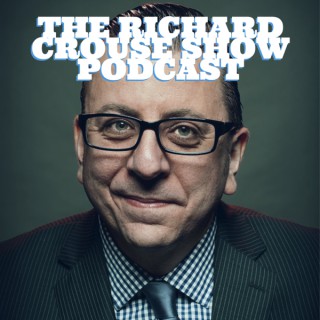
On the Saturday October 12, 2024 edition of The Richard Crouse Show we meet Paul Gilligan. He writes and draws the syndicated comic strip Pooch Café with Andrews McMeel, which runs in over 250 newspapers around the world and has been twice nominated by the National Cartoonist Society for best strip. He is also the author-illustrator of Pluto Rocket: New in Town, King of the Mole People and its sequel, Rise of the Slugs. Today we'll talk about his new book the graphic memoir Boy vs. Shark. In the book, ten-year-old Paul is terrified of sharks, but when he forces himself to see the movie Jaws to keep up with his more daring friends, he is traumatized into imagining a shark living in his bedroom. Then, we'll spend some time with Victor Garber. On the big screen, you know the London, Ontario born actor from his roles in Godspell, Titanic, Sleepless in Seattle, The First Wives Club, Legally Blonde and many others. On television, he is best known as Jack Bristow in the ABC series Alias, and he originated roles in the Broadway productions of Sweeney Todd: The Demon Barber of Fleet Street, Noises Off, Lend Me a Tenor, Arcadia and Art. This month he will receive a Lifetime Achievement in Entertainment Award from The Forest City Film Festival in his hometown.
Dave and Brad share proven strategies for building your audience on Substack. Also: What are the best approaches for dummy lettering — lettering that's supposed to be unreadable?TODAY'S SHOWHow to get new sign-ups on SubstackUPDATE: Get your exclusive ComicLab pin at Dave Kellett's booth (#1228) during Comic-Con InternationalUPDATE: The National Cartoonists Society's Reuben Awards will feature TWO live ComicLab showsUPDATE: ComicLab's social-media videosDummy letteringSUMMARYThe hosts discuss Substack and how to bring in new subscribers. They emphasize that the strategies for growth on Substack are similar to those used on other platforms, such as Mailchimp. They recommend using the embeddable sign-up widget and creating a compelling landing page with a "hero post." They also discuss the importance of pinning posts and keeping the sign-up form visible. Overall, they highlight the need for consistent sharing of high-quality work and engaging with the audience. In this part of the conversation, Brad and Dave discuss the use of pop-ups on websites and the importance of offering incentives to encourage sign-ups. They also emphasize the power of confidently promoting your work and using Substack Notes to engage with the community. Brad shares his strategies for maximizing content across different platforms and encourages planning and goal-setting. They also mention their upcoming appearances at San Diego Comic-Con and the National Cartoonist Society's Reuben Awards Week. Finally, they explore the topic of creating unreadable but clear signs in comics and the use of fake alphabets. They provide tips on how to create believable alien or fantasy languages that reinforce the mood of the species or world.TAKEAWAYSStrategies for bringing in new subscribers on Substack are similar to those used on other platformsUse the embeddable sign-up widget and create a compelling landing page with a hero postPin important posts on the landing page and keep the sign-up form visibleConsistently share high-quality work and engage with the audience. Consider the use of pop-ups on your website, but be mindful of the timing and presentation to avoid a bait-and-switch feeling.Offer incentives, such as free e-comics, to encourage sign-ups and engage with your audience.Confidently promote your work and communicate why it's good, using the language of Pride and Joy.Utilize Substack Notes as a social media platform to share your posts and engage with the community.Maximize your content by repurposing it across different platforms and embedding it in blogs or websites.Plan and set goals for your content creation and promotion, and aim for consistency and efficiency.Join industry events like San Diego Comic-Con and the National Cartoonist Society's Reuben Awards Week to network and showcase your work.Being able to laugh at oneself is important in podcasting and in life.Creating unreadable but clear signs in comics can add an otherworldly element.When creating fake alphabets, it's important to consider the mood and characteristics of the species or world.Starting with basic shapes and visual systems can help in creating believable alien or fantasy languages.Lettering can reinforce the mood and world of a comic.QUOTE OF THE SHOW"Nothing says delicious like lettuce that's been sitting next to a thousand-degree oven for hours on end and then brought to your door by a stoner." — Dave Kellett You get great rewards when you join the ComicLab Community on Patreon$2 — Early access to episodes$5 — Submit a question for possible use on the show AND get the exclusive ProTips podcast. Plus $2-tier rewards.Brad Guigar is the creator of Evil Inc and the author of The Webcomics Handbook. Dave Kellett is the creator of Sheldon and Drive.

Blurb: Matt and I talk about the legacy of The Simpsons, what it means to go from super fan to icon, always knowing he wanted to draw cartoons, having kid are better than making great art, how music makes The Simpsons great, how Jay could come back to work if he came back crawling on his knees, and how Jay agreed to crawl. Bio: Matt Groening was born in Portland, Oregon, on February 15, the third of five children. His father, Homer, was a cartoonist and filmmaker. From an early age, Matt created his own cartoons, amusing his friends and annoying his teachers. Groening attended Evergreen State College in Washington State, where he studied philosophy and continued his interest in cartoons, comics and music. After his graduation in 1977, Groening headed to Los Angeles where he struggled in immobilizing but irksome poverty. Increasingly frustrated by the traffic, smog, and his landlords, Matt began to vent his angst to his friends by sending them cartoons starring a bug-eyed rabbit named Binky. Groening soon began to publish and sell these cartoons at the record shop where he worked. Their popularity encouraged Matt to syndicate, and in April 1980, Life In Hell® formally debuted in the Los Angeles Reader and ran successfully in more than 250 newspapers around the world and half-dozen languages before Groening concluded it's production in 2012. Life in Hell® has also been collected in a best-selling series of books with over two million copies in print, including Love is Hell, Work is Hell, School is Hell, Childhood is Hell, Akbar & Jeff's Guide to Life, Greetings From Hell, The Big Book of Hell, With Love From Hell, How to Go to Hell, The Road to Hell, Binky's Guide to Love, and Love is Still Hell. In 1987 James L. Brooks approached Matt about creating animated shorts to fit between sketches of “The Tracey Ullman Show.” Matt agreed, but instead of using the Life in Hell® characters, he created an entirely new cast: The Simpsons, which bear the names of his family members, Homer, Marge, Lisa and Maggie (Bart is an anagram for brat). The Simpsons were soon spun off into a half-hour animated series which first aired on December 17, 1989 with a Christmas special, followed by the series premiere on January 14, 1990. It has since gone on to become the longest running prime-time animated show in television history. An international hit, the series has also spawned a licensing and merchandising empire. It has spanned a hit feature film and a revolutionary virtual coaster ride at Universal Studios. He also created the Emmy Award-winning animated series “Futurama.” As a cartoonist, Groening began his “Life in Hell” weekly comic strip series in the 1980s, and concluded it in 2012. In 1993, he formed Bongo Comics Group, and continues to serve as publisher. Winner of multiple Emmy Awards, the prestigious Peabody Award, Annie Awards and the Reuben Award for Outstanding Cartoonist of the Year, the highest honor presented by the National Cartoonist Society, he also received a Star on the Hollywood Walk of Fame in February 2012 and was personally honored with designing five U.S. postage stamps.
New Yorker cartoonist Jason Chatfield and "Sarah's Scribbles" cartoonist Sarah Andersen join Brad and Dave at the Farewell Brunch, closing out the National Cartoonist Society's Reuben Awards events.You get great rewards when you join the ComicLab Community on Patreon$2 — Early access to episodes$5 — Submit a question for possible use on the show AND get the exclusive ProTips podcast. Plus $2-tier rewards.Brad Guigar is the creator of Evil Inc and the author of The Webcomics Handbook. Dave Kellett is the creator of Sheldon and Drive.
Today's show is sponsored by Dreamhost! If you want to own and control your own work with a website, Dreamhost can help you get started.Phil Foglio joins us to discuss his long and storied career as an independent cartoonist! Best known for co-creating "Girl Genius" with his wife Kaja, Phil talks about his breakout hit, "What's New with Phil and Dixie," his milestone NSFW series, "XXXenophile," developing the Gaslamp Fantasy genre, and the philosophies that have helped him navigate several decades as an independent comics creator.Fun Fact! Phil, Dave, and Brad are all nominated for the National Cartoonist Society's Silver Reuben Award for Best Online Longform Comic!ON THIS WEEK'S SHOW...Special Guest Phil FoglioComicLab LIVE at San Diego Comic ConUPDATE: Google DomainsYou get great rewards when you join the ComicLab Community on Patreon$2 — Early access to episodes$5 — Submit a question for possible use on the show AND get the exclusive ProTips podcast. Plus $2-tier rewards.Brad Guigar is the creator of Evil Inc and the author of The Webcomics Handbook. Dave Kellett is the creator of Sheldon and Drive.

On part 2 of this week's episode, we interview cartoonist Alan Rozanski. Alan had a life long dream of becoming a published cartoonist and decided to make that dream a reality in the last five years. He has had cartoons published in The Wall Street Journal, Saturday Evening Post, Reader's Digest, Alta, The Oldie, Accounting Today, Woman's World, The Phoenix and more. He's met most of his goals, but is still chasing the elusive title of New Yorker Cartoonist.You can find a bit more about Alan at his National Cartoonist Society member page:https://nationalcartoonists.com/author/alan-rozanskiThe podcast he mentions, Tom Racine's Tall Tale Radio, can be found here:https://www.talltaleradio.comLarry Wood Joins Vin and Paul On Part 1 of the episode and we discuss... The winning caption for New Yorker contest #85 (Man with laptop at poolside). Finalists for contest #856 (Ears of corn walking in the hot sun).Current New Yorker contest #858 (Man in alley with cats and dogs in his coat). Send us questions or comments to : Cartooncaptioncontestpodcast@gmail.com

A cartoonist from the National Cartoonist Society sketches soldiers deployed to Kandahar Airfield Afghanistan.

Lynn Johnston is a Canadian cartoonist and author, best known for her newspaper comic strip For Better or For Worse. She was the first woman and first Canadian to win the National Cartoonist Society's Reuben Award.
The new National Cartoonist Society's Gag Cartoonist of the Year recipient, Chris Weyant, pays the boys a visit on the Cartoon Pad, which at the top of the show promised to be better.

Show notes: In this episode I share some local upcoming event news, plus I sit down to talk toons and discuss some Sour Grapes with cartoonist Tim Jones. Tim is the creator/artist/writer of the widely popular, self-syndicated comic strip, “SOUR GRAPES”. He created SOUR GRAPES back in 2013. It's a weekly strip about “Aesop”, a miserable-flying dog; his pet cloud, ‘Ominous' and odd family- all living in a problematic and troubled world. In 2014, the strip found its way into print starting in two newspapers in Rhode Island, where he lives with his family. Soon after, the comic strip continued its success and started to appear in more and more newspapers. Today, SOUR GRAPES continues to grow in popularity and can now be seen in multiple newspapers across the country. Tim has been a cartoonist and freelance illustrator for over 25 years and he is a member of the National Cartoonist Society and Mid-South Cartoonists Association. He also teaches cartooning and speaks at local schools and libraries. Tim has created several compilation SOUR GRAPES books and story-coloring books. He appears at various events, Comic-Cons and book signings. His next upcoming events are in July at Plastic City Comic Con in Fitchburg, MA and Terrificon at Mohegan Sun Casino in Connecticut. Thanks to Tim for taking time out to come on the show. Hope to run into him in person at some point. Happy birthday/anniversary to Comics and Collectibles, 901 Comics (Midtown), Metropolis, and my wife Nicki Workman! LINKS: Mid-South Cartoonists Association/MSCA (Memphis, TN) - www.midsouthcartoonists.org My art website - www.linworkman.com Tim Jones "Sour Grapes" - www.sourgrapescomic.com Terrificon (Conneticut) - www.terrificon.com Plastic City Comic Con (Fitchburg, MA) - www.plasticcitycomiccon.com National Cartoonists Society (NCS) - www.nationalcartoonists.com Theme/Music: “Silly Bank Heist” and "Sleuthing In The Dark" by Steve Oxen. ©2020 Fesliyan Studios Inc. – music and sound effects used by permission. Run time: 1hr 5min 30sec
This week The Cartoon Pad has on the new Gag Cartoonist of the Year winner as recently selected by the National Cartoonist Society, Ellis Rosen. Ellis is a wonderfully talented New Yorker cartoonist, and his new book, with Jon Adams, 'Send Help' A collection of marooned cartoons, is available now. LINK: https://amzn.to/3rxizjv

Jeff Smith is perhaps the most celebrated cartoonist of the last 30 years winning 10 Eisner awards, 11 Harvey awards and 2 awards from the National Cartoonist Society. His works include Bone, RASL, Tuki and Shazam and the Monster Society of Evil Brand Way of The Gun https://igg.me/at/IGNXo5UJf-k/x/18549004#/ Support our Indiegogo campaign with artist Caanan White at http://www.ikaripress.com Read the first 21 pages of Brand for FREE!http://bit.ly/2Y6sRtB Get Brand merch here:https://teespring.com/stores/ikari-press?pr=CYBERFROG Ikari Press on Amazon:https://www.amazon.com/gp/search?ie=UTF8&tag=antoniodbrice-20&linkCode=ur2&linkId=fce638549947467874bbc212380f5209&camp=1789&creative=9325&index=apparel&keywords=ikari%20press Thanks for watching! Check out The Dollar Bin - on Amazon https://www.amazon.com/shop/influencer-c39fd8ab?listId=1VJMFX7L69XPS Sexy Party on Soundcloud :https://soundcloud.com/antonio-brice-704040882 Sexy Party on Spotify :https://open.spotify.com/show/0UH8ZOfK2ivSh41oloYtiV?si=Fv_VKzFaRMCN3ihvjOHsww Follow us on social media here: https://twitter.com/ikaripress https://www.facebook.com/ikaripress https://instagram.com/ikaripress --- This episode is sponsored by · Anchor: The easiest way to make a podcast. https://anchor.fm/app --- Send in a voice message: https://anchor.fm/ikaripress/message Support this podcast: https://anchor.fm/ikaripress/support
Dave and Brad are planning 2019 — PLUS, Steve McGarry from the National Cartoonist Society drops in to talk about NCSFest in Huntington Beach, Calif, May 17-19, 2019. But FIRST... Brad's teenagers give Dave a look at what's in store for his kids in the future — and it includes sleeping in till noon. Show Notes 00:00 — Teenagers 06:06 — Brad's plan for 2019: Hiring an assistant 20:22 — Dave's plan for 2019: Five personal appearances 22:55 — Dave's plan for 2019: Publishing schedule to include an all-pop-culture Sheldon collection and a children's book! 40:44 — The NCS's Steve McGarry joins us to talk about NCSFest 54:00 — Brad's plan for 2019: Publishing the second collection of Evil Inc After Dark and the second edition of The Webcomics Handbook. 01:07:17 — Dave's shoot-the-moon plans for 2019: A comics-related TV show, a podcast book club, and a ComicLab Quickstarter. 01:09:25 — Revisiting our three-year plan and five-year plan project from 2018. Great rewards when you support ComicLab $2 — support the show $5 — submit a question for possible use on the show AND get the exclusive ProTips podcast $10 — record an audio question for possible use on the show AND get the exclusive ProTips podcast $50 — Sponsor the show! We’ll read a brief promo for your comic/product and read it twice during the show AND you get the exclusive ProTips podcast Brad Guigar is the creator of Evil Inc and the editor of Webcomics.com Dave Kellett is the creator of Sheldon and Drive.

Alex Googly Eyes Grand, Jim Snuffy Smith Thompson, and Little Orphan Bill Field interview Rick Marschall as we go through his life and times from being a teenage sidekick to veterans of the National Cartoonist Society like Rube Goldberg, to being an Editor at United Feature Syndicate working over more comic strip super stars like Charles Schulz, to co-writing the The World Encyclopedia of Comics with Maurice Horn, to meeting with Stan Lee and becoming an Editor at Marvel Comics. So grab your stick of butter as we discuss part 1 of the Life and Times of Rick Marschall exploring Comic History from the Strips to late 1970s Marvel Comics. It's the Cat's Meow. No Sense Remix - Standard License. Support us at https://www.patreon.com/comicbookhistoriansPodcast and Audio ©℗ 2019 Comic Book HistoriansSupport the show (https://www.patreon.com/comicbookhistorians)

Today's Guest: Sergio Aragones, legendary MAD magazine cartoonist, creator, "Groo" Mr. Media is recorded live before a studio audience of MAD cartoonist Sergio Aragones fans dressed up for Halloween as Groo the Wanderer… in the NEW new media capitol of the world… St. Petersburg, Florida! Order MAD’s Greatest Artists: Sergio Aragones: Five Decades of His Finest Works by clicking the book cover above! (2010) My first issue of MAD magazine was purchased near the checkout counter at a Stop & Shop supermarket in my hometown of North Brunswick, New Jersey, in July 1970. I’ll never forget the cover: a parody of the summer’s big hit, Butch Cassidy and the Sundance Kid, featuring a couple of actors named Redford & Newman. I no longer have it, but I suspect that that was my first exposure to legendary artist Sergio Aragones. SERGIO ARAGONES audio excerpt: "I did about 20 Pocket Books for MAD with new material. The characters are what sell the book. I thought, 'Why not draw myself on every cover? That way they know it's my book.' So I became a comic book character." Sergio has been producing illustrated gags for MAD since 1963 and for many fans, his work and the humor mag’s name are forever entwined. He has been one of the Usual Gang of Idiots for longer than I’ve been able to spell “ee-diots.” This month, Sergio — who has already won the National Cartoonist Society’s top honor, the Reuben Award, as well as the Will Eisner Hall of Fame Award and the Comic Art Professional Society’s Sergio Award, named after, um… him — is being recognized in a different way with a book retrospective. MAD’s Greatest Artists: Sergio Aragones: Five Decades of His Finest Works, is an oversized coffee table collectible that reproduces some of his finest, crazy material in a hardcover format that will no doubt outlast us all. It is a great honor to have him as a guest today. Sergio Aragones Website • Groo • Facebook • Order MAD’s Greatest Artists: Sergio Aragones: Five Decades of His Finest Works Order 'Sergio Aragones Funnies,' named by the National Cartoonists Society the Best Comic Book of 2013, available from Amazon.com by clicking on the comic book cover above! Order 'Sergio Aragones' Groo: Library,' available from Amazon.com by clicking on the book cover above! Order 'Will Eisner: A Spirited Life' (2nd Edition) by Bob Andelman, available from Amazon.com by clicking on the book cover above! The Party Authority in New Jersey, Pennsylvania, Delaware and Maryland!

Comics Manifest | Inspiring Interviews with Influential Creators in Comics
Tom Richmond is a cartoonist, illustrator, and caricaturist. He is a featured artist on Mad Magazine, the president of the National Cartoonist Society and the 2011 winner of the Reuben Award!

Lynn Johnston, a Canadian cartoonist, is best known for her newspaper comic strip For Better or For Worse. She was the first woman and first Canadian to win the National Cartoonist Society’s Reuben Award, and has been nominated for a Pulitzer. She joined Jonathon to discuss the world of cartooning, writing, and storytelling.

Matthew Diffee is a very funny man and an excellent artist, which makes him perfectly suited for the world of cartooning. Matt has been contributing cartoons to The New Yorker since 1999 and he now has a fantastically entertaining book out called “Hand Drawn Jokes for Smart Attractive People.” We start, as usual, at the beginning, discussing the mutual love of art and comedy that eventually "drew" Matt to cartooning. (See what I did there?) Matt talks about an early attempt at stand-up comedy that proved he could write jokes, but didn't seem equally capable of telling them, so he made the adjustment. We find out what influenced his decision to pursue cartooning and how he eventually landed a contract with the The New Yorker. It's worth noting that Matt is also the editor of volumes one and two of “The Rejection Collection: Cartoons You Never Saw and Never Will See in The New Yorker” and is the recipient of the 2013 National Cartoonist Society’s Silver Reuben Award for single panel cartooning. But for now, he's simply "Writers' Bloc Podcast Guest #48".

Cartoonist stopped by the Task Force Lifeliner to carry on the age old tradition of cartooning the Troops. Includes sound bites from Tom Richmond, Mad Magazine Cartoonist. Hometown: La Crosse, Wis. and Pvt. Alice Harris, Human Resource Specialist. Hometown: Pinellas Park, Fla. Also available in high definition.
© 2020-2026 Ivy Podcast Discovery LLC
