
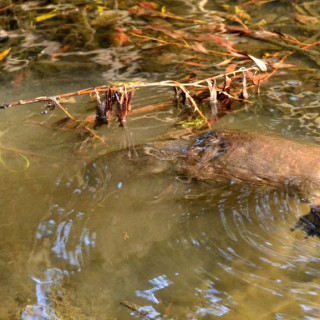
species of mammal
POPULARITY
Categories

59 episodes with Platypus

32 episodes with Platypus

21 episodes with Platypus

181 episodes with Platypus

13 episodes with Platypus

3 episodes with Platypus

4 episodes with Platypus

3 episodes with Platypus

2 episodes with Platypus

4 episodes with Platypus

3 episodes with Platypus

3 episodes with Platypus

5 episodes with Platypus

10 episodes with Platypus

2 episodes with Platypus

6 episodes with Platypus

4 episodes with Platypus

4 episodes with Platypus
This episode comes in two segments. The first is a reflection about the German Platypus Review #39. Lisa and our new co-host Nora sit down with Moritz Schiffmann from Leipzig, Editor in Chief of the German PR, and Johann Richter from Halle, the author of a book review included in the issue. In the second part, Lisa moderates a discussion between our members Artur and Jasper from Germany about the Party Congress of Die Linke back in June this year. Both segments address the long history of Platypus' engagements with Die Linke over the years. We discuss the party's framing of "proletarianization," the turn to class, and how Die Linke turned from a Millennial to a Zoomer project. We touch upon the meaning of Die Linke in the context of the party system in Germany and how we experienced the resurgence of a party which was once believed to be dead. Please note that this discussion took place before the electoral success of Die Linke in Berlin. ----- FURTHER READING IN GERMAN German Platypus Review #39: https://platypus1917.org/category/ausgabe-39/ PDF: https://platypus1917.org/wp-content/uploads/ausgabe_39.pdf Von Kautsky lernen heißt siegen lernen? (Johann Richter's review of Ingar Solty): https://platypus1917.org/2026/05/29/von-kautsky-lernen-heist-siegen-lernen/ Was ist DIE LINKE? (Panel Discussion in German. July 2025, Berlin): https://platypus1917.org/2026/05/29/was-ist-die-linke/ Mit Haustürwahlkämpfen in Richtung einer organisierenden Klassenpartei (Jorrit's response to the panel above): https://platypus1917.org/2026/05/29/mit-hausturwahlkampfen-in-richtung-einer-organisierenden-klassenpartei/ Die Linke als verbindende Partei in der Krise des Neoliberalismus (Interview with Mario Candeias, 2024): https://platypus1917.org/2024/05/27/interview_candeias/ Was ist DIE LINKE? (Panel Discussion in German. June 2021, Frankfurt): https://platypus1917.org/2022/08/31/podium_2021_linkspartei/ German Platypus Review #6: https://platypus1917.org/category/ausgabe-6/ Kämpfen statt Verwalten (Interview with Sascha Staničić, 2017): https://platypus1917.org/2017/08/12/kampfen-statt-verwalten-interview-mit-sascha-stanicic/ Der Fortschritt der bürgerlichen Gesellschaft muss verteidigt werden (Interview with Wolfgang Gehrke, 2017): https://platypus1917.org/2017/08/12/der-fortschritt-der-burgerlichen-gesellschaft-muss-verteidigt-werden-interview-mit/ In 120 Jahren sind wir kein Stück vorangekommen“ (Interview with Werner Dreibus, 2017): https://platypus1917.org/2017/08/12/120-jahren-sind-wir-kein-stuck-vorangekommen-interview-mit-werner-dreibus/ Revolutionen heute sind anders (Interview with Dietmar Bartsch, 2017): https://platypus1917.org/2017/08/12/revolutionen-heute-sind-anders-interview-mit-dietmar-bartsch/ ----- Music by Tamas Vilaghy Editing by Michael Woodson ----- platypus1917.org
This bonus content is a reading from Platypus, the CASTAC Blog. The full post by Juan Camilo Ospina Deaza can be read at https://blog.castac.org/2026/09/beyond-deficit-toward-a-strengths-based-approach-to-male-infertility/. About the post: Concerns about declining sperm quality and male reproductive capacity have become increasingly prominent in scientific, clinical, and public discussions of fertility. Yet infertility has historically been located within women's bodies and treated primarily as a women's problem, placing women under disproportionate reproductive responsibility, scrutiny, blame, and clinical intervention. This framing has also contributed to men's reproductive bodies and experiences receiving comparatively limited attention. Growing concern about male reproductive capacity has been accompanied by increasing attention to how male fertility might be preserved, improved, and optimised, alongside broader demographic narratives that frame declining reproductive capacity as a potential threat to future populations. (This episode is available in additional languages on Platypus, The CASTAC Blog.)

From world events to everyday decisions, economics explains it all. Platypus Economics makes it clear, useful, and actually fun. Available now: link.pscrb.fm/f0281/PE_JOM

Somewhere in an Indonesian shipyard, a new ferry for Kangaroo Island went quiet for three weeks. Dan Clarke, former South Australian Journalist of the Year, double Kennedy Award winner and Walkley winner, arrives with breaking news: Ruwi is back on the tracking signal. From there we cover his start as a messenger at The Advertiser, his move to the island, and his running of Island Independent and the Kangaroo Island News and Satire page. We also talk about why a small community needs a fourth estate even when some readers find the jokes too negative. There’s no SA Drink of the Week in this episode. In the Musical Pilgrimage, Steve Davis and the Virtualosos answer satire with satire. Schrödinger’s Platypus takes a $4 million pledge to bring platypuses back to the River Torrens and asks whether they are in the river, not in the river, or just useful for a press release. You can navigate episodes using chapter markers in your podcast app. Not a fan of one segment? You can click next to jump to the next chapter in the show. We’re here to serve! The Adelaide Show Podcast: Awarded Silver for Best Interview Podcast in Australia at the 2021 Australian Podcast Awards and named as Finalist for Best News and Current Affairs Podcast in the 2018 Australian Podcast Awards. And please consider becoming part of our podcast by joining our Inner Circle. It’s an email list. Join it and you might get an email on a Sunday or Monday seeking question ideas, guest ideas and requests for other bits of feedback about YOUR podcast, The Adelaide Show. Email us directly and we’ll add you to the list: podcast@theadelaideshow.com.au If you enjoy the show, please leave us a 5-star review in iTunes or other podcast sites, or buy some great merch from our Red Bubble store – The Adelaide Show Shop. We’d greatly appreciate it. And please talk about us and share our episodes on social media, it really helps build our community. Oh, and here’s our index of all episode in one concisepage. Running Sheet: Kangaroo Island News, Satire, and Frontier Journalism 00:00:00 Intro Introduction 00:00:00 SA Drink Of The Week No SA Drink Of The Week this week. 00:03:50 Daniel Clarke Daniel Clarke first came to Kangaroo Island as a boy on family summer holidays at American River. He returned years later with his partner, who had never visited before. She fell for it straight away, and with two young children they decided it was the place to raise a family. He expected freelance work to be scarce. Instead, he says the island has given him the best stories of his career, one after another. His path into journalism started with storm-chasing videos and the Clarke and Dawe segments on the 7.30 Report. He missed out on the university course and got a cadetship at The Advertiser, starting as a messenger. He describes that job, fondly, as the lowest rung in the building: making coffee, handing out faxes, collecting an editor’s dry cleaning, and once buying a cabbage for an editor. On night shifts, the sub-editors began testing him with headline suggestions. He still remembers seeing his “human shields” line in print the next morning, from a story that tied John Howard to the Iraq War protesters. Steve compares Dan to A.W. Merrick in Deadwood, the newspaperman who hauls a printing press into a gold-rush camp and learns the local power brokers push back. Dan knows the comparison well. He has lost friendships over his stories and still sees those people in the checkout line. But he insists he isn’t looking for conflict. His aim is simple: to make the island “a better place and an easier place for people to live.” Then we come to satire. After one reader called his posts “misinformation dressed up as satire,” Dan posted a reminder about what satire is for, with a photo of Valerie, the famous missing sausage dog from his Australian Story documentary. His census parody neatly sums up island debate: islanders want visitors, but not too many visitors, and want cheaper ferries, but not so cheap that more visitors come. He says the piece simply repeats what he hears every day. Another post, about a large branch hanging over a bridge at Cygnet River, shows how absurd the jurisdiction problem can be: the tree stands on council land and the branch hangs over a state government road, so a year later it is still there. Dan argues that satire is “almost the softest way of getting a message across,” and that governments dislike embarrassment enough to act on it. The SeaLink saga is the story Dan would most like to stop writing. The new ferries are more than two years late. The contract, signed under a Liberal government, apparently doesn’t even allow a fine. Almost 30-year-old vessels carry around a quarter of a million sheep off the island each year, and a planned three-day shutdown for ramp works lands in the middle of the sheep-moving season. Earlier cancellations have already cost small tourism businesses thousands of dollars. Steve links this to a wider frustration: governments pursue MotoGP deals while basic services such as freight lag behind. We finish with Dan’s documentaries. Lost in the Woods, now on Binge, won him a Walkley. It investigates the collapse of the island’s blue gum plantations. Millions of tonnes of timber were planted for carbon credits but had no way off the island once the Smith Bay port was blocked, so the wood is now being burnt. Dan filmed logging from the roadside while koalas were still in the trees, and the footage became a major Channel 7 story. His point was that one person with a camera found what the government’s half-day investigation missed. Island of the Dead, on ABC iview through Compass, is very different in tone. It follows death doula Heidi Grieg and three women at the end of their lives who treated death as ordinary and let him film them. Two of them did not live to see the film. Then Steve asks for the headline for Ruwi’s eventual arrival. Additional ResourcesKangaroo Island News and Satire (Facebook): news, parody, and the GoFundMe link in the About section if you’d like to help keep independent journalism going on the island Island Independent: Dan’s news outlet Lost in the Woods on Binge: the free trial is worth it for this Walkley winner alone Island of the Dead on ABC iview (Compass): confronting, gentle, and paced to suit the story Angertainment by Ed Coper: the book Steve recommends on how outrage drives what we pay attention to Episode 122, Kangaroo Island: A Midsummer Night’s Gin, and Episode 315, from Steve’s visit to 5KIX FM, for more of The Adelaide Show on KI 01:01:04 Musical Pilgrimage In the Musical Pilgrimage this week we listen to Schrödinger’s Platypus by Steve Davis & The Virtualosos. A Glam Adelaide headline promised a “major push” to bring platypuses back to the River Torrens, backed by more than $4 million. Reading further, Steve found that the river doesn’t have enough water flow, that foxes, cats and dogs would eat any platypus released there, that there is no identified source of platypuses, and that the study behind the story was from 2022. He also noticed the timing, as the government was changing parklands rules to make way for MotoGP. With Schrödinger’s famous cat in mind, and knowing platypuses spend their days in burrows and their nights underwater, he wrote this song. A cheerful chorus carries a pointed message, and the late physicist turns up in person to explain the “monotreme paradox.” The song follows Dan’s approach to the news: stay calm, state the facts, and let the absurdity show.Support the show: https://theadelaideshow.com.au/listen-or-download-the-podcast/adelaide-in-crowd/See omnystudio.com/listener for privacy information.

From world events to everyday decisions, economics explains it all. Platypus Economics makes it clear, useful, and actually fun. Available now: link.pscrb.fm/f0281/PE_TRS

From world events to everyday decisions, economics explains it all. Platypus Economics makes it clear, useful, and actually fun. Available now: link.pscrb.fm/f0281/PE_PRE

From world events to everyday decisions, economics explains it all. Platypus Economics makes it clear, useful, and actually fun. Available now: link.pscrb.fm/f0281/PE_IMPOL
This bonus content is a reading from Platypus, the CASTAC Blog. The full post by Lucy Pei can be read at https://blog.castac.org/2026/09/transnational-solidarity-exploring-alternate-global-imaginaries-of-work/. About the post: What is the significance of gig worker activists' claim on the global scale in relation to reclaiming the futures of work? Following Anna Tsing, I consider scale to be “not just a neutral frame for viewing the world” but instead as something that “must be brought into being: proposed, practiced, and evaded, as well as taken for granted. Scales are claimed and contested in cultural and political projects,” (Tsing, 2005, p. 58). The sample book cover image and slogans are examples of how activists self-consciously claimed the global scale. A gig worker's complaints can be viewed as a personal-scale problem to be solved by finding a new job or getting reinstated. A union can assert itself as focused on the scale of the factory, the company, the city, or the nation. A social movement can style itself as being local or it can argue that the issues it addresses are global in scale. In addition
This bonus content is a reading from Platypus, the CASTAC Blog. The full post by Catherina Wilson can be read at https://blog.castac.org/2026/09/smart-methods-whatsapp-ethics-and-inclusive-knowledge-production/. About the post: Digital tools, such as WhatsApp, have offered methodological opportunities for connection, data collection, and the democratization of knowledge production, in part because they are easily accessible and affordable. The advantages notwithstanding, we must critically reflect on the limitations and ethical implications of these digital platforms. Because WhatsApp is integrated into the lives of our research participants, it proved to be a useful tool during our own collaborative analysis and writing process too.

Conservationists are calling for government funding to count the population of the platypus over the next decade.
This bonus content is a reading from Platypus, the CASTAC Blog. The full post by Fatima Tariq can be read at https://blog.castac.org/2026/09/time-virtuality-and-the-digital-sacred/. About the post: The above scene from Ramy (Season 2, Episode 7) depicts an absurd yet moving moment featuring characters Mo and Ahmed performing umrah through VR headsets. As Mo embraces the virtual Ka'aba, he tearfully breaks down; we see a performance of embodied devotion through his digitally mediated umrah experience. While VR pilgrimages remain niche and laughable to many, their use by some travel agencies and religious groups to practice for actual pilgrimage highlights how digital technologies are reshaping sacred journeys. This project attempts to interrogate how digital mediation transforms spatiotemporal logics of religious practice particularly through the lens of chronotope (Bakhtin 1981, Agha 2007), the co-constituion of time and space in narrative and interaction. Linguistic anthropology's concept of chronotope may help us unpack this tension.
This bonus content is a reading from Platypus, the CASTAC Blog. The full post by Ambar Reyes can be read at https://blog.castac.org/2026/09/beyond-delivering-food-networks-risk-and-the-hidden-infrastructure-of-gig-work/. About the post: Delivery workers do not merely use communication platforms; they inhabit and transform them into sociotechnical infrastructures of collective life. Through these arrangements, knowledge, social relations, moral authority, and identity are actively produced and maintained. In tracing the circulation of information, responsibility, and care across urban and transnational space, this blogpost reveals how systems designed for labor extraction are repurposed as infrastructures of care, accountability, and collective knowledge across neighbourhoods and national borders. (This episode is available in additional languages on Platypus, The CASTAC Blog.)
This bonus content is a reading from Platypus, the CASTAC Blog. The full post by Emmanuel Anguiano-Hernández can be read at https://blog.castac.org/2026/09/strategies-and-tools-for-knowledge-generation-in-art-science/. About the post: To what extent do measurements from an electroencephalography headset provide evidence of the aesthetic contemplation state of the person wearing it? (This episode is available in additional languages on Platypus, The CASTAC Blog.)

In Part 1, I asked whether Property deserved an interview. In Part 2, I go deeper, because you can’t hire an asset class. You hire one specific Property to perform one specific job, for one specific investor, under one specific financial contract. I put seven Property career paths through the same evidence-based interview: live vesting, established growth Property, qualifying new builds, the Property Platypus, residential income, direct Commercial Property, and listed, unlisted, fractional or specialist exposure. Then I test the claims, the numbers, the finance and the exit strategy to work out which approach might actually fit, and which should be shown the door. In this episode you'll discover: The legitimate job, good version, bad version, suitable investor and rejection signs for seven Property approaches Why gross rental yield is not the same thing as sustainable lifestyle income Why most households hit borrowing, equity, affordability and risk limits before they can own enough direct rentals to live on net rent alone How to apply the Liberation Calculation, Established Edge Stack, New-Build Price X-ray, Platypus pay cheques and Yield Waterfall Why Commercial Property can fall in value even when the tenant keeps paying every dollar of rent What fractional Property investors actually own, and why a small ticket doesn’t mean small due diligence The difference between interest-only and principal, and, interest debt, and why clean loan lanes matter How to classify your existing assets into Keep, Tune and Release before progressively converting growth into lifestyle income How to apply the final four-step Property Hiring Card: Define, Diagnose, De risk and Decide The post, Budget answer isn’t a universal Property winner. It’s finding the right Property, for the right investor, doing the right job, under the right financial contract. Property should only get the job when the current conditions improve the terms, without lowering the standards that made it right in the first place. This is general information and education only. It is not personal financial, credit, tax, legal or investment advice. Obtain independent advice that considers your objectives, financial position, needs and circumstances before acting.
This bonus content is a reading from Platypus, the CASTAC Blog. The full post by Aldo Federico Palafox Hernández can be read at https://blog.castac.org/2026/09/kilitl-living-with-a-green-part-of-the-world-edible-greens-language-knowledge-and-territory/. About the post: In Mexico, quelites refers to uncultivated edible plants. The word has a Nahuatl origin derived from kilitl, a term referring to these edible weeds. The earliest dictionaries of colonial Mexico translated kilitl as “vegetable”, an equivalence that obscured the fact that they were collected (not cultivated), and interpreted them as any other green crop. There is an ongoing trend to revaluate quelites as a way to counter their gradual disappearance from national diets. These efforts involve universities, governmental and private institutions, civil associations, and organized communities. (This episode is available in additional languages on Platypus, The CASTAC Blog.)
This bonus content is a reading from Platypus, the CASTAC Blog. The full post by Lucy Pei, Joy Ming, Kim Fernandes and Rosemary Steup can be read at https://blog.castac.org/2026/09/reclaiming-the-future-of-work-series-introduction/. About the post: Global South, global majority, and decolonial lenses help us to break out of dominant points of view. Taking on a range of methods, the empirical and conceptual works draw lessons from workers' embodied experiences and relationships to one another and to the places they work, from discourse and discursive objects, and from speculative engagements.

Join this channel to get access to perks: https://www.youtube.com/channel/UCVr5MNf7Nt5oCXywsUh-ttA/join Looking to buy used and new games? Use my affiliate link with Noble Knight Games https://www.nobleknight.com/?awid=1459 Hungry is joined by the Cardboard Alchemist himself Peter Vaughan to discuss the upcoming VauhganCon, and talk about the makings of Whisperwood. 0:00 - Intro Recent Plays and next on the table 7:10 - Stuflandet 8:28 - The Crew Journey to the Center of the Earth 10:13 - Dual of Meloch 13:13 - Shu and hs TCG's 19:15 - Sentinels of the Multiverse 25:25 - Obsession 27:18 - Firesiege 29:05 - Fliptoons Season 2 33:30 - Tend 34:33 - Let's Play Games Together 36:39 - Tidal Blades 2 43:43 - Overrated Game Metrics 55:10 - Underrated Game Metrics 1:11:29 Thank you 1:12:14 - Mountain Goats Legacy 1:33:05 - Old Games We Want to Play Again Check out the video version here: https://youtu.be/okLe94UdZFU Check out @GoingAnalogShow here: https://www.goinganalogshow.com/ Get your own copy of Mountain Goats Legacy here: https://www.allplay.com/board-games/mountain-goats-legacy
This bonus content is a reading from Platypus, the CASTAC Blog. The full post by Al Lim can be read at https://blog.castac.org/2026/09/venture-capitals-due-diligence-or-ethnographys-adversarial-twin/. About the post: Anthropologists have long framed studying up as a problem of access: how to get inside institutions that do not want us (Nader 1972; Souleles 2018). My problem was different. Having spent time doing both ethnographic fieldwork and leading several venture investments, my problem was less about access than about processing the continuities and frictions between these two roles.
This bonus content is a reading from Platypus, the CASTAC Blog. The full post by Sridhar Raghavan can be read at https://blog.castac.org/2026/09/silt-sea-and-coastal-engineering/. About the post: In 1870, the Vedaranyam canal is built connecting the Salt Pans nearby Palk bay coasts 5 to Nagapattinam – serving twin purposes of cheap transport of salt to Nagapattinam for trade, as well as deepening the river channels slightly upstream of the Port. A permanent wharf was constructed from some of the dredged sand in the 1870s. But dredging was repeatedly claimed as costly. Equally, the cyclone of 1862 damaged the extended river mouth groynes, and the British were able to repair them only by 1865. In 1909, experimental groynes erected at a distance from the river mouth were destroyed and washed away further south during the North East monsoon – which the Port Officer describes as “It will be seen by the above that these exposed groynes cannot withstand the fury of the northeast monsoon, and any expenditure on this account will be a waste of money”. (This episode is available in additional languages on Platypus, The CASTAC Blog.)
This bonus content is a reading from Platypus, the CASTAC Blog. The full post by kayah can be read at https://blog.castac.org/2026/08/a-horse-in-the-archive-notes-on-incompleteness-in-biometric-infrastructures/. About the post: An essay on incompleteness as a constitutive property of biometric infrastructures. Beginning with the removal of two wisdom teeth — a piece of the body that leaves it once but whose record may keep circulating — it traces how bodies are decomposed into data, archived, and returned to their subjects only in fragments that never quite align. At its center is a speculative biometric archive, built as an interactive component, that enacts this logic directly: records repeat, some accesses are denied, and discovered records decay permanently with use. A horse the system cannot classify — but files anyway — marks the limit of what such an archive can hold. (This episode is available in additional languages on Platypus, The CASTAC Blog.)
This bonus content is a reading from Platypus, the CASTAC Blog. The full post by Naijia Liu can be read at https://blog.castac.org/2026/08/can-you-hear-me-now-listening-in-chinas-romance-simulation-games/. About the post: Chinese romance games are built to make players feel heard, and the studios behind them promise the same. Drawing on fieldwork among players of China's female-oriented mobile games, this piece follows listening as it slips from a designed intimacy into a demand players make on the companies, and on the worlds these games represent.

A cheeky bat raise for the Koa Sports Podcast today we notch up episode 250, thank yous all. An episode stacked with content as Greg and Tim return to the mics to share the past few weeks of life in the fast lane. We draw the winner of the $200 Maple Movement Gift Pack, congratulations to them, T & C's apply. We give plenty of feedback for the industry to ponder, feedback is a gift and Greg is exposed for the fraud that he is! Join the Tribe www.koasports.com.au
This bonus content is a reading from Platypus, the CASTAC Blog. The full post by Manar Naser can be read at https://blog.castac.org/2026/08/the-kids-are-ai-right/. About the post: My students were actively evaluating AI's role and utility rather than absorbing it uncritically. This complicates the assumption that children are passive recipients of a technological future being built for them. Education policy is actively being shaped by the potential of an education in and conducted by AI rather than considering the students they are pushing this upon
This bonus content is a reading from Platypus, the CASTAC Blog. The full post by Lachlan Hensey can be read at https://blog.castac.org/2026/08/dispatch-from-seoul-reflections-on-the-science-technology-human-values-science-and-technology-studies-school-june-2026/. About the post: In June, emerging STS scholars gathered in Seoul to workshop draft manuscripts, encountering charismatic objects and a “concrete fish tank”. In this post, Lachlan Hensey reflects on the 2026 ST&HV STS School: It seems many of us happened upon STS quite unexpectedly, but also gratefully, hesitantly or far later than we now wish. Whatever the case, misfits or meanderers, there we were—in Seoul, ‘doing STS'—evolving a shared language to articulate that which is obscured, tacit, or might be otherwise. And although there is often a hint of deviance, mischief or even alienation that colours the way STS scholars describe and relate to their research contexts—as “tricksters”, perhaps—there are few punchlines or ‘gotcha' moments among these manuscripts. Instead, the conversations we cultivated throughout the School were characterised by epistemic humility, reflexivity and care.

FULL SHOW : Mick is back from Yuendumu and someone forgot the footballs, Titus' Fan Barometer gets a run after all the AFL on the weekend, Merv Hughes updates us on the Cricket. Xander McGuire talks MCG Sewage and we wanna know your Favourite Melbourne Venue. Catch Mick in the Morning, with Roo, Titus & Rosie LIVE from 6-9am weekdays on 105.1 Triple M Melbourne or via the LiSTNR app. Mick In The Morning Instagram: https://www.instagram.com/molloy Triple M Melbourne Instagram: https://www.instagram.com/triplemmelb Send Us A Voice Memo: https://memo.fm/mickinthemorning/See omnystudio.com/listener for privacy information.
This bonus content is a reading from Platypus, the CASTAC Blog. The full post by Tanu Biswas can be read at https://blog.castac.org/2026/08/in-the-pensive-pause-of-supervision-a-footnote-on-citing-santos/. About the post: Overcoming the separation of ethics, metaphysics (including ontology), epistemology, and aesthetics that is possible in Western philosophical traditions, but not in non-Western traditions, lies at the heart of scientific work aimed at cultivating decolonial methodologies.

It's not been easy sharing a burrow, but will things get worse when a tarantula and a platypus find a hole in their floor?Written especially for this podcast by Simon. If you enjoyed this story, please do leave us a review. And, if you'd like to suggest an animal for a future Animal Tales story, you can do so by emailing podcast@animaltales.uk. We would love to hear from you. Animal Tales Books!Collections of Animal Tales children's stories are available to buy exclusively at Amazon. Simply search for Animal Tales Short Stories or follow this link: https://www.amazon.co.uk/dp/B0CLJQZ9C9?binding=paperback&ref=dbs_dp_sirpi Become a PREMIUM SubscriberYou can now enjoy Animal Tales by becoming a Premium Subscriber. This gets you:All episodes in our catalogue advert-freeBonus Premium-only episodes (one per week) which will never be used on the main podcastWe guarantee to use one of your animal suggestions in a storyYou can sign up through Apple Podcasts or through Supercast and there are both monthly and yearly plans available. Discover a brand new story every Monday, Wednesday and Friday – just for you! You can find more Animal Tales at www.animaltales.ukA Note About The AdvertsIn order to allow us to make these stories we offer a premium subscription and run adverts. The adverts are not chosen by us, but played automatically depending on the platform you listen through (Apple Podcasts, Spotify, etc) and the country you live in. The adverts may even be different if you listen to the story twice.We have had a handful of instances where an advert has played that is not suitable for a family audience, despite the podcast clearly being labelled for children. If you're concerned about an advert you hear, please contact the platform you are listening to directly. Spotify, in particular, has proven problematic in the past, for both inappropriate adverts and the volume at which the adverts play. If you find this happening, please let Spotify know via their Facebook customer care page. As creators, we want your child's experience to be a pleasurable one. Running adverts is necessary to allow us to operate, but please do consider the premium subscription service as an alternative – it's advert free.
This bonus content is a reading from Platypus, the CASTAC Blog. The full post by Neslihan Sen can be read at https://blog.castac.org/2026/08/from-candle-to-dilator-treating-vaginismus-in-turkey/. About the post: Vaginismus as a medical diagnosis, and its associated therapy, give women the legitimacy to experience their bodies and sexualities in a way that was not acceptable before the diagnosis. Sexuality becomes central in these women's lives. (This episode is available in additional languages on Platypus, The CASTAC Blog.)
This bonus content is a reading from Platypus, the CASTAC Blog. The full post by Jennifer Foley can be read at https://blog.castac.org/2026/08/networks-of-knowledge-sharing-becoming-with-mushrooms-in-academia/. About the post: The experience of becoming with mushrooms and being a part of the Mushy Collective changed how I understand and engage with knowledge production. Knowledge is not a finite product waiting to be harvested for display or consumption.

See omnystudio.com/listener for privacy information.

During Platypus Month this month, an annual community-led survey is being conducted along the Murrumbidgee River in and around Canberra to monitor platypus populations. Meanwhile, at the Australian National University (ANU), University House has reopened this month following a major restoration. This week on Australia Wide, Emi Hazelwood reports from Canberra. - 「カモノハシ月間」の今月、キャンベラとその近郊を流れるマランビジー川では、市民参加型の年次調査が行われています。また、オーストラリア国立大学(ANU)では、大規模な改修を終えたユニバーシティ・ハウスが今月、再オープンしました。今週の「オーストラリアワイド」は、キャンベラからヘイゼルウッド恵美さんのリポートです。Listen to SBS Japanese Audio on Tue, Thu and Fri from 1pm on SBS 3. Replays from 10pm on Tue, Thu and Sat on SBS1. Listen to past stories from our podcast. Download the free SBS Audio App and don't forget to visit SBS Japanese Facebook and Instagram page! - SBSの日本語放送は火木金の午後1時からSBS3で生放送!火木土の夜10時からはおやすみ前にSBS1で再放送が聞けます。SBS日本語放送ポッドキャストから過去のストーリーを聞くこともできます。無料でダウンロードできるSBS Audio Appもどうぞ。SBS 日本語放送のFacebookとInstagramもお忘れなく。
This bonus content is a reading from Platypus, the CASTAC Blog. The full post by Megan MacGregor can be read at https://blog.castac.org/2026/08/microbiome-monitoring-smart-toilets-precision-medicine-and-the-post-genomic-bowel/. About the post: Imagine that every time you poop, your hygiene routine involves depositing your used toilet paper into a toilet-side receptacle. As you wash your hands, the device mixes, processes, and extracts microbial DNA from your stool. It sequences the microbial DNA for a real-time readout of your microbiome (the microbial genomes from within your gut, or at least the ones that made it to your stool), automatically sending the information to a large-scale microbiome database that integrates it into its data, algorithms, and analytic programs. The program connects to an app on your phone, telling you that based on your personal version of a healthy microbiome, today your microbiome is looking a little low in the bacterial species Akkermansia municiphila and high in some risky metabolites (the molecular outputs of some of your gut microbes).

Episode #292 with Adam and Taylor. Come send it with the boys, as we discuss - Resigning, Using AI for work, The Anthology, Eucalyptus, Platypus, Luke Bateman, Ryan McDonald, Feeding the people, WNBA, Mike Krukow, and much more... Follow us on Instagram & TikTok: https://www.instagram.com/bigsendpodcast https://www.tiktok.com/@bigsendpodcast Patreon BoSodes(Bonus Episodes): https://patreon.com/BigSendPodcast Please forward all complaints to: bigsendpodcast@gmail.com
For this episode of Shit Platypus Says, Tamas V sits down with Lou S, editor in chief of the Platypus Review for the last 5 years, and Allen Y, who will take over the job. They discuss the transformations in capitalist politics and the Left's responses to them, which the Platypus Review has tracked under Lou's tenure. We discuss the exhaustion of the Millennial Left in the post-Trump era, the long arc of the DSA, and the role of the PR on the Left today and in the future. The Platypus Review is an open-submission journal published monthly worldwide and online. You can find the latest issue, the complete archive going back to 2007, as well as submissions guidelines at platypus1917.org. ----- Links: Full Editorial Statement: https://platypus1917.org/platypus-review/editorial-statement/ Jamal Abed-Rabbo, D.L. Jacobs, Harold Meyerson, Matthew Strupp, "The politics of the Democratic Socialists of America" - https://platypus1917.org/2023/12/01/the-politics-of-the-democratic-socialists-of-america/ Benedict Cryptofash, “The Left is not a concept” - https://platypus1917.org/2021/12/01/the-left-is-not-a-concept/ Mitchel Cohen, Melvyn Dubofsky, Daniel Lazare, Sebastian LM, “Whither socialism? Mamdani and the Left” - https://platypus1917.org/2025/11/01/whither-socialism-mamdani-and-the-left/ James Heartfield, Spencer Leonard, Anthony Monteiro, Benjamin Studebaker, “Marxism and liberalism” - https://platypus1917.org/2022/10/01/marxism-and-liberalism-2/ Ben B. and Clint M., “‘The epoch of empires': An interview with Haz Al-Din” - https://platypus1917.org/2024/02/01/the-epoch-of-empires-an-interview-with-haz-al-din/ Caleb Maupin, “We are the city-building tendency” - https://platypus1917.org/2021/12/01/we-are-the-city-building-tendency/ Pamela C. Nogales C., “Helplessness without history: Political education after the Millennial Left" - https://platypus1917.org/2024/10/01/helplessness-without-history-political-education-after-the-millennial-left/ Chris Cutrone, “Israel–Palestine and the ‘Left'” - https://platypus1917.org/2024/02/01/israel-palestine-and-the-left/ Jan-Georg Gerber, “Who were the Antideutsch? An obituary” - https://platypus1917.org/2025/04/01/who-were-the-antideutsch-an-obituary/ ----- platypus1917.org
This bonus content is a reading from Platypus, the CASTAC Blog. The full post by Miriam Fahimi can be read at https://blog.castac.org/2026/08/can-a-data-center-sweat/. About the post: Heatwaves push data centers to their thermal limits. The continuous operation of their servers depends on energy- and water-intensive artificial cooling, with far-reaching yet still insufficiently understood consequences for both societal and environmental well-being. This contribution examines the meanings and implications of artificial cooling in data centers and asks whether a data center can, in its own way, learn how to sweat. (This episode is available in additional languages on Platypus, The CASTAC Blog.)
This bonus content is a reading from Platypus, the CASTAC Blog. The full post by Mayline Strouk can be read at https://blog.castac.org/2026/08/fragile-followings-leaving-and-returning-to-the-ecological-field/. About the post: This piece calls for renewed attention to returning to ecological field sites to conduct long-term monitoring studies. In marine ornithology, seabird colony monitoring – often carried out over the course of a career – shapes scientific trajectories, but financial support for such work remains largely limited and confined in short-term projects. In the social sciences, researchers are also expected to spend extended periods in the field to truly know and “own” it – until they move on to other projects and sites, following new positions and funding schemes. Taking the case of a petrel monitoring program in Iceland and an STS PhD thesis following it, I draw attention to the fragility of fieldwork, caught between the expectations and needs to stay and return to the field, and the realities of the precariousness faced by both researchers and the seabird populations they study. (This episode is available in additional languages on Platypus, The CASTAC Blog.)

Audio from our live panel on Saturday, July 25 at Woodbine where we go deeper on Varn & Tutt's new book The People Are Not One, starting with some normie vs. Marxist LARPing and ending with a spirited Q&A featuring Ross Wolfe, Greg Butler, Platypus, Donald Parkinson, and more! For the full episode, support the show at http://patreon.com/c/thiswreckageThe event was sponsored by ILC of NYC Song: Run the Jewels - Goonies vs. E.T.
This bonus content is a reading from Platypus, the CASTAC Blog. The full post by Javed Siddiqui, Abdul Nayeem, Ambika Tandon, Anushree Gupta, Eesha Kunduri, Isha Bhallamudi and Manju Goel can be read at https://blog.castac.org/2026/08/platform-workers-organizing-diaries-messages-from-union-organizers-to-researchers/. About the post: Researchers are increasingly applying collaborative and participatory approaches to work with and not on gig workers, union organizers, and platform cooperatives. In the last post of our series, we aim to contribute to these practices of actively building alternatives and strengthening movements, by speaking to three gig worker-organizers from India - Manju Goel, Abdul Nayeem, and Javed. We ask them, how do they view the role of researchers in the gig worker organizing landscape? How can researchers best support gig worker unions? What should we keep in mind when embarking on such collaborations? (This episode is available in additional languages on Platypus, The CASTAC Blog.)

To keep our precious native animals, we need to know where they are. We can focus our efforts on saving their habitats and maybe even restoring degraded ones. ACT government's Natural Resource Management works with energetic people in the commuity who love platypus. We have the beautiful rakali, more an otter than the unworthy label 'water rat' suggests. And lurking in the mud are the common yabby, the less glamorous but tireless workers in the ecosystem. In this interview Daniel Harris-Pascal shows his affection for those things that live in our waterways, and why the citizen science projects are so important. Daniel is Citizen Science Facilitator with ACT Natural Resource Management. There's plenty going on if you want to see for yourself: Platypus Month - Waterwatch Upper Murrumbidgee Waterwatch
Back at the start of the year, my good friend Snarky Platypus and I created a bingo card for 2026. A set of 25 things that might happen. Well, we're half-way through the year, so let's see how we went.We discuss music, SpaceX, OpenAI, the war with Iran, and much more. You might want to follow along with this on this episode's web page — or go back to the original post.https://stilgherrian.com/essay/bingo-card-2026/Full podcast details and credits:https://the9pmedict.com/edict/00273/Please consider supporting the the current crowdfunder:https://the9pmedict.com/spring2026Or if you miss that or prefer to not use GoFundMe:https://the9pmedict.com/tip/https://skank.com.au/subscribe/

Arianna Irwin joins me to discuss her new Maverick graphic novel Penelope's Escape from the Platypusary. Arianna collaborated with artist Prenzy for a dramatic fictionalized retelling of Penelope the Platypus' escape from the Bronx Zoo in 1957. This is an incredible graphic novel that turns Penelope into the feminist icon she was always meant to be. It's filled with so many incredible characters and Prenzy's art is emotive and captivating. Arianna and I chat about the why she wanted to tell Penelope's story, working with Prenzy, what she hopes readers take away from it, and how she got her start in comics. Penelope's Escape from the Platypusary is out July 21st. Buy Penelope's Escape from the Platypusary Go to Arianna's website Follow Arianna on Instagram Buy The Comet, vol. 1 Follow Comic Book Yeti

The RBA has held the cash rate at 4.35 per cent… pausing to see if the three hikes this year so far has actually made a difference. Australia’s largest sneaker retailer, behind Platypus and Athlete’s Foot has received a hostile takeover bid…without a single cent of premium. Grill'd is being sued by the ACCC for allegedly misleading customers about how much it would donate to an environmental cause in a 3 year promotion. _ Complete the Budget survey for your chance to win 3 x $100 gift cards - takes only 2 mins Download the free app (App Store): http://bit.ly/FluxAppStore Download the free app (Google Play): http://bit.ly/FluxappGooglePlay Daily newsletter: https://bit.ly/fluxnewsletter Flux on Instagram: http://bit.ly/fluxinsta Flux on TikTok: https://www.tiktok.com/@flux.finance —- The content in this podcast reflects the views and opinions of the hosts, and is intended for personal and not commercial use. We do not represent or endorse the accuracy or reliability of any opinion, statement or other information provided or distributed in these episodes.See omnystudio.com/listener for privacy information.

The platypus is one of the most unusual animals on Earth. This episode explores the strange combination of traits that make the platypus so distinctive, from its duck-like bill and webbed feet to its ability to lay eggs despite being a mammal. Along the way, you'll hear about its discovery, unique biology, venomous spurs, electroreception, and the many ways this remarkable animal challenged scientists' understanding of the natural world. It's steady and consistent, with no whispering and no sudden changes, just enough to give your mind something to follow as you wind down. Happy sleeping! Read with permission from Platypus, Wikipedia (https://en.wikipedia.org/wiki/Platypus), licensed under CC BY-SA 4.0. — Ad-free episodes: icantsleep.supportingcast.fmHave a topic in mind? Request a topic Learn more about your ad choices. Visit megaphone.fm/adchoices Learn more about your ad choices. Visit megaphone.fm/adchoices

You asked, we answered! In this mailbag episode, we're tackling three big kid questions: why does the ground keep spinning after you stop? Do magnets work in space? And could a peacock and a platypus ever be BFFs? We get answers from real experts, as well as reading your reviews and comments! Also, the Joke-ha-thon is coming up on June 3rd! Go here to donate and pick your champion, and also win some amazing, amazing prizes for yourself and your school. If you want to have your comment or review read on our show, leave one! Write a review on Apple Podcasts or comment on Spotify. Join on Patreon to help us continue to make Tumble and be featured on future episodes, and help us decide on Season 12 topics: patreon.com/tumblepodcast Shop official Tumble merch: https://tumblepodcast.dashery.com/ Submit a science question: https://www.sciencepodcastforkids.com/contact

It was love at first sight, when Jack Ashby first set eyes upon a platypus specimen as a young university student.The introduction set him on a lifelong mission to meet these quintessentially Australian creatures in the wild, and redefine their reputation as "weird" or "primitive".He's met many other animals along the way, coming face to face with an elusive snow leopard family in the Himalayas, with wombats and echidnas, and seeing only the eyes of a sloth bear, reflecting his torchlight in a pitch black forest.Further informationPlatypus Matters is published by Harper CollinsThis episode of Conversations was first broadcast in 2022, the producer was Meggie Morris and the Executive Producer was Carmel Rooney.It explores platypus, mammals, zoology, echidnas, Australian animals, Winston Churchill, animal behaviour, Indigenous Australians, baby platypus, the biology and anatomy of platypus, weird animal facts.To binge even more great episodes of the Conversations podcast with Richard Fidler and Sarah Kanowski go the ABC listen app (Australia) or wherever you get your podcasts. There you'll find hundreds of the best thought-provoking interviews with authors, writers, artists, politicians, psychologists, musicians, and celebrities.

Philip Clark is joined on Nightlife by ABC Science Reporter Jacinta Bowler to discuss the latest in science and space news.

“Questions, concerns, queries?” Lets chat!Lets do it again, shall we? Picking up where last week's show left off, Jack, Lynne and Matt McFarland put a final cut on their spring pruning series for 2026.The show starts with a marijuana chat. What? Bear cubs abound in Canada and Matt takes the time to make a joke about hibernating. Platypus...Matt gushes. TAKE ME TO YOUR LEADER!A broken tree leader times three finishes off a talk from last week. Mark Banks cost a company bank.What does the tree leader do in regards to the operating system of the tree? It's fascinating. Field tags on trees prompt a conversation with Matt.What happens if you don't remove your tree's winter sweater? Matt explains.Sun scald frost crack is discussed. Lets prune a clematis together. There are some rules and the McFarlands go over the ins and outs.Don't prune when you're high! DANGEROUS!Roses and their various family members are discussed. There was a stigma surrounding roses that seems to have faded. Why?Morden Manitoba is a hotbed for rose development. Why again? The prunus family and their pruning requirements comes into focus. Jack tells a peach tree story.What is "open pruning?" MATT HATES BLUEBERRY PLANTS!!! HATTTTEESSSS. Currents and white pine. UH-OH. You'll find out why.The difference between raspberry plants cap the show off. Tune in. Looking to book a consult for your property? We'd love to help. CLICK HERE.What is a TGS Tiny Garden? CLICK HERE.

Come and see!Yet another discovery courtesy of the James Webb Space Telescope, something over which astronomers are presently puzzling!A star? A quasar? A galaxy? It's not something that astronomers have ever seen before. Like the Platypus, these objects are hard to categorize. How does this latest curious heavenly object remind us of the One who created them?Wayne and Dan have some ideas! Join us!Wayne's article on the PlatypusAccessible YouTube video on the Platypus Galaxies Podbean enables our podcast to be on Apple Podcasts and other major podcast platforms. To support Good Heavens! on Podbean as a patron, you can use the Podbean app, or go to https://patron.podbean.com/goodheavens. This goes to Wayne Spencer. If you would like to give to the ministry of Watchman Fellowship or to Daniel Ray, you can donate at https://www.watchman.org/daniel. Donations to Watchman are tax deductible.


Episode 2 of "Animal Talk"! In this episode, Oz, Rosie, and Morton tell us about one of the most unique animals in the world: the Platypus!Look out for another full-length episode, coming soon!
© 2020-2026 Ivy Podcast Discovery LLC
