

POPULARITY
Categories

97 episodes with Debris

33 episodes with Debris

26 episodes with Debris

26 episodes with Debris

33 episodes with Debris

13 episodes with Debris

11 episodes with Debris

6 episodes with Debris

13 episodes with Debris

7 episodes with Debris

13 episodes with Debris

20 episodes with Debris

10 episodes with Debris

6 episodes with Debris

9 episodes with Debris

3 episodes with Debris

13 episodes with Debris

5 episodes with Debris

5 episodes with Debris

4 episodes with Debris

5 episodes with Debris

4 episodes with Debris

6 episodes with Debris

7 episodes with Debris

8 episodes with Debris

13 episodes with Debris

4 episodes with Debris

5 episodes with Debris

5 episodes with Debris

7 episodes with Debris

4 episodes with Debris

9 episodes with Debris

5 episodes with Debris

5 episodes with Debris

3 episodes with Debris

11 episodes with Debris

13 episodes with Debris

4 episodes with Debris

5 episodes with Debris

7 episodes with Debris

3 episodes with Debris

3 episodes with Debris

14 episodes with Debris

3 episodes with Debris

5 episodes with Debris

Two areas of interest in the Atlantic will track towards the Caribbean, but dry air and wind shear may play a limiting factor. Also, evacuation zones are shrinking around Spokane after destructive wildfires forced tens of thousands from their homes, but officials warn that ash, damaged structures and lingering smoke can pose serious health risks. Elevated fire weather will continue through Wednesday. Learn more about your ad choices. Visit podcastchoices.com/adchoices

A four-ton upper stage of a SpaceX rocket is believed to have hit the moon at 5,400 mph. The SpaceX rocket launched a pair of lunar landers last year, but the company's scientists say a combination of solar activity and gravity put it on a collision course with the moon. Geoff Bennett discussed larger concerns about lunar litter with science correspondent Miles O'Brien. PBS News is supported by - https://www.pbs.org/newshour/about/funders. Hosted on Acast. See acast.com/privacy

Temperatures are heating up in B.C.. 8,000 residents are already out of their homes. We look at how people are preparing for more fires amid unprecedented conditions.Also: What we know about Canada/U.S. trade talks, as the deadline for the imposition of more tariffs gets closer.And: A four-tonne rocket booster has slammed into the moon, adding to hundreds of tonnes of space junk already there. Who is responsible for all the lunar litter?Plus: Cooler conditions amid fires in Washington state, Filipina tennis phenom Alex Eala, progressive wins Michigan Democratic primary, and more.

A tornado can leave a farm standing and still prevent the next crop from going into the ground. North-central Oklahoma farmer Karen Eifert Jones shares what happened after the April 23 tornado passed over her family's headquarters near Enid and tracked across five of their farms. Barbed wire, lumber, shingles and household belongings covered fields and pastures that needed to be planted within days. Karen explains how more than 150 volunteers, neighbors and emergency crews helped locate equipment, wind-damaged fence and walk fields shoulder to shoulder before the next rain. She also shares practical lessons about disaster donations, community shelters, farm mental health, USDA fence assistance, crop decisions and the local relationships that make agricultural recovery possible. Key takeaways: Tornado debris can create serious hazards for planters, combines, livestock and vehicle tires long after the storm. Local emergency coordinators can help farmers locate highly specialized equipment such as hydraulic wire winders. Flexible cash donations allow trusted local groups to purchase the tools and supplies survivors actually need. Community recovery must address mental health, livestock losses, warning communication, and access to safe shelter. Long-term crop rotations still require flexible decisions based on moisture, weeds, labor, cattle, and planting windows. Detailed timestamped rundown 00:00–02:47 — Episode introduction Dave introduces Karen Eifert Jones and the episode's central story: recovering farmland after a tornado scattered fences, construction material and household debris across multiple farms.02:47–03:55 — What is growing on the farm Karen reviews millet planting, completed canola harvest, nearly completed wheat harvest, full-season corn, soybeans, grain sorghum, double-crop soybeans and the cattle operation.03:55–05:04 — Making annual crop decisions The discussion turns to balancing a five-year operating plan with short-term field conditions, rainfall and individual farm constraints.05:04–06:52 — Why millet fits one difficult farm Karen explains how access limitations make hay the only practical option on one rented farm and why millet has become its most profitable use.06:52–07:11 — Hay sales build new relationships A wheat field overtaken by rye was harvested as hay, creating a relationship with a drought-stricken customer who later subleased pasture.07:11–08:49 — Canola's place in the rotation Canola may only break even in some years, but Karen values it as a rotation tool that can improve the following wheat crop.08:49–09:33 — Wheat and canola yield losses Both crops produced roughly one-quarter of expected yields because the moisture needed during production did not arrive.09:33–10:57 — Why the farm still double-crops Double-cropping helps keep the soil covered, manage weeds and provide an opportunity for revenue rather than leaving ground idle.10:57–12:06 — Soybeans, sorghum and weed pressure Moisture, broadleaf weeds, grasses and Johnson grass influence which crop goes into each field.12:06–12:56 — Why double-crop corn does not fit The family has considered double-crop corn but regards the timing and production potential as too marginal.12:16–12:56 — Connecting crops and cattle Corn and sorghum residue can be grazed, so water access, fencing and planned cattle locations also influence crop choice.13:03–15:10 — Buying equipment versus hiring custom work Karen describes how labor availability, machinery costs, custom rates and cooperation with neighboring operations shape equipment decisions.15:10–16:34 — Preparing for generational transition Her son is working as an hourly employee before purchasing shares in the operation, while the family expands primarily through rented land.16:44–19:23 — Remembering the April storm Dave recounts watching tornadoes near Braman and Enid before realizing one was approaching Karen's farm and Vance Air Force Base.19:23–20:28 — Karen watches from Stillwater Karen was attending an Oklahoma State University event and sheltered in the student union after discovering her friend's hotel lacked an adequate tornado plan.20:28–21:43 — The tornado crosses the operation A neighbor sent video showing the funnel over Karen's house. The path crossed the headquarters and continued along five farms.21:43–22:56 — Debris blocks spring planting Four fallow farms were filled with wire and wreckage just as full-season planting needed to begin.22:56–24:29 — The search for wire winders After two unsuccessful days, Karen asked the local emergency command center for help locating a hydraulic wire winder. Within minutes, one was found—and a neighbor located another.24:29–25:06 — One request produces two crews Karen's church planned to send volunteers, while emergency coordinators arranged an additional crew.25:06–26:29 — Walking fields shoulder to shoulder Volunteers searched the ground systematically. One 20-acre field contained so much material that workers could barely take a step without encountering debris.25:30–26:29 — Returning personal belongings Crews recovered photographs, checks, certificates and named clothing that could be cleaned and returned to tornado survivors.26:29–27:29 — More than 150 people volunteer Volunteers came from Enid, Tulsa, Wichita, Oklahoma City, Woodward and surrounding communities, representing many ages and occupations.27:29–28:13 — The Oklahoma Standard in action The hosts reflect on the rural instinct to ask what work needs to be done and then show up to do it.28:13–28:59 — Clearing the final field before rain A second crew completed debris removal around 3 p.m. The planter was already waiting, and the field was planted by 5 p.m.29:14–30:06 — A growing crop becomes a thank-you Karen's son arranged for a roadside banner thanking donors and volunteers. Grain sorghum growing behind it demonstrates what their work made possible.30:08–32:45 — Community shelters and warning access Karen argues for more public shelter options, particularly for lower-income residents, immigrants, apartment residents and people who may not receive or understand warnings.32:45–34:41 — Livestock losses and mental health The group discusses the emotional consequences of losing animals, homes and personal security, including anxiety that can return during later storms.34:41–35:34 — Surviving more than one disaster Karen recounts the story of an elderly couple who lost a home in the 1973 Enid flood and then lost its replacement in the 2026 tornado.35:34–37:51 — What disaster survivors really need Water, snacks, gloves and flashlights were useful, but excess or poorly matched donations created storage and distribution challenges.37:51–38:31 — Cash purchases specialized equipment Local coordinators used donated funds to buy tow-behind magnetic sweepers for collecting nails and other metal from fields and properties.38:31–40:10 — Keep donations close to the community Karen recommends working through trusted local organizations, churches, Extension offices or other groups that understand immediate needs.40:10–40:39 — Leftover supplies become emergency trailers Unused water, first-aid materials, gloves and tools were stored in trailers that can be deployed during the next tornado, fire or emergency.41:14–41:58 — USDA assistance for damaged fencing Karen used her previous USDA experience to help neighbors find the appropriate forms and ask about cost-share support.41:58–43:02 — Previewing an Enid canola meeting The conversation shifts to an Aug. 4 producer meeting focused on canola production, harvest methods, varieties and market opportunities.43:02–44:16 — Comparing canola harvest strategies Wind damaged windrowed canola, while rain complicated desiccation, illustrating that no harvest approach eliminates every weather risk.44:16–45:40 — Canola's renewable-fuel market Karen explains that much of the region's canola enters a specialized market connected to renewable jet fuel, carbon ratings and energy policy.45:40–46:14 — Final reflections The hosts thank Karen for sharing both the tornado recovery story and her perspective on the future of canola.46:14–46:56 — Closing and listener invitation Dave directs listeners to Red Dirt Agronomy for guest information, resources and future episodes. RedDirtAgronomy.com
S05E158 — “The Crater Makers” · Tuesday 4 August 2026. Four stories on cosmic impacts — and a new map of the X-ray sky — plus a both-hemispheres skywatch. ① A dead Falcon 9 is about to crater the Moon ● A spent SpaceX Falcon 9 upper stage (catalogued 2025-010D) is predicted to strike the Moon near Einstein Crater on 5 Aug 2026 at ~06:35 UTC — the second documented uncontrolled rocket impact on the Moon. ● The stage launched Firefly's Blue Ghost and ispace's Resilience landers in Jan 2025, then was stranded in a chaotic Earth orbit for ~18 months. Impact speed ~2.4 km/s (~5,400 mph); expected crater ~17–27 m across. ● Prediction by Bill Gray (Project Pluto). NASA's LRO can image the site before and after; a ~two-dozen-author campaign is coordinating observers to chase the ejecta plume. ● Governance angle: no international framework governs cislunar debris — a growing hazard as lunar traffic increases (callback to E154's distant-retrograde-orbit debris study). Sources: Space.com / Forbes / Reuters (Cris Tolomia) — impact preview, 31 Jul–3 Aug 2026 · Project Pluto (Bill Gray) — 2025-010D impact page · ZME Science — impact timing, 3 Aug 2026 ② Neptune's inner moons: shrapnel of a shattered world ● JWST NIRSpec spectroscopy of Neptune's inner moons Larissa, Galatea and Proteus (Caltech; lead author Ryleigh Davis, Mike Brown's group) detected magnesium-rich phyllosilicates — clay minerals that require liquid water and had never been seen beyond Jupiter. ● The clays imply the material came from much larger, water-bearing worlds — evidence that Neptune's original regular moon system was destroyed when Triton (a captured Kuiper Belt object) arrived. ● Proteus, the largest of the three, lacks the clays — possibly re-heated and reprocessed after re-forming, hiding its history. Sources: Davis et al., Science Advances, 29 July 2026 · Caltech / phys.org press coverage, 29 Jul–3 Aug 2026 · Space.com (Charles Q. Choi), 3 Aug 2026 ③ “Charbroiled within hours”: impact dust and the dinosaurs ● New modelling (Brandon Johnson et al., Purdue) argues ultrafine impact dust from Chicxulub acted as an insulating blanket, raising surface heating ~3.5× above the spherule-only estimate — enough to ignite global wildfires and kill exposed animals within hours. ● The same dust then blocked sunlight for years — so the model adds a ferocious opening act to the established “impact winter,” rather than replacing it. Sheltering underground or underwater aided survival. ● Caveat: the strongest physical wildfire evidence is so far confined to North America (per UCL's Alfio Chiarenza, not involved in the study); a truly global fire record remains unconfirmed. Sources: Johnson, Johnson, Wakita & Robertson, JGR: Biogeosciences, 2026 · Popular Science / Space.com / ZME Science, 28 Jul–2 Aug 2026 ④ eROSITA DR2 — the X-ray sky doubles ● The eROSITA telescope (SRG mission) released its second data set (DR2) on 31 July 2026: ~1.9 million pointlike and ~64,000 extended X-ray sources from the first three all-sky scans — nearly doubling the previously released eROSITA catalogue. ● For scale: ROSAT catalogued ~130,000 sources in the 1990s and was the benchmark for 30 years. Lead author: Miriam Ramos-Ceja (MPE). ● DR2 delivers the first direct census of cataclysmic-variable binaries sufficient to explain the decades-old Galactic Ridge X-ray Emission. It coincides with SDSS DR20 (Black Hole Mapper), enabling 3D mapping of active black holes. Sources: Ramos-Ceja et al. (eROSITA-DE), arXiv:2607.27772; DR2 release · Max Planck Society press release, 29 July 2026 · phys.org, 31 Jul 2026 Skywatch — both hemispheres ● Falcon 9 impact (5 Aug, ~06:35 UTC): not naked-eye; ejecta plume a long shot for advanced amateurs in the Americas near the western limb (~2:35 a.m. EDT). Sydney: Moon below horizon — watch for LRO after-images. ● Comet 10P/Tempel 2: perihelion 2 Aug, closest to Earth 3 Aug (~0.41 AU); ~mag 8–9 near M30 in Capricornus. Best return of the century; Southern-Hemisphere-favoured; Northern viewers low on the southern horizon. Darkest window ~7–8 Aug. ● This evening: Venus threads between Regulus (Leo) and Spica (Virgo) in the west — both hemispheres, no equipment. Mercury at its best morning showing (greatest western elongation 2 Aug), low in the pre-dawn east. ● Diary — 12 Aug: total solar eclipse (Greenland/Iceland/Spain), moonless Perseid peak, six-planet alignment. Always use certified ISO 12312-2 eclipse glasses / solar filters except during totality.Become a supporter of this podcast: https://www.spreaker.com/podcast/astronomy-daily-latest-space-news--5648921/support.Sponsor Details:Ensure your online privacy by using NordVPN. To get our special listener deal and save a lot of money, visit www.astronomydaily.io/nordvpn. You'll be glad you did!Get the best secure and private email on the planet. Stop your Government, google and who knows who else spying on every email you write. Do what we did and use ProtonMail. They beleive in privacy and there are no ads in their business model...yet they still provide a free forever service. Check them out and get out special deal at www.astronomydaily.io/protonmailBecome a supporter of Astronomy Daily by joining our Supporters Club. Commercial free episodes daily are only a click way... Click HereThis episode includes AI-generated content.

Alison is joined by Baclash to celebrate the release of his new EP 'DAISES & DEBRIS' on FMU Records!Don't forget to rate & review on all of your favorite podcast apps! Post your comments on twitter @awonderland #RADIOWONDERLANDTracklist:RADIO WONDERLAND OPENER 00:00Flume - Wall Fuck 00:41Baclash Interview 10:12Baclash Interview 13:09Baclash Interview 14:58What So Not - Divide & Conquer 17:38Alison Wonderland - Run 18:09Baclash - Daisies & Debris EP Mini-Mix 20:39Baclash Live Set - FMU Recs x Maybe Forever EP Release Party 37:33

Extreme heat records for month of July; Could rocket crash into moon and cause debris to fall into EarthSee Privacy Policy at https://art19.com/privacy and California Privacy Notice at https://art19.com/privacy#do-not-sell-my-info.
Bob Zimmerman notes China continues the dangerous practice of dropping uncontrolled rocket debris on its citizens, forcing them to hide in tunnels. In the commercial sector, the startup Catalyst attempted a high-speed satellite rescue mission, demonstrating rapid launch capabilities despite technical failures. Meanwhile, astronomers have identified a rare midsize black hole, a discovery that will likely be expanded upon as the new Rubin telescope begins its sky surveys. (16)1941

Thu, Jul 30 9:04 PM → 10:28 PM Dallas Highway debris Radio Systems: - NTIRN Dallas Layer 1

Rok 2007 byl zvláštní mezistanice. Papírové herní časopisy ještě vládly, DVD přílohy byly malý datový kamion, internet už brousil kosu… a do kapsy nám právě lezla budoucnost v podobě prvního iPhonu.V tomhle Rewindu se vracíme do července 2007. Čekají vás tři herní hádanky, listování Levelem a Score, vzpomínka na dobu, kdy nová hra uměla poslat grafickou kartu do předčasného důchodu, první velké dotykové sny – iPhone, začátky Kindle, nástup Androidu, filmy Ratatouille a Vratné lahve – a na úplný závěr demoscénová šílenost fr-041: Debris, která vypadá jako video z budoucnosti, ale má velikost, která vás šokuje – dozvíte se na konci videa!Poznáte všechny tři hry? Svoje tipy pište do komentářů nebo posílejte na rewind@retronation.cz .Podcasty a další obsah RetroNation.cz můžeme natáčet kvůli podpoře od komunity na Patreonu. Děkujeme vám za ni! Jakékoliv dotazy a připomínky pište na email retronationrulez@gmail.com.
Sponsor Link:This episode is brought to you with the support of NordVPN - your first stop when it comes to online security and privacy. To check out our special money saving offer for Space Nuts liseners, visit www.nordvpn.com/spaenutsIn this Q&A edition of Space Nuts, host Andrew Dunkley and astronomer Professor Fred Watson tackle intriguing audience questions ranging from the possibility of stopping a photon to the complexities of intertwining electromagnetic fields. They also discuss the speeds of colliding particles in the Large Hadron Collider and the growing issue of excess satellites in space. Join us for a fascinating exploration of these cosmic queries!Chapters:(00:00) Space Nuts aims to answer audience questions in a Q and A edition(01:04) Professor Fred Watson answers an audio question from Andrew Chunk(02:03) Kevin asks question regarding whether we have stopped a photon from moving(10:30) Fred: The fabric of space time consists of different fields(14:30) Stay safe online with our sponsor, NordVPN Space Nuts(16:28) Question comes from Andy from Cheshire, UK(22:52) There is growing problem of excess satellites in space and what to do(30:10) Mark: Everything you said, um, is possible(30:38) If you have questions for Space Nuts, send them inBecome a supporter of this podcast: https://www.spreaker.com/podcast/space-nuts-astronomy-insights-cosmic-discoveries--2631155/support.

Macca and Kenny talk to Asso. Prof. Brad E. Tucker Astrophysicist and cosmologist, ANU; about space junk, debris and ‘space balls’. Six spherical objects were found around Forrest Beach and nearby north Queensland beaches in early July. Emergency services established exclusion zones and removed them. The Australian Space Agency says they are likely pressure vessels from a foreign rocket body that recently re-entered the atmosphere. The precise launching state had not been publicly confirmed at the time of briefing. Hazard claims must be qualified: residual hydrazine or other propellant is a plausible reason for caution, but public reporting had not established that these particular vessels contained toxic fuel. Under international space law, the launching state retains ownership of space objects and may be liable for damage. Australian must work through diplomatic and technical channels to identify and, if requested, return debris. Human injury from falling space debris is exceptionally rare, but uncontrolled re-entry is becoming a larger governance issue as launch rates rise. Sources: Australian Space Agency reveals likely origin of Queensland “space balls” — Guardian Australia, 6 July 2026 How “space balls” put Forrest Beach in the global spotlight — Guardian Australia, 11 July 2026 Dr Brad Tucker: The Future of Space — Australian National University, accessed 10 July 2026 The post Sat, July 11th, 2026: Asso. Prof. Brad E. Tucker Astrophysicist and cosmologist, ANU; Space Balls and Debris appeared first on Saturday Magazine.
Space Nuts Episode 641: Exploring SpaceX Milestones, Lunar Realities, and Particle PhysicsIn this episode, Andrew Dunkley and Professor Fred Watson delve into recent breakthroughs in space technology, lunar surface understanding, and the physics of light and matter. From SpaceX's record-breaking satellite launches to the complexities of stopping photons and the intriguing origins of interstellar objects, this episode covers some of the most fascinating topics in space science today.In this episode:SpaceX has launched over 15,000 satellites, more than all other space launches combined since 1957The successful reuse of Falcon 9 boosters, setting a new milestone in spaceflightThe ambitious plans for orbital data systems using Starship and their impact on space trafficChallenges faced by lunar explorers, including dust, terrain tilt, and small craters, highlighted by NASA's expert critiqueComet 3i Atlas offers clues about the early universe, potentially 10-12 billion years oldThe physics behind slowing down—then stopping and reviving—photons in Bose-Einstein condensatesHow relativistic effects prevent particles in colliders from exceeding the speed of light during high-energy collisionsInnovative ideas for managing space debris, including repositioning defunct satellites into graveyard orbitsThe questions about how different cosmic fields may intertwine, forming superpositions in fundamental physicsA humorous sci-fi joke about neutrinos and a reminder to ask questions about our universeTimestamps:00:00 – Introduction and overview of topics02:00 – SpaceX's satellite launch record and starlink constellation05:00 – Reusability of Falcon 9 boosters and future launch plans08:00 – SpaceX's enhanced satellite megaconstellation and artificial intelligence systems12:00 – Challenges for lunar surface exploration: dust, terrain tilt, and small craters16:00 – NASA's critique of lunar surface imagery and exploration preparedness20:00 – Comet 3i Atlas: what it reveals about the early universe25:00 – Isotopic analysis of interstellar objects and their origins30:00 – Physics of stopping and reviving light in Bose-Einstein condensates40:00 – Relativistic collision velocities and Einstein's effects at particle accelerators55:00 – Managing space debris and satellite orbits through action-reaction principles61:00 – Fields and superpositions in fundamental physics66:00 – Fun question: neutrino jokes and questions viewers sent in70:00 – Wrap-up and upcoming episodesResources & Links:SpaceX's Satellite Missions & StarlinkNASA Artemis ProgramNASA's Space Resources RoundtableComet 3i Atlas Discoveries in Nature AstronomyNASA Webb Telescope SciencePhysics World article on Stopping LightConnect with Fred Watson:Professor Fred Watson - LinkedInFred Watson - Official SiteNote:Stay curious, ask questions, and look up the references for more in-depth understanding of these fascinating topics. The universe is vast and full of surprises—adventure awaits.Become a supporter of this podcast: https://www.spreaker.com/podcast/space-nuts-astronomy-insights-cosmic-discoveries--2631155/support.
Astronomy Daily S05E134 — Tuesday, 7 July 2026 Mysterious metal spheres wash up on a Queensland beach and turn out to be re-entered rocket debris, Hayabusa2 beams home stunning close-ups of asteroid Torifune, new VLT chemistry reveals interstellar comet 3I/ATLAS may be one of the oldest objects ever studied, TESS finds its first exoplanet using Einstein's gravitational microlensing, JWST spots six galaxies merging into one twelve billion years ago, and New Horizons charts the solar wind's fade at the true edge of the solar system. In This Episode • Mystery metal spheres wash up on a Queensland beach — identified as rocket debris • Hayabusa2's flyby of asteroid Torifune returns stunning new images • 3I/ATLAS's ancient birthplace revealed by new VLT chemical fingerprint study • TESS discovers its first exoplanet using gravitational microlensing • JWST spots a rare six-galaxy mega-merger, 12 billion years in the past • New Horizons tracks the solar wind's slowdown at the solar system's edgeBecome a supporter of this podcast: https://www.spreaker.com/podcast/astronomy-daily-the-latest-space-news--5648921/support.Sponsor Details:Ensure your online privacy by using NordVPN. To get our special listener deal and save a lot of money, visit www.bitesz.com/nordvpn. You'll be glad you did!Become a supporter of Astronomy Daily by joining our Supporters Club. Commercial free episodes daily are only a click way... Click HereThis episode includes AI-generated content.

Folks, I have never seen a group of people more detached from reality than today's Democrats.I'm talking about a complete separation from observable facts. The kind of disconnect where everybody in the room is pretending the emperor is wearing Armani when the poor guy is standing there in tube socks and regret.Take Kamala Harris.Because Democrats have a problem they don't want to discuss.Because if you were transported here from ten years ago and I told you that the sitting vice president became the party's presidential nominee, you'd naturally assume she'd be the frontrunner for the next election cycle.That's how politics works.Or at least that's how it used to work.But we aren't living in the old political order anymore. We're living in Trump World.Everything changed.The rules changed.The assumptions changed.The media changed.The voters changed.And Democrats still haven't figured out they're playing a different game.So Kamala Harris sits down for an interview and gets asked about running for president.Simple question.Not quantum physics.Not the origins of the universe.Not whether pineapple belongs on pizza.A straightforward question.And what does America get?We get one of Kamala's patented verbal escape rooms.[X] SB – HarrisWant to believe in systems. Lost trust in systems.Debris at the end of this administration. Worse before better.She says people have lost trust in the system.Okay.Fair enough.Then she says at the end of this administration there will be a lot of debris.Debris?Debris from what?A government?An election?A demolition project?Did she accidentally switch over to The Weather Channel?Then she says it's irresponsible to talk about what we need to do.Wait.What?That's literally why you're there.Imagine going to a doctor."Doctor, my arm is hanging off.""It would be irresponsible for me to discuss treatment."Imagine calling a plumber."My basement is flooded.""It would be irresponsible to discuss pipes at this time."Then she says people want things to be better.Really?What an astonishing discovery.Next she'll reveal that people enjoy oxygen and generally prefer food to starvation.See Privacy Policy at https://art19.com/privacy and California Privacy Notice at https://art19.com/privacy#do-not-sell-my-info.
Professional junk removal offers clear advantages over DIY — safety, speed, and eco-friendly disposal that keeps waste out of landfills. Hidden costs of going solo may be bigger than expected. To learn more, visit https://www.junk-king.com/locations/anaheim Junk King Anaheim City: Anaheim Address: 1100 E Orangethorpe Ave, Suite 200M Website: https://www.junk-king.com/locations/anaheim Phone: +1 657 452 0304

Before rock and roll became completely polished and stadium-ready, there was the Faces. In 1971, they captured the absolute pinnacle of sloppy, joyous, blues-soaked rock with A Nod Is as Good as a Wink... to a Blind Horse. It's a record that sounds exactly like what it was: five immensely talented guys having the time of their lives in the studio, fueled by camaraderie and an endless supply of alcohol. This week, the Random Album Generator pulls up a barstool for one of the most fun, freewheeling albums of the 1970s.Inside This Episode:Side A Reaction: We're splitting this 9-track party right down the middle. If you're spinning this with us, hit pause after track five, "Stay With Me." Jeremy and Jon react to the raw, loose energy of Ronnie Wood's guitar riffs, Ian McLagan's barrelhouse piano, and that unmistakable raspy swagger of Rod Stewart.5 Fast Facts: We uncover the story behind the controversial, recalled album poster, the internal friction caused by Rod Stewart's exploding solo career, and the hotel chain that permanently banned the band.Side B & Final Thoughts: We flip over to Side B and discuss Ronnie Lane's heartbreaking, soulful contributions, including the gorgeous ballad "Debris." Does the loose, unpolished nature of the record make it a masterpiece, or just a beautiful mess?The Verdict & Standout Tracks: Jeremy and Jon lock in their 3 essential tracks. Is this the definitive snapshot of early 70s British rock?Join the Polyphonic Press Community: Love collecting classic vinyl or have a definitive pressing of Stand! you want to talk about? Reach out and let us know! Website | Join the community on Patreon | Contact
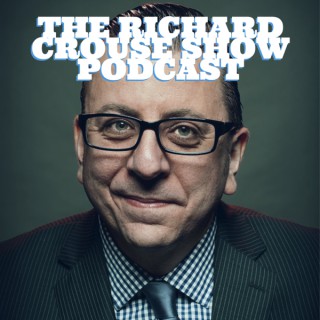
On the Saturday June 13, 2026 edition of The Richard Crouse Show we’ll meet award-winning actor, writer, and director Mark O’Brien. You know him as Des Courtney on Republic of Doyle and ambitious Deputy District Attorney Thomas Milligan on HBO’s Perry Mason. On the big screen he’s delivered standout performances in films like Arrival, Ready or Not, Marriage Story, and Goalie — for which he won a Canadian Screen Award. More recently, he’s been behind the camera with his acclaimed directorial debut The Righteous, and now his chilling new supernatural horror film The Voices of Our Mother, which he wrote, directed, and stars in. Then, we’ll meet Kevin Hardcastle, an award-winning Canadian author whose debut short story collection Debris won the Trillium Book Award and ReLit Award, while his first novel In the Cage established him as a powerful voice in contemporary fiction. In his highly anticipated new novel County Road Six, Hardcastle delivers a taut, propulsive family drama about four O’Hare sisters forced to confront their violent father’s legacy and a long-buried secret on a decaying farmstead in rural Ontario.

On the Saturday June 13, 2026 edition of The Richard Crouse Show we'll meet award-winning actor, writer, and director Mark O'Brien. You know him as Des Courtney on Republic of Doyle and ambitious Deputy District Attorney Thomas Milligan on HBO's Perry Mason. On the big screen he's delivered standout performances in films like Arrival, Ready or Not, Marriage Story, and Goalie — for which he won a Canadian Screen Award. More recently, he's been behind the camera with his acclaimed directorial debut The Righteous, and now his chilling new supernatural horror film The Voices of Our Mother, which he wrote, directed, and stars in. Then, we'll meet Kevin Hardcastle, an award-winning Canadian author whose debut short story collection Debris won the Trillium Book Award and ReLit Award, while his first novel In the Cage established him as a powerful voice in contemporary fiction. In his highly anticipated new novel County Road Six, Hardcastle delivers a taut, propulsive family drama about four O'Hare sisters forced to confront their violent father's legacy and a long-buried secret on a decaying farmstead in rural Ontario.

WBBM political editor Geoff Buchholz reports on efforts to clean up storm debris in Chicago.

WBBM political editor Geoff Buchholz reports on efforts to clean up storm debris in Chicago.

WBBM political editor Geoff Buchholz reports on efforts to clean up storm debris in Chicago.

In this episode of the Prolonged Field Care Podcast, Dennis sits down with trauma surgeon Mark Shapiro for a no-BS masterclass on wound ballistics. They break down why understanding the physics of penetrating and blast trauma matters in austere and combat environments — even when experience makes you cynical. From high-velocity rifle rounds and their massive temporary cavities to the infectious nightmare of shotgun wounds and the four phases of blast injury, Mark shares hard-won lessons from civilian Level I trauma centers and years training special operations medics and ground surgical teams.They tackle the myths around entry/exit wounds, when (and when not) to explore right upper quadrant gunshot wounds downrange, why you should almost never pack the abdomen or chest from the outside, how to assess neurovascular status in blast-injured extremities, and why bizarre bullet paths and “stable” patients with signs of life can still surprise you.Key Takeaways:Kinetic energy (½mv²) means velocity is king — high-velocity rifle rounds create devastating temporary cavities and fragmentation that can turn one projectile into many.Jacketed rounds still fragment at rifle speeds; never assume a clean through-and-through. Bone fragments act like secondary missiles and can create wounds up to 3x the size of the fragment.For stable patients with right upper quadrant GSWs in resource-limited settings, expectant management can be reasonable — but you must have a plan, know your limits, and be ready to move if things change.Never pack the abdomen or chest from the outside in most cases. It risks pushing debris deeper and worsening injuries. Cover exposed organs if needed, but don't shove gauze into body cavities.Shotgun wounds (especially buckshot/birdshot) are “mobile IEDs” — massive tissue destruction, heavy debris inoculation, and extremely high risk of infection, fistula, and devascularized tissue requiring serial debridement.In extremity blast trauma, assess vascular status (pulses, Doppler signals, color, warmth, capillary refill) and neurologic function. The ~6-hour window to revascularization is critical, but the decision point comes earlier.Training + common sense + adaptability beat rigid protocols when resources are limited. Sometimes the best move is observation.Chapters04:15 – Why Wound Ballistics Knowledge Still Matters (even when you're cynical)08:30 – High-Energy Rifle Wounds: Muzzle Velocity, Kinetic Energy & Spitzer Bullets13:45 – Fragmentation, Tumbling & Secondary Missiles (bone shards & unpredictable paths)18:20 – Clinical Reality: Multiple Injuries & Why “Small Entrance, Big Exit” Is a Myth22:50 – Entry vs. Exit Wounds: When Trajectory Actually Matters (and when it doesn't)26:40 – Right Upper Quadrant GSWs: Explore, Observe, or Expectant Management Downrange?31:10 – The Dangers of Packing Abdominal & Chest Wounds from the Outside34:55 – Low-Energy Pistol Wounds: How They Differ (or Don't) from Rifles37:20 – Shotgun Wounds: Close-Range Carnage, Debris & Infectious Nightmares42:40 – IEDs & Modern Explosives: Blast Physics, Ukraine Patterns & Hard-Ground Effects48:15 – Primary, Secondary, Tertiary & Quaternary Blast Injuries Explained52:30 – Neurovascular Assessment in Blast-Injured Extremities (Conscious & Unconscious Patients)56:45 – Lessons from the Trauma Bay: Common Sense, Training & Knowing When to Deviate from ProtocolFor more content, go to www.prolongedfieldcare.orgConsider supporting us: patreon.com/ProlongedFieldCareCollective or www.lobocoffeeco.com/product-page/prolonged-field-care

Trevor Smith shares about advanced composite materials designed to protect satellites and astronauts from hypervelocity impacts. He discusses building for impact with rapid prototyping, phased project delivery, and team culture in innovation. We also learn about space-based data centers and Atomic-6's Light Wing™ deployable space structure platform.
Sponsor Link:This episode of Space Nuts is brouht to with the support of NordVPN. When it's time to upgrade your online securiy, get NordVPN. We did! To check out our special money saving deal - Click HereTime Travel, Saturn's Rings, and Favourite Planets In this engaging Q&A edition of Space Nuts, hosts Andrew Dunkley and Professor Jonti Horner dive into a series of thought-provoking questions from listeners. From the complexities of moving through time to the intriguing origins of Saturn's rings, this episode is packed with cosmic insights.Episode Highlights:- Understanding Time Travel: Rennie from California poses a fascinating question about the nature of time and whether one's lifespan could differ based on their movement through time. Jonty unpacks the concept of time as a dimension, exploring relativity and time dilation.- The Mystery of Saturn's Rings: Paul from Brisbane asks about the potential for debris from a collision between Saturn's moons to have impacted Earth 65 million years ago. The discussion delves into the origins of Saturn's rings and the dynamics of celestial collisions.- Favourite Planets: Dan from the Gold Coast wonders about the hosts' favourite planets in the solar system. Andrew shares his admiration for Mars and its geological wonders, while Jonty contemplates the complexity of Earth and the awe of Jupiter.For more Space Nuts, including our continuously updating newsfeed and to listen to all our episodes, visit our website. Follow us on social media at SpaceNutsPod on Facebook, Instagram, and more. We love engaging with our community, so be sure to drop us a message or comment on your favourite platform.If you'd like to help support Space Nuts and join our growing family of insiders for commercial-free episodes and more, visit spacenutspodcast.com/about.Stay curious, keep looking up, and join us next time for more stellar insights and cosmic wonders. Until then, clear skies and happy stargazing.Become a supporter of this podcast: https://www.spreaker.com/podcast/space-nuts-astronomy-insights-cosmic-discoveries--2631155/support.- Introduction to Time Travel- The Nature of Time and Relativity- Saturn's Rings and Cosmic Collisions- The Search for Debris and Impacts- Favourite Planets: Mars vs. Earth vs. Jupiter

Personnel nets and debris nets play a crucial role in protecting workers and the public on and around construction and demolition sites. William Greeley, chair of the ANSI/ASSP A10.37 subcommittee and Ed McKechnie, chair of the ANSI/ASSP A10.11 subcommittee, join our latest episode to share how the A10.11 and A10.37 standards can help you properly design, test and install nets for your jobsites.
Sponsor Link:To secure your online life and save money into the bargain, check out our NordVPN offer - Click HereStarship V3 is on the pad and tonight's the night — Flight 12 launches the most powerful rocket ever built. Plus: Webb solves a decades-old Neptune mystery, why space debris is quietly corrupting climate science, new doubts cast on DESI's dark energy results, a smarter route to the Moon, and why the galaxy may be full of hellish Venus-twins rather than Earths. All that on Astronomy Daily for Thursday, May 21, 2026.Become a supporter of this podcast: https://www.spreaker.com/podcast/astronomy-daily-space-news-updates--5648921/support.Sponsor Details:Ensure your online privacy by using NordVPN. To get our special listener deal and save a lot of money, visit www.bitesz.com/nordvpn. You'll be glad you did!Become a supporter of Astronomy Daily by joining our Supporters Club. Commercial free episodes daily are only a click way... Click HereThis episode includes AI-generated content.
California renovations are on the rise, and so is the construction debris left behind. Three disposal options exist — full-service removal, dumpster rentals, and dumpster bags — each with different benefits. Poor planning can lead to fines and environmental damage. To learn more, visit https://www.junk-king.com/locations/south-san-francisco Junk King South San Francisco City: Burlingame Address: 863 Malcolm Rd Website: https://www.junk-king.com/locations/south-san-francisco Phone: +1 650 490 2235
Today, Saturn and its system of moons and rings look calm and peaceful. But things might have been much more chaotic in the fairly recent past. A collision between two moons might have destroyed one of them, changed the orbit of the other, and led to the birth of yet another moon and the planet’s rings. Researchers have been trying to explain some oddities in the Saturn system. The planet itself is tilted far more than it should be, for example. The biggest moon, Titan, follows a more lopsided orbit than expected. And the moon is moving away from Saturn by about four inches per year. A few years ago, a team proposed that Saturn once had another big moon, which the team called Chrysalis. Interactions between the moons might have kicked Chrysalis so close to Saturn that it was ripped apart, forming the rings. But this year, another team came up with a slightly different scenario. It, too, involves a second moon. It collided with Titan a few hundred million years ago, changing Titan’s orbit. Debris from the impact formed the present-day moon Hyperion. The activity caused two other moons to ram together as well. Both moons quickly re-formed, with the leftovers spreading out to form the rings as recently as 50 million years ago. This model explains many of the system’s oddities – bringing order to a chaotic arrangement. Look for Saturn near our moon at dawn tomorrow. The planet looks like a bright star, low above the horizon. Script by Damond Benningfield
Demolition debris hauling demands serious equipment. Discover why 16-foot gooseneck dump trailers are the go-to for contractors, from weight distribution and payload capacity to hydraulic systems and regulatory compliance. Plus, which models deliver the best long-term value.Info: https://www.poplarblufftrailer.com/blog/16-foot-gooseneck-dump-trailer-for-sale-price-specs--where-to-buy--107183 Poplar Bluff Trailer City: Poplar Bluff Address: 135 Hwy T Suite B Website: https://www.poplarblufftrailer.com/

Please SUBSCRIBE & SHARE! No need to wait for the premiere, head over to http://dailyrenegade.com for a membership to view this video in full right now!L.A. Marzulli joins Josh Peck to talk about the latest research into the Roswell UFO incident. L.A. Marzulli: LAMarzulli.net & Streaming.LAMarzulli.net Storage space is expensive on the official Daily Renegade website, so we have had to move some of our older videos (usually from a couple years prior to the current date) onto this YouTube playlist in order to make room for new, great content! The good news is, you get to see a sneak peak of what great full content is offered at DailyRenegade.com so make sure you sign up and become a member today! Also note, there might be some older donation requests and promotions that are no longer in effect included in this video, so just consult with the links that are in this video description for up to date info. Thank you!To get the audio-only podcast version of full videos and Josh Peck's blog, which includes original articles, show notes, and more, subscribe to Josh's Substack at http://joshpeck.substack.comBe Prepared for Any Emergency with My Patriot Supply: Generators - https://www.mypatriotsupply.com/colle... Survival/Emergency Food - https://www.mypatriotsupply.com/colle... My Patriot Supply Homepage - https://www.mypatriotsupply.com?_ef_t...The Rapture and the Dead Sea Scrolls: A Teaching on our Blessed Hope in Light of the Greatest Archaeological Find in History - https://renegadepublishers.com/the-ra...It is with a heavy heart that I (Nathan's father) inform you that Nathan went home to be with the Lord on Monday, Sept. 22nd, 2025. He fought an extremely rare form of cancer bravely, but in the end, his heart couldn't keep up the fight anymore. He went fast with no prolonged suffering. We want to thank all of you who have kept him in prayer. Please know that those prayers were not in vain. Our son lives with Jesus now. We are now updating this campaign to reflect our financial need for his remaining hospital bills, funeral expenses, and housing for our family. As most men, I do not enjoy asking for help. However, as most fathers and husbands can relate to, there isn't anything I won't do for my family. In light of that, I wanted to first ask all of you to pray for us. Also, because of the overwhelming expenses that inevitably come from all these things happening at the same time, if you feel led to help us financially, there's a couple different ways you can do that:GiveSendGo: http://www.GiveSendGo.com/NathanTheBravePayPal: http://PayPal.me/JoshPeckDisclosureOr send in your donation to:P.O. Box 270123Oklahoma City, OK 73137

This is the All Local 4:00 P.M. update for Saturday, May 9th, 2026.

An Ancient Trap - Episode 05 - The Debris Field We are proud to announce that Shadowpublications.com is sponsored by Larry's Coffee. Visit Larry's, check out their awesome coffees, and get a free gift. Support the podcast by purchasing The Black: Oceania. Ebook available from Amazon Become a member for exclusive content Written by Paul E Cooley Text Copyright: ©2023 Paul E Cooley Audiobook Copyright: ©2026 Paul E Cooley Support the podcast and get access to published and unpublished books all voiced by the author! If you are suffering from depression or other mental disorders, please get help. http://www.bipolarsupport.org/ https://suicidepreventionlifeline.org/ Please visit Shadowpublications.com for more information about the author and this series. To stalk the author on social media: Email: paul@shadowpublications.com Mastodon: @paul_e_cooley@vyrse.social Newsletter: http://mailinglist.shadowpublications.com
Last July, space telescopes recorded an event that sounds like the plot of a “B” horror movie: Zombie Versus Vampire. Spoiler alert: the vampire won. It drained away the zombie’s life’s blood – or make that its after-life’s blood. The encounter took place in a galaxy billions of light-years from Earth. Space telescopes detected a sudden flare-up in X-rays from the galaxy’s outskirts. The region also produced several short outbursts of gamma rays, the most powerful form of energy. At their peak, each burst produced as much energy every second as the Sun will emit in a billion years. Analysis revealed a possible explanation: a medium-sized black hole devoured a white dwarf – the “corpse” of a Sun-like star. Astronomers have seen similar encounters before. But most of them involved stars that were in the prime of life, so the stars were big. A white dwarf is only about as big as Earth, which is just one percent the Sun’s diameter. So a white dwarf is compact and extremely dense. Its surface gravity is strong, so it’s not easily disrupted. In this case, though, the white dwarf buzzed a black hole about 75,000 times the mass of the Sun. The black hole’s gravity ripped apart the white dwarf in one big bite. Debris swirled around the black hole. Magnetic fields fired some of it into space at almost the speed of light, creating bursts of gamma rays. The whole thing was over in a flash – as the vampire sucked the zombie dry. Script by Damond Benningfield

What does it really take to make sure a black speck problem never comes back? In the final episode of "What the Speck?," Sterile Processing expert Kendra Lucas shares the real-world story of how her team worked through one of the most disruptive debris issues a department can face. From canceled surgeries and strained OR/SPD relationships to the detailed root cause analysis needed to uncover the source, Kendra walks us through the investigation that finally revealed what was really happening behind the scenes. Because solving the mystery is one thing—but making sure it never returns is the real victory. Over the next 6 weeks, this series dives into one of sterile processing's most frustrating challenges—black specks. From water and steam quality to department culture, risk assessments, and root cause analysis, we're digging into every angle to uncover real answers (and real solutions) for your SPD. A special thanks to our sponsor, Aesculap®, for supporting this podcast series! #BeyondClean #Aesculap #SterileProcessing #WhatTheSpeck #BlackSpecks #SurgicalTrays #Podcast

Back to the main story line! The NETwork has finally found the Dark Archive. But can they get the information they need and get out before something bad happens? Stynexx finds a new technology and Ernst follows the Path.Find us onOur NEW Discord Server! Crittalkers CommunityHit us up with any questions or comments:Insta @crittalkerspodcastFacebook: crittalkerspodcastor drop us an emailthecast@crittalkerspodcast.comMusic/Sound Effects Include:Recap voice acting by Jennifer Millard, written by Jake PrewittFrey is played by Britt H.Uther is played by Shane FStynexx is played by Chris A."Camera Flash" by MalarBrush"The Details Intro" by Ryan S."The Details Long" by Ryan S."Rest of The Fallen" by GuilhermeBernardes via Pixabay"Comedy - Detective" by Onoychenkomusic via Pixabay"Chamber Strings" by SigmaMusicArt via Pixabay"Dizzy ellectric bolt spell 1" by FxProSound via PixabayCutscene Initiating Payload co-written by Jake P and Shane F and performed by Chris ACutscene Thought Strand Entry written and performed by Jake PJakeclubmix by Ryan S.Additional sfx and music found at Pixabay.com:171219 - Mystery Piano / Ancient ruins by WELC0MEИ0Haunted Danger in Action Dubstep by SonicanTurning On LG Old TV by freesound_communityTrue Crime Mystery Music - loopable by JoelFazhariTape Player Sounds by freesound_communitytape emission 3 by freesound_communityMan struggles to carry things (animation) by freesound_communitySlap in the face by freesound_communityTension Scapes - Dramatic Danger, Distorted Brass, Dark Whooshes by BryanSantosBretonBiodynamic - Impact, Braam, Tonal, Dark by BryanSantosBretonExplosion with Debris by DRAGON-STUDIO029586_Crowd in panic by freesound_communityDiscomposure - Dark, Pulsing, Crime, Horror by ShadowsAndEchoesAmerican Western Country by TunetankPistol Draw Unholster by freesound_communityrewind underscore by freesound_communityteleport by freesound_communitystrobe2-bass-drum-analog-cutoff-resonance by freesound_communityHigh pitched tone [quiet to loud] by freesound_communityPortal by HD-StudioFilm Camera Shutter 1/15th by AllanzkieCamera Shutter Effect by DRAGON-STUDIOPower Buzz SFX loop by freesound_communityNight Vision by freesound_communityPower Off by DRAGON-STUDIOPerson Running - LOOP by BlenderTimerhunting-horn-bass by freesound_communityMetal Door Slam by SoundRealityShine 5 by BenKirbwalking-on-leaves by MUSICHOLDERMy Resolution (New Year, Fresh Start) by MiyagisamaCryptic – Enigmatic Dark Ambience by LillibenCartoon Splat by UniversfieldMarcha alejandose by freesound_communityHI PANIC SWEEP by LiecioPathetic Screaming Sound Effect by DRAGON-STUDIOComvocacion by freesound_communityFemale Zombie Screams by DRAGON-STUDIOZombie Sound 2 by DRAGON-STUDIOZombie SFX by DRAGON-STUDIOMedieval Adventure by MelodigneCheck out our awesome sponsors!Brotherwise Games1985 GamesHit Point Press Heckna Campaign SettingRoll 20Mentioned in this episode:Roll20 PartnershipWe are pleased to announce Roll20 as our New Virtual TTRPG Partner! They asked us to promote their new Curse of Strahd Remastered Module!Roll20 Curse of Strahd Remastered Module

The Gary & Shannon Show Hour 1 (05.04) – Marla Tellez joins Gary as the hour opens with a cruise ship no one wants… and only gets better from there.• Guest host → Fox LA’s Marla Tellez sits in for Shannon• Cruise standoff → hantavirus outbreak leaves a ship in limbo → when is it actually dangerous vs just unknown?• Expert insight → epidemiologist Dr. Anne Rimoin breaks down risk, transmission, and why panic isn’t the move• Global tension → conflicting reports out of the Strait of Hormuz → what’s real and what isn’t• Deal drama → Iran proposal goes nowhere as uncertainty continues• #TerrorInTheSkies → Spirit collapses, and a United flight clips a pole and hits a truck before landing• Sports swing → Kentucky Derby chaos → Golden Tempo comes from dead last to win• Local pain → Dodgers on deck… and Gary still suffering through the GiantsSee omnystudio.com/listener for privacy information.
This week on our Deep Space episode, Maria speaks with TransAstra's CEO Joe Sercel about their recently demonstrated capture-bag technology aboard the ISS, drawing attention for its potential role in orbital debris cleanup. Debris removal is only the beginning. The real goal is far bigger: asteroid mining as future space infrastructure. Sercel walks us through how the same capture system designed to safely enclose debris could eventually be used to secure near-Earth asteroids—unlocking access to water, propellant, and raw materials that enable sustained operations beyond Earth orbit.. Learn more about TransAstra's work. Remember to leave us a 5-star rating and review in your favorite podcast app. Be sure to follow T-Minus on LinkedIn and Instagram. Want to hear your company in the show? You too can reach the most influential leaders and operators in the industry. Here's our media kit. Contact us at space@n2k.com to request more info. Want to join us for an interview? Please send your pitch to space-editor@n2k.com and include your name, affiliation, and topic proposal. T-Minus is a production of N2K Networks, your source for strategic workforce intelligence. © N2K Networks, Inc. Learn more about your ad choices. Visit megaphone.fm/adchoices
SpaceTime with Stuart Gary | Astronomy, Space & Science News
SpaceTime Series 29 Episode 49 *Interstellar Comet 3I/ATLAS is changing A new study has discovered that the interstellar comet 3I Atlas appears to be undergoing a change in the composition of the volatile gasses its emitting. *Large craters offering new clues to the origin of the strange asteroid Psyche Scientists believe large impact craters on the surface of the mysterious metallic asteroid 16 Psyche may provide clues about its formation. *Fighting the growing threat of space junk Debris from space craft is becoming a growing problem in orbit. Now days considerable time and effort is undertaken to track the millions of pieces of spent rocket stages, disused satellites, and collision or explosion sourced spacecraft debris currently orbiting the Earth. *The Science Report Older men are more likely to add extra salt to their food despite its health dangers. Sightings of the world's two largest whale species - blue and fin whales - have increased in the southeastern Atlantic. New study shows Nutmeg, probably originated in the Banda Islands. *Skeptics guide to the Bank of England's fears over UFO disclosures. Our Guests This Week: Astronomical Society of Australia Page Medal winner Jonathan Bradshaw Purdue University engineer Carolin Frueh And our regular guests: Alex Zaharov-Reutt from techadvice.life Tim Mendham from Australian Skeptics
Every #CleanFreak has seen them at least once—those mysterious black specks appearing in surgical trays with no clear explanation. But are they just a nuisance… or a warning sign of something bigger? In Episode 1 of our brand-new podcast series "What the Speck?," host Bobby Parker welcomes Alex Miseirvitch, Senior Product Manager for Rigid Sterile Containers at Aesculap®, to explore the mystery—and real challenges—behind unidentified debris in sterile trays. From potential patient safety risks to the operational strain of tray contamination and case delays, these tiny particles can create ripple effects across the entire surgical workflow. If your team has ever asked, "What is this—and where did it come from?" this episode is the perfect place to start! Over the next 6 weeks, this series dives into one of Sterile Processing's most frustrating challenges—black specks. From water and steam quality to department culture, risk assessments, and root cause analysis, we're digging into every angle to uncover real answers (and real solutions). A special thanks to our sponsor, Aesculap®, for supporting this podcast series! #BeyondClean #Aesculap #SterileProcessing #WhatTheSpeck #BlackSpecks #SurgicalTrays #Podcast *Disclaimer: The views provided by hosts and guests on this series do not represent any employer, company, or third party, and are solely that of the individuals themselves.

This week, Alex is joined by MTG and Marvel Snap content creator: Gregor! The duo kicks things off by talking about the wider world of physical TCGs—from Pokémon and Riftbound to Magic: The Gathering—and how those skills translate directly to climbing the ladder in Marvel Snap.Then, it's time for new card reviews! Alex and Gregor break down the upcoming Objective cards:Caliban: Why this card completely fails in Affliction decks but might be the secret missing piece for Doom 2099.Selene: A 4-Cost card that effectively brings 14 points of value? The hosts discuss why she is a 4-Star powerhouse for Patriot and Zoo decks.Ozymandias: Are we entering a new "Rock Meta"? Breaking down how this card synergizes with Sandstorm, Debris, and Armor.Next, the hosts sit down for a massive "How to Make Marvel Snap Better" brainstorming session. They beg Second Dinner for more Deck Slots, demand an overhaul to the stale Season Pass rewards, pitch UI improvements like a "Goldfish" practice mode, and rage against Golden Tickets ruining Collector's Reserves.Finally, they open the Mailbag to discuss Alex's "Red Pip" Token Shop conspiracy and why Second Dinner needs to let players test-drive new releases in Grand Arena to combat card acquisition FOMO.Join Alex Coccia and special guest Gregor as they chat about this and more on this episode of The Snap Chat—and catch Cozy and Alex every week as they discuss all things Marvel Snap.Have a question or comment for Cozy and Alex? Send them a Text Message.You've been listening to The Snap Chat. Keep the conversation going on x.com/ACozyGamer and x.com/AlexanderCoccia. Until next time, happy snapping!

A secretive project to build a long water barrier in the Rio Grande is revealed as letters go out to landowners to build a Big Bend border wall. We'll hear what locals are thinking. Look up to the sky: It’s a boom, it’s a flash… and a crash through a roof north of Houston. A […] The post Meteor over Texas leaves debris, questions appeared first on KUT & KUTX Studios -- Podcasts.
This week, Alex is joined by the newly crowned Marvel Snap Golden Gauntlet Champion: W (formerly WWLOS)! The duo kicks things off by breaking down the brilliant, free-to-play friendly Control deck that secured the tournament win. W explains the secret power of priority, why Super Giant is the ultimate disruption tool, and how the heavily underestimated Elektra became a championship-winning tech card.Then, it's time for a massive OTA and Patch Review. Alex and W discuss the quick buffs to the Season Pass card En Sabah Nur and debate the philosophy of tuning paid cards post-release. They also break down the terrifying scaling of Debris, the adjustments to Ghost and White Tiger, the frustrating nerf to Pixie, and the massive Activate rework given to Mysterio.Finally, they open the Mailbag to discuss Alex's unhinged "Red Pip" Token Shop conspiracy theory and tackle one of the biggest issues in Marvel Snap: Ladder fatigue. Alex pitches a bold idea to introduce Asymmetrical Snapping to the pre-Infinite ladder to reduce retreats and bring the fun back to the climb.Join Alex Coccia and special guest W as they chat about this and more on this episode of The Snap Chat—and catch Cozy and Alex every week as they discuss all things Marvel Snap.Have a question or comment for Cozy and Alex? Send them a Text Message.You've been listening to The Snap Chat. Keep the conversation going on x.com/ACozyGamer and x.com/AlexanderCoccia. Until next time, happy snapping!

The 365 Days of Astronomy, the daily podcast of the International Year of Astronomy 2009
Dr. Al Grauer hosts. Dr. Albert D. Grauer ( @Nmcanopus ) is an observational asteroid hunting astronomer. Dr. Grauer retired from the University of Arkansas at Little Rock in 2006. travelersinthenight.org From August 2025. Today's 2 topics: - In a recent study Dr. Lynnane George and her co-authors investigate Space Elevator technology to remove materials from Ceres and deliver them to orbital depots around the solar system. The tiny gravity of Ceres, nano-fiber technology, and different water propulsion systems are utilized by Dr. George and her team to construct theoretically possible systems which would extract raw materials from Ceres and deliver them to low Earth orbit and other locations within the solar system. These researchers estimate such a transport system could reduce fuel costs by up to 60% compared to transport from the Earth's surface. - Asteroid 2024 YR4 will not hit the Earth in 2032, has a 4% chance of hitting the Moon, and most likely will pass within 900 miles of the lunar surface. If 2024 YR4 were to impact the Moon it could send about the mass of several small cargo ships into space with lunar escape velocity and could pose a threat to our satellites. [Editor's note: Using JWST data, it's just been calculated to miss the Moon, unfortunately. Maybe next time…] We've added a new way to donate to 365 Days of Astronomy to support editing, hosting, and production costs. Just visit: https://www.patreon.com/365DaysOfAstronomy and donate as much as you can! Share the podcast with your friends and send the Patreon link to them too! Every bit helps! Thank you! ------------------------------------ Do go visit http://www.redbubble.com/people/CosmoQuestX/shop for cool Astronomy Cast and CosmoQuest t-shirts, coffee mugs and other awesomeness! http://cosmoquest.org/Donate This show is made possible through your donations. Thank you! (Haven't donated? It's not too late! Just click!) ------------------------------------ The 365 Days of Astronomy Podcast is produced by the Planetary Science Institute. http://www.psi.edu Visit us on the web at 365DaysOfAstronomy.org or email us at info@365DaysOfAstronomy.org.
PRVIEW FOR LATER: Colleague Bob Zimmerman explains the discovery of two exoplanets colliding near a sun-like star. Astronomers observed star variability for 200 days, concluding that debris came from a massive planetary impact. (6)1956

See omnystudio.com/listener for privacy information.

Hello, Chesapeake!See omnystudio.com/listener for privacy information.

March is not a month for the faint of heart. We are moving through a massive energetic corridor where the internal shifts we’ve been making finally begin to manifest in the physical world. From Mercury Retrograde in Pisces to the powerhouse Eclipse Season, the energy is asking one thing of you: Who is leading your life? From Eclipse Season to the Universal 4 Month in numerology, the invitation is clear: Clear the physical and mental debris so you can hear your own "inner-net" again. We are moving from deep internal evolution into external unfolding—and it’s time to take the lead. In this episode, we discuss: Relinquishing Control: Identifying where fear-based gripping is blocking your abundance and joy. The "Bracing" Trap: Why clenching your jaw and body blocks the very abundance you’re looking for. Psychological Sovereignty: How to unplug from collective narratives and "doomscrolling" to reclaim your inner antenna. Organizing the Material World: Using the "4" energy to signal to your internal field that you are ready for order. Psychic Acceleration: Navigating multidimensional time, deja vu, and the thinning of the veil during the 3I/ATLAS transit. Rapid Manifestation: How Jupiter stationing direct in Cancer will act as a "green light" for your intentions. Grounding Through the Heart: Navigating the "psychosis" of the Matrix and shifting timelines. Key Astrological Dates to Watch: March 3rd: Full Moon Lunar Eclipse in Virgo (12°) – The Great Shedding. March 10th: Jupiter Stations Direct in Cancer – The Exhale. March 16th: 3I/ATLAS closest to Jupiter – Re-writing your destiny. March 20th: Mercury Retrograde ends in Pisces. Stop giving away your agency. It’s time to ground through the heart, clear the clutter, and lay the foundation for the next decade. Dedicated to your spiritual path & want to go deeper? Join Amanda and a community of like-minded seekers in The Frequency Field Host: Amanda Rieger Green YouTube: @soul_pathology Instagram: @soulpathology Website: SoulPathology.com Email: Podcast@soulsessions.meFollow Amanda on Instagram: https://www.instagram.com/soulpathology/See omnystudio.com/listener for privacy information.

We start off fighting with a cheap plastic recorder that won’t cooperate and complaining about all the trash showing up now that the snow is melting. Then things take a hard turn when we talk about the morning we found a stranger sitting on our living room couch at 5:30 AM. That moment changes how we see our own habits. Leaving the doors unlocked used to feel normal, even harmless. After that morning, it feels careless, and we end up installing an auto-locking digital system. One unexpected person on a couch is enough to turn a casual routine into a security upgrade. From there, we wander into some childhood memories—like techniques for flattening hamsters and lizards. It’s uncomfortable and a little funny in hindsight, but mostly it’s about how small mistakes had very real results. We also talk about AI, comparing it to a nervous friend who sounds confident but gets things wrong. That leads us into a debate about the tangled timeline in Primer and how some kids somehow guess the twist in The Sixth Sense right away. We wrap up by unpacking why hearing “you did your best” can feel like a quiet insult—like the recorder that won’t play right, the door that now locks itself, and the headlamp shining on a problem we didn’t want to see.
PREVIEW FOR LATER TODAY: CLEANING UP LOW EARTH ORBIT SPACE JUNK Guest: Bob ZimmermanZimmerman examines growing efforts to address dangerous debris cluttering low Earth orbit. Discussion covers the collision risks threatening satellites and spacecraft, emerging technologies for removing defunct objects, international cooperation challenges, commercial ventures pursuing cleanup solutions, and the urgency of action before cascading collisions render orbital space unusable.1952
© 2020-2026 Ivy Podcast Discovery LLC
