

POPULARITY

7 episodes with David Spiegelhalter

3 episodes with David Spiegelhalter

7 episodes with David Spiegelhalter

4 episodes with David Spiegelhalter

3 episodes with David Spiegelhalter

4 episodes with David Spiegelhalter

2 episodes with David Spiegelhalter

3 episodes with David Spiegelhalter

2 episodes with David Spiegelhalter
In a world of economic shocks, geopolitical crises and constant predictions about the future, how should we make decisions when certainty is impossible? And what can statistics teach us about living with risk, chance and the unknown? In this episode, physicist and science broadcaster Helen Czerski speaks with statistician David Spiegelhalter about his book The Art of Uncertainty. Drawing on probability, data and real-world examples, Spiegelhalter explores how we assess risk, and sheds light on what roles chance, luck and coincidence play in our lives. David Spiegelhalter is a statistician and author. He is Emeritus Professor of Statistics at the University of Cambridge and author of The Art of Uncertainty. Helen Czerski is a physicist, writer and broadcaster. If you'd like to become a Member and get access to all our full conversations, plus all of our Members-only content, just visit intelligencesquared.com/membership to find out more. For £4.99 per month you'll also receive: - Full-length and ad-free Intelligence Squared episodes, wherever you get your podcasts - Bonus Intelligence Squared podcasts, curated feeds and members exclusive series - 15% discount on livestreams and in-person tickets for all Intelligence Squared events ... Or Subscribe on Apple for £4.99: - Full-length and ad-free Intelligence Squared podcasts - Bonus Intelligence Squared podcasts, curated feeds and members exclusive series … Already a subscriber? Thank you for supporting our mission to foster honest debate and compelling conversations! Visit intelligencesquared.com to explore all your benefits including ad-free podcasts, exclusive bonus content and early access. … Subscribe to our newsletter here to hear about our latest events, discounts and much more. https://www.intelligencesquared.com/newsletter-signup/ Learn more about your ad choices. Visit podcastchoices.com/adchoices Learn more about your ad choices. Visit podcastchoices.com/adchoices

Cambridge statistics Professor David Spiegelhalter discusses in his book, The Art of Uncertainty: How to Navigate Chance, Ignorance, Risk, and Luck, how insurers use probability and risk assessment to navigate threats and make informed underwriting decisions.

Welcome to Insurance Covered, the podcast that covers everything insurance.In this conversation, Peter Mansfield and Professor Sir David Spiegelhalter explore the intricate relationship between insurance and uncertainty. They discuss the nature of uncertainty, the role of statistics, and the importance of effective communication in risk assessment. The conversation delves into the types of uncertainty relevant to insurance, the significance of models in decision-making, and the challenges of causation in claims. They also touch on the distinction between risk and uncertainty, the need for trust in expertise, and practical considerations for making decisions in an uncertain world.We hope you enjoyed this episode, if you did please subscribe to be notified when new episodes release. Hosted on Acast. See acast.com/privacy for more information.
News stories are filled with tales of risk and uncertainty. We're told the probable chance of a weather event or how likely it is that we might contract an illness. There's an art to telling stories with uncertainty that provides context and nuance that is often missing. That is the focus of this episode of Stats+Stories with guest David Spiegelhalter. Sir David Spiegelhalter is a British statistician and Emeritus Professor at the University of Cambridge, known for his work on risk communication and public understanding of statistics. He is the author of The Art of Statistics, a former President of the Royal Statistical Society, and was knighted in 2014 for his services to medical statistics. He also presented BBC documentaries and is the founder of the Winton Centre for Risk and Evidence Communication at Cambridge. Inspiration Behind the Book (1:11) Defining Uncertainty and Its Impact (4:14) Storytelling and Examples in the Book (7:48) Probability and Communication (12:54) Trustworthy Communication (17:34) Application of Trustworthy Communication Principles (19:14) Deep Uncertainty and Imagination (27:42)

David Spiegelhalter offers a data-driven guide to how we should best live with risk and uncertainty.

In this episode of The Evolving Leader, co-hosts Jean Gomes and Scott Allender talk to Sir David Spiegelhalter, one of the world's foremost authorities on risk and probability. David explains why embracing uncertainty, rather than trying to eliminate it is essential for leaders who want to build resilience and make better judgments in complex times.Drawing from his latest book “The Art of Uncertainty”, David shares stories that bring statistics to life, from forecasting failures to the importance of imagination and red-team thinking. This conversation offers both a challenge and a toolkit: how to hold authority while admitting doubt, how to communicate risk with clarity, and how to lead teams toward what he calls ‘safe uncertainty'. Further materials from David Spiegelhalter:Five Rules For Evidence CommunicationThe art and science of uncertainty - with David Spiegelhalter (recorded at the Royal Institution, 30 January 2025) Other reading from Jean Gomes and Scott Allender: Leading In A Non-Linear World (J Gomes, 2023)The Enneagram of Emotional Intelligence (S Allender, 2023)Social:Instagram @evolvingleaderLinkedIn The Evolving Leader PodcastTwitter @Evolving_LeaderBluesky @evolvingleader.bsky.socialYouTube @evolvingleader The Evolving Leader is researched, written and presented by Jean Gomes and Scott Allender with production by Phil Kerby. It is an Outside production.Send a message to The Evolving Leader team

We've curated a special 10-minute version of the podcast for those in a hurry. Here you can listen to the full episode: https://podcasts.apple.com/no/podcast/sir-david-spiegelhalter-statistics-communicating-in/id1614211565?i=1000724667435&l=nbWhy do we fear uncertainty—and what can statistics teach us about living with it? Nicolai Tangen speaks with Sir David Spiegelhalter, one of the world's leading statisticians and expert communicator of risk, to explore how we navigate an unpredictable world. From the psychology of uncertainty to lessons from COVID-19, climate change, and even weather forecasts, Spiegelhalter unpacks why numbers are never just "cold, hard facts" and how we can use data more wisely in a world full of unknowns. They explore why trust depends on admitting uncertainty, and what it means to build resilience—both as individuals and societies. Engaging, insightful, and sometimes deeply personal, this conversation blends statistics with human experience to explore how we can make sense of risk and uncertainty in an unpredictable world.In Good Company is hosted by Nicolai Tangen, CEO of Norges Bank Investment Management. New full episodes every Wednesday, and don't miss our Highlight episodes every Friday. The production team for this episode includes Isabelle Karlsson and PLAN-B's Niklas Figenschau Johansen, Sebastian Langvik-Hansen and Pål Huuse. Background research was conducted by David Høysæter. Watch the episode on YouTube: Norges Bank Investment Management - YouTubeWant to learn more about the fund? The fund | Norges Bank Investment Management (nbim.no)Follow Nicolai Tangen on LinkedIn: Nicolai Tangen | LinkedInFollow NBIM on LinkedIn: Norges Bank Investment Management: Administrator for bedriftsside | LinkedInFollow NBIM on Instagram: Explore Norges Bank Investment Management on Instagram Hosted on Acast. See acast.com/privacy for more information.
Why do we fear uncertainty—and what can statistics teach us about living with it? Nicolai Tangen speaks with Sir David Spiegelhalter, one of the world's leading statisticians and expert communicator of risk, to explore how we navigate an unpredictable world. From the psychology of uncertainty to lessons from COVID-19, climate change, and even weather forecasts, Spiegelhalter unpacks why numbers are never just "cold, hard facts" and how we can use data more wisely in a world full of unknowns. They explore why trust depends on admitting uncertainty, and what it means to build resilience—both as individuals and societies. Engaging, insightful, and sometimes deeply personal, this conversation blends statistics with human experience to explore how we can make sense of risk and uncertainty in an unpredictable world.In Good Company is hosted by Nicolai Tangen, CEO of Norges Bank Investment Management. New full episodes every Wednesday, and don't miss our Highlight episodes every Friday. The production team for this episode includes Isabelle Karlsson and PLAN-B's Niklas Figenschau Johansen, Sebastian Langvik-Hansen and Pål Huuse. Background research was conducted by David Høysæter. Watch the episode on YouTube: Norges Bank Investment Management - YouTubeWant to learn more about the fund? The fund | Norges Bank Investment Management (nbim.no)Follow Nicolai Tangen on LinkedIn: Nicolai Tangen | LinkedInFollow NBIM on LinkedIn: Norges Bank Investment Management: Administrator for bedriftsside | LinkedInFollow NBIM on Instagram: Explore Norges Bank Investment Management on Instagram Hosted on Acast. See acast.com/privacy for more information.

As a statistician by trade, Cambridge University Emeritus Professor, Sir David Spiegelhalter might seem to be a huge outlier for our leadership podcast. At the beginning of our conversation he even acknowledges feeling this way. But his new book, The Art of Uncertainty, was named an Amazon Best Book of 2025, and his investigations […] The post Sir David Spiegelhalter: A Leader's Guide To Mastering Uncertainty appeared first on Mark C. Crowley.

Hello everyone! Thanks to Tom's holiday and Stuart's job we weren't able to record this week, so we've put out a classic paid episode to tide you over. We hope this goes some way to scratching your Studies Show itch.Most people think it's obvious that you should wear a helmet when cycling. It might save your life if you fall off and hit your head. Duh.But over the years, many contrarian arguments have pushed back against this seemingly-obvious point. What if people engage in “risk compensation”, where they cycle more dangerously because they know they're wearing a helmet? What about if encouraging helments puts people off cycling so they miss the health benefits?In this March 2024 episode of The Studies Show, Tom and Stuart try to work out who's right.Show notes* The original 1975 study on what's become known as the “Peltzman Effect”: risk compensation (in this case about car safety)* Potential evidence for risk compensation in AIDS* Claims of risk compensation relating to mask-wearing at the start of the COVID-19 pandemic* The eye-tracking study on helmet-wearing, which used the Balloon Analogue Risk-Taking lab task* n=27 study on helmets and cycling with one hand on the handlebar* Study on risk compensation with the following confusing structural equation model diagram:* Academic cycles around and records thousands of cars passing him while he's either wearing or not wearing a helmet* Forbes article about the statistical controversy over these data* Bizarre study on how motorists “dehumanize” cyclists* Could helmets make “rotational injuries” worse?* Cochrane review on cycle helmets and injuries from 1999* Ben Goldacre and David Spiegelhalter on cycle helmets - “uncertainty… is unlikely to be substantially reduced by further research”* Systematic review on helmet use and injuries from 2016* Review of meta-analyses from 2023* 2006 BMJ article finding “no clear evidence” that mandating cycle helmets reduces injuries* Negative correlation between cycle numbers and helmet usage, across different countriesCreditsThe Studies Show is produced by Julian Mayers at Yada Yada Productions. This is a public episode. If you'd like to discuss this with other subscribers or get access to bonus episodes, visit www.thestudiesshowpod.com/subscribe

Statistician David Spiegelhalter is no stranger to AI – he used it to help him research his recent book and, back in the late 70s, he helped develop foundational algorithms for the tech. So, he understands the pandora’s box that technology can represent, as well as the uncertainty embedded in its future development. Spiegelhalter sits down with Oz to unpack how we should interpret AI predictions, why better data matters and why we should consciously embrace uncertainty in our own lives.See omnystudio.com/listener for privacy information.

David Spiegelhalter is one of the world's most important figures in statistics. He's an emeritus professor of statistics in the Centre for Mathematical Studies at the University of Cambridge and he's the author of The Art of Uncertainty: How to Navigate Chance, Ignorance, Risk and Luck. Spiegelhalter is committed to making mathematics more accessible, and he joins My Wildest Prediction to talk about probabilities, how to deal with uncertainty and artificial intelligence. My Wildest Prediction is a podcast series from Euronews Business where we dare to imagine the future with business and tech visionaries. Hosted on Acast. See acast.com/privacy for more information.

Certainty is an illusion—so how do we navigate an unpredictable world? Professor Sir David Spiegelhalter, aka Professor Risk, unpacks the art of uncertainty, revealing why randomness, luck, and probability shape everything. Are we ever truly in control? What separates risk from recklessness? And why do we trust data that's often wrong? Discover how lucky people think, why free will might be a myth, and how to make smarter decisions in a world ruled by chaos. If you've ever questioned the odds, this mind-expanding conversation will change the way you see risk, luck, and the future. _____________________________________________________________ TIMESTAMPS 0:00 And Joseph Jaffy is not famous today I'm joined by Professor Sir David Spiegelhalter 1:14 Teller says Joseph Jaffy not famous love you 4:00 So many paths to go down this concept of living in a VUCA world 12:33 What is it to be a lucky person? What truly is luck? 23:29 Why are we so excited about odds we have no chance in winning? 46:52 We can't admit we're uncertain because people won't trust us—totally untrue 1:06:23 You are Chuck Norris approved and we will be back #Uncertainty #RiskVsLuck #TheIllusionOfControl Learn more about your ad choices. Visit megaphone.fm/adchoices

Scientific Sense ® by Gill Eapen: Professor Sir David Spiegelhalter is Professor of Public Understanding of Risk at Faculty of Mathematics, University of Cambridge. His recent book is entitled The Art of Uncertainty: How to Navigate Chance, Ignorance, Risk and Luck Please subscribe to this channel:https://www.youtube.com/c/ScientificSense?sub_confirmation=1

Today's revolutionary idea is something a bit different: David talks to statistician David Spiegelhalter about how an eighteenth-century theory of probability emerged from relative obscurity in the twentieth century to reconfigure our understanding of the relationship between past, present and future. What was Thomas Bayes's original idea about doing probability in reverse: from effect to cause? What happened when this way of thinking passed through the vortex of the French Revolution? How has it come to lie behind recent innovations in political polling, AI, self-driving cars, medical research and so much more? Why does it remain controversial to this day? The latest edition of our free fortnightly newsletter is available: to get it in your inbox sign up now https://www.ppfideas.com/newsletter Next time: 1848: The Liberal Revolution w/Chris Clark Past Present Future is part of the Airwave Podcast Network Learn more about your ad choices. Visit megaphone.fm/adchoices
There is a word you probably use that means something entirely different than what you think. In fact, it means the opposite of what you think. Yet, this opposite meaning has become so pervasive, even dictionaries now say that the wrong meaning is now okay. Listen and I will tell you what the word is and what it really means. https://www.jalopnik.com/dear-hollywood-please-knock-it-off-with-the-overdrive-5926885/ Artificial Intelligence can seem intimidating to some. Yet it is actually quite simple to use and it can do amazing things to make your life better. It can teach you a skill, plan your dinner, plan a trip, be a brainstorming partner and counsel you to help with a problem. These are just a few of the things you'll discover how to do from listening to my guest, Celia Quillan. She is an expert in artificial intelligence and has been featured in Time, The New York Post, The Wall Street Journal, and the Today show. She is the creator of the popular TikTok and Instagram channel @SmartWorkAI and she is author of the book, AI for Life: 100+ Ways to Use Artificial Intelligence to Make Your Life Easier, More Productive…and More Fun! (https://amzn.to/3QGCYy0) We often use phrases like, “There's a good chance…” or “It's likely that….” But without knowing HOW good a chance or HOW likely something is, the phrases don't mean much. To help get a true understanding of chance, probability and luck is David Spiegelhalter, emeritus professor of statistics at the University of Cambridge and author of the book The Art of Uncertainty: How to Navigate Chance, Ignorance, Risk and Luck (https://amzn.to/41sXdEu). You probably feel safe taking a shower in your own bathroom. But dangers are lurking – some you might never have thought of. Listen as I explain how to reduce the risk of taking a shower. https://www.menshealth.com/health/g19544438/shower-safety/ PLEASE SUPPORT OUR SPONSORS!!! FACTOR: Eat smart with Factor! Get 50% off at https://FactorMeals.com/something50off QUINCE: Indulge in affordable luxury! Go to https://Quince.com/sysk for free shipping on your order and 365-day returns. TIMELINE: Get 10% off your order of Mitopure! Go to https://Timeline.com/SOMETHING SHOPIFY: Nobody does selling better than Shopify! Sign up for a $1 per-month trial period at https://Shopify.com/sysk and upgrade your selling today! HERS: Hers is changing women's healthcare by providing access to GLP-1 weekly injections with the same active ingredient as Ozempic and Wegovy, as well as oral medication kits. Start your free online visit today at https://forhers.com/sysk INDEED: Get a $75 sponsored job credit to get your jobs more visibility at https://Indeed.com/SOMETHING right now! Learn more about your ad choices. Visit megaphone.fm/adchoices

How did Barack Obama, former American president know for sure whether Osama Bin Laden was in that compound in Abbottabad? Are football matches largely determined by luck? How can you measure coincidences? Sir David Spiegelhalter, the emeritus professor of statistics at the University of Cambridge explains it all. His new book, “The Art of Uncertainty: How to Navigate Chance, Ignorance, Risk and Luck” is a fascinating read even for those without any background in statistics and mathematics. Among many other things, the book is also a lesson in how to make complicated subjects interesting.

This is a preview of The Huddle Breakdown Interview available at www.huddlebreakdown.comWe are thrilled to welcome Sir David Spiegelhalter to The Huddle Breakdown in the second installment of ‘The Huddle Breakdown Interview'. He talks to Alan and James in a wide ranging conversation including the role of luck in football.Professor Sir David Spiegelhalter FRS OBE is the closest thing the world of statistics has to a national treasure. His new book, The Art of Uncertainty: Living with Chance, Ignorance, Risk and Luck is an engaging and informative guide to living with uncertainty in a world that makes it inevitable. He is Chair of the Winton Centre for Risk and Evidence Communication in the Centre for Mathematical Sciences at the University of Cambridge. His bestselling book, The Art of Statistics, has been published in 11 languages. His current roles are as Non-Executive Director, UK Statistics Authority; Mathematical Futures expert board of the Royal Society; Member of the Statistics Expert Group for the Infected Blood Inquiry, 2019 – 2024; and Advisor; NHS Maternity and Neonatal Outcomes Group. Hosted on Acast. See acast.com/privacy for more information.

David Spiegelhalter is Emeritus Professor of Statistics in the Statistical Laboratory, University of Cambridge and author of new book The Art of Uncertainty We live in chaotic times and David makes that world a little clearer with humour and clarity in this special interview with Alberto and Simon. The music this episode, made with TwoTone, comes from David, and represents the death rates of the patients of murderer Dr Harold Shipman.

Nathan sits down with Emeritus Professor of Statistics at the University of Cambridge Sir David Spiegelhalter to discuss his new book "The Art of Uncertainty: How to Navigate Chance, Ignorance, Risk and Luck." Together, the pair covers nuances of probability, risk, and luck; as well as examine the way we understand the data surronding our everyday lives. David Spiegelhalter: Book: "The Art of Uncertainty: How to Navigate Chance, Ignorance, Risk and Luck" More S&P Global Content: The Daily Update S&P Global Look Forward Report Credits: Host/Author: Nathan Hunt Producer/Editor: Patrick Moroney Published With Assistance From: Kyle May, Kurt Burger, Camille McManus www.spglobal.com

We live in a world where uncertainty is inevitable. How should we deal with what we don't know? And what role do chance, luck and coincidence play in our lives? Cambridge statistician and beloved broadcaster David Spiegelhalter has spent his career dissecting data in order to understand risks and assess the chances of what might happen in the future. In this episode of the podcast, recorded live in London with live examples with the audience, he guides us through the principles of probability, showing how it can help us think more analytically about everything from medical advice to pandemics and climate change forecasts, and explores how we can update our beliefs about the future in the face of constantly changing experience. Tune in to find why we can be so confident that two properly shuffled packs of cards have never been in the exact same order, what it means to be mathematically lucky, and how a classroom of people will result in a shared birthday in this essential guide to navigating uncertainty while also having the humility to admit what we do not know. To get an exclusive NordVPN deal, head to https://nordvpn.com/howtoacademy to get an extra 4 months on the 2-year plan. There's no risk with Nord's 30-day money-back guarantee. Learn more about your ad choices. Visit podcastchoices.com/adchoices

Investing is an uncertain journey, where chance, risk, and luck are constant companions. But can understanding probability help us live with the unknown? We're joined by Sir David Spiegelhalter, Emeritus Professor of Statistics at the University of Cambridge and author of 'The Art of Uncertainty: How to Navigate Chance, Ignorance, Risk, and Luck'. And in today's Dumb Question of the Week, we ask: ‘Would you want to know when you will die?' --- Thank you to Trading 212 for sponsoring this episode. Claim free fractional shares worth up to £100. Just create and verify a Trading 212 Invest or Stocks ISA account, make a minimum deposit of £1, and use the promo code "RAMIN" within 10 days of signing up, or use the following link: trading212.com/join/RAMIN When investing, your capital is at risk and you may get back less than invested. Past performance doesn't guarantee future results. Pies & Autoinvest is an execution-only service. Not investment advice or portfolio management. Automatic investing refers to executing scheduled deposits. You are responsible for all investment and rebalancing decisions. Free shares can be fractional. Terms and fees apply. ---Get in touch
David Spiegelhalter, one of our favourite statisticians in the whole world, has a new book out. It's called The art of uncertainty: How to navigate chance, ignorance, risk and luck and published by Pelican Books. In this episode of Maths on the Move we talk to David about the book, touching on a huge range of topics — from double yolked eggs and the bay of pigs, to why it's useful to disagree and why uncertainty is personal. Enjoy! To find out more about some of the topics mentioned in this episode see, When being wrong is right — on the "tell me why I'm wrong" approach Struggling with chance — on the philosophy of probability Freedom and physics — on randomness and free will

Consider this our call to arms for wine. Where we grapple heroically with the thorny issue of wine and health, calling out misinformation and over-reach, and learn that the truth is always complex, potentially positive - but often mis-represented. This makes us angry and frustrated. And you should feel the same too.You may also feel confused or jaded by this topic. Understandably so. But join us and we will hopefully clear things up AND imbue you with renewed vigour to fight the good fight. Because this is about things we all hold dear - freedom, fairness and our health and personal pleasure. For wine lovers, this is not a time to stay silent. Helping us shed light on this contentious topic are Christopher Snowdon from the Institute of Economic Affairs and Dr Laura Catena, former emergency physician in San Francisco, now head of respected Argentine winery Catena Zapata. Also cited are Tim Stockwell, Sir David Spiegelhalter, Kenneth Mukamal, Eric B Rimm and Edward Slingerland. Along the way we talk dogs, megaphones, the J-shaped curve, bacon sandwiches, zombie arguments and quantifying joy. We even find time to recommend some delicious wines. Thanks for tuning in. We love to hear from you so please do get in touch! Send us a voice message via Speakpipe. Or you can find contact info, together with all details from this episode including full wine recommendations, on our website: Show notes for Wine Blast S6 E3 - Life or Death? On Wine and HealthInstagram: @susieandpeter

David Spiegelhalter – The Art of Uncertainty: how to navigate chance, ignorance, risk and luck...with TRE's Hannah Murray

Statistician, Professor Sir David Spiegelhalter turns the pages of his book, The Art of Uncertainty: How to Navigate Chance, Ignorance, Risk and Luck, out now. Join Chris, Vassos and the team every morning from 6.30am for laughs with the listeners and the greatest guests. Listen on your smart speaker, just say: "Play Virgin Radio." Hosted on Acast. See acast.com/privacy for more information.

‘Professor Risk' David Spiegelhalter delves into the data and statistics to explore the forces of chance, ignorance and luck in The Art of Uncertainty. Whereas life is uncertain, he shows how far the circumstances of how, when and where you were born have an overriding influence on your future. But he warns against confusing the improbable with the impossible. The novelist Roddy Doyle returns to the fortunes of one of his iconic characters, Paula Spencer, in his new book, The Woman Behind The Door. Mother, grandmother, widow, addict and survivor Paula Spencer is finally laying the ghosts of the past to rest, but how much is passed on to the next generation?The historian Eliza Filby is interested in inheritance of a different kind – money and housing. In Inheritocracy: It's Time to Talk About the Bank of Mum and Dad, she explores the nature of privilege through her own family's experience. Filby's grandfather had the lucky fortune of winning a house in a card game and the family went on to become ‘working class accidental millionaires' who could pass on their fortune to later generations.Producer: Katy Hickman
Okay, it's time to finally answer the question: is drinking booze good or bad? Is there really a “J-curve”, such that it's bad to drink zero alcohol, good to drink a little, and then bad to drink any more than that? What exactly is the “safe level” of alcohol consumption, and why do the meta-analyses on this topic all seem to tell us entirely different things?In this episode of The Studies Show, Tom and Stuart get very badly intoxicated—with statistics.We're sponsored by Works in Progress magazine. There's no better place online to find essays on the topic of “Progress Studies”—the new field that digs deep into the data on how scientific and technological advances were made in the past, and tries to learn the lessons for the future. Check them out at worksinprogress.co.Show notes* Media reports say alcohol is good! Oh no wait, it's bad. Oh, sorry, it's actually good! No, wait, actually bad. And so on, ad infinitum* The three conflicting meta-analyses:* 2018 in The Lancet (“no safe level”)* 2022 in The Lancet (the J-curve returns)* 2023 in JAMA Network Open (using “occasional drinkers” as the comparison)* Some of the press coverage about the J-curve age differences* David Spiegelhalter's piece comparing the two Lancet meta-analyses* Tom's piece on the idea of “safe drinking”CreditsThe Studies Show is produced by Julian Mayers at Yada Yada Productions. We're very grateful to Sir David Spiegelhalter for talking to us about this episode (as ever, any errors are ours alone). This is a public episode. If you'd like to discuss this with other subscribers or get access to bonus episodes, visit www.thestudiesshowpod.com/subscribe

In this episode of the Data Malarkey podcast, your host Sam Knowles is joined by one of the world's finest data storytellers, David Spiegelhalter, the statistician and public communicator of his generation. Although he claims to have been retired for five years, the Emeritus Professor of Statistics from Cambridge University is working harder than ever. Our conversation was recorded remotely, via the medium of Riverside.fm, on 6 March 2024. Thanks to Joe Hickey for production support. Podcast artwork by Shatter Media. Voice over by Samantha Boffin. If anyone can be said to have had “a good pandemic”, it was David. “At least I had something to do!” he quips, sharing how he quickly set up a studio at home and gave countless interviews about what the data meant and what we should do as a result. While he believes that the Chief Scientific and Medical Officers of the U.K. National Health Service usually presented complex information simply and straightforwardly to a willing and receptive public – hungry for evidence of what they might choose to do and why – Government ministers (to the very top) and their Special Advisors (SPADs) had little clue. Nothing gets David more irritated than wilful misuse of data, and several times during our lively discussion he vents considerable fury at peddlers of misinformation, under COVID and otherwise. We talk a lot about communicating risk (relative and absolute), particularly under uncertainty, with uncertainty the theme of David's imminent new book, The Art of Uncertainty (to be published by Penguin in September 2024). Away from the stats lab, we learn how David applied his data-driven smarts to winning the inaugural (and to-date only) Loop World Championship; Loop is pool played on an elliptical table with only one pocket at one of the foci of the ellipse. He also took an evidence-based approach to qualifying for the second round of Winter Wipeout, recorded a dozen years and more ago in Argentina, where David adopted the persona of Professor Risk. In addition to uncertainty, we also focus on trustworthiness. For David, those using data and statistics to communicate need to earn and constantly re-earn a reputation for being trustworthy. And just as no-one laughs at a comedian who says “I'm funny” at the start of his set, no-one trusts a person using data to communicate complex topics who says “Just trust me!”. Being seen as trustworthy is a consequence of being honest, competent, and reliable. David introduces Sam and the audience to the skill of “pre-bunking”, and several times warns against building data-driven narratives that push emotional levers or buttons. Data storytellers should present the evidence simply and fairly and then allow the audience to draw their own conclusions. “Treat them as if they're intelligent, but also as if they don't know anything.” EXTERNAL LINKS Cambridge University personal profile page https://www.statslab.cam.ac.uk/~david/ David on Wikipedia https://en.wikipedia.org/wiki/David_Spiegelhalter To find out what kind of data storyteller you are, complete our data storytelling scorecard at https://data-storytelling.scoreapp.com. It takes just two minutes, and we'll send you your own personalised scorecard which tells you what kind of data storyteller you are.

In any war, counting the number of people killed is challenging. So, too, is understanding how they died. In Gaza, where the still-rising death toll already includes 13,450 children, these figures can be obscured by biases, allegations—and the realities on the ground. In this week's episode, Lionel Barber and Alan Rusbridger are joined by leading statistician David Spiegelhalter to discuss how to shed light on casualty numbers in a war situation. Also this week, George Brock joins Alan and Lionel to discuss a small yet significant development in the future of local news. George is a professor of journalism at City, University of London and has previously worked at the Yorkshire Evening Press, Observer and Times, where he was managing editor and Saturday editor. George explains how the Guildford Dragon has secured charitable status, and whether this could be a possible model for local news across the country. Hosted on Acast. See acast.com/privacy for more information.

Professor Sir David Spiegelhalter was Winton Professor of the Public Understanding of Risk at the University of Cambridge until his recent retirement. A gifted broadcaster and communicator, David became familiar to many through his media discussions around statistics and risk during the Covid-19 pandemic. https://www.statslab.cam.ac.uk/~david/

When people are told a statistical claim, particularly about risk, the most important follow-up they can ask is about magnitude. How big of a number or impact is this? But many lack a basic understanding of statistics and how they fit into our world. It's not baked into the fundamentals of education. David Spiegelhalter is an emeritus professor of statistics at the University of Cambridge. His books like The Art of Statistics: How to Learn from Data and Covid By Numbers: Making Sense of the Pandemic with Data help contextualize the importance and impact of statistics in everyday life. He and Greg discuss the vital role of data literacy, how concepts like 'micro-mort' and 'micro-life' can measure risk, and the ramifications of faulty statistical interpretation during crises like COVID-19. *unSILOed Podcast is produced by University FM.*Episode Quotes:You can't talk about risk without talking about its magnitude04:31: To talk about risk without talking about magnitude, I think, is an abominable thing to do. It's manipulative. It's always manipulative. If someone's going to talk about risk, they are trying to worry you, and they're trying to manipulate your emotions. Most of the time, we talk about increased risk and the risk (delete the ‘of” )without having any idea what the magnitude is. And even if we do, it's quite difficult to know: is that a big number or not? So, I think that this is absolutely essential: whenever people are told something, a claim, they should ask, "How big is it? And is this really a big number? Is this really important?"Risk as analysis is very often dominated by risk as feeling21:22: Risk as analysis is very often dominated by risk as feeling, and you've got to have risk as feeling, I think, in there as well. But it's when one of them takes over. And I think the real problem with this is that if you just operate on risk as a feeling, it's so easy to be manipulated by people. "Oh, this is awful. This is awful." You've got to be really careful of this. And you think, "No, it's not bad," or understating what the risks of some things are. So I think that if you're very vulnerable, if you only operate on risk as a feeling, you're vulnerable to manipulation.How do you gain micro life?38:40: You can gain micro-lives by exercising and stuff like that. And so, but that's highly nonlinear. The benefits from the first 20 minutes of exercising are considerable. It's about 40 minutes. So it's about a micro-life and a half, or something like that. After that, it's about the past. So, if you exercise for half an hour, you live an extra half an hour. So you better enjoy exercising because that's the extra bit you're living. And it's like time, and I quite like this image that while you're exercising moderately, your aging stops. You're not aging that half hour.COVID's positive impact on public interest in data47:00: During COVID, it was amazing. The popular interest in statistics, data, and graphs—I was on the media all the time trying to explain stuff. And that's carried on. It's even good. Is there any good news about COVID? One of the small things I think might be the greater public tolerance for an interest in data and graphs and more subtle ideas being used.Show Links:Recommended Resources:Ronald FisherRon HowardPaul SlovicGuest Profile:Faculty Profile at University of CambridgeHis Work:The Art of Statistics: How to Learn from DataCovid By Numbers: Making Sense of the Pandemic with DataThe Norm Chronicles: Stories and Numbers About Danger and DeathSex by Numbers: What Statistics Can Tell Us About Sexual Behaviour

James Tytko spoke with David Spiegelhalter to help solve listener John's musical mystery... Like this podcast? Please help us by supporting the Naked Scientists

On this episode of Angreement, Michelle and Katherine demand you throw them a party soon! They also angree about the youths and their feet, judge other people's coincidences, and learn more about the Gilbreths. “Gen Z Won't Let Anyone See Their Feet. Here's Why.” By Talia Ergas, Huffpost https://www.huffpost.com/entry/why-gen-z-wont-show-their-feet_l_64cd1b52e4b01796c06c0cc4#:~:text=The%20fear%20of%20having%20their,intentionally%20ugly%2Dcool%20style%20choice Georges Latour juggles devil sticks and pool cues: https://www.youtube.com/watch?v=kEAigCQiyms Clive Luther juggles devil sticks and tennis rackets: https://youtu.be/7xAjqxtUweU “A look inside Japan's obsession with bizarre mascots,” by James Datour, SBNation, https://www.sbnation.com/2020/3/18/21174767/japanese-mascots-yuru-chara Mondo Mascots Twitter account https://twitter.com/mondomascots Hunted Australia https://www.channel4.com/programmes/hunted-australia “3 moments that might convince you Edgar Allan Poe was a time traveler,” by Jake Offenhartz, Upworthy https://www.upworthy.com/3-moments-that-might-convince-you-edgar-allan-poe-was-a-time-traveler-rp2 “Are Coincidences Real?” by Paul Broks, The Guardian https://www.theguardian.com/world/2023/apr/13/are-coincidences-real “Coincidences and the Meaning of Life,” by Julie Beck, The Atlantic https://www.theatlantic.com/science/archive/2016/02/the-true-meaning-of-coincidences/463164/ “Cambridge Coincidences Collection,” by David Spiegelhalter https://understandinguncertainty.org/coincidences/index.php_page=7 “Behind the Picture: Picasso Draws With Light,” by Ben Cosgrove, Life Magazine, https://www.life.com/arts-entertainment/behind-the-picture-picasso-draws-with-light/
If you've ever been lucky enough to meet David Spiegelhalter, or hear him talk in person or on TV or radio, you'll know he tells a great story. And the stories he told in his 2015 book Sex by numbers were fascinating and highly entertaining, as well giving us the tools to critically assess the statistics we read every day in the news. And sex is back in the news as the National Survey of Sexual Attitudes and Lifestyles that featured in his book is being conducted again this year. Who knows what stories will come out of the next survey? We were very happy to start 2023 with catching up with David (the first time in person since the pandemic!) at the Communicating mathematics for the public event that we were both speaking at in the Newton Gateway to Mathematics in Cambridge. We hope you enjoy this interview with him from 2015, where he gives us some of his favourite snippets from the book, and some easy ways you can think more critically about statistics. (You can also watch our interview as a video or read the associated article.)

Um episódio em dia de jogo da seleção. Haja coração! Se você pudesse viajar no tempo, pra qual momento da sua vida você voltaria? Você contaria para um amigo(a) que ele(a) vive um relacionamento tóxico?Dicas do Felipe- The Influencer Bubble - How Money Works - https://youtu.be/t5yXuHJX2NkDicas do Rodolfo- A arte da estatística: Como aprender a partir de dados, por David Spiegelhalter - https://a.co/d/4pooXTe- Robert Downey, Sr., na Netflix - https://emprc.us/B9cIwVDicas da Bia- Toda luz que não podemos ver, de Anthony Doerr - https://a.co/d/1SGrhosDicas do Nelson- Harry & Meghan, na Netflix - https://emprc.us/hXr5AK- Versailles, na Netflix - https://emprc.us/JlyAoI

How can we make sense of what we're told about risk? We're bombarded with messages on subjects ranging from COVID to the economy from people that range from genuine experts to those with no expertise but strong opinions. On this episode, I'm speaking to Professor David Spiegelhalter.David is Chair of the Winton Centre for Risk and Evidence Communication within the Department of Pure Mathematics and Mathematical Statistics at Cambridge University. The Centre is dedicated to improving the way that quantitative evidence is used in society. Listeners in the UK will almost certainly have seen or heard David. Since the start of the pandemic he's been a regular fixture on TV and radio, helping to make sense of the things we're being told about the virus. In a world of self-appointed experts whose only qualification is from the University of YouTube and untrustworthy politicians telling us they're "following the science", he's been a voice of clarity and common sense. In our discussion, we explore what drives David's interest in statistics, why we like to see connections between things that might not actually be there, why the mantra of “following the science” is nonsensical and whether there is such a thing as coincidence. David also provides plenty of practical tips for communicating and interpreting messages about risk. As you might expect for someone who specialises in risk communication, David is really good at getting his message across in ways we can all understand. My huge thanks to long-time friend of the show Roger Miles, who helped to make this conversation possible.To find out more about David, visit his academic website: https://wintoncentre.maths.cam.ac.uk/about/people/professor-sir-david-spiegelhalter/or his personal website: https://www.statslab.cam.ac.uk/~david/You'll find his books in all good bookstores. For more information, visit:The Art of Statistics — https://www.penguin.co.uk/books/294857/the-art-of-statistics-by-spiegelhalter-david/9780241258767COVID by Numbers — https://www.penguin.co.uk/authors/126755/david-spiegelhalterFor video content, I recommend:Communicating statistics in the time of COVID — https://www.youtube.com/watch?v=JW9plVfanjoFalse Positives — https://www.youtube.com/watch?v=XmiEzi54lBIBe Prepared To Show Your Working — https://www.youtube.com/watch?v=E12_F4xeOHwIn our discussion, we also refer to the episode featuring Tim Harford on using Data to Make Smarter Decisions. You can hear that here: https://www.humanriskpodcast.com/tim-harford-on-using-data/

What story do the statistics tell about the pandemic? Sir David Spiegelhalter, the non-executive director the UK Statistics Authority, explores what lessons we've learned over the last two years.Once you've mastered the basics with Instant Genius, dive deeper with Instant Genius Extra, where you'll find longer, richer discussions about the most exciting ideas in the world of science and technology. Only available on Apple Podcasts.Produced by the team behind BBC Science Focus Magazine. Visit our website: sciencefocus.com See acast.com/privacy for privacy and opt-out information.

Support the show: https://www.buymeacoffee.com/datascienceharp Find David online: https://twitter.com/d_spiegel Read David's article "Will I live longer than my cat?": https://www.bbc.co.uk/news/magazine-19467491 Watch the video of this episode: https://youtu.be/pCWH97vBFmU Memorable Quotes from the show: [00:23:36] "...essentially what probability theory allows us to do is to make assumptions about how the world works, how the data is generated, and turn it and flip it around after we observe some data into statements about our uncertainty about underlying features of the world. We can do that, which of course is very explicit based on work indeed, where after processing data or uncertainty and it turns into uncertainty about the underlying quantities." Hightlights of the show: [00:01:29] Guest Introduction [00:03:08] Talk to us about how you first got interested in statistics and what was it that drew you to this field? [00:04:55] Why is it that it seems like mathematicians tend to dislike teaching statistics? [00:08:27] What is statistical science and what is it all about? [00:09:46] You talk about in your book, The Art of Statistics, how to handle problems and approach problems in statistics. You call the P, p, b, a C cycle. Tell us about that framework. [00:15:03] You mentioned in the book that statistics is to blame for the reproducibility and replication crises in science. Why? Why is that? [00:18:23] When we talk about induction and inductive inference, should the philosopher in us get worried at all about the problem of induction in statistics? [00:19:40] Tell our audience about the 'normal distribution'. [00:20:34] Do you have any examples of when inductive inference has failed in statistics that you could share with us? [00:22:15] Why do we need probability theory when we're doing statistics? [00:26:25] I think pouring into the Bayesian stuff is kind of taking a step back here, maybe first principles. But what is probability? How do we measure it? It seems like such a strange epistemological concept. [00:28:27] Can we say there's a at least some type of difference between epistemic probability and some physical or I believe you say aleatory? [00:30:03] Would there be a difference in the way that a philosopher or a statistician would interpret probability? [00:38:32] What's the Bayesian approach all about and why is it that courts in the UK are banning it or have banned it? [00:40:16] How is this (Bayesian approach) different from the frequentist approach to viewing probability? What's the central difference? [00:44:55] It seems like the prior distribution is something that makes base them so controversial. Why is that? [00:46:18] It seems like Bayes Theorem is the scientifically correct way to change your mind when you get new evidence, right? [00:48:18] David Deutsch mentioned lately about the Bayesian-ism, and he's having some qualms with Bayesian ism. He says that Bayesian-ism becomes controversial when you try to use it as a way to generate new ideas or judge one explanation against another. How do we reconcile that when we're faced with some epistemic. [00:49:51] About using it to help us in our everyday lives to make better decisions. How can we use Bayes in that context? [00:53:15] It is 100 years in the future. What do you want to be remembered for? Random Round [00:54:17] What do you believe that other people think is crazy? [00:55:02] What are you most curious about right now? [00:55:55] What are you currently reading? [00:58:33] What do you like most about your family? [00:58:53] What was your best birthday? Don't forget to register for regular office hours by The Artists of Data Science: http://bit.ly/adsoh Register for Sunday Sessions here: http://bit.ly/comet-ml-oh Listen to the latest episode: https://player.fireside.fm/v2/eac-KT9/latest?theme=dark The Artists of Data Science Social links: Support the show: https://www.buymeacoffee.com/datascienceharp YouTube: https://www.youtube.com/c/HarpreetSahotaTheArtistsofDataScience Instagram: https://www.instagram.com/datascienceharp Facebook https://facebook.com/TheArtistsOfDataScience Twitter: https://twitter.com/datascienceharp
Why do we, humans, communicate? And how? And isn't that a problem that to study communication we have to… communicate? Did you ever ask yourself that? Because J.P. de Ruiter did — and does everyday. But he's got good reasons: JP is a cognitive scientist whose primary research focus is on the cognitive foundations of human communication. He aims to improve our understanding of how humans and artificial agents use language, gesture and other types of signals to effectively communicate with each other. Currently he has one of the two Bridge Professorship at Tufts University, and has been appointed in both the Computer Science and Psychology departments. In this episode, we'll look at why Bayes is helpful in dialogue research, what the future of the field looks like to JP, and how he uses PyMC in his own teaching. Our theme music is « Good Bayesian », by Baba Brinkman (feat MC Lars and Mega Ran). Check out his awesome work at https://bababrinkman.com/ (https://bababrinkman.com/) ! Thank you to my Patrons for making this episode possible! Yusuke Saito, Avi Bryant, Ero Carrera, Giuliano Cruz, Tim Gasser, James Wade, Tradd Salvo, Adam Bartonicek, William Benton, Alan O'Donnell, Mark Ormsby, James Ahloy, Robin Taylor, Thomas Wiecki, Chad Scherrer, Nathaniel Neitzke, Zwelithini Tunyiswa, Elea McDonnell Feit, Bertrand Wilden, James Thompson, Stephen Oates, Gian Luca Di Tanna, Jack Wells, Matthew Maldonado, Ian Costley, Ally Salim, Larry Gill, Joshua Duncan, Ian Moran, Paul Oreto, Colin Caprani, George Ho, Colin Carroll, Nathaniel Burbank, Michael Osthege, Rémi Louf, Clive Edelsten, Henri Wallen, Hugo Botha, Vinh Nguyen, Raul Maldonado, Marcin Elantkowski, Adam C. Smith, Will Kurt, Andrew Moskowitz, Hector Munoz, Marco Gorelli, Simon Kessell, Bradley Rode, Patrick Kelley, Rick Anderson, Casper de Bruin, Philippe Labonde, Matthew McAnear, Michael Hankin, Cameron Smith, Luis Iberico, Tomáš Frýda, Ryan Wesslen, Andreas Netti, Riley King, Aaron Jones, Yoshiyuki Hamajima, Sven De Maeyer, Michael DeCrescenzo, Fergal M, Mason Yahr, Naoya Kanai and Steven Rowland. Visit https://www.patreon.com/learnbayesstats (https://www.patreon.com/learnbayesstats) to unlock exclusive Bayesian swag ;) Links from the show: JP's page: https://sites.tufts.edu/hilab/people/ (https://sites.tufts.edu/hilab/people/) Projecting the End of a Speaker's Turn – A Cognitive Cornerstone of Conversation: https://www.researchgate.net/publication/236787756_Projecting_the_End_of_a_Speaker's_Turn_A_Cognitive_Cornerstone_of_Conversation (https://www.researchgate.net/publication/236787756_Projecting_the_End_of_a_Speaker's_Turn_A_Cognitive_Cornerstone_of_Conversation) Cognitive and social delays in the initiation of conversational repair: https://journals.uic.edu/ojs/index.php/dad/article/view/11388 (https://journals.uic.edu/ojs/index.php/dad/article/view/11388) Using uh and um in spontaneous speaking: http://www.columbia.edu/~rmk7/HC/HC_Readings/Clark_Fox.pdf (http://www.columbia.edu/~rmk7/HC/HC_Readings/Clark_Fox.pdf) Status of Frustrator as an Inhibitor of Horn-Honking Responses: https://www.tandfonline.com/doi/abs/10.1080/00224545.1968.9933615 (https://www.tandfonline.com/doi/abs/10.1080/00224545.1968.9933615) A Simplest Systematics for the Organization of Turn-Taking for Conversation: https://www.jstor.org/stable/412243 (https://www.jstor.org/stable/412243) Richard McElreath, Science Before Statistics – Intro to Causal Inference: https://www.youtube.com/watch?v=KNPYUVmY3NM (https://www.youtube.com/watch?v=KNPYUVmY3NM) The Prosecutor's fallacy: https://en.wikipedia.org/wiki/Prosecutor%27s_fallacy (https://en.wikipedia.org/wiki/Prosecutor%27s_fallacy) The Monty Hall problem: https://en.wikipedia.org/wiki/Monty_Hall_problem (https://en.wikipedia.org/wiki/Monty_Hall_problem) LBS #50, Ta(l)king Risks & Embracing Uncertainty, with David Spiegelhalter:...

The topic of inflation has focused on the Federal Reserve's response, but how are companies responding? (0:30) Emily Flippen and Maria Gallagher analyze Walmart's aggressive push to hire more full-time truckers, as well as: - Meta Platforms working on a currency for the metaverse - Twitter's incoming director: Elon Musk - Berkshire-Hathaway's new stake in HP - Rite Aid's tenuous future - Coca-Cola's latest flavor innovations (19:00) John Ourand from the Sports Business Journal discusses Tiger Woods' impact on The Masters' ratings, Apple and Amazon striking deals with Major League Baseball, and why ESPN has one of the best TV deals for live sports. (33:30) Maria and Emily recommend three books (The Ascent of Money by Niall Ferguson, The Art of Statistics: How to Learn from Data by David Spiegelhalter, Principles for Dealing with the Changing World Order: Why Nations Succeed and Fail by Ray Dalio) and share two stocks on their radar: Airbnb and Etsy. Got a question about stocks? Call our voicemail: 703-254-1445 Stocks discussed: WMT, COST, AMZN, TGT, FB, TWTR, TSLA, BRK, HP, BBY, RAD, KO, T, PARA, AAPL, CMCSA, AMZN, DIS, ABNB, ETSY Host: Chris Hill Guests: Emily Flippen, Maria Gallagher, John Ourand Engineers: Steve Broido, Rick Engdahl
Today, 23 March 2022, marks two years since the UK locked down for the first time in the COVID-19 pandemic. We relaunch the Plus podcast by looking back to where our pandemic coverage all began, by revisiting our podcast from April 2020. Back in March and April 2020 one thing was on everybody's mind: the novel coronavirus - now better known as COVID-19. In this podcast we spoke to two people who have become very familiar to many of us over the last two years. We reported on our first COVID-19 conversation with Julia Gog, an epidemiologist who has been informing the Science Advisory Group for Emergencies (SAGE). Julia is now a close collaborator with us here at Plus as part of the JUNIPER modelling consortium (as we'll find out in the next podcast). We also spoke with David Spiegelhalter, Chair of the Winton Centre for Risk and Evidence Communication, who is now a familiar figure through his frequent appearance on radio, TV and in print giving clear and calm explanations about the numbers behind the pandemic. David told us about how to communicate science during a crisis. And, at the end of the podcast, we had a go at explaining the maths of herd immunity in one minute. To find out more about the topics covered in this podcast see: Communicating the coronavirus crisis How can maths fight a pandemic? A call to action on COVID-19 Taking the pandemic temperature And you can find out much more in all our other coverage of the COVID-19 pandemic The music in this podcast comes from the band eusa. The track is called Now we are all SoB's.

People's perception of risk can vary greatly from person to person, making it challenging for healthcare professionals to communicate benefits and harms of medicines in a balanced fashion. Alexandra Freeman from the Winton Centre for Risk and Evidence Communication discusses how to give patients the information they need to decide what's best for them.Tune in to find out:Why people perceive risks so differentlyWhy medical communicators should strive to inform rather than persuadeHow to communicate in a trustworthy fashionWant to know more?There is no right way to communicate evidence to patients, but there are a few things you can do to avoid getting it wrong.Conventional communication techniques are good for persuading people – but when the aim is to inform, the principles of evidence communication should be applied instead.Graphics can help people translate abstract numbers into contextualised risks they can relate to, like these visuals that illustrate the risk of blood clots with the AstraZeneca COVID-19 vaccine.These evidence-based guidelines can help professional communicators illustrate the personalised risk of dying from COVID-19.The Winton Centre offers plenty of resources on risk and evidence communication, including free e-learning courses for healthcare professionals, the Risky Talk podcast with statistician David Spiegelhalter, and the RealRisk tool to help healthcare professionals and communicators extract the right statistics from academic papers.For more on communicating benefits and harms in pharmacovigilance, revisit this Drug Safety Matters episode on vaccine safety communication.Join the conversation on social mediaFollow us on Twitter, Facebook or LinkedIn and share your thoughts about the show with the hashtag #DrugSafetyMatters.Got a story to share?We're always looking for new content and interesting people to interview. If you have a great idea for a show, get in touch!About UMCRead more about Uppsala Monitoring Centre and how we work to advance medicines safety.

Boris Johnson offers a 'heartfelt apology' after for attending a lockdown gathering in the Downing Street garden. Ben Lake, Plaid Cymru MP for Ceredigion tells Bloomberg Westminster's Yuan Potts that if he himself had broken the rules he'd have to resign. But he says the Prime Minister has weathered similar storms in the past. Plus: Can we trust the Covid numbers? Star statistician David Spiegelhalter on omicron, hospitalizations and why the data on deaths should be taken with a 'huge pinch of salt.' See omnystudio.com/listener for privacy information.
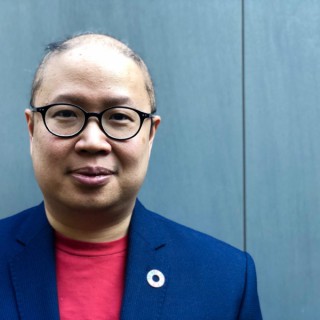
David Spiegelhalter is an expert on medical statistics. He was the president of the Royal Statistical Society and is Chair of the Winton Centre for Risk and Evidence communication. He is also a World Champion, in a version of pool called Loop and hosts his own podcast, Risky Talk. David has a new book out (with Anthony Masters), COVID by Numbers, which is an excellent book on COVID statistics. This follows his previous bestseller, the Art of Statistics. David discusses what was most surprising and misunderstood about COVID statistics. David emphasises how numbers can be emotional and weaponised and what we can do to protect ourselves. We chat about what thinking about risk and techniques we should teach children and think about in every day life. Ideas such as baseline risk and absolute vs relative risk. We think about unintended consequences, the agency challenges of regulators and how to think of a range of risk. David explains fat tails and extreme values and that, for instance, AI risk is an extreme existential risk but perhaps over rated. I learn about the “Rose Paradox” and “Cromwell's law”, in statistics. The Rose paradox suggests policy might be useful at a general population level but not at an individual basis. For instance, government messages about drinking less and things like that can be rational at the population level and yet it's also rational for individuals to take no notice of it. Cromwell's law implies many life events are not 0% or 100% and you should take that into account in decision making. Or, in plain English, you should always imagine there's something you haven't thought of. We discuss the risks of alcohol and touch on air pollution and cholesterol (statin drugs), and how to think about medical statistics. David explains the attraction and beauty of stained glass art. David ends with life advice about enjoying life and taking (good, well-managed) risks in order to have a fulfilling life. Transcript and video are available here.

The COVID pandemic has seen us bombarded with statistics like never before, - case numbers, excess deaths and vaccination rates. But behind the numbers, is there another story waiting to be told? Professor David Spiegelhalter joins Ros Taylor to talk about his new book COVID By Numbers, which shines a new light on the pandemic from the hardest hit countries, to the benefits of different vaccines, and the effect of lockdown on our mental health and the economy.“Statisticians try to make sense of what's going on, and there is a lot of demand for that”“The perpetual daily updates have kept numbers in people's minds”“There has been a systematic change in the pattern of deaths, people aren't going to hospital to die”“COVID has shone light on big gaps on our knowledge of other people's lives”“When the media call out u-turns, it stops people making changes based on new evidence”“Statistics have been incredibly important, the PHE dashboard had 76 million hits within 24 hours during the 3rd lockdown”Presented by Ros Taylor. Produced by Andrew Harrison. Assistant producers: Jelena Sofronijevic and Jacob Archbold. Music by Kenny Dickinson. Audio production by Alex Rees. THE BUNKER is a Podmasters Production Learn more about your ad choices. Visit podcastchoices.com/adchoices Hosted on Acast. See acast.com/privacy for more information.

In this episode, Geoff Allen speaks with Ilan Goodman about the intersection of philosophy and science. They discuss: Ilan's background as a philosopher, podcaster and actor; scientific philosophy versus ‘pure philosophy'; Patricia Churchland's views on philosophy and neuroscience; philosophy as a mapping exercise; scientific realism and mind-independent truths; the distinctions between philosophy and science; causality at the level of quantum particles; communicating science to the public; the motivations for podcasting; the current state of intellectual discourse; the challenges of communicating coronavirus information to the public; and other topics. Ilan Goodman is a podcaster, producer and communicator of science. He works as a producer for science-focused podcasts, including CrowdScience (BBC World Service), The Curious Cases of Rutherford and Fry (BBC R4) and Azeem Azhar's Exponential View. In a past role, he worked at the Winton Centre for Risk and Evidence Communication, working as a producer for Risky Talk with David Spiegelhalter. Ilan is the host and producer of NOUS the podcast, which explores questions about the mind through philosophy, psychology and neuroscience. Ilan is also an actor, and he has appeared extensively on stage, in TV shows and in feature films. Ilan holds an MSc in History and Philosophy of Science from UCL, and this common ground formed the basis for much of our conversation. Ilan holds Bachelor degrees in Experimental Psychology & Philosophy (University of Oxford) and Acting (Royal Academy of Dramatic Art). *** Follow Extrapolator on social media for all the latest news: instagram.com/extrapolatorpod facebook.com/extrapolatorpod linkedin.com/company/extrapolator

Several European nations have suspended the use of the AstraZeneca vaccine after a Danish woman died from blood clots following her first shot. However, doctors and scientists maintain there is no link and the vaccine is in fact completely safe. Professor of Global Health at UCL Dr. Anthony Costello and statistician David Spiegelhalter join Christiane Amanpour to discuss the impact of this decision. Then turning to the shadow pandemic of violence against women, the kidnap and murder of 33-year-old British woman Sarah Everard has shocked the nation and sparked a conversation about sexual assault, harassment and women’s safety. Mandu Reid, the leader of the Women's Equality Party, and Jackson Katz, an anti-violence educator, explain why it’s so important we reframe the conversation and hold men accountable. Our Michel Martin speaks to Connecticut Congresswoman Jahana about her 10 year experience as a teacher and the unprecedented challenges that teachers have faced over the past year.To learn more about how CNN protects listener privacy, visit cnn.com/privacy
Since the start of the pandemic there have been many warnings that people might die not just from the coronavirus itself, but also if they didn't seek medical help out of fear that hospitals might be dangerous. Is there any evidence that this has happened? David Spiegelhalter is on the case. The UK is in lockdown, but tens of thousands of people a day are still testing positive for Coronavirus. Where are they catching it? Grim data on drug deaths in Scotland has been called into question on social media. We ferret out the truth. Plus, what can venomous snakes tell us about the government's plan to increase the number of people self-isolating?

These are uncertain times. The British Prime Minister Theresa May has survived a vote of confidence in her leadership, but the future of her Brexit deal remains unknown. In the US, Donald Trump faces a hostile Congress and multiple legal threats to his presidency. Meanwhile the IPCC says the entire planet must urgently address the existential challenge of climate change, yet the path forward remains littered with obstacles.What is the best way to weather all this uncertainty? In a programme first aired in 2016, Manuela Saragosa gets advice from David Tuckett, professor and director of the Centre for the Study of Decision-Making Uncertainty at University College London. Plus, David Spiegelhalter, Winton professor for the Public Understanding of Risk in the Statistical Laboratory, at the University of Cambridge, explains the difference between risk and uncertainty. Lt Col Steven Gventer of the US Army tells us how soldiers are trained to deal with uncertainty in war. And, Will Borrell, founder and owner of Vestal Vodka and the owner of the Ladies & Gents bar in London, recalls how his customers reacted on the evening after the UK voted to leave the European Union. (Picture: British Prime Minister Theresa May at the opening day of the G20 Summit in Argentina; Credit: Amilcar Orfali/Getty Images)
© 2020-2026 Ivy Podcast Discovery LLC
