
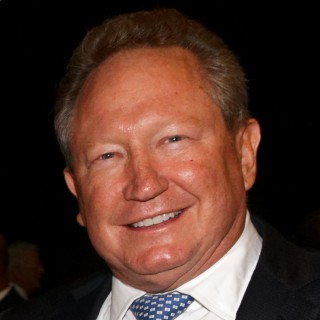
Australian mining businessman
POPULARITY

20 episodes with Andrew Forrest

14 episodes with Andrew Forrest

9 episodes with Andrew Forrest

5 episodes with Andrew Forrest

4 episodes with Andrew Forrest

7 episodes with Andrew Forrest

4 episodes with Andrew Forrest

6 episodes with Andrew Forrest

6 episodes with Andrew Forrest

Mateusz Szczurek, były minister finansów, a obecnie dyrektor Departamentu Europejskiego Międzynarodowego Funduszu Walutowego, został zaproszony do udziału w Grupie Renu i znajdował się nawet na pierwszej liście jej członków. Musiał zrezygnować ze względów formalnych, ale oznacza to, że kategoryczne twierdzenia o pomijaniu Polski w debacie o przyszłości UE są chybione. Czy w ogóle polscy eksperci mieliby coś do zaoferowania w pracach nad planem ratunkowym dla Europy? To główny temat nowego odcinka.Grupa Renu to nowa inicjatywa powołana przez Mario Draghiego – byłego prezesa Europejskiego Banku Centralnego i autora raportu wskazującego na konieczność reform Unii Europejskiej w kierunku większej innowacyjności – oraz Patricka Collisona, szefa firmy Stripe z branży fintech. Wśród 55 członków tego gremium jest tylko jeden przedstawiciel regionu Europy Środkowo-Wschodniej i nie ma nikogo z Polski, co oburzyło rodzimych ekonomistów. Jak się okazuje – nie do końca słusznie.Rozmawiamy także o krucjacie, na jaką ruszył Rafał Brzoska, założyciel InPostu, przeciwko spółce Meta – właścicielowi Facebooka. Chodzi o fałszywe reklamy wykorzystujące wizerunki znanych osób (w tym przypadku szefa InPostu) do wyłudzania danych użytkowników lub namawiające do ryzykownych inwestycji. Potrzeba było inicjatywy miliardera, by do akcji wkroczyły instytucje państwowe. Sprawa Rafała Brzoski nie jest pierwszą tego typu na świecie. Podobną drogą szedł australijski biznesmen Andrew Forrest, który również zaczynał od apeli oraz akcji społecznych, a teraz dochodzi swoich praw przed sądem. To właśnie wymiar sprawiedliwości daje największą nadzieję na zmuszenie bigtechów do działania, czego dowodzi sukces 29 stanów USA. Wytoczyły one proces Mecie w sądzie federalnym i doprowadziły do ugody ze spółką, w której wyniku ograniczony ma być dostęp dzieci do platform przez nią zarządzanych.W minusach i plusach rozmawiamy o małych zapasach gazu w Europie, co może prowadzić do jego wysokich cen w zimie, a także o przyczynach spadku kursu CD Projektu. Wracamy do obecności Polski w G20 i jej znaczenia w czasie zbliżającego się spotkania ministrów finansów oraz szefów banków centralnych tej grupy. Bierzemy też na tapet wyniki nVidii, które przeczą tezie o zbliżającym się pęknięciu bańki AI.W komentarzach tygodnia wraca temat ryzyka związanego z sytuacją w finansach publicznych. Projekt budżetu na przyszły rok wskazuje, że nie będzie dużego spadku deficytu fiskalnego. Tymczasem premia za ryzyko w przypadku polskich obligacji systematycznie rośnie. Budżet ma uwzględniać już projektowane zmiany w podatkach, które część słuchaczy odbiera jako podwyżkę, a nie obniżkę.

In public life, we know that people see the world differently — through different opinions, attitudes, beliefs and experiences. But what happens when we become better at embracing those different perspectives? Can changing how we see also change how we make a difference?Alina Gozin'a is one of Australia's most celebrated photographers, having photographed some of Australia's and the world's most powerful people, like Scott Farquhar, Andrew Forrest, Frank Lowy, Kevin Rudd, Christine Lagarde, and Sam Mostyn.But her path into photography was anything but conventional. After immigrating from the Soviet Union to Australia, she began her career as a tax adviser at PwC before becoming a renowned photographer, visual storyteller, strategist and advocate for creativity.In this Chat, Alina explores how that unusual journey has shaped the way she sees — and her ability to move between disciplines, perspectives and worlds. She takes us inside the practice of photography: what it means to really look, to notice what others miss, and to see the same person or situation from different angles.Together, we explore what those practices might teach us about public life and making a difference.It's a conversation that crosses disciplines and experiences, showing how even small shifts in how we see can have a big impact on how we understand the world — and how we work with others.You can see more about Alina Gonzin'a's work here on her website.You can follow her art in real time on her instagram page.You can read her TEDx talk about Creativity here.Her photo shoot with Christine LaGarde is here.======For more on ChangeMakers check us out:Via our Website - https://changemakerspodcast.org (where you can also sign up to our email list!)Facebook: https://www.facebook.com/ChangeMakersPodcast/Instagram: https://www.instagram.com/changemakerspodcast/Threads: https://www.threads.com/@changemakerspodcastBlue Sky: https://www.threads.com/@amandatattersall.bsky.socialFor more on the books and Amanda's writing, have a look at:Amanda's website - https://amandatattersall.com/ Conscious Tribes: thinking differently about making a difference - https://conscioustribes.net/People Power in Cities - here and via Oxford Uni PressOn Substack - https://substack.com/@amandatattersallOn Medium - https://amandatatts.medium.com/And - her much earlier book about coalition building - Power in Coalition and via Cornell Uni PressAmanda is on Socials here:On LinkedIn: https://www.linkedin.com/in/amandatattersall/Facebook: https://www.facebook.com/amanda.tattersallBlueSky: https://bsky.app/profile/amandatattersall.bsky.socialThreads: https://www.threads.com/@amandatattersallTikTok: https://www.tiktok.com/@amanda.tattersall Hosted on Acast. See acast.com/privacy for more information.

In public life, we know that people see the world differently — through different opinions, attitudes, beliefs and experiences. But what happens when we become better at embracing those different perspectives? Can changing how we see also change how we make a difference?Alina Gozin'a is one of Australia's most celebrated photographers, having photographed some of Australia's and the world's most powerful people, like Scott Farquhar, Andrew Forrest, Frank Lowy, Kevin Rudd, Christine Lagarde, and Sam Mostyn.But her path into photography was anything but conventional. After immigrating from the Soviet Union to Australia, she began her career as a tax adviser at PwC before becoming a renowned photographer, visual storyteller, strategist and advocate for creativity.In this Chat, Alina explores how that unusual journey has shaped the way she sees — and her ability to move between disciplines, perspectives and worlds. She takes us inside the practice of photography: what it means to really look, to notice what others miss, and to see the same person or situation from different angles.Together, we explore what those practices might teach us about public life and making a difference.It's a conversation that crosses disciplines and experiences, showing how even small shifts in how we see can have a big impact on how we understand the world — and how we work with others.You can see more about Alina Gonzin'a's work here on her website.You can follow her art in real time on her instagram page.You can read her TEDx talk about Creativity here.Her photo shoot with Christine LaGarde is here.======For more on ChangeMakers check us out:Via our Website - https://changemakerspodcast.org (where you can also sign up to our email list!)Facebook: https://www.facebook.com/ChangeMakersPodcast/Instagram: https://www.instagram.com/changemakerspodcast/Threads: https://www.threads.com/@changemakerspodcastBlue Sky: https://www.threads.com/@amandatattersall.bsky.socialFor more on the books and Amanda's writing, have a look at:Amanda's website - https://amandatattersall.com/ Conscious Tribes: thinking differently about making a difference - https://conscioustribes.net/People Power in Cities - here and via Oxford Uni PressOn Substack - https://substack.com/@amandatattersallOn Medium - https://amandatatts.medium.com/And - her much earlier book about coalition building - Power in Coalition and via Cornell Uni PressAmanda is on Socials here:On LinkedIn: https://www.linkedin.com/in/amandatattersall/Facebook: https://www.facebook.com/amanda.tattersallBlueSky: https://bsky.app/profile/amandatattersall.bsky.socialThreads: https://www.threads.com/@amandatattersallTikTok: https://www.tiktok.com/@amanda.tattersall Hosted on Acast. See acast.com/privacy for more information.

Legal affairs reporter Janek Drevikovsky on why Twiggy is taking on Meta, whether he can win and what happens if he does. This podcast is sponsored by Westpac Further reading:Meta admits it wiped key evidence in Forrest stoushThe social media giant has accepted it should be punished for not preserving copies of Facebook scam ads featuring the mining billionaire’s likeness.‘Dad, it’s a fraud’: Call that sparked Forrest’s $60m war on FacebookWhy is Andrew Forrest fighting one of the world’s biggest tech companies in one of California’s most storied courts – and spending his own money to do it?Forrest pressures local ad body to penalise Meta over scam revenueAndrew Forrest has written to IAB Australia asking for the group to consider Meta’s membership, after news the company made more than $20 billion from scams.See omnystudio.com/listener for privacy information.

GE Vernova posts a record quarter as gas and grid surge while wind orders drop 40%. Plus Envision grid-connects its first AI turbine for Fortescue. Visit https://woma2027.com/ to register speaking and sponsorship interest! Sign up now for Uptime Tech News, our weekly newsletter on all things wind technology. This episode is sponsored by Weather Guard Lightning Tech. Learn more about Weather Guard’s StrikeTape Wind Turbine LPS retrofit. Follow the show on YouTube, Linkedin and visit Weather Guard on the web. And subscribe to Rosemary’s “Engineering with Rosie” YouTube channel here. Have a question we can answer on the show? Email us! If you haven’t visited woma2027.com, you should do so right now because we are putting together all of the, uh, events at WOMA 2027, which is March 3rd through 5th in Melbourne at the Pullman, Matthew, Pullman East? Pullman East Melbourne. And it’s packed full. Our, in fact, actually, we have so many people applying to attend the event, we’re getting a little nervous on if the size of the venue is not large enough, and we, we have a lot of people already chime in wanting to be sponsors, which is great. But I wanna talk about what you will experience at WOMA. We’ve done it for two years now, and the feedback has been great. And Yolanda, you’ve been to the one just this past February, and participated in panels and saw some of the, uh, workshops and was involved in a lot of WOMA 2026. What are you expecting in 2027, and what did you think of 2026? Yolanda Padron: I thought [00:01:00] 2026 was great. I loved seeing everybody there. Uh, got to meet a lot of new people. It was, it was sweet. There was a lot of r- people returning from WOMA 2025, um, and a lot of new people that were told that that was the event to be at to learn about wind, which was really, really nice to hear. Uh, something that I loved, especially since we’ve been through quite a few conferences since then and before then, was just the fact that, like, you’re, you’re just talking about problems and just talking about solutions, and you’re talking about real stories, and it’s nothing that’s super, super public. You know, like, you, you can have real conversations with real people. I know during a panel I mentioned a, a solution to an issue that I had seen that was kind of niche, and then, uh, like three minutes later, like I had had some people come up to me and we all talked about the problem that we saw and then [00:02:00]talked about their problem, and it was really similar, and obviously in a totally different continent. And it was, it was good to, to be able to have those conversations that you usually wouldn’t have elsewhere, especially if everything’s just really, really public and just big and you’re having a lot of people sell at you, and it’s, it’s just something that we’ve really shied away from. What, what was your favorite part of it? Matthew Stead: I, I think, um, it was really the fact that it was a a technical, useful, helpful conference rather than having some rando talking about things that they’re told to talk to you about Allen Hall: It’s real answers from real problem solvers. And everybody’s gonna be in Melbourne on the 3rd through the 5th of March 2027. If you’re interested in attending, you need to go to woma2027.com. If you’re interested in sponsoring, it’s also woma2027.com. There’s limited [00:03:00]sponsorship left, so if you wanna do something, you better get in quick. And if you wanna attend the event, and I suggest that you do, that you visit woma2027.com and get registered today The Uptime Wind Energy podcast, brought to you by StrikeTape. Protecting thousands of wind turbines from lightning damage worldwide. Visit StrikeTape.com. And now, your hosts Welcome to the Uptime Wind Energy podcast. I’m your host, Allen Hall. I’m here with Rosemary Barnes, Matthew Stead, and Yolanda Padron. It’s been a busy day as we record because GE just announced its second quarter earnings and a bunch of things about the business. They had an investor call early, early, early on the East Coast, and even earlier for those on the West Coast of the US, and it was a very good quarter for GE, but a really lopsided one. Uh, GE Vernova reported second quarter orders of [00:04:00] $24.2 billion, up 88% with a backlog that has now climbed to $176 billion. Free cash came in at $5.1 billion. Man, $5.1 billion is a lot of cash, everybody, which is more than the company generated in all of last year. So they made more in one quarter in cash than made in all of last year, and management is raising its full year guidance, but the strength is coming from gas power and the electric grid, not from wind. The wind segment saw orders fall 40% and revenue slip 10%, and the company still expects wind to lose about $400 million this year. Although in the investor call, they did say that the forecast for wind in Q3 and maybe even Q4 was to be essentially break even on the EBITDA scale. So that’s a, a, a good number. It does seem like GE is being more [00:05:00] aggressive on pricing and selective on the projects they are choosing to participate with. Repowers was way down, if I remember correctly. Uh, they are not doing a lot of that at the moment. So there is a slowdown they’re seeing in wind, but they’re more than making up for it in gas turbines and electrification. Orders for gas turbines are out to ’30, ’31, and I think they’re gonna close out all of ’30, ’31, um, book orders for gas turbines here shortly. So if you want a gas turbine, Matthew, you’re gonna have to get in line because your GE has a long list of, of clients in front of them. What does this mean for wind? When I hear the discussion where GE is focused on gas and electrification because of the huge cash flow that comes in their door- Does that mean a good positive things for wind because they have the cash to kinda hang around wind? Or is it gonna be set aside for other [00:06:00] more profitable business segments? I Matthew Stead: mean, GE’s had a number of setbacks over the years. Um, you know, we know, we know all about them. We’ve been talking about them, you know, multiple times. But, you know, they’ve gotta just wait it out, don’t they? Um, you know, wind is not gonna go away, so they just need to wait it out, get their problems out of the way, get their cash flow in, build the order books again, just wait for things to improve. Um, I, I think one thing I just wanna pull out, the Sands Ear, i- isn’t that a massive achievement? Allen Hall: It is. It’s, it’s a colossal engineering achievement on its own. Forget about just delivering and manufacturing all those turbines and getting them installed. And that’s a pattern energy project, and Fairwind I think was involved with that in terms of project development, EPC items. It’s huge. It’s gigantic. But it may be the last one we see in the United States for a while. Matthew Stead: And but Vineyard, you know, they’ve gotta resolve that, don’t they? We’ve spoken about that before. Get that one out the way, clear out the decks and, yeah. That’ll come good. Allen Hall: Rosemary, of our former GE [00:07:00] employees, I guess we have two of them here. I’m one. Not of wind, but of another division. What’s your thoughts on GE Vernova at the minute? Rosemary Barnes: These days I see them through the O&M lens. That’s how I work with them, is when my clients need support for all their wind farms and It’s just, it’s just never enough. It’s not a GE-specific thing. Uh, you know, across Australia, anybody with a full service agreement does not… Uh, the, the company performing that agreement just gives the impression that they just do not have enough, um, uh, enough people. Y- you know? It’s just, just hands or maybe it’s budget. Uh, I guess it, it’s both at the same time. Yeah, I mean, I see some good things like their, the pace of new technologies has slowed and they’re consolidating, which was needed, but it’s just hard to imagine that it’s even gonna be enough considering how many fewer blade engineers that they’ve got now. Like, how are they, [00:08:00] how are they going to get the, you know, the issues with the platforms that they are, uh, pushing, how are they gonna get all that under control with so many fewer engineers? And will they ever be able to, you know, go back to innovating a- again when they’ve lost so much of their, you know, institutional knowledge? Allen Hall: Two things they did not mention during the phone call today or in any of the documents that I saw was TPI Composites and that EPC has acquired that and is now operating the factories, uh, making GE blades. And LM Wind Power was not discussed either, although LM Wind Power has been integrated into the overall financials of the company, so it’s not a standalone financial entity like it was last year. So you can’t really r- read the tea leaves of what’s happening at LM, but nobody talked about or even asked on the investor call what was happening on the wind side. They were very interested in gas turbines and what the order rate was going to be, and GE was concerned [00:09:00] on their side, saying that they’re trying to ramp up production to make more gas turbines, but there’s limitations to how much they can do. Rosemary Barnes: I guess that’s the s- the zeitgeist now, right? Or it’s the, I don’t know, like, it’s, it’s a sign of the times. Everyone’s obsessed with data centers, and for some reason, data centers are obsessed with gas turbines, um, even though, like, it’s not a fast solution to, uh, y- you know, to, to anything. So I don’t… You know, I’m not saying that building a, you know, a wind farm or solar farms, batteries, those are not without challenges. But I really don’t think that the, yeah, gas turbine challenge is so much easier than the, um, yeah, than the renewables challenges. It’s a bit weird to me how everyone has just kind of latched onto, “Oh, you need new power, then it needs to be gas.” It’s just a bit weird to me. Allen Hall: GE was predicting a peak of orders in gas turbines to happen sometime in 2026. They, they think that the demand curve is gonna trend downward because everybody is already in [00:10:00] line essentially, and it’s five years out, so not many other people are gonna join that line to make it seven, eight years out That also indicates that sort of the d- the demand for gas turbines may be waning a little bit, or there’s just a backlog, they just can’t produce more. Is that going to then maybe finally open up the best solar wind discussion for AI data centers? Rosemary Barnes: Yeah, I wonder if it’s partly because y- you know, in a lot of cases… So people wanna build data centers, and then those data centers need power. You can’t just plug into the grid in an easy, timely manner. So then now they’ve gotta BYO their own power, and in fact, in Australia they’ve just announced a, a policy where you will have to… You can bring your own power, and it will have to be renewable, actually, in Australia. So, um, at least that’s, at least that’s a win for, you know, generation source. Allen Hall: Yeah. The, the AI data center discussion and gas turbines in the United States has more recently been focused [00:11:00] on, on the AI data centers that use those gas turbines, and the number of gas turbines that they’re choosing, and that they’re choosing gas turbines that fall under some sort of EPA threshold on size. And what is happening, and which, uh, SpaceX has done and some others have done, is they go underneath that threshold on the size of the gas turbines, and then they, you know, and they daisy chain them together, right? So you, you… Instead of having one massive, I don’t know, two-megawatt generator of some sort, you have a bunch of 200 kilowatts, and you just stack them all together. And the concern is, is that are some of these data centers violating EPA, the… If not the actual rule or the intent of the rule in terms of emissions, and it’s causing a little bit of a stink. It’s, it’s raised enough of, uh, the noise floor about it that you’re, you’re hearing it on podcasts, you’re hearing people involved in AI data ce- [00:12:00] data centers push back on it saying, “It’s all legal. It’s all legal.” So it’s gonna come to a head pretty quickly in the United States. Rosemary Barnes: It was some real, like, real sketchy loophole finding, right? Like, I can’t remember the exact wording, but you’re not supposed to be able to just chuck in a diesel generator or a gas turbine in without any kind of planning, right? But they found a loophole where it’s like, okay, well, you know, it’s just like a truck except for that there’s no truck, and so it was called, like- off-road or non-road use or something. And it’s just, like, clearly not the, um, the meaning of the, of the law, right? The spirit of the law had, like, obviously been broken. In Australia we have a saying, the pub test. It doesn’t pass the pub test. Like, if you said that to someone in a pub, then they would be like, “What the hell is that? That is not right.” They have closed the loophole. However, I think that they also kind of quietly just allowed them to keep the ones that they had or had planned or something, so [00:13:00] it’s, like, overall by far not ideal. But I think that it’s just, like, you can, you can do that for a single site, but it’s obviously, like, the more that you do ridiculous stuff like that, that you lose the community ac- acceptance, which they barely had and definitely don’t really have anymore. Um, and secondly, yeah, like people, uh, people close the loophole and they respond. It’s, it’s much better, and we see it with wind as well. Like, yeah, you can do things technically by the law, but if you wanna have a, you know, sustainable, uh, industry through the years, through the decades, you actually have to kind of, you know, think, “What happens if I do y- push to the furthest extent of the law, um, to get away with whatever I can?” What’s gonna happen is regulation is gonna come down on you and you’ll lose the ability to kind of self-regulate. Allen Hall: We’re gonna take a quick break, but when we come back we’ll meet a wind turbine that runs on artificial intelligence, Rosie.[00:14:00] Delamination and bondline failures in blades are difficult problems to detect early. These hidden issues can cost you millions in repairs and lost energy production. CIC NDT are specialists to detect these critical flaws before they become expensive burdens. Their nondestructive test technology penetrates deep into blade materials to find voids and cracks traditional inspections completely miss. CIC NDT maps every critical defect, delivers actionable reports, and provides support to get your blades back in service. So visit cicndt.com because catching blade problems early will save you millions In the red dirt of Western Australia, a mining company and a Chinese turbine maker are trying something new. Envision Energy says it has grid connected its first [00:15:00] artificial intelligence wind turbine prototype for Fortescue’s Nullagine Wind Project in Pilbara. The full project will use 17 of Envision’s EN182 turbines, each rated for 7.8 megawatts and built to handle mining sites, desert heat, and tough grid rules. The turbines- The turbines pair a self-erecting tower from Nabler Wind with a hub standing an astonishing 188 meters tall. Behind it all sits Envision’s Energy Foundation Model software that company calls the world’s largest physical AI system. The goal is to swap diesel and gas for wind across the mine’s fleet and processing sites. So this is an effort by Fortescue to power mining operations with electricity. It’s a pretty ex- exciting [00:16:00] project if you’re watching. The Envision artificial intelligence piece is an aspect that I didn’t know much about, and I still am trying to gather more information on, because there’s not a ton of info about what AI means in terms of a physical system. And maybe Rosie, you know a little bit more, or Yolande, you can brief us on what this really is. Rosemary Barnes: We just need to start with a pronunciation lesson, Allen. Sorry. Matthew Stead: Not Pilbara, Pilbara. Pilbara. Rosemary Barnes: I, I don’t actually… I hadn’t heard that part about AI and that it doesn’t… I, I don’t know. It’s, it’s such a buzzword that it might not mean anything, you know. However, there’s so many cool aspects to that project that aren’t related to AI. Um, yeah, the tower height, the tower erection technology. I’m interested to hear that they have taken the heat of the environment into [00:17:00] consideration, ’cause that’s one of the, my obsessions actually, as long as I’ve been working on wind turbines, and ever since I found out how, you know, the materials qualification and certification process works, that it just doesn’t take into account the really high temperatures. That’s one of the projects that Padlo has going on at the moment, is, um, putting sensors on some turbines to, like, look into that more. Um, yeah, because we do see in Australia a lot of sites have, you know, even within a few years, they might have 20 years of operation left, but we already see a whole lot of cracks that look suspiciously like end of, end of life fatigue cracks on them. So yeah, we are looking into that more, and it’s very interesting to hear that Envision have taken the heat into consideration. I hope it includes the blade structure as well as just, you know, other turbine components, electronics, and that sort of thing. Allen Hall: It does sound like they’re pairing batteries or BESS with wind turbines, where the BESS is located at the base of the turbine. That would make sense in [00:18:00] Australia, particularly around where mines are, because it tends to be very remote, and storing electricity would make sense. The Discussions I’ve seen on YouTube deal with more on the energy trading side, that the wind turbine stores energy, of course, and it does it very efficiently into the best system, and then the AI system sits on top of that to help arbitrage the energy that’s stored in the battery to make more money. Not a bad way of doing it, but it does lead to a ton of questions about national security, the use of AI, the, uh, and how this is all going to integrate together from a asset manager side. Yolande, I know in the United States we have a lot of restrictions about the technology that is in wind turbines and the, and the firewalls that exist there, where you, you can’t even plug into a wind turbine without having a lot of approvals. Is AI coming in wind [00:19:00] turbines in the US and the rest of the world, or is this mostly a Western Australia event? Yolanda Padron: We talked a little bit about a trading company a couple episodes ago, right? And that was a… It sounded like it’s, it’s coming. Um, I, when I first read the article that we’re talking about for Fortescue, I thought this was more of, like, a SCADA self-learning AI type thing, where, like It, it kind of learns from the, from itself, and then maybe it, it tells you you’re more likely to be seeing some sort of blade issue that wasn’t shown before Rosemary Barnes: I heard, um, Andrew Forrest speak at a smart energy conference earlier this year, and he was talking about not for, um, not for wind, but for the solar and battery projects that they’ve already got there. He called it a self-healing grid, and AI was the technology that enabled that. And so he, [00:20:00] he was saying, and I can’t remember the, the details specifically either, but when there was a, a disturbance, something that would’ve caused the, you know, without the AI, um, you know, layer looking after everything, a fault that would’ve shut the whole site down was able to self, self-heal with no interruption to supply. Um, and that that was the kind of AI that, uh, they were talking about. I believe that the new wind farm addition to that is the same sort of thing, where they’re looking at, you know, a very complex system with… I mean, they don’t have energy prices to deal with, uh, in that case because it’s self-contained. They’re not conne- connected to any external grid. Um, but you know, they’ve got wind, they’ve got solar, they’ve got, uh, so obviously weather conditions related to those two going on. They’ve got batteries, they’ve got, you know, yeah, the, um, availability of every single different… of probably many [00:21:00] thousands of different components in that system that, um, y- you know, you need to make sure that if there’s a failure or when there’s a failure in any one or combination of those things, that you’re always going to be able to reroute around that and kind of heal itself. So it probably does include some of, of what you were saying, Yolanda, but I think when they say this is the biggest physical AI, like, I think that that might be a little bit of a meaningless term because y- you know, like, there’s AI… It, it could be like… I, I don’t know. It, like, what, what does that mean? Like, if you have AI that is, um, you know, playing some role in controlling America’s electricity grids, then that would be the biggest, the biggest one, even if it was, you know, like a tiny little, playing a tiny role. I, I, I don’t know what that specifically means and… Is it bad marketing ’cause it’s just confusing and makes you assume that it’s, um, just meaningless buzzword cool [00:22:00]sounding thing Allen Hall: It’s probably genius marketing because they attach AI to whatever the product is. So we have AI lightning diverters at Weather Guard. EOLOGIX-PING has AI CMS, and Partload has whatever Partload does, AI-Partload. So that’s the smart move, th- uh, because it does seem to raise the value Rosemary Barnes: But you know what? Partload is anti-AI because 90% of our work is you get, you know, drone inspections, and they use AI, and then it w- and it works really, w- it works really… I’d never wanna make it sound like it is bad technology because, you know, the status quo before we had drones with using AI was to just not inspect your blades. So, you know, like, we’re doing much better than that now. But everything that we do is where AI was not able to do it or AI did it wrong. So y- you know, um, like I- we use AI in that everything that comes into us is AI. Allen Hall: Well, if the same AI [00:23:00] technology that is reviewing blade images is being applied inside of a wind turbine, what do you see as a likely outcome there, Rosemary? Rosemary Barnes: Well, it’s not, I mean, it’s not the, it’s not the same. And like I said, uh, it’s very easy for me to be like, “Oh, AI, you know, makes all these mistakes,” but it, I only see the mistakes. I don’t see the 90%-plus of correctly categorized things. I don’t, they’re not relevant to me. Um- Uh, but I think for controlling a complex system, like it, it is… That, that’s a really great application. I mean, I think it’s like with any like super hyped up technology, it’s like really useful in a few things, and that’s what leads to the hype, and then people start to just wanna apply it everywhere. It becomes the, you know, like when the only tool you’ve got is a hammer, everything looks like a nail. Like, that’s where we’re at. Like AI is this, um, is this hammer that we’ve got, and everyone wants to solve every problem with it. And I do it myself, you know. Like I hate writing LinkedIn posts, and so I’ll work with, with Claude or, um, I [00:24:00] use NotebookLM as well to, you know, I draft my LinkedIn post. And you’re like, “Well, th- no, that sucks. Do this, do this, do this.” And then, you know, like half an hour later, you’re like, okay, I could very easily have written my own post in less time, and I could… I, I try again and again because I just, I, uh, you know, hate that kind of writing so much. But yeah, I think that like economy-wide, that’s the problem, that everyone is just trying to whack every problem with AI regardless of whether it’s the right one. Allen Hall: Okay, so there’s gonna be products that are gonna incorporate AI or have AI somewhere hyphenated in the name of the product. What products should not be using AI right now? Matthew Stead: Yeah, I think there’s… Uh, I wanna add to the… You know, go back a few steps. That calling this the largest, you know, physical AI device is complete rubbish really. That’s stupid, really. It’s like, like, like what you said, Rosie. It’s like putting an AI machine on a road, and then it becomes the world’s largest AI infrastructure. I mean, that was, that was pretty stupid, um, [00:25:00] really. And that, that’s just marketing. My, my view is if you can’t explain what it does, you shouldn’t be using the word AI So in marketing, you know, you can’t just say, “Oh, it’s AI ’cause I don’t understand what it does.” You should actually be able to explain, “This is what this product does, and this is why it does it, and we use AI to help make that occur in a smart way.” Rather than just being randomly talking about, um, AI solving all of these complex issues and not actually knowing how it’s done is rubbish. Rosemary Barnes: To answer your question, Allen, I think AI shouldn’t be used for most creative stuff. Like video, um, creation, everybody hates it, and companies keep on pushing it, and it sucks. And I think also it’s kind of… It, it makes people so angry, I think it’s gonna backfire if it hasn’t already for most, [00:26:00] most people that are using it. Um, yeah, so that would be one thing. And also, uh, you shouldn’t use too much AI for, like, I see it heaps on LinkedIn now, and it’s, it’s kind of… Like, at the first time you use AI, you’re like, “Whoa, th- this is pretty, pretty good. Like, this is something, you know, like I could… That’s very similar to the stuff that I, yeah, used to post on LinkedIn or the infographics that I used to make.” But the issue is that, like, it looks that way the first time, but then once you use it a bit and you can recognize that it’s AI, then you see it everywhere and it, it turns you, really turns you off whoever’s put it out there. And so, like, there’s so much on LinkedIn now where it’s, like, just AI-generated things. It’s… Even if, you know, like, if an expert has created it and edited it afterwards and made sure that the output is accurate, then I wouldn’t call it AI slop. But it is also, like, it’s always too [00:27:00] wordy. It’s, um, you know, it’s just like the style is just clearly e- the h- if the point is that you’re trying to express, “I’m an expert. These are my expert opinions. I know what I’m talking about,” AI is not doing that for you. Like, you write your post or create your graphic with AI, it’s just not doing that for you. So I think that that is another example of where people shouldn’t be using AI. Allen Hall: That wraps up another episode of the Uptime Wind Energy podcast. If today’s discussion sparked any questions or ideas, we’d love to hear from you. Reach out to us on LinkedIn. And if you found value in today’s conversation, please leave us a review. It really helps other wind energy professionals discover the show. And please, please, please don’t forget to subscribe so you never miss an episode. For Rosie, Yolande, and Matthew, I’m Allen Hall, and we’ll see you here next week on the Uptime Wind Energy [00:28:00] podcast.

Tuesday 28 July 2026 The local share market surges after a lull in fighting in the Middle East, but uncertainty remains the dominant driver of markets. Myer warns that the cost-of-living crisis has hit sales Bleisure travel – business and leisure – is back with Gen Zers taking full advantage Fortescue Metals boss Andrew Forrest’s strong warnings on iron ore prices and AI The latest hot stock - a chipmaker in China - surges 500 per cent on day one Hit follow on the podcast so you don’t miss the latest news, and join our free daily newsletter here. And don’t miss the latest episode of How Do They Afford That?, exploring the financial advice that doesn’t work anymore. Get the episode from Apple, Spotify or anywhere you listen to podcasts.Find out more: https://fearandgreed.com.au/See omnystudio.com/listener for privacy information.

Tuesday 28 July 2026 The top five business stories in five minutes, with Sean Aylmer and Michael Thompson. ASX surges but fears remain Myer downgrades on sales drop Andrew Forrest warns on iron ore prices Chinese chipmaker booms “Bleisure” travel Is back Hit follow on the podcast so you don’t miss the latest news Join our free daily newsletter here And don’t miss the latest episode of How Do They Afford That?, exploring the financial advice that doesn’t work anymore. Get the episode from Apple, Spotify or anywhere you listen to podcasts.Support the show: http://fearandgreed.com.au/See omnystudio.com/listener for privacy information.
Mark Pownall is joined by Gary Adshead, Nadia Budihardjo and Claire Tyrrell to talk about the big events of the week in WA business and politics. This week, the discussion includes Pauline Hanson, Labor's industrial court, uranium, Andrew Forrest's tungsten move, Wesfarmers, St Martins redevelopment, Vivien Yap, Greg Poland, Woodside and Aspermont.

The ASX 200 drifted around to close down 5 points at 8,791, as the banks paused after last week's rise and resources came back into focus. US futures sliding lower sapped early enthusiasm.The Big Bank Basket was flat at $283.68 (-0.7%) with MQG falling 0.8% and NWL down 2.2%. Insurers were slightly firmer, with QBE up 1.8% and MPL rising 0.6%, although REITs eased, with SGP down 1.0% and GMG off 0.9%. Industrials were mixed again, with defensives such as the supermarkets slightly firmer, along with TLS and REA, which continued to find some friends. Retail was also mixed, with WES up 0.2%, while others failed to keep pace.In the tech space, selling continued, with XRO down 2.1% and WTC off 3.6%, although there were buyers in MAQ.Resources were mixed. BHP steadied, RIO slipped 1.9%, lithium stocks remained depressed, and the gold sector bounced back from earlier losses, with WGX up 2.1% and WAF rising 2.6%. S32 had a good day, up 4.6%, after beating quarterly guidance.Oil and gas stocks were firmer as crude prices continued to push higher, with WDS up 1.4% alongside STO. Coal stocks also edged higher, with WHC up 2.7%, while uranium stocks posted modest gains.It was a relatively quiet day on the corporate front. PPT rejected the latest proposal from EQT, while CEH surged 15.2% on plans to develop its Queensland site. We also saw interim chairman of WJL spend $1 million buying shares, lifting his stake to around 5%, or approximately 24.5 million shares. EQR rallied 34.1% after Andrew Forrest's Tattarang disclosed a 16.8% stake.It was a quiet day on the economic front.Asian markets were weaker, Nikkei 225 down 4%, HK up 1.8% and China up 0.5% - Korea down 4.5%US futures mixed - Dow down 50 and Nasdaq up 8. Oil above $91. European markets set to fall 0.3%Marcus Today – Daily Market InsightsMarcus Today provides clear, practical commentary for self-directed investors – covering markets, portfolios, education, and decision-making without the noise.If you'd like to go further:Start a free 14-day trial of Marcus Today http://bit.ly/mt-trial-podcastJoin Marcus Today Use code MTPODCAST for 10% off http://bit.ly/mt-join-podcast-offerMT20 – Managed ETF Portfolio A professionally managed portfolio run by Marcus Padley and the team, using ASX-listed ETFs with active market timing. http://bit.ly/mt20-podcastPrinciples – How We Think About Investing A short video series on timing, behaviour, and decision-making. No stock tips. http://bit.ly/mt-principles-podcast—Disclaimer This podcast is general information only and does not consider your personal circumstances. It is not personal financial advice.

We've curated a special 10-minute version of the podcast for those in a hurry. Here you can listen to the full episode: https://podcasts.apple.com/us/podcast/fortescue-ceo-breaking-into-mining-going-green-and/id1614211565?i=1000774940168Nicolai Tangen sits down with Andrew Forrest, Chairman and CEO of Fortescue, to explore one of the most remarkable stories in modern business. From building a mining giant from scratch against a 60-year duopoly, to pledging to run the entire company on zero fossil fuels by 2030 with no offsets, Forrest has never been afraid to think big. They discuss his "crazy brave Plan A" philosophy, the role of AI in running smart energy grids, and his disagreements with some of the world's most powerful people over climate policy. Andrew also opens up about the accident that reshaped his priorities, his philanthropic mission tackling modern slavery and ocean conservation, and the simple advice that guides his life: be useful, and enjoy it. Tune in! In Good Company is hosted by Nicolai Tangen, CEO of Norges Bank Investment Management. New full episodes every Wednesday, and don't miss our Highlight episodes every Friday. The production team for this episode includes Isabelle Karlsson, Halvor Njerve and PLAN-B's Niklas Figenschau Johansen. Background research was conducted by Karoline Woie. Watch the episode on YouTube: Norges Bank Investment Management - YouTubeWant to learn more about the fund? The fund | Norges Bank Investment Management (nbim.no)Follow Nicolai Tangen on LinkedIn: Nicolai Tangen | LinkedInFollow NBIM on LinkedIn: Norges Bank Investment Management: Administrator for bedriftsside | LinkedInFollow NBIM on Instagram: Explore Norges Bank Investment Management on Instagram Hosted on Acast. See acast.com/privacy for more information.
Nicolai Tangen sits down with Andrew Forrest, Chairman and CEO of Fortescue, to explore one of the most remarkable stories in modern business. From building a mining giant from scratch against a 60-year duopoly, to pledging to run the entire company on zero fossil fuels by 2030 with no offsets, Forrest has never been afraid to think big. They discuss his "crazy brave Plan A" philosophy, the role of AI in running smart energy grids, and his disagreements with some of the world's most powerful people over climate policy. Andrew also opens up about the accident that reshaped his priorities, his philanthropic mission tackling modern slavery and ocean conservation, and the simple advice that guides his life: be useful, and enjoy it. Tune in! In Good Company is hosted by Nicolai Tangen, CEO of Norges Bank Investment Management. New full episodes every Wednesday, and don't miss our Highlight episodes every Friday. The production team for this episode includes Isabelle Karlsson, Halvor Njerve and PLAN-B's Niklas Figenschau Johansen. Background research was conducted by Karoline Woie. Watch the episode on YouTube: Norges Bank Investment Management - YouTubeWant to learn more about the fund? The fund | Norges Bank Investment Management (nbim.no)Follow Nicolai Tangen on LinkedIn: Nicolai Tangen | LinkedInFollow NBIM on LinkedIn: Norges Bank Investment Management: Administrator for bedriftsside | LinkedInFollow NBIM on Instagram: Explore Norges Bank Investment Management on Instagram Hosted on Acast. See acast.com/privacy for more information.

David Paradice, founder of Paradice Investment Management and manager of around $19 billion, sits down with Peter Switzer for a rare long-form conversation on what 26 years in the market has taught him. He explains why he hires generalists, why selling your mistakes matters, and the discipline behind selling GameStop at $30 before it ran to $400. Paradice argues government super policy is herding money into index funds and inflating expensive names like CBA, makes his case for a long-term metals super cycle and uranium, and explains why he would back a focused founder like Gerry Harvey, Solomon Lew or Andrew Forrest over a cautious board any day.
The sound of regional Australia. News and analysis from the ABC's network of regional reporters.
Pauline Hanson says former politicians said she should face a firing squad and be burnt at the stake. Now Tim Fischer’s widow Judy Brewer says she wants evidence or an apology and fears her late husband is being posthumously defamed. Read more: Andrew Forrest inks mining deal with Juukan Gorge traditional owners Apologise or prove ‘witch’ claim: widow Catch all the action from the 2026 FIFA World Cup hereSee omnystudio.com/listener for privacy information.
Coverage that provides news and analysis of national issues significant to regional Australians.
She’s the mining billionaire with big ambitions above the ground - Gina Rinehart has been revealed as the financial backer of a big new buy-up into Seven, the media group controlling TV, radio, podcast and newspaper publishing assets across Australia. This is Rinehart’s third foray into entertainment - so what’s the end game? The journo with the ear of all the billionaires, John Stensholt, is here. Read more about this story at theaustralian.com.au and see the video by subscribing to our YouTube channel. Billionaire Gina Rinehart funding Bruce McWilliam’s Southern Cross Media share buy Southern Cross takeover deal sparks questions over tax and who’s in control Billionaire Alex Waislitz says Southern Cross must make room for Bruce McWilliam New chief ends executive bloodletting by reinstating ousted Seven boss This episode of The Front is presented and produced by Claire Harvey and edited by Joshua Burton. Our team includes Kristen Amiet, Lia Tsamoglou, Tiffany Dimmack and Jasper Leak, who also composed our music. See omnystudio.com/listener for privacy information.
Ella Loneragan runs through the latest on Cook's defence plan, a City of Perth backflip and Andrew Forrest's Cottesloe project.

Hosted on Acast. See acast.com/privacy for more information.
Rystad reports offshore turbine prices have jumped 45% since 2020, plus data centers squeeze US grids, Fortescue chases real zero by 2030, and GE Vernova battles Vineyard Wind in court. Sign up now for Uptime Tech News, our weekly newsletter on all things wind technology. This episode is sponsored by Weather Guard Lightning Tech. Learn more about Weather Guard’s StrikeTape Wind Turbine LPS retrofit. Follow the show on YouTube, Linkedin and visit Weather Guard on the web. And subscribe to Rosemary’s “Engineering with Rosie” YouTube channel here. Have a question we can answer on the show? Email us! The Uptime Wind Energy Podcast, brought to you by StrikeTape, protecting thousands of wind turbines from lightning damage worldwide. Visit striketape.com. And now, your hosts. Allen Hall 2025: Welcome to the Uptime Wind Energy Podcast. I’m your host, Allen Hall, and I’m here with Rosemary Barnes, who’s been busy in Australia up in Sydney at a energy conference. Rosemary, what happened this past week? Rosemary Barnes: Oh, yeah. I’ve been up in Sydney for the Smart Energy Conference and Exhibition. It’s a big… I don’t know if it’s the biggest. I think they get about 12,000 people or something through the doors. So yeah, it’s, it’s one of the big, maybe the biggest, um, energy conference in Australia. It’s really focused on distributed energy households. So in the past, it was, like, nearly all solar, um, like rooftop solar. There used to be lots of installers that were there and, yeah, there’s heaps of solar [00:01:00] panels around in the exhibition hall. And over the last few years it’s been a mix of batteries and solar, and then now this year it was basically 99% batteries, 1% EV chargers, and almost not a solar panel to be seen. I didn’t actually spend that much time in the exhibition this year. I mostly was, um, attending sessions. Andrew Forrest from Fortescue headlined, and that was really good. I haven’t seen him speak live before. Y- you know, he, he told about all the, like, good plans that Fortescue’s doing to get to real zero by 2030. So he’s on a real rampage at the moment to try and get rid of the diesel rebate that we pay at the moment. We pay diesel users a, a, yeah, a fuel, fuel rebate. It was just cool to hear about y- you know, all of Fortescue’s plans, why they’ve got this big green grid that they’re building out in the Pilbara. Um, I really liked when he said, you know, it’s not, it’s not magic, it’s, um, it’s just, what did he say? Like, maths, physics, engineering, and [00:02:00]economics, and a bit of courageous leadership. That’s what you need to make a green, a green electricity grid. So I really like that the, you know, engineering was mentioned, was mentioned there. I did actually get the chance to ask him a question, too. Wanted to know, um, you know, like, Fortescue is, is really one of the most interesting things about the company is that they are using brand-new technologies or even not quite there yet technologies. I asked, uh, Andrew Forrest, I asked him, you know, like, how you make these bold, bold decisions, does it ever, you know, worry you that it’s not gonna work out? And I was assuming he would say, “It doesn’t worry me,” um, because, you know, he has that kind of brash, confident personality. So I, you know, my follow-up was, what, what steps do you take so that you aren’t worried by it? And he said it does worry him, and he s- stays awake every night worrying, worrying about if these technologies aren’t going to work. And that, uh, basically they try and have a really, really solid plan B that isn’t a [00:03:00] brand-new technology. So, um, you can, you know, infer from that, that if the– I mean, first of all, he said, “We don’t invest in the technology until they have demons- demonstrated with a good prototype that it’s likely to work.” Um, but I guess that, you know, assuming that they’ve ran into problems in the rollout of all of these Naberebo towers, that, um, they have a backup of some conventional towers. Speaker 2: Yeah, uh, the, the Fortescue people, when we talked to them about, pfoof, probably six months ago, maybe a little bit longer, we were helping to build a farm out in Western Australia. It was a small team, much smaller than anything you would see in the US, and it does sort of align with the Australian approach to it, is that you don’t need a massive team of people to do these projects. You just need to know what you’re doing, and that was really remarkable. So e- I’m not surprised that Fortescue is continuing on in, in different aspects. It does seem like they’re pretty bold about their engineering approach and taking on massive projects that otherwise wouldn’t be [00:04:00] done and- Rosemary Barnes: It, it’s also really cool to hear, uh, Andrew Forrest or anyone from Fortescue talk because they’re talking about things that they’ve done. You know, like we have so much when you’re at these, uh, events and, you know, everyone’s doing these inspiring talks, it’s always about, “Oh, this is the possibility for the future.” But Fortescue has actually, has actually done it. Yeah, there was a lot of, like, actual progress discussed at this conference. It wasn’t, “This is what we could do if we all joined hands and sang Kumbaya.” It wasn’t like that, you know? It’s like, this is what’s happening when the engineering is there, the economics are there, and the government isn’t standing in the way. Um, y- you know, you can make a lot of, a lot of progress. And you know what? Like now we’ve got so much distributed energy in Australia. It’s the rooftop solar that we’ve been building for, you know, 20 years by now. Um, and it’s the, the batteries especially. Like it is a- starting to have a noticeable impact on electricity prices, and co- coal and gas are both reducing in the grid. I think the last quarter of gas use in Australia was the lowest it’s [00:05:00] been since 1999. Like, um, yeah, so it’s, yeah, it’s, it, it’s dropping, you know? And so I think that that’s a really unique story for Australia is that households can actually really change the dial. Speaker 2: Well, can I ask you about that? Because the data center issue is popping up again in the United States, and one of the things about data centers is they feel like you, you’re gonna need a good amount of batteries to support if the grid hops on or turns off, that they wanna be able to support this data center, so having a buffer and batteries would make a lot of sense. However, there’s not a lot of battery storage in the US at the minute versus a place like Australia where there’s a lot of it. Doesn’t it make a lot of sense to start putting data centers in Australia? I still don’t understand Why that hasn’t been done? Because electricity prices are cheaper, the land is available, the infrastructure’s there. It’s going [00:06:00] to be, you would think, easier to build in Australia than it would be in the United States. What’s the dilemma there? Rosemary Barnes: I think certainly there are plenty of plans to build big data centers in Australia. Um, and now I’m gonna go, like, move a little bit outside my expertise, but I think that one of the issues is that at the moment, a lot of the data centers need to be quite close to where the work is happening. So I mean, you’re always gonna need data centers close to any big city where people are, are using the internet. Um, but aside from that, you know, like, the tech sector in the US is much bigger, so the people actually developing, um, you know, training, um, uh, yeah, training AI models, um, are more likely to be sitting in the US and, you know, need a large amount… Not all of their compute needs to happen nearby, but a fair chunk of it. And so I think that that is one reason why so far that’s where it is. Um, but it also doesn’t mean… I mean, there’s [00:07:00] plenty of smart, um smart computer types in Australia as well as the US, so you could start to see more companies moving, um, moving to where electricity is cheap. I think that– And grid connections are fast. Speaker 2: The one thing you notice about using any of the AI platforms today is, like, there’s a built-in delay. Unlike when you’re on Amazon or any other s- active site, when you click, you want something to happen immediately. With AI, they, they build in a little wait process, which means you can have a data center anywhere, because you’re not expecting an instantaneous response from it. That means, in a sense, they’re setting it up to be a global industry. There is more of a delay now than there was a month ago. And I assume that has to do with usage, and they’re trying to manage all the data usage, right? So electricity is one of the limitations in the United States. That’s evident right now. The amount of data centers is a problem, so they’re trying to spread out the usage, and they are definitely… At least Anthropic is slowing it down. [00:08:00] I’d imagine all the other ones are doing the same thing. So it does open up the world to cheaper electricity. Rosemary Barnes: There’s heaps of really interesting work happening in trying to get, um, AI and data centers to be better grid citizens, not probably primarily out of the goodness of their heart, but because of two things. One, grid connections are really slow, and so there’s a strong incentive that you can save, in some places, years off your development time if you can just bring in enough batteries, enough smart tech to make sure that you’re never going to, um, you know, add to peak, peak load in the grid, then you can- You know, change how things go. It’s also a matter of, like, social license as well, because at the moment it’s probably not too bad. People don’t realize too much. But if people’s electricity prices start going up because, you know, grid had to be built out because of da- data centers, they’re gonna start getting pissed as soon as they realize what that is. So I think [00:09:00] that, um, you know, these big companies, what do they call them? Hyperscalers. I think that they’re aware that that is gonna come and that that is a really strong incentive to do the right thing before they are made to do the right thing. Because, you know, like, if people got really upset then, um, you could easily have the rug pulled out from underneath a project that you thought was all set to go ahead, you know, could very easily be delayed indefinitely. I mean, we’ve definitely seen in the US that- Speaker 2: Right. In 30 states in the US have already put prohibitions or limitations on data centers. That means there’s only 20 states left. Alaska is probably not a prime choice, Hawaii is not either, so you even have fewer. It does seem odd that when these limitations pop up that the discussion doesn’t move to other countries. Australia being an easy one, because electricity there is practically free. It seems like a smart move, but they haven’t made it yet. Rosemary Barnes: Yeah, I mean, it’s not, it’s not [00:10:00] practically free in Australia yet, but I think that the, um, horizon, um, like the, you know, the outlook is it’s, it’s getting cheap. We… And we are finally seeing wholesale prices actually start to come down. But there’s this really awkward middle period though, you know, like, because, um, at the moment we’ve still got all of the… nearly all of the coal generation there, nearly all of the gas generation is there, and you need to have it there until you build out the other stuff. But it’s like prices drop and drop and drop when you’ve got this oversupply problem. But you’re gonna have the oversupply problem until you’ve got enough to start turning off, you know, gigawatt, two gigawatt, um, thermal generators. So it is a really weird middle, um, mid- mid-transition, I think is the term for it. You need planning. You know, you need… You actually do need… At some point you need a plan, and you need to execute it and expect that, like, every step you take is not gonna be better. Y- you know, like [00:11:00] some steps you’re gonna take that are gonna make it, um, economically worse for the short term. But, you know, like, if you’ve got a mountain range in between you and your destination, then yeah, like it’s, it’s really hard going for a while. But you’ve gotta climb that mountain if you wanna get to the other side and, um, you, and you, you can’t do that without a plan. Speaker 2: Well, what other place on the planet has or will have shortly unused gigawatts of old generation? I don’t think I know of one. It, it’s gonna be Australia So th-those gigawatt plants that were thermal plants that won’t be needed ’cause the price of electricity is so low, it does seem like a smart person would put a data center right next door to it. Rosemary Barnes: No, but we wanna turn ’em off. I Speaker 2: don’t think you’re gonna be able to, Rosemary. I’m just saying, the world needs, uh, AI and it’s coming. Rosemary Barnes: We’ll see. I think that, um, you know, I did get quite energized by the event, the, um, SSE event that I was at this week because it’s like there are a few things that [00:12:00] Australia, um, you know, really has, like, an opportunity to be world leaders in. And when you get to be the leader, then it means that the technologies that you invent to solve the problems that, you know, the early adopters have, you have the headstart on that. And, you know, as other countries follow in your footsteps, you have the opportunity to lead, lead those technologies. Speaker 2: As wind energy professionals, staying informed is crucial, and let’s face it, difficult. That’s why “The Uptime Podcast” recommends PES Wind Magazine. PES Wind offers a diverse range of in-depth articles and expert insights that dive into the most pressing issues facing our energy future. Whether you’re an industry veteran or new to wind, PES Wind has the high-quality content you need. Don’t miss out. Visit peswind.com today. So if you want to build an offshore wind farm in Europe right now, you had better be ready to pay. A new analysis from Rystad Energy shows that the turbine selling prices have jumped between 40% and 45% [00:13:00] since 2020. And here’s the thing, manufacturing costs only went up about 20% to 25% over the same period. The difference is pure pricing power. And with GE Vernova out of the new offshore order book and only Siemens Gamesa and Vestas left to supply Western markets, developers are facing a seller’s market in the most critical of components. Nacelles and blades are where the bottleneck hits hardest, and there is no quick fix in sight. So Rosemary, Siemens Gamesa and Vestas are leveraging the, the lack of com- competition, particularly from China at the moment, to gather market share and to raise prices, which I think everybody would agree if you’re on the engineering side of wind turbines, the prices needed to come up because there’s some work that needs to be done, and the engineering side has been pretty thin. To make these turbines more resilient, [00:14:00] you’re gonna need more engineering, it can be a little bit more on the manufacturing side. That takes money So prices had to come up Rosemary Barnes: Yeah, I mean, I, I, I agree. It’s definitely n- not the case that everyone would agree. Anybody who has a spreadsheet and they’re trying to get the number, number right so that they can develop a new project is gonna say that it’s a bad thing, and it will also probably slow down development a little bit. Although, I guess if there was a supply constraint, then that was already a natural, um, handbrake, so maybe there’s no difference. But I do think that, um, you know, and I’ve said it a lot of times, like, you know, wind power reduced, it had a really steep cost reduction curve through the 20-teens, and I think that it was just artificial. You know, like it was driven by competition rather than true cost reductions in the technology. I think we undershot the price level that it needed to go for, and there just wasn’t enough money to do proper engineering, and, you know, w- we see that. Y- you know, you and I work in O&M, and we deal ev- every day with, with things where it’s like how did, [00:15:00] uh, how, how did they think that this technology was ready when they went and sold thousands of turbines with it? And I know that the answer is not that, um, engineers were lazy or stupid or just didn’t s- see the problems coming up. It was just too, too fast a pace of technology, um, rollout, like new technologies combined with just relentless focus on, on cost. You know, like all of my projects, it’s just like you just have to reduce cost and reduce it and reduce it and reduce it and, you know, to the point where you’re making changes that you don’t have time to fully check. Um, and, you know, then you have quality problems in the field. Speaker 2: What’s the effect of an Indian manufacturing company in Europe on the offshore marketplace? If like an Adani or one of the other, Suzlon, one of the, one of the big manufacturers in India decides to make offshore wind turbines at scale, [00:16:00] wouldn’t that dramatically shift the marketplace in Europe? Rosemary Barnes: Yeah, I guess if you’ve got a new player, it’s always gonna shift things a bit. I don’t think it matters specifically that it’s Indian. Um, but a new player is gonna wanna be making sales and probably, you know, setting their price at the point that, that they need to, to, um, get those sales, maybe not initially worried so much about profits. If we were talking about Chinese manufacturers in Europe, and we have in the past, if we’re talking about that, then I think that that is a bit more relevant which, which country it is because China, you know, has just like essentially infinite money to put behind it and can keep on going long enough. You know, like they don’t need to make a, a profit every single year or every single five-year period even. They can think longer term. I, I, as far as I know, India is not quite the same as that, so I would expect it to be a bit more short-lived, but that’s always the risk that, you know, someone comes in and [00:17:00] undercuts, um, undercuts for long enough that it- causes the local local, uh, manufacturers to not be able to compete and shut down Speaker 2: Well, just knowing some of the operators that were doing offshore wind projects and their desire to bring in a alternative to keep prices to the level that they could accept, with Mingyang being shut out at the minute, they’re gonna have to look somewhere else. So I think the only place they can find an alternative lower price competitor is gonna be India. Although the turbines aren’t at scale yet, I, I think you’ll see somebody make noise about it in the next six months on the operations side. Rosemary Barnes: I think the European manufacturer is a probably better place to just scale up. Speaker 2: Well, let’s talk about GE Vernova for a minute, because the legal fight over America’s first large off-scale wind farm just got more complicated because Vineyard Wind reached commercial operations on April 24th, about a week or [00:18:00] two ago, and activated its purchase power agreement. Well, uh, now GE Vernova is using those very milestones against Vineyard Wind in court. GE Vernova filed an emergency motion arguing that the activation of those contracts undermines Vineyard Wind’s claims of irreparable harm. But Vineyard Wind’s attorney says the project is generating at less than half of its 806 megawatts capacity, and GE Vernova’s work is still needed to get it there. The next court hearing is set for this week. This little battle continues, and it’s– Although it seems fairly quiet, you don’t hear a lot of news reports about it in, uh, particularly the mainstream press, not too much about it, it– this has huge ramifications because as we talked about offshore wind over in Europe, if, if GE is truly getting out, and particularly if they’re in a fight with one of their largest purchasers of turbines, it’s gonna [00:19:00] disincentivize Europeans from even considering GE. In my opinion, I don’t know how you would think that GE would be one of the options. Although you would like to have three competitors bidding on every project in Europe, I think GE’s taken itself out of the marketplace because of this, this lawsuit. Rosemary Barnes: Mm. You know what it reminds me of? It, um, it reminds me of the Justin Baldoni versus Blake Lively lawsuit that’s ongoing at the moment, where it’s just, like, mutually assured destruction. Speaker 2: But at least they settled, Rosemary. They’re, they’re not fighting anymore. Rosemary Barnes: They settled, but they didn’t settle all aspects of it. Speaker 2: The only reason I know about that is because you keep mentioning it. So when I see it pop up, I would normally just let it go. But I figured Rosemary’s focused on this, I should probably at least dabble in it briefly. That wraps up another episode of the Uptime Wind Energy podcast. If today’s discussion sparked any questions or ideas, we’d love to hear from you Reach out to us [00:20:00] on LinkedIn, and don’t forget to subscribe so you never miss an episode. And if you found value in today’s conversation, please leave us a review. It helps other wind energy professionals follow the show. For Rosie, I’m Allen Hall, and we’ll see you next week on the Uptime Wind Energy Podcast.
Inflation has jumped to its highest point since 2023, rising to 4.6 per cent in the year to March. Plus, a Californian judge blasts Meta’s “wilful ignorance” and Donald Trump hosts King Charles and Queen Camilla at the White House. Read more: Inflation jumps to 4.6pc sparking fears of another Reserve Bank rate rise Inflation spike vindicates fuel excise cut: Treasurer Meta accused of destroying evidence in billionaire Andrew Forrest’s court battle Haute Couture, white tie and tails for state dinnerSee omnystudio.com/listener for privacy information.

Highlights – The Business Leaders Forum at Boao, China Tim attended the Boao Forum in Hainan Island, China, joining an Australian delegation that included Oliver Yates, Frank Jotzo, Justin Punch, Jenny Selway, Geoff Brooks, Andrew Forrest and six members of the FMG green team, and Australian Ambassador to China Scott Dewar. China's stated position remains one of full commitment to electrification and decarbonisation. Highlights – PRRT Reform The ACTU continues to call for a flat 25% tax on Australian LNG to replace the The Petroleum Resource Rent Tax, with the objective of capturing windfall profits and generating tax revenues of up to $10bn to fund energy poverty relief across Australia. The Albanese government is reported to be considering options to impose a new levy on gas multinationals, as well as further changes to the Petroleum Resources Rent Tax (PRRT). CEF's Matt Pollard has published a detailed analysis (featured in Pearls & Wisdom) examining how the Queensland State Government's 2022 move to a progressive tiered royalty system saw the state receive 40 cents in the dollar for coal export sales above $300/t, with five lower tiers starting at 7% when coal prices are depressed. This generated $18bn in FY2023, compared to NSW receiving $4.5bn under its existing framework. The coal industry recorded $50bn in gross profit in a single year during a period of elevated energy prices affecting consumers. Highlights – Accelerating Capital Deployments Treasurer Chalmers' Single Front Door pilot is now operational. The Treasurer noted: "The supply chain disruptions we are seeing as a consequence of the conflict in the Middle East demonstrate just how important it is to build up our sovereign capability in these essential areas." Four project proposals are under consideration: HAMR — converting biomass into low-carbon liquid fuels, leveraging the Federal Government's $1.1bn low-carbon liquid fuels funding via the CEFC Ardea Resources' Kalgoorlie Nickel & Cobalt Project (WA) — one of Australia's largest nickel and cobalt resources New Energy Transport's Wilton Project (south-west of Sydney) — a large-scale zero-emission heavy road freight depot Copenhagen Infrastructure Partners' Murchison Green Hydrogen Project (mid-west WA) — a green hydrogen plant proposing large-scale green ammonia production using wind, solar, and desalination. This proposal received an $814m Hydrogen Headstart grant from ARENA in March 2025. The project's path to FID appears contingent on securing a long-term offtake agreement and an Asian CBAM mechanism. Government capital deployments total $4.5bn year-to-date as of April 2026, representing an annualised run-rate of $16bn, up from CY2025's $15bn — and excluding a potential Tomago deployment of up to $10bn. Lowlights Canavan and Co's coal-to-oil proposal is a thought bubble. (stronger language in the podcast) Main Story – CEF Op-Ed in The Energy: Lessons for Australia from the Global Energy Crisis As global oil markets face significant uncertainty and price volatility, China has spent two decades building energy independence as a strategic hedge against exactly the kind of energy disruption now affecting global markets. At the recent Boao Forum in Hainan, energy security framed every panel across the week. China's position was clearly stated: it will maintain its electrification and decarbonisation targets and engage with any nation that wishes to participate. This stands in contrast to Washington's current posture. Building a new oil refinery would take approximately a decade, and no private investors are currently proposing to do so in Australia. Australia's two remaining refineries are sub-scale, ageing, and have received ongoing government subsidies. Coal-to-liquid technology has not attracted significant investment in comparable economies. Australia does not need to replicate China's political model to draw lessons from its long-term energy planning approach. A 15-year transition horizon for the trucking sector — shifting away from imported diesel — is achievable if investment begins now. Rooftop solar can be installed within hours. An EV purchased today eliminates imported fuel dependency for approximately 20 years, directly contributing to domestic energy security. One observable consequence of the current geopolitical environment is that electrification timelines are likely to accelerate globally. What's Coming Up Tim is travelling to Perth to speak at a Critical Battery Minerals conference, presenting CEF's recent report on China's expansion into critical minerals, strategic metals mining, and upstream value-adding, and the implications for Australia. 6–7 May 2026 — SEC Sydney Conference 12 May 2026 — Federal Budget 2026
Australians know him as the affable mining billionaire Twiggy - but is Andrew Forrest living a double life as a top-level diplomatic powerbroker? Our North Asia correspondent, Yoni Bashan, spent a while at the court of King Twiggy and joins us to discuss this charming, confounding character. Read more about this story at theaustralian.com.au and see the video by subscribing to our YouTube channel. Moving beyond mining, Andrew Forrest is trying to broker peace between superpowers Fossil fuels a ‘weapon of war’ Forrest warns global CEOs at the the China Development Forum Fortescue founder Andrew Forrest takes aim at powerful Beijing-backed entity battling with BHP This episode of The Front is presented by Claire Harvey, produced by Kristen Amiet and edited by Joshua Burton. Our team includes Lia Tsamoglou, Tiffany Dimmack and Jasper Leak, who also composed our music. See omnystudio.com/listener for privacy information.
The List: Australia’s Richest 250 has landed for another year – and some of Australia’s tech titans have taken a tumble worth billions. Read more about this story at theaustralian.com.au and see the video by subscribing to our YouTube channel. See The List: Australia’s Richest 250 Tech billionaires lose $35bn as AI threat shakes up Australia’s Richest 250 list Meet the 29 new names joining Australia’s most exclusive billionaires club Richest 250 are building empires in silence as they shun ASX for private wealth Jim Chalmers delivers pre-budget reckoning on the nation’s productivity and migration goals This episode of The Front is presented by Claire Harvey, produced by Kristen Amiet and edited by Tiffany Dimmack. Our team includes Lia Tsamoglou, Joshua Burton and Jasper Leak, who also composed our music. See omnystudio.com/listener for privacy information.

The Coalition in tatters with the Nationals walking away from the Libs while Sussan Ley is in charge, Andrew Forrest among global elites in Davos lashing out at Donald Trump. Plus, Prince Harry is back in court.See omnystudio.com/listener for privacy information.

In this very first episode of Wake-Up Call Conversations, J. D. Walt speaks with Andrew Forrest, the senior pastor at Asbury Church in Tulsa, Oklahoma. The discussion centers around Andrew's new book, "Love Goes First," which explores the concept of reaching out to others in an age of anxiety and division. Andrew shares personal stories and insights on how love can be a proactive force, emphasizing the importance of moving towards others with love, even when faced with differences or hostility. The conversation delves into themes of reconciliation, the role of the church in today's society, and the transformative power of love in bridging divides. Chapters (00:00:00) - Introduction to Conversations(00:02:05) - Andrew Forrest's Journey and Ministry(00:03:52) - The Book: Love Goes First(00:09:45) - The Posture of Love in a Divided World(00:13:42) - Navigating Cultural Changes as Christians(00:17:40) - The Power of Moving First(00:26:22) - The Call to Proclaim Kindness(00:34:30) - Grace and Reconciliation: The Power of Welcome(00:37:49) - Moving First: Practical Steps in Love(00:42:24) - Loving Individuals: The Heart of the Gospel
Coverage that provides news and analysis of national issues significant to regional Australians.
Andrew Forrest has launched a fresh legal bid to build an irrigation system along part of the Ashburton River, which flows through his Minderoo Station, in WA's Pilbara.

This week, countries may approve a carbon tax on the global shipping industry. The International Maritime Organization is poised to approve new levies on ships for their emissions, but the Trump administration argues it's a harmful tax. William Brangham has a profile of Andrew Forrest, a key business player who's attracting attention for his efforts to make industry greener. PBS News is supported by - https://www.pbs.org/newshour/about/funders. Hosted on Acast. See acast.com/privacy

This week, countries may approve a carbon tax on the global shipping industry. The International Maritime Organization is poised to approve new levies on ships for their emissions, but the Trump administration argues it's a harmful tax. William Brangham has a profile of Andrew Forrest, a key business player who's attracting attention for his efforts to make industry greener. PBS News is supported by - https://www.pbs.org/newshour/about/funders. Hosted on Acast. See acast.com/privacy

Dogmilk Films is a collective based between Naarm-Melbourne, Makassar Indonesia, and Paris, France. Founded in 2017, Dogmilk brings alternative and ambitious films to life on screen with impactful screenings of world cinema. In addition to their screenings, Dogmilk has also expanded into filmmaking, with their searing short film Faceless being a prime example of risk-tasking Australian cinema that actively pushes boundaries and questions the status quo of this nations history.Faceless is a piece of co-authored cinema, with co-directors William Jaka and Fraser Pemberton working alongside co-writer, producer and editor Chris C.F., cinematographer Alexandra Walton, composer Josh Peters, production designer Anna Ross, and many more all working together to critique, question, and examine the class system that lives on the Birrarung-Ga (the Yarra River).In the film, William plays an Indigenous man through three parallel realities; in one world he's on the banks of the Birrarung-Ga, encountering a rough sleeper who reveals himself to be a war veteran. Heading up the steps into an art gallery, William takes on the role of an aspiring actor encountering a world of fellow artists utilising pain, distortion, and the recurring motif of fish, to turn anguish into art - or is it entertainment? Finally, as they head up the lift to the heights of Naarm, overlooking the city in a luxurious restaurant, William embodies the role of alpha-male stockbrokers and mining companies, lavishly devouring seafood and guzzling wine, all the while mocking his engagement with Andrew Forrest's Mindaroo mining corporation.There's an acidity to Faceless that, once splashed on the surface of this land, exposes it for what it is: a fractured home of unresolved issues. In turn, those issues have become an unhealthy source of income or salvation.Faceless screens as part of the Accelerator Shorts sessions at MIFF on 13 and 23 August. William received a nomination for the Uncle Jack Charles Award, in collaboration with the Kearney Group, which recognises an outstanding Australian First Nations creative whose film is screening at MIFF 2025. Visit MIFF.com.au for tickets. To find out more about Dogmilk Films, visit DogmilkFilms.com.In the above interview, Fraser and William talk about what their co-authorship process looks like, how exploring pain on screen plays out, and what they're hoping to see from the upcoming screenings at MIFF.Follow us on Instagram, Facebook, and Bluesky @thecurbau. We are a completely independent and ad free website that lives on the support of listeners and readers just like you. Visit Patreon.com/thecurbau, where you can support our work from as little as $1 a month. If you are unable to financially support us, then please consider sharing this interview with your podcast loving friends.We'd also love it if you could rate and review us on the podcast player of your choice. Every review helps amplify the interviews and stories to a wider audience. New intervie Hosted on Acast. See acast.com/privacy for more information.

Dogmilk Films is a collective based between Naarm-Melbourne, Makassar Indonesia, and Paris, France. Founded in 2017, Dogmilk brings alternative and ambitious films to life on screen with impactful screenings of world cinema. In addition to their screenings, Dogmilk has also expanded into filmmaking, with their searing short film Faceless being a prime example of risk-tasking Australian cinema that actively pushes boundaries and questions the status quo of this nations history.Faceless is a piece of co-authored cinema, with co-directors William Jaka and Fraser Pemberton working alongside co-writer, producer and editor Chris C.F., cinematographer Alexandra Walton, composer Josh Peters, production designer Anna Ross, and many more all working together to critique, question, and examine the class system that lives on the Birrarung-Ga (the Yarra River).In the film, William plays an Indigenous man through three parallel realities; in one world he's on the banks of the Birrarung-Ga, encountering a rough sleeper who reveals himself to be a war veteran. Heading up the steps into an art gallery, William takes on the role of an aspiring actor encountering a world of fellow artists utilising pain, distortion, and the recurring motif of fish, to turn anguish into art - or is it entertainment? Finally, as they head up the lift to the heights of Naarm, overlooking the city in a luxurious restaurant, William embodies the role of alpha-male stockbrokers and mining companies, lavishly devouring seafood and guzzling wine, all the while mocking his engagement with Andrew Forrest's Mindaroo mining corporation.There's an acidity to Faceless that, once splashed on the surface of this land, exposes it for what it is: a fractured home of unresolved issues. In turn, those issues have become an unhealthy source of income or salvation.Faceless screens as part of the Accelerator Shorts sessions at MIFF on 13 and 23 August. William received a nomination for the Uncle Jack Charles Award, in collaboration with the Kearney Group, which recognises an outstanding Australian First Nations creative whose film is screening at MIFF 2025. Visit MIFF.com.au for tickets. To find out more about Dogmilk Films, visit DogmilkFilms.com.In the above interview, Fraser and William talk about what their co-authorship process looks like, how exploring pain on screen plays out, and what they're hoping to see from the upcoming screenings at MIFF.Follow us on Instagram, Facebook, and Bluesky @thecurbau. We are a completely independent and ad free website that lives on the support of listeners and readers just like you. Visit Patreon.com/thecurbau, where you can support our work from as little as $1 a month. If you are unable to financially support us, then please consider sharing this interview with your podcast loving friends.We'd also love it if you could rate and review us on the podcast player of your choice. Every review helps amplify the interviews and stories to a wider audience. New intervie Hosted on Acast. See acast.com/privacy for more information.
It sounded like magic – unlimited energy that comes from water – but green hydrogen’s flopped, at huge cost to taxpayers. Billionaire Andrew Forrest, who helped persuade governments to dream big, says he'll repay public funds. So what went wrong with green hydrogen? Find out more about The Front podcast here. You can read about this story and more on The Australian's website or on The Australian’s app. This episode of The Front is presented by Claire Harvey, produced by Kristen Amiet and edited by Lia Tsamoglou. Our team includes Tiffany Dimmack, Joshua Burton, Stephanie Coombes and Jasper Leak, who also composed our music.See omnystudio.com/listener for privacy information.
Andrew Forrest's private company Wyloo has lodged two applications for mining permits within a nationally significant WA wetland.

A visionary agreement between Höegh Autoliners and green industry pioneer Nordic Circles launches a national project that will revolutionize the handling of decommissioned ships. Using Norwegian technology, labor, and industry, old ships will be upcycled in Norway into certified building materials - without melting, without export, and with up to 97% lower emissions to create green ship upcycling. Nordic Circles and Höegh Autoliners are announcing the agreement on the Blue Talks stage at Nor-Shipping, in front of maritime leaders from around the world, including high-profile speakers such as John Kerry and Andrew Forrest of Fortescue, underscoring the global significance of the initiative. Norwegian green ship upcycling adventure The project establishes a circular value chain in which decommissioned ships are repurposed as environmentally friendly building materials in Norway. The agreement covers up to eight ships from Höegh Autoliners, to complete the first upcycling in 2026. These eight ships alone could reduce carbon emissions in the construction industry by 100,000 tons of CO2. "We aim to be the greenest in deep-sea shipping and have set a net-zero target by 2040. That's why we're building the world's largest and most environmentally friendly car carriers and investing in making green ammonia a viable fuel already from 2027," says Sebjørn Dahl, COO of Höegh Autoliners. "With this agreement, we ensure sustainability from cradle to grave and lay the foundation for a new green industrial adventure in Norway. We are extremely proud of that." The agreement is worth NOK 1.3 billion. The first vessel is scheduled for decommissioning at AF Offshore Decom in Vats. Norway's Minister of Climate and Environment, Andreas Bjelland Eriksen, will comment on the agreement at the Maritime Bergen stand (C04-33) at Nor-Shipping on Wednesday 3 June from 11:15 to 12:00. There will be interview opportunities with Höegh Autoliners, Nordic Circle and the Minister. Norway as a green industrial leader in Europe Globally, the construction industry accounts for 40% of greenhouse gas emissions, with steel being one of the largest contributors. That's why the core of the project is simple: Steel should not be exported and melted down - it should be reused in Norway and Europe. Norwegian shipyards and the steel industry are being developed into a competitive alternative to Turkey, which currently holds the EU's only large-scale ship recycling capacity. The result is mass-produced steel with minimal emissions, under commercial terms. The project is already supported by the full range of Norwegian public funding instruments through the Green Platform initiative. The founders of Nordic Circles are behind the initiative and lead the consortium. AF Offshore Decom is the main contractor. Participants include leading companies from across the value chain, such as Statsbygg, the municipalities of Oslo and Bergen, Skanska, Green Yard, Equinor, DNB, and SINTEF. "This is circular economy at its best - managing to build a sustainable industry from what we used to export as hazardous waste to Asia. The eight ships will save society around 100,000 tons of CO2 and pave the way for mobilizing shipyards and shipping companies across Europe," says John Jacobsen, CEO of Nordic Circles and Oppsirk. Unlocking a global potential Norway has the fifth largest merchant fleet by value, and when including the EU's share, we see a market potential covering 45% of the world's merchant fleet. A doubling in decommissioning assignments is expected, driven by new climate regulations and an aging fleet. Along the Norwegian coast, the maritime industry has developed seven EU-approved shipyards capable of decommissioning and upcycling. Among them, AF Offshore Decom at Vats is considered the world's most environmentally friendly decommissioning facility. All Norwegian yards have additional capacity, and several are equipped to handle large vessels. This agreement is therefore the first ...

Billionaire iron magnate Andrew Forrest believes he's on the cusp of a breakthrough to decarbonise shipping and heavy industry using hydrogen. As the Executive Chairman of the Fortescue, one of the world's largest iron ore companies, Andrew Forrest is not an easy to pigeonhole industrial billionaire. He built Fortescue into a hugely successful company, partly thanks to his belief in taking unconventional paths. After a serious accident meant he had to take a break from work, he enrolled in a PhD in marine science. For over a decade now, has been very vocally committed to getting his company's practices aligned with a climate-safe pathway. More recently, he's also been shaking fellow CEOs and leaders out of climate complacency by highlighting the risks of lethal humidity. This week on Cleaning Up, Bryony Worthington asks Andrew about the current climate crusade he's on, what he makes of the recent policy decisions taken by the International Maritime Organization (IMO) to agree carbon penalties for highly emitting ships, and if hydrogen can compete with renewables to be the power source of the future. Leadership Circle:Cleaning Up is supported by the Leadership Circle, and its founding members: Actis, Alcazar Energy, Davidson Kempner, EcoPragma Capital, EDP of Portugal, Eurelectric, the Gilardini Foundation, KKR, National Grid, Octopus Energy, Quadrature Climate Foundation, SDCL and Wärtsilä. For more information on the Leadership Circle, please visit https://www.cleaningup.live. Discover More:Fortescue's website: https://www.fortescue.com/enThe Sierra Leone Special: https://youtu.be/z-5QjSfy2SMHydrogen Insider: 'The market didn't turn up' | Fortescue's green hydrogen boss exits the company: https://www.hydrogeninsight.com/production/the-market-didn-t-turn-up-fortescues-green-hydrogen-boss-exits-the-companyClean Hydrogen's Missing Trillions - Audioblog 13: https://www.youtube.com/watch?v=jNxCrQyCTpk
Mark Beyer and Mark Pownall discuss tariffs and what it means for the markets, Andrew Forrest, an update on the Federal election, Infinite Green Energy and more.
Green hydrogen was meant to be a major part of the government’s renewables-only path to net zero. Why are most of its projects crumbling? Find out more about The Front podcast here. You can read about this story and more on The Australian's website or on The Australian’s app. This episode of The Front is presented and produced by Kristen Amiet, and edited by Josh Burton. Our regular host is Claire Harvey and our team includes Lia Tsamoglou, Tiffany Dimmack, Joshua Burton, Stephanie Coombes and Jasper Leak, who also composed our music.See omnystudio.com/listener for privacy information.
Iron ore and renewable project updates, Andrew Forrest named in legal row; Inflation; Housing; Interest rates and more.

Fortescue executive chairman and founder Andrew Forrest says the "perfect" getting in the way of the "good" is what's stalling the transition to clean energy in the US. He discusses his firm's zero emissions goals and more with hosts Carol Massar and Stephen Carroll.See omnystudio.com/listener for privacy information.

Paul Murray cuts through Labor's inflation spin, reports the Albanese government is seeking to make changes to negative gearing. Plus, Andrew Forrest's hollow climate lectures exposed.See omnystudio.com/listener for privacy information.
Welcome to The Hydrogen Podcast!In episode 344, Fortescue hydrogen pullback leaves the door open for other operators to step up. Stockhead discusses two of those operators, and I have some thoughts. I'll go over those thoughts and go through the article on today's hydrogen podcast. Thank you for listening and I hope you enjoy the podcast. Please feel free to email me at info@thehydrogenpodcast.com with any questions. Also, if you wouldn't mind subscribing to my podcast using your preferred platform... I would greatly appreciate it. Respectfully,Paul RoddenVISIT THE HYDROGEN PODCAST WEBSITEhttps://thehydrogenpodcast.comDEMO THE H2 ADVANTAGEhttps://keyhydrogen.com/hydrogen-location-analytics-software/ CHECK OUT OUR BLOGhttps://thehydrogenpodcast.com/blog/WANT TO SPONSOR THE PODCAST? Send us an email to: info@thehydrogenpodcast.comNEW TO HYDROGEN AND NEED A QUICK INTRODUCTION?Start Here: The 6 Main Colors of HydrogenSupport the show

Australian billionaire Andrew Forrest is suing Facebook parent Meta, claiming the company's artificial intelligence powered ad systems amplify scams. WSJ reporter Alex Perry joins host Zoe Thomas to explain the case and why it could threaten broad immunity protections afforded to social media platforms. Plus, looking for a six-figure job that doesn't require a college degree? We'll tell you about an in demand tech role that fits the bill. Sign up for the WSJ's free Technology newsletter. Learn more about your ad choices. Visit megaphone.fm/adchoices

It wasn't so long ago that renewables pundits glowingly described hydrogen as the “Swiss Army knife” of renewable technologies, able to be turned to almost any purpose. But more recently, the gas has become an expensive and painful point of political debate, with many experts tempering their praise. Now, one of hydrogen's biggest backers, mining magnate Andrew Forrest, has announced he is scaling back his green hydrogen projects. Today, national correspondent for The Saturday Paper Mike Seccombe on how the green hydrogen dream evaporated. Socials: Stay in touch with us on Twitter and Instagram Guest: National correspondent for The Saturday Paper, Mike Seccombe.
Thủ tướng đã bênh vực kế hoạch giảm khí thải của Đảng Lao động, sau khi một tỷ phú khai thác mỏ từ bỏ mục tiêu hydro xanh đầy tham vọng. 700 việc làm sẽ được thực hiện, trong tiến trình tái cơ cấu Tập đoàn Fortescue Metal của Andrew Forrest, với một số chuyên gia năng lượng đang đặt nghi vấn về ích lợi kinh tế, đằng sau nỗ lực thúc đẩy sản xuất hydro.
Chính quyền Indonesia chặn một lô hàng hơn 100 kg ma túy đá đến Úc. Tập đoàn khai khoáng Fortescue của Andrew Forrest cắt giảm 700 việc làm. Việt Nam nộp hồ sơ với LHQ để khẳng định về thềm lục địa mở rộng ở Biển Đông.

The Prime Minister has defended Labor's emissions-reduction plans after a billionaire mining magnate abandoned an ambitious green hydrogen target. Seven hundred jobs will go under Andrew Forrest's Fortescue Metal Group restructure with some energy experts questioning the economics behind the hydrogen push.

See omnystudio.com/listener for privacy information.
Here's a question for you: can you place a value on lost cultural heritage, on separation from land and on families divided? It's not only a moral quandary.The Federal Court is currently trying to calculate how much compensation is owed to Traditional Owners in Western Australia's Pilbara region. Yindjibarndi Traditional Owners have been locked in a long-running legal battle with Andrew Forrest's Fortescue Metals Group and the WA government over what the Federal Court ruled was illegal mining on their land. Today, contributor to The Saturday Paper Ben Abbatangelo, on the billion-dollar battle and the very personal toll it's taken on those fighting it. Socials: Stay in touch with us on Twitter and Instagram Guest: Contributor to The Saturday Paper, Ben Abbatangelo

© 2020-2026 Ivy Podcast Discovery LLC
