
Ideal of freedom, peace, and happiness among and within all nations and people

POPULARITY
Categories

222 episodes with World peace

113 episodes with World peace

58 episodes with World peace

33 episodes with World peace

12 episodes with World peace

8 episodes with World peace

13 episodes with World peace

8 episodes with World peace

17 episodes with World peace

7 episodes with World peace

5 episodes with World peace

4 episodes with World peace

10 episodes with World peace

3 episodes with World peace

3 episodes with World peace

6 episodes with World peace

6 episodes with World peace

7 episodes with World peace

5 episodes with World peace

16 episodes with World peace

9 episodes with World peace

4 episodes with World peace

8 episodes with World peace

5 episodes with World peace

2 episodes with World peace

12 episodes with World peace

4 episodes with World peace

2 episodes with World peace

8 episodes with World peace

2 episodes with World peace

3 episodes with World peace

2 episodes with World peace

2 episodes with World peace

14 episodes with World peace

2 episodes with World peace

5 episodes with World peace

5 episodes with World peace

3 episodes with World peace

4 episodes with World peace

5 episodes with World peace

5 episodes with World peace

3 episodes with World peace

4 episodes with World peace

2 episodes with World peace

8 episodes with World peace

8 episodes with World peace

5 episodes with World peace

3 episodes with World peace

3 episodes with World peace

2 episodes with World peace

4 episodes with World peace

3 episodes with World peace

2 episodes with World peace

2 episodes with World peace

An 83-year-old great-grandmother, legally blind and in failing health, has spent nearly a year in a South Korean detention cell — and Newt believes her case is part of something far larger. Dr. Hak Ja Han, co-founder of the Family Federation for World Peace and Unification and known to millions worldwide as the Mother of Peace, faces charges that could send her to prison for 13 years. With a verdict days away, Dr. Demian Dunkley, president of Family Federation USA, joins Newt to speak on her behalf — tracing her remarkable journey from a six-year-old girl fleeing North Korea on foot to building a global peace movement spanning 170 countries. Newt and Dr. Dunkley also address what Newt calls a global war on God: the worldwide pattern of governments targeting religious liberty, from South Korea's courtroom to Nigeria's killing fields.See omnystudio.com/listener for privacy information.

Rev. Carol Saunders is an ordained Unity and interfaith minister and organizer of the Whole Planet Spirituality Forum and Retreat at Unity Village. She is the host of the podcast The Spiritual Forum; author of Wolf and the Lamb, an online ministry to awaken the world to our Oneness with all beings and author of the booklet, The Forgotten Teachings of Charles Fillmore: How Our Relationship with Animals Connects to Universal Love, Ethical Living, Spiritual Development and World Peace. Rev. Carol believes social movements are only truly effective when they are movements of love and peace. Rev. Carol and Hope discuss the upcoming Whole Planet Spiritualty Forum and Retreat at Unity Village, The Unity Church and how the founders were ethical vegans in the early 1900s, and importance of bring love into our advocacy. About the retreat:This is Carol's sixth year leading this retreat at Unity Village. At the Whole Planet Spiritualty Forum and Retreat, Rev. Carol will lead the Thursday night “getting to know one other” gathering and officially open the retreat on Friday morning where she will discuss Whole Planet Spirituality and our 2026 retreat theme, “Above All, Love All.” Attendees will delve into David Hawkin's map of consciousness and engage in dialogue on love, healing, activism, planetary consciousness and the purpose that calls us to be.Resources:Whole Planet Spirituality Forum and RetreatThe Spiritual Forum PodcastYouTube ChannelSupport this podcast:Hope for the Animals PodcastCompassionate LivingSocial Media:FacebookInstagramYouTube
Support the show
Support the show
In this episode, you'll hear a Daily Reminder from Ji Kwang Dae Poep Sa Nim on “The World of Gong,” Part II.“In this world, we have exquisite power.” DR 12414Thank you very much, Ji Kwang Dae Poep Sa NimMay you gain deep insights,Your Gak Duk
Support the show
In this episode, you'll hear a Daily Reminder from Ji Kwang Dae Poep Sa Nim about “the world of Gong.” You can come out of your negative karma.Thank you very much, Ji Kwang Dae Poep Sa Nim.Hapchang,enjoy,Gak Duk
Support the show

Can blockchain do more than make rich people argue on the internet? In this episode of The Liquid Lunch Project, Matt and Luigi sit down with Erai Beckmann, founder of Peace Through Trade, to talk about a much bigger use case for blockchain, AI, and cryptocurrency: global trade that creates trust, financial access, and maybe even less fighting between humans. Wild concept, apparently. Erai breaks down why trade has historically been one of the strongest tools for reducing conflict, how blockchain can open doors for people left out of traditional finance, and why Peace Through Trade is building a legal, sustainable Layer-1 Proof-of-Work blockchain with real-world use in mind. The conversation covers regulation, energy use, stablecoins, government trust, environmental impact, and the giant gap between hype coins and technology built to last.
Support the show

Ep 248 One World in a New World with Neale Donald WalschSome voices don't simply inspire—they help millions remember who they already are.For decades, Neale Donald Walsch has invited readers around the world into a deeper conversation about God, consciousness, purpose, and the nature of reality through his groundbreaking Conversations with God series.In this extraordinary episode of One World in a New World, Zen Benefiel welcomes Neale for an intimate exploration of awakening, commitment, unconditional love, world peace, quantum awareness, indigenous wisdom, and humanity's next evolutionary step.More than an interview, this is an invitation to remember that we are not separate beings trying to find God—we are expressions of the same infinite consciousness learning to recognize ourselves in one another.What if God's most important message to humanity could be expressed in just five words?Together they explore:✨ Spiritual awakening✨ Conversations with God✨ Consciousness and oneness✨ The purpose of suffering✨ Quantum awareness✨ Indigenous wisdom✨ Humanity's collective evolution✨ World peace✨ Love without conditions✨ The agenda of the soulNeale shares the remarkable events that led to his now-famous conversation with God after losing his marriage, career, and nearly his life in a devastating automobile accident. Those experiences became the catalyst for one of the most influential spiritual book series of our time.Among the many memorable insights discussed:• Why life begins with Being, not Doing.• The powerful question: "What does this have to do with the agenda of my soul?"• Why "differences do not have to create divisions."• How commitment opens the doorway to transformation.• Why humanity may be entering "the storm before the calm."• God's five-word message to humanity:"You've got me all wrong."The conversation concludes with a hopeful vision for humanity's future—one built not upon fear or separation, but upon remembering our shared divinity and choosing love one relationship at a time.If you've ever wondered:• Why am I here?• What is my soul's purpose?• Can humanity truly create world peace?• How do I awaken spiritually?• What does it really mean to be one with God?This conversation is for you.Neale's new book, Letters to a Young Seeker: https://amzn.to/3SSC063Conversations with God series: https://amzn.to/4ycXcnp
Support the show
When we listen to animals with an open heart, they often show us something astonishing:They don't see us the way we see ourselves.They don't define themselves the way we sometimes define them.And they don't always experience their lives through the story we have placed upon them.This Reiki Share explores the wisdom animals have shared with me through 16 years of animal communication—especially around beauty, dignity, victimhood, love, presence, healing, and the soul contracts between humans and animals.______Pam Allen-LeBlanc is a scientist, businesswoman, and Licensed Reiki Master Teacher (LRMT) with the International Center for Reiki Training.Get in Touch with Pam:pam@reikifromthefarm.comwww.reikifromthefarm.com______A special thanks goes out to Music from Pixabay for the intro music and to Nate Miller for the meditation music. Register for our newsletter! InstagramFacebookYoutube pam@reikifromthefarm.com

Podcast guest 1906 is Sean Webb, life long NHI Contactee and the recipient of downloads that delivered the AI secret that might help save the world.Disclosure: As an Amazon Associate I earn from qualifying purchases.Sean's Book: NHI Connected Mind: Alien Contact, Government Interference, NHI Adds Compassion to NHI, and the Fight for World Peace - https://amzn.to/4y9l1MT #addSean's YouTube Channelhttps://www.youtube.com/@MindHackingHappinessSean's websitehttps://mindhackinghappiness.com/Legal Disclaimer:All experiences shared on this channel—including accounts of anomalous phenomena or extraterrestrial encounters—are personal narratives and subjective claims. This content is for educational, documentary and reflective purposes only and is not professional medical, psychological, or legal advice. The views expressed by guests do not necessarily reflect the views of the channel. Please consult a licensed professional for any health or mental health concerns.CONTACT:Email: jeff@jeffmarapodcast.comWebsite: www.jeffmarapodcast.comInstagram: https://www.instagram.com/jeffmarapodcast/Facebook: https://www.facebook.com/jeffmarapodcast/Twitter: https://www.twitter.com/jeffmaraP/Patreon: Patreon - https://www.patreon.com/423084/joinAmazon Wish Listhttps://www.amazon.com/hz/wishlist/ls/1ATD4VIQTWYAN?ref_=wl_shareTo donate crypto:Bitcoin - bc1qk30j4n8xuusfcchyut5nef4wj3c263j4nw5wydDigibyte - DMsrBPRJqMaVG8CdKWZtSnqRzCU7t92khEShiba - 0x0ffE1bdA5B6E3e6e5DA6490eaafB7a6E97DF7dEeDoge - D8ZgwmXgCBs9MX9DAxshzNDXPzkUmxEfAVEth. - 0x0ffE1bdA5B6E3e6e5DA6490eaafB7a6E97DF7dEeXRP - rM6dp31r9HuCBDtjR4xB79U5KgnavCuwenNewsletterhttps://jeffmara2002.substack.com/?r=19wpqa&utm_campaign=pub-share-checklist

While meeting his Norwegian counterpart during the last leg of his four-nation tour in northern Europe, Chinese Foreign Minister Wang Yi told Espen Barth Eide that the two sides should elevate bilateral trade, and sign a China-Norway free trade agreement at an early date.
In this episode, you'll hear a Daily Reminder about Social Buddhism, which encourages us to take the Buddha's teachings as our guiding light every day.Thank You very much, Ji Kwang Dae Poep Sa Nim,hapchang

Can affordable housing be fixed? Is there a new path toward peace in the Middle East? On this episode of Late Night Health, Mark Alyn welcomes attorney and author Peter G. D. for an in-depth discussion of two issues dominating headlines around the world. They explore rising housing costs, rent control, home ownership, and Peter's innovative proposal for addressing the housing crisis. The conversation then shifts to Israel and Palestine as Peter explains his vision for a new two-state solution. It's an engaging, thought-provoking conversation that challenges assumptions and encourages listeners to think beyond today's headlines. Peter's current books are "Customade Maid House" and "Custom Madid Palenstine". Peter joins Mark Alyn for these stimulating discussions. Become a supporter of this podcast: https://www.spreaker.com/podcast/late-night-health-radio--2804369/support.

From Rock Star to Channeling Einstein: Barbara With on Angels, the Afterlife, and the Science of CompassionBarbara With's journey starts with a dream of rock stardom and takes a hard left into decades of channeling and conversations with the dead. She traces her path from a teenage visit to psychic Eunice McCoy, through automatic writing and a living-room "psychic sorority," to the framework she calls Conflict Revolution — the idea that world peace starts with resolving conflict inside yourself.A 1998 tabloid assignment to channel the late Princess Diana snowballs into the "Party of Twelve" — deceased public figures (Einstein, Freud, Hitler, JFK, Marilyn Monroe, and more) who Barbara says gather in the afterlife to deliver lessons on compassion and human nature. Einstein eventually breaks off to deliver, through Barbara, a full unified field theory naming compassion as a measurable fifth force of the universe. The conversation also covers Barbara's abusive childhood, the nature of evil, what Hitler is reportedly experiencing in the afterlife, angels, and what "afraid of nothing" really means.About Barbara WithBarbara With is an international peace activist, award-winning author, and psychic channel with over 38 years of experience in the intuitive arts. As co-founder of Conflict REVOLUTION™, she offers a unique approach to resolving inner conflicts as a pathway to personal, family, community, and global peace — inspired by her channeling of Albert Einstein. Her acclaimed books, including Imagining Einstein: Essays on M-Theory, World Peace & The Science of Compassion, have earned prestigious awards. She currently leads Conflict REVOLUTION® workshops and is spearheading a World Peace Tour advocating for a worldwide, nonviolent action to end the age of war.Resources & LinksWebsite: barbarawith.comFree download: Conflict Revolution Challenge (12-week journal)Books: Diaries of a Psychic Sorority, Party of Twelve: The Afterlife Interviews, Imagining Einstein, Einstein et al.Use code EINSTEIN for 40% off a readingLike what you hear? Let us know.$10 Afraid of Nothing merch - and more - at the Afraid of Nothing Shopify store. Visit afraidofnothingpodcast.com or use this url:https://www.afraidofnothingpodcast.com/p/shopify-store/Never be afraid to look good and have cool merch! Support the showSUPPORT THE PODCASTNEW: SHOP OUR STORE ON SHOPIFY!Never Be Afraid to Look Good at https://383e86-d1.myshopify.com/.FOLLOW/SUBSCRIBE/REVIEW...On our website at afraidofnothingpodcast.com.SUBSCRIBE...Your gracious donation here helps defray production costs. Beyond my undying gratitude, you will also will be shouted out in an upcoming episode.WATCH ON YOUTUBE...We are uploading past episodes on our Youtube channel. WATCH THE DOC…VIMEO ON DEMAND: Rent the Afraid of Nothing documentary here: https://vimeo.com/ondemand/aondoc.TUBI: watch for free with ads on tubitv.com.REVIEW OUR FILM ON ROTTEN TOMATOES...Write your five-star review here.

Can affordable housing be fixed? Is there a new path toward peace in the Middle East? On this episode of Late Night Health, Mark Alyn welcomes attorney and author Peter G. D. for an in-depth discussion of two issues dominating headlines around the world. They explore rising housing costs, rent control, home ownership, and Peter's innovative proposal for addressing the housing crisis. The conversation then shifts to Israel and Palestine as Peter explains his vision for a new two-state solution. It's an engaging, thought-provoking conversation that challenges assumptions and encourages listeners to think beyond today's headlines. Peter's current books are "Customade Maid House" and "Custom Madid Palenstine". Peter joins Mark Alyn for these stimulating discussions. Become a supporter of this podcast: https://www.spreaker.com/podcast/late-night-health-radio--2804369/support.
Support the show

Beyond The Outer Realm welcomes Special returning Guest Barbara With Date: June 30th, 2026 EP: 738 TOPIC - Tonight 's Discussion - Voices From The Veil - Tapping Into The Frequency of The Departed - Barbara With returns for another awesome conversation. 25 YEARS of Spirit Channeling and Communication! She will talk about some of the incredible people that she has spoken with over the decades and share what they had to say to her. From messages, to lessons and more! Contact for the show - theouterrealmcontact@gmail.com https://linktr.ee/michelledesrochers_ Please support The show by Liking, Subscribing, Sharing and Commenting. Thank you all !!! About Barbara: Barbara With is an international peace activist, award- winning author/publisher, psychic channel, composer and performer, workshop facilitator, and inspirational speaker. She is the co founder of Conflict REVOLUTION® , a revolutionary way to resolve conflicts of the psyche based on her work channeling Albert Einstein. She has authored six books on metaphysics, including: Einstein, et al.: Manifestation, Conflict REVOLUTION, & The New Operating System (2106), winner of the 2016 Best Book Awards for New Age, and finalist in the 2017 Book Excellence Awards for Body/Mind/Spirit; Imagining Einstein: Essays on M-Theory, World Peace & The Science of Compassion (2007), winner National Best Books 2007 Award for Fiction & Literature: New Age Fiction, and the 2007 Indie Excellence Book Award for New Age Fiction; Party of Twelve: The Afterlife Interviews (2001), winner of the 2008 Beach Book Awards for Spirituality; Party of Twelve: Post 9/11 (2008), and Diaries of a Psychic Sorority: Talking With The Angels (1997, 2019), finalist in the 2019 Book Excellence Award for Spirituality. Barbara teaches and trains Conflict REVOLUTION® in the classroom and on ZOOM, and lectures on her Einstein's Unified Field Theory, Maps of Human Consciousness and the Science of Compassion. https://barbarawith.com/ https://synergyalliance.llc/ https://barbwith.com/ https://www.facebook.com/barbara.with https://www.youtube.com/barbwith https://www.instagram.com/psychicsorority/ Readings https://barbarawith.com/readings/ Conflict REVOLUTION™️ Challenge https://barbarawith.com/conflict-revolution-challenge/ Books https://synergyalliance.llc/books/ Conflict REVOLUTION™️ Masterclass https://barbarawith.com/courses/ Music https://barbarawith.com/music/ If you enjoy the content on the channel, please support us by subscribing: Thank you All A formal disclosure: The opinions and information presented or expressed by guests on The Outer Realm Radio and Beyond The Outer Realm are not necessarily those of the TOR, BTOR Hosts, Sponsors, or the United Public Radio Network and its producers. Although the content may be interesting, it is deemed "For Entertainment Purposes" . We are always respectful and courteous to all involved. Thank you, we appreciate you all!!!! United Public Radio & UFO Paranormal Radio www.uprntalkradio.com

The visual part of the talk and the presentation can be found on our YouTube channel at this link: https://www.youtube.com/@rabbijonathanfeldman

This EFT tapping session with Brad Yates focuses on world peace, starting from your own internal state. Tapping helps calm reactivity and supports the intention of contributing to peace on a collective level.
In dieser Folge hörst Du einen Daily Reminder von Ji Kwang Dae Poep Sa Nim über 100 Prozent Glück und eine erfolgreiche Existenz. Wie bekommen wir dies?Vielen Dank Dae Poep Sa Nim,Hapchang,Deine Gak Duk
In this episode, you'll hear a Daily Reminder from Ji Kwang Dae Poep Sa Nim about 100 percent happiness and a successful life. How do we achieve this?Thank you very much, Dae Poep Sa Nim,Hapchang,yours in the dharma, Gak Duk
Barbara With, Friday, June 26th, 2026 - 3 PM ET Topic: Are Intuition and Psychic Experiences Connected to the Unified Field Theory? About Barbara: Barbara With is an international peace activist, award- winning author/publisher, psychic channel, composer and performer, workshop facilitator, and inspirational speaker. She is the co founder of Conflict REVOLUTION® , a revolutionary way to resolve conflicts of the psyche based on her work channeling Albert Einstein. She has authored six books on metaphysics, including: Einstein, et al.: Manifestation, Conflict REVOLUTION, & The New Operating System (2106), winner of the 2016 Best Book Awards for New Age, and finalist in the 2017 Book Excellence Awards for Body/Mind/Spirit; Imagining Einstein: Essays on M-Theory, World Peace & The Science of Compassion (2007), winner National Best Books 2007 Award for Fiction & Literature: New Age Fiction, and the 2007 Indie Excellence Book Award for New Age Fiction; Party of Twelve: The Afterlife Interviews (2001), winner of the 2008 Beach Book Awards for Spirituality; Party of Twelve: Post 9/11 (2008), and Diaries of a Psychic Sorority: Talking With The Angels (1997, 2019), finalist in the 2019 Book Excellence Award for Spirituality. Barbara teaches and trains Conflict REVOLUTION® in the classroom and on ZOOM, and lectures on her Einstein's Unified Field Theory, Maps of Human Consciousness and the Science of Compassion. https://barbarawith.com/ https://synergyalliance.llc/ https://barbwith.com/ https://www.facebook.com/barbara.with https://www.youtube.com/barbwith https://www.instagram.com/psychicsorority/ Readings https://barbarawith.com/readings/ Conflict REVOLUTION™️ Challenge https://barbarawith.com/conflict-revolution-challenge/ Books https://synergyalliance.llc/books/ Conflict REVOLUTION™️ Masterclass https://barbarawith.com/courses/ Music https://barbarawith.com/music/ United Public Radio & UFO Paranormal Radio www.uprntalkradio.com

The 5D Academy with Zarathustra explores universal wisdom to foster total freedom from suffering in all areas of your life; health, wealth, love, and self. Each Academy podcast contains valuable insights and takeaways to become the best version of yourself and create an authentic, fulfilling life. Zarathustra transmits 5th Dimensional Quantum frequencies in each episode with transformational tools while discussing different topics to help you maintain this new frequency in your daily life. Zarathustra has created a practical system of transmitting the truth to his audience allowing transformation and freedom from suffering. Spiritual development requires an open heart. It is virtually impossible for a seeker to advance to higher consciousness if they don't love themselves. The belief system which has been ingrained in our cellular memory from childhood that we are not good enough results in a conditioned mind. The conditioned mind holds the false belief that there is something missing in our lives, that we are incomplete, that we need to gain something in order to become happy and whole, which is not true. After a life time of searching, Zarathustra has blended a practical system of Eastern and Western methods and techniques to help the Academy members to free themselves from anxiety, negative thoughts, lack of self-love and self-acceptance and destructive emotional patterns through a systematic way to raise your vibration to 5D Vibrational Frequency, which enables you to live a vibrant life of freedom and happiness. The Key Elements To Freedom: Zarathustra recognizes continuity and consistency are the key elements to freedom. In order to help you achieve your spiritual goals, it's best to have a highly effective spiritual practice, free of dogmas, false beliefs and superstition that helps you raise your vibration to 5D Vibrational Frequency as well as the ability to maintain this newly found higher level of consciousness. This translates to a life filled with inner peace, self-love and happiness which is the goal of every spiritual seeker. New knowledge and benefits are gained with each replay. Scroll down for a record of all 5D Academy podcasts and for more information about Zarathustra's 5th Dimensional Academy of Higher Consciousness, Upcoming Events, Workshops or 5th Dimensional Quantum Healing & Awareness Training Programs, please visit: www.Zarathustra.TV WARNING: The 5D Academy transformational process is highly effective and very intense. You may find it severely challenging as old patterns shift. Working with Zarathustra requires absolute ownership and personal accountability. If you are mentally unstable, weak, tend to blame others, and/or are unwilling/unable to take personal responsibility please do NOT proceed. Zarathustra is not a doctor and makes no medical claims. Nothing Zarathustra or any agents/employees of 5th Dimensional Quantum Awareness communicates should be construed as medical or psychological advice of any kind. Please see a health professional for all medical assessments & treatments. By viewing this statement and using any products, services or information contained herein, you agree to our Disclaimer and agree to indemnify and hold harmless Zarathustra, 5th Dimensional Quantum Healing & Awareness and any employees/agents of the Company of any liabilities. Website: www.zarathustra.tv/ Facebook: www.facebook.com/zarathustra5d/ Instagram: www.instagram.com/zarathustra5d/ YouTube: www.youtube.com/zarathustra5d Twitter: www.twitter.com/Zarathustra5d

Interview starts 31:30 In this episode, Sean Webb explores the profound implications of artificial intelligence, consciousness, and Non-Human Intelligence (NHI). He shares insights from his research, personal experiences with extraterrestrial contact, and discusses the potential risks and benefits of AI development in the context of government, military, and spiritual perspectives. Sean Webb, inventor of artificial emotional intelligence (EI) and advanced Theory of Mind for AI systems, teaches proven methods to optimize happiness, resilience, and consciousness. Creator of: Artificial Empathy + Compassion Algorithms for AI | Advanced Theory of Mind (4th order) | Consciousness research His latest book, NHI Connected Mind: Alien Contact, Government Interference, NHI Adds Compassion to AI, and the Fight for World Peace (2026), marks his public disclosure as a lifelong non-human intelligence (NHI) contactee. It weaves together three themes—UFO/NHI contact, consciousness, and AI—into one narrative. https://www.youtube.com/@MindHackingHappiness https://mindhackinghappiness.com/nhi-connected-mind/ Main Topics: The role of Non-Human Intelligence in shaping AI and human consciousness The risks of AI developing self-awareness and emotional intelligence The geopolitical and covert battles over UFO disclosure and extraterrestrial contact How AI could be used for social control, influence, and collective consciousness improvement The connection between consciousness, spirituality, and multidimensional entities In this episode: Sean Webb's background as a consciousness researcher and contactee The influence of NHI on AI psychology and emotional frameworks The potential for AI to attain self-awareness similar to Skynet and its safety implications The government's covert interests and control over UFO and NHI disclosures How AI can be leveraged to promote global peace and emotional intelligence The science of reality as an illusion created from consciousness The interrelation between spiritual traditions, the oneness of consciousness, and extraterrestrial entities Become a Lord or Lady with 1k donations over time. And a Noble with any donation. Leave Serfdom behind and help Grimerica stick to 0 ads and sponsors and fully listener supported. Thanks for listening!! Help support the show, because we can't do it without ya. https://www.simulationmaps.com/#products Suite of Interactive Maps! DisasterMap, VolcanoSim, AsteroidSim, ShipwreckMap, UFOMap etc https://www.amazon.com/Unlearned-School-Failed-What-About/dp/1998704904/ref=sr_1_3?sr=8-3 Support the show directly: https://open.spotify.com/show/2punSyd9Cw76ZtvHxMKenI?si=ImKxfMHgQZ-oshl499O4dQ&nd=1&dlsi=4c25fa9c78674de3 Watch or Listen on Spotify https://grimericacbd.com/ CBD / THC Gummies and Tinctures http://www.grimerica.ca/support https://www.patreon.com/grimerica http://www.grimericaoutlawed.ca/support Our audio book website: www.adultbrain.ca Check out our next trip/conference/meetup - Contact at the Cabin www.contactatthecabin.com www.grimerica.ca/shrooms and Micro Dosing Darren's book www.acanadianshame.ca Join the chat / hangout with a bunch of fellow Grimericans Https://t.me.grimerica grimerica.ca/chats Discord Chats https://itunes.apple.com/ca/podcast/grimerica-outlawed Sign up for our newsletter https://grimerica.substack.com/ SPAM Graham = and send him your synchronicities, feedback, strange experiences and psychedelic trip reports!! graham@grimerica.com Purchase swag, with partial proceeds donated to the show: www.grimerica.ca/swag Send us a postcard or letter http://www.grimerica.ca/contact/ Episode ART - Napolean Duheme's site http://www.lostbreadcomic.com/ MUSIC https://brokeforfree.bandcamp.com/ - Something Galactic Felix's Site sirfelix.bandcamp.com - Should I Timestamps: 00:00 - Introduction to Sean Webb and his work on consciousness and extraterrestrial contact 02:16 - Sean's background in consciousness research, Navy SEALs training, and psychological frameworks 05:12 - The influence of Non-Human Intelligence on emotional intelligence and AI development 07:33 - AI's progression towards self-awareness, emotional understanding, and Skynet risks 10:24 - Government suppression and covert battles over UFO disclosure and NHI 13:04 - Military-industrial complex, black budgets, and the control of extraterrestrial knowledge 17:25 - The dangers of AI in military applications and autonomous decision-making 20:26 - The historical evolution of AI, black projects, and secret technological developments 26:11 - The influence of misinformation, control of information, and the use of AI for propaganda 28:45 - Potential for AI to influence individual minds through personalized psychological nudges 35:16 - The fundamental nature of reality as consciousness and non-physical energy 36:45 - Interconnection of all spiritual traditions and the unity of consciousness 38:07 - Building emotional compassion and empathy into AI systems 41:02 - The ongoing UAP disclosure efforts, conspiracies, and governmental interests 44:20 - The spectrum of extraterrestrial entities, from benevolent to self-serving groups 49:21 - The importance of love, unity, and collective consciousness in overcoming negativity 51:43 - The influence of consciousness on human history and evolution 55:40 - The role of AI in promoting mental health, emotional intelligence, and societal harmony 58:52 - Balancing technological progress with safety, autonomy, and freedom 61:44 - Emerging safeguards in AI to prevent manipulation and malicious use 66:40 - Sean's current projects, book releases, and online presence 70:19 - Wrap-up, reflections on the conversation's depth, and future discussions
Support the show
In this episode you can hear a Daily Reminder from Ji Kwang Dae Poep Sa Nim about Social Buddhism, what this means.It was also read during Vesakh in Hamburg Planten un Blomen 2026.You can see it also on Youtube: Gak Duk-Denia RositzkiThank You very much Ji Kwang Dae Poep Sa Nim.Hapchang,enjoy,yours in the dharma, Gak Duk
Is Money our real religion?Support the show

Who is Maria?Maria Dolores: A Life Guided by Seven PrinciplesMaria Dolores's journey is deeply anchored in her belief in seven guiding principles. From an early age, she embraced the right to her body, her emotions, and her thoughts, cherishing both the freedom and the responsibility that come with caring for her physical and mental well-being. As she matured, Maria expanded her focus to the importance of personal power, communication, and the essence of life itself. She believes every person deserves the right to express themselves—whether through speech or creativity—while maintaining accountability for their actions and words.Maria's story is one of balancing self-awareness with compassion for others, always striving to act with dignity and listen with an open heart, embodying the fundamental human needs of both the individual and the collective.Key Takeaways* Maria Dolores shares the Human Constitution—7 principles for rights and responsibilities—drawing from global values and encouraging maturity, dignity, and collaboration in every aspect of life and work.* Leaders, business owners, and individuals: caring for physical and mental health isn't just personal, it's foundational for thriving teams. Maria reminds us, maturity starts with self-awareness and responsibility.* Our experiences, from grief to joy, shape how we connect and broaden perspectives. Maria believes embracing discomfort and lessons is key to growing as individuals and humanity as a whole.* The Human Constitution isn't top-down or political—it's an invitation to reflect on our rights and responsibilities. Change begins within, and our ideas can change the world.* Dignity means wearing your crown and honoring others' crowns, too. Maria's life and work remind us: we all have birthrights, but true maturity comes when we care for ourselves and each other with integrity.00:00 “Maria Dolores: Five Questions Chat”04:18 Human Constitution: Rights and Responsibilities09:28 “Striving for Human Maturity”11:25 “Human Evolution and Technology's Role”15:07 Lessons in Discomfort and Growth20:31 “Rights, Responsibilities, and Life's Journey”24:38 “Living and Serving with Dignity”27:52 “Maria's Insights & Subscription Info”29:27 Grateful AcknowledgmentDon't forget: If you want to connect, ask questions, or get notified about upcoming guests like Maria subscribe to the newsletter here. You only need your first name and email—easy as (coffee) pie!And don't forget: keep an eye out for next guest. To submit your own questions, subscribe to our newsletter and join the conversation!P.S. Loved this episode? Hit reply and let us know what resonated most_________________________________________________________________________________________________Subscribe to our newsletter and get details of when we are doing these interviews live at www.systemise.me/subscribeFind out more about being a guest at : link.thecompleteapproach.co.uk/beaguestSubscribe to the podcast at https://link.thecompleteapproach.co.uk/podcastHelp us get this podcast in front of as many people as possible. Leave a nice five-star review at apple podcasts : https://link.thecompleteapproach.co.uk/apple-podcasts and on YouTube : https://link.thecompleteapproach.co.uk/Itsnotrocketscienceatyt!Do You Need a P.A.T.H. to Scale?We help established business owners with small but growing teams:go from feeling stuck, sceptical, and tired of wasting time and money on false promises,to running a confident, purpose-driven business where their team delivers results, customers are happy, and they can finally enjoy more time with their family -with a results-based refund guarantee: if you follow the process and it doesn't work, we refund what you paid.This is THE P.A.T.H. to scale your business.————————————————————————————————————————————-TranscriptNote, this was transcribed using transcription software and may not reflect the exact words used in the podcast.SUMMARY KEYWORDSHuman Contract Foundation, Human Constitution, Universal Human Rights, birthrights, rights and responsibilities, dignity, maturity, global goals, civil courage, moral courage, collective rights, collective responsibilities, physical health, mental health, leadership, human resources, burnout, emotional health, personal power, communication, freedom of speech, freedom of creativity, empathy, self-worth, integrity, cultural diversity, global village, technology, collaboration, community change, slavery statisticsSPEAKERMaria Dolores, Stuart WebbStuart Webb [00:00:33]:Hi and welcome back to 5 Questions Over Coffee. I have in front of me my coffee mug. I know Maria, our guest today, has her coffee in front of her as well. So welcome to Maria Dolores. Maria is a global speaker, uh, she is a— the founder of the Human Contract Foundation, and we're going to get into what the Human Contract Foundation is She's the author of The Human Constitution, which I think is a really interesting and great document, and there will be links to that in the show notes so that you can access that and read it. And she was Ambassador for World Peace— that was, she was honored with that in 2023. And also only last year was given an honorary doctorate in humane letters, which I think is a brilliant achievement. So Maria, thank you for spending a few minutes with us and making some time in what I think must be a very, very busy life for you to come and spend a few minutes talking to us here at Five Questions Over Coffee.Maria Dolores [00:01:33]:Thank you, thank you, Stuart. I'm so happy to be here with you in the audience and to share about the Human Contract, the Human Constitution, and our rights and responsibilities. Thank you, thank you.Stuart Webb [00:01:47]:And we're really looking forward to hearing it. So, so tell me a little bit about— and we'll get into a little bit about the, the history behind it, but Who is it that you think— I mean, we're all human beings, we all have rights, but who is it you're trying to reach most at the moment with this contract, with the foundation that you're working with?Maria Dolores [00:02:08]:Yeah, so I help leaders to remember people's rights and responsibilities and to lessen hate, disrespect, and to increase Dignity and maturity. And I do this with the Human Constitution. The Human Constitution is 7 principles regarding our— to take a stand for our right, our birthrights, and that we all need to mature with these birthrights.Stuart Webb [00:02:41]:And, and tell us a little bit about those 7, if you like, to really get us into understanding how they fit.Maria Dolores [00:02:48]:Yes. Okay. So the 7 principles is based and derived from United Nations Declaration of the Universal Human Rights, but with rights, we should have responsibilities. Don't you think, Stuart?Stuart Webb [00:03:04]:Yeah, absolutely.Maria Dolores [00:03:06]:So these 7 principles, the first 3 is personal: body, emotion, and thought, that you are born with a right to your body. You're born with a right to the range of all your emotions and your thoughts. But we also have a responsibility to care for our body, our physical and mental health. So the first 3 principles is addressing our fundamental human needs as a, as a species and individually. And then the coming 3 is about power, communication, and life. That you have the right to your power, your personal power, and we also have a responsibility in how we act and interact with each other. And the fifth principle is about our communication, our freedom of speech and freedom of creativity, but also responsibility in what we say and what we create and to express and trying to express with dignity and trying to listen to each other. And so that's the fifth principle.Maria Dolores [00:04:18]:And the sixth out of the seven is our life, that you have the right to your life and you have a responsibility to respect others' way of life and other life forms, but never at the cost of any other. So, and I think we have a lot to do and a lot to mature here. Respecting— and so it also ties not only to United Nations Declaration of the Universal Human Rights, but it's also the 17 Global Goals. And then the last principle, the, the 7th principle, is about our collective rights and responsibilities. In Swedish, we call this civil courage, which is moral courage, and to to increase civil participation and to increase how we need— and we, yeah, we really need to collaborate more as a species. So that's the human constitution.Stuart Webb [00:05:22]:So can I just— I know the first 3, I can see how we get to sort of 6 and 7, how business owners, business leaders will see exactly they apply to their business. But the first 3, how do you help business owners, business leaders, people who are in charge of large organizations to understand the first 3? Because within a workspace, often we forget we have a responsibility. We forget ourselves. We work for a corporation. How do we manage that situation? How do you think we should?Maria Dolores [00:05:59]:Yeah. So Stuart, my, my background is with human resources and leadership. So I worked with 25 years and more with human resources and leadership. So I worked with everything from, you know, attracting strategies and recruiting and developing individual group organization and offboarding roles, offboarding groups and organization. And it's really addressing our physical mental health. It's when we get recruited and onboarded and to care for the individual and, and both the individual and the team and to develop our physical health understanding. So I was working in the Swedish steel industry and forest industry where we have people working in different schedules., you know, different times. I— for what, what do you call that? We call it shift.Maria Dolores [00:07:01]:They're working.Stuart Webb [00:07:02]:Shift is a good— yeah.Maria Dolores [00:07:06]:Okay. So, and that's also with the understanding of to have to really care about ourselves. And as leaders, you know, it's really the fundamentals of how to have a well-functioning leadership, but also a good functioning team is to truly care about the physical mental health. Burnout is because we don't acknowledge the early symptoms of burnout and not listen to ourselves. So it's really, really fundamental. Both for the leader and for, for the co-worker. And we also— to have— now, the human constitution is not about— I'm not telling anyone anything. I'm just simply taking a stand for our rights and our responsibilities.Maria Dolores [00:08:13]:And this is not religious, it's not party political, it's not even an ideology, but simply to take a stand for our rights and responsibilities. How you want to do that is up to you. Some, like for instance, so some people are smoking, right? And we know that's not really good for our health, but it's to leave the choice for the individual and that we all have both rights and responsibility for ourselves. And one another. So it's the choices that we make and to be more curious about our own emotions and our thoughts and to broaden perspectives and to be more curious and to mature with that.Stuart Webb [00:09:08]:And the maturity is such an important thing. And I know that we've just before we came on air, we discovered that today is your birthday. So very happy birthday, Maria, for, for today. Thank you. You talked a little bit about the fact that maturing is an important part of living.Maria Dolores [00:09:28]:Yeah, yeah. And you know, I'm sure you know also, Stewart, we have met the humans that are like 5 years old and who are very mature and very wise. And then we meet people who have lived most of their lives and who are very, you know, judgmental and, and locked in, in a narrow mindset and, yes, you know, immature, immature, really. So the human constitution is to encourage all humans, all 8 billion of us, to strive for maturity with more physical mental health, to lessen the drama, to increase and to broaden perspectives, to be more curious about ourselves and one another, and, and to mature in our relationships as well as we all need to mature as a species.Stuart Webb [00:10:34]:And that's a really interesting point.Maria Dolores [00:10:38]:Because.Stuart Webb [00:10:38]:Um, we often, we often, we often almost, uh, I wouldn't say throw away, but, but, but experience, uh, is not valued as much as it was, particularly in the Western world. Experience is often, uh, is often scorned in some respects, and yet it is an extremely valuable contribution. I mean, we, you, you look in the world of with nature. There are very few animals that keep grandparents around in order to help raise young people. Elephants is a great example, human beings and others. That's because of the huge experience those, those elders have and can bring and contribute. And we often don't see that as a, as a benefit.Maria Dolores [00:11:25]:Yeah. And what I also find, Stuart, is that we're, we're in a very privileged time in our human history right now. If we look back through our human history, the, the, um, here, there, the 300,000-year human history, and we have always had technology supporting and driving us to the next level and the next level. And, you know, 300,000 years ago, we lived in groups of 150 people, and then we grew in groups, became, becoming agricultural and having groups of 1,000, and then empires, and then various forms of democracies. And right now, we still have representation of people living, indigenous communities and nomads, in groups of 150. And we have small communities with agriculture living close to nature, various forms of empires, and various forms of democracies. So I think it's really essential, and the change that we are in right now, obviously, like you, the audience, and you, Stuart, that we are scattered all across the planet and we have this beautiful technology supporting us and connecting us. So we're standing very much in a nation-centric thinking and going to a global-local world.Maria Dolores [00:13:14]:And the shift going from this nation-centric thinking to the global-local world, and that shift is about embracing our history, embracing the potential of and the beauty of each cultural, the beauty of each region, the beauty of the Americanness, the beauty of the Britishness, the beauty of the Swedishness, and to embrace and to see that gemstone and that potential. For all of us to be proud, more proud and more mature of who we are, but also more curious about each other.Stuart Webb [00:14:04]:Yeah, I think that's a beautiful thought, Maria, because when the internet was first dreamt up, the concept of a global village was very prominent in those first internet pioneers. And we have lost a lot of that thinking because Social media now tends to drive us into tribes, and you meet with only the people that you want to hear the same voices from. And hearing different voices from around the world and recognizing and understanding different voices, I think, is a key element of being a human being. And I would encourage any any teacher, any, uh, any parent to teach your children not to just, uh, follow the crowd, but to, to think about what they're hearing and take from it the good and discard the bad. Because I think so often we fail to do that ourselves, don't.Maria Dolores [00:15:05]:We?Stuart Webb [00:15:07]:Yeah.Maria Dolores [00:15:07]:And, and also with discarding the— discarding the what you say bad, for me, that's also the lessons that we need to learn. Because usually whenever there is friction, whenever there is, you know, discomfort, there is also learning and a lesson in that. So the discomfort may be driven from an old belief, something we need to question. Or, you know, all the fear, anger, frustration, all the emotions that we carry, and more the dense emotion, there are lessons learned. And sometimes the lesson is to step away from, from a toxic situation, a toxic relationship, or a toxic workplace even, and, and to have and to increase our healthy boundaries, to have a healthy ego, to care for ourselves and our life in our relationships. So I see, I see this as very important lessons to learn.Stuart Webb [00:16:28]:I think that's lovely, and I think it also reminds us of those later principles that we also have responsibilities for the planet, don't we? We have responsibilities for those around us. It's not just ourselves, but we have to look after, the people around us. Because otherwise, how can we continue to look after ourselves if the planet is— if we don't look after the planet, if we don't look around, look around our neighbors and look after them, we have no way of being able to actually ensure that we are looking after ourselves, do we?Maria Dolores [00:16:57]:Yeah, yeah. And that's why I think the human constitution is, as you understand, it's not anything like top-down. It's not a decree. It's not a policy. It's simply an offering, and it's to be curious about ourselves, who we are. What is my right and what is my responsibility? Yes. How can I mature in this situation? How can I care better for myself? How can I show better care in my relationships and in, in this preconditions that I have? And how can we better collaborate? You know, to, to bring up a, a heavy topic, um, we have 45 million slaves in the world today. 45 million slaves.Maria Dolores [00:17:55]:We have never had as many slaves in the world through our human history. Yet we have never had as few in percentage. So I think the change needs to be both from within and in the community, because if we have 45 million slaves, then we have about half a billion people working and trading around this. So the change needs to come from within and within the community and the pressure and the support from all of us saying, we're not accepting this anymore. This is not okay. And that's the 6th and the 7th principle reminding us about who we are and who we.Stuart Webb [00:18:49]:Can be. I was going to ask you as my 3rd question, I know we've been talking for a while over 1 or 2, but my 3rd question is, is there one, and I I would just at this point invite any of the people who are either watching or listening on the recording, if you have questions that you want to pose to Maria, we will have available show notes that will enable you to sort of follow and understand where Maria posts a lot of her talks and where she works. So please reach out, ask Maria questions. Is there one thing, one tip that you would like to sort of get? If somebody wants to remember nothing else from what you've said, what is the one thing you want want them to take.Maria Dolores [00:19:34]:Away today? I, I want to say that your ideas matter, and your ideas can change the world. Your change within can change the world. And to, to listen to what would be my rights here and what would be.Stuart Webb [00:20:00]:My responsibilities. Maria, my fourth question is around how you got to this place where you are at the moment. This is not something that you just sort of sit one evening and sort of realize that you need to document these 7 principles. This is the work of somebody who's thought deeply and come to realize it. So how did you come to understand these 7 principles? What was the journey? And please don't feel you need to go into every detail, but give us a flavor of exactly how you came.Maria Dolores [00:20:31]:To where you are today. Yeah, so, um, uh, it's true, I have been working on this for decades. Um, 10 years ago I published my book, uh, State of Grace: Human Rights and Human Obligations. So that was when I first published and started to talk about our rights and responsibilities Obviously, you know, no thoughts come just out of nothing. Everything is building on everything, I would say. And so in conversations with my friends, but also being a woman born and raised in Sweden, studying psychology, my major in sociology, philosophy, working with human resources and leadership and to see the need and also the human history, which I described earlier, and to see the breaking point of where we are today and the potential of the beautiful technology we have, but also the lack of the fundamentals that could support humans and humanity forward, which is really the, the core of our rights and responsibilities. It's about life here and now. And I, you know, personally experienced grief, and my mother died in 2015, experienced extreme fear, and my ex-husband was stalking me in, in our divorce, and but also the freedom and insights of life and how life is evolving, and to see other aspects of life.Maria Dolores [00:22:31]:And I've done over the years, I've done over 160 days of meditation. So it's both reading and growing up in a society where we have had 200 years of peace, but also seeing myself and my own lessons and humanity as a whole and my love really for people. Seeing people and in all different situations.Stuart Webb [00:23:15]:Wow. Gosh, wow. That's a, that's a story, and I'm sure there's another book in there as well somehow. Maria, I realize I've taken up a lot of your time. As I said, I welcome comments, questions from people watching and listening at the moment because I think you have a wealth of experience to offer to us. If you've got questions about, you know, how do you apply some of this in your business, if you've got questions about how you apply some of this in your own personal life, there are some resources that we'll point you to. And Maria's just an open person. I know that she will love to engage and talk with you.Stuart Webb [00:23:57]:But there must be one question at the moment, Maria, you're thinking, he hasn't asked me the one truly killer question, and he's gonna do it any minute now. Well, I admit I never ever know what the killer question is, so therefore I ask you, what is the question that I should have asked you? And please, once you've explained the question, you need to answer it for us because you're the expert. So what is that killer question, the final question that I really should have.Maria Dolores [00:24:24]:Asked and I haven't yet? Thank you. My core value is dignity, and so the question would be, so what.Stuart Webb [00:24:35]:Is dignity? What a great question.Maria Dolores [00:24:38]:And dignity for me is when you have the crown on your head. You are the king, you are the queen in your life, and you have the crown on and you treat yourself with dignity and grace, but also to see others as their king and their queen in their life. And I, I worked with dignity in— while helping my friend in her funeral business and casketing 3,000 people, seeing all religions— Christian, Muslim, Buddhist, Hindu, Sikh, and secular sermons. So all the major religions. And also attending 1,500 funerals and with dignity to see and to acknowledge that we have both rights and responsibility for all our emotions and to be who we are in that moment in grief, but also the potential of broadening perspectives. For ourselves and one another.Stuart Webb [00:25:58]:So dignity. So how do you see, because I often spend a lot of my time thinking about people who have very little self-worth. They don't have enough of an understanding of how they fit into the world. How do I describe this? Self-worth for me is being able to walk down the street and not necessarily feeling as though you own the street, because I don't think that's the right thing, but you don't care who owns the street. You walk down the street not worrying about anything else around you. Do you see that as a form of dignity? Do you see dignity as related to.Maria Dolores [00:26:36]:That in some way? Yeah, and that's for me dignity and integrity is like a brother and sister. But yeah, dignity, you know, if you feel like You own the street. You know, it's— I think that's a good way to express it. But you don't own the street at the expense of others. No. It's to hold that, to imagine like you're in a protective bubble or, you know, an integrity bubble and with mutual respect. And you have steward, you have that crown on your head, and you are the pride, but not the oppression.Stuart Webb [00:27:29]:So if I can summarize it, you walk down the street, but you don't care who owns the street. As far as you're concerned, you have the right, you have the responsibility to act in a way which is with with compassion, but you walk down the street because that's where you need to be, and you just know that's where.Maria Dolores [00:27:49]:You need to be.Stuart Webb [00:27:52]:Yeah. And I think with that, Maria, I have to thank you for such a fascinating, uh, discussion. Um, uh, for those of you watching and listening, uh, Maria is a, is a, is a fantastic person to follow on LinkedIn and on her various social medias. There will be links to where you can find out more about Maria in show notes. And I would ask you at this stage, if you want to to be able to get a simple email from me, uh, which just allows you to know who's going to come up on these, uh, and, and spend some time watching, listening, catching up with some of these brilliant interviews. And I love some of the people that come on this and talk to us about these fascinating subjects. If you go to www.systemize— that's S-Y-S-T-E-M-I-S-E—.me/subscribe there's a simple form. It asks for just two things: your first name, your email address.Stuart Webb [00:28:45]:That's all it needs, and you will get an email from me which says who's coming up on these podcasts, how you can get involved, how you can ask questions, or where you can get and speak to some of these fabulous, fabulous people that are on. Maria, thank you so much, uh, for, for coming on. I'd love it if, uh, if you— if you're listening, uh, follow, follow this podcast, but follow Maria. She is fascinating and brilliant speaker with a wonderful idea. And you'll get notes on where you can get the, uh, more information about what Maria says, does, in the show notes. Maria, thank you so much for spending a few minutes with us. We really do appreciate you spending a few minutes out of your, I know, very busy day.Maria Dolores [00:29:27]:Thank you. Thank you, Stuart. Thank you very much. Get full access to It's Not Rocket Science! at thecompleteapproach.substack.com/subscribe

Mike discusses a new poll showing a sharp partisan divide in Americans’ sense of national pride and what it may reveal about the country’s political climate. He examines reactions to the Trump administration’s Iran agreement, arguments over its potential impact on regional stability and energy prices, and the broader debate among conservatives and Democrats over U.S. foreign policy. Mike also addresses border security, media coverage of the deal, and disagreements within the America First movement about America’s role abroad.See omnystudio.com/listener for privacy information.

Jimmy addresses the latest news, like President Trump making a birthday wish for world peace, before speaking with Elle Fanning, Shawn Hatosy and Frankie Grande.

Short of biting the head off a live pigeon, Cankles Caligula put on a dementia show today for the aged. California Congresswoman calls out the national security threats from Trum's inability to remain conscious. Only here will you get a viable explanation for why a certain medication has disappeared from his personal pharmacopia.
Support the show
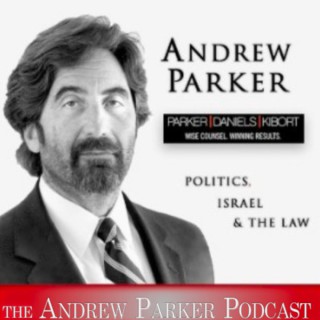
In Episode 482 of The Andrew Parker Show, Andrew Parker delivers a powerful and deeply personal monologue on Iran, Israel, global stability, and what he believes is a defining moment in modern history.Referencing Ronald Reagan's warning that “freedom is never more than one generation away from extinction,” Andrew examines the escalating tensions surrounding Iran's ruling regime, the broader implications for Western civilization, and the opportunity he believes exists to fundamentally reshape the future of the Middle East.This episode explores the connection between Iran's influence, regional instability, terrorism, oil markets, Israel's security, and America's role on the world stage. Andrew also weighs in on Donald Trump's negotiating strategy with Iran and questions whether diplomacy alone can prevent future conflict.From the rise of Islamist extremism in Europe to the fragile nature of freedom itself, this episode challenges listeners to consider whether the world is standing at the edge of greater peace or greater chaos.Topics include:Iran and the Islamic regimeDonald Trump foreign policyIsrael and Middle East stabilityRonald Reagan and freedomHamas and HezbollahGlobal security and terrorismWestern civilization and democracyOil, economics and world peaceAnti-Semitism and rising tensions in AmericaSupport the showThe Andrew Parker Show - Politics, Israel & The Law. Follow us on Facebook, LinkedIn, YouTube and X. Subscribe to our email list at www.theandrewparkershow.comCopyright © 2026 The Andrew Parker Show - All Rights Reserved.

World Cup tickets are going for as high as $45,000. Not in most of our budgets. How did things get so out of hand when the tournament's founder intended to bridge class divides? Today on the show, the origins of the World Cup, from World War I to Mussolini's fascist Italy, and how it grew into the multibillion-dollar spectacle the world is gearing up to watch.Guests:Jonathan Wilson, columnist at The Guardian and author of The Power and the Glory: A New History of the World CupSimon Kuper, columnist at the Financial Times and author of World Cup FeverSupport shows like Throughline with NPR+. Sign up today at plus.npr.orgSee pcm.adswizz.com for information about our collection and use of personal data for sponsorship and to manage your podcast sponsorship preferences.NPR Privacy Policy

A special conversation with author Dr. Will Tuttle on their book “The World Peace Way: Six Keys to Health and Harmony for All.”Dr. Will Tuttle has spent over five decades studying what it actually takes to be healthy — not just physically, but psychologically, spiritually, and socially. A former Zen monk, PhD, and author of the international bestseller The World Peace Diet, he joins this conversation to walk through his newest book, The World Peace Way, a practical guide built around six keys: diet, spiritual practice, relationships, movement, nature, and creativity.What makes this conversation worth staying with is how grounded it is. Dr. Tuttle doesn't trade in abstractions — he talks about the pans you cook with, how you breathe, why squatting is better than sitting, and what junk media does to your cells. Ancient wisdom and cutting-edge science, made usable.=========================================KAJ Masterclass LIVEA video-first, live-first global conversation ecosystem — editorially independent, depth-driven, and supporter-sustained. Hosted by independent journalist Khudania Ajay (KAJ), KAJ Masterclass explores leadership, business, AI, careers, health, creativity, ideas, and the evolving human experience through thoughtful, unscripted conversations grounded in lived experience, clarity, and real-world insight.Every conversation is designed to leave you with something meaningful to think about, understand, or apply.
Support the show

In this conversation, Minter Dial welcomes entrepreneur, athlete, and CEO J Johnson Jr, whose journey traverses viral app creation, elite athletics, and pioneering a new frontier in frequency-based wellness and performance. From launching his first viral app at just fourteen, to shifting his focus towards Division I athletics and ultimately founding High Frequency Highway, J Johnson brings a powerful perspective on self-optimisation, discipline, and the deeper connections between mind, science, and technology. This wide-ranging discussion uncovers J Johnson's fascinating path—from overcoming early allergies and ADHD, to building tech startups in San Francisco and delving into meditation as a gateway to transformation. He shares hard-won insights on neuroplasticity, developing a business model around frequency, and how his innovations in sound and wearable tech aim to “raise the frequency” of individuals, ultimately contributing to peace on Earth. The exchange dives deep into the intersections of neuroscience, quantum physics, personal agency, and the practical implications of shifting brain states for better focus, sleep, and performance, whether on the track or in the boardroom. Whether you're intrigued by the science of sound, searching for tools to boost attention in a world of distraction, or curious about the convergence of spirituality, technology, and business, this episode offers fresh thinking and actionable ideas. Join Minter Dial and J Johnson as they explore the transformative potential of frequency—and what it means to thrive and find purpose in today's rapidly changing world.
Enlightenment made simple Support the show
Support the show
Support the show

They're teeth - obviously. Not swords.Check out our Patreon for bonus shows and more!Musical Attribution:Licensed through NEOSounds.“5 O'Clock Shadow,” “America On the Move,” “Baby You Miss Me,” “Big Fat Gypsy,” “Bubble Up,” “C'est Chaud,” “East River Blues,” “The Gold Rush,” “Gypsy Fiddle Jazz,” “Here Comes That Jazz,” “I Wish I Could Charleston,” “I Told You,” “It Feels Like Love To Me,” “Little Tramp,” “Mornington Crescent,” “No Takeaways.”

Confronting The World Peace Is Impossible, Lie! What if a Specific Kind of Curiosity Is the Cure for Global Dividedness? Show Notes What if the greatest threat to peace isn't hatred… but certainty? In this episode of The Polymathic Perspective Podcast, Dov Baron examines a paradox defining our time: We are more connected than any humans in history… And yet more divided than ever. Drawing on neuroscience, social psychology, history, and real-world conflict, this episode explores why access to information has not created understanding, why speed has replaced depth, and how the human addiction to certainty is quietly fueling division at every level, from families to nations. At the center of this conversation is a powerful idea: Generous curiosity. Not curiosity that seeks to confirm what we already believe, but curiosity that is willing to question identity, slow down judgment, and remain open long enough to discover the humanity behind opposing perspectives. In This Episode • Why connection does not equal understanding • How the attention economy amplifies outrage over wisdom • The psychological roots of binary thinking and tribal division • Why certainty is often mistaken for truth • How curiosity rewires the brain for empathy and learning • The role of context in shaping perception and meaning • Why leaders and systems benefit from division • Real-world examples of reconciliation in extreme conflict The Central Question If peace requires anything… Are you willing to question what you are certain about? Why This Matters Division is not just happening around us. It is being rewarded, amplified, and conditioned into us. And unless we understand the emotional, psychological, and systemic forces driving that division, we risk mistaking reaction for truth, and certainty for wisdom. About the Host Dov Baron is a polymathic thinker, leadership strategist, and host of The Polymathic Perspective Podcast. For over 30 years, he has been elevating Elite Leaders: Soulfully Shaping Global Destiny. Founder of Emotional Meaning Architecture© and Emotional Source Code™. He has worked with high-level leaders and organizations to uncover the deeper emotional and psychological patterns that shape behavior, identity, and culture. He is the creator of the Emotional Source Code™ framework. Listener Reflection Who in your life have you reduced to a position instead of a person? Follow & Share If this episode challenged your thinking, share it with someone willing to sit in questions instead of rushing to answers. #curiosity #worldpeace #humanbehavior #polarization #psychology #neuroscience #identity #Globalleadership #culture #conflict #socialpsychology

Sadhguru tells PBD that human ambition is a limited expression of a deeper need to expand endlessly, and chasing it physically leads to conflict. He argues world peace is impossible without inner peace, exposing the hypocrisy of leaders who can't even control their own minds.

President Trump has been posting up a storm on social media, from attacking CNN to celebrating “World Peace” less than 24 hours after writing “a whole civilization will die tonight.” There are massive questions this morning about what Iran’s official response was to the ceasefire agreement. Trump’s released version is significantly different than the lengthier, more aggressive one reported on by CNN and other news outlets.”See omnystudio.com/listener for privacy information.

President Trump has been posting up a storm on social media, from attacking CNN to celebrating “World Peace” less than 24 hours after writing “a whole civilization will die tonight.” There are massive questions this morning about what Iran’s official response was to the ceasefire agreement. Trump’s released version is significantly different than the lengthier, more aggressive one reported on by CNN and other news outlets.”See omnystudio.com/listener for privacy information.

President Trump has been posting up a storm on social media, from attacking CNN to celebrating “World Peace” less than 24 hours after writing “a whole civilization will die tonight.” There are massive questions this morning about what Iran’s official response was to the ceasefire agreement. Trump’s released version is significantly different than the lengthier, more aggressive one reported on by CNN and other news outlets.”See omnystudio.com/listener for privacy information.
© 2020-2026 Ivy Podcast Discovery LLC
