
POPULARITY

5 episodes with David Barnes

3 episodes with David Barnes

10 episodes with David Barnes

3 episodes with David Barnes

8 episodes with David Barnes

2 episodes with David Barnes

2 episodes with David Barnes

2 episodes with David Barnes

2 episodes with David Barnes

Zephaniah 3:17 Yahweh Sings Over His People Rev. David Barnes
Micah 6:1-8 Who is Like Yahweh? Rev. David Barnes
Original text by Dan Littman, Tom Moran, and Charles Piller. Apologies for my rough voice in this one. It's been a difficult year. “Apple and IBM will work together on architecture-independent multimedia products and license them to other vendors.” IBM never so much as bothered to license QuickTime, and allegedly stopped distributing its multimedia tools to discourage people from using AIX for multimedia delivery. The stupefyingly vague and dull Apple/IBM/Motorola alliance press conference. Warning: do not consume while driving or operating heavy machinery. Get to know your new IBM RS/6000 system! David Barnes talking about Taligent and Workplace/OS, because why not transplant your current computing environment on top of an environment that runs all environments that will be shipping Real Soon Now for … reasons? WWDC 1997 Q&A: What's holding back CHRP? Is Apple afraid of (gasp) being undercut by Macintosh clone makers? clabretro: RS/6000 startup sequence and 1990s GeoCities animé fan page font in the System Management Services console. Installing and running CorelDraw, Netscape 1.0, and Quake on an RS/6000. Remnants of CHRP in the AIX netinstall configuration assistant. Running Windows NT on a G3? More likely than you think. Cameron Kaiser's extremely detailed look at Netware Server on a Power Mac 6100. How about that artwork? That weird point in time where the highest performance AppleShare solution was a giant Apple box running AIX. Get a load of the chonky Motorola PowerStack systems.
Amos 5:18-24 Seek The Lord Rev. David Barnes
It is getting hot in California, which has us thinking about the massive carbon footprint of healthcare. The emergency department is famously resource-heavy, but can we save lives and reduce waste? Dr. David Barnes joins us to explain how going green isn’t just about being a “tree hugger”—it's about saving money, cutting waste, and making our hospitals resilient against supply chain chaos. Defining Healthcare Sustainability Balancing Safety and Footprint: Sustainability in healthcare means delivering efficient, affordable care that minimizes resource waste while remaining clinically safe and meaningful. The Power of Resiliency: A sustainable healthcare system is inherently a resilient one. Reducing reliance on single-use items and utilizing local renewable energy sources (like microgrids) protects hospitals from supply chain disruptions caused by geopolitical conflicts or weather-driven power grid failures. The Three Scopes of Emissions Scope 1 (Direct): Emissions directly produced by hospital operations, such as idling fleet vehicles and leaking anesthetic gases. Scope 2 (Indirect): Purchased energy used to power and heat the facilities (e.g., local electricity and steam lines). Scope 3 (Supply Chain): The largest bucket, making up 60% to 80% of healthcare emissions. This includes employee commutes, medical waste incineration, manufacturing of disposable devices, and food production. Clinical Traps: Where We Waste the Most Pre-packaged Kits: Studies show 75% to 80% of items inside specialized kits (like central lines) go completely unused and are thrown away. Over-Preparation: Opening multiple single-use items (like various ET tube sizes) or donning full trauma PPE for minor injuries creates an immediate, unnecessary trash stream. Pharmaceutical Waste: Standard packaging size leads to heavy drug wasting (e.g., using 5 mL from a 100 mL propofol bottle). This regulated medical waste is costly and energy-intensive to incinerate. The Glove Epidemic: Glove overuse skyrocketed during COVID-19 and became a habit. Most routine encounters carry no contamination risk, making glove use clinically unnecessary. Shifting the Culture “Take What You Need, Leave What You Don’t”: Avoid opening supplies you may not need or bringing extra gauze or syringes into a room. Due to infection safety protocols, these often end up in the trash. Watch Where You Toss: Keep coffee cups and paper out of the red biohazard bins. Regulated medical waste costs six times more to process and must be incinerated, creating massive greenhouse gas emissions. Embrace Reprocessing & Reusables: Support partnerships with companies that safely clean and reuse devices historically labeled “single-use” (like EKG leads or waffle mattresses). Swap disposable plastic gowns for reusable cloth gowns that survive 90 washes. Model the Behavior: Culture change takes patience and persistence. Instead of finger-wagging or shaming colleagues, visibly adopt sustainable habits to drive grassroots practice changes. Key Takeaways for the ED Clinician Speak up on bad design: Clinicians are on the front lines of waste. Advocate for local sustainability initiatives to grab the attention of hospital executives who handle major purchasing contracts. Normalize virtual alternatives: Protect staff well-being and slash commuting emissions by offering Zoom or Teams options for short, solitary administrative meetings. Keep it in perspective: Healthcare sustainability is about finding the sweet spot where clinical safety, resource utilization, and environmental impact meet. Hosts: Dr. Julia Magaña, Professor of Pediatric Emergency Medicine at UC Davis Dr. Sarah Medeiros, Professor of Emergency Medicine at UC Davis Guest: Dr. David Barnes, Professor of Emergency Medicine, Director of ED Sustainability, and Member of the Sustainability Committee at UC Davis Health Resources: Practice Greenhealth Health Care Without Harm Green ED (Royal College of Emergency Medicine) *** Thank you to the UC Davis Department of Emergency Medicine for supporting this podcast and to Orlando Magaña at OM Productions for audio production services.

Is there life on Europa? We take a look at Greenland and Antarctica to find out more about life on Jupiter’s icy moon. Further reading: Life on Venus claim faces strongest challenge yet Stanford researchers’ explanation for formation of abundant features on Europa bodes well for search for extraterrestrial life Show transcript: Welcome to Strange Animals Podcast. I'm your host, Kate Shaw. Today we're going to learn about the potential of life on Europa, a moon of Jupiter! To do that we'll need to look at some extreme life on Earth too. Back in September 2020, we talked about potential signs of life in the atmosphere of Venus, which excited me a whole lot. As a follow-up to that episode, further studies suggest that signs of phosphine detected in Venus's atmosphere, which might be produced by life, may actually just be sulfur dioxide (not a sign of life). But while it's not looking likely that phosphine is actually found in Venus's atmosphere, so far no studies can completely rule it out. So, maybe. Venus isn't the only part of our solar system where life might exist outside of Earth, though. Astronomers have been speculating about Europa for a long time. The planet Jupiter is a gas giant that has at least 80 moons, but Europa is the one that's closest to the planet. It's only a little bit smaller than our own moon. Europa has an atmosphere, mostly made up of oxygen but so thin that if you could magically appear on the moon, you wouldn't be able to breathe. Also, you would freeze to death almost immediately. It's a dense moon, so astronomers think it's probably mostly made up of silicate rock, which is what Earth is mostly made up of, along with Mars, Venus, Mercury, and a lot of moons. If you've ever looked at our moon through a telescope or binoculars, you know it has lots of impact craters on its surface caused by asteroid strikes in the past. Europa doesn't have very many craters—in fact, its surface is incredibly smooth except for what look like cracks all over it. It's mostly pale in color, but the cracks are reddish-orange or brown. The cause of the cracks has been a mystery ever since astronomers got the first good look at Europa. Many astronomers think these cracks are where warm material from below the surface erupted through the crust, sort of like what happens where lava oozes up on Earth and forms oceanic ridges. But on Europa, the material breaking through the crust isn't lava, it's ice—but ice that isn't as cold as the surface ice. You know you're on a cold, cold moon when ice that's close to freezing instead of way below freezing can act like lava. The surface of Europa is about 110 kelvin at the equator and even colder at the poles. That's -260 F or -160 C. The exciting thing is that researchers are pretty sure the surface of Europa is icy but that the crust lies over a deep saltwater ocean that covers the entire moon. Yes, an ocean! As Europa orbits Jupiter, the planet's gravity pulls at the moon, while the smaller gravity fields of the other nearest moons also pull on Europa in other directions. This push and pull causes tides that help warm the ocean and keep it from freezing solid. The brown coloration in the moon's cracks may be due to mineral salts from the water that get leached up through the cracks after warm ice breaks through, assuming that's what is actually happening to cause the cracks. Astronomers even have images of Europa taken by space probes that show what look like water plumes erupting through the surface and shooting up an estimated 120 miles high, or 200 km. But new studies suggest that the water plumes might not be from the ocean. They might be from pockets of water that form within the crust itself, which grow larger until they burst out through the crust. This is even more exciting when it comes to potential life on the moon, because it suggests that the crust isn't just a big block of ice. It's a dynamic system that might harbor life instead of all potential life on Europa being restricted to the ocean. But to learn more about Europa, we have to come back to Earth and examine the island of Greenland. Most of Greenland is covered with a permanent ice sheet like the ones found in Antarctica, but it's a lot easier to study than Antarctica. One feature seen in the ice sheet is something called a double ridge, shaped sort of like a capital letter M. It's caused when the ice fractures around pressurized water that forms inside the ice sheet and refreezes. This is caused when water from streams and lakes on the surface finds its way into the ice. The double ridge can look like a crack. New pictures of the cracks on Europa's surface look just like Greenland's double ridges, but much bigger. My explanation of all this is extremely clumsy, because this is a really complex mechanism. Researchers only figured it out because some of the team had been studying Greenland's double ridges for a completely different project, and noticed the similarities. There's a link in the show notes to an article about this phenomenon if you want to learn more. The Greenland ice sheet is over a mile thick. In 1966, the U.S. Army drilled into the ice to see what was under it, and the answer is dirt, as you might have expected. They took a 15-foot, or 4.5 meter, core sample and stuck it in a freezer, where everyone promptly forgot about it for 51 years. At some point it ended up in Denmark, where someone noticed it in 2017. In 2019, the frozen core sample was finally studied by scientists. They expected to find mostly sand and rock. Instead, it was full of beautifully fossilized leaves and other plant material. The main reason scientists were so surprised to find leaves and soil instead of just rock is that ice is really heavy, and it moves—slowly, but a mile-thick sheet of ice cannot be stopped. If you listened to the recent episode in the main feed about the rewilding of Scotland, you may remember that Scotland doesn't have a lot of fossils from the Pleistocene because it was covered in glaciers that scoured the soil and everything in it down to bedrock, destroying everything in its path. But this hasn't happened in Greenland, even though the sample was taken from an area only about 800 miles, or 1,290 km, from the North Pole. Where the ice sheet now is, there used to be a forest. Obviously, the ice sheet hasn't always covered Greenland. Research is ongoing, but a study of the sediment published in 2021 indicates that Greenland was ice free within the last million years, and possibly as recently as a few hundred thousand years. All this is interesting, but it's very different from Europa, whose ice sheets have probably been in place almost from the moon's formation. What kind of life can live on, in, or under ice sheets? On Earth, at least, a lot of organisms live on glaciers. Most are tiny or microscopic, including a type of algae that grows on top of ice, bacteria that live pretty much everywhere, including inside ice crystals, and microbes of various kinds. But there are some larger organisms, including glacial copepods, snow fleas, glacial midges, and the ice worms we talked about in episode 185 that live on glaciers in the Pacific Northwest. Most likely, life on Europa will be tiny too. Researchers hypothesize that there could be microbial life living deep within the ice or in the pockets of melted water that develop inside it. There might be microbial mats or algae-type organisms that live on the underside of the ice, anchored there but able to extract nutrients from the ocean water. But obviously, Europa's ocean is where most life will probably be found, assuming it's there. While there's no environment quite like Europa's to be found on Earth, since Earth is so close to the sun and nice and warm in comparison, parts of the deep sea are somewhat similar. Lots of animals live around hydrothermal vents, where volcanic activity breaks through the ocean floor and superheats water in small areas. Invertebrates of all kinds have adapted to live between boiling hot water and frigid deep-sea water, where absolutely no sunlight has ever reached. Animals like giant tube worms can grow nearly 10 feet long, or 3 meters, and don't actually eat anything. Instead, they have symbiotic bacteria that provide them with all the nutrients they need while in turn, the bacteria get a safe place to live. When the intensely heated, mineral-rich water of a hydrothermal vent comes in contact with cold water, it causes all sorts of chemical reactions. That's what fuels most of the life around the vents. There are even some fish that live around hydrothermal vents, including the cutthroat eel that can grow over 5 feet long, or 1.6 meters. They're bottom-dwelling deep-sea eels that live worldwide, but they spend time around hydrothermal vents to eat some of the other animals that live there exclusively. There's even a type of bacteria found at one vent off the coast of Mexico that uses the faint light emitted by lava deep within the vent for photosynthesis. All other known photosynthesizing organisms use the sun as a light source. Scientists think that Europa has hydrothermal vents similar to the ones on Earth. Since at least some researchers think life on Earth got its start around hydrothermal vents, it wouldn't be surprising if life forms also live around Europa's vents. But that doesn't mean that life could only live around the vents. In 2018, a team of scientists in Antarctica bored through the ice sheet and took a sample from the sea floor far below the ice to see if anything lived there. Since this was in the middle of the ice sheet with absolutely no sunlight or open ocean within a million square kilometers, they didn't expect to find much. When they gave the sample to marine biologist David Barnes to examine, and he got a first look at it, initially he actually thought they'd pulled a practical joke on him. There was no way this one small sample could contain evidence of so much life in such an extreme environment. He counted 77 different species of organism in the sample. There were worms, bryozoans, sponges, even fragments of jellyfish, and of course there were lots and lots of microorganisms. All the animals were small, which isn't surprising. That they were there at all was the truly surprising thing. We don't know yet if life exists anywhere outside of Earth. Odds are good that it does, just because there are so many planets and moons around so many stars throughout our galaxy and all the other galaxies in the universe. Whether we'll ever find it is another thing. Until we do, though, we will just have to appreciate all the amazing diversity of life on our own planet, and keep watching the night skies and wondering. Thanks for your support, and thanks for listening!

Investor Fuel Real Estate Investing Mastermind - Audio Version
In this conversation, David shares his journey as an architect with a focus on sustainable living and innovative design. He discusses his background in high-end hospitality architecture and his vision for creating self-sustaining homes that harmonize with nature. David emphasizes the importance of community, environmental responsibility, and the need for a paradigm shift in how we approach architecture and real estate. He advocates for integrating advanced technology into homes to create a more sustainable future. Professional Real Estate Investors - How we can help you: Investor Fuel Mastermind: Learn more about the Investor Fuel Mastermind, including 100% deal financing, massive discounts from vendors and sponsors you're already using, our world class community of over 150 members, and SO much more here: http://www.investorfuel.com/apply Investor Machine Marketing Partnership: Are you looking for consistent, high quality lead generation? Investor Machine is America's #1 lead generation service professional investors. Investor Machine provides true 'white glove' support to help you build the perfect marketing plan, then we'll execute it for you…talking and working together on an ongoing basis to help you hit YOUR goals! Learn more here: http://www.investormachine.com Coaching with Mike Hambright: Interested in 1 on 1 coaching with Mike Hambright? Mike coaches entrepreneurs looking to level up, build coaching or service based businesses (Mike runs multiple 7 and 8 figure a year businesses), building a coaching program and more. Learn more here: https://investorfuel.com/coachingwithmike Attend a Vacation/Mastermind Retreat with Mike Hambright: Interested in joining a "mini-mastermind" with Mike and his private clients on an upcoming "Retreat", either at locations like Cabo San Lucas, Napa, Park City ski trip, Yellowstone, or even at Mike's East Texas "Big H Ranch"? Learn more here: http://www.investorfuel.com/retreat Property Insurance: Join the largest and most investor friendly property insurance provider in 2 minutes. Free to join, and insure all your flips and rentals within minutes! There is NO easier insurance provider on the planet (turn insurance on or off in 1 minute without talking to anyone!), and there's no 15-30% agent mark up through this platform! Register here: https://myinvestorinsurance.com/ New Real Estate Investors - How we can work together: Investor Fuel Club (Coaching and Deal Partner Community): Looking to kickstart your real estate investing career? Join our one of a kind Coaching Community, Investor Fuel Club, where you'll get trained by some of the best real estate investors in America, and partner with them on deals! You don't need $ for deals…we'll partner with you and hold your hand along the way! Learn More here: http://www.investorfuel.com/club —--------------------

Oral Arguments for the Court of Appeals for the Seventh Circuit
United States v. David Barnes

Scotland cut it close, but they were ultimately defeated by the All Blacks in Murrayfield. The Kiwi side left with a 25-17 win victory, despite allowing the Scots back into the game after halftime and get back to 17-all. Scottish rugby journalist David Barnes joined Piney to discuss further. LISTEN ABOVESee omnystudio.com/listener for privacy information.
Original text by Tim Warner, Macworld, August 1995. Additional clone cancellation fallout information from Macworld, October 1997. Original Power Computing magazine ad. Clearly the Mac OS clone program failed due to the absence of discount furniture warehouse-style radio advertising. Gary Davidian: “As far as I know, nobody ever made a CHRP machine.” “Mr. OS/2” David Barnes talking about IBM's intention to support Mac applications running on top of Workplace OS. IBM's repeated attempts to run all OSes on top of one hardware platform and one hardware architecture lead to the incorrect assumption that PowerPC Macintoshes would run DOS and Windows right out of the box. Insignia Solutions' SoftWindows marketing department did what came naturally. The Motorola StarMax 4000-series motherboard, designed and manufactured entirely by Apple. Jean-Louis Gassee: “We used PReP as the basis for the design of the BeBox…”

To explain how we ended up with so many, and what rights the public have to use them, field adviser David Barnes from the Outdoor Access Commission joins Emile Donovan.

ABC News Investigative Reporter Jared Kofsky discusses American David Barnes, who still remains locked up in Russia.

In this episode, we dive into the inspiring tale of David Barnes—a story of resilience, redemption, and the transformative power of cold water immersion.From the tough, wild mountains of West Cumbria to the depths of David's personal struggles, his journey is a testament to the indomitable spirit of the region and its people. Battling personal demons, facing the collapse of his marriage, and confronting the haunting spectre of childhood trauma, David found solace and strength in the icy embrace of cold water swimming.Through his perseverance and the healing power of nature, David emerged from the depths of despair, revitalised, and renewed. Join us as we delve deeper into David's story, drawing inspiration from his triumphs and tribulations. Whether you're seeking motivation, enlightenment, or simply a reminder of the resilience within us all, Gobsmacked! promises to uplift and inspire. Hosted on Acast. See acast.com/privacy for more information.
Scotland's have retained rugby's Calcutta Cup with a 30-21 win over England at Murrayfield. Ireland now the only unbeaten side after a 31-7 triumph over Wales in Dublin. Scottish rugby expert David Barnes joined Piney to discuss. LISTEN ABOVESee omnystudio.com/listener for privacy information.

David Barnes, guest preacher and Reformed University Fellowship Mizzou pastor encouraged us with God's Word from Matthew 5:13-16. In this passage, the Lord declares that we are the salt of the earth and the light of the world. But how are we to do this? We do this as we live out of who we are and as we live for whose we are.

David Barnes, Chief Financial Officer at Trimble Inc. (NASDAQ:TRMB) This episode is sponsored by the M&A Science Academy, DealRoom, and FirmRoom. To join our growing online community of M&A practitioners, visit mascience.com/academy. Ready to take your M&A to the next level with software made to manage each stage of the deal process? See how DealRoom can facilitate your next deal at dealroom.net. FirmRoom provides 80% cost savings over VDRs that bill by page and delivers a far better user experience to boot. Sign up in under 2 minutes by going to firmroom.com. Episode Timestamps 00:00 Intro 04:29 The Role of CFO 05:14 How the CFO's roles differs from the CEO 06:24 Decision-making process and approvals workflow 09:43 Communicating opportunities 11:15 Prioritization 14:18 Balancing the allocation of budgets 16:42 How equity compensation works 18:14 How aligned investment analysts are when evaluating a company 20:08 Forecasting deals 22:53 Priorities when looking at deals 26:49 Balancing priorities when structuring earnouts 28:31 Understanding a company's culture 31:08 Integration from a CFO's perspective 33:49 How the speed of integration impacts value realization 37:05 Biggest lessons learned as a CFO 39:23 How to pitch deals to the CFO 41:38 Craziest thing in M&A
Scotland will play Ireland to keep their Rugby World Cup hopes alive, but a loss will see them packing their bags early. Scottish Rugby reporter David Barnes joined Piney from France to look at whether they can pull off the upset. LISTEN ABOVE See omnystudio.com/listener for privacy information.

Join Brendan O'Brien and his co-host Simon Lewis, each week throughout the Rugby World Cup tournament, for all the latest, news, views, and debate with their panel of expert guests including, Donal Lenihan, Ronan O'Gara, Craig Ray, David Barnes, Mick Cleary, Ciara Griffin and James Harrington. Expect in-depth analysis with insight into the Irish camp and beyond, throughout the Rugby World Cup. Exclusively available as part of an Irish Examiner subscription. Hosted on Acast. See acast.com/privacy for more information.
With the Rugby World Cup less than a week away, Piney catches up with a number of rugby experts to discuss chances of some of the underdogs. Here, he chats with Indra Singh out of Fiji, David Barnes from Scotland, Alasdair McKenzie in Italy and Rich Freeman in Japan to gauge their thoughts heading into the World Cup. LISTEN ABOVESee omnystudio.com/listener for privacy information.

Before the advent of the germ theory of disease in the 1870s, quarantine provided one of the few effective means to prevent or alleviate epidemics. The Lazaretto quarantine station in Philadelphia illustrates the history of quarantine both before and after the discovery of pathogenic microbes. With us to explore the history of 18th and 19th century quarantine in Philadelphia, and what it meant for public health, is David Barnes. David teaches the history of medicine and public health at the University of Pennsylvania, where he is an Associate Professor of History and Sociology of Science. David received a BA in history from Yale in 1984 and a Ph.D. in history from the University of California, Berkeley in 1992. His books include The Making of a Social Disease: Tuberculosis in Nineteenth-Century France (University of California Press, 1995), The Great Stink of Paris and the Nineteenth-Century Struggle against Filth and Germs (Johns Hopkins University Press, 2006), and Lazaretto: How Philadelphia Used an Unpopular Quarantine Based on Disputed Science to Accommodate Immigrants and Prevent Epidemics (Johns Hopkins University Press, 2023).
Multitasking on the Macintosh evolves beyond Switcher. MultiFinder review by Bruce Webster, Macworld, April 1988. Commentary by Jerry Borrell, Macworld, January 1988. Correction: Declaring an application's memory requirements through a SIZE -1 resource began in the days of Switcher. (source: MacTech Spring 1989) Charismatic IBM evangelist David Barnes selling OS/2 Steve Jobs-style at a 1993 meeting of the HAL-PC Users Group. David's presentation is in the second half of the meeting. Memory prices were a hot topic in computer magazines during the DRAM crisis of 1988-1989. CE Software's DiskTop: helping you fake multitasking since 1986. Rick Chapman's “In Search Of Stupidity” covers the fall of dBase, Borland, OS/2, WordStar, and other things people under the age of 50 have never heard of. Steve Crutchfield of BeamWars fame has (in the year 2023–I am not making this up) backported Mac OS 8's relative dates feature to System 6! Download “Today's The Day” from Macintosh Garden. (discussion, Let's Play BeamWars) “Damn!” is a registered trademark of 65scribe.

Today on Journey Map, we're joined by David Barnes, President & Creative Director at Charrette. In this episode, we talk about the role of creativity throughout his life, the career jumps that he made over the last few years, and how interviewing different agencies pushed him to start his own.Learn more from David and Charrette:Visit Charrette: https://charrette.ca/Connect with David: https://www.linkedin.com/in/davidbarnes3/
In this episode of the Work in Progress podcast, we return to Austin to bring you another panel from the SXSW EDU conference earlier this month. Today, 65% of jobs require some education beyond high school. In the U.S., 62% of working-age adults do not have a degree. Together, these numbers illustrate why we have a skills gap; we need to help more Americans upskill to find sustainable employment. This demands coordination among education providers, employers and policy makers. Unfortunately, current policy proposals undermine potential solutions such as online learning which could help quickly expand education access to millions of learners. WorkingNation president Jane Oates moderated a panel on the subject: Online Backlash: Bad Policy Holds Students Back. She was joined on stage by Scott Pulsipher of Western Governors University, Michael Hansen of Cengage Group, and David Barnes of IBM. They also talked about the gap between what some educational institutions promise and what they actually deliver. You can listen to our conversation here, or wherever you get your podcasts. Episode 265: Michael Hansen, Cengage Group; Scott Pulsipher, Western Governors University; David Barnes, IBM; and Jane Oates, WorkingNationHost & Executive Producer: Ramona Schindelheim, Editor-in-Chief, WorkingNationProducer: Larry BuhlExecutive Producers: Joan Lynch and Melissa PanzerTheme Music: Composed by Lee Rosevere and licensed under CC by 4.0Download the transcript for this podcast here.You can check out all the other podcasts at this link: Work in Progress podcasts
In this episode of the Work in Progress podcast, we return to Austin to bring you another panel from the SXSW EDU conference earlier this month. Today, 65% of jobs require some education beyond high school. In the U.S., 62% of working-age adults do not have a degree. Together, these numbers illustrate why we have a skills gap; we need to help more Americans upskill to find sustainable employment. This demands coordination among education providers, employers and policy makers. Unfortunately, current policy proposals undermine potential solutions such as online learning which could help quickly expand education access to millions of learners. WorkingNation president Jane Oates moderated a panel on the subject: Online Backlash: Bad Policy Holds Students Back. She was joined on stage by Scott Pulsipher of Western Governors University, Michael Hansen of Cengage Group, and David Barnes of IBM. They also talked about the gap between what some educational institutions promise and what they actually deliver. You can listen to our conversation here, or wherever you get your podcasts. Episode 265: Michael Hansen, Cengage Group; Scott Pulsipher, Western Governors University; David Barnes, IBM; and Jane Oates, WorkingNationHost & Executive Producer: Ramona Schindelheim, Editor-in-Chief, WorkingNationProducer: Larry BuhlExecutive Producers: Joan Lynch and Melissa PanzerTheme Music: Composed by Lee Rosevere and licensed under CC by 4.0Download the transcript for this podcast here.You can check out all the other podcasts at this link: Work in Progress podcasts
For most physicians, talk of court, lawyers, or subpoenas brings on a rush of anxiety. The medical and legal worlds can overlap in many ways. In this five part series, we'll cover everything from the basics, to being a percipient or expert witness, to the dreaded malpractice lawsuits. Joining us as Guest Host, is Dr. John Rose, Professor of Emergency Medicine at UC Davis. In the fifth and final episode of our series, we explore the role of expert witness with our own experts, Dr. Jim Holmes and Dr. David Barnes. We get into what it takes to be a medical expert and what to expect when you meet with the legal team and work through a case. There are benefits to being an expert witness, but it can also be a stressful and time consuming endeavor. Is it right for you? Have you acted as an expert witness? What advice to you have for others? Please share! Tag us on social media, @empulsepodcast, or reach out via email empulsepodcast@gmail.com, or connect through our website, ucdavisem.com. Encourage your friends and colleagues to listen and share their perspective, too! ***Please rate us and leave us a review on iTunes! It helps us reach more people.*** Hosts: Dr. Julia Magaña, Associate Professor of Pediatric Emergency Medicine at UC Davis Dr. Sarah Medeiros, Associate Professor of Emergency Medicine at UC Davis Guest Host: Dr. John Rose, Professor of Emergency Medicine and EMS Fellowship Director at UC Davis Guest: Dr. David Barnes, Professor of Emergency Medicine at UC Davis Dr. James Holmes, Professor of Emergency Medicine at UC Davis Resources: Expert Witness Guidelines for the Specialty of Emergency Medicine, ACEP Policy Statement NIH NLM StatPearls: Expert Witness, by Yasmyne Ronquillo, Kenneth J. Robinson, and Patricia P. Nouhan *** Thank you to the UC Davis Department of Emergency Medicine for supporting this podcast and to Orlando Magaña at OM Productions for audio production services.

Letters of Two Brides by Honore de Balzac audiobook. Letters of Two Brides is an epistolary novel. The two brides are Louise de Chaulieu (Madame Gaston) and Renée de Maucombe (Madame l'Estorade). The women became friends during their education at a convent and upon leaving began a life-long correspondence. For a 17 year period, they exchange letters describing their lives. Michelle Crandall reads Renee's letters, and Kara Shallenberg reads Louise's. Letters from the men in their lives are read by Peter Yearsley, David Barnes, Denny Sayers, and Sean McKinley

Generally, when legendary CEO Roger Enrico wasn't happy, just about every PepsiCo executive from junior grades on up knew about it. So it was that when David Barnes was told he would be presenting to Enrico on a subject known to inflame the CEO's ire, he knew that his presentation—one way or the other—would be career-defining. “Enrico was known to be very impatient with those who would present a bunch of facts but offer no insights,” remembers Barnes, whose tryst with destiny surfaced via the guidance of none other than Indra Nooyi, PepsiCo's future CEO, who Barnes tells us was his “great mentor and sponsor” during his Pepsi years. “Pepsi had hired a big consulting firm and they had dumped a lot of data on us, but they couldn't find any insights, so Indra asked me to work with the consultants and actually get the insights out of the data,” continues Barnes, who had been hired in the mid-1990s to be part of a strategy group within PepsiCo that had been tasked with integrating strategy and finance across the company. As it turned out, Barnes's presentation succeeded in delivering a number of new insights related to the profitability (or lack thereof) of PepsiCo's restaurant business in China. “We had a small, money-losing business in China at a time when the Asian economies at large were experiencing deep recessions, so the questions being asked were ‘Do we give up?' and ‘Do we double down?,'” recalls Barnes, who would soon open a new career chapter in China—an indication that perhaps his presentation had gone well. “They wanted a known quantity in China—someone with the company's corporate interests at heart—so I became responsible for finance as well as our development activities around new stores for KFC and Pizza Hut,” explains Barnes, who would subsequently use data to better expose an opportunity for new stores inside China's smaller tertiary markets rather than in big cities. “We figured out that there was a better way to do capital resource allocation just for these markets,” comments Barnes, who recalls the business leader who ultimately made the call when it came to opening new stores as saying: “Let's get at it!” –Jack Sweeney
The parables come at the height of opposition to Jesus's teaching & have a wealth of meaning about who Jesus is & what His Kingdom looks like! Campus Minister, David Barnes looks at the Parable of the Two Debtors and unpacks what Jesus is communicating to us today.
This is a beautifully constructed parable; and at the same time, a hard one to understand. Campus Minister, David Barnes, attempts to unpack this parable, allowing the context to be the key that unlocks the meaning of this tough parable about sobering realities! Does God give us enough to be saved?
The Parable of the Two Sons (or Prodigal Son) is one of the most beautiful parables that Jesus tells. Campus Minister, David Barnes, unpacks how this parable really isn't about the two sons; but rather, is about the pursuit of the compassionate father!
When God calls us to the Great Banquet, will we have excuses on why we cannot participate? Tune in as Campus Minister, David Barnes, unpacks this convicting, but encouraging parable about God's warning & grace! Will you come to the most epic party in the Cosmos?
Campus Minister, David Barnes, unpacks the meaning (in context) of the heart of the Rich Fool. How many of us build our lives on worldly things that will disintegrate before the Lord? The Rich Fool builds his life on wealth, will that be enough?
Campus Minister, David Barnes, looks at Romans 6:1-11 and how that relates to our union with Christ & our sanctification process. In other words, how we are becoming more like Jesus through the power of the Spirit. Tune in to hear about how this happens by grace alone!
"What shall we do to inherit eternal life?" Tune in to see how Campus Minister, David Barnes, unpacks this important question & orients us back to the grace of Jesus in the Gospel! "What kind of neighbor are we becoming?"
Campus Minister, David Barnes, delves into one of Jesus's most famous parables in order to learn about the different "soils" (hearts) that the Word of God lands on. "He who has ears to hear, let him hear!"
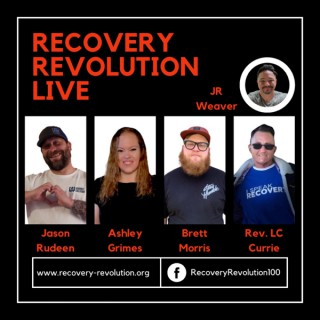
David Barnes is the owner of Broken Chains Apparel. The mission is to create inspirational designs to make you proud to have made it through addiction into recovery. Our Inspiration: Our products are inspired by our Friends, Family and Customers testimonies of Recovery. They are creative, high quality products that are designed especially for you. Discover our story and meet the people that make our brand what it is. Giving Back: Not only does Broken Chains Apparel want to be a retailer of custom recovery shirts, we want to help be an advocate for addiction recovery. This is why we are giving 15% of sales back to a local Ministry, Tristan's Haven. You can learn more about them on their Facebook page at https://www.facebook.com/TristansHaven2016 www.brokenchainsapparel.com | Facebook | Instagram
Campus Minister, David Barnes, unpacks what Jesus's healing of a paralyzed man at Bethesda tells us about his person & work! Do you want to be healed? We all have to ask ourselves that question!
John the Baptist boldly exclaims that Jesus is the "Lamb of God, who takes away the sin of the world!" Listen now as Campus Minister, David Barnes, unpacks what that bold proclamation means about who Jesus is and what he came to do!

Pentecost Sunday May 23, 2021 Fr. David Barnes - Special guest homilist for Fr. Bobby LeBlanc's first Mass here at St. Paul's

This week we sit down with David Barnes, owner of Jefferson Street Coffee in Lexington Kentucky. David discusses turning a roasting hobby into a full time coffee gig, and shares some useful tips on running a business yourself. Episode sponsored by: Parkette Drive-In Intro Music: Off The Lawn- The Brook and The bluff

David Barnes the Roast Master and Proprietor of Smokin Aces Coffee joins the Lushes this week to take about coffee roasting, history and the perfect marriage of coffee and whiskey. All music is by the awesome Throw Logic band www.throwlogic.com @throwlogic The voice of Reginald the Liquid Lawyer is courtesy of @coventrycocktails
This week for our interview series, Stephen sits down with David Barnes of Generation Opportunity and Al Downs of Americans for Prosperity. Barnes is a former guest of the show and Al is a first timer. Both come with a deep love and knowledge of Star Wars. We discuss the political message of the prequels, libertarianism and how it does or does not fit into Star Wars and also how vulnerable America may be to dictatorship. Al Downs and David Barnes dissect the Republic's deregulation of the banks and whether or not that is an accurate reflection of how government handles crisis, and they also share their favorite moments in the saga. Follow Al Downs on Twitter @AlbertJDowns Get full access to Geeky Stoics at www.geekystoics.com/subscribe
"I love democracy, I love the Republic." Little did the Senate know but Chancellor Palpatine had his fingers crossed. How do democracies descend into tyranny is the primary question of our new episode. Star Wars is riddled with history from ancient Rome, France, Germany and ties to contemporary American politics. Beltway Banthas welcomes to the show David Barnes, Policy Director at Generation Opportunity , an experienced political professional and student of Plato's writings on democracy in ancient Greece. The show received exclusive audio from the lair of Emperor Trumpatine himself, its FANTASTIC and you won't wanna miss it. You can hear from from our overlord Emperor Trumpatine on Twitter @RealTrumpatine . The show is joined by the first addition to our team, Swara Salih, located in the UK and reporting to us as Senior Foreign Correspondant on "Brexit", the British exit from the EU. Swara wrote a piece on our website you must check out to know how Star Wars can make sense of this news in Europe. Star Wars Can Make Sense of Brexit: http://beltwaybanthas.com/2016/06/26/brexit-star-wars-can-make-sense-of-britain-leaving-the-eu/ Please do leave us a review on your podcatcher! Send us an email of feedback or a question to beltwaybanthas@gmail.com We WANT to hear from you and get to know our listeners. As usual you can find us online at www.BeltwayBanthas.com Twitter @BeltwayBanthas and www.Facebook.com/beltwaybanthas Stephen is @Stephen_Kent89 Tirso is @ItsJustTirso Get full access to Geeky Stoics at www.geekystoics.com/subscribe

Anne McElvoy talks to Dame Fiona Reynolds about a career spent defending the beauty of the British landscape, and considers an exhibition of English beauties at the Bowes Museum. She is also joined by former minister The Rt Hon David Willetts, media executive Charles Brand and Marc Stears head of the New Economics Foundation to discuss the role of the state in the 21st century, and ahead of Sunday's Drama on 3 she explores literary depictions of the city of Venice with David Barnes. Dame Fiona Reynolds' book is called The Fight For Beauty: Our Path to a Better Future English Rose Feminine Beauty from Van Dyck to Sargent runs at the Bowes Museum from 14 May - 25 September 2016 and if you're in Liverpool there's still a couple of weeks to catch the Walker Gallery show of Pre Raphaelite beauties Pre-Raphaelites: Beauty and Rebellion which runs until June 5th David Willetts is the author of The Pinch. David Barnes' book is called The Venice Myth: Culture, Literature, Politics, 1800 to the Present. Naomi Alderman's imagining of the story of Jessica from the Merchant of Venice is being broadcast on Sunday night on Radio 3 at 10pm and there's an introductory animation on the Radio 3 website and a link to Professor Jerry Broton's Sunday Feature investigating the Venice Ghetto. Producer: Eliane Glaser
© 2020-2026 Ivy Podcast Discovery LLC

