
POPULARITY
Categories

101 episodes with creative directors

100 episodes with creative directors

49 episodes with creative directors

65 episodes with creative directors

48 episodes with creative directors

60 episodes with creative directors

39 episodes with creative directors

43 episodes with creative directors

78 episodes with creative directors

72 episodes with creative directors

18 episodes with creative directors

22 episodes with creative directors

16 episodes with creative directors

31 episodes with creative directors

14 episodes with creative directors

25 episodes with creative directors

26 episodes with creative directors

20 episodes with creative directors

23 episodes with creative directors

19 episodes with creative directors

30 episodes with creative directors

24 episodes with creative directors

19 episodes with creative directors

40 episodes with creative directors

24 episodes with creative directors

12 episodes with creative directors

15 episodes with creative directors

34 episodes with creative directors

27 episodes with creative directors

22 episodes with creative directors

18 episodes with creative directors

37 episodes with creative directors

20 episodes with creative directors

14 episodes with creative directors

12 episodes with creative directors

15 episodes with creative directors

12 episodes with creative directors

11 episodes with creative directors

11 episodes with creative directors

22 episodes with creative directors

10 episodes with creative directors

22 episodes with creative directors

11 episodes with creative directors

13 episodes with creative directors

12 episodes with creative directors

12 episodes with creative directors

29 episodes with creative directors

14 episodes with creative directors

14 episodes with creative directors

14 episodes with creative directors

12 episodes with creative directors

30 episodes with creative directors

9 episodes with creative directors

24 episodes with creative directors
Grace Coddington has been working in fashion for longer than most of us have been alive. She started working as a junior editor at British Vogue back in 1968 and before that, she was modeling. Grace served as the Creative Director at American Vogue for nearly three decades and since stepping back from that role, has continued to work on shoots across many major publications. Grace, now in her late eighties, joined Chloe in the studio for a conversation about her latest work Grace: Now, a massive yellow art book that compiles her favorite fashion shoots from the last decade. The spreads come from thirteen photographers, many of whom are Vogue regulars including Rafael Pavarotti, Annie Leibovitz, and Steven Meisel. In order to narrow down her selection, she printed out hundreds of images, laid them out on boards, and made a dummy book a la Vogue way: “I learned from the best.” When asked if her favorite shoots regularly fluctuate, Grace replied “One always loves the last one one did.” In the opening pages of the book, there is a handwritten tribute to her late friend, the fashion journalist Michael Roberts, noting this is her first major project without him in her career. “Michael was someone who could complete my sentences,” she told Chloe, “I'd known him since the early '70s, so he knew my life very well. He could write and he was a visual person too. I wanted to do it in my handwriting because I felt that I was talking to him. I adored him.” Reflecting on the 2009 ‘The September Issue' documentary, she thinks of it now as a distinct shift in fashion and her life. “Fashion has changed a lot since then,” she explained, “Fashion shows were getting bigger and bigger and what you saw was grander and grander. Clothes got much bigger.” Everything except the magazines Chloe offered. “I don't feel it's about more anymore. It seems obscene to be excessive, with all the things happening in the world.” Grace has often referenced Beatrix Miller's description of creating narratives in fashion photography as “enhanced reality”. Chloe observed that unlike her previous work, this book of shoots feels more like reportage than fantasy. “I love that you noticed that because that was my intention,” Grace said, noting that shift was intentional, “It's interesting to see the about turn from complete fantasy like Alice in Wonderland and all those stories I did with Annie. I'm not interested in the [clothes] you can't actually wear. Maybe we're not about fantasy anymore, sadly. Life is very real at the moment.” Her pivot away from the fantastical doesn't mean she isn't still inspired. Still loves to go extreme on big hair. She's going to fewer shows these days, but she still keeps up with the designers—especially Prada, who she said hits the button every time. The Run-Through with Vogue is your go-to podcast where fashion meets culture. Hosted by Chloe Malle, Head of Editorial Content, Vogue U.S.; Chioma Nnadi, Head of British Vogue; and Nicole Phelps, Director of Vogue Runway, each episode features the latest fashion news and exclusive designer and celebrity interviews. Learn more about your ad choices. Visit podcastchoices.com/adchoices

THIS IS DANCE + WHAT WE OWE EACH OTHER Dani Vitale is a Choreographer, Creative Director, + Movement Coach who by September of this year had already wrapped four films and two tours. But what stuck with me in this conversation wasn't the résumé, it was her definition of loyalty: to the dancers she leads, to the truth about hard jobs, and to the people she loves through loss. What do we actually owe the people around us, and what happens when we pay up? Here's what we're exploring: The one thing Dani never bent on when she started choreographing: dancer rates and conditions, because "once you lose the support from dancers... you can't gain that back" Why she pushes back on "choreographer vs. dancer" and thinks of it instead as one team doing one job: movement The gap between what happens on a brutal set and what gets posted after, and why she'd rather "report the facts" than romanticize the process This one's for anyone who's ever had to decide what they're actually willing to bend on, at work, on a team, or at home. Dani's answer is the same in every direction: tell the truth, and show up. Watch the full episode here. Show Notes: Connect with Dani on IG Learn more about Dancers Alliance For more DANA For coaching with me, join the WTMM COMMUNITY To shop for GOODIES & SERVIES Watch and Subscribe on YOUTUBE Stay connected with us on IG and TikTok

A direct translation can be accurate and still creatively dead. Stu Davison, Creative Director at RWS, joins the Cultural Intelligence Podcast to show us what happens to a big creative idea when it has to cross a border, and why the adapted version doesn't always have to be identical to the original. His distinction between translation and transcreation says it all: translation carries the word, transcreation carries the idea. Creative work lives in nuance, rhythm and cultural references. Get that wrong and your big idea doesn't just lose impact, but it can actively damage your brand. Stu also tackles two questions every creative is sitting with right now: what's the one thing AI will never do in the creative process? And what's the most expensive mistake a global brand can make with AI? Spoiler: it's signing off on a global campaign without a single person from the local market in the room…

WE GOT MOUTHWASH STUDIO IN THE HOUSE! We are thrilled to welcome Strategy Director & Partner Alex Tan and Creative Director & Partner Abraham Campillo to the program! Mouthwash is a design studio centered on new ideas and defining experiences, partnering with this generation's leading brands and innovators to influence culture. Their approach challenges industry standards, adopts new technologies, and strives for a lasting positive impact. Over time, their work has naturally led them towards industry leaders across art, architecture, fashion, sustainability, technology, and beyond. They've worked with brands like Apple, Bonnie Clyde, Fender, Google, Lululemon, Nike, The North Face, OpenAI, Rimowa, Seed, and the Utah Jazz to name a few. They recently opened an all-day café in Los Angeles: Café Tondo. They also write Findings, a newsletter on the influences and trends that are quietly shaping our culture. And they make a successful magazine: Mouthwash Magazine, an exhibition in print for contemporary culture, art, and photography. Mouthwash is a creative powerhouse, a studio started by friends who met on Instagram and just liked working together, and they haven't looked back since, and they never will. Enjoy!

Diese Folge ist für dich, wenn du wissen willst, was Vitamin C wirklich für deine Haut tun kann, warum es unbedingt Teil deiner Pflegeroutine sein sollte und worauf du beim Kauf wirklich achten musst. Willkommen zu HER HEALTHY SKIN, unserer Strong Bite Serie rund um Skin Longevity, powered by TEAM DR JOSEPH. In dieser Folge spricht Birgit mit Lena Franz, Teil der Gründerfamilie, Geschäftsleitung, Creative Director und Head of Sustainability bei TEAM DR JOSEPH, über einen der spannendsten Wirkstoffe der Hautpflege – Vitamin C. Warum ist Vitamin C nicht gleich Vitamin C, weshalb reine Ascorbinsäure zwar gut erforscht, aber extrem instabil ist und woran du erkennst, dass ein Vitamin-C-Produkt bereits oxidiert und damit wirkungslos geworden ist. Lena erklärt außerdem, worauf es bei der Formulierung, der Verpackung und der Verkapselung von Wirkstoffen ankommt, und gibt exklusive Einblicke in das neue Brightening Vitamin C Serum von TEAM DR JOSEPH. Außerdem in dieser Folge: Die vier Prinzipien von Skin Longevity nach TEAM DR JOSEPH Warum Vitamin C für Zellschutz, Kollagenbildung und einen ebenmäßigen Teint so wichtig ist Reine Ascorbinsäure vs. stabilisierte Vitamin-C-Derivate – und worauf du beim Kauf achten solltest Woran du erkennst, dass ein Vitamin-C-Serum bereits oxidiert ist Warum Verpackung und Lagerung bei Vitamin C eine so große Rolle spielen Was verkapselte Wirkstoffe bringen und warum sie Vitamin C besonders gut vertragen lassen Die Kombination aus Vitamin C, Astaxanthin und einem Wirkkomplex aus Granatapfel und Baumwolle fürs Mikrobiom Morgens oder abends, täglich oder phasenweise — wann du Vitamin-C nutzen solltest Warum die Prozentzahl auf der Verpackung allein nichts über die Wirkung aussagt _WERBUNG Jetzt zum 40-jährigen Jubiläum von TEAM DR JOSEPH: Mit dem Code STRONGBITE erhältst du ab einem Bestellwert von 75 € bis zum 30.11. die Intense Moisturizing Mask in Reisegröße gratis dazu. Bestellen kannst du auf teamdrjoseph.com, den Link findest du HIER. ABOUT HER HEALTHY HUSTLE HER HEALTHY HUSTLE ist der Gesundheits-meets-Business Podcast von THE HER KLUB für alle, die viel leisten und ihre Gesundheit nicht länger hinten anstellen wollen. Ich bin Birgit Amelung, Gründerin von THE HER KLUB und der Agentur AWAKE, zweifache Unternehmerin, Mama von zwei Kindern, Buchautorin und Health-Enthusiastin. Ich habe selbst viele Jahre gehustled, bis mein Körper die Reißleine gezogen hat. Heute weiß ich: Gesundheit ist kein Nice-to-have, sondern die Grundlage für alles. In HER HEALTHY HUSTLE teile ich gemeinsam mit starken Expert:innen und inspirierenden Role Models fundierte Insights, ehrliche Erfahrungen und konkrete Health Hacks, die du direkt in deinen Alltag integrieren kannst. Jeden Mittwoch als Deep Dive oder snackable Strong Bite. KAPITEL (0:00) Intro – Vitamin C für die Haut: Worum es in dieser Folge geht (2:03) Die vier Prinzipien von Skin Longevity nach TEAM DR JOSEPH (6:00) Warum Vitamin C so wichtig ist: Zellschutz, Kollagen & ebenmäßiger Teint (8:36) Vitamin C beim Kauf: Ascorbinsäure vs. stabilisierte Derivate (11:28) Einblick ins neue Brightening Vitamin C Serum von TEAM DR JOSEPH: Astaxanthin, Mikrobiom & Verkapselung (16:39) Schnelle Fragen, schnelle Antworten: Alles Wichtige zu Vitamin C kompakt KLUB NEWS – KOSTENLOS HER KLUB MEMBER WERDEN INSTAGRAM LINKEDIN

Social impact teams are happy to experiment. Where they struggle is admitting when the experiment fails. Jonathan and I dig into what design thinking and the scientific method can teach the sector, and why our refusal to name failure may be the thing holding impact back.Episode Highlights: [00:03:30] Defining design thinking and the scientific method, side by side [00:08:00] The real failure point: we won't admit when things don't work [00:11:00] How science learned to publish its failures [00:18:00] A closed-door conference where funders aren't invited [00:24:30] In defense of design thinking [00:31:00] Knowing where failure is okay and where it isn'tNotable Quotes: Jonathan Hicken [00:08:25]: "Failure of an experiment is just as valuable as the success of an experiment." Eric Ressler [00:09:45]: "You don't want to tell your donors you messed up and you failed. But that's the trap."Resources & Links:You Design Your Culture. Here's How : Designing Tomorrow Podcast Episode from August 18, 2026 — https://youtu.be/L9oi0lF4mIIStanford Social Innovation Review — https://ssir.org/articles/entry/when-evidence-isnt-enoughIDEO U — ideou.comStanford d.school — dschool.stanford.eduHosted by Eric Ressler, Founder & Creative Director of Cosmic, with co-host Jonathan Hicken, Executive Director of the Seymour Marine Discovery Center. New episodes every Tuesday.→ Subscribe: designingtomorrow.show → Work with Cosmic: designbycosmic.comListeners, now you can text us your comments or questions by clicking this link.*** If you liked this episode, please help spread the word. Share with your friends or co-workers, post it to social media, “follow” or “subscribe” in your podcast app, or write a review on Apple Podcasts. We could not do this without you!We love hearing feedback from our community, so please email us with your questions or comments — including topics you'd like us to cover in future episodes — at podcast@designbycosmic.comThank you for all that you do for your cause and for being part of the movement to move humanity and the planet forward.

The Hard Truth About Becoming a Creative DirectorMost creatives think the creative director title is the ultimate creative job. It's usually the opposite. The higher you climb in your design career, the less your job is about design, and that catches a lot of talented people off guard.In this episode, I talk about what the creative director role really involves. I cover why great design skills stop being enough at a certain point and what you need to build to keep moving up. I draw on 40 years as a creative executive and a lot of coaching conversations with designers and art directors stuck at that exact ceiling.In this episode, you'll learn:What creative directors actually spend their days doingWhy your value shifts from execution to leadership, strategy, and business fluencyThe "Up or Out" reality and how ageism plays into creative careersWhy most promotions happen before you get the titleHow visibility and perceived leadership shape who gets promotedWhy frustrating corporate jobs can be "getting paid for your education"Why leadership skills carry across industries and creative execution skills often don'tHow AI is pushing creative value toward judgment, strategy, and tasteKey takeaway: The path to creative director is bigger than becoming a better designer. You need to lead people, work your way through organizations, and build trust at higher levels. That's the real job.If this episode helped you, please follow the show and leave a rating or review. It helps other creative professionals find Brand Design Masters.#CreativeDirector #DesignCareer #CreativeLeadership #GraphicDesign #ArtDirector #BrandDesignMasters____________________________________WEBSITEhttps://www.philipvandusen.comBRAND•MUSE NEWSLETTER https://www.philipvandusen.com/museCREATIVE PROFESSIONAL COACHINGhttps://philipvandusen.com/oneononeYOUTUBEhttps://www.youtube.com/philipvandusenBRAND DESIGN MASTERS PODCAST https://podcast.branddesignmasters.com/subscribeLINKEDINhttps://www.linkedin.com/in/philipvandusen/THREADShttps://www.threads.net/@philipvandusen FACEBOOKhttps://www.facebook.com/philipvandusen.agency/____________________________________AFFILIATE PARTNERS:BRING YOUR OWN LAPTOP: Adobe Training with Daniel Scotthttps://www.byol.me/philip GO HIGHLEVEL: All-in-One CRMhttps://www.gohighlevel.com/philipvandusenTUBEBUDDY: The best YouTube pluginhttps://www.tubebuddy.com/philipvandusen____________________________Philip VanDusen is a branding consultant based in New York. A highly accomplished creative executive and expert in brand strategy, graphic design, marketing and creative management, Philip provides design, branding, marketing, career and business advice to creative professionals, entrepreneurs and companies on building successful brands for themselves and the clients and customers they serve.

As operational energy efficiency improves, attention is increasingly turning to embodied carbon—the emissions associated with extracting raw materials, manufacturing products, transporting them, installing them, and, ultimately, dealing with them at the end of their useful life. That puts materials and material innovation firmly at the centre of the conversation. Jonathan Mountfort, Creative Director at Autex Acoustics, has more than two decades of experience across design and manufacturing, with a career spanning mechanical engineering, product design, materials innovation, and acoustics. At Autex, he leads a team across design and engineering and has contributed to recycling technologies, product development, and the company's broader sustainability journey. In this episode, Jonathan shares a particularly interesting perspective from the intersection of product design, manufacturing, and architecture—three areas that increasingly need to work together if we're going to reduce the built environment's carbon impact. This podcast is brought to you in association with Autex Acoustics, proud sponsors of our 2026 Sustainability series of podcasts.

When it comes to brand storytelling, your About page is just the first step. Your story should guide your marketing strategy and the way you show up for your audience - and a killer story can help you build connection, trust, and an engaged community that wants to work with you!As Senior Creative Director at global children's entertainment company Spin Master, Philip Ginther has helped shape the stories of big-name brands such as Paw Patrol and Rubik's Cube. In this episode of Marketing Sucks, I sit down with Phil to tackle some of the biggest FAQs around copywriting for brands. Tune in to learn Phil's top tips for easy, consistent brand storytelling that connects, including a simple celeb-themed writing exercise that'll help you master the tone of your brand voice without overthinking it!Marketing sucks. Let's learn together. Hit play to discover: Easy ways to weave your story into your marketing without making it about sellingHow to lean into your brand's pillars and avoid stepping out of your lane The secret to turning user-generated content into marketing GOLD!The brands that are CRUSHING it right now (and what you can learn from them)Please rate, review, and subscribe!Guest bio: Phil Ginther is a Creative Director & Copywriter with over 14 years experience. He's currently a Senior Creative Director at Spin Master leading global brands such as Rubik's Cube and Hatchimals, and spends most of his day at play.Timestamps: 00:12 Meet Phil Ginther01:32 Phil's business journey03:15 Leaving the daily grind05:22 Joining Spin Master08:11 Know thyself & thy lane10:23 Weaving story into marketing13:29: UGC, Red Bull & Liquid Death17:10 Brand voice exercise22:09 Your action item25:04 Quick-fire questions26:06 Headphone story & outro—

The best design in healthcare is the kind you never notice. When it works, a patient feels safe before a clinician says a word. When it doesn't, trust wears away one small friction point at a time.Jamie sits down with Mallory Phillips, creative director at Your Health. She led the creation of the company's logo and now helps shape how its teams learn. Mallory trained in advertising design at the Savannah College of Art and Design, and she argues that design is far bigger than logos and brochures. It covers forms, instructions, onboarding, the words staff choose, and the moment a clinician steps into a patient's home.In this episode:Why patient experience rarely fails because of one big mistake, and how a hundred small friction points do the damage insteadHow in-home care flips the rules: you're a guest in someone's home, so trust has to be earned differentlyWhat Chick-fil-A's "my pleasure" and Airbnb's "home away from home" can teach healthcareThe science of readable design, and why a confusing door handle is the designer's failure, not the user'sThe story inside the Your Health logo, from a handwritten signature to a plus sign that puts the patient at the centerIf you've ever wondered why some care feels personal and some feels like paperwork, this conversation answers it. You'll also come away noticing the small details that make people feel seen. www.YourHealth.Org

Spring in Melbourne means one thing: the city is about to get louder, weirder, and infinitely more creative. The 2026 Melbourne Fringe Festival kicks off next Tuesday, September 29th, bringing three massive weeks of theatre, cabaret, circus, and comedy across more than a hundred venues. This year's theme is ‘Turn Towards the Heat’—a challenge to lean into artistic risk, lean into raw ideas, and step away from safe, cookie-cutter entertainment. QFWFQ by Gregory Nussen Winner of ‘Best Solo Show' and the ‘Sydney Fringe Exchange Award' at the 2025 Hollywood Fringe, with an additional four nominations including a BroadwayWorld LA nod for ‘Best Solo Show'. A surrealist labyrinth that stretches time and space. Inspired by Italo Calvino's ‘If On a Winter's Night' a Traveler, this razor-sharp, absurdly funny and deeply personal show breaks all genres and has no fourth wall. Join Gregory Nussen as they rummage through the power and peril of storytelling, growing up Jewish and queer, the genocide in Gaza, and the art that saves your life. QFWFQ neither begins, nor ends. Lord of the Flies It was a game… wasn’t it? A gripping, contemporary encounter with a timeless story. In this fresh, highly physical staging of Nigel Williams' adaptation of Lord of the Flies, award-winning director Steven Mitchell Wright (MEDEA: Out of the Mouths of Babes, Ghosts) leads an ensemble of performers through a visceral retelling of William Golding's literary classic. Play turns to ritual. Loyalty becomes leverage. Fear redraws the map. In creating their own world, they expose the truths beneath ours: the impulses we carry, the systems we defend, and how little it takes to break them. Bold, thrilling and deeply human, this production invites us to consider what rises when structure falls away. It asks us what happens when leadership slips into tyranny, fears birth myths, and the line between civilisation and brutality dissolves underfoot. A gripping, contemporary encounter with a timeless story, one that speaks to the world we live in now as urgently, if not more urgently, than when it was first written. SLUGS It's about nothing, nothing, nothing, nothing, nothing, nothing, nothing, nothing. We promise. An electro-punk concert, a play, a clown show, and a basement puppet nightmare all rolled into one from award-winning performance/comedy duo Creepy Boys (S.E. Grummett & Sam Kruger). Join us for a technocolour acid trip where you'll meet puppet Joni Mitchell, a two-person horse and every body part we have, and try to have a good time while the world burns. For tonight, at least, we are free. RHOMBOID The Melbourne premiere of Eric Jiang’s funny and touching play Rhomboid. Xavier meets Sebastian in high school. They instantly hit it off, but it doesn't take long for things to get complicated. Moving through university and into the real world, they miss each other, find new partners, have chaotic encounters, and make their own way. For Xavier, the allure of a promising future smashes into a murky reality – especially as a queer Asian-Australian. As he fumbles through relationships and unusual friendships, Xavier continues to orbit Sebastian, sometimes closely, sometimes from afar, infuriating him and craving him in equal measure as they gradually figure out what they mean to each other. Presented by fortyfivedownstairs, Margot Morales (And She Would Stand Like This, Antipodes Theatre) directs the Melbourne premiere of this funny and touching play by Eric Jiang (Lacuna, Griffin Theatre) about the unexpected forms love takes. The post Sat, 26th, Sept, 2026: Danny Delahunty, Creative Director & CEO, Melbourne Fringe appeared first on Saturday Magazine.

In this episode, Daithí is joined by Brendan Dunford and Clive Bright from Farming for Nature to speak about the role farmers can play in protecting and working alongside our natural ecosystems. Brendan and Clive explain how Farming for Nature are working to change the narrative around the relationship between farmers and nature and to create an inclusive space which gives farmers a voice and offers them the skills and resources to take action for the environment. As the Creative Director, having worked on many similar initiatives, Brendan has great insight into how best to incentivise and empower farmers to uphold their stewardship practices through providing them with the information, support, and funding whilst allowing them autonomy over their actions. Clive, an organic beef farmer and Farming for Nature Ambassador since 2019, is a great example of the programme's success as he speaks on how farming for nature, by introducing regenerative farming methods or creating habitats through ponds, has created a feedback loop of increased biodiversity, productivity, and profit on his farm. Thanks very much to Emma Sheridan for support with research, design and promotion. Links: 1. Farming for Nature: https://www.farmingfornature.ie/ 2. FFN Festival - https://farmingfornaturefestival.ie/ 3. FFN Handbook - https://www.farmingfornature.ie/product/farming-for-nature-handbook/ 4. Burren Life Programme - https://www.npws.ie/research-projects/burren-life-programme 5. Burren Programme - http://burrenprogramme.com/ 6. NPWS Farm Plan Scheme: https://www.npws.ie/farmers-and-landowners/schemes/npws-farm-plan-scheme 7. Agri-Climate Rural Environment Scheme: https://www.gov.ie/en/department-of-agriculture-food-and-the-marine/campaigns/agri-climate-rural-environment-scheme-acres/ 8. Burrenbeo Trust (Heritage Keepers, The Hare's Corner, Project ReFarm): https://burrenbeo.com/

B2B brands spend a lot of time trying to stand out, but taking a genuinely funny approach can still feel like a risky move. Luke Winter doesn't see it that way. For the Founder & Creative Director at Deadpan Agency, comedy works best when it starts with the same things as any serious B2B campaign such as audience pain points and business goals.In this episode, Amy Woods sits down with Luke to explore how comedy fits into B2B marketing, from the creative process behind Deadpan's campaigns to the challenges of getting buy-in for work that takes a few more creative risks. One of those campaigns happens to be for a client Deadpan and Content 10x share, Vector.Vector's comedy campaign became one of Deadpan's strongest case studies: a 33% lift in branded search, a 22% increase in demo requests, and a 44% increase in pipeline, all repurposed from a single shoot into dozens of pieces of content.Luke walks through exactly how that campaign came together, and what it took to get there.Find out:Why Luke thinks comedy has a proper place in the B2B sales cycle, particularly when a brand is trying to get on an audience's radarHow a very ordinary problem for their client, Free Agency, became the idea for the "Bullshit Filter" campaignWhat Luke looks for when deciding whether a comedy idea will make people recognize themselves in the campaign rather than simply watch a brand trying to be funnyWhy Deadpan gives clients several campaign directions across a scale from "fun" to more unhingedThe low-risk way for B2B brands to start experimenting with comedy before committing to a full campaignImportant links & mentions:Blog post about this episodeLuke Winter on LinkedInDeadpan AgencyVector Series A VideoDeadpan's Vector Case StudyContent 10xAmy on LinkedInAmy's book: (Content 10x: More Content, Less Time, Maximum Results)Amy Woods is the CEO and founder of Content 10x, a creative agency that provides specialist content strategy, creation and repurposing support to B2B organizations.She's also a best-selling author, hosts two content marketing podcasts (The Content 10x Podcast and B2B Content Strategist), and speaks on stages all over the world about the power of content marketing.Join thousands of business owners, content creators and marketers and get the latest content marketing tips and advice delivered straight to your inbox every week https://www.content10x.com/newsletter
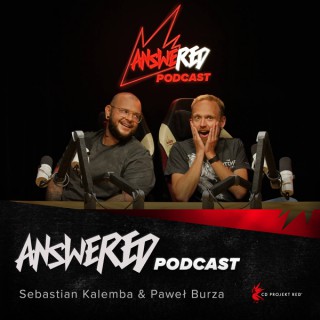
Turning an idea into a shared vision for a game, and keeping hundreds of people moving in the same direction, is at the heart of game development. In the latest episode of AnsweRED Podcast, we invited two members of our Cyberpunk 2 team, our VP, Game Director, Gabe Amatangelo and Creative Director, Igor Sarzyński to explore the creative process behind game development together with our hosts, Tabletop Games Manager Paweł Burza and Art Director for Project Hadar Paweł Mielniczuk. Drawing on their experiences with Cyberpunk 2077 and Phantom Liberty, Gabe and Igor take us behind the scenes of how ideas are shaped, challenged, communicated, and eventually brought to life by teams across different disciplines.

In dieser Episode von Behind the Story begrüßt Gastgeber Wolfgang die Positionierungs- und Personal-Brand-Rebellin Sandra Walzer am digitalen Lagerfeuer. Die Folge zeichnet eine faszinierende und oft unkonventionelle Heldenreise nach, die tief in Sandras Biografie blickt: Von ihrer introvertierten Kindheit in Karlsruhe, in der sie sich als kleines Mädchen lieber mit Büchern verkroch anstatt mit anderen draußen zu spielen, über frühe Rebellionsversuche (wie grüne Dr. Martens mit Stahlkappen) bis hin zu den schmerzhaften, aber lehrreichen Dynamiken in der Schulzeit. Besonders prägend war hierbei der Satz eines Mitschülers („Dich mag hier niemand, du machst es ja immer anders“), der für Sandra erst eine Last, im Rückblick jedoch ein wichtiger Befund und Wendepunkt war. Im weiteren Verlauf geht es um ihren Einstieg in die Werbeagenturwelt im Jahr 1997, den Aufstieg zur Creative Director, das Erlernen von Anpassungsstrategien („beige Jeans“ und langes Bleiben im Büro) sowie den bewussten Schritt in die Selbstständigkeit mit ihrer Agentur Confedication im Jahr 2010. Ein emotionaler und tiefgreifender Wendepunkt in ihrem Leben war zudem ihre jahrzehntelange, leidenschaftliche Verbundenheit zum Karlsruher SC (KSC) sowie zum Stadionmagazin, die erst durch die Pandemie und den Blick hinter die Kulissen des modernen Profifußballs in eine radikale Entfremdung und den bewussten Bruch umschlug. Der zweite große Schwerpunkt der Episode widmet sich dem aktuellen Wandel durch künstliche Intelligenz und dem radikalen Umbruch in der Kommunikations- und Kreativbranche ab den Jahren 2023/2024. Genau aus diesem disruptiven Moment heraus gründete Sandra 2025 Rebelhood. Sie erklärt im Interview eindrücklich, warum echtes Personal Branding niemals glattgebügelt sein darf und warum Ecken, Kanten sowie die oft unterdrückte Emotion der „Wut“ die wichtigsten Treiber sind, um als Persönlichkeit sichtbar zu werden. Es geht um die Frage, warum das Anpassen an den Mainstream zwar sicher, aber unternehmerisch wie persönlich ein Irrweg ist und wie man den Mut findet, zu seiner eigenen Unangepasstheit zu stehen. Eine inspirierende Folge über Haltung, Identität und die Frage, wie viel Rebellion ein gutes Business im Zeitalter der Uniformität wirklich braucht.

berni m janssen, a text artist, performer, Creative Director and facilitator, has been making art for more than 40 years, both independently and in collaboration with musicians, performers, writers, composers and visual artists from diverse communities. She has been an artsworker, artist-in-residence, workshop facilitator and mentor. Her work appears in books, anthologies, magazines and online, and has been performed on radio and at festivals around the world. James Hullick, CEO and Director of Hullick Studios and JOLT Arts, has described her as "one of the great Australian performance text artists". She lives in Dja Dja Wurrung Country in the Central Highlands of Victoria. ENA was created for the JOLT 2022 Artistic Program and has had three seasons of liveperformance, including at the 2023 Sonic Poetry Festival. This broadcast features a live recording of the first half of Movement 1 ENA, Speak Bitterness, recorded at JOLTED Artspace in October 2022.Drawing on women's experiences across decades, ENA uses poetic assemblage to explore the past, the ways it continues to shape the present, and the patterns that remain to be challenged. It tells the stories of a generation of women, bringing together text, soundscape, performance and recorded material in what has been described as a "sonic romp". ENA is available as a text art book, drawing on the traditions of poetry and spoken word art forms. The text is narrated by the character ENA, a feminist looking back on her life as a young activist before contemplating her place in the world as an older creative thinker. It can be purchased here: https://hullickstudios.com/product/ena-berni-m-janssen-book/To hear berni m janssen discuss her work, including ENA, listen to this interview broadcast on Spoken Word on Thursday, 25 January 2024: https://www.3cr.org.au/spoken-word/episode/berni-m-janssen-poetry-feminism-and-radicalismThe second half of Movement 1 of ENA, Speak Bitterness will be broadcast in October 2026.For copyright reasons, a podcast of this radio perofrmance of ENA, Speak Bitterness is not available. Photo by Vicki JonesProduced by Tina Giannoukos

JEREMY HAUN joins The Flattest State of Comics | Episode 4 Watch on the Fandom Podcast Network YouTube Channel: https://www.youtube.com/live/S7KbWwusvZw?si=MYt6_7SAdJAjQfps Listen to the Audio on the Fandom Podcast Network Homepage: https://www.podbean.com/eas/pb-p9z7j-1b6570a Jeremy Haun's Thrilling new comic The Folk of Dooney Hollow is out now and he is here to talk about it …and a whole lot more! Steve, Austin, Spencer, and special guest host Mariah are joined live on The Flattest State of Comics Podcast by the creator of The Beauty, The Red Mother, The Realm, and Murder Podcast just to name a few. Jeremy Haun is the Creative Director of Ignition Press, and is also an executive producer on the FX Series The Beauty (based on his comic). We couldn't be more excited to have Jeremy as our guest! Sent from my iPhone #FANDOMPODCASTNETWORK #FLATTESTSTATEOFCOMICSPODCAST #JEREMYHAUN #THEFOLKOFDOONEYHOLLOW #IGNITIONPRESS #THEBEAUTY Jeremy Haun Instagram @Jerhaun The Flattest State of Comics Podcast Instagram @FlattestStateofComics Mariah Rodriguez Instagram @S.Mileysss Steven A. Brown Instagram @Comic_Ronin Austin Instagram @TheRetroCorner_ Spencer Instagram @TheStokedNerd
Philanthropy takes heat for being slow to move money, and learning usually gets the blame. Katherine Haugh, founder of the Convive Collective and a learning partner to some of the largest climate-focused philanthropies in the US and Europe, thinks that critique is fair but aimed at the wrong target. She and Eric dig into what's actually slowing foundations down, why learning so often becomes a way to dodge a decision, and the two things a foundation needs to genuinely learn.Episode Highlights: [00:14:15] The real reason money moves slowly: control and ego, not learning [00:18:00] Why learning has such a good brand, and how that hides dysfunction [00:19:45] Learning as a way to dodge a hard decision [00:26:30] The two non-negotiables: leadership commitment and psychological safety [00:32:35] Why foundations won't publish their failures [00:44:30] The "healthy life" metaphor for becoming a learning organizationNotable Quotes: Katherine Haugh [00:15:50]: "I actually think that the reason why that is, is a function of control and ego." Katherine Haugh [00:18:00]: "Learning has a great reputation. Learning is a great brand. No one ever says, 'We hate learning.'" Katherine Haugh [00:28:15]: "You can have excellent evidence, but if your team doesn't feel safe to say what they really feel, it's all for nothing."Resources & Links:The Convive Collective — https://convivecollective.comThe Learning Philanthropy Framework Center for Evaluation Innovation — cited at [00:16:30] as the source tracking how much of foundation portfolios go to learning and evaluation.Hosted by Eric Ressler, Founder & Creative Director of Cosmic, with co-host Jonathan Hicken, Executive Director of the Seymour Marine Discovery Center. New episodes every Tuesday.→ Subscribe: designingtomorrow.show → Work with Cosmic: designbycosmic.comListeners, now you can text us your comments or questions by clicking this link.*** If you liked this episode, please help spread the word. Share with your friends or co-workers, post it to social media, “follow” or “subscribe” in your podcast app, or write a review on Apple Podcasts. We could not do this without you!We love hearing feedback from our community, so please email us with your questions or comments — including topics you'd like us to cover in future episodes — at podcast@designbycosmic.comThank you for all that you do for your cause and for being part of the movement to move humanity and the planet forward.

Technical knowledge and creativity are essential to becoming a successful interior designer, but another skill can determine whether a great idea gains traction: communication. In this ICYMI episode of I Hear Design, we revisit an article by Rachel Robinson, Creative Director and Design Principal at Ted Moudis Associates and Co-Chair of IIDA NY's In-Studio Committee, examining why firms are placing greater emphasis on communication training for emerging designers. From explaining the “why” behind design decisions to presenting confidently in front of clients and translating creative concepts into business value, Robinson explores how storytelling, mentorship, practice, and structured training can help junior designers become stronger collaborators—and prepare them for future leadership roles.

Dave Boehne was pretty much born into the surf world, with saltwater in his blood and foam dust in his hair. The son of legendary surf parents, shaper Steve Boehne and world-champion tandem surfer Barrie Boehne, Dave grew up around the family's iconic Infinity Surfboards in Coastal Orange County, CA, riding everything he could get his hands on and shaping his first board at 15.He went on to compete professionally in both shortboards and longboards before becoming one of the early athletes and innovators pushing stand-up paddling (SUP) into a legitimate high-performance sport, both in the surf and in racing. And this hasn't stopped.But Dave's impact goes way beyond competing. He's a surfer, shaper, designer, entrepreneur and creative force who helped drive Infinity's evolution into high-performance short boards, long boards, all forms of “alternative” craft, SUP surf and race boards, and foiling; and he rips on them all.Today, Dave runs Infinity as the second generation CEO and as Creative Director and he isn't just preserving the family legacy… he's pushing it forward.Dave talks story about the evolution of the Infinity brand, growing up in the middle of an iconic surf family and the legendary surf community of South Orange County, CA and being surrounded by legends and influences across the world of surf.Stick around for the Brown Blurr himself, Captain Speed Freak… Dave Boehne.0:00 – Introducing Dave Boehne5:35 – Growing Up in the Boehne Surfing Family12:10 – The History and Legacy of Infinity Surfboards19:05 – Finding His Own Path in the Surf Industry26:15 – Competition, SUP Racing & Life as an Athlete33:20 – Becoming a Surfboard Shaper and Designer40:35 – How Athlete Feedback Improves Board Design47:50 – Experimentation, Innovation & Testing Equipment55:10 – Running a Family Business and Building Infinity1:02:25 – How Surfing and Paddleboarding Have Evolved1:10:05 – Longevity, Creativity & Staying Motivated1:18:20 – The Future of Board Design & Final Reflections

Spencer Striker, PhD is a digital learning designer, producer, and Professor of Digital Media Design at Northwestern University in Qatar. For more than two decades, he has led international creative teams producing award‑winning learning experiences across mobile games, interactive narratives, VR, and podcasts—supported by major funders including the NEH, NSF, QNRF, QRDI, and the Doha Film Institute. His work, released entirely free for anyone to use, includes Chaos Corp | Troll Farm Simulator, the History Adventures series, Dr. Sara | Disease Detective, and Plague of Athens | VR. His latest project, Al-Khwarizmi: Father of Algebra & the Algorithm, is a 30-episode, AI-animated docudrama series on the life of the ninth-century mathematician, funded by the Doha Film Institute and released free worldwide in summer 2026.Striker's practice sits at the intersection of digital learning design and university‑level production teaching, spanning 2D/3D design, sound, web, podcasting, AI tools, and “vibe coding.” Before academia, he served as founding Creative Director of Galxyz, a Silicon Valley learning‑game studio backed by Andreessen Horowitz and Emerson Collective, and co‑founded the Media Arts & Game Development program at the University of Wisconsin‑Whitewater. His work reflects a core conviction: learning sticks when it is experienced—and relevance and context are the engine of game‑based learning.Links:https://www.spencerstriker.com/https://www.spencerstriker.com/al-khwarizmi Hosted on Acast. See acast.com/privacy for more information.
This week we are (were) live from Montreal! Our first-ever live podcast, here for your ears. In this episode, we close out a stacked day of incredible creatives speaking at Forum, the Annual Design Assembly in Montreal. Andrea Trabucco introduces us before we talk about the hot, delicious, yet unschmeared bagels we had and how much we like the city so far. We then bring out Ariane Leblanc, co-founder of Martha, and Bryan-K. Lamonde, co-founder and Creative Director of Principal Studio, to discuss Montreal, its design scene, and what makes it exceptionally good; working in two languages, being a good lover, our guilty pleasures, chaos, and more!

GUEST BIO:Seth Friedman is a creative director, writer, lyricist, and composer with over 25 years in the events industry. He's worked with top brands like IBM, Google, and Amazon, crafting memorable corporate, expo, and experiential events. Seth has also earned a Grammy and multiple award nominations for his theatrical work.HIRE THEM TO HOST OR SPEAK:Follow Seth Friedman: LinkedIn ProfileFollow Scott Bloom: eSpeakers BioFollow eSpeakers: eSpeakers MarketplaceABOUT NO MORE BAD EVENTS:Brought to you by eSpeakers and hosted by professional emcee, host, and keynote speaker Scott Bloom, No More Bad Events is where you'll hear from some of the top names in the event and speaking industry about what goes on behind the scenes at the world's most perfectly executed conferences, meetings, and more. Get ready to learn the secrets and strategies to help anyone in the event industry reach their goal of putting on nothing less than world-class events.Learn more at nomorebadevents.com.ABOUT THE HOST:A veteran comedian and television personality who has built a reputation as the go-to choice for business humor, Scott has hosted hundreds of events over two decades for big and small organizations alike. Scott has also hosted his own weekly VH1 series and recently co-hosted a national simulcast of the Grammy Awards from the Palace Theater.As the son of a successful salesman, he was exposed to the principles of building a business at an early age. As a comedian, Scott cut his teeth at renowned improv and comedy clubs. As a self-taught student of psychology, he's explored what makes people tick and has written a book (albeit a farce) on how to get through life. He's uniquely positioned to deliver significant notes on connecting people and making business seriously funny. And who doesn't like to laugh?Learn more about Scott: scottbloomconnects.comPRODUCED BY eSpeakers:When the perfect speaker is in front of the right audience, a kind of magic happens where organizations and individuals improve in substantial, long-term ways. eSpeakers exists to make this happen more often.eSpeakers is where the speaking industry does business on the web. Speakers, speaker managers, associations, and bureaus use our tools to organize, promote, and grow successful businesses. Event organizers think of eSpeakers first when they want to hire speakers for their meetings or events.The eSpeakers Marketplace technology lets us and our partner directories help meeting professionals worldwide connect directly with speakers for great engagements.Thousands of successful speakers, trainers, and coaches use eSpeakers to build their businesses and manage their calendars. Thousands of event organizers use our directories every day to find and hire speakers. Our tools are built for speakers, by speakers, to do things that only purpose-built systems can.Learn more at eSpeakers.com.SHOW CREDITS:Scott Bloom: Host | scottbloomconnects.comJoe Heaps: eSpeakers | jheaps@eSpeakers.com
Sandy Gould has spent 36 years studying where people's "superpowers" come from, and his answer is simple: the thing that makes you different is the same thing that lets you create what no one else can. In this conversation with Eric Ressler, the longtime GLAAD advisor and author of the forthcoming book Interlightening explains why conformity feels safe and isn't, and how the same rules that grow an individual grow an entire organization.Episode Highlights: [00:03:00] From tech recruiting to GLAAD: a career built on unleashing people [00:05:30] Why the "why" leads to the what and the how [00:08:30] How one word, "should," quietly holds people back [00:15:30] Your organization is just one big person [00:16:30] Why success is the scariest moment for a team [00:27:00] Why your team should see you fightNotable Quotes: Sandy Gould [00:19:25]: "The difference engine is what drives every human, every group of people, and our life and our world. If you and I were exactly the same, this conversation would be nothing." Sandy Gould [00:24:15]: "'I don't know' is a very powerful, honest thing to say. But honesty is more important. First, establish trust, then invite them in to help you figure it out."Resources & Links:GLAAD — glaad.orgSandy Gould on LinkedIn — linkedin.com/in/sandy-gould-077354Sandy Gould on Instagram — instagram.com/spidersandyInterlightening: Unleashing Your Superpowers — forthcoming on AmazonHosted by Eric Ressler, Founder & Creative Director of Cosmic, with co-host Jonathan Hicken, Executive Director of the Seymour Marine Discovery Center. New episodes every Tuesday.→ Subscribe: designingtomorrow.show → Work with Cosmic: designbycosmic.comListeners, now you can text us your comments or questions by clicking this link.*** If you liked this episode, please help spread the word. Share with your friends or co-workers, post it to social media, “follow” or “subscribe” in your podcast app, or write a review on Apple Podcasts. We could not do this without you!We love hearing feedback from our community, so please email us with your questions or comments — including topics you'd like us to cover in future episodes — at podcast@designbycosmic.comThank you for all that you do for your cause and for being part of the movement to move humanity and the planet forward.

Your business has been around long enough to earn trust.But the audience that got you here is changing. And the next one may not care about the things that made you successful in the first place.So what do you do? Keep playing it safe until relevance quietly erodes? Or panic, rip up the brand, and leave loyal customers wondering who the hell you have become?This week, Beatrice is joined by Michael König — who has led design and product inside heritage brands including Bang & Olufsen and Royal Copenhagen — and Owi (Mateusz Owsiany), CEO and Creative Director at MPM Team, who builds immersive digital experiences for brands reaching newer audiences.They get into how to evolve from a position of strength, test a new direction without betting the whole business on it, move beyond a founder-led brand, and make sure creative, commercial, and customer reality are all in the same room.Because your next audience should not have to come at the cost of the one that trusted you first.-04:05 The risk of waiting until change becomes urgent13:35 Build your next audience from a position of strength18:00 Panic rebrand or a gradual evolution?29:00 When customers trust the owner, not the business38:40 When a new audience needs its own offer or sub-brand49:00 How to turn strategy into changes your team can deliver01:12:30 Your first 90 days of brand evolution-5 episodes to binge on:Good at Everything, Priced Like It with Christine SlocumbBrand strategy in action with Cam VarnerRepositioning to $10M with Nicole DownerYour Business Might Be Unsellable with Allie Beckmann and Alexandria SeydelRepositioning Without Losing Customers with Amy Heidersbach & Melissa Eaton-Reach out to guest speaker Michael König: Website | LinkedIn | Heritage Playbook Reach out to guest speaker Owi (Mateusz Owsiany):Website | LinkedIn | Instagram | TikTokFollow Beatrice Gutknecht:LinkedIn | YouTube | Instagram | Website

On today's episode, we welcome Ann Williams, Founder and Creative Director of Yearly Co. — a Nashville-based fine jewelry brand built around celebrating life's milestones with timeless, solid 14k gold jewelry.Yearly Co. started with a family tradition. Inspired by receiving gold bangles to mark meaningful moments, Ann took a metalsmithing class and began making jewelry by hand in her garage during naptime. What started as a second-career experiment in 2016 has grown into an $11.5 million direct-to-consumer business that remains 100% founder-owned and self-funded.In this episode, Ann shares how she turned a difficult-to-size product into a competitive advantage, why Yearly Co. offers bangles in 11 sizes, how she built loyalty around milestones and repeat purchases, and why she has chosen to grow without outside capital. She also opens up about being diagnosed with breast cancer at 37, keeping the business moving during treatment, and how the experience changed the way she thinks about leadership, motherhood, business, and the moments that really matter.Such an inspiring founder story. Listen now. Are you interested in sponsoring and advertising on The Kara Goldin Show, which is now in the Top 1% of Entrepreneur podcasts in the world? Let me know by contacting me at karagoldin@gmail.com. You can also find me @KaraGoldin on all networks. To learn more about Ann Williams and Yearly Co.:https://yearlyco.com/https://www.instagram.com/yearlycompany/https://www.instagram.com/annbrennanwilliams/https://www.linkedin.com/in/ann-williams-3437a912 Sponsored By:Acorns - Head to Acorns.com/KARA or download the Acorns app to get started.Rippling - Head to Rippling.AI/KaraGoldin and get the only AI to give you full visibility across your business and take complex actions across your entire organization.CashApp - For a limited time, new customers can get $10 added to their balance. Just use code BITCOIN10 when you sign up, and—don't forget this part—send at least $5 to a friend in the first two weeks. Terms apply. Cash App is a financial services platform, not a bank. Banking services provided by Cash App's bank partner(s). Bitcoin services provided by Block, Inc. brand. For additional information, see the Bitcoin disclosures at cash.app/legal/podcast.Kalshi - Download the Kalshi app and use code KARAGOLDIN to get $20 when you trade $20.Freshbooks - Go to FreshBooks to get FreshBooks for less than $3 a month for your first four months — that's 90% off.LinkedIn Jobs - Head to LinkedIn.com/KaraGoldin to post your job for free.Seed - Go to Seed.com/KARAGOLDIN and use code KARA to get 25% off.Chime - Join the millions who are already banking fee-free today. Head to Chime.com/KARAGOLDIN. Check out our website to view this episode's show notes: https://karagoldin.com/podcast/891

The SportsGrad Podcast: Your bite-sized guide to enter the sports industry
Meet Tori Coleman, Aaron Llavore and Amalia Sofia Navarro, three of the people building the San Francisco 49ers, live from our Melbourne meetup.In front of a packed room during the 49ers' first-ever NFL game week in Melbourne, this panel pulls back the curtain on what it actually takes to work in US sport, and how three very different paths led to the same organisation.Tori is the Senior Coordinator of Youth Football Development and Community Programming. She started in education technology, moved through PR and comms in the athlete and agency space, did PR for the NBA's Sacramento Kings, and worked in college sport before landing at the Niners, proof that a non-linear start is a strength, not a setback.Aaron is the Creative Director, a decade into the 49ers, leading a "small but mighty" team of six that touches everything creative in the organisation. He got his first sports job as an assistant creative at the Golden State Warriors, from a post on Craigslist, then built his craft from the ground up.Amalia works in strategy and impact across the 49ers Foundation's international programming. A comms major from a family of educators, she got her foot in the door through community relations at the Oakland A's and the 49ers museum, working at the intersection of sport, philanthropy and education.Lots to look out for in this episode, including how to turn an "unconventional" or non-sport background into your edge when breaking in, and how roles inside a major sporting body keep evolving, so getting in is the start, not the finish line.If you liked this ep, give these a go next:#237: How Josh Growden launched The Kicking Consultant#277: Journey from Event Coordinator in Melbourne to NFL Stadium Director with Eray Saban#243: Living the dream at the NFL, IOC & Brisbane 2032 Olympics with Tom Hickey Want a job in sport? Click here.Follow SportsGrad on socials: LinkedIn | Instagram | TikTokFollow Reuben on socials: LinkedIn | Instagram | TikTokThanks for listening, much love! Hosted on Acast. See acast.com/privacy for more information.

CORRECTED: We apologize for Jamie's sound. If you found it hard to listen too, then this one should be better. We did some editing magic and made it much better. Today Ashley and Jamie are joined by a friend of HRN (through Adulting with Horses Heather Wallace AND Lisa Wysocky, Jamie Baldanza! Jamie is a photographer, Creative Director, and filmmaker dedicated to telling the stories of America's wild horses. She is the creator behind Blue Zeus—now streaming on Prime Video—which follows the fight to reunite a captured wild horse family, and is currently in post-production on Survivors of the Badlands, a documentary highlighting the struggle to protect the wild horses of Theodore Roosevelt National Park. Drawing from years spent in the field documenting these iconic herds, Jamie brings deep insight into the intersection of visual storytelling, wild horse advocacy, and powerful conservation impact. And of course, it wouldn't be Friday without Really Bad Ads! HORSES IN THE MORNING Episode 4039 – Show Notes and Links:Hosts: Jamie Jennings of Flyover Farm and Ashley WinchJamie and Glenn's Amazon StoreTitle Sponsor: Kentucky Performance ProductsPic Credit: HRNGuest: Jamie Baldanza - Website | Facebook | InstagramBlue Zeus - Website | Facebook | InstagramWild Lands, Wild Horses - Website | Facebook | Instagram | YouTubeSkydog Sanctuary - Website | Facebook | InstagramAdditional support for this podcast provided by: My New Horse, Equine Network and Listeners Like YouTime Stamps: Daily Whinnies: 02:20Jamie's Mustang Documentary Interview: 19:20ReAlLi bAd aDz: 34:41

CORRECTED: We apologize for Jamie's sound. If you found it hard to listen too, then this one should be better. We did some editing magic and made it much better. Today Ashley and Jamie are joined by a friend of HRN (through Adulting with Horses Heather Wallace AND Lisa Wysocky, Jamie Baldanza! Jamie is a photographer, Creative Director, and filmmaker dedicated to telling the stories of America's wild horses. She is the creator behind Blue Zeus—now streaming on Prime Video—which follows the fight to reunite a captured wild horse family, and is currently in post-production on Survivors of the Badlands, a documentary highlighting the struggle to protect the wild horses of Theodore Roosevelt National Park. Drawing from years spent in the field documenting these iconic herds, Jamie brings deep insight into the intersection of visual storytelling, wild horse advocacy, and powerful conservation impact. And of course, it wouldn't be Friday without Really Bad Ads! HORSES IN THE MORNING Episode 4039 – Show Notes and Links:Hosts: Jamie Jennings of Flyover Farm and Ashley WinchJamie and Glenn's Amazon StoreTitle Sponsor: Kentucky Performance ProductsPic Credit: HRNGuest: Jamie Baldanza - Website | Facebook | InstagramBlue Zeus - Website | Facebook | InstagramWild Lands, Wild Horses - Website | Facebook | Instagram | YouTubeSkydog Sanctuary - Website | Facebook | InstagramAdditional support for this podcast provided by: My New Horse, Equine Network and Listeners Like YouTime Stamps: Daily Whinnies: 02:20Jamie's Mustang Documentary Interview: 19:20ReAlLi bAd aDz: 34:41

در این قسمت از Popcorn Talk درباره فیلمها، سریالها، بازیها و چیزهایی که این روزها توجهمان را جلب کردهاند صحبت میکنیم.حمایت مالی از پاپکورن تاک:https://reymit.ir/popcorntalkاگر عاشق فیلم، پاپکالچر و گپوگفتهای صمیمی هستید، این ویدیو را از دست ندهید و تا انتها با ما همراه باشید.لینک پاپکورن تاک در یوتیوب و برنامه های پادکست:https://li.sten.to/5093zia8لینک پاپکورن تاک در X:https://x.com/popcornfarsiکانال پاپکورن تاک در تلگرام:https://t.me/popcorntalkpodاز GTA و دنیای بازیها گرفته تا Silo، Batman و کمیکهای آلن مور، و همچنین نگاهی به سینمای وسترن، اسپاگتی وسترن و فیلمهای سرجیو لئونه. درباره این صحبت میکنیم که چرا بعضی شخصیتها و داستانها بعد از سالها همچنان ماندگار میشوند و چه چیزی باعث میشود یک اثر بتواند از زمان خودش فراتر برود.در ادامه هم درباره فیلمهایی مثل Perfect Strangers و آثار رومن پولانسکی، تجربه فیلم دیدن و تأثیر سینما و داستانگویی بر نگاه ما به هنر صحبت میکنیم.اگر به سینما، سریال، بازیهای ویدیویی، کمیک و داستانگویی علاقه دارید، این قسمت را از دست ندهید.00:00 شروع قسمت جدید Popcorn Talk04:41 تریلر GTA 6 و اتفاقی تاریخی برای دنیای سرگرمی05:47 چرا GTA 6 دوباره استاندارد بازیهای ویدیویی را بالا میبرد؟08:25 فرهنگ کاری Rockstar و داستانهایی از داخل این شرکت10:14 بهترین نویسندهها و Creative Directorهای تاریخ بازی11:08 Todd Howard و نقش او در Skyrim و RPGها12:07 Starfield؛ چرا با وجود ایرادها هنوز جذاب است؟13:27 Batman: Knightfall؛ انیمیشنی که منتظرش بودیم15:11 ورود Bane و شکستن Batman16:46 چرا Batman یکی از محبوبترین شخصیتهای تاریخ است؟17:27 Alan Moore، Watchmen و The Killing Joke18:53 Batman در برابر Marvel و Spider-Man19:43 چرا Spider-Man برای مردم قابلارتباطتر است؟22:05 چرا Spider-Man از شخصیتهای ایرانی محبوبتر شده؟23:22 داستان خلق Spider-Man و دلیل ماندگاری آن23:57 Green Lantern و سریال جدید DC25:19 چرا بعضی سریالها را نباید برای بهتر شدن ادامه داد؟26:24 Landman و Silo؛ بهترین سریالهایی که میبینیم26:57 Silo؛ راز دنیای زیرزمینی28:02 چرا داستانگویی Silo اینقدر خوب است؟29:11 Silo در برابر From؛ چطور Mystery را درست روایت کنیم؟30:11 چرا Silo یکی از بهترین سریالهای حال حاضر است؟30:54 House of the Dragon و مقایسه با Game of Thrones31:10 چرا بعد از پایان Game of Thrones هنوز سراغ این دنیا میرویم؟33:07 چرا ریتم House of the Dragon جواب میدهد؟34:22 A Knight of the Seven Kingdoms35:01 کتابهای George R. R. Martin و تفاوتشان با سریال35:36 سهگانه Dollars؛ شاهکارهای Sergio Leone37:17 تاریخچه Spaghetti Western38:21 Sergio Leone چگونه Western را تغییر داد؟38:30 قهرمانهای خاکستری و Anti-Heroها39:13 داستان یک کابوی که برای پول همه را به جان هم میاندازد40:16 Yojimbo و تأثیر Akira Kurosawa40:57 شکایت Kurosawa از Sergio Leone41:11 ماجرای جالب حق امتیاز A Fistful of Dollars41:47 چرا Spaghetti Western از نظر بصری متفاوت بود؟42:15 Sergio Leone و داستانگویی با تصویر42:40 موسیقی Ennio Morricone و تولد صدای جدید Western43:10 چرا Western امروزی مدیون Sergio Leone است؟43:24 Once Upon a Time in America43:40 یک صحنه فراموشنشدنی از فیلم45:20 چرا بعضی فریمهای سینمایی در ذهن ما میمانند؟45:44 کامنتها و حمایت از Popcorn Talk48:36 کامنتهای مخاطبان درباره سینماتوگرافی49:24 Terrence Malick و The Tree of Life#PopcornTalk #Cinema #Movies #Batman #Silo #GTA #SpaghettiWestern #Gaming
Today Ashley and Jamie are joined by a friend of HRN (through Adulting with Horses Heather Wallace AND Lisa Wysocky, Jamie Baldanza! Jamie is a photographer, Creative Director, and filmmaker dedicated to telling the stories of America's wild horses. She is the creator behind Blue Zeus—now streaming on Prime Video—which follows the fight to reunite a captured wild horse family, and is currently in post-production on Survivors of the Badlands, a documentary highlighting the struggle to protect the wild horses of Theodore Roosevelt National Park. Drawing from years spent in the field documenting these iconic herds, Jamie brings deep insight into the intersection of visual storytelling, wild horse advocacy, and powerful conservation impact. And of course, it wouldn't be Friday without Really Bad Ads! HORSES IN THE MORNING Episode 4039 – Show Notes and Links:Hosts: Jamie Jennings of Flyover Farm and Ashley WinchJamie and Glenn's Amazon StoreTitle Sponsor: Kentucky Performance ProductsPic Credit: HRNGuest: Jamie Baldanza - Website | Facebook | InstagramBlue Zeus - Website | Facebook | InstagramWild Lands, Wild Horses - Website | Facebook | Instagram | YouTubeSkydog Sanctuary - Website | Facebook | Instagram Additional support for this podcast provided by: My New Horse, Equine Network and Listeners Like YouTime Stamps: Daily Whinnies: 02:20Jamie's Mustang Documentary Interview: 19:20ReAlLi bAd aDz: 34:41
Today Ashley and Jamie are joined by a friend of HRN (through Adulting with Horses Heather Wallace AND Lisa Wysocky, Jamie Baldanza! Jamie is a photographer, Creative Director, and filmmaker dedicated to telling the stories of America's wild horses. She is the creator behind Blue Zeus—now streaming on Prime Video—which follows the fight to reunite a captured wild horse family, and is currently in post-production on Survivors of the Badlands, a documentary highlighting the struggle to protect the wild horses of Theodore Roosevelt National Park. Drawing from years spent in the field documenting these iconic herds, Jamie brings deep insight into the intersection of visual storytelling, wild horse advocacy, and powerful conservation impact. And of course, it wouldn't be Friday without Really Bad Ads! HORSES IN THE MORNING Episode 4039 – Show Notes and Links:Hosts: Jamie Jennings of Flyover Farm and Ashley WinchJamie and Glenn's Amazon StoreTitle Sponsor: Kentucky Performance ProductsPic Credit: HRNGuest: Jamie Baldanza - Website | Facebook | InstagramBlue Zeus - Website | Facebook | InstagramWild Lands, Wild Horses - Website | Facebook | Instagram | YouTubeSkydog Sanctuary - Website | Facebook | Instagram Additional support for this podcast provided by: My New Horse, Equine Network and Listeners Like YouTime Stamps: Daily Whinnies: 02:20Jamie's Mustang Documentary Interview: 19:20ReAlLi bAd aDz: 34:41

September 11, 2026 ~ Kennedy Polzin, Creative Director Student and Chase Southwick, General Chair/Student, Northwood University International Auto Show joins Paul live from the Frankenmuth Auto Show. Hosted by Simplecast, an AdsWizz company. See https://pcm.adswizz.com for information about our collection and use of personal data for advertising.
This week, Hillary Kerr is joined by the prolific creative director of Coach: Stuart Vevers. Vevers has had a wide-ranging career, from his first job at Calvin Klein in the 1990s to his roles as creative director at both Mulberry and Loewe. He talks all things Coach, including the brand's legacy and its upcoming New York Fashion Week show—which is happening today! Plus, he shares how he approaches designing for the younger generations and why he thinks the Tabby and Brooklyn bags have gained cult followings. Watch this episode on our new YouTube channel, and be sure to subscribe!

Over the 2026 Labor Day weekend, Working People host and TRNN Editor-in-Chief Maximillian Alvarez spoke at the Reuther-Pollack Labor History Symposium in Wheeling, West Virginia, organized by the Wheeling Academy of Law & Science (WALS) Foundation. The theme of this year's Symposium was "The Art of Labor," and other speakers included: Tabitha Arnold, textile artist and tapestry maker; Erik Ruin, printmaker and shadow puppeteer; and Shaun Slifer, a multidisciplinary artist and the Creative Director for the West Virginia Mine Wars Museum. In this episode of Working People, we share the audio recording of Alvarez's speech, "Why the Stories Working People Tell Ourselves About Ourselves Matter." You can read the full, edited transcript of this speech on the TRNN website. Featured Music: Jules Taylor, Working People Theme Song Credits: Audio Post-Production: Jules Taylor

Over the 2026 Labor Day weekend, TRNN Editor-in-Chief Maximillian Alvarez spoke at the Reuther-Pollack Labor History Symposium in Wheeling, West Virginia, organized by the Wheeling Academy of Law & Science (WALS) Foundation. The theme of this year's Symposium was “The Art of Labor,” and other speakers included: Tabitha Arnold, textile artist and tapestry maker; Erik Ruin, printmaker and shadow puppeteer; and Shaun Slifer, a multidisciplinary artist and the Creative Director for the West Virginia Mine Wars Museum.In this episode of Working People, we share the audio recording of Alvarez's speech, “Why the Stories Working People Tell Ourselves About Ourselves Matter.” You can read the full, edited transcript of this speech on the TRNN website.Featured Music: Jules Taylor, Working People Theme SongCredits: Audio Post-Production: Jules TaylorBecome a supporter of this podcast: https://www.spreaker.com/podcast/the-real-news-podcast--2952221/support.Help us continue producing radically independent news and in-depth analysis by following us and becoming a monthly sustainer.Follow us on:Bluesky: @therealnews.comFacebook: The Real News NetworkTwitter: @TheRealNewsYouTube: @therealnewsInstagram: @therealnewsnetworkBecome a member and join the Supporters Club for The Real News Podcast today!

This week, Hillary Kerr is joined by the prolific creative director of Coach: Stuart Vevers. Vevers has had a wide-ranging career, from his first job at Calvin Klein in the 1990s to his roles as creative director at both Mulberry and Loewe. He talks all things Coach, including the brand's legacy and its upcoming New York Fashion Week show—which is happening today! Plus, he shares how he approaches designing for the younger generations and why he thinks the Tabby and Brooklyn bags have gained cult followings. Watch this episode on our new YouTube channel, and be sure to subscribe!
Every leader in the social impact space has failures. But we rarely talk about them. We brush over them, reframe them, paper over them. Michelle Moog-Koussa thinks that's a mistake. She built the Bob Moog Foundation from $15,000 and a stack of Bob's crossed-out notebooks into a 20-year institution, and she runs it like a scientist: write down the idea, test it, and record an honest "didn't work" before turning the page.Episode Highlights: [00:00:00] Why the social impact sector refuses to talk about failure [00:04:00] How 60,000 CaringBridge messages gave birth to a foundation [00:17:00] "You're swinging a miniature bat" and the reframe that changed everything [00:23:00] Running a nonprofit like a scientist: hypothesis, test, iterate [00:25:30] The sector embraces the scientific method, except the failure step [00:31:30] Why fear of failure keeps organizations frozen in planningNotable Quotes: Michelle Moog-Koussa [00:27:15]: "Mistakes are the portals to discovery." Eric Ressler [00:25:30]: "The sector at large does not accept failure with grace." Michelle Moog-Koussa [00:18:05]: "I don't have a miniature bat. My bat is so big, I just needed more people to help me swing it."Resources & Links:The Bob Moog Foundation — moogfoundation.orgThe Moogseum — moogseum.orgSpectrasonics Bob Moog Tribute Library — spectrasonics.net/products/tribute/Native Instruments Modular Icons — native-instruments.com/en/pricing/modular-icons/Hosted by Eric Ressler, Founder & Creative Director of Cosmic, with co-host Jonathan Hicken, Executive Director of the Seymour Marine Discovery Center. New episodes every Tuesday.→ Subscribe: designingtomorrow.show → Work with Cosmic: designbycosmic.comListeners, now you can text us your comments or questions by clicking this link.*** If you liked this episode, please help spread the word. Share with your friends or co-workers, post it to social media, “follow” or “subscribe” in your podcast app, or write a review on Apple Podcasts. We could not do this without you!We love hearing feedback from our community, so please email us with your questions or comments — including topics you'd like us to cover in future episodes — at podcast@designbycosmic.comThank you for all that you do for your cause and for being part of the movement to move humanity and the planet forward.

Delaney Debinski is the Founder and Creative Director of Delavie Creative, a new media creative consultancy in Brussels. From writing at Warner Bros Discovery to directing content with over 3 billion views on YouTube channels like Average Rob, MrBeast, Hilton Hotels, and more, she founded Delavie Creative around the philosophy in its name: de la vie, meaning "of life." Today she develops and directs long form content, and teaches sustainable storytelling to the professionals building this industry.Delaney's work starts with one question: why. She believes careers in new media last when they're rooted in real connection, so she helps creator entrepreneurs define their why and build deep roots accordingly. Through the Delavie Creative Residency, her seven-week cohort for creatives, she coaches people through the shift from the hustle to a sustainable, scalable creative career. Her mission is to help this industry build businesses that breathe life into people's identity rather than claiming it.

Michelle Kinney is co-founder of The Mayday Network and a democratic strategist. Prior to that she was at The Seneca Project, which she co-founded.She previously served as the Creative Director at The Lincoln Project. She's also a photojournalist, previously served as Vice President of WestSide Democrats in NYC, and was publicly elected to the New York County Democratic Committee. Will the Postal Service end up controlling mail-in ballots? Will Democrats take back the House and Senate? Will democracy prevail? Michelle and I discuss the drama, chaos, and danger of Trump 2.0 as we head towards the November midterms. Got somethin' to say?! Email us at BackroomAndy@gmail.com Leave us a message: 845-307-7446 Twitter: @AndyOstroy Produced by Andy Ostroy, Matty Rosenberg, and Jennifer Hammoud @ Radio Free Rhiniecliff Design by Cricket Lengyel

Joram Muzira Job returns to The Ugandan Boy Talk Show — and this time, a lot has changed.After 15 years of building a career in Uganda's fashion and modelling industry, the CEO & Creative Director of Joram Model Management took on one of his biggest challenges yet: becoming National Director of Miss Universe Uganda 2026 and building Uganda's inaugural edition from the ground up.In this candid conversation, Joram takes us behind the glamour to talk about what it really took to bring Miss Universe to Uganda — the investment, pressure, criticism, brand partnerships, leadership challenges and lessons that came with building something for the first time.We also discuss the crowning of Mitchelle Daka as Miss Universe Uganda 2026, what it takes to prepare a Ugandan contestant for the international stage, the vision behind “Beyond the Crown,” and why pageantry should create opportunities that last long after the competition ends.Joram also reflects on 15 years of Joram Model Management, discovering Ugandan models, creating international opportunities, the business of fashion in Uganda, dealing with criticism and what he hopes his contribution to Uganda's creative industry will ultimately become.
The restoration and rerelease of Unzipped—the ur-fashion documentary— with Janus this September has had the Vogue office abuzz for months. Ahead of its run in theaters The Run-Through co-host Nicole Phelps—who says the film was her “gateway drug to fashion,” met with inimitably charming Isaac Mizrahi, designer, performer, the film's star and since June 2026, Target's first Creative Director at Large, to talk supermodels, and not mixing work with love—or Ambien. “It was a very good moment in fashion,” conjectures Mizrahi about the continuing draw of the film. “I bet if you had substituted some other fabulous, funny people in that movie, it would've been good. Mm. You know? It was just a good moment. But specifically in my oeuvre, it was almost inevitable to tell a story of that kind, because I don't know if their fittings were as hilarious as my fittings, you know? … I think that's another thing, the interaction of [those women, those supermodels, and these designers. You know, it really was, it was photogenic. You know, the camera really loved this subject.” Nonetheless, Mizrahi has more of a bird's-eye perspective on the impact of Unzipped than most of the rest of the world. “So as to Unzipped and it changing my life, you know, I don't really feel it changed my life,” he said. Mizrahi identifies his transition from yeshiva to the Performing Arts High School as one of the tipping points in his life. Another was landing a job at Perry Ellis. “I have to tell you, my dear, that was an incredibly inspiring place and it would've changed anybody.” Unzipped had a similar effect on fashion documentaries, setting a bar that has rarely been reached since. The Run-Through with Vogue is your go-to podcast where fashion meets culture. Hosted by Chloe Malle, Head of Editorial Content, Vogue U.S.; Chioma Nnadi, Head of British Vogue; and Nicole Phelps, Director of Vogue Runway, each episode features the latest fashion news and exclusive designer and celebrity interviews. Learn more about your ad choices. Visit podcastchoices.com/adchoices

Send us Fan Mailكيف يمكن للإبداع أن يصبح وسيلة لحماية الهوية الثقافية ونقلهاإلى الأجيال القادمة؟في هذه الحلقة من Vision, Culture & Policy بالعربي،ستضيف لجين أبو الفرج، المؤسسة والمديرة الإبداعية لشركة أكوان، للحديث عن دور الصناعات الإبداعية في تقديم الثقافةبصورة معاصرة، جذابة، ومسؤولة.نتناول في الحوار أهمية التصميم الموجّه للأطفال، وكيف يمكن تحويل عناصر الثقافة والتراث إلى تجارب ومنتجات تثير فضولهم وتقرّبهم من هويتهم، دون اختزال الثقافة أو التعامل معها بوصفها مجرد توجّه رائج. كما نناقش مسؤولية المبدع في البحث والتحقق، والتوازن بين الأصالة والتجديد، والدور الذي يمكن أن تؤديه الصناعات الإبداعية في الحفاظ على الذاكرة الثقافية واستمرارها.ضيفتنا: لجين أبو الفرجالمؤسسة والمديرة الإبداعية لشركة أكوان#VCPHow can creativity help preserve cultural identity and pass it on to future generations?In this episode of Vision, Culture & Policy In Arabic , we speak with Lujain Abulfaraj, Founder and Creative Director of Akwan, about the role of creative industries in interpreting culture thoughtfully and making it meaningful to younger audiences.The conversation explores children's design, cultural responsibility, the balance between authenticity and innovation, and how creative work can contribute to the continuity of cultural identity.
Every nonprofit leader has told themselves the same story: if funders just understood us, they'd fund us. Eric and Jonathan make the uncomfortable case that misunderstood impact is usually a you problem, and that what looks like a storytelling gap is almost always an identity gap. Close it, and funding, talent, and trust all get easier.Episode Highlights: [00:01:15] The identity impact gap, defined [00:04:05] Why the gap quietly starves your funding [00:08:20] Why a widening gap can be a sign of growth [00:12:50] The three pillars: identity, expression, perception [00:30:00] "That's a you problem" [00:38:40] Why trust isn't built on your 990s Notable Quotes: Eric Ressler [00:04:20]: "I would urge orgs to figure out: if there was only one thing that everyone could know us for, what might that one thing be? And do a really good job beating that drum."Jonathan Hicken [00:25:20]: "It has to start with a deep understanding of self. Before you can get to expression, before you can get to perception, you have to know yourself."Resources & Links:Seymour Marine Discovery Center — seymourcenter.ucsc.edu Cosmic — designbycosmic.comWho are you Becoming? https://designbycosmic.com/podcast/who-are-you-becoming/ Who Are You Becoming — designbycosmic.com/podcast/who-are-you-becoming/ Hosted by Eric Ressler, Founder & Creative Director of Cosmic, with co-host Jonathan Hicken, Executive Director of the Seymour Marine Discovery Center. New episodes every Tuesday.→ Subscribe: designingtomorrow.show → Work with Cosmic: designbycosmic.comListeners, now you can text us your comments or questions by clicking this link.*** If you liked this episode, please help spread the word. Share with your friends or co-workers, post it to social media, “follow” or “subscribe” in your podcast app, or write a review on Apple Podcasts. We could not do this without you!We love hearing feedback from our community, so please email us with your questions or comments — including topics you'd like us to cover in future episodes — at podcast@designbycosmic.comThank you for all that you do for your cause and for being part of the movement to move humanity and the planet forward.

An AI creative director combines design fundamentals, AI fluency, tool selection, and repeatable workflows to produce better creative work.The boys over at Fast Hour invites a 24-year-old AI creative director to give away her playbook and somehow gets reminded that buying more AI subscriptions does not count as mastery. Jamey Gannon explains why AI is a skill, what top operators do differently, how Midjourney mood boards become brand systems, and why sometimes the smartest AI move is opening Photoshop.Jamey Gannon explains how self-taught design, social media, freelancing, and AI fluency shaped her work as an AI creative director. Jamey Gannon demonstrates Midjourney mood boards, SREFs, Midjourney V8.2 Edit, Krea K2, Claude, Figma, Photoshop, Flora, Nano Banana, and the CXO brand system, including when to build custom tools instead of forcing an existing workflow.---⏱️ Fast Hour00:00 Who is Jamey Gannon?06:43 How Jamey taught herself design at 1512:23 Why Gen Z chases money over job titles15:35 What first freelance clients look like at 1718:43 Why social media is a freelance prerequisite22:16 Freelance math: 20 clients vs one salary24:13 How her sister makes $5K–$10K/month with AI27:08 What is an AI creative director?28:58 What the AI Creative Director course teaches33:05 Is Krea catching Midjourney?35:53 The "easy, fast, cheap" AI lie38:43 Three moments that hooked Jamey on AI42:23 How to build brand mood boards46:00 How one SREF cracked the brand style46:27 Midjourney + Figma: the pixel shader pipeline49:06 When you should not use AI51:53 Two ways to use Midjourney mood boards56:44 What top AI creatives do differently59:44 Build the tool when the workflow doesn't exist1:11:28 Midjourney V8.2 Edit: first live tests1:15:00 What works and what drifts in Midjourney Edit1:20:06 Midjourney Edit vs Nano Banana: identity lock1:21:32 Can Midjourney edit text and fonts now?1:25:23 Can Midjourney's edit model preserve logos and apparel graphics?1:31:05 Is Midjourney inpainting or regenerating?1:34:33 The verdict: using Nano Banana less1:37:34 Where Nano Banana still fits

So many women's clothing companies are all about fast fashion: trendy products that are made to sell, but not to last. Today, we're talking to the founder of an apparel company that's focused on making quality clothes that feel good to wear, and live in your closet long-term. Ramy Brook Sharp is the Founder, Co-CEO and Creative Director of the women's clothing brand, Ramy Brook. In 2010, Ramy set out to create the perfect timeless top to complement her jeans and jewelry. Unable to find what she wanted, she designed it herself, and within six months, her pieces were picked up by Bergdorf Goodman. Ramy Brook is now available in over 250 boutiques, at major retailers like Saks, Neiman Marcus, Nordstrom, and Bloomingdale's, and the company has a flagship store on Madison Avenue in New York City. Today, Ramy walks us through the incredible origins of the brand, how she's had to adapt the business to meet the demands of major retailers and social media platforms, and what we can expect to see from Ramy Brook in the coming years. Highlights:From Advertising to Fashion (2:25)The $1,000 Top That Started It All (4:00)Getting Into Bergdorf and Learning Fast (6:50)Sexy, Sophisticated, Timeless (11:00)Building a Multi-Generational Brand (12:55)From Tops to Head-to-Toe (14:10)Marketing in a Crowded Space (16:10)E-Commerce and the Omnichannel Mix (18:00)Leading People Through Change (21:10)What's Next for Ramy Brook (25:25)Links:Ramy Brook Sharp LinkedInRamy Brook LinkedInRamy Brook WebsiteICR LinkedInICR TwitterICR Website Feedback:If you have questions about the show, or have a topic in mind you'd like discussed in future episodes, email our producer, joe@lowerstreet.co

Special Guest: T. Christian Helms, Founder & Creative Director of Helms Workshop Welcome to Podcast Profits Unleashed, the show that helps coaches, consultants, founders, and experts build authority, create meaningful connections, and grow businesses people genuinely trust. I'm your host, Karen Roberts, and in this episode I'm joined by T. Christian Helms, founder and creative director of Helms Workshop, an award-winning branding agency. Christian has spent more than 15 years helping businesses uncover their voice, shape their story, and create stronger relationships with the people they serve. But this conversation goes much deeper than logos, colours, and websites. After an undiagnosed illness forced Christian to step away from his business and rebuild his life, he discovered that many of the principles he used to build brands—purpose, clarity, storytelling, authenticity, and knowing your audience—could also help him rebuild personally.

Combining creative talents and Six Sigma Technology, Nolen Davis has served as a Creative Director and Producer in TV and Video Production for Worldlink Services, and presently Vids, Inc. His successes include: Guinness Book world record holder for most TV interviews in a 24 hour period, published author, The Perfect Gentlemen TV show, radio host on KCOH Step Up To Greatness, and host of a multi-venue highly successful streaming network show, Up Social LIVE, getting thousands of views weekly. His client list includes; Microsoft, Todays Vision, 3 Men Movers, Oceaneering, major hospitals, and is a premier partner for Comcast, to name a few. Davis considers his greatest accomplishments his humanitarian efforts which include; donating thousands of pounds of food to the Houston Food Bank, donating a hundred pairs of shoes to children in need, speaking at local schools to unleash the potential in our youth, and sending groups of special needs children and their parents to Schlitterbahn and iFly.He also champions and supports local businesses and non-profits financially and through free exposure at Up Social LIVE and KCOH and the Step Up To Greatness radio show. @iamnolendavis @vidsincagencyvidsinc.com#nolendavis #vidsinc #gogetit Chip Baker Websitehttps://chipbaker.org/
This week, Who What Wear Editor in Chief Kat Collings sits down in studio with founder of Diotima and Creative Director of Proenza Schouler Rachel Scott. They discuss landing her role at Proenza Schouler and how she carries on the brand's legacy, from inspiration all the way to the runway. Plus, Scott shares what we can expect for Proenza Schouler's showing at New York Fashion Week next month. Watch this episode on our new YouTube channel, and be sure to subscribe!

Tim and Hector sit down for a raw, heartfelt conversation to close out a season together, reflecting on years of friendship, creativity, and community as Hector steps into a new chapter beyond his role as Creative Director for The Basement.From gift-giving traditions to tearful goodbyes, this episode is equal parts celebration and commissioning - honoring everything Hector poured into building this community and sending him off with prayer, gratitude, and love as he steps into what's next.Thank you, Hector, for everything. We love you and we're cheering you on.
© 2020-2026 Ivy Podcast Discovery LLC
