
Methodist-Christian denomination that is both mainline Protestant and Evangelical

POPULARITY
Categories

320 episodes with united methodist

224 episodes with united methodist

343 episodes with united methodist

174 episodes with united methodist

72 episodes with united methodist

80 episodes with united methodist

94 episodes with united methodist

104 episodes with united methodist

49 episodes with united methodist

30 episodes with united methodist

19 episodes with united methodist

19 episodes with united methodist

31 episodes with united methodist

12 episodes with united methodist

17 episodes with united methodist

15 episodes with united methodist

18 episodes with united methodist

15 episodes with united methodist

9 episodes with united methodist

24 episodes with united methodist

36 episodes with united methodist

10 episodes with united methodist

8 episodes with united methodist

9 episodes with united methodist

13 episodes with united methodist

10 episodes with united methodist

11 episodes with united methodist

19 episodes with united methodist

4 episodes with united methodist

15 episodes with united methodist

10 episodes with united methodist

4 episodes with united methodist

3 episodes with united methodist

7 episodes with united methodist

9 episodes with united methodist

23 episodes with united methodist

12 episodes with united methodist

113 episodes with united methodist

8 episodes with united methodist

6 episodes with united methodist

6 episodes with united methodist

6 episodes with united methodist

8 episodes with united methodist

5 episodes with united methodist

5 episodes with united methodist

6 episodes with united methodist

5 episodes with united methodist

4 episodes with united methodist

3 episodes with united methodist

6 episodes with united methodist

8 episodes with united methodist

80 episodes with united methodist

15 episodes with united methodist

2 episodes with united methodist

In 2025, Congress passed HR 1, referred to by the Trump administration as the One Big Beautiful Bill Act, but also known as the Big Bad Budget Bill. It slashed funding for human needs programs including Medicaid and SNAP and gave trillions in tax breaks to corporations and the wealthiest people on earth. In this episode, Sister Eilis McCulloh speaks with Rev. Brad Davis, a United Methodist pastor who organizes in the southern West Virginia coalfields, and Amiyuh Tobias, a senior at Loyola University New Orleans and a 2026 Sister Carol Coston Fellow. They discuss the devastating impacts of slashing funding for the programs that help their neighbors in need and tax breaks for the very companies that extract resources from their communities and give nothing back.

You're listening to American Ground Radio with Louis R. Avallone and Stephen Parr. This is the full show for September 28, 2026. We open by taking on a Kansas Senate candidate and former United Methodist pastor, Adam Hamilton, who preached a sermon calling for repentance over beef and cattle. We ask where that's found in Scripture, what happens when climate becomes the highest moral authority, and why the third-largest cattle state in America isn't likely to send him to Washington. In the Top 3 Things You Need to Know, we cover an alleged Iranian-backed terror plot to blow up a U.S. air base in England, and why the suspects are already out on bail. We also look at the announcement of the largest steel mill in American history, a $15 billion project in Iowa, and at the Department of Transportation rolling back Biden-era fuel economy standards, which the administration says will lower new car prices by an average of $1,300. Next, we break down Alexandria Ocasio-Cortez's plan to rein in private college costs by making public college tuition-free. We explain why "free" really means paid for by taxpayers, including those who never went to college, and how government involvement helped create runaway tuition in the first place. On American Mamas, Teri Netterville and Kimberly Burleson join us to talk about the disturbing trend of "abortion announcements" that mimic pregnancy announcements, and what the language of "baby canceled" admits about the argument behind them. Then we look at the "clock" Treasury Secretary Scott Bessent has put on Iran, with roughly two weeks before its oil revenue runs dry and the week of October 12th flagged as the one to watch, all part of Operation Economic Outcast. In Digging Deep, we test the logic of Steny Hoyer's op-ed urging Americans to vote Democrat. We check his claims on gas prices, housing costs, and inflation against the data, and we ask what the Democratic agenda actually is. We also share a Substack piece by an author writing as Abstract Truth, a defense of men and masculinity that asks why so many women who value the good men in their lives stay quiet about it. In our Bright Spot, we cover Pope Leo's message in France rejecting euthanasia and "false compassion," and the reminder that what is legal is not necessarily moral. We close with a Moment of Whoa, marking the 245th anniversary of George Washington's arrival at Yorktown, and a look at what America can do when it believes in itself. Listen now wherever you get your podcasts, visit AmericanGroundRadio.com, and join the conversation at 866-AGR-1776. See omnystudio.com/listener for privacy information.

What does it mean to take the Bible seriously?In this episode of Rooted and Growing, we continue our series on United Methodist distinctives by exploring how Methodists read and interpret Scripture.Scripture stands at the center of our theological reflection, but none of us reads the Bible without interpretation. We bring questions, experiences, traditions, and the ability to reason with us every time we open its pages. The Wesleyan tradition gives us a framework for doing that work faithfully: Scripture remains primary while tradition, reason, and experience help us understand and apply its witness.This way of reading does not eliminate disagreement. Instead, it calls us to something harder: humility, thoughtful discernment, conversation with the wider church, and a willingness to keep listening for the voice of God.Because the goal is not simply to know what the Bible says. The goal is to allow Scripture to lead us more deeply into the way of Jesus.Scripture: 2 Timothy: 3:14-17Rooted and Growing is a podcast from Anniston First United Methodist Church exploring a faith rooted in the grace of God and growing into the life of Jesus Christ.

To be love or to do love? In the final message of the Purpose Unveiling series, Rev. Laura Johnson of North Raleigh United Methodist Church in Raleigh, NC, explores 1 John 4:7 to 21 and what it means to Be Love for God's World.Starting with a roadside flat tire and a stranger whose "help" didn't feel much like love, Pastor Laura unpacks the difference between doing loving things out of obligation and becoming people whose love flows naturally from the Holy Spirit within us.In this episode:- Love is from God, and God is love- How God's love forgives us and makes a home for the Holy Spirit (what John calls "abiding")- Why being "perfected in love" is central to United Methodist and Wesleyan theology, including the historic questions every Methodist clergy person answers at ordination- How God's love gives us assurance, boldness, and purpose- The story of NRUMC's Blessing Initiative, an anonymous $2 million gift with one instruction: give it all away to people in need"Love, as God reveals it to us, is self giving and self sacrificing."A question to carry into your week: Are you abiding in God's love so that God's love abides and flows through you?Scripture: 1 John 4:7 to 21 (also 1 Corinthians 13)Series: On Purpose | Purpose UnveilingPreacher: Rev. Laura Johnson, Senior PastorNext steps:Find a way to serve: nrumc.org/eventsGet our weekly email: nrumc.org/subscribeExplore membership: nrumc.org/nextstepsWatch this message on the NRUMC YouTube channelVisit us in North Raleigh:North Raleigh United Methodist Church8501 Honeycutt Road, Raleigh, NCSundays: 8:30am Blended (with weekly Communion), 9:45am Contemporary, 11am TraditionalKids Church and Sunday School availablenrumc.orgFollow the podcast so you never miss a message, and share this episode with someone who needs to hear that they are loved.
What if grace is bigger than forgiveness?In this episode of Rooted and Growing, we continue our series on United Methodist distinctives by exploring one of the ideas at the heart of Wesleyan theology: grace.God's grace is at work before we recognize it, meets us with forgiveness and reconciliation, and continues shaping us throughout our lives. We call these movements prevenient, justifying, and sanctifying grace, but together they tell one story: God makes the first move, God welcomes us home, and God keeps forming us into people who love more fully.Grace is not something we earn, and it is not simply a moment in our past. It is God continually at work in us, drawing us toward Christ and toward the people God created us to become.Scripture: Ephesians 2:4–10; Romans 5:6–8; Philippians 2:12–13Rooted and Growing is a podcast from Anniston First United Methodist Church exploring a faith rooted in the grace of God and growing into the life of Jesus Christ.
In 1 Timothy 2, Paul calls Christians to pray for their leaders and reminds us that God desires everyone to come to know the truth. But the chapter also contains one of the most debated passages in Scripture concerning women teaching and leading in the church. Today we talk honestly about that difficult text, the importance of reading Scripture in context, and the need to interpret individual passages in light of the broader witness of Scripture. As a United Methodist and Wesleyan, I share why I believe this passage addresses a particular situation in Ephesus rather than establishing a universal prohibition against women preaching, teaching, and leading in the church.Join us for our daily reflections. In 10 short minutes, we'll dig a little deeper into Scripture and help us better understand God's Word.You can read today's passage here.Click here if you'd like to join our GroupMe and receive this each morning at 7:00 a.m. CST. You can watch this reflection in video form and subscribe to my Substack here.

This week, Scott is joined by Darlene Alfred who has served in about every position a United Methodist layperson could serve from the local church to the conference and even global levels. In many of those roles, she was a "first" but always works to open doors for the next. She has served on the United Women in Faith Board and is a long-time Texas Impact Leadership Council member and joined the podcast this week to talk about Texas Impact's new legislative priorities. Darlene talked about public education—it's especially important to her given that she has served on a school board and her kids both work in public schools. She also talked about the importance of voting. See the full set of legislative priorities at: https://texasimpact.org/legislative-priorities-2027/ We hope you enjoy this episode and invite a friend to listen along. If you share it in your social media, make sure to tag us! To learn more or get involved, check out Texas Impact's Action Center at texasimpact.org. Weekly Witness is hosted by Scott Atnip and engineered and produced by David Vassallo. Our executive producer is Bee Moorhead. Theme music by Kimberly Zielnicki, Hayden Havard and Andres Garcia-Bonilla. The opinions expressed on Weekly Witness are those of Texas Impact and our guests, and they do not necessarily reflect the views of our sponsors. Weekly Witness is a product of Texas Impact. Visit us online at texasimpact.org.

In our final week of “Yes We Are…,'' a joint initiative with other churches in the Cary and Apex area to lift up that which connects us as United Methodists, we will be talking about our commitment to mission, service, and the work of justice as both a local church and a global Church in light of Jesus' teachings.
What does it mean to be love for God's world?In this episode of Behind the Scenes, host Kevin Van Hall sits down with Rev. Laura Johnson to preview her upcoming sermon, “Be Love for God's World,” the final message in North Raleigh United Methodist Church's series exploring its new purpose: Belong as you are. Become like Jesus. Be love for God's world.Together, Kevin and Laura explore 1 John 4:7–21, one of the Bible's most powerful passages about the love of God and what it means for Christians to put that love into action. At the center of the passage is the declaration that God is love, along with the call for those who know God to love one another.The conversation begins by looking at the historical setting of 1 John and the challenges facing the early Christian church. Laura explains how the letter emphasizes that Christian faith is not simply about spiritual ideas or beliefs. Because God became incarnate in Jesus, Christian love is meant to be expressed through concrete, physical acts of love toward other people.Kevin and Laura then explore how this passage connects directly to NRUMC's new purpose statement and to Wesleyan and United Methodist theology. Laura explains how prevenient grace, justifying grace, and sanctifying grace correspond to the movement from belonging, to becoming, to being love for God's world.Prevenient grace reminds us that God's love and invitation come before anything we do. Justifying grace describes the experience of turning toward Christ and receiving God's grace and forgiveness. Sanctifying grace is the ongoing work of the Holy Spirit, continually shaping us to become more like Jesus. In the Wesleyan tradition, that ongoing transformation ultimately means becoming increasingly perfected in love.The conversation asks an important question: How do we know that we are growing in our faith?According to Laura's reading of 1 John, one measure is love. Are we becoming more loving toward God? Are we becoming more loving toward the people around us? Are we learning to love not only those who love us, but also people who are different from us or difficult for us to understand?Kevin and Laura discuss the passage's powerful statement that “there is no fear in love, but perfect love casts out fear.” They explore the relationship between fear, judgment, grace, and Christian assurance, including John Wesley's own search for a deep sense of assurance in God's love.The episode also considers how fear can create division and distance between people. Rather than responding to people we do not understand with fear, Laura suggests that curiosity can itself be a form of love. The conversation explores what it might look like to approach other people with openness, compassion, forgiveness, and a desire to understand.At the heart of the discussion is the difference between believing in God's love and actually living out God's love. 1 John does not leave love as an abstract theological idea. It calls Christians to concrete love for one another. As Laura explains, the love of God is self-giving and self-sacrificial, modeled in the life, death, and resurrection of Jesus.That brings the conversation back to the final part of NRUMC's purpose: Be Love for God's World.If we belong because God first loved us, and if we are becoming more like Jesus through the work of the Holy Spirit, then the natural movement of Christian faith is outward. We are called to embody God's love in the world through the way we treat other people, care for our neighbors, respond to those who are different from us, and participate in God's work of healing and reconciliation.Kevin and Laura also discuss why this vision of love matters for the church today. Christian faith is not simply about having the right beliefs or securing our own salvation. It is about becoming people whose lives reflect the love of God.Scripture: 1 John 4:7–21Sermon: “Be Love for God's World”Preacher: Rev. Laura JohnsonHost: Kevin Van HallChurch: North Raleigh United Methodist Church (NRUMC)Behind the Scenes is a weekly podcast from North Raleigh United Methodist Church that takes listeners deeper into the week's Scripture and sermon through conversation with our pastors and ministry leaders. Each episode explores the biblical text, theology, questions, stories, and practical implications behind the sermon, helping listeners continue the conversation beyond Sunday worship.Topics include: Be Love for God's World, 1 John 4, God is love, Christian love, loving your neighbor, Wesleyan theology, United Methodist theology, prevenient grace, justifying grace, sanctifying grace, holiness, sanctification, Christian discipleship, spiritual growth, Christian assurance, fear and faith, forgiveness, reconciliation, self-sacrificial love, and North Raleigh United Methodist Church.
What does it mean to become like Jesus?In this episode of Behind the Scenes, host Kevin Van Hall takes a deeper look at Rev. Kevin Johnson's sermon “Become Like Jesus,” the second message in North Raleigh United Methodist Church's series exploring the church's new purpose: Belong as you are. Become like Jesus. Be love for God's world.Drawing from Galatians 5:22–25 and the fruit of the Spirit, Kevin explores what Christian discipleship really means. Becoming like Jesus is not about trying harder, becoming perfect, or checking off a list of spiritual accomplishments. Instead, it is about allowing the Holy Spirit to grow something new in us and through us.The conversation explores the familiar words of the fruit of the Spirit: love, joy, peace, patience, kindness, goodness, faithfulness, gentleness, and self-control. Kevin emphasizes that Paul describes this as one fruit, not a checklist of individual traits we have to master one at a time. Spiritual transformation is the natural result of a life rooted in God and open to the work of the Holy Spirit.The episode also explores the Christian concept of holiness and what it means to be sanctified, or set apart for God. Kevin shares a personal story about practicing centering prayer and repeatedly falling asleep, reflecting on the temptation to measure our spiritual lives by how well we perform religious practices. The good news, he explains, is that becoming like Jesus is ultimately not something we accomplish through human effort alone.From there, the conversation moves into an important part of United Methodist and Wesleyan theology: personal and social holiness. Kevin explains why Christian faith involves both growing closer to Jesus personally and allowing that relationship with Jesus to shape the way we care for other people and the world around us.Drawing on the ministry of John Wesley and the early Methodist movement, the sermon connects personal spiritual practices such as prayer, Scripture, worship, and Christian community with a life of service. Wesley famously taught that there is no holiness without social holiness, and Kevin explores why the two should never be separated.The episode considers what Christians are saved for, not simply what they are saved from. Following Jesus means more than believing the right things. It means becoming the kind of people whose lives increasingly reflect the character of Jesus and whose faith makes a tangible difference for people who are vulnerable, marginalized, or in need.Kevin also explores the difference between belief and transformation. Jesus' concern throughout the Gospels is not simply whether people have the right answers, but who they are becoming. The fruit of the Spirit becomes evidence of a life being transformed by God's presence.So how do we actually become like Jesus?Kevin points to the spiritual practice of yielding our lives to God. Rather than trying to manufacture holiness through our own effort, we open our lives to the Holy Spirit and learn to “keep in step with the Spirit.” Becoming like Jesus involves letting go of selfish desires and allowing God to reshape our lives.And what happens when a church community begins to live this way together?Kevin imagines a North Raleigh United Methodist Church marked by a contagious fruit of the Spirit: a community characterized by love, joy, peace, patience, kindness, goodness, faithfulness, gentleness, and self-control. A community where people encounter the healing and joy of Jesus and want to share that experience with others.May we become full of the contagious fruit of the Spirit. May we become like Jesus.Scripture: Galatians 5:22–25Sermon: “Become Like Jesus”Preacher: Rev. Kevin JohnsonHost: Kevin Van HallChurch: North Raleigh United Methodist Church (NRUMC)Behind the Scenes is a weekly podcast from North Raleigh United Methodist Church that takes listeners deeper into the week's Scripture and sermon through conversation with our pastors and ministry leaders. Each episode explores the biblical text, theological ideas, questions, stories, and practical implications behind the sermon, helping us continue the conversation beyond Sunday worship.Topics include: becoming like Jesus, Christian discipleship, spiritual growth, fruit of the Spirit, Galatians 5, holiness, sanctification, Wesleyan theology, United Methodist theology, personal holiness, social holiness, John Wesley, spiritual practices, prayer, Scripture, Christian transformation, the Holy Spirit, following Jesus, Christian faith, and life at North Raleigh United Methodist Church.

Live from the 2026 Wild Goose Festival, Joe talks with United Methodist pastor/church planter/educator/author/entrepreneur Michael Beck about how the Fresh Expressions movement is spawning contextual communities of justice and liberation-oriented folks in sometimes surprising places. *PLEASE NOTE: This episode was recorded in an outdoor venue with lots of activity all around, so please accept our apologies for the less-than-studio sound quality.
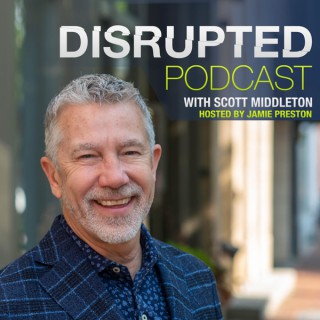
If your doctor prescribes you medication without first asking about your diet, your sleep, your stress, or your vital signs — you don't have a doctor. You have a drug dealer.That's the provocation Scott Middleton brought to this episode of The Disrupted Podcast, and it's one that cuts straight to the heart of everything wrong — and everything possible — in modern healthcare. Scott is the Founder and Chief Disruption Officer of Your Health, a healthcare organization built on the radical idea that prevention is cheaper, smarter, and more humane than reaction.In this conversation, Scott unpacks:Why most doctors have become de facto salespeople for pharmaceutical companies — and how to change thatThe staggering math of remote patient monitoring: how vital signs three times a week could prevent 50% of heart attacks and hospitalizationsThe GLP-1 opportunity hiding in plain sight — and why missing a patient's height is costing thousands of people access to life-changing careHow self-insured employers are bleeding money on avoidable hospitalizations — and what accountability actually looks likeScott's mission beyond the bottom line: a United Methodist minister who got into healthcare to save souls, not just bodiesIf you've ever left a doctor's appointment feeling like a transaction rather than a patient, this episode is for you. The data already exists to change that — we just have to decide to use it. www.YourHealth.Org

What does hope look like for the United Methodist Church after years of disruption, decline, and change?In this episode of Pod Have Mercy, John and Matt sit down with Dr. Lovett H. Weems, one of the leading voices in church leadership and United Methodist life, for a wide-ranging conversation about where the church has been and where it might be headed next.Drawing from his newest book, "An Aura of Hope: United Methodism's Next Chapter in the United States," Dr. Weems discusses why hope is not dependent on favorable circumstances, what current trends and demographics reveal about the future of the church, and why congregations must begin by paying attention to "the people God has given us."The conversation explores the changing geography of Methodism, the importance of reaching beyond the walls of the church, what churches can learn from congregations that are successfully reaching new people, and why leadership is less about imposing a vision than helping God's people discern their next faithful step.They also discuss the future of the United Methodist Church following disaffiliation, the denomination's new regionalization model, church governance, and what it means for churches to serve not simply their members, but the common good of the communities around them.Dr. Lovett H. Weems is Distinguished Professor of Church Leadership Emeritus at Wesley Theological Seminary and senior consultant at the Lewis Center for Church Leadership, which he founded in 2003. Previously, he served for 18 years as president of Saint Paul School of Theology and spent many years as a local church pastor in Mississippi.He is the author or co-author of numerous books on church leadership, including "An Aura of Hope," "The Right Questions for Church Leaders," "Church Leadership: Vision, Team, Culture, and Integrity," "Sustaining While Disrupting," and, with Bishop Tom Berlin, "Bearing Fruit," "Overflow," and "High Yield."Resources mentioned in this episode:An Aura of Hope: United Methodism's Next Chapter in the United StatesUnited Methodist Focus, Dr. Weems's newsletter on the future of the United Methodist ChurchLewis Center for Church Leadership at Wesley Theological Seminary
Indeed. Thank you, choir. That was wonderful, what a wonderful way to be prepared to prepare the people for me to come and share a word with you all. And thank you all for being here. My name is Reverend Scott Bostic. I'm a United Methodist pastor, and I'm currently serving beyond the local church as the deputy director of the Washington Interfaith Network, which Foundry is a part of. For those of you who don't know, the Washington Interfaith Network is a broad based, multi-race, multi-faith organization rooted in congregations and associations across Washington, D.C. Together, when members take public action, they organize their communities, hold decision makers accountable, and build power to create change across D.C. It's a joy for me to be back with you again. I say back because this is not my first time here at Foundry. I recognize many familiar faces among you. I first came here many years ago, over a decade ago, when I was serving at Asbury United Methodist Church, down at 11th and K. For a brief time this was my worshiping home, as my family worshiped here. When I was in between appointments many years ago, I've helped with weddings here, I've helped with celebrations of life, I've helped with special services during Holy Week, and other times when I've gotten a phone call from Pastor Ben or Pastor Ginger saying, hey, are you busy? It's a joy to be with you now on this Sunday morning, with an opportunity to share a word with you all from Nehemiah. So here again, beloved, these words from the book of Nehemiah, chapter six, verses eight and nine: "Then I sent to him, saying, no such things as you say have been done. You are inventing them out of your own mind. For they all wanted to frighten us, thinking their hands would drop from the work and it would not be done. But now, strengthen my hands." Will you pray with me? O God of love, speak to me. God of grace and of mercy, speak through me. God of power and of justice, speak in spite of me, that on this day, in these moments, your will would be done. Speak, O Lord, for your people are listening. Amen. I thought it might be good to start off with a confession. I'm not a huge fan of Dolly Parton's music. Country music just isn't really my thing. I do want to be clear, though, that I have deep respect for her talents as a singer, for her talents on and off screen, and for the mighty work that she has done beyond the stage and behind the microphone. So go back with me in time, if you will, to 1980. There's a movie that Dolly starred in called 9 to 5. Some of you probably just thought it was a song, but oh no, it was so much more. There was a spinoff series and a musical too, though maybe we won't talk about the musical. In this movie, Dolly was one of three legendary actresses who told the story of three frustrated, harassed, and mistreated women whose boss is described as the most sexist, egotistical, lying, hypocritical bigot on the planet. Sounds familiar. Their response to this hateful person was to work behind him and in spite of him to make changes to their workplace. Now, those of you who have seen the movie know there's some other stuff going on, but we're in church, so if you want to know the rest of the story, go watch the movie. Among the changes they make in their workplace are implementing several programs that the workers love, including in-office daycare, equal pay for everyone (one of them had gotten in trouble for asking what one of their male colleagues made), flexible work hours, and a job-sharing program allowing employees to work part time. The boss didn't know they had made these changes, and when he came back he was furious, but his chairman came in and was elated because the productivity of their department had increased by 20 percent because of these changes. That got me thinking about how these changes came to be, not just in movieland but in our world, through the work of organized labor. That, after all, is what this weekend is all about. Not the unofficial end of summer, not one last trip to the beach or a last chance to wear your boat shoes for the season. It's not about the barbecues or the parties or the days off, well, actually, maybe it is about that last one. Labor Day is about celebrating how those who worked for reform in our workplace and labor laws fought to get people a weekend, time off, to end child labor and send kids to school instead of to factories. Coincidentally, my family watched the news this weekend, which is its own great labor story, about things like paid leave and family leave, unemployment benefits, and rules about hiring and firing, so many things that many of us take for granted, and maybe did until the last two years. It got me thinking about how some people said that these proposed changes, each time, were threats to the status quo which benefited them, those in power, and therefore they hurled their own threats and insults at the people who wanted to make these changes. Those in power were afraid of what might happen if people knew their worth and knew that somebody cared about that. Now, our scripture and story for today picks up in the midst of things in the story of Nehemiah. Some of you know that Nehemiah is a book that is part of the Hebrew Scriptures in the section known as the histories. It's different from some of the other books in the history section, like Esther and Ezra and First and Second Chronicles, in that it is told from the first-person perspective. Scholars call it the Nehemiah memoir, because we're hearing the story from Nehemiah's perspective, so he has moments to add his own commentary, his own personal reflections on what was happening. For those who haven't read the book, or haven't read it in a while, it opens in the first chapter with Nehemiah in Susa, the capital of the Persian Empire, serving as cupbearer to the king, who we think was Artaxerxes the First, for the history buffs in the room. Word comes from Jerusalem about the state of the walls and the troubles of his people. In response, Nehemiah prays to God, praying that God will fulfill the promises God made to Moses to uplift and care for God's people. His prayer includes an important confession, because Nehemiah knew that the people were in exile, that the walls had been destroyed for a reason, and it was because of the people's unfaithfulness. It was because of the people's actions that Jerusalem had fallen and that they were in exile in the first place. But he prays that God would receive their prayer and grant restoration to the people if they would repent and return to the Lord. That is where we get to our first lesson, before we even get to the text from Nehemiah: it starts with God and prayer, but please don't stop there. Too often people go to God and pray. We pray for ourselves, we pray for the people around us, we pray for the world, for the problems going on around us, for tragedies that we hear about, and then we stop. We don't follow up on our prayers with the response that God is calling us to take, the response that God has empowered and emboldened us to take. We, as faithful followers, have a responsibility to pray, to seek God first, and to act in response to the needs of the world around us as God is calling and leading, not as social trends would have us do, or social media influencers or politicians or even some pastors, but as God Almighty is calling us and has shown us again and again that we are called to respond through loving our neighbors, not just with warm, fuzzy feelings and sweet, kind thoughts, but with concrete, tangible actions. So Nehemiah, from his position of power at the hand of the king as cupbearer, requests and is granted permission to travel back to Jerusalem to rebuild the walls. He's given written permission so that should anyone question whether it was okay for him to do this, they would know he had the blessing of the king. The king was so moved by and behind this effort that he even provided wood from his own forests and cavalry and troops to escort Nehemiah and their resources back to Jerusalem. Jerusalem, at that point in time, had already had the temple rebuilt, that was the main thrust of the story in the Book of Ezra, and we learn early on in Nehemiah's adventures that in addition to being a faithful servant of God and a loyal servant in his position to the king, he is also wise. That wisdom would serve him well in the ways he would deal with the many challenges ahead. But humbly, Nehemiah recognizes, as he says several times, that his success, the way things were able to work out, was not because of him. It was because of God's faithfulness, because God's gracious hand was upon him. Now, as you might remember or imagine, Nehemiah showing up on the scene to rebuild the walls upset some people, especially the leaders around Jerusalem, because someone was coming to care for the people of Israel. Remember, not everyone went into exile after the fall of Jerusalem. Many remained in the land but were ruled by others. Some had already returned, as I mentioned, to rebuild the temple, as recounted in the Book of Ezra. But they still did not have a Jewish governor who was steadfast and faithful to God. Throughout the chapters leading up to chapter six, Nehemiah had faced opposition from people outside the city and from some people inside the city, not all of whom were faithful followers of God. It took some wisdom for him to navigate these different challenges in this tricky landscape, as people plotted to disrupt the work and even attack the city. Why? Because they knew the practical and symbolic meaning of the walls being rebuilt. Practically, it meant there would be a place of refuge for the people of Israel, should someone in future days come to attack or try to harm them. Now, I'm not advocating for walls in general, but in those days a walled city was a safer city, because when raiders came, people had a place of shelter and knew they would be safe. Symbolically, it marked the return of this space to being a city that was looking out for the Hebrew people. It symbolized strength and protection and care. Nehemiah's return to Jerusalem to build the walls was so zealously supported that people came together, not just in Jerusalem but from across Judah, because they believed that Nehemiah cared for them, and through him they were reminded of God's care for them. That gave them the courage to work, even though it was dangerous and upsetting to their enemies, even though it caused internal challenges for them as a people, because coming together to do the work of rebuilding the walls meant fewer people in the fields, fewer people to guard the city. And yet, in spite of all of this, Nehemiah, in his wisdom and in his seeking of God, was able to create a more caring and loving society, and they were able to get the work done. This may surprise you, but in the midst of their work there were people taking advantage of those who were less fortunate. Can you imagine that? People coming together to do work, things not going well, and somebody trying to profit off of that? It's absurd. People were troubled, wondering how they would be able to get it all done, how they would build the wall, how they would keep one another safe, how they would bring in the harvest. Let me be clear, there wasn't some fast-track, no-bid contract that went out and the wall just got built. It was the people themselves who had to come together, many of whom were not masons and builders, to rebuild the wall, to care for their own safety. Nehemiah's wisdom and God's gracious hand guided him through the internal and external challenges to complete the work he set out to do. So now we're at Nehemiah chapter six. The walls are complete, the gates are not yet built, but they've got everything they need to build them. And here come again the enemies from outside. They've seen how the people have come together to complete this work, and they know once the gates go up, they'll have problems. So enter Sanballat and Tobiah, and Geshem the Arab, and all the neighbors who were displeased when Nehemiah showed up in the first place, back in chapter four, when the wall was only half its height. They sent word to Nehemiah, saying, come, let's meet and talk about this work you're doing. Nehemiah's wisdom told him that nothing good could come from meeting with them, because they wanted him to go twenty-five miles outside the city to talk. So he responded, saying, I must focus on my work, why would I stop to come and meet with you? Three more times they sent him the same message, saying, come meet us in this deserted place outside the city so we can talk, and three more times he sent the same reply: I'm working, talk to you later. He was focused on what he needed to do. So they tried to switch it up, using a tactic that may seem familiar to some of you. They set up an information campaign to discredit Nehemiah, sharing it with anyone who would listen, that's what the open letter refers to, instead of a sealed letter there was an open letter, a town crier walking around telling everybody what was in this letter being delivered to Nehemiah. Moreover, Sanballat and his crew paid people to go into the city and pretend to be prophets, to spread rumors that Nehemiah wanted to set himself up as king. They did this even knowing that Nehemiah had received letters from the King of Persia himself approving this work. But they were troubled, because they knew Nehemiah cared about the people, and he wanted to put an end to their ability to exploit the people of Jerusalem. They thought that if they could get rid of Nehemiah, the work would falter and they could go back to doing things the way they liked. Beloved, there are people in our world today, just as then, who count on cities and communities and states having weak and ineffective leadership, on people not having the things they need to care for those under their charge. We see it all the time here in D.C., we've seen it even more in the past two years. Think back to last year's attempt to take a billion dollars out of D.C.'s balanced budget, a balanced budget, from a Congress that hasn't passed one of its own in twenty-five years. The weakness of others was what they were relying on to give them a sense of power and control, and that is at the core of most, if not all, oppressive thinking: the thinking that someone else has to be down in order for me to be up, that someone has to be of low state, dehumanized and dismissed, in order for me to feel powerful and strong. This, of course, dismisses the teachings of the Torah and of Christ, perpetuating the fear that comes with feelings of scarcity. But Nehemiah doesn't give in to his own potential for fear as these lies and falsehoods are spread about him and the work of the people. He responds flatly and plainly with the truth, and then gets back to work. Verse eight, he begins: "Then I sent to him, saying, no such things as you say have been done, you are inventing them out of your own mind, for they are all wanting to frighten us, thinking their hands will drop from the work and it will not be done." And then comes Nehemiah's prayer: "But now, strengthen my hands." The late Reverend Doctor Ralph Klein, the former dean and professor emeritus of Old Testament at the Lutheran School of Theology in Chicago, says it might be better translated, "but in fact, I redoubled my resolve." I redoubled my resolve. Whether it was an explicit prayer by Nehemiah or an act of faith built upon his steadfast faith in the God who had brought him thus far, Nehemiah resolved, in the face of hate and oppression, threats of violence, and attempts to demean him, with resolve and fortitude. We need that kind of resolve and fortitude today, beloved, because there are gaps in the walls meant to protect us, and in some places the walls have been torn down to the ground. That means we have work to do. From the pervasive and perverse actions of gangs of federal agents, with the assistance of our own MPD, roaming through the streets of our city, attacking people based on their ethnicity, as well as those who step out to protect them, to the National Guard troops whose planned presence here until 2029 is intended to normalize something that, as a veteran, I assure you is far from normal, through fear and intimidation, to keep people from exercising their rights and looking out for their neighbors. With all that, there are gaps in the walls and we have work to do. From threats by the executive branch of our federal government to refuse to allow whoever the people of D.C. elect as their mayor to take power, to the past refusal by certain leaders to swear in members of Congress because they didn't want them to take office, to the continually unfolding attacks on our electoral process here and across our country, beloved, there are gaps in the walls and we have work to do. From the continued objectification and domestic terrorism being wrought on Black and brown communities, to the emboldened, systematic efforts to create a permanent caste system of people living in poverty without the resources they need to survive, let alone thrive, we have work to do. When people who are experiencing homelessness and those who are housing insecure can't get an ID because a couple of people in the D.C. government don't see a problem, when people can't pay their healthcare bills or their utility bills or the gas in their car or the groceries they need to feed their families, there are gaps in the walls and we have work to do. I know it can seem overwhelming, because it is overwhelming. But I know that we're not alone, that we have one another to do this work together, some working, some watching over us, like they did in chapter four of Nehemiah, some working and some caring. I know that we have wise leaders, like your pastors and so many others throughout our city, our region, our country and our world, who are not just telling us but showing us with their actions what it means to show up and care for others, and how important it is for us to continue building those muscles of care for one another, especially in these moments when the threats are not just real but at the gates and inside the city. As it says in Galatians 6:9, "let us not grow weary in doing what is right, for we will reap at the harvest time if we do not give up." If we do not give up, beloved, don't give up. Paul and Nehemiah knew a thing or two about the good and necessary work they had to do. They knew a thing or two about the challenges of working in dangerous and oppressive environments. They knew a thing or two about internal and external threats to their work, and they certainly knew a thing or two about having something that God put on their hearts, that they knew, that they knew, that they had to accomplish. I think if Paul had been around in Nehemiah's time, he might have sent him a note similar to the one he sent to the church in Philippi, where he says, in chapter one, verse six, "I am confident of this, that the one who began a good work in you will continue to complete it." The same is true for us today, that the one who began this great work will see it through. Paul says, "I am confident of this." Given all that he had seen, all that he knew, all that had happened around him, given the threats that were levied against him, given the fact that his very occupation and his work was illegal and punishable by death, he was confident, not pretty sure, not "I think" or "I'm hopeful," but confident that the one who began a good work in you, he said. The one who began a good work in you, choir. The one who began a good work in you, Sarah. The one who began a good work in you, and you, and all of you, and all of us, would see that work continue to completion until the day of Christ Jesus. Beloved, there's trouble in our city, there's trouble in our nation, and we have work to do. And we are not alone. So may we go forth from this day with the courage and the resolve, like Nehemiah, to finish the good work that is before us. May it be so. Amen.
There are somewhere north of 47,000 Christian denominations in the world — so why this one? Opening a ten-week series on what makes United Methodists who they are, Tamm Jackson argues that the answer has to begin somewhere other than John Wesley, the Book of Discipline, or three centuries of Methodist tradition. It begins with Jesus. Preaching from an ancient hymn Paul quotes in Philippians 2 — where Christ, holding every right to power, empties himself instead — she traces what it means to "have the mind of Christ": a commitment to the way of Jesus so complete that nothing can pull you off it. Along the way she notes that Christian and Methodist both started out as insults, and that in both cases the people they were aimed at decided to wear them proudly. She also names the things that quietly compete for the center of a life — politics, money, status, family, comfort, and, not least, the church itself. A congregation can end up fighting harder for its traditions than for its neighbors. The correction, she says, is the willingness Wesley himself showed when George Whitefield dragged him out to preach in fields and coal mines: when we find we have gotten it wrong, we change.Scripture: Philippians 2:5–11In this episode: why 47,300 denominations is a smaller number than it sounds · "Christian" and "Methodist" as words that began as insults · what Paul's hymn says about power given away · Caesar is Lord versus Jesus is Lord · the things that compete to be the center · Wesley changing his mind about field preaching, and about women preaching · Methodist women, the temperance movement, and why you cannot legislate morality · Ruth the Moabite and the Ethiopian eunuch · seeing the world through Jesus-colored glasses.
What does it mean to truly belong?In this episode of Behind the Scenes, host Kevin Van Hall sits down with Rev. Laura Johnson to explore her September 13, 2026, sermon, “Belong as You Are,” the first message in a new sermon series about North Raleigh United Methodist Church's purpose: Belong as you are. Become like Jesus. Be love for God's world.Laura begins with a personal story about discovering a United Methodist church where people from different backgrounds, cultures, abilities, and life experiences could worship together without having to fit a particular mold. That experience helped shape her understanding of what it means to create a community where people can truly belong.The conversation explores the difference between belonging and fitting in. Fitting in requires us to change ourselves to match the people around us. Belonging means being known and loved as we are. Laura explains why belonging comes first in NRUMC's new purpose statement and why the church seeks to be a place where people can belong even when they have different viewpoints, backgrounds, cultures, or theologies.At the heart of the sermon is Galatians 3:25–28, where Paul challenges the boundaries that separated people in the early Christian community. Laura examines Paul's declaration that all are one in Christ Jesus and considers what this radical vision of belonging means for the church today. The conversation explores how Christianity began as a movement within Judaism, the conflict surrounding Gentile inclusion, and Paul's insistence that belonging in Christ is not based on conformity to a particular set of cultural or religious requirements.Laura also shares a childhood story about getting caught stealing cookies from the church kitchen. Instead of being shamed or excluded, she and her friend were given grace. That simple experience became a powerful example of what it means to know that you belong, even when you get things wrong.The episode asks important questions about Christian community, church belonging, grace, inclusion, conformity, and the way we welcome others. What does it look like to create a church where people do not have to believe everything before they belong? How can we make space for people who are skeptical, questioning, different from us, or simply figuring out where they fit? And what does it mean for every person at North Raleigh United Methodist Church to help cultivate a culture of belonging?Laura concludes by emphasizing that belonging does not happen automatically. It must be intentionally cultivated and protected by the whole church through genuine welcome, grace, care, openness, and a willingness to honor people who may see things differently.Scripture: Galatians 3:25–28Sermon: “Belong as You Are”Preacher: Rev. Laura JohnsonHost: Kevin Van HallChurch: North Raleigh United Methodist Church (NRUMC)Behind the Scenes is a weekly podcast from North Raleigh United Methodist Church that takes listeners deeper into the week's Scripture and sermon through conversation with our pastors and ministry leaders. These conversations offer additional context, questions, stories, and insights to help us continue thinking about faith long after worship ends.Topics include: belonging, Christian community, church inclusion, grace, Galatians 3, Galatians 3:28, United Methodist Church, Wesleyan Christianity, Christian discipleship, church culture, faith and doubt, welcoming others, conformity vs. belonging, radical belonging, and North Raleigh United Methodist Church.
Sabbath: A Gift, Not a Burden | Rev. Kevin JohnsonWhat if Sabbath isn't another thing to accomplish—but a gift from God?In this Labor Day weekend sermon, Rev. Kevin Johnson explores Jesus' teaching about the Sabbath in Mark 2:23–3:6 and invites us to reconsider what it means to truly stop, rest, and delight in God's presence. In a culture obsessed with productivity, efficiency, and “maxing out” every part of life, Sabbath offers a radically different way of living.Kevin begins by reflecting on his own sabbatical experience and the surprising realization that he had started trying to “max” his sabbatical—creating a list of things he needed to accomplish each day in order to do rest correctly. But Sabbath isn't about accomplishing rest. It's about becoming fully present to God, creation, relationships, and the gifts already surrounding us.The biblical word Sabbath means “to stop,” but Scripture also connects Sabbath with delight. God created a rhythm of work and rest not because God needed a break, but because we need one. Sabbath reminds us that we are more than what we produce and that the world will continue without us working every minute of every day.Kevin explores the Sabbath commandments in Exodus and Deuteronomy, highlighting two important reasons God gives Israel this practice: God rested, and God rescued them from slavery. Sabbath becomes an act of resistance against anything that tries to make us slaves again—including consumerism, constant availability, work, technology, and the pressure to always be productive.When Jesus' disciples are criticized for picking grain on the Sabbath, Jesus responds, “The Sabbath was made for humans, not humans for the Sabbath.” Later, when Jesus heals a man with a withered hand, he demonstrates that Sabbath is ultimately about life, wholeness, and restoration, not legalism.This message invites us to move from being human doings to human beings and to rediscover Sabbath as a practice of experiencing God's love.What would you do if your only directive was to enjoy and delight in God's presence and God's world?Maybe Sabbath begins there.

What does genuine Christian community look like, and why do we need one another to grow? In this message from Romans 12, Pastor Mark Reynolds explores how grace extends beyond individual transformation to foster authentic relationships in which we are known, supported, challenged, and loved. Discover how Christian friendship becomes one way God transforms us—and makes the love of Jesus visible in a divided and lonely world.
What do United Methodists believe? It really comes down to one word: Grace. Yes, but what do we really believe about Grace? Join us as we reflect upon Ephesians 2: 1-10 and talk about how God is always the first actor in our faith and our salvation. It's always about grace. Always.

(1) Israel Watch 9/6/26: We renew "tit-for-tat" between the U.S. and Iran. And we discuss the propaganda war with another fake news story about Israel closing Christian schools, which they did not. (2) Feminist Founder Has Died: Gloria Steinem. We provide a little history (from a left wing media perspective) compared with Scripture AND the fact that Gloria was a C.I.A. asset. We discuss Harry Truman's intentions for the C.I.A., when he founded it and his Washington Post article one month after the assassination of JFK. (3) Apostasy Update: Drag "preachers" in the United Methodist churches preaches the "Gospel of Stardust" similar to that preached by Neil DeGrasse Tyson. (4) Vice President J.D. Vance makes clear that he is not a born again believer in the Gospel. (5) On A Lighter Note: VP Vance sadly also follows the culture feminization of the English language pronouncing "and" as "an-T" with a hard T instead of a hard D. https://bbfohio.com
Visit Crossmap.com — your trusted source for inspiration and life-changing stories from people of faith.Top headlines for Wednesday, September 2, 2026A campus ministry sues SUNY Broome over leadership requirements, a United Methodist conference loses $1.6 million to cyber thieves posing as bankers, JD Vance describes sensing spiritual darkness in meetings with world leaders, and Jerusalem's Christian schools stay closed as Israel withholds permits for dozens of teachers.0:11 InterVarsity sues after SUNY Broome opposes leadership policy1:00 $1.6M stolen from UMC regional body through cyberattack1:52 JD Vance claims to sensed spiritual 'darkness' from world leaders3:25 Abby Johnson warns of 'misguided compassion' amid Clancy trial4:18 Christian schools in Jerusalem remain closed over staff permits5:09 Bryce Crawford talks Waffle House, Bonnie Blue and 'worst human'5:54 'Phantom' actress sees Gospel message in iconic storySubscribe to this PodcastApple PodcastsSpotifyGoogle PodcastsOvercastFollow Us on Social Media@ChristianPost on TwitterChristian Post on Facebook@ChristianPostIntl on InstagramSubscribe on YouTubeGet the Edifi AppDownload for iPhoneDownload for AndroidSubscribe to Our NewsletterSubscribe to the Freedom Post, delivered every Monday and ThursdayClick here to get the top headlines delivered to your inbox every morning!Links to the NewsInterVarsity sues after SUNY Broome opposes leadership policy | Education$1.6M stolen from UMC regional body through cyberattack | Church & MinistriesJD Vance claims to sensed spiritual 'darkness' from world leaders | Politics'Phantom' actress sees Gospel message in iconic story | EntertainmentAbby Johnson warns of 'misguided compassion' amid Clancy trial | U.S.Christian schools in Jerusalem remain closed over staff permits | WorldBryce Crawford talks Waffle House, Bonnie Blue and 'worst human' | Podcast
Why do we still struggle even when we sincerely want to change and trust God? In Romans 7–8, Paul reminds us that struggle is not evidence that grace has failed. When old patterns return, life overwhelms us, or we don't even know how to pray, the Spirit meets us in our weakness. God doesn't promise that we will never struggle. God promises that we will never struggle alone.Scripture: Romans 7:15–25; 8:18–39Series: This Is Grace: Paul's Letter to the Romans
Sponsored by Wycliffe: There are still people whose Bibles are blank, while millions of others have incomplete stories. Help make God's Word accessible. Give today at: https://bit.ly/3Thk8SHTop headlines for Thursday, August 27, 2026Interfaith leaders demand answers after thirteen Americans, including United Methodist clergy, were denied entry to Israel. The Anglican Church in Australia moves to pull a cathedral baptism from an OnlyFans reality series. The G3 Church Network abruptly dissolves amid a plagiarism scandal. Plus, remembering Dolly Parton's lifelong faith.0:11 UMC clergy among 13 Americans denied entry to Israel0:57 Anglican Church demands removal of cathedral scene from porn show1:50 Judge blocks changes to Teen Pregnancy Prevention Program grants3:44 G3 Church Network shuts down after leaders apologize: report4:35 Donnie McClurkin rebukes Jamal Bryant for 'abracadabra' message5:23 PCUSA church in South Carolina calls trans lesbian as pastor6:17 6 things Dolly Parton said about faith and forgivenessSubscribe to this PodcastApple PodcastsSpotifyGoogle PodcastsOvercastFollow Us on Social Media@ChristianPost on TwitterChristian Post on Facebook@ChristianPostIntl on InstagramSubscribe on YouTubeGet the Edifi AppDownload for iPhoneDownload for AndroidSubscribe to Our NewsletterSubscribe to the Freedom Post, delivered every Monday and ThursdayClick here to get the top headlines delivered to your inbox every morning!Links to the NewsUMC clergy among 13 Americans denied entry to Israel | U.S.Anglican Church demands removal of cathedral scene from porn show | EntertainmentJudge blocks changes to Teen Pregnancy Prevention Program grants | PoliticsG3 Church Network shuts down after leaders apologize: report | Church & MinistriesDonnie McClurkin rebukes Jamal Bryant for 'abracadabra' message | Church & MinistriesPCUSA church in South Carolina calls trans lesbian as pastor | Church & Ministries6 things Dolly Parton said about faith and forgiveness | Entertainment
Given that reason is a part of our Wesleyan Quadrilateral, it should be no surprise to hear that Wesley believed that science and faith could be in productive dialogue with each other. He posited numerous ideas about science and was keenly interested in the writings of natural philosophers of his time. For us as United Methodists, we should remember that science is not incompatible with our faith, and we can learn and even embrace science as a valid encounter with truth.Reflection Questions: 1. Where do you encounter God in the wonder of creation?2. How can your faith shape the way you use science and technology?3. What is one way you can practice greater stewardship of God's creation?Find out more at HydeParkUMC.org/NextSteps

Messianic Apologetics editor John McKee reviews some of the controversies raised by Adam Hamilton, a United Methodist minister and political candidate.
Big Answers Are Found in Small Questions | Rev. Kevin JohnsonWhat can one small question reveal about faith? In this sermon, Rev. Kevin Johnson explores one of the most important questions Jesus ever asked: “Who do you say that I am?”In Matthew 16:13-20, Jesus first asks his disciples what others are saying about him. Then he makes the question personal. Peter responds with a bold confession: “You are the Messiah, the Son of the living God.” But this question isn't just for Peter. At some point in every faith journey, we are invited to wrestle with it for ourselves.Rev. Johnson reflects on why we don't have to have all the answers before coming to Jesus. God is already at work in our lives, drawing us closer through what United Methodists call prevenient grace—God's grace that reaches for us before we even know how to reach back.This message also explores what it means to confess Jesus as more than a source of comfort or a casual part of our lives. If Jesus is truly Lord, that confession shapes how we live. And Jesus doesn't simply ask us to say the right words; he calls the church to become his body in the world, showing others what God's kingdom looks like through the way we live together.Through Peter's confession, the power of the church, and the ongoing work of the Holy Spirit, this sermon invites us into a deeper question: Who do you say Jesus is—and how does your life answer that question?
On today's program, a federal judge has dismissed the last remaining claim in Johnny Hunt’s defamation lawsuit, marking the end of a contentious legal battle. He had sued the Southern Baptist Convention and others back in 2023. And, a Texas church is sued by the Texas Annual Conference of the United Methodist Church over its bylaw changes. Plus, water filters open doors to share the gospel with vulnerable people around the world. But first, a story out of Tucson, Arizona. Warren, tell us what’s going on at GracePointe Church. Arizona authorities have arrested a former finance manager at GracePointe Church on felony charges. Her name is Tracey Jorgensen. She’s 61 years old. Court documents say Jorgensen stole church funds for five years — from 2020 to 2025. The total is more than $356,000. The producer for today's program is Jeff McIntosh. We get editorial, database, and other technical support from Christina Darnell, Stephen DuBarry, Rod Pitzer, Heidi Allums, and Casey Sudduth. Writers who contributed to today's program include Jessica Eturralde, Bob Smietana, Michaela Gordoni, Kim Roberts, Kadence McKinnon, Kathryn Post, and Makella Knowles. Until next time, may God bless you.
Sponsored by Wycliffe: There are still people whose Bibles are blank, while millions of others have incomplete stories. Help make God's Word accessible. Give today at: https://bit.ly/3Thk8SHTop headlines for Thursday, August 20, 2026A former priest faces charges of stealing $740,000 from churches and his own mother. Pastor Greg Locke describes a pre-dawn federal raid on his Tennessee home. Thieves take $80 million in Renaissance masterpieces from a Sicilian museum. Plus, the Kendrick brothers reimagine Flywheel in Brazil.0:11 Church raids and the law: A look at federal invest1:01 Ex-priest charged with stealing over $740K from churches, his mom1:56 Navy SEAL who rescued 9/11 victims reflects on 'gratitude'3:40 Hundreds to attend ecumenical gathering on AI and human agency4:34 Child Evangelism Fellowship fires director facing charges5:30 Custodians facing disciplinary action after Sicilian museum heist6:28 Alex Kendrick on resisting pursuit of his own glorySubscribe to this PodcastApple PodcastsSpotifyGoogle PodcastsOvercastFollow Us on Social Media@ChristianPost on TwitterChristian Post on Facebook@ChristianPostIntl on InstagramSubscribe on YouTubeGet the Edifi AppDownload for iPhoneDownload for AndroidSubscribe to Our NewsletterSubscribe to the Freedom Post, delivered every Monday and ThursdayClick here to get the top headlines delivered to your inbox every morning!Links to the NewsEx-priest charged with stealing over $740K from churches, his mom | U.S.Navy SEAL who rescued 9/11 victims reflects on ‘gratitude' | EntertainmentHundreds to attend ecumenical gathering on AI and human agency | Church & MinistriesChurch raids and the law: A look at federal invest | U.S.Child Evangelism Fellowship fires director facing charges | U.S.Custodians facing disciplinary action after Sicilian museum heist | WorldAlex Kendrick on resisting pursuit of his own glory | Entertainment
What happens when we reach the limits of what we can fix on our own? In Romans 3, Paul answers with two powerful words: “But now.” God has acted in grace, doing for us what we cannot do for ourselves. In this message, Pastor Mark explores how grace meets our guilt, shame, bondage, and brokenness with forgiveness, freedom, reconciliation, and peace. We don't have to save ourselves. We can loosen our grip, trust the God Jesus reveals, and receive the gift of grace. Get the 5-Day Devotional based on this sermon at revmarkreynolds.com.
Top headlines for Friday, August 14, 2026Marco Rubio marks America's 250th with a message that liberty isn't freedom from duty to family, nation and God. The WNBA breaks its silence on transgender eligibility amid mounting online vitriol. A Liberty University student asks the Supreme Court to end a tuition ban on religious majors. Plus, a United Methodist conference sues a Dallas megachurch.0:11 Marco Rubio: Liberty isn't 'liberation' from duty to family, God1:01 WNBA breaks silence on male athletes as debate intensifies1:54 Supreme Court asked to reconsider ruling on religious studies2:47 PAC supporting Paxton shows Talarico as doctors pushing trans3:37 United Methodist conference sues Texas megachurch4:29 Spa asks Supreme Court for help protecting women's spaces5:21 Bethel Music, KB set to headline free open-air worship eventSubscribe to this PodcastApple PodcastsSpotifyGoogle PodcastsOvercastFollow Us on Social Media@ChristianPost on TwitterChristian Post on Facebook@ChristianPostIntl on InstagramSubscribe on YouTubeGet the Edifi AppDownload for iPhoneDownload for AndroidSubscribe to Our NewsletterSubscribe to the Freedom Post, delivered every Monday and ThursdayClick here to get the top headlines delivered to your inbox every morning!Links to the NewsMarco Rubio: Liberty isn't 'liberation' from duty to family, God | PoliticsWNBA breaks silence on male athletes as debate intensifies | SportsSupreme Court asked to reconsider ruling on religious studies | U.S.PAC supporting Paxton shows Talarico as doctors pushing trans | PoliticsUnited Methodist conference sues Texas megachurch | Church & MinistriesSpa asks Supreme Court for help protecting women's spaces | U.S.Bethel Music, KB set to headline free open-air worship event | Entertainment

Can Mainline Christianity find its future? In this episode, Loren Richmond Jr. talks with United Methodist scholar Lovett Weems to discuss his new book, An Aura of Hope: United Methodism's Next Chapter in the United States. While the conversation begins with the United Methodist Church's recent disaffiliation, it quickly broadens into a thoughtful exploration of the challenges facing Mainline Christianity as a whole—from shifting demographics and institutional decline to recovering a clear sense of mission. Weems argues that the greatest challenge before the church isn't simply theological disagreement, but a loss of focus. Drawing on John Wesley's theology and decades of church leadership experience, he encourages congregations to rediscover "the people God has given us" and to evaluate every ministry by asking a simple question: "So that...?" What fruit is this producing? How is it helping the church fulfill its mission? Whether you're Methodist or not, this conversation offers practical wisdom for pastors and church leaders wondering what faithful ministry looks like in a rapidly changing world. Together they explore: What the United Methodist disaffiliation teaches the wider church Why churches lose their sense of mission and identity John Wesley's vision for "the people God has given us" Lessons from the Sunday school movement Rural churches, urban growth, and changing demographics Why reaching younger and more diverse communities matters The difference between institutional success and biblical fruitfulness Dr. Lovett H. Weems, Jr., is distinguished professor of church leadership emeritus at Wesley Theological Seminary in Washington, DC. He came to Wesley in 2003 as the founding director of the Wesley's Lewis Center for Church Leadership after eighteen years as president of Saint Paul School of Theology in Kansas City. Previously he was a pastor in Mississippi for many years. A native of Mississippi, Dr. Weems is a graduate of Millsaps College; Perkins School of Theology, Southern Methodist University; and Wesley Theological Seminary. He holds honorary degrees from Baker University, Central Methodist University, and Millsaps College. His years in local church ministry in Mississippi were marked by both evangelism and social concerns. His work in Mississippi led distinguished Mississippi writer Willie Morris to describe him as “one of the persons who added much to the growing civility of Mississippi.” He is the author of numerous books including his widely used church leadership text, Church Leadership: Vision, Team, Culture, and Integrity, described by Rosabeth Moss Kanter of Harvard Business School as “an invaluable guide to leadership in the church.” His most recent book is An Aura of Hope: United Methodism's Next Chapter in the United States. Mentioned Resources:
In his sermon “On Family Religion,” Wesley said this about the education of children: “Instruct them early in the morning. Speak to them plainly. Observe the few ideas they have and graft what you say upon them. Teach them frequently. Persevere.” He likely learned these principles from the way his mother Susannah instructed him and his siblings, and it translated into a lifelong commitment to improving the educational systems throughout England. It is part of our legacy and ongoing work as United Methodists. Questions for reflection:1. Name someone who grafted some important aspects of faith onto your heart.2. If education is "a lifelong spiritual practice," what is something new you are learning in recent days?3. How is what you are learning shaping your character?Find out more at HydeParkUMC.org/NextSteps
If you're a good person and life is going well, what exactly do you need saving from? In “I'm Fine!”, the first message in our series This Is Grace: Paul's Letter to the Romans, Pastor Mark Reynolds explores why our need for God goes deeper than obvious moral failures—and how grace invites us beyond self-deception into truth, healing, and freedom.

Send us Fan MailIn this episode, we sit down with Hannah Hutchinson, Christ Methodist Church's Associate Pastor of Discipleship and Women's Ministry, to hear the story behind her call to ministry and what brought her to Memphis.Hannah shares about growing up as the daughter of United Methodist pastors, surrendering to God's call as a teenager, preparing for ministry through Samford University and Asbury Seminary, and serving alongside her husband, Nathan, in Mississippi and Florida before joining the Christ Methodist family.She also offers a glimpse into her heart for discipleship, preaching, and equipping believers to discover their calling and make disciples in everyday life. Whether you're meeting Hannah for the first time or have already gotten to know her around campus, this conversation is a wonderful opportunity to hear her story and learn more about the ministry she'll be leading at Christ Methodist. HOME | PLAN YOUR VISIT | BLOG | DIGITAL BULLETIN

— Have you ever considered that a single conversation could change the course of someone's life? That a few words spoken at the right moment might offer hope, inspire healing, strengthen a relationship, or even save a life? Today, we're exploring the extraordinary power of words with Nelson Price, co-author of Everyone's a Change Agent: The Power of Words For Better – For Worse. Drawing from a lifetime of experience as a communicator, storyteller, and media leader, Nelson reminds us that our everyday conversations carry far more influence than we often realize. In this conversation, we'll explore how beliefs are shaped through language, how childhood messages can impact us for decades, and why love, compassion, and mindful communication have the power to transform lives. Most importantly, we'll discover how each of us can become a positive force for change through the words we choose every day. Join us as we explore the simple yet profound truth that our words matter—and that every one of us has the potential to be a change agent. Valeria sits with Nelson Price — He is the author of "Everyone's a Change Agent: The Power of Words for Better or Worse." He also served as a professional communicator throughout his career, beginning as communications officer for two United Methodist bishops, later working for the denomination's national communications agency, and eventually as president/CEO of the Odyssey Cable Network, a coalition of 67 faith communities. He has produced award-winning television and radio programs, as well as documentaries filmed in the U.S., Africa, China, and India. Price lives in Dewitt, NY (Syracuse). To learn more about Nelson Price and his work, please visit: https://nelsonpriceauthor.com/

Support the show
Support the show

The annual Oregon-Idaho conference of the United Methodist Church, which represents 145 United Methodist churches in Oregon and Idaho, won't be coming back to Idaho next year.
A sermon preached by Rev. Dr. Yongchi Rhie with Foundry United Methodist Church, July 12, 2026. "Sermon Series Part II: The United Methodist Way". Scripture: Exodus 2:15–22; Hebrews 13:1–2 On a hot July day in 2014, I stood in a long line outside the United States Embassy in Seoul. All around me, people were checking their documents, whispering the latest rumors about American immigration policy. Some were praying. Others were quietly rehearsing their lines. When my number was called, I sat down across from a consular officer who read through my papers, jotting notes, pausing on certain pages longer than I would have liked. My pulse rose with every pause. Finally, he looked up and asked, "Ms. Rhie, I see you have just returned home after living in England for quite some time. You already hold a Ph.D. Why do you wish to study theology in the United States?" He had a fair point. What could I say? That after seven years of dissecting the Bible within an inch of its life, I had finally realized what Scripture is for — not an object of intellectual indulgence, but a word meant to be lived out in the lives of people? Should I describe my grief at preaching to empty pews in an increasingly secular Britain, where so many considered the Bible, faith, and God simply no longer relevant? I had to be careful. I had been denied a visa once before, for this very reason. The officer asked about my story, but he seemed to be working from a script of his own, testing whether my story would hold. Every visa interview requires delicate tuning: you must convince them you have real plans for their country while assuring them you have no intention of staying. I truly desire to come to your country! I see abundant opportunity there! Will you let me in? But don't worry — I will never get comfortable enough to call it home. A month later, my passport came back with a visa stamped inside. It declared me a legal alien. That word “alien” always makes me laugh. Ever since I left my home country, I have been a legal alien. And I have learned that it doesn't take green skin, an oversized head, or extraterrestrial powers to be counted an outsider. Sometimes the way I look, the way I speak, or simply the way I carry myself is enough to register as a threat, or at least a discomfort. I could learn the customs of a new land. But would I ever be permitted to call it home? For most of my adult life, I have lived as a stranger in a strange land. A Man With No Country Moses knew that feeling so intimately that he engraved it into his son's name: "She bore a son, and he named him Gershom; for he said, 'I have been an alien residing in a foreign land'" (Exodus 2:22). Hey, Moses, did you ask Gershom about this? Did his mother agree? I feel for the boy. Imagine carrying your father's loneliness as your name. Let's step into the story and meet Moses by a well in Midian. His whole life, up to this moment, has been an exercise in not belonging and his very name tells the story. Pharaoh's daughter called him Moses, "because," she said, "I drew him out of the water" (Exod. 2:10). Drawn out: a Hebrew baby lifted from the Nile, out of a death decree, into a palace that was never quite his. Hebrew by blood, Egyptian by upbringing, Moses grows up belonging to neither world. And when he finally goes out to "his people," as the text pointedly calls them in verse 11, everything unravels. He sees an Egyptian beating a Hebrew slave and strikes the Egyptian down (2:11–12). The next day he tries to reconcile two Hebrews who are fighting, and one of them turns on him: "Who made you a ruler and judge over us? Do you mean to kill me as you killed the Egyptian?" Do you hear the wound in that question? Yes, Moses committed a crime the day before; out of anger, perhaps, but also out of compassion for an enslaved kinsman. Today he steps in again, and his own people read his help as a grab for power: the palace insider playing ruler over the enslaved. His act of deliverance is recast as a threat; his sacrifice, as ambition. When word reaches Pharaoh, the king seeks his life. So Moses flees - rejected by Egypt as a criminal, rejected by the Hebrews as a pretender - a man with no country, no people, and a name that only reminds him he was pulled out of one world without ever being planted in another. That is the man who collapses, exhausted, by a well in Midian. What Happens at a Well Now listen closely to how the text tells what happens there, because every detail is doing holy work. Scripture says, "he sat down by a well" (v. 15). In the Hebrew Bible, nothing significant ever happens by accident at a well. Wells are where Abraham's servant found Rebekah, where Jacob met Rachel, where Jesus met a Samaritan woman: places of encounter where God's providence quietly gathers up displaced people and gives them a future. When the original audience heard "Moses sat down by a well," they leaned in. Something is about to begin. Seven daughters of the priest of Midian come to draw water, and rough shepherds drive them away. Hear the Hebrew: the shepherds vayegarshum — they drove them out. It is the very root, garash, from which Moses will later coin the name Gershom, the driven-out one. And here is what astonishes me: Moses inserts himself again. Consider what meddling has already cost this man- his home, his standing, very nearly his life. The prudent thing would be to keep his head down, drink his water, and let Midian's troubles remain Midian's troubles. He owes these women nothing, and no one in this town even knows his name. Yet the one who has been driven out cannot sit still while others are driven out before his eyes. And what does the text say he does? "Moses stood up and saved them" (v. 17) — vayoshian, from yasha, the root that will one day give us the names Joshua and Jesus. Here, at a foreign well, in a single unrewarded act - defending strangers, drawing water for distressed people and their animals - the fugitive rehearses his calling. This is the man through whom God will save a people. Then comes the irony. The daughters run home and report, "An Egyptian delivered us from the shepherds." An Egyptian! Moses is a Hebrew raised in Pharaoh's house, a man belonging fully to neither world, and even his good deed is credited to the wrong identity. Why Bother? And then the young women are gone, and Moses is alone again. No thank-you. No name asked. Not even a drink of fresh water from the well he had just defended. Three times now he has stretched himself for others, and three times his actions went unacknowledged, his words were rebuked, his authority was denied, his very identity was questioned. Sitting in the dust by that well, Moses might well have wondered: Why do I keep doing this? Why can't I just mind my own business? When your act of hospitality is met with silence — or worse, resentment — the temptation whispers: Why bother? I could just live for my own interest, my own comfort, my own happiness. Going the extra mile only makes you tired and pushes you further from your home. Friends, be honest: have you been there? Why do we help others? What is going on inside us when we stretch ourselves for people who may never stretch back? The One Who Noticed But even in the middle of this mess, someone notices Moses. Hearing what happened at the well, Reuel asks his daughters: "Where is he? Why did you leave the man? Invite him to break bread." Reuel is a Midianite priest - a foreigner, an outsider to Israel's story —- and yet he is the one who models the hospitality that the daughters, and Egypt, and even Moses' own people had failed to offer. This foreigner does not interrogate the stranger's papers. He sets a table. And at that table, the fugitive becomes family. Moses marries Zipporah and holds a son whose name tells the truth — ger, stranger. It is no accident that the Torah will later command Israel more than thirty times to protect the ger: "You shall love the stranger, for you were strangers in the land of Egypt." We lament the loss of this entire ethic of welcome in today's world. And notice: it all happened around the well. The well was already there. Before Moses arrived - before he had done anything right, and long after he had done something terribly wrong - the water was waiting. This is the heartbeat of our United Methodist way. John Wesley called it prevenient grace: the grace that goes before us. Before we repent, before we believe, before we even know God's name, God's love is already at work ahead of us, digging wells in the deserts of our lives. Moses thought he was a fugitive stumbling upon a random watering hole. In truth, grace had arrived before him; with a family, a vocation, and, on a nearby mountain, the God who says, "I have observed the misery of my people, and I have come down to deliver them." Two Loves, One Gospel Our second reading today, the letter to the Hebrews gathers this whole story into two luminous verses: "Let mutual love continue. Do not neglect to show hospitality to strangers, for by doing that some have entertained angels without knowing it." (Hebrews 13:1-2). The Greek translation is even better than the English here, because it names two different loves. Mutual love is philadelphia — the love of brothers and sisters. Anyone from Philly here? Did you know your city's name means the love of kinship? Philadelphia is the affection we give people who are already ours: family, friends, fellow members — the ones who look like us, pray like us, vote like us. That love matters. "Let it continue," Hebrews says. But then comes the harder word: philoxenia. Literally, love of the xenos — the stranger, the outsider, the one who shares nothing with you but a common humanity. Philadelphia loves the person already inside the circle; philoxenia widens the circle. Any club can manage philadelphia. Only the gospel produces philoxenia. And we know the opposite word all too well, because it is one of the few Greek words English never bothered to translate: xenophobia — fear of the stranger. We see it whenever an entire people is reduced to a threat: when immigrants are spoken of as terrorists and criminals rather than as mothers, fathers, and children of sacred worth; when a teenager sits in a church pew and learns to hide who they are, because the sanctuary feels less safe than the street; when a synagogue or a mosque must hire armed guards just to gather for prayer; when a job application is quietly set aside because the name at the top sounds too foreign. Xenophobia is the world's oldest sickness. It built Pharaoh's brickyards, and it is still building walls that separate children from their parents today. But friends, I have also seen philoxenia — and so have you. I have seen it in congregations that furnished apartments and stocked refrigerators for refugee families they had never met. I have seen it right here in this city, when buses of migrants arrived at Union Station with nothing, and churches and neighbors showed up with food, coats, and cots — before the cameras did. I have seen it in church basements turned into English classes and legal clinics, and at kitchen tables where someone simply said to the new family on the block, "Come, eat with us." Hospitality, Scripture insists, is not charity flowing downhill from host to guest. It is "entertaining angels without knowing it." It is the doorway through which God's love slips into our lives, often unannounced. Holy Meddling Now, this is the final Sunday of our series on the United Methodist way. Who are we? What defines us? What is our calling — as Christians, as United Methodists, as members of Foundry? I want to name something about Moses that we United Methodists have always claimed as our own: Moses meddles. Three times in one chapter he inserts himself into conflicts that were, strictly speaking, none of his business: an enslaved Hebrew, two quarreling kinsmen, seven harassed women at a well. He refuses to stay in his comfort zone. That holy meddling is our family trait. Our Social Principles declare of our public witness: "The United Methodist Church believes God's love for the world is an active and engaged love, a love seeking justice and liberty. We cannot just be observers." There is no private faith that hoards grace and calls it piety. As Desmond Tutu warned us: "If you are neutral in situations of injustice, you have chosen the side of the oppressor." Friends, this is who we are. We are the people who refuse to mind our own business when God's children are being driven out — from lunch counters to detention centers, from housing courts to hospital waiting rooms. We wrestle with Scripture, we wrestle with our assumptions, we wrestle with our faith and our calling — and like Moses, we stand up. Because we serve a Lord who said, "I was a stranger, and you welcomed me." From Gershom to Eliezer Church, watch what grace does with a meddler. Moses named his first son Gershom: "I have been a stranger in a strange land." But his second son he named Eliezer: "My God is my helper." Between those two names lies an entire conversion. The stranger became a host. The man who once sought water at a well became the one through whom God drew a whole people out of bondage, through mighty waters, into freedom. God still loves to do this. God takes our Gershom — our alienation, our wounds, our wandering — and rewrites it as Eliezer: my God is my helper. Helper: not in advancing my ambitions or protecting my own wealth, family, and safety, but in teaching me to love God and to love my neighbor as myself. People often mistake "with God, all things are possible" for a guarantee of personal fulfillment. No. God helps us toward something far greater: to serve higher purposes, to forgive and to love, to give and to build, to lay down our lives for friends who were once strangers. We can live out the radical, divine, universal love of God — because God is with us, and God helps us. The Invitation So here is my invitation: this week, don't leave the town of Philly just yet. It is good to stay connected to the love of kin — philadelphia. But intentionally seek out and practice philoxenia. Is there a newcomer in the pew near you, or new to your building, your office, your block? Don't wait for the welcome committee - go say hello, learn their name, and remember it. Does someone need prayer? Don't merely promise to pray for them; ask if you may pray with them, right there, for two holy minutes. Is a neighbor navigating a new language, a new diagnosis, a new grief? Set a table, the way Reuel did: "Invite them to break bread." Philadelphia is dinner with your sister; philoxenia is adding a chair for someone whose story you don't yet know. One helpful discipline for the coming week: each evening, ask yourself two questions. Who did I love today who already loves me? That's philadelphia — good, keep it up. And: Who did I welcome today who could give me nothing back? That's philoxenia — the stretch. If the second column stays empty for a few days, that's the invitation talking. And now, before we close, one more invitation, because sermons about wells should end at one. If today you are the one in the wilderness - if you walked in this morning feeling like a stranger in a strange land - hear the good news: the well is already here. Grace arrived before you did. Before you ever learn to love yourself, before you learn to love your neighbor as yourself, you are already loved by the God of living water…not because of anything you have done, but because of whose you are. If you doubt this grace, then as we sing our final hymn, I invite you: come. Come to this altar, and let us pray with you. You don't need the right words; Moses didn't have them either. Just come and stand by the well with us. And perhaps you came in this morning already full. Then I invite you to consider the many ways you can become a living well for others: a place where people come to know and experience the way of philoxenia, the love of the stranger. The name you have yet to forgive. The prayer you will offer on the spot. The table you will set for the weary. The grace you will give without asking anything in return. Whether you come forward or stand still, the invitation is the same: Come to the well, and then go and become one. Amen.
I Am the True Vine | Rev. Laura Johnson | North Raleigh UMCWhat did Jesus mean when He said, "I am the true vine"?In this message from John 15, Rev. Laura Johnson explores the seventh and final "I Am" statement in the Gospel of John. On the night before His crucifixion, Jesus gives His disciples one last image to remember: He is the vine, the Father is the gardener, and we are the branches. This beautiful metaphor reveals that the Christian life is not about striving harder or producing fruit through our own efforts. It is about abiding in Christ and allowing God's love to transform us from the inside out.Drawing on John's Gospel and the rich tradition of Wesleyan and United Methodist theology, Laura reflects on God's grace, the transforming work of the Holy Spirit, and the invitation to remain rooted in the limitless love of Christ. As we abide in Jesus, God prunes away what keeps us from thriving so that our lives naturally bear the fruit of love, joy, peace, and faithful discipleship.Whether you're feeling spiritually weary, longing for a deeper relationship with God, or wondering what it truly means to follow Jesus, this sermon offers biblical encouragement and practical hope. Jesus' invitation is simple yet life-changing: remain in His love. As we receive God's extraordinary love, we are empowered to share that same love with the world.Scripture: John 15:1-17At North Raleigh United Methodist Church, our purpose is to be a church where you can Belong just as you are, Become more like Jesus, and Be Love for God's World.Topics: John 15, I Am the True Vine, True Vine, Abide in Christ, Rev. Laura Johnson, United Methodist Church, Wesleyan theology, grace, sanctification, Holy Spirit, discipleship, fruit of the Spirit, God's love, Christian living, love one another, Bible study, sermon, North Raleigh UMC.

Discover the global impact of the United Methodist Church with a special look at how the General Commission on Archives & History will impact our church and world by relocating from New Jersey to Dallas
I Am the Way, the Truth, and the Life | Rev. Kevin Johnson | North Raleigh UMCWhat did Jesus mean when He declared, "I am the way, and the truth, and the life" (John 14:6)?In this message from John 14, Rev. Kevin Johnson explores one of Jesus' most familiar and profound "I Am" statements. Spoken during the Last Supper, these words are more than directions to heaven. They reveal Jesus as the One who brings us into relationship with the Father, fills us with the Spirit of Truth, and invites us to live a new kind of life shaped by the Kingdom of God.Drawing on John's Gospel and the rich tradition of Wesleyan and United Methodist theology, Kevin unpacks what he calls "the geometry of the Trinity," showing how the Father, Son, and Holy Spirit invite us into God's own life through Christ. As followers of Jesus, we are not only shown the way to God. We are empowered by the Holy Spirit to live the way of Jesus every day.In a world searching for purpose, struggling to discern truth, and weighed down by suffering, this sermon reminds us that God's presence is not distant. Through Christ and the Holy Spirit, God dwells with us and within us, equipping us to bear witness through lives marked by love, joy, peace, patience, kindness, goodness, faithfulness, gentleness, and self-control.Whether you're exploring Christianity, seeking a deeper understanding of John's Gospel, or looking for hope in uncertain times, this message offers biblical teaching rooted in grace, truth, and the transforming presence of God.Scripture: John 14:1-17At North Raleigh United Methodist Church, our purpose is to be a church where you can Belong just as you are, Become more like Jesus, and Be Love for God's World.Topics: John 14, I Am the Way the Truth and the Life, Rev. Kevin Johnson, United Methodist Church, Wesleyan theology, Trinity, Holy Spirit, Spirit of Truth, discipleship, Christian living, Kingdom of God, Farewell Discourse, fruit of the Spirit, abundant life, grace, North Raleigh UMC.

Send us Fan MailThis week, I'm reaching back into the archive to reprise the most popular episode in the history of my podcast.The Rev. Ben Cremer has built a significant and growing social media presence—one that caught my attention when I stumbled across a lengthy essay he titled “Myths We Believe.” In it, Ben details the things he was taught to embrace but has since had to unlearn. As I read it, I was struck by how closely his journey tracked my own.Ben was homeschooled from kindergarten through twelfth grade in what he describes as “a deeply conservative environment in rural Idaho—as far right politically and theologically as you can imagine.” He would eventually serve as a pastor in a small, traditional, conservative church that mirrored Idaho's deep-red culture, and later as campus pastor at Cathedral of the Rockies, a progressive, affirming United Methodist congregation in Boise. He no longer serves as pastor at either church.When we recorded this conversation, Ben had recently appeared on Boise's local ABC affiliate, Channel 7, in a feature exploring politics and religion. The journalist interviewed two pastors at opposite ends of the spectrum: Blaine Conzatti, a conservative pastor affiliated with the Communion of Reformed Evangelical Churches and president of the Idaho Family Policy Center, and Ben.In our conversation, Ben and I unpack his remarkable journey, beginning with those early homeschool years and a curriculum rooted in the “Christian Identity” movement—a worldview that denied the Holocaust, argued that slavery was good because it introduced Africans to Christianity, and taught that the separation of races was part of God's design.From there, Ben moved through college and graduate school, where he learned to read widely, ask questions, and pursue his curiosity. His passion for ministry took him through seminary and into pastoral ministry. But lonely, underpaid, and increasingly burdened by questions, Ben slipped into a dark spiritual depression.In this vulnerable and deeply open conversation, Ben tells his story of recovery, redemption, and transformation—and of finding a faith that is open, fresh, and alive.It remains the most listened-to episode in my podcast history. If you missed it the first time—or if you're ready to hear it again—I think you'll understand why.SHOW NOTESSign up for Ben's Newsletter INTO THE GRAYSupport the showBecome a Patron - Click on the link to learn how you can become a Patron of the show. Thank you!Ken's Substack PageThe Podcast Official Site: TheBeachedWhiteMale.com
A sermon preached by Rev. Ginger E. Gaines-Cirelli with Foundry UMC, July 5, 2026, sixth Sunday after Pentecost. “We Know Who We Are”series. Texts: Jeremiah 22:13–16; Luke 14:12–24 This weekend our nation marks 250 years since the Declaration of Independence. This is an occasion for celebration. It's also an invitation to reflection. Moments like this invite us to look backward with gratitude, to look honestly at who we have become, and to consider what kind of future is still possible. This year those reflections seem incredibly important. Ours is a nation of extraordinary gifts and extraordinary contradictions. We inherit remarkable democratic ideals alongside a history that has too often failed to live up to them. We are living through another season when many of us are deeply concerned about our common life. Because our nation is broken. We see division deepen, neighbors dehumanized, militarism, cruelty and violence normalized, power abused for personal gain, and disregard for the rule of law. Perhaps you'd describe our situation differently, but I can't imagine anyone would argue that everything's OK. And while it doesn't make it any better, I think it's helpful to remember that what's happening in our nation and world right now has happened many times before. If the prophet Jeremiah were to wander into our capital city he would feel right at home—surely to his dismay. Let me explain by telling you a story. Jeremiah is preaching in the final decades before Jerusalem falls to Babylon. Assyria has collapsed. Egypt and Babylon are competing for power. Judah is caught in the middle. The world order is shifting dramatically and it is a time of profound national anxiety—about security, identity, economic stability, and the future. In our text, Jeremiah is speaking not to the people, but specifically to the king, Jehoiakim. And he's none too pleased with what is happening. But to understand why you need some backstory. Jehoiakim's father, Josiah, had been one of Judah's finest kings. He wasn't perfect, but he loved God, took the covenant and the laws established during Moses' time seriously, and sought to govern with justice. As Jeremiah remembers him, he “judged the cause of the poor and needy.” Then Josiah died unexpectedly on the battlefield. It was a devastating national loss. The future suddenly felt uncertain. Egypt quickly asserted control over Judah, deposing one of Josiah's sons and installing another—Eliakim, whose name Pharaoh changed to Jehoiakim (a classic power play). Jehoiakim wasn't in an enviable position. He was set up to do the bidding of Pharoah, required to pay tribute, and anxious about survival for himself and his people. Maybe it was the pressure or maybe it was pure opportunism, but Jehoiakim made a choice. Rather than “judging the cause of the poor an needy,” he consolidated power, exploited labor, and built a magnificent cedar palace as a symbol of royal prestige. Jeremiah looked at that palace and didn't celebrate its magnificence but instead says, “Woe to him who builds his house by unrighteousness...” He asked a different question than everyone else. Not, “Isn't it impressive?” but, “How did it get built? Who paid the price? Who was harmed in the process?” And then this: “Did not your father eat and drink and do justice and righteousness?” This may seem a random question, but it reveals that Jeremiah's critique isn't about having wealth or a comfortable life. In other words, Josiah wasn't a monk. He enjoyed the ordinary gifts of life. The difference isn't that one king denied himself while the other indulged himself. The difference is that one understood leadership as doing justice and practicing right relationship, while the other understood leadership as entitlement. One king governed as someone who knew God, while the other governed as though power itself could save him. Jeremiah continues, clarifying his critique: “Your father judged the cause of the poor and needy; then it was well. ‘Is not this to know me?' says the Lord. But your eyes and heart are only on your dishonest gain, for shedding innocent blood, and for practicing oppression and violence.” Again, the question Jeremiah asks it key: “Is not this to know me?” If someone asked you to finish the sentence, “To know God is...” what would you say? To worship regularly? To believe the right things? To pray? I imagine all of those can be valid answers. But Jeremiah offers this: to know God is to set your eyes and your heart on what God cares about; to attend to the needs of the most vulnerable, to use power wisely, generously, and compassionately, to treat workers with fairness, to do justice. Is not this to know me? In every age there is a dominant story about what will make things in your life “well.” There are temptations and pressures to sacrifice the good of the “we” for the benefit of only “me.” And in every age, God's faithful are called to offer a counter-testimony. And just to finish storytelling time, Jehoiakim made his choice. He went to a lot of trouble to try to make himself and Judah look strong. He builds his palace, projects confidence, accumulates wealth, uses forced labor. But within about twenty years, Jerusalem is destroyed. His dishonest gain and self-serving choices did not make things well. The palace doesn't save anybody—not the nation and certainly not the people. Jeremiah saw that writing on the wall. And his message to the king is one we need to hear again and again: A society cannot create security—a nation will never be great—while abandoning God's call to compassion and justice. There is no separating our love of God from care of our common life. John Wesley would agree wholeheartedly. He insisted there is no holiness but social holiness. He didn't mean that we're saved by activism. He meant what we discussed last week: that grace blesses me AND creates “we,” forgives me and sends “us.” Ours is not a private practice. Grace always creates community, reshapes relationships, and spills over into the way we use money, exercise power, welcome neighbors, and seek the common good. Personal holiness overflows into public holiness. That's one of the gifts of being United Methodist. Our tradition has never imagined that following Jesus ends at the sanctuary door. For more than fifty years we've had something called the Social Principles—not as a substitute for Scripture or as a party platform, but as a guide for Christian moral discernment. They are our denomination's attempt to ask, together, “What does faithful discipleship look like in the complexities of modern life?” And in 2024, our worldwide church thoroughly revised them. That revision wasn't simply updating language. It reflects the wisdom of the faithful from our whole denomination—disciples from Africa, Europe, the Philippines, the United States, and beyond—asking together how the Gospel speaks into economics, creation care, technology, war and peace, migration, human dignity, and public life. The principles guide our action and advocacy, but we don't pretend every faithful Christian will reach identical conclusions about every public question. We also refuse to pretend that the Gospel has nothing to say about public life. Our United Methodist Social Principles remind us we don't have to figure all this out alone. We inherit Scripture. We inherit tradition. We inherit the wisdom of Christians around the world. All helping us answer Jeremiah's question: What does it mean to know God? Jeremiah says that to know God is to care about what and who God cares about. Again and again Jesus shows us how to live that. He sits down at tables with all kinds of people. And in today' Gospel, while dining with a prominent Pharisee, he quietly begins rearranging everyone's assumptions about belonging. “Don't invite only the people who can return the favor,” he says. “Invite those who cannot repay you.” Then he tells a story about a banquet where the invitation keeps widening until there is room for everyone God longs to gather. ...the invitation keeps widening until there is room for everyone God longs to gather. The table is big enough. Grace is abundant enough. And everyone—from the richest to the poorest, from stranger to friend—is invited to be filled. And then things are well. As we celebrate our nation's birthday, the question before us is not simply what kind of nation we want to be, but what kind of people God is calling us to become. Christians have always loved their country best not by confusing it with God's reign, but by measuring every nation—including our own—against God's justice, God's compassion, and God's welcome. So we keep listening for Jeremiah's question, “Is not this to know me?” And we keep allowing Jesus to reshape our imagination around his table where there is always another place and the invitation keeps reaching farther than anyone expected. Friends, we're about to come to that table. Every time we gather here, we embody a different story from the one our world tells. The world teaches us to ask: Who deserves a place? Who has earned it? Who belongs? Jesus asks different questions: Who still needs an invitation? How can we make more room? And then he places bread in our hands and sends us back into the world to live the answer. Amen. + + + Sending: This week, take one faithful public step. Maybe it is serving. Maybe it is giving. Maybe it is speaking up for someone whose voice is overlooked. Maybe it's inviting someone who wouldn't expect an invitation. Maybe it is reading a section of the Social Principles and asking where they challenge or deepen your own thinking. Not because the church is trying to tell you what to think, but because discipleship asks us to think faithfully about the world God loves. Just take one step. Because that's where holiness always begins. God in peace and power…
This week, Scott is joined by former colleague Ilka Vega, who has traveled the world serving in various mission, justice, and advocacy roles and is currently serving as the Executive for Economic and Environmental Justice at United Women in Faith. The Texas Impact team first met Ilka when she was a high school student at the Lydia Patterson Institute in El Paso, a United Methodist affiliated school in El Paso primarily serving students who walk across the border from Mexico, when Ilka attended her first United Women in Faith Legislative Event. Scott and Ilka talk about her journey from Lydia Patterson, her work in climate and immigration advocacy and her current work with United Women in Faith. We hope you enjoy this episode and invite a friend to listen along. If you share it in your social media, make sure to tag us! To learn more or get involved, check out Texas Impact's Action Center at texasimpact.org. Weekly Witness is hosted by Scott Atnip and engineered and produced by David Vassallo. Our executive producer is Bee Moorhead. Theme music by Kimberly Zielnicki, Hayden Havard and Andres Garcia-Bonilla. The opinions expressed on Weekly Witness are those of Texas Impact and our guests, and they do not necessarily reflect the views of our sponsors. Weekly Witness is a product of Texas Impact. Visit us online at texasimpact.org.
A sermon preached by Rev. Ginger E. Gaines-Cirelli with Foundry UMC, June 28, 2026, fifth Sunday after Pentecost. “We Know Who We Are” series. Texts: Romans 6:3-11; Luke 24:28-35 Humans are storytelling creatures. Our stories help us understand who we are and how life works. They teach us how people have lived and thought and loved and struggled through the ages. They give us a framework for how to be in relationship. Humans are also ritual-making creatures. Just as the stories we tell shape our sense of identity and reality, so too rituals shape our actions and the way we embody our values. Every culture has stories that shape human imagination and understanding. Every culture has rituals that shape human desires and loyalties. While powerful, formative, and often positive, we know stories can be told in ways that distort truth and do harm. And rituals can include habits that are unhealthy or destructive to persons or communities. Consumerism tells a certain story and has its rituals. White Christian Nationalism tells a certain story and has its rituals. Political tribes tell their own stories and have their rituals. Social media…well… All these things and more tell us who we are and what matters most. Christians also tell a story and practice rituals—it's a story of God's grace, mercy, and liberating love. And the rituals? Water. Bread. Cup. A few weeks ago, as we began focusing on the United Methodist way of living the Christian story, we thought together about the means of grace and the practices that shape us. We reflected on how we are all being formed by something. The question is: What is forming us? What stories, rituals, and practices are shaping our imagination, our desires, and our values? The sacraments are among the primary ways God shapes us into the people we are called to be. And because these rituals are so familiar, it is easy to participate in them without ever stopping to ask what they mean. Why do we call themsacraments? What do United Methodists actually believe is happening when we baptize someone or come to the Lord's Table? These are important questions to ask. Because if we are going to know who we are, then we need to understand the practices that have formed Christians for centuries and the theology that stands behind them. Let's begin with the word sacrament itself. United Methodists define a sacrament as “an outward and visible sign of an inward and spiritual grace.” In other words, sacraments are the places where the invisible grace of God takes visible form. I could reasonably argue that, with that definition, every act of beauty, love, tenderness, and justice are sacramental acts. But the two liturgical sacraments recognized by our tradition are those Jesus specifically commanded his followers to practice in the stories recorded in scripture: baptism and communion. Here again, our rituals are embedded in our stories and our stories are embedded in our rituals. Stories and rituals belong together. In many cultures, stories are not merely told. They are enacted. Danced. Sung. The story becomes part of the people through repeated actions that connect memory to the body. Christians do something similar. We do not merely tell the story of God's grace.We enact it. We embody it. In baptism, we tell not just one story, but many: the story of dying and rising with Christ, of being washed by grace and mercy, and of being claimed and named as God's beloved and part of the Body of Christ. The beauty of sacrament is that it can hold multiple meanings at once. And we don't simply talk about those things. We pour water. We listen for the sound of the flow. We feel the water on our skin. In communion, we tell the stories of Christ's sacrificial, self-giving love, of God's provision and faithfulness; we reaffirm the story of God's mercy—of forgiveness, reconciliation, and belonging. But we do not simply describe those things. We break bread. We share the cup. The story is embedded in these rituals. The rituals carry the story. And over time, the story carried by the ritual shapes the people who practice it. One United Methodist resource describes the sacraments as God's “show and tell.” I love that image. If you've ever watched a child during show and tell, you know that simply describing something isn't the same as holding it in your hands. God doesn't simply tell us that grace is real. God shows us. Think about it: God showed us by drawing near in flesh, in Jesus of Nazareth. Andthat is just the most extraordinary way God has revealed a willingness to work through physical things. The God who came to us in a body still meets us through tangible signs: Water. Bread. Cup. So let's linger with some of the stories our sacraments tell. First, baptism tells the story of grace that comes before our response. In many churches, baptism is understood primarily as a public declaration of faith—as a person's decision to accept God's love and to follow Christ. There is truth in that. But United Methodists begin somewhere else. We begin with God's action. Before we choose God, God chooses us. Before we respond to grace, grace is already at work in our lives. Before we seek God, God is seeking us. That conviction lies behind one of the practices that often raises questions: infant baptism. Why do we baptize babies who cannot yet profess faith for themselves?Because baptism is first and foremost a story about God's grace, not our achievement. It is a visible reminder that grace comes first. Before a child can speak a word, God has already spoken a word over them: Beloved. Of course, each person must eventually respond to God's grace for themselves. But regardless of age, baptism reminds us that the first move always belongs to God. Baptism also tells the story of belonging—to God and to one another. In baptism, God claims me. And God joins us. When we baptize someone, we are not simply celebrating an individual spiritual experience or handing someone a ticket to heaven. We are welcoming a new member into the Body of Christ. That is why the congregation makes promises. We promise to nurture, encourage, teach, pray, and journey alongside one another. Baptism tells us who we are—beloved children of God. And baptism tells us who we are together—a people, a community, a body, a family bound together by grace and by a shared story. Baptism also tells the stories of forgiveness and liberation. The waters are a sign of God's mercy and cleansing, assuring us that nothing we have done or will do lies beyond God's capacity to forgive, that we are not bound to the worst things in our past or present, but freed for better things in our future. And the waters tell yet another story. Paul tells us in Romans that in baptism we are united with Christ in his death and resurrection. We die to an old way of being.We are raised into new life. Baptism is not simply about where we have been. It is about who we are becoming. It's about claiming the freedom and power God gives us to live a new kind of life. So baptism is the sacrament that initiates us into the Christian life both as persons and community. And Communion is the sacrament that nourishes us along the wayand continually reconnects us to Christ, to one another, and to our neighbors. We call it the Lord's Supper because Christ is the host. We call it Holy Communion because we are united with God and one another. We call it Eucharist (from the Greek word for thanksgiving) because it is an act of thanksgiving. But perhaps the most important thing to understand is that communion is more than remembering a dead prophet. It is being present with a living Christ. Certainly, we remember Jesus at the table. But United Methodists believe something more is happening—that communion is more than merely symbolic. We believe Christ is truly present. We call it a holy mystery precisely because we don't claim to fully understand how. But we trust that Christ meets us here and offers grace through the sacramental meal. Once again, as with Baptism, the sacrament is both personal and communal. At thetable Christ invites, forgives, and nourishes me. At the table Christ forms, nourishes, and sends us. Personally, we come seeking grace, forgiveness, strength, comfort, courage, and renewal. But communion is never merely about “me and Jesus.” Paul reminds us in 1 Corinthians 10 that because there is one bread, we who are many are one body. At the table we practice belonging to one another. We remember that our lives are bound together. We learn gratitude, humility, reconciliation, and love. The table does not simply feed individuals. It forms a community. This conviction also helps explain why United Methodists practice an open table.You do not have to be a member of this church, or a United Methodist, or to have everything figured out, or even to be baptized. The invitation belongs to Christ our host. And because grace comes before worthiness, Christ's table remains open. I will never forget the moment when a committed atheist who had been attendingthe congregation I served with her fiancé for more than a year, presented herself in line to receive the elements saying, “I have no idea why I am here, but I just felt that I needed to come.” People might encounter Christ for the first time in the midst of the gathered Body of Christ around the Table. Because sometimes people are moved to respond before they have language for what is happening. Sometimes grace reaches us before we understand it. John Wesley strongly encouraged frequent communion because he believed it was one of God's most powerful means of grace. Early American Methodists often received communion only quarterly because circuit-riding preachers and ordained elders were scarce. What began as necessity became habit. The church I grew up in still practiced quarterly communion! But in recent decades we have reclaimed Wesley's conviction that we need all the sacramental grace we can get! And so we return again and again to water, bread, and cup. Simple, ordinary things.Yet through them the story of God's grace is told, embodied, and practiced.Through them God reminds us who we are. Through them God reminds us whose we are. And through them God continues to shape us—both as individuals and as a community—into the likeness of Christ. Because over time, the stories embodied in our rituals become the lives we learn to lead. Thanks be to God. Thanks be to God.
I Am the Resurrection and the Life | Rev. Jen Swindell | North Raleigh UMCWhat did Jesus mean when He declared, "I am the resurrection and the life"?In this message from John 11, Rev. Jen Swindell explores one of Jesus' most powerful "I Am" statements through His conversation with Martha after the death of her brother, Lazarus. Martha comes to Jesus carrying grief, disappointment, questions, and faith all at once. Rather than correcting her or explaining away her pain, Jesus meets her in it and reveals that resurrection is more than a future promise. It is a present reality found in Him.Drawing on John 11, Romans 8, and the imagery of resurrection woven throughout Christian tradition, this sermon reflects the heart of Wesleyan and United Methodist theology by emphasizing God's prevenient grace, the work of the Holy Spirit, and our calling to embody resurrection life in the world today. Resurrection is not simply something Christians wait for after death. Through Christ, it is a life we are invited to live now, as God's grace transforms us and works through us to bring hope, healing, compassion, and new life to others.Whether you're walking through grief, wrestling with unanswered prayers, searching for hope, or longing to deepen your understanding of Jesus' words, this message offers biblical encouragement and practical discipleship rooted in the Gospel.Scripture: John 11:17-27, Romans 8North Raleigh United Methodist Church (NRUMC) is a welcoming United Methodist congregation in Raleigh, North Carolina, committed to helping people encounter Jesus Christ, grow in faith, build authentic community, and serve the world.Topics: I Am the Resurrection and the Life, John 11, Lazarus, Martha, Mary, resurrection, eternal life, United Methodist Church, Wesleyan theology, prevenient grace, Holy Spirit, Romans 8, Christian hope, grief, faith, discipleship, Bible study, Jesus Christ, Christian living, sermon, North Raleigh UMC.

The Smith and Rowland Show takes on a troubling headline in this episode, as Alan Smith and Jeff Rowland discuss Asbury Theological Seminary being removed from the United Methodist approval list after refusing to abandon the Bible's teaching on marriage. This conversation goes beyond one school and one decision. The guys walk through Asbury's long history of revival, including major spiritual outpourings on campus in 1905, 1908, 1921, 1950, 1958, 1970, 1992, 2006, and the widely discussed 2023 Asbury outpouring. They also talk about what made those moments stand out, prayer, confession, repentance, worship, reconciliation, and a hunger for God's Word. Along the way, Alan and Jeff confront the larger drift inside the United Methodist Church, the pressure to conform biblical convictions to culture, and the growing conflict between Scripture and modern ideology. Their discussion is direct, plainspoken, and rooted in the conviction that Christians should stand on the authority of God's Word, no matter the cost. If you care about revival history, biblical conviction, church doctrine, and the future of the American church, this episode is one you'll want to hear all the way through. Join the conversation, share your thoughts in the comments, and subscribe for more from The Smith and Rowland Show. #Asbury #UnitedMethodistChurch #Revival #BibleTruth #TheSmithAndRowlandShow
This week, we welcomed the District Superintendent of the Puget Sound District of the Pacific Northwest Annual Conference, the Rev. Mark Galang. In his sermon, he didn't flinch from the difficulty. Instead, he sat with the hard questions and found something we often miss: the climax of this story isn't Abraham's willingness to sacrifice his son. It's God's refusal to let it happen!

Mark 2:13-17 As we begin a new series exploring significant moments in Methodist history, we'll look at how founder John Wesley challenged religious and social norms in pursuit of the Gospel. United Methodists are proud of our Wesleyan heritage, but some of us still wrestle with an important question: did Wesley's witness truly resemble the way of Jesus? What does it mean to faithfully follow in Christ's steps — and if we find the answer, will it change anything about the way we live?
© 2020-2026 Ivy Podcast Discovery LLC
