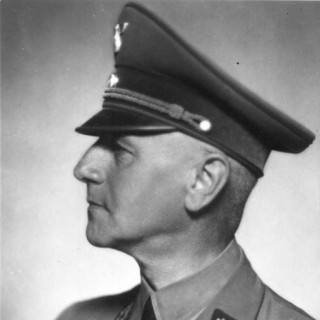
party leader of a regional area branch of the Nazi Party
POPULARITY

2 episodes with gauleiter

2 episodes with gauleiter

2 episodes with gauleiter

Le llamaban “el Marat del Berlín rojo”, y de él dijeron que “podía tocar la psique nacional como si fuera un piano”. Oh, Joseph, Joseph. Dr. Goebbels. “Nuestro doctorcito”. Gauleiter de Berlín, “Plenipotenciario del Reich para la guerra total”, poeta y novelista inmundo, artífice del culto al Führer (grupi lamentable le define mejor), objeto de guasa general, patachula y falso ex combatiente, plagiarista de suicidios, fucker improbable, veleta tremendo, genio malvado de la propaganda y posiblemente el tipo más listo del III Reich (aunque la competición no era durísima, precisamente). En este séptimo episodio de la temporada, Kiko “He leído demasiado sobre esta mierda” Amat narra la vida del nazi Renano (lo segundo no es un insulto) y lista unos cuantos fun facts que harán la delicia de los fans. Benja “Muchas palabras hoy” Villegas le acompaña con las secciones “publicidad que gustaría a Goebbels” y “cosas nazis pero no tanto”.

Mit Ende des Zweiten Weltkriegs und des Naziregimes flohen und versteckten sich die Funktionäre der NSDAP, um der Verantwortung für ihre Verbrechen zu entgehen. Dass dies führenden Nazis gelang, war allerdings selten und um genau so einen Fall geht es in der neuen Folge. Dem Gauleiter der Steiermark, Sigfried Uiberreither, gelang die Flucht nach Deutschland und er lebte sein zweites Leben unter falschem Namen in Sindelfingen. Zu diesem spannenden Stück Kriegs-, Nachkriegs- und Lokalgeschichte ist vor kurzem die dritte, erweiterte und überarbeitete Neuauflage des Buches "Gauleiter Uiberreither - Zwei Leben" erschienen. Peter und Andre sprechen mit dem Autoren und Historiker Prof. Stefan Karner über die Geschichte Uiberreithers, wie und durch wessen Hilfe ihm die Flucht und der Aufbau einer neuen Existenz gelingen konnten, und darüber, wie es überhaupt zur umfangreichen Recherche zu seinem Fall kam. 0:00 Intro und Trivia 2:17 Vorstellung Prof. Stefan Karner 3:53 Die Geschichte Uiberreithers und wie es zur Recherche kam 1:01:41 Fazit, Schlusswort und Abspann ---------------------------------------- Den Arbeitswelt Podcast findet ihr überall, wo es Podcasts gibt, und immer unter https://arbeitsweltradio.podigee.io/. Weitere Informationen, aktuelle Termine und Kontaktdaten der DGB-Region Stuttgart findet ihr unter https://stuttgart.dgb.de. ---------------------------------------- Der Arbeitswelt Podcast ist ein Angebot der DGB-Region Stuttgart. Radaktion: Peter Schadt und Andre Fricke. V.i.S.d.P.: Julia Friedrich, DGB-Region Stuttgart, Willi-Bleicher-Straße 20, 70174 Stuttgart #stuttgart #sindelfingen #nationalsozialismus #geschichte #lokalgeschichte

Im April 1945 lässt der Gauleiter von Oberdonau, August Eigruber, acht Bomben in das Salzbergwerk Altaussee im österreichischen Salzkammergut bringen. Dort wird nicht nur Salz abgebaut. Es die größte geheime Einlagerungsstätte für NS-Raubkunst. Vielleicht ist es überhaupt der größte Kunstschatz, der je an einem Ort gesammelt wurde. Und Eigruber ist entschlossen, die Kunstwerke zu zerstören. Wir sprechen darüber, wie die Sprengung des Berges verhindert werden konnte und wie eine Kunsthistorikerin es sich zur Lebensaufgabe machte, die vom NS-Regime geraubten Kunstwerke zu retten – darunter auch zahlreiche Werke, die in Altaussee gelandet sind. // Erwähnte Folgen - GAG241: General Königsmarck und der größte Kunstraub aller Zeiten – https://gadg.fm/241 - GAG210: Der Kunstfälscher Han van Meegeren – https://gadg.fm/210 // Literatur - Jennifer Lesieur: Rose Valland und die Liebe zur Kunst, 2024. - Konrad Kramar: Mission Michelangelo. Wie die Bergleute von Altaussee Hitlers Raubkunst vor der Vernichtung retteten, 2013. //Aus unserer Werbung Du möchtest mehr über unsere Werbepartner erfahren? Hier findest du alle Infos & Rabatte: https://linktr.ee/GeschichtenausderGeschichte // Wir sind jetzt auch bei CampfireFM! Wer direkt in Folgen kommentieren will, Zusatzmaterial und Blicke hinter die Kulissen sehen will: einfach die App installieren und unserer Community beitreten: https://www.joincampfire.fm/podcasts/22 //Wir haben auch ein Buch geschrieben: Wer es erwerben will, es ist überall im Handel, aber auch direkt über den Verlag zu erwerben: https://www.piper.de/buecher/geschichten-aus-der-geschichte-isbn-978-3-492-06363-0 Wer Becher, T-Shirts oder Hoodies erwerben will: Die gibt's unter https://geschichte.shop Wer unsere Folgen lieber ohne Werbung anhören will, kann das über eine kleine Unterstützung auf Steady oder ein Abo des GeschichteFM-Plus Kanals auf Apple Podcasts tun. Wir freuen uns, wenn ihr den Podcast bei Apple Podcasts oder wo auch immer dies möglich ist rezensiert oder bewertet. Wir freuen uns auch immer, wenn ihr euren Freundinnen und Freunden, Kolleginnen und Kollegen oder sogar Nachbarinnen und Nachbarn von uns erzählt! Du möchtest Werbung in diesem Podcast schalten? Dann erfahre hier mehr über die Werbemöglichkeiten bei Seven.One Audio: https://www.seven.one/portfolio/sevenone-audio

24. April 1933. Mit Marschmusik führt der Moderator in die Veranstaltung ein. Reportage vom großen Sendesaal. Alles in Braun. Bürgermeister, Gauleiter, Reichsrundfunkkommissar, Musik. Goebbels lange Rede besteht fast zur Hälfte aus Heimatgedanken: der Rheinländer. Stählerne Romantik. Wir sind die modernsten Menschen in Europa. Er spricht von der nationalsozialistischen Tendenz im Rundfunk. Wir haben eine Gleichschaltung zwischen Regierung und Volk erreicht. Der Rhein ist unser Strom und nicht unsere Grenze. Intendant Heinrich Glasmeier. Erinnert an den Wahlkampf in Lippe mit Goebbels. Grüßt den neuen Bürgermeister von Köln Günter Riesen, nachdem Konrad Adenauer am 13. März unter Gewaltandrohung abgesetzt worden war.

Acquista il piano biennale di NordVPN per iniziare a proteggerti online, otterrai 4 Mesi Extra e come al solito 30 giorni di soddisfatti o rimborsati Vai su https://nordvpn.com/dentrolastoria Il nostro canale Youtube: https://www.youtube.com/channel/UC1vziHBEp0gc9gAhR740fCw Il Nostro SITO: https://www.dentrolastoria.net/ Sostieni DENTRO LA STORIA su Patreon: https://www.patreon.com/dentrolastoria Abbonati al canale: https://www.youtube.com/channel/UC1vziHBEp0gc9gAhR740fCw/join Il nostro store in Amazon: https://www.amazon.it/shop/dentrolastoria Sostienici su PayPal: https://paypal.me/infinitybeat Combattente durante la Grande Guerra, maestro elementare, politico, scrittore ed editore: Julius Streicher ha attraversato la storia tedesca molto più di quanto si possa pensare. Convinto assertore delle teorie antisemite di Fritsch e lettore accanito del falso storico "I Protocolli dei Savi di Sion", Streicher divenne negli anni Venti uno dei migliori amici di Hitler. Fondatore e direttore del giornale razzista "Der Stürmer" e partecipante al Putsch della Birreria del 1923, Streicher fece carriera come Gauleiter di Franconia. Ma il suo vero ruolo fu quello di ispiratore dei pogrom nazisti, di lavatore del cervello delle giovani generazioni, di promotore di una propaganda così disgustosa da oltraggiare anche gerarchi del calibro di Goebbels, Goering, Himmler e Hess. Learn more about your ad choices. Visit megaphone.fm/adchoices

In dieser Folge sprechen wir mit Helmut Frangenberg, Autor von „Köln in Trümmern – True Crime 1944 bis 1949“ und Podcast-Host vom "True Crime Köln" Podcast des Kölner Stadt-Anzeiger, über die Geschichte des ehemaligen Kölner Gauleiters Josef Grohé. Grohé, Hitlers rechte Hand in Köln und weit darüber hinaus NS, entging nach dem Krieg einer Bestrafung – ihm wurde die bisherige Untersuchungshaft beim äußerst milden Urteilsspruch angerechnet, und eine ernsthafte strafrechtliche Verfolgung blieb aus. In seiner Jugend wuchs Helmut Frangenberg im selben Viertel wie Grohé auf, der nach dem Krieg als scheinbar unauffälliger Nachbar zurückblieb.

Robert Wagner war ein Nationalsozialist der ersten Stunde. Der Vortrag beleuchtet seine politische Karriere und sein besonderes Verhältnis zu Adolf Hitler, das auf seine Beteilung am Hitlerputsch 1923 zurückgeht. 1933 wurde Wagner Reichsstatthalter von Baden, 1940 Chef der Zivilverwaltung im Elsass. Hier ließ ihm Hitler freie Hand, die nationalsozialistische Volkstumspolitik umzusetzen und über Leben und Tod zu entscheiden – hier wurde er aber auch 1946 von einem französischen Militärgericht zum Tode verurteilt. Den Originalbeitrag und mehr finden Sie bitte hier: https://lisa.gerda-henkel-stiftung.de/bfz_elsass_robertwagner
Within the vast network of Nazi camps, Stutthof may be the least known beyond Poland. This book is the first scholarly publication in English to break the silence of Stutthof, where 120,000 people were interned and at least 65,000 perished. A Nazi Camp Near Danzigoffers an overview of Stutthof's history. It also explores Danzig's significance in promoting the cult of German nationalism which led to Stutthof's establishment and which shaped its subsequent development in 1942 into a Concentration Camp, with the full resources of the Nazi Reich. A Nazi Camp Near Danzig: Perspectives on Shame and on the Holocaust from Stutthof (Bloomsbury, 2022) shows how Danzig/Gdansk, generally identified as the city where the Second World War started, became under Albert Forster, Hitler's hand-picked Gauleiter, 'the vanguard of Germandom in the east' and with its disputed history, the poster city for the Third Reich. It reflects on the fact that Danzig was close enough to supply Stutthof with both prisoners - initially local Poles and Jews - as well as local men for its SS workforce. Throughout the study, Ruth Schwertfeger draws on the stories of Danziger and Nobel Prize winner, Günter Grass to consider the darker realities of German nationalism that even Grass's vibrant depictions and wit cannot mask. Schwertfeger demonstrates how German nationalism became more lethal for all prisoners, especially after the summer of 1944 when thousands of Jewish woman died in the Stutthof camp system or perished in the 'death marches' after January 1945. Schwertfeger uses archival and literary sources, as well as memoirs, to allow the voices of the victims to speak. Their testimonies are juxtaposed with the justifications of perpetrators. The book successfully argues that, in the end, Stutthof was no less lethal than other camps of the Third Reich, even if it was, and remains, less well-known. Learn more about your ad choices. Visit megaphone.fm/adchoices Support our show by becoming a premium member! https://newbooksnetwork.supportingcast.fm/new-books-network

Within the vast network of Nazi camps, Stutthof may be the least known beyond Poland. This book is the first scholarly publication in English to break the silence of Stutthof, where 120,000 people were interned and at least 65,000 perished. A Nazi Camp Near Danzigoffers an overview of Stutthof's history. It also explores Danzig's significance in promoting the cult of German nationalism which led to Stutthof's establishment and which shaped its subsequent development in 1942 into a Concentration Camp, with the full resources of the Nazi Reich. A Nazi Camp Near Danzig: Perspectives on Shame and on the Holocaust from Stutthof (Bloomsbury, 2022) shows how Danzig/Gdansk, generally identified as the city where the Second World War started, became under Albert Forster, Hitler's hand-picked Gauleiter, 'the vanguard of Germandom in the east' and with its disputed history, the poster city for the Third Reich. It reflects on the fact that Danzig was close enough to supply Stutthof with both prisoners - initially local Poles and Jews - as well as local men for its SS workforce. Throughout the study, Ruth Schwertfeger draws on the stories of Danziger and Nobel Prize winner, Günter Grass to consider the darker realities of German nationalism that even Grass's vibrant depictions and wit cannot mask. Schwertfeger demonstrates how German nationalism became more lethal for all prisoners, especially after the summer of 1944 when thousands of Jewish woman died in the Stutthof camp system or perished in the 'death marches' after January 1945. Schwertfeger uses archival and literary sources, as well as memoirs, to allow the voices of the victims to speak. Their testimonies are juxtaposed with the justifications of perpetrators. The book successfully argues that, in the end, Stutthof was no less lethal than other camps of the Third Reich, even if it was, and remains, less well-known. Learn more about your ad choices. Visit megaphone.fm/adchoices Support our show by becoming a premium member! https://newbooksnetwork.supportingcast.fm/military-history

Within the vast network of Nazi camps, Stutthof may be the least known beyond Poland. This book is the first scholarly publication in English to break the silence of Stutthof, where 120,000 people were interned and at least 65,000 perished. A Nazi Camp Near Danzigoffers an overview of Stutthof's history. It also explores Danzig's significance in promoting the cult of German nationalism which led to Stutthof's establishment and which shaped its subsequent development in 1942 into a Concentration Camp, with the full resources of the Nazi Reich. A Nazi Camp Near Danzig: Perspectives on Shame and on the Holocaust from Stutthof (Bloomsbury, 2022) shows how Danzig/Gdansk, generally identified as the city where the Second World War started, became under Albert Forster, Hitler's hand-picked Gauleiter, 'the vanguard of Germandom in the east' and with its disputed history, the poster city for the Third Reich. It reflects on the fact that Danzig was close enough to supply Stutthof with both prisoners - initially local Poles and Jews - as well as local men for its SS workforce. Throughout the study, Ruth Schwertfeger draws on the stories of Danziger and Nobel Prize winner, Günter Grass to consider the darker realities of German nationalism that even Grass's vibrant depictions and wit cannot mask. Schwertfeger demonstrates how German nationalism became more lethal for all prisoners, especially after the summer of 1944 when thousands of Jewish woman died in the Stutthof camp system or perished in the 'death marches' after January 1945. Schwertfeger uses archival and literary sources, as well as memoirs, to allow the voices of the victims to speak. Their testimonies are juxtaposed with the justifications of perpetrators. The book successfully argues that, in the end, Stutthof was no less lethal than other camps of the Third Reich, even if it was, and remains, less well-known. Learn more about your ad choices. Visit megaphone.fm/adchoices Support our show by becoming a premium member! https://newbooksnetwork.supportingcast.fm/jewish-studies
Within the vast network of Nazi camps, Stutthof may be the least known beyond Poland. This book is the first scholarly publication in English to break the silence of Stutthof, where 120,000 people were interned and at least 65,000 perished. A Nazi Camp Near Danzigoffers an overview of Stutthof's history. It also explores Danzig's significance in promoting the cult of German nationalism which led to Stutthof's establishment and which shaped its subsequent development in 1942 into a Concentration Camp, with the full resources of the Nazi Reich. A Nazi Camp Near Danzig: Perspectives on Shame and on the Holocaust from Stutthof (Bloomsbury, 2022) shows how Danzig/Gdansk, generally identified as the city where the Second World War started, became under Albert Forster, Hitler's hand-picked Gauleiter, 'the vanguard of Germandom in the east' and with its disputed history, the poster city for the Third Reich. It reflects on the fact that Danzig was close enough to supply Stutthof with both prisoners - initially local Poles and Jews - as well as local men for its SS workforce. Throughout the study, Ruth Schwertfeger draws on the stories of Danziger and Nobel Prize winner, Günter Grass to consider the darker realities of German nationalism that even Grass's vibrant depictions and wit cannot mask. Schwertfeger demonstrates how German nationalism became more lethal for all prisoners, especially after the summer of 1944 when thousands of Jewish woman died in the Stutthof camp system or perished in the 'death marches' after January 1945. Schwertfeger uses archival and literary sources, as well as memoirs, to allow the voices of the victims to speak. Their testimonies are juxtaposed with the justifications of perpetrators. The book successfully argues that, in the end, Stutthof was no less lethal than other camps of the Third Reich, even if it was, and remains, less well-known. Learn more about your ad choices. Visit megaphone.fm/adchoices Support our show by becoming a premium member! https://newbooksnetwork.supportingcast.fm/genocide-studies

Within the vast network of Nazi camps, Stutthof may be the least known beyond Poland. This book is the first scholarly publication in English to break the silence of Stutthof, where 120,000 people were interned and at least 65,000 perished. A Nazi Camp Near Danzigoffers an overview of Stutthof's history. It also explores Danzig's significance in promoting the cult of German nationalism which led to Stutthof's establishment and which shaped its subsequent development in 1942 into a Concentration Camp, with the full resources of the Nazi Reich. A Nazi Camp Near Danzig: Perspectives on Shame and on the Holocaust from Stutthof (Bloomsbury, 2022) shows how Danzig/Gdansk, generally identified as the city where the Second World War started, became under Albert Forster, Hitler's hand-picked Gauleiter, 'the vanguard of Germandom in the east' and with its disputed history, the poster city for the Third Reich. It reflects on the fact that Danzig was close enough to supply Stutthof with both prisoners - initially local Poles and Jews - as well as local men for its SS workforce. Throughout the study, Ruth Schwertfeger draws on the stories of Danziger and Nobel Prize winner, Günter Grass to consider the darker realities of German nationalism that even Grass's vibrant depictions and wit cannot mask. Schwertfeger demonstrates how German nationalism became more lethal for all prisoners, especially after the summer of 1944 when thousands of Jewish woman died in the Stutthof camp system or perished in the 'death marches' after January 1945. Schwertfeger uses archival and literary sources, as well as memoirs, to allow the voices of the victims to speak. Their testimonies are juxtaposed with the justifications of perpetrators. The book successfully argues that, in the end, Stutthof was no less lethal than other camps of the Third Reich, even if it was, and remains, less well-known. Learn more about your ad choices. Visit megaphone.fm/adchoices Support our show by becoming a premium member! https://newbooksnetwork.supportingcast.fm/eastern-european-studies

VIDEO: Esatta Classificazione dell'Umanità ➜ https://www.youtube.com/watch?v=J8xhdGbh15I&list=PLolpIV2TSebVLUetRlYxAQgaHFOcG_4PaTESTO DELL'ARTICOLO ➜ www.bastabugie.it/it/articoli.php?id=6887LA MEDIOCRITA' DEL MALE: DRAGHI NON E' HITLER di Paolo DeottoSi è fatto un gran chiasso perché la signora Angela Maria Sartini, leghista, assessore al Comune di Orvieto, ha pubblicato una vignetta in cui si vede un Hitler sorridente al telefono, che dice: "Ciao Mario, volevo farti i complimenti". La signora Sartini è stata sospesa dal partito e il sindaco di Orvieto le ha ritirato le deleghe. [...]Lasciamo perdere, per adesso, ogni ragionamento su una società marcia fino al midollo, ma che si costruisce le sue "nicchie di moralità", pensando così di salvare la faccia. Di certo, se la signora Sartini avesse pubblicato un post in cui, ad esempio, esaltava la sodomia, non solo non avrebbe ricevuto critiche, ma sarebbe stata lodata per la sua "inclusività".Qui vorremmo ragionare su un altro aspetto. Il paragone Hitler - Draghi sta in piedi fino a un certo punto. È vero, sono accomunati da una assoluta mancanza di moralità. Però sono più le differenze che le somiglianze. [...]Per capire bene questo aspetto, è molto utile la lettura di un libro pubblicato in Italia da Hermann Rauschning, che fu Presidente del Senato di Danzica dal 1932 al 1934. Inizialmente convinto sostenitore del nazismo, divenne poi il più lucido e deciso avversario di Hitler, tant'è che dovette riparare negli Stati Uniti, dove visse fino alla sua morte, nel 1982.CONVERSAZIONI CON HITLERRauschning, nel suo libro che fu pubblicato in Italia alla fine del 1945 con i titoli "Hitler mi ha detto" e "Conversazioni con Hitler", e che purtroppo oggi è quasi introvabile, spiega con molta chiarezza la megalomania di Hitler, i cui progetti erano così follemente grandi da prevedere addirittura la conquista degli Stati Uniti e la creazione di una nuova razza di uomini superiori. Non "ariani", si badi bene. No, uomini superiori nuovi, che avrebbe superato anche la razza ariana e che sarebbero stati generati dal dominio della concezione hitleriana del mondo.Progetti folli, certamente, elaborati da un folle, certamente, a cui Rauschning non poteva non riconoscere un eccezionale fascino. Un fascino torbido, inspiegabile in un ometto piccolo e abbastanza sgraziato. Eppure, a detta non solo di Rauschning, ma anche di altri testimoni dell'epoca (tra cui Indro Montanelli), quando ti trovavi alla presenza del Führer, non potevi sottrarti al suo fascino, anche se eri suo nemico. [...]Ora, guardiamo un po' alla vita e alle opere del nostro Adolfo, Adolfo Draghi. [...]La sua vita è una diligente sequela di incarichi nel mondo più opaco che ci sia, quello della finanza. Draghi scala una vetta dopo l'altra e non l'avrebbe scalata se non fosse stato un fedele esecutore di politiche decise dai suoi superiori pro-tempore, che lo hanno gratificato dandogli incarichi sempre più prestigiosi e consentendogli così di avere a sua volta una folta schiera di subordinati. E devoti, soprattutto.Guardate un po', ad esempio, la produzione legislativa del suo governo, composto, tra l'altro da una vera Corte dei Miracoli (basterebbe un ministro come Speranza per squalificare questo governo). Guardate la produzione legislativa e vedrete un guazzabuglio che ha certamente l'intento di tormentare gli italiani e rovinare l'Italia, ma è comunque fatto male, ingarbugliato, tant'è che ogni Decreto Legge e ogni "DPCM" necessita poi di riletture, chiarimenti, specifiche, pubblicazione di FAQ e così via.Se uno studente di Giurisprudenza in una esercitazione compilasse le normative con cui il governo ci delizia, verrebbe invitato a cambiare Facoltà, magari con preferenza per Veterinaria, dove potrebbe stabilire un contatto fruttuoso con i somari.Guardate il suo comportamento legnoso e scostante, nelle poche occasioni in cui si degna di rivolgersi al pubblico e ai suoi fedeli camerieri (quelli che un volta si chiamavano "giornalisti").DRAGHI SAREBBE STATO UN FUNZIONARIONo, signora Sartini, lei ha sbagliato. Hitler non avrebbe mai fatto i complimenti a Draghi. Al più, viste le doti di Draghi come fedele esecutore di ordini, lo avrebbe nominato Gauleiter di qualche distretto, o direttore di polizia o di campi di concentramento.È piuttosto con un altro Adolfo che Draghi ha molto in comune. Parlo di Adolfo Eichmann, il criminale di guerra nazista che dopo la disfatta riuscì a riparare in Argentina, prendendo il falso nome di Riccardo Klement e trovando lavoro presso la locale sede della Mercedes. Eichmann era stato, dopo la morte del generale SS Reinhard Heydrich (ucciso dai partigiani cecoslovacchi), il principale responsabile della "soluzione finale" del problema ebraico, ossia dello sterminio degli ebrei. Venne stanato e rapito nel 1960 dagli agenti del Mossad, il servizio segreto israeliano e condotto in Israele, dove dopo un processo fu impiccato.Proprio durante il processo venne fuori l'uomo Eichmann. Un uomo grigio, che inizialmente cercò di giustificare le sue azioni come "obbedienza agli ordini". Un uomo che aveva aderito al nazismo e si era arruolato nelle SS dopo vari tentativi di trovare un lavoro gratificante e di essere "qualcuno". Esecutore di ordini pronto e totale, come del resto avrebbe sempre dichiarato.Un uomo mediocre, lanciato ai vertici negli anni della follia hitleriana, in cui si crearono condizioni assolutamente impensabili prima e che permisero a molti altri mediocri, ma privi di moralità, di emergere. E ciò vale, sia ben chiaro, per entrambe la parti in guerra. Perché comunque la guerra genera mostri, come, tanto per fare un esempio, un Sir Arthur Harris, britannico, Maresciallo dell'Aria, organizzatore dei bombardamenti terroristici su Germania e Italia, in cui morirono centinaia di migliaia di donne, vecchi, bambini. Non di combattenti. Ma Sir Harris finì la guerra dalla parte dei vincitori e quindi per lui non ci fu nessuna Norimberga.Ma non è questo il discorso che ora ci interessa.Piuttosto ci sembra importante sottolineare quanto espresso già nel titolo: Adolfo Draghi ovvero la mediocrità del male.Amici mei, guardate Draghi, il "premier", come lo chiamano i suoi devoti. Guardate Speranza, guardate Di Maio. Ma insomma guardate un po' tutta la corte dei miracoli che ci governa. Non sono grandi, nemmeno nel male che fanno. [...]Non abbiamo da lottare contro i Titani, ma contro i quaquaraquà. Al più, contro gli ominicchi. Cerchiamo di rendercene conto.

Conservatives complain about “over-regulation,” but all governmental regulation—regulation as such—is destructive and evil. Ayn Rand wrote that the premise of regulation is “the concept that a man is guilty until he is proved innocent by the permissive rubber stamp of a commissar or a Gauleiter.” Dr. Binswanger will argue that government must have “probable cause” before it can use force against someone—and he will discuss how this applies not only to business activity, but also to immigration, “public health” and gun ownership. Recorded live as part of The Objectivist Conference on August 31, 2021.

"Die ganze Welt weiß, dass er die schmutzigste und widerwärtigste Erscheinung des Nationalsozialismus ist," schreibt Joseph Goebbels 1935 in sein Tagebuch. Er spricht von Julius Streicher: Berufsschullehrer, Gauleiter und millionenschwerer Herausgeber eines pornografisch-antisemitischen Hetzblattes, das Hitler "von der ersten bis zur letzten Zeile" las. Streicher war so fanatisch, dass sich selbst die NSDAP von ihm abgrenzte und keiner in der amerikanischen Gefangenschaft mit ihm das Brot brechen wollte. In unserer heutigen Podcast-Folge erzählen wir seine Geschichte.

Der fanatische Hitler-Bewunderer Baldur von Schirach träumte von einem faschistischen Europa und ließ die Wiener Juden in die Todeslager deportieren. 1946 wurde er in Nürnberg zu 20 Jahren Haft verurteilt. Der Historiker Oliver Rathkolb beleuchtet wenig bekannte Details im Gespräch mit Cathrin Kahlweit (Süddeutsche Zeitung). Sein aktuelles Buch über den ehemaligen Reichsjugendführer des NS-Regimes und Gauleiter von Wien, Baldur von Schirach, wurde von einer Experten- und Expertinnenjury in die Top 5 bei der Wahl zum Wissenschaftsbuch des Jahres nominiert. Oliver Rathkolb: Schirach – Eine Generation zwischen Goethe und Hitler. Molden Verlag, Wien 2020; ISBN 978-3-222-15058-6, 352 S., 32,– € Diese Episode ist ein Mitschnitt einer Online-Veranstaltung des Bruno Kreisky Forum Wien vom 26.1.2021.

Der fanatische Hitler-Bewunderer Baldur von Schirach träumte von einem faschistischen Europa und ließ die Wiener Juden in die Todeslager deportieren. 1946 wurde er in Nürnberg zu 20 Jahren Haft verurteilt. Der Historiker Oliver Rathkolb beleuchtet wenig bekannte Details im Gespräch mit Cathrin Kahlweit (Süddeutsche Zeitung). Diese Episode ist ein Mitschnitt einer Online-Veranstaltung des Bruno Kreisky Forum Wien.Lesen Sie den FALTER vier Wochen lang kostenlos: https://abo.falter.at/gratis See acast.com/privacy for privacy and opt-out information.

Am Ende des Zweiten Weltkrieges will ein fanatischer Gauleiter eine österreichische Salzmine sprengen, um die dort lagernde Raubkunst zu vernichten. Mutige Bergleute verhindern die Wahnsinnstat. Diese wahre Geschichte zeigt nun das ZDF. Gabriela Zerhau im Gespräch mit Stephan Karkowsky www.deutschlandfunkkultur.de, Interview Hören bis: 19.01.2038 04:14 Direkter Link zur Audiodatei

Folge drei unseres neuen History-Podcasts: Christa Zöchling spricht mit dem Zeithistoriker Oliver Rathkolb über den Reichsjugendführer Baldur von Schirach. Wie konnte ein gebildeter Großbürger Hitler verfallen und als Gauleiter von Wien von der Vernichtung der Juden nichts gewusst haben?

Hilde Bürckel war die Frau an der Seite des Gauleiters Josef Bürckel gewesen. Ein Lehrer, der bei den Nazis schnell Karriere machte. Autor Peter Ross lässt Hilde Bürckel in seinem Stück auf ihr Leben zurückblicken. Schauspielerin Hannelohre Bähr brilliert in ihrer Rolle als prototypische Mitläuferin und setzt die vielen Facetten des zweistündigen Monologs meisterhaft um. Die Inszenierung von Susanne Schmelcher findet zudem immer wieder Bezüge zu heute.

Er war korrupt, brutal, rücksichtslos, ein durch und durch schlechter Menschen: Karl Kaufmann, der NSDAP-Gauleiter von Hamburg. Viele Ältere glauben bis heute, er sei so was wie ein "guter Nazi" gewesen. Eine Legende, die er selbst in die Welt setzte. Die Wahrheit ist: Nicht um die Einwohner zu retten, sondern um seinen eigenen Kopf aus der Schlinge zu ziehen, ordnete er am 3. Mai 1945 die Kapitulation Hamburgs an, was der Stadt die endgültige Vernichtung ersparte. Das Buch zum Podcast gibt es hier: http://shop.mopo.de/mopo-magazine/buch-der-tag-an-dem.html Die Magazine "Unser Hamburg" finden Sie hier: http://shop.mopo.de/mopo-magazine.html
Robert Wagner, Hitlers Statthalter im von Nazi-Deutschland besetzten Elsass, ist unter Parteigenossen als Psychopath verschrien. 1941 brennen die Scheiterhaufen überall im Elsass. (Produktion 2015)
Robert Wagner, Hitlers Statthalter im ab 1940 von Nazi-Deutschland besetzten Elsass, ist selbst unter Parteigenossen als Psychopath verschrien. Nach dem Krieg wurde er zum Tode verurteilt.


The term “totalitarian” is useful as it well describes the aspirations of polities such as Nazi Germany and the Soviet Union (at least under Stalin). Yet it can also be misleading, for it suggests that totalitarian ambitions were in fact achieved. But they were not, as we can see in Catherine Epstein's remarkably detailed, thoroughly researched, and clearly presented Model Nazi: Arthur Greiser and the Occupation of Western Poland (Oxford UP, 2010). Greiser was a totalitarian if ever there were one. He believed in the Nazi cause with his heart and soul. He wanted to create a new Germany, and indeed a new Europe dominated by Germans. As the Gauleiter of Wartheland (an area of Western Poland annexed to the Reich), he was given the opportunity to help realize the Nazi nightmare in the conquered Eastern territories. But, as Epstein shows, he was often hindered both by his own personality and the chaos that characterized Nazi occupation of the East. Grieser emerges from Epstein's book as someone who wanted to be a “model Nazi,” but couldn't really manage it because he was a crooked timber working in a crooked system. His personal life was an embarrassing tangle of marriages, affairs, and break-ups that at points threatened his career. His professional life was marked by ambition, ego-mania, and fawning, none of which endeared him to most of his colleagues and superiors. And his murderous attempts to “work toward the Fuhrer” in the Wartheland–by displacing Poles, murdering Jews and other “undesirables,” and populating the East with Germans–were stymied by the cross-cutting jurisdictions, conflicting agendas, and professional jealousies that were one of the hallmarks of Nazi rule. Grieser did his best (or his worst, depending on how you look at it) to Germanize the Wartheland. He improvised, maneuvered, and “worked the system” such as it was in pursuit of the Nazi totalitarian project. Thankfully, he failed, demonstrating again that totalitarian dreams, though they can be horribly distructive, are a far reach from totalitarian realities. Learn more about your ad choices. Visit megaphone.fm/adchoices

The term “totalitarian” is useful as it well describes the aspirations of polities such as Nazi Germany and the Soviet Union (at least under Stalin). Yet it can also be misleading, for it suggests that totalitarian ambitions were in fact achieved. But they were not, as we can see in Catherine Epstein’s remarkably detailed, thoroughly researched, and clearly presented Model Nazi: Arthur Greiser and the Occupation of Western Poland (Oxford UP, 2010). Greiser was a totalitarian if ever there were one. He believed in the Nazi cause with his heart and soul. He wanted to create a new Germany, and indeed a new Europe dominated by Germans. As the Gauleiter of Wartheland (an area of Western Poland annexed to the Reich), he was given the opportunity to help realize the Nazi nightmare in the conquered Eastern territories. But, as Epstein shows, he was often hindered both by his own personality and the chaos that characterized Nazi occupation of the East. Grieser emerges from Epstein’s book as someone who wanted to be a “model Nazi,” but couldn’t really manage it because he was a crooked timber working in a crooked system. His personal life was an embarrassing tangle of marriages, affairs, and break-ups that at points threatened his career. His professional life was marked by ambition, ego-mania, and fawning, none of which endeared him to most of his colleagues and superiors. And his murderous attempts to “work toward the Fuhrer” in the Wartheland–by displacing Poles, murdering Jews and other “undesirables,” and populating the East with Germans–were stymied by the cross-cutting jurisdictions, conflicting agendas, and professional jealousies that were one of the hallmarks of Nazi rule. Grieser did his best (or his worst, depending on how you look at it) to Germanize the Wartheland. He improvised, maneuvered, and “worked the system” such as it was in pursuit of the Nazi totalitarian project. Thankfully, he failed, demonstrating again that totalitarian dreams, though they can be horribly distructive, are a far reach from totalitarian realities. Learn more about your ad choices. Visit megaphone.fm/adchoices

The term “totalitarian” is useful as it well describes the aspirations of polities such as Nazi Germany and the Soviet Union (at least under Stalin). Yet it can also be misleading, for it suggests that totalitarian ambitions were in fact achieved. But they were not, as we can see in Catherine Epstein’s remarkably detailed, thoroughly researched, and clearly presented Model Nazi: Arthur Greiser and the Occupation of Western Poland (Oxford UP, 2010). Greiser was a totalitarian if ever there were one. He believed in the Nazi cause with his heart and soul. He wanted to create a new Germany, and indeed a new Europe dominated by Germans. As the Gauleiter of Wartheland (an area of Western Poland annexed to the Reich), he was given the opportunity to help realize the Nazi nightmare in the conquered Eastern territories. But, as Epstein shows, he was often hindered both by his own personality and the chaos that characterized Nazi occupation of the East. Grieser emerges from Epstein’s book as someone who wanted to be a “model Nazi,” but couldn’t really manage it because he was a crooked timber working in a crooked system. His personal life was an embarrassing tangle of marriages, affairs, and break-ups that at points threatened his career. His professional life was marked by ambition, ego-mania, and fawning, none of which endeared him to most of his colleagues and superiors. And his murderous attempts to “work toward the Fuhrer” in the Wartheland–by displacing Poles, murdering Jews and other “undesirables,” and populating the East with Germans–were stymied by the cross-cutting jurisdictions, conflicting agendas, and professional jealousies that were one of the hallmarks of Nazi rule. Grieser did his best (or his worst, depending on how you look at it) to Germanize the Wartheland. He improvised, maneuvered, and “worked the system” such as it was in pursuit of the Nazi totalitarian project. Thankfully, he failed, demonstrating again that totalitarian dreams, though they can be horribly distructive, are a far reach from totalitarian realities. Learn more about your ad choices. Visit megaphone.fm/adchoices

The term “totalitarian” is useful as it well describes the aspirations of polities such as Nazi Germany and the Soviet Union (at least under Stalin). Yet it can also be misleading, for it suggests that totalitarian ambitions were in fact achieved. But they were not, as we can see in Catherine Epstein's remarkably detailed, thoroughly researched, and clearly presented Model Nazi: Arthur Greiser and the Occupation of Western Poland (Oxford UP, 2010). Greiser was a totalitarian if ever there were one. He believed in the Nazi cause with his heart and soul. He wanted to create a new Germany, and indeed a new Europe dominated by Germans. As the Gauleiter of Wartheland (an area of Western Poland annexed to the Reich), he was given the opportunity to help realize the Nazi nightmare in the conquered Eastern territories. But, as Epstein shows, he was often hindered both by his own personality and the chaos that characterized Nazi occupation of the East. Grieser emerges from Epstein's book as someone who wanted to be a “model Nazi,” but couldn't really manage it because he was a crooked timber working in a crooked system. His personal life was an embarrassing tangle of marriages, affairs, and break-ups that at points threatened his career. His professional life was marked by ambition, ego-mania, and fawning, none of which endeared him to most of his colleagues and superiors. And his murderous attempts to “work toward the Fuhrer” in the Wartheland–by displacing Poles, murdering Jews and other “undesirables,” and populating the East with Germans–were stymied by the cross-cutting jurisdictions, conflicting agendas, and professional jealousies that were one of the hallmarks of Nazi rule. Grieser did his best (or his worst, depending on how you look at it) to Germanize the Wartheland. He improvised, maneuvered, and “worked the system” such as it was in pursuit of the Nazi totalitarian project. Thankfully, he failed, demonstrating again that totalitarian dreams, though they can be horribly distructive, are a far reach from totalitarian realities.

The term “totalitarian” is useful as it well describes the aspirations of polities such as Nazi Germany and the Soviet Union (at least under Stalin). Yet it can also be misleading, for it suggests that totalitarian ambitions were in fact achieved. But they were not, as we can see in Catherine Epstein’s remarkably detailed, thoroughly researched, and clearly presented Model Nazi: Arthur Greiser and the Occupation of Western Poland (Oxford UP, 2010). Greiser was a totalitarian if ever there were one. He believed in the Nazi cause with his heart and soul. He wanted to create a new Germany, and indeed a new Europe dominated by Germans. As the Gauleiter of Wartheland (an area of Western Poland annexed to the Reich), he was given the opportunity to help realize the Nazi nightmare in the conquered Eastern territories. But, as Epstein shows, he was often hindered both by his own personality and the chaos that characterized Nazi occupation of the East. Grieser emerges from Epstein’s book as someone who wanted to be a “model Nazi,” but couldn’t really manage it because he was a crooked timber working in a crooked system. His personal life was an embarrassing tangle of marriages, affairs, and break-ups that at points threatened his career. His professional life was marked by ambition, ego-mania, and fawning, none of which endeared him to most of his colleagues and superiors. And his murderous attempts to “work toward the Fuhrer” in the Wartheland–by displacing Poles, murdering Jews and other “undesirables,” and populating the East with Germans–were stymied by the cross-cutting jurisdictions, conflicting agendas, and professional jealousies that were one of the hallmarks of Nazi rule. Grieser did his best (or his worst, depending on how you look at it) to Germanize the Wartheland. He improvised, maneuvered, and “worked the system” such as it was in pursuit of the Nazi totalitarian project. Thankfully, he failed, demonstrating again that totalitarian dreams, though they can be horribly distructive, are a far reach from totalitarian realities. Learn more about your ad choices. Visit megaphone.fm/adchoices

The term “totalitarian” is useful as it well describes the aspirations of polities such as Nazi Germany and the Soviet Union (at least under Stalin). Yet it can also be misleading, for it suggests that totalitarian ambitions were in fact achieved. But they were not, as we can see in Catherine Epstein’s remarkably detailed, thoroughly researched, and clearly presented Model Nazi: Arthur Greiser and the Occupation of Western Poland (Oxford UP, 2010). Greiser was a totalitarian if ever there were one. He believed in the Nazi cause with his heart and soul. He wanted to create a new Germany, and indeed a new Europe dominated by Germans. As the Gauleiter of Wartheland (an area of Western Poland annexed to the Reich), he was given the opportunity to help realize the Nazi nightmare in the conquered Eastern territories. But, as Epstein shows, he was often hindered both by his own personality and the chaos that characterized Nazi occupation of the East. Grieser emerges from Epstein’s book as someone who wanted to be a “model Nazi,” but couldn’t really manage it because he was a crooked timber working in a crooked system. His personal life was an embarrassing tangle of marriages, affairs, and break-ups that at points threatened his career. His professional life was marked by ambition, ego-mania, and fawning, none of which endeared him to most of his colleagues and superiors. And his murderous attempts to “work toward the Fuhrer” in the Wartheland–by displacing Poles, murdering Jews and other “undesirables,” and populating the East with Germans–were stymied by the cross-cutting jurisdictions, conflicting agendas, and professional jealousies that were one of the hallmarks of Nazi rule. Grieser did his best (or his worst, depending on how you look at it) to Germanize the Wartheland. He improvised, maneuvered, and “worked the system” such as it was in pursuit of the Nazi totalitarian project. Thankfully, he failed, demonstrating again that totalitarian dreams, though they can be horribly distructive, are a far reach from totalitarian realities. Learn more about your ad choices. Visit megaphone.fm/adchoices
The term “totalitarian” is useful as it well describes the aspirations of polities such as Nazi Germany and the Soviet Union (at least under Stalin). Yet it can also be misleading, for it suggests that totalitarian ambitions were in fact achieved. But they were not, as we can see in Catherine Epstein’s remarkably detailed, thoroughly researched, and clearly presented Model Nazi: Arthur Greiser and the Occupation of Western Poland (Oxford UP, 2010). Greiser was a totalitarian if ever there were one. He believed in the Nazi cause with his heart and soul. He wanted to create a new Germany, and indeed a new Europe dominated by Germans. As the Gauleiter of Wartheland (an area of Western Poland annexed to the Reich), he was given the opportunity to help realize the Nazi nightmare in the conquered Eastern territories. But, as Epstein shows, he was often hindered both by his own personality and the chaos that characterized Nazi occupation of the East. Grieser emerges from Epstein’s book as someone who wanted to be a “model Nazi,” but couldn’t really manage it because he was a crooked timber working in a crooked system. His personal life was an embarrassing tangle of marriages, affairs, and break-ups that at points threatened his career. His professional life was marked by ambition, ego-mania, and fawning, none of which endeared him to most of his colleagues and superiors. And his murderous attempts to “work toward the Fuhrer” in the Wartheland–by displacing Poles, murdering Jews and other “undesirables,” and populating the East with Germans–were stymied by the cross-cutting jurisdictions, conflicting agendas, and professional jealousies that were one of the hallmarks of Nazi rule. Grieser did his best (or his worst, depending on how you look at it) to Germanize the Wartheland. He improvised, maneuvered, and “worked the system” such as it was in pursuit of the Nazi totalitarian project. Thankfully, he failed, demonstrating again that totalitarian dreams, though they can be horribly distructive, are a far reach from totalitarian realities. Learn more about your ad choices. Visit megaphone.fm/adchoices
The term “totalitarian” is useful as it well describes the aspirations of polities such as Nazi Germany and the Soviet Union (at least under Stalin). Yet it can also be misleading, for it suggests that totalitarian ambitions were in fact achieved. But they were not, as we can see in Catherine Epstein’s remarkably detailed, thoroughly researched, and clearly presented Model Nazi: Arthur Greiser and the Occupation of Western Poland (Oxford UP, 2010). Greiser was a totalitarian if ever there were one. He believed in the Nazi cause with his heart and soul. He wanted to create a new Germany, and indeed a new Europe dominated by Germans. As the Gauleiter of Wartheland (an area of Western Poland annexed to the Reich), he was given the opportunity to help realize the Nazi nightmare in the conquered Eastern territories. But, as Epstein shows, he was often hindered both by his own personality and the chaos that characterized Nazi occupation of the East. Grieser emerges from Epstein’s book as someone who wanted to be a “model Nazi,” but couldn’t really manage it because he was a crooked timber working in a crooked system. His personal life was an embarrassing tangle of marriages, affairs, and break-ups that at points threatened his career. His professional life was marked by ambition, ego-mania, and fawning, none of which endeared him to most of his colleagues and superiors. And his murderous attempts to “work toward the Fuhrer” in the Wartheland–by displacing Poles, murdering Jews and other “undesirables,” and populating the East with Germans–were stymied by the cross-cutting jurisdictions, conflicting agendas, and professional jealousies that were one of the hallmarks of Nazi rule. Grieser did his best (or his worst, depending on how you look at it) to Germanize the Wartheland. He improvised, maneuvered, and “worked the system” such as it was in pursuit of the Nazi totalitarian project. Thankfully, he failed, demonstrating again that totalitarian dreams, though they can be horribly distructive, are a far reach from totalitarian realities. Learn more about your ad choices. Visit megaphone.fm/adchoices

As there are apparently no doubts concerning the existence of Nazi anti-Semitism before 1933 regarding this topic - having largely been ignored by scholars of contemporary history - seems to be no use. This article tends to trace the role of anti-Semitism during the ascend of the Nazi-movement. Therefore, the author describes the theoretic function of this phenomena for the NSDAP by referring to Hitler's Weltanschauung and the official program of the party. But how did this anti-Jewish ideology find its way into the party's day-to-day agitation? By analysing Hitler's political speeches it is shown how, after 1925/26, the Führer tried to present himself as a moderate politician - for he had realised that the NSDAP had to become a mass-movement in order to gain political power in Weimar Germany. Vis-à-vis the party's antisemitic membership, mainly retailers and graduates, anti-Jewish stereotypes were pushed in propaganda. Yet, National Socialist anti-Semitism was not only opportunist in that it was played up or down depending upon when and where it hit responsive chords, it was also subject to the regional Gauleiter if this phenomena was promoted like in Streicher's Franconia or restricted like in Württemberg, Hamburg or Danzig. Only after the world-wide economic crisis of 1929 the NSDAP had considerable success in the Reichstag's elections. The party presented itself as the only power being capable to establish a new order in Germany. The propaganda focused on the main enemies of the National Socialists: Communism and the liberal democracy - in this context, the anti-Semitism was negligible.
© 2020-2026 Ivy Podcast Discovery LLC