
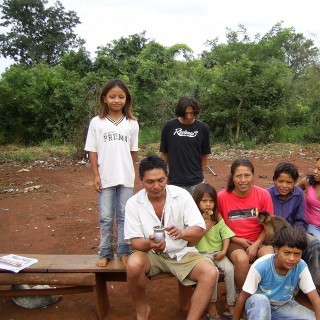
Ethnic groups descended from and identified with the original inhabitants of a given region
POPULARITY

64 episodes with first people

20 episodes with first people

7 episodes with first people

8 episodes with first people

18 episodes with first people

5 episodes with first people

9 episodes with first people

7 episodes with first people

5 episodes with first people

4 episodes with first people

4 episodes with first people

3 episodes with first people

5 episodes with first people

7 episodes with first people

4 episodes with first people

4 episodes with first people

2 episodes with first people

6 episodes with first people

2 episodes with first people

3 episodes with first people

3 episodes with first people

3 episodes with first people

3 episodes with first people

4 episodes with first people

3 episodes with first people

6 episodes with first people

3 episodes with first people

3 episodes with first people

3 episodes with first people

2 episodes with first people

2 episodes with first people

3 episodes with first people

3 episodes with first people

3 episodes with first people

44 episodes with first people

2 episodes with first people

“Taking their ground game and putting it online is where credit unions have a lot of room to win against banks and fintechs.” – John McKusick Thank you for tuning in to The CUInsight Network, with your host, Robbie Young, Vice President of Strategic Growth at CUInsight. In The CUInsight Network, we take a deeper dive with the thought leaders who support the credit union community. We discuss issues and challenges facing credit unions and identify best practices to learn and grow together.My guest on today's show is John McKusick, CEO of NextLeft. He joins me for this episode to discuss what it takes for credit unions to stand out in a world where most people begin their search online. He shares how his path to leading a digital marketing agency is anything but conventional because he originally dreamed of becoming a professional surfer, discovered a love for computers and design, and eventually built one of the country's largest independent digital marketing firms. Along the way, he became increasingly interested in using marketing to provide genuine value rather than simply chasing clicks, and today, that philosophy shapes NextLeft's work with credit unions!Throughout our conversation, John and I discuss why credit unions have a significant advantage that banks and fintechs can't easily replicate: their local relationships and community presence, and we talk about how bringing that “ground game” online via hyper-local digital strategies can help credit unions become more visible to the people they're trying to serve. We look at the credit union website in a different way—as the organization's main branch rather than simply a digital brochure, with John explaining how websites can better serve existing members while also addressing the questions and concerns that keep potential new members from joining. We also get into data and AI, including how credit unions can use search data to understand what matters to their communities without sacrificing the human connection that makes them distinctive.As we wrap up the conversation, John shares what's ahead for NextLeft, including the development of DuckDive AI and its effort to connect marketing and operational data, and, of course, we have fun with some rapidfire questions and talk surfing destinations, entrepreneurship, leadership, and finding a healthy relationship between work and life. John also leaves us with a challenge that I believe is worth hearing: credit unions have what it takes to win, and now they need to show people why. Enjoy my conversation with John McKusick!Connect with John:John McKusick, CEO of NextLeftnextleft.com John: LinkedInNextLeft: LinkedInShow notes from this episode:Place mentioned: San Diego, CAShout-out: NetflixShout-out: Discount Nutrition StoreShout-out: Gear InteractiveShout-out: universities.com Shout-out: Home BayShout-out: DuckDive AIShout-out: John's momShout-out: John's sisterPlace mentioned: NicaraguaPlace mentioned: The MaldivesPlace mentioned: MexicoPlace mentioned: Wilmington, NCPlace mentioned: TexasPlace mentioned: Orlando, FLBook mentioned: Shoe Dog: A Memoir by the Creator of Nike by Phil KnightShout-out: NikeShout-out: Michael JordanIn this episode:[0:51] - John reveals that he loves swimming and originally had hoped to be a professional surfer.[2:48] - John reflects on having built a successful digital marketing career, ultimately having founded NextLeft to deliver more valuable, effective agency work.[4:34] - NextLeft helps credit unions increase online visibility by turning their local community presence into a digital advantage.[6:46] - John asserts that credit union websites should seamlessly serve existing members while removing barriers for new members.[9:40] - Search data and AI help credit unions understand community needs and uncover valuable marketing opportunities.[11:08] - Looking ahead to the future, John discusses DuckDive AI and how it connects marketing and operational data.[13:12] - We discover why John looks up to his mom.[14:13] - John reveals some of his favorite surfing destinations as well as favorite places to travel for work.[16:06] - John recommends the book Shoe Dog.[16:54] - John believes that there doesn't always need to be a separation between your personal life and your work life.[18:22] - John urges credit unions to embrace their strengths, increase online visibility, and show people how they can win.

“We're hardwired for love. We are taught to do violence, and to hate.” — Dana Mashoian Walrath A couple of months ago in Warsaw, the Polish writer and Jewish activist Konstanty Gebert argued that Gaza wasn't a genocide. Today's guest disagrees. In The Book of Genocides, graphic artist and anthropologist Dana Mashoian Walrath draws ten genocides including what she sees as the crimes against humanity committed by the Israeli army in Gaza. So what, exactly, is a “genocide”? Walrath's definition borrows from the Polish lawyer Raphael Lemkin, who coined the term during the Second World War. Lemkin meant the word to mean the destruction of peoples that had been deemed sub-human. Thus Walrath includes crimes against the First Peoples of the Americas and Black Americans alongside 20th-century mass killings in Cambodia, Rwanda, Bosnia and Armenia, where her ancestors were persecuted. Some will quibble over this list. Although quibbling over the top (or bottom) ten genocides isn't exactly good taste. Besides, The Book of Genocides is a poignant work of graphic art in the tradition of Art Spiegelman's Maus. And its author, for all her anthropological insights into why people commit crimes against humanity, isn't shy with her genocide jokes. Springtime for Hitler, anyone? Five Takeaways • Always a Land Grab. Ten genocides across five centuries — the First Peoples of the Americas, Black Americans, Aboriginal Australians, Armenia, the Holocaust, Cambodia, Rwanda, Bosnia, the Rohingya, and Gaza — chosen not to rank horrors but to expose “the repetitive patterns and the processes that underlie genocide.” Walrath's definition is Raphael Lemkin's original, processual one, before politics narrowed the convention: the purpose is always a land grab, the apparatus always dehumanization, and precise academic definitions are often deployed “to keep some stories and histories out.” The book began as an interactive art installation with nine genocides and a tenth chapter on “the borders of genocide” — Afghanistan, Vietnam, Congo, Ukraine, Palestine — until the violence in Gaza persuaded her to make the case outright, while insisting the aim is not to demonize her Jewish friends, Judaism, or Israel, but to show the system. Her hope: that a globally framed comic might open dialogue between Jews and Palestinians “trapped in enmity right now.”• Lemkin's Last Train. The man who coined the word is the book's tragic through-line. As a Polish law student, Lemkin followed the Berlin trial of a young Armenian who had shot one of the architects of the Armenian genocide — and found it ludicrous that the assassin faced justice for one murder while his victim had answered for none of his millions. His family farm had been seized in the First World War; his brother Samuel died in the forest. He escaped Warsaw on a train that was bombed, ran by night to reach his family, and failed to persuade them to leave (“they do this to us all the time”). Via Sweden, Russia, Japan, and Duke, he spent the war in Washington trying to make Americans see. His convention passed — then waited years for the US, UK, and China to ratify — and he died in 1959 penniless and friendless, UN officials fleeing him in the corridors. Walrath's speculation: his great regret, looking down, may be refusing to support We Charge Genocide, the 1951 petition by Black Americans — “we can't talk about something America has done” in the Cold War. Had America owned and repaired that crime then, “we'd be in a very different world.”• Can You Have Half a Genocide? Andrew's pushback — if politicians can be “verging on genocidal,” does every Karen yelling at her kids get accused of it? — drew the hour's most honest concession: “that's the absolute spot-on critique of the approach I've taken.” Her defense is preventive: half a genocide is “too quantitative”; better to name things “on their way to massacre” and stop them, or repair them, than to litigate the label afterward. Genocide, she argues, predates modernity and Arendt's industrial reading — it arrives with the first hierarchical, extracting, wealth-inheriting “so-called civilizations,” Sparta and Thucydides included. Slavery qualifies because the operational word is systemic: the transatlantic trade ran on thinking of humans as lesser. But she draws one line firmly: asked about factory farms as future genocides, “I would hate to see genocide get used over there. It is something that humans do to one another” — and, she insists, don't have to: the literature on aversion to killing shows soldiers must be socialized into it. We're hardwired for love and taught to hate.• Stanton's Stages in MAGA America. Is there something genocidal in MAGA's language about undocumented immigrants? “Absolutely.” Walrath applies the ten stages of genocide — the classroom heuristic Gregory Stanton first presented to the State Department in 1996 — and finds the United States “doing a heck of a lot of them”: polarization; dehumanization (people called vermin, “not worthy of life”); discrimination in the restriction of voting rights. “We're on very, very shaky ground.” Homelessness, in the same frame, is the product of structures that disenfranchise some and privilege others — “we've got enough to go around; we just revere wealth.” Her model for how ordinary people let it happen is Ursula Hegi's Stones from the River: the fearful, the wounded, the disenfranchised, vulnerable to takeover — with parallels in MAGA voters spurned by the neoliberal machine and unable to see who is pulling the levers. Hence her claim for the book: it is resistance, but resistance that builds a coalition across horrors rather than policing which horror counts.• Springtime for Hitler. She didn't read Maus until 2009 — “that's when I found my medium and just went wild” — and pays it explicit homage in the book. Comics, she argues, let readers “come into” a history and think for themselves, and laughter is respite: an angry messenger gets no listeners. Her earlier Aliceheimer's let people laugh about her mother's dementia (not at it, she corrected sharply); telling audiences she's working on her genocide jokes makes them relax enough to hear the rest. Andrew's challenge — “do you really want to make it safe?” — produced the useful distinction: safe to enter, not whitewashed; hand-lettered so readers can bring the content in, every truth intact. The closing exchange landed on The Producers and Springtime for Hitler as a brilliant portrayal of the legacies of catastrophe. Her last word: knowledge must cross boundaries, “and the boundaries are all human made, so let's unmake them.” Andrew's: most will disagree with her list — and it may be a classic. About the Guest Dana Mashoian Walrath is a writer, artist, and anthropologist. Her award-winning works include Aliceheimer's, a graphic memoir about her mother's dementia, and Like Water on Stone, a verse novel about the Armenian genocide. She holds a doctorate in anthropology from the University of Pennsylvania; her comics, art, essays, and poetry have appeared in The Nation, The Lancet, Slate, and on NPR. The Book of Genocide...

In this episode of Yarning Up, Caroline yarns with Professor Chelsea Watego - writer, scholar, mother, public intellectual and sovereign Black woman whose work has given so many of us language for what we already knew in our bodies and lives.We yarn about Chelsea's early years and what it was like growing up in a household that understood the racial relations of this country, while also being grounded in deep love, strength and Black power. Chelsea reflects on the teachings, people and experiences that shaped her understanding of our mob, and how those foundations would go on to guide her work interrogating the racial foundations of this country and its health systems that continue to paint us a problem. This is a conversation about Blak love, and the unwavering love of mob, about the real impacts of racism, health systems, refusal, sovereignty and survival. It is also a conversation about what it means to remain connected to ourselves, our people/culture and our power inside systems that were never built for us. Drawing from Chelsea's work, including Another Day in the Colony, this yarn explores the racial foundations of institutions, the limits of inclusion, and what becomes possible when we stop asking colonial systems to save us. At the heart of the conversation is a question many mob carry: How do we stay sovereign, whole and connected when the weight of racial violence is heavy?To learn more about Professor Chelsea Watego click HEREIf you enjoyed this episode, please leave a rating and review so we can elevate First Nations people and stories and don't forget to follow the show! Follow Caroline on Instagram @blak_wattle_coaching and learn more about working with Caroline HEREWe would like to acknowledge Aboriginal people as Australia's First Peoples' who have never ceded their sovereignty. We acknowledge the Wurundjeri/Woiwurrung people of the Kulin Nation where the podcast was recorded. We pay our deepest respects to Traditional Owners across Australia and Elders past and present. And our future young generations

Photo: Santa Fe Indian School campus. (Courtesy Administration for Native Americans for Children & Families) U.S. Rep Melanie Stansbury (D-NM) introduced two bills this week to modernize the Bureau of Indian Education (BIE) and potentially bring higher teacher salaries and more federal funding for tribal schools. KUNM's Jeanette DeDios (Jicarilla Apache and Diné) has more. The Indigenous Students Excel through Parity Act and its supporting Act II bill would create a study under the Department of Interior (DOI) to recommend reforms in order to provide funds that could increase teacher pay, and provide more educational opportunities. An identical bill is sponsored in the Senate by U.S. Sens. Martin Heinrich (D-NM) and Cynthia Lummis (R-WY). DOI administers BIE, which funds 183 schools across the country. New Mexico has one of the highest concentrations of BIE-funded schools with 44. Despite this, Rep. Stansbury says BIE schools have traditionally been underfunded, but they are competing with state-funded schools to recruit teachers. “So what this bill would do is study the current formula funds that are allocated per student to these tribally controlled schools to evaluate one how to increase funding per student, how to address increasing teacher and staff pay, and how to make sure that those schools who have extra costs and needs can have their needs met.” Stansbury says the goal of the bills is to bring teacher salaries in tribal schools up to the same level as those in state-funded schools. “If you’re a teacher, I mean, think about it, and you really want to work in a tribal community, whether you are a Native person yourself or not. And you’re looking at the difference of getting paid, let’s say, $50,000 by the federal government versus going and teaching in APS (Albuquerque Public Schools) making $60,000, you know, you’re going to have to make that economic decision for yourself and your family, and so we don’t want teachers to have to make that decision. We want teachers to be teaching in the schools they want to.” The proposed bill does not have a cost included with it, but if the study recommendations are enacted, BIE would have to boost funding for tribal schools. Jaynie Parrish and her father drop off ballots at the one county ballot box in their town of Kayenta, Ariz., left, and members of Arizona Native Vote's Hopi team, the Firekeepers, register younger community members in Bacavi, Ariz. (Photos: Jason Biggs / courtesy Jaynie Parrish) The U.S. Supreme Court recently ruled that mail-in ballots that arrive after Election Day can still be counted. While the move is a win for Arizona’s Indigenous voters, it highlights the challenges Native people still face in rural parts of the state, as Mark Moran reports. Voting rights advocates say the debate highlights the challenges Native people face in trying to submit a ballot in person. The sheer geography, vast distances between physical polling places, and lack of transportation all present obstacles for Indigenous voters. In many places, the nearest polling place may be miles away, but Arizona Native Vote’s Jaynie Parrish says many people on reservations also lack physical addresses, which creates its own set of problems. “Even in some rural towns, they have physical addressing, but not on a lot of Tribal lands. We still predominantly use PO boxes. That means we have to go to a U.S. Post Office or another location to pick up mail, but our folks still vote by mail.” The Trump administration has pushed back on the high court’s ruling, asking justices to allow the president’s executive order to be implemented. The attempt to reject mail-in ballots received after Election Day is among a host of bold policy choices under the Trump administration. Parrish also points to efforts to challenge voter citizenship, which she says hit especially hard on Native reservations. “It’s just absurd. You get a look on people’s face when we have to explain this or when they hear about the news or what this means, and it’s another barrier. And it’s ridiculous to ask First Peoples, Indigenous Peoples of their citizenship.” According to research from the Brennan Center, Indigenous voters were about 7% less likely to cast their ballot by mail in the last General Election, reflecting a wider lack of participation among Natives. Get National Native News delivered to your inbox daily. Sign up for our daily newsletter today. Download our NV1 Android or iOs App for breaking news alerts. Check out today’s Native America Calling episode Thursday, July 30, 2026 — The Menu: food heals in books ‘Our Knives Will Save Us’ and ‘Raven, Rising’

Victoria has entered a historic new chapter after becoming the first Australian state to formally begin a statewide Treaty process with First Peoples. A new series of short films is exploring what Treaty means and why it matters. The Sovereign Shorts program at the Melbourne International Film Festival features FOUR First Nations-led documentaries focused on the theme of Treaty. The program provides free mentoring, resources and 40 thousand dollars of budget for each film maker. One of the shorts is Dya from Wojotbaluk Ngarrinderri film maker Tracey Rigney. The Wire's contributor from NIRS Harrison Pedersen spoke with Tracey Rigney about the documentary.See omnystudio.com/listener for privacy information.

Headlines - Aboriginal leaders have warned the Northern Territory's controversial overhaul of child protection laws could embolden other governments to weaken protections for First Nations children - Israeli soldiers have intensified their offensive in the occupied West Bank and East Jerusalem, raiding at least 20 towns and villages, demolishing homes and arresting dozens of Palestinians - CW: Aboriginal and Torres Strait Islander listeners are advised the following headline mentions the name of an Indigenous person who has died. More than a year after the death of 24-year-old Warlpiri man Kumanjayi White, his family has commenced proceedings in the Northern Territory Supreme Court to obtain answers about the decision not to prosecute the police officer involved in his death. - Parents for Climate welcomes the Federal Government's decision to close the Climate Active program and end the risky practice of certifying businesses' voluntary climate claims as “carbon neutral”. Jana Favero is the Deputy CEO and Head of Systemic Change at the Asylum Seeker Resource Centre (ASRC) and recently spoke at the Justice for Chemmani Rally that was held on 19 July 2026 outside the State Library of Victoria and organised by Tamil Eelam Solidarity. Tamil Eelam Solidarity is calling on the Australian Government and the international community to act urgently following the discovery of hundreds of bodies in the Chemmani mass grave and other mass grave sites across the Tamil homeland. 3CR's Earth Matters celebrated its 30th anniversary on Sunday 26 July, and to mark this milestone, Claudia spoke to founder and inaugural presenter/producer (and now Projects Coordinator at 3CR) Juliet Fox, about what she remembers from her first show as well as the role the program has played in the broader environmental movement across the last 30 years. Earth Matters shares local and global environmental issues from grassroots, activist perspectives with a strong social justice focus. Tune in every Sunday 11:00am to 11:30am or go to https://www.3cr.org.au/earthmatters Emilie Owens, the Australian Education Union (AEU) is a sub-branch president at Parkville College. Parkville College is a specialist government Victorian school that provides tailored, year-round education to vulnerable young people detained in youth justice custodial facilities or secure care settings. Today Ellena and Emilie discussed the ways in which incarcerated youth access education, the specific frameworks of Parkville College, and how gaps in funding from the Victorian Government affect both staff and students. For anyone who may find this content confronting contact 13YARN (13 92 76): A 24/7 free, confidential crisis support line run by Aboriginal and Torres Strait Islander people. Lifeline 13 11 14. Freya Dinshaw is an Associate Legal Director from the Human Rights Law Centre where she specialises in corporate accountability. Julia recently interviewed Freya about the modern slavery laws that were announced in Australia back in 2018 but have been recently strengthened by introducing criminal punishment holding those who violate the laws accountable. This is in order to prevent labour that violates human rights within the supply chain, preventing Australian traders. Bridget is on the show today to speak about The Torch, a Melbourne-based, First Peoples-led arts organization that runs art programs and sales to support Indigenous Australians in and recently released from Victorian prisons. On August 30th a fundraiser will be held at Bar Flippys in Brunswick from 5-9pm. Today we'll be speaking to Bridget in regards to the fundraiser, what to expect, and some more information on the Torch and what they do. For more information visit thetorch.org.au Songs: Dream Baby Dream - Spinifex GumSpinning around - Kylie MinogueDandou Kodjo - Akofa Akoussah

What if the forest has been waiting for you all along?In this episode of the Daughters of the Moon Podcast, Kim and Barb welcome Lissa Kennedy, founder of Wasatch Forest Therapy, nature and forest therapy guide, and co-creator of the beautiful card deck An Invitation to Forest Bathing: 52 Activity Cards to Find Yourself in Nature.Together, they explore the healing wisdom of slowing down, awakening your senses, and developing a deeper relationship with the natural world. Lissa shares how forest bathing is not about hiking farther or exercising harder. Instead, it is an invitation to be fully present with the land, the trees, and yourself.Whether you live beside a forest, visit your local park, or simply spend time in your own backyard, this conversation offers practical ways to cultivate mindfulness, wonder, and connection through nature.In this episode, you'll discover:What forest bathing really is and why it is becoming a powerful wellness practice around the world.How spending intentional time in nature supports emotional, mental, physical, and spiritual well-being.The inspiration behind An Invitation to Forest Bathing card deck.Simple practices you can begin today to reconnect with the wisdom of the natural world.Why slowing down may be one of the greatest gifts you can give yourself.Connect with Lissa KennedyWebsite: www.wasatchforesttherapy.comInstagram: @wasatchforesttherapyExplore An Invitation to Forest Bathing: 52 Activity Cards to Find Yourself in Nature and discover practices that invite presence, curiosity, and a deeper connection with the living world.Connect with Daughters of the MoonWebsite: https://daughtersofthemoon.caEmail: info@daughtersofthemoon.caYouTube: @DaughtersoftheMoonInstagram: @daughtersofthemoonpodcastFacebook: Daughters of the Moon PodcastListen on your favourite podcast platform and subscribe so you never miss an episode exploring spirituality, intuition, healing, and conscious living.Interested in being a guest? We'd love to hear your story. Reach out through our website or email.DisclaimerThe views and opinions shared by our guests are their own and are intended for informational, educational, and inspirational purposes only. They do not necessarily reflect the views of Daughters of the Moon. This podcast is not intended to replace professional medical, psychological, legal, or financial advice. Please consult a qualified professional regarding your individual circumstances.Land AcknowledgementDaughters of the Moon respectfully acknowledges that we live, learn, and create on Treaty 6 Territory, the traditional lands of many Indigenous Peoples, including the Cree, Saulteaux, Blackfoot, Métis, Dene, and Nakota Sioux. We honour the First Peoples who have cared for these lands since time immemorial and recognize their enduring connection to the land, waters, and all living beings. We offer our gratitude and respect for their past, present, and future stewardship.

Uncle Michael “Mookeye” Bell chats about being part of the First People's Assembly of Victoria, the work and discussions achieved and paving a path for the future.

Ami chatted with Aunty Dy & Aunty Netty who are displaying work at the Kingston Arts "WATER BODIES" exhibition of contemporary First Peoples' art exploring the significance of water, climate change, Country and culture. Presented across the Kingston Arts Precinct in Moorabbin from 3 July to 29 August, the exhibition features artworks by Nici Cumpston (Barkandji people), Mandy Quadrio (Trawlwoolway, Laremairamenner), Auntie Netty Shaw (Trawlwoolway, Tyereelore, Bunurong), Aunty Dyan Summers (Bunurong, Bass Strait Islander, Trawlwoolway), Judy Watson (Waanyi people), and Lisa Waup (Gunditjmara, TSI). Through photography, moving image, weaving, printmaking, sculpture, textiles and new commissions, the artists share diverse perspectives on water and its importance to First Peoples communities. The exhibition forms a key part of Kingston's recognition of NAIDOC Week and this year's theme, 50 Years of Deadly, which celebrates five decades of recognising and elevating Aboriginal and Torres Strait Islander voices, culture and achievements.

Over the past four centuries, the transformation of the Greater San Francisco Bay Region has been extraordinary. What was once a near paradise for a few hundred thousand indigenous First Peoples is now home to nearly 8 million whose accumulated activities since the arrival of Europeans have created an industrialized landscape interspersed with large areas of open space where nature is in recovery. How did this happen? Join host Ronnie Lipschutz for a conversation with David D. Schmidt, who spent two decades writing San Francisco Bay Area—An Environmental History, published by Back Country Press in 2025, and which is this year's winner of the California Book Awards Gold Medal for Contributions to Publishing. The book is a magisterial tome addressing virtually every aspect of SF Bay and its environmental transformation over the past 400 years. And learn how Alfred Hitchcock got the idea for his classic film “The Birds.”

Hidden Killers With Tony Brueski | True Crime News & Commentary
Dick Harpootlian arrived at Alex Murdaugh's first retrial hearing carrying transcripts of interviews with the first people to arrive at Moselle after Maggie and Paul Murdaugh were found dead. What's in those transcripts, according to Harpootlian: differing accounts that suggest other individuals were present at the property that night. Accounts that don't align. And a defense team that is now asking questions about whether every lead generated by the original investigation was actually pursued.The hearing before Judge Debra McCaslin produced a trial date — April 5, 2027 — and a series of pretrial fights that signal how different this retrial is going to be. The defense has eight new expert witnesses. They want to send DNA recovered from under Maggie's fingernails to the same forensic lab that worked the Bryan Kohberger case. They're pushing to move the trial out of the entire 14th Judicial Circuit. And they've publicly stated they have a strategy to counter the kennel video — the single piece of evidence that shattered Murdaugh's alibi the first time.The prosecution says the state is ready. The death penalty is on the table. And the judge has made one thing clear: no continuances. Both sides agreed to April — but the defense warned that DNA analysis could take six months. The next pretrial hearing is August 14, where the judge will rule on the DNA testing motion.End Links:Join Our SubStack For AD-FREE ADVANCE EPISODES & EXTRAS!: https://hiddenkillers.substack.com/Want to comment and watch this podcast as a video? Check out our YouTube Channel.https://www.youtube.com/channel/UC8-vxmbhTxxG10sO1izODJg?sub_confirmation=1Instagramhttps://www.instagram.com/hiddenkillerspod/Facebookhttps://www.facebook.com/hiddenkillerspod/Tik-Tokhttps://www.tiktok.com/@hiddenkillerspodX Twitterhttps://x.com/TrueCrimePodDisclaimer:This publication contains commentary and opinion based on publicly available information. All individuals are presumed innocent until proven guilty in a court of law. Nothing published here should be taken as a statement of fact, health or legal advice.Hashtags:#AlexMurdaugh #MaggieMurdaugh #HiddenKillers #MurdaughRetrial #Moselle #FirstResponder #MurdaughHearing #DickHarpootlian #SouthCarolina #TrueCrime

Following the historic appointment of Sue-Anne Hunter as the inaugural National Commissioner for Aboriginal and Torres Strait Islander Children and Young People, Australia finds itself on a new journey but an old and critical road to mend. From the over-representation of Indigenous kids in child protection and youth detention systems to the inordinately high rates of incarceration, family separation and suicide, there has been an ongoing failure to address their health and wellbeing, justice and education. Commissioner Hunter has been clear - First Peoples’ children and young people deserve better. In an evening of reflection and hope, Sue-Anne Hunter shares her vision for uplifting the lives and voices of Indigenous Youth in Australia. She discusses how this new agency, now given statutory powers to do its important work, will help to realise international and domestic commitments to human rights, address systemic failures in federal and state institutions, and enhance the safety, wellbeing and life chances of Aboriginal and Torres Strait Islander children and young people. Sue-Anne Hunter was joined in conversation by Isabella Higgins, host of ABC News' AM radio program.See omnystudio.com/listener for privacy information.
First Peoples Melbourne Art Trams 2026 celebrates First Peoples art, culture and storytelling, launching as part of RISING festival.

As the United States marks 250 years since independence, a new episode from the KPBS show "Historic Places" dives into the story of the First Peoples of Southern California before the American Revolution.KPBS Midday Edition's Jade Hindmon sits down with host Elsa Sevilla and talks about the stories of the Kumeyaay and other Indigenous peoples in the region during that time — and how that rich cultural history has been preserved over millennia.Guest:Elsa Sevilla, host, "Historic Places with Elsa Sevilla"Links: "Historic Places with Elsa Sevilla" — KPBS+
The Indigenous Paleolithic of the Western Hemisphere is a reclaimed history of the deep past of Indigenous people in North and South America during the Paleolithic. Paulette F. C. Steeves mines evidence from archaeology sites and Paleolithic environments, landscapes, and mammalian and human migrations to make the case that people have been in the Western Hemisphere not only just prior to Clovis sites (10,200 years ago) but for more than 60,000 years, and likely more than 100,000 years.Steeves discusses the political history of American anthropology to focus on why pre-Clovis sites have been dismissed by the field for nearly a century. She explores supporting evidence from genetics and linguistic anthropology regarding First Peoples and time frames of early migrations. Additionally, she highlights the work and struggles faced by a small yet vibrant group of American and European archaeologists who have excavated and reported on numerous pre-Clovis archaeology sites.In this first book on Paleolithic archaeology of the Americas written from an Indigenous perspective, The Indigenous Paleolithic of the Western Hemisphere includes Indigenous oral traditions, archaeological evidence, and a critical and decolonizing discussion of the development of archaeology in the Americas.Paulette Steeves (Cree-Métis) is a professor of sociology and Canada Research Chair Tier II Indigenous History, Healing, and Reconciliation at Algoma University. She is also an adjunct faculty at Mount Allison University. She is the author of The Indigenous Paleolithic of the Western Hemisphere (Nebraska, 2021).https://paulettesteeves22.wixsite.com/drpaulettesteeveshttps://www.tipdba.ca/Become a supporter of this podcast: https://www.spreaker.com/podcast/earth-ancients--2790919/support.

Clement Manyathela speaks to Dr Yonatan Sahle, a Senior Lecturer in Archaeology at the University of Cape Town about how Ethiopia may represent the beginning of the story when it comes to the origins of humanity.The Clement Manyathela Show is broadcast on 702, a Johannesburg based talk radio station, weekdays from 09:00 to 12:00 (SA Time). Clement Manyathela starts his show each weekday on 702 at 9 am taking your calls and voice notes on his Open Line. In the second hour of his show, he unpacks, explains, and makes sense of the news of the day. Clement has several features in his third hour from 11 am that provide you with information to help and guide you through your daily life. As your morning friend, he tackles the serious as well as the light-hearted, on your behalf. Thank you for listening to a podcast from The Clement Manyathela Show. Listen live on Primedia+ weekdays from 09:00 and 12:00 (SA Time) to The Clement Manyathela Show broadcast on 702 https://buff.ly/gk3y0Kj For more from the show go to https://buff.ly/XijPLtJ or find all the catch-up podcasts here https://buff.ly/p0gWuPE Subscribe to the 702 Daily and Weekly Newsletters https://buff.ly/v5mfetc Follow us on social media: 702 on Facebook https://www.facebook.com/TalkRadio702 702 on TikTok https://www.tiktok.com/@talkradio702 702 on Instagram: https://www.instagram.com/talkradio702/ 702 on X: https://x.com/Radio702 702 on YouTube: https://www.youtube.com/@radio702 See omnystudio.com/listener for privacy information.

Start Name Artist Album Year Comments Welsh Medley - Men Of Harlech; The Flower Dance; Rise Of The Lark; All Through The Night; God Bless The Prince Of Wales David Lowe Take The 'A' Train [OS Digital CD] 1998 3-8 Wurlitzer, Neuadd Pendre, Tywyn, Gwynedd; ex Granada Woolwich, opened in 1937 by Reg Dixon (Owner John Smallwood) 4:08 Dizzy Fingers Catherine Drummond In Tywyn Tonight [CRDC4] 2003 3c/9 Wurlitzer, Neuadd Pendre, Tywyn, Wales 8:01 The Arcadians (Selection): Opening Chorus (Act II); Chorus Of Waitresses; The Pipes Of Pan; Arcady Is Ever Young; Opening Chorus (Act III); Charming Weather; Truth Is So Beautiful; Arcady Is Ever Young (Reprise) Mark Laflin A Handful Of Keys 2012 3-9 Wurlitzer, Neuadd Pendre, Tywyn, Wales; ex-Granada Cinema, Woolwich (1937), plus Orchestral Oboe 13:59 Send A Little Love My Way Dave Wickerham Dave Wickerham UK Tour March 2025 2025 3-9 Wurlitzer, Neuadd Pendre, Tywyn, Wales; ex-Granada Cinema, Woolwich (1937), plus Orchestral Oboe 18:19 And The Angels Sing; Memories Of You; There Are Such Things Pearl White Concert: Senate Theatre, Detroit 1974-03-23 1974 4-34 Wurlitzer, Senate Theatre, Detroit, MI 25:14 I'll Take An Option On You Bill Vlasak Private: Roaring 20s Pizza, Ellenton, FL 4-42 Wurlitzer, Roaring 20s Pizza, Ellenton, FL; recorded for possible CD release 27:24 Unknown Mildred Fitzpatrick Private: Chicago Ice Arena 1952 1952 3-18 Wurlitzer, Chicago Arena, 333 East Erie St., Chicago, IL; Recorded by Eddie Osborne on his new mono Magnavox tape recorder 32:22 Blue Moon Ashley Miller Concert: Radio City Music Hall 1975-11-09 1975 4-58 Wurlitzer, Radio City Music Hall, New York, NY 37:52 One Night of Love Jim Riggs Concert: Phipps Center, Hudson, WI 2007-10-20 2007 3-16 Wurlitzer, Phipps Performing Arts Center, Hudson, WI; originally Paramount Theatre, St. Paul, MN then KSTP Studio, St. Paul, MN; plus player piano 41:49 Hard Hearted Hanna Charlie Balogh ATOS 1982: Detroit 1982 3-13 Barton, Michigan Theatre, Ann Arbor, MI 45:43 Brasilia Ray Brubacher Tijuana Brass Impressions 3-11 Composite, Gil White Residence, Derwood, MD; originally a 2-6 Link from First People's Congregational, Washington, DC, from 2-4 Link, Lafayette Theatre, Charlottsville, VA 48:46 Shenandoah Ray Brubacher Red Devil Recordings 1973 2-7 Moller, Moller Factory, Hagerstown, MD. Nicknamed "Red Devil". 54:22 What Is This Thing Called Love? John Steele Concert: Stanton Theatre, Baltimore 1964 3-31 Kimball, Stanton Theatre, Baltimore, MD; previously Stanley Theatre; rec by Ray Brubacher 57:28 Put On A Happy Face Billy Nalle Kline Residence 1970/71 1971 4-28 Fox-Capitol Wurlitzer-Moller, Richard F. Kline Residence, Thurmont, MD; unreleased, via Ray Brubacher collection

Fr. Peter George Flynn reads Acts chapters eleven and twelve. In Antioch — one of the great cities of the ancient world — the disciples were first called Christians, a name that may have begun as an insult and became the finest title a person could bear. He then reads the angel's liberation of Peter […] L'articolo Catechesis – First People Called “Christian” – Fr Peter George Flynn OFM proviene da Radio Maria.

Content warning: This episode of Doin' Time contains sensitive material, audio descriptions of Aboriginal and Torres Strait Islander people who have died, graphic discussion of deaths in custody.On this week's Show Marisa yarned with Susanna Day, Ceo of The Torch, Daniel Laird First Peoples Art mentor and Aaron H who is an artist with the program. Susannah is Martu/Darlot woman. Daniel is a proud Wiradjuri Ngiyampaa man. Aaron is a Barkindji man. The Torch presents 'Confined 17' which provides a dedicated space for First Nations people who have experienced incarceration in Victoria to share their stories culture and lived experiences through the artworks they produce. The event will be held at the Glen Eira city Council gallery. They discussed the personal journeys of the artists, and how art provides healing for First Peoples.

After about a decade of work, voting has closed for Victoria's First Nations treaty body, and next month those elected will form a new-look First Peoples' Assembly called Gellung Warl. But a state election in November could undo it all, as the Victorian Liberal party promises to dismantle the process. Indigenous affairs reporter Douglas Smith speaks to Reged Ahmad about this pivotal moment in the pathway to treaty, and if national truth-telling will come along with it

On Day 4 of The Ancient Architecture of Calm we move into the deeply restorative emotional arc of Nurture After building our foundation and protecting our boundaries we now learn to feed the spirit We explore the fifth pillar of the Sumerian morningthe Ritual of the First Offeringand how the First Peoples of the Fertile Crescent understood that to be strong one must first be nourished by the Earth In todays episode Ancient Insight The Sumerian concept of Nidba the food offering and the sacred bond between the land and the body The Emotional Arc The Nurture Transitioning from surviving to thriving by tending to your base The Anchor Activating the 1st Chakra Muladhara to physically ground your sense of belonging This is day 5 of a 7-day meditation series, "Morning Anxiety Rituals for a Calm Start to Your Day," episodes 3486-3492 THIS WEEK'S CHALLENGE - THE ARTIFACT HUNT Each day, find one physical object in your home that has "weight" and "texture"—a stone, a heavy book, a piece of wood—and hold it for 60 seconds to anchor your senses. THIS WEEK'S MEDITATION JOURNEY Day 1: VISUALIZATION: Ground yourself in peace. Day 2: AFFIRMATION: "I am the steady ground upon which my life is built." Day 3: EARTH INHALE BREATH Inhale. Inhale for 4, imagining breath rising from the soles of your feet; hold for 4, feeling the weight of your hips; exhale for 8, sighing out the future. Day 4: PRITHVI EARTH MUDRA Touch the tip of the ring finger to the thumb. This encourages stability and physical healing. Day 5: CHAKRA FOCUS: First chake to feel grounded. Color is red. Element is earth Day 6: ANXIETY RELEASE FLOW MEDITATION: Combining the week's techniques Day 7: WEEKLY REVIEW MEDITATION: Closure with a review of the week's highs and lows. SHARE YOUR MEDITATION JOURNEY WITH YOUR FELLOW MEDITATORS Let's connect and inspire each other! Please share a little about how meditation has helped you by reaching out to me at Mary@SipandOm.com or better yet -- direct message me on https://www.instagram.com/sip.and.om. We'd love to hear about your meditation ritual! WAYS TO SUPPORT THE DAILY MEDITATION PODCAST SUBSCRIBE so you don't miss a single episode. Consistency is the KEY to a successful meditation ritual. SHARE the podcast with someone who could use a little extra support. I'd be honored if you left me a podcast review. If you do, please email me at Mary@sipandom.com and let me know a little about yourself and how meditation has helped you. I'd love to share your journey to inspire fellow meditators on the podcast! All meditations are created by Mary Meckley and are her original content. Please request permission to use any of Mary's content by sending an email to Mary@sipandom.com. FOR DAILY EXTRA SUPPORT OUTSIDE THE PODCAST Each day's meditation techniques are shared at: sip.and.om Instagram https://www.instagram.com/sip.and.om/ sip and om Facebook https://www.facebook.com/SipandOm/ SIP AND OM MEDITATION APP Looking for a little more support? If you're ready for a more in-depth meditation experience, allow Mary to guide you in daily 30-minute guided meditations on the Sip and Om meditation app. Give it a whirl for 7-days free! Receive access to 3,000+ 30-minute guided meditations customized around a weekly theme to help you manage emotions. Receive a Clarity Journal and a Slow Down Guide customized for each weekly theme. 2-Week's Free Access on iOS https://itunes.apple.com/us/app/sip-and-om/id1216664612?platform=iphone&preserveScrollPosition=true#platform/iphone All meditations are created by Mary Meckley and are her original content. Please request permission to use any of Mary's content by sending an email to Mary@sipandom.com.Let go of repetitive negative thoughts. Music composed by Christopher Lloyd Clark licensed by RoyaltyFreeMusic.com, and also by musician Greg Keller.
Bioneers: Revolution From the Heart of Nature | Bioneers Radio Series
Corrina Gould is a celebrated activist of the First Peoples of the Bay Area and a leader in the LandBack Movement. She has helped forge a model for returning stolen land to Native American Tribes and restoring sacred sites in a defiant act of remembrance and resistance against cultural erasure. Featuring Corrina Gould, born and raised in the village of Huchiun (now known as Berkeley CA), is the Tribal Chair for the Confederated Villages of Lisjan Nation and co-founded and is the Lead Organizer for Indian People Organizing for Change, a small Native-run organization; as well as of the Sogorea Te' Land Trust, an urban Indigenous women-led organization within her ancestral territory. Resources Sogorea Te' Land Trust Landback: Restoring People, Place and PurposeA conversation with Cara Romero, Corrina Gould, PennElys Droz, and Kawenniiosta Jock Corrina Gould – Resilience and Rematriation | Bioneers 2025 California Genocide and Resilience and Returning to What Was Lost and Stolen with Corrina Gould | Indigeneity Conversations Podcast Series This is an episode of the Bioneers: Revolution from the Heart of Nature series. Visit the radio and podcast homepage to learn more.
Gov. Gavin Newsom convened a meeting of tribal leaders in 2019 to acknowledge and apologize for the genocide and horrific mistreatment of Native American peoples throughout our state's history. (Courtesy Asm. James Ramos / Facebook) A bill in the California legislature seeks a formal apology to Native Americans for the state's role in atrocities committed against them during the formation of the state, including forced removal from their lands, bounties for their heads, and other violence. Assemblymember James Ramos (Serrano/Cahuilla/D-CA) introduced the bill seeking the apology from the California Legislature and courts. The bill also requires a plaque to be displayed in the State Capitol to memorialize the apology. Asm. Ramos notes Gov. Gavin Newsom (D-CA) issued a formal apology in 2019, but the legislature and courts have yet to apologize, which he says is a stain on California's history. He says California's First People deserve an apology for the harm they endured, and the generational trauma that continues today.The bill is supported by tribes and Native organizations in the state. Ophir Creek Water Quality Collection. (Courtesy Yakutat Tlingit Tribe) The U.S. Fish and Wildlife Service announced Friday it is awarding more than $6 million to tribes across the country. The funding supports 35 tribal conservation projects. According to the agency, the Tribal Wildlife Grants program has awarded more than $100 million to tribes since 2003, supporting hundreds of conservation projects. Patients at the Alaska Native Medical Center come from all over the state. The weekly dance gatherings help to bring a sense of home to the Anchorage hospital. (Photo: Rhonda McBride) You can count on it, like the steady beat of a Native drum. Every Wednesday night, dancers across the generations fill up the hospital lobby at the Alaska Native Medical Center in Anchorage. But as KNBA's Rhonda McBride tells us, the kids are the ones to watch. These days, we see mostly see Alaska Native dance groups on the stage, but in the hospital lobby, the dancing is not meant to be a performance. Instead, a shared experience. The rhythms are almost hypnotic, yet the dancers are fully present. Everyone is seated, within a circle of sound and motion that spirals out from a small group of drummers. “In Yup'ik, we say Yuraq. Not dance.” Kyle Watson (Yup’ik), a 12-year-old sixth grader at Mears Middle School in Anchorage, is here every Wednesday. His movements are precise, as if every fiber of his being snaps to the beat of the drum. “It just makes me happy.” Once Kyle is here, he says any anger or sadness fades away. The Yuraq demands his full attention. “I keep on learning about Yup'ik words. And I keep on learning about dance motions too.” And then, as if he Is channeling something from another time and place. The excitement that comes out of Kyle's throat comes from way-down deep, a throwback to a technique his ancestors used to excite the dancers and encourage them to pick up their pace. Kyle's grandfather Percy Alexie usually stands in the back of the room to watch. “I'm proud of him. He makes it fun. He makes it fun. He goes around and meets people. And I enjoy meeting other people that enjoy watching him too. And I'm proud to say, he taught himself. He taught himself and it's just over a year now.” Group leader Ossie Kairairuak (Yup’ik) says this dance gathering is going on its sixteenth year – and by far, the best part is watching kids like Kyle. “Kids in their most pure form can never do wrong. This kid is purely motivated to learn those songs by heart. And let his body, let his feelings express it. He has that gift. And it's fun to watch. And it's fun to embrace. And let him be who he was meant to be.” Kairairiak says Kyle's voice is an echo from the spirit world, proof of what his mother always told him – that our ancestors are always with us. Get National Native News delivered to your inbox daily. Sign up for our daily newsletter today. Download our NV1 Android or iOs App for breaking news alerts. Check out today’s Native America Calling episode Friday, March 27, 2026 – Native in the Spotlight: Aaju Peter
The nomination of U.S. Sen. Markwayne Mullin (enrolled member of the Cherokee Nation/R-OK) to become the next Homeland Security Secretary hit a rough patch Wednesday. Outgoing Homeland Security Secretary Kristi Noem lost the faith of President Donald Trump, but the pick to replace her, Sen. Mullin, lost the faith of the Senate Homeland Security Committee Chair, U.S. Sen. Rand Paul (R-KY), for mocking him for being attacked by his neighbor nine years ago, as Matt Laslo reports. “You told the media that I was a ‘freaking snake' and that you completely understood why I had been assaulted. I was shocked that you would justify and celebrate this violent assault that caused me so much pain and my family so much pain. I just wonder if someone who applauds violence against their political opponents is the right person to lead an agency that has struggled to accept limits to the proper use of force.” Mullin is a former MMA fighter and was not backing down. “I think before I can start my opening statement, I have to address the remarks of the chairman made calling me a liar. Sir, I think there’s — everybody in this room knows that I’m very blunt and direct to the point, and if I have something to say, I’ll say it directly to your face.” While the heated exchange made national headlines, most Republican senators, like U.S. Sen. Ted. Cruz (R-TX), shrugged it off. “The two of them don’t like each other. There’s no ambiguity on that.” U.S. Sen. Ron Johnson (R-WI) said, “I’m not going to get involved in that.” U.S. Sen. Roger Marshall (R-KS) told National Native News cited his mother’s wisdom. “Reminded of what my mom would say, ‘if you don’t have something good to say about somebody, don’t say it.’ And, you know, those rules we learned in kindergarten still apply up here as well.” Even Mullin's home state colleague, U.S. Rep. Frank Lucas (R-OK), was taken aback by the barbs. “In my time in Congress, rarely have I seen such an intense exchange between two members of the same party, especially in the [U.S.] Senate. Clearly, both of them are very strong-willed, very confident in their point of view and perspective and their memory. It was just fascinating.” While most Republican senators are refusing to weigh in, Sen. Lucas says he is not discounting Chairman Paul or Mullin's accounts. “I know from having served with Markwayne in the House, I suspect the case in the [U.S.] Senate is the same — members have an insight into the nature of each other that no one on the outside can have. I never impugn the opinions of my colleagues, so maybe there was a little bit of truth in what they both had to say.” (Courtesy Asm. James Ramos / Facebook) Assemblymember James Ramos (Serrano/Cahuilla/D-CA) is urging for the establishment of California Native American Day as an official paid state holiday. A bill introduced by Asm. Ramos would designate the fourth Friday of September as a paid holiday for state employees. Ramos, along with tribal representatives, legislators, and labor leaders, held a press conference Wednesday in Sacramento., Calif. Ramos says the legislature and the state should honor California's First People with the paid holiday. “It’s true and just that this has to happen. It’s time that the voices continue to move forward and to make sure that we’re calling out for respect and honor for California’s First People and tribal elders.” Ramos say they have many worthy holidays, but the bill creates justice for past atrocities toward California Indian people who have lived through colonization, including the mission era and gold rush eras. Denver’s bison transfer included a ceremony with songs and prayers for the bisons’ safe return to tribal lands. (Photo: Rachel Cohen / KUNC) Several tribes are working to bring bison back to their lands. As the Mountain West News Bureau’s Rachel Cohen reports, one source helping them is in Denver, Colo. where the local government manages a herd. Snow was falling fast and hard at a mountain park west of the city earlier this month, when 34 bison were gifted to four tribes or nonprofits. Denver has managed two small herds since the early 1900s and started giving some animals to tribes six years ago. Lewis TallBull is with the TallBull Memorial Council, which has members from various tribes. Lewis TallBull with the TallBull Memorial Council was part of the drumming ceremony to honor the bison. (Photo: Rachel Cohen / KUNC) This year, the organization is taking one bison back to a property it manages near Denver. “The Bison represent so much. They represent the water and the fire and the thunder and the clouds and the snow. They represent all that. But at the same time, they represent us as Indigenous people.” Tribal leaders said the animals would add genetic diversity to their growing herds – and help feed tribal members with a historic food source. The Navajo Nation got 11 bison in the transfer and the Northern Cheyenne in Montana received 10. Get National Native News delivered to your inbox daily. Sign up for our daily newsletter today. Download our NV1 Android or iOs App for breaking news alerts. Check out today’s Native America Calling episode Thursday, March 19, 2026 – Native American Muslims, a distinct minority, reflect on Ramadan and religious intolerance

Australia is home to the world's oldest living cultures, yet remains one of the few countries without a national treaty recognising its First Peoples. This means there has never been a broad agreement about sharing the land, resources, or decision-making power - a gap many see as unfinished business. Find out what treaty really means — how it differs from land rights and native title, and why it matters. - Australia cu vawlei cungah a hlun bikmi nunphung a ngei mi Aboriginal le Torres Strait Islander miphun hna umnak hmun a si. Nain, ram mi hmasa hna (First Nations) cu ram ngeitu an sinak kha cozah nih a pom piak hna lo. Australia cu Ram ngeitu miphun he ram i hrawmnak, kokek thil chuak hmannak le khuakhan lai relnak kongah hnatlak biakamnak zeihmanh a ngei rih lo mi ram a si.
Content warning: This Episode of Doin' Time contains audio images of Aboriginal and Torres Strait Islander people who have died, and graphic discussion of deaths in custody. Today on the show we were first joined by Samantha Lee, Assistant Principal Solicitor at Redfern Legal Centre about NSW Police's response to the Palestine Action Group rally in Sydney calling for an independent review of NSW Police conduct. Redfern Legal Centre calls on the Commissioner of the New South Wales Police Force, Mal Lanyon, to stand down officers whose use of force at the protest appears excessive, based on the available footage.Following that, Marisa interviewed David Murray, Strategic Projects Lead from Jesuit Social Services, about the expansion of Malmsbury Youth Justice Centre -- which is a significant investment at the wrong end of the system, using money that would be far better spent on evidence-based solutions that prevent crime from occurring.Then we heard from Katie Kiss, Aboriginal and Torres Strait Islander Social Justice Commissioner to discuss a new bill to establish a National Commission for First Peoples children, which is welcomed by top human rights advocates. Katie is a proud Kaanju and Birri/Widi woman who grew up in Rockhampton, Central Queensland, on the lands of the Darumbal people.

This year marks 238 years since since invasion of the continent of so called australia by the arrival of the first fleet in 1788 and 256 years since captain Cook set foot on the shores of the continent. From that time until the present day the genocide and dispossession of the original inhabitants of this continent has been ongoing. From that time until the present, there has been resistance from the First Peoples of this continent who continue to assert their sovereignty and protect their lands and waters, and continue to resist oppression and the systems of capitalism, imperialism, domination and violence against humans and mother earth, while asserting the true meaning of life .

In the 6 AM Hour: Larry O’Connor and Bethany Mandel discussed: The Patriot Oasis™ on X: "

Brand expert, author, internationally recognized designer, and TEDx speaker Kevin Finn joins the show to talk about Blade Runner starring Harrison Ford, Rutger Hauer, Sean Young, Edward James Olmos, M. Emmet Walsh, Daryl Hannah, Brion James, and Joanna Cassidy. Deckard, played by Harrison Ford, is brought back to an elite unit that hunts and retires rogue Replicants, bioengineered beings virtually identical to humans but often used for slave labor. We also discuss the movies Alien and Aliens, as well as Blade Runner 2049 and Barry Lyndon.-Kevin Finn is a brand expert, author, internationally recognized branding designer and TEDx speaker. Having begun his career in Dublin, he later moved to Sydney, where he became Joint-Creative Director of Saatchi Design, part of the Saatchi & Saatchi global network. From 2003-2018 he wrote, edited, and published the independent design journal, Open Manifesto, which included interviews, essays, and conversations with some of the most influential designers and global thinkers, including: Michael Bierut, Milton Glaser, Jessica Walsh, Edward de Bono, Noam Chomsky, ex-CIA operative Larry J. Kolb, and Neil Harbisson, a real-life cyborg, among many others. During a time when weblogs and Tumblrs had overtaken the design landscape Open Manifesto's print publication was a refreshing approach. In 2022, Open Manifesto, An Anthology was published by Formist. In 2007, Finn founded his independent design practice, TheSumOf, in remote Australia before moving to Brisbane in 2010, where he now lives and works. His award-winning book Brand Principles: How to be a 21st Century Brand was published in 2022. He is also founder and creator of DESIGNerd, the trivia app where the most influential designers test your knowledge and share theirs. Finn acknowledges Australia's First Peoples as the original knowledge holders of the Country, paying respect to Elders, both past and present. https://thesumof.com.au/ https://designerd.global/ https://www.instagram.com/just.kevin.finn https://www.linkedin.com/in/kevin-finn-3aa8a33/ -Blade Runner (1982)https://www.imdb.com/title/tt0083658/ https://collider.com/blade-runner-tears-in-rain-monologue/ https://www.cathaypacific.com/cx/en_US/inspiration/hong-kong/welcome-ridleyville-hong-kong-inspired-blade-runner.html -Other movies and shows discussed:Alien (1979)Alien: Earth (2025-)Aliens (1986)Barry Lyndon (1975)Blade Runner 2049 (2017)

This week on the Regional Roundup, we'll pay a visit to the First People's Festival that took place in Estes Park, Colorado, earlier this month. The three-day event brought together Indigenous artists, educators, and community members for fashion, art, dance, and storytelling. We also learn about a program that teaches high school students trade skills, and puts those skills to work building affordable housing. We'll also take a closer look at the Colorado River Basin, where the U.S. Department of the Interior has released a draft environmental impact statement outlining potential paths forward for managing the river and its two largest reservoirs, Lake Powell and Lake Mead. We'll round out the show with a conversation with the filmmaker behind a new documentary examining the crisis in local journalism.

Commenting is up 24% quarter over quarter on LinkedIn.That number matters more than most people realize.It tells us three very clear things about what's actually working right now.First:- People are hungry for thoughtful, meaningful conversations.- Quick takes and surface-level posts get seen.- But content that makes people think is what gets talked about.Second:- Who you connect with matters more than how many people you connect with.- When your network is aligned with your ICP or true business allies, engagement becomes natural instead of forced.Third:- Thought leadership and educational content win when it's created for a specific audience.- Generic content gets scrolled past.- Content that speaks directly to your ICP invites comments, discussion, and real relationships.Here's the takeaway most people miss:Visibility isn't the goal anymore.Conversation is.If you want more reach, more trust, and more inbound opportunities, stop chasing volume and start building dialogue with the right people.That's what this episode breaks down step by step.Don't forget to register for our LinkedIn workshop here:https://www.thetimetogrow.com/AtoEonLinkedinWorkshop

In his debut book We Survived the Night, artist and writer Julian Brave NoiseCat takes readers on a complex journey of Indigenous experience stemming from a childhood rich with culture and contradictions. Reeling from his father — a Secwépemc and St'at'imc artist haunted by a troubled past — abandoning his family, NoiseCat and his non-Native mother found themselves embraced and invigorated by their community. Supported by the urban Native population in Oakland, California and family on the Canim Lake Indian Reserve in British Columbia, NoiseCat was able to immerse himself in Native history and culture. Doing so bridged the gaps in his knowledge of his father's past and their stories and sent him on a journey to further his understanding of his people and himself. Told in the style of a "Coyote Story" — a legend about the trickster forefather of NoiseCat's people, revered for his wit and mocked for his tendency to self-destruct — We Survived the Night brings a traditional artform nearly annihilated by colonization back to life on the page. NoiseCat explores his personal origins amidst recounting on-the-ground efforts to correct the erasure of Indigenous peoples across the continent. Over years spent researching and developing his voice as a storyteller, NoiseCat grapples with the generational trauma of North America's First Peoples and learns of the cultural, environmental, and political movements reshaping the future. We Survived the Night dives into examples of Native endurance and modern achievements that NoiseCat studied in his journalistic endeavors — the historic ascent of the first Native cabinet secretary in the United States and the first Indigenous sovereign of Canada; the colonial origins and limits of racial ideology and Indian identity of the Lumbee Tribe of North Carolina; hauling the golden eggs of an imperiled fish out of the sea alongside the Tlingit of Sitka, Alaska. Blending history and mythology, research and personal memoir, NoiseCat seeks to reclaim a culture stripped away by years of colonization and the family ties that were severed in his youth. His voiced honesty and years of efforts link the past to the present, the community to the individual in a powerfully intimate depiction of contemporary Indigenous life. Julian Brave NoiseCat is a writer, Oscar-nominated filmmaker, champion powwow dancer, and student of Salish art and history. His writing has appeared in publications, including The New York Times, The Washington Post, and The New Yorker. NoiseCat has been recognized with numerous awards including the 2022 American Mosaic Journalism Prize and many National Native Media Awards. He was a finalist for the Livingston Award and multiple Canadian National Magazine Awards, and was named to the TIME100 Next list in 2021. His first documentary, Sugarcane, was nominated for an Academy Award for Best Documentary. Directed alongside Emily Kassie, Sugarcane premiered at the 2024 Sundance Film Festival, where NoiseCat and Kassie won the Directing Award in U.S. Documentary. NoiseCat is a proud member of the Canim Lake Band Tsq̓éscen̓ and descendant of the Líl̓wat Nation of Mount Currie. Joshua L. Reid (citizen of the Snohomish Indian Nation) is an associate professor of American Indian Studies and the John Calhoun Smith Memorial Endowed Associate Professor of History at the University of Washington, where he directs the Center for the Study of the Pacific Northwest. He is the author of The Sea Is My Country: The Maritime World of the Makahs. Buy the Book We Survived the Night Elliott Bay Book Company

Where did the world and people come from? Why is the earth shaped as it is, with land and water? Where did rain come from, and why are there so many nations and languages? And why does our world, alongside such beauty, also hold brokenness—sin, suffering, and even murder?The answers to these questions—and so many more—are found in the first eleven chapters of the Bible, Genesis 1–11. In this series, we'll study these chapters together to discover how they explain the world we live in, answer life's most foundational questions, and point us toward God's greater plan.
Send us a textWhat to Read, Watch or Listen to NEXTMyths and Legends from the Pacific Northwest that are Terrifying Ranker dot comhttps://blogs.scientificamerican.com/history-of-geology/the-mythical-fire-mountains-of-the-cascades/More Haunted Hikes from the Washington Trail AssociationDark Watchers of Santa Lucia Mountain RangeI don't accept sponsors and paid advertisers. I choose people, podcasts and authors I believe in to highlight in the ad segment. That's why I've been shining a spotlight on Derek Condit at Mystical Wares. He is both talented and generous with those gifts. Please give his books a look on the Mystical Wares website.Curious Cat Crew on Socials:Curious Cat on Twitter (X)Curious Cat on InstagramCurious Cat on TikTokArt Director, Nora, has a handmade, ethically-sourced jewelry company!

A palace rising on public ground while the affordability crisis tightens its grip isn't just bad optics, it's a betrayal of the idea of America…See Privacy Policy at https://art19.com/privacy and California Privacy Notice at https://art19.com/privacy#do-not-sell-my-info.

The new children's book Of the Sun: A Poem for the Land's First Peoples celebrates the ties that Indigenous peoples still hold to the land.

Australia is home to the world's oldest living cultures, yet remains one of the few countries without a national treaty recognising its First Peoples. This means there has never been a broad agreement about sharing the land, resources, or decision-making power - a gap many see as unfinished business. Find out what treaty really means — how it differs from land rights and native title, and why it matters. - Australia alberga las culturas vivas más antiguas del mundo, pero sigue siendo uno de los pocos países sin un tratado nacional que reconozca a sus primeros pueblos. Esto significa que nunca ha habido un acuerdo amplio sobre compartir la tierra, los recursos o el poder de toma de decisiones, una brecha que muchos consideran una asignatura pendiente. Descubra qué significa realmente un tratado: en qué se diferencia de los derechos sobre la tierra y los títulos nativos, y por qué es importante.

Australia is home to the world's oldest living cultures, yet remains one of the few countries without a national treaty recognising its First Peoples. This means there has never been a broad agreement about sharing the land, resources, or decision-making power - a gap many see as unfinished business. Find out what treaty really means — how it differs from land rights and native title, and why it matters. - Австралија е дом на Абориџините и народите од островите на Торес Стрејт, кои ги имаат најстарите континуирани култури во светот. Но, за разлика од некои други земји, Австралија нема национален договор што ги признава нејзините први народи или нивните права. Оваа епизoда од Australia Explained ќе објасни што е Treaty, зошто е важен за многу Абориџини и народи од островите на Торес Стрејт и што се случува низ Австралија во моментов.

For thousands of years, North America was a frozen frontier buried beneath miles-deep ice... How did the first people reach the Americas live here? What was it like to share the land with mammoths, mastodons, and sabre-toothed predators? And what triggered the dramatic warming that brought this icy epoch to a close?Our guest today is Dr. David Meltzer, archaeologist and Professor at Southern Methodist University in Texas. He's the author of numerous works including First Peoples in a New World: Populating Ice Age America.Edited by Aiden Lonergan. Produced by Tomos Delargy. Senior Producer is Freddy Chick.Sign up to History Hit for hundreds of hours of original documentaries, with a new release every week and ad-free podcasts. Sign up at https://www.historyhit.com/subscribe. You can take part in our listener survey here.All music from Epidemic Sounds.American History Hit is a History Hit podcast. Hosted on Acast. See acast.com/privacy for more information.
The Indigenous Paleolithic of the Western Hemisphere (U Nebraska Press, 2021) is a reclaimed history of the deep past of Indigenous people in North and South America during the Paleolithic. Paulette F. C. Steeves mines evidence from archaeology sites and Paleolithic environments, landscapes, and mammalian and human migrations to make the case that people have been in the Western Hemisphere not only just prior to Clovis sites (10,200 years ago) but for more than 60,000 years, and likely more than 100,000 years. Steeves discusses the political history of American anthropology to focus on why pre-Clovis sites have been dismissed by the field for nearly a century. She explores supporting evidence from genetics and linguistic anthropology regarding First Peoples and time frames of early migrations. Additionally, she highlights the work and struggles faced by a small yet vibrant group of American and European archaeologists who have excavated and reported on numerous pre-Clovis archaeology sites. In this first book on Paleolithic archaeology of the Americas written from an Indigenous perspective, The Indigenous Paleolithic of the Western Hemisphere includes Indigenous oral traditions, archaeological evidence, and a critical and decolonizing discussion of the development of archaeology in the Americas. To learn more about Steeves' research, please visit The Indigenous Paleolithic Database of the Americas at https://tipdba.com/. This interview was conducted by Lukas Rieppel, a historian at Brown University. You can learn more about his research here. Learn more about your ad choices. Visit megaphone.fm/adchoices Support our show by becoming a premium member! https://newbooksnetwork.supportingcast.fm/new-books-network
The Indigenous Paleolithic of the Western Hemisphere (U Nebraska Press, 2021) is a reclaimed history of the deep past of Indigenous people in North and South America during the Paleolithic. Paulette F. C. Steeves mines evidence from archaeology sites and Paleolithic environments, landscapes, and mammalian and human migrations to make the case that people have been in the Western Hemisphere not only just prior to Clovis sites (10,200 years ago) but for more than 60,000 years, and likely more than 100,000 years. Steeves discusses the political history of American anthropology to focus on why pre-Clovis sites have been dismissed by the field for nearly a century. She explores supporting evidence from genetics and linguistic anthropology regarding First Peoples and time frames of early migrations. Additionally, she highlights the work and struggles faced by a small yet vibrant group of American and European archaeologists who have excavated and reported on numerous pre-Clovis archaeology sites. In this first book on Paleolithic archaeology of the Americas written from an Indigenous perspective, The Indigenous Paleolithic of the Western Hemisphere includes Indigenous oral traditions, archaeological evidence, and a critical and decolonizing discussion of the development of archaeology in the Americas. To learn more about Steeves' research, please visit The Indigenous Paleolithic Database of the Americas at https://tipdba.com/. This interview was conducted by Lukas Rieppel, a historian at Brown University. You can learn more about his research here. Learn more about your ad choices. Visit megaphone.fm/adchoices Support our show by becoming a premium member! https://newbooksnetwork.supportingcast.fm/native-american-studies
Send us a textWith a recent video - not sure if it's fake or real - that's going viral on socials of a massive, mythic bird - had to know more about thunderbirds. We called hydroplanes that raced on the Columbia River thunderbirds for their massive roar and crazy wake. There were hotels named Thunderbird Lodge in Washington state, too. And I grew up a Seahawks fan whose logo is a riff and a nod to the mighty thunderbird as depicted on Northwest tribe totems. The thunderbird means something different to each tribe, and tribe member. And some secrets aren't meant for uninitiated ears.Show Sources1898 Story of the Thunderbird from Oregon's Tillamook Tribe, Franz Boas, PNSNThunderbird (mythology), Daniel Horowitz, EBSCORulers of the Upper Realm, Thunderbirds Are Powerful Native Spirits, Audubon MagazineI don't accept sponsors and paid advertisers. I choose people, podcasts and authors I believe in to highlight in the ad segment. That's why I've been shining a spotlight on Derek Condit at Mystical Wares. He is both talented and generous with those gifts. Please give his books a look on the Mystical Wares website.Curious Cat Crew on Socials:Curious Cat on Twitter (X)Curious Cat on InstagramCurious Cat on TikTokArt Director, Nora, has a handmade, ethically-sourced jewelry company!

Our story tonight is called After Dinner, and it is the third part in a series featuring some favorite animals in the Village of Nothing Much. You could go back and listen to the previous two if you've missed them, but you'll probably be asleep in a few moments. This is a story about the quiet that settles in as the plates are cleared and the candles burn down. It's also about passed-down recipes, dogs chasing through the halls, bay leaves and pine needles, the sound of voices in the next room and a moment alone under the stars. More Marmalade, Crumb, and Birdy Subscribe to our Premium channel. The first month is on us.
Send us a textWhile I was researching the history of California, the history of Florida and the Pacific Crest Trail, there was a common thread, atrocities done to the first people to inhabit North America.I've hiked to places where blood was shed and sometimes I've found a marker, but often not. This is a history we need to remember, a pain that should be looked at straight on, and a healing that can only happen if we are honest about this part of United States history.Feels like Thanksgiving is a good time to have this conversation.Let's get into it.***The dissemination of this history in no way makes up for what was done to First People. And no podcast episode can heal a hurt. As a woman born in North America, I respect whatever path to heal the First People take. It is simply my goal to keep the history alive and offer a hand and a bear hug to those that need it.I don't accept sponsors and paid advertisers. I choose people, podcasts and authors I believe in to highlight in the ad segment. That's why I've been shining a spotlight on Derek Condit at Mystical Wares. He is both talented and generous with those gifts. Please give his books a look on the Mystical Wares website.Curious Cat Crew on Socials:Curious Cat on Twitter (X)Curious Cat on InstagramCurious Cat on TikTokArt Director, Nora, has a handmade, ethically-sourced jewelry company!

Australia is home to the world's oldest living cultures, yet remains one of the few countries without a national treaty recognising its First Peoples. This means there has never been a broad agreement about sharing the land, resources, or decision-making power - a gap many see as unfinished business. Find out what treaty really means — how it differs from land rights and native title, and why it matters. - Աւստրալիա աշխարհի ամենահին կենդանի մշակոյթներու օճախն է, սակայն կը մնայ այն երկիրներէն մէկը, որ չունի իր Առաջին Ժողովուրդները ճանչցող ազգային դաշինք մը: Այս կը նշանակէ, որ երբէք լայն համաձայնութիւն մը չէ եղած հողը, բնական հարստութիւնները կամ որոշումներու կայացման իրաւասութիւնը բաժնելու մասին. բաց մը, որ շատեր կը տեսնեն իբրեւ կիսատ մնացած գործ մը։ Իմացէ՛ք թէ դաշինքը իրապէս ի՛նչ կը նշանակէ. ինչպէ՛ս կը տարբերի հողի իրաւունքներէն եւ տեղաբնիկներու տիտղոսներէն, եւ ինչո՛ւ կարեւոր է։

It's almost Thanksgiving, and we usually hear two different types of stories about the early European settlers in America. Some are about a group of pious and peaceful Pilgrims who came to find religious freedom. The others are about greedy Europeans who used Christianity to take advantage of Native Americans. Join Trinity, Sean, and Grace as they explore the true story of the relations between Puritans and Native Americans with their guest, Dr. Matthew Tuininga, Professor of Christian Ethics and the History of Christianity at Calvin Theological Seminary in Michigan, and author of the book, The Wars of the Lord, The Puritan Conquest of America's First People. Show Notes: Here is a link to Dr. Tuininga's book if you'd like to find out more about this fascinating topic!
Patterns of Isolation and Continuity in the Americas 4. Professor Meltzer notes that rapid dispersal and substantial population increase characterized the first peoples in the Americas, leading to early isolation and the emergence of subgroups through both geographic constraints like the Andes Mountains and social isolation due to increasing territoriality. Some areas show strong genomic continuity over millennia while others show discontinuity, with populations being displaced or replaced, and later influxes occurred around 6,000 years ago as maritime groups began crossing the Bering Sea, causing further admixture. Genomics is also used to study indigenous health history, including the incidence of diseases like tuberculosis, to help present-day descendants and confirm the devastating impact of infectious diseases introduced by Europeans.
Ancestral Native American Dispersal and Admixture 3. Meltzer describes the dispersal of the first peoples into the Americas, explaining that ancestral Native Americans likely arrived first and made it south of the ice sheets, splitting into Northern and Southern groups with the Southern group dispersing rapidly toward Tierra del Fuego. This rapid dispersal into completely unknown, people-free land suggests dogs—whose genomic history matches human travel—were likely part of their cultural repertoire for defense and hunting. Genomic data reveals that ancient groups later became isolated, developing distinctive genetic markers before experiencing later admixture as mobility increased, and critically shows no ancestral relationship between these first Americans and European, Ainu, or Polynesian populations.

Archaeologist Ken Feder sheds light on how archaeology separates evidence from wishful thinking and entertaining storytelling. He explains what rock art, radiocarbon dating, and DNA can really tell us about the first peoples of the Americas, and talks about the different theories about ancient human migration and the impact of European contact on Native American populations. He also shares what we know about Atlantis, the Lost Tribes of Israel, and what to make of Graham Hancock's visions of an ancient apocalypse. Kenneth L. Feder is professor emeritus of anthropology at Central Connecticut State University. His new book is Native America: The Story of the First People.
© 2020-2026 Ivy Podcast Discovery LLC
