
POPULARITY

3 episodes with neal allen

3 episodes with neal allen

2 episodes with neal allen

2 episodes with neal allen

2 episodes with neal allen

2 episodes with neal allen

2 episodes with neal allen

2 episodes with neal allen

2 episodes with neal allen

This is a special compilation devoted to a subject very close to my heart and currently consuming a large percentage of my waking hours: writing. Over the years, I've asked some of the writers I admire most questions like: How do you choose a project and stay with it? How do you begin when inspiration refuses to show up? How do you build a practice that reliably produces pages? And how do you keep going when you fear your pages are terrible? Listen in to some of my favorite authors answer these and other questions. Please enjoy this special compilation on the craft of writing.This episode is brought to you by:ProLon science-backed Fasting Mimicking Diet that helps activate cellular renewal through fasting, while still eating nourishing mealsAG1 all-in-one nutritional supplementTimestamps:00:00 — Introduction01:52 — Elizabeth Gilbert: Choosing and committing to a project06:25 — Anne Lamott: Shitty first drafts and taking it bird by bird13:04 — Joyce Carol Oates: Don't wait for inspiration15:47 — Jerry Seinfeld: Building a writing system26:27 — Mary Karr: Revision and throwing out 1,200 pages35:08 — Brandon Sanderson: Consistency, word counts, and output45:04 — Seth Godin: Fear of bad writingElizabeth Gilbert is the author of Eat, Pray, Love; Big Magic; and City of Girls. Her ten books have sold more than 25 million copies worldwide. Anne Lamott is the author of 20 books, including Bird by Bird, Operating Instructions, and Help, Thanks, Wow, and co-author—with her husband Neal Allen—of Good Writing.Joyce Carol Oates has written more than 70 books, including Blonde and We Were the Mulvaneys, and won the National Book Award for her novel them.Jerry Seinfeld co-created and starred in the sitcom Seinfeld—which ran nine seasons and won 10 Emmys—and later created Comedians in Cars Getting Coffee and wrote Is This Anything? Mary Karr wrote the bestselling memoirs The Liars' Club, Cherry, and Lit and her book on writing, The Art of Memoir. Brandon Sanderson created the Mistborn and Stormlight Archive series, completed Robert Jordan's Wheel of Time, and raised more than $41 million on Kickstarter for four secret novels. Seth Godin has written 21 bestsellers published in 40 languages—including Purple Cow, Linchpin, and The Practice—and a daily blog of more than 10,000 posts. *For show notes and past guests on The Tim Ferriss Show, please visit tim.blog/podcast.For deals from sponsors of The Tim Ferriss Show, please visit tim.blog/podcast-sponsorsSign up for Tim's email newsletter (5-Bullet Friday) at tim.blog/friday.For transcripts of episodes, go to tim.blog/transcripts.Discover Tim's books: tim.blog/books.Follow Tim:Twitter: twitter.com/tferriss Instagram: instagram.com/timferrissYouTube: youtube.com/timferrissFacebook: facebook.com/timferriss LinkedIn: linkedin.com/in/timferrissSee Privacy Policy at https://art19.com/privacy and California Privacy Notice at https://art19.com/privacy#do-not-sell-my-info.

Anne Lamott says she felt drawn to writing almost like it was a call to become a monk. She has also felt called to teach others how to write, to help them organize their thoughts on the page and to keep their priorities in check. “You're not going to get self-respect from being published,” she tells Rachel. Her newest book, co-written with her husband Neal Allen, is called “Good Writing.”To listen sponsor-free and support the show, sign up for Wild Card+ at plus.npr.org/wildcard See pcm.adswizz.com for information about our collection and use of personal data for sponsorship and to manage your podcast sponsorship preferences.NPR Privacy Policy

John talks about First Lady Melania Trump who held a press conference to address the commonly held and evidence-backed belief she and her husband were close friends with Jeffrey Epstein and Ghislaine Maxwell. He also discusses the complete confusion over shipping traffic in the Strait of Hormuz - despite Donald Trump's magic ceasefire. Even a fully re-opened and peaceful strait would take weeks, even months, to clear the huge traffic jam. Next, he speaks with Anne Lamott who's the author of twenty books, including the New York Times bestsellers Help, Thanks, Wow, Dusk, Night, Dawn, Traveling Mercies, and Bird by Bird, as well as seven novels. And, Neal Allen who's a writer, spiritual coach, and speaker. He is the author of Shapes of Truth and Better Days. A former journalist and corporate executive, he holds master's degrees in Political Science and Eastern Classics. Together these 2 writers show you how to turn a worthy sentence into a memorable one. Good Writing can improve your book, your essay, your memo, your blog post, your speech, or your script. And winding it up, John welcomes back Rev. Barry Lynn who's an ordained minister in the United Church of Christ and who served as the executive director for Americans United for the Separation of Church and State until his retirement. They talk about the Pope's condemnation of Trump and the unholy Iranian War.See Privacy Policy at https://art19.com/privacy and California Privacy Notice at https://art19.com/privacy#do-not-sell-my-info.

"Good Writing: 36 Ways to Improve Your Sentences" is a new book by married writers Anne Lamott and Neal Allen.It guides writers through a series of rules about the craft of putting a sentence together and fine tune any type of writing — from a book and social media post to a professional email. Along the way, they want writers to stay curious.Allen is a former journalist and now author and coach. Lamott is a bestselling author of more than 20 books, including the beloved "Bird by Bird," a guide to writing and life that was first published in 1994.KPBS' Julia Dixon Evans sat down with the author duo ahead of their San Diego book event at Balboa Theatre this week.Guests:Anne Lamott, bestselling author of "Bird by Bird: Some Instructions on Writing and Life"Neal Allen, author and life coachLink:Good Writing: An Evening with Anne Lamott & Neal Allen

Anne Lamott is a bestselling novelist and nonfiction writer. She is best known for her books Operating Instructions and Bird by Bird, enduring touchstones for readers and writers seeking honest insight into life and creativity. Her husband, Neal Allen, is a former journalist and corporate executive turned spiritual coach and author who writes and teaches on inner life and self-inquiry. Lamott and Allen frequently collaborate on workshops and public events that blend writing, spirituality, and practical wisdom. They are the coauthors of the 2026 craft book Good Writing: 36 Ways to Improve Your Sentences, a concise, technique-driven guide that pairs Allen's sentence-level principles with Lamott's reflective, experience-based commentary. ------ Thank you to the sponsors that fuel our podcast and our team: Anthropic https://Claude.com/tetra ------ AG1 https://DrinkAG1.com/tetra ------ Squarespace https://Squarespace.com/tetra Use code 'TETRA' ------ Athletic Nicotine https://www.AthleticNicotine.com/tetra Use code 'TETRA' ------ Lectio 365 https://Lectio365.com ------ Sign up to receive Tetragrammaton Transmissions https://www.tetragrammaton.com/join-newsletter

What does it take to write strong sentences? How do you keep writing when the world feels dark? How do you push past self-doubt, build a sustainable writing practice, and trust that your voice is enough? Anne Lamott and Neal Allen share decades of hard-won wisdom from their new book, Good Writing. In the intro, Hachette cancels allegedly AI-written book [The New Publishing Standard]; How Pangram works; Publishing industry insights from Macmillan's CEO [David Perell Podcast]; Photos from Notre Dame and Saint Chapelle; The Black Church; Bones of the Deep coming in April. Today's show is sponsored by ProWritingAid, writing and editing software that goes way beyond just grammar and typo checking. With its detailed reports on how to improve your writing and integration with writing software, ProWritingAid will help you improve your book before you send it to an editor, agent or publisher. Check it out for free or get 15% off the premium edition at www.ProWritingAid.com/joanna This show is also supported by my Patrons. Join my Community at Patreon.com/thecreativepenn Neal Allen is a spiritual coach, former journalist, and author of non-fiction and flash fiction. Anne Lamott is the New York Times bestselling author of memoir, spiritual and creative non-fiction, and literary fiction, including Bird by Bird: Instructions on Writing and Life, which many authors, including me, count as one of the best books on writing out there. Neal and Anne are also married, and their first book together is Good Writing: 36 Ways to Improve Your Sentences You can listen above or on your favorite podcast app or read the notes and links below. Here are the highlights and the full transcript is below. Show Notes Why strong verbs are rule number one How Anne and Neal's contrasting styles created a unique call-and-response writing guide Practical advice on finding and trusting your authentic voice across genres Why award-winning novelists typically write for only 90 minutes a day — and what that means for your writing practice How to keep writing during dark and discouraging times without giving up The uncomfortable truth about publication, longevity, and why nobody cares if you write You can find Neal at ShapesOfTruth.com and Anne on Substack. Transcript of the interview with Neal Allen and Anne Lamott Neal Allen is a spiritual coach, former journalist, and author of non-fiction and flash fiction. Anne Lamott is the New York Times bestselling author of memoir, spiritual and creative non-fiction, and literary fiction, including Bird by Bird: Instructions on Writing and Life, which many authors, including me, count as one of the best books on writing out there. Neal and Anne are also married, and their first book together is Good Writing: 36 Ways to Improve Your Sentences Jo: Welcome to the show, Neal and Anne. Anne: Thank you so much, Jo. We're happy to be here. Neal: Hi, Jo. Jo: Let us get straight into the book with rule one, which is use strong verbs. How can we implement that practically in our manuscripts when most of us don't start with the verb? We're thinking of story or we're thinking of message? Neal: Throughout the book, it's pointed out that these are rules for second drafts, right? So you've put it down. You've already got your story down, you've already got your piece down—your email, your text, it doesn't matter what. Then you stop, you pause, you go back to the beginning and you go sentence by sentence and look at them. Anne: I'd like to add that there's a lot in the book, usually on my end of the conversation, that has to do with really using these rules anywhere and everywhere. Whether you're writing a memoir or a grant proposal, I believe these rules apply to getting everything written at any time, in any phase of the work because, from Bird by Bird, I'm all about taking short assignments and writing really godawful first drafts. What is fun about writing is to have spewed out something on the page and then to get to go back right then and just start cleaning it up a bit, straightening it out, probably inevitably shortening it. One place to start is to notice how weak our verbs are. If I say “Jo walked towards us across the lawn,” it doesn't give the reader very much information. But if I say “Jo lurched towards us across the lawn,” or “Jo raced towards us across the lawn,” then right away you've improved the sentence with really two or three quick thoughts about what you actually meant with that verb and a better one. So it really applies to every level and stage of writing, but Neal's right—this is really about going back over your work sentence by sentence and seeing if you can make it stronger and cleaner and clearer. The reason it's rule one is to write strong verbs. Neal: A nice thing about strong verbs is that they often preclude the need for an adjective or an adverb, right? If I say “I trudged,” it's shorter than saying “I walked slowly and depressed.” Jo: Absolutely, and how you answered that question is kind of how the book works, right? Because Neal does an outline of the rule, and then Anne comes in and comments. Maybe you could talk a bit about that process. You are both strong characters, obviously you've been writing a long time. Talk a bit about how you made the book and how that worked as a couple as well. Neal: I'd had these rules collected for a number of years and I had them on my website. When I met Anne, she liked them and would hand them out when she was doing writing sessions. I was intrigued at some point a few years ago and looked around to see whether there was a list like mine out there. I noticed that all the other lists I saw were much shorter. Hemingway had his four rules for rewriting. Elmore Leonard, his eight, which are wonderful. Margaret Atwood has 10. The longest I saw was Martin Amis had, depending on what year it was, 14, 15 or 16—he'd go back and forth with a couple of them. I had 30-some and I wondered, well, 30-some might be enough for a book. I didn't want to write a scolding book like on grammar. I didn't want it to be academic or written like “I'm the expert, I know.” I'll just let my mind range. I'll explain the rule and then let my mind go where it went. Which, by the way, is one of the rules—show then tell. Not “show, don't tell.” It's show, then tell. Let your mind riff after you've explained something to the reader or shown something to the reader. So I wrote the book. It was too short to be published, and I showed it to Anne and I asked her, “What do I do with this?” Anne: I said, “Hey, I know something about writing, Bub,” and I asked if I could contribute my thoughts and retorts and examples and prompts to each of his rules. We were just off and running because his stuff was so solid. Mine is more maybe welcoming and giving encouragement and hope to writers because writing's hard. It's still hard for me. This is my 21st book and I'm only a third of it. Writing's hard, and what we hope is that our conversation can help people understand: a) it's hard for everybody, and b) it'll work if you just keep your butt in the chair and do the best you can, and then go back one day at a time and try to make it a little bit better. Neal: It turned out to be pretty serendipitous because just naturally I'm more of an explainer and Annie is more driving toward catharsis. So the call and response is always: I set out the rule, I explain the rule, and Annie drives it toward catharsis and usefulness. Jo: In some chapters you do disagree in some form. How did that work in the process of writing? Anne: Usually I disagree because Neal might be using words that are too big, or it might be a little bit elitist, I would think. Or of course I would point out that he's completely overeducated, whereas I'm a dropout and so I have a much plainer, more welcoming version of the rules. All of the rules are so strong, but I would feel that the way he explained it was beyond me. So I would come in and try to explain what Neal had been explaining. It was actually really funny and fun. We do come from really different directions. Neal is an explainer. He's like an ATM of information, and I am the class den mother who brings in treats and party favours on everybody's birthday. My message is always: you can really, really do this, I promise, trust me. But you start where you are, you get your butt in the chair, and then Neal comes along and says what has worked for him. He was a journalist forever, so he writes in a very different way than I write. It just turned out that the two of us together kind of make a whole. People have asked us if there were a lot of conflicts or if we really objected to the other person's take. I can tell you, Jo, there wasn't a day when we had only conflict. We were just laughing and we were excited because one of us would remember a great example from literature. We came to believe that these two very distinct voices would form one voice of encouragement for any writer. Jo: That brings us to rule number eight, which is trust your voice. I feel like this is easier when you've been writing a while. We're told to find our voice, but I remember as an early writer when I read Bird by Bird and other books and I was like, “How on earth do I find my voice?” Maybe you could talk about this more for early stage writer. How do you find and trust that voice? Neal: Boy, that is a halt for almost all of us. This follows from any intellectual pursuit that requires lots of practice and repetitions. Malcolm Gladwell's great statement, or discovery, or restatement from somebody else who discovered it, that the human brain requires 10,000 hours of repetitions before something can be allowed to just flow without thought. Flow as if intuitive rather than thinking. I don't think that's any different in writing than it is in basketball or football or anything else—sports, creative pursuits, everyday pursuits. There's just a lot of repetitions required. Some people have the experience that I did, where you're just going along getting better and better, doing it over and over again, learning this, learning that, adding in this, adding in that, moving toward a goal of virtuosity or whatever. And all of a sudden, bang, one day, it all works and your voice emerges. Other people don't have that experience, don't have that one day that it happened or that feeling that it suddenly happened. For some people it takes less than 10,000 hours, but for most people it is a hell of a lot of repetitions. Anne: I think for me, the most important aspect to finding your own voice is noticing how desperately you don't think your voice is good enough and that you want to write like somebody else. I always mention that when I was coming up, at about 20, I wanted to sound like Isabel Allende because I loved her work so much. Or Ann Beattie, who was writing those wonderful short stories in the New Yorker. Or Salinger, who I'd started reading probably at 10 years old. I had to come to the understanding that I can't tell my stories and my truth and my version of life—which is really what writing is—in somebody else's voice. Unless it's a kind of advanced writing exercise to write in the voice of an alcoholic billionaire in Spain. For most of us, it's about finding out that our voice is what people want to hear. It's hard to believe, but it is absolutely true. If you have a story to tell me, Jo, I just want you to tell me your story. I don't want you to try to sound like Virginia Woolf or Margaret Drabble. I want you to be Jo. If it's the written version you're sending me, I can probably go through and help you maintain your voice while making the writing stronger by following certain really basic rules. But spiritually and psychologically, this is just about the most important rule of all because that's why we're here. That's why we are on this side of eternity—to discover who we are and why we're here. Part of that is discovering who, deep down, when all the layers are peeled away, we are, and then how to communicate that to a reader. Without trying to sound more impressive or more brilliant or more ironic than we actually are, our voice is good enough. It's hard to believe. Our voice is what we want you to tell us your stories in. Neal: I distinctly remember the day I found my voice, for odd reasons. I just can remember it, and the first thing I did when this story felt like it had written itself to me was look at it and go, “Crap. That doesn't sound like Faulkner.” Jo: It sounded like you. Anne: Or bad Faulkner. Jo: Do you think we have to find our voice maybe multiple times, depending on genre? For example, I recognised that feeling with one of my novels. It was novel number five. I was like, “Oh, that's my voice.” But then it took me a lot longer to find that in memoir because, well, I think memoir is super hard. Do you think we have to go through these 10,000 hours in different genres? Neal: Not for me. I don't think any differently about how I'm entering into a business letter, a text, a novel, a self-help book, or any of the things that I do. I feel like I just have to turn this switch and let it go, and I can trust myself. So that's interesting. I can imagine you could develop a second voice. I haven't ever needed to. Anne: I would agree that I write my novels and my nonfiction really from a kind of central bus station deep inside of me. One of our rules is write the hard things—write about life and death and loss and grief and relationships and getting old and being here during these incredibly cold, dark times. Because the reader, i.e. me, is just desperate for truth and for real. I started out wanting to sound like John Updike or sound like a New York glitterati male writer, and I can't tell you what is really real in somebody else's voice. I disagree with Malcolm Gladwell. I think it's 10 hours—a little bit different there. But when I'm writing autobiographical spiritual pieces or my novels, I have to kind of settle myself down, like gentling a horse, and find that bus station inside of myself where I'm observing and I'm tugging on the sleeve of the person sitting next to me and saying, “I just saw something really interesting. Do you have a minute?” That's really what writing is. I just saw something or thought of something or imagined something or remembered something really interesting. Do you have a minute? If I'm talking to the person next to me, I'm not going to try to sound like Laurence Olivier or anybody else. I'm just going to tell them my story. The best four or five word great quote is from our screenwriter friend, Randy Mayem Singer, and she said: “Tell me a story. Make me care.” Those six words really transcend all genres. It's just: I can tell you a story my way if you're interested. Got a minute? Jo: You mentioned that, really interesting, you said, “I need to settle myself down,” particularly in these dark times. This is not a political show, and obviously we're all from different countries here and we all have different views of what difficult times are, but we all go through them. When big things in the world make us feel like perhaps what we are doing is not so important, how do we get through that? That “shouldn't I go do something more important than writing a story” feeling? Neal: Everybody is encouraged to be a political scientist nowadays, or to be an ethicist or to be a moralist as their job, and that's kind of ridiculous, right? We've been handed our role. By the time you're 30, you've been handed your role in the world, and that's your productive role. You have certain citizenship requirements, which might include voting or marching or watching the news every day. That's not the rest of your day unless you actually work in parliament as an aide or doing some kind of social policy work. I am not going to let the external world ruin my day. I'm going to keep that to a certain number of minutes of my day that is appropriate to my role in the world. I am perfectly productive in the world. I have lots of things that I do. I work hard. Everybody works hard. There are no lazy people in this world any more—civilisation's too difficult. You want lazy? Go back to 300,000 years of tribal life, where as soon as you had fulfilled your last need for calories for the day, you made it back to camp slowly so you didn't burn calories, and lulled from about 10:00 AM to 2:00 PM. The rest of the day you reclined so you weren't burning calories and gossiped with your fellow tribespeople. None of us is like that now. I'm perfectly productive without having to say I should be more productive and more concerned about the foibles of the species. Anne: Neal does something with his clients, with whom he does this work on taming the inner critic. It's about having them make a list of what they do every day. Rain or shine or catastrophe or peace or war or whatever, you just do it. I wake up, I pray, I put my glasses on. I get a little bit of work done every day. I meditate for 15 minutes every day. I get outside every day because that is the most nourishing, spiritual reset button I can get to. I catch up with my friends. We have a grandson here. We hang out with him. I do certain things every day, and one of them is I get a little bit of work done. Of course what I'd rather do is just stay glued to CNN and have my tiny opinions on every single thing that is happening and how things would be better if they followed my always excellent advice. Instead, what I do is I will meditate for 50 minutes a day and it won't be really beautiful and inspiring—it'll be like a monkey at the mall who's over-caffeinated. I will also get outside. I don't know if I'll get a really good long walk with 10,000 steps in, but I will get outside and I will pay attention. I will breathe in fresh air. I will have moments of wonder. I will also sit down, and I will be doing it after we talk. I'm going to get my own writing done for the day. I really recommend that to writing students: write down what you do every day. And in it, figure out at least one pod—a 45-minute pod—where you can get a little bit of writing done. Something that may serve the writers in your audience is that I make long lists and I encourage all beginning writers to make long lists of every memory and thought and idea that they've had. But mostly memories, often starting very young. Thinking about early holidays and school are great prompts. Make a list of 25 memories you have that you've told people over the years that are meaningful to you. If you remember them, they're meaningful. You may think that they're meaningful because of this or that, but you sit down and you write about them for 45 minutes and you're going to discover that there was a kernel of insight, or even healing, in them that you hadn't known when you set out to write them. I taught writing forever at this bookstore called Book Passage in Marin. We would spend a part of every hour having the writers, the students, explain to me why they weren't getting any writing done, and they were excellent ideas. Any excuse your listeners have about why they're not getting any writing done—believe me, it's a good excuse and I've heard it 10 times. If you are committed to writing, you have to meet us halfway, and that means that you set aside 45 minutes or an hour and a half or whatever you can give me to get a little bit of writing done. Get one passage written—the first or eighth thing on the list of really important memories that you've carried in your pocket all these years. Neal: The typical amount of time that a Booker Prize winner, or a National Book Award winner here in America, spends writing—a novelist—is one to two hours in the morning, getting 45 minutes to an hour and a half of work done, a thousand to 1,500 words. And then they stop. The reason they stop is it's really brain-consuming. To do this is hard work, and it's intellectually vigorous. High-end programmers can work two and a half hours on average before they have to stop because they've used up their brain energy—the blood going to the brain and expending calories and whatever is going on in there. It's not a long time. It's just repetitive time. The Booker Prize winners, they typically work six days a week, not five days a week. An hour and a half a day is about the mean. About 1,200 words is about the mean. Jo: It's interesting because you mentioned what's stopping people from writing, and you also mentioned it's hard work. One of the things I've heard a lot recently is: “This is really hard. I thought writing was meant to be this romantic myth where I would sit down and things would stream into my brain and it would be easy. And if it's not easy and fun, then maybe it's wrong for me.” So maybe you could explain more about the hardness and why hard is still good. Hard doesn't mean it's a bad thing. Neal: The interesting thing about writers is that they are really interested in very complex thinking about sentences. A few things distinguish a writer from a subject matter expert or a plotter—who either writes plots and is interested in the movement of plots, or who is a subject matter expert in something and either novelises it or writes nonfiction. It's that a writer is first concerned about the puzzle of a sentence, second concerned about the flow of a paragraph really, and only thirdly concerned about the subject matter. I don't care what the subject matter is. What I want to concentrate on ultimately is the sentence. And getting a sentence to look right in context requires building sentences upon sentences upon sentences. It's more like painting than it is like writing in that sense. If you look at a painter, once they've put one brushstroke down—and usually it takes them a while to figure out what that brushstroke is, how big it is, how wide it is, how thick it is, how grainy it is—then the second brushstroke becomes a puzzle based on what they just did with the first brushstroke and the remaining canvas. A writer thinks that way about each sentence and realises that each sentence has layers of information in it—diction, colour, rhythm, harmony, melody, plot, all sorts of things are happening. How many of those are taken care of in that sentence? Well, that becomes the interest. It's hard in the sense that to be virtuosic at it, to be really good at it, requires a lot of study and a lot of mistakes. Most of the mistakes are getting rid of clichés and finding your way past them, and that's a long, long process. This isn't something that can be just picked up because you have a talent. You were told at a certain time you were a talented writer, so you can just pick it up. As soon as you get into it, you see that the sentences are demanding a heck of a lot of work. Anne: I would add that I don't find it all that fun and easy—I never find it fun and easy. I've been doing this professionally for 52 years now, since I was 20, when I worked at a magazine. I think that's an illusion. So much of becoming a writer is unlearning what you thought it meant and how it would go. That you would sit alone like Bartleby the Scrivener, hunched over working on your ledger. That was not true at all, because a lot of our book, Good Writing, has to do with the collaboration between you and a writing partner, a writing group or a writing collective, and eventually an editor. It's not about that lonely, hunched-over romantic, Wuthering Heights sense of seriousness. And it's also not giddy. It's not Walt Disney. It's just very real. It's one human sitting down at the desk with paper or at the keyboard, and it is just trying, one day at a time, to write what's on your heart, what's on your mind, what's on your scribbled notes, what you're trying to transcribe from this little bit of a flicker of an idea about something that you've always meant to tell on paper. And then writing it. Some parts of the day's work will be pulling teeth. The secret of writing—and I write about this a lot in Bird by Bird, I write a lot about it in Good Writing—is you just don't give up. Because you wanted to be a writer when you grew up. What that means is that you write a little bit every day and you read about writing. You read good books on writing. You read Stephen King. You read William Zinsser. You read all the Paris Review interviews of writers at work. You enter into the writing life because it's a calling, like a monk to a monastery. You've gotten into the water, it's a little cold at first, and you stay in it. And it starts to be something that is so fulfilling, if maybe not fun. It's fulfilling. You will feel this rare excitement that you're doing what you have put off for so long, or that you're re-entering it in a new way with a different sense of commitment and maybe a little bit more wisdom and probably a lot more stories to tell. Jo: I did want to ask Anne, because coming back to Bird by Bird, many writers listening will have read it. I've also read over the years about your son and your faith. These are really personal things that you have shared. It feels like we live in this age of judgement and cancellation, and writing what you call our truths can be very difficult. People are afraid. What would you say to them? And obviously also rule 33 is “write hard stuff”, so I guess that gets into it too. How do we do this? Anne: A lot of people don't have the calling to write personal stuff or autobiographical stuff or stuff about spiritual or emotional or psychological healing. They want to write about England in the 1300s. I've always told my writing students to write what they would love to come upon, because then they're creating it. If they love to read historical romances, or they love to read journals—I have to say, I read every single journal of Virginia Woolf's in my early twenties, and I read every single volume of her letters in my early twenties. It was thrilling to be in that intimate, umbilical connection to a writer that I loved so much, and into the world of Bloomsbury, and into the world of England between the wars. People may not want to write like I write, and I would assume they don't. My calling is that I love to write about real life and I use my immediate experiences of daily living and my family and my husband and our animals and my nation and my recovery and my church. All of that is the stuff that I love to come upon in other people's work, and so I write it. Neal writes differently. He is a journalist and a novelist, and he is writing a lot in a much more sociological way than I am. He is writing with this font of knowledge about socioeconomic and historical understanding of the world. Yet he's just raggedy old Neal Allen, but he loves to come upon different stuff than I love to come upon. Does that answer your question? Neal: I think one thing to notice is that the whole bully-victim cycle that we are promoting and living in now—and it's a cycle because if somebody claims that they have been bullied, then their only defence is to become a bully themselves. The victims become the bullies. It just gets worse and worse. It's the old revenge story. What I've noticed when I think about it is the authors who I respect the most tend to be humanists. Humanists tend not to be cancelled, and I've never felt a great danger. Of course, I watch my words in certain ways that are fashionable—you can't use this word any more, and all of that. But in terms of ideas, humanists embrace the world in a funny, different kind of way than people who chase after conflict, chase after separation of people from each other, tribalism, all of that. When I look back, my heroes were always humanists. Some of them might be cancelled now, but just for the weirdest reasons—like Henry Miller or Mark Twain might be cancelled for very strange reasons. These are absolute humanists who love everybody in the world in a certain kind of odd way. Virginia Woolf is the most incredible humanist in the world. She's not going to be cancelled. Jo: She cancelled herself. Neal: There we go. Jo: As we come towards the end, I do want to return to something—you've both talked about calling and you've been handed your role, and this sort of “we are writers now.” Both of you have had great longevity in the career, and I've been doing this now 20 years. I've noticed so many people who leave the writing life, so I wondered what tips you had on making it long term. How do we do this long term, assuming we are feeling a calling? People have to balance the money side, they're balancing book marketing, which is always a nightmare for all of us, and the writing. Any tips for longevity? Neal: I have no idea. I have lived outside of the writing life, just kind of using it as a secondary skill, for half of my life. I left journalism because it didn't pay well enough to support a family of six. I moved into the corporate world. I loved the corporate world. I didn't have any problem with it, but it wasn't the writing world. When I came out of the corporate world, I first went into “tame your inner critic” sessions with people—executive coaching, other kinds of coaching. Only lately, only in the last 10 years, have I really resumed my writing career. I think maintaining a writing career, like anything in the arts, is incredibly difficult financially. It just will be. Annie will tell you—you were, what, 15 years into your career before you had your first home office? Anne: Yes. Neal: Right. Anne: More than that. I was 20 years in before I had a door I could close to keep the Huns out—i.e. my child. Here's the thing: nobody cares if you write, if you hate it, or if you've given up. It might be that you would find your creative soul, your imaginative, creative life force at ecstatic dancing on Saturdays in the town park, which we offer here in our tiny town. It might be that you're a painter. My best friend started painting several years ago and she's incredible. If you want to write, the horrible thing is that you just have to keep setting aside a pod. I keep using the word pod because that's how I get any work done at all—an hour. Now, Neal and I can both tell you, and Neal alluded to this: you set aside an hour and that will give you maybe 40 minutes of actual writing. And we'll give the Booker Prize winners 40 minutes of actual writing. You have two hours and that gives you an hour and 15 minutes. That's how it works. If you care and if you long to be a writer, to immerse yourself in the writing life—I hate to sound like a Nike ad, and I don't know if you have this in England—but you just do it. One thing that gets in everybody's way is this fantasy of getting published and how if they get published, it will be like the world has stamped “validated” on their parking ticket and their self-esteem will now be much, much better and more consistently excellent than it ever was before. We can tell you: we've got this book that's out, brand new, and it makes you much more insecure and much more anxious than you were before it got published. Because how's it going to do? Is it going to get reviewed? There are very, very few places reviewing books any more. Carol Shields, who wrote an incredible book 30 years ago called The Stone Diaries. She was teaching large, large writing retreats, a thousand people at a time, and she would tell them that five to 10 of them will be published. Getting published means that you get your book out and you have one week to make it. You have one week in the bookstores for it to get noticed. And there are 180,000 hardback books published in America every year in general interest. So you write a novel that's about a small town. You have great dreams that it's going to be an Oprah book and that this is going to happen and it will lead to a second contract, and then you can start investing in diamonds or buy a set of fish forks. It doesn't happen. My first book that made any money at all for me was my fifth book. It was a journal of my son's first year called Operating Instructions, and it was the first time that I didn't have to have a second job. I was 38, and I had been writing—and writing full time—since I was 20 and publishing since I was 26. If the carrot that is enticing you to get any new work done is publication and finding an agent and getting published, it's not going to happen for you. I can just promise you that. If your dream is to become a writer and to become a member of the writing community and to write—and it will be discouraging—but if you want to write, you just keep pushing back your sleeves. You don't get up. You sit down and you keep your butt in the chair. If your work is really good, it may get published. If your work is excellent, it may not. But that can't be what gets you to commit to being a writer when you grow up. Jo: Fantastic. So where can people find Good Writing and all your books and everything you both do online? Neal: On March 17th the book comes out. You can get it online, anywhere online. It's published by Penguin Avery. March 17th, it gets released. Anne: As we said, it'll be in the bookstores for a while. Neal: It'll be in the bookstores in America. You might have to go online in Great Britain at first. Jo: Oh yes, it's definitely there. And what about your websites as well? Anne: I don't have a website. Neal: I have a modest website at ShapesOfTruth.com. That tells you about my other books also. Anne: I'm at Substack, Anne Lamott. I'm on Facebook, Anne Lamott. I'm kind of all over the place. But this is kind of terrifying: 80% of books bought in America are bought at Amazon on cell phones. Jo: Yes, absolutely. Actually, I was going to ask—have you recorded the audiobook as a pair? Anne: Yes, we have. It's available if you go—I hate to always be plugging Amazon, but it's so easy. If you go to Amazon, it'll give you a choice of hardback or audio or Kindle. Neal: And if you don't want to go to Amazon and want to find another place to buy it that you feel more comfortable with, go to Penguin Random House and just put in “Good Writing, Anne Lamott.” I think it'll take you to a splash page that gives you a choice of a half dozen online places to order it. Jo: Brilliant. Well, thanks so much, both of you, for your time. This has been brilliant. Anne: Oh, Jo, thank you. Pleasure and an honour. Thank you for having us. Neal: Thank you, Jo. As you can see, we really get turned on talking about this! Anne: Yes, we do.The post Strong Verbs And Hard Truths. Good Writing With Anne Lamott and Neal Allen first appeared on The Creative Penn.

Description:Today's bonus episode is a joy from start to finish. We're sitting down with treasured friend Anne Lamott—beloved writer, teacher, and spiritual guide—whose voice has shaped how so many of us think about faith, truth, writing, and what it means to be human on the page. Anne returns to For the Love to talk about her upcoming book, Good Writing, co-written with her husband, journalist and editor Neal Allen. While Neal couldn't join us today, this conversation is very much about the shared work they created together—a book that isn't chasing polish or perfection, but clarity, honesty, and respect for the reader. Good Writing is part craft guide, part philosophy of living. Written in alternating voices, it blends Anne's signature warmth, humor, and spiritual insight with Neal's journalistic precision and discipline. Together, they explore what makes sentences work, how voice is formed, why ego gets in the way, and why clarity is not just a stylistic choice—but an act of generosity. In this intimate and often funny conversation, Jen and Amy talk with Anne about what it was like to co-write a book so closely, what collaboration revealed about trust and restraint, and how writing—at its best—is a relationship. They dig into voice and ego, bad sentences and letting go, rhythm and revision, and why removing what doesn't serve the sentence can feel like both grief and grace. But as always with Anne, the conversation goes deeper than craft. This episode explores writing as a way of being in the world—how attention, humility, and courage shape not only our sentences, but our lives. If you've ever loved Bird by Bird, wrestled with your inner critic, or longed to tell the truth with a little more care—this conversation is for you. Thought-provoking Quotes: “I only have to do today, today.” – Anne Lamott “We write because we try to tell the truth. We try to share our experience, strength and hope.” – Anne Lamott “Say what you mean. Mean what you say. And don't say it mean.” – Anne Lamott Resources Mentioned in This Episode: Traveling Mercies: Some Thoughts on Faith by Anne Lamott - https://amzn.to/4qLZRQR Anne Lamott on Faith, Writing, and Radical Self-Love - https://jenhatmaker.com/podcasts/bonus/anne-lamott-on-faith-writing-and-radical-self-love-2/ Neal Allen - https://www.shapesoftruth.com/ Good Writing: 36 Ways to Improve Your Sentences by Neal Allen and Anne Lamott - https://amzn.to/3NMoKNP Bird by Bird: Some Instructions on Writing and Life by Anne Lamott - https://amzn.to/4t7FteL Somehow: Thoughts on Love by Anne Lamott - https://amzn.to/3Z4Nd3r Stanley Tucci on the For the Love podcast - https://jenhatmaker.com/podcasts/series-64/stanley-tucci-food-memories-and-emotions/ Amy's Full of Microplastics and Existential Dread Sweatshirt - https://www.threadless.com/shop/@dinomike/design/full-of-microplastics/womens/sweatshirt Awake: A Memoir by Jen Hatmaker - https://amzn.to/4rlv3Gz Jessica Mitford - https://en.wikipedia.org/wiki/Jessica_Mitford Tyler Merritt - https://thetylermerrittproject.com/ I Take My Coffee Black: Reflections on Tupac, Musical Theater, Faith, and Being Black in America by Tyler Merritt - https://amzn.to/49N1ms8 Better Days: Tame Your Inner Critic by Neal Allen - https://amzn.to/3LTEVs9 A Writing Room - https://awritingroom.com/ Guest's Links: Website - https://awritingroom.com/ Instagram - https://www.instagram.com/annelamott/ Twitter - https://x.com/ANNELAMOTT?lang=en Facebook - https://www.facebook.com/AnneLamott/ Substack - https://annelamott.substack.com/ Connect with Jen!Jen's Website - https://jenhatmaker.com/ Jen's Instagram - https://instagram.com/jenhatmakerJen's Twitter - https://twitter.com/jenHatmaker/ Jen's Facebook - https://facebook.com/jenhatmakerJen's YouTube - https://www.youtube.com/user/JenHatmaker The For the Love Podcast is presented by Audacy. To learn more about listener data and our privacy practices visit: https://www.audacyinc.com/privacy-policy Learn more about your ad choices. Visit https://podcastchoices.com/adchoices
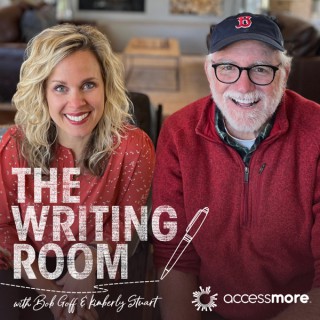
In this episode, Bob and Kim welcome Anne Lamott and Neal Allen to talk about the beauty and burden of writing. From first drafts and writing routines to grief, voice, and the courage to say what is true, they explore what it means to find your voice, collaborate well, and say the things that matter most. It is a thoughtful, hope-filled conversation for writers at every stage and for anyone who wants to write words that sound like them and matter to someone else.Connect with Anne: @annelamottConnect with Neal: @nealfallenCheck out their new release: Good Writing: 36 Ways to Improve Your SentencesConnect with Bob: @bobgoffConnect with Kim: @kimberly.stuart.writes--Join Bob and Kim for the next Writer's Workshop at The Oaks: bobgoff.com/eventsLearn more about Writing Coaching with Bob and Kim here.
What if the secret to better writing isn't more technique—but more truth? Tami Simon speaks with beloved author Anne Lamott and her husband Neal Allen—writer, spiritual coach, and author of Good Writing: 36 Ways to Improve Your Sentences—about the craft of finding your voice, writing toward compassion and truth, and why the most powerful sentences come not from the polished mind but from the really real.This conversation offers genuine transmission—not just concepts about awakening, but the palpable presence of realized teachers exploring the growing edge of spiritual understanding together. Originally aired on Sounds True One.See Privacy Policy at https://art19.com/privacy and California Privacy Notice at https://art19.com/privacy#do-not-sell-my-info.

This amazing husband and wife duo will walk us through the new book they co-authored together, what it's like to collaborate as a married couple (yes, they're still speaking to each other!), their different styles of writing and how they compliment each other.
Anne Lamott and Neal Allen, excellent writers and superorganism representing the head & heartspace that goes along with writing, re-join the DTFH!Pre-Order Anne and Neal's new book, Good Writing - 36 Ways to Improve Your Sentences. Soon to be available everywhere you get your books!Indiana family! Duncan is coming to The Comedy Attic in Bloomington, March 12-14! Click here to get your tickets now.Check out the DTFH night streams! Only available to our youtube subscribers. Click here to see what you're missing!This episode is brought to you by: In as little as 10 minutes you can get your free quote and up to 3 million dollars in coverage at Ethos.com/DUNCAN Download Cash App, use our exclusive referral code SECURE10 in your profile, send $5 to a friend within 14 days, and you'll get $10 dropped right into your account! Terms apply. That's Money. That's Cash App. Check out squarespace.com/DUNCAN for a free trial, and when you're ready to launch, use OFFER CODE: DUNCAN to save 10% off your first purchase of a website or domain.

Writer Anne Lamott tells Kelly about the "other mother" from her childhood—her best friend's mom who thought she was fabulous when her own parents had concerns. It's about the gratitude you carry for the rest of your life when someone champions the parts of you that feel unseen and how those other mothers—the ones who celebrated instead of shaped—end up changing who we become. This episode has been made possible by a grant from Ingeborg Initiatives, a social impact platform dedicated to improving maternal health and making it easier to raise a family. To learn more, please visit: https://www.ingeborginitiatives.com Link to live Zoom event with Kelly and Anne (March 11, 2026 7pm ET/4pm PT): https://us02web.zoom.us/meeting/register/R5kpMFa1RfiCJtlV7WsGZA?cmid=cb7fa38f-b413-4923-890e-d8c91450e2fb#/registration Anne's event which Kelly mentioned at the top of the show is Unscripted: Good Writing – An Evening with Anne Lamott & Neal Allen, at the Curran Theater in San Francisco (March 17, 2026 7pm) https://us.atgtickets.com/events/anne-lamott-neal-allen/curran-theater/ To learn more about listener data and our privacy practices visit: https://www.audacyinc.com/privacy-policy Learn more about your ad choices. Visit https://podcastchoices.com/adchoices

Interview begins @ 5:58 Annie Lamott and Neal Allen invite us into the heart of their relationship, where creativity, curiosity, and vulnerability intertwine. Annie introduces Neal's latest book, "Better Days: Tame Your Inner Critic," while Neal shares insights into Annie's newest work, "Somehow: Thoughts on Love." As we delve into their dynamic, we're reminded of Annie's infamous KFKD radio – a familiar concept for anyone acquainted with her writings – and how Neal's exploration of the inner critic seamlessly complements Annie's work. Reflecting on the early days of their relationship, Annie and Neal recount moments of openness and vulnerability, testing the waters of acceptance and understanding. Their willingness to confront their deepest wounds and expose them to the world underscores their authenticity and likability. Neal challenges the corrosive nature of identity politics, emphasizing the importance of transcending rigid notions of identity to foster genuine connection. In a candid discussion, Annie shares her experience with cancel culture and the anxiety it breeds in our social landscape. Together, we explore the implications of cancel culture on personal relationships and societal discourse, pondering the importance of genuine communication and compassion. As we journey deeper into their relationship, Annie and Neal offer a masterclass in marriage, highlighting the value of acceptance, curiosity, and patience. They demonstrate how years of spiritual and psychological work pave the way for navigating conflicts with grace and understanding. Midway through the interview, Annie steps away, allowing Neal and John to explore the realm of the inner critic. Through an active Gestault exercise, Neal provides a firsthand example of confronting the superego and shedding the layers of defensiveness that obscure our true selves. Together, we explore the perception that shame and the superego serve as sufficient motivators for progress, while also examining the divisive nature of identity politics and its impact on our culture. Neal offers insights into the role of defensiveness in protecting against vulnerability, urging us to embrace authenticity over superficiality. Bio: Anne Lamott is the author of twenty books, including the New York Timesbestsellers Help, Thanks, Wow; Dusk, Night, Dawn; Traveling Mercies; and Bird by Bird, as well as seven novels. A recipient of a Guggenheim Fellowship and an inductee to the California Hall of Fame and Neal Allen is a spiritual coach, workshop leader, and author who began his transformative journey about ten years ago. Bob Birnbaum, introduced him to the teachings of notable figures like Fritz Perls, Carl Rogers, and Adyashanti, as well as spiritual practices such as Eckhart Tolle's neo-Buddhism and Hameed Ali's Diamond Approach. His exploration deepened into self-realization, guiding him through phases of shedding personal narratives and societal beliefs, embracing the absurd, and confronting the concept of death, which included volunteering at hospice and dealing with personal loss. These experiences have profoundly shaped his practice and writings, including his books "Shapes of Truth: Discover God Inside You" and "Better Days: Tame Your Inner Critic." www.shapesoftruth.com Website for The Sacred Speaks: http://www.thesacredspeaks.com WATCH: YouTube for The Sacred Speaks https://www.youtube.com/channel/UCOAuksnpfht1udHWUVEO7Rg Instagram: https://www.instagram.com/thesacredspeaks/ @thesacredspeaks Twitter: https://twitter.com/thesacredspeaks Facebook: https://www.facebook.com/thesacredspeaks/ Brought to you by: https://www.thecenterforhas.com Theme music provided by: http://www.modernnationsmusic.com
Hello beautiful souls! Neal Allan is back! At the end of our last interview, he stopped me and said, "Julie, you didn't ask me about angels. I'd love to come back and talk about angels!" Today we are talking about angels and so much more! I truly feel that this episode is the epitome of how each of us finds our way through life, but how we can do so in a way where life can become, more so, Heaven on Earth. I love the line in his book where Neal says, "My only job is to be fascinated!" Perhaps we should all look at life that way. It would surely remove the pressure and heaviness of life if we all simply said, "Our only job is to be fascinated by life." Give this episode a listen and then follow me on Instagram @angelpodcast and let me know what you think! To learn more about Neal Allen and his work: [Substack] @NealAllen shapesoftruth.com Click HERE to watch this episode on YouTube: https://youtu.be/h1xkt5tW2NI Click HERE to read a transcript of this episode. ++++++++++ Thank you for listening to the Angels and Awakening podcast! Post about today's episode on your social media accounts and tag us @angelpodcast. We couldn't do it without your support. Every purchase and donation helps us run our podcasts and the World's Largest Prayer Network. Thank you! WORK WITH JULIE Angel Membership: https://theangelmedium.com/angelmembership Angel Reiki School: https://theangelmedium.com/get-certified Book A Session: https://theangelmedium.com/readings Buy Julie's Book, Angels and Awakening, on Amazon.com Don't know where to start? Book a discovery call with Julie: https://calendly.com/juliejancius/discovery-call FREEBIES Angel Newsletter: www.theangelmedium.com Angels and Awakening Podcast: https://podcasts.apple.com/us/podcast/angels-and-awakening/id1451424894 World's Largest Prayer Network: https://www.worldslargestprayernetwork.com/ Intuitive Kids Podcast: https://podcasts.apple.com/podcast/id1650866422 SOCIAL MEDIA Watch out for scammers who impersonate Julie's accounts. Julie will never DM you for a session. All purchases go through www.theangelmedium.com. Instagram: http://instagram.com/angelpodcast/ TikTok: @angelpodcast Facebook Group: http://facebook.com/groups/angelpodcast YouTube: https://www.youtube.com/c/juliejancius DRAWING WINNER Leave a 5-star positive review of this show or Julie's book, to be entered into a drawing to win a free session: https://theangelmedium.com/gift

In today's episode, we delve into the intricate realms of the inner critic with our guest, Neil Allen. He is a spiritual coach and writer whose work centers on removing the obstacles of the ego and offering tools for freedom. He is the author of Better Days: Tame Your Inner Critic and Shapes of Truth: Discover God Inside You. He has written for newspapers, general interest magazines, and literary journals. A former journalist and corporate executive, he earned a master's degree in Political Science from Columbia University and one in Eastern Classics from St. John's College. He lives with his wife, the writer Anne Lamott, in Northern California.In this episode, Neil's journey from corporate life to spiritual exploration and his exposure to Eckhart Tolle's teachingsEncounters with influential figures like AdyashantiThe emergence and personifying his inner critic as a gremlinIntegration of spiritual insights with coaching expertiseThe importance of self-empathyThe intricacies of the inner critic and embracing the journey towards self-acceptanceThe inner critic's role in childhood developmentWorking with clients in clinical practice and the Important steps in taming the inner criticAnxiety as a fear of punishment from the superegoChildhood authoritarian lessons from their motherJoin Neal for a guided exerciseHelpful links:Neal Allen - Join his in-person and Zoom events via shapesoftruth.com/eventsFollow Neal on Facebook and InstagramBetter Days: Tame Your Inner CriticWhy I am a misogynist, In Part by Neal AllenEpisode # 130: Being the Love that You Are with Patrick ConnorRajneesh MovementEckhart TolleAdyashantiThe Diamond ApproachFinger's Pointing to the Moon by OshoSubscribe to Christine's Substack Find Rosebud Woman on Instagram as @rosebudwoman Hosted on Acast. See acast.com/privacy for more information.
Hello beautiful souls! When you can identify the voice of your inner critic, it makes it easier for you to also (simultaneously) identify the voice of your intuition. Neal has a fascinating way of helping you hear your own inner critic by looking for the voice of your parents within your own thoughts. He also says that scientifically, the voice of your inner critic is most likely to be felt behind the head. This interview is laced with incredibly valuable insights to help you tune into your own inner critic, see it differently and work with it differently. I hope this interview shifts your life, like it did for me! To learn more about Neal Allen and his work: Neal's book Better Days: Tame Your Inner Critic is available at all major book retailers shapesoftruth.com Click HERE to watch this episode on YouTube: https://youtu.be/jtA-aIm9RpQ Click HERE to read a transcript of this episode. ++++++++++ Thank you for listening to the Angels and Awakening podcast! Post about today's episode on your social media accounts and tag us @angelpodcast. We couldn't do it without your support. Every purchase and donation helps us run our podcasts and the World's Largest Prayer Network. Thank you! WORK WITH JULIE Angel Membership: https://theangelmedium.com/angelmembership Angel Reiki School: https://theangelmedium.com/get-certified Book A Session: https://theangelmedium.com/readings Buy Julie's Book, Angels and Awakening, on Amazon.com Don't know where to start? Book a discovery call with Julie: https://calendly.com/juliejancius/discovery-call FREEBIES Angel Newsletter: www.theangelmedium.com Angels and Awakening Podcast: https://podcasts.apple.com/us/podcast/angels-and-awakening/id1451424894 World's Largest Prayer Network: https://www.worldslargestprayernetwork.com/ Intuitive Kids Podcast: https://podcasts.apple.com/podcast/id1650866422 SOCIAL MEDIA Watch out for scammers who impersonate Julie's accounts. Julie will never DM you for a session. All purchases go through www.theangelmedium.com. Instagram: http://instagram.com/angelpodcast/ TikTok: @angelpodcast Facebook Group: http://facebook.com/groups/angelpodcast YouTube: https://www.youtube.com/c/juliejancius DRAWING WINNER Leave a 5-star positive review of this show or Julie's book, to be entered into a drawing to win a free session: https://theangelmedium.com/gift
Pete and Val GET into it with special guests Annie Lamont and Neal Allen!
Pete and Val GET into it with special guests Annie Lamont and Neal Allen! Learn more about your ad choices. Visit megaphone.fm/adchoicesSee omnystudio.com/listener for privacy information.
We all grapple with an inner critic, incessantly whispering that we're not good enough or worthy of success and love, fostering a cycle of self-criticism. What if we could tame this relentless voice, breaking free from its grip and embracing our authentic selves? The good news is, we can. In this Language of Love Conversation, I sit down with Neal Allen, the author of Better Days: Tame Your Inner Critic. Neal takes us on an enlightening journey exploring the human psyche and the often-ignored superego. He shares his expertise on how the inner critic develops, its intentions, its impact on our lives, and fantastic strategies for recognizing and dealing with it. Taming the inner critic isn't just about finding peace; it's a path towards something more profound, something spiritual. We unpack: How to recognize and address the inner critic's impact on our lives The role of compassion in understanding the inner critic The paradox of perfection and productivity The "Peter Pan Kid" analogy The connection between releasing the inner critic and experiencing moments of grace and divine presence Make sure to visit Neal Allen's website to learn more about the great work he does. You can connect with him on social media too, like Facebook, Instagram, and Twitter(X) for updates. If you want to improve yourself and conquer that negative voice inside you, you should definitely read his amazing book "Better Days: Tame Your Inner Critic. Make sure to visit my website to check out my books on love, sex and relationships and explore my available courses. Tune in regularly to The Language of Love for great discussions and thought-provoking conversations with accomplished individuals and experts offering invaluable advice on how to love and be loved better. Learn more about your ad choices. Visit megaphone.fm/adchoices

Inspired by Matthew 18:3 - "And he said, truly I say unto you, Except ye be converted, and become as little children, ye shall not enter into the kingdom of heaven." Inspired by Reagan S, Yoga Sutras, Collette O'mahony, Roshi Joan Halifax, Alberto Villoldo, Jim Morrison, Anne Lamont, Neal Allen, Ram Dass, CTR, Jonathan B, and Hayao Miyazaki. Audiobook. Mature listeners only (18+).

As our January Wellness Series continues, today we are speaking to the dynamic Neal Allen about taming our inner critic. We all have one, and it's called the superego; the superego was developed in our respective childhoods as a survival mechanism, but as adults, we no longer need it for protection—but for so many of us, its presence in our lives is cumbersome at best and extremely damaging at its worst. The good news? Our inner critic can be quieted, allowing us to live our best lives. Neal teaches us how through his book and this conversation, finally examining a critical aspect of the human psyche—the superego—that often gets ignored. Listeners, you also might be interested to know that Neal is married to the writer Anne Lamott, and often refers to himself as Mr. Anne Lamott (which I love him for). Better Days: Tame Your Inner Critic by Neal Allen
Neal Allen (author of the wonderful Better Days: Tame Your Inner Critic, available now) and Anne Lamott (novelist, non-fiction writer, and swiftie survivor) re-join the DTFH! You can find Neal's new book, Better Days: Tame Your Inner Critic, everywhere you buy your books! You can also learn more about Neal and find his other books on his site, ShapesOfTruth.com. Anne Lamott's new book, Somehow - Thoughts on Love, is coming out this April! You can pre-order it now right here. You can also follow Anne on Facebook. Original music by Aaron Michael Goldberg. This episode is brought to you by: This episode is brought to you by BetterHelp. Give online therapy a try at betterhelp.com/duncan and get on your way to being your best self.
Essential Conversations with Rabbi Rami from Spirituality & Health Magazine
Anne Lamott is the author of numerous books, both fiction and nonfiction. Her new book, Somehow: Thoughts on Love, is due out in April 2024. Neal Allen is the author of Shapes of Truth: Discover God Inside of You, and an excerpt from his new book, Better Days: Tame Your Inner Critic, entitled “Enjoy Being Ordinary,” appears in the November/December 2023 issue of Spirituality+Health Magazine. S+H editor-in-chief Steve Kiesling interviews Anne in the same issue in a piece called “The Time to Write: A Master Class From Anne Lamott.” You can learn more about Neal's work at his website shapesoftruth.com, and follow Anne on instagram @annelamott. Learn more about your ad choices. Visit megaphone.fm/adchoices
Anne Lamott is the author of numerous books, both fiction and nonfiction. Her new book, Somehow: Thoughts on Love, is due out in April 2024. Neal Allen is the author of Shapes of Truth: Discover God Inside of You, and an excerpt from his new book, Better Days: Tame Your Inner Critic, entitled “Enjoy Being Ordinary,” appears in the November/December 2023 issue of Spirituality+Health Magazine. S+H editor-in-chief Steve Kiesling interviews Anne in the same issue in a piece called “The Time to Write: A Master Class From Anne Lamott.” You can learn more about Neal's work at his website shapesoftruth.com, and follow Anne on instagram @annelamott. Learn more about your ad choices. Visit megaphone.fm/adchoices
Many people have written and taught about the inner critic. But few have illuminated the subject with an approach as refreshing, innovative, and accessible as the one Neal Allen presents in his new book, Better Days—which includes a foreword by his wife, the celebrated writer Anne Lamott. In this podcast, Tami Simon sits down with the uniquely talented, often quirky, and always insightful couple to hear how they've come to understand and reframe the sneaky inner voice that manifests as an unnecessary source of torment for millions of people. Give a listen as they discuss: vulnerability as a path to relationship—and to the divine; radical silliness; the protective role of the superego (and why it's so reluctant to give up control); the empty chair technique in gestalt therapy; giving your inner critic a new assignment in life; reclaiming the value of curiosity; destroying your false identities; anxiety and its source; tips for identifying the sometimes subtle voice of the inner critic; the futility of arguing with your inner critic; exploring the truth of who you really are; the “saying yes” practice; acceptance and surrender; and more. Note: This episode originally aired on Sounds True One, where these special episodes of Insights at the Edge are available to watch live on video and with exclusive access to Q&As with our guests. Learn more at join.soundstrue.com.
Many people have written and taught about the inner critic. But few have illuminated the subject with an approach as refreshing, innovative, and accessible as the one Neal Allen presents in his new book, Better Days—which includes a foreword by his wife, the celebrated writer Anne Lamott. In this podcast, Tami Simon sits down with the uniquely talented, often quirky, and always insightful couple to hear how they've come to understand and reframe the sneaky inner voice that manifests as an unnecessary source of torment for millions of people. Give a listen as they discuss: vulnerability as a path to relationship—and to the divine; radical silliness; the protective role of the superego (and why it's so reluctant to give up control); the empty chair technique in gestalt therapy; giving your inner critic a new assignment in life; reclaiming the value of curiosity; destroying your false identities; anxiety and its source; tips for identifying the sometimes subtle voice of the inner critic; the futility of arguing with your inner critic; exploring the truth of who you really are; the “saying yes” practice; acceptance and surrender; and more. Note: This episode originally aired on Sounds True One, where these special episodes of Insights at the Edge are available to watch live on video and with exclusive access to Q&As with our guests. Learn more at join.soundstrue.com. See Privacy Policy at https://art19.com/privacy and California Privacy Notice at https://art19.com/privacy#do-not-sell-my-info.
Many people have written and taught about the inner critic. But few have illuminated the subject with an approach as refreshing, innovative, and accessible as the one Neal Allen presents in his new book, Better Days—which includes a foreword by his wife, the celebrated writer Anne Lamott. In this podcast, Tami Simon sits down with the uniquely talented, often quirky, and always insightful couple to hear how they've come to understand and reframe the sneaky inner voice that manifests as an unnecessary source of torment for millions of people. Give a listen as they discuss: vulnerability as a path to relationship—and to the divine; radical silliness; the protective role of the superego (and why it's so reluctant to give up control); the empty chair technique in gestalt therapy; giving your inner critic a new assignment in life; reclaiming the value of curiosity; destroying your false identities; anxiety and its source; tips for identifying the sometimes subtle voice of the inner critic; the futility of arguing with your inner critic; exploring the truth of who you really are; the “saying yes” practice; acceptance and surrender; and more. Note: This episode originally aired on Sounds True One, where these special episodes of Insights at the Edge are available to watch live on video and with exclusive access to Q&As with our guests. Learn more at join.soundstrue.com.

Jaymee and his partner/manager Lacee are back with a two part "YAWN + LOKO" themed episode, sharing the series of highly auspicious circumstances that led to their being guests of the 3rd Annual Ram Dass Legacy Retreat in Maui. Fun stories of their private moments with legendary teachers David Nichtern, Jack Kornfield and Trudy Goodman, Annie Lamott and Neal Allen, and Krishna Das's extraordinary blessing of Jaymee's new mala beads. So much magic we had to split the episode into two parts! Maui still needs our help. Displaced homeowners are having to make mortgage payments on totaled homes. Maui Food Bank is a centralized force for good in the region that so many depend on. DONATE HERE: https://mauifoodbank.org/donate/ LOVE IS THE AUTHOR PODCAST: produced, edited and hosted by Jaymee Carpenter. INSTAGRAM: @loveistheauthor + @unconventionalgardener BOOK SPIRITUAL MENTORSHIP SESSIONS w/ JAYMEE or LACEE! email: lacee@loveistheauthor.com
Neal Allen, chair of the Political Science Department at Wichita State University, talks about the Wichita mayoral primary in Episode 314.

Can you believe that LMT (https://lmtmag.com/) Lab Day Chicago was almost 3 months ago? We got 7 hours of recordings when we were set up in the Ivoclar (https://www.ivoclar.com/en_us) Ballroom. This week wraps it all up with 4 amazing conversations from that wonderful weekend. First up is Susan van Kensbergen who is the Vice President of Myerson (https://www.myersontooth.com/). Susan talks about her journey from being a ceramist, moving up in lab responsibility, managing the world's largest LAVA milling center, and finding her new home at Myerson, the home of Durflex (https://www.myersontooth.com/duraflex/) and an upcoming "game changing" printer. Then we chat with Neal Allen from Mustard Seed Dental Studio (https://www.mustardseeddental.com/). Neal spent 20 years in a large lab before moving into a growing lab owned by a Prosthodontist. Neal talks about the importance of creating a happy lab culture and treating the employees like family. Next is the "better" half of Artifex Dental Lab (https://artifexlab.com/), Julio Munoz. Julio grew up in Bolivia where he is a board-certified Oral Surgeon. A lady brought him to the US where he connected with Artifex and helped create the "Triple Jig" technique for full arch implant restorations. We wrap us the whole weekend with a special treat, Barb's technician son, Zack Wojdan. Zack talks about growing up in the lab, starting at the beginning, working his way up, working with his mom, and goals for the future. A BIG thanks to LMT for putting on an amazing weekend and a BIGGER THANKS to Ivoclar for hosting us. The new PrograScan PS3 and PS5 (https://www.ivoclar.com/en_us/products/digital-equipment/prograscan-ps5-and-ps3-laborscanner) provide true-to-detail, high-resolution and accurate scans for coordinated digital workflows that are precise, fast, and always accurate. The PS3 and PS5 are powered by the popular and intuitive DentalCAD software from Exocad (https://exocad.com/). Whether you are looking for your first scanner, to upgrade or add to your existing scanners, the PrograScan may be the one for you. Reach out to your friendly Ivoclar (https://www.ivoclar.com/en_us) sales representative to select a scanner that matches the needs of your lab Today and tell them you heard about it on the podcast! Candulor (https://www.candulor.com/en-us) a dental supply company from Switzerland has solutions no matter if you are analog or digital Check out their PhysioSet TCR (https://www.candulor.com/en-us/product-portfolio/tooth-lines/physioset-tcr) tooth line that has been complemented with 18 new shapes. A total of 48 age-appropriate anterior tooth shapes are available for the laboratory or dental practice to select from. The Swiss School of Prosthetics (https://ssop.swiss/en-us) in Springfield, Missouri is the place to learn all things removable. America with get supported and supplied by the only authorized partner Edmonds Dental Supply (https://edmondsdentalsupply.com/) Candulor, High End Only Special Guests: Julio Munoz CDT, Neal Allen, Susan van Kinsbergen, and Zack Wojdan.
Neal Allen, chair of the Political Science Department at Wichita State University, joins Episode 282 to talk about the upcoming elections.

“Identities are anything that end the sentence “I am ____”. Whatever you say at the end of that is describing at the very most, the very least of you”, says this week's guest, spiritual teacher and writer, Neal Allen. Much of this conversation is about who we are, really. Beneath our roles, our jobs, our social status... We also discuss how we can make more meaningful connections in social situations and avoid the constant dreaded question of “what do you do for a living”, what compassion is and how to alleviate suffering, how we confuse wants and needs, how we can tame our inner critic, and why being ordinary is a good thing!Here are a few of my favourite quotes from the episode: “So many of us have a fear of being ordinary as if it's the most pejorative term that we could use. And yet being ordinary is the best thing in the world”“ (We) tend to displace (our) sense of wanting something with an expectation of getting it. And that's when (we) get into trouble” “Almost everybody believes the inner critic is themselves. I want to disabuse you of that notion. It's a parasite”I hope you enjoy the episode and if you do please rate, review and share with a friend! You can connect with Neal and me on the links below: Shannon's instagramShannon's websiteShannon's tiktokNeal's websiteMusic by: Flood (Instrumental) by RYYZN https://soundcloud.com/ryyznCreative Commons — Attribution 3.0 Unported — CC BY 3.0

HEADLINE 1: Manchin and Schumer announce deal for energy and health care bill - CNNSenate Majority Leader Chuck Schumer and Sen. Joe Manchin on Wednesday announced a deal on an energy and health care bill, representing a breakthrough after more than a year of negotiations that have collapsed time and again.But it will face furious GOP opposition.The agreement contains a number of Democrats' goals. While many details have not been disclosed, the measure would invest $369 billion into energy and climate change programs, with the goal of reducing carbon emissions by 40% by 2030, according to a one-page fact sheet. For the first time, Medicare would be empowered to negotiate the prices of certain medications, and it would cap out-of-pocket costs at $2,000 for those enrolled in Medicare drug plans. It would also extend expiring enhanced subsidies for Affordable Care Act coverage for three years.The announcement comes at a crucial time for Congress, as the Senate is a little over a week away from starting a monthlong recess, when many Democrats will campaign for reelection. Manchin's support is notable given his stance earlier this month that he "unequivocally" wouldn't support the climate or tax provisions of the Democratic economic package, which appeared to torpedo any hope Democrats had of passing legislation to fight climate change in the near future. But Schumer and Manchin have been in revived talks since July 18 and locked down a deal Wednesday, according to a source familiar with the matter. Manchin had thrown cold water on doing tax and energy provisions as part of the deal, but ultimately agreed to it.The White House has signed off on this deal, Biden said in a statement.The deal still faces multiple hurdles before it can make it to Biden's desk, including the parliamentarian and having to pass both chambers of Congress, where practically any Democrat could sideline or delay passage.In a statement, Schumer's office said the bill would reduce US carbon emissions by roughly 40% by 2030. Clean energy tax credits would drive the majority of those emission reductions, a Democratic aide said.Tax credits for electric vehicles made it into the new deal, according to two Senate Democratic aides. Electric Vehicle tax credits will continue at their current levels, up to $4,000 for a used electric vehicle and $7,500 for a new EV. However, there will be a lower income threshold for people who can use the tax credits -- a key demand of Manchin's. Manchin had been staunchly opposed to electric vehicle tax credits throughout negotiations.The deal keeps the prescription drug prices changes that Manchin had previously agreed to, including empowering Medicare to negotiate the price of certain costly medications administered in doctors' offices or purchased at the pharmacy. It would also redesign Medicare's Part D drug plans so that seniors and people with disabilities wouldn't pay more than $2,000 a year for medication bought at the pharmacy. And, the deal would require drug companies to pay rebates if they increase their prices in the Medicare and private-insurance markets faster than inflation.Altogether, the drug price provisions would reduce the deficit by $288 billion over a decade, according to the Congressional Budget Office.The agreement also calls for extending the enhanced Affordable Care Act subsidies for three years. An earlier deal would have continued the beefed-up subsidies for two years, which meant they would have expired just after the 2024 presidential election -- a scenario that congressional Democrats did not want to encounter.The subsidies were expanded through this year as part of Democrats' $1.9 trillion coronavirus relief package, known as the American Rescue Plan, which was enacted in March 2021. They have made health care coverage on the Obamacare exchanges more affordable, leading to record enrollment this year.Enrollees pay no more than 8.5% of their income toward coverage, down from nearly 10%. And lower-income policyholders receive subsidies that eliminate their premiums completely. Also, those earning more than 400% of the federal poverty level have become eligible for help for the first time.Extending the enhanced subsidies would cost $64 billion over a decade, according to the CBO.To raise revenue, the bill would impose a 15% minimum tax on corporations, which would raise $313 billion over a decade. While details on the current deal remain scant, the House version of the Build Back Better package would have levied the tax on the corporate profits that large companies report to shareholders, not to the Internal Revenue Service. It would have applied to companies with more than $1 billion in profits and yielded a similar revenue-raising figure.The current deal also aims to close the carried interest loophole, which allows investment managers to treat their compensation as capital gains and pay a 20% long-term capital gains tax rate instead of income tax rates of up to 37%. Eliminating this loophole, which would raise $14 billion over a decade, has been a longtime goal of congressional Democrats.The package also calls for providing more funding to the IRS for tax enforcement, which would raise $124 billion.Democrats say families making less than $400,000 per year would not be affected, in line with a pledge by Biden. Also, there would be no new taxes on small businesses.In total, Democrats say the deal would reduce the deficit by more than $300 billion.HEADLINE 2: TRUDY BUSCH VALENTINE, NOT READY FOR PRIME TIME - ADVOCATETrudy Busch Valentine has been in the news a lot lately, largely a push near the primaries from her supporters but not every report lately has bode well for the billionaire candidate. After months of being largely unavailable for comment on the issues beyond simple platitudes she has started answering questions, and it's left many Missouri Democrats asking if we are actually serious about putting her forth in a general.At a recent town hall for the Chesterfield Township Dems TBV was asked questions about campaign finance reform, specifically regarding Citizen's United. Her response? Just tell me again what Citizens United is doing? Forgive me but a candidate for senate better damn well know what Citizens United is and how it affects campaign finance.On July 23rd A bizarre video posted by a St. Louis ward committeewoman shows Busch Valentine struggling with her position on transgender rights, rambling and stumbling over her words.“I respect the dignity of every human person. And transgender, I respect,” Busch Valentine says in the video. “If a man feels that they're a woman and wants to become a woman, I respect that. And I respect it the opposite way too. Those are things that have to be solved amongst families and amongst parents.”She then asserted that doctors should refrain from providing gender-affirming care to children until they're adults, something right-wing pundits and politicians have been asserting.“I only would say, wait until 18, when a person is an adult, to do everything that wouldn't allow going back to being maybe the sex that you were,” she said. “But I totally, totally support transgenders without a doubt and the LGBT community.”To be clear, Gender-affirming care for young people usually consists of puberty blockers and hormone treatment, with most of the effects reversible, contrary to what anti-trans politicians claim. Genital surgery is not performed on minors.And on Monday Trudy Busch Valentine was asked whether she supports a law prohibiting instruction on gender identity and sexual orientation.Specifically referencing Florida, where such teaching is forbidden in grades K-3 and restricted in later grades, and opponents say it has a chilling effect. LGBTQ+ teachers may be afraid to mention their identity or to display pictures of their partners in the classroom because they may be fired or sued by parents. She made a spontaneous reference to critical race theory, a theory about systemic racial injustice taught in law schools, which right-wing politicians wrongly claim is taught in elementary and secondary schools to make white children feel shame. Here is her word salad response in full: “I think there are so many things out there, including critical race theory, that just tries to take away the history of our country and the good things we've done and the bad things we've done,” Busch Valentine said on St. Louis CBS affiliate KMOV.Now, nearly all of these statements were adjusted in post by her team, but the damage was done. Is she capable of standing on her own two feet as a senator or is she to be propped up by a team? It sure seems to me she isn't prepared for this job. Personally I'm a Spencer Toder man, you can count this as an official endorsement. I can understand Kunce supporters though. TBV supporters I can't get behind, I've seen nothing to support she can win this thing or do the job once hired.HEADLINE 3: EXPLAINING KANSAS' CONFUSING ABORTION AMENDMENT - VOXNext week in Kansas, abortion rights will face the first test at the polls since the Supreme Court overturned Roe v. Wade.In 2019, Kansas's Supreme Court ruled that the state's constitution protects the right to an abortion. On Tuesday, voters will be asked to weigh in on a proposed amendment that would explicitly remove that right, opening the way for Kansas's Republican-controlled legislature to further restrict or ban abortion, just as neighboring Texas, Oklahoma, and Missouri have done.You'd be forgiven if you had trouble making sense of the amendment's text, which would add a paragraph to the state's constitution that says both “Kansas does not require government funding of abortion” and that people, through their elected officials, “may pass laws regarding abortion, including, but not limited to, laws that account for circumstances of pregnancy resulting from rape or incest, or circumstances of necessity to save the life of the mother.”The language could trip up your average voter, said Neal Allen, a political scientist at Wichita State University. “You could read it and think you were voting to eliminate state funding of abortion when there is no state funding to abortion,” he told Vox. “And there is language that refers to exceptions to preserve the health of the mother, and for rape and incest, but there's nothing about the amendment itself that would create those exceptions.”Supporters of the amendment, organizing under the banner of “Value Them Both” — a reference to valuing “women and unborn children” — have been working to convince votersthat a “yes” vote on the amendment would not lead to an abortion ban and would simply allow lawmakers to regulate the procedure.Many of their claims have been dubious at best, and have generated significant confusion. Value Them Both supporters have stressed in their advertisements that the amendment “restores our ability to place basic regulations on the abortion industry.” In fact, abortion remains highly regulated in Kansas. They say the amendment would merely allow lawmakers to impose rules like requiring parental consent, “stopping painful late-term abortions,” and barring public funding of abortion. But Kansas already requires parental consent, already bans public funding of abortion, and already bans abortion after 22 weeks.The language of the amendment is confusing, likely purposefully. So, Let us be clearIf the amendment passes, nothing could stop Republican lawmakers from passing a total or near-total abortion ban, and political experts say the likelihood of such restrictions moving forward in that context is very high.It will be a tight vote. A public poll of the campaign released last week found 47 percent of likely primary voters planned to vote for the amendment, and 43 percent planned to vote against it. But the pollsters also found Democrats were significantly more likely than Republicans to say the abortion amendment “increased the importance of voting in this upcoming election” — suggesting differences in motivation. Past political science research has found a “status quo bias” when it comes to abortion-related ballot measures; voters are more likely to reject measures on Election Day they otherwise tell pollsters they support. These dynamics bode well for advocates who want to keep the state constitution unchanged.For my Kansas listeners, do NOT rest on your laurels here. Vote NO on this amendment.Headline 4: Veterans and their spouses can now teach in Florida with no degree. School leaders say it 'lowers the bar'https://www.usatoday.com/story/news/education/2022/07/21/florida-education-program-military-veterans-teach/10117107002/ https://www.fldoe.org/teaching/certification/military/ Governor Ron DeSantis recently signed into law a bill that would give military veterans teaching certificates on a temporary basis in Florida. This ability to apply for temporary certification does not only apply to the veteran, but also their spouses as well. The law was passed with the hope of easing the strain of the 9000 open teaching positions around the state. According to the Florida Department of Education, to apply for the five year temporary certification, the applicant must have the following:Minimum of 48 months of military service with an honorable/medical dischargeMinimum of 60 college credits with a 2.5 grade point averagePassing score on a Florida subject area examination for bachelor's level subjectsEmployment in a Florida school district, including charter schoolsMany school leaders have been outspoken in opposition to this move. "There are many people who have gone through many hoops and hurdles to obtain a proper teaching certificate," said Carmen Ward, president of the Alachua County teachers union. "(Educators) are very dismayed that now someone with just a high school education can pass the test and can easily get a five-year temporary certificate." Alachua County school board members expressed their distaste for the new law at a recent workshop where the details were presented.While a subject area test may prove that these applicants may know the content that they are hired to teach, what it does not do is prove that the applicants know the intecencies of lesson planning, instruction, and assessment. These are all things that are taught in college and that teachers leaving a four year degree program are verse in before stepping foot in a class to student teach, let alone teach on their own. While FLDOE says that each person that is given the temporary certification will be put with a mentor, this mentor is another teacher from the building, usually in the same grade level or subject area. Mentor meetings with new teachers are historically quick check-ins where the new teacher can bounce ideas and problems off of the mentor. A mentor will not have the time to teach these skills to the new teacher in the meeting. This will increase the load again on experienced teachers or lead to them handing lesson plans to inexperienced, unprepared “educators” to teach students.There is also a worry around the state that these temporary certifications will be highly concentrated in the more underfunded, underperforming school districts. The worry from school officials is that higher paying, well performing schools will have the ability to attract traditionally certified teachers with experience. This would leave the bulk of the openings to be in the poorer districts, leaving an even more inexperienced staff in these schools.With many other states also facing teacher shortages, the Florida law could become a template for plans that are implemented in other states around the country.LAYOVER: Candidate Bethany Mann. Democratic Candidate for Missouri's 3rd Congressional District. LIGHTNING ROUND:LR 1 - Historic flooding in St. Louis - Washington PostTorrential downpours sparked flash flooding in St. Louis and surrounding areas Tuesday, killing at least one person and stranding residents in their cars and homes as the rainfall shattered a record set more than a century ago. The city had received more than 9 inches of rain by the afternoon, the most ever recorded there in a calendar day and about 2 inches more than the record of about 7 inches set in August 1915, when remnants of a hurricane that came ashore in Galveston, Tex., passed through the area. Firefighters had responded to about 70 rescues by late Tuesday morning On behalf of Gov. Mike Parson (R), who was out of the country Tuesday, Lt. Gov. Mike Kehoe (R) declared a state of emergency to assist local authorities in handling the disaster. Extreme precipitation events have increased substantially over the past century and are tied to warming from human-caused climate change. The heaviest such events increased by 42 percent in the Midwest between 1901 and 2016, with additional increases expected as the climate continues to warm, according to the U.S. government's National Climate Assessment.LR 2 - The attack on McMorrow backfired - PoliticoIn a fundraising email, Michigan State Sen. Lana Theis of Brighton said colleagues like McMorrow were “outraged” that they couldn't “groom and sexualize kindergartners.” The charge prompted McMorrow to make a spirited speech in the Senate in her own defense — a speech that went viral and made her a political celebrity on the left. The result? Theis' fundraising stunt netted her less than $300 while McMorrow went on to raise more than 1 Million dollars. LR 3 - Kansas City's Zero Fare Transit Program Shows Major Success - Next CityKansas City, Missouri, made national headlines in the fall of 2019 when its city council voted unanimously to become America's first large city to make public transportation free citywide. Now, two and a half years later, anyone living anywhere in the city can ride buses without paying a fare.Recently, A study conducted as part of the Urban League of Greater Kansas City's annual “State of Black Kansas City” report last year asked 1,686 riders for their feedback on what Zero Fare has enabled them to do. The responses show how a Zero Fare policy makes a big difference in these riders' ability to exercise the so-called “right to the city.”Almost 90% of the riders surveyed said they rode the buses more as a result of Zero Fare. About 92% said it allowed them to shop for food more often; 88% said they could see their .healthcare providers more easily or more often; 82% said it allowed them to get or keep a job; and 86% said it made them feel like city leadership is concerned about their needsBesides the increased mobility and financial benefits, nearly 80% of the residents surveyed also said Zero Fare increased their sense of safety on the bus. That points to one of the more counterintuitive benefits of eliminating fares: The buses became safer to ride. The total number of incidents where supervisors were called fell 39% in the first year of full Zero Fare transit, according to a 2021 Zero Fare impact analysis by the Mid-America Regional Council (MARC), the Kansas City area's metropolitan planning organization. Incidents per 100,000 riders fell 17%LR 4 - Justice Department files lawsuit against poultry producers in the US - Fox BusinessThe Justice Department filed a lawsuit Monday against some of the largest poultry producers in the U.S. along with a proposed settlement seeking to end what it claims have been longstanding deceptive and abusive practices for workersThe suit, filed in federal court in Maryland, names Cargill, Sanderson Farms and Wayne Farms, along with a data consulting company known as Webber, Meng, Sahl and Co. and its president.In its lawsuit, the Justice Department alleges the companies have been engaged in a multiyear conspiracy to exchange information about the wages and benefits of workers at poultry processing plants to drive down employee competition in the marketplace. The companies did not immediately respond to messages seeking comment.The government contends the data consulting firm helped to share the information about the workers' compensation with the companies and their executives. By carrying out the scheme, officials allege, the companies were able to compete less intensely for workers and reduce the amount of money and benefits they had to offer their employees, suppressing competition for poultry processing workers across the boardThe suit is the latest example of the Justice Department's antitrust enforcement targeting companies the government believes engage in anticompetitive behavior to stifle workers or harm consumers. It also comes as the department continues a broader investigation into labor abuses in the poultry industry.LR 5 - Foot of hail stacks up in parts of Colorado mountain town, snowplows used for removal-OUT THERE COLORADOAs storms pounded parts of Colorado on Wednesday evening, Estes Park got hit hard. Not only did the mountain town, found outside of Rocky Mountain National Park, get a lot of moisture in the form of heavy rain, about a foot of hail also stacked up on some local streets.While the hail that fell appears to be in the form of small pellets based on images and footage from the scene, thus less likely to cause impact damage, the hail can be seen covering roadways and reportedly caused travel concerns. In order to clear the roads, snowplows were called in.monsoonal precipitation continues through and Friday is still supposed to bring even more intense weather to the state, increasing flash flooding concerns around the state, especially in burn scar areas found along the Front Range.LR 6 - Lastly folks, go voteAugust 2nd will be a day for voting across much of the midwest. It is important to get out there and exercise your right to determine who represents you and what ballot measures pass. Be mindful of your polling places, they may have changed. Take time off work if need be, they have to allow it. Now, Get out there and vote!Outro: That's all the time we have this week, thank you for joining us. If you have a story you feel I should look into and possibly highlight on the show, please tweet me throughout the week @KevINMidMo or The Pod's parent account @TheHeartlandPODThis week's episode featured reporting and information from Out there Colorado, Fox Business, Politico, Next City, Washington Post, Usa Today, The Florida Department of Education, CNN, Vox, and The Advocate. https://heartlandpod.com/Twitter: @TheHeartlandPOD"Change The Conversation"

Neal Allen's latest book "Shapes of Truth" offers a great deal to consider. Seasoned searchers of truth will find a lot to like in both the book and in this interview.

For episode 176 of the Metta Hour, Sharon is joined by Neal Allen and Anne Lamott.In this conversation, Neal shares his impetus for writing Shapes of Truth and how the book played a role in his first date with his now-wife, Annie Lamott. The three converse about the different ways they define the term and the experience of God or the divine, and how that interfaces with daily life. The episode ends with Neal leading a short guided reflection to bring the conversation to a close.This podcast is brought to you by BetterHelp. Click to receive 10% off your first month with your own licensed professional therapist: betterhelp.com/mettaNeal Allen is a coach and writer who studies and practices traditional and contemporary spiritual paths. He is the author of the 2021 release Shapes of Truth: Discover God Inside You. Anne Lamott is the New York Times best-selling author of 19 books, including collections of essays, novels, and long-form non-fiction, including the classic writing manual Bird by Bird and childrearing memoir Operating Instructions.See Privacy Policy at https://art19.com/privacy and California Privacy Notice at https://art19.com/privacy#do-not-sell-my-info.
On today's episode of “The Language of Love,” Dr. Laura Berman sits down for an intimate conversation with husband Neal Allen. Neal Allen is a coach and writer who studies and practices traditional and contemporary spiritual paths. His book “Shapes of Truth: Discover God Inside You,” is one of Dr. Berman's favorite new books and she is eager to share how you can apply the deep wisdom within this book to your life. Neal Allen will help listeners discover how to find the divinity within, including what divinity means and how even a non-believer can connect with a deeper meaning and purpose. Allen explains how his time at the Hameed Ali's Diamond Heart group helped to awake him to the false stories about himself and his reality that he had been stuck in, and how he was able to ‘burn down his house' discover how to see the many colors of divinity within them. “There are 35 colors that you can find within yourself,” says Allen. “And each of them has to do a way in which you are divine.” Allen explains what these colors mean and how you can learn to find your colors in yourself and in others. During the episode, Dr. Berman also gets a chance to speak with Neal Allen's wife Anne Lamott. Anne Lamott is the New York Times bestselling author of “Bird by Bird,” “Help, Thanks, Wow,” and “Stiches.” She is also a public speaker and writing teacher, and one of Dr. Berman's favorite writers. Lamott talks to Dr. Berman about dating when you're middle-aged, and how one should approach the process of looking for love. How do you know when he's “the one” or when he just ticks most of your boxes? “Hold out for the person you would want to be best friends with, even if they aren't going to your romantic partner,” says Lamott. You can find Neal Allen's “Shapes of Truth: Finding the Divinity Within” on Amazon.
Neal Allen Discussion by Discussion by Dennis and Phil
Neal Allen is a coach and writer who studies and practices traditional and contemporary spiritual paths. His private coaching practice blends standard psychodynamics with spiritually oriented methods. His earlier careers included newspaper journalism and corporate marketing for large public companies. The author of Shapes of Truth: Discover God Inside You, he lives in Northern California with his wife, the author Anne Lamott. We spoke about what he's learned from Adyashanti, A.H. Almaas (the Diamond Approach) and other spiritual teachers, as well as his book, which focuses on “thirty-five abstract nouns of value - concepts like strength, will, and acceptance - show up as symbolic feelings in your body, for exploration by anyone.” Learn more about Neal Allen here: https://www.shapesoftruth.com/neal-allen-bio-1
Neal Allen is a coach and author of Shapes of Truth: Discover God Inside You, a book that lays out 35 qualities of God that can be experienced by humans as they exist inside each person. In this episode, Rabbi Rami and Allen discuss these qualities, highlighting the “big 5”—joy, strength, will, compassion, and power. They also explore the divine objects or “white pearls” each human has within them, conformity, and the innate capacity of humans to be good. “When I talk about God I'm not quite talking here about the overall God, the God that's outside you, inside you, that permeates everything … what I write about and talk about is an ability that we have to notice, and discover, and retrieve aspects of God that are particularly useful to us as human beings.” Read the magazine: spiritualityhealth.com Learn more about your ad choices. Visit megaphone.fm/adchoices
Essential Conversations with Rabbi Rami from Spirituality & Health Magazine
Neal Allen is a coach and author of Shapes of Truth: Discover God Inside You, a book that lays out 35 qualities of God that can be experienced by humans as they exist inside each person. In this episode, Rabbi Rami and Allen discuss these qualities, highlighting the “big 5”—joy, strength, will, compassion, and power. They also explore the divine objects or “white pearls” each human has within them, conformity, and the innate capacity of humans to be good. “When I talk about God I'm not quite talking here about the overall God, the God that's outside you, inside you, that permeates everything … what I write about and talk about is an ability that we have to notice, and discover, and retrieve aspects of God that are particularly useful to us as human beings.” Read the magazine: spiritualityhealth.com

Author & spiritual coach, Neal Allen, joins Raghu to vulnerably discuss facing our defenses head-on to discover God inside, and shares personal dharma stories involving his wife, Anne Lamott.This episode of the Mindrolling Podcast with Raghu Markus is brought to you by BetterHelp. A professional counseling service done securely online. A convenient and affordable way to find the particular expertise you need – wherever you are worldwide. BetterHelp will assess your needs and match you with your own licensed professional therapist.As a listener, you'll get 10% off your first month by visiting our sponsor at BetterHelp.com/mindrollingJoin over 1 million people who have taken charge of their mental health.About today's guest: Neal Allen is a spiritual coach and writer, who after careers as a journalist and corporate executive, has spent his time studying and exploring spiritual traditions, both traditional and new age. He just released Shapes of Truth: Discover God Inside You, which reveals a recent, spectacular discovery about the human soul, and contains a special introduction from his wife, bestselling author, and no stranger to Be Here Now Network, Anne Lamott – who he lives and gardens with in Northern California."All I have to do is spend time in the screwed up defenses that I have established for myself, and simply by watching them in operation and questioning their assumptions and motivations – all the good stuff will show up. I don't have to point myself ever to the good stuff. I don't have to point myself to nirvana. I don't have to fake it till I make it. I don't have to do anything except for remove my defensive systems, then nirvana just pours in." – Neal Allen See Privacy Policy at https://art19.com/privacy and California Privacy Notice at https://art19.com/privacy#do-not-sell-my-info.

"When that first object that represents the truth of the belief that I have an emotional issue dissipates or disappears from me, I fall into exactly the state of being that Buddhists call equanimity. That state of contentment and self satisfaction that needs nothing at the moment. I don't just get respite from my emotional issue that I happen to be looking at. I got respite from everything for you know a matter of minutes or hours, or it might stretch a little longer. And the more times I do it, or the more often that kind of respite can enter into it. Because eventually once I've done this 20, 30, 100 times it varies from person to person- I start to believe oh, that's who I am. I'm not the voice up in my head. I'm actually this collection of body objects that's — neither is who I actually am. But this one is telling the truth all the time." Special Guest: Anne Lamott.

Neal Allen describes himself as pink, fluffy, love. He's written a book called Shapes of Truth: Discover God Inside You, which is an interesting book to write for someone who declared himself an atheist at the age of 14. In this conversation and in the book, he lays out some interesting ideas about how we … Continue reading "156. Neal Allen – Shapes of Truth: Discover God Inside You" The post 156. Neal Allen – Shapes of Truth: Discover God Inside You first appeared on School for Good Living Podcasts.

What are Commercial Inspections? What are the differences between residential and commercial inspections? What due diligence items to look out for? ▶️ Visit to know more: https://www.raphaelcollazo.com/ Welcome, and for all your pertinent questions, Raphael Collazo is here to help you with Understanding Commercial Inspections with Brad Lawler and Neal Allen. If you are interested in learning about the many facets of commercial real estate, whether you're a business owner, investor, or just someone who's curious about the subject, you'll gain value from being a part of the group! In today's episode, Brad Lawler and Neal Allen, CEO/Founder and Director of Operations of Home Team Property Inspection Services respectively, discussed their background and explained how they got started in commercial real estate inspections. Along with that, they shared insights on the commercial real estate inspection process and highlight strategies to properly assess the condition of a commercial property. ▶️ In this video, you will learn about various concepts including: • How commercial inspections differ from residential ones, • What to look out for when inspecting multifamily properties, • What to look out for when inspecting office properties, • What to look out for when inspecting retail properties, • What to look out for when inspecting industrial properties, • Some of the best resources available for those interested in learning more about commercial inspections, • As well as much more... So, watch the full video until the end to learn about how to effectively inspect commercial real estate. ▶️ If you're interested in learning more about Brad and Neal, check out the following links: ▶ Website: https://www.hometeam.com/louisville/commercial-inspections/ ▶ Brad Lawler: blawler@hometeam.com ----- (502) 548-4770 ▶ Neal Allen: nallen@hometeam.com ----- (502) 632-7230 If you like the episode, please SUBSCRIBE and don't forget to leave us a 5
Neal Allen, author and student of the Diamond Heart school, joins the DTFH!Be sure to read Neal's new book, Shapes of Truth, available now!Original music by Aaron Michael Goldberg. This episode is brought to you by: ExpressVPN - Visit expressVPN.com/duncan and get an extra 3 months FREE when you buy a 1 year package. Upstart - Visit upstart.com/duncan and see how Upstart can help you with your debt.
Anne Lamott and Neal Allen (new books Dusk, Night, Dawn and Shapes of Truth!) make it weird!
© 2020-2026 Ivy Podcast Discovery LLC
