
POPULARITY

16 episodes with good writing

4 episodes with good writing

2 episodes with good writing

4 episodes with good writing

2 episodes with good writing

2 episodes with good writing

2 episodes with good writing

4 episodes with good writing

4 episodes with good writing

This is a special compilation devoted to a subject very close to my heart and currently consuming a large percentage of my waking hours: writing. Over the years, I've asked some of the writers I admire most questions like: How do you choose a project and stay with it? How do you begin when inspiration refuses to show up? How do you build a practice that reliably produces pages? And how do you keep going when you fear your pages are terrible? Listen in to some of my favorite authors answer these and other questions. Please enjoy this special compilation on the craft of writing.This episode is brought to you by:ProLon science-backed Fasting Mimicking Diet that helps activate cellular renewal through fasting, while still eating nourishing mealsAG1 all-in-one nutritional supplementTimestamps:00:00 — Introduction01:52 — Elizabeth Gilbert: Choosing and committing to a project06:25 — Anne Lamott: Shitty first drafts and taking it bird by bird13:04 — Joyce Carol Oates: Don't wait for inspiration15:47 — Jerry Seinfeld: Building a writing system26:27 — Mary Karr: Revision and throwing out 1,200 pages35:08 — Brandon Sanderson: Consistency, word counts, and output45:04 — Seth Godin: Fear of bad writingElizabeth Gilbert is the author of Eat, Pray, Love; Big Magic; and City of Girls. Her ten books have sold more than 25 million copies worldwide. Anne Lamott is the author of 20 books, including Bird by Bird, Operating Instructions, and Help, Thanks, Wow, and co-author—with her husband Neal Allen—of Good Writing.Joyce Carol Oates has written more than 70 books, including Blonde and We Were the Mulvaneys, and won the National Book Award for her novel them.Jerry Seinfeld co-created and starred in the sitcom Seinfeld—which ran nine seasons and won 10 Emmys—and later created Comedians in Cars Getting Coffee and wrote Is This Anything? Mary Karr wrote the bestselling memoirs The Liars' Club, Cherry, and Lit and her book on writing, The Art of Memoir. Brandon Sanderson created the Mistborn and Stormlight Archive series, completed Robert Jordan's Wheel of Time, and raised more than $41 million on Kickstarter for four secret novels. Seth Godin has written 21 bestsellers published in 40 languages—including Purple Cow, Linchpin, and The Practice—and a daily blog of more than 10,000 posts. *For show notes and past guests on The Tim Ferriss Show, please visit tim.blog/podcast.For deals from sponsors of The Tim Ferriss Show, please visit tim.blog/podcast-sponsorsSign up for Tim's email newsletter (5-Bullet Friday) at tim.blog/friday.For transcripts of episodes, go to tim.blog/transcripts.Discover Tim's books: tim.blog/books.Follow Tim:Twitter: twitter.com/tferriss Instagram: instagram.com/timferrissYouTube: youtube.com/timferrissFacebook: facebook.com/timferriss LinkedIn: linkedin.com/in/timferrissSee Privacy Policy at https://art19.com/privacy and California Privacy Notice at https://art19.com/privacy#do-not-sell-my-info.

Join hosts J.D. Barker, Christine Daigle, Jena Brown, and Kevin Tumlinson as they discuss the week's entertainment news, including stories about pocket books, podcast publicity, and a quirky vocab. Then, stick around for a chat with David Weiden! David Heska Wanbli Weiden, an enrolled citizen of the Sicangu Lakota nation, is the author of Wisdom Corner, forthcoming in July, 2026 from Ecco/HarperCollins. He's also the author of the national bestseller Winter Counts (Ecco, 2020), which was nominated for an Edgar Award for Best First Novel. The book was also the winner of the Anthony, Thriller, Lefty, Barry, Macavity, Spur, High Plains, Tillie Olsen, CrimeFest (UK), Crime Fiction Lover (UK) Awards, and was the winner of the Electa Quinney Award from the Association for the Study of American Indian Literatures. The novel was longlisted for the Hammett Prize, Shamus Award, Colorado Book Award, Reading the West Award, and the VCU Cabell First Novel Award. The novel was a New York Times Editors' Choice, an Indie Next pick, main selection of the Book of the Month Club, and named a Best Book of the year by NPR, Amazon, Publishers Weekly, Library Journal, The Guardian, and other magazines. The novel is included in Time magazine's list of the 100 best mystery and thriller novels of all time. Hosted by Simplecast, an AdsWizz company. See pcm.adswizz.com for information about our collection and use of personal data for advertising.

Most losing proposals are not terrible. They're just neutral. Polished and professional and still losing - because they gave evaluators nothing specific to score. In this episode, I break down the single biggest misunderstanding in proposal development: most companies treat proposals as a writing problem. They focus on sounding professional, telling their story, and making a great impression. But proposals are not scored on how impressive they sound. They are scored against evaluation criteria. And those are not the same thing. WHAT YOU WILL LEARN IN THIS EPISODE:Why evaluators are building a scoring record — not reading for entertainment What neutral content is and why it costs you contracts you were qualified to win The difference between a paragraph that describes your company and a paragraph that earns a strength The one question to ask about every paragraph in your next proposal draft Why winning proposals are built — not written SHARE THIS EPISODE: If this episode made you think about your proposals differently, share it with someone on your team who needs to hear it. There are a lot of companies working hard on proposals that are losing for reasons that are completely fixable.The Book — A Field Guide to Winning Proposals: Nine steps that turn proposal writing into easy "bite size" chunks that result in higher scoring proposals. A complete method — from RFP to a proposal that scores. Click here to get it on Amazon Available in Paperback and for Kindle.

Former MarVista exec turned writer Justine Wentzell Chang explains why market fit, budget, and buyer mandates often wins out over "great writing" in Christmas TV movies — and how to shape your holiday scripts so they actually get bought and made. Youtube: https://youtu.be/4i5w8lh7-cQ Podcast: https://christmasmoviescreenwriter.com/42-why-good-writing-wont-sell-your-christmas-script The Christmas Movie Screenwriter Podcast – Episode 42 Guest Justine Chang – Writer / Producer Show Notes HOST: Caryn McCann Website: https://christmasmoviescreenwriter.com Facebook: https://www.facebook.com/ChristmasMovieScreenwriter LinkedIn: https://www.linkedin.com/in/caryn-mccann-5718058/ YouTube: https://www.youtube.com/@ChristmasMovieScreenwriter Buy Me A Coffee: https://buymeacoffee.com/christmasmovie X: https://twitter.com/MerryScriptmas My author website: https://www.carynmccann.com/ GUEST: Justine Wentzell-Chang Website: https://www.redballoonstation.com IMDB: https://www.imdb.com/name/nm7519079/?ref_=fn_t_1 Linked: https://www.linkedin.com/in/j-isforjawesome/ Substack: https://substack.com/@justinechang

Anne Lamott says she felt drawn to writing almost like it was a call to become a monk. She has also felt called to teach others how to write, to help them organize their thoughts on the page and to keep their priorities in check. “You're not going to get self-respect from being published,” she tells Rachel. Her newest book, co-written with her husband Neal Allen, is called “Good Writing.”To listen sponsor-free and support the show, sign up for Wild Card+ at plus.npr.org/wildcard See pcm.adswizz.com for information about our collection and use of personal data for sponsorship and to manage your podcast sponsorship preferences.NPR Privacy Policy
Many of us feel like we're drowning in invisible complexity. So I wanted to hit pause and ask a simple question: What are 1-3 decisions that could dramatically simplify my life in 2026? To explore that, I invited four long-time listener favorites—Anne Lamott, Claire Hughes Johnson, David Yarrow, and Diana Chapman.This episode is brought to you by:Incogni, which automatically removes your personal data from the web, helping shield you from fraud, scams, and identity theft: https://incogni.com/tim (use code TIM at checkout and get 60% off an annual plan)Helix Sleep premium mattresses: HelixSleep.com/Tim: https://helixsleep.com/tim for 27% off sitewide***Connect with David Yarrow: Website | Instagram | Twitter | FacebookDavid's previous appearance on this show: David Yarrow on Art, Markets, Business, and Combining It All | The Tim Ferriss Show #443Connect with Claire Hughes Johnson: LinkedIn | TwitterClaire's book: Scaling People: Tactics for Management and Company BuildingClaire's previous appearance on this show: Claire Hughes Johnson — How to Take Responsibility for Your Life, Create Rules That Work, Stop Being a Victim, Set Strong Boundaries, and More | The Tim Ferriss Show #724Connect with Diana Chapman: Website | LinkedIn | InstagramDiana's book: The 15 Commitments of Conscious Leadership: A New Paradigm for Sustainable Success, co-authored with Jim Dethmer and Kaley KlempDiana's previous appearance on this show: Diana Chapman — How to Get Unstuck, Do "The Work," Take Radical Responsibility, and Reduce Drama in Your Life | The Tim Ferriss Show #536Connect with Anne Lamott: Substack | Twitter | Facebook | InstagramAnne's new book: Good Writing: 36 Ways to Improve Your Sentences, co-authored with Neal AllenAnne's previous appearance on this show: Anne Lamott on Taming Your Inner Critic, Finding Grace, and Prayer | The Tim Ferriss Show #522*Timestamps:[00:00:00] Start.[00:02:20] David Yarrow: British photographer in America and an unconventional divorcé.[00:02:32] The anti-remarriage thesis: why staying single was the boldest simplification of all.[00:03:19] The unlikely happy ending: ex-spouses who became best friends.[00:04:58] The friend audit.[00:06:07] Energy as a luxury brand.[00:06:34] No agent, no problem: the art of the direct “no.”[00:07:39] Claire Hughes Johnson: COO, author, and self-described bad simplifier.[00:07:59] The switch from default yes to default no.[00:08:39] Root cause analysis on the “yes” problem: earning love through usefulness.[00:09:21] Arthur Brooks' flip: think people, not tasks.[00:10:35] Mission clarity: knowing exactly why you said yes before you walk in the door.[00:11:16] The “retention exercise”: how Claire negotiated sleep and workouts into her job description.[00:16:45] Diana Chapman: Conscious Leadership disruptor, professional fear-finder.[00:17:07] The “whole body yes”: simplicity lives where your inner and outer worlds agree.[00:17:41] Decision #1: Evicting “should” from the vocabulary entirely.[00:19:15] Decision #2: The relationship contract — same rules, dramatically less drama.[00:20:37] The No-Blame Zone: signs on the wall, accountability in the air.[00:24:02] Curiosity over righteousness, feelings over suppression, play over seriousness.[00:26:29] How play unlocked a hard conversation.[00:27:56] Decision #3: Holding two truths — your work matters and the world will survive without you.[00:30:32] Anne Lamott: 21 books, one husband, and a very heavy 60th birthday.[00:31:00] Ditching the six-plate act: reclaiming the inner goofball.[00:32:18] “The point is not to try harder, but to resist less.”[00:33:18] The belly breath: watching your hand rise as an act of radical simplicity.[00:33:41] Ram Dass' heart-nostrils: expanding the spiritual core.[00:33:59] The third third: borrowed time, intentional days, and tossing boxes out of the plane.For show notes and past guests on The Tim Ferriss Show, please visit tim.blog/podcast.For deals from sponsors of The Tim Ferriss Show, please visit tim.blog/podcast-sponsorsSign up for Tim's email newsletter (5-Bullet Friday) at tim.blog/friday.For transcripts of episodes, go to tim.blog/transcripts.Discover Tim's books: tim.blog/books.Follow Tim:Twitter: twitter.com/tferriss Instagram: instagram.com/timferrissYouTube: youtube.com/timferrissFacebook: facebook.com/timferriss LinkedIn: linkedin.com/in/timferrissSee Privacy Policy at https://art19.com/privacy and California Privacy Notice at https://art19.com/privacy#do-not-sell-my-info.

Buy Anne's latest book, GOOD WRITING, below: https://www.penguinrandomhouse.com/books/786813/good-writing-by-neal-allen-and-anne-lamott/ Anne Lamott is famous for writing "Bird by Bird", one of the best books ever written about the craft of writing. In it, she states that "perfectionism is the voice of the oppressor, the enemy of the people." Sentences like that have made her a muse for countless writers over the years. Beyond "Bird by Bird", she has written more than 20 books, including novels and memoirs. She recently published a book with her husband, featuring 36 rules for writing. In this interview, we discussed the types of people creatives should surround themselves with, why writer's block is a misnomer, and what she considers the very best writing prompt. About the host Hey! I'm David Perell and I'm a writer, teacher, and podcaster. I believe writing online is one of the biggest opportunities in the world today. For the first time in human history, everybody can freely share their ideas with a global audience. I seek to help as many people publish their writing online as possible. Follow me Apple: https://podcasts.apple.com/us/podcast/how-i-write/id1700171470 YouTube: https://www.youtube.com/@DavidPerellChannel Spotify: https://open.spotify.com/show/2DjMSboniFAeGA8v9NpoPv X: https://x.com/david_perell Learn more about your ad choices. Visit megaphone.fm/adchoices

Male feminist write Mr. Zod is going to school us all on how writing is inherently leftist. Be prepared to be schooled on literature, and be silent! Especially women.

John talks about First Lady Melania Trump who held a press conference to address the commonly held and evidence-backed belief she and her husband were close friends with Jeffrey Epstein and Ghislaine Maxwell. He also discusses the complete confusion over shipping traffic in the Strait of Hormuz - despite Donald Trump's magic ceasefire. Even a fully re-opened and peaceful strait would take weeks, even months, to clear the huge traffic jam. Next, he speaks with Anne Lamott who's the author of twenty books, including the New York Times bestsellers Help, Thanks, Wow, Dusk, Night, Dawn, Traveling Mercies, and Bird by Bird, as well as seven novels. And, Neal Allen who's a writer, spiritual coach, and speaker. He is the author of Shapes of Truth and Better Days. A former journalist and corporate executive, he holds master's degrees in Political Science and Eastern Classics. Together these 2 writers show you how to turn a worthy sentence into a memorable one. Good Writing can improve your book, your essay, your memo, your blog post, your speech, or your script. And winding it up, John welcomes back Rev. Barry Lynn who's an ordained minister in the United Church of Christ and who served as the executive director for Americans United for the Separation of Church and State until his retirement. They talk about the Pope's condemnation of Trump and the unholy Iranian War.See Privacy Policy at https://art19.com/privacy and California Privacy Notice at https://art19.com/privacy#do-not-sell-my-info.

Just being a great writer doesn't mean you can make it as a professional Screenwriter. Hosts Tasha Huo and Josh Hallman discuss what other qualities professional Screenwriters possess that help make them undeniable hires with career longevity. Questions / Comments: ActTwoWriters@gmail.com Edited by the GREAT Paul Lundquist

"Good Writing: 36 Ways to Improve Your Sentences" is a new book by married writers Anne Lamott and Neal Allen.It guides writers through a series of rules about the craft of putting a sentence together and fine tune any type of writing — from a book and social media post to a professional email. Along the way, they want writers to stay curious.Allen is a former journalist and now author and coach. Lamott is a bestselling author of more than 20 books, including the beloved "Bird by Bird," a guide to writing and life that was first published in 1994.KPBS' Julia Dixon Evans sat down with the author duo ahead of their San Diego book event at Balboa Theatre this week.Guests:Anne Lamott, bestselling author of "Bird by Bird: Some Instructions on Writing and Life"Neal Allen, author and life coachLink:Good Writing: An Evening with Anne Lamott & Neal Allen

Anne Lamott is a bestselling novelist and nonfiction writer. She is best known for her books Operating Instructions and Bird by Bird, enduring touchstones for readers and writers seeking honest insight into life and creativity. Her husband, Neal Allen, is a former journalist and corporate executive turned spiritual coach and author who writes and teaches on inner life and self-inquiry. Lamott and Allen frequently collaborate on workshops and public events that blend writing, spirituality, and practical wisdom. They are the coauthors of the 2026 craft book Good Writing: 36 Ways to Improve Your Sentences, a concise, technique-driven guide that pairs Allen's sentence-level principles with Lamott's reflective, experience-based commentary. ------ Thank you to the sponsors that fuel our podcast and our team: Anthropic https://Claude.com/tetra ------ AG1 https://DrinkAG1.com/tetra ------ Squarespace https://Squarespace.com/tetra Use code 'TETRA' ------ Athletic Nicotine https://www.AthleticNicotine.com/tetra Use code 'TETRA' ------ Lectio 365 https://Lectio365.com ------ Sign up to receive Tetragrammaton Transmissions https://www.tetragrammaton.com/join-newsletter

What does it take to write strong sentences? How do you keep writing when the world feels dark? How do you push past self-doubt, build a sustainable writing practice, and trust that your voice is enough? Anne Lamott and Neal Allen share decades of hard-won wisdom from their new book, Good Writing. In the intro, Hachette cancels allegedly AI-written book [The New Publishing Standard]; How Pangram works; Publishing industry insights from Macmillan's CEO [David Perell Podcast]; Photos from Notre Dame and Saint Chapelle; The Black Church; Bones of the Deep coming in April. Today's show is sponsored by ProWritingAid, writing and editing software that goes way beyond just grammar and typo checking. With its detailed reports on how to improve your writing and integration with writing software, ProWritingAid will help you improve your book before you send it to an editor, agent or publisher. Check it out for free or get 15% off the premium edition at www.ProWritingAid.com/joanna This show is also supported by my Patrons. Join my Community at Patreon.com/thecreativepenn Neal Allen is a spiritual coach, former journalist, and author of non-fiction and flash fiction. Anne Lamott is the New York Times bestselling author of memoir, spiritual and creative non-fiction, and literary fiction, including Bird by Bird: Instructions on Writing and Life, which many authors, including me, count as one of the best books on writing out there. Neal and Anne are also married, and their first book together is Good Writing: 36 Ways to Improve Your Sentences You can listen above or on your favorite podcast app or read the notes and links below. Here are the highlights and the full transcript is below. Show Notes Why strong verbs are rule number one How Anne and Neal's contrasting styles created a unique call-and-response writing guide Practical advice on finding and trusting your authentic voice across genres Why award-winning novelists typically write for only 90 minutes a day — and what that means for your writing practice How to keep writing during dark and discouraging times without giving up The uncomfortable truth about publication, longevity, and why nobody cares if you write You can find Neal at ShapesOfTruth.com and Anne on Substack. Transcript of the interview with Neal Allen and Anne Lamott Neal Allen is a spiritual coach, former journalist, and author of non-fiction and flash fiction. Anne Lamott is the New York Times bestselling author of memoir, spiritual and creative non-fiction, and literary fiction, including Bird by Bird: Instructions on Writing and Life, which many authors, including me, count as one of the best books on writing out there. Neal and Anne are also married, and their first book together is Good Writing: 36 Ways to Improve Your Sentences Jo: Welcome to the show, Neal and Anne. Anne: Thank you so much, Jo. We're happy to be here. Neal: Hi, Jo. Jo: Let us get straight into the book with rule one, which is use strong verbs. How can we implement that practically in our manuscripts when most of us don't start with the verb? We're thinking of story or we're thinking of message? Neal: Throughout the book, it's pointed out that these are rules for second drafts, right? So you've put it down. You've already got your story down, you've already got your piece down—your email, your text, it doesn't matter what. Then you stop, you pause, you go back to the beginning and you go sentence by sentence and look at them. Anne: I'd like to add that there's a lot in the book, usually on my end of the conversation, that has to do with really using these rules anywhere and everywhere. Whether you're writing a memoir or a grant proposal, I believe these rules apply to getting everything written at any time, in any phase of the work because, from Bird by Bird, I'm all about taking short assignments and writing really godawful first drafts. What is fun about writing is to have spewed out something on the page and then to get to go back right then and just start cleaning it up a bit, straightening it out, probably inevitably shortening it. One place to start is to notice how weak our verbs are. If I say “Jo walked towards us across the lawn,” it doesn't give the reader very much information. But if I say “Jo lurched towards us across the lawn,” or “Jo raced towards us across the lawn,” then right away you've improved the sentence with really two or three quick thoughts about what you actually meant with that verb and a better one. So it really applies to every level and stage of writing, but Neal's right—this is really about going back over your work sentence by sentence and seeing if you can make it stronger and cleaner and clearer. The reason it's rule one is to write strong verbs. Neal: A nice thing about strong verbs is that they often preclude the need for an adjective or an adverb, right? If I say “I trudged,” it's shorter than saying “I walked slowly and depressed.” Jo: Absolutely, and how you answered that question is kind of how the book works, right? Because Neal does an outline of the rule, and then Anne comes in and comments. Maybe you could talk a bit about that process. You are both strong characters, obviously you've been writing a long time. Talk a bit about how you made the book and how that worked as a couple as well. Neal: I'd had these rules collected for a number of years and I had them on my website. When I met Anne, she liked them and would hand them out when she was doing writing sessions. I was intrigued at some point a few years ago and looked around to see whether there was a list like mine out there. I noticed that all the other lists I saw were much shorter. Hemingway had his four rules for rewriting. Elmore Leonard, his eight, which are wonderful. Margaret Atwood has 10. The longest I saw was Martin Amis had, depending on what year it was, 14, 15 or 16—he'd go back and forth with a couple of them. I had 30-some and I wondered, well, 30-some might be enough for a book. I didn't want to write a scolding book like on grammar. I didn't want it to be academic or written like “I'm the expert, I know.” I'll just let my mind range. I'll explain the rule and then let my mind go where it went. Which, by the way, is one of the rules—show then tell. Not “show, don't tell.” It's show, then tell. Let your mind riff after you've explained something to the reader or shown something to the reader. So I wrote the book. It was too short to be published, and I showed it to Anne and I asked her, “What do I do with this?” Anne: I said, “Hey, I know something about writing, Bub,” and I asked if I could contribute my thoughts and retorts and examples and prompts to each of his rules. We were just off and running because his stuff was so solid. Mine is more maybe welcoming and giving encouragement and hope to writers because writing's hard. It's still hard for me. This is my 21st book and I'm only a third of it. Writing's hard, and what we hope is that our conversation can help people understand: a) it's hard for everybody, and b) it'll work if you just keep your butt in the chair and do the best you can, and then go back one day at a time and try to make it a little bit better. Neal: It turned out to be pretty serendipitous because just naturally I'm more of an explainer and Annie is more driving toward catharsis. So the call and response is always: I set out the rule, I explain the rule, and Annie drives it toward catharsis and usefulness. Jo: In some chapters you do disagree in some form. How did that work in the process of writing? Anne: Usually I disagree because Neal might be using words that are too big, or it might be a little bit elitist, I would think. Or of course I would point out that he's completely overeducated, whereas I'm a dropout and so I have a much plainer, more welcoming version of the rules. All of the rules are so strong, but I would feel that the way he explained it was beyond me. So I would come in and try to explain what Neal had been explaining. It was actually really funny and fun. We do come from really different directions. Neal is an explainer. He's like an ATM of information, and I am the class den mother who brings in treats and party favours on everybody's birthday. My message is always: you can really, really do this, I promise, trust me. But you start where you are, you get your butt in the chair, and then Neal comes along and says what has worked for him. He was a journalist forever, so he writes in a very different way than I write. It just turned out that the two of us together kind of make a whole. People have asked us if there were a lot of conflicts or if we really objected to the other person's take. I can tell you, Jo, there wasn't a day when we had only conflict. We were just laughing and we were excited because one of us would remember a great example from literature. We came to believe that these two very distinct voices would form one voice of encouragement for any writer. Jo: That brings us to rule number eight, which is trust your voice. I feel like this is easier when you've been writing a while. We're told to find our voice, but I remember as an early writer when I read Bird by Bird and other books and I was like, “How on earth do I find my voice?” Maybe you could talk about this more for early stage writer. How do you find and trust that voice? Neal: Boy, that is a halt for almost all of us. This follows from any intellectual pursuit that requires lots of practice and repetitions. Malcolm Gladwell's great statement, or discovery, or restatement from somebody else who discovered it, that the human brain requires 10,000 hours of repetitions before something can be allowed to just flow without thought. Flow as if intuitive rather than thinking. I don't think that's any different in writing than it is in basketball or football or anything else—sports, creative pursuits, everyday pursuits. There's just a lot of repetitions required. Some people have the experience that I did, where you're just going along getting better and better, doing it over and over again, learning this, learning that, adding in this, adding in that, moving toward a goal of virtuosity or whatever. And all of a sudden, bang, one day, it all works and your voice emerges. Other people don't have that experience, don't have that one day that it happened or that feeling that it suddenly happened. For some people it takes less than 10,000 hours, but for most people it is a hell of a lot of repetitions. Anne: I think for me, the most important aspect to finding your own voice is noticing how desperately you don't think your voice is good enough and that you want to write like somebody else. I always mention that when I was coming up, at about 20, I wanted to sound like Isabel Allende because I loved her work so much. Or Ann Beattie, who was writing those wonderful short stories in the New Yorker. Or Salinger, who I'd started reading probably at 10 years old. I had to come to the understanding that I can't tell my stories and my truth and my version of life—which is really what writing is—in somebody else's voice. Unless it's a kind of advanced writing exercise to write in the voice of an alcoholic billionaire in Spain. For most of us, it's about finding out that our voice is what people want to hear. It's hard to believe, but it is absolutely true. If you have a story to tell me, Jo, I just want you to tell me your story. I don't want you to try to sound like Virginia Woolf or Margaret Drabble. I want you to be Jo. If it's the written version you're sending me, I can probably go through and help you maintain your voice while making the writing stronger by following certain really basic rules. But spiritually and psychologically, this is just about the most important rule of all because that's why we're here. That's why we are on this side of eternity—to discover who we are and why we're here. Part of that is discovering who, deep down, when all the layers are peeled away, we are, and then how to communicate that to a reader. Without trying to sound more impressive or more brilliant or more ironic than we actually are, our voice is good enough. It's hard to believe. Our voice is what we want you to tell us your stories in. Neal: I distinctly remember the day I found my voice, for odd reasons. I just can remember it, and the first thing I did when this story felt like it had written itself to me was look at it and go, “Crap. That doesn't sound like Faulkner.” Jo: It sounded like you. Anne: Or bad Faulkner. Jo: Do you think we have to find our voice maybe multiple times, depending on genre? For example, I recognised that feeling with one of my novels. It was novel number five. I was like, “Oh, that's my voice.” But then it took me a lot longer to find that in memoir because, well, I think memoir is super hard. Do you think we have to go through these 10,000 hours in different genres? Neal: Not for me. I don't think any differently about how I'm entering into a business letter, a text, a novel, a self-help book, or any of the things that I do. I feel like I just have to turn this switch and let it go, and I can trust myself. So that's interesting. I can imagine you could develop a second voice. I haven't ever needed to. Anne: I would agree that I write my novels and my nonfiction really from a kind of central bus station deep inside of me. One of our rules is write the hard things—write about life and death and loss and grief and relationships and getting old and being here during these incredibly cold, dark times. Because the reader, i.e. me, is just desperate for truth and for real. I started out wanting to sound like John Updike or sound like a New York glitterati male writer, and I can't tell you what is really real in somebody else's voice. I disagree with Malcolm Gladwell. I think it's 10 hours—a little bit different there. But when I'm writing autobiographical spiritual pieces or my novels, I have to kind of settle myself down, like gentling a horse, and find that bus station inside of myself where I'm observing and I'm tugging on the sleeve of the person sitting next to me and saying, “I just saw something really interesting. Do you have a minute?” That's really what writing is. I just saw something or thought of something or imagined something or remembered something really interesting. Do you have a minute? If I'm talking to the person next to me, I'm not going to try to sound like Laurence Olivier or anybody else. I'm just going to tell them my story. The best four or five word great quote is from our screenwriter friend, Randy Mayem Singer, and she said: “Tell me a story. Make me care.” Those six words really transcend all genres. It's just: I can tell you a story my way if you're interested. Got a minute? Jo: You mentioned that, really interesting, you said, “I need to settle myself down,” particularly in these dark times. This is not a political show, and obviously we're all from different countries here and we all have different views of what difficult times are, but we all go through them. When big things in the world make us feel like perhaps what we are doing is not so important, how do we get through that? That “shouldn't I go do something more important than writing a story” feeling? Neal: Everybody is encouraged to be a political scientist nowadays, or to be an ethicist or to be a moralist as their job, and that's kind of ridiculous, right? We've been handed our role. By the time you're 30, you've been handed your role in the world, and that's your productive role. You have certain citizenship requirements, which might include voting or marching or watching the news every day. That's not the rest of your day unless you actually work in parliament as an aide or doing some kind of social policy work. I am not going to let the external world ruin my day. I'm going to keep that to a certain number of minutes of my day that is appropriate to my role in the world. I am perfectly productive in the world. I have lots of things that I do. I work hard. Everybody works hard. There are no lazy people in this world any more—civilisation's too difficult. You want lazy? Go back to 300,000 years of tribal life, where as soon as you had fulfilled your last need for calories for the day, you made it back to camp slowly so you didn't burn calories, and lulled from about 10:00 AM to 2:00 PM. The rest of the day you reclined so you weren't burning calories and gossiped with your fellow tribespeople. None of us is like that now. I'm perfectly productive without having to say I should be more productive and more concerned about the foibles of the species. Anne: Neal does something with his clients, with whom he does this work on taming the inner critic. It's about having them make a list of what they do every day. Rain or shine or catastrophe or peace or war or whatever, you just do it. I wake up, I pray, I put my glasses on. I get a little bit of work done every day. I meditate for 15 minutes every day. I get outside every day because that is the most nourishing, spiritual reset button I can get to. I catch up with my friends. We have a grandson here. We hang out with him. I do certain things every day, and one of them is I get a little bit of work done. Of course what I'd rather do is just stay glued to CNN and have my tiny opinions on every single thing that is happening and how things would be better if they followed my always excellent advice. Instead, what I do is I will meditate for 50 minutes a day and it won't be really beautiful and inspiring—it'll be like a monkey at the mall who's over-caffeinated. I will also get outside. I don't know if I'll get a really good long walk with 10,000 steps in, but I will get outside and I will pay attention. I will breathe in fresh air. I will have moments of wonder. I will also sit down, and I will be doing it after we talk. I'm going to get my own writing done for the day. I really recommend that to writing students: write down what you do every day. And in it, figure out at least one pod—a 45-minute pod—where you can get a little bit of writing done. Something that may serve the writers in your audience is that I make long lists and I encourage all beginning writers to make long lists of every memory and thought and idea that they've had. But mostly memories, often starting very young. Thinking about early holidays and school are great prompts. Make a list of 25 memories you have that you've told people over the years that are meaningful to you. If you remember them, they're meaningful. You may think that they're meaningful because of this or that, but you sit down and you write about them for 45 minutes and you're going to discover that there was a kernel of insight, or even healing, in them that you hadn't known when you set out to write them. I taught writing forever at this bookstore called Book Passage in Marin. We would spend a part of every hour having the writers, the students, explain to me why they weren't getting any writing done, and they were excellent ideas. Any excuse your listeners have about why they're not getting any writing done—believe me, it's a good excuse and I've heard it 10 times. If you are committed to writing, you have to meet us halfway, and that means that you set aside 45 minutes or an hour and a half or whatever you can give me to get a little bit of writing done. Get one passage written—the first or eighth thing on the list of really important memories that you've carried in your pocket all these years. Neal: The typical amount of time that a Booker Prize winner, or a National Book Award winner here in America, spends writing—a novelist—is one to two hours in the morning, getting 45 minutes to an hour and a half of work done, a thousand to 1,500 words. And then they stop. The reason they stop is it's really brain-consuming. To do this is hard work, and it's intellectually vigorous. High-end programmers can work two and a half hours on average before they have to stop because they've used up their brain energy—the blood going to the brain and expending calories and whatever is going on in there. It's not a long time. It's just repetitive time. The Booker Prize winners, they typically work six days a week, not five days a week. An hour and a half a day is about the mean. About 1,200 words is about the mean. Jo: It's interesting because you mentioned what's stopping people from writing, and you also mentioned it's hard work. One of the things I've heard a lot recently is: “This is really hard. I thought writing was meant to be this romantic myth where I would sit down and things would stream into my brain and it would be easy. And if it's not easy and fun, then maybe it's wrong for me.” So maybe you could explain more about the hardness and why hard is still good. Hard doesn't mean it's a bad thing. Neal: The interesting thing about writers is that they are really interested in very complex thinking about sentences. A few things distinguish a writer from a subject matter expert or a plotter—who either writes plots and is interested in the movement of plots, or who is a subject matter expert in something and either novelises it or writes nonfiction. It's that a writer is first concerned about the puzzle of a sentence, second concerned about the flow of a paragraph really, and only thirdly concerned about the subject matter. I don't care what the subject matter is. What I want to concentrate on ultimately is the sentence. And getting a sentence to look right in context requires building sentences upon sentences upon sentences. It's more like painting than it is like writing in that sense. If you look at a painter, once they've put one brushstroke down—and usually it takes them a while to figure out what that brushstroke is, how big it is, how wide it is, how thick it is, how grainy it is—then the second brushstroke becomes a puzzle based on what they just did with the first brushstroke and the remaining canvas. A writer thinks that way about each sentence and realises that each sentence has layers of information in it—diction, colour, rhythm, harmony, melody, plot, all sorts of things are happening. How many of those are taken care of in that sentence? Well, that becomes the interest. It's hard in the sense that to be virtuosic at it, to be really good at it, requires a lot of study and a lot of mistakes. Most of the mistakes are getting rid of clichés and finding your way past them, and that's a long, long process. This isn't something that can be just picked up because you have a talent. You were told at a certain time you were a talented writer, so you can just pick it up. As soon as you get into it, you see that the sentences are demanding a heck of a lot of work. Anne: I would add that I don't find it all that fun and easy—I never find it fun and easy. I've been doing this professionally for 52 years now, since I was 20, when I worked at a magazine. I think that's an illusion. So much of becoming a writer is unlearning what you thought it meant and how it would go. That you would sit alone like Bartleby the Scrivener, hunched over working on your ledger. That was not true at all, because a lot of our book, Good Writing, has to do with the collaboration between you and a writing partner, a writing group or a writing collective, and eventually an editor. It's not about that lonely, hunched-over romantic, Wuthering Heights sense of seriousness. And it's also not giddy. It's not Walt Disney. It's just very real. It's one human sitting down at the desk with paper or at the keyboard, and it is just trying, one day at a time, to write what's on your heart, what's on your mind, what's on your scribbled notes, what you're trying to transcribe from this little bit of a flicker of an idea about something that you've always meant to tell on paper. And then writing it. Some parts of the day's work will be pulling teeth. The secret of writing—and I write about this a lot in Bird by Bird, I write a lot about it in Good Writing—is you just don't give up. Because you wanted to be a writer when you grew up. What that means is that you write a little bit every day and you read about writing. You read good books on writing. You read Stephen King. You read William Zinsser. You read all the Paris Review interviews of writers at work. You enter into the writing life because it's a calling, like a monk to a monastery. You've gotten into the water, it's a little cold at first, and you stay in it. And it starts to be something that is so fulfilling, if maybe not fun. It's fulfilling. You will feel this rare excitement that you're doing what you have put off for so long, or that you're re-entering it in a new way with a different sense of commitment and maybe a little bit more wisdom and probably a lot more stories to tell. Jo: I did want to ask Anne, because coming back to Bird by Bird, many writers listening will have read it. I've also read over the years about your son and your faith. These are really personal things that you have shared. It feels like we live in this age of judgement and cancellation, and writing what you call our truths can be very difficult. People are afraid. What would you say to them? And obviously also rule 33 is “write hard stuff”, so I guess that gets into it too. How do we do this? Anne: A lot of people don't have the calling to write personal stuff or autobiographical stuff or stuff about spiritual or emotional or psychological healing. They want to write about England in the 1300s. I've always told my writing students to write what they would love to come upon, because then they're creating it. If they love to read historical romances, or they love to read journals—I have to say, I read every single journal of Virginia Woolf's in my early twenties, and I read every single volume of her letters in my early twenties. It was thrilling to be in that intimate, umbilical connection to a writer that I loved so much, and into the world of Bloomsbury, and into the world of England between the wars. People may not want to write like I write, and I would assume they don't. My calling is that I love to write about real life and I use my immediate experiences of daily living and my family and my husband and our animals and my nation and my recovery and my church. All of that is the stuff that I love to come upon in other people's work, and so I write it. Neal writes differently. He is a journalist and a novelist, and he is writing a lot in a much more sociological way than I am. He is writing with this font of knowledge about socioeconomic and historical understanding of the world. Yet he's just raggedy old Neal Allen, but he loves to come upon different stuff than I love to come upon. Does that answer your question? Neal: I think one thing to notice is that the whole bully-victim cycle that we are promoting and living in now—and it's a cycle because if somebody claims that they have been bullied, then their only defence is to become a bully themselves. The victims become the bullies. It just gets worse and worse. It's the old revenge story. What I've noticed when I think about it is the authors who I respect the most tend to be humanists. Humanists tend not to be cancelled, and I've never felt a great danger. Of course, I watch my words in certain ways that are fashionable—you can't use this word any more, and all of that. But in terms of ideas, humanists embrace the world in a funny, different kind of way than people who chase after conflict, chase after separation of people from each other, tribalism, all of that. When I look back, my heroes were always humanists. Some of them might be cancelled now, but just for the weirdest reasons—like Henry Miller or Mark Twain might be cancelled for very strange reasons. These are absolute humanists who love everybody in the world in a certain kind of odd way. Virginia Woolf is the most incredible humanist in the world. She's not going to be cancelled. Jo: She cancelled herself. Neal: There we go. Jo: As we come towards the end, I do want to return to something—you've both talked about calling and you've been handed your role, and this sort of “we are writers now.” Both of you have had great longevity in the career, and I've been doing this now 20 years. I've noticed so many people who leave the writing life, so I wondered what tips you had on making it long term. How do we do this long term, assuming we are feeling a calling? People have to balance the money side, they're balancing book marketing, which is always a nightmare for all of us, and the writing. Any tips for longevity? Neal: I have no idea. I have lived outside of the writing life, just kind of using it as a secondary skill, for half of my life. I left journalism because it didn't pay well enough to support a family of six. I moved into the corporate world. I loved the corporate world. I didn't have any problem with it, but it wasn't the writing world. When I came out of the corporate world, I first went into “tame your inner critic” sessions with people—executive coaching, other kinds of coaching. Only lately, only in the last 10 years, have I really resumed my writing career. I think maintaining a writing career, like anything in the arts, is incredibly difficult financially. It just will be. Annie will tell you—you were, what, 15 years into your career before you had your first home office? Anne: Yes. Neal: Right. Anne: More than that. I was 20 years in before I had a door I could close to keep the Huns out—i.e. my child. Here's the thing: nobody cares if you write, if you hate it, or if you've given up. It might be that you would find your creative soul, your imaginative, creative life force at ecstatic dancing on Saturdays in the town park, which we offer here in our tiny town. It might be that you're a painter. My best friend started painting several years ago and she's incredible. If you want to write, the horrible thing is that you just have to keep setting aside a pod. I keep using the word pod because that's how I get any work done at all—an hour. Now, Neal and I can both tell you, and Neal alluded to this: you set aside an hour and that will give you maybe 40 minutes of actual writing. And we'll give the Booker Prize winners 40 minutes of actual writing. You have two hours and that gives you an hour and 15 minutes. That's how it works. If you care and if you long to be a writer, to immerse yourself in the writing life—I hate to sound like a Nike ad, and I don't know if you have this in England—but you just do it. One thing that gets in everybody's way is this fantasy of getting published and how if they get published, it will be like the world has stamped “validated” on their parking ticket and their self-esteem will now be much, much better and more consistently excellent than it ever was before. We can tell you: we've got this book that's out, brand new, and it makes you much more insecure and much more anxious than you were before it got published. Because how's it going to do? Is it going to get reviewed? There are very, very few places reviewing books any more. Carol Shields, who wrote an incredible book 30 years ago called The Stone Diaries. She was teaching large, large writing retreats, a thousand people at a time, and she would tell them that five to 10 of them will be published. Getting published means that you get your book out and you have one week to make it. You have one week in the bookstores for it to get noticed. And there are 180,000 hardback books published in America every year in general interest. So you write a novel that's about a small town. You have great dreams that it's going to be an Oprah book and that this is going to happen and it will lead to a second contract, and then you can start investing in diamonds or buy a set of fish forks. It doesn't happen. My first book that made any money at all for me was my fifth book. It was a journal of my son's first year called Operating Instructions, and it was the first time that I didn't have to have a second job. I was 38, and I had been writing—and writing full time—since I was 20 and publishing since I was 26. If the carrot that is enticing you to get any new work done is publication and finding an agent and getting published, it's not going to happen for you. I can just promise you that. If your dream is to become a writer and to become a member of the writing community and to write—and it will be discouraging—but if you want to write, you just keep pushing back your sleeves. You don't get up. You sit down and you keep your butt in the chair. If your work is really good, it may get published. If your work is excellent, it may not. But that can't be what gets you to commit to being a writer when you grow up. Jo: Fantastic. So where can people find Good Writing and all your books and everything you both do online? Neal: On March 17th the book comes out. You can get it online, anywhere online. It's published by Penguin Avery. March 17th, it gets released. Anne: As we said, it'll be in the bookstores for a while. Neal: It'll be in the bookstores in America. You might have to go online in Great Britain at first. Jo: Oh yes, it's definitely there. And what about your websites as well? Anne: I don't have a website. Neal: I have a modest website at ShapesOfTruth.com. That tells you about my other books also. Anne: I'm at Substack, Anne Lamott. I'm on Facebook, Anne Lamott. I'm kind of all over the place. But this is kind of terrifying: 80% of books bought in America are bought at Amazon on cell phones. Jo: Yes, absolutely. Actually, I was going to ask—have you recorded the audiobook as a pair? Anne: Yes, we have. It's available if you go—I hate to always be plugging Amazon, but it's so easy. If you go to Amazon, it'll give you a choice of hardback or audio or Kindle. Neal: And if you don't want to go to Amazon and want to find another place to buy it that you feel more comfortable with, go to Penguin Random House and just put in “Good Writing, Anne Lamott.” I think it'll take you to a splash page that gives you a choice of a half dozen online places to order it. Jo: Brilliant. Well, thanks so much, both of you, for your time. This has been brilliant. Anne: Oh, Jo, thank you. Pleasure and an honour. Thank you for having us. Neal: Thank you, Jo. As you can see, we really get turned on talking about this! Anne: Yes, we do.The post Strong Verbs And Hard Truths. Good Writing With Anne Lamott and Neal Allen first appeared on The Creative Penn.

Description:Today's bonus episode is a joy from start to finish. We're sitting down with treasured friend Anne Lamott—beloved writer, teacher, and spiritual guide—whose voice has shaped how so many of us think about faith, truth, writing, and what it means to be human on the page. Anne returns to For the Love to talk about her upcoming book, Good Writing, co-written with her husband, journalist and editor Neal Allen. While Neal couldn't join us today, this conversation is very much about the shared work they created together—a book that isn't chasing polish or perfection, but clarity, honesty, and respect for the reader. Good Writing is part craft guide, part philosophy of living. Written in alternating voices, it blends Anne's signature warmth, humor, and spiritual insight with Neal's journalistic precision and discipline. Together, they explore what makes sentences work, how voice is formed, why ego gets in the way, and why clarity is not just a stylistic choice—but an act of generosity. In this intimate and often funny conversation, Jen and Amy talk with Anne about what it was like to co-write a book so closely, what collaboration revealed about trust and restraint, and how writing—at its best—is a relationship. They dig into voice and ego, bad sentences and letting go, rhythm and revision, and why removing what doesn't serve the sentence can feel like both grief and grace. But as always with Anne, the conversation goes deeper than craft. This episode explores writing as a way of being in the world—how attention, humility, and courage shape not only our sentences, but our lives. If you've ever loved Bird by Bird, wrestled with your inner critic, or longed to tell the truth with a little more care—this conversation is for you. Thought-provoking Quotes: “I only have to do today, today.” – Anne Lamott “We write because we try to tell the truth. We try to share our experience, strength and hope.” – Anne Lamott “Say what you mean. Mean what you say. And don't say it mean.” – Anne Lamott Resources Mentioned in This Episode: Traveling Mercies: Some Thoughts on Faith by Anne Lamott - https://amzn.to/4qLZRQR Anne Lamott on Faith, Writing, and Radical Self-Love - https://jenhatmaker.com/podcasts/bonus/anne-lamott-on-faith-writing-and-radical-self-love-2/ Neal Allen - https://www.shapesoftruth.com/ Good Writing: 36 Ways to Improve Your Sentences by Neal Allen and Anne Lamott - https://amzn.to/3NMoKNP Bird by Bird: Some Instructions on Writing and Life by Anne Lamott - https://amzn.to/4t7FteL Somehow: Thoughts on Love by Anne Lamott - https://amzn.to/3Z4Nd3r Stanley Tucci on the For the Love podcast - https://jenhatmaker.com/podcasts/series-64/stanley-tucci-food-memories-and-emotions/ Amy's Full of Microplastics and Existential Dread Sweatshirt - https://www.threadless.com/shop/@dinomike/design/full-of-microplastics/womens/sweatshirt Awake: A Memoir by Jen Hatmaker - https://amzn.to/4rlv3Gz Jessica Mitford - https://en.wikipedia.org/wiki/Jessica_Mitford Tyler Merritt - https://thetylermerrittproject.com/ I Take My Coffee Black: Reflections on Tupac, Musical Theater, Faith, and Being Black in America by Tyler Merritt - https://amzn.to/49N1ms8 Better Days: Tame Your Inner Critic by Neal Allen - https://amzn.to/3LTEVs9 A Writing Room - https://awritingroom.com/ Guest's Links: Website - https://awritingroom.com/ Instagram - https://www.instagram.com/annelamott/ Twitter - https://x.com/ANNELAMOTT?lang=en Facebook - https://www.facebook.com/AnneLamott/ Substack - https://annelamott.substack.com/ Connect with Jen!Jen's Website - https://jenhatmaker.com/ Jen's Instagram - https://instagram.com/jenhatmakerJen's Twitter - https://twitter.com/jenHatmaker/ Jen's Facebook - https://facebook.com/jenhatmakerJen's YouTube - https://www.youtube.com/user/JenHatmaker The For the Love Podcast is presented by Audacy. To learn more about listener data and our privacy practices visit: https://www.audacyinc.com/privacy-policy Learn more about your ad choices. Visit https://podcastchoices.com/adchoices
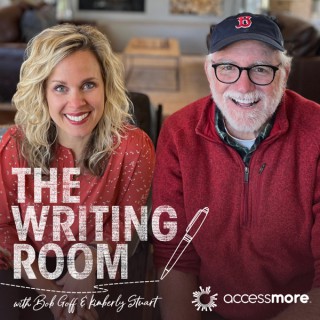
In this episode, Bob and Kim welcome Anne Lamott and Neal Allen to talk about the beauty and burden of writing. From first drafts and writing routines to grief, voice, and the courage to say what is true, they explore what it means to find your voice, collaborate well, and say the things that matter most. It is a thoughtful, hope-filled conversation for writers at every stage and for anyone who wants to write words that sound like them and matter to someone else.Connect with Anne: @annelamottConnect with Neal: @nealfallenCheck out their new release: Good Writing: 36 Ways to Improve Your SentencesConnect with Bob: @bobgoffConnect with Kim: @kimberly.stuart.writes--Join Bob and Kim for the next Writer's Workshop at The Oaks: bobgoff.com/eventsLearn more about Writing Coaching with Bob and Kim here.

What if the secret to better writing isn't more technique—but more truth? Tami Simon speaks with beloved author Anne Lamott and her husband Neal Allen—writer, spiritual coach, and author of Good Writing: 36 Ways to Improve Your Sentences—about the craft of finding your voice, writing toward compassion and truth, and why the most powerful sentences come not from the polished mind but from the really real.This conversation offers genuine transmission—not just concepts about awakening, but the palpable presence of realized teachers exploring the growing edge of spiritual understanding together. Originally aired on Sounds True One.See Privacy Policy at https://art19.com/privacy and California Privacy Notice at https://art19.com/privacy#do-not-sell-my-info.

Anne Lamott and Neal Allen, excellent writers and superorganism representing the head & heartspace that goes along with writing, re-join the DTFH!Pre-Order Anne and Neal's new book, Good Writing - 36 Ways to Improve Your Sentences. Soon to be available everywhere you get your books!Indiana family! Duncan is coming to The Comedy Attic in Bloomington, March 12-14! Click here to get your tickets now.Check out the DTFH night streams! Only available to our youtube subscribers. Click here to see what you're missing!This episode is brought to you by: In as little as 10 minutes you can get your free quote and up to 3 million dollars in coverage at Ethos.com/DUNCAN Download Cash App, use our exclusive referral code SECURE10 in your profile, send $5 to a friend within 14 days, and you'll get $10 dropped right into your account! Terms apply. That's Money. That's Cash App. Check out squarespace.com/DUNCAN for a free trial, and when you're ready to launch, use OFFER CODE: DUNCAN to save 10% off your first purchase of a website or domain.

In this episode of “Why I Teach,” Dr. Kimberly D. McCorkle, Provost and Senior Vice President for Academic Affairs at East Tennessee State University (ETSU), sits down with Dr. Kevin E. O'Donnell, Professor of English and recipient of the 2024 Stephen L. Fisher Award for Excellence in Teaching from the Appalachian Studies Association. With more than 30 years of experience teaching literature, composition, and environmental writing, Dr. O'Donnell shares insights on storytelling, writing pedagogy, the impact of technology in the classroom, and the power of honesty in writing. He also discusses teaching The Anthropocene Reviewed by John Green, Appalachian literature such as Serena by Ron Rash, and his upcoming book, The Woodlands of the Mind: Rambles Through Campus Forests. Find out more: ETSU Common Read: https://www.etsu.edu/provost/common-read.php ETSU Festival of Ideas: https://www.etsu.edu/festival/ ETSU College of Arts and Sciences: https://www.etsu.edu/cas/ Podcast Transcript: [Music] Dr. Kevin O'Donnell I love John Green's writing for one thing. It's really accessible. His voice draws you in. He starts with these quirky topics. He'll be writing about Super Mario Kart. Within a few pages, he's talking about community and luck versus skill, and these bigger issues. Dr. Kimerly D. McCorkle Hi, I'm Kimberly McCorkle, Provost and Senior Vice President for Academic Affairs at East Tennessee State University. From the moment I arrived on this campus, I have been inspired by our faculty, their passion for what they do, their belief in the power of higher education, and the way they are transforming the lives of their students. This podcast is dedicated to them: Our incredible faculty at ETSU. Hear their stories as they tell us why I teach. In this episode, we will sit down with Dr. Kevin E. O'Donnell, Professor of English and recipient of the 2024 Stephen L. Fisher Award for Excellence in Teaching from the Appalachian Studies Association. A native of Northeast Ohio, Dr. O'Donnell earned his Ph.D. from the University of Wisconsin, Milwaukee and has taught at ETSU for more than 30 years. His courses include Advanced Composition, American Literature, Literary Nonfiction, and Environmental Writing. He's the author of numerous publications, including Seekers of Scenery: Travel Writing from Southern Appalachia, co-authored with Helen Hollingsworth. This year, he looks forward to the release of a new book, co-written with his ETSU colleague, Dr. Scott Honeycutt, titled The Woodlands of the Mind: Rambles Through Campus Forests. Enjoy the show. Dr. O'Donnell, welcome to the show. I start my podcast with the same question for every guest. Take me back to your first day as a faculty member at ETSU, and looking back on that day, what is one piece of advice that you would have given yourself? Dr. Kevin O'Donnell Well, it's a great question. I have to think back and see if I can remember 30 years. It's half a lifetime ago, you know. But if I could give myself advice, I would say, young Kevin, trust the process. With writing, it's so challenging. You get papers from the students, especially in the first-year classes on the first day. And they've got all kinds of issues, and the first thing you see are the problems when you read them, and you want to fix everything. But just trust the process. You know, if they've got 15 weeks, if they get four or five good writing experiences, including revision and feedback, and over the course of 15 weeks, you can do a lot. Yeah. Thank you. Reflecting on your 30-plus years in the classroom here, how has your approach to teaching literature and composition changed over the years? Dr. Kevin O'Donnell Yeah, that's kind of a related question. I don't think my philosophy has changed, but a lot of the technology has changed. I mean, I kind of developed the belief in grad school that you learn to write by having an audience, writing for audiences. But 30 years ago, typically, students would print one copy, and if you were lucky, you could circulate it, do some group work and stuff, but you couldn't publish it. And then with the development of the internet, making easier access to the internet available, I started publishing my students' work on the web, and then they started publishing their own, and you get it out in front of an audience a lot more. And that's great for writing pedagogy. And then multimedia, doing this kind of stuff, like the Whisper Room over in... We were talking about that earlier over in the Innovation Commons. Yeah. I've had my students doing that, so that's part of writing now, I think, is multimedia. You can't just think of it as words on a page. Typically, anything, it's words on a screen, and then the spoken word component, recording. So that's changed how I teach a lot. I'll have my students do an audio piece and then post it on YouTube, say. That's what they did last semester. They must enjoy that. Dr. Kevin O'Donnell The response to it was great. Dr. Kimerly D. McCorkle How do you see the connection between storytelling and how we understand our environment, culture, and region? Dr. Kevin O'Donnell Yeah, storytelling, I mean, it's... You could argue that all understanding is narrative. Like, people understand things in terms of people in places doing things, which is character-setting-plot, you know? So with the Environmental Studies minor, there's a required course that's environmental writing. We get students who are being trained in science, like biologists, who take that minor, and they come in and read some environmental literature, and you've got these science writers using narrative to make sense of the science. So I think it's a crucial component. Dr. Kimerly D. McCorkle Which literary work or author has been especially rewarding for you to teach over the years, and why? Dr. Kevin O'Donnell Yeah, I love that question. There's been a lot of them. I'm teaching a book this semester, a 2008 novel by Ron Rash called Serena, which is a super well-written, super fun novel, but it takes place in Haywood County, North Carolina, in the 1920s when the Smokies were being logged. So it's set against the backdrop of this huge natural resource extraction story that shaped Appalachia, the logging of the great Appalachian forest. But it's also really dramatic. It's got these tightly written chapters. There's some great villains and some shocking murders, and it's a great book. And Ron Rash is coming to our literary festival in April. Dr. Kimerly D. McCorkle Fantastic. Dr. Kevin O'Donnell So students are reading that novel, and I've taught that four or five times over the years, and it's a great, great book for an environmental writing class. Dr. Kimerly D. McCorkle Is he a regional author? Dr. Kevin O'Donnell He's at Western Carolina. He's down in Cullowhee. He's probably about ready to retire, but he grew up in upstate South Carolina. And yeah, he's a great writer. Dr. Kimerly D. McCorkle It must be great for students to connect to a book that's about the region. Dr. Kevin O'Donnell Yeah, and a lot of students didn't know the story that it tells, and people know the area, recognize places where scenes take place. Yeah, so it's great. That's a good one. Dr. Kimerly D. McCorkle Earlier this year, you presented an outstanding lecture to kick off this year's Common Read, The Anthropocene Reviewed by John Green. What about that book resonated with you, and why do you think it was a good fit for ETSU's campus community? Dr. Kevin O'Donnell Yeah, I think it was a great fit, or it seems to be getting a good response from students. And part of it, for 15 years or more, I was a fan of the Vlogbrothers. They do their YouTube science stuff. And the format is, it's basically the essay format. You've got two, 3,000 words. I love John Green's writing, for one thing. It's really accessible. His voice draws you in. And he starts with these quirky topics. Like he'll be writing about Super Mario Kart. And within a few pages, he's talking about community and luck versus skill and these bigger issues. And so I like that they're inviting, these essays are inviting and they draw you in. They're really accessible. You can read one in 15 minutes. And the five-star review format is kind of fun. Like that, my students want to write those. You give that as a writing assignment. Here's an essay, you're going to make it ostensibly a review of something. That you're going to give five stars. So your job is to evaluate. Students like it. So I think it was a good choice. I'm excited about him. Dr. Kimerly D. McCorkle That's great, yeah. I know, as you said, a lot of students are excited. They've connected to his work for a long time. Students who've said he taught them what they know about history, for instance. As you know, we are excited to be able to welcome John Green to campus in just a few days to speak at the ETSU Festival of Ideas. From your experience, how does engaging with an author and hearing them talk about their work deepen students' connections to a text compared to just reading it in a classroom? Dr. Kevin O'Donnell Yeah, I think it's a big deal. It can change your relationship to the text. It sure humanizes it, you know? One thing about reading, even if you're reading for a class, reading seems like a really solitary activity. You go to your quiet space and you're sitting by yourself. But then these students are going to come together and see hundreds of other people who have also connected with the same text and see the author. It just makes it very visceral, the sense of how social reading is, even though it feels solitary in some ways it is, but it's a deeply social act. And I think one of the things I'm excited about is it's fun seeing other people who are excited about writing that you're excited about. Dr. Kimerly D. McCorkle Right, yeah. Feels like you're in a community of readers when you watch an author talk about their work. Dr. Kevin O'Donnell Right. Yeah, yeah. Dr. Kimerly D. McCorkle As I mentioned in the introduction, you have a book coming out this year. Will you please share a preview of The Woodlands of the Mind and a bit about what inspired you and Dr. Honeycutt to write the book? Dr. Kevin O'Donnell Yeah, thanks for asking about that. So it was really inspired by the ETSU campus. We've got, well, you know about University Woods south of the railroad bypass there. We've got 30 acres of, couple dozen at least ancient oak trees up there. And it's a really special place. And Scott Honeycutt and I, for years we'd been taking our students over there to do classrooms and to do awareness stuff and to do walks. And back in 2018, I think it was before COVID, we wrote a small grant and brought an author to class, author to campus rather, Joan Maloof, who is a biologist from Maryland who's also written some very good books, including one that Scott and I are fans of called "Among the Ancients" where she goes around and visits different old, remnant old growth forests and writes about them, but also writes about regional history and natural history. So we brought her to campus. It turns out she's the founding director of the Old-Growth Forest Network. And long story short, she came to campus, did a public nature walk with people over in the woods and then did a talk in the evening at the old East Tennessee Room and generated a lot of excitement, which led to us forming an ad-hoc committee to see if we can get the University Woods to be part of the Old-Growth Forest Network. As a community forest, Dr. Noland, our awesome president, was very supportive of this. So long story short, later that spring, Joan came back on her own dime for a dedication ceremony we did where Dr. Noland spoke and read a little poem on some other people, and we designated it as a community forest. So that experience, Scott and I to look around and it turns out a lot of universities have often old-growth remnants, which are rare attached to their property, partly because of the history of universities and land use, especially in the East. So we started learning about these places. So we thought, well, no one's written about this. So we've selected 15 places from Rome up to Maine, some small colleges, some bigger schools, like Virginia Tech and Penn State. And we split them up and we went around and wrote, kind of inspired by Joan Maloof, these travel essays with history, natural history, and we package them together and sent our proposal to the University of Georgia Press, and the editor called us back the next day and said she wanted to publish it. Dr. Kimerly D. McCorkle Congratulations. Dr. Kevin O'Donnell Yeah, thanks. Dr. Kimerly D. McCorkle Look forward to reading it. Dr. Kevin O'Donnell Awesome. Dr. Kimerly D. McCorkle What books do you have on your to-read pile and do you have any favorite books or authors that you'd recommend for consideration for future common reads at ETSU? Dr. Kevin O'Donnell Right. Yeah, my to-read pile is pretty big and half of them I never get to. I own a lot of books I've never read. I'm glad to hear that it makes me feel less guilty. But something about owning them, I hope that maybe I'll soak up. I don't know. And even better if you put them on your bedside table to look at you, yes, yeah. Dr. Kevin O'Donnell Yes, one I was thinking about that I read recently is Beth Macy who is, she wrote a book called Dopesick that the Hulu miniseries starring Michael Keaton was based on, was pretty much directly from that book. And it's a great book. But more recently in the fall, she came out with a book called Paper Girl. It's sort of a memoir she tells about growing up underprivileged in rural Ohio and then goes back there now and finds a version of herself and to look at how kids don't have the same opportunities, basically, young people. And in the process she's also talking about being a journalist and how people respond or don't respond to journalism and conspiracy theorizing has sort of moved into the vacuum where journalism has moved out of and which sounds all serious, but it's a fun book and it got a lot of attention in the fall. That one, she lives down at Roanoke. Dr. Kimerly D. McCorkle Interesting. Dr. Kevin O'Donnell We should get her up here. That would be a good one. But my dream author would be Elizabeth Kolbert. She's a New Yorker magazine writer who probably about 10 years ago she published a book called The Sixth Extinction which won the Pulitzer Prize for general nonfiction which is an amazing book. It's about the planet that is currently undergoing a major extinction event, which is a grim topic. But she writes these essays where she goes around and talks to people and they're really engaging. She's the best science writer I know and she's a best seller. I think there'd be enthusiasm about her. She's got a new book, which is a collection of her New Yorker essays. So Elizabeth Kolbert--I don't know if we could get her. I don't know if she does campus visits but she'd be a good get. Dr. Kimerly D. McCorkle Great suggestions. Dr. Kevin O'Donnell Yeah. Dr. Kimerly D. McCorkle Finally, what impact do you hope you've made on your students? Dr. Kevin O'Donnell Gosh, that's a big one. Been thinking about that a lot now that I'm 30 years into this. I would hope when my students leave my class they understand that good writing is about honesty. Because I think students come in and when they're supposed to do academic writing they feel like they need to adopt this persona that's the voice of authority. And they don't feel confident in that authority. So they put on a role. And that, as much as anything, leads to tangled sentences and unclear writing. But if you can be honest about your relationship to your material and your audience, and in a simple way, not like deep profound, doesn't have to be deep profound honesty, but that's honesty is what good writing is about. That's, I would hope students would leave my class with that understanding. Dr. Kimerly D. McCorkle Dr. O'Donnell, it's been a pleasure speaking with you. Thank you for your thoughtful reflections on teaching, literature, and the Common Read experience. Thank you for the way you engage your students with literature. I'm looking forward to adding your new book to my reading list this year. Thanks for listening to "Why I Teach." For more information about Dr. O'Donnell, the College of Arts and Sciences, or this podcast series, visit the ETSU Provost website at etsu.edu slash Provost. You can follow me on social media at ETSU Provost. And if you enjoyed this episode, please take a moment to like and subscribe to "Why I Teach" wherever you listen to podcasts. (soft music)

Host Jacob Shymanski and guest Red Széll from the “My Life in Books” podcast break down the differences between bad and quality non-fiction. They share the dos and don'ts when it comes to non-fiction writing. Books mentioned in this episode include:• “Everything Is Tuberculosis” by John Green• “Careless People: A Cautionary Tale of Power, Greed, and Lost Idealism” by Sarah Wynn-Williams • “The Red Emperor: Xi Jinping and His New China” by Michael Sheridan• “Jackie - Public, Private, Secret” by J. Randy Taraborrelli• “The Wager: A Tale of Shipwreck, Mutiny and Murder” by David Grann• ""I Am the Son of the Yellow Earth"" ""autobiographical essay by Xi Jinping• “The African Emperor: The Life of Septimius Severus” by Simon ElliottThis episode was produced by Andrika De Lanerolle. Audiobook Café is broadcast on AMI-audio in Canada and publishes two new podcast episodes a week on Fridays and Saturdays at 1 p.m. ET. Follow Audiobook Café on Instagram @AMIAudiobookCafe We want your feedback!Be that comments, suggestions, hot-takes, audiobook recommendations or reviews of your own… hit us up! Our email address is: AudiobookCafe@ami.ca About AMIAMI is a media company that entertains, informs and empowers Canadians with disabilities through three broadcast services — AMI-tv and AMI-audio in English and AMI-télé in French — and streaming platform AMI+. Our vision is to establish AMI as a leader in the offering of accessible content, providing a voice for Canadians with disabilities through authentic storytelling, representation and positive portrayal. To learn more visit AMI.ca and AMItele.ca.Find more great AMI Original Content on AMI+Learn more at AMI.caConnect with Accessible Media Inc. online:X /Twitter @AccessibleMediaInstagram @AccessibleMediaInc / @AMI-audioFacebook at @AccessibleMediaIncTikTok @AccessibleMediaInc Hosted by Simplecast, an AdsWizz company. See pcm.adswizz.com for information about our collection and use of personal data for advertising.

This episode is for the writers who know they're really good writers. You know how to turn a phrase. You know how to tap into your voice and you have a style. You love the craft of writing, and you know that the quality of your writing is exemplary. I say this with so much love, friend: Just because you're a good writer doesn't mean that you're going to write a good memoir. Today I'll show you the missing piece in the creativity of memoir so that you can write a beautiful memoir that is also a good memoir. Let's get into it.Join The Memoir Method January Cohort today!Let me help you decide what's right for your draft by scheduling a free 30 minute call. You can find me on Instagram @the.memoir.coach, Substack, Facebook, and YouTube.Join my email list to stay up to date on the podcast and everything else going on in Charlotte Writes.

Audio, eng_t_rav_2025-09-22_lesson_rb-0879-ktiva-vechatima_n1_p1. Lesson_part :: Daily_lesson 1
Audio, eng_t_norav_2025-09-22_lesson_rb-0879-ktiva-vechatima_n2_p1. Lesson_part :: Daily_lesson 2

Video, eng_t_norav_2025-09-22_lesson_rb-0879-ktiva-vechatima_n2_p1. Lesson_part :: Daily_lesson 2
Video, eng_t_rav_2025-09-22_lesson_rb-0879-ktiva-vechatima_n1_p1. Lesson_part :: Daily_lesson 1

Rabash. Record 879. Good Writing and Signing
Rabash. Record 879. Good Writing and Signing

Audio, eng_t_norav_2025-09-22_lesson_rb-0879-ktiva-vechatima_n2_p1. Lesson_part :: Daily_lesson 2
Audio, eng_t_rav_2025-09-22_lesson_rb-0879-ktiva-vechatima_n1_p1. Lesson_part :: Daily_lesson 1

Video, eng_t_rav_2025-09-22_lesson_rb-0879-ktiva-vechatima_n1_p1. Lesson_part :: Daily_lesson 1
Video, eng_t_norav_2025-09-22_lesson_rb-0879-ktiva-vechatima_n2_p1. Lesson_part :: Daily_lesson 2
Writer's groups can be an excellent place to exchange ideas, discover new resources, and meet new people. They can also be toxic waste dumps. What are the traits of good writing neighbors and neighborhoods? What's the proper etiquette for becoming a good writing neighbor? The DRS Crew gives their thoughts. Chat will no doubt complain about the Discord server. Our links: Paul's store: https://payhip.com/paulecooley Paul's site: https://shadowpublications.com Terry's site: https://www.terrymixon.com/ Veronica: http://www.voicesbyveronica.com/ DRS Discord: https://discord.gg/pgmQxaVbGP Enjoy the show? Consider becoming a Patreon or Buy Me A Coffee supporter, and for as little as $1 a month, you can help keep the podcast free and receive exclusive content. More information at https://patreon.com/drspodcast and https://buymeacoffee.com/drspodcast. #writing #fiction #podcast #chat #live #novel #story #narrative #publishing #author #writer #discussion #podcast #talkshow

We're talking with historian and journalist Tim Shenk about creating a professional relationship with our writing. In addition to being an assistant professor of history at George Washington University, Tim is a senior editor at Dissent magazine, and has written for the New York Times, the Nation, the New Republic, and Jacobin, among other publications. He is also the author of three books, most recently, Left Adrift: What Happened to Liberal Politics. Tim talks with us about balancing academic and journalistic writing; a typical writing day; how academics come to write op-eds in publications such as the NYT; what it means to shift away from a grad student mentality about writing; why good writing begets more good writing; what an academic can expect from a trade press editor; why academic move back and forth between academic and trade presses for different kinds of projects; and why it's a good idea for academic writers to sometimes curb our inner Norman Mailer. Don't forget to rate and review our show and follow us on all social media platforms here: https://linktr.ee/writingitpodcast Contact us with questions, possible future topics/guests, or comments here: https://writingit.fireside.fm/contact

The girlies dive into some of Hollywood's most infamous celebrity feuds — Joan Didion vs Eve Babitz, Joan Crawford vs Bette Devis, Kim Cattrall vs Sarah Jessica Parker, and the recent lawsuits between Justin Baldoni and Blake Lively. Digressions include Kim Cattrall's scatting, Ryan Murphy being a constant threat to society, and the age-old pattern of women fighting over the worst man you've ever heard of. We're going on tour!!!! Find tickets at (https://linktr.ee/binchtopia) This episode was originally released on January 22, 2025 as a Patreon exclusive, and we're unlocking it for you to make the most of the extra week in April. Become a patron today to support the show, keep us ad-free and unlock our backlog of over 50 bonus episodes at patreon.com/binchtopia. SOURCES Didion and Babitz by Lili Anolik Why Gossip Is Fatal to Good Writing Joan Didion, Eve Babitz, and the Biographer Who Missed the Point Joan Didion and Eve Babitz Shared an Unlikely, Uneasy Friendship—One That Shaped Their Worlds and Work Forever Everything You Need To Know About Kim Cattrall And Sarah Jessica Parker's Famous Feud Inside Joan Didion And Eve Babitz's Rivalry. Joan Didion vs Eve Babitz A Timeline of Kim Cattrall and Sarah Jessica Parker's Rumored Sex and the City Feud ‘Sex and the City' Director Details Kim Cattrall Drama, Tension Began Over Parity You Truly Won't Believe How Much Money the Cast of 'And Just Like That...' Is Making The Sex and the City Cast Salary Explains SJP & Kim Cattrall's Feud ‘Sex and the City' Salaries: How Much Sarah Jessica Parker, Kristin Davis, Cynthia Nixon and Kim Cattrall Made From the Show, Movies and Revival The Story Behind Joan Crawford and Bette Davis's Storied Feud Feud: The Craziest Joan Crawford and Bette Davis Stories That Didn't Make the Show What “Feud” Misses About Bette Davis, Joan Crawford, and the Art of Movies Bette Davis v. Joan Crawford: The Hateful History Behind Old Hollywood's Nastiest Feud Joan Crawford Quotes About Bette Davis Are Savage A Timeline of the Real Feud Between Bette Davis and Joan Crawford Behind Hollywood's biggest feud

Episode Show Notes In this episode we cover: Differences between developmental editing, line editing, copy editing, and proofreading What type of editing to invest in if you're on a budget What makes a good first line Common mistakes new authors make in story An editor's process of reviewing a manuscript Links I mentioned: Page Turner Pacing Kickstarter Girl Games: NSFW Special Edition Kickstarter Find out more about Rebecca: Instagram @beccafaithheyman rebeccafaitheditorial.com Rebel of the Week is: Gigi If you'd like to be a Rebel of the week please do send in your story, it can be any kind of rebellion. You can email your rebel story to rebelauthorpodcast@gmail.com Two new patrons this month, welcome and thank you to Lexi Le and Rasana Atreya. A big thank you to my existing patrons. If you'd like to support the show, and get early access to all the episodes as well as bonus content you can from as little as $2 a month by visiting: www.patreon.com/sachablack THIS EPISODE IS SPONSORED BY KOBO WRITING LIFE Visit Kobo Writing Life here, read the Kobo Writing Life blog here, and listen to their podcast here.
Blake Butler's Molly is a memoir about the suicide of his late wife, poet and memoirist Molly Brodak. It's one of the most controversial alt lit book of the past year – rightfully! – and, with photographs integrated and no line or chapter breaks, it's also a fascinating work of art. (New tardiness record: we recorded this in April.) Good Writing is a podcast where two MFA friends read like writers and lay out craft ideas for fellow writers to steal. Co-hosted by Emily Donovan and Benjamin Kerns. Twitter: @goodwritingpod Email: goodwritingpodcast@gmail.com

Writing Children's Fiction. Episode 29. How do you identify useful writing feedback and advice? Check out apwinterauthor.com for assistance with your own writing projects. Buy the podcast book 'Writing Children's Fiction: Sceneplay' and unlock your writing potential here: amzn.to/37aw7cG All content created by creative writing lecturer and children's author A. P. Winter.
This week, Alice, and Elliott give their final thoughts on the song of achilles ! After a whole mounth dedicated to this book, they discuss the characters, the writing and even look at some reviews. Links mentioned in this episode: https://linktr.ee/thedemigodpod sources of Elliott's research: https://www.theoi.com https://www.greekmythology.com

TakeawaysAI can be used as a tool for augmentation in education, supporting academic writing and research.Curiosity is a powerful driver of learning and exploration in the AI space.Simulations can help students test their research ideas and understand the implications of their decisions.Good writing in academia involves the ability to synthesize research, support claims, and communicate effectively. Prioritize the audience in communication and understand their needs and wantsFocus on the writing process and experiment with different strategies to improveEmbrace bravery in pursuing goals and trust in the support of othersStay updated on advancements in AI technology and leverage them for feedback and guidanceRecognize the influence of TV shows and movies in shaping personal experiences and perspectivesSound Bites"It's not just about AI. It's about thinking and learning and articulation and how we leverage emerging technology to continue to push what's potential.""You don't have to be a technical person to start an AI EdTech company. You can learn on your own.""The ability to create simulations for students so they can test their research ideas and understand the implications of their decisions.""Put the audience as your primary priority and put what you wanna say on the back burner and understand what the audience needs or wants to hear.""Good writing is about process, not just product.""Being brave also means collectively trusting that you are surrounding yourself with people who are going to have your back and who can do things that you can't."Chapters00:00 Introduction and Background02:55 The Role of AI in Education08:06 Navigating the Challenges of AI in Education16:00 Exploring Topics in AI and Education25:59 The Importance of Good Writing in Academia29:12 Putting the Audience First: Effective Communication30:57 The Power of Process: Enhancing Writing Skills35:46 Embracing Bravery: Pursuing Goals and Taking Risks39:35 Advancements in AI Technology: The Impact of Claude III42:47 Influential TV Shows and Movies: The Sound of Music and GhostResourcesHere is the slidedeck to check out all the ideas discussed and the ones we did not have time to coverMoxie website to learn about the work and opportunities https://academicinsightlab.org/teamKimberly on LinkedInJessica on LinkedInAnne Lamott book, Bird by Bird10% Happier PodcastAdam Grant PodcastsThe Alchemist book"What you seek is seeking you", a quote from Rumi"Follow your values and not your passions becase your passions will change but your values tend to stay the same"197: The Art of Authenticity: Living Out Loud with Brant Menswar
Haha this was recorded like months ago. Please excuse the mess. More Good Writing coming on a reliably unreliable schedule. Good Writing is a podcast where two MFA friends read like writers and lay out craft ideas for fellow writers to steal. Co-hosted by Emily Donovan and Benjamin Kerns. Twitter: @goodwritingpod Email: goodwritingpodcast@gmail.com

This episode of the Cloud English Podcast covers four main things: Writing clearly in English, the differences between AI writing tools, better IELTS writing, and English paragraph structure! Get a free English course: https://www.lukepriddy.com/naturalconversations Join the free English community: https://discord.gg/e2kH5BGA6X All Courses 30% off: https://www.lukepriddy.com/offers/UFbVeoek/checkout?coupon_code=LOYALTY ———————————— My Udemy courses: https://www.cloudenglish.net My Skillshare link: https://www.skillshare.com/en/r/user/lukepriddy?gr_tch_ref=on Listen to the audio: https://anchor.fm/cloud-english Other links: linktree.com/lukepriddy ———————————— #americanenglish #learnenglish #englishspeaking #esl #learningenglish #englishidioms #englishpronunciation #americanculture #howtolearnenglish #spokenenglish #commonenglish #americanaccent ———————————— Intro Music: Pokémon Gym · Mikel & GameChops Poké & Chill ℗ GameChops Released on: 2019-08-16

Author Steve Almond talks about what he's learned about good writing from 30 years of teaching writers.

Dogs Are Smarter Than People: Writing Life, Marriage and Motivation
A lot of writers that I work with have a problem. The problem is that they want to be a writer, but before they come to me? They don't write. Here's the thing. For a lot of us, we have to make time to be a writer. That's just how our brains and process work. There are some writers who manage to get 10 days of alone time and writer time and they power through a book in that time, but most of us aren't that wealthy or that lucky. That means to be a writer, we have to create the habit of writing. This is where James Clear's method comes into play. This guy has built an empire around helping people create habits. And he believes there are four steps to creating a habit. Those steps are: Cue Craving Response Reward This man has a ton of books and information all over the internet and bookshelves about this, but very basically, what he defines each as is: The Cue This triggers your brain to do the behavior. He writes: “It is a bit of information that predicts a reward. Our prehistoric ancestors were paying attention to cues that signaled the location of primary rewards like food, water, and sex. Today, we spend most of our time learning cues that predict secondary rewards like money and fame, power and status, praise and approval, love and friendship, or a sense of personal satisfaction.” The Craving This is the motivation, the force, the desire, the reason to act. He writes: “What you crave is not the habit itself but the change in state it delivers. You do not crave smoking a cigarette, you crave the feeling of relief it provides. You are not motivated by brushing your teeth but rather by the feeling of a clean mouth. You do not want to turn on the television, you want to be entertained.” The Response This is the habit. It might be sitting at your desk at 8 p.m. every night and writing. It might be writing 250 words during lunch or waiting to pick up your kid from swim practice. It's the habit. “Whether a response occurs depends on how motivated you are and how much friction is associated with the behavior. If a particular action requires more physical or mental effort than you are willing to expend, then you won't do it. Your response also depends on your ability. It sounds simple, but a habit can occur only if you are capable of doing it. If you want to dunk a basketball but can't jump high enough to reach the hoop, well, you're out of luck,” he writes. The Reward These are things that satisfy our craving. He writes, “Rewards are the end goal of every habit. . . .We chase rewards because they serve two purposes: (1) they satisfy us and (2) they teach us.” So, we sit down and write every day and eventually we get a book. That's super simplified, but whatever. There's also that second part about how they teach us, right? Clear writes, “Rewards teach us which actions are worth remembering in the future. Your brain is a reward detector. As you go about your life, your sensory nervous system is continuously monitoring which actions satisfy your desires and deliver pleasure. Feelings of pleasure and disappointment are part of the feedback mechanism that helps your brain distinguish useful actions from useless ones. Rewards close the feedback loop and complete the habit cycle.” So, to build a habit, he says, to change your behavior, you want to think of each step (he calls them laws) to do the behaviors. The keys, he said are these (all direct from the post linked above and below): It's pretty cool stuff, and you should probably check out his book or site if you're into this system and it rings true for you. But for writers, especially, his clues on how to break bad habits and build new ones are just wonderful. Give yourself a really obvious cue that it's time to write (an alarm/notification/specific time), and make it attractive (light a candle/put on music you actually like) and make it easy (make small word count or revision goals) and make it satisfying. DOG TIP OF THE PODCAST Pogie has some anxiety, but she works by the cue system. She makes the things she wants attractive to you via hugs and puppy dog looks. COOL EXERCISE Stuck not being able to build a writing habit? Check out MasterClass' morning pages exercise here. PLACES TO SUBMIT Crook's Corner Prize Eligibility: Debut novels set predominantly in the American South, published btwn January 1, 2023 and May 15, 2024 Prize: $5,000 Entry Fee: $35 Deadline: May 15, 2024 Flannery O'Connor Award for Short Fiction Eligibility: All writers Prize: $1,000 + publication Entry fee: $30 Deadline: May 31, 2024 Stanley Kunitz Memorial Prize Eligibility: Poets under 40 years of age Prize: $1,000 Entry fee: $15 Deadline: May 15, 2024 Ploughshares Emerging Writers Contest Eligibility: Writers who have not published a book or a book coming out before April 2025 Prize: $2,000 + publication + review from Aevitas Creative Management Entry fee: $30 Deadline: May 15, 2024 OTHER LINKS Our random thought came from here. And here's a link to James Clear's post and page again. SHOUT OUT! The music we've clipped and shortened in this podcast is awesome and is made available through the Creative Commons License. Here's a link to that and the artist's website. Who is this artist and what is this song? It's “Summer Spliff” by Broke For Free. WE HAVE EXTRA CONTENT ALL ABOUT LIVING HAPPY OVER HERE! It's pretty awesome. We have a podcast, LOVING THE STRANGE, which we stream biweekly live on Carrie's Facebook and Twitter and YouTube on Fridays. Her Facebook and Twitter handles are all carriejonesbooks or carriejonesbook. But she also has extra cool content focused on writing tips here. Carrie is reading one of her raw poems every once in awhile on CARRIE DOES POEMS. And there you go! Whew! That's a lot! Subscribe

Join me, your host Dr. Mike T Nelson, on the Flex Day podcast, where we explore the multifaceted world of fitness writing and content creation with Shane McLean from Muscle and Fitness. Listen in as we unwrap the secrets of crafting compelling fitness narratives in the modern era, the subtle art of balancing SEO with substantive content, and the unyielding quest for authenticity in an industry brimming with personalities. Shane's expert insights provide a roadmap for aspiring writers and fitness enthusiasts alike, navigating through the evolving landscape of journalism and fitness expertise.For Shane's top 4 fitness content takeaways, go to https://miketnelson.com/flex4. Special thanks to Flex Diet Podcast sponsor LMNT. Choose LMNT for all your hydration needs. Check out https://drinklmnt.com/mikenelson.Episode Chapters:(0:00:00) - Fitness Writing in the 21st Century(0:12:10) - Importance of Simple Fitness Writing Content(0:26:40) - Good Writing in the AI Age(0:39:21) - Authenticity in Writing and Communication(0:48:15) - The Challenges of Writing and Persistence(0:56:57) - Striving for Excellence and MasteryConnect with Shane:FacebookInstagram

After you write something, it might look good. It might look amazing even. But how does it sound to the reader? Is it stiff, clunky, and off key? Or does it flow? In this week's episode, I share a perspective to improve your writing by focusing more on how it sounds when you read it […] The post Ep. 316 – The sound of good writing first appeared on Just Saying. The post Ep. 316 – The sound of good writing appeared first on Just Saying.
Writers, I have IDEAS. Usually a lot of them. 99% of them go nowhere. You can feel me bubbling over with ideas in every episode and even in the title of many episodes. There is so much I always want to say.Like me, Jennie Nash is an idea cannon. So between us, we come up with a lot of plans. This is all to say that first: this episode, and the 7 “Idea Factory” episodes that follow, are the result of one such idea. At the beginning of this year, I (It's KJ here) was deciding on what to do for what I hope will be my fourth novel, and Jennie and I got to talking, as we often do, about the difference between a “spark” and an actual, full on IDEA.In this episode, we talk about what makes a full idea and why it's so fantastic, in memoir, fiction and non-fiction, to have that idea in hand before you start writing a book—or why, when you hit a wall in drafting, the answer often involves going back and figuring out what that idea was in the first place. It's the first of 8 Idea Factory Episodes that will take us through my process for coming up with ideas, kicking their tires, and letting them evolve in fiction as well as involve sitting down with guests to talk more in depth about non-fiction and memoir ideas (because yes, you need an “idea” even for a book that's based on your own life.Every time I sit down to write, I wish it were easier. One of my most common thoughts is that I wish there were an instruction book. I was a gold star student back in the day. Just tell me how many words to write and about what, teach! I'm on it.Sadly writing doesn't work that way—but Jennie Nash's books, Blueprint for a Book and Blueprint for Nonfiction, really are the closest thing I've found to a guide for getting through draft after draft. I start with them, and I go back to them when I'm stuck. The Blueprints keep me on track and help me write the book I set out to write for the readers I hope to reach. They give me tools to figure out the answers to questions that I've been known to avoid, like “why now” and “why does the reader care”. But even more than that, the Blueprints serve as a reminder that while writing a book is hard, it's do-able. It's not magic, and there's no muse. There's just going at it, again and again, until you get it done. Blueprint for a Book and Blueprint for Nonfiction are available on Amazon and you can pre-order her newest: Blueprint for a Memoir: How to Write a Memoir for the Marketplace—coming August 1. Pre-order that one, and there's a super cool bonus.Pssst: if you love #AmWriting, kick in some $$ to support us and get bonuses and appreciation. Lots of appreciation! This is a public episode. If you'd like to discuss this with other subscribers or get access to bonus episodes, visit amwriting.substack.com/subscribe

Derek answers your burning questions in a special mailbag episode! If you have questions, observations, or ideas for future episodes, email us at PlainEnglish@Spotify.com. You can find us on TikTok at www.tiktok.com/@plainenglish_ Host: Derek Thompson Producer: Devon Manze Learn more about your ad choices. Visit podcastchoices.com/adchoices

Constanza and Doménica Castro are the founders of 271 Films, which tells stories that bring meaningful perspectives to an audience, that connect them to their humanity and their emotional intelligence. Today we discuss what they look for as they vet work, and how they found the courage to tell their OWN stories. WE ARE HERE: https://271films.com/we-are-here-fyc 271 WEBSITE: https://271films.com/ RISING VOICES: https://tribecafilm.com/films/indeed-presents-rising-voices-2021 --- Support this podcast: https://anchor.fm/thescreenwritinglife/support

John and Craig (and Aline!) discuss the elements of quality writing in this collection of craft conversations. As we work on the Scriptnotes book, producer Megana Rao has been collecting wisdom from the archives to write an introductory chapter to define good writing. In these segments we cover how to find your voice, spot confidence on the page, and actively watch films. In our bonus segment for premium members, John and Megana discuss the Scriptnotes book and rumors of upcoming industry strife. Links: Scriptnotes Episode 239 – What is good writing? Scriptnotes Episode 76 – How screenwriters find their voice with Aline Brosh McKenna Scriptnotes Episode 432 – Learning From Movies Sign up for Scriptnotes Premium to listen to the episodes sampled as well as the entire archive. Use promo code ONION to save $10 on annual subscriptions. Dangers of Elite Projection by Jarrett Walker Ejaculate Responsibly: A Whole New Way to Think About Abortion by Gabrielle Blair Get a Scriptnotes T-shirt! Check out the Inneresting Newsletter Gift a Scriptnotes Subscription or treat yourself to a premium subscription! Aline Brosh McKenna on Twitter Craig Mazin on Twitter John August on Twitter John on Instagram Outro by Martin Kubitzky (send us yours!) Scriptnotes is produced by Megana Rao with segments by Stuart Friedel and edited by Matthew Chilelli. Email us at ask@johnaugust.com You can download the episode here.
Is writing a Yelp review helpful? Is it OK to throw your dog's poop bag in someone else's trash? And how do you feel about showering at the gym? On today's Is [This] Good?, Matty O and friends tackle those questions, as well as debate the pros and cons of having a second child. If you have a topic for a future show email it to: IsThisGoodPod@gmail.com
Is writing a Yelp review helpful? Is it OK to throw your dog's poop bag in someone else's trash? And how do you feel about showering at the gym? On today's Is [This] Good?, Matty O and friends tackle those questions, as well as debate the pros and cons of having a second child. If you have a topic for a future show email it to: IsThisGoodPod@gmail.com
© 2020-2026 Ivy Podcast Discovery LLC
