
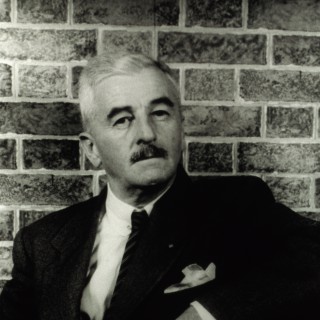
American writer
POPULARITY
Categories

571 episodes with faulkner

137 episodes with faulkner

25 episodes with faulkner

32 episodes with faulkner

35 episodes with faulkner

20 episodes with faulkner

18 episodes with faulkner

16 episodes with faulkner

38 episodes with faulkner

15 episodes with faulkner

13 episodes with faulkner

6 episodes with faulkner

7 episodes with faulkner

8 episodes with faulkner

17 episodes with faulkner

9 episodes with faulkner

6 episodes with faulkner

10 episodes with faulkner

5 episodes with faulkner

10 episodes with faulkner

8 episodes with faulkner

10 episodes with faulkner

4 episodes with faulkner

8 episodes with faulkner

6 episodes with faulkner

6 episodes with faulkner

5 episodes with faulkner

12 episodes with faulkner

4 episodes with faulkner

6 episodes with faulkner

5 episodes with faulkner

4 episodes with faulkner

5 episodes with faulkner

6 episodes with faulkner

6 episodes with faulkner
9 episodes with faulkner

5 episodes with faulkner

4 episodes with faulkner

9 episodes with faulkner

9 episodes with faulkner

4 episodes with faulkner

4 episodes with faulkner

5 episodes with faulkner

5 episodes with faulkner

10 episodes with faulkner

8 episodes with faulkner

3 episodes with faulkner

4 episodes with faulkner

6 episodes with faulkner

4 episodes with faulkner

4 episodes with faulkner

11 episodes with faulkner

4 episodes with faulkner

4 episodes with faulkner

Dominion by Addie E. Citchens explores the clash of small-town secrets, unspoken rules and family drama in a Mississippi church community. Addie joins us to talk about Faulkner, self-belief, and reading Harlequin novels in church with host Miwa Messer. This episode of Poured Over was hosted by Miwa Messer and mixed by Harry Liang. New episodes land Tuesdays and Thursdays (with occasional Saturdays) here and on your favorite podcast app. Featured Books: Dominion by Addie E. Citchens As I Lay Dying by William Faulkner Intruder in the Dust by William Faulkner Heavy: An American Memoir by Kiese Laymon The American Daughters by Maurice Carlos Ruffin Sula by Toni Morrison Song of Solomon by Toni Morrison The Complete Stories by Zora Neale Hurston American Psycho by Bret Easton Ellis

In this episode, I sit down with Callan Faulkner, founder of The Uncommon Business and the world's leading voice on AI education for entrepreneurs, for a jaw-dropping conversation about how AI is completely reshaping the way we build, scale, and lead our businesses. Callan is scaling to $40-50 million in revenue this year with just 40 humans and over 150 AI employees, and she's here to show us that AI isn't just for tech founders or seven-figure businesses. It's for stay-at-home moms, coaches, plumbers, steel manufacturers, and every woman in between who is ready to stop drowning in manual work and start actually building the business she was meant to build. We break down the exact difference between using AI and building systems with AI, what an "AI employee" actually is (spoiler: it starts with a Claude skill), and how to identify the low-hanging fruit in your business right now. Callan walks us through real examples—from an AI employee that manages school emails and meal plans to Instacart, to the ones that write podcast pitches, run recruiting, and draft content in your voice. We tackle the biggest objections, including "will this replace my human assistant?", "isn't AI going to steal my creativity?", and "what about my data?" If you've ever felt stuck in the weeds of your business, this is your invitation to see what's actually possible—and it all starts with her AI Employee Bootcamp this fall. Liked this episode? Make sure to subscribe to our podcast and leave a review with your takeaways, this helps us create the exact content you want! KEY POINTS: 00:00 Welcome to Woman of Influence 00:49 Meet Callan 02:21 Why AI Matters Now 03:26 Influence and AI Co-Creation 06:33 From Prompts to Systems 07:29 AI Employee Examples 10:50 Do You Need Seven Figures 11:58 Life Automation Meal Planning 13:36 Boot Camp Behind the Scenes 15:12 What Is an AI Employee 17:22 Skills Connectors Scheduling 20:41 Creativity and Privacy Concerns 21:52 Human Touch vs AI 22:22 Authenticity Over Volume 23:11 Privacy and Data Reality 23:33 Ethics Anthropic vs OpenAI 24:44 Will AI Replace Assistants 27:45 Elevating Humans to Strategy 30:09 Training AI to Your Voice 34:08 Better Editing Workflows 34:47 AI Employee Bootcamp Overview 38:40 VIP Hot Seat Coaching 41:25 Final Invite and Wrap QUOTABLES: “ Humans should be doing irreplaceable work, relationship building, using their intuition, gut checking.” - Callan Faulkner “ I don't care if you are running an eight-figure coaching business, if you have an Etsy shop, or if you are about to go on maternity leave you need AI employees.” - Julie Solomon GUEST RESOURCES: [JOIN AUTOMATE TO ACCELERATE FALL 2026] Get behind-the-scenes access to how Callan runs her multi-million dollar company with AI employees and learn how to build your own. Save your seat here. Follow Callan on Instagram @callanfaulkner RESOURCES: [UNSCRIPTED RETREAT 2027] Where your voice, your message, and your identity become one. February 4–5, 2027 • Nashville, Tennessee APPLY HERE [THE REVENUE ACCELERATOR] Book a strategy call to explore whether The Revenue Accelerator is the right next step for your business and leadership. Apply and schedule your call today. [ORDER] my book or Audible, Get What You Want: How to Go From Unseen to Unstoppable so you can leverage the power of your own influence. Follow Julie on Instagram! MUST HAVES THIS MONTH: [EASIER BUSINESS, ONE PLATFORM] This tool makes it simple to manage your online store. With everything from inventory management to marketing automation all in one place, you'll save time and grow faster. Try it here. [QUALITY WITHOUT THE MARKUP] From linen to denim, Quince delivers premium essentials you'll wear on repeat without the usual markup. Explore here: quince.com/JULIE for free shipping on your order and 365-day returns. Now available in Canada, too. [MARKETING THAT WORKS WHILE YOU DO] Spend less time managing your marketing and more time growing your business. Brevo's automations, CRM, and AI assistant help you connect with customers, personalize your messaging, and streamline your workflow—all from one dashboard. Learn more at https://www.brevo.com/woman.

Links For The Occult Rejectshttps://linktr.ee/theoccultrejectsOccult Research Institutehttps://www.occultresearchinstitute.org/Substackhttps://substack.com/@theoccultrejects?r=7auau0&utm_campaign=profile&utm_medium=profile-pageCash Apphttps://cash.app/$theoccultrejectsVenmo@TheOccultRejectsBuy Me A Coffeebuymeacoffee.com/TheOccultRejectsPatreonhttps://www.patreon.com/TheOccultRejectsBibliographyPrimary and Classical SourcesAgrippa, Heinrich Cornelius. Three Books of Occult Philosophy. 1533. Translated by James Freake; edited and annotated by Donald Tyson. St. Paul, MN: Llewellyn, 1993.Austin, J. L. How to Do Things with Words. 2nd ed. Edited by J. O. Urmson and Marina Sbisà. Oxford: Clarendon Press, 1975. Originally published 1962.Betz, Hans Dieter, ed. The Greek Magical Papyri in Translation, Including the Demotic Spells. 2nd ed. Chicago: University of Chicago Press, 1992.Clarke, Emma C., John M. Dillon, and Jackson P. Hershbell, trans. Iamblichus: De Mysteriis. Atlanta: Society of Biblical Literature, 2003.Faulkner, Raymond O., trans. The Ancient Egyptian Book of the Dead. Revised by Carol Andrews. Austin: University of Texas Press, 1990.Iamblichus. On the Mysteries. Translated by Emma C. Clarke, John M. Dillon, and Jackson P. Hershbell. Atlanta: Society of Biblical Literature, 2003.Searle, John R. Speech Acts: An Essay in the Philosophy of Language. Cambridge: Cambridge University Press, 1969.Ancient Egyptian and Greco-Roman MagicBorghouts, J. F. Ancient Egyptian Magical Texts. Leiden: Brill, 1978.Dieleman, Jacco. Priests, Tongues, and Rites: The London-Leiden Magical Manuscripts and Translation in Egyptian Ritual. Leiden: Brill, 2005.Faraone, Christopher A., and Dirk Obbink, eds. Magika Hiera: Ancient Greek Magic and Religion. New York: Oxford University Press, 1991.Frankfurter, David. “Narrating Power: The Theory and Practice of the Magical Historiola in Ritual Spells.” In Ancient Magic and Ritual Power, edited by Marvin Meyer and Paul Mirecki, 457–476. Leiden: Brill, 1995.Frankfurter, David. Religion in Roman Egypt: Assimilation and Resistance. Princeton: Princeton University Press, 1998.Graf, Fritz. Magic in the Ancient World. Translated by Franklin Philip. Cambridge, MA: Harvard University Press, 1997.Meyer, Marvin, and Paul Mirecki, eds. Ancient Magic and Ritual Power. Leiden: Brill, 1995.Pinch, Geraldine. Magic in Ancient Egypt. Austin: University of Texas Press, 1994.Ritner, Robert K. The Mechanics of Ancient Egyptian Magical Practice. Studies in Ancient Oriental Civilization 54. Chicago: Oriental Institute of the University of Chicago, 1993.Smith, Morton. Jesus the Magician. San Francisco: Harper & Row, 1978. Use cautiously and comparatively rather than as a consensus account.Ritual Language and Performative SpeechBloch, Maurice. “Symbols, Song, Dance and Features of Articulation: Is Religion an Extreme Form of Traditional Authority?” European Journal of Sociology 15, no. 1 (1974): 55–81.Finnegan, Ruth. Oral Poetry: Its Nature, Significance and Social Context. Cambridge: Cambridge University Press, 1977.Malinowski, Bronisław. Coral Gardens and Their Magic. 2 vols. London: George Allen & Unwin, 1935.Rappaport, Roy A. Ritual and Religion in the Making of Humanity. Cambridge: Cambridge University Press, 1999.Tambiah, Stanley Jeyaraja. “The Magical Power of Words.” Man 3, no. 2 (1968): 175–208.Tambiah, Stanley Jeyaraja. Culture, Thought, and Social Action: An Anthropological Perspective. Cambridge, MA: Harvard University Press, 1985.Oral Tradition, Formula, and TransmissionFoley, John Miles. The Theory of Oral Composition: History and Methodology. Bloomington: Indiana University Press, 1988.Lord, Albert B. The Singer of Tales. Cambridge, MA: Harvard University Press, 1960.Ong, Walter J. Orality and Literacy: The Technologizing of the Word. London: Methuen, 1982.Parry, Milman. The Making of Homeric Verse: The Collected Papers of Milman Parry. Edited by Adam Parry. Oxford: Clarendon Press, 1971.Ritual Form, Authority, and TransmissionBell, Catherine. Ritual Theory, Ritual Practice. New York: Oxford University Press, 1992.Bell, Catherine. Ritual: Perspectives and Dimensions. New York: Oxford University Press, 1997.McCauley, Robert N., and E. Thomas Lawson. Bringing Ritual to Mind: Psychological Foundations of Cultural Forms. Cambridge: Cambridge University Press, 2002.Whitehouse, Harvey. Modes of Religiosity: A Cognitive Theory of Religious Transmission. Walnut Creek, CA: AltaMira Press, 2004.Xygalatas, Dimitris. Ritual: How Seemingly Senseless Acts Make Life Worth Living. New York: Little, Brown Spark, 2022.Also want to remind people about the website, if you're into reading we have tons of information by multiple contributors, and we got t-shirts up on the site if you're interested. Fun fact, the art is all based on the eyeball.

Last month National Animal Welfare Advisory Committee, or NAWAC, member Sandra Faulkner confirmed that despite being elected as Vice President of the Federated Farmers she would continue her role on the committee. This has raised serious concerns of conflict of interest, NAWAC is meant to provide independent advice to the minister responsible for animal welfare while Federated Farmers is a lobby and advisory group which often pushes for policies which try impact the commercial use of animals. To discuss the decision to allow Faulkner to remain on the committee and what impacts the conflict of interest could have producer Thomas talked to SAFE Campaign Manager Emily Hall.

Fox Footy's Will Faulkner joins Mark Duffield to chat all things AFL. Learn more about your ad choices. Visit megaphone.fm/adchoices

Last month National Animal Welfare Advisory Committee, or NAWAC, member Sandra Faulkner confirmed that despite being elected as Vice President of the Federated Farmers she would continue her role on the committee. This has raised serious concerns of conflict of interest, NAWAC is meant to provide independent advice to the minister responsible for animal welfare while Federated Farmers is a lobby and advisory group which often pushes for policies which try impact the commercial use of animals. To discuss the decision to allow Faulkner to remain on the committee and what impacts the conflict of interest could have producer Thomas talked to SAFE Campaign Manager Emily Hall.

Mark is joined by local musician Jeff Faulkner, lead singer of the Electric Light Orchestra tribute band Mr. Blue Sky, to discuss managing hot summer temperatures during outdoor performances, their upcoming show at the Chesterfield Amphitheater, and their shared favorite musical acts and rising artists.

Jeff Faulkner & Steve Ewing play ELO, and Dave Murray's forecast!- h3 full 1894 Tue, 11 Aug 2026 21:13:37 +0000 9fAyjpNw2zYGxpTbR8bOSzU8fSmTNXwV comedy,religion & spirituality,society & culture,news,government The Dave Glover Show comedy,religion & spirituality,society & culture,news,government Jeff Faulkner & Steve Ewing play ELO, and Dave Murray's forecast!- h3 The Dave Glover Show has been driving St. Louis home for over 20 years. Unafraid to discuss virtually any topic, you'll hear Dave and crew's unique perspective on current events, news and politics, and anything and everything in between. © 2025 Audacy, Inc. Comedy Religion & Spirituality Society & Culture News Government https://player.amperwavep
Federated Farmers spokeswoman on local body amalgamations.See omnystudio.com/listener for privacy information.

El Mundial sigue entregando duelos memorables y estemiércoles tenemos un partido de eliminatorias cargado de historia: Estados Unidos contra Bosnia-Herzegovina. Y en nuestro campo literario, armamos un enfrentamiento detitanes absolutos. Por el lado estadounidense, uno de los gigantes de laliteratura del siglo XX: William Faulkner, con su monumental novela “¡Absalón, Absalón!”. Por el lado bosnio, el Premio Nobel de Literatura IvoAndrić, con su obra maestra “Un puente sobre el Drina”. Dos libros que son mucho más que historias: son monumentosal peso del pasado, a la memoria colectiva y a las heridas que no cierran. Faulkner nos arrastra al sur profundo de Estados Unidos conuna prosa densa, laberíntica y obsesiva. Historias de familias malditas, ambición desmedida, raza, culpa e incesto narradas en capas de tiempo que se superponen como ruinas. Es un torrente verbal, casi violento, que exige todo de quien lo lee. Andrić, en cambio, levanta un puente de palabras sobre elrío Drina y, a lo largo de siglos, nos muestra cómo conviven (y chocan) imperios, religiones y pueblos en los Balcanes. Su estilo es más sereno, cristalino y épico, pero igual de profundo. Un puente que une y separa al mismo tiempo. Uno grita con la furia del sur americano. El otro susurracon la sabiduría dolorosa de los Balcanes. ¿Quién se lleva la victoria en este choque de titanesliterarios? ¿La intensidad caótica de Faulkner o la mirada histórica y serena de Andrić? Eso lo decidiremos juntos en este episodio. Así que preparatu café (o tu rakia si te sientes balcánico), acomódate y acompáñanos en este partido que trasciende los noventa minutos.

Florida's quarterback battle is more than Aaron Philo vs. Tramell Jones — it's a test of who can command Buster Faulkner's offense when the game gets uncomfortable. We break down the traits that could decide QB1, along with Jadan Baugh's expanded role, Dallas Wilson's impact, and the blueprint for a more physical Gators offense. Sign up for PrizePicks with code: HMA and get $150 in bonus lineups if you win your first $5+ lineup. https://link.prizepicks.com/LME0/GATORS GET YOUR FLORIDA GATORS PONCHO GAME DAY SHIRT! Go to www.PONCHOoutdoors.com/GATORSBREAKDOWN and drop in your email to get $10 off and free shipping on your first order. Get the READ & REACTION 2026 PREVIEW: https://a.co/d/0c13QdI9 #FloridaGators #GatorsFootball #SECFootball #CollegeFootball #GatorsBreakdown #GoGators #CFB #FloridaGatorsFootball JOIN Gators Breakdown Plus: https://gatorsbreakdownplus.com Gators Breakdown Merch: https://gatorsbreakdown.printful.me Get Florida Gators merch at Fanatics: https://fanatics.93n6tx.net/DVYxja Questions or comments? Send them to gatorsbreakdown@gmail.com Learn more about your ad choices. Visit megaphone.fm/adchoices
Visit Greene & Phillips at: https://www.greenephillips.com/

In this episode of Meant to Win, Dr. Stephanie Wigner sits down with her best friend, Callan Faulkner, renowned AI strategist, for round two of a conversation that goes even deeper than the first. Stephanie shares what really happened in April 2024, when she had $15,000 left in her business account and a $200,000 tax bill she never saw coming, and how a journal entry written in a coffee shop turned into an AI masterclass that made $200,000 in one month. Stephanie and Callan unpack why an emotion is only supposed to last 90 seconds, why 100 phone calls in 24 hours is what discipline actually looks like, and why getting more visible always means getting more criticized, including the day their Zoom room hit capacity on launch day and people online called them a scam. This conversation challenges high-achieving leaders to stop letting their feelings run their decisions and start trusting the people they've built around them to actually lead.CHAPTERS:00:04 - Introduction to Intentional Impact01:23 - Beyond AI: The Real Conversations03:48 - Breaking Beliefs: A Personal Journey05:54 - Intuition vs. Logic: Trusting Your Gut08:43 - Redefining Success: Life and Business Aligned13:01 - Elevating Your Team: Leadership Evolution18:56 - Overcoming Limiting Beliefs: A New Reality22:26 - Detachment and Vision: Future Self Now Key Takeaway:True success isn't just about making money—it's about aligning your life and work with your highest self and leading with intention.y entire team has gone through her trainings for two years and has been able to 10x'd our productivity because of it. Sign up here for the Superhuman AI Course! https://go.theuncommonbusiness.co/superhuman-fp?rootabl=twp&lid=IeNnsDs0

Merriam-Webster's Word of the Day for August 3, 2026 is: mitigate • MIT-uh-gayt • verb To mitigate something is to make it less severe, harmful, or painful. // One way we can mitigate the impact the construction project will have on residents is to commit to completing it in the allotted time. See the entry > Examples: “The U.S. Department of Energy (DOE) issued an emergency order to mitigate blackouts in the Carolinas as the region prepares for a period of hot weather coming up.” — Dave Kovaleski, Daily Energy Insider, 15 June 2026 Did you know? The meaning of mitigate is straightforward enough: to make something—such as a problem, symptom, or punishment—less harsh or severe. Sometimes, however, mitigate appears where the similar-looking militate is expected. That word, which is often followed by against, means “to have weight or effect,” as in “your unexcused absences are likely to militate against your getting a promotion.” The two words are not closely related (mitigate comes from the Latin verb mitigare, meaning “to soften,” whereas militate traces to militare, meaning “to engage in warfare”), but confusion between the two has existed for long enough that some language experts accept “mitigate against” as an idiomatic alternative to militate. Even William Faulkner used mitigate in this way in his 1932 short story, Centaur in Brass, writing “It's as though there were some intangible and invisible social force that mitigates against him.” But unless you're Faulkner, it's best to keep mitigate and militate distinct.

Marlon and Jake tackle the writers they have no interest in revisiting, asking when it's worth giving a beloved (or notorious) author another chance and when it's perfectly fine to walk away for good. Tune in as they debate literary canon, books that simply aren't for them, the difference between a difficult author and a difficult book, and why sometimes the most honest review is, "Nobody needs to go back to that" Subscribe to our River-herd digital newsletter and our print newspaper, The Eddy, for sneak peeks of our upcoming books, free giveaways, and exclusive content: https://sites.prh.com/the-eddy-newspaper. The Executioner series by Don Pendleton Hotel by Arthur Hailey Airport by Arthur Hailey Wheels by Arthur Hailey The Moneychangers by Arthur Hailey Advise and Consent by Allen Drury Shōgun by James Clavell Tai-Pan by James Clavell King Rat by James Clavell Whirlwind by James Clavell Fear and Loathing in Las Vegas by Hunter S. Thompson The Rum Diary by Hunter S. Thompson Light in August by William Faulkner Absalom, Absalom! by William Faulkner The Sound and the Fury by William Faulkner As I Lay Dying by William Faulkner Pylon by William Faulkner In Cold Blood by Truman Capote Music for Chameleons by Truman Capote Answered Prayers by Truman Capote “Where Is the Voice Coming from?” by Eudora Welty The Ballad of the Sad Café by Carson McCullers The Heart Is a Lonely Hunter by Carson McCullers Tess of the d'Urbervilles by Thomas Hardy Jude the Obscure by Thomas Hardy The Return of a Native by Thomas Hardy The Golden Notebook by Doris Lessing The Summer Before the Dark by Doris Lessing Children of Violence series by Doris Lessing Pentimento by Lillian Hellman Scoundrel Time by Lillian Hellman An Unfinished Woman by Lillian Hellman The Blithedale Romance by Nathaniel Hawthorne The Scarlet Letter by Nathaniel Hawthorne Appointment in Samarra by John O'Hara Butterfield 8 by John O'Hara A Rage to Live by John O'Hara Sophie's Choice by William Styron Grendel by John Gardner October Light by John Gardner The Art of Fiction by John Gardner On Moral Fiction by John Gardner The Water Babies by Charles Kingsley The Secret Garden by Frances Hodgson Burnett Giant by Edna Ferber Soul on Ice by Eldridge Cleaver A Distant Mirror by Barbara W. Tuchman Once Is Not Enough by Jacqueline Susann Burr by Gore Vidal The Godfather by Mario Puzo In the Hand of Dante by Nick Tosches Delina Delaney by Amanda McKittrick Ros Charlie and the Chocolate Factory by Roald Dahl Stuart Little by E. B. White The Railway Children by Edith Nesbit Flowers in the Attic by V.C. Andrews Jaws by Peter Benchley
In this episode of Meant to Win, Dr. Stephanie Wigner sits down with Callan Faulkner, renowned AI strategist, for a conversation that goes far beyond AI. Together they explore the evolution of identity and leadership: making conscious decisions instead of default ones, embracing discomfort on purpose, and letting personal growth drive business success. Stephanie and Callan unpack why proximity to the right people changes everything, why intuition deserves a seat at the table alongside the numbers, and why investing in a high-caliber team and intentional culture isn't an expense — it's the whole game. This episode is a call to high-performing leaders to balance their masculine and feminine energies, lead with intentionality, and build a life and business that truly align with their highest self.CHAPTERS:00:04 - Welcome and Introduction01:10 - Studio Insights with Callan02:28 - Embracing Personal Growth04:28 - The Power of Proximity07:09 - Intuition Over Numbers10:08 - Redefining Success and Alignment12:30 - Prioritizing Team and Culture15:22 - Breaking Limiting BeliefsKey Takeaway: True success is about aligning with your highest self and leading with intention, transforming your life and business from within.If you want to exponentially grow your business with less overhead and more impact, you MUST learn from Callan. My entire team has gone through her trainings for two years and has been able to 10x'd our productivity because of it. Sign up here for the Superhuman AI Course! myrootabl.com/r/IeNnsDs0?rootabl=twp
Federated Farmers’ vice-president is at the Beehive - what’s happening there today? A big win for Feds yesterday with the RMA and the removal of the Mana Whakahono ā Rohe agreements. Plus, adverse events and providing help for Kaikōura farmers affected by severe weather.See omnystudio.com/listener for privacy information.

Francesco Baucia"William Faulkner. Il vortice dell'origine"Edizioni Areswww.edizioniares.it“Ascoltare, sentire, vedere. Questa la triade che si rinnova nella voce di Faulkner, nella sua capacità di generare voci… Non c'è sguardo che non sia anche un urlo.”Inarrestabile nella foga creativa così come nelle passioni autodistruttive, il premio Nobel William Faulkner (Mississippi, 1897-1962) raccoglie il soffio della storia della sua terra, un Sud orgoglioso e violento, e lo trasforma, attraverso la lezione del romanzo modernista, in un grande universo letterario. Cronista e visionario, Faulkner inquieta e commuove; in lui convivono nostalgia e gusto di vivere, disperazione e speranza. Lo spiega in questo vivacissimo profilo Francesco Baucia, che sonda anche il Faulkner sceneggiatore, “spalla” di Howard Hawks, uno dei grandi registi del suo tempo: la scrittura del romanziere statunitense è infatti eminentemente cinematografica, sempre magnetica, e percorsa da una tensione polarizzante che costringe il lettore a confrontarsi incessantemente con il segreto delle sue parole, le contraddizioni dell'America e del «teatro del Sud».William Faulkner nacque a New Albany, nel Mississippi, nel 1897, e crebbe a Oxford, la cittadina che sarebbe diventata il modello della sua immaginaria contea di Yoknapatawpha, ambientazione di gran parte della sua narrativa.Considerato uno dei massimi scrittori americani del Novecento, Faulkner rivoluzionò la tecnica narrativa attraverso l'uso del flusso di coscienza, la frammentazione temporale e la molteplicità dei punti di vista, elementi che caratterizzano capolavori come L'urlo e il furore (1929), Mentre morivo (1930), Luce d'agosto (1932) e Assalonne, Assalonne! (1936). La sua opera scava nella storia e nelle contraddizioni del Sud degli Stati Uniti, tra eredità della schiavitù, decadenza aristocratica e trasformazioni sociali.Nel 1949 gli fu conferito il Premio Nobel per la Letteratura, e nel corso della carriera vinse anche due Premi Pulitzer, per La città (1957) e I gonfaloni (1962). Lavorò inoltre come sceneggiatore a Hollywood, collaborando tra gli altri con Howard Hawks.Morì nel 1962 a Byhalia, nel Mississippi, lasciando un'eredità letteraria che ha profondamente influenzato la narrativa mondiale successiva, da Gabriel García Márquez a Toni Morrison.Francesco Baucia (Asti, 1984) è dottore di ricerca in Scienze linguistiche e letterarie all'Università Cattolica del Sacro Cuore di Milano. Ha pubblicato i romanzi L'ultima analisi (Sedizioni, 2013) e La notte negli occhi (Lindau, 2020), la raccolta di studi su Cormac McCarthy Luci dall'abisso (Vita e Pensiero, 2024, con F. Bellini) e il saggio narrativo Discipline occidentali (Castelvecchi, 2025). Collabora con il manifesto e doppiozero, ed è autore di sceneggiature televisive.Diventa un supporter di questo podcast: https://www.spreaker.com/podcast/il-posto-delle-parole--1487855/support.IL POSTO DELLE PAROLEascoltare fa pensarehttps://ilpostodelleparole.it/

Glam & Grow - Fashion, Beauty, and Lifestyle Brand Interviews
Tubby Todd was founded in 2014 by Andrea Faulkner Williams and her husband, Brian Todd, after their family struggled with sensitive skin, dryness, and eczema. Frustrated by the lack of clean, effective products they felt comfortable using on their four children, Andrea turned her search into a mission to create gentle skincare solutions that truly worked for families. From that first product, Tubby Todd has grown into a full line of plant-based body care essentials trusted by families dealing with concerns like eczema, baby acne, drool rash, and dry skin. Built through authentic storytelling and a strong community of “TT Mamas,” Tubby Todd continues to grow without celebrity investors or massive advertising budgets, instead relying on the trust of its customers. Today, the brand serves more than 2 million families and continues to expand its reach, becoming one of the leading names in baby skincare while staying rooted in Andrea's original mission: creating safe, effective products she would use on her own children. In this episode, Andrea also discusses: Starting Tubby Todd With Her Husband and the Story Behind the Name How Her Child's Eczema Inspired Their First Formula The Early Days of Influencer Marketing and Mommy Bloggers Camp Tubby Todd and Giving Back to Families Becoming the #1 Baby Skincare Brand at Target Why Human Connection Still Matters in Customer Service Lessons From Scaling a Community-First Brand We hope you enjoy this episode and gain valuable insights into Andrea's journey and the growth of Tubby Todd. Don't forget to subscribe to the Glam & Grow podcast for more in-depth conversations with the most incredible brands, founders, and more. Be sure to check out Tubby Todd at www.tubbytodd.com and on Instagram at @tubbytodd Rated #1 Best Beauty Business Podcast on FeedPost This episode is brought to you by Wavebreak Leading direct-to-consumer brands hire Wavebreak to turn email marketing into a top revenue driver. Most eCommerce brands don't email right... and it costs them. At Wavebreak, our eCommerce email marketing agency helps qualified brands recapture 7+ figures of lost revenue each year. From abandoned cart emails to Black Friday campaigns, our best-in-class team manage the entire process: strategy, design, copywriting, coding, and testing. All aimed at driving growth, profit, brand recognition, and most importantly, ROI. Curious if Wavebreak is right for you? Reach out at Wavebreak.co

NOTE: When you sign up for Patreon, PLEASE do it through a web browser (Safari, Chrome, etc.) and NOT an app on your iPhone. The Apple app charges 30% !!! If you just click on the link above, it should be fine. In today's episode, Becket Cook sits down with Larry Alex Taunton, author, columnist for The Federalist, and host of the podcast Ideas Have Consequences, to discuss his insightful article, "Outrage Over Texas Teaching the Bible is Anti-Intellectual." They unpack the Texas State Board of Education's decision to include Bible sections in the K-12 curriculum, exploring why this move is essential for understanding Western civilization, literature, history, and moral foundations. From Forest McDonald's lessons on intellectual honesty to the Bible's influence on figures like Shakespeare, Faulkner, Mark Twain, and the Declaration of Independence, this conversation reveals how biblical literacy shapes everything from capitalism and science to human rights and restraint on evil impulses. Larry Alex Taunton and Becket Cook also address leftist outrage, Drag Queen Story Hour, Richard Dawkins' evolving views on Christianity vs. Islam, and why removing the Bible from public schools has led to cultural decline since 1963. Perfect for fans of Christian apologetics, education reform, Western history, and conservative thought, this episode makes a compelling case for the Bible as the "prequel to everything" in the West. The Article: https://thefederalist.com/2026/07/03/outrage-over-texas-teaching-the-bible-is-anti-intellectual/ Larry Taunton's Youtube: https://youtube.com/@ideashaveconsequences?si=GI8Hjsm5AAb7Pv06 The Becket Cook Show Ep. 247 Discover more Christian podcasts at lifeaudio.com and inquire about advertising opportunities at lifeaudio.com/contact-us.

Dan spoke to the Co-Founder of VSI Executive Education, Tony Faulkner, to discuss the uncertainty around Liverpool at the director level, with Michael Edwards leaving and reports suggesting Richard Hughes will follow. Hosted on Acast. See acast.com/privacy for more information.

Welcome to our fifth episode celebrating the centenary of The Sun Also Rises! On today's show, we welcome the always excellent David Wyatt to explore the way Hemingway represents “thinking” in the novel.Although Hemingway may not be as celebrated as Faulkner, Joyce, Proust, and Woolf at depicting human consciousness, in this episode David Wyatt guides us through crucial moments in The Sun Also Rises to show Hemingway's subtle power in dramatizing thought in action.Wyatt takes us from Jake's bedroom to his self-conscious prayer, to his drunken reading of Turgenev in bed, to the excitement of the bullring in order to reveal how the reader gains access to Jake's interiority, making The Sun Also Rises a psychological novel in disguise. As with all of the The Sun Also Rises episodes this year, we enjoy the legendary actor William Hurt reading—in this episode, from Jake's “I thought I had paid for everything” meditation in chapter 14, courtesy of our friends at Simon & Schuster Audio.Audio excerpt courtesy of Simon & Schuster Audio from The Sun Also Rises by Ernest Hemingway, read by William Hurt. Copyright © 1926 by Charles Scribner's Sons. Used with permission of Simon & Schuster, Inc.Consider supporting One True Podcast here: https://members.hemingwaysociety.org/podcast

A woman and a teenage girl have appeared at Nenagh District court charged with the murder of 29-year-old Scarlett Faulkner. For the details our reporter Aisling Kenny.

How She Built a Team of 150 AI Employees Without Letting Anyone Go Look at your to-do list right now. How much of what's on it could be done by something that isn't you? My guest this week, Callan Faulkner, has 30 people on her team and 150 AI employees, and she hasn't let a single person go to make room for them. Callan built The Uncommon Business teaching founders how to hire AI employees, meaning an AI that owns a task or a whole outcome and does it as well as a person would. In three years she's gone from a kitchen-table experiment with ChatGPT to a $19.5 million launch. In this conversation she breaks down exactly how she gets her team to hand the repeatable work to AI and keep only what needs a human, and how you can start doing the same this week. So much of our worth is tied up in effort, in how long something took and how much we carried alone. AI pokes a hole in that story, and for a lot of women it feels like cheating. Callan's reframe: the hours were never what your buyers paid for. Hand off the grunt work and get back the parts of your business only you can grow. RESOURCES MENTIONED IN THIS EPISODE: Find the one thing dragging down your conversions, and the exact fix to turn this month around, in about 45 minutes. The Offer Conversion Scorecard is $27. Click here to grab it. Revenue highs are exciting. The unexplainable dips that follow? Not so much. If you're a multi-six-figure female founder running a coaching, course, or membership business, you're clearly doing something right. The catch is you can't pinpoint what, so your best months feel like luck instead of something you can repeat on purpose. My Free Live Training shows you what's behind your numbers and how to bank on them. Click here to save your spot. Callan Faulkner on Instagram The Uncommon Business The Big Leap by Gay Hendricks 10x Is Easier Than 2x by Dan Sullivan and Dr. Benjamin Hardy Happy Pocket Full of Money by David Cameron Gikandi Dr. Joe Dispenza Claude ChatGPTMORE FROM ME Follow me on Instagram @amyporterfield SUBSCRIBE & REVIEW If you loved this episode, please take a moment to subscribe and leave a review on Apple Podcasts! Your support helps us reach more entrepreneurs who need these insights.

A few pages of Faulkner's The Sound and the Fury on the occasion of the publication of a new illustrated edition.

Three women. Three completely different AI businesses. One had a $500K launch, one did $1.5 million, and one hit $19 million, reportedly one of the biggest female founder launches ever. This episode breaks down exactly what they did the same way, and it's not what you think.What three women running wildly different AI businesses all did that took their launches into 7 and 8 figuresThe overnight pivot every single one of them made that saved their entire launch strategyWhy none of these women are pricing to be "accessible", and what that's quietly costing your businessThe one line in a caption that makes waiting feel like the most expensive decision someone can makeThe unglamorous, unsexy strategy behind why you suddenly see the same people everywhere on your feedClick HERE to follow me on InstagramClick HERE to apply for the Peace and Profit MastermindLinks + ResourcesGemma Bonham-Carter, AI All Stars, AI Unlocked summitDr Nikki Sweeney, AI Impact HubCallan Faulkner, Effortless Business Boot CampReferenced episode: "Being accessible is killing your business"Referenced episode: podcast with Macy McNeely

Florida football hasn't had a 1,000-yard rusher in a decade. Now they've got one coming back, and he might just be getting started.The Stadium and Gale crew is breaking down the two position groups that could define Jon Sumrall's first season in Gainesville: the running backs and wide receivers. Jadan Baugh returns after rushing for 1,170 yards, earning All-SEC honors, and joining Emmitt Smith and Errict Rhett as the only underclassmen in program history to crack 1,000 in a season. Behind him, Florida quietly built one of the deepest backfields in the country, adding Evan Pryor from Cincinnati and London Montgomery from ECU while Duke Clark makes a push after a big spring.Then there's the receiver room, which might be the strength of the entire roster. Vernell Brown III led the team in receiving as a freshman All-SEC pick. Dallas Wilson set true freshman records in his very first start before injuries cut his season short. And Auburn transfer Eric Singleton Jr. arrives already knowing Buster Faulkner's offense from their Georgia Tech days, where he posted back-to-back 700-plus yard seasons. Add spring game standout Micah Mays Jr. and a stacked group of transfers and freshmen fighting for snaps, and Faulkner wasn't kidding when he said Florida can roll six or seven receivers at you.We get into all of it: how Faulkner uses Baugh, the battle for carries behind him, whether Dallas Wilson takes over as WR1, the Singleton scheme fit, the depth guys nobody's talking about yet, and whether this skill group is good enough to turn 4-8 into something real in year one under Sumrall.New episodes covering Florida Gators football, basketball, and baseball all year long. If you're a Gators fan, this is your home. Subscribe and turn on notifications so you never miss an episode.

Solve crimes with the great detective in "Sherlock Holmes Short Stories." Featuring classic tales by Arthur Conan Doyle, this podcast brings you the brilliant deductions and thrilling adventures of Sherlock Holmes and Dr. Watson. Whether you're a longtime fan or new to the world of Holmes, these timeless mysteries will keep you captivated.

Christina Hello, everyone, I'm Christina Darnell, the managing editor of MinistryWatch. Welcome to the MinistryWatch podcast. In today's extra episode, I talk with Warren Smith about some news items that are slightly (even significantly) outside of our normal charity and philanthropy “beat.” So, Warren, what's up first? Warren William Bennett famously said, “The plural of anecdotes is not data.” Journalists who write about religion often forget that reality. Christina The latest example came from Carson Daly of the Today Show. He wants us to believe that young people are packing Catholic Churches, and they are leading a Catholic resurgence in this country. But you're not buying it. Warren I'm not. The data tell a different story. I turned to the 2023–24 Pew Research Center Religious Landscape Study, based on nearly 37,000 randomly selected American adults, for a reality check. Among its findings: About 19 percent of U.S. adults identify as Catholic, unchanged since 2014 — but well below historical levels. Even more telling: 43 percent of Americans raised Catholic no longer identify as Catholic. Only 1.5 percent of American adults have become Catholic after being raised in another religion or with no religion. Catholics have experienced the largest net losses of any major Christian tradition through religious switching. Christina What about young people? That seemed to be the focus of the Carson Daly piece. Warren It was, but even among young people, the data don't support that conclusion. Among Americans ages 18–24, 12 percent have left Catholicism, while only 1 percent have converted into it. Pew concluded there is “no clear evidence” of a nationwide religious revival among young adults. Christina Why has this revival narrative been so persistent. We've been seeing it in the Protestant church as well. Warren Journalists want to find unusual stories. The slow secularization of religion over the past 50 years is not unusual. It's been told, and journalists are looking for a new story. As the old saying, “Dog bites man” is not a story. “Man bites dog” is a story. As for the Catholic resurgence story? Well, to torture the metaphor: “That dog won't hunt.” Carson Daly might be able to find a parish whose young adult Mass grows from 50 to 400 people, but that does not make up for the thousands of parishes experiencing gradual (and sometimes significant) decline. Christina Years ago, David Letterman had a routine that he called “Stupid Pet Tricks.” The first story we did, plus the next one, might qualify this episode of the podcast for its own “Stupid Media Tricks” segment. Warren You're right. This week saw another significant media story that caused me to wonder. In this case, veteran National Public Radio Supreme Court reporter Nina Totenberg wrote a story that Justice Samuel Alito had retired. Christina And, to be clear, Justice Alito has not retired. Warren That's right. But the story that he had retired made it through NPR's editing process and onto the website before someone discovered the mistake. And, of course, if it makes it to one website, the algorithms soon have it everywhere. Christina About an hour after publication, NPR retracted the story, issued a correction, and apologized. But the damage had been done. Warren To be fair, the damage was not severe – except, perhaps, to the credibility of NPR. But it does provide a lesson in how modern media work. Charlie Warzel, writing for The Atlantic, does a fascinating post-mortem on the episode, saying the error highlights several habits of modern journalism that are pathological. Among them: “That a breakneck news cycle is forcing even the best reporters and editors to move too fast, that modern beat reporting itself has become too consumed with being first to report stories.” Warzel's story is a smart look at how the journalistic sausage is made. I recommend it. You can find a link in today's show notes. Christina Our next story is also a media story, of sorts. Warren I had not thought of it that way, but I think you're right. Our friend Joseph Slife forwarded me a story that Michigan's Cornerstone University was offering a degree that could be completed “100%” on a smartphone. Christina Warren, did you check the date on that story. Are you sure it's not an April Fools Day prank? Warren I did check, because that was my first thought. Alas, it is not. According to The College Fix, “Cornerstone University, located in Grand Rapids, is offering an associate degree and bachelor's degree in strategic business management along with a master's in organizational leadership through its new program. Students pay a fixed rate of $2,400 per four-month term or $3,750 for graduate level work. The intended audience is working adults.” Christina That's pretty cheap, and – as a working adult – I couldn't imagine trying to get to a nearby college a couple of nights a week for classes. Warren I get that. 100 percent. I am not a Luddite. I use my iPhone for a lot of things – including learning. YouTube videos have helped me learn new licks on the guitar, have helped me repair my toilet, and have helped me gain new insights into the human condition. Christina But learning via iPhone is a different experience than face-to-face, in classroom learning. Warren That's exactly right. Especially from a wise and well-qualified teacher, in a community with other learners who are grappling with the same ideas — both in class, but also around the dinner table in the dining hall. Christina So what you're saying is that virtual learning is not worthless. It is just different. Warren I do not oppose colleges offering programs virtually, but to offer accredited degrees that carry all the prestige and credentialing power of an in-person degree…well…that is just bearing false witness. Christina Let's conclude today with news that the Texas State Board of Education passed a new required reading list that includes Bible passages. Warren On Friday, June 26, the Republican-controlled board voted 9-5-1 to approve a first-of-its-kind list that will affect more than 5 million public school students. Required readings for younger students include illustrated Old Testament stories such as Noah's Ark and David and Goliath. By upper elementary school, students read New Testament passages about Jesus' teachings and parables. Middle school and high school lessons pair scriptural themes with classic literature. Christina Most Christian groups are praising this decision. But you say…not so fast. Warren I will have to say that net-net I am glad they are reading the Bible in the classroom. You simply cannot understand most of Western literature – from Dante to Shakespeare to Faulkner to Eliot – without some biblical literacy. And I know that there are a lot of great public school teachers who will handle these texts with care and respect. Christina I sense a big fat…however…coming on. Warren Ha. So I'll say it. However… I do wonder what will happen when you put scripture into the hands of militantly secularized teachers, and you give them a platform to air their grievances. They may be forced to read the bible, but what if the teacher spends the rest of the class presenting arguments for its unreliability? Christina So are you opposed to reading the Bible in classrooms? Warren Absolutely not. I'm very much in favor of it, but I do wonder how it's going to be taught. I would recommend that parents in Texas remain vigilant. Time will tell whether this was a positive innovation for the classroom, or one full of unintended consequences. Until then, though, I know that “God's word will not return void.” So, I trust that the positive impact of scripture reading will be greater than any efforts to undermine it. Christina Any final thoughts before we go? Warren If you have not discovered our YouTube channel, check it out here. We now have nearly 200 videos there, and they have attracted tens of thousands of views. Subscribe, like, and share to spread the word about our work. I am in Albuquerque next month. If you live in the Land of Enchantment, one of my favorite states, reach out to me. I would love to share a meal or a cup of coffee with you. My email is wsmith@ministrywatch.com. We'd love to have your financial support as we approach our fiscal year end. Just go to www.ministrywatch.com/donate Christina The producer for today's program is Jeff McIntosh. I'm Christina Darnell, along with Warren Smith. Until next time, may God bless you.

Sam Faulkner is a London-based photographer and the founder of Print Swap, an iOS app. where photographers and visual artists exchange gallery-quality physical prints directly. No buying, no selling, no follower counts. Sam came to photography the hard way, travelling into Afghanistan in 1994 with a battered Canon, a few rolls of film and very little plan. His work has since moved between reportage, portraiture and long-form photographic projects, including Unseen Waterloo, his battlefield portrait series exhibited at Somerset House. Print Swap began with a gap Sam's own wall and a long-held habit among photographers: trading prints of each other's work. In a world of endless images and thin attention, it is built on a simple belief: a print on the wall changes the relationship. In episode 285, Sam discusses, among other things: How his new app., Print Swap, came to fruition. How he got into reportage photography in search of adventure. Kashmir and Afghanistan - talkng your way in and talking your way out. Coming back with the six rolls of film that won him the Ian Parry Award. The influence of Nick Danziger's book Danziger's Adventures. Changes in the industry. His global story about ‘the war on drugs'. Lessons learned from shooting Mario Testino. The threat of AI and the issue of trusted brands within the news media. His decision to step back from photojournalism. His new working life directing commercials. His Unseen Waterloo project. Referenced: David Hurn Jonas Bendiksen Ian Teh Omar Ashtawy Neil Burgess Nick Danziger Aidan Sullivan Mario Testino Stephen Dupont Website | Instagram Become a A Small Voice podcast member here to access exclusive additional subscriber-only content and the full archive of 200+ previous episodes for £4 per month. Subscribe to my weekly newsletter here for everything A Small Voice related and much more besides. Follow me on Instagram here. Need a new website? I will build you one with Squarespace. Details here.

As the United States approaches its 250th birthday, Maxwell School scholars are taking a fresh look at the big ideas that launched American democracy and why they still matter today. This July 4 marks a milestone Independence Day: America's Semiquincentennial, with celebrations nationwide reflecting on the country's founding and its evolving democratic experiment. At Syracuse University, the Maxwell School ledthat reflection through USA@250, a free public lectureseries exploring U.S. history, politics and society from the Revolution to the present. All sessions are available on Maxwell's YouTube channel.Maxwell faculty experts Carol Faulkner, professor of history and senior associate dean, and Shana Gadarian, professor of political science and associate dean for research, helped guide those conversations, connecting the founders' aspirations to the challenges facing American democracy today.On this episode, Faulkner and Gadarian reflect on the enduring power of the Declaration of Independence, the debates that shaped the nation's political identity, and why the questions the founders wrestled with still feel relevant today.
Monday, June 22—William Kennedy is to Albany what Joyce is to Dublin and Faulkner to Mississippi, a fictional alchemist who transforms his native place into novels at once deeply evocative of their setting and movingly universal in their human resonances. In The Albany Trilogy, just out from Library of America, three of Kennedy's masterpieces—including his beloved novel Ironweed—take readers from the gutter to the statehouse in narratives of brokenness, resilience, and unexpected grace set against the backdrop of one of America's most storied underdog cities. Join Kennedy himself, one of only a handful of living authors in the LOA series, and his longtime friend Paul Grondahl, editor of the LOA edition, for a special, intimate, and wide-ranging conversation about craft, Albany as a protagonist, and what's next for this titan of American letters, at work on his next book at ninety-eight years old. Learn more about your ad choices. Visit megaphone.fm/adchoices Support our show by becoming a premium member! https://newbooksnetwork.supportingcast.fm/new-books-network
Monday, June 22—William Kennedy is to Albany what Joyce is to Dublin and Faulkner to Mississippi, a fictional alchemist who transforms his native place into novels at once deeply evocative of their setting and movingly universal in their human resonances. In The Albany Trilogy, just out from Library of America, three of Kennedy's masterpieces—including his beloved novel Ironweed—take readers from the gutter to the statehouse in narratives of brokenness, resilience, and unexpected grace set against the backdrop of one of America's most storied underdog cities. Join Kennedy himself, one of only a handful of living authors in the LOA series, and his longtime friend Paul Grondahl, editor of the LOA edition, for a special, intimate, and wide-ranging conversation about craft, Albany as a protagonist, and what's next for this titan of American letters, at work on his next book at ninety-eight years old. Learn more about your ad choices. Visit megaphone.fm/adchoices Support our show by becoming a premium member! https://newbooksnetwork.supportingcast.fm/literary-studies

Monday, June 22—William Kennedy is to Albany what Joyce is to Dublin and Faulkner to Mississippi, a fictional alchemist who transforms his native place into novels at once deeply evocative of their setting and movingly universal in their human resonances. In The Albany Trilogy, just out from Library of America, three of Kennedy's masterpieces—including his beloved novel Ironweed—take readers from the gutter to the statehouse in narratives of brokenness, resilience, and unexpected grace set against the backdrop of one of America's most storied underdog cities. Join Kennedy himself, one of only a handful of living authors in the LOA series, and his longtime friend Paul Grondahl, editor of the LOA edition, for a special, intimate, and wide-ranging conversation about craft, Albany as a protagonist, and what's next for this titan of American letters, at work on his next book at ninety-eight years old. Learn more about your ad choices. Visit megaphone.fm/adchoices Support our show by becoming a premium member! https://newbooksnetwork.supportingcast.fm/literature

Juanma González y Dani Palacios conversan en esRadio sobre la relación de Howard Hawks con Faulkner y la influencia del filme 'El Crack'. En esta nueva entrega de Par Impar, el programa de cine de esRadio, los presentadores Juanma González y Dani Palacios conversan con Martín Torres, médico de urgencias y escritor que presenta la segunda edición de su aclamada novela negra, La Enfermera. Durante la charla sobre la mítica película de cine negro El Sueño Eterno, de Howard Hawks, se analiza cómo el autor ha logrado plasmar su experiencia profesional en un relato trepidante, ambientado en una ciudad que evoca la atmósfera del cine negro clásico: San Sebastián. Los tertulianos comparan la capital guipuzcoana con Los Ángeles por su capacidad para acoger intrigas oscuras bajo una fachada de sofisticación. Martín Torres explica que San Sebastián posee una dualidad idónea para el suspense, ya que combina el glamour de su festival de cine con el ambiente sombrío de sus días lluviosos, siendo la capital de provincia con más jornadas de precipitaciones al año. Esta atmósfera sirve de telón de fondo para La Enfermera, donde el entorno hospitalario de urgencias se convierte en el epicentro de una compleja trama criminal. El autor destaca que la medicina de urgencias aporta un dinamismo y una constante toma de decisiones extremas que encajan a la perfección con el ritmo que exige el thriller contemporáneo. El debate se traslada rápidamente a los grandes referentes del género, prestando especial atención a El Sueño Eterno, la mítica película dirigida por Howard Hawks y basada en la novela de Raymond Chandler. Martín confiesa su admiración por este clásico y destaca la colaboración del Nobel William Faulkner en el guión junto a Leigh Brackett. Entre las anécdotas del rodaje, recuerdan el famoso telegrama que Hawks envió a Chandler preguntándole quién había matado al chófer de la historia, a lo que el novelista respondió que tampoco lo sabía, un claro ejemplo de cómo la atmósfera y el magnetismo de los personajes superan a la propia coherencia de la trama. Otro aspecto de gran interés que se analiza de El Sueño Eterno es la inigualable química entre Humphrey Bogart y Lauren Bacall, cuya relación traspasó la pantalla y dio origen al famoso término Rat Pack, acuñado por la propia Bacall. Los presentadores de esRadio recuerdan cómo el estudio decidió añadir nuevas escenas para aprovechar el tirón publicitario del romance real, lo que dio pie a secuencias tan recordadas como la de los caballos, cargada de dobles sentidos de carácter sexual que lograron sortear la férrea censura de la época. Centrándose en el proceso de escritura de La Enfermera, Martín Torres revela que su prioridad ha sido construir diálogos ágiles y de gran realismo, inspirándose en el habla de la gente joven con la que trabaja a diario en el hospital. Asimismo, el autor confiesa que evita realizar descripciones físicas minuciosas de los personajes o de las localizaciones para estimular la imaginación del lector. Esta técnica permite que cada persona proyecte su propia imagen de los protagonistas, lo que agiliza notablemente la lectura y sumerge al público directamente en la acción. Por último, el programa de esRadio aborda una de las conexiones más fascinantes del cine español con Hollywood, detallando la supuesta influencia de El Crack, la obra maestra de José Luis Garci protagonizada por Alfredo Landa, en el cine de Quentin Tarantino. Los tertulianos rememoran una anécdota según la cual se le preguntó directamente a Tarantino en un festival si había copiado una escena para Pulp Fiction, a lo que el director estadounidense admitió conocer y admirar el filme de Garci. El broche de oro de la emisión lo pone la música de Fleetwood Mac con clásicos como Lies y Everywhere, que ponen ritmo a esta enriquecedora conversación sobre literatura, medicina y celuloide.

Every ten episodes, Trevor and Paul pause their usual reading discussions to spend time with a single author. This time: William Faulkner.After recent journeys through As I Lay Dying, The Sound and the Fury, Light in August, and Absalom, Absalom!, they talk about what it feels like to read Faulkner: the challenge, the confusion, the beauty, the humor, the history, and the rewards. They also discuss Faulkner's complicated engagement with race, the tension between the author's work and his public life, and why readers continue returning to Yoknapatawpha County nearly a century later.Whether you're a longtime Faulkner devotee or someone who's always meant to get around to him someday, pull up a chair and join the conversation.2026 Novella Book ClubWe have announced the four novellas we will be reading for The Mookse and Gripes Novella Book Club in 2026!* January: Daisy Miller, by Henry James* April: An Episode in the Life of a Landscape Painter, by César Aira* July: The Hour of the Star, by Clarice Lispector* September: Prelude, by Katherine MansfieldDiscussions will be hosted at The Mookse and the Gripes Discord (see below!).We've got some fantastic author-focused episodes lined up for the foreseeable future, and we want to give you plenty of time to dive in if you'd like to read along with us. These episodes come around every ten episodes, and with our bi-weekly release schedule, you'll have a few months to get ready for each. Here's what we have in store:* Episode 135: William Faulkner* Episode 145: Elizabeth Taylor* Episode 155: Naguib Mahfouz* Episode 165: Annie Ernaux* Episode 175: Henry JamesThere's no rush—take your time, and grab a book (or two, or three) so you're prepared for these as they come!Join the Mookse and the Gripes on DiscordWant to share your thoughts on these upcoming authors or anything else we're discussing? Join us over on Discord! It's the perfect place to dive deeper into the conversation—whether you're reading along with our author-focused episodes or just want to chat about the books that are on your mind.We're also just about to read the second novella book club book of 2026: An Episode in the Life of a Landscape Painter, by César Aira, translated by Chris Andrews. It's a fantastic book, and we'd love to have you join the discussion. It's a great space to engage with fellow listeners, share your insights, and discover new perspectives on the books you're reading.Shownotes* Like a Cat Loves a Bird: The Nine Lives of Muriel Spark, by James Bailey* James:* Moby-Dick: or, The Whale, by Herman Melville* Every Day Is Mother's Day, by Hilary Mantel* Vacant Possession, by Hilary Mantel* Paul: A Marsh Island, by Sarah Orne Jewett* Trevor: The Ambassadors, by Henry JamesThe Mookse and the Gripes Podcast is a bookish conversation hosted by Paul and Trevor. Every other week, we explore a bookish topic and celebrate our love of reading. We're glad you're here, and we hope you'll continue to join us on this literary journey!A huge thank you to those who help make this podcast possible! If you'd like to support us, you can do so via Substack or Patreon. Subscribers receive access to periodic bonus episodes and early access to all new episodes. Plus, each supporter gets their own dedicated feed, allowing them to download episodes a few days before they're released to the public. We'd love for you to check it out! This is a public episode. If you'd like to discuss this with other subscribers or get access to bonus episodes, visit mookse.substack.com/subscribe

Harris Faulkner, anchor of "The Faulkner Focus," co-host of "Outnumbered, and author of her new book Faith Still Moves Mountains (pre-orders available for the paperback NOW), joined us on the Guy Benson Show today to discuss the "firestorm of spirituality" in her life and surrounding her book. Faulkner gave the Guy Benson Show audience an elevator pitch on her book that shares stories of faith journeys from many different backgrounds and how individuals were able to grow in the relationship with Christ. Faulkner and Benson also dove into comments made by Joy Reid that black Americans won't celebrate the Fourth of July, as Harris begs to differ, and you can listen to the full interview below! Learn more about your ad choices. Visit podcastchoices.com/adchoices

On this week's episode of The Professional Noticer, Andy welcomes Baptist Health Care President and CEO Mark Faulkner. Tune in to hear Mark and Andy discuss why culture is the sum of everyday behaviors, why leaders must model the expectations they set, and why even small acts of kindness can leave a lifelong impact. Listen as Mark shares why he believes cultural fit matters as much as competence, how stories teach better than lectures, and why success can quickly give way to complacency. Above all, he offers a powerful challenge: find your purpose and pursue it wholeheartedly.

Royal Ascot 2026 is here, and In The Money Media has you covered for Day 2! Join PTF and UK punter Barry Faulkner as they break down the biggest races from Day 2 of the world-famous Royal Ascot meeting. From top-class Group 1 action to competitive handicaps, the duo analyzes the key contenders, pace scenarios, value plays, and wagering opportunities throughout the card. Day 2 features several races that are part of the Breeders' Cup Challenge Series, offering coveted "Win and You're In" (WAYI) berths to the 2026 Breeders' Cup World Championships. Find out which runners could punch their ticket to the Breeders' Cup and which horses are poised to make a major impact on the international racing scene. Whether you're betting the card, following the sport's biggest stars, or looking ahead to the Breeders' Cup, this preview delivers the insight you need before the gates open at Royal Ascot.

Royal Ascot 2026 is here, and In The Money Media has you covered for Day 2! Join PTF and UK punter Barry Faulkner as they break down the biggest races from Day 2 of the world-famous Royal Ascot meeting. From top-class Group 1 action to competitive handicaps, the duo analyzes the key contenders, pace scenarios, value plays, and wagering opportunities throughout the card. Day 2 features several races that are part of the Breeders' Cup Challenge Series, offering coveted "Win and You're In" (WAYI) berths to the 2026 Breeders' Cup World Championships. Find out which runners could punch their ticket to the Breeders' Cup and which horses are poised to make a major impact on the international racing scene. Whether you're betting the card, following the sport's biggest stars, or looking ahead to the Breeders' Cup, this preview delivers the insight you need before the gates open at Royal Ascot.
If you enjoy this episode, we're sure you will enjoy more content like this on The Occult Rejects. In fact, we have curated playlists on occult topics like grimoires, esoteric concepts and phenomena, occult history, analyzing true crime and cults with an occult lens, Para politics, and occultism in music. Whether you enjoy consuming your content visually or via audio, we've got you covered - and it will always be provided free of charge. So, if you enjoy what we do and want to support our work of providing accessible, free content on various platforms, please consider making a donation to the links provided below. Thank you and enjoy the episode!Links For The Occult Rejectshttps://linktr.ee/theoccultrejectsOccult Research Institutehttps://www.occultresearchinstitute.org/Substackhttps://substack.com/@theoccultrejects?r=7auau0&utm_campaign=profile&utm_medium=profile-pageCash Apphttps://cash.app/$theoccultrejectsVenmo@TheOccultRejectsBuy Me A Coffeebuymeacoffee.com/TheOccultRejectsPatreonhttps://www.patreon.com/TheOccultRejectsBibliographyAelian. On the Characteristics of Animals. Translated by A. F. Scholfield. Loeb Classical Library. Cambridge, MA: Harvard University Press, 1958–1959.Assmann, Jan. The Search for God in Ancient Egypt. Translated by David Lorton. Ithaca: Cornell University Press, 2001.British Museum. “Papyrus of Nesmin; Bremner-Rhind Papyrus, EA10188.” Notes that the Book of Overthrowing Apep appears in columns 22–32, with the Names of Apep in columns 32–33, and gives a production date of 305 BCE.British Museum. Babylon Teachers' Resource. Notes Marduk's association with the snake-dragon or mušḫuššu.Burkert, Walter. Greek Religion. Translated by John Raffan. Cambridge, MA: Harvard University Press, 1985.Day, John. God's Conflict with the Dragon and the Sea: Echoes of a Canaanite Myth in the Old Testament. Cambridge: Cambridge University Press, 1985.Detroit Institute of Arts. “Mushhushshu-Dragon, Symbol of the God Marduk.”Eliade, Mircea. Patterns in Comparative Religion. Translated by Rosemary Sheed. Lincoln: University of Nebraska Press, 1996.Etymonline. “Draco.” Notes Greek drakon from derkesthai, “to see clearly.”Faulkner, R. O. “The Bremner-Rhind Papyrus—III: D. The Book of Overthrowing ‘Apep.” Journal of Egyptian Archaeology 23, no. 2 (1937): 166–185.Ferdowsi. Shahnameh: The Persian Book of Kings. Translated by Dick Davis. New York: Penguin Classics, 2016.Herodotus. The Histories. Translated by A. D. Godley. Loeb Classical Library. Cambridge, MA: Harvard University Press, 1920. See especially 2.75 on winged serpents and ibises, and 3.107 on frankincense-guarding serpents.Hornung, Erik. Conceptions of God in Ancient Egypt: The One and the Many. Translated by John Baines. Ithaca: Cornell University Press, 1982.Isbell, Lynne A. The Fruit, the Tree, and the Serpent: Why We See So Well. Cambridge, MA: Harvard University Press, 2009.Jacobus de Voragine. The Golden Legend: Readings on the Saints. Translated by William Granger Ryan. Princeton: Princeton University Press, 2012.Jones, David E. An Instinct for Dragons. New York: Routledge, 2000.Le, Quan Van, Lynne A. Isbell, Jumpei Matsumoto, Minh Nguyen, Hikari Hori, Mai Mai, Tomohiro Nishimaru, et al. “Pulvinar Neurons Reveal Neurobiological Evidence of Past Selection for Rapid Detection of Snakes.” Proceedings of the National Academy of Sciences 110, no. 47 (2013): 19000–19005. DOI: 10.1073/pnas.1312648110.LeDoux, Joseph. The Emotional Brain: The Mysterious Underpinnings of Emotional Life. New York: Simon & Schuster, 1996.Lincoln, Bruce. Theorizing Myth: Narrative, Ideology, and Scholarship. Chicago: University of Chicago Press, 1999.MacLean, Paul D. The Triune Brain in Evolution: Role in Paleocerebral Functions. New York: Plenum Press, 1990.Mayor, Adrienne. The First Fossil Hunters: Dinosaurs, Mammoths, and Myth in Greek and Roman Times. Princeton: Princeton University Press, 2000; revised edition, 2011.Öhman, Arne, and Susan Mineka. “Fears, Phobias, and Preparedness: Toward an Evolved Module of Fear and Fear Learning.” Psychological Review 108, no. 3 (2001): 483–522.Pessoa, Luiz. The Cognitive-Emotional Brain: From Interactions to Integration. Cambridge, MA: MIT Press, 2013.Pliny the Elder. Natural History. Translated by H. Rackham. Loeb Classical Library. Cambridge, MA: Harvard University Press, 1938–1962.Smith, Mark S. The Ugaritic Baal Cycle. 2 vols. Leiden: Brill, 1994–2009.Smith, Mark S. The Origins of Biblical Monotheism: Israel's Polytheistic Background and the Ugaritic Texts. Oxford: Oxford University Press, 2001.Varenne, Jean, trans. The Rig Veda. New York: Park Street Press, 1984.Yarshater, Ehsan, ed. “Aždahā.” Encyclopaedia Iranica. Defines aždahā as dragon-like, gigantic snake monsters found in air, earth, or sea, sometimes linked to rain and eclipses.Also want to remind people about the website, if you're into reading we have tons of information by multiple contributors, and we got t-shirts up on the site if you're interested. Fun fact, the art is all based on the eyeball. A

FREEDOM - HEALTH - HAPPINESSFor the full episodes, bonus content, back catalogue, and monthly Live Streams, please subscribe to either:The paid Spotify subscription here: https://creators.spotify.com/pod/show/docmalik/subscribe The paid Substack subscription here: https://docmalik.substack.com/subscribeThank you to all the new subscribers for your lovely messages and reviews! And a big thanks to my existing subscribers for sticking with me and supporting the show! ABOUT THIS CONVERSATION: We explore the hidden history of America's founding, financial manipulation, corporate power, sovereignty, and the economic systems that continue to shape our lives today. DocLinks Website https://substack.com/@commonsenserebelMY CONSULTATION SERVICEIn a world of rushed consultations and endless referrals, I offer you something rare: time, context, and clear guidance.I can help you:• Understand your diagnosis in plain English• Simplify treatment plans and medical jargon• Prepare for surgery and optimise recovery• Improve chronic illness through lifestyle and mindset• Explore holistic approaches alongside conventional care• Ask better questions and get unbiased guidance• Obtain an independent second opinionReady to Take Control?Book here today https://docmalik.com/consultations/ Check out my AFFILIATE LINKS - visit my website https://docmalik.com/affiliates/ for more detailsSeagreenUse the code DOCMALIKhttps://seagreens.shop/go/docmalik/Heracles Wellness SaunaUse the code DOCMALIK3 at checkout to get 3% off all productshttps://heracleswellness.co.ukHunter & Gather Foodshttps://hunterandgatherfoods.com/?ref=DOCHG BUY HERE TODAYUse DOCHG to get 10% OFF your purchaseNudum SkincareUse my code DocMalik10 at checkout to get 10% off your order.https://www.nudumskincare.co.uk/Greenscents Laundry LiquidUse code GSAHMADMALIK when ordering to receive a discount.https://greenscents.co.uk?bg_ref=pmW7ecKqjqIMPORTANT NOTICEIf you value my podcasts, please support the show by making a one-off donationhttps://www.buymeacoffee.com/docmalik

Jesmyn Ward is arguably one of the most important writers of our generation. She has won two National Book Awards before fifty (first woman to do that and first Black woman to do that). And in this, her new essay book, ON WITNESS AND RESPAIR, she writes essays on everything from Faulkner to Hurricane Katrina. This book is in part a look back at some of her most impactful essays, speeches, and book introductions-but this is also a remarkable book full of pain, fascination and joy. Join us in our conversation with one of the generations most thoughtful and talented writers. Find books mentioned on The Book Case: https://www.goodmorningamerica.com/shop/story/book-case-podcast-reading-list-118433302 Books mentioned on this week's episode: On Witness and Respair by Jesmyn Ward Let us Descend by Jesmyn Ward Sing, Unburied, Sing by Jesmyn Ward Salvage the Bones by Jesmyn Ward Men We Reaped by Jesmyn Ward The Fire This Time by Jesmyn Ward Where the Line Bleeds by Jesmyn Ward Between the World and Me by Ta-Nehisi Coates Heavy by Kiese Laymon In Cold Blood by Truman Capote The Years by Nicholas Delbanco Learn more about your ad choices. Visit podcastchoices.com/adchoices

We Welcome The Late Cathy Faulkner!

Judy Faulkner runs a company whose software touches nearly every American's medical records. Katie traveled to Epic's sprawling, whimsical campus in Verona, Wisconsin to sit down with Judy Faulkner, the 82-year-old founder and CEO who's been at the helm for nearly 50 years. Judy talks about the living-room moment she cracked the code for electronic health records, why being one of three women in a room of 200 men turned out to be a competitive advantage, and how Epic's AI tools are quietly transforming what happens in the exam room. Katie also presses her on the hard stuff: the monopoly accusations, the non-compete clauses, the antitrust suits, and why Judy has pledged to give 99% of her wealth away while some of America's biggest tech billionaires have given far less. Hosted on Acast. See acast.com/privacy for more information.

Epic Systems manages the electronic health records for hundreds of millions of people. This makes Faulkner a healthcare heavyweight and one of the most successful female entrepreneurs in history. So why haven't we ever heard much from her? Stephen Dubner travels to Verona, Wisc., to explore the Faulknerverse. SOURCES: Judy Faulkner, C.E.O. and founder of Epic Systems. Seth Howard, executive vice president of research and development at Epic Systems. RESOURCES: "Epic Systems (MyChart)," by Acquired (2025). "Federal antitrust lawsuit against Wisconsin-based Epic Systems will move forward," by Joe Schulz (Wisconsin Public Radio, 2025). "Bill Gates meets Willy Wonka: How Epic's 82-year-old billionaire CEO, Judy Faulkner, built her software factory," by Ashley Capoot (CNBC, 2025). "Epic: The Future of Health Information Technology," by Regina Herzlinger and Brian Walker (Harvard Business School, 2024). EXTRAS: "Can A.I. Save Your Life?" by Freakonomics Radio (2026). "How to Fix the Hot Mess of U.S. Healthcare," by Freakonomics Radio (2021). Hosted by Simplecast, an AdsWizz company. See pcm.adswizz.com for information about our collection and use of personal data for advertising.
© 2020-2026 Ivy Podcast Discovery LLC
