
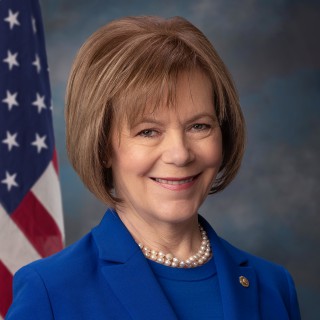
United States Senator from Minnesota
POPULARITY

Hosted by Tina Smith

Hosted by Tina Smith

Hosted by Tina Smith

Hosted by Tina Smith

Hosted by Tina Smith

49 episodes with Tina Smith

13 episodes with Tina Smith

23 episodes with Tina Smith

17 episodes with Tina Smith

13 episodes with Tina Smith

13 episodes with Tina Smith

13 episodes with Tina Smith

15 episodes with Tina Smith

11 episodes with Tina Smith

6 episodes with Tina Smith

14 episodes with Tina Smith

16 episodes with Tina Smith

10 episodes with Tina Smith

4 episodes with Tina Smith

5 episodes with Tina Smith

2 episodes with Tina Smith

3 episodes with Tina Smith

3 episodes with Tina Smith

4 episodes with Tina Smith

4 episodes with Tina Smith

5 episodes with Tina Smith

6 episodes with Tina Smith
Minnesota regulators will take up a nearly two-year dispute Tuesday between a tribal nation and its electric cooperative. The Upper Sioux Community built a large solar array next to its casino near Granite Falls a couple of years ago. Minnesota Valley Cooperative Light and Power Association threatened to cut power to the casino, saying the solar project was far bigger than its policy allows.St. Paul City Council President Rebecca Noecker said in an interview this week that more permanent supportive housing is what's needed to solve the unhoused issue in the city. U.S. Senator Tina Smith says she's working to help free a Somali man arrested in Minnesota and sent to Guantanamo Bay, Cuba. Federal agents arrested Adam Abdullah in December. The 31-year-old asylum seeker told MPR News last week that he's one of eight Somalis there and is limited to one 10-minute phone call a day.Summit Brewing Company could lose its St. Paul brewery to foreclosure after its lender sued over more than $8 million in unpaid debt. A first court hearing on that lawsuit is set for Friday.
In this poignant episode of Caregiver SOS On Air, host Ron Aaron and guest co-host Tina Smith are joined by Peter Dare to discuss his deeply moving journey as a caregiver to his husband of over four decades, John Goodnett. John—an ultra-runner with an irrepressible spirit and a sharp sense of humor—was diagnosed with Amyotrophic Lateral Sclerosis (ALS), also known as Lou Gehrig's disease. When the COVID-19 pandemic hit, Peter found himself in near-total isolation, navigating the physical and emotional weight of John's declining health as his sole, round-the-clock caregiver. Their journey, captured in the documentary Loving John, is a powerful testament to commitment, resilience, and love in the face of progressive illness.

In this poignant episode of Caregiver SOS On Air, host Ron Aaron and guest co-host Tina Smith are joined by Peter Dare to discuss his deeply moving journey as a caregiver to his husband of over four decades, John Goodnett. John—an ultra-runner with an irrepressible spirit and a sharp sense of humor—was diagnosed with Amyotrophic Lateral Sclerosis (ALS), also known as Lou Gehrig's disease. When the COVID-19 pandemic hit, Peter found himself in near-total isolation, navigating the physical and emotional weight of John’s declining health as his sole, round-the-clock caregiver. Their journey, captured in the documentary Loving John, is a powerful testament to commitment, resilience, and love in the face of progressive illness. Key Highlights & Topics Covered: The Path to Diagnosis: Peter shares the long, difficult process of diagnosing ALS—what he calls a "downhill glide path"—and how he and John faced the diagnosis by taking life one day at a time. Caregiving in Isolation: How the onset of the COVID-19 pandemic impacted their daily lives, turning Peter into a full-time, 24/7 caregiver while relying on creative support from friends outside their windows. The Behind-the-Scenes Story of Loving John: How a local filmmaker’s interest in an ultra-runner evolved into an inspiring documentary capturing John's life, humor, and legacy. Honoring Final Wishes: Peter reflects on bringing John’s ashes back to his home in American Samoa, where he was laid to rest next to his mother surrounded by family. Key Takeaways for Caregivers: Accept and Invite Help: Even when isolated, leaning on a support system—friends, community, or local organizations like the VA—is essential to sustaining caregiving. Maintain Perspective and Positivity: Focusing on the present day rather than worrying about an uncertain timeline can make overwhelming diagnoses more manageable. Caregiver Respite is Necessary: Taking short breaks and accepting outside care for a loved one is not a failure; it is crucial for maintaining your own mental and physical stamina. About Peter Peter Dare spent over four decades with his husband, John Godinet, an ultra-runner known for his humor and irrepressible spirit. When John was diagnosed with ALS, Peter became his caregiver, and that role expanded when the pandemic hit. Cut off from most outside help, Peter became John's sole, around-the-clock caregiver, shouldering the physical and emotional weight of ALS in near-total isolation. Their story anchors Loving John, a feature documentary. In it, Peter offers an honest, firsthand account of caring for the person he loved most. In the years A.J. (After John), he spends a few weeks of the year in American Samoa visiting John's family while also caretaking their last fur baby and John's running partner, Ginger, their 17+-year-old border collie. After Ginger passes away to go run with John and Piglet, he'll start thinking about where to go and what to do. "Lo que será, será"! To learn more about the documentary featured in this episode, look for Loving John on Google or stream it on select public broadcasting channels like WETA. Hosts Ron Aaron and Carol Zernial, and their guests talk about Caregiving and how to best cope with the stresses associated with it. Learn about "Caregiver SOS" and the "Teleconnection Hotline" programs. Caregiver SOS On Air is a presentation of the WellMed Charitable Foundation. For more resources, tips, and past episodes, visit caregiversos.org or email your questions to radio@wellmed.net. To learn more about the documentary featured in this episode, look for Loving John on Google or stream it on select public broadcasting channels like WETA.See omnystudio.com/listener for privacy information.
Over the next 12 days, Minnesotans will walk through the state fair gates to encounter animals, art and decadent food. Politicians will have a chance to meet voters face-to-face, which could be especially important in a competitive midterm election year like 2026. Democratic U.S. Sen. Tina Smith kicked off one of the year's the most significant statewide races when she announced in 2025 she would not seek reelection. DFL Lieutenant Governor Peggy Flanagan and Republican sports broadcaster Michele Tafoya are running for the seat. Smith now has a few months left in her term, with major budget and farming legislation before Congress. She joined MPR News host Nina Moini on the MPR stage.
Minnesota Now live from opening day of the Minnesota State Fair!The State Fair has historically become a stumping ground for politicians. As we gear up for the midterms, we heard from outgoing U.S. Sen. Tina Smith.Plus, the fair is built on agriculture. Farmers from across the state bring their livestock. We met two baby animals being shown at this year's fair.And crop art has become a main attraction. We learned about the craft and how it's grown.We also talked to local musician Sophie Hiroko and heard some of her music.
In this episode of Caregiver SOS On Air, guest host Tina Smith and co-host Ron Aaron are joined by Dr. Ethelle Lorde, founding president of the International Caregivers Association. Drawing from her background in counseling, organizational leadership, and her 21 years as a primary caregiver for her late husband, Dr. Lorde offers a fresh, compassionate perspective on supporting loved ones living with dementia.
In this episode of Caregiver SOS On Air, guest host Tina Smith and co-host Ron Aaron are joined by Dr. Ethelle Lorde, founding president of the International Caregivers Association. Drawing from her background in counseling, organizational leadership, and her 21 years as a primary caregiver for her late husband, Dr. Lorde offers a fresh, compassionate perspective on supporting loved ones living with dementia. Together, they explore why communication is the foundational challenge in dementia care and why traditional strategies like "redirection" often fall short. Dr. Lorde breaks down the psychology of the dementia brain, explaining how caregivers—both family members and healthcare professionals—can drop ineffective methods, build authentic connections, and reset difficult moments to drastically improve quality of life. Key Topics Discussed The Communication Priority: Why communication is the single most critical hurdle to master before addressing other aspects of dementia care. Moving Beyond Redirection: Why traditional redirection can feel offensive or confusing to someone with dementia, and why authenticity and agreement build deeper trust. Understanding Vascular Dementia: How vascular factors play a role in cognitive decline and how routines help provide structure for both the individual and the caregiver. "Resetting the Brain": Real-world examples of how validating a person’s reality, rather than arguing or interrupting, can lower anxiety and de-escalate challenging behavior. Connecting Through History & Hobbies: How drawing on a person's life work, deep-seated habits, and favorite music can engage someone even when they become non-verbal. Training Healthcare Professionals: The importance of equipping frontline workers and organizations with specialized dementia communication techniques to create a more supportive care environment. Key Takeaways for Caregivers Follow Before You Lead: Never interrupt or force a logic-based reality. Meet the person in their current state of mind, validate their feelings, and agree with their perspective to help calm their central nervous system. Be Authentic, Not Deceptive: Redirection often relies on distraction or untruths, which can be exhausting for caregivers and disrespectful to care recipients. Authentic engagement builds trust. Leverage Lifelong Memories & Music: Tap into deep-seated interests—such as past professions, favorite games, or familiar music—to maintain connections and slow down cognitive frustration. Maintain Consistent Routines: Establishing steady daily habits around sleeping, meals, and activities gives both the caregiver and the care recipient a predictable, reassuring daily rhythm. Resource Mentioned: To learn more about Dr. Ethelle Lorde’s work and caregiver resources, visit ICA Cares. About Dr. Lorde Dr. Éthelle Lorde is the founding president of the International Caregivers Association LLC (ICA). She earned a Master of Education in Counseling from the University of Maine at Orono in 1992 and her Doctor of Management in Organizational Leadership from the University of Phoenix in 2010. She is an author, a professor, and a keynote speaker. Dr. Lorde was married to the late Major Larry S. Potter, who was officially diagnosed with Vascular Dementia in 2000. She shares that she has 21 years of experience as a “pack leader” for her husband. As a family caregiver, she realized early on that there is an urgent need for a change in the way dementia care is delivered. She created the Transactional Dementia Intelligence Model, a systemic approach to dementia care. Her latest book is “Alzheimer and Dementia Coaching: Taking a Systems Approach to Creating an Alzheimer/Dementia-Friendly Healthcare Workforce” is in its 3rd edition; with her 1st Alzheimer’s primer entitled “How in the World…and Now What Do I Do?” has been referred to an Alzheimer’s Bible. Hosts Ron Aaron and Carol Zernial, and their guests talk about Caregiving and how to best cope with the stresses associated with it. Learn about "Caregiver SOS" and the "Teleconnection Hotline" programs. Caregiver SOS On Air is a presentation of the WellMed Charitable Foundation. For more resources, tips, and past episodes, visit caregiversos.org or email your questions to radio@wellmed.net.See omnystudio.com/listener for privacy information.

If you are considering homeschooling, have just started and are feeling overwhelmed, or have been at it a while and hit something unexpected, this episode is about finding support and navigating the questions and challenges that may arise. Most families come to Euka for the thing that sits at the centre of homeschooling: the curriculum. As Australia’s largest online K-12 homeschooling provider, we cover the full range of grades, and our team is where families bring their questions about lessons, progression, reporting and getting registered. Alongside that sits a different kind of help. The Home Education Association is an independent, volunteer-run member body offering advocacy with state authorities, local community connections, member resources and work experience insurance. Many Euka families are also HEA members. This episode covers both. How to choose between a structured program and building your own, and what to do if your school resists letting your child go. It also covers how children rebuild their confidence socially, which is often what brings experienced families looking for answers. Ellen Brown talks it through with Tina Smith, who homeschooled six of her own children and now helps other families through the same problems as Treasurer of the Home Education Association. Her sixth child is now at university. Meet Tina Smith Tina is Treasurer of the Home Education Association, a volunteer-run member organisation that supports homeschooling families across Australia. She is answering from both sides. She has been the parent working it out across six children, and through HEA she has helped other families through the same problems: getting a family registered, working through the options with a parent who had been told homeschooling was her only remaining choice, and helping a family rebuild their child’s social confidence after they left school. In the full episode, she gets specific about the practical parts. Which office to contact when a school will not release your child, what a structured program is genuinely good for, and the work experience insurance most families do not know is available. Key Points Key discussion points: Tina recommends Euka to families who want structure. Asked what she tells a family looking for a structured program, her answer is direct: go to Euka. Schools vary. Some actively recommend homeschooling. Others resist releasing a child at all. If a school resists, you have another avenue. State education departments and their home education units have become more open to helping families register. A structured program does a specific job. It is often what families use while a child settles; it is also helpful if you’re considering putting your child back into mainstream school down the line. Bullying is often a symptom. Underneath it, there is frequently a diagnosis or an unmet need the school setting could not accommodate. Social confidence can be rebuilt. Interest-based groups place a child among people who have chosen to be there, across a range of ages. Work experience insurance starts earlier than most families expect. Insurance is usually a key obstacle, and HEA covers members from age 12. Where families can find homeschooling support The questions Tina hears open in much the same way. Where do I find information? How do I start? I am overwhelmed because there is so much out there. And underneath them, the one that carries the most weight: I am a parent, and I have no idea what I am doing. Her approach with a new family is to hand over two or three things to look at rather than sending them off to survey everything. That matters because there are no guarantees. Every child is different, every family dynamic is different, and what works well for one child may not suit yours. Ellen’s own start was much the same, with everyone she met certain their way was the right one. What she took from it is that there are many great ways to do this, and that in the end, you are the only one who will know the right fit for your child. Tina names the comparison trap directly. “You look at a family and go, oh, I wish I could do that. But that’s not your family. So you have to work out your own rhythm, and the resources that work for you.”— Tina Smith, Treasurer, Home Education Association Finding a homeschooling community Tina points new families towards other homeschoolers, as connecting with other families is how you start to see the breadth of what is out there, and what works and what does not. Local support groups are the usual route in, and the Home Education Association runs homeschool community groups by area. Our guide to forming a community with other homeschoolers covers how families do it in practice. What if the school pushes back when you withdraw your child? Tina has seen it go both ways. She describes one family in which the school and the education department worked through the alternatives, found none viable, and told the parent directly that homeschooling was the right path. She also sees the opposite happen. Some schools do not accept homeschooling as a legitimate option, and some see releasing a child as a matter of authority rather than a family’s decision. In her experience, it can get quite heated. Who to contact when the school says no The school is not your only avenue. State education departments and the home education units within them have become more open to helping families who are being obstructed, and they can intervene. As Tina puts it, it comes down to knowing who to talk to. HEA publishes state-by-state registration information, and its advocacy work is currently focused on making registration a smoother experience with each state authority. Ellen adds the reframe worth holding onto. Choosing homeschooling is in the same category as choosing a public school, a private school, or distance education. It is a choice you are entitled to make as a parent. If the difference between those pathways is still unclear, our episode on homeschooling versus distance education sets them side by side, and our guide to whether homeschooling is legal in Australia covers the registration requirement. Structured program, or build your own? Some families arrive certain they could never write their own program, and a structured one removes that worry. If that sounds familiar, our episode with a teacher trainer on what actually makes a good teacher is worth a listen, since the answer has very little to do with formal qualifications. Tina also sees families use a structured program for another reason: to help steady a child. Time to reassess, re-ground them, and settle their emotional state. In her experience, those families often return to school afterwards, which is a legitimate outcome rather than a failure. Asked what she tells a family in that position, her answer is direct. “If you want to use a program that is structured, go to Euka.”— Tina Smith, Treasurer, Home Education Association The example she gives is a family who arrived from another country, were not confident with an English curriculum, and needed something structured while they moved between states for work. She recommended them to Euka. They kept using it as they changed states, and when they eventually moved back overseas, they did so knowing their children’s education had been properly covered. That continuity is the point. A complete K-12 curriculum means a family can move house, change states, or travel without the program restarting, and Ellen notes that families use it either way: some take the full program, others take a subject or two as their foundation and build the rest themselves. Cover the base, then add your own Tina built her own program at first. By the time her children reached the middle years, she was less confident, so she bought a program that covered the foundation skills and added her own material on top. This option worked well for her family, as they layered in what her children were actually interested in, which, for her family, was the part that mattered most. She is clear that this depends entirely on the child. Her children were academically inclined, and she knows families with very creative children for whom that same core-work approach did not work. A prescribed curriculum is useful. Being able to flex it is better, because it opens up everything else: nature, museums, libraries, the internet, and the history and geography a family picks up while travelling. Ellen adds that the curriculum is the base, not everything. Why more families are homeschooling for bullying and neurodivergence Ellen asks about bullying, noting a significant increase in students coming in because of it. Tina confirms she is seeing the same and then adds more context. Bullying happens for many reasons. As Tina puts it, it could be racism, health, disability, or just because you exist. Our guide to the signs your child may be struggling at school covers what this can look like before it becomes obvious. She describes bullying as a big proportion of the calls. Still, she says an even bigger one now comes from families whose children are managing a diagnosis such as autism or ADHD. Our tips for homeschooling with ADHD go further into the practical side of this. What those parents describe is the social side of school becoming overwhelming, in ways the setting could not accommodate. Ellen draws out the consequences of how this gets reported. Bullying and school refusal are the labels the media reaches for, but they are frequently the visible end of something else. A child managing anxiety or autism inside a system that cannot flex will often find that school becomes very difficult. Read that way, school refusal describes a setting that is not a good fit for that child, at that time. Withdrawal, in Tina’s account, buys back what was missing: time to stop, regroup, and learn to manage emotions and triggers in a safe place. Two episodes cover this from the family’s side. Episode 43 follows a mother who left school-based bullying behind, and Episode 45 specifically addresses school refusal. Episode 23 is one mother’s account of homeschooling with dyslexia, ASD and ADHD. How homeschooled children build social confidence The worry that stops families here is that leaving school means leaving socialising behind. The episode answers it with a worked example. Tina describes a family whose child was not fitting in socially at school. They withdrew, then rebuilt from what the child actually liked: art and board games. The child joined a board games group and an art class, and the parent enrolled in the art class alongside them. That produced an environment the classroom rarely does. The child was learning alongside adults, so they practised interacting with older people. In the board games group, they were among children of different ages, so they learned to build relationships with peers of different ages. The parent went along too, joining the art classes, which meant the child was building these skills somewhere they already felt safe. Tina’s point is that these skills travel. A child who has learned to interact with people of different ages carries that into a workplace or a course, along with the ability to recognise a trigger and step away from it. Ellen adds the observation that reframes the whole concern. “When you’re in school, your friends are only your friends because they happen to be the same age. That’s why you’re in that group.”— Ellen Brown Adult life does not work that way. You find people through shared interest, and you choose them. For a child who has been struggling, being good at something in front of people who care about it can be a platform they have not had before. Ellen also names something she saw as a teacher. In a classroom, the child who disrupts an activity is often the one with no interest in it, and the cost falls on the interested child. More on this in our guides to homeschool socialisation and special needs homeschooling. Other support available to homeschooling families There is more homeschooling support out there than most families realise, including free resources. It helps to know who handles what. Euka covers the curriculum and everything attached to it, with lots of free resources available for families: choosing a program, the lessons themselves, tracking progression, reporting, enrolment and your account. Our Help Centre answers the day-to-day questions, and the support team is there for anything it does not. If registration paperwork is the sticking point, our Registration Service prepares the learning plan and documents your state requires, ready for you to submit. HEA is a great complementary resource: independent advocacy with state authorities, local community connections, member resources and work experience insurance. Tina notes that HEA has been working alongside Euka and other organisations to make registration a smoother experience with the state bodies. The Home Education Association runs a free national helpline on 1300 72 99 91, weekdays 9 am to 5 pm. Callers speak with experienced homeschoolers, and the call covers registration, re-registration, and issues with the state department you are registered with. That is worth knowing about whether or not you ever join anything. Membership adds a set of teaching and learning resources on top of that, including software and reading materials for younger children. The current list is on HEA’s member benefits page. Some of their resources will add additional value for Euka families. Ellen picks out one example on air: Story Box Library, HEA’s reading resource for younger children, works well with Euka’s bring-your-own-novel option, where a family swaps the term’s set novel for a different book while keeping the same skills work. One item is worth calling out because so few families know it exists. Work experience placements usually stall on insurance, since an unpaid student is not covered by an employer’s policy. Some state education departments offer their own coverage, though Tina notes that in certain states it only starts at age 14. HEA covers members from age 12, across all states, with an agreement signed by the parent and the supervising employer. Details are on their insurance page. Ellen’s point is that this opens up something school-rationed. She had one week of work experience in Grade 10. A homeschooled student who wants to try several different workplaces during their senior years can, and our episode on when to do work experience covers how to time it well. Questions answered in this episode How do I start homeschooling in Australia? + You register with the education authority in your state or territory, then choose how your child will learn: a structured program, your own plan, or a mix. Requirements differ by state, so check yours first. Our guide to homeschooling in Australia covers registration, and our episode on registration and reporting goes through it in detail. Where can I get homeschooling help and advice in Australia? + Start with whoever provides your curriculum, since most day-to-day questions are really program questions. Euka families have the support team, the Help Centre and our free homeschooling course, which walks through registering, structuring a program and building a daily rhythm. For the things that sit outside a curriculum, the Home Education Association runs a free national helpline on 1300 72 99 91, staffed by experienced homeschoolers, covering advocacy, re-registration and disputes with the state department you are registered with. How do I find a homeschool community or support group near me? + Local homeschool community groups and support groups are the usual starting point, and they are worth joining early. Tina’s point is that meeting other homeschooling families shows the range of what actually works, rather than assuming the first approach you saw is the only one. Can a school refuse to let me withdraw my child for homeschooling? + Some resist. If that happens, the school is not your only avenue: contact your state education department or its home education unit, both of which have become more willing to step in. HEA can tell you which office to approach. Should I use a structured program or build my own? + Both work, and the choice depends on your child. A structured program suits families who want the core covered without having to write it themselves, and Tina’s approach was to buy a program for the foundation skills and add her children’s interests on top. Will my child miss out socially if we leave school? + Not necessarily. School groups children by age, whereas interest-based activities group them by their choices across a range of ages. The catch is that it does not happen on its own, so you will need to put one or two regular activities in place. Does homeschooling work for a child with ADHD or autism? + It is one of the biggest reasons families are now calling HEA. The value is the ability to adjust the pace and social load in ways a classroom cannot, and to spend the first stretch on regulation rather than academics. My child is being bullied. Is homeschooling the answer? + It removes the immediate problem, which is sometimes exactly what a child needs. Tina’s caution is to look at what sat underneath the bullying as well, because an unmet need travels with the child if it goes unaddressed. Can homeschooled students do work experience? + Yes, and often earlier than in school. Insurance is the usual obstacle since employers do not cover unpaid students, and HEA covers its members from age 12 across all states with a signed work experience agreement. Why this episode matters This episode is for the practical questions that arrive when you’re considering or starting out homeschooling: what to do when a school will not let your child go, whether to use a structured program or build your own, and how a child who struggled socially at school starts to rebuild. The answers are specific. Which office to contact when the school digs in, what a structured program is genuinely good for, and why a board games group did more for one child’s confidence than the classroom did. It maps out how to find support and build confidence in your homeschooling decisions. More support for getting started If you want to go further on the questions this episode raises, these are the places to start. The free course. Our Complete Guide to Confident Homeschooling covers registering legally in your state, choosing and structuring a curriculum, building a daily rhythm, supporting a child who learns differently, and knowing your child is progressing. It is a set of nine short video modules, hosted by Brett and Ellen, free and self-paced. Start the free course. If you enrol with Euka. Our Registration Service prepares the learning plan and registration documents your state requires, ready for you to download and submit. It is an optional add-on for enrolled families, not a general registration service. Reach HEA directly. The free helpline is 1300 72 99 91, weekdays 9 am to 5 pm. Membership plans are on the pricing page, and a set of free resources is available to everyone. Related reading. Our guides to exploring your homeschooling options in Australia and when bullying makes homeschooling the right move. Related episodes. The Ultimate Getting Started Guide, and what you need to know about registration and reporting. figure.wp-block-table.testimonial-element { background-color:#fffdf5; } figure.wp-block-table.testimonial-element .has-fixed-layout td{ padding:2em 2em; border:none; border-left:.2em #e8a838 solid; } figure.wp-block-table.testimonial-element .has-fixed-layout td em{ display: block; margin-bottom: -1.1em; } figure.wp-block-table.testimonial-element .has-fixed-layout td strong{ font-size:.8em; } h3{ font-size:16px !important; font-weight:900; } { "@context": "https://schema.org", "@graph": [ { "@type": "Organization", "@id": "https://euka.edu.au/#organization", "name": "Euka Future Learning", "alternateName": "Euka", "url": "https://euka.edu.au/", "logo": { "@type": "ImageObject", "url": "https://euka.edu.au/wp-content/themes/euka/assets/images/euka-future-learning-logo.svg" }, "sameAs": [ "https://podcasts.apple.com/au/podcast/future-learners/id1717947259", "https://open.spotify.com/show/7g35PbIHMXHV6hRVMIHhkC", "https://www.youtube.com/@eukafuturelearning" ] }, { "@type": "WebSite", "@id": "https://euka.edu.au/#website", "url": "https://euka.edu.au/", "name": "Euka Future Learning", "publisher": { "@id": "https://euka.edu.au/#organization" }, "inLanguage": "en-AU" }, { "@type": "Person", "@id": "https://euka.edu.au/#ellen-brown", "name": "Ellen Brown", "jobTitle": "Founder & Head of Education", "worksFor": { "@id": "https://euka.edu.au/#organization" } }, { "@type": "Person", "@id": "https://euka.edu.au/all-episodes/homeschooling-support-for-families-51/#tina-smith", "name": "Tina Smith", "description": "Treasurer of the Home Education Association who homeschooled six of her own children and now helps other families with registration, program choices, and rebuilding social confidence." }, { "@type": "ImageObject", "@id": "https://euka.edu.au/all-episodes/homeschooling-support-for-families-51/#primaryimage", "url": "https://euka.edu.au/wp-content/uploads/2026/08/Ep-51-_-finding-support-on-your-homeschooling-journey-_-Thumbnail-_-16_9.png", "contentUrl": "https://euka.edu.au/wp-content/uploads/2026/08/Ep-51-_-finding-support-on-your-homeschooling-journey-_-Thumbnail-_-16_9.png", "width": 1920, "height": 1080 }, { "@type": "PodcastSeries", "@id": "https://euka.edu.au/future-learners-podcast/#series", "name": "Future Learners Podcast", "url": "https://euka.edu.au/future-learners-podcast/", "publisher": { "@id": "https://euka.edu.au/#organization" }, "webFeed": "https://euka.edu.au/podcast/", "sameAs": [ "https://podcasts.apple.com/au/podcast/future-learners/id1717947259", "https://open.spotify.com/show/7g35PbIHMXHV6hRVMIHhkC" ] }, { "@type": "VideoObject", "@id": "https://euka.edu.au/all-episodes/homeschooling-support-for-families-51/#video", "name": "You're Not Alone: Finding Support on Your Homeschooling Journey | 051", "description": "Ellen Brown talks with Tina Smith, Treasurer of the Home Education Association and a mother of six homeschooled children, about finding support on the homeschooling journey, choosing between a structured program and building your own, and how children rebuild social confidence after leaving mainstream school.", "thumbnailUrl": [ "https://euka.edu.au/wp-content/uploads/2026/08/Ep-51-_-finding-support-on-your-homeschooling-journey-_-Thumbnail-_-16_9.png", "https://i.ytimg.com/vi/ncSsN_5vxGg/maxresdefault.jpg" ], "uploadDate": "2026-08-20", "duration": "PT34M22S", "contentUrl": "https://www.youtube.com/watch?v=ncSsN_5vxGg", "embedUrl": "https://www.youtube.com/embed/ncSsN_5vxGg", "publisher": { "@id": "https://euka.edu.au/#organization" } }, { "@type": "AudioObject", "@id": "https://euka.edu.au/all-episodes/homeschooling-support-for-families-51/#audio", "name": "You're Not Alone: Finding Support on Your Homeschooling Journey | 051", "encodingFormat": "audio/mpeg", "duration": "PT34M22S", "contentUrl": "https://euka.edu.au/all-episodes/homeschooling-support-for-families-51/", "sameAs": [ "https://www.youtube.com/watch?v=ncSsN_5vxGg", "https://podcasts.apple.com/au/podcast/youre-not-alone-finding-support-on-your-homeschooling/id1717947259?i=1000784711468", "https://open.spotify.com/episode/2VJSFQDKPwVv2tUd83OqAS" ] }, { "@type": "PodcastEpisode", "@id": "https://euka.edu.au/all-episodes/homeschooling-support-for-families-51/#episode", "url": "https://euka.edu.au/all-episodes/homeschooling-support-for-families-51/", "name": "You're Not Alone: Finding Support on Your Homeschooling Journey | 051", "episodeNumber": 51, "datePublished": "2026-08-20", "dateModified": "2026-08-20", "inLanguage": "en-AU", "partOfSeries": { "@id": "https://euka.edu.au/future-learners-podcast/#series" }, "associatedMedia": { "@id": "https://euka.edu.au/all-episodes/homeschooling-support-for-families-51/#audio" }, "video": { "@id": "https://euka.edu.au/all-episodes/homeschooling-support-for-families-51/#video" }, "author": { "@id": "https://euka.edu.au/#ellen-brown" }, "actor": [ { "@id": "https://euka.edu.au/#ellen-brown" }, { "@id": "https://euka.edu.au/all-episodes/homeschooling-support-for-families-51/#tina-smith" } ], "publisher": { "@id": "https://euka.edu.au/#organization" }, "image": { "@id": "https://euka.edu.au/all-episodes/homeschooling-support-for-families-51/#primaryimage" }, "description": "Ellen Brown talks with Tina Smith, Treasurer of the Home Education Association and a mother of six homeschooled children, about finding support on the homeschooling journey. Tina covers choosing between a structured program and building your own, what to do if a school resists releasing your child, and how children rebuild social confidence after leaving mainstream school.", "abstract": "Tina Smith, Treasurer of the Home Education Association, who homeschooled six of her own children, tells Ellen Brown how families find support once they start homeschooling. She covers choosing between a structured program such as Euka and building your own, what to do when a school resists releasing a child, why bullying is often a symptom of an unmet need such as autism or ADHD rather than the root cause, how children rebuild social confidence through interest-based groups across mixed ages, and practical supports many families do not know about, including a free national helpline and work experience insurance for homeschoolers from age 12.", "timeRequired": "PT34M22S", "keywords": "homeschooling support, homeschool community, homeschool support groups, homeschool registration, homeschooling and bullying, school refusal, work experience homeschool, Future Learners Podcast", "about": [ { "@type": "Thing", "name": "Homeschooling" }, { "@type": "Thing", "name": "Homeschooling support and community" }, { "@type": "Thing", "name": "Homeschooling and neurodivergence" } ], "mentions": [ { "@type": "DefinedTerm", "name": "Structured program vs building your own", "description": "Tina's view that a structured program such as Euka suits families who want the core curriculum covered, while building your own works well once a parent is confident, and many families do both by using a structured base and adding their child's own interests on top." }, { "@type": "DefinedTerm", "name": "The comparison trap", "description": "Tina's warning against comparing your family to another homeschooling family, since every child and family dynamic is different and there is no single right way to homeschool." }, { "@type": "DefinedTerm", "name": "Rebuilding social confidence through interest groups", "description": "Tina's example of a child who had struggled socially at school rebuilding confidence through a board games group and an art class, learning to interact with both adults and children of different ages." }, { "@type": "DefinedTerm", "name": "Work experience insurance from age 12", "description": "The Home Education Association covers members for work experience insurance from age 12 across all states, addressing an obstacle most families do not know has a solution." } ], "isPartOf": { "@id": "https://euka.edu.au/all-episodes/homeschooling-support-for-families-51/#webpage" } }, { "@type": "FAQPage", "@id": "https://euka.edu.au/all-episodes/homeschooling-support-for-families-51/#faq", "isPartOf": { "@id": "https://euka.edu.au/all-episodes/homeschooling-support-for-families-51/#webpage" }, "mainEntity": [ { "@type": "Question", "name": "How do I start homeschooling in Australia?", "acceptedAnswer": { "@type": "Answer", "text": "You register with the education authority in your state or territory, then choose how your child will learn: a structured program, your own plan, or a mix. Requirements differ by state, so check yours first." } }, { "@type": "Question", "name": "Where can I get homeschooling help and advice in Australia?", "acceptedAnswer": { "@type": "Answer", "text": "Start with whoever provides your curriculum, since most day-to-day questions are really program questions. Euka families have the support team, the Help Centre, and a free homeschooling course covering registration, structuring a program, and building a daily rhythm. For questions outside the curriculum, the Home Education Association runs a free national helpline staffed by experienced homeschoolers, covering advocacy, re-registration, and disputes with the state department a family is registered with." } }, { "@type": "Question", "name": "How do I find a homeschool community or support group near me?", "acceptedAnswer": { "@type": "Answer", "text": "Local homeschool community groups and support groups are the usual starting point, and they are worth joining early. Tina's point is that meeting other homeschooling families shows the range of what actually works, rather than assuming the first approach you saw is the only one." } }, { "@type": "Question", "name": "Can a school refuse to let me withdraw my child for homeschooling?", "acceptedAnswer": { "@type": "Answer", "text": "Some resist. If that happens, the school is not your only avenue: contact your state education department or its home education unit, both of which have become more willing to step in. The Home Education Association can advise which office to approach." } }, { "@type": "Question", "name": "Should I use a structured program or build my own?", "acceptedAnswer": { "@type": "Answer", "text": "Both work, and the choice depends on your child. A structured program suits families who want the core covered without having to write it themselves, and Tina's own approach was to buy a program for the foundation skills and add her children's interests on top." } }, { "@type": "Question", "name": "Will my child miss out socially if we leave school?", "acceptedAnswer": { "@type": "Answer", "text": "Not necessarily. School groups children by age, whereas interest-based activities group them by their choices across a range of ages. The catch is that it does not happen on its own, so a family needs to put one or two regular activities in place." } }, { "@type": "Question", "name": "Does homeschooling work for a child with ADHD or autism?", "acceptedAnswer": { "@type": "Answer", "text": "It is one of the biggest reasons families are now calling the Home Education Association. The value is the ability to adjust the pace and social load in ways a classroom cannot, and to spend the first stretch on regulation rather than academics." } }, { "@type": "Question", "name": "My child is being bullied. Is homeschooling the answer?", "acceptedAnswer": { "@type": "Answer", "text": "It removes the immediate problem, which is sometimes exactly what a child needs. Tina's caution is to look at what sat underneath the bullying as well, because an unmet need travels with the child if it goes unaddressed." } }, { "@type": "Question", "name": "Can homeschooled students do work experience?", "acceptedAnswer": { "@type": "Answer", "text": "Yes, and often earlier than in school. Insurance is the usual obstacle since employers do not cover unpaid students, and the Home Education Association covers its members from age 12 across all states with a signed work experience agreement." } } ] }, { "@type": "BreadcrumbList", "@id": "https://euka.edu.au/all-episodes/homeschooling-support-for-families-51/#breadcrumb", "itemListElement": [ { "@type": "ListItem", "position": 1, "name": "Home", "item": "https://euka.edu.au/" }, { "@type": "ListItem", "position": 2, "name": "Future Learners Podcast", "item": "https://euka.edu.au/future-learners-podcast/" }, { "@type": "ListItem", "position": 3, "name": "You're Not Alone: Finding Support on Your Homeschooling Journey | 051", "item": "https://euka.edu.au/all-episodes/homeschooling-support-for-families-51/" } ] }, { "@type": "WebPage", "@id": "https://euka.edu.au/all-episodes/homeschooling-support-for-families-51/#webpage", "url": "https://euka.edu.au/all-episodes/homeschooling-support-for-families-51/", "name": "You're Not Alone: Finding Support on Your Homeschooling Journey | 051", "inLanguage": "en-AU", "isPartOf": { "@id": "https://euka.edu.au/#website" }, "primaryImageOfPage": { "@id": "https://euka.edu.au/all-episodes/homeschooling-support-for-families-51/#primaryimage" }, "datePublished": "2026-08-20", "dateModified": "2026-08-20", "breadcrumb": { "@id": "https://euka.edu.au/all-episodes/homeschooling-support-for-families-51/#breadcrumb" }, "mainEntity": { "@id": "https://euka.edu.au/all-episodes/homeschooling-support-for-families-51/#episode" }, "about": [ { "@type": "Thing", "name": "Homeschooling" }, { "@type": "Thing", "name": "Homeschooling support and community" }, { "@type": "Thing", "name": "Homeschooling and neurodivergence" } ] } ] } The post You’re Not Alone: Finding Support on Your Homeschooling Journey | 051 appeared first on Euka.

Ralph speaks to Baroness Beeban Kidron, a member of the UK House of Lords and a leading voice on children's rights in the digital environment, whose book is “Users: How Big Tech Took Control and How to Fight Back.” Then we welcome back whistleblower Becky McClain a biotech scientist injured in an unsafe lab and author of “Exposed: A Pfizer Scientist Battles Corruption, Lies, and Betrayal, and Becomes a Biohazard Whistleblower.”Baroness Beeban Kidron is a member of the UK's House of Lords and a former film director. She is a leading voice on children's rights in the digital environment and a global authority on digital regulation. She has played a central role in establishing standards for online safety and privacy across the world. She is the author of Users: How Big Tech Took Control and How to Fight Back.The things that children experience online are deliberately designed to distract them. Now, they are there to distract them because those companies want the attention so they can advertise. They want their data so that they can perfect their commercial terms,their product. And they even want their attention to compete against the other people who are competing for their attention. So here we have an absolute arms race for a child's attention.Baroness Beeban KidronI do want to say very clearly to anyone listening: This is a battle you shouldn't be fighting on your own. And there is a responsibility for politicians—for both local politicians and federal politicians (national in our case, here in the UK) —to actually put these companies under the same sort of strictures that all other corporate companies do… One of the things I'm looking at is whether we can recategorize apps as products. And then they'll have all the product liability, the product safety, consumer rights—all the things that we expect of everything else in our life from our food to our cars to our toys. That they would actually have to think before they roll them out: Are they safe? And when they've proven unsafe, we would have a very clear set of legal approaches to address that.Baroness Beeban KidronBecky McClain is a retired biotech worker and research scientist. She is known as the first successful biotech whistleblower who spoke and reported on biolab safety issues of public concern. On April 1, 2010, Ms. McClain won a federal court whistleblower trial against Pfizer, Inc., which centered on free speech rights concerning biosafety and public health. She is the author of Exposed: A Pfizer Scientist Battles Corruption, Lies, and Betrayal, and Becomes a Biohazard Whistleblower.The public wants transparency to ensure that biolabs are run ethically, safely, responsibly, and with accountability. Transparency into these matters builds public trust with science and with government. But without free-speech protections for scientists and also medical physicians, transparency fails, accountability is dismissed, and the public trust hits rock bottom.Becky McClainNews 8/14/26* This week, a new round of primaries was held in the upper midwest and New England. The biggest shock of the night was the defeat of Francesca Hong in the Wisconsin Democratic gubernatorial primary. Hong, a Wisconsin State Assemblywoman and member of Madison DSA, went into election night leading in the polls and while she won an astonishing 311,000 votes, her opponent – Milwaukee County Executive David Crowley, with the endorsement of sitting Democratic Governor Tony Evers – maintained a lead of approximately one-half of one percentage point throughout the night. As the final margin will be under 1 percent, Hong is entitled to request a recount, according to the Milwaukee Journal Sentinel, but WKOW reports she has conceded the race. Hong was seen as the best chance for the insurgent, DSA-aligned left to capture a gubernatorial nomination this cycle, particularly in a crucial swing state, but her campaign was dogged by electability concerns and unpopular past statements made by the candidate. Crowley will face Republican Congressman Tom Tiffany, who cruised to an easy victory in the GOP gubernatorial primary, in November.* The Minnesota primaries delivered more encouraging results for the left. In the high-profile Senate primary to replace retiring Senator Tina Smith, Lieutenant Governor Peggy Flanagan emerged victorious over her opponent, Congresswoman Angie Craig. Flanagan was backed by a broad, progressive coalition – including Senators Bernie Sanders, Elizabeth Warren, Ed Markey, and outgoing Senator Tina Smith herself – while Craig was backed by more centrist Democrats like House Minority Leader Hakeem Jeffries and ultrazionist Democratic Congressman Josh Gottheimer. If elected, Flanagan, a citizen of the White Earth Nation, would be the first Native American woman to serve in the U.S. Senate, per the Minnesota Reformer. Flanagan has also gone on record saying that Chuck Schumer, who would be poised to lead the Senate Democrats as Majority Leader if the party retakes that chamber, needs to be replaced with a “progressive champion” though she has not gone as far as Abdul El-Sayed in Michigan who explicitly called for Schumer to be replaced by Maryland Senator Chris Van Hollen, as reported by Semafor.* In more Minnesota news, Congresswoman Craig's decision to vacate her old seat in the state's second congressional district “created a crowded primary for her seat,” according to the Minnesota Star Tribune. On Tuesday, progressive candidate Matt Little triumphed. Little is a strong proponent of Medicare for All and does not blanch at describing Israel's campaign in Gaza as a genocide. Little overwhelmingly won the endorsement of the Minnesota Democratic-Farmer-Labor Party and of congressional progressives like Reps. Pramila Jayapal and Greg Casar, as well as the Progressive Caucus PAC. If Little wins in what the Star Tribune describes as a swing district historically, it will send a strong signal that progressives can win even in tough districts.* In New England, the results tell a somewhat different story. Specifically, in Connecticut's first congressional district, 14-term incumbent Congressman John Larson lost his primary to former Hartford Mayor Luke Bronin, over 30 years Larson's junior, by over 20 points. However, Bronin is far from a progressive challenger. Whereas Larson enjoyed the backing of the Working Families Party and Congressman Jamie Raskin – though he also had the backing of AIPAC – Bronin's only major national endorsement was from former Transportation Secretary Pete Buttigieg. In short, this would best be described as a non-ideological, but rather age-based primary challenge. This will surely set off major alarm bells for another aged incumbent in New England facing a much younger primary challenger: Senator Ed Markey of Massachusetts. Additionally, as Ryan Grim notes, “John Larson was/is the champion of the bill to expand Social Security, which was up to…200+ cosponsors but [former Speaker Nancy] Pelosi would never allow it to get to the floor. There's now an extremely popular bill that could actually pass that needs a lead sponsor.”* Another recent primary loss is worth examining: that of Kshama Sawant in Seattle. Sawant, a former Seattle City Councilmember aligned with the Trotskyist Socialist Alternative party, resigned her council seat and sought to unseat her local Democratic Congressman Adam Smith, running as an independent in Washington's ninth congressional district. The state of Washington has a top two primary system, so Sawant would have only had to get the second most votes to secure a head-to-head matchup against Smith in November. Yet, instead Sawant finished a distant third behind Smith and the Republican candidate Doug Basler. Perhaps that doesn't seem surprising – independent and third party candidates are often outspent by huge margins. Yet, the facts belie that explanation. In fact, a new piece on the Joe Wrote substack finds that “Sawant's campaign wasn't the rag-tag, bootstrapped operation that we typically see from insurgent socialists. Sawant reported $607,493 in campaign spending, meaning she outspent Republican Doug Basler by over six-to-one and still lost to him.” Wrote goes on to state that “The Sawant campaign spent $25.33 per vote, the highest for any candidate in the race…The only registered PAC that spent on the race was Sawant's Revolutionary Change PAC, which raised $5,600 through ActBlue and spent it on billboards.” If nothing else, this test case demonstrates that money is not enough for the left to break through the two-party duopoly. A candidate also needs institutional, organizational support – like that of DSA – and, perhaps most importantly, broadbase solidarity with the other component parts of the movement. Going it alone simply will not get the job done.* In more independent and third party news, we have an update to a previous story about the race for Congress in Pennsylvania's seventh congressional district. Last week, we discussed Andrew Tupone, a candidate running in this race on the Green Party ballot line, despite the GP of Pennsylvania distancing themselves from him – and spokesman Chris Robinson even calling him a “a nice Republican.” According to Lehigh Valley Public Media, the Green Party is now going a step further, formally requesting the Pennsylvania courts “either kick Tupone off the ballot or require him to identify himself as a member of another party.” In their petition to the court, the Green Party argues that “Candidate Tupone and his agents or affiliates who circulated his nomination papers misled voters into signing the nomination papers on the mistaken belief that they were helping to place a candidate supported by the Green Party onto the ballot.” This piece also notes that three Lehigh Valley residents are challenging the petitions Tupone presented to get on the ballot, arguing that technical errors would disqualify thousands of these signatures. For his part, Tupone “has denied having any ulterior motive to enter the race or accepting financial assistance from any outside groups.”* At the same time, in Nebraska, it seems there are two, dueling faux third parties seeking to siphon off votes from the other side. The Nebraska Examiner reports that both the “Nebraska Democratic Party and the national Working Families Party have sued Nebraska's Working People Party to block it from the fall ballot.” The Democrats and WFP are seeking to block Nebraska Secretary of State Bob Evnen from officially recognizing the party, and to “declare that the party's name is breaking state law because it is meant to confuse voters.” Apparently, Nebraska election law includes a provision allowing the secretary of state to “reject a candidate's filing if…that someone is not a ‘good-faith candidate' or is trying to cause confusion for voters,” and that “objections to party names can be considered.” The kicker is that last week, the Nebraska Republican Party filed a lawsuit alleging that the “America First Party” is a similarly bad-faith attempt to confuse and deceive voters and thereby undercut the fortunes of Nebraska Republicans. A Nebraska judge has issued an emergency injunction stopping certification of both the Nebraska Working People Party and America First Party through August 20th.* Turning to local news, Los Angeles Mayor Karen Bass appears to be moving against Councilmember Nithya Raman, her Democratic rival for the mayoralty in the general election. LAist reports that while Raman has chaired the Council's powerful Housing and Homeless Committee since 2023, Bass' close ally, Council President Marqueece Harris-Dawson is “planning to announce…that the city will split the committee into two parts — one on housing, the other on homelessness — neither of which will be led by Raman.” In a campaign video, Raman alleged that the move constituted political retaliation, saying “I called for an audit of our homelessness programs…and now I've been removed…I might be getting punished for running against Mayor Bass, but Angelenos are the ones paying the price for these political games.” Mayor Bass and Councilmember Raman finished first and second respectively in the June primary, meaning they will face off in November with no Republican on the ballot.* In New York, Mayor Zohran Mamdani announced this week that he will throw his weight behind a new bill in the city council seeking to curb Amazon's practice of utilizing subcontractors instead of directly employing delivery workers. The Wall Street Journal explains that although these subcontractors “aren't direct employees of…Amazon [or other companies], they often wear branded uniforms or vests and drive corporate-branded vans or trucks,” but are not entitled to the same workplace protections and are excluded from collective bargaining. In a statement, Mamdani highlighted how “Corporations like Amazon build billion-dollar business models by insulating themselves from accountability through a system of exploitative subcontracting.” The Journal reports the bill would also “require warehouse operators to obtain licenses from the city,” and in order to get a license, ”operators would have to adhere to new safety, training and employment requirements, including hiring thousands of the city's contract couriers.” In response, Amazon is, as usual, threatening to move its business out of the city, but also deploying its secret, New York-specific weapon: their chief lobbyist, Jessica Schumer, daughter of Senate Minority Leader Chuck Schumer, according to the American Prospect. This sets up a major clash between an array of titanic forces in New York politics and whether or not Mayor Mamdani emerges triumphant will be a huge test of his political clout.* Finally, AP reports the parliament of Lebanon voted this week to abolish the death penalty, making it the first nation in the Arab world to do so. This piece notes that the country has maintained an unofficial moratorium on capital punishment for over 20 years; while death sentences have been issued since then, they have all been suspended or commuted. The official sentence of capital punishment will be replaced with “life imprisonment with aggravated hard labor,” a somewhat vague legal concept that will have to be defined and refined as time goes on. AP adds that this vote comes amidst the Lebanese parliamentary debate over a proposed general amnesty law, that could “reduce sentences or even release convicted militants,” from the country's various civil wars, as well as others convicted of drug-related crimes. The parliamentary bloc of Hezbollah voted against the law. Lebanon banning capital punishment stands in stark contrast to the Israeli Knesset, which voted in May to adopt a new death penalty statute described by the United Nations Office of the High Commissioner for Human Rights as perpetuating “racial discrimination against Palestinians” and amounting to “a grave erosion of human rights.”This has been Francesco DeSantis, with In case You Haven't Heard. Get full access to Ralph Nader Radio Hour at www.ralphnaderradiohour.com/subscribe
08/10/26: Senator Tina Smith became Minnesota’s 48th Lieutenant Governor in 2015, was appointed to the U.S. Senate in 2017 and won in 2020 for her full 6-year term. She announced in February that she will not run for reelection. Lieutenant Governor Peggy Flanagan and Congresswoman Angie Craig are both hoping to win the August 11th primary for the November election. Senator Smith talks about the Minnesota primary, President Donald Trump, and other Washington, D.C. news with Joel Heitkamp. (Joel Heitkamp is a talk show host on the Mighty 790 KFGO in Fargo-Moorhead. His award-winning program, “News & Views,” can be heard weekdays from 8 – 11 a.m. Follow Joel on X/Twitter @JoelKFGO.)See omnystudio.com/listener for privacy information.

Polling has Peggy Flanagan and Angie Craig at a near dead heat heading into Tuesday. And it's to the fill the seat of Tina Smith, who succeeded Al Franken, who succeeded Norm Coleman, who lost to Franken in a long recount in 2008. Following me? Norm Coleman's attorney in that process was Fritz Knaak....and he joined Vineeta for a great conversation on Thursday on The WCCO Morning News.

Polling has Peggy Flanagan and Angie Craig at a near dead heat heading into Tuesday. And it's to the fill the seat of Tina Smith, who succeeded Al Franken, who succeeded Norm Coleman, who lost to Franken in a long recount in 2008. Following me? Norm Coleman's attorney in that process was Fritz Knaak....and he joined Vineeta for a great conversation on Thursday on The WCCO Morning News.
Ageism is everywhere—from everyday birthday cards and healthcare visits to workplace dynamics and the subtle ways we talk to ourselves. Yet, despite being one of the most pervasive forms of discrimination, it remains one of the least discussed. In this episode of Caregiver S.O.S. On Air, hosts Ron Aaron and Carol Zernial sit down with Tina Smith, Director of Caregiving Programs at the WellMed Charitable Foundation, to dissect how deeply ingrained age bias impacts both family caregivers and older adults.
Here is a detailed episode description tailored for your show notes and podcast platforms: Episode Title: Reframing Aging: Overcoming Ageism in Caregiving & Daily LifeEpisode Summary Ageism is everywhere—from everyday birthday cards and healthcare visits to workplace dynamics and the subtle ways we talk to ourselves. Yet, despite being one of the most pervasive forms of discrimination, it remains one of the least discussed. In this episode of Caregiver S.O.S. On Air, hosts Ron Aaron and Carol Zernial sit down with Tina Smith, Director of Caregiving Programs at the WellMed Charitable Foundation, to dissect how deeply ingrained age bias impacts both family caregivers and older adults. Together, they explore the concept of "therapeutic nihilism" in medicine, the dangerous myth that aging equals decline, and how language like "you look great for your age" unintentionally reinforces stereotypes. Drawing from research by the Frameworks Institute and the National Center to Reframe Aging, Tina shares practical insights on how to shift our internal dialogues, build intergenerational connections, and challenge ageist assumptions in daily life. Key Takeaways & Highlights What Is Ageism? How stereotyping and prejudice based on age begin as early as childhood through media, advertisements, and culture. The Caregiver Connection: How ageism can skew a caregiver’s view of their care recipient—and how society’s perception of aging adds extra burden to caregivers. Ageism in Healthcare: Understanding "therapeutic nihilism," where medical providers dismiss real health issues as "just getting old," and why self-advocacy is vital. Language Matters: The power of reframing everyday terms—such as shifting from "senior citizen" to "older adult"—and avoiding subtle backhanded compliments. Bridging the Generational Gap: Why ageism cuts both ways, affecting younger generations as well, and how initiatives like Generations Over Dinner foster empathy across age groups. Changing Your Internal Narrative: Practical steps to catch yourself when internalizing ageist beliefs and why adding life to our years means rejecting self-imposed limitations. About Tina Tina Smith, Director of Caregiver Programs at the WellMed Charitable Foundation, is a dedicated leader in social gerontology and senior support. Based in the San Antonio area, she oversees operations for the foundation's Caregiver SOS programs, which provide education, resources, and support to family caregivers. Which podcast platforms or social media outlets are you planning to share this on? I can tailor promotional posts or short-form teasers to match! Hosts Ron Aaron and Carol Zernial, and their guests talk about Caregiving and how to best cope with the stresses associated with it. Learn about "Caregiver SOS" and the "Teleconnection Hotline" programs. Caregiver SOS On Air is a presentation of the WellMed Charitable Foundation. For more resources, tips, and past episodes, visit caregiversos.org or email your questions to radio@wellmed.net.See omnystudio.com/listener for privacy information.
MPR News hosted a debate in one of the most closely watched primary races in Minnesota, the U.S. Senate Democratic primary. U.S. Rep. Angie Craig and Lt. Gov. Peggy Flanagan are the front runners vying for the seat that will be vacated by U.S. Sen. Tina Smith's retirement. University of Minnesota political scientist Larry Jacobs joined Minnesota Now host Nina Moini in the studio after listening to the debate and provided analysis.
In this episode of the award-winning Caregiver S.O.S. On Air, hosts Ron Aaron and Carol Zernial sit down with Tina Smith, Director of Caregiving Programs at the WellMed Charitable Foundation. Together, they dive deep into the concept of ageism, exploring both its overt and covert forms, and how it actively limits the expectations we place on older adults and family caregivers.
Ageism is everywhere—built into our greeting cards, embedded in media advertisements, and quietly influencing how we talk to ourselves and our loved ones. But how do the words we choose actually impact our quality of life and the way we care for others? In this episode of the award-winning Caregiver S.O.S. On Air, hosts Ron Aaron and Carol Zernial sit down with Tina Smith, Director of Caregiving Programs at the WellMed Charitable Foundation. Together, they dive deep into the concept of ageism, exploring both its overt and covert forms, and how it actively limits the expectations we place on older adults and family caregivers. From navigating "therapeutic nihilism" in healthcare to shifting away from outdated terms like "senior citizen," this conversation highlights the national movement to reframe aging. Tune in to discover how changing your internal voice and being mindful of daily language can completely transform the aging process, foster deeper connections across generations, and help us all live longer, healthier lives without self-imposed limits. Key Takeaways The Power of Reframing Language: The words we use matter. Shifting from loaded phrases like "senior citizen" to more neutral terms like "older adult" can drastically reduce negative connotations and combat implicit bias. Even common phrases like "she looks great for her age" subconsciously reinforce ageist stereotypes. Ageism Cuts Both Ways in Caregiving: Ageism heavily impacts family caregivers. It can skew a caregiver’s perception of their care recipient's actual capabilities, leading them to unnecessarily limit an older adult's independence. Confronting Ageism in Healthcare: Older adults frequently face "therapeutic nihilism"—a form of medical stereotyping where providers dismiss treatable ailments with a simple, "You're just getting older, what do you expect?" The episode emphasizes the vital importance of self-advocacy and speaking up in medical settings. Changing the Internal Voice: Society's obsession with anti-aging often causes individuals to internalize negative stereotypes long before they reach old age. The first step to healthier aging is self-reflection and silencing the internal voice that says, "I'm too old to do this." Bridging the Generational Divide: Ageism isn't exclusive to older generations; younger adults also struggle to feel heard in today's economy. Initiatives like San Antonio's "Generations Over Dinner" demonstrate how sitting down and listening across at least three generations can break down mutual stereotypes and lift everyone up. About Tina Tina Smith, Director of Caregiver Programs at the WellMed Charitable Foundation, is a dedicated leader in social gerontology and senior support. Based in the San Antonio area, she oversees operations for the foundation's Caregiver SOS programs, which provide education, resources, and support to family caregivers. Hosts Ron Aaron and Carol Zernial, and their guests talk about Caregiving and how to best cope with the stresses associated with it. Learn about "Caregiver SOS" and the "Teleconnection Hotline" programs. Caregiver SOS On Air is a presentation of the WellMed Charitable Foundation. For more resources, tips, and past episodes, visit caregiversos.org or email your questions to radio@wellmed.net.See omnystudio.com/listener for privacy information.
06/16/26: Minnesota Lieutenant Governor and Democrat endorsed candidate for U.S. Senate Peggy Flanagan says the state needs to move up it’s primary election. The primary election is August 11th, Flanagan says the turnaround to the November election can be difficult for candidates. Flanagan is running against Congresswoman Angie Craig for the U.S. Senate seat of Tina Smith, who is retiring. Craig made the decision to skip the party endorsement process and take the race straight to the primary election. (Joel Heitkamp is a talk show host on the Mighty 790 KFGO in Fargo-Moorhead. His award-winning program, “News & Views,” can be heard weekdays from 8 – 11 a.m. Follow Joel on X/Twitter @JoelKFGO.)See omnystudio.com/listener for privacy information.

Crush plants provide a new local market. U.S. Sen. Tina Smith is optimistic about a new farm bill. How donated land helps expand precision livestock education. Why North Dakota land prices are flat.
In a program devoted to the topic of AI, Ralph welcomes first, Tyson Slocum, director of the energy group at Public Citizen, who tells us about the local backlash against the construction of data centers. Then New York Times climate writer, David Wallace-Wells, explains how the Big Tech CEOs did not count on human beings possibly rising up against them and their machines.Tyson Slocum is director of Public Citizen's Energy Program, covering the regulation of petroleum, natural gas and power markets. He serves on the U.S. Commodity Futures Trading Commission's “Energy & Environmental Markets Advisory Committee,” and frequently intervenes before the Federal Energy Regulatory Commission (FERC) representing the interests of household consumers.The basic question is they (Big Tech companies) are developing essentially governmental powers— governmental powers— not market powers or corporate powers. They've reached a level now where they are our government, the corporate government. And we have to escalate our urgencies to that level. It's more than just the hour is late. The hour is over. So we have to go back and respond with a completely unprecedented level of public interest, standards, etc., including whether this technology (AI) should be allowed at all.Ralph NaderI definitely see that we are in a speculative bubble. That bubble will burst. And folks within the AI industry, like Sam Altman, have been very clear where they have publicly said, when the bubble breaks, we expect to get a financial bailout because our AI applications are so important to the national interest.Tyson SlocumAnd the backlash to data centers isn't just about, oh, I'm concerned about my power rates going up or I'm concerned about the noise or the water usage. It's also a civil rights and human rights issue where people are saying, I don't like this vision that Big Tech is laying out for us that is going to be produced in this building down the street from our community.Tyson SlocumDavid Wallace-Wells is a columnist and staff writer at the New York Times, where he writes a weekly newsletter on climate change, technology, and the future of the planet. He is the author of the book, The Uninhabitable Earth: Life After Warming. His recent feature in the New York Times Magazine is “AI Populism is Here. And No One is Ready.”Just over the last six months, there's been a huge surge in anti-AI and in particular anti-data center organizing and activism in the U.S. And you can see that on the ground where you see huge crowds coming to town halls to protest new data centers that are being proposed. You see some towns that have approved those data centers literally having their entire city council voted out of office as a result. And you see it in these surveys where within the span of just a few months. Huge sentiment flips among the American public from being basically agnostic about AI with some misgivings and some optimism to pretty striking majority opposition to the technology and the infrastructure build out that it requires.David Wallace-WellsThis (AI) is a technological revolution that has been designed and is being built by an extremely small number of people with very particular idiosyncratic, in certain ways, I think, somewhat sociopathic worldviews.David Wallace-WellsNews 6/5/26* Our top story this week comes from Congress, where the House has, at long last, successfully pushed through a War Powers Resolution on Iran. As NPR notes “The resolution had originally been set for a vote two weeks ago, but Republican leaders sent House members home early for a May recess when it appeared the largely Democratic-backed measure had enough Republican votes for passage.” However, this did not substantially erode Republican support and the resolution passed by a margin of 215 to 208, with four Republicans, led by Thomas Massie, voting for a cessation of hostilities. The measure now heads to the Senate, where Democrats have been pressing the matter as well but face an uphill battle, and even if it passes through the upper chamber, President Trump is likely to veto the measure if it arrives on his desk. Moreover, House progressives are now pushing a new War Powers Resolution, this one focusing on Lebanon. POLITICO reports Congresswoman Rashida Tlaib forced a vote this Thursday on a resolution calling for the removal of U.S. troops from Lebanon in seven days, despite opposition from the leadership of her own party. The resolution failed by a wide margin, but still garnered a respectable 92 votes, including support from Congressman Massie. Symbolic though they may be, these votes show a growing backlash to Trump's military adventurism abroad, particularly in the Middle East. With oil prices continuing to rise, this discontent shows no sign of abating.* The main news this week however were the primaires. Tuesday saw a wave of major Democratic primaries across the country. Faiz Shakir, longtime advisor to Bernie Sanders and Executive Director of More Perfect Union, reports that election night was a “clean sweep for Bernie's endorsements” with five out of five of these candidates set to win the Democratic nomination in their respective races. One race Shakir highlighted was Sam Forstag's bid for Congress in Montana's 1st congressional district. Forstag, a firefighter – technically a “smokejumper,” who parachutes into remote areas to extinguish wildfires – earned the endorsements of AOC, Jamie Raskin, Pramila Jayapal and others, as well as many unions, in addition to that of Senator Sanders. Meanwhile in the Montana Senate race, Alani Bankhead has triumphed in the Democratic primary. According to Semafor, “Republicans suspect Bankhead will essentially cede the race to [independent candidate Seth] Bodnar (despite her denials), which would make the general election more competitive.” Bodnar is the former president of the University of Montana and his campaign is backed by former Democratic Senator Jon Tester. One recent poll of a head-to-head match up of Bodnar against Republican nominee Kurt Alme shows the candidates in a dead heat.* In New Jersey, two more Sanders-endorsed candidates have emerged victorious: Analilia Mejia and Dr. Adam Hamawy. Mejia won the special election to replace now-Governor Mikie Sherill in April, beating out former Congressman Tom Malinowksi, the heavy favorite in that race. Mejia is very likely to win this seat again in November, as she already defeated the Republican nominee, Joe Hathaway, in the special election. This from MorristownGreen. Perhaps more surprisingly is the victory of Dr. Adam Hamawy. Now a plastic surgeon, he has distinguished himself for his heroism: saving the life of now-Illinois Senator Tammy Duckworth when her Blackhawk helicopter was shot down in Iraq, serving as a first responder to the 9/11 attacks, and most recently, for his work in Gaza. As the Intercept puts it, “In 2024, [Hamawy]...went to Gaza to provide medical aid to Palestinians wounded by Israeli forces and was temporarily trapped there after Israel closed the Rafah border crossing. When the crossing was reopened, Hamawy was among a small group who refused to leave on demands that more medical workers be let in.” Hamawy's progressive policy platform includes support for Medicare for All, abolishing ICE, and opposing military aid to Israel. He is almost guaranteed to win this D+13 seat, succeeding Congresswoman Bonnie Watson Coleman.* The candidates Bernie endorsed in California also prevailed, with Randy Villegas poised to win his primary in the state's 22nd congressional district and Jane Kim winning her race for California Insurance Commissioner, but the results from the state overall are more mixed. As of now, Republican Gubernatorial candidate Steve Hilton leads in the count, with centrist Democrat and former Secretary of Health and Human Services Xavier Becerra in a close second and progressive billionaire Tom Steyer in third. However, as the count continues, Steyer's margin continues to improve while Hilton's ebbs away – meaning the runoff could end up being Becerra vs. Steyer, though it is still too early to say. A similar dynamic is unfolding in Los Angeles, where incumbent Mayor Karen Bass is ensured a slot in the general election while her opponents – Councilwoman Nithya Raman to her left and former reality TV star Spencer Pratt to her right – continue to duke it out for the second slot. With California's notoriously glacial counting pace and the LA Times reporting that millions of ballots remain to be counted, all we can do is watch and wait.* However, up in Minnesota, another Bernie-backed candidate is on the road to victory. On Tuesday, Peggy Flanagan, the Lieutenant Governor seeking the Senate seat being vacated by Amy Klobuchar, overwhelmingly won the endorsement of the Minnesota Democratic-Farmer-Labor Party. Her closest rival, Congresswoman Angie Craig, did not even bother to attend the party convention. While Craig decried the supposed anti-democratic nature of a party convention endorsement, Flanagan posted a video telling Craig “If you can't show up and face your own party, then you're not ready to face Republicans,” per the Nation. Flanagan can boast the endorsement of many high-profile progressives in addition to Sanders, such as Senators Elizabeth Warren, Ed Markey, and Minnesota's own Tina Smith, among many others. If elected, she would be the first ever Native American woman to serve as Governor of an American state.* More much-publicized endorsements came this week from AOC and New York City Mayor Zohran Mamdani, who both endorsed DSA-aligned legislative candidates, but as City and State NY notes, not the same ones. Mamdani gave his blessing to Darializa Avila Chevalier, a DSA-backed candidate running to unseat powerful Rep. Adriano Espaillat who is seeking his sixth term in Congress. Polling shows Avila Chevalier runs ahead of Espaillat when voters learn about her platform, but lags behind due to low name recognition – something the Zohran endorsement is sure to help remedy. Meanwhile AOC issued her endorsement of four DSA candidates for the state legislature. This all suggests that the two titans of the New York City Democratic Socialist movement are coordinating – with Zohran seeking to boost DSA's prospects without alienating the New York state establishment and vice versa for AOC – but that is nothing more than a hunch.* Looking southward, lame duck Republican Senator John Cornyn this week posted an article on his official Twitter page titled “Libertarian Ted Brown courts disaffected conservative voters in Texas' U.S. Senate race,” from Houston Public Media. Senator Cornyn's comment – “Ruh roh” – set off a firestorm of speculation that this was a subtle endorsement of the Libertarian's campaign and intended to undermine the campaign of his erstwhile opponent and victor of the Republican Senate primary, Ken Paxton. While Cornyn has furiously denied that this is in any way an endorsement of Brown, calling even the “characterization” that he is “promoting” this candidate “fake news,” there is little doubt that posting about Brown from his official account constitutes a promotion of the campaign, albeit not an endorsement. It will be interesting to see whether Cornyn takes other subtle, or not so subtle, digs at Paxton over the course of the campaign, given that he seems to hold a substantial degree of antipathy towards the Texas Attorney General.* Our next two stories come to us from Florida. First, in Florida's 24th congressional district, the National Journal reports longtime Congresswoman Frederica Wilson will not seek reelection. We recently discussed Congresswoman Wilson on this segment when it was revealed that she had been MIA from the House for weeks following an undisclosed eye surgery. Wilson is 82 years old. The National Journal couches this story in the context of aged members of Congress accepting, or more often refusing, to pass the torch. In its gerontocracy tracker, it highlights members like Doris Matsui, John Garamendi, Jim Clyburn and Maxine Waters, all of whom are 80 years old or older, who are actively seeking reelection this cycle.* Meanwhile, in Florida's 20th district, the Sunshine State's redistricting initiative has put the historically Black district in jeopardy. Under the newly drawn lines, the frontrunner in this seat is Congresswoman Debbie Wasserman Schultz and though she claims the Congressional Black Caucus and House Minority Leader Hakeem Jeffries told her that “they know I know our community” the CBC has not endorsed her and Rep. Yvette Clarke, the CBC's chairwoman, said the caucus did not encourage Wasserman Schultz to run in the district. However, there are currently four Black candidates vying for the seat previously held by Congresswoman Sheila Cherfilus-McCormick, including Cherfilus-McCormick herself as well as progressive challenger Elijah Manley, former Mayor of Broward County Dale Holness and Luther Campbell the former rapper more famously known as Uncle Luke. Now, according to the Miami Herald, all four of these candidates are meeting to “discuss coalescing behind one candidate.” Manley is quoted in this piece saying that while they have not reached an agreement, they “did agree that we needed to consolidate,” and he said the “conversations are going on. They have been very constructive and fruitful.” It is encouraging that in the wake of Callais decision we are beginning to see a more strategic approach to Black political representation, which has been too long monopolized by powerful longtime incumbents intent on nothing so much as preserving their own fiefdoms.* Finally, in a story shocking to exactly no one, Axios is out with a new report showing that the National Guard occupation of Washington D.C. has done little to reduce crime in the District. Per a new study by the centrist Niskansen Center, while the security theater of the deployment seems to have deterred “opportunistic” property crime, violent crime remained on the same downward trajectory it had been on since before the deployment. Moreover, the promised co-benefit – that the presence of the Guard would free up the Metropolitan Police Department to focus on high-crime areas – did not materialize at all. Despite these lackluster results, President Trump plans to double the National Guard presence in Washington – which already costs $1.5 million a day – ahead of the 250th anniversary events this summer. This is an outrageous waste of taxpayer money especially now that we know for sure how little impact this hostile occupation is actually having on driving down violent crime.This has been Francesco DeSantis, with In Case You Haven't Heard. Get full access to Ralph Nader Radio Hour at www.ralphnaderradiohour.com/subscribe
This hour Scott Korzenowski (in for Chad Hartman) talks about Tina Smith speaks out on Metro Surge, we get an update on Trump's ballroom, he discusses the state cutting Medicaid funding, and FIFA needs to own their pricing mistake.
Despite a disadvantage in the fundraising game, she is favored to pick up the DFL Nomination over Angie Craig this weekend at the DFL Convention. What sets her campaign apart from others? Will fraud allegations hurt her campaign? Find out on the WCCO Morning News with Vineeta Sawkar! Photo from Flanagan Campaign.
Karee White joins host Ron Aaron and guest co-host Tina Smith to talk about her caregiving story on this edition of Caregiver SOS.
Dr. Paul Bendheim joins host Ron Aaron and guest co-host Tina Smith to talk about providing care using a simple, evidence-based lifestyle on this edition of Caregiver SOS.

Part 3 brings it all together: activation, integration, and responsibility. This is where prophecy becomes sustainable. We now step into what it actually looks like to steward both well. because the goal isn't just awareness, it's transformation. This conversation equips you with the tools to build a prophetic life that is not only powerful but stable, grounded, and trustworthy. What You'll Learn in Part 3: How to regulate your emotions while carrying prophetic revelation Practical ways to steward your mental and spiritual health together How to build sustainable rhythms as a prophetic voice The role of accountability, leadership, and community in prophetic growth A Word from Tina Smith "Maturity in the prophetic is not just what you hear, it's how you carry it." About Tina Smith Tina J. Smith is a Registered Social Worker and Psychotherapist. She is the founder of Tina J. Smith & Associates Counselling & Psychotherapy. The founder and executive director of the not-for-profit charity Selah Treatment Centre. Tina specializes in trauma and attachment treatment for children, youth, and adults.

Part 3 brings it all together: activation, integration, and responsibility. This is where prophecy becomes sustainable. We now step into what it actually looks like to steward both well. because the goal isn't just awareness, it's transformation. This conversation equips you with the tools to build a prophetic life that is not only powerful but stable, grounded, and trustworthy. What You'll Learn in Part 3: How to regulate your emotions while carrying prophetic revelation Practical ways to steward your mental and spiritual health together How to build sustainable rhythms as a prophetic voice The role of accountability, leadership, and community in prophetic growth A Word from Tina Smith "Maturity in the prophetic is not just what you hear, it's how you carry it." About Tina Smith Tina J. Smith is a Registered Social Worker and Psychotherapist. She is the founder of Tina J. Smith & Associates Counselling & Psychotherapy. The founder and executive director of the not-for-profit charity Selah Treatment Centre. Tina specializes in trauma and attachment treatment for children, youth, and adults.
In Part 2, we go deeper, beyond awareness and into responsibility. This conversation confronts the hidden reality that many prophets avoid: how unhealed wounds, identity gaps, and emotional triggers can distort what you believe you're discerning. This is where maturity begins. What You'll Learn in Part 2: How emotional triggers can masquerade as spiritual discernment Why self-awareness is essential for prophetic integrity The difference between projection vs. true revelation How identity and insecurity can influence what you release prophetically A Word from Tina Smith "Not everything you feel is revelation; sometimes it's activation." This episode will challenge you, sharpen you, and expose the areas where growth is no longer optional. Because the weight of the prophetic requires more than gifting—it requires inner alignment. About Tina Smith Tina J. Smith is a Registered Social Worker and Psychotherapist. She is the founder of Tina J. Smith & Associates Counselling & Psychotherapy. The founder and executive director of the not-for-profit charity Selah Treatment Centre. Tina specializes in trauma and attachment treatment for children, youth, and adults.
In Part 2, we go deeper, beyond awareness and into responsibility. This conversation confronts the hidden reality that many prophets avoid: how unhealed wounds, identity gaps, and emotional triggers can distort what you believe you're discerning. This is where maturity begins. What You'll Learn in Part 2: How emotional triggers can masquerade as spiritual discernment Why self-awareness is essential for prophetic integrity The difference between projection vs. true revelation How identity and insecurity can influence what you release prophetically A Word from Tina Smith "Not everything you feel is revelation; sometimes it's activation." This episode will challenge you, sharpen you, and expose the areas where growth is no longer optional. Because the weight of the prophetic requires more than gifting—it requires inner alignment. About Tina Smith Tina J. Smith is a Registered Social Worker and Psychotherapist. She is the founder of Tina J. Smith & Associates Counselling & Psychotherapy. The founder and executive director of the not-for-profit charity Selah Treatment Centre. Tina specializes in trauma and attachment treatment for children, youth, and adults.
In this powerful conversation, we begin unpacking why prophecy and psychology were never meant to compete. Instead, they reveal how God designed the prophetic gift to function through a healthy, aware, and regulated human vessel. When prophets ignore their internal world, revelation can become filtered through fear, trauma, or survival responses. But when prophets understand their psychology, discernment becomes clearer and prophetic accuracy increases. This episode opens the door to a critical truth: God designed your mind and your prophetic gift to work together. What You'll Learn in Part 1: How prophetic revelation travels through your nervous system, emotions, and thought patterns. Why prophecy and psychology are not enemies—but partners. The difference between spiritual discernment and emotional activation. How unprocessed trauma can influence prophetic interpretation. A Word from Tina Smith "Revelation doesn't bypass your humanity—it flows through it!" About Tina Smith Tina J. Smith is a Registered Social Worker and Psychotherapist. She is the founder of Tina J. Smith & Associates Counselling & Psychotherapy. The founder and executive director of the not-for-profit charity Selah Treatment Centre. Tina specializes in trauma and attachment treatment for children, youth, and adults.
In this powerful conversation, we begin unpacking why prophecy and psychology were never meant to compete. Instead, they reveal how God designed the prophetic gift to function through a healthy, aware, and regulated human vessel. When prophets ignore their internal world, revelation can become filtered through fear, trauma, or survival responses. But when prophets understand their psychology, discernment becomes clearer and prophetic accuracy increases. This episode opens the door to a critical truth: God designed your mind and your prophetic gift to work together. What You'll Learn in Part 1: How prophetic revelation travels through your nervous system, emotions, and thought patterns. Why prophecy and psychology are not enemies—but partners. The difference between spiritual discernment and emotional activation. How unprocessed trauma can influence prophetic interpretation. A Word from Tina Smith "Revelation doesn't bypass your humanity—it flows through it!" About Tina Smith Tina J. Smith is a Registered Social Worker and Psychotherapist. She is the founder of Tina J. Smith & Associates Counselling & Psychotherapy. The founder and executive director of the not-for-profit charity Selah Treatment Centre. Tina specializes in trauma and attachment treatment for children, youth, and adults.
The U.S. Senate voted 50-49 Thursday morning to overturn a 20-year ban on mining near the Boundary Waters Canoe Area Wilderness. Republican Rep. Pete Stauber, who represents northeastern Minnesota, introduced the legislation. Both of Minnesota's U.S. senators, Democrats Amy Klobuchar and Tina Smith, urged their colleagues to vote it down. President Donald Trump is expected to sign the measure into law. Its passage is a win for the company Twin Metals, a subsidiary of the Chilean mining firm Antofagasta, which aims to open an underground copper-nickel mine just south of the boundary waters.Julie Lucas represents Twin Metals and other companies as executive director of the industry group, MiningMinnesota. She joined MPR News host Kelly Gordon with reaction to the Senate's vote.
The BWCA was the topic that lit a fire under Minnesota's Junior Senator. Reaction from Blois Olson on The WCCO Morning News with Vineeta Sawkar.

EF High School Exchange Year is bringing the world to local classrooms, giving students a firsthand look at life in another country. Host parent Desiree Warlick is joined by exchange students Sille Adler of Denmark, who attends Spotsylvania High School, and Alessia Tammaro of Italy, a student at Louisa High School, along with regional coordinator Tina Smith to break down what the experience is really like—from adjusting to a new culture to opening your home. For more information, visit efexchangeyear.org.
The former WCCO Radio host and longtime sports reporter is running for the seat being vacated by Senator Tina Smith. Her reaction to the ceasefire in Iran, and why she is running for office in a very interesting interview on the WCCO Morning News, featuring fill in host, Tom Hauser. Photo-courtesy of Michele Tafoya campaign
It's been about a month since White House Official Tom Homan announced a drawdown of federal immigration officers in Minnesota, but the news from a fearful public and growing concern for those impacted remains. Lawmakers at the state Capitol are responding to the fallout from “Operation Metro Surge” through a variety of bills. They're also holding press conferences and speaking on the floor of the House and Senate about what happened during the surge, from federal agents using unmarked vehicles and wearing masks, to whether the state should provide rental assistance for those afraid to leave their homes. MPR News host Catharine Richert talks with two lawmakers about the immigration legislation at the state Capitol, and what may or may not get done with a tied House. Later, U.S. Sen. Tina Smith has been outspoken on Capitol Hill. In the year from her announcement to not run for reelection, Smith has been quick to criticize the White House from the ICE surge to the war in Iran. Smith details those events and how she plans to close out her term with MPR News political correspondent Dana Ferguson.Guests:DFL Sen. Zaynab Mohamed of Minneapolis Republican Rep. Max Rymer of North Branch Democratic U.S. Sen. Tina SmithDana Ferguson, political correspondent for MPR NewsPeter Cox, correspondent for MPR NewsUse the audio player above to listen to the full conversation or subscribe to the Politics Friday podcast on: Apple Podcasts, Spotify, or RSS.
Minnesota U.S. Sen. Tina Smith says President Donald Trump's firing of Kristi Noem as Homeland Security secretary is welcome news -- but she is skeptical about his pick to replace her. Trump says he'll nominate one of Smith's Senate colleagues, GOP Oklahoma Sen. Markwayne Mullin. Flags were at half-staff across Minnesota Friday in honor of Sgt. 1st Class Nicole Amor of White Bear Lake, who was killed in an airstrike in Kuwait.Those stories and more in today's evening update from MPR News. Hosted by Elena See. Music by Gary Meister.Subscribe on Apple Podcasts, Spotify, YouTube or RSS.
The White House official overseeing the federal immigration operation in Minnesota said today that about 2,000 federal agents have left the state.And Minnesota Democratic U.S. Senator Tina Smith says negotiations with Republicans over funding for the Department of Homeland Security don't appear to be making much progress.Those stories and more in today's evening update from MPR News. Hosted by Emily Reese. Music by Gary Meister.

The junior senator from Minnesota joined Tim on Wednesday for the first show of a two-night Bulwark run at the historic Pantages Theatre in Minneapolis—the city that caught ICE off-guard with its "radical empathy" and kick-ass organizing skills. It was the "secret sauce" of Minnesotans that looks to have federal agents winding down their operation there. Plus, Democrats need to continue to hold the line on DHS funding, the incompetent clown atop the DoD and other loser Republicans, the Senate is fundamentally broken, and the beauty of retiring to make way for a new generation of leaders.Sen. Tina Smith joins Tim Miller.show notesTickets are now on sale for our LIVE shows in Dallas on March 18 and in Austin on March 19: TheBulwark.com/Events.

The National Congress of American Indians hosts the State of Indian Nations on February 9, 2026. Speakers Larry Wright, Executive Director, NCAI Jonas Kanuhsa, Co-President, NCAI Youth Commission Angelina Serna, Co-President, NCAI Youth Commission Mark Macarro, President, NCAI Sen. Tina Smith (D-Minnesota) The State of Indian Nations kicked of NCAI's executive council winter session. The event is taking place in Washington, D.C. More from NCAI: https://www.ncai.org/event/2026-soin
Chef Sean Sherman from Owamni joins Jason after a trip to Washington to share a petition with Senator Tina Smith involving immigration and the need for reform.
Friday 4pm Hour: Jason hosts another exciting edition of his game-show - Card DeSharks! Then he's joined by Sean Sherman from Owamni joins Jason after a trip to Washington to meet with Sen. Tina Smith with a petition for immigration reform.
Discover the lighter side of parenting, marriage, and family life with Tina and Britt in this episode. Join two real moms as they share hilarious stories, relatable struggles, and honest conversations about raising kids, navigating relationships, and finding joy in everyday chaos. Whether you're dealing with mom brain, bedtime routines, or the unpredictability of family adventures, this episode will leave you laughing and inspired to embrace imperfection. Perfect for parents, couples, and anyone who loves authentic, funny, and heartwarming podcasts about family and personal growth.Keywords: parenting podcast, mom humor, marriage advice, family stories, real moms, laughter, embracing imperfection, funny parenting, relationships, personal growthFor Women Only by Shaunti Feldhan https://www.amazon.com/Women-Only-Revised-Updated-about-ebook/dp/B001E2NXBQ?crid=E4JGDJLD75O2&dib=eyJ2IjoiMSJ9.__9diSCBjGwQu948jFa2vfzH39P7yb2MaezDcYwRk6ZASei3nImtdQWP0CP2qq_KzWrfIQV_lOMYTk2fL-nL10MI52eMqioJ-nQ69UoQn8kEUrkZw3tAciE0-TYIfUfQijMgrIakCWakjWY-0L_iFmKogzthm44S7y3xfVfQCfUEO5DpdIRX3ajhKxI_PSbtnqiVOSwsNnZioHvfxIQ7n3KjrjLtJyjx6jBIRvtIrBA.7OFkCz_cwYDsSTXVLIXPibCdMyuxsfiLt8uj5Z2m7Lc&dib_tag=se&keywords=for+women+only&qid=1769733831&sprefix=for+wmen+only%2Caps%2C207&sr=8-1Listen to the Raising Kids on Your Knees Podcast with Tina Smith https://RaisingKidsOnYourKnees.org/podcastFlying Arrow Productions

For a closer look at the concerns in Minnesota and the killings of U.S. citizens there, Amna Nawaz spoke with Sen. Tina Smith. She's a Democrat and one of many who say they won't vote for any further funding for ICE and the Department of Homeland Security. PBS News is supported by - https://www.pbs.org/newshour/about/funders. Hosted on Acast. See acast.com/privacy

1. Portrayal of ICE Operations ICE arrests in Minnesota (Minneapolis/St. Paul) are presented as targeting violent criminal offenders, including: Registered sex offenders Individuals accused of rape Individuals with histories of domestic violence, DUI, and sexual assault These individuals were previously free due to local non‑cooperation with ICE. ICE is described as fulfilling its intended mission of removing dangerous criminals from communities. 2. Criticism of Democratic Leadership Minnesota Democratic officials (mayors, city council members, state leaders) National Democratic figures (Chuck Schumer, Chris Van Hollen, Tina Smith, Stacey Abrams, Jon Ossoff) Key accusations include: Shielding criminal undocumented immigrants Encouraging or excusing obstruction of ICE operations Falsely portraying ICE as abusive or authoritarian Refusing to condemn protests that allegedly crossed legal or ethical lines (e.g., disrupting church services) 3. Depiction of Internal Democratic Conflict There is a “civil war” within the Democratic Party: One faction allegedly wants to abolish ICE outright Another faction purportedly wants to soften rhetoric while effectively achieving the same outcome Democrats are accused of strategically “humanizing criminals” and “dehumanizing ICE agents” to influence public perception. 4. Framing of Protests and Activism Protesters opposing ICE are described as: “Far‑left,” “radical,” or “deranged” Protecting criminals rather than communities Protests at or inside churches are portrayed as violations of social and religious norms. Democratic officials are criticized for characterizing these protests as mostly peaceful and justified. 5. Media and Narrative Control Mainstream and local media underreport crimes committed by arrested undocumented immigrants Media figures fail to challenge false or extreme claims made about ICE ICE agents are framed as unfairly maligned while operating under hostile political conditions. 6. Broader Ideological Framing The Democratic Party is portrayed as influenced by: Marxism, socialism, and communism Anti‑police and anti‑law‑enforcement ideology References to Hitler, Hugo Chávez, and authoritarianism are used to argue that left‑wing populism is dangerous and historically problematic. 7. Pro‑Trump and Law‑and‑Order Message Donald Trump is: A defender of law enforcement A counterweight to radical left activism Voter support for Trump is driven by a desire for public safety, border enforcement, and accountability. Please Hit Subscribe to this podcast Right Now. Also Please Subscribe to the The Ben Ferguson Show Podcast and Verdict with Ted Cruz Wherever You get You're Podcasts. And don't forget to follow the show on Social Media so you never miss a moment! Thanks for Listening X: https://x.com/benfergusonshowYouTube: https://www.youtube.com/@VerdictwithTedCruzSee omnystudio.com/listener for privacy information.
With the American republic hanging in the balance, Ralph calls on Democrats to pressure Republicans in the House and Senate to impeach Trump before the midterms or suffer the consequences. Then, we welcome Dino Grandoni, co-author of a Washington Post report on the surprising ways various species of animals and plants help advance our own health and longevity.Dino Grandoni is a reporter who covers life sciences for the Washington Post. He was part of a reporting team that was a finalist for the 2025 Pulitzer Prize in National Reporting for coverage of Hurricane Helene. He previously covered the Environmental Protection Agency and wrote a daily tipsheet on energy and environmental policy. He is co-author (with Hailey Haymond and Katty Huertas) of the feature “50 Species That Save Us.”The Democrats—while there are people like constitutional law expert Jamie Raskin (who has said a shadow hearing to publicly educate the American people on impeachment “is a good idea”) he's been muzzled by Hakeem Jeffries and Charlie Schumer, who basically don't want the Democrats to use the word impeachment. So who's using the word impeachment the most? Donald Trump—not only wants to impeach judges who decide against him, but he's talking about the Democrats impeaching him, and he uses the word all the time. So we have an upside-down situation here where the opposition party is not in the opposition on the most critical factor, which is that we have the most impeachable President in American history, getting worse by the day.Ralph NaderIf the founding fathers came back to life today, would any of them oppose the impeachment, conviction, and removal of office of Donald J. Trump, who talks about being a monarch? That's what they fought King George over. Of course, they would all support it.Ralph NaderWhat we have in these cards and in our stories at the Washington Post here are examples of the ways we know, the ways that scientists have uncovered how plants and animals help us. But we don't know what we don't know. There are likely numerous other ways that plants and animals are protecting human well-being that we don't know and we may very well never know if some of these species go extinct.Dino GrandoniI'm always eager to find these connections between human well-being and the well-being of nature and try to describe them in ways that are compelling to readers that get them to care about protecting nature. And also finding those instances (because I want to be objective here) of when human well-being and the well-being of nature might be in conflict, and that might involve some tough decisions that we as a society or policymakers have to make.Dino GrandoniNews 1/16/25* Our top two stories this week concern corporate wrongdoing. First, Business Insider reports that the New York City Department of Consumer and Worker Protection has released a new report which estimates Uber Eats and DoorDash, by altering their tipping processes in the city – moving tipping prompts to less prominent locations after checkout so upfront delivery costs would appear lower – have deprived gig delivery workers of $550 million since December 2023. As this piece notes, that was the month that New York City's minimum pay law for delivery workers took effect. As a result, “The average tip for delivery workers on the apps dropped 75%...from $3.66 to $0.93, one week after the apps made the changes…The figure has since declined to $0.76 per delivery.” This report presages a new city law that “requires the apps to offer customers the option to tip before or during checkout. Both Uber and DoorDash have sued the City over the law, which is set to take effect on January 26.” Whether the administration will stick to their guns on this issue, in the face of corporate pressure, will be a major early test for Mayor Zohran Mamdani.* Meanwhile, the Wall Street Journal reports UnitedHealth Group “deployed aggressive tactics to collect payment-boosting diagnoses for its Medicare Advantage members.” As the Journal explains, “In Medicare Advantage, the federal government pays insurers a lump sum to oversee medical benefits for seniors and disabled people. The government pays extra for patients with certain costly medical conditions, a process called risk adjustment.” A new report from the Senate Judiciary Committee found that UnitedHealth had “turned risk adjustment into a business,” thereby exploiting Medicare Advantage and systematically and fraudulently overbilling the federal government. Due to its structure, advocates like Ralph Nader have long warned that Medicare Advantage is ripe for waste fraud and abuse, in addition to being an inferior program for seniors compared to traditional Medicare. This report supports the accuracy of these warnings. Yet, Dr. Mehmet Oz Trump's appointee to head the Centers for Medicare & Medicaid Services, is a longtime proselytizer for Medicare Advantage and this setback is unlikely to make him reverse course, no matter the cost to patients or taxpayers.* Yet, even as these instances of corporate criminal lawlessness pile up, the Trump administration is all but abolishing the police on the corporate crime beat. In a new report, Rick Claypool, corporate crime research director at Public Citizen, documents how the administration has “canceled or halted a total of 159 enforcement actions against 166 corporations.” This amounts to corporations avoiding payments totaling $3.1 billion in penalties for misconduct. This report further documents how these corporations have ingratiated themselves with Trump, via donations to his inauguration or ballroom project, or more typical revolving door or lobbying arrangements. As Claypool himself puts it, “The ‘law enforcement' claims the White House uses as a pretext for authoritarian anti-immigrant crackdowns, city occupations, and imperial resource seizures abroad lose all credibility when cast against the lawlessness Trump allows for the pursuit of corporate profits.”* In another instance of a Trump administration giveaway to corporations, the New York Times reports the Environmental Protection Agency will “Stop Considering Lives Saved When Setting Rules on Air Pollution.” Under the new regulatory regime, the EPA will “estimate only the costs to businesses of complying with the rules.” The Times explains that different administrations have balanced these competing interests differently, always faced with the morbid dilemma of how much, in a dollar amount, to value human life; but “until now, no administration has counted it as zero.”* Moving to Congress, the big news from the Legislative Branch this week has to do with Bill and Hillary Clinton. NPR reports Congressman James Comer, Chair of the House Oversight Committee, issued subpoenas to the former president and former Secretary of State to testify in a committee hearing related to convicted sex offender Jeffrey Epstein. In a letter published earlier this week, the Clintons formally rejected the subpoenas, calling them “legally invalid.” The Clintons' refusal to appear tees up an opportunity for Congress to exercise its contempt power and force the couple to testify. Democrats on the Oversight Committee, who agreed to issue the subpoenas as part of a larger list, have noted that “most of the other people have not been forced to testify,” indicating that this is a political stunt rather than an earnest effort. That said, there is little doubt that, at least, former President Clinton knows more about the Epstein affair than he has stated publicly thus far and there is a good chance Congress will vote through a contempt resolution and force him to testify.* In the Senate, Elizabeth Warren, Chris Murphy and other liberal Senators are “urging their Democratic colleagues to pivot to economic populism by ‘confronting' corporate power and billionaires, warning that just talking about affordability alone won't move swing voters who backed President Trump in 2024,” per the Hill. Senators Adam Schiff of California and Tina Smith of Minnesota also signed this memo. The Senators cited a recent poll that found Americans “increasingly cannot afford basic goods such as medical care and groceries,” but they also warned that “Bland policy proposals — without a narrative explaining who is getting screwed and who is doing the screwing – will not work.” Hopefully this forceful urging by fellow Senators will move the needle within the Democratic caucus in the upper house. Nothing else seems to have driven the point home.* One candidate who seems to understand this message is Graham Platner of Maine. Platner, who is endorsed by Bernie Sanders, has a controversial past that includes a career in the Marines and a stint working for the private military contractor Blackwater. However, he is running as a staunch economic populist and New Deal style progressive Democrat – and the message appears to be working. According to Zeteo, a poll conducted in mid-December found Platner up by 15 points in the primary over his opponent, current Governor Janet Mills. More concerning is the fact that this same poll shows both Platner and Mills in a dead heat with incumbent Republican Senator Susan Collins, indicating this could be a brutal, protracted and expensive campaign.* On the other end of the spectrum, Axios reported this week that former Congressman Sean Patrick Maloney, who once led the Democratic Congressional Campaign Committee and then served as President Biden's ambassador to the Organization for Economic Co-operation and Development, has accepted a role as CEO and president of the Coalition for Prediction Markets. The coalition is essentially a trade association for betting websites; members include Kalshi, Crypto.com Robinhood and Coinbase, among others. The coalition will leverage Maloney's influence with Democrats, along with former Republican Congressman Patrick McHenry's influence across the aisle, to lobby for favorable regulation for their industry.* Turning to foreign affairs, prosecutors in South Korea have announced that they are seeking the death penalty for former President Yoon Suk-Yeol on “charges of masterminding an insurrection over his brief imposition of martial law in December 2024,” per Reuters. In a stunning courtroom revelation, a prosecutor said during closing arguments that “investigators confirmed the existence of a scheme allegedly directed by Yoon and his former defence minister, Kim Yong-hyun, dating back to October 2023 designed to keep Yoon in power.” The prosecutor added that “The defendant has not sincerely regretted the crime... or apologised properly to the people.” As this piece notes, South Korea has not carried out a death sentence in nearly three decades. Even still, it is remarkable to see how this case has unfolded compared to the reaction of the American judicial system to Donald Trump's attempted self-coup on January 6th, 2021.* Finally, turning to Latin America, many expected the fall of Nicolás Maduro to mean a redoubled energy crisis for the long-embargoed island nation of Cuba. Yet, the Financial Times reports that in fact, “Mexico overtook Venezuela to become Cuba's top oil supplier in 2025…helping the island weather a sharp drop in Venezuelan crude shipments.” CBS adds that “Despite President Trump's social media pronouncement…that ‘there will be no more oil or money going to Cuba — zero,' the current U.S. policy is to allow Mexico to continue to provide oil to the island, according to Energy Secretary Chris Wright.” For the time being, the administration seems open to maintaining this status quo – including maintaining cordial relations with Mexican President Claudia Sheinbaum – though this appears more strained than ever. Sheinbaum harshly criticized the kidnapping of Maduro, stating “unilateral action and invasion cannot be the basis for international relations in the 21st century,” while Republican Congressman Carlos Gimenez has threatened that there could be “serious consequences for trade between our countries” if Sheinbaum “continues to undermine US policy by sending oil to the murderous dictatorship in Cuba.”This has been Francesco DeSantis, with In Case You Haven't Heard. Get full access to Ralph Nader Radio Hour at www.ralphnaderradiohour.com/subscribe
In "The Lead" Jason talks about the latest news over ICE's operations in MN... St. Paul Schools have cancelled some classes... and the DNR is considering cutting the walleye limit. Then he goes "In Depth" with some clips with Vineeta's interview with Sen. Tina Smith and Chad's interview with Rep. Lisa Demuth

ABC's Martha Raddatz speaks with Minnesota's Senator Tina Smith in the aftermath of the fatal ICE shooting of a Minneapolis woman earlier this week; As President Trump focuses on Venezuela and Greenland, Senator Rand Paul joins Martha Raddatz to discuss the Senate's latest effort to rein in the president's ability to deploy U.S. troops in Venezuela. Learn more about your ad choices. Visit podcastchoices.com/adchoices

My name is Tina Smith. I am 51 years old & have been married to my husband, Billy, for 30 years. We have two sons (ages 27 & 16) and two daughters (ages 23 & 14). Our older son gotmarried in October 2024 & our older daughter will marry in February 2026, so we are a growing family. We live in central Georgia...about 1 hour south of the busy Atlanta Hartsfield-Jackson International Airport. My husband and I planted Christ Chapel Community Church in Zebulon, Georgia, in 2003, and we began with only the 2 of us, our youngest two children, & 5 couples. Today, we have 8 church campuses (7 in Central Georgia and 1 in Honduras) and an average of 4,400 people in weekend services. My husband is the Senior Pastor. I am a homeschool mom to our youngest two children. I am enjoying this season of life, and with adult kids and teens, there seems to be more flexibility and time for me to focus on staying healthy and ensuring I don't only have a LONG LIFE SPAN, but a HEALTHY LIFE SPAN. Graemes Links Come and Join Our Patreon Community At the Link Belowwww.patreon.com/thefastinghighway.Come for a month or stay for a year, check it out, and get all the content. Your first step to excellent support and accountability is right here. Make 2026 your year. To Book a Zoom Call With Graeme One-on-One, Go Here www.thefastinghighway.com Get help, get coaching.To Read My Book The Fasting Highway Amazon or all good book sellers.To Listen to My Audio Book Apple Books or many Audio Book Platforms Free on Joining The Patreon Community To be a guest on the show, please go to www.thefastinghighway.com, click on listen to the podcast, " and follow the how to be a guest prompt.Disclaimer - All views are those of the host and guest and should not be taken as medical advice. Please consult your doctor before starting any health plan.

Inside the text exchange of Tyler Robinson with his roommate/lover. ABC News reporter sounds really into the texts from Charlie Kirk's alleged assassin. Death penalty on the way for Robinson? Missouri Senator Eric Schmitt (R) sounds off on the violent rhetoric of the radical Left. FBI director vs. Democrat senators. American consumers are saying "no" to electric vehicles. Sir Elton John has gold-plated kneecaps! Kash Patel has really changed his tune on the Jeffrey Epstein case and so much more since he became the FBI director. Dearborn, Michigan, mayor says he'll celebrate when a resident moves away. President Trump vs. ABC reporter Jonathan Karl. Publishers Clearing House declares bankruptcy, and its winners are out in the cold. Adam Johnson stops by to discuss his new book, "Taking a Stand." Rowdy Introvert updated his song "107 Days to Lose an Election." No more Fani Willis?? Reminder: Climate alarmists are always wrong. 00:00 Pat Gray UNLEASHED! 00:34 Tina Smith is Angry at President Trump 02:09 Utah County District Attorney Gives Details on Charlie Kirk's Killer 03:22 Texts between Charlie Kirk Killer & his Boyfriend 08:49 ABC Reporter Describes Killer's Texts as "Touching" 11:07 Charlie Kirk Killer has his Charges Read to Him 14:42 Eric Schmitt on The Left Leading Violence in America 23:26 Kash Patel VS. Cory Booker 25:38 Kash Patel VS. Adam Schiff 28:01 Kash Patel VS. Mazie Hirono 30:52 Chewing the Fat 48:21 Kash Patel Says Epstein Didn't Traffick to ANYONE?! 50:40 FLASHBACK: Kash Patel with Glenn Beck in December 2023 54:28 Dearborn City Mayor Abdullah Hammoud Calls Resident an Islamophobe 57:06 President Trump VS. Jonathan Karl 1:03:46 ABC Reporter Honors Charlie Kirk 1:09:34 Publishers Clearing House Files goes Bankrupt 1:12:07 Guest: Author Adam Johnson (AKA Via Getty) 1:24:25 Updated Kamala Harris Song from Rowdy Introvert 1:28:22 Georgia Supreme Court Declines Fani Willis' Appeal 1:29:01 New York Post Calls-Out Fearmongering Climate Change Predictions Learn more about your ad choices. Visit megaphone.fm/adchoices
© 2020-2026 Ivy Podcast Discovery LLC

