
POPULARITY
Categories

35 episodes with christ romans

20 episodes with christ romans

20 episodes with christ romans

9 episodes with christ romans

6 episodes with christ romans

9 episodes with christ romans

5 episodes with christ romans

7 episodes with christ romans

6 episodes with christ romans

6 episodes with christ romans

5 episodes with christ romans

5 episodes with christ romans

5 episodes with christ romans

6 episodes with christ romans

6 episodes with christ romans

4 episodes with christ romans

5 episodes with christ romans

4 episodes with christ romans

4 episodes with christ romans

8 episodes with christ romans

3 episodes with christ romans

4 episodes with christ romans

5 episodes with christ romans

5 episodes with christ romans

8 episodes with christ romans

4 episodes with christ romans

4 episodes with christ romans

5 episodes with christ romans

7 episodes with christ romans

4 episodes with christ romans

3 episodes with christ romans

4 episodes with christ romans

3 episodes with christ romans

4 episodes with christ romans

6 episodes with christ romans

2 episodes with christ romans

On this episode of Recovery Through Christ, Pastor Jon Alworth dives into the biblical foundation of the 12-Step recovery process. Unpacking how the original 12 Steps originated from Christian principles and the Oxford Group, Pastor Alworth explains why true, lasting freedom from addiction—and all forms of bondage—comes from placing Jesus Christ squarely in the middle of recovery.Pastor Alworth breaks down the first three essential steps: Step 1 (Honesty): Moving past denial, overcoming pride, and recognizing our powerlessness without Christ (Romans 6:16, 7:18). Step 2 (Hope): Believing that through Jesus and the power of the Holy Spirit, complete restoration is possible (Romans 8:2). Step 3 (Faith): Making the decision to surrender our lives fully to Christ without reservation. Whether you or a loved one is struggling with addiction, anxiety, pride, or grief, this episode offers practical biblical truth and the hope of healing in Jesus' name.Key Contact Information & Links Host / Ministry: Pastor Jon Alworth (Recovery Through Christ / Break Every Chain Ministry) Phone / Text: (832) 475-8642 (Text first for addiction assistance or legal inquiries) Program Sponsor: The Alworth Law Firm (Personal Injury Representation) Radio Station / Podcast Station: KKHT (107.0 FM - Houston / Southeast Texas) Full Podcast Episodes: KKHT.com See omnystudio.com/listener for privacy information.


The David Alliance TDAgiantSlayer@Gmail.com Garth Heckman Accuser Do you inhale or exhale when you putt? THE ACCUSER - THE RATT START WITH A WARNING… **If you do not understand how the accuser works you will be used by him and for his purpose without even knowing it. Here is how it works: People play the VICTIM - Why me, me oh my, waaa waaa waaa, poor me. Then they turn into the VILLIAN - They attack people who they feel have it made, had it easy, they think they are arrogant simply because they are successful in some area of life. They they become Victors and they fight on behalf of the other “VICTIMS”… Jeff Karow “I shudder thinking about the 11 year old little girl who could not get an abortion after being brutally raped. The worst thing about being deceived is you do not know you are deceived. You operate in the mindset of fact, but its not fact at all. Remember when cigarettes did not cause cancer. John 8 Jesus returned to the Mount of Olives, 2 but early the next morning he was back again at the Temple. A crowd soon gathered, and he sat down and taught them. 3 As he was speaking, the teachers of religious law and the Pharisees brought a woman who had been caught in the act of adultery. They put her in front of the crowd. 4 “Teacher,” they said to Jesus, “this woman was caught in the act of adultery. 5 The law of Moses says to stone her. What do you say?” 6 They were trying to trap him into saying something they could use against him, but Jesus stooped down and wrote in the dust with his finger. 7 They kept demanding an answer, so he stood up again and said, “All right, but let the one who has never sinned throw the first stone!” 8 Then he stooped down again and wrote in the dust. 9 When the accusers heard this, they slipped away one by one, beginning with the oldest, until only Jesus was left in the middle of the crowd with the woman. 10 Then Jesus stood up again and said to the woman, “Where are your accusers? Didn't even one of them condemn you?” 11 “No, Lord,” she said. And Jesus said, “Neither do I. Go and sin no more.” The historical background of this passage—traditionally known as the Pericope Adulterae—is shaped by a clever political trap, a clash between competing legal systems, and a fascinating journey through ancient manuscripts. [1, 2, 3, 4] peh-RIK-oh-pee - It's from Greek, meaning "a cutting out" or "a selected passage,” Adulterae = ah-dul-TAIR-eye 1. The Legal Trap: Roman Law vs. Jewish Law The religious leaders weren't just asking Jesus for a theological opinion; they were trying to force Him into a dangerous political and legal corner: [3, 5] The Roman Constraint: Under Roman occupation, the Jewish authorities (the Sanhedrin) were stripped of their power to officially execute anyone. If Jesus agreed that the woman should be stoned to death, He would be encouraging an illegal vigilante execution, breaking Roman law and setting Himself up as a rebel leader against Rome. The Mosaic Constraint: If Jesus said she should go free, He would appear to be breaking the Law of Moses(Leviticus 20:10), which prescribed the death penalty for adultery. This would instantly ruin His credibility as a Rabbi among the Jewish people. What is really going on here? Judging Jesus response - while they themselves do not hold themselves accountable to the same standard. *they are not willing to make a call on this - but judging Jesus on his response. People will call you out - all the while never talk about their own lack of character in the same manner. Where was the man? The Mosaic law explicitly stated that both the man and the woman caught in adultery were to be put to death. **Missing information: Accusers will never share the whole story. OOOOO 2. The Location: The Temple Courts The text explicitly states this encounter took place in the Temple courts (John 8:2). The sprawling courts of Herod's Temple were not dirt roads or sandy paths; they were grand, public plazas paved with massive, polished stone tiles. If there was loose dust blown onto the stones, Jesus could have been writing in the dirt. However, if He was pressing His finger directly against the smooth, hard flagstones of the Temple floor, a mere human finger would leave no mark. For Him to "engrave" or "write" a visible record there would require a miracle. [7, 8] 3. The Theological Parallel: The Finger of God By highlighting that Jesus wrote "with his finger," John uses a very rare phrasing that immediately points a Jewish reader back to the Old Testament. [7, 9] In the entire Bible, there are only a few times where God is described as physically writing something. The most famous is Exodus 31:18: "He gave Moses the two tablets of the Testimony, tablets of stone, written with the finger of God." Jesus was silently saying: "You are trying to lecture Me on the Law? I am the one who carved it in stone in the first place." [1, 10] OOOOOOO The phrase "the finger of God" appears only a handful of times in the entire Bible. Each instance represents an irresistible, sovereign display of divine authority and judgment on those who try to play God. When you connect these other passages to Jesus in the Temple courts, they paint a staggering picture of who He was claiming to be. 1. The Plagues of Egypt (Exodus 8:19) The Context: During the ten plagues, Pharaoh's court sorcerers try to replicate the miracles Moses performs. When God turns the dust of the earth into swarms of gnats, the magicians fail to copy it. Terrified, they tell Pharaoh: "This is the finger of God." 2. The Ten Commandments (Exodus 31:18 & Deuteronomy 9:10) The Context: God delivers the moral law to humanity not by dictating it to Moses, but by physically carving it Himself. The text notes the tablets were "written with the finger of God" on stone. 3. The Writing on the Wall (Daniel 5:5) The Context: King Belshazzar of Babylon throws a blasphemous feast, drinking out of the sacred gold cups stolen from God's Temple. Suddenly, the fingers of a human hand appear and scratch a mysterious message into the plaster of the wall (Mene, Mene, Tekel, Parsin). Daniel interprets the writing: God has weighed the king's deeds, found him wanting, and his kingdom is finished. 4. Jesus Driving Out Demons (Luke 11:20) The Context: Jesus is accused by His critics of using the power of Satan to cast out demons. He fires back: "But if I drive out demons by the finger of God, then the kingdom of God has come upon you." This is a great teaching device — pastors use this "voice of the accuser" framing often to expose the enemy's tactics. Here's a biblically-grounded list, treating it as an exposé of strategy rather than actually voicing that persona. 9-16-26 Start here for TDA 10 Ways the Accuser Attacks Faith 1. Rehearsing Your Past He whispers your worst moment on repeat — the affair, the addiction, the abortion, the thing you did at 19 — long after God has already forgiven it, hoping shame will convince you that grace has an expiration date. (Revelation 12:10 — he accuses "day and night") 2. Redefining God's Character "Did God really say...?" He doesn't usually deny God exists — he reframes who God is: distant, disappointed, keeping score. (Genesis 3:1) 3. Comparison He points you at someone else's marriage, ministry, body, or blessing, and lets envy do the rest of the work — convincing you God has been unfair specifically to you. 4. Isolation Disguised as Privacy He convinces you that no one can know the real struggle — that if your small group or spouse knew, they'd walk away. Isolation is where accusation grows unchecked, because it's never tested against truth spoken by someone else. 5. Weaponizing Other Believers' Words He takes a real hurt — something someone at church actually said or did — and repeats it in your mind until it becomes "this is who the church really is" or "this is who God really is." 6. Delayed Answers as Proof of Abandonment When prayer isn't answered on your timeline, he suggests silence means absence — that unanswered prayer is proof you're not really heard, rather than proof you're being asked to trust. (Compare Job's friends' theology vs. God's actual response in Job 38-42) 7. Perfectionism Disguised as Conviction Real conviction from the Spirit is specific and leads to repentance and freedom (2 Corinthians 7:10). Accusation is vague, global, and leads to paralysis — "you'll never get this right," "you're always like this." One brings you to the cross; the other just buries you. 8. Identity Theft He tries to get you to answer to a label — addict, failure, fraud, unworthy — instead of the one Scripture actually gives you: forgiven, adopted, righteous in Christ (Romans 8:1, Ephesians 1:5). Whoever answers the accusation has already accepted the label. 9. Success as a Trapdoor Ironically, he accuses through pride too — convincing gifted, "successful" believers (especially leaders) that their platform, growth, or following is proof of their own righteousness, setting up a fall through self-sufficiency rather than obvious sin. (1 Timothy 3:6 — the danger of being "puffed up with conceit") 10. Truth Without Grace This might be the subtlest one: he loves using real Scripture, real truth, real standards — just stripped of the gospel's grace and hope, so truth becomes crushing weight instead of a path to freedom. (This is actually what he tried on Jesus in the wilderness — quoting real Scripture, Matthew 4:6, but twisting its application.) THREE "Dirty Little Secrets" Worth Naming 1- If there's one unifying tactic underneath all ten, it's this: the accuser rarely needs to invent new material — he just recycles truth without context, timing, or grace. Most of his accusations contain a kernel of something real (a real failure, a real hurt, a real Scripture) — which is exactly why they're so effective. Outright lies are easy to reject. Half-truths delivered at the right moment, with real pain attached, are much harder to resist. 2- The second secret: he almost never announces himself. Nobody hears an accusing thought and thinks "that was Satan." It just feels like "being honest with myself," or "just being realistic," or "this is just how I am." The accusations feel like your own internal voice of reason — which is precisely what makes Revelation 12:11 significant: believers overcome him "by the blood of the Lamb and by the word of their testimony" — meaning the antidote isn't cleverness or willpower, it's actively speaking a different word over yourself than the one he's whispering. 3- If a thought pushes you toward confession, prayer, and community — that's likely conviction. BUT WITH THAT - ACCUSATIONS MAKE YOU START TO MAKE EXCUSES FOR THAT WHICH YOU ARE BEING ACCUSED OF… THEN HE MAKES YOU FEEL GUILTY FOR THE EXCUSES YOU MADE. The weapon against accusation isn't willpower or cleverness — it's actively speaking a different word over yourself than the one being whispered. Silence lets the accusation stand unchallenged. Testimony — speaking truth out loud, even just to yourself — interrupts it. OOOOOOOO Discernment: Today we have more information and faster information as ever before. Anyone on social media can be portrayed as an expert, and any information can be presented as fact… But even worse- the absence of clarity creates gossip and presumption that grows into ignorance as fact. The devil knows your name but calls you by your sin; God knows your sin but calls you by your name Point 1: The Accuser Has a Title, and a Strategy Satan's biblical title here isn't "destroyer" or "tempter" — it's accuser. **And Scripture consistently shows this strategy doesn't stay confined to accusing us before God — it plays out horizontally, between people, through gossip, slander, and offense. Insight: If the enemy's title is "accuser," we should expect his most effective tactic to look like ordinary WORDS Accusation is not in the power of the words… but the seeds they plant and the doubt they grow. See it's like this: The seeds of innuendo, doubt and insinuation cause the Spiritually immature to feed and water those accusations. **When I was a frosh in HS. The rumor of “ sexually molesting” a child in a cornfield grew into a huge ordeal. It was started by a teacher's wife - who her and her husband hated me and my family. Insight: Slander's power has never been the volume of the lie — it's the seed of doubt it plants about someone's character ITS NOT THE AMOUNT OF ACCUSATIONS - ITS THE SPACE IT CREATES FOR DOUBT = LACK OF FAITH Why is The Tongue a Fire — it only takes a spark. **a forest fire does not start with a forest fire… it starts with a spark. So that we don't fall into the role of the accuser we should know this: Love Covers, Corrupt Talk Corrodes — Two Competing Modes of Speech Text: Ephesians 4:29-32 PAUL SAYS SPEAK WORDS OF GRACE 1 Peter 4:8 PETER SAYS COVER A BROTHER… HELP BRING THEM INTO HEALING AND WHOLENESS. ****A truth without grace or healing is still an accusation. Closing Challenge Today wether you have been the source of accusation, or the target of it. will you let your mouth be an instrument of the kind of love that actually covers, forgives, and builds up?” And if I am on the receiving end - Take time to thank God that you are forgiven and accusations only stand as a strong reminder of how great Gods grace is.
The David Alliance TDAgiantSlayer@gmail.com Garth Heckman 10 Ways the Accuser Attacks Faith 1. Rehearsing Your Past He whispers your worst moment on repeat — the affair, the addiction, the abortion, the thing you did at 19 — long after God has already forgiven it, hoping shame will convince you that grace has an expiration date. (Revelation 12:10 — he accuses "day and night") 2. Redefining God's Character "Did God really say...?" He doesn't usually deny God exists — he reframes who God is: distant, disappointed, keeping score. (Genesis 3:1) 3. Comparison He points you at someone else's marriage, ministry, body, or blessing, and lets envy do the rest of the work — convincing you God has been unfair specifically to you. 4. Isolation Disguised as Privacy He convinces you that no one can know the real struggle — that if your small group or spouse knew, they'd walk away. Isolation is where accusation grows unchecked, because it's never tested against truth spoken by someone else. 5. Weaponizing Other Believers' Words He takes a real hurt — something someone at church actually said or did — and repeats it in your mind until it becomes "this is who the church really is" or "this is who God really is." 6. Delayed Answers as Proof of Abandonment When prayer isn't answered on your timeline, he suggests silence means absence — that unanswered prayer is proof you're not really heard, rather than proof you're being asked to trust. (Compare Job's friends' theology vs. God's actual response in Job 38-42) 7. Perfectionism Disguised as Conviction Real conviction from the Spirit is specific and leads to repentance and freedom (2 Corinthians 7:10). Accusation is vague, global, and leads to paralysis — "you'll never get this right," "you're always like this." One brings you to the cross; the other just buries you. 8. Identity Theft He tries to get you to answer to a label — addict, failure, fraud, unworthy — instead of the one Scripture actually gives you: forgiven, adopted, righteous in Christ (Romans 8:1, Ephesians 1:5). Whoever answers the accusation has already accepted the label. 9. Success as a Trapdoor Ironically, he accuses through pride too — convincing gifted, "successful" believers (especially leaders) that their platform, growth, or following is proof of their own righteousness, setting up a fall through self-sufficiency rather than obvious sin. (1 Timothy 3:6 — the danger of being "puffed up with conceit") 10. Truth Without Grace This might be the subtlest one: he loves using real Scripture, real truth, real standards — just stripped of the gospel's grace and hope, so truth becomes crushing weight instead of a path to freedom. (This is actually what he tried on Jesus in the wilderness — quoting real Scripture, Matthew 4:6, but twisting its application.)

Send us Fan MailWhat does it mean to be bankrupt without Christ?In this week's Bible Open Sunday, we begin our journey through Romans 1–3, exploring Paul's powerful introduction to the Gospel. Together, we discuss humanity's need for a Savior, why no one is righteous on their own, and how our hope is found in Jesus Christ alone. Through Paul's words, we're reminded that Christianity isn't about earning God's approval—it's about receiving His grace through faith.In this discussion, Pastor Andy unpacks:Why Paul describes himself as both a slave and an apostle.The difference between religion and relationship.Why every person stands in need of God's grace.How faith transforms our hearts—not just our knowledge.What it means to live as followers of Christ every day.Whether you're reading through Romans with us or discovering it for the first time, we pray this message encourages you to draw closer to Christ and rest in the grace that only He can provide.
God has purposes for all of our suffering: To remove our earthly props — Isaiah 6:1 To reveal our sin — Psalm 119:67, 71 To make us willing to serve Him — Isaiah 6:8 To position us for service — Genesis 50:20 To test and refine our faith — 1 Peter 1:3-9 To nurter a patient and growing appetite for heaven — 2 Corinthians 4:16-18 To deepen our dependence on Christ — Romans 8:28-39 To enable us to comfort others — 2 Corinthians 1:3-6 You can watch this message here.
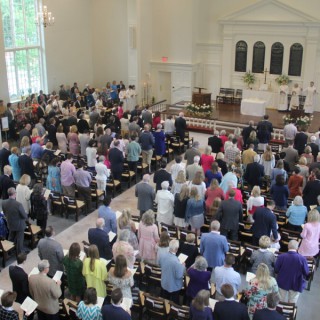
Message from Rev. Dr. John Yates III on September 13, 2026

The Holy Spirit gives us three great gifts: Adoption, Assurance, and Abundance.

Spiritualities #2: This message focuses on teaching "new creation realities" and the vital importance of believers coming into the spiritual knowledge of who they are in Christ. I warn that believers are often defeated and held back simply due to a lack of spiritual knowledge [Hosea 4:6]. To counteract this, I review verses from the book of Ephesians, emphasizing that believers are blessed [1:3], chosen [1:4], predestinated [1:5], accepted [1:6], redeemed and forgiven [1:7], obtained an inheritance [1:11] and sealed by the Holy Spirit [1:13]. I highlight Paul's apostolic prayer that believers would receive the spirit of wisdom and revelation in the knowledge of Christ [1:17], waking up to the fact that they are seated together with Christ in the heavenly places [2:6]. Ultimately, believers must recognize that their lives are hidden with Christ in God [Colossians 3:3] and that they have been translated out of the kingdom of darkness into the Kingdom of light [Colossians 1:13], gaining the truth that makes them free indeed [John 8:31-32, 36]. Part 2 Armed with this knowledge, believers can actively develop their faith and walk in the authority of spiritual gifts, which must always be operated through divine love and compassion [Matthew 14:14; 1 Corinthians chapter 13]. I urge believers to be imitators of Christ [Ephesians 5:1] and to daily confess that they are new creations [2 Corinthians 5:17] and the righteousness of God [2 Corinthians 5:21]. Having received the Divine nature of God [2 Peter 1:4] and the measure of faith [Romans 12:3], believers are empowered to exercise true authority. I point to Mark 16:17-18 to demonstrate that believers have authority in Jesus' name to cast out devils, speak in tongues and lay hands on the sick so they recover. Believers are not beggars but joint-heirs with Christ [Romans 8:16-17] and kings who reign in life [Romans 5:17], called to exercise spiritual dominion over the earth as God intended from the very beginning [Genesis 1:26-28]. Join me as we delve into these Scriptures for an exciting time of exhortation. Selah! [For more: Copy and Paste or Enter into ChatGPT.com, "Create a Study Guide for Episode #122 Spiritualities #2 from Abounding Love Ministries"]. www.aboundinglove.org

In order to become more like Christ we have to think like Him...and God's Word teaches us exactly how we can do so! Share. Make it a great day in the Love & Lordship of Christ (Romans 12:2; 2 Corinthians 10:3-5)!

Who I Am in Christ - Part 2 - Humbled in Christ (Romans 5:6-8) Pastor Ron Laney, Pleasant Grove Church, Carthage, MS. www.PleasantGrove.info

In our final sermon from the summer series on Romans, the Reverend Jacob Smith shares with us St. Paul's vision for Christians in the world.

Living The Christian Life | Week 3: How To Find My Place in the Body of Christ | Romans 12:6-8 // Ryland Walter // What does it look like to truly follow Jesus when most everyone else is going the other way? In this series we'll explore how the gospel transforms not just what we believe, but how we live every day. Drawing from Romans chapters 12, and the life of Jesus, we'll learn how to follow Him with courage and conviction, embracing a countercultural faith that brings purpose even when it means going against the flow.

Get your copy of our 2026 Annual Read: Tozer on the Son of God by A.W. Tozer.First Time?Start Here: https://bit.ly/MarinersconnectcardCan we pray for you? https://bit.ly/MarinersPrayerOnlineYou can find information for all our Mariners congregations, watch more videos, and learn more about us and our ministries on our website https://bit.ly/MarinersChurchSite.FIND US ON SOCIAL MEDIA• Facebook: https://www.facebook.com/marinerschurch• TikTok: https://www.tiktok.com/@marinerschurch• Twitter: https://twitter.com/marinerschurch• Instagram: https://www.instagram.com/marinerschurchSupport the ministry and help us reach people worldwide: https://bit.ly/MarinersGive

In these 3 verses, Paul continues his contrast what marks those who walk according to the Spirit with those who walk according to the flesh. If you know Jesus Christ as your Savior from sin and your One and only hope, what Paul says here is true of you: 1. You Have the Spirit of God and He Has You; 2. You Belong to Jesus Christ Himself; 3. You Live because of Christ's Righteousness; and the wonder of Easter: 4. Your Mortal Body Will Be Raised to Eternal Life

Service from Christian Bible Church in Cissna Park, Illinois. Pastor: Steve Hall1) The Principle of Lordship2) The Principle of Membership3) The Principle of Stewardship4) The Principle of Fellowship
Get your copy of our 2026 Annual Read: Tozer on the Son of God by A.W. Tozer.First Time?Start Here: https://bit.ly/MarinersconnectcardCan we pray for you? https://bit.ly/MarinersPrayerOnlineYou can find information for all our Mariners congregations, watch more videos, and learn more about us and our ministries on our website https://bit.ly/MarinersChurchSite.FIND US ON SOCIAL MEDIA• Facebook: https://www.facebook.com/marinerschurch• TikTok: https://www.tiktok.com/@marinerschurch• Twitter: https://twitter.com/marinerschurch• Instagram: https://www.instagram.com/marinerschurchSupport the ministry and help us reach people worldwide: https://bit.ly/MarinersGive

Topics: Turning From Sins, Turn From Sins, Salvation by Grace Alone, Ephesians 2:8-9, Eternal Consequences of Sin (Romans 6:23), The Meaning of Repentance (Metanoeo), Freedom and Permission in Christ (1 Corinthians 6:12), True Identity as Holy Saints, Romans 6:1-2, Grace Teaches Upright Living (Titus 2:11-12), The Trap of Man-Made Traditions, Mark 7:9, Rest in Christ's Light Yoke, Matthew 11:28-30, Cleansing the Conscience by Faith (Hebrews 9:14), Complete Salvation Through Christ's Life (Hebrews 7:25), Permanent Cleansing vs Repeated Rituals (Hebrews 10:22), Drawing Near to God Through Faith, Hebrews 11:6, Desiring an Honorable Conscience, Hebrews 13:18, Danger of Self-Righteous Hypocrisy, Matthew 23:3-4, The Heavy Burden of Legalism (Luke 11:46), How the Law Stirs Up Sin (Romans 6:14, Romans 7), Freedom from Condemnation in Christ, Romans 8:1, Life in the Spirit vs the Law, Galatians 5:18, Standing Firm in Christian Freedom (Galatians 5:1), Rebuking Legalistic Yokes of Bondage, Acts 15:10, Rightly Dividing the Apostle James, James 4:8, True Context of Deliberate Sin (Hebrews 10:26), The Final Sacrifice of Jesus, Hebrews 9:22, No Judgment in Christ (John 5:24), Boldness on the Day of Judgment (1 John 4:17), Full Forgiveness of All Sins, 2 Corinthians 5:19, Crucified and Resurrected with Christ (Romans 6), Perfected Forever by One Sacrifice (Hebrews 10:14), Living Under Grace Instead of the LawSupport the showSign up for Matt's free daily devotional! https://mattmcmillen.com/newsletter

A sermon on Romans 6:3-11.

Dr. Tom Curran and Fr. Patrick Smith, Pastor of St. Augustine Catholic Church, Washington, DC, share insights on God's Indomitable Love in Christ (Romans 8:35-39) on the seven threats that separate people from feeling the love of Christ: anguish, distress, persecution, famine, nakedness, peril, and the sword.

Romans 12 marks a major turning point in Paul's letter. After explaining God's mercy, grace, and salvation through Christ, Paul answers the question: How should Christians live? His answer is simple yet life-changing: Become a living sacrifice. In this sermon, we dive deeply into Romans 12:1-2 and discover what it truly means to offer our lives to God every day.In this lesson you'll learn: Why God's mercy is the foundation for Christian living What it means to present your body as a living sacrifice How everyday life becomes an act of worship The difference between conforming to the world and being transformed by Christ How renewing your mind changes your life Understanding God's will as daily sanctification—not just major life decisions Practical ways to live a life that is holy, acceptable, and pleasing to God God doesn't simply call us to attend worship—He calls us to become worship by living every moment for Him. Every decision, conversation, relationship, and action becomes an opportunity to glorify Christ.Key Scriptures: Romans 12:1-2 Romans 5-11 Romans 6:13 Leviticus 1 1 Corinthians 6:19-20 Ephesians 4:20-32 1 Thessalonians 4:3 If this study encouraged you, be sure to Like, Subscribe, and Share this video with someone who wants to grow in their walk with Christ.Chapters 00:00 Introduction 01:05 Romans 12: The Practical Turn in Romans 03:45 The Mercies of God 05:20 Present Your Body as a Living Sacrifice 09:15 Old Testament Sacrifice and New Testament Worship 12:20 What Is Spiritual Worship? 17:40 Do Not Be Conformed to This World 21:10 Be Transformed by Renewing Your Mind 24:30 Understanding God's Will 29:10 Living the Transformed Life 32:20 Invitation#Romans12 #LivingSacrifice #BibleStudy #ChristianSermon #Faith #Transformation #RenewYourMind #ChristianLiving #ChurchOfChrist #BibleTeaching #JesusChrist #Grace #Discipleship

When life feels like it’s beating you up, it’s tempting to just slip away and hide. But God hasn’t called you to a cave; He’s called you to contend for a legacy. If you’ve just made a decision for Christ, please respond HERE: http://ele.vc/tIepfr Scriptures Referenced: Judges chapter 6, verses 11 through 16 – An angel finds Gideon hiding, calls him mighty warrior Judges chapter 6, verses 25 through 32 – Gideon tears down his father's altar to Baal Judges chapter 1 – Israel let defeated enemies stay in the land 2 Corinthians chapter 5, verse 20 – Paul calls believers ambassadors for Christ Romans chapter 5, verse 8 – Christ died for usSee omnystudio.com/listener for privacy information.

Dead to Sin. Alive in Christ. - Romans 6:1-7 - Pastor Jeren Wentworth

Enslaved to Christ – Romans 6:15–23 by Redemption Church

Here is a detailed breakdown of the July 5, 2026, worship service and Pastor Rhonda Davis's message, organized with clear section headers, bulleted highlights, and a complete Scripture Index. Service Overview & Pre-Sermon Highlights Location: Church of the Harvest (TL Lowry Center) Special Occasion: Independence Day Weekend & America's 250th Anniversary Celebration I. Praise, Worship & Altar Ministry Opening Prayer: The service opened with a focus on celebrating both national freedom and the ultimate freedom found in Christ, inviting the Holy Spirit to fill the room. Miracle & Prayer Focus: Believers were invited to join their faith with the prayer teams at the altars to see God work miracles, declaring that every need must bow to the name of Jesus. Underground Church Reflection: Preachers reminded the congregation of the immense privilege of public worship, noting that members of underground churches globally meet in secret and worship with unprompted passion despite the threat of death. II. Sovereign Moves: Recent Testimonies Pastor Rhonda invited members to share their recent experiences from the unique altar ministry lines held the previous week: Tina Toles: Shared that despite initial fear and hesitation to step into the prayer line, she experienced an overwhelming, unprecedented power of the Holy Spirit that left her with a deep, lasting peace throughout her work week at Chick-fil-A. KK (Mrs. Smith): Expressed that after a period of being away from church and feeling like she was simply "floating" through life, stepping into the line brought an immediate sense of peace. Pastor Rhonda ministered to her, saying, "God said, I am yours," validating a real, physical encounter with the Holy Spirit. III. Harvest Announcements Wednesday Night Series: Summer in the Psalms continues this Wednesday at 7:00 PM at the TL Lowry Center, featuring Pastor Joe Robinson teaching from Psalm 139. Next Sunday Guest Speaker: Welcoming back Lori Wilke, an anointed speaker, singer, and author with a deep prophetic teaching edge. Community Outreach Impact: Pastor Rhonda thanked the church for its continued financial stewardship, highlighting recent works funded by tithes and offerings: reaching the homeless, jail/prison ministries, assisting single mothers, and completely covering the rent for a local family in dire straits. Special Presentation: 250th Celebrate Freedom Tribute Led by Army Veteran Michael Cook (who served 10 years stateside), the service paused to honor first responders and military veterans present in the congregation: Veteran / First Responder Branch / Conflict Bob Rumbaugh U.S. Army (Gulf War) & Naval Reserve (3 Years) Ralph Steven Beavers U.S. Army Zachary Wages U.S. Army Kit Carson Local Firefighter / First Responder Dale Perkins U.S. Air Force Michelle Hill U.S. Navy James Henry U.S. Army (Staff Sergeant) Liliana Henry U.S. Army (Private First Class) Presentation of the Colors: The United States flag was formally presented by Tina Toles, a retired Master Sergeant who served 21.5 years in the U.S. Air Force Air Combat Command, with deployments to Japan, Turkey, Germany, and Italy. Tribute Video: A special media presentation featuring interviews with church children and reflections on "American Grit," the founding fathers, and the constitutional right to pursue happiness was highlighted and credited to Austin and the media team. Sermon Outline: "Freedom Worth Celebrating" Preacher: Pastor Rhonda Davis I. Point 1: Land of the Free, Home of the Redeemed The Odds of Grace: Statistically, based on global birth rates, an individual has only a 2% to 3% chance of being born in the United States. A Beacon of Light: Over its 250-year history, America has outlasted its accusers, remaining a democracy through civil war, internal discourse, and external enemies. The nation historically leads the world in sending Christian missionaries to foreign sands and outspends the next three runner-up nations combined in global disaster relief. The Call to Stand: Reading from Galatians 5:1, the church is reminded that Christ sets us free for the purpose of living in actual freedom. Believers must actively choose never to be entangled again by a yoke of spiritual slavery. II. Point 2: Freedom Has a Price The Winter of 1777 (Valley Forge): To understand the value of freedom, Pastor Rhonda recalled General George Washington leading 12,000 under-resourced men into Valley Forge, Pennsylvania, after devastating defeats. 2,000 soldiers died from cold, starvation, and disease. Out of sheer desperation, men boiled their shoe leather for sustenance and left trails of blood in the snow from bare, frostbitten feet—yet they refused to surrender because they believed freedom outweighed personal comfort. The Cost of Spiritual Liberty (Calvary): Moving from Valley Forge to the hill of Calvary, Jesus Christ endured the ultimate price for human liberty. As prophesied in Isaiah 52:14, He was beaten beyond human recognition. Though He possessed the immediate power to call down 10000 angels (Matthew 26), He chose to stay on the cross because He determined our freedom was worth the price. III. Point 3: Two Freedoms, One Source Inherent Human Dignity: True liberty—both the civil freedom to vote and live without government interference, and spiritual freedom—stems from a singular source: God Himself. Because God is free by nature, and because humans are uniquely made in His image (Genesis 1:27), every individual possesses inherent, sacred dignity. The Living Room Jail Cell: Quoting Galatians 5:1 from The Message, Pastor Rhonda warned against trying to add legalism to grace. Living a restricted, legalistic life after being saved is equivalent to being liberated from a maximum-security prison only to build a voluntary jail cell right inside your own living room. IV. Point 4: Don't Go Back to Chains Guarding Against Apathy: History shows nations are rarely conquered by sudden external conquest; instead, they fall through internal apathy and gradually forgetting what it cost to obtain their liberty. Pastor Rhonda recalled a WallBuilders podcast interview by historian David Barton featuring a Washington State pastor who had to sue the government in 2020 because secular establishments were permitted to stay open while churches faced criminal misdemeanors for outdoor worship and singing. Identifying Modern Chains: The enemy constantly attempts to lure believers back into old bondages. These chains manifest as: Rehearsing past failures on a continuous mental playlist. Slipping back into toxic, generational family mindsets. Trapping oneself in people-pleasing loops and performance mentalities. Prophetic Deliverance: Pastor Rhonda shared a personal moment from her youth when minister Billy Burke gave her a word detailing a "ball and chain" around her ankle representing the conditional expectations of others. Breaking that chain requires standing firm—derived from the Greek word stekete, meaning to stubbornly hold your ground, defend your position, and completely refuse to be moved. V. Point 5: How to Steward and Stand Firm in Liberty Know What You Have: You cannot properly steward what you do not understand. Taking inventory of spiritual rights reveals that there is zero condemnation for those in Christ (Romans 8:1), sin is no longer your master (Romans 6:14), and the same Holy Spirit that raised Jesus from the dead lives inside you (Romans 8:11). Pastor Rhonda referenced a 2022 table talk discussion with Lance Wallnau and Cindy Murdock, recalling Wallnau's story of Donald Trump in 2015 challenging silent ministers to defend their biblical rights, which later resulted in the executive repeal of the restrictive Johnson Amendment. Use Freedom for Something Greater: Freedom is never the final destination; it is simply the vehicle. According to Galatians 5:13, liberty must never be used to satisfy selfish, sinful natures, but rather to serve one another in love. The sacrifices of past generations are dignified when we use our voices to speak truth with grace and act as the hands and feet of Jesus to help the homeless, the prisoner, and the vulnerable. Let the Holy Spirit Lead: Believers must maintain an open mind to how God wants to uniquely deploy their skills, influence, and talents across different seasons of life. It does not require unusual human ability to shift the world—only a caring heart, a determined mind, and a willing spirit. VI. Conclusion: Intercession for the Land The Command to Pray: Aligning with 1 Timothy 2:1-2, the church corporate is called to make supplications, prayers, and intercessions for all people, explicitly including kings and all secular authorities, so that believers may lead quiet, peaceful, and godly lives. A Promise of Healing: God is not finished with America. Relying on Lamentations 3:23 (His mercies are new every morning) and the covenant promise of 2 Chronicles 7:14, the church closed by corporate prayer, repenting of negative mindsets, asking for systemic healing from the White House to the communities, and calling a wayward generation back into their divine identity. Scripture Index Here are the primary scriptures read, cited, or expounded upon during the service: Psalm 139 (Referenced) – The focal text announced for the upcoming Wednesday night teaching by Pastor Joe Robinson. Galatians 5:1 > "Stand fast therefore in the liberty wherewith Christ hath made us free, and be not entangled again with the yoke of bondage." (Also quoted from The Message: "Christ has set us free to live a free life. So take your stand! Never again let anyone put a harness of slavery on you.") Isaiah 52:14 (Referenced) – The prophetic description of the Messiah being marred and beaten beyond human recognition. Matthew 26 (Referenced) – Jesus declaring He could command twelve legions of angels to deliver Him, yet choosing the cross. Genesis 1:27 > "So God created man in his own image, in the image of God created he him; male and female created he them." Romans 6:14 > "For sin shall not have dominion over you: for ye are not under the law, but under grace." Romans 8:1 (Referenced) – There is therefore now no condemnation to them which are in Christ Jesus. Romans 8:11 > "But if the Spirit of him that raised up Jesus from the dead dwell in you, he that raised up Christ from the dead shall also quicken your mortal bodies by his Spirit that dwelleth in you." Galatians 5:13 > "For, brethren, ye have been called unto liberty; only use not liberty for an occasion to the flesh, but by love serve one another." 1 Timothy 2:1-2 > "I exhort therefore, that, first of all, supplications, prayers, intercessions, and giving of thanks, be made for all men; For kings, and for all that are in authority; that we may lead a quiet and peaceable life in all godliness and honesty." Lamentations 3:22-23 (Referenced) – The Lord's mercies are not consumed; they are new every morning: great is Thy faithfulness. 2 Chronicles 7:14 > "If my people, which are called by my name, shall humble themselves, and pray, and seek my face, and turn from their wicked ways; then will I hear from heaven, and will forgive their sin, and will heal their land." Numbers 6:24-26 (The Benediction) > "The Lord bless you and keep you; the Lord make his face shine on you and be gracious to you; the Lord turn his face toward you and give you peace." "Thanks for listening! For more information, visit churchoftheharvest.com. Don't forget to follow us on Facebook and YouTube @cothcleveland.


Sermon text: Romans 7:15-25a

June 28, 2026 sermon from Providence Reformed Church Las Vegas by Pastor Travis Peterson

Have you ever been disappointed by a Christian? What causes that, and what should you do about it? --- The Apostle Paul longed to get to Rome. He knew that if the gospel were well-established in Rome, it would reach the ends of the known world. Before he ever got there, Paul wrote one of the greatest works on the Christian faith ever written - his letter now entitled “Romans.” Join us as we explore highlights from this incredible letter and see why, for Paul, there was no place like Rome. Sermon Notes: http://bible.com/events/49627547 Submit a Question: bit.ly/BeyondSundayQuestions

Friends, we live in a world that works really hard to program us to believe we don't have to follow anyone. That we are the masters of our fate, and the captains of our souls. Friends, that is not freedom, it is a burden we were never meant to carry. May you be reminded of the gracious God give you grace and freedom to live under the rule of Jesus this week!

What does the sacrifice of loving obedience look like in our life in Christ? Who/what are you worshiping by your daily life? Share. Make it a great day in the Love & Lordship of Christ (Romans 12:2)!

At Bethany, We are God's People who are: Gathered! Connected! Sent!We want to connect with you through this Podcast! Leave us a comment! Tell us where you are at! Leave a Review to help our audience grow!--June 21, 2026 -- Pr. Seth Moorman -- "Dead to Sin, Alive In Christ!" -- Romans 6:12-2312 Therefore, never let sin rule your physical body so that you obey its desires. 13 Never offer any part of your body to sin's power. No part of your body should ever be used to do any ungodly thing. Instead, offer yourselves to God as people who have come back from death and are now alive. Offer all the parts of your body to God. Use them to do everything that God approves of. 14 Certainly, sin shouldn't have power over you because you're not controlled by God's laws, but by God's favor. 15 Then what is the implication? Should we sin because we are not controlled by God's laws but by God's favor? That's unthinkable! 16 Don't you know that if you offer to be someone's slave, you must obey that master? Either your master is sin, or your master is obedience. Letting sin be your master leads to death. Letting obedience be your master leads to God's approval. 17 You were slaves to sin. But I thank God that you have become wholeheartedly obedient to the teachings which you were given. 18 Freed from sin, you were made slaves who do what God approves of. 19 I'm speaking in a human way because of the weakness of your corrupt nature. Clearly, you once offered all the parts of your body as slaves to sexual perversion and disobedience. This led you to live disobedient lives. Now, in the same way, offer all the parts of your body as slaves that do what God approves of. This leads you to live holy lives. 20 When you were slaves to sin, you were free from doing what God approves of. 21 What did you gain by doing those things? You're ashamed of what you used to do because it ended in death. 22 Now you have been freed from sin and have become God's slaves. This results in a holy life and, finally, in everlasting life. 23 The payment for sin is death, but the gift that God freely gives is everlasting life found in Christ Jesus our Lord. --GWhttp://www.bethanylutheran.orghttp://www.facebook.com/Bethany.Long.Beachwww.youtube.com/c/BethanyLutheranLongBeach

In this message, Pastor Sam Picken from C3 Assembly in Toronto unpacks a robust, biblical vision of discipleship and equipping in the local church, drawing primarily from Ephesians 4 and the “net‑mending” call on every believer.Built around Ephesians 4:11–16, this sermon explores how Christ gives apostles, prophets, evangelists, pastors, and teachers “to equip his people for works of service, so that the body of Christ may be built up… attaining to the whole measure of the fullness of Christ.” Pastor Sam clarifies that:Christians are born again in a moment (John 3:3–7; 2 Corinthians 5:17), fully righteous in Christ (Romans 3:21–26),But disciples are made over time, moving from spiritual infancy to maturity (Hebrews 5:12–14; 1 Corinthians 3:1–3).Using the language of Ephesians 4:14, he contrasts mature disciples with “infants, tossed back and forth by the waves” of culture, ideology, and deceitful schemes (John 10:10; Colossians 2:8). The message calls believers to resist a me‑centered, consumer Christianity (Luke 9:23–25; Mark 8:34–36) and embrace a life of surrender, holiness, and mission.Pastor Sam lays out a holistic view of discipleship that includes:Personal devotion and prayer (Matthew 6:5–13; Acts 2:42)Weekend services and corporate worship (Hebrews 10:24–25; Psalm 122:1)Godly friendships and groups (Proverbs 13:20; Acts 2:46–47)Serving on teams and submitting to leadership (Mark 10:43–45; Hebrews 13:17; 1 Peter 4:10)Drawing on the Greek word for “equip” (katartismos) in Ephesians 4:12, he illustrates discipleship as mending, repairing, and strengthening nets—restoring people to purpose (Matthew 4:18–22), arranging their lives according to God's design (Romans 12:1–2), and helping them become “useful to the Master” (2 Timothy 2:20–21).Throughout the sermon you'll hear:A prophetic encouragement for a young couple to step into calling and strict training (1 Corinthians 9:24–27)A challenge to shift priorities—finances, time, and relationships—toward the kingdom (Matthew 6:19–24, 33; 2 Corinthians 9:6–8)A call for every believer to move from only receiving to also pouring out (John 7:37–38; Acts 20:35)Anchored in John 6:35, Jesus as the “bread of life,” Pastor Sam describes discipleship as one beggar showing another beggar where to find bread. Every conversation, text, coffee, and small group becomes an act of sharing that bread and mending the net so others can step into fullness of life in Christ (John 10:10; Colossians 1:28–29).The message closes with Romans 15:13, praying that the God of hope would fill believers “with all joy and peace as you trust in him,” so they overflow with confident hope through the Holy Spirit—and join God's work of equipping everyone to equip everyone.

What role does baptism play in the life of a new believer and what does it signify? How many times does someone have to be baptized? Are we required to be baptized before we can partake in the Lord's Supper? In his sermon, “United In Death, United In Life: Baptism As the Sign of Union With Christ” centered on Romans 6:1-5, Pastor Alex Trotter answers these questions and more as he shows how baptism is one of the two ordinances of the church, and he explains how believer's baptism is one of the first commandments required of every new follower of Christ.
Can anything separate us from the love of God?In one of the most powerful passages in Scripture, Romans 8:31–39 reminds Christians of the incredible assurance found in Jesus Christ. Paul answers some of life's deepest fears—guilt, condemnation, suffering, doubt, and even death—with a simple but profound truth: God is for us.In this lesson, we explore:• What Paul means when he asks, "If God is for us, who can be against us?" • How the cross proves God's love and commitment to His people • Why Christ's death, resurrection, reign, and intercession give believers confidence • What it means to be "more than conquerors" through Christ • Why suffering is not evidence that God has abandoned us • The promise that nothing can separate God's children from His loveWhether you're struggling with guilt from past sins, facing difficult circumstances, or simply needing encouragement in your walk with Christ, Romans 8 offers unwavering hope and assurance.Key Passage: Romans 8:31–39"In all these things we are more than conquerors through Him who loved us."If this lesson encouraged you, consider liking, subscribing, and sharing it with someone who needs to hear the hope found in Christ.#Romans8 #MoreThanConquerors #GodIsForUs #ChristianHope #BibleSermon #Faith #JesusChrist #NoCondemnation #NoSeparation #ChurchOfChrist

New Life in Christ (Romans 8:1-4) | 062126 by One Ancient Hope Presbyterian Church
Living a saved life means living as a servant of God the Father, Son and Holy Spirit! Share. Make it a great day in the Love & Lordship of Christ (Romans 12:1; Mark 10:45)!
In this sermon, Pastor Jake unpacks Revelation 15 and invites us to “follow the smoke” of God's presence through the wilderness of this age. Drawing rich parallels between Revelation and the Exodus story, he shows how the same fire that judges evil (Revelation 15:1, 7–8; Exodus 9–12) becomes protection and sanctuary for those who stand in the “burned over place” of the cross (Isaiah 53:4–6; Galatians 2:20).Key themes include:New Exodus & the WildernessSee how Revelation presents the church as God's people on a wilderness journey (Revelation 12:6, 14; 15:2–4), echoing Israel's path from Egypt to the Promised Land (Exodus 14–17; Deuteronomy 8:2–3). We are learning to guard our allegiance to the Lamb (Revelation 14:1–5) and resist the dragon, the beasts, and Babylon (Revelation 12–13; 17–18).Plagues, Justice, and the Prayers of the SaintsExplore how the seven bowls of wrath (Revelation 15:1, 7; 16:1–21) mirror the plagues of Egypt (Exodus 7–12) and are connected to the prayers of the saints (Revelation 5:8; 8:3–5). God's judgment is His measured, righteous response to evil (Romans 2:5; 2 Peter 3:9–10) and His answer to our longing for justice (Luke 18:1–8).Sea of Glass & Song of Moses and the LambJohn's vision of the sea of glass glowing with fire (Revelation 15:2) recalls Israel standing safe on the far side of the Red Sea (Exodus 14:21–31). At the very center of judgment imagery is worship: the people of God singing the song of Moses and the Lamb (Revelation 15:3–4; Exodus 15:1–18; Psalm 98:1–3). Worship and presence are inseparable (Revelation 4–5; John 4:23–24).Smoke, Glory, and the Way InThe temple filled with smoke (Revelation 15:5–8) points back to God's glory filling the tabernacle and making it unenterable (Exodus 40:34–35) and the temple scenes of Isaiah and Ezekiel (Isaiah 6:1–7; Ezekiel 10:3–4). Pastor Jake shows how this is not exclusion but invitation: the Lamb is both sacrifice and high priest (Hebrews 4:14–16; 9:11–14; 10:19–22), the only way into God's presence (John 14:6).From there, the message presses home three Spirit-formed works in our wilderness journey:Provision – Learning dependence as God provides in supernatural ways (Exodus 16–17; Matthew 6:25–34; Philippians 4:19). True maturity is not independence from God but joyful reliance on Him (John 15:5).Protection – Living boldly in a world where the dragon wages war on the church (Revelation 12:17; 13:7), yet knowing that nothing can separate us from the love of Christ (Romans 8:31–39; John 10:27–30; Psalm 91:1–4).Preparation – Allowing the wilderness to expose and sanctify our hearts (Deuteronomy 8:2; 1 Peter 1:6–7; James 1:2–4). Through community, correction, and surrender, we are being formed into a people ready for honorable use (2 Timothy 2:20–21) and for the age to come (Revelation 21:1–5).If you're walking through fire, wrestling with dependence, or facing spiritual opposition, this message calls you to stand in the finished work of Jesus, follow the smoke of His presence, and trust His provision, protection, and preparation in the wilderness.
Salvation is much more than just saying you believe and showing up at church...although many have been led or allowed to believe that's it! Share. Make it a great day in the Love & Lordship of Christ (Romans 1:16; James 1:21)!
Discover the totality of Christ's salvation...past, present and future...and how it should impact your life and others! Share. Make it a great day in the Love & Lordship of Christ (Romans 1:16; James 1:21)!
What are the practical commands and steps from Scripture that give evidence to your living out the free gift of salvation that you've received in Christ...and are the evidence of your faith and His salvation? Share. Make it a great day in the Love & Lordship of Christ (Romans 12:2; Luke 14:25-35)!
You may not have had the greatest experience with your earthly parents, in particular, your father? However, you probably yearn for a Father's Love! When you receive Christ as Savior and Lord...you become a child of God, the perfect, loving heavenly Father! Share. Make it a great day in the Love & Lordship of Christ (Romans 8:14-17)!
What does it mean to be an heir and receive an inheritance? Even more importantly, what does it mean to be a joint heir with Christ and inherit God's Kingdom with Him? Share. Make it a great day in the Love & Lordship of Christ (Romans 8:16-17; 1 Peter 1:4)!

As Paul has unpacked the blessings that come with justification by faith, he highlights just how great a blessing justification is by presenting a "before" and "after" contrast between where we used to be and where we are now. Before in Adam, we belonged to a fallen humanity condemned to death. But now in Christ, we belong to a redeemed humanity justified for life. Jesus is the "greater Adam", whose exclusive and exhaustive work paints a brand new picture.
As Paul has unpacked the blessings that come with justification by faith, he highlights just how great a blessing justification is by presenting a "before" and "after" contrast between where we used to be and where we are now. Before in Adam, we belonged to a fallen humanity condemned to death. But now in Christ, we belong to a redeemed humanity justified for life. Jesus is the "greater Adam", whose exclusive and exhaustive work paints a brand new picture.

Series: OtherService: You Are From GodType: You Are From GodSpeaker: Scott Taylor & Tyler HallAt the end of Romans the Apostle Paul emphasizes his deep relationships with the Christians in Rome. He makes an explicit effort to name specific people he wanted to give praise to for work they have done to further Paul's journeys and the gospel of Christ. He also includes men that he is with who want to reach out and encourage the members of the Church of Rome for the sake of motivating them and sharing love in the body of Christ. You Are From God is a podcast dedicated to the teaching of the Bible and the Christian faith.…

In this episode, Jim Van Gelderen challenges the common mindset of “seeing is believing” by presenting a biblical reality: in the Christian life, believing is seeing. Drawing from Scripture and personal illustration, he explains how faith opens our eyes to the unseen spiritual realm—where our identity in Christ and fellowship with God are already real. This episode calls believers to stop waiting for visible proof and instead step into the reality God has already declared. Topics Discussed The contrast between “seeing is believing” and “believing is seeing” Living for the seen (temporal) vs. unseen (eternal) realm Thomas and the danger of requiring sight before faith Experiencing real fellowship with God in the unseen realm The meaning of being “in Christ” (Romans 6, Ephesians 1–2, 2 Corinthians 5) The biblical concept of “reckoning” as an act of faith Faith as spiritual eyesight How believing God's Word leads to real spiritual experience and victory Key Takeaways The unseen realm is not less real—it is more real and eternal. Faith is how we “see” spiritual truth and experience God's reality. Your identity in Christ is already true, whether you feel it or not. “Reckoning” is choosing to agree with God's Word regardless of emotions. Fellowship with God is a real, experiential relationship in the spiritual realm. Victory, joy, and transformation flow from believing what God has said. If you've been encouraged by this podcast, please take the time to give us a five-star rating and write a brief review. That would help tremendously in getting the word out and raising the visibility of the Thee Generation for others. For more faith inspiring resources and information about joining Thee Generation, please visit theegeneration.org.

When you look in Scripture, you can find some very stunning examples of people who had pockets of fear—and I'm talking about some great saints of old. For example, Abraham had a pocket of fear about being killed. Here is a man described in Hebrews 11 as a man of great faith. God called him from a prosperous and comfortable life and said, Go to a land I will show you, and Abraham simply obeyed. He packed up and went to a place he had never been before, leaving his family and familiar surroundings behind. Even though he did not know where he was going, he went. That took great faith. Would you be able to do what he did? He also was able to believe God could give him a son even though his wife was barren and they both were past the age of childbearing. That took tremendous faith. What really marks Abraham as a great man of faith was his willingness to offer that miracle son as a sacrifice because he believed God could raise the dead if necessary. Every time I read that story, I shake my head at this man of incredible faith. Yet, when he was traveling in Egypt, on his journey to the Promised Land, he revealed a pocket of fear. Abraham was afraid the Egyptians would kill him because of his beautiful wife, Sarah, whom they would want for their own. In fear, he told Sarah to tell less than the truth—to say she was his sister—to keep them from killing him. You’ll find this story in Genesis 12, and as I read it recently, I thought, “Abraham, what in the world was your problem? You believed God in all these huge areas, but you didn’t believe God could keep you and Sarah alive in Egypt? Where was your great faith?” Abraham had a pocket of fear, and it led him into sin. It began to dawn on me we all have these pockets of fear. We can have great faith in some areas, at some times, and then our faith falls apart the next day or the next hour or when we round the next corner. Paul wrote to the Romans: For you did not receive a spirit that makes you a slave again to fear, but you received the Spirit of sonship. And by him we cry. ‘Abba, Father' (Romans 8:15). Whatever you are fearful about, it’s not coming from the Lord. Of course, we have an enemy who loves to scare us to death about anything he can, because when we are fearful, it means we’re not trusting God. What is your pocket of fear? Let’s look at some of the more common ones. Is money your pocket of fear? Are you fearful of not having enough money, of losing your job, of losing your house, of going bankrupt, or of not being able to afford what you need or want? Frankly, this was a pocket of fear for me. Satan would try to get me thinking, “What if something happens? How will you pay your bills? You could lose your house, all your assets, your retirement money, and everything you own. You could go through all that in no time flat. What in the world will you do then?” That was a pocket of fear for me. Here's what I learned to do with this pocket of fear, when it started to possess me. I would say to myself, “Okay, suppose all those things happen. Imagine the worst: No money, no income, no house, no savings, no retirement. You’d survive; somebody in the family or some close friend would take you in until you could get on your feet again. It would not destroy you.” Then I would make myself claim a promise from the Bible. This was an act of my will, not my emotions. Pretty soon I began to laugh at myself for allowing my thoughts to go to this pocket of fear. It was a stronghold that held me for far too long. I'm so glad by God's grace I emptied that pocket of fear. Some good promises to claim for this pocket of fear are: Do not worry about your life, what you will eat or drink: or about your body, what you will wear… Look at the birds of the air; they do not sow or reap or store away in barns, and yet your heavenly Father feeds them. Are you not much more valuable than they (Matthew 6:25-26)? And my God will meet all your needs according to his glorious riches in Christ Jesus (Philippians 4:19). By exposing that pocket of fear to the light, by bringing it out in the open and forcing yourself to face the fear, it loses its teeth. It can’t bite you, because you’ve accepted the worst may and could happen, and if it does, God’s Word is still steadfast. He will deliver you. A good first principle in dealing with pockets of fear is to bring them out in the open and talk to God about them. Then find a verse of scripture to counteract them. Are you afraid of being alone? This fear can really take you down the wrong path, and some people are so possessed by it they’ve come to believe nothing is worse than being alone. I know; l used to be that way. I know many single people who are intelligent, have good jobs, and are very successful in many areas of their lives. But they are so fearful of being single forever that very often this pocket of fear causes them to stay in relationships far too long or allow relationships to develop which were obviously wrong from the beginning. Are you struggling with that pocket of fear—the fear of being alone or being single or not having someone to live your life with? If you allow this fear to continue, it will grow stronger and start to control your life. It could cause you to make very bad choices, and that could lead to misery. Will you bring this pocket of fear into the light? Think about it: What is so terrible about being by yourself? You can do what you want to do, spend your money the way you want to, eat when you want and what you want. Imagine what it would be like to be with the wrong person; aloneness is highly preferable to being with someone who is not right for you. Face the fact that you might be alone or single for the rest of your life. Get it out in the open and expose it to the light. Does it mean you cannot have a meaningful life? Of course not! This fear of being alone is an unreasonable fear. And here's the thing, the more you reach out to others and start helping others, the more your life will become so full of love and meaningful relationships, you’ll covet some time alone. Then, find some Scripture to remind you of God’s eternal presence in your life. Jesus promised he will never leave us or forsake us (Hebrews 13:5). Nothing you can name will ever separate you from the love of God that you have in Christ (Romans 8:38-39). Concentrate on God’s promises to you, and defeat that pocket of fear of being, alone. It’s a monkey on your back, and you don’t need it. Are you fearful of rejection? For some people, being accepted, liked, and having the approval of others is more important than anything else, so that can easily lead to this fear of rejection. When we are fearful of being rejected, we allow that person or group who might reject us to have a lot of control over us. If I live in fear that you may reject me, you have a great deal of leverage in my life. I will do and say things to try to please you, to avoid upsetting you, and to gain your approval. Usually, the fear of rejection looks anemic when we bring it into the light. Are you willing to do that? Just expose it—admit you are fearful of being rejected and then ask yourself, “Why? Why is it so important for me to have the approval of this person? Why am I allowing them to have such power over me?” Probably the truthful answers to those questions will surprise you and you’ll see how foolish it is to live with that pocket of fear. Are you afraid of failing? When failing is fearful to you, it keeps you from doing very much because the road to success is filled with failures. Anything worth doing is worth doing wrong until you get it right! Fear of failure will rob you of many achievements. Or it will drive you to perfectionism and workaholism. Are you afraid of facing the reality that you can and will fail, just like everybody else? Is it difficult for you to believe you’re not as good as you think you are? Fear of failure may have a lot of pride wrapped up in it. It will be a great help if you’ll bring this fear into the open and expose it. Ask yourself, “So, what will happen if I fail? If I try and it doesn’t work out, will the world stop revolving?” The sooner you expose that fear to the light, the sooner you can find victory over it through God’s Word and prayer. Why is it important for us to deal with these pockets of fear? Because any area of fear is an area we are not trusting God, and without faith it is impossible to please God. When I have a pocket of fear, I know God is very displeased since it shows I don’t have faith in that area. You’ll remember Abraham had a pocket of fear that led to a very disgraceful episode in his life. How could such a man of faith have such a pocket of fear? Abraham found himself in this predicament because he was not totally obedient. God never intended for him to go to Egypt: that was Abraham’s idea to avoid a famine. Again, Abraham couldn’t trust God to feed them in a famine, so he came up with his own plan and did it his way by going to Egypt. One fear led to another, and that caused Abraham to sin. Disobedience will get us into these places of fear, and fear will cause us to disobey. John wrote there is no fear in love. But perfect love drives out fear… The one who fears is not made perfect in love (1 John 4:18). Back to Jesus—loving him supremely, making him Lord in every area of our lives, focusing our thoughts on him, spending time in his presence, knowing his Word better and better. This will drive out those pockets of fear. What is your pocket of fear today? Will you bring it out in the open, confess it, find Scripture to counteract it, and then focus on loving Jesus more perfectly in that area? If so, that fear will have to go, and you’ll be free from the control it has over you now. Truth sets you free, and Jesus is Truth. I urge you to pursue his victory over the pockets of fear in your life. You will please him when you do.

Dwell in the secret place.There is a place that God reveals to those who are willing to enter.A place that is not defined by circumstances, or what is happening around you, but by His presence.In this place, you are not weak… you are strengthened.You are not vulnerable… you are covered.You are not defined by what you are facing… you are anchored in who He is.This is the place where you begin to see differently, speak differently, and walk with a level of authority that cannot be taken from you.It is not a distant or unreachable place.It is the secret place.The place where you stand with your Father, where fear loses its voice, and where every lie that once tried to define you is exposed.In this place, what once felt overwhelming no longer has the power to control you.From this place, you speak with authority… not as someone striving to become, but as one who already belongs.As co-heirs with Christ (Romans 8:17), as children of God (Galatians 3:26), you begin to move from a position of identity, not from insecurity.I encourage you… spend time in the secret place with God.I also encourage you to read or listen to my book “necessary.” chapter titled ‘The Secret Place.' Audiobook and videobook at UnlockingGreatness.comMuch love,Z. (Zenja Glass)Mentor and Author of “necessary.”UnlockingGreatness.comVisit https://www.UnlockingGreatness.com
© 2020-2026 Ivy Podcast Discovery LLC
