
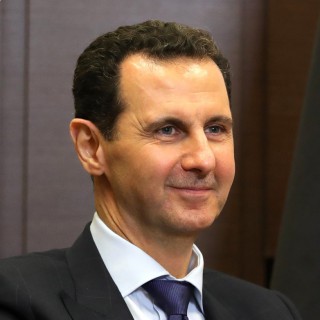
President of Syria since 2000
POPULARITY

26 episodes with bashar al assad

11 episodes with bashar al assad

16 episodes with bashar al assad

17 episodes with bashar al assad

9 episodes with bashar al assad

11 episodes with bashar al assad

6 episodes with bashar al assad

6 episodes with bashar al assad

11 episodes with bashar al assad

7 episodes with bashar al assad

2 episodes with bashar al assad

4 episodes with bashar al assad

6 episodes with bashar al assad

2 episodes with bashar al assad

3 episodes with bashar al assad

10 episodes with bashar al assad

3 episodes with bashar al assad

4 episodes with bashar al assad

6 episodes with bashar al assad

7 episodes with bashar al assad

2 episodes with bashar al assad

3 episodes with bashar al assad

3 episodes with bashar al assad

8 episodes with bashar al assad

2 episodes with bashar al assad

9 episodes with bashar al assad

8 episodes with bashar al assad

Alepo, la capital económica de Siria, quedó devastada por los combates entre las fuerzas rebeldes y el régimen entre 2012 y 2016. El terremoto de 2023 también dañó gravemente el casco antiguo. Sin embargo, hoy en día se están llevando a cabo trabajos de reconstrucción, especialmente de los monumentos históricos de la ciudad. ¿Cómo avanza esta titánica labor en la capital económica de Siria? Reportaje de Dana Alboz, Sophie Guignon y Yasser Shahrour para France 24.

It was another week of abundant news stories and Jim was ready to present them to you from a Christian perspective. Here's a sample from the broadcast: --President Trump has insisted that the U.S. maintains total control of the Strait of Hormuz. --The U.S. has publicly rejected Israeli Defense Minister Katz's declaration that Israeli troops will remain in Southern Lebanon for the long term. --U.S. officials confirmed Wednesday that the U.S. military will finish withdrawing its troops from Iraq by the end of September. --A Syrian court sentenced ousted Syrian President Bashar al-Asaad and his younger brother to death in absentia for crimes against humanity and war crimes during Syria's 14 year conflict that left about half a million people dead. --The Trump administration has reached an agreement with Syria and Israel for the International Atomic Energy Agency to remove nuclear material stored at a covert site in Syria. --Pakistan's defense minister has called for Islamic nations to set aside their differences and join Islamabad's defense agreement with Saudi Arabia and Turkey to form a military alliance along the lines of NATO. --Colombia has become the second nation to recognize Israeli sovereignty over the Golan Heights. --The U.S. Senate adjourned last weekend after a long night of votes in a debate that resulted in a failure to pass the Save America Act. --Senate Majority Leader John Thune sent the Senate home for 37 days yet scheduled 11 pro forma sessions to block President Trump from making any recess appointments.

It was another week of abundant news stories and Jim was ready to present them to you from a Christian perspective. Here's a sample from the broadcast: --President Trump has insisted that the U.S. maintains total control of the Strait of Hormuz. --The U.S. has publicly rejected Israeli Defense Minister Katz's declaration that Israeli troops will remain in Southern Lebanon for the long term. --U.S. officials confirmed Wednesday that the U.S. military will finish withdrawing its troops from Iraq by the end of September. --A Syrian court sentenced ousted Syrian President Bashar al-Asaad and his younger brother to death in absentia for crimes against humanity and war crimes during Syria's 14 year conflict that left about half a million people dead. --The Trump administration has reached an agreement with Syria and Israel for the International Atomic Energy Agency to remove nuclear material stored at a covert site in Syria. --Pakistan's defense minister has called for Islamic nations to set aside their differences and join Islamabad's defense agreement with Saudi Arabia and Turkey to form a military alliance along the lines of NATO. --Colombia has become the second nation to recognize Israeli sovereignty over the Golan Heights. --The U.S. Senate adjourned last weekend after a long night of votes in a debate that resulted in a failure to pass the Save America Act. --Senate Majority Leader John Thune sent the Senate home for 37 days yet scheduled 11 pro forma sessions to block President Trump from making any recess appointments.

It was another week of abundant news stories and Jim was ready to present them to you from a Christian perspective. Here's a sample from the broadcast: --President Trump has insisted that the U.S. maintains total control of the Strait of Hormuz. --The U.S. has publicly rejected Israeli Defense Minister Katz's declaration that Israeli troops will remain in Southern Lebanon for the long term. --U.S. officials confirmed Wednesday that the U.S. military will finish withdrawing its troops from Iraq by the end of September. --A Syrian court sentenced ousted Syrian President Bashar al-Asaad and his younger brother to death in absentia for crimes against humanity and war crimes during Syria's 14 year conflict that left about half a million people dead. --The Trump administration has reached an agreement with Syria and Israel for the International Atomic Energy Agency to remove nuclear material stored at a covert site in Syria. --Pakistan's defense minister has called for Islamic nations to set aside their differences and join Islamabad's defense agreement with Saudi Arabia and Turkey to form a military alliance along the lines of NATO. --Colombia has become the second nation to recognize Israeli sovereignty over the Golan Heights. --The U.S. Senate adjourned last weekend after a long night of votes in a debate that resulted in a failure to pass the Save America Act. --Senate Majority Leader John Thune sent the Senate home for 37 days yet scheduled 11 pro forma sessions to block President Trump from making any recess appointments.

It was another week of abundant news stories and Jim was ready to present them to you from a Christian perspective. Here's a sample from the broadcast: --President Trump has insisted that the U.S. maintains total control of the Strait of Hormuz. --The U.S. has publicly rejected Israeli Defense Minister Katz's declaration that Israeli troops will remain in Southern Lebanon for the long term. --U.S. officials confirmed Wednesday that the U.S. military will finish withdrawing its troops from Iraq by the end of September. --A Syrian court sentenced ousted Syrian President Bashar al-Asaad and his younger brother to death in absentia for crimes against humanity and war crimes during Syria's 14 year conflict that left about half a million people dead. --The Trump administration has reached an agreement with Syria and Israel for the International Atomic Energy Agency to remove nuclear material stored at a covert site in Syria. --Pakistan's defense minister has called for Islamic nations to set aside their differences and join Islamabad's defense agreement with Saudi Arabia and Turkey to form a military alliance along the lines of NATO. --Colombia has become the second nation to recognize Israeli sovereignty over the Golan Heights. --The U.S. Senate adjourned last weekend after a long night of votes in a debate that resulted in a failure to pass the Save America Act. --Senate Majority Leader John Thune sent the Senate home for 37 days yet scheduled 11 pro forma sessions to block President Trump from making any recess appointments.

Syria's former President Bashar al-Assad and his brother, Maher al-Assad have been sentenced to death in absentia by a Damascus court for war crimes and crimes against humanity, while their cousin Atef Najib faced trial and sentencing in person. BFM 89.9 speaks with Dr. James M. Dorsey, adjunct senior fellow at the S Rajaratnam School of International Studies, on the political significance of the verdict and whether it represents meaningful justice for Syria.

La televisión como opción válida a la hora de elegir nombre a nuestros hijosECDQEMSD noticias, humor e historias verdaderasEpisodio 6368 Nombres de TelenovelaConducen: El Pirata y El Sr. Lagartija https://canaltrans.comNoticias del Mundo: Alerta Cinturón de Fuego - México contra los Templarios - El problema del aguacate - Oro verde - Colombia sigue en movimiento - Ataque ruso - Bashar Al Assad juzgado en ausencia - Aquel viaje de Trump a Turquía - Eclipse total de sol - Hechicería - Mercado animal - La lagrimaHistorias Desintegradas: La inscripción escolar - Telenovela turca - Seré Sado - Onur eres tú? - Tres personajes, un mismo actor - Nombre de joyas - Bety La Fea y turismo colombiano - Norte del sur - El estudiante con hambre - Moribundos de saciados - Los elefantes - Juventud divino tesoro - Disco de vinilo - El hijo del medio - Clara Brugada cumpleañeraEn Caso De Que El Mundo Se Desintegre - Podcast no tiene publicidad, sponsors ni organizaciones que aporten para mantenerlo al aire. Solo el sistema cooperativo de los que aportan a través de las suscripciones hacen posible que todo esto siga siendo una realidad. Gracias Dragones Dorados!!NO AI: ECDQEMSD Podcast no utiliza ninguna inteligencia artificial de manera directa para su realización. Diseño, guionado, música, edición y voces son de nuestra completa intervención humana.

Middle East correspondent Madeline Croad spoke to Melissa Chan Green about how in Syria, a court has sentenced former leader Bashar al-Assad to death. She also spoke about how there has been several attacks at sea in the region and how Lebanon has become the first Middle Eastern country to get rid of the death penalty.

Syrians in the city of Deraa, where the 2011 uprising began, celebrated after a court sentenced Bashar Al Assad to death in absentia. Damascus also sentences his brother Maher, security official Atif Najib and other officials on charges of murder and torture. The Yemeni government says that six people have been killed in a Houthi missile attack on a cargo ship in the Red Sea. The Iran-backed group has also claimed an attack on a Saudi ship carrying military equipment. In the Strait of Hormuz, shipping has fallen to just seven commodity vessels in a day, down from a 10-day average of about 12. Traffic had recovered in June as hopes of a US-Iran deal grew, but has fallen sharply since talks broke down. Lebanon's parliament has approved a law to abolish the death penalty, making it the first country in the Middle East to end capital punishment. The move formalises a moratorium that has been in place since 2004. In the UAE, businesses including cafes, restaurants and hotels will soon have to start paying an annual fee to play copyrighted music. The Ministry of Economy said 10 per cent of the money collected will go to a fund that supports musicians. Trending Middle East is AI-assisted, using original reporting published in The National and curated and edited by humans.

Ousted Syrian leader Bashar al-Assad has been convicted of war crimes in absentia by a Damascus court. FOX News's Jonathan Savage has the latest detals on the trial, as the former Syrian dictator is currently living in exhile in Moscow.

Na Colômbia, a terceira maior cidade do país foi uma das mais atingidas pelo tremor que já matou 250 pessoas. A Justiça da Síria condenou o ex-ditador Bashar al-Assad à morte, por crimes de guerra e contra a humanidade. A imprensa americana revelou que Donald Trump fez um voo secreto para escapar de uma ameaça de ataque do Irã. A Polícia Federal fez uma operação contra a fonte de uma reportagem sobre o ministro Flávio Dino. A inflação desacelerou, voltou a ficar abaixo do teto da meta, mas os alimentos ainda pesam na conta.

Your daily news in under three minutes.For more on these stories, please head to https://www.aljazeera.com And connect with us: @AJEPodcasts on Twitter, Instagram, Facebook, and YouTube
Your daily news in under three minutes.For more on these stories, please head to https://www.aljazeera.com And connect with us: @AJEPodcasts on Twitter, Instagram, Facebook, and YouTube

Jon Herold digs deep into Andrew McCabe's own memoir to fill in the timeline on how Sessions told him he'd be acting FBI director just a day before McCabe's team opened its investigation into Sessions, then pairs that with old Trump tweets questioning Sessions' recusal to build out his running theory on the weaponized intelligence community. He also breaks down newly released Fauci text messages showing private concern about miscarriage risk from COVID vaccination during pregnancy, contrasted with the public messaging insisting there were no red flags, tying it to Trump's new vaccine transparency executive order. Other topics include a Tucker Carlson led Hunter Biden "redemption tour" Jon finds frustratingly unchallenged, a Syrian court sentencing Bashar Assad to death in absentia, and new reporting on Trump's secret military jet exit from Turkey amid an assassination threat. Sponsor reads and a lively chat session round out a dense Tuesday show.

In our news wrap Tuesday, ousted Syrian President Bashar al-Assad has been sentenced to death in absentia for war crimes during the country's brutal civil war, authorities say at least six people were killed when Iran-backed Houthi rebels fired ballistic missiles on a vessel and the Democratic Republic of the Congo says the Ebola outbreak there has now killed more than 2,000 people. PBS News is supported by - https://www.pbs.org/newshour/about/funders. Hosted on Acast. See acast.com/privacy

Suman más de 130 personas muertas por sismo en Colombia; Hacienda endurece medidas antilavado y aprieta a joyerías, notarías e inmobiliarias; sentencian a muerte a Bashar al Assad, expresidente de Siria.

A aproximação da comunidade internacional à Síria com a visita do secretário-geral das Nações Unidas, António Guterres, e pela deslocação do Presidente francês a Damasco, alimenta expectativas de recuperação, mas a reconstrução continua condicionada pela pobreza, falta de financiamento, desconfiança nas novas autoridades e instabilidade política e territorial. O investigador Tigrane Yegavian analisa os principais desafios de um país que tenta reerguer-se após mais de 13 anos de guerra. Num momento em que Síria vive uma fase de reconstrução, multiplicam-se os gestos de aproximação internacional e surgem alguns indícios de abertura económica e persistem obstáculos que comprometem qualquer recuperação sustentada de um país devastado por mais de uma década de guerra. Começam a surgir investimentos, sobretudo de empresas turcas no norte da Síria, registam-se novas ligações aéreas entre Damasco e cidades do Médio Oriente e da Europa, incluindo a Alemanha. Ao mesmo tempo, vários países ocidentais admitem levantar progressivamente as sanções económicas que continuam a pesar sobre uma economia fragilizada. Apesar destes sinais, o investigador franco-arménio Tigrane Yegavian, especialista no Médio Oriente, que se encontra em Alepo, no Síria, considera que a realidade continua marcada por uma profunda falta de confiança. A partir de Alepo, onde acompanha a evolução política e social, descreve um país onde as necessidades básicas continuam longe de estar satisfeitas. Segundo o investigador, a prioridade continua a ser a reconstrução das infra-estruturas essenciais. A rede eléctrica, o abastecimento de água, a agricultura e os serviços públicos precisam de investimentos, enquanto as sanções económicas agravaram durante anos a degradação das condições de vida. A maior dificuldade não reside apenas na escassez de recursos financeiros, mas também na reduzida credibilidade do novo poder político. Tigrane Yegavian sublinha que existe um contraste entre o discurso oficial, que procura tranquilizar as minorias religiosas e étnicas, e a realidade no terreno. Os episódios de violência contra comunidades alauitas e drusas nos últimos anos deixaram um clima de receio que continua presente entre a população. No entanto, a substituição em massa de funcionários ligados ao antigo regime de Bashar Al-Assad criou dificuldades na administração pública. Muitos quadros experientes foram afastados e substituídos por elementos das antigas zonas controladas pela oposição, sem experiência administrativa para assegurar o funcionamento do Estado. Esta perda de competências é visível em cidades como Damasco e Alepo. Influência crescente da Turquia Outro dos aspectos destacados por Tigrane Yegavian é o reforço da influência turca, sobretudo no norte do país. A Turquia consolidou uma forte presença económica, comercial e de segurança na região de Alepo, considerada a capital económica da Síria. Além dos investimentos industriais e das ligações económicas, a utilização da moeda turca em algumas transacções comerciais e a crescente integração económica mostram a forte influência. Segundo o investigador, Ancara parece apostar numa presença duradoura na região, enquanto outras potências, como a Arábia Saudita, procuram reforçar a sua influência política e económica em torno de Damasco. Apesar da crescente abertura diplomática, os efeitos na vida da população permanecem limitados. Tigrane Yegavian estima que cerca de 90% dos sírios vivem abaixo do limiar da pobreza. A inflação continua elevada e o acesso a bens essenciais, como trigo, gás, electricidade e água, tornou-se um dos principais problemas da população síria. A estabilidade é outro desafio. Embora algumas cidades tenham um maior controlo das forças de segurança, persistem problemas em várias regiões do país. Damasco continua vulnerável, enquanto o litoral e o sul registam focos recorrentes de tensão. Tigrane Yegavian refere que o actual Presidente enfrenta uma crescente impopularidade e permanece sob forte protecção dos serviços de segurança, num contexto em que o Estado continua sem capacidade financeira para garantir plenamente a ordem pública e consolidar a paz civil. Segundo o investigador, subsistem zonas onde o Governo enfrenta resistência, entre comunidades drusas e nas áreas controladas pelos curdos. Tigrane Yegavian manifesta preocupação com o desaparecimento progressivo da comunidade cristã. Antes de 2012, a Síria contava com cerca de 1,3 milhões de cristãos. Actualmente, estima que permaneçam apenas cerca de 200 mil, consequência da emigração provocada pela guerra e pela instabilidade. Além da fragmentação territorial, o próprio núcleo do novo poder continua dividido entre diferentes correntes políticas e ideológicas. Entre elas encontram-se antigos membros da Hayat Tahrir al-Sham (HTS), um movimento islamista armado que teve origem na antiga filial síria da Al-Qaeda e que, apesar de se ter afastado formalmente da organização e procurar apresentar-se como uma força mais pragmática, continua a suscitar desconfiança devido ao seu passado jihadista. A estas juntam-se sectores ligados aos Irmãos Muçulmanos, organização islamista com uma longa tradição política na região, e outras facções salafistas, que defendem uma interpretação rigorosa do Islão e contam, em alguns casos, com o apoio de potências regionais. Esta diversidade de actores, com agendas e visões distintas para o futuro da Síria, dificulta a consolidação de uma liderança unificada e compromete a estabilidade necessária para lançar um verdadeiro processo de reconstrução nacional.

A new report from the Health and Social Care Committee says customers are being pushed towards products high in fat, sugar and salt which are typically cheaper than more nutritious food and that the government's food policy needs overhauling. The chair of the committee, Liberal Democrat MP Layla Moran, talks to Nuala McGovern about their recommendations.New analysis in The Economist suggests after years of progress fewer women are reaching executive positions and there may be signs that younger women are becoming less interested in promotion. Nuala McGovern speaks to the author of that analysis and a woman who left an executive role to rebalance her life. We hear from Sarah Ruggins who recently broke the world record for cycling the length of Europe - a distance of over 6,000 kilometres – double the length of the Tour de France. She only started cycling three years ago having spent a decade recovering from a condition that saw her bedridden and immobile – Complex Regional Pain Syndrome, one of medicine's most painful conditions. Sarah now holds three ultra-cycling records.Known at one point as the Diana of the Middle East and the rose of the desert, Asma al-Assad, the wife of Syrian President Bashar al-Assad, quickly became a well-known face around the world. But just how much do we know about the London-born former First Lady and the role she played in her dictator husband's oppressive dictatorship where peaceful protests against his regime were violently repressed, eventually leading to 13 years of civil war that saw more than half a million people killed. Nuala speaks to investigative journalist Chloe Hadjimatheou about her new podcast, We Call Her Emma. Presenter: Nuala McGovern Producer: Kirsty Starkey
Good afternoon, I'm _ with today's episode of EZ News. Tai-Ex opening The Tai-Ex opened up 146-points this morning from Thursday's close, at 45,500 on turnover of $14.8-billion N-T. Shares in Taiwan closed lower Thursday after an earlier upturn was reversed when market sentiment became spooked by renewed geopolitical concerns as the United States and Iran launched fresh attacks. Selling focused on select large-cap liquid tech stocks as contract chipmaker TSMC faced heavier pressure, pushing down the Taiex. 86 Indonesian students awarded Taiwan scholarships Eighty-six Indonesian students have been awarded Taiwanese government scholarships to study in Taiwan this year. Before leaving, they attended a pre-departure orientation in Jakarta held by Taiwan's representative office there, covering student visas, residency procedures and campus life. Taiwan's representative to Indonesia, Bruce Hung, said more than 19 thousand Indonesian students are currently studying in Taiwan, making Indonesia the second-largest source of international students after Vietnam. Hung said Taiwan offers a strong Mandarin-learning environment and diverse (多種多樣的) higher education opportunities, and encouraged the students to learn more about the island's AI and semiconductor industries during their studies. Thailand Pub Fire Leaves Dozens Dead and Injured A huge fire that engulfed a pub in Bangkok overnight has killed at least 27 people and injured dozens more. Rescuers said the fire was reported around midnight Sunday, and firefighters brought the blaze under control early Monday. Footage shared online by first responders shows a huge blaze raging and plumes coming out of the front door of the pub in the northern part of the Thai capital. Thailand's prime minister told reporters at the scene that several people have been taken to the hospital. He says a musician who was performing at the pub told him that he saw smoke coming out of a circuit breaker (斷路器) near the stage before the power went out, then an explosion was heard and thick smoke quickly filled the venue Many of victims were found at the restrooms at the back of the pub. US Launches Strikes on Iranian Military Sites The United States Central Command has launched fresh strikes on Iranian military sites near the Strait of Hormuz, as Washington presses Tehran to guarantee safe passage for commercial shipping through the waterway. The escalation comes as the US political landscape shifts following the death of Senator Lindsey Graham, a prominent (著名的) foreign policy hawk who advocated for military action against Iran and strong ties with European allies. Jagruti Dave has the story from Washington. Syria NewlyElected Parliament Holds First Session Syria's newly elected parliament has held its first session since the ouster of former President Bashar Assad. The reconvening of parliament aims to restart the legislative process after years of conflict and autocratic rule. Two-thirds of the 210-member People's Assembly were elected while one-third were appointed by interim President Ahmed al-Sharaa. The new parliament will serve a 30-month term. The launch indicates progress in drafting new laws as Syria recovers from decades of Assad's rule and a deadly war. Legislators elected Abdul Hamid al-Awak as speaker. Al-Awak, a former judge, defected from the Assad government early in the uprising (起義、叛亂). That was the I.C.R.T. EZ News, I'm _. ----以下為 SoundOn 動態廣告---- 今秋跟著楓紅展開最動人的旅程~ 日本紅葉祭限定!漫遊河口湖紅葉迴廊,或登上東北藏王紅葉纜車飽覽山林秋色 韓國賞紅葉x銀杏,韓服漫遊景福宮感受秋日浪漫 美加東必追楓葉大道,走訪尼加拉瀑布沉醉最美楓景 限量團位,快搜尋「可樂旅遊」與你分享世界的美好~ https://sofm.pse.is/9bdbbx -- Hosting provided by SoundOn
In today's episode of Trending Middle East, the UN Security Council has condemned the drone strike on the UAE's Barakah nuclear power plant, calling it a flagrant violation of international law. In Lebanon, Israeli troops have deepened their invasion, advancing beyond the so-called "yellow line” marking their occupied territory. As talks between Tehran and Washington progress, the fate of 24 billion dollars in frozen Iranian funds has become a key sticking point for a possible peace deal. In a breakthrough discovery, the Syrian government says it has found remnants of Bashar Al Assad's chemical weapons programme, including materials and munitions linked to past gas attacks. And a new report has found that the UAE's efforts to reduce obesity could boost national productivity by $51 billion. Trending Middle East is AI-assisted, using original reporting published in The National and curated and edited by humans.
In today's episode of Trending Middle East, US President Donald Trump tells negotiators to "take their time" as a deal between America and Iran moves closer. In Bahrain, the High Criminal Court has sentenced nine people to life in prison for collaborating with Iran's Islamic Revolutionary Guard Corps. At least 16 people have been killed in a bomb blast on a railway track in Quetta, Pakistan. The explosion on Sunday is the latest in a series of attacks in Balochistan province, which borders Iran and Afghanistan. Syria's parliament is set to meet for the first time since the downfall of former president Bashar Al Assad, after elections were held in areas the government recently regained from Kurdish-led fighters. The UAE has delivered about 930 tonnes of aid to families in Gaza for Eid Al Adha, including essential supplies, food and clothing. Trending Middle East is AI-assisted, using original reporting published in The National and curated and edited by humans.

Războaiele dintre palate în primul an de președinție (Cotidianul) - Ultimatumul de la Cotroceni forțează mâna partidelor: scenariul unui „nou Guvern Cioloș” prinde contur în jurul PSD și UDMR (Adevărul) - Cine sunt Gigi Ștefan și Teodor Niță, cei mai influenți procurori din Constanța, reținuți 24 de ore: Ascensiunea în Constanța lui Mazăre, afaceri și controverse (G4Media) - Alexandra Căpitănescu, primul mesaj după ce s-a calificat în finala Eurovision Song Contest 2026: „Promit” (Libertatea) Nicușor Dan cheamă luni partidele la consultări în vederea desemnării premierului. Care este programul (SpotMedia) Nicușor Dan cheamă luni partidele la consultări în vederea desemnării premierului. Potrivit Administrației Prezidențiale, consultările vor începe la ora 9.00 cu Partidul Social Democrat. Urmează, din oră în oră, Alianța pentru Unirea Românilor; Partidul Național Liberal; Uniunea Salvați România ; Uniunea Democrată Maghiară din România; Grupul Parlamentar al Minorităților Naționale; Partidul S.O.S. România și Partidul Oamenilor Tineri. Guvernul condus de Ilie Bolojan a fost demis prin moțiune de cenzură, după ce Partidul Social Democrat a decis retragerea sprijinului pentru premierul liberal. Nicuşor Dan susţine în continuare că criza noastră politică se va rezolva, într-o direcţie pro-occidentală şi „destul de rapid”. O tragedie românească. Tensiunile dintre un președinte conservator și electoratul său liberal (SpotMedia) În opinia jurnalistului SpotMedia Emilian Isăilă, România trece azi prin ce a trecut USR în octombrie 2018, atunci când referendumul pentru familie a dus la ruptura dintre Nicușor Dan și partidul pe care l-a fondat. Și atunci, printr-o ciudățenie, actualul președinte al României lansase o mișcare ce propunea modernizarea țării, în timp ce credințele și valorile sale nu aveau nicio legătură cu fenomenul. Aceeași schizofrenie politică se manifestă și azi, când votanții președintelui se simt trădați de opțiunile sale politice, mai apropiate de AUR și PSD decât de liberali și de USR. Războaiele dintre palate în primul an de președinție (Cotidianul) Primul an de președinție a trei șefi de stat considerați reformiști și „de dreapta” a fost marcat de clinciuri cu premierul în funcție sau cu o relație din ce în ce mai rece, până la asistarea pasivă a înlăturării acestuia. Traian Băsescu versus Călin Popescu-Tăriceanu, Klaus Iohannis împotriva lui Victor Ponta și războiul Ilie Bolojan-PSD, plus relația rece cu Nicușor Dan, sunt câteva exemple ale relațiilor contondente președinție și guvern în ultimii 22 de ani. Din informații Cotidianul revenirea lui Ilie Bolojan la Palatul Victoria este drum închis, șeful statului evitând orice reîncălzire a relației cu acesta. Ultimatumul de la Cotroceni forțează mâna partidelor: scenariul unui „nou Guvern Cioloș” prinde contur în jurul PSD și UDMR (Adevărul) Negocierile pentru viitorul guvern intră în linie dreaptă sub spectrul ultimatumului prezidențial: este obligatorie existența unei majorități în Parlament. Această condiție a polarizat scena politică, împărțind forțele parlamentare în două tabere rigide — PSD-UDMR și PNL-USR — între care se va tranșa stabilitatea României în perioada următoare. Analistul politic Radu Delicote este de părere că, în contextul actual, cea mai probabilă formulă de guvernare pare să fie una în jurul PSD. PSD ar avea șanse mai mari decât o alianța PNL-USR. Pe larg în Adevărul. Procurorii constănțeni Teodor Niță și Gigi Ștefan, reținuți 24 de ore / Magistratul care îi anchetează ar fi Marius Iacob (G4Media) CSM a aprobat cererea Parchetului pentru reținerea și arestarea în cazul procurorilor constănțeni Valentin Ștefan și Teodor Niță. Procurorii Parchetului General au găsit, joi, aproximativ 100.000 de euro în biroul fostului șef al Parchetului de pe lângă Curtea de Apel Constanța, Gigi Valentin Ștefan, conform surselor G4Media și Info Sud-Est. Alți 30.000 de euro ar fi fost găsiți în mașina acestuia. Procurorul Teodor Niță, de la același parchet, a fost dus cu duba la Parchetul General, pentru audieri, cu mandat de aducere, în calitate de suspect, conform avocatului acestuia. Cine sunt Ștefan și Niță? Sunt cei mai influenți procurori din Constanța. Citiți mai multe despre ascensiunea lor în Constanța lui Mazăre, afaceri și controverse pe pagina G4Media. Gigi Valentin Ștefan și Teodor Niță sunt cei mai influenți procurori din parchetele constănțene și au construit de-a lungul anilor o rețea de putere în sistemul de justiție de la malul mării, cu precădere în timpul administrației locale condusă de Radu Mazăre – Nicușor Constantinescu – Sorin Strutinsky (omul din trio care se ocupa de afacerile grupului). Info Sud-Est a arătat în exclusivitate, într-o anchetă în care a colaborat cu jurnaliști de la RISE Project, în anul 2018, atât averea familiei lui Ștefan, vila de lux în care locuia, pe malul lacului Siutghiol din Constanța, dar și tranzacții controversate ale familiei către oameni de afaceri conectați la clanul lui Bashar Al Assad. Alexandra Căpitănescu, primul mesaj după ce s-a calificat în finala Eurovision Song Contest 2026: „Promit” (Libertatea) Alexandra Căpitănescu a urcat pe 14 mai pe scena celei de-a doua semifinale Eurovision Song Contest 2026, cu melodia „Choke Me”, reușind să reprezinte cu mândrie și succes România. La scurt timp după ce a aflat că s-a calificat în marea finală Eurovision Song Contest 2026, care va avea loc pe 16 mai, la Viena, în Austria, Alexandra Căpitănescu a avut o primă reacție pentru Libertatea. „Sunt foarte fericită! Și recunoscătoare pentru fiecare vot, pentru fiecare mesaj și fiecărei persoane care a crezut în noi. Calificarea în finală este un vis devenit realitate și promit să dăm tot ce avem mai bun în marea finală Eurovision. Calificarea nu este doar o realizare personală, ci și o oportunitate de a reprezenta cu mândrie România în fața unui public format din milioane de oameni. Mulțumim tuturor celor care au fost alături de noi în această călătorie și rugăm publicul să continue să ne susțină în marea finală de pe 16 mai 2026”, a spus Alexandra Căpitănescu în exclusivitate pentru Libertatea, după ce a doua semifinală Eurovision Song Contest 2026 a ajuns la final.

The new Syrian administration is trying to provide justice for the tens of thousands tortured and hundreds of thousands more killed by the regime of former dictator Bashar al-Assad. But is enough being done to investigate and prosecute those accused? Some tentative steps have been taken. A trial is underway in Damascus of Assad himself and his brother Maher, although neither are in the country and are being tried in absentia.

13/16: Ahmad Sharawi details Iranian strikes on UAE oil facilities aimed at disrupting Project Freedom. Meanwhile, Bashar al-Assad seeks Gulf investment while reportedly coordinating quietly with Israel against Hezbollah.

Vittorio Maresca di Serracapriola on sanctions relief in Syria.It has been over a year since Syrian dictator Bashar Al Assad fled to Moscow and a new government took power in Damascus. Assad's ouster triggered one of the most rapid reversals of a sanctions regime in recent history. The European Union and the United States essentially raced to be the first to lift sanctions on Syria and most restrictions on engagement with the Syrian economy were removed by December 2025.Encouragingly, the Syrian economy is outperforming expectations. But the path to economic recovery and reintegration into the global economy has been far from smooth. Today's guest today works directly on issues of sanctions relief, banking reform, and economic recovery in Syria.Vittorio Maresca di Serracapriola is an economic analyst based in Beirut. He works at Karam Shaar Advisory, where he advises companies and institutions trying to re-engage with Syria. He is also a member of the Bologna Initiative for Sanctions Relief.The Sanctions Age is hosted by Esfandyar Batmanghelidj and Josefine Petrick.To receive an email when new episodes are released, access episode transcripts, and read the hosts reflections on each episode, sign-up for the The Sanctions Age newsletter on Substack: https://www.thesanctionsage.com/

In 2012, US President Barack Obama stated that the Syrian government's use of chemical weapons on its population would cross a red line that would require the US government to reconsider its approach to the civil war then underway in Syria. Syria subsequently used such weapons, creating a policy dilemma for the United States about how to respond to Syrian President Bashar al-Assad's violation of the red line.In Coercing Syria on Chemical Weapons (Oxford UP, 2025), Matthew Moran, Wyn Q. Bowen, and Jeffrey W. Knopf examine efforts by the United States, sometimes acting with France and the United Kingdom, to respond to Syria's possession and use of chemical weapons over the course of its civil war. In particular, they focus on US strategy during the presidencies of Barack Obama and Donald Trump, which relied heavily on coercion, including deterrent and compellent variants. As the authors show, policies directed at the ruling Assad regime in Syria attempted to deter chemical weapons attacks and to compel Syria to give up its chemical arsenal with mixed outcomes. Drawing on the existing literature on deterrence and coercive diplomacy to identify three propositions — concerning credibility, motivations, and assurances — the book explains the mixed record of coercive success and failure and examines how effective coercive strategies were at different points and why.Drawing on the most significant attempt in the post-Cold War era to deter the use of a weapon of mass destruction, this book offers theoretical and practical lessons for both security studies scholars and policymakers. Our guest is Professor Jeff Knopf, a Professor at the Middlebury Institute of International Studies at Monterey (MIIS), where he serves as chair of the M.A. program in Nonproliferation and Terrorism Studies. Our host is Eleonora Mattiacci, an Associate Professor of Political Science at Amherst College. She is the author of "Volatile States in International Politics" (Oxford University Press, 2023). Learn more about your ad choices. Visit megaphone.fm/adchoices Support our show by becoming a premium member! https://newbooksnetwork.supportingcast.fm/new-books-network

In 2012, US President Barack Obama stated that the Syrian government's use of chemical weapons on its population would cross a red line that would require the US government to reconsider its approach to the civil war then underway in Syria. Syria subsequently used such weapons, creating a policy dilemma for the United States about how to respond to Syrian President Bashar al-Assad's violation of the red line.In Coercing Syria on Chemical Weapons (Oxford UP, 2025), Matthew Moran, Wyn Q. Bowen, and Jeffrey W. Knopf examine efforts by the United States, sometimes acting with France and the United Kingdom, to respond to Syria's possession and use of chemical weapons over the course of its civil war. In particular, they focus on US strategy during the presidencies of Barack Obama and Donald Trump, which relied heavily on coercion, including deterrent and compellent variants. As the authors show, policies directed at the ruling Assad regime in Syria attempted to deter chemical weapons attacks and to compel Syria to give up its chemical arsenal with mixed outcomes. Drawing on the existing literature on deterrence and coercive diplomacy to identify three propositions — concerning credibility, motivations, and assurances — the book explains the mixed record of coercive success and failure and examines how effective coercive strategies were at different points and why.Drawing on the most significant attempt in the post-Cold War era to deter the use of a weapon of mass destruction, this book offers theoretical and practical lessons for both security studies scholars and policymakers. Our guest is Professor Jeff Knopf, a Professor at the Middlebury Institute of International Studies at Monterey (MIIS), where he serves as chair of the M.A. program in Nonproliferation and Terrorism Studies. Our host is Eleonora Mattiacci, an Associate Professor of Political Science at Amherst College. She is the author of "Volatile States in International Politics" (Oxford University Press, 2023). Learn more about your ad choices. Visit megaphone.fm/adchoices Support our show by becoming a premium member! https://newbooksnetwork.supportingcast.fm/military-history

In 2012, US President Barack Obama stated that the Syrian government's use of chemical weapons on its population would cross a red line that would require the US government to reconsider its approach to the civil war then underway in Syria. Syria subsequently used such weapons, creating a policy dilemma for the United States about how to respond to Syrian President Bashar al-Assad's violation of the red line.In Coercing Syria on Chemical Weapons (Oxford UP, 2025), Matthew Moran, Wyn Q. Bowen, and Jeffrey W. Knopf examine efforts by the United States, sometimes acting with France and the United Kingdom, to respond to Syria's possession and use of chemical weapons over the course of its civil war. In particular, they focus on US strategy during the presidencies of Barack Obama and Donald Trump, which relied heavily on coercion, including deterrent and compellent variants. As the authors show, policies directed at the ruling Assad regime in Syria attempted to deter chemical weapons attacks and to compel Syria to give up its chemical arsenal with mixed outcomes. Drawing on the existing literature on deterrence and coercive diplomacy to identify three propositions — concerning credibility, motivations, and assurances — the book explains the mixed record of coercive success and failure and examines how effective coercive strategies were at different points and why.Drawing on the most significant attempt in the post-Cold War era to deter the use of a weapon of mass destruction, this book offers theoretical and practical lessons for both security studies scholars and policymakers. Our guest is Professor Jeff Knopf, a Professor at the Middlebury Institute of International Studies at Monterey (MIIS), where he serves as chair of the M.A. program in Nonproliferation and Terrorism Studies. Our host is Eleonora Mattiacci, an Associate Professor of Political Science at Amherst College. She is the author of "Volatile States in International Politics" (Oxford University Press, 2023). Learn more about your ad choices. Visit megaphone.fm/adchoices Support our show by becoming a premium member! https://newbooksnetwork.supportingcast.fm/middle-eastern-studies

In 2012, US President Barack Obama stated that the Syrian government's use of chemical weapons on its population would cross a red line that would require the US government to reconsider its approach to the civil war then underway in Syria. Syria subsequently used such weapons, creating a policy dilemma for the United States about how to respond to Syrian President Bashar al-Assad's violation of the red line.In Coercing Syria on Chemical Weapons (Oxford UP, 2025), Matthew Moran, Wyn Q. Bowen, and Jeffrey W. Knopf examine efforts by the United States, sometimes acting with France and the United Kingdom, to respond to Syria's possession and use of chemical weapons over the course of its civil war. In particular, they focus on US strategy during the presidencies of Barack Obama and Donald Trump, which relied heavily on coercion, including deterrent and compellent variants. As the authors show, policies directed at the ruling Assad regime in Syria attempted to deter chemical weapons attacks and to compel Syria to give up its chemical arsenal with mixed outcomes. Drawing on the existing literature on deterrence and coercive diplomacy to identify three propositions — concerning credibility, motivations, and assurances — the book explains the mixed record of coercive success and failure and examines how effective coercive strategies were at different points and why.Drawing on the most significant attempt in the post-Cold War era to deter the use of a weapon of mass destruction, this book offers theoretical and practical lessons for both security studies scholars and policymakers. Our guest is Professor Jeff Knopf, a Professor at the Middlebury Institute of International Studies at Monterey (MIIS), where he serves as chair of the M.A. program in Nonproliferation and Terrorism Studies. Our host is Eleonora Mattiacci, an Associate Professor of Political Science at Amherst College. She is the author of "Volatile States in International Politics" (Oxford University Press, 2023). Learn more about your ad choices. Visit megaphone.fm/adchoices Support our show by becoming a premium member! https://newbooksnetwork.supportingcast.fm/world-affairs

In 2012, US President Barack Obama stated that the Syrian government's use of chemical weapons on its population would cross a red line that would require the US government to reconsider its approach to the civil war then underway in Syria. Syria subsequently used such weapons, creating a policy dilemma for the United States about how to respond to Syrian President Bashar al-Assad's violation of the red line.In Coercing Syria on Chemical Weapons (Oxford UP, 2025), Matthew Moran, Wyn Q. Bowen, and Jeffrey W. Knopf examine efforts by the United States, sometimes acting with France and the United Kingdom, to respond to Syria's possession and use of chemical weapons over the course of its civil war. In particular, they focus on US strategy during the presidencies of Barack Obama and Donald Trump, which relied heavily on coercion, including deterrent and compellent variants. As the authors show, policies directed at the ruling Assad regime in Syria attempted to deter chemical weapons attacks and to compel Syria to give up its chemical arsenal with mixed outcomes. Drawing on the existing literature on deterrence and coercive diplomacy to identify three propositions — concerning credibility, motivations, and assurances — the book explains the mixed record of coercive success and failure and examines how effective coercive strategies were at different points and why.Drawing on the most significant attempt in the post-Cold War era to deter the use of a weapon of mass destruction, this book offers theoretical and practical lessons for both security studies scholars and policymakers. Our guest is Professor Jeff Knopf, a Professor at the Middlebury Institute of International Studies at Monterey (MIIS), where he serves as chair of the M.A. program in Nonproliferation and Terrorism Studies. Our host is Eleonora Mattiacci, an Associate Professor of Political Science at Amherst College. She is the author of "Volatile States in International Politics" (Oxford University Press, 2023). Learn more about your ad choices. Visit megaphone.fm/adchoices
Years of civil war have turned whole areas of the city into rows of empty husks. But after the fall of Assad, Syrians have returned to their old homes determined to rebuild By Ghaith Abdul-Ahad. Read by Mo Ayoub. Help support our independent journalism at theguardian.com/longreadpod

Courage is not loud. Sometimes it is a 13-year-old girl standing in a courtroom, promising to defend dignity no matter the cost. Noura Ghazi's life was shaped by detention, disappearance, and resistance long before she became a human rights lawyer. Growing up in Damascus with a father repeatedly imprisoned for political opposition, she chose early to confront injustice through law rather than violence. From defending political prisoners during the Syrian revolution to marrying her husband inside a prison and later founding No Photo Zone, Noura has built a life rooted in resilience, civil rights advocacy, and unwavering belief in human dignity. Now living in France as a political refugee, she continues her work supporting families of detainees, survivors of torture, and the disappeared. Her story is not simply about survival. It is about choosing mindset over fear, purpose over despair, and love even in the shadow of loss. This conversation invites reflection on what it means to remain Unstoppable when freedom, justice, and even safety are uncertain. Highlights: 00:07:06 – A defining childhood moment reveals how a confrontation in a Syrian courtroom shaped Noura's lifelong commitment to defending political prisoners. 00:12:51 – The unpredictable nature of Syria's exceptional courts exposes how justice without standards creates generational instability and fear. 00:17:32 – The emotional aftermath of her father's release illustrates how imprisonment reshapes entire families, not just the person detained. 00:23:47 – Noura's pursuit of human rights education demonstrates how intentional learning becomes an act of resistance in restrictive systems. 00:32:10 – The early days of the Syrian revolution clarify how violence escalates when peaceful protest is met with force. 00:37:27 – Her marriage inside a prison and the global advocacy campaign that followed reflect how personal love can fuel public courage. 00:50:59 – A candid reflection on PTSD reveals how trauma can coexist with purpose and even deepen empathy for others. About the Guest: Noura Ghazi's life has been shaped by a single, unwavering mission: to defend dignity, freedom, and justice in the face of dictatorship. Born in Damascus into a family deeply rooted in political resistance, she witnessed firsthand the cost of speaking out when her father was detained, tortured, and disappeared multiple times. That lived experience became her calling. Since 2004, she has defended political prisoners before Syria's Supreme Security State Court, and when the Syrian revolution began in 2011, she fully committed herself to supporting detainees and the families of the disappeared. Even after her husband, activist Bassel Khartabil Safadi, was detained, disappeared, and ultimately executed, she continued her advocacy with extraordinary resolve. Forced into exile in 2018 after repeated threats and arrest warrants, Noura founded NoPhotoZone to provide legal aid, psychological support, and international advocacy for victims of detention, torture, enforced disappearance, and displacement across Syria, Lebanon, and Turkey. Her mission is not only to seek justice for the imprisoned and the missing, but to restore agency and hope to families living in uncertainty and trauma. Recognized globally for her courage and leadership, Noura remains committed to amplifying the voices of the silenced and ensuring that even in the darkest systems, human rights and human dignity are never forgotten. https://nouraghazi.org/ https://nophotozone.org/ Book – Waiting by Noura Ghazi - https://www.lulu.com/shop/noura-ghazi-safadi/waiting/paperback/product-1jz2kz2j.html?page=1&pageSize=4 About the Host: Michael Hingson is a New York Times best-selling author, international lecturer, and Chief Vision Officer for accessiBe. Michael, blind since birth, survived the 9/11 attacks with the help of his guide dog Roselle. This story is the subject of his best-selling book, Thunder Dog. Michael gives over 100 presentations around the world each year speaking to influential groups such as Exxon Mobile, AT&T, Federal Express, Scripps College, Rutgers University, Children's Hospital, and the American Red Cross just to name a few. He is Ambassador for the National Braille Literacy Campaign for the National Federation of the Blind and also serves as Ambassador for the American Humane Association's 2012 Hero Dog Awards. https://michaelhingson.com https://www.facebook.com/michael.hingson.author.speaker/ https://twitter.com/mhingson https://www.youtube.com/user/mhingson https://www.linkedin.com/in/michaelhingson/ Thanks for listening! Thanks so much for listening to our podcast! If you enjoyed this episode and think that others could benefit from listening, please share it using the social media buttons on this page. Do you have some feedback or questions about this episode? Leave a comment in the section below! Subscribe to the podcast If you would like to get automatic updates of new podcast episodes, you can follow the podcast on Apple Podcasts or your favorite podcast app. Leave us an Apple Podcasts review Ratings and reviews from our listeners are extremely valuable to us and greatly appreciated. They help our podcast rank higher on Apple Podcasts, which exposes our show to more awesome listeners like you. If you are enjoying the show, please leave us a review on Apple Podcasts. Michael Hingson 00:09 Well, welcome everyone to another episode of unstoppable mindset. Today, we get to chat with Nora Ghazi, who lives in, I believe, France right now. She was born in Syria. She'll tell us about that, and she has had an interesting life, and I would say, a life that has had lots of challenges and some treachery along the way. But we'll get to all of that, and I will leave it to her to describe most of that, but I just want to tell you all we really appreciate you being here and hope you enjoy the episode. So Nora, how are you? Noura Ghazi 00:49 Thank you, Michael, for having me in this great broadcast, doing well. Michael Hingson 00:57 Well, there you go. Well, why don't we start? I love to start this way. Why don't you tell us kind of about the early Nora, growing up and so on, where you grew up, what anything you want to talk about, regarding being a younger person and all of that and and however we want to proceed, we'll go from there. Noura Ghazi 01:17 Okay, so since I was a child, my childhood wasn't like normal, like all the kids at my age, because my father was like a leader in opposition party against the previous Syrian regime. Michael Hingson 01:34 So you were born in Syria? Noura Ghazi 01:37 Yes, I work in Damascus. I'm from Damascus, but I have some like multiple origin that I'm proud of. But yes, I'm from Damascus. So since I was five years old, my father was disappeared and because he was wanted with other, like fellows at his party and other, let's say aliens, parties of opposition against the previous regime. So he disappeared for six years, then he was detained and transferred to what was named the supreme security state court. So it was during my adultness, let's say so since I was a child like I had at that time, only one sister, which is one year younger than me, we were moving a lot. We had no place to live. So my mother used to take us each few days to stay at some, someone place, let's say so it caused to us like changing schools all, all the time, which means changing friends. So it was very weird. And at that age, okay, I I knew the words of like cause, the words of leader or dictatorship. I used to say these words, but without knowing what does it mean. Then, when my father detained, it was his ninth detention. Actually, my mother was pregnant with my brother, so my brother was born while my father was in prison. And while he was in prison, the last time he disappeared for one year, three months, he was in like a kind of isolation in security facility. Then he was referred to this court. So in one of the sessions of the trials, I had a fight with the officer who, like who was leading the patrol that bring my father and other prisoners of conscience. So at the end of this fight, I promised my father and the officer that, okay, I will grow up and become a human rights lawyer and defend political prisoners, which I did at the end. Michael Hingson 04:05 So what? What was the officer doing? He was taking people to the court. Noura Ghazi 04:12 Yes, because Okay, so there is many kind of prisons now. They became like, more familiar to like public opinion because of, like 15 years of violence in Syria. So there was, like the the central civil prison in Damascus, which we call ADRA prison, and we have said, NIA jail, military prison. So those two prisons, they were like, holding detainees in them. So they they used to bring detainees to the court in busses, like a kind of military busses, with patrol of like civil police and military police. So the officer was like. Heading the patrol that was bringing my fathers from other prison. Michael Hingson 05:05 So you, so you, what was the fight about with the officer and your father and so on? What? How? Well, yeah, what was the fight? Noura Ghazi 05:16 It's very good question, although at that time, it was a very like scary situation, but now I laughed a lot about it. Okay, so they used to to catch all the prisoners in one chain with the handcuffs. So we used to come to hug and kiss my father before entering the court. So I was doing what I used to do during the trials, or just upon the trials, and then one of the policemen, like pushed me away. So I got nervous, and my father got nervous. So the officer provoked me. He was like a kind of insulting that my father is a detainee, and he is like he's coming to this court. So I, like I replied that I'm proud of my father and his friends what they are doing. So he somehow, he threats me to detain me like my father, and at that time, I was very angry, and I curse the father Assad just in on the like in the door, at the door of the court, and there was people and and Like all the the policemen, like they were just pointing their weapon to me, and there was some moments of silence. Then they took all the detainees into the court. So at this moment, while I'm entering the court behind them, I said, I will grow up and become a human rights lawyer to defend political prisoners. Michael Hingson 07:02 What did the officers say to that? Noura Ghazi 07:06 Because they used to look to us as because we are. We were against father Assad and the dictatorship, so they used to see us, even if we are kids, as enemies. Michael Hingson 07:22 Yeah, so the officer but, but he didn't detain you. I was Noura Ghazi 07:27 only 13 years, yeah, okay, they used to to arrest the kids, but they didn't. Michael Hingson 07:37 So did the officer react to your comment? You're going to grow up to become a civil rights lawyer? Noura Ghazi 07:43 He was shocked, was he? But I don't know if he knew that I become a human yes, there at the end, yeah. Michael Hingson 07:54 And meanwhile, what did your father do or say? Noura Ghazi 07:58 He was shocked also, but he was very proud, and until now, he like every time, because I'm also like, very close to to his friends who I used to visit in prison. Then I become a human rights lawyer, and I was the youngest lawyer in Syria. I was only 22 years old when I started to practice law. So during the the revolution in Syria, which started in 2011 some of his friends were detained, and I was their lawyer also. So I'm very close to them. So until now, they remember this story and laugh about it, because no one could curse or say anything not good about father Assad or or the family, even in secret. So it's still, like, very funny, and I'm still like, stuck somehow in, like, in this career and the kind of activism I'm doing, because just I got angry of the officer 30 years ago. So at this, at that moment, I've decided what I will be in the future. I'm just doing it well. Michael Hingson 09:20 From everything I've read, it sounds like you do a good job. Noura Ghazi 09:25 I cannot say it's a job, because usually you you do a job, you get paid for your job, you go at a certain time and come back at a certain time. You do certain tasks. But for me, it's like a continuing fight, non violent fight, of course, for dignity, for freedom, for justice, right, for reveal the truth of those who were disappeared and got missing. So yes, until now, I'm doing this, so I don't have that. Are the luxury to to be paid all the time, or to be to have weekends or to work until like certain hour at night. I cannot say I'm enjoying it, but this is the reason why I'm still alive, because I have a motive to help and support other people who are victims to dictatorship and violence. Michael Hingson 10:25 So your father went into court and what happened? Noura Ghazi 10:31 He was sentenced. At the end, he was sentenced to three years in prison. And it's a funny story, another funny story, actually, because, like the other latines at that at that trial, like it was only my father and other two prisoners who sent who were sentenced to three years in prison, while other people, the minimum was seven years in Prison, until 15 years in prison. So my mother and us, we felt like we are embarrassed and shy because, okay, our father will will be released like in few months, but other prisoners will stay much longer. So it's something very embarrassing to our friends who whom their fathers got sentenced to like more. Michael Hingson 11:30 Did you ever find out why it was only three years? Noura Ghazi 11:33 We don't know because it's an exceptional court, so it's up to the judge and the judge at that time, like it's it's very similar to what is happening now and what happened after 2011 so it's a kind of continuing reality in in Syria since like 63 which was the first time my father was detained. It was in 63 just after the what they called the eighth March revolution. So my father was only 11 years old when he was detained the first time because he participated in a protest. So it's up to the judge. It's not like a real court with like the the fair trial standards. So it's it's only once you know, the judge said the sentences for each one. So two prisoners got confused. They couldn't differentiate like Which sentence to whom, so they asked like again, so he forgot, so he said them again in different way. So it's something like, very spontaneously, yeah, very just moody, not any standard. Michael Hingson 12:51 Well, so Did your father then serve the three years and was released. Or what happened? Noura Ghazi 12:58 He was released on the day that he should be released, he disappeared for few days. We didn't know what happened. Then he was released. Finally he came. We used to live with my my grandma, so I was the one who opened the door, and I saw just my father. So we we knew later that okay, he was moved again to a security facility because he refused to sign a paper that say that he will not practice any oppositional action against the authority. So he refused, yeah, yeah. Michael Hingson 13:43 Well, I mean, I'm sure there's, there's a continuing story, what happened to him after that. So he came home, Noura Ghazi 13:53 he came out to my grandma. It was a big surprise, like full of joy, but full of tears as well. Michael Hingson 14:01 And you're you were 16 now, right? Noura Ghazi 14:04 I was when he was raised. I was 15, yeah, okay, yeah. And my sister was 14. My brother was two years and a half, so for him, okay, the father is this person that we visit behind bars every Monday, not this one who stay with us. So for him, it was weird. For my brother, he was very like little kid to understand. Then my father went to to see his parents as well. Then we came back to our apartment that we couldn't live more than few months because my father was detained. So at this night, everything was very, very, very new, like because before the three years he he was disappeared for six years, so there was. Nine years. We don't live with my father, so my brother used to sleep just next to my mom, actually my sister and me, but okay, we were like a teenager, so it's okay. So my brother couldn't sleep. Because why he keep, he kept asking why my father is sleeping with us while he's not with his friend at that place. And he was traumatized for many days. But usually when, like a political prisoner released, usually, like, we have a kind of two, three weeks of people visiting the family to say, Okay, it's it's good. We're happy for you that he was released. So the first two, three weeks were full of people and like, social events, etc. Then the, the real problem started. So my father studied law, but he was fired from university for security reasons at the the last year of his study, and as he was sentenced so he couldn't work, my mother used to work, and so like suddenly he started to feel that okay, He's not able to work. He's not able to fulfill the needs of his family. He's not able to spend on the family. The problems between him and my mother started. We couldn't as like my sister and me as teenagers. We couldn't really accept him. We couldn't see that. He's the same person that we used to visit in prison. He was very friendly. We used to talk about everything in life, including the very personal things that usually daughters don't speak with fathers about it. But then he became a father, which we we we weren't used to it, and he was shocked also. So I can say that this, this situation, at least on emotional and psychological level, for me, it lasted for 15 years. I couldn't accept him very well, even my my sister and and the brother and it happens to all like prisoners, political prisoners, especially who spent long time in prison. Michael Hingson 17:32 So now is your father and well, are your father and your mother still alive? Or are they around? Noura Ghazi 17:41 They are still alive. They are still in Damascus, Michael Hingson 17:44 and they're still in Damascus. Yes, how is I guess I'll just ask it now, how is Syria different today than it was in the Assad regime, Noura Ghazi 17:56 like most of Syrians, and now we should differentiate about what Syrians will talk. We're talking so like those Syrians, like the majority of Syrians, and I'm meaning here, I'm sorry, I shouldn't be very direct. Now, the Arab Sunni Syrians, most of them, they are very happy. They are calling what happened in in last eight December, that it's the deliberation of Syria, but for other minorities, like religious or ethnic minorities, of course, it's almost the same. For me, I feel that okay, we have the same dictatorship now, the same corruption, the same of like lack of freedom of expression. But the the added that we have now is that we have Islamist who control Syria. We have extremists who control Syria. They intervene even in personal freedoms. They they are like, like, they are committing crimes against minorities, like it started last March, against alawed. It started last July, against Druze. Now it is starting against Kurdish, and unfortunately, the international community turning like an attorney, like, okay. They are okay with with it, because they want, like their own interest, their own benefits. They have another crisis in the world to take care and to think about, not Syria. So the most important for the international community is to have a stable situation in Syria, to be like, like, no kind of like, no fight zone in the Middle East, and they don't care about Syrian people. And this is very frustrating for those who. Who have the same beliefs that I have. Michael Hingson 20:04 So in a lot of ways, you're saying it hasn't, hasn't really changed, and only the, only the faces and names have changed, but not the actions or the results Noura Ghazi 20:16 the faces and names, and most important, the sects, has changed. So it was very obvious for me that most of Syrians, they don't mind to be controlled by dictator. They only mind what is the sect of this dictator? Michael Hingson 20:35 Unfortunately. Well, yeah. Well, let's go back to you. So your father was released, and you had already made your decision about what you wanted to be, what how does school work over there? Did you go to a, what we would call a high school? Or how does all that work? Noura Ghazi 20:58 Yeah, high school, I was among the like the student who got the highest score in Damascus. I was the fourth one on Damascus when I finished. We call it back like Baccalaureate in Syria, which came from French. And I studied law, and I was also very, like, really hard, hard study person. So I was graduated in four years. Actually, nobody in Syria used to finish studying law in Damascus University only in four years. Like some people stayed more than 10 years because it it was very difficult, and it's different than like law college or law school or university of law, depending on the country, than other countries, because we only like study law. Theoretically, we don't have any practice because we were 1000s of students, it was the like the maximum university that include students. And I registered immediately in the Bar Association in Damascus, and I started because we have, like, a kind, it's, it's similar to stage for two years, like under the supervision of another lawyer who was my uncle at the first and then we we have to choose a topic in certain domain of flow, to write a kind of book which is like, it's similar to thesis, to apply it, to approve it, and then to have the kind of interactive examination, then we have the the final graduated. So all of them to be like a practice lawyer. It's around six years, a little bit more. So my specialist was in criminal law, and my thesis, what about what we call the the impossible crime. It was complicated topic. I have to say that in Syria at that time, I'm talking about end of of 90s, beginning of 2000 so we don't have any kind of study related to human rights. We weren't allowed even to spell this word like human rights. So then in 2005 and 2006 I started to study human rights under international laws related to human rights in Jordan. So I became like a kind of certified human rights defenders and the trainer also, Michael Hingson 23:47 okay, and so you said you started practice and you finished school when you started practice, when you were 22 Yes, okay, I'm curious what, what were things like after September 11, of course, you know, we had the terrorist attacks and so on. Did any of that affect anything over in Syria, where you lived, Noura Ghazi 24:15 of course, like, we stayed talking, watching the news for like four months, like until now we remember, like September 11. But you know, I now when I remember, it was a shock, usually for the Arab world, or Arab people like America is against the Arab world. So everything happened against it was like, this was like, let's say 2030, years ago. Everything that caused any harm to America, they celebrate it. So that. At that time, I was 19 years old, and okay, it's the first time we we hear that a person who was terrorist do like is doing this kind in in us, which is like a miracle for us. But then I started to to think, okay, they it's not an army. They are. There are civilians. Those civilians could be against the the policies of the US government. They could be like, This is not a kind of fight for freedom or for rights or for any like, really, like, fair cause. This is a terrorist action against civilians. And then we started, I'm very lucky because I'm from very educated family. So we started to think about, like, okay, bin Laden. And like, which we have a president from Qaeda now in Syria, like, you can imagine how I feel now. Like, I Okay, all the world is against al Qaeda, and they celebrated that the President in Syria is from al Qaeda. So it's, it's very it's, it's, really, it's not logical at all. But the funniest thing that happened, because, like, the name of Usama bin Laden, was keeping on every like, every one tongue. So I have my my oldest uncle. His name is Usama, and he lives in Germany for 40, more than 40 years, actually. So my brother was a child, and he started to cry, and he came to my mother and asked her, I'm afraid, is my uncle the same Usama? So we were laughing all, and we said, No, it's another Usama. This is the Usama. This is Osama bin Laden, who is like from is like a terrorist group, etc. But like this unfortunate incident started to bring to my mind some like the concept of non violence, the concept of that, okay, no civilian in any place in the world should be harmed for any reason, Because we never been told this in Syria and mostly in most of of countries like the word fight is very linked to armed fights, which I totally disagree with. Michael Hingson 27:56 Well, the when people ask me about September 11 and and so on. One of the things that I say is this wasn't a religious war. This wasn't a religious attack. This was terrorist. This was, I put it in terms of of Americans. These were thugs who decided they wanted to have their way with people. But this is not the way the Muslim the Islamic religion is there is peaceful and peace loving as as anyone, and we really need to understand that. And I realize that there are a lot of people in this country who don't really understand all about that, and they don't understand that. In reality, there's a lot of peace loving people in the Middle East, but hopefully we'll be able to educate people over time, and that's one of the reasons I tell the story that I do, because I do believe that what happened is 19 people attacked the World Trade Center and the Pentagon and so on, and they don't represent the the typical viewpoint of most people, religious wise in the Middle East. And I can understand why a lot of people think that the United States doesn't like Arabs, and I'm not sure that that's totally true, but I can appreciate what you're saying. Noura Ghazi 29:28 Yeah, I'm talking about specific communities actually, who they are, like totally against Israel, and they believe that you us is supporting Israel. So that's that's why they have their like this like attitude towards us and or like that US is trying to invest all the resources in the in the Middle East, etc. But what you were mentioning. Is really very important, because those 19 persons, they like kind of they, they cause the very bad reputation for for Muslims, for Middle Eastern because for for for other people from other countries, other culture or other religion, they will not understand that, okay, that, as you said, they don't represent Muslims. And in all religions, we have the extremist and we have those peaceful persons who keep their their religion as a kind of direct connection with God. They respect everyone, and normally in in in Syria, most of of the population like this, but now having a terrorist as a President, I'm not able to believe how there is a lot of Syrians that support him. Mm, hmm. Because when Al Qaeda started in Syria at the beginning, under the name of japet Al Nusra, then, which with July, who is now Ahmad Al shara, was the leader, and he's the leader of the country now most of Syrians, especially the the the Sunni Syrians, were against this, like terrorist groups, because the most harm they cause is for for Sunnis in Syria, because all other minorities, they will think about every Sunni that they, He or she, like, believe and behave like those, which is totally not true. Michael Hingson 31:47 Yeah, I hear you. Well, so September 11 happened, and then eventually you started doing criminal law. And if we go forward to what 2011 with the Syrian revolution? Yeah, and so what was, what was that revolution about? Noura Ghazi 32:10 It was okay. It started as a reaction against detaining kids from school. Okay, of course, this like the Syrian people, including me, we were very affected and inspired about what was happening in Egypt and Tunisia. But okay, so the security arrested and tortured those kids in their south of Syria. So people came out in demonstration to ask for their freedom and the security attack those protesters with, like, with weapons, so couple of persons died. So then it was, it started to be like a kind of revolution, let's say, yeah, the the problem for me, for lot of people like me, that the the previous Syrian regime was very violent against protesters and the previous president, Bashar Assad, he refused to listen to to to those people, he started to, like dissipated from the reality. So this like, much violence that was against us, like, I remember during some protest, there was not like, small weapon toward us. There was a tank that bombing us as protesters, peaceful, non violent, non armed protesters. So this violence led to another violence, like a kind of reaction by those who defected from the army, etc. And here, my father used to say, when the opposition started to to carry weapon in a country that, like the majority of it, is from certain religion, this could lead to a kind of Jihadist methodology. And this is what happened. So for for people like us, which we are very little comparing of like, the other beliefs of other people like we were, we started to be against the Syrian regime, then against the jihadist groups, then against that, like a kind of international, certain International, or, let's say original intervention, like Iran and Russia. So we were fighting everywhere, and no one. No one wanted us because those like educated, secular, non violent people, they. Form a kind of danger for every one of those parties. But what happened with me is that I met my late husband during a revolution at the very early of 2011 and having the relationship with me was my own revolution. So I was living on parallel like two revolution, a personal one and the public one. And then, like he was detained just two weeks before our our wedding. He was disappeared, actually, for nine months, then he was moved to the same prison that my father was in, to the central prison in Damascus that we got married in prison by coincidence. I don't know if coincidence is the right word in this situation, but my late husband was a very well known programmer and activist. So we were he was kind of, let's say, famous, and I was a lawyer and lawyer that defend human rights defenders and political prisoners. And the husband was detained, so I used to visit him in prison and visit other prisoners that I was their lawyers. And because my like, we have this personal aspect that okay, the couple that got married in prison and that, okay, I'm activist as a lawyer, and my late husband was a well known programmer. So we created a very huge campaign, a global campaign. So we invested this campaign to like, to shed the light about detention, torture, disappearance, exceptional courts, then, like also summary execution in Syria. So then, after almost three years of visiting him regularly, he disappeared again in 2015 and in 2017 I knew that he was sentenced to death, and I knew the exact date of his execution, just in 2018 which was two days ago. It was October 5. So this is what happened then. I had to leave Syria in 2018 so I left to Lebanon. Michael Hingson 37:27 So you left Syria and went to Lebanon? Noura Ghazi 37:33 Yes, the The plan was to stay only six months in Lebanon because I was wanted and I was threatened like I lived a terrible life, really, like lot of Syrians who were activists also, but the plan was that I will stay in Lebanon for six months, then I will leave to to UK because I had A scholarship to get a master in international law. But only two months after I left to Lebanon, I decided to stay in Lebanon to establish the organization that I'm I'm leading until now, which was a project between my late husband and me. Its name is no photo zone, so it was a very big decision, but I'm not regrets. Michael Hingson 38:23 You, you practice criminal law, you practiced human rights, you visited your your fiance, as it were, and then, well, then your husband in prison and so on. Wasn't all of that pretty risky for you? Noura Ghazi 38:42 Yes, very risky. I, I lived in under like, different kind of risk. Like, okay, I have the risk that, okay, I'm, I'm doing my activism against the previous regime publicly because I also, I was co founder of the First Family or victim Association in Syria families for freedom. So we, we were, like, doing a kind of advocacy in Europe, and I used to come back to Syria, so I was under this risk, but also I was under the risk of the like, going to prison, because the way to prison and the prison itself were under bombing. It was in like a point that separate the opposition militias and the regime militias. So they were bombing each other and bombing the prison and bombing the way to prison. So for three years, and specifically for like, in, let's say, 2014 specifically, I was among, like, I was almost the only lawyer that visited the prison, and I, I didn't mind this. I faced death more than 100 time, only on the way to prison, two times the person next to me in the like transportation. It's a kind of small bus. He died and fell down on me, but I had a strong belief that I will not die, Michael Hingson 40:21 and then what? Why do you think that they never detained you or or put you in prison? Do you have any thoughts? Noura Ghazi 40:29 I had many arrests weren't against me, but each time there was something that solve it somehow. So the first couple of Earths weren't actually when, when my late husband was detained, he he made a kind of deal with them that, okay, he will give all the information, everything about his activism in return. They, they canceled the arrest warrant against me. Then literally, until now, I don't know how it was solved. Like I, I had to sleep in garden with my cats for many nights. I i spent couple of months that I cannot go to any like to family, be house or to friend house, because I will cause problem for them, my my parents, my brother and sister, and even, like my sister, ex, until like just three months before the fall of the Syrian regime, they were under like, investigation By the security, lot of harassment against them so, but I don't know, like, I'm, I'm survive for a reason that I don't really realize how, Michael Hingson 41:52 wow, it, it's, it certainly is pretty amazing. Did you ever write a book or anything about all of this, Noura Ghazi 42:02 I used to write, always the only book like, let's say, literature or emotional book. It was about love in prison. Its name is waiting. And I wrote this book in English and basil. My late husband translated it. Sorry. I wrote it in Arabic, and Basset translated it into English in prison. So it was a process of smuggling the poems in Arabic and smuggling the them in English, again out of the prison. And we published the book online just after basil disappearance in 2015 then we created the the hard copies, and I did the signature in in Beirut in, like, early 2018 but like, it's, it's online, and it's a very, like light book, let's say very romantic. It's about love in prison. I'm really keen to write again, like maybe a kind of self narrative or about the stories that I lived and i i I heard during my my journey. Unfortunately, like to write needs like this a little stable situation, but I did write many like legal or human rights book or like guides or studies, etc. Michael Hingson 43:34 Now is waiting still available online? Noura Ghazi 43:37 Yes, it's still available online. Michael Hingson 43:40 Okay? It would be great if you could, if you have a picture of the book cover, if you could send that to me, because I'd like to put that in the notes. I would appreciate it if you would, okay, for sure. But anyway, so the the company you founded, what is it called Noura Ghazi 44:02 it's a non government, a non profit organization. Its name is no photo zone. Michael Hingson 44:07 And how did you come up with that name? Noura Ghazi 44:12 It was Vasil who come up with this name, because our main focus is on prisoners of conscious and disappeared. So for him, it was that okay, those places that they put disappeared in them. They are they. There is no cameras to show the others what is happening. So we should be the the like in the place of cameras to tell the world what is happening. So that's why no photos on me, like, means that prisons or like unofficial detention centers, because they're it's an all photo zone, right? Michael Hingson 44:54 And no photo zone is is still operating today. Noura Ghazi 44:58 It's still operating. We are extending our work, although, like we have lots of financial challenges because of, like, funds issues, but for us, the main issue, we provide legal services to victims of torture, detention, disappearance and their families. So we operate in Syria, Lebanon and Turkey. We are a French woman led organization, but we have registration in Turkey and Syria, and like in seven years now, almost seven years, we could provide our services to more than 3000 families who most of them are women, and they are responsible about kids who they don't have fathers. So we defend political prisoners. We search the disappeared. We provide the legal services related to personal and civil status. We provided the services related to identification documents, because it's a very big issue in Syria. Beside we provide rehabilitation, like full rehabilitation programs for survivors of detention or torture, and also advocacy. Of course, it's a very important part of our our work, even with the lack of fund, we've decided in the team, because most of the team, or all the team, they they were themselves victims of detention, or family members of victims, even the non Syrian because we have many non Syrian member in the team. So for us, it's a cause. It's not like a work that we're doing and getting paid. So we're, we're suffering this this year with the fund issues, because there is a lot of change related to the world and Syrian issues, which affected the fund policies. So hopefully we'll be, we'll be fine next year, hopefully, and we're trying to survive with our beneficiaries this year, Michael Hingson 47:02 yeah, well, you, you started receiving, and I assume no photo zone started receiving awards, and eventually you moved out of Lebanon. Tell me more about all of that. Noura Ghazi 47:16 During my journey, I I got many international recognition or a word, including two by Amnesty International. But after almost two years, like just after covid, like the start of covid, I was thinking that I should have another residence permit in another country because, like, it became very difficult for Syrians to get a residence in Lebanon. So I I moved to Turkey, and I was between Lebanon and Turkey. Then I got a call from the French Embassy in Turkey telling me that there is a new kind of a word, which is Marianne award, or Marianne program, that initiated by the French president. And they it's for human rights defenders across the world, and they will give this award for 15 human rights defender from 15 country. And I was listening, I thought they want me to nominate someone. Then they told me that the French government are honored to choose you as a Syrian human rights defender. So it was a program for six months, so I moved to Paris with my cat and dog. Then they extended the program and to become nine months. And at the almost at the end of the program, the both of Lebanese and Turkish authorities refused to renew my residence permit, so I had to stay in France to apply for asylum and a political refugee currently. Michael Hingson 49:10 And so you're in France. Are you still in Paris? Noura Ghazi 49:13 I'm still yes in Paris. I learned French very fast, like in four months. Okay, I'm not perfect, but I learned French. Michael Hingson 49:25 So what did your dog and cat think about all that? Sorry, what did your dog and cat think about moving to France? Noura Ghazi 49:33 They are French, actually, originally, they are friends. Michael Hingson 49:36 Oh, there you go. Noura Ghazi 49:38 My, my poor dog had like he he was English educated, so we used to communicate in English. Then when I was still in Lebanon, I thought, okay, a lot of Syrians are coming to my place, and they don't speak English, so I have to teach him Arabic. Then we moved to Turkish. So I had to teach him Turkish. Then we came to. France. So now my dog understand more than four languages, Michael Hingson 50:06 good for him, and and, of course, your cat is really the boss of the whole thing, right? Noura Ghazi 50:12 Of course, she is like, the center of the universe, Michael Hingson 50:16 yeah, yeah, just ask her. She'll tell you. And she's Noura Ghazi 50:20 very white, so she is 14 years. Oh, it's old, yes. Michael Hingson 50:29 Well, I have a cat we rescued in 2015 we think she was five then. So we think that my cat is 15 going on 16. So, and she moves around and does very well. Noura Ghazi 50:46 Yeah, my cat as well. Michael Hingson 50:49 Yeah. Well, that's the way it should be. So with all the things that you've been dealing with and all the stress, have you had? Noura Ghazi 50:59 PTSD, yes, I started, of course, like it's the minimum, actually, I have PTSD and the TSD, and I started to feel, or let's say, I could know that the what is happening with me is PTSD two years ago. I before, like, couple of months before, I started to feel like something unusual in my body, in my mind. At the beginning, we thought there is a problem in the brain. Then the psychologist and psychiatrist said that it's a huge level of PTSD, which is like the minimum, and like, we should start the journey of of treatment, which is like the behavior treatment and medical treatment as well. Like, some people could stay 10 years. Some people need to go to hospital. It's not the best thing, but sometimes I feel I'm grateful that I'm having PTSD because I'm able to deal with people who are in the same situation. I could feel them, understand them, so I could help them more, because I understand and as a human rights defender and like victim of lot of kind of violations, so I'm very aware about the like, let's call it the first aid, the psychological first aid support. And this is helpful somehow. Okay, I'm suffering, but this suffering is useful for others Michael Hingson 52:47 well and clearly, you are at a point where you can talk about it, which says a lot, because you're able to deal with it well enough to be able to talk about it, which I think is probably pretty important, don't you think? Noura Ghazi 53:03 Yeah, actually, the last at the first time I talked about it very publicly in a conference in Stockholm, it was last October, and then I thought it's important to talk about it. And I'm also thinking to do something more about PTSD, especially the PTSD related to to prisons, torture, etc, this kind of violations, because sharing experience is very important. So I'm still thinking about a kind of certain way to to like, to spread my experience with PTSD, especially that I have lot of changes in in my life recently, because I got married again, and even the the good incident that people who have PTSD, even if they have, like good incident, but it cause a kind of escalation with PTSD, Michael Hingson 54:00 yeah, but you got married again, so you have somebody you can talk with. Noura Ghazi 54:06 Yes, I got married five months ago. The most important that I could fall in love again. So I met my husband in in Paris. He's a Lebanese artist who live in Paris. And yeah, I have, I have a family now, like we have now three cats and a dog and us as couple. But it's very new for me, like this kind of marriage, that a marriage which I live with a partner, because the marriage I used to is that visit the husband in prison. I'm getting used to it. Michael Hingson 54:43 And just as always, the cat runs everything, right? Yes, of course, of course. So tell me about the freedom prize in Normandy. Noura Ghazi 54:55 Oh, it was like one of the best thing I had in my life. I. Was nominated for the freedom prize, which is launched by usually they are like young people who who nominate the the nominees for this prize, but it's launched by the government of Normandy region in France and the International Institute for Human Rights and peace. So among hundreds of files and, like many kind of round of, like short listing, there was me, a Belarusian activist who is detained, and a Palestinian photographer. So like, just knowing that I was nominated among more than 700 person was a privilege for me. The winner was the Palestinian photographer, but it was the first time they invite the other nominee to the celebration, which was on the same date of like liberating Normandy region during the Second World War. So I chose, I thought for my for couple of days about what I will wear, because I need to deliver a message. So I, I I came up with an idea about a white dress with 101 names in blue. Those names are for disappeared and detainees in Syria. So like there was, there was seven persons who worked on this dress, and I had the chance to wear it and to deliver my message and to give a speech in a very important day that even like those fighters during the Second World War who are still alive, they they came from us. They came from lot of countries. I had the privilege to see them directly, to touch them, to tell them thank you, and to deliver my message in front of an audience of 4500 persons. And it's like I love this dress, and like this event was one of the best thing I had in my life. Michael Hingson 57:21 Do you have a picture of you in the dress? Yes, I would think you do. Well, if you want, we'd love to put that in the show notes as well, especially because you're honoring all those people with the names and so on. Kind of cool. Well, okay, so, so Syria, you're, you're saying, in a lot of ways, hasn't, hasn't really changed a whole lot. It's, it's still a lot of dictatorship oriented kinds of things, and they discriminate against certain sex and and so on. And that's extremely unfortunate, because I don't think that that's the impression that people have over here, Noura Ghazi 58:02 exactly I had a chance to visit Syria, a kind of exceptional visit by the French government, because, as political refugees were not allowed to visit our country of origin. And of course, like after eight years, like out of Syria after six years without seeing my family. Of course, I was very happy, but I was very traumatized, and I I came back to Paris in in July 21 and since that time, I feel I'm not the same person before going to Syria. I'm full of frustration. I feel that, okay, I just wasted 14 years of my life for nothing. But hopefully I'm I'm trying to get better because okay, I know, like much of human rights violations mean that my kind of work and activism is more needed, yeah, Michael Hingson 59:03 so you'll so you'll continue to speak out and and fight for freedom. Noura Ghazi 59:10 Yes, I continue, and I will continue fighting for freedom, for dignity, for justice, for civil rights, and also raising awareness about PTSD and how we could invest even our pain for the sake of helping others. Michael Hingson 59:29 Well, I want to tell you that it's been an honor to have you on the podcast, and I am so glad we we got a chance to talk and to do this because having met you previously, in our introductory conversation, it was very clear that there was a story that needed to be told, and I hope that a lot of people will take an interest, and that it will will allow what you do to continue to grow, if people would like to reach out to you. And and help or learn more. How do they do that? Noura Ghazi 1:00:05 We you have the the link of my website that people could connect me, because it includes my my email, my personal email, and I always reply. So I'm happy to to talk with the to contact with people, and it also include all the all my social media, Michael Hingson 1:00:23 right? What? What's the website for? No photo zone. Noura Ghazi 1:00:27 It's no photo zone.org. No photo zone.org. Michael Hingson 1:00:30 I thought it was, but I just wanted you to say it. I wanted you to say it. Noura Ghazi 1:00:35 It's included in my website. Michael Hingson 1:00:37 Yeah, I've got it all and and it will all be in the show notes, but I just thought I would get you to say no photo zone.org Well, I want to thank you for being here. This has been a wonderful time to have a chance to talk, and I appreciate you taking the time to, I hope, educate lots of people. So thank you very much for doing that, and I want to thank all of you for listening and watching. We'd love you to give us a five star rating. Give us a review. We really appreciate ratings and reviews. So wherever you're watching or listening to this podcast, please give us a five star rating. Please review the podcast for us. We value that, and I know that Nora will will appreciate that as well. Also, if you if you know any guests, and Nora you as well, if you know anyone who you think ought to be a guest on the podcast, we would really appreciate it. If you would let us know you can reach me. At Michael M, I, C, H, A, E, L, H, I at accessibe, A, C, C, E, S, S, i, b, e.com, love to hear from you. Love to hear your thoughts about the podcast. So Nora, very much my I want to thank you again. This has been great. Thank you very much for being here. Noura Ghazi 1:01:56 Thank you Michael, and thank you for those who are listening, and we're still in touch.
Subscribe now for the full episode. Derek speaks with Alexander McKeever, publisher of This Week in Northern Syria, about the defeat of the Syrian Democratic Forces' (SDF) autonomous project and its integration into the new Syrian state. They discuss the fall of the Assad regime, the March 2025 integration agreement between Damascus and the SDF, the breakdown of negotiations and January fighting in Aleppo, the rapid collapse of SDF control in Raqqa and Deir ez-Zor, tribal defections and grievances against the autonomous administration, and the uncertain future for Kurdish rights under the centralized Syrian government. Learn more about your ad choices. Visit megaphone.fm/adchoices
During the conflict, the Damascus suburb became a killing field. But some of Assad's henchmen are still around – and even working with the new government By Melvyn Ingleby. Read by Selva Rasalingam. Help support our independent journalism at theguardian.com/longreadpod
What kind of life is the deposed former president of Syria and his family living in Russia? With Pjotr Sauer and Will Christou. Help support our independent journalism at theguardian.com/infocus
After the US struck ISIS targets in Syria in late December, President Ahmad Al Shara's government stepped up its own operations, carrying out weapons raids and arrests across the country. It came after two American soldiers and an interpreter were killed in Palmyra by a member of the Syrian security forces who may have had links with ISIS. At the time, US Secretary of Defence Pete Hegseth said the retaliatory attack was not the start of war but rather “a declaration of vengeance”. But why is violent extremism resurfacing again? And why now? ISIS was defeated in Syria in 2019, but a volatile security situation following the downfall of former president Bashar Al Assad has presented challenges to the government in Damascus. In this episode of Beyond the Headlines, host Nada AlTaher examines the renewed militant threat in the country and asks whether the US could escalate its campaign. We hear from Aymenn Al-Tamimi, a researcher and historian in Syria, and William Roebuck, executive vice president of the Arab Gulf States Institute and former deputy special envoy to the global coalition to defeat ISIS.
Every Monday and Friday for the rest of December we will publish some of our favourite audio long reads of 2025, in case you missed them, with an introduction from the editorial team to explain why we've chosen it. From October: Over a few brutal days in March, as sectarian violence and revenge killings tore through parts of Syria, two friends from different communities tried to find a way to survive By Ghaith Abdul-Ahad. Read by Mo Ayoub. Help support our independent journalism at theguardian.com/longreadpod
Today marks one year since the regime of longtime dictator Bashar al-Assad was overthrown in Syria. The World caught up with Syrians to hear their perspectives as they reflect on the past. Also, the 2025 US National Security Strategy, unveiled late Thursday, has reignited fears of US ‘gunboat diplomacy' in Latin America. And, despite aggressive immigration enforcement activities in the US — both in courts and on the streets — applications for asylum are at an all-time high. Plus, an ancient boat discovered off the coast of Alexandria matches descriptions of what were known in Queen Cleopatra's time as “pleasure boats.” Learn about your ad choices: dovetail.prx.org/ad-choices

Welcome to The Times of Israel's Daily Briefing, your 20-minute audio update on what's happening in Israel, the Middle East and the Jewish world. Editor David Horovitz joins host Amanda Borschel-Dan for today's episode. Former Syrian dictator Bashar al-Assad fled Syria for Russia a year ago as rebels commanded by Syria’s new president, Ahmed al-Sharaa, seized the country. Initially greeted with some skepticism for his terrorist ties, al-Sharaa is now feted on world stages. Horovitz shares impressions from what he heard from Syrian officials during a recent Damascus trip and how their new leader, under the Trump administration's wing, is increasingly boldly criticizing Israel and its hold on the buffer zone between the two nations. This morning, US Ambassador to the United Nations Mike Waltz arrived in Israel for an official visit focused on advancing Washington’s peace plan for Gaza. Yesterday, Prime Minister Benjamin Netanyahu said that the first phase of the ceasefire in Gaza is “almost” complete, and that he expects to move on to its second phase soon, at a joint Jerusalem press conference with German Chancellor Friedrich Merz. However, yesterday evening, the premier expressed skepticism about the notion that a multinational force meant to patrol Gaza could successfully disarm Hamas. We speak about Israel's concerns, Hamas's alleged readiness to "freeze" its weapons arsenal and the current facts on the ground in Gaza. Israeli and Qatari officials met in New York on Sunday, according to a report, in the first of a series of trilateral meetings set up by US envoy Steve Witkoff, who is looking to mend ties that were frayed by Israel’s botched September strike on Hamas offices in Qatar. At the same time, the White House is also reportedly looking to broker a summit between Netanyahu and Egyptian President Abdel-Fattah el-Sissi. Horovitz weighs in. During his meeting with Merz yesterday, Netanyahu said that he will not retire from politics in exchange for a pardon in his corruption trial, and also that he is not interested in a plea bargain. Horovitz sets the scene and explains its significance in the ongoing Netanyahu legal saga. Check out The Times of Israel's ongoing liveblog for more updates. For further reading: Syria still struggles to heal from civil war, a year after Assad regime’s fall Netanyahu says phase one of Gaza truce ‘almost’ complete, alongside Germany’s Merz Eyeing phase two in Gaza, PM airs skepticism on whether international force can disarm Hamas Hamas ready to discuss ‘freezing or storing’ its weapons, says terror group official Israel, Qatar meet as US looks to mend relations, move to phase 2 in Gaza – report White House said to be pushing for summit between Netanyahu and Egypt’s Sissi Netanyahu says he won’t quit politics in exchange for pardon in corruption trial Subscribe to The Times of Israel Daily Briefing on Apple Podcasts, Spotify, YouTube, or wherever you get your podcasts. This episode was produced by Pod-Waves. IMAGE: Syria's interim president, Ahmad al-Sharaa, greets people as he attends celebrations marking the first anniversary of the ousting of former President Bashar Assad in Damascus, Syria, Monday, Dec. 8, 2025. (AP Photo/Omar Sanadiki) ISee omnystudio.com/listener for privacy information.
Your daily news in under three minutes. At Al Jazeera Podcasts, we want to hear from you, our listeners. So, please head to https://www.aljazeera.com/survey and tell us your thoughts about this show and other Al Jazeera podcasts. It only takes a few minutes! Connect with us: @AJEPodcasts on X, Instagram, Facebook, and YouTube

As Syrians celebrate ‘Liberation Day’, we get the mood on the ground in Damascus and assess how far the country has come. Then: Hong Kong’s local elections in the wake of deadly fires and the future of Hollywood as Netflix buys Warner Bros Discovery. Plus: Monocle’s Christmas market in Paris.See omnystudio.com/listener for privacy information.
UN human rights investigators have said that the cycles of vengeance and reprisal must be brought to an end in Syria, as the country commemorates the first anniversary of the overthrow of Bashar al-Assad. A UN independent commission of inquiry commended the steps taken by Syria's new leadership to address the crimes and abuses of the Assad era. But it said violent incidents in the past year had raised worries about the future direction of the country. Newshour's Lyse Doucet is in Damascus.Also in the programme: we profile Formula 1's new champion Lando Norris; and a new documentary looks at what senior US military officials know about UFOs. (Photo: A drone view shows the parliament in Damascus, Syria, September 21, 2025. Credit: Reuters/Mahmoud Hassano)
A year has passed since Bashar Al Assad's government fell in Syria, marking the end of a brutal civil war that lasted for almost 14 years. In the end, it took less than two weeks last December for an insurgency of rebel groups led by Hayat Tahrir Al Sham to take control of Damascus. It was a euphoric moment for Syrians opposed to the Assad regime. The HTS leader quickly traded his fatigues for a suit, and his nom de guerre for his new title as President Ahmad Al Shara. He was widely accepted by the international community, most notably the US. But even as sanctions were eased and reconstruction pledges rolled in, the honeymoon phase was ending. Sectarian violence, revenge killings, economic despair and devastated infrastructure posed challenges for the transitional government. As Mr Al Shara looks to the West for legitimacy and the region for economic support, the pressure is also mounting on him internally to reunite the fragmented country. In this episode of Beyond the Headlines, host Nada AlTaher is joined by Rahaf Aldoughli, assistant professor at Lancaster University, and Charles Lister, director of the Syria Programme at the Middle East Institute. They discuss how Mr Al Shara has fared over the past year and whether Syria is better off today.

Iain Dale talks to former Conservative MP Brooks Newmark about the rule of the Syrian dictator who eventually fled to exile in Moscow. Brooks met Assad on nine occasions.

Visit https://prizepicks.onelink.me/LME0/TYT and use code TYT and get $50 in lineups when you play your first $5 lineup! Trump reportedly met with Syrian President Bashar al-Assad and a “former” Al Qaeda leader, Ahmed al-Sharaa, as he vows to bring “peace to Gaza.” A bombshell report reveals an Israeli spy stayed for weeks at Jeffrey Epstein's mansion. Hosts: Ana Kasparian SUBSCRIBE on YOUTUBE ☞ https://www.youtube.com/@TheYoungTurks FOLLOW US ON: FACEBOOK ☞ https://www.facebook.com/theyoungturks TWITTER ☞ https://twitter.com/TheYoungTurks INSTAGRAM ☞ https://www.instagram.com/theyoungturks TIKTOK ☞ https://www.tiktok.com/@theyoungturks

Clearing the FOG with co-hosts Margaret Flowers and Kevin Zeese
The Syrian government under Bashar Al-Assad was so successfully demonized by Western imperialist media and governments that many celebrated when Assad was overthrown last December, even though the new puppet government was led by the extremist Al Nusra Front, an Al Qaeda terrorist group. Now, Syria is balkanized and the government is implementing forced displacement and ethnic cleansing. Clearing the FOG speaks with Dan Kovalik, co-author with Jeremy Kuzmarov of "Syria: Anatomy of Regime Change," about the long history of US interference in Syria, dating back to the 1946 coup, how the recent coup appeared to happen so rapidly and the current situation in Syria, as well as the impact of these events on the region. For more information, visit PopularResistance.org.
Over a few brutal days in March, as sectarian violence and revenge killings tore through parts of Syria, two friends from different communities tried to find a way to survive By Ghaith Abdul-Ahad. Read by Mo Ayoub. Help support our independent journalism at theguardian.com/longreadpod
A huge search is underway for the killer of the influential conservative US activist and ally of President Trump, Charlie Kirk. We hear from our correspondent at the university campus in Utah where the shooting happened. Also: Britain's prime minister has sacked the UK ambassador to Washington, Peter Mandelson, over his ties to the late convicted paedophile, Jeffery Epstein; a BBC investigation has revealed the scale of an international charity's involvement in the systematic disappearance of children during former Syrian President Bashar al-Assad's regime, and the dark DNA that could explain the extraordinary dancing peacock spider.

Today, we have an update on one of our most popular Sporkful episodes ever, about a beloved sandwich shop in Aleppo, Syria, and an exiled aid worker named Shadi Martini. When the brutal regime of Syrian dictator Bashar Al-Assad fell last December, we got back in touch with Shadi. Earlier this year, after 12 years in exile, he returned to Aleppo, and visited his favorite sandwich shop. He tells us about the whole experience in this week's update.The Sporkful production team includes Dan Pashman, Emma Morgenstern, Andres O'Hara, Kameel Stanley, and Jared O'Connell. Publishing by Shantel Holder.Transcript available at www.sporkful.com.Right now, Sporkful listeners can get three months free of the SiriusXM app by going to siriusxm.com/sporkful. Get all your favorite podcasts, more than 200 ad-free music channels curated by genre and era, and live sports coverage with the SiriusXM app.
Back in 2017, we aired one of our most popular Sporkful episodes ever, about a beloved sandwich shop in Aleppo, Syria. At that time, Syria was reeling from years of civil war, and the country's leader, Bashar Al-Assad, had been brutally targeting his own citizens. Aleppo was especially hard hit. We heard about that sandwich shop and set out to find out what made it special, and whether it was even still there. At the end of last year, when rebel fighters toppled the Assad regime, we heard from so many of you asking for updates. Well, big news — we have a brand new update to share with you. We'll have that for you next week, but ahead of that, we're resharing this two part story. We'll share Part 2 this Friday, then the new update next Monday. Here in Part 1 we'll take you from Aleppo to Austria, from Detroit to New York to Istanbul, all in search of a sandwich.This episode originally aired on November 6, 2017, and was produced by Anne Saini and Dan Pashman. It was edited by Dan Charles, and engineered by Casey Holford. Additional production and editing help from Peter Clowney, Dalia Mortada, Eva Deutsch, Sruthi Pinnamaneni, Zak Rosen, and Dustin Consentino. Special thanks to Adam Davidson and Jen Banbury. The Sporkful production team includes Dan Pashman, Emma Morgenstern, Andres O'Hara, Kameel Stanley, and Jared O'Connell. Publishing by Shantel Holder.Transcript available at www.sporkful.com.Right now, Sporkful listeners can get three months free of the SiriusXM app by going to siriusxm.com/sporkful. Get all your favorite podcasts, more than 200 ad-free music channels curated by genre and era, and live sports coverage with the SiriusXM app.
© 2020-2026 Ivy Podcast Discovery LLC
