
Biblical sea monster

POPULARITY
Categories

195 episodes with Leviathan

84 episodes with Leviathan

120 episodes with Leviathan

83 episodes with Leviathan

40 episodes with Leviathan

51 episodes with Leviathan

25 episodes with Leviathan

10 episodes with Leviathan

24 episodes with Leviathan

16 episodes with Leviathan

27 episodes with Leviathan

23 episodes with Leviathan

23 episodes with Leviathan

16 episodes with Leviathan

19 episodes with Leviathan

28 episodes with Leviathan

15 episodes with Leviathan

11 episodes with Leviathan

15 episodes with Leviathan

12 episodes with Leviathan

12 episodes with Leviathan

10 episodes with Leviathan

24 episodes with Leviathan

20 episodes with Leviathan

19 episodes with Leviathan

8 episodes with Leviathan

11 episodes with Leviathan

8 episodes with Leviathan

11 episodes with Leviathan

8 episodes with Leviathan

19 episodes with Leviathan

7 episodes with Leviathan

9 episodes with Leviathan

9 episodes with Leviathan

7 episodes with Leviathan

8 episodes with Leviathan

5 episodes with Leviathan

11 episodes with Leviathan

6 episodes with Leviathan

6 episodes with Leviathan

20 episodes with Leviathan

6 episodes with Leviathan

7 episodes with Leviathan

4 episodes with Leviathan

4 episodes with Leviathan

5 episodes with Leviathan

6 episodes with Leviathan

4 episodes with Leviathan

5 episodes with Leviathan

8 episodes with Leviathan

14 episodes with Leviathan

4 episodes with Leviathan

7 episodes with Leviathan

6 episodes with Leviathan

7 episodes with Leviathan

5 episodes with Leviathan

3 episodes with Leviathan

6 episodes with Leviathan

5 episodes with Leviathan

5 episodes with Leviathan

6 episodes with Leviathan

13 episodes with Leviathan

5 episodes with Leviathan

4 episodes with Leviathan

5 episodes with Leviathan

4 episodes with Leviathan

3 episodes with Leviathan

5 episodes with Leviathan

4 episodes with Leviathan

2 episodes with Leviathan

5 episodes with Leviathan

2 episodes with Leviathan

4 episodes with Leviathan

2 episodes with Leviathan

3 episodes with Leviathan

5 episodes with Leviathan

5 episodes with Leviathan

4 episodes with Leviathan

2 episodes with Leviathan

3 episodes with Leviathan

5 episodes with Leviathan

3 episodes with Leviathan

8 episodes with Leviathan

2 episodes with Leviathan

4 episodes with Leviathan

3 episodes with Leviathan

5 episodes with Leviathan

3 episodes with Leviathan

3 episodes with Leviathan

3 episodes with Leviathan

3 episodes with Leviathan

3 episodes with Leviathan

7 episodes with Leviathan

3 episodes with Leviathan

2 episodes with Leviathan

5 episodes with Leviathan

3 episodes with Leviathan

4 episodes with Leviathan

4 episodes with Leviathan

2 episodes with Leviathan

2 episodes with Leviathan

4 episodes with Leviathan

4 episodes with Leviathan

4 episodes with Leviathan

4 episodes with Leviathan

7 episodes with Leviathan

3 episodes with Leviathan

4 episodes with Leviathan

10 episodes with Leviathan

4 episodes with Leviathan

4 episodes with Leviathan

3 episodes with Leviathan

4 episodes with Leviathan

4 episodes with Leviathan

7 episodes with Leviathan

3 episodes with Leviathan

3 episodes with Leviathan

2 episodes with Leviathan

4 episodes with Leviathan

3 episodes with Leviathan

4 episodes with Leviathan

2 episodes with Leviathan

3 episodes with Leviathan

3 episodes with Leviathan

3 episodes with Leviathan

6 episodes with Leviathan
The modern way of dealing with criminal behavior has been mass incarceration, yet crime abounds. Murray Rothbard believed that restitution and other methods were superior to the present state-run system.Original article: https://mises.org/mises-wire/penal-leviathan-what-wacquant-and-rothbard-reveal-about-modern-punishment
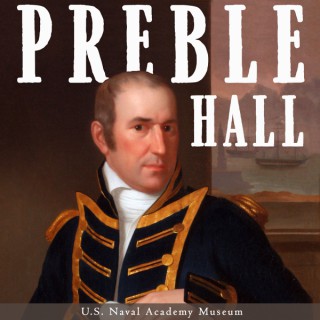
In this episode of Preble Hall, author Paul Magid discusses his book Pursuing the Leviathan: The Heroic Life of New England Whaling Captain Benjamin Clough with Sondra Duplantis, the U. S. Naval Academy Museum's Education Specialist. Set in the golden age of whaling in the nineteenth century, this book brings to life the adventures of Benjamin Clough, best known for single-handedly rescuing the ship Sharon from mutineers in 1842. Clough's heroism earned him a whaling command, which led to a whaling career that for a quarter-century took him into the Atlantic, Pacific, and Arctic Oceans.

New studio, same chaos. Dylan and Sam Tripoli return after a few weeks off to break down one of the show's biggest theories yet: that dragons weren't myth, but a real species written out of the historical record. They trace dragon accounts from Alexander the Great's reported sighting in a cave after invading India, to Marco Polo's travel logs, to Saint George's documented dragon slayings across three continents — and lay out the theory that the Catholic Church suppressed the truth to protect its own claim to power. Along the way: the case that dinosaur bones were first identified as Nephilim giants, the Chinese zodiac's one "fake" animal, and a Leviathan-Godzilla connection tying it all to ancient sea monster cults. Also this episode: Dark Smith's ongoing Gulf War Syndrome saga, Nancy Mace's tattoo collection, and a breakdown of Mark Zuckerberg's "personal superintelligence" pitch and what it means for surveillance, censorship, and comedy on Instagram. New studio is live — let us know what you think in the comments. Grab Tickets To Sam Tripoli's Live Shows At: https://samtripoli.com/events/ Lawerence, KS: 9/17-9/19 Tulsa, OK: 10/9-10/10 Dallas, TX: 11/07 New Orleans, LA: 11/13 - 15 Austin, TX: DEC 11th-13th: Buy Our Merch or Sam Will Fight You: https://conspiracy-social-club-aka-deep-waters.myshopify.com/ Subscribe to the Patreon: https://www.patreon.com/AkaDeepWaters Check out Dylan's instagram - @dylanpetewrenn Check out Deep Waters Instagram: @akadeepwaters Check out Bad Tv podcast: https://bit.ly/3RYuTG0 Ad-free, uncensored episodes: Patreon.com/CSC THANK YOU TO OUR SPONSORS: Hims.com/CSC for a free evaluation MenGoToMars.com for 50% Off Mood.com Promo Code CSC for 20% off your first order 0:00 New studio reveal 0:14 Comet of the Week 0:18 Dark Smith's Gulf War Syndrome saga 0:49 Dragons: were they real, and why the cover-up 0:55 The Chinese zodiac's one fake animal 0:59 Alexander the Great's dragon sighting in India 1:01 Marco Polo's dragon encounters 1:02 Saint George and the Catholic Church cover-up theory 1:05 Ancient texts on dragons vs. elephants 1:08 Leviathan, Godzilla, and ancient sea monster cults 1:08 Nancy Mace's tattoos 1:12 Nancy Mace vs. Sam Altman 1:18 Zuckerberg's "personal superintelligence" and AI censorship

We take a deep dive into New York's police-surveillance infrastructure, a sprawling leviathan that Mayor Zohran Mamdani was outspoken against during his campaign, but has now inherited and is even warming up to as his administration settles into power. ••• Mamdani's Surveillance State https://nymag.com/intelligencer/article/mamdani-surveillance-state.html ••• Walking the Thin Blue Line https://www.thedriftmag.com/walking-the-thin-blue-line/ ••• The New York City Police Department's Domain Awareness System (pdf) https://www.brennancenter.org/sites/default/files/Levine%20-%20Interfaces%20-%20The%20New%20York%20City%20Police%20Department%E2%80%99s%20Domain.pdf Standing Plugs: ••• Order Jathan's book: https://www.ucpress.edu/book/9780520398078/the-mechanic-and-the-luddite ••• Subscribe to Ed's substack: https://substack.com/@thetechbubble ••• Subscribe to TMK on patreon for premium episodes: https://www.patreon.com/thismachinekills Hosted by Jathan Sadowski (bsky.app/profile/jathansadowski.com) and Edward Ongweso Jr. (www.x.com/bigblackjacobin). Production / Music by Jereme Brown (bsky.app/profile/jebr.bsky.social)
Kirk returns to the Mojave, and to QOTSA's groundbreaking 2002 album Songs For The Deaf. Written by: Josh Homme and Mark Lanegan Produced by: Josh Homme and Eric Valentine Album: Songs For The Deaf, 2002 Listen/Buy via Album.Link Episode photo by Kirk Hamilton @ Joshua Tree, 2026 ALSO REFERENCED/DISCUSSED: “Stairway to Heaven” by Led Zeppelin from Led Zeppelin IV, 1971 “Blood and Thunder” by Mastodon from Leviathan, 2004 “Micro Cuts” by Muse from Origin of Symmetry, 2001 “Barracuda” by Heart from Little Queen, 1977 “Paranoid Android” by Radiohead from OK Computer, 1997 “Holy Wars… The Punishment Due” by Megadeth from Rust in Peace, 1990 "... Millionaire," "No One Knows," "God Is In The Radio," "First It Giveth," by QOTSA from Songs For The Deaf “Thumb” by Kyuss from Blues for the Red Sun, 1992 “Ride” by T-Ride from T-Ride, 1992 “Destination” by Nickel Creek from A Dotted Line, 2014 “Blue 7” by Sonny Rollins feat. Max Roach from Saxophone Colossus, 1957 “Slip It In” by Black Flag from Slip It In, 1984 “Sgt. Pepper's Lonely Hearts Club Band” from Sgt Pepper's Lonely Hearts Club Band, 1967 “Fast as You Can” by Fiona Apple from When The Pawn… ,1999 “Epistrophy” by Thelonious Monk from Genius Of Modern Music, 1951 Goldeneye 007 pause music by Grant Kirkhope, 1997 “Foxy Lady” by Jimi Hendrix from Are You Experienced?, 1967 “Hey Joe” as recorded by the Jimi Hendrix Experience, 1966 MTV interview with Kurt Cobain, Krist Novoselic and Dave Grohl, 1992 MusicRadar and Rick Beato interviews with Eric Valentine "Making Songs For The Deaf" mini-doc, archived on YouTube "Song For The Dead" live at Rock Werchter, 2002 AUGUST 2026 WHOLE NOTE PATRONS AccessViolation - Andy - Ben Barron - Brute Farce - Butch Vig - Catherine Warner - Cerise Gay - Cesar - Christopher McConnell - Christopher Miller - Corpus Frisky - Damon White - Daniel Hannon-Barry - Dave Florey - David Mascetti - Erica Smolinski - Greer Bevel - Greg - Greg - Jamie White - Jay Swartz - Jenness Gardner - Jeremy Dawson - Joe Laska - Julie Rowe - Ken Hirsh - Lisa Crotty - Matt R - Melanie Andrich - Melissa Lucas - Nigel - Pablo Castro - Paul Delaney - Rich Fish - Robyn Metcalfe - Sami Samhuri - Scott Lystig Fritchie - Wendy Moore AUGUST 2026 HALF NOTE PATRONS Aaron CainAaron Wade - Aaron Wilson - Abbie Berg - Achint Srivastava - Adam Clark - Adam Stofsky - Adam W - Ailie Fraser - AJ Schuster - Alan Kress - Alan Maass - Alan Wills - AlanB - Alex - Alexander - Alexander Polson - Alexis - Alison Dugan - Amanda Furlotti - Andrew Baker - Andrew Fair - Andrew Hofer - Andrew Knutson - Angela Livingstone - AnnaSahlee - Anthony Mentz - Arjun Sharma - Aron - Aruni Jayatilleke - Ashley - Bea - Ben Stein - Bernard Khoo - Bill Thornton - Bonnie Prinsen - Brad Callahan - Brett Douville - Brian Amoebas - Brian Rinckenberger - Brian John Peter - Bruno Gaeta - Cameron - Carlos Lerner - Caro Field - Catherine Clause - cbalmain - Charles McGee - Chris K - Chris Remo - Christian Hessmann - Clare H - Clint McElroy - Colin Hodo - Dallas Hockley - Dan Cutter - Daniel Kaberon - Daniel Markoff - Daniel Nervo - Dave Kolas - dave malloy - Dave Sharpe - David - David Boston - David Futter - David Joske - Deebs - Dent Earl - Dhu Wik - Diane Hughes - Diane Turner - Dick Morgan - Donald Mackie - Doreen Carlson - Doug - Doug Belew - Douglas H Frazer - Dr Arthur A Gray - E Margaret Warton - Edward Reisert - Emotional - A Basketball Podcast - Eoin de Burca - Eric Helm - Eric Prestemon - eric sp - Eric Stone - Erik - Ethan Bauman - Ethan Laser - Ferdinand von Seebach - frank - Freddy Freeman - Gabriel Hoffman - Gavin Doig - Geraldine Butler - Greg Henion - Heather J - Henry Mindlin - HiddenJester - Ian Pidd - Inmar Givoni - irritable - Jake Roberts - James - James - James Hicks - James Johnson - James McMurry - Jamie - Janice Berry - Jason Pratt - Jeff Stormer - Jeff Ulm - Jeffrey Bean - Jeffrey Olson - Jennifer Bush - Jim M - Jim Sellers - Joe Gallo - John Auer - john halpin - Jonathan Daniels - Jordan Gatenby - Josh Singer - Joshua Gailey - Joshua Hill - JRRJ - Julie Kellman - Justin McElroy - Karl Dube - Karma Jay - Kaya Woodall - Kellen Steffen - Kelli Brockington - keniareinadelmundo10 - KenIsWearingAHat - Kenneth Jung - Kevin Chris Marcelo - Kevin Davis - Kevin Potter - Kevin Stafford - Klaus - Klodrik - Kym Griffith - Lauren Knotts - Lauren Reay - Lawrence - Lee R. - Linda Lange - Lisa Turner - Lottie Aron - Louise Clarke - M - M Shane Borders - Margaret McReynolds - Mark MacIntosh - MARK PERNA - Martín Salías - Mathias Schmidt - Matt - Matt Baxter - Matt Betzel - Matthew Jones - Max - max barnes - Melanie Stivers - Melissa Kuhns - Melmaniac - Merv Adrian - Meryl Allison - Michael - Michael Adamski - Michael Casner - Michael Livingstone - Michael Martin - Michael Shain - Michael Singer - Michael Sumner - Mike McPherson - Mike! - mino capossela - Minoru Aoki - Misty Haisfield - Monica St. Angelo - Mordok's Vape Pen - Mr J Martin - MT - Naomi - Nathan Gouwens - Ned Rosen - Nell Morse - néa - Pascal Rueger - Paul Bigelman - Paul De Surra - Paul Wayper - Peter Harding - PhantomMare - Philip Kelly - PjandEthan - Portland Eye Care - Praline - R J Helow - Rand LeShay - Randy Souza - Rebecca - Richard Randall - Richard Sneddon - Richard Toller - Rishi Sahay - Rob Tsuk - Robert Granat - Robin Ling - rorey risdon - RsP - Ryan Rairigh - Sam Grogan - Sarah Vetters - Sean Murphy - SeattleTransAndNonbinary ChoralEnsemble - Simon Hellman - STEPHEN - Stephen Tsoneff - Stephen Wolkwitz - Steve B - Steve Martino - Steve Paquin - Stu Baker - Sue Burgess - Tanner Morton - TB - Thomas - Tim Sheehan - Todd Thomas - Tom Coleman - Tucker Ped - Wendy Gilchrist - Will King - Zach Putnam - Zak Remer ----LINKS-----

After following up on Justice Alito's summer interview, the new birthright-citizenship executive orders, and the Court's record-low approval numbers, we devote the episode to Cisco Systems v. Doe, the Falun Gong surveillance case that closes the door Sosa v. Alvarez-Machain left open for new Alien Tort Statute claims. We try to build a theory of the ATS from first principles — Section 9 of the Judiciary Act of 1789, the law of nations, and the Marbois affair — before running through two decades of the Court narrowing the statute. Then we ask what to make of "door closing" as a phenomenon, from Edwards v. Vannoy to Rucho, and whether the Court would really be stuck if the perfect ATS unicorn finally showed up. Along the way: whether Justice Alito is an I-95 or an Amtrak guy, the seven-case October calendar led by Suncor, Rooker anti-Feldmanism, and a Phoenix bar band called the Blackstone Three.Highlights[00:00:21] Opening: 29 episodes makes a record-breaking season, and the secret to sub-4-hour recording sessions[00:02:28] Justice Alito's WSJ interview with James Taranto: "Obviously I'm here for another term," the vultures, and his high school English teacher's psychoanalysis[00:06:27] How Will became a libertarian: Mr. Flannery, Lexis news alerts for "Ayn Rand," and golfer David Duval[00:09:48] Still no action on the mail-in voting applications; a White House ballroom emergency application expected any day[00:11:15] No rehearing petition in Trump v. Barbara — instead, new executive orders probing the decision's edges[00:15:32] The October calendar: only 7 cases, starting with Suncor — "conservative intuitions in search of a constitutional clause"[00:17:04] Mailbag: Rooker anti-Feldmanism via Lance v. Dennis, and Michael Rosman on whether sex-segregated sports are really "equal opportunity"[00:20:32] Gallup has the Court at 33% approval, a record low — the maximally anti-legitimacy strategy[00:22:35] The main event: Cisco Systems v. Doe — an anonymous person versus a faceless corporation[00:23:16] ATS first principles: Section 9 of the Judiciary Act of 1789, the law of nations as brooding omnipresence, and the Marbois affair[00:37:27] The 1980 revival, Sosa v. Alvarez-Machain, and the door Justice Souter left ajar[00:42:45] Two decades of narrowing: Kiobel, Jesner, Nestlé — and Will's brush with a thriving atrocities practice[00:47:33] Cisco closes the door; the Edwards v. Vannoy parallel, and whether door closing is ever dicta[00:52:33] Door closing as a genre: Vieth v. Jubelirer, Rucho — a Green Bag piece for Richard Re[00:56:36] What about pirates? The Blackstone 3 — the doctrine, and the Phoenix bar band[01:00:18] Implied causes of action, the slow death of Bivens, and the Ex parte Young irony after Trump v. Cook[01:05:19] Scoring the opinion: a win for the Bradley–Goldsmith "Erie algorithm" — or selective originalism?[01:13:33] Sign-off: rate and review — and if we go quiet, Will has been taken by piratesRelevant linksCasesCisco Systems, Inc. v. Doe I — slip opinionTrump v. Barbara — the birthright-citizenship decision the new executive orders are testingSuncor Energy (U.S.A.) Inc. v. County Commissioners of Boulder County — the OT26 openerSosa v. Alvarez-Machain, 542 U.S. 692 (2004)Edwards v. Vannoy, 593 U.S. 255 (2021) — slip opinionLance v. Dennis, 546 U.S. 459 (2006) (per curiam) — the Stevens "Rooker good, Feldman bad" dissentCommentary & articlesCNN on the Alito interview — coverage of James Taranto's Wall Street Journal interviewGallup, "Supreme Court Job Approval Slumps to Record Low"Jonathan Adler, "Amicus Brief in Suncor Energy v. County Commissioners of Boulder County" — the solo plaintiffs-side amicusOona A. Hathaway et al., "Has the Alien Tort Statute Made a Difference?," 107 Cornell L. Rev. (2022) — the settlements study cited in Cisco footnote 2Carlos M. Vázquez & Stephen I. Vladeck, "State Law, the Westfall Act, and the Nature of the Bivens Question," 161 U. Pa. L. Rev. 509 (2013)Samuel L. Bray & Paul B. Miller, "Getting Into Equity," 97 Notre Dame L. Rev. 1763 (2022) — why equity never needed causes of actionOtherDivided Argument, "Separation-of-Powers Police" (S4E23) — the Daryl Levinson Law for Leviathan book episodeThe Blackstone Three — original and cover music for all events, parties, and concert venues

Thanks to our sponsor, LearnClash! Practice smarter for quiz night with LearnClash, 1v1 trivia duels on any topic. Free to play: https://learnclash.com/partners/quizbang?utm_source=quiz_quiz_bang_bang&utm_medium=show_notes&utm_campaign=creator_2026q3&utm_content=r1_2026-08-05A new week means new questions! Hope you have fun with these!What comedienne ended her weekly shows by tugging on her left earlobe?Which Wisconsin peninsula is nicknamed the "Cape Cod of the Midwest." It has 300 miles of shoreline and more lighthouses than any other county in the U.S.?William the Conqueror is most famous for conquering what?Also known for his role on MASH, who played Charlie Brown in a 1967 Off-Broadway musical "You're a Good Man, Charlie Brown"?What is it called when fish fertilize externally?The 1973 movie, Pat Garrett and Billy the Kid starred what two music idols?The Ana and Din or Shadow of the Leviathan series which include "A Trade of Blood", "A Drop of Corruption", and the Hugo Award winning "The Tainted Cup" are all by what author?Iten has been described as the Mecca of Long Distance Running and is located in what country?Who is considered the father of modern chemistry?Along with a cash prize, what do contestants win in the Nathan's Famous International Hot Dog Eating Contest?Mare Imbrium, or the Sea of Showers or Sea of Rains, is a lava plain within the Imbrium Basin located where?What flavor was the original creme filling of Twinkies?Which composer has won the most Tony Awards?Which board game that won the Spiel des Jahres in 2014 has you collect precious jewels and gems like Emeralds, sapphires, rubies and diamonds?Ahura Mazda is the main deity of which religion?Which Greek goddess of love and beauty was said to be born from seafoam?MusicHot Swing, Fast Talkin, Bass Walker, Dances and Dames, Ambush by Kevin MacLeod (incompetech.com)Licensed under Creative Commons: By Attribution 3.0 http://creativecommons.org/licenses/by/3.0/Don't forget to follow us on social media:Patreon – patreon.com/quizbang – Please consider supporting us on Patreon. Check out our fun extras for patrons and help us keep this podcast going. We appreciate any level of support!Website – quizbangpod.com Check out our website, it will have all the links for social media that you need and while you're there, why not go to the contact us page and submit a question!Facebook – @quizbangpodcast – we post episode links and silly lego pictures to go with our trivia questions. Enjoy the silly picture and give your best guess, we will respond to your answer the next day to give everyone a chance to guess.Instagram – Quiz Quiz Bang Bang (quizquizbangbang), we post silly lego pictures to go with our trivia questions. Enjoy the silly picture and give your best guess, we will respond to your answer the next day to give everyone a chance to guess.Twitter – @quizbangpod We want to start a fun community for our fellow trivia lovers. If you hear/think of a fun or challenging trivia question, post it to our twitter feed and we will repost it so everyone can take a stab it. Come for the trivia – stay for the trivia.Ko-Fi – ko-fi.com/quizbangpod – Keep that sweet caffeine running through our body with a Ko-Fi, power us through a late night of fact checking and editing!
Why do we claim to love our dogs while breeding them for dependence and keeping them in environments that strip away their daily choices?Bioethicist and author Dr. Jessica Pierce joins host PJ Wehry on Chasing Leviathan to discuss human-animal relationships and the profound interconnections between ecosystems and health.Dr. Pierce explores the ethics of our canine bonds in her book, Who's a Good Human? Practical Exercises for Living Mindfully with Dogs. They examine how an ethical relationship isn't about demanding strict obedience from a "pet," but rather requires the skills of curiosity, collaboration, and care.In this conversation they explore:Why the standard model of viewing dogs simply as pets is flawed, and how to embrace the collaborative, often messy project of living together. The concept of "experiential ethics"—or embodied ethics—and how mucking through complex life experiences teaches us more than abstract philosophical principles. How a scientific thought experiment about dogs surviving a human-erasing rapture revealed that dogs might actually be better off without us. The "phenomenological recalibration" Dr. Pierce experienced after becoming a volunteer firefighter in her mountain community, and how it radically shifted her perception of the natural world. The dark side of modern dog breeding, the cultural obsession with unhealthy breeds like pugs and French Bulldogs, and why humans are psychologically drawn to canine dependence. Why we should view modern companion dogs as "captive animals" and how introducing micro-choices into their daily routines can profoundly improve their welfare. How applying the Zen Buddhist concept of "beginner's mind" and practicing deep curiosity can transform our knee-jerk annoyances—like a dog barking—into moments of mindful communication.This is a conversation for anyone interested in bioethics, dog ethology, and mindfulness who wants to understand how to sincerely navigate our relationship with animals while honoring their fundamental needs and agency.Make sure to check out Dr. Pierce's book: Who's a Good Human? Practical Exercises for Living Mindfully with Dogs

What if the goal today isn't to make your life extraordinary?What if it's to learn how to see the extraordinary gift hidden inside the ordinary?In this reflection on Psalm 104, John Ortberg explores how modern life has changed the way we see the world around us. We know more than ever about how nature works, yet we may have lost something along the way: our ability to experience creation as filled with meaning, wonder, and the presence of God.Drawing on Charles Taylor and Dallas Willard, John invites us to recover the eyes of "saints, poets, and artists" and rediscover what Willard called "the well-kept secret of the ordinary."Birds sing.Trees grow.Wild animals drink.Leviathan frolics.People go to work.And apparently God really likes hyraxes.Psalm 104 invites us to look again and recognize that ordinary creation is overflowing with the generosity, creativity, and goodness of God.In this episode:Psalm 104 and the wonder of creationCharles Taylor and the "immanent frame"Recovering the enchantment of realityDallas Willard and the secret of ordinary lifeWhy God made the hyraxSeeing creation as more than something to useThe love-letter analogyReceiving your life as a giftFinding God in everyday momentsScriptures:Psalm 104Genesis 1:26–27#Psalm104 #JohnOrtberg #DallasWillard #CharlesTaylor #Psalms #Creation #SpiritualFormation #ChristianFaith #BibleStudy #Wonder

This week on the podcast, Patrick and Tracy welcome Natalie Zina Walschots, author of VILLAIN. About VILLAIN: The hench once called Anna, now known to her colleagues and enemies as the Auditor, has carved out a wicked name for herself. Any superhero unlucky enough to cross her path knows her potential and powers. Surely, her recent success should taste sweet: she has an incredible job with lots of perks, her boss will literally annihilate anyone who crosses her, and her greatest enemy, the former hero Supercollider, has been utterly defeated—literally ground to a still-living pulp. But the Auditor still has her sights set on a greater work: destroying The Draft, the organization that makes, trains, and manages the world's most powerful superheroes. These “heroes” have shown time and time again that they do more harm than good (she has the spreadsheets to prove it), and now is the time to stop the damage at its source. Yet all is not well for the Auditor and her fellow evildoers. Her employer, Leviathan—the world's most feared supervillain—is not coping well with Supercollider's defeat at someone else's hands. As their relationship deepens, her work-life balance increasingly involves navigating the feelings of someone who doesn't believe they have any. Moreover, her unlikely ally and unexpected friend, Quantum Entanglement, has reappeared, forcing the Auditor to confront all the ways they deceived each other. Tension and uncertainty haunt the Auditor, and the fear that their triumph is about to crumble looms over all of them. The Auditor soon finds herself facing down an opponent unlike any she's taken on before—not another superhero, but someone like her, someone much more dangerous: The Draft's Chief Marketing Officer. Their conflict isn't a test of physical prowess, but ideas, and as their fight escalates, she’ll need more than preternatural pattern recognition, data analysis, and a horrific imagination to meet this challenge. It's guerrilla ad warfare, and the Auditor might have finally met her match. About Natalie Zina Walschots: Natalie cultivates fandoms, builds new communities, develops character voices, leads interactive fiction workshops, designs alternate reality games, constructs branching narratives, and most mornings opens Tumblr before opening her eyes. Her client list includes scrappy indie game studios, critically acclaimed television shows, mixed martial artists, print magazines, talk shows, NGOs, and a few more that defy categorization. Natalie's work wins awards, grows audiences, and introduces people to the thing they often end up loving most in the world. As a writer and journalist, you can find her work in the National Post, The Walrus, Quill & Quire, The Globe & Mail, and beyond. She's the author of two poetry collections, DOOM: Love Poems for Supervillains and Thumbscrews, and the novels Hench and its sequel Villain. Hench, dedicated to the plight of hench-people (the downtrodden and often expendable employees of supervillains), was a finalist on the 2021 season of Canada Reads and a nominee for the Locus Award for Best First Novel. Natalie has presented at Console-ing Passions, CGSA, Digital Odyssey, TCAF/CSSC, and more. She is an active member of Dames Making Games, and has previously worked with Pixelles, Concordia's Technoculture, Art and Games Lab, and The Hand Eye Society. She can be found causing trouble at DMG or talking about heavy metal on Banger TV. She has often been in the newspaper for swearing. She lives in Nova Scotia with her partner and four cats. This week's picks: Natalie #1: Antigen Shift: Verified Unidentified (album) Natalie #2: Between Two Fires by Christopher Buehlman Tracy: Harley Quinn Vol. 1: No Good Deed Patrick: Pathfinder Bastion of Blasphemies Adventure Path Links: Natalie Zina Walschots on BluSky Tracy Townsend on BluSky Patrick Hester on Instagram The Functional Nerds Patreon Page © 2026 Patrick Hester The post Episode 713-With Natalie Zina Walschots appeared first on The Functional Nerds.
Join us this week as discuss the new D2 Community Hub This Week In Destiny #1 and all the wonderful community events and challenges that are being organised. We go over the detail for Project Sunrise and the recent news about the Destiny community unvaulting D2 content and finding a way back to the Leviathan and Corridors of Time. Plus as always we have you covered with the upcoming weeks rotations, but we can't recommend anything this week apart from our own creations. 00:01:55 - Welcome & Apologies 00:08:52 - What's This Weeks Hot News? 00:36:46 - Playtime 00:46:06 - D2 Community Hub 00:55:26 - D2 Community Hub Community TWID #1 01:05:00 - Creator Spotlight/GCX Highlights 01:06:09 - D2 Community Hub Creator Program 01:07:27 - Community Showcase 01:17:35 - Lore Map of Destiny 01:20:09 - Lowman University 01:21:53 - Project Sunrise 01:23:59 - Support D2 Community Hub & End of TWID 01:26:32 - No Video Recommendations? 01:29:11 - This Week In Destiny: Monuments of Triumph Rotations Week 10 01:34:41 - Patreons & End of the Show 01:38:14 - Fin Two Titans and a Hunter YouTube Channel Two Titans and a Hunter Twitch Two Titans and a Hunter Discord Two Titans and a Hunter - Patreon Two Titans and a Hunter Ko-Fi The100 io – GH/GD/2TAAH Group Email: twotitansandahunter@hotmail.com Two Titans and a Hunter Twitter Two Titans and a Hunter – Facebook Artwork by @Nitedemon Xbox Live: Nitedemon, & Peroty End credits theme song by Elsewhere - YouTube Channel Plus as always, thank you to Alexander at Orange Free Sounds & www.freesound.org for all the sound effects used in our podcast. Required Stuff: Destiny 2 Community Hub Two Titans Discord Link Fr0zen Clan Link Destiny 2 Teams - Emblem Redeem Code Reddit - Bungie Redeem Codes Masterlist D2 Community Hub - Patch Notes: Profiles, Missions & Triumphs D2 Community Hub - This Week In Destiny Community Edition #1 D2 Community Hub - Creator Spotlight: Abaddon D2 Community Hub - Creator Program D2 Community Hub - Solstice of Legends Event Info Paul Tassi - D2 Players Are Unvaulting Cut Content Lowman University - Discord Link Destiny 2 - Tier 5 Report Destiny 2 Armor 2.0 Cleaner Destiny 2 - Way Back Machine Link Twitch - GuardianDownBot Raid Checkpoints Twitch - IceBreakerCatty. Engram.Blue Link
Writer Naomi Kanakia has spent her adult life reading the so-called “great books,” those classic works of literature which are–depending who you ask–either deeply unfashionable, or a time-honored testament to human accomplishment. With What's So Great About the Great Books: Why You Should Read Classic Literature (Even Though It May Destroy You) (Princeton UP, 2026) Kanakia, a devoted lay reader, unpacks popular anxieties surrounding classic writers like Milton, Tolstoy, and Proust. Using the unpretentious approach she has cultivated on her popular Substack, Woman of Letters, Kanakia addresses common reservations about the great books, questions about why we should bother with literature with dated politics, or books exceedingly difficult to read. For plenty of readers, particularly those who came of age in the last decade, the answers may not be clear. Kanakia offers an intriguing reminder to challenge ourselves, to look beyond the walls of the ideology we have constructed for ourselves. (Just don't ask her about “Leviathan” by Thomas Hobbes.) “What's So Great about the Great Books” is out now with Princeton University Press. Megan Peck Shub (AKA Galley Hag) is a writer, journalist, and a producer who has won Emmy and Peabody awards for her work on Last Week Tonight with John Oliver on HBO. She previously worked on Finding Your Roots with Dr. Henry Louis Gates, Jr., the PBS history docuseries. Megan's eclectic slate runs the gamut from literature to pop culture to politics, with a particular focus where those topics intersect. Learn more about your ad choices. Visit megaphone.fm/adchoices Support our show by becoming a premium member! https://newbooksnetwork.supportingcast.fm/new-books-network

Writer Naomi Kanakia has spent her adult life reading the so-called “great books,” those classic works of literature which are–depending who you ask–either deeply unfashionable, or a time-honored testament to human accomplishment. With What's So Great About the Great Books: Why You Should Read Classic Literature (Even Though It May Destroy You) (Princeton UP, 2026) Kanakia, a devoted lay reader, unpacks popular anxieties surrounding classic writers like Milton, Tolstoy, and Proust. Using the unpretentious approach she has cultivated on her popular Substack, Woman of Letters, Kanakia addresses common reservations about the great books, questions about why we should bother with literature with dated politics, or books exceedingly difficult to read. For plenty of readers, particularly those who came of age in the last decade, the answers may not be clear. Kanakia offers an intriguing reminder to challenge ourselves, to look beyond the walls of the ideology we have constructed for ourselves. (Just don't ask her about “Leviathan” by Thomas Hobbes.) “What's So Great about the Great Books” is out now with Princeton University Press. Megan Peck Shub (AKA Galley Hag) is a writer, journalist, and a producer who has won Emmy and Peabody awards for her work on Last Week Tonight with John Oliver on HBO. She previously worked on Finding Your Roots with Dr. Henry Louis Gates, Jr., the PBS history docuseries. Megan's eclectic slate runs the gamut from literature to pop culture to politics, with a particular focus where those topics intersect. Learn more about your ad choices. Visit megaphone.fm/adchoices Support our show by becoming a premium member! https://newbooksnetwork.supportingcast.fm/literary-studies

Writer Naomi Kanakia has spent her adult life reading the so-called “great books,” those classic works of literature which are–depending who you ask–either deeply unfashionable, or a time-honored testament to human accomplishment. With What's So Great About the Great Books: Why You Should Read Classic Literature (Even Though It May Destroy You) (Princeton UP, 2026) Kanakia, a devoted lay reader, unpacks popular anxieties surrounding classic writers like Milton, Tolstoy, and Proust. Using the unpretentious approach she has cultivated on her popular Substack, Woman of Letters, Kanakia addresses common reservations about the great books, questions about why we should bother with literature with dated politics, or books exceedingly difficult to read. For plenty of readers, particularly those who came of age in the last decade, the answers may not be clear. Kanakia offers an intriguing reminder to challenge ourselves, to look beyond the walls of the ideology we have constructed for ourselves. (Just don't ask her about “Leviathan” by Thomas Hobbes.) “What's So Great about the Great Books” is out now with Princeton University Press. Megan Peck Shub (AKA Galley Hag) is a writer, journalist, and a producer who has won Emmy and Peabody awards for her work on Last Week Tonight with John Oliver on HBO. She previously worked on Finding Your Roots with Dr. Henry Louis Gates, Jr., the PBS history docuseries. Megan's eclectic slate runs the gamut from literature to pop culture to politics, with a particular focus where those topics intersect.

Writer Naomi Kanakia has spent her adult life reading the so-called “great books,” those classic works of literature which are–depending who you ask–either deeply unfashionable, or a time-honored testament to human accomplishment. With What's So Great About the Great Books: Why You Should Read Classic Literature (Even Though It May Destroy You) (Princeton UP, 2026) Kanakia, a devoted lay reader, unpacks popular anxieties surrounding classic writers like Milton, Tolstoy, and Proust. Using the unpretentious approach she has cultivated on her popular Substack, Woman of Letters, Kanakia addresses common reservations about the great books, questions about why we should bother with literature with dated politics, or books exceedingly difficult to read. For plenty of readers, particularly those who came of age in the last decade, the answers may not be clear. Kanakia offers an intriguing reminder to challenge ourselves, to look beyond the walls of the ideology we have constructed for ourselves. (Just don't ask her about “Leviathan” by Thomas Hobbes.) “What's So Great about the Great Books” is out now with Princeton University Press. Megan Peck Shub (AKA Galley Hag) is a writer, journalist, and a producer who has won Emmy and Peabody awards for her work on Last Week Tonight with John Oliver on HBO. She previously worked on Finding Your Roots with Dr. Henry Louis Gates, Jr., the PBS history docuseries. Megan's eclectic slate runs the gamut from literature to pop culture to politics, with a particular focus where those topics intersect. Learn more about your ad choices. Visit megaphone.fm/adchoices Support our show by becoming a premium member! https://newbooksnetwork.supportingcast.fm/popular-culture

Writer Naomi Kanakia has spent her adult life reading the so-called “great books,” those classic works of literature which are–depending who you ask–either deeply unfashionable, or a time-honored testament to human accomplishment. With What's So Great About the Great Books: Why You Should Read Classic Literature (Even Though It May Destroy You) (Princeton UP, 2026) Kanakia, a devoted lay reader, unpacks popular anxieties surrounding classic writers like Milton, Tolstoy, and Proust. Using the unpretentious approach she has cultivated on her popular Substack, Woman of Letters, Kanakia addresses common reservations about the great books, questions about why we should bother with literature with dated politics, or books exceedingly difficult to read. For plenty of readers, particularly those who came of age in the last decade, the answers may not be clear. Kanakia offers an intriguing reminder to challenge ourselves, to look beyond the walls of the ideology we have constructed for ourselves. (Just don't ask her about “Leviathan” by Thomas Hobbes.) “What's So Great about the Great Books” is out now with Princeton University Press. Megan Peck Shub (AKA Galley Hag) is a writer, journalist, and a producer who has won Emmy and Peabody awards for her work on Last Week Tonight with John Oliver on HBO. She previously worked on Finding Your Roots with Dr. Henry Louis Gates, Jr., the PBS history docuseries. Megan's eclectic slate runs the gamut from literature to pop culture to politics, with a particular focus where those topics intersect. Learn more about your ad choices. Visit megaphone.fm/adchoices Support our show by becoming a premium member! https://newbooksnetwork.supportingcast.fm/book-of-the-day

→ Watch on YouTube → Detailed Show Notes(00:00) An overview of the two parts of Job: the frame and the poem.(07:31) In the frame, Job is described as a just and perfect man whose property and children are destroyed, yet he praises and blesses the Lord. In the end, he receives back more than he lost.(16:53) The poem describes Job's complaints. He even curses being born.(22:42) Three friends come to “comfort” Job. How to properly engage with someone who is suffering. Rigid orthodoxies and a lack of true empathy can destroy relationships.(34:52) Our capacity for joy is connected to pain.(40:20) When we can't see the purpose of pain, we can still trust in God's wisdom. It is not possible for mortals to entirely understand his plan. After Job's revelatory experience with God, his perspective changes.(46:39) The ideology of the Deuteronomist is challenged in the poem. Why do bad things happen to good people? Why do good things happen to bad people? The answers may not come in this life, but pain will ultimately be resolved in “the third act.”(53:19) Jesus, our Redeemer, will overcome all the injustices of mortality.(1:00:25) Another way to see Job 19.25. The redeemer in this alternate reading is Job's defender who will one day come and vindicate him, and will defend his statements regarding the injustice of God.(1:03:29) A hymn to wisdom and then Job's final speech. The Lord speaks to Job about his mighty works. God's creative power and wisdom far exceed the Behemoth and the Leviathan.(1:09:22) The book of Job can also be read as a temple text, a journey that returns Job back into God's presence. → For more of Bryce Dunford’s podcast classes, click here. → Enroll in Institute → YouTube → Apple Podcasts → Spotify → Amazon Music → Facebook The post Ep 384 | Job, Come Follow Me 2026 (August 10-16) appeared first on Talking Scripture.

To Sign up for our Patreon go to-> Patreon.com/cultofconspiracypodcastTo Find The Cajun Knight Youtube Channel---> click hereTo Find The Meta Mystics Spotify--> Click Herehttps://flavorsforest.com/cult/Become a supporter of this podcast: https://www.spreaker.com/podcast/cult-of-conspiracy--5700337/support.

Send us Fan MailGlaucon restarts the conversation about justice at the beginning of Book Two of Plato's Republic with this stipulation: Socrates must prove that justice is good in itself, not just good for the reputation it buys. Socrates says - perhaps to the reader's surprise, and even doubt - that he can show justice is the best possible thing to have.Pavlos Papadopoulos, professor at Wyoming Catholic College, returns to the podcast to walk through Book Two of Plato's Republic including Glaucon's restatement of Thrasymachus' case for injustice, Socrates' vegan city of pigs, Glaucon's lust for relishes, the "crucifixion" of the perfectly just man, the guardian class, and the strange and easily overlooked details of the tale of the Ring of Gyges. New Humanists episode on Republic Book One: https://podcasts.apple.com/us/podcast/how-not-to-define-justice-feat-colin-redemer-episode-cxv/id1570296135?i=1000775037863Plato's Republic (trans. Allan Bloom): https://bookshop.org/a/25626/9780465094080Thucydides' The Peloponnesian War (Landmark): https://bookshop.org/a/25626/9780684827902Thucydides' The Peloponnesian War (Hobbes): https://amzn.to/4vesx75Herodotus' Histories: https://bookshop.org/a/25626/9781400031146Aristophanes' Clouds: https://bookshop.org/a/25626/9780856682100Aristotle's Politics: https://bookshop.org/a/25626/9780226921846Thomas Hobbes' Leviathan: https://bookshop.org/a/25626/9780141395098Numa Denis Fustel de Coulanges' The Ancient City: https://bookshop.org/a/25626/9780648690542Two ways to support the show and unlock bonus episodes:Download and subscribe to Ekho: ancientlanguage.com/ekho/Subscribe to New Humanists+ for bonus episodes: buzzsprout.com/1791279/subscribeNew Humanists is brought to you by the Ancient Language Institute: https://ancientlanguage.com/Links may have referral codes, which earn us a commission at no additional cost to you. We encourage you, when possible, to use Bookshop.org for your book purchases, an online bookstore which supports local bookstores.Music: Save Us Now by Shane Ivers - https://www.silvermansound.comSupport the show
Moving Beyond the Overton Window in Mainstream ChristianityDan explores the concept of the "Overton window” , the range of ideas considered socially acceptable and argues that it applies not only to politics but also to mainstream Christianity. He suggests that influential voices and platforms can shape theological groupthink, often causing those who explore unconventional or emerging perspectives to face criticism, marginalization, or misunderstanding. According to Dan, God frequently works outside these accepted boundaries, calling spiritual pioneers into unfamiliar territory. He contends that such individuals may encounter opposition, slander, or attempts to silence them, which he associates with a religious spirit, including intimidation he identifies with Leviathan. Rather than encouraging suspicion or "witch hunting," Duval emphasizes the importance of discernment rooted in Christ-centered fruit and biblical principles. He points to examples such as the growing acceptance of the fivefold ministry and the broader willingness to discuss topics like the Nephilim compared to attitudes in 2010. He also shares a personal testimony of someone experiencing freedom from addiction in connection with his ministry property.Ultimately, Duval encourages believers to follow where they perceive the Holy Spirit is leading, even when it challenges conventional thinking. He concludes that, as the end of the age approaches, God is accelerating unprecedented works through His people, calling Christians to remain spiritually discerning, courageous, and open to His direction.
Why did one of the most famous and ambitious philosophers in European history fall completely out of favor in just a few decades, and why is his totalizing view of reality still relevant today? Northwestern University's associate professor of philosophy and president of the Hegel Society of America, Dr. Mark Alznauer, joins host PJ Wehry to discuss the breathtaking scope and historical impact of Georg Wilhelm Friedrich Hegel. Dr. Alznauer explores Hegel's attempt to map the entire cosmos, human civilization, and religion from a single logical concept in his book, Hegel's Sole Idea: The Last Great Metaphysical System. They examine how Hegel's "encyclopedia system" served as the last grand metaphysical project in Western thought, why his immediate successors violently rejected it, and how his legacy continues to shape our modern historical awareness. In this conversation they explore: Why Hegel's system is comparable to monumental literary works like Dante's Divine Comedy or Tolstoy's War and Peace in its attempt to provide a comprehensive, organized worldview. The provocative way Hegel positioned his philosophy as the "Holy Spirit," claiming it could conceptually prove the theological truths that Christianity only provided in pictures or representations. The swift collapse of Hegel's reputation after his death in 1831, leading to the deep divide between the Right and Left Hegelians, including the materialist critiques of Ludwig Feuerbach and Karl Marx. Søren Kierkegaard's fierce rejection of Hegel's objective system, arguing that true Christianity requires a passionate, existential decision rather than cold, speculative contemplation. How Hegel's philosophy of history—arguing that human epochs unfold with internal, logical necessity toward freedom—differs radically from the contingent, sociological explanations we rely on today. The neo-Hegelian influence on Francis Fukuyama's "End of History," and how questioning the ultimate direction of political history remains deeply relevant as our democratic landscapes continue to evolve. This is a conversation for anyone interested in philosophy, history, and theology who wants to understand the dizzying ambition of the last great metaphysical system and the profound ways its failure shaped the modern intellectual landscape. Make sure to check out Dr. Alznauer's book: Hegel's Soul Idea: The Last Great Metaphysical System

This recording with Anders Sandberg is from the Foresight Institute Secure AI seminar series, hosted in February 2026. You can view the recording of the talk on our YouTube.Anders Sandberg is a researcher at the Institute for Futures Studies in Stockholm and a former senior research fellow at Oxford's Future of Humanity Institute, where he worked for fifteen years on existential risk, brain emulation, and the long-term future of intelligence. In this talk, he examines what AI means for human autonomy and political freedom: what kinds of concentrated power AI systems enable, what political philosophy has to say about state capacity and individual liberty, and whether current legal and governance frameworks are adequate to the challenge.If you want to join future seminars live, the schedule is at foresight.org and in our Luma calendar. Hosted on Acast. See acast.com/privacy for more information.

Christine Hentschel zu Sicherheit und Aktivismus in katastrophischen Zeiten Future Histories LIVE Das Gespräch mit Christine Hentschel ist Teil des Formats ‚Future Histories LIVE‘. In unregelmäßigen Abständen werden hierbei einzelne Episoden live – soll heißen vor Publikum – aufgezeichnet. Diese Folge Future Histories ist am 12. Juli 2026 auf Einladung des Hamburger Künstler*innenkollektivs Zollo entstanden. Shownotes Christine Hentschel Prof. Dr. Christine Hentschel an der Universität Hamburg: https://www.wiso.uni-hamburg.de/fachbereich-sowi/professuren/hentschel/team/hentschel-christine.html DFG Humanities Centre for Advanced Studies “Futures of Sustainability”: https://www.zukuenfte-nachhaltigkeit.uni-hamburg.de zur DFG-Forschungsgruppe "The Promise of Security in Catastrophic Times“: https://www.wiso.uni-hamburg.de/en/forschung/verbundprojekte/ru-promise/welcome.html Nina Perkowski zu Reimagining Security: Perkowski, N. (2025). Radical Imagination and Vernacular Security: Creating Spaces for Alternative Security Futures, International Political Sociology, Volume 19, Issue 4. https://academic.oup.com/ips/article/19/4/olaf033/8255613 Garcés, M. (2024). Versprechen Können. Turia + Kant. https://www.turia.at/titel/garces3.html zu Tadzio Müller und solidarischem Preppen: Müller, T. (2024) Zwischen friedlicher Sabotage und Kollaps. Wie ich lernte, die Zukunft wieder zu lieben. Mandelbaum. https://www.mandelbaum.at/buecher/tadzio-mueller/zwischen-friedlicher-sabotage-und-kollaps/ https://www.collapseclub.com/blog/five-elements-of-solidarity-prepping/ zur Letzten Generation: https://letztegeneration.org/ zu Just Stop Oil: https://juststopoil.org/ zu ‘Dernière Rénovation' (Riposte Alimentaire): https://en.wikipedia.org/wiki/Riposte_Alimentaire Christine Hentschel zu Endzeitaktivismus und Edgework: Hentschel, C. (2023). Edgework in post/apokalyptischen Zeiten. Soziopolis. https://www.soziopolis.de/edgework-in-post-apokalyptischen-zeiten.html zur Kollapsbewegung: https://taz.de/Kollapsbewegung-in-der-Klimakrise/!6110821/ zu Heat Strike: https://heatstrike.uk/ zu Les Soulèvements de la Terre: https://de.wikipedia.org/wiki/Les_Soul%C3%A8vements_de_la_Terre Bröckling, U. (2026). Invertierte Zukunft. Konturen der Zuspätmoderne. WestEnd, 23(1), 3–18. https://doi.org/10.5771/1860-2177-2026-1-3 https://www.inlibra.com/de/document/view/pdf/uuid/dd3d743d-12ac-3db9-8d17-af67ddb150ba?page=1&toc=5916333 Reckwitz, A. (2024). Verlust: Ein Grundproblem der Moderne. Suhrkamp Verlag. https://www.suhrkamp.de/buch/andreas-reckwitz-verlust-t-9783518588222 Folkers, A. (2022). Nach der Nachhaltigkeit: Resilienz und Revolte in der dritten Moderne. Leviathan 50, 239–262. https://doi.org/10.5771/0340-0425-2022-2-239 https://www.jstor.org/stable/27295246?seq=1 zu Mutual Aid: https://en.wikipedia.org/wiki/Mutual_aid Christine Hentschel und Susanne Krasmann über gegenwärtige „Collapse Awareness“: Hentschel, C., & Krasmann, S. (2024). Collapse awareness in the face of climate breakdown and urbicide. Critical Studies on Security, 14(1), 2–16. https://doi.org/10.1080/21624887.2024.2403795 https://www.tandfonline.com/doi/full/10.1080/21624887.2024.2403795 Vortrag von Christine Hentschel „Vom Retten der Welt zum Vorbereiten auf den Kollaps“ in der Ringvorlesung “Am Scheidepunkt: Zur Krise der Demokratie” in Frankfurt (22.01.2026): https://www.youtube.com/watch?v=tmn7g3vJPKg Marina Garcés zur postumen Kondition und Metapher der Nachspielzeit: Garcés, M. (2019). Neue radikale Aufklärung. Verlag Turia+ Kant. https://www.turia.at/titel/garces.html zu postapokalyptischem Umweltaktivismus: Cassegård, C., & Thörn, H. (2022). Post-Apocalyptic environmentalism. palgrave macmillan. https://link.springer.com/book/10.1007/978-3-031-13203-2 Anaïs Maurer zur postapokalyptischen Agency im Pazifik & ‘fighting for what's left': Maurer, A. (2024). The ocean on fire: Pacific stories from nuclear survivors and climate activists. Duke University Press. https://www.dukeupress.edu/the-ocean-on-fire zu climate change mitigation: https://climatepromise.undp.org/news-and-stories/what-climate-change-mitigation-and-why-it-urgent Jacob Blumenfeld zu Managing Decline: Blumenfeld, J. (2024). Managing Decline. Cured Quail. https://www.academia.edu/121062536/Managing_Decline zu Climate Barbarism: Blumenfeld, J. (2023). Climate barbarism: Adapting to a wrong world. Constellations, 30, 162–178. https://onlinelibrary.wiley.com/doi/full/10.1111/1467-8675.12596 zu Christine Hentschels und Ursula Schröders Forschungsprojekt „Infrastructures of Protection. Planning for Catastrophes to Come“: https://www.wiso.uni-hamburg.de/en/forschung/verbundprojekte/ru-promise/research-projects/rp2.html zu Adaptation: https://climatepromise.undp.org/news-and-stories/what-climate-change-adaptation-and-why-it-crucial zum Forschungsprojekt „Extreme Adaptation to Climate Change“ im DFG-Exzellenzcluster CLICCS: https://www.cliccs.uni-hamburg.de/research/projects-themes/projects/a4-extreme-adaptation.html Lacbawan, M. (2025). Escaping the Climate Crisis: Speculative Wealth and the Selling of a Smart City. Journal of Business Anthropology, 14(2), 94-117. https://www.fis.uni-hamburg.de/en/publikationen/detail.html?id=13f172b2-6f23-44cc-adc7-31b42fb376b4 Rothe, D., Boas, I., Farbotko, C., & Kitara, T. (2024). Digital Tuvalu: state sovereignty in a world of climate loss. International Affairs, 100(4), 1491-1509. https://academic.oup.com/ia/article/100/4/1491/7710472 zu Muscular Adaptationism: Carton, W. & Malm, A. (2025). The long heat: climate politics when it's too late. Verso Books. https://www.versobooks.com/products/3317-the-long-heat?srsltid=AfmBOort8KE2C2ggxjCJE1Q7GTyEoyzLypZO0Wd75hcCmJUTuuW0zGa6 Joshua KaewnetarasForschung zu Wiederaufbau nach der Flutkatastrophe in Valencia: https://urban-future-making.hcu-hamburg.de/research/disrupted-mobilities Solar Geo Engineering: https://www.umweltbundesamt.de/presse/pressemitteilungen/unberechenbare-risiken-solares-geoengineering-keine Geoengineering: https://www.umweltbundesamt.de/en/topics/climate-energy/geoengineering zur Securitisation Theory: https://criticallegalthinking.com/2025/03/31/key-concept-securitization-copenhagen-school/ Schröder, U. (2026). Schutz in Krisenzeiten. Piper. https://www.piper.de/buecher/schutz-in-krisenzeiten-isbn-978-3-492-07396-7 zu Sicherheit im Anthropozän: Rothe, D., Hentschel, C., & Schröder, U. (2025). Recomposing the climate-security nexus: A conceptual introduction. Geoforum, 159, 104195. https://www.sciencedirect.com/science/article/pii/S0016718524002562 Von Redecker, E. (2023). Bleibefreiheit. S. Fischer Verlag. https://www.fischerverlage.de/buch/eva-von-redecker-bleibefreiheit-9783596711260 zum Begriff der Infrastrukturen in der Sicherheitsforschung: Hentschel, C., Schröder, U., 2020. Democratising Security in Turbulent Times: An Infrastructural Lens. S+F 38, 191–194. https://doi.org/10.5771/0175-274X-2020-4-191 https://www.jstor.org/stable/pdf/27260104.pdf?refreqid=fastly-default%3Abf575832edd748b4b77595527737cd25&ab_segments=&initiator=&acceptTC=1 zu Nina Perkowskis Forschungsprojekt zu „Counter-Communities' Protection Practices and Security Utopias in Catastrophic Times“: https://www.wiso.uni-hamburg.de/en/forschung/verbundprojekte/ru-promise/research-projects/rp8.html Staab, P. (2022). Anpassung. Leitmotiv der nächsten Gesellschaft. Suhrkamp, Berlin. https://www.suhrkamp.de/buch/philipp-staab-anpassung-t-9783518127797 Saito, K. (2026). Am Ende des Fortschritts. Überleben in den Ruinen des Kapitalismus. dtv. https://www.dtv.de/buch/am-ende-des-fortschritts-28534 Garcés, M. (2022). Critical Imagination. Artnodes. https://www.academia.edu/73676938/Critical_Imagination zum Thüringen Projekt: https://verfassungsblog.de/wp-content/uploads/2025/06/Thueringen-Projekt_Abschlussbericht.pdf zu Verwaltung für Demokratie: https://verwaltung-fuer-demokratie.de/erste-hilfe-kit-demokratie/ zu Zukunftswerkstätten nach Robert Jungk: https://www.sowi-online.de/praxis/methode/zukunftswerkstatt.html_2 zu climate change boredom: Anderson, B. (2023). Boredom and the politics of climate change. Scottish Geographical Journal, 139(1–2), 133–141. https://doi.org/10.1080/14702541.2023.2197869 https://www.tandfonline.com/doi/full/10.1080/14702541.2023.2197869 Christine Hentschel zu „Apokalypse-Indifferenz“ (Günther Anders) im Kontext der Klimakrise: Hentschel, C. (2024). Im Angesicht der planetaren Zerstörung. Soziologische Perspektiven gegen die Indifferenz., in: Lessenich, S., Scheffer, T. (Eds.), Gesellschaften Unter Handlungszwang: Existenzielle Probleme, Normalität Und Kritik, IfS-Aus Der Reihe. Bertz + Fischer, Berlin, pp. 78–92. https://bertz-fischer.b-cdn.net/wp-content/uploads/2026/06/bertz-fischer-ifs-02-gesellschaften-unter-handlungszwang-9783865056528.pdf zu Verleugnung nach Alenka Zupančič: Zupančič, A.(2024) Disavowal. Polity Books. https://www.politybooks.com/bookdetail?book_slug=disavowal--9781509561193 Christine Hentschel zu affectiven investments in den Protesten gegen die Coronamaßnamen Hentschel, C.(2021) »Das große Erwachen«: Affekt und Narrativ in der Bewegung gegen die Corona-Maßnahmen. Leviathan 49, 62–85. https://www.inlibra.com/de/document/view/pdf/uuid/1ed695c2-d459-32aa-a482-bf64a34a412c zur mobilisierenden Kraft von Wut bei Audre Lorde: Lorde, A. (1997). The uses of anger. Women's Studies Quarterly, 25(1/2), 278-285. https://americanstudies.yale.edu/sites/default/files/files/Lorde%20-%20The%20Uses%20of%20Anger.pdf zu Everyone hates Elon: https://www.everyonehateselon.com zu strategischem Hass nach Seyda Kurt: Kurt, S. (2023). Hass. Von der Macht eines widerständigen Gefühls. HarperCollins. https://www.harpercollins.de/products/hass-von-der-macht-eines-widerstandigen-gefuhls zum Begriff des Prozesses nach Rahel Jaeggi: https://www.fes.de/asd/buch-essenz/jaeggi-fortschritt-und-regression Jaeggi, R. (2023). Fortschritt und Regression. Suhrkamp. https://www.suhrkamp.de/buch/rahel-jaeggi-fortschritt-und-regression-t-9783518587140 White, J. (2024). In the long run: The future as a political idea. Profile Books. https://www.academia.edu/115206928/In_the_Long_Run_the_Future_as_a_Political_Idea_Profile_Books_2024_ Relevante Future Histories Folgen S04E07 | Kohei Saito, Christoph Sorg and Jan Groos on Creative Construction and the Struggle over Progress https://www.futurehistories.today/episoden-blog/s04/e07-creative-construction-and-the-struggle-over-progress/ S03E46 | Rahel Jaeggi zur Krise des Liberalismus, Fortschritt als Prozess und sozialistischem Utopisieren https://www.futurehistories.today/episoden-blog/s03/e46-rahel-jaeggi-zur-krise-des-liberalismus-fortschritt-als-prozess-und-sozialistischem-utopisieren/ S03E33 | Tadzio Müller zu solidarischem Preppen im Kollaps https://www.futurehistories.today/episoden-blog/s03/e33-tadzio-mueller-zu-solidarischem-preppen-im-kollaps/ S03E32 | Jacob Blumenfeld on Climate Barbarism and Managing Decline https://www.futurehistories.today/episoden-blog/s03/e32-jacob-blumenfeld-on-climate-barbarism-and-managing-decline/ S03E23 | Andreas Malm on Overshooting into Climate Breakdown https://www.futurehistories.today/episoden-blog/s03/e23-andreas-malm-on-overshooting-into-climate-breakdown/ S02E56 | Şeyda Kurt zu strategischem Hass https://www.futurehistories.today/episoden-blog/s02/e56-seyda-kurt-zu-strategischem-hass/ S02E38 | Eva von Redecker zu Bleibefreiheit und Demokratischer Planung https://www.futurehistories.today/episoden-blog/s02/e38-eva-von-redecker-zu-bleibefreiheit-und-demokratischer-planung/ — Future Histories Kontakt & Unterstützung: Wenn euch Future Histories gefällt, dann erwägt doch bitte eine Unterstützung auf Patreon: https://www.patreon.com/join/FutureHistories Schreibt mir unter: office@futurehistories.today Instagram: https://www.instagram.com/futurehpodcast/ Mastodon: https://mstdn.social/@FutureHistories Website mit allen Folgen: www.futurehistories.today Episode Keywords #ChristineHentschel, #JanGroos, #Interview, #FutureHistories, #FutureHistoriesLIVE, #Sicherheit, #Aktivismus, #Katastrophe, #Klimakollaps, #Zukunft, #SolidarischesPreppen, #Kollaps, #MutualAid, #Adaptation, #Mitigation, #ExtremeAdaptaion, #Klimaaktivismus, #Klimakrise

Psalm 74, Isaiah 27, Job 41, Palm 104 all have Leviathan in common.This message includes a lot of ancient near eastern religious parallels that Israelites would have known.It ends with some thoughts on what at least some modern spiritual warfare might be like.

Psalm 74, Isaiah 27, Job 41, Palm 104 all have Leviathan in common.This message includes a lot of ancient near eastern religious parallels that Israelites would have known.It ends with some thoughts on what at least some modern spiritual warfare might be like.

This synopsis of the review for Christopher Nolan's film, The Odyssey, explores the movie through the lens of “meta-script” analysis rather than traditional film criticism.Review Date: July 27, 2026IntroThe speaker provides a follow-up analysis of Christopher Nolan's The Odyssey, explicitly stating that the review ignores cinematography and acting to focus on predictive programming subtext. The goal is to identify how the film serves as a “companion piece” to Nolan's previous work, Oppenheimer, specifically regarding the symbolic framing of nuclear weapons and “prefabricated” history.Bullet Points: Key Topics* The Trojan Horse as an Atomic Metaphor: The film presents the Trojan Horse not just as a gift, but as an analogy for the atomic bomb, with imagery—such as the horse being elevated—paralleling the lifting of the nuclear sphere in Oppenheimer.* Odysseus and Oppenheimer Parallel: Both protagonists are portrayed as brilliant but tortured “meta-scriptors” whose ingenious inventions reshape civilization and leave them haunted by the guilt of their creation.* Consistent Trailer Messaging: The theater experience is described as a “data dump” where seven out of nine trailers (including Godzilla Minus Zero and Whale Fall) utilized nuke-related analogies, Leviathans, or direct references to nuclear engineering.* The Role of Poseidon: The speaker correctly predicted the nuke subtext based solely on the inclusion of Poseidon, whom they interpret as a symbol for a nuclear submarine.* Decompartmentalization of Reality: The review argues that mainstream entertainment is used to “habituate” and “prime” the public for incoming manufactured historical events, creating a secondary timeline of scripted reality.ThemeThe central theme is the transgression of moral and cosmic boundaries. The speaker argues that just as Oppenheimer's bomb dissolved the trust between nations, Odysseus's violation of Zeus's law at Troy—via the “trick” of the horse—represented a calculated annihilation that changed the moral rules of the world forever.7 Key Quotes* “I'm merely looking at it for any sort of predictive programming subtext consistent with that particular director...”* “There does seem to be this deliberate analogy, I was thinking, between Odysseus and Oppenheimer, the Trojan horse and the nuke.”* “It is as though the Trojan horse anticipates the atomic bomb.”* “Odysseus becomes a kind of Oppenheimer. Standing before the consequences of his creation, his guilt is twofold.”* “We're looking at authors or directors and writers whose work is being used to help frame our prefabricated manufactured history.”* “The trailers have all referenced the nuke directly or indirectly, or the associated symbol, which happens to be the Godzilla, Leviathan, or Kraken.”* “This future script, this meta script is what I call it, is a description of future events that will shape the course of our collective history.”SummaryThe review concludes that The Odyssey is a propaganda tool designed to provide emotional and mythological “color” to an incoming, engineered nuclear event. By linking ancient mythology to modern science, the film reinforces a singular objective: to maintain a worldview monopoly where the public is conditioned to accept a scripted future as an inevitable reality. This is a public episode. If you'd like to discuss this with other subscribers or get access to bonus episodes, visit infiniteplanesociety.substack.com/subscribe

Welcome to another episode of Death Don't Do Fiction, the AIPT Movies podcast! The podcast about the enduring legacy of our favorite movies! It's July, so that means it's time for our “Julygantic” series! Where we cover monster movies! In this week's episode, Alex, Tim, and returning guest Matt Naughton discuss Peter Weller's journey into what is effectively “Alien but underwater,” 1989's Leviathan! A terrible final one-liner! Aquatic basketball moves! Blue collar despair! Tonal collapses! A guy named Sixpack! Lots of random tubes! Cool clunky dive suits! Angry computer use! Disastrous butter-handling! "Dry for wet" underwater scenes! Hints of secret underwater affairs! Equal opportunity boss punching! Poor quarantine protocols! Someone opening a Pepsi can with their teeth! Questionable management training! Insufficient skiing knowledge! Fun and gross special effects from Stan Winston! A cast that includes Peter Weller, Ernie Hudson, Daniel Stern, Richard Crenna, and Amanda Pays! Crew members that worked on Terminator 2, Alien, Robot Jox, Rambo 2, Cobra, and Blade Runner! All that and more in this "diamond-encrusted trash" that is not only a great sea monster/body horror movie, but possibly one of the best mockbusters ever made! In addition, the gang shares their spoiler-free thoughts on 1991's Cape Fear, the Apple TV shows Cape Fear and Murder bot, as well as Christopher Nolan's The Odyssey, Milly Alcock's Supergirl, and Evil Dead Burn! You can find Death Don't Do Fiction on Apple Podcasts, Spotify, or wherever you get your podcasts. As always, if you enjoy the podcast, be sure to leave us a positive rating, subscribe to the show, and tell your friends! The Death Don't Do Fiction podcast brings you the latest in movie news, reviews, and more! Hosted by supposed “industry vets,” Alex Harris and Tim Gardiner, the show gives you a peek behind the scenes from two filmmakers with oddly nonexistent filmographies. You can find Alex on Twitter, Bluesky, or Letterboxd @actionharris. This episode's guest, Matt Naughton, can be found on Instagram @mnaughty85. Tim can't be found on social media because he doesn't exist. If you have any questions or suggestions for the Death Don't Do Fiction crew, they can be reached at aiptmoviespod@gmail.com, or you can find them on Twitter or Instagram @aiptmoviespod. Theme song is “We Got it Goin On” by Cobra Man.

What happens when one of the internet's most well-known paranormal storytellers sits down with Nephilim Death Squad for a deep discussion about cryptids, demonic encounters, spiritual warfare, the Courts of Heaven, sleep paralysis, Bigfoot, Dogman, Leviathan, and biblical discernment?In this episode, David Lee Corbo (The Raven) and TopLobsta welcome James Williams of Dark Waters for an unforgettable conversation that goes far beyond scary stories. James shares how he transitioned from collecting real paranormal testimonies to teaching Christians about prayer, spiritual authority, and seeking God's justice through the Courts of Heaven. The discussion explores why so many people report encounters with unexplained entities, how to distinguish genuine spiritual experiences from deception, and why Christians should approach the paranormal through a thoroughly biblical worldview.The conversation dives into eyewitness accounts involving Bigfoot, Dogman, cryptids, UFOs, alien encounters, sleep paralysis, demonic oppression, Leviathan, water spirits, deliverance ministry, and the Flood of Noah, while emphasizing the importance of testing every experience against Scripture. James explains how years of interviewing witnesses shaped his understanding of the unseen realm and why prayer, repentance, and faith in Jesus Christ remain central to spiritual victory.Whether you're interested in Nephilim, supernatural encounters, biblical prophecy, conspiracy research, or spiritual warfare, this episode offers thoughtful discussion without abandoning biblical foundations. The hosts also discuss discernment, deception, and the growing public fascination with the paranormal, encouraging believers to remain grounded in God's Word rather than sensationalism.What do you think explains these encounters? Are cryptids physical creatures, spiritual manifestations, or something else entirely? Let us know your thoughts in the comments below.► Subscribe for more Biblical analysis, Christian worldview discussions, and conspiracy research through a Biblical lens.Listen on Spotify, Apple Podcasts, and everywhere podcasts are available.Connect with James Williams (Dark Waters)

Here comes Issue 75 of the monthly magazine podcast for the discerning film nerd. First up is Double Reel Monthly, with news, new releases, reviews of new and notable films we've watched and the latest in our annual projects. Next week we will bring you Classics and Hidden Gems with a 1996 theme. Check out Alan's author page here: Alan Bayles Author And check out YouTube reviews of films on physical media on Maximum Disc

October Event Tickets Sold Here: https://deependtv.com/eventsGo Deeper on Topics From the Showhttp://www.novosnetwork.com/kairosDeep End Websitehttps://deependtv.com/Get Weekly UpdatesText "TAW" to 615-845-5977@Taylor's Websitehttps://taylorawelch.com/Twitter: https://twitter.com/taylorawelchInstagram: https://www.instagram.com/@taylorawelchFacebook: https://www.facebook.com/taylorawelchprofileTikTok: https://www.tiktok.com/@taylorawelchFull Deep End Playlist: https://youtube.com/playlist?list=PLsJLC9JVAX745VhRtK7BsoBWKXF0yVrsB&si=YqkT8lg5eFell2o3Listen to The Deep EndApple Podcasts: https://podcasts.apple.com/us/podcast/the-deep-end-w-taylor-welch/id1500492987Spotify: https://open.spotify.com/show/3Pqrl9Xpuja6kSPjHUgxF4?si=0e673cd31d5d4217BIO:Taylor Welch is an investor & business consultant. His portfolio of companies have serviced over 50,000 individual small businesses in the last 5 years. He currently lives in Nashville Tennessee with his wife and 2 kidsCHAPTERS:00:00 Coming Up01:16 Warlocks and Witches01:57 Witchcraft vs Sorcery Basics02:13 Seeing Colors and Giftings07:05 Spells and Spiritual Tech09:40 Defining Witchcraft Today12:30 Placebo and Nocebo Explained17:36 African vs American Witchcraft19:37 Nocebo Stories and Extremes23:22 Casting Lots27:38 Christian Witches and Deception36:02 Genesis and Language Origins38:47 Nephesh and Human Authority41:53 Eden Contract Redefined43:20 Jesus Fulfills the Covenant44:39 Gospel as New Government45:47 Memorized Doctrine vs Relationship47:27 Agreements Give Darkness Access49:34 Spirit Realm Intention Matters52:14 Christian Witchcraft Exposed56:37 Why It Hides in Church01:00:04 Demons Riding Christians01:03:44 Spells Faith and Belief01:10:45 Infiltration Through Trusted Voices01:15:17 Leviathan vs Satan in Chaos01:18:56 Divination and Hidden Knowledge01:23:28 Omens and Soothsaying01:25:47 Mediums and Necromancy01:26:32 Source and Motives01:28:22 False Prophets and Fear01:32:47 Self Deception01:43:45 Perception Desire Action01:54:32 Words Without God's Heart01:58:50 Jacob to Israel Shift02:07:47 Worship Calms the Body02:12:35 Four Part Spiritual Audit02:20:28 Humility and Invitation

What happens when an ordinary New Bedford whaling voyage turns into one of the most extraordinary survival stories in American maritime history? In this episode of The Photo Detective, I talk with bestselling maritime historian Eric Jay Dolin, author of The Wreck of the Mentor. Dolin has written more than seventeen acclaimed books on maritime history, environmental policy, pirates, privateers, hurricanes, and the American whaling industry, including Leviathan: The History of Whaling in America and A Furious Sky.We explore the tragic 1834 wreck of the Mentor, whose crew became stranded for years on the islands of Palau after their ship struck a reef. Erick shares how firsthand survivor accounts, newly digitized archival sources, and years of historical research allowed him to reconstruct this remarkable story of endurance, cultural encounters, and rescue. Along the way, we discuss why these stories matter to genealogists and family historians seeking to understand the lives—and sometimes mysterious disappearances—of their seafaring ancestors.Related Episodes:Episode 266: Military Images Magazine's Ron Coddington shares the stories behind Civil War PhotosEpisode 240: The Hidden Stories of Tattooing: Dr. Matt Lodder on Tattoos in Photography and SocietyLinks:Sign up for my newsletter.Watch my YouTube Channel.Like the Photo Detective Facebook Page so you get notified of my Facebook Live videos.Need help preserving your photos? Check out Maureen's Preserving Family Photographs ebook Need help identifying family photos? Check out The Family Photo Detective ebookHave a photo you need help identifying? Sign up for photo consultation.About My Guest:Eric Jay Dolin is the best-selling author of numerous works in maritime history, including Left for Dead; Black Flags, Blue Waters; and Leviathan. He now lives in Marblehead, Massachusetts, with his family. http://www.ericjaydolin.com/About Maureen Taylor:Maureen Taylor, The Photo Detective® helps clients with photo related genealogical problems. Her pioneering work in historic photo research has earned her the title “the nation's foremost historical photo detective” by The Wall Street Journal and appearances on The View, The Today Show, Pawn Stars, and others. Learn more at Maureentaylor.comDid you enjoy this episode? Please leave a review on Apple Podcasts. I'm thrilled to be offering something new. Photo investigations. These collaborative one-on-one sessions. Look at your family photos then you and I meet to discuss your mystery images. And find out how each clue and hint might contribute to your family history. Find out more by going to maureentaylor.com and clicking on family photo investigations. Support the show

Episode 194 July 16, 2026 Christmas in july I got a little idea On the Needles 3:01 ALL KNITTING LINKS GO TO RAVELRY UNLESS OTHERWISE NOTED. Please visit our Instagram page @craftcookreadrepeat for non-Rav photos and info OMG Heel Socks by Megan Williams, Knit Picks Felici in Silent Film 135-1 Limestone by DROPS design, Baa Ram Ewe Donegal Twists in Banshee and Dullahan Show Your Colors Tee by Sari Nordlund, De Rerum Natura Antigone in Lune and Voie Lactée (moon and milky way!) On the Easel 8:47 Color charts for DaVinci oils and Holbein oils. Norway pitch On the Table 15:03 Peachy Pink Spritz! Cucumber caesar salad Julia Turshen Zucchini parm braised chickpeas with zucchini and pesto – smitten kitchen Sausage, potato and kale mini pies Celery Salad Bolognese and meatballs Old fashioned buttermilk loaf–meh Pesto Chicken Corn Salad **Summertime Treat Box How to Make a Cookie Advent Calendar - Justine Doiron NYT Cookie Week Petit Fours with Mark Bittman poundcake recipe filled with apricot jam and less-sweet almond buttercream, blood orange glaze. Strawberry Sandwich cookies (just the shells because I overrolled, overbaked them) from 100 cookies Chocolate chip cookie sticks Raspberry Macarons with olallabery crème Lemon Florals Blueberry & Pear pâte de fruits On the Nightstand 40:56 We are now a Bookshop.org affiliate! You can visit our shop to find books we've talked about or click on the links below. The books are supplied by local independent bookstores and a percentage goes to us at no cost to you! New American Literary Canon: Two Books from Each State & Territory | Strand Bookstore Dolly All the Time by Annabel Monaghan (audio- Julia Whelan!) Hell's Heart by Alexis Hall A Drop of Corruption by Robert Jackson Bennett (Shadow of the Leviathan #2) Mrs Shim is a Killer by Kang Jiyoung, trans by Paige Morris The Typing Lady and Other Fictions by Ruth Ozeki Painting the Light by Sally Cabot Gunning A Perfect Hand by Ayelet Waldman Bingo 55:45 Starts friday may 22, ends Mon Sept 7 Need to post a photo of completed Bingo with #CCRRsummerbingo2026 to instagram or Ravelry. Get a blackout for a second entry. Bingo thread on Ravelry (you may need to register to view/participate but it's free) Prizes! Jen of Down Cellar Studio: free knitting kit: pattern, yarn and spa goodies Keri Fischer-Seehuetter's Ravelry Store patriotic star coasters Charlotte of Blue Shine Art: free class Daria of Daria Penta Art & Illustration: fun sticker sheets Jenny of Dinner a Love Story: free year of substack and copy of Weekday Vegetarians vol 1 & 2 (and second set of books entry for those who complete Cooking Only Bingo) Rancho Gordo deluxe gift box Jen of Books are My People: free month of substack so book club! Monica's Bingo: Spritz! Summertime book: dolly all the time New recipe/old book and WC country: salad niçoise from Mastering the Art of French Cooking Cortney's Bingo: Craft color—oil paint color charts Cook from a WC country—French macarons & pâté de fruits Read a funny book—A Perfect Hand

Boo and Evan can barely wait to talk about the new issue of Void Rivals! There's a lot of grief and special guest star! Listen or watch to find out!If you'd like to contact the guys, they'd love to hear from you!Morethanmeetstheseguys@gmail.comhttps://discord.gg/sKr8jwaAvhIf you'd like to toss a buck or more per episode, we'd adore and say nice things about you. You don't have to, as we'll still gladly hang out with you guys and gals every week, but we appreciate any help! patreon.com/user?u=69144181
Most Americans, unfortunately, believe that we are still living in the constitutional republic created in 1787. That was five republics ago.Original article: https://mises.org/mises-wire/spoiled-sons-liberty-surveillance-leviathan-americas-six-republics-and-myth-eternal-union
Most Americans, unfortunately, believe that we are still living in the constitutional republic created in 1787. That was five republics ago.Original article: https://mises.org/mises-wire/spoiled-sons-liberty-surveillance-leviathan-americas-six-republics-and-myth-eternal-union
Why do morally good people often hesitate to change other people's minds, viewing persuasion as presumptuous, obnoxious, or downright creepy? The University of Washington's professor of philosophy, Dr. Colin Marshall, joins host PJ Wehry to discuss how to successfully bridge deep divides in our highly polarized climate.Dr. Marshall explores the ethics and psychology of civil persuasion in his book, Just Hear Me Out: How to Change Minds Without Lies, Bullshit, or Moral Compromise. They examine how genuine persuasion isn't about manipulation or aggressive takedowns , but rather requires a delicate balance of respect, compassion, and the right environment.In this conversation they explore: Why the fallout of the 2016 US presidential election pushed Dr. Marshall from pure theoretical philosophy into finding practical tools for civil engagement. The crucial difference between manipulative persuasion—where people are treated as obstacles to maneuver—and civil persuasion that honors a person's complete humanity. How combining Immanuel Kant's emphasis on rational respect with Arthur Schopenhauer's focus on deep compassion creates a coherent framework for changing minds. Why attempting to persuade someone at the Thanksgiving table almost always fails, and the importance of establishing an "attention-friendly context" like grabbing a coffee or a beer. Incredible real-world examples of successful persuasion, including Daryl Davis persuading extremists to leave the KKK and Megan Phelps-Roper leaving the Westboro Baptist Church after patient, charitable interactions on Twitter. The concept of "moral myopia"—the deeply human tendency to become so hyper-focused on one moral issue or our own self-respect that we lose sight of the other person's bandwidth and feelings. The psychology of building trust, and why establishing warmth and shared humanity must always come before proving your intellectual competence. This is a conversation for anyone interested in philosophy, psychology, and healthy communication who wants to understand how to sincerely navigate our modern disagreements without sacrificing their own moral integrity.Make sure to check out Dr. Marshall's book: Just Hear Me Out: How to Change Minds without Lies, Bullshit, or Moral Compromise

We return to Wizards of the Coast's Villainous Options, now revised after the first round was lovingly pushed down the stairs by public feedback. Some subclasses survived untouched. Some got a makeover. Some were taken behind the shed, especially the Primordial Patron, which had one great idea and the mechanical confidence of a wet napkin. Good news, though: the demon sorcerer finally feels demonic, the Titan Druid is now a proper kaiju tank, and the Hell Knight has upgraded from flaming disappointment to legally playable infernal gambling problem. Show Notes This episode revisits Wizards of the Coast's latest Unearthed Arcana update for Villainous Options, which means the crew returns to the scene of the crime to see what survived the feedback cycle, what got rewritten, and what was quietly removed from the suspect board. The earlier Villainous Options episodes gave us some strong concepts with mixed execution: villainous path feats like the Death Knight and Lich, subclasses like the Titan Druid and Hell Knight, and later options like the Path of Lament Barbarian, Pestilence Cleric, Venom Monk, and the now-defenestrated Primordial Patron Warlock. Some of those were apparently well-liked enough to move forward with little public revision. Others came back covered in red ink and shame. The episode opens by sorting out what is not in the new UA. Path of Lament, Pestilence Cleric, and Venom Monk appear to have landed well enough that they did not need another public pass, though the hosts still have a few lingering concerns about capstones, wording, and whether weaponized sadness is legally distinct from being a barbarian with theater kid energy. The Death Knight and Lich villain paths also seem likely to continue, though Ash remains skeptical that the Lich is as ready as WotC apparently thinks it is. The Primordial Patron, meanwhile, is gone for now, which hurts because the concept rules, but the subclass itself never really delivered on the fantasy of making a pact with an ancient elemental apocalypse. Then the real revisions begin with Circle of the Titan Druid, which gets a much-needed identity check. The old version wanted to be a giant monster but had all the durability of a parade float in a hailstorm. The new version leans harder into tanking: better AC, more temporary hit points, stronger damage scaling, a shorter but more practical Titan form duration, and a capstone swallow ability that finally feels like being eaten by a kaiju instead of being mildly inconvenienced by one. Behemoth and Insectoid both look more playable, with Insectoid getting a strong healing identity, while Leviathan still mostly answers the question, "What if your subclass feature was swimming?" Hell Knight also gets a major facelift, mostly by reducing its dependence on rolling exactly the right number before anything interesting happens. The infernal wounds now feel more like a real subclass engine, with rider effects that happen more consistently and Devil's Luck upgrades when the dice cooperate. It is much better than before, but the table still finds it a little too constrained by resources and a little too enamored with gambling mechanics. It is no longer borderline unplayable, which is progress, but it may still need another pass before it becomes the infernal fighter fantasy everyone clearly wants. The big winner is Demonic Sorcery. The previous version felt like a melee sorcerer with terrible life choices, a bad spell list, and an aura table that made everyone remember why random subclass tables are rarely fun. The revision gives it Abyssal Rupture, a movable sphere of demonic problems that pulls enemies around, creates battlefield control, scales into difficult terrain, and eventually supports summon fiend in a way that finally screams Abyss instead of discount Hexblade with a concussion. The spell list is also dramatically better, replacing nonsense like Hallow and overused Misty Step with options that fit the theme and support the playstyle. It still needs damage scaling on the rupture, but this is the rare UA glow-up where the hosts go from roasting the thing to wanting to play it. The episode also touches on the new feats and epic boons, which range from charming people by picking their pockets to setting better hunting traps to becoming weirdly hard to fool, possess, or kill with necrotic damage. The hosts speculate about what book this material is actually building toward, with possibilities ranging from a renamed Book of Vile Darkness to an evil campaign supplement, a fiendish planar guide, or something tied to the Abyss and Nine Hells. Whatever it becomes, the consensus is cautiously positive: WotC seems to be listening, the revisions are mostly moving in the right direction, and the demon sorcerer finally has enough flavor to stop apologizing for itself. Key Takeaways This UA is a feedback-driven revision of the previous Villainous Options material, not a totally new batch of evil toys. Path of Lament Barbarian, Pestilence Cleric, and Venom Monk appear to have been received well enough that they did not return for major public revision. The Death Knight and Lich villain paths seem likely to continue, though the hosts still think Lich needs more work and Death Knight may get broadened for more martial builds. The Primordial Patron Warlock is gone for now, which is sad because the idea is excellent, but the original execution did not feel like a pact with an elemental world-ending horror. Circle of the Titan Druid is much stronger now and has a clearer role as the tanky kaiju druid. Titan Druid's improved AC, temporary hit points, damage scaling, and better swallow feature make the subclass feel much closer to its fantasy. Behemoth looks solid, Insectoid now has a meaningful healer/tank angle, and Leviathan still feels like the one you pick because the campaign has too much water. Hell Knight is much better because infernal wounds now do interesting things more consistently instead of asking players to roll a six before the subclass becomes fun. Hell Knight still feels too resource-limited and may need another pass, especially if the goal is to make infernal wounds feel like the subclass's real engine. Demonic Sorcery is the standout winner of the revision. The new Abyssal Rupture gives Demonic Sorcery a strong identity built around battlefield control, forced movement, difficult terrain, and demon-flavored chaos. The Demonic Sorcery spell list is dramatically improved and now actually supports the theme instead of asking why a demon sorcerer has Hallow. The hosts like the revised Demonic Sorcery enough that it went from "why would I play this?" to "I would play this immediately." The new feats and epic boons are more mechanically interesting than expected, with a few strong options for social manipulation, traps, protection, and high-level anti-undead or anti-illusion play. The likely future product may be an evil campaign book, a spiritual successor to Book of Vile Darkness, or a broader fiendish/planar supplement. Overall verdict: WotC appears to be listening, the revisions are mostly better, and the villains are finally getting options that do more than look cool while failing their own saving throw. Welcome to the RPGBOT Podcast. If you love Dungeons & Dragons, Pathfinder, and tabletop RPGs, this is the podcast for you. Support the show for free: Rate and review us on Apple Podcasts, Spotify, or any podcast app. It helps new listeners find the best RPG podcast for D&D and Pathfinder players. Level up your experience: Join us on Patreon to unlock ad-free access to RPGBOT.net and the RPGBOT Podcast, chat with us and the community on the RPGBOT Discord, and jump into live-streamed RPG podcast recordings. Support while you shop: Use our Amazon affiliate link at https://amzn.to/3NwElxQ and help us keep building tools and guides for the RPG community. Meet the Hosts Tyler Kamstra – Master of mechanics, seeing the Pathfinder action economy like Neo in the Matrix. Randall James – Lore buff and technologist, always ready to debate which Lord of the Rings edition reigns supreme. Ash Ely – Resident cynic, chaos agent, and AI's worst nightmare, bringing pure table-flipping RPG podcast energy. Join the RPGBOT team where fantasy roleplaying meets real strategy, sarcasm, and community chaos. How to Find Us: In-depth articles, guides, handbooks, reviews, news on Tabletop Role Playing at RPGBOT.net Tyler Kamstra BlueSky: @rpgbot.net TikTok: @RPGBOTDOTNET Ash Ely Professional Game Master on StartPlaying.Games BlueSky: @GravenAshes YouTube: @ashravenmedia Randall James BlueSky: @GrimoireRPG Amateurjack.com Read Melancon: A Grimoire Tale (affiliate link) Producer Dan @Lzr_illuminati

The Consummation of Praise Ryan Griffith Download I don't know about you, but I have always struggled with poetry. And by struggle I mean that I haven't particularly liked it. Most of the stuff I was introduced to in high school was the open-verse kind – no meter, no rhyme scheme. I'm sure if I was smarter or worked on it longer, I might find Whitman or Dickenson or Hughes illuminating. Perhaps I'm too simple, but for my lights good poetry is not mainly a puzzle to unlock. Let's try a relevant example for our sesquicentennial year. Maybe you know it.Listen my children, and you shall hear, of the midnight ride of Paul Revere. On the eighteenth of April in seventy-five hardly a man is now alive who remembers that famous day and year.Poetry is designed to be memorable and meaningful and to produce a certain kind of response.I love the ending:And so through the night went his cry of alarmTo every Middlesex village and farm,—A cry of defiance, and not of fear,A voice in the darkness, a knock at the door,And a word that shall echo forevermore!For, borne on the night-wind of the Past,Through all our history, to the last,In the hour of darkness and peril and need,The people will waken and listen to hearThe hurrying hoof-beats of that steed,And the midnight message of Paul Revere.In April of 1860, Longfellow wrote Paul Revere's Ride as our nation stood on the precipice of Civil War. He wanted to remind a very divided country of an important story of courage and sacrifice from America's founding generation. And he longed to impact their affections — encouraging fellow abolitionists to take heart and to act with urgency and end the injustice of chattel slavery. That's what great poetry does: it captures a narrative in a memorable way — a way that communicates truth beautifully and awakens the reader's affections and actions. This is how Psalm 104 works. It is different than Psalm 8 (“you have set your glory above the heavens”) or Psalm 19 (“the heavens declare the glory of God and the sky above proclaims his handiwork), because not only is Psalm 104 a poem with vivid, worship-evoking imagery, it is a poetic retelling of an important story: Genesis 1-3. It's literally a song—the Psalmist's cover of Moses's narrative account. And like Paul Revere's Ride, the retelling of God's work in Creation (vv2-30) communicates truth beautifully and awakens our affections and actions. It calls us (v1) to bless the Lord and (v31-35) fuels the consummation of that praise. Let's take this poem in those three steps. The call to praise (v1)The cause for praise (vv2-30)The consummation of praise (vv31-35)1. The Call to PraiseWhile the Hebrew text doesn't ascribe this Psalm to David, both the Greek translation of the Old Testament and the Dead Sea scrolls label this a Davidic Psalm. Especially because the Psalmist begins, as David did in 103, by calling on his soul: “Bless the Lord, O my soul.”David is telling himself, “slow down, shut off the music, put away the phone, and look – I mean really look.” This isn't just a looking with the eyes. As we heard, vv2-30 are full of vivid imagery – things that David certainly would have seen: lightning, storm clouds, the sea, the mountains; streams, birds, donkeys, and so on. But David is doing more than observing – he is lovingly turning over in his mind what he sees; pondering it; examining it in light of the story of creation. In verse 34 David calls this way of looking “meditation.”Verse 34, May my meditation be pleasing to him, for I rejoice in the Lord.We'll come back to this, but for the moment notice that the call to bless the Lord is grounded not only in what David sees but in who he sees by it. His meditation on God's work in Genesis 1-3 produces a delight that bubbles up at the beginning, in the middle, and at the end of the Psalm. 2. The CauseLet's turn to examine the cause for this delight. David goes back to Genesis 1 and 2 to give six reasons creation is a cause for blessing the Lord.Reason #1: God is great in the heavens (1b-4).Look at verses 1-4. Can you hear Genesis 1? In the beginning, God created the heavens and the earth. The earth was formless and void and darkness was over the face of the deep. And the Spirit of God of was hovering over the waters. And God said “let there be light.” And there was light (Gen 1.1-3).And so David proclaims, God is clothed with splendor and majesty, robed in light. He hangs the stars and the planets. He establishes the atmosphere. He stores up the rain and builds his throne above the earth. He is swift and mighty as the wind and he bridles the great thunderclouds. The greatest forces of the universe are under his sovereign control: “he lays, he makes, he rides.” Reason #1 for praise, God is great in the heavens.But not only is God great in the heavens, he is also…Reason #2 supreme over the earth (5-9).Look at vv. 5-9 while I read Genesis 1. Can you hear the creation account? And God said, “Let the waters under the heavens be gathered together into one place, and let the dry land appear.” And it was so. God called the dry land Earth, and the waters that were gathered together he called Seas. And God saw that it was good.We tend to call the world around us “nature” as though it is self-existing. But David attributes supremacy over the planet to God alone. It is a supernatural creation. You covered the earth with the waters. You spoke and they fled. The mountains and valleys took the places you assigned. You drew a line for the waters and said: “they shall not pass.” Reason #2, God is supreme over the earth.God is also…Reason #3, the giver of life-sustaining waters (10-18).Here David's song does variation on a theme. In an arid land like Israel, water was scarce. But God took care of that. You make the water appear out of nowhere. Springs to sustain your birds and animals. Even the mountaintops you provide for – bringing rain to water them. You cause the grass to grow. You made good plants for man to cultivate – grain for bread, grapes for wine. You provide for the animals and you gladden the heart of man. Just as Genesis 2 says, God is the giver of life-sustaining waters.Reason #4 God is maker of time (19-23).“Night and day,” David says, “they were your idea” On the fourth day, you made the sun and the moon to govern them. You even appointed that the beasts stalk their prey (which you provide) at night so that man can labor by day. What didn't you think of? You are the maker of time.David can't even get through his meditation on creation without erupting into praise. Look at verse 24:“O Lord, how manifold are your works! In wisdom have you made them all; the earth is full of your creatures.”The poet Gerard Manly Hopkins wrote, “the world is charged with the grandeur of God. It will flame out like shining from shook foil.” Everywhere David looks, he sees God's beauty and excellence. It is as though he is saying, “Look at that! Isn't he amazing? Look at that! Isn't he majestic? Look at that! Isn't he wise! So David like a good songwriter, even puts in verse 24 as a bridge — pointing back at God's works in vv1-23 and pointing forward to God's creatures in vv25-30!Because…Reason #5 God is maker of the sea and its creatures (25-26).Even the Leviathan, which makes Job shiver in his boots, you made on Day Five so it could play in the sea. Since the waters are under your sovereign control, what once was a barrier is now a route for travel and trade. Isn't he something? God is the maker of the sea and its creatures.The whole account crescendos in the final reason David gives…Reason #6, God is creator and sustainer of all creatures (27-30).All these — the beasts and the birds, the plants and the trees, the whales and the wombat — they all look to you. You, God, are at the center of it all. When you give, when you open, when you hide, when you take away…all creation waits on you. You care for them. None escape your notice. Because you are the creator and sustainer of all things.So, David with Genesis in mind and the Spirit's poetic inspiration gives us six reasons creation should cause us to bless the Lord. God is great in the heavens, he is supreme over the earth, he is the giver of life-sustaining waters, he made and governs time, he oversees the oceans and its amazing creatures, and he is the creator and sustainer of all things. Creation displays his handiwork. All of it testifies to his power and divine nature. If we have eyes to see it, every blade of grass, every multi-colored sunset, every microscopic organism, every mighty beast, every mathematical equation shouts the glory of God. We inhabit a world “set on fire with praise.”No wonder David begins in v 1 by exclaiming: O YHWH, my God you are very great! In fact, the Hebrew might be better rendered – “you have become magnificent. You have clothed yourself with splendor and majesty.” Your works redound to your glory! Everything in the created order is a mirror reflecting back to God the wisdom and beauty and goodness that he is, himself. Lord, give us the eyes to see!So we've seen the call to praise (v1), David's six-fold cause for praise (vv1-30); now, thirdly, (vv31-35) the consummation of praise.3. The Consummation of Praise (31-35)All that David has considered now fuels his final refrain in verses 31-35:“May the glory of the Lord endure forever; may the Lord rejoice in his works, who looks on the earth and it trembles, who touches the mountains and they smoke!” (vv31-32)Notice two striking things about this verse. First, it is a plea. “May the glory of the Lord endure forever. May the Lord rejoice in his works.” David feels God's greatness so deeply that his prayers line up with God's design. “Yes, God. You are glorious, and so may your glory be seen! May your people delight in you and all that you are.”But notice that second prayer in verse 31. “May the Lord rejoice in his works.” Not “May your people, rejoice in your works,” but “may the Lord rejoice.” God delights in his works. We know this, because that's God's refrain in Genesis: “And God saw that it was good.” The earth and seas. Good! The plants and the trees. Good! The moon, sun, and stars. Good! The creepy crawlies and the fish and the birds and the sea creatures and the great beasts and the livestock. Yes, Good! Man and woman, in my own image. Very good! God rejoices in his work because it reflects him. It shows off his manifold excellencies. All of creation simultaneously every moment of every day since God spoke the universe into existence declares what is true — that God is the most admirable, beautiful, wise, good, generous, glorious being in the universe. And we were created to share in his joy.This God-centeredness of God might throw us off balance. Is it off-putting that God, through David in Psalm 104, commands his own praise? C.S. Lewis at first thought that it seemed no different than a vain woman craving compliments. But listen to what he concluded: “…the most obvious fact about praise – whether of God or anything – [had] strangely escaped me. I thought of it in terms of compliment, approval, or the giving of honor. I had never noticed that all enjoyment spontaneously overflows into praise…The world rings with praise – lovers praising their mistresses, readers their favorite poet, walkers praising the countryside, players praising their favorite game – praise of weather, wines, dishes, actors [and so on]….I had not noticed…that just as men spontaneously praise whatever they value, so they spontaneously urge us to join them in praising it: ‘isn't she lovely? Wasn't it glorious? Don't you think that magnificent?' The Psalmists in telling everyone to praise God are doing what all men do when they speak of what they care about. My whole more general difficulty about the praise of God depended on my absurdly denying to us as regards the supremely valuable what we delight to do – what indeed we can't help doing – about everything else we value.”David praises what is supremely valuable. He does what we are made and delight to do. He rejoices in God being God. And sings about it!“I will sing to the Lord as long as I live; I will sing praise to my God while I have being. May my meditation be pleasing to him, for I rejoice in the Lord.” (vv33-34) But the singing must not stop with him. Look how he ends his song. “Bless the Lord O my soul. Praise the Lord!” (35b)David moves beyond calling his soul to bless the Lord to summoning all people to do the same. “Praise the Lord” is the first use of “hallelujah” in the Psalter. It is a you-plural not a you-singular. Northern English speakers don't have a category for this, but my eastern Kentucky relatives would say it right, “Praise the Lord, y'all. All y'all.” And that's because, as Lewis continues, calling others to praise God “doesn't merely express the enjoyment, it is its appointed consummation” — it brings praise to its fullest completion. David's joy is made complete by calling us to praise the Lord by us joining in that praise. That is what this Psalm is for. Like Longfellow's Paul Revere's Ride, Psalm 104 captures an important story in a memorable way. It reminds us of something that really matters. But ultimately, it does something to us.Don Paterson says that when a poet writes a poem he's creating a little machine that when operated by a reader, recreates in them the experience the poem is trying to preserve. When we operate Psalm 104, it evokes our joy in God. It summons us to express that joy in praise and blessing. And it calls us to consummate that joy by sharing it with others. But neither David nor us can know this joy without addressing the most serious problem.Let sinners be consumed from the earth and let the wicked be no more! (v 35a)At first, I found this an odd thing for David to say in his great crescendo of praise. But he is reminding us that Genesis 3 comes after Genesis 1 and 2. Human beings were made to receive creation as a gift and enjoy and rejoice in what it tells us about the one for whom we were made. But we turned the gold into idols halfway to Canaan. We worship created things rather than the Creator. While creation shouts that we were made for joy in God, so often we say “that's nice” and go back to scrolling on our devices. David longs for a day when this outrage will finally be addressed. That sin that he sees traces of in verse 29. Paul tells us that even creation has been subjected to futility because of our rebellion. Things are not the way that they should be. The Lord's SupperAnd that is what brings us to the table. Because in the fullness of time, God himself came to address that rebellion. He entered into his own creation to free us from enslavement to inferior joys. To save us from the penalty our idolatry justly deserves. In mercy and kindness, to restore to us the fullness of his joy; His life for ours; our sin for his righteousness that we might be to praise of his glory. That is what we celebrate here. Maybe in this moment you can't bless the Lord because you haven't given up your idols; you haven't put all your hope in Jesus for the forgiveness of sin. Friend there is no better time than now. Jesus says to you, I am the bread of life, whoever comes to me shall not hunger and whoever believes in me shall never thirst (Jn 6.35). Go to him.

What is a leviathan spirit? Does the Bible say anything about a leviathan spirit?

The man who invented solid rocket fuel and helped found the Jet Propulsion Laboratory spent his nights performing sex rituals in a Pasadena mansion with a struggling science fiction writer named L. Ron Hubbard, trying to incarnate a goddess who would give birth to the Antichrist.EPISODE BLOG PAGE (includes sources): https://weirddarkness.com/RocketMagicREAD or DOWNLOAD the full transcript of this episode: https://weirddarkness.tiny.us/9enkrtn5FEATURED STORIES IN THIS EPISODE: The creator of Scientology, L. Ron Hubbard, was so fascinated by the occult, he believed he was the actual devil himself… and was even upset when his own son turned out to not be the antichrist. (The Devil L. Ron Hubbard) *** Scientology is already scary and mysterious – which may not be surprising once you learn how much black magic had to do with its creation. (Scientology and the Occult) *** A house in the Altamaha River Swamp in Georgia becomes darker and more dangerous than the swamp itself. (A Terrifying Haunting in Georgia) *** Was a well known UFOlogist murdered shortly before a scheduled speech he was about to give? (The Bleached Computer of a UFO Researcher) *** Some believe we all have a guardian angel watching over us. One infamous yet respected witch hunter many years ago wrote that we all – each one of us – have a personal demon. And many people believed him. (The Demon Witch Hunter) *** For some time now, Area 51 has been seen as ground zero for conspiracies and government coverups. However, a plot of land in Utah has started to attract much of the same kind of attention. Welcome to Dugway – also known as Area 52. (Welcome to Area 52)CHAPTERS & TIME STAMPS (All Times Approximate)…00:00:00.000 = The Foreboding00:01:37.371 = Show Open00:03:45.021 = Rocket Fuel, Sex Magic, and the Birth of Scientology00:25:54.957 = A Terrifying Haunting In Georgia ***00:34:49.445 = The Demon Witch Hunter00:46:33.406 = The Bleached Computer of a UFO Researcher ***00:50:09.122 = Area 5201:00:20.603 = Show Close*** = Begins immediately after inserted ad breakLISTEN ON PODCAST APPS: Look for this podcast on Apple Podcasts, Spotify, iHeart Radio, Amazon Music, Pandora, TuneIn Radio, and other podcast apps. Get a list of free listening apps here: https://weirddarkness.com/wdapps*No AI Voices Are Used In The Narration Of This Podcast*SOURCES and RESOURCES:“Scientology and the Occult” by Annalee Newitz: http://bit.ly/31KIGnA“The Devil L. Ron Hubbard” by Jacob Shelton: http://bit.ly/2ISSjIy“A Terrifying Haunting In Georgia” by Brent Swancer: http://bit.ly/2Ip9m5Y“The Bleached Computer of a UFO Researcher” by Paul Seaburn: http://bit.ly/2KpSyhm“The Demon Witch Hunter” by Melissa Brinks: http://bit.ly/2MXHdaf“Welcome to Area 52” by Hannah Collins: http://bit.ly/2WNDFY1(Over time links may become invalid, disappear, or have different content. I always make sure to give authors credit for the material I use whenever possible. If I somehow overlooked doing so for a story, or if a credit is incorrect, please let me know and I will rectify it in these show notes immediately. Some links included above may benefit me financially through qualifying purchases.)WeirdDarkness® is a registered trademark. Copyright ©2026, Weird Darkness.Originally aired: January, 2019Weird Darkness moves through black magic, hauntings, demonology, unsolved death, and government secrecy in this episode, running from the occult roots of Scientology to a Utah military base that has earned the nickname Area 52.It opens with L. Ron Hubbard, the science fiction novelist who founded Scientology, and the claim from his own eldest son — Lafayette Ronald Hubbard, Jr., who left the church in 1959 and renamed himself Ronald DeWolf — that black magic sat at the inner core of the religion. In a 1983 Penthouse interview, DeWolf described a father deeply involved in the occult who did not worship Satan so much as believe he was Satan, the Beast 666 incarnate. The story runs through Hubbard's obsession with Aleister Crowley and the Ordo Templi Orientis, the "moonchild" ritual he and rocket scientist Jack Parsons attempted in Pasadena to conceive an astral child and bring the goddess Babalon into the world, the poltergeist activity that followed at the Parsons house, the alleged OT Level VIII passage in which Hubbard claimed the Antichrist mantle for himself, the numerology hidden in the New Era logo's two sixty-degree triangles, and the shared contempt both Hubbard and Crowley held for psychoanalysis even as both leaned on hypnosis and past-life regression to control their followers.From there the episode digs into Jack Parsons himself — the college-dropout chemist who invented solid rocket fuel, helped found the Jet Propulsion Laboratory, and claimed to have summoned Satan at thirteen. Drawing on John Carter's Sex and Rockets: The Occult World of Jack Parsons and Lawrence Wright's Going Clear: Scientology, Hollywood, and the Prison of Belief, the story follows Parsons through the Pasadena mansion he filled with pagans, artists, and writers; the bonfires that drew police reports from the neighbors; the arrival of Hubbard, who slept with Parsons' girlfriend Betty; the red-headed artist Marjorie Cameron, whom both men decided was Babalon made flesh; Crowley's own disgust at the pair, whom he dismissed as goats in a letter; and the boat-buying scheme in Florida that cost Parsons his last twenty thousand dollars. Parsons died in 1952 handling explosives on his front porch, two years after Dianetics made Hubbard famous.Next comes the Surrency haunting, one of the most heavily witnessed poltergeist cases on record. In October of 1872, sawmill operator Allen Surrency returned to his two-story farmhouse on the edge of the Altamaha River Swamp in Georgia to find tumblers sliding off the slab, crockery shattering on the floor, and bricks, irons, and potatoes falling through the rooms of his own house. The activity never let up: clocks spinning backward, mirrors exploding, utensils bending in the family's hands, a pan of biscuits levitating out of the oven and flying out the back door, hot bricks raining down on his daughter Clementine, an andiron chasing his son across the room and then returning itself to the fireplace. Hundreds of visitors — reporters and a minister among them — watched objects fly in plain view. The haunting followed the family when they moved away, stopped abruptly with Allen's death in 1877, and the house burned down in 1925, leaving nothing behind but the orb of light still reported along the town's railway tracks.The episode then turns to Peter Binsfeld, the sixteenth-century German witch hunter whose enthusiasm for torture was matched by his taste for taxonomy. His De confessionibus maleficorum et sagarum laid out the Seven Princes of Hell — Lucifer for pride, Beelzebub for gluttony, Satan for wrath, Belphegor for sloth, Mammon for greed, Asmodeus for lust, and Leviathan for envy — and argued that each living person is shadowed by a personal demon who knows their habits intimately, the dark counterpart to a guardian angel. Binsfeld held that women were more prone to witchcraft, that girls under twelve and boys under fourteen were usually too young to be guilty, and that anyone who claimed to have seen a witch shapeshift had been deceived by the Devil.The unsolved death of British ufologist Max Spiers follows. Spiers died in Poland on July 16, 2016, days before a scheduled conspiracy conference appearance and shortly after reportedly vomiting two liters of black liquid, having texted his mother that he was in trouble and to investigate if anything happened to him. His death was ruled natural causes. At a pre-inquest review at Guildhall in Sandwich, Kent, in August of 2018, lawyers for his mother Vanessa Bates revealed that his laptop had been wiped clean and his phone's SIM card erased or removed before being returned to the family, with Spiers found dead on the couch of his girlfriend Monika Duval and the four-day inquest set for the Archbishops Palace in Maidstone.The episode closes at Dugway Proving Ground, the 800,000-acre Utah military installation that UFO researchers call Area 52. Founded during the second World War for biological and chemical weapons work, Dugway is best known for the 1968 VX nerve agent test that drifted into Skull Valley and killed thousands of sheep, an incident the Army compensated farmers for without accepting blame. Freedom of Information requests filed by MuckRock founder Michael Morisy surfaced records of entomological munitions — mosquitoes loaded with what the Army called inert pathogens and released over American civilian populations — and of soldiers used as test subjects. The story takes in the 2011 disappearance of Joseph Bushling, whose empty car, hat, and shoes turned up sixty-five miles from the main gate with no body ever found; the runway in the base's southern expansion that never appears on Dugway's own maps; Lockheed engineer Don Phillips and former CEO Ben Rich on flying saucer technology; and Steven Greer's claim in The Sirius Project that trillions in defense funding has been siphoned into a shadow government beyond the reach of the Department of Defense.
In this quick update, host PJ Weary shares some news about the future production schedule of the podcast. Thank you all for your continued support. We continue to having you join us for the next conversation.Check out our website at chasingleviathan.com Who thinks that they can subdue Leviathan? Strength resides in its neck; dismay goes before it. When it rises up, the mighty are terrified. Nothing on earth is its equal. It is without fear. It looks down on all who are haughty; it is king over all who are proud. These words inspired PJ Wehry to create Chasing Leviathan. Chasing Leviathan was born out of two ideals: that truth is worth pursuing but will never be subjugated, and the discipline of listening is one of the most important habits anyone can develop.

Join Evan and Chad for the weekly Monday Morning Minute! An episode recapping the many nerdy things our hosts have delved into. Support BRK Join the BRK Discord Buy Evan's book Anji Kills a King Buy Evan's book Anji in Shadow New Release Radar: The Dragon Has Some Complaints by John Wiswell The Eye of the Leviathan by M.A. Carrick Books Mentioned: Old Man's War - John Scalzi The Fisherman - John Langan Dungeon Crawler Carl - Matt Dinniman The Last Contract of Isako - Fonda Lee (BRK Book Club) The Bound and the Broken - Ryan Cahill Dark Matter - Blake Crouch Along With All Malice - Evan Leikam The Bright Sword - Lev Grossman Kings of the Wild - Nicholas Eames Bloody Rose - Nicholas Eames The Invisible Man - HG Wells War of the Worlds - HG Wells The Time Machine - HG Wells Movies Mentioned: Shin Godzilla Godzilla Minus One Hosted by Simplecast, an AdsWizz company. See pcm.adswizz.com for information about our collection and use of personal data for advertising.
The Eye of Leviathan (Orbit, 2026) begins with a deal between Teresa—wife of an abusive Hidalgo living in 1500s Spain—and her friend the fairy Castaña, who agrees to become a changeling, taking the form of an infant boy and the place of Teresa's daughter, who will instead be raised by fairies. Teresa gets protection for a child that would otherwise be killed and Castaña, now Estevan, gets access to the human world, where he can hopefully learn enough to stop the increasing violence against his people. The Eye of Leviathan imagines a world where Spain focuses not on the Americas as its primary target for colonization, but on the Sea Beyond, the realm of the fae. In this interview Carrick describes the myriad of historical sources they used to build the novel and the impact that the inclusion of the fae had on the mythology and history of the world. We chat about map making, gender in early modern Spain, and the various islands of the Sea Beyond. We also discuss the initial European discovery of the Sea Beyond, which is covered in a prequel story available to read at Adventitious. The Eye of Leviathan is a rich and detailed novel full of adventure and the struggle towards justice in the face of violent cruelty. It was a joy to discuss with the authors. Learn more about your ad choices. Visit megaphone.fm/adchoices Support our show by becoming a premium member! https://newbooksnetwork.supportingcast.fm/new-books-network

Send us Fan MailThis week we're building a Summerween starter pack. We define what makes a Summerween movie, recommend sweaty seasonal essentials across camps, beaches, and back roads, and map out ways to celebrate beyond the watchlist.Mentioned in the EpisodeMain EpisodeGravity Falls: “Summerween”Spirit Halloween SummerweenSummerween 2026: Alternate picks if you missed out on Spirit Halloween's “Terrifier” dropSummerween Home Décor | Official LEGO® ShopOld (2021)Super 8 (2011)Addams Family Values (1993)Lake Placid (1999)Dangerous Animals (2025)Jaws (1975)The Deep House (2021)Leviathan (1989)47 Meters Down (2017)Ghost Shark (2013)Jeepers Creepers (2001)Robert the DollAre You Afraid of the Dark?St. Augustine Lighthouse Dark of the Moon Ghost TourRelated Episodes020: The Texas Chain Saw Massacre (1974)104: I Know What You Did Last Summer (1997)112: The Hills Have Eyes (1977 vs 2006)169: The Evil Dead (1981 vs 2013)176: Fear Street Part Two: 1978 (2021)152: The Texas Chainsaw Massacre 2 (1986)202: Texas Chainsaw Massacre (2022)230: Tourist Trap (1979)241: The Lost Boys (1987)261: Evil Dead 2 (1987)268: Evil Dead Rise (2023)280: The Devil's Rejects (2005)341: I Still Know What You Did Last Summer (1998)398: I'll Always Know What You Did Last Summer (2006)332: Summer of 84 (2018)334: In a Violent Nature (2024)386: Hell of a Summer (2025)270: Piranha (1978)390: Honeydew (2020)138: Wrong Turn (2003)090: The Last House on the Left (1972 vs 2009)102: Midsommar (2019)292: Infinity Pool (2023)258: Knock at the Cabin (2023)217: Rosemary's Baby (1968)362: From Dusk Till Dawn (1996)342: The Omen (1976 vs 2006)Support the showThanks for listening to Hack or Slash! Want more from the show? Join us on Patreon for extended episodes, bonus reviews, B-sides, watchalongs, behind-the-scenes extras, and more ways to help keep the show alive and slashing.Support us on PatreonYou can also hang out with us between episodes in our community spaces. Join the Discord for watch parties, episode discussions, horror recommendations, and general spooky nonsense.Join our DiscordFollow Hack or Slash:WebsiteYouTubeRedditInstagramTikTokHave thoughts on this week's movie? Leave a comment, send us a voicemail, or tag us online. We love hearing your thoughts on the movies we cover.Happy slashing!Music Credits: "Hack or Slash" by Daniel Stapleton

In this episode of Revelations Podcast, Reagan Kramer welcomes back Amy Roper from Eyes on the Right for an in-depth discussion about the biblical significance of the sea, the "deep," and what Scripture reveals about the spiritual realm often referred to as the Marine Kingdom. Beginning in Genesis, Amy traces the theme of the waters throughout the Bible, exploring passages about the abyss (tehom), Sheol, Leviathan, Dagon, and Johah. Together, they examine how ancient cultures consistently worshiped water deities, how these themes appear throughout history and mythology, and why understanding the biblical worldview helps Christians discern spiritual deception without falling into fear. The conversation emphasizes that many biblical stories—including Jonah, Jesus calming the sea, and the miracles surrounding water—demonstrate Christ's complete authority over all creation and every spiritual power. The discussion also explores how marine symbolism appears in modern culture through entertainment, mythology, corporate imagery, financial language, and current conversations surrounding unexplained underwater phenomena. Reagan and Amy encourage listeners to search the Scriptures for themselves, test everything through the Holy Spirit, and develop biblical discernment. The key takeaway is that believers are engaged in a spiritual battle, but they do not need to fear the unknown because Jesus Christ reigns over every realm—land, sea, and sky. His authority is absolute, His victory is complete, and Christians can confidently walk in wisdom, discernment, and the power He has given them. Find more from Revelations Podcast hosted by Reagan Kramer: Website | Instagram | Apple Podcast | Youtube Become Part of Our Mission! Support The Revelations Podcast: Your support fuels our mission to share transformative messages of hope and faith. Click here to learn how you can contribute and be part of this growing community! This Episode is brought to you by Advanced Medicine Alternatives Get back to the active life you love through natural & regenerative musculoskeletal healing: https://www.georgekramermd.com/ Find Amy from Eyes on the Right: Amy's Instagram: https://www.instagram.com/eyesontherightpodcast/ https://www.instagram.com/eyesontheright/ Amy's Website: https://www.biblicalguidancecounseling.com/about Chapters: 00:00 Introduction and Studio Updates 02:52 The Challenges of Content Creation 05:56 Prayer and Spiritual Growth 09:01 Exploring the Marine Kingdom 11:59 Biblical References to the Deep 14:55 The Nature of Sheol and the Abyss 18:03 The Flood and Its Implications 20:58 The Early Church's Understanding of the Marine Kingdom 21:56 The Story of Jonah: A Deeper Understanding 27:33 Water Gods and Ancient Myths 35:43 Mermaids, Sirens, and Cultural Influence 42:24 Spiritual Warfare and Awareness 46:49 Current Events: UAPs and Underwater Mysteries 47:57 The Mysteries Beneath the Waves 52:15 Current Events and Unexplained Phenomena 56:51 The Connection Between the Supernatural and the Sea 01:01:11 The Authority of Christ Over the Sea 01:05:51 Understanding the Spiritual Realm of Water
Dan engages in a discussion about escalating conflict within the body of Christ. He describes a climate of accusations, betrayal, public criticism, and what he calls “brother killing brother,” arguing that the exposure of genuine wrongdoing is part of God's judgment and a necessary season of cleansing before a greater move of God. Referencing Daniel 11 and Isaiah 61, he points to what he believes are prophetic indicators of extraordinary exploits and renewed Kingdom advancement.Dan also contends that the devil exploits this season by recruiting voices—whether malicious, financially motivated, misinformed, or seeking attention—to spread unsubstantiated accusations, misrepresent the truth, and defame Christian leaders. He connects these patterns to what he describes as a Leviathan and religious-spirit agenda that distorts truth, fuels division, and promotes a powerless expression of Christianity.In the episode, he encourages listeners to remain discerning rather than intimidated, to carefully examine accusations instead of accepting gossip, to reject character assassination rooted in theological disagreements, to honor faithful leaders, to peak out against slander when appropriate, and "hold the line" as the church approaches what he believes is a significant prophetic threshold.Then we ENCOURAGE you to do 4 QUICK THINGS!!Sign up to be a podcast memberwww.danduval.comBe sure to check out and like our new Facebook page: https://www.facebook.com/DiscoveringTruthNetworkSubscribe to the new podcast YouTube Channel: https://www.youtube.com/channel/UC5nxloF2rt7-dXkjppGHdFAAND Subscribe to our Rumble Channel, where we will post all of our interviews that are TOO HOT for YouTube!DiscoveringTruthNetwork (rumble.com)

This week we crack open the Epistle of James — a letter that may claim to come from none other than James the brother of Jesus — and wade into one of Christianity's oldest arguments: faith versus works. Does James contradict Paul on how a person is saved, and is that why Martin Luther dismissed the whole book as an "epistle of straw"? Then we go monster hunting for Leviathan, Rahab, and Behemoth, the primordial chaos beasts lurking in Job, the Psalms, and Isaiah — and find out that yes, there are dragons in the Bible, and they're far older than the Bible itself. Get your "Tribe of Dan" merch at our new online store: https://data-over-dogma-shop.fourthwall.com Shop from our classic collection before the old store closes: https://datadoverdogma.printful.me Support Data Over Dogma and get every episode early and ad-free, plus exclusive bonus content — become a patron:https://www.patreon.com/DataOverDogma Watch every episode on YouTube:https://www.youtube.com/@dataoverdogma Follow us: Instagram — https://www.instagram.com/dataoverdogmapod TikTok — https://www.tiktok.com/@data.over.dogma.pod Threads — https://www.threads.com/@dataoverdogmapod X — https://x.com/data_over_dogma Facebook — https://www.facebook.com/DataOverDogmaPod Get Dan McClellan's New York Times bestselling book, The Bible Says So:https://static.macmillan.com/static/smp/bible-says-so-9781250347466/ Learn more about your ad choices. Visit megaphone.fm/adchoices

Segment 1 • Dr. Jason Lisle explains on his In the Beginning podcast how dinosaurs actually fit the Bible's timeline. • What surprising discoveries inside dinosaur fossils are challenging millions of years of evolutionary assumptions? • Could creatures like Behemoth and Leviathan actually describe dinosaurs? Segment 2 • Is America really experiencing a spiritual revival, or are the headlines overstating what's happening? • Why are more young people saying religion matters while fewer are actually attending church? • If people are becoming more open to faith, how should Christians respond? Segment 3 • Phil Johnson announces his retirement after more than four decades at Grace to You. What does his legacy teach about faithful ministry? • Is the church experiencing a changing of the guard as influential Christian leaders pass the baton? • Why should every Christian care more about their local church than celebrity ministries? Segment 4 • A pastor beat up a young man, then defended his actions from the pulpit using Scripture. Can the Bible really justify violence? • What does this incident reveal about the dangers of taking justice into our own hands? • What qualifications should every pastor meet before stepping into the pulpit? ___ Thanks for listening! Wretched Radio would not be possible without the financial support of our Gospel Partners. If you would like to support Wretched Radio we would be extremely grateful. VISIT https://fortisinstitute.org/donate/ If you are already a Gospel Partner we couldn't be more thankful for you if we tried!
© 2020-2026 Ivy Podcast Discovery LLC

