
POPULARITY
Categories

67 episodes with Pio

632 episodes with Pio

34 episodes with Pio

49 episodes with Pio

19 episodes with Pio

21 episodes with Pio

24 episodes with Pio

235 episodes with Pio

35 episodes with Pio

6 episodes with Pio

4 episodes with Pio

5 episodes with Pio

5 episodes with Pio

7 episodes with Pio

5 episodes with Pio

6 episodes with Pio

22 episodes with Pio

4 episodes with Pio

6 episodes with Pio

5 episodes with Pio

4 episodes with Pio

14 episodes with Pio

4 episodes with Pio

4 episodes with Pio

6 episodes with Pio

5 episodes with Pio

10 episodes with Pio

5 episodes with Pio

3 episodes with Pio

5 episodes with Pio

2 episodes with Pio
13 episodes with Pio

4 episodes with Pio

4 episodes with Pio

4 episodes with Pio

7 episodes with Pio

4 episodes with Pio

2 episodes with Pio

3 episodes with Pio

8 episodes with Pio

2 episodes with Pio

4 episodes with Pio

2 episodes with Pio

4 episodes with Pio

3 episodes with Pio

SERIEAMORE präsentiert: "Pio, Pio! Volle Kayode 2 ½"

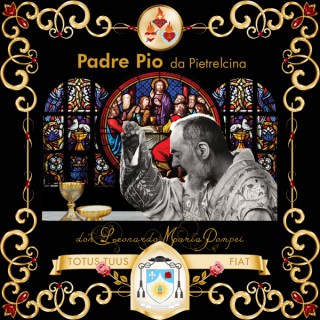
Il soprannaturale non si manifesta solo nelle apparizioni o visioni straordinarie, ma anche nella vita ordinaria dei santi, che costituisce una delle principali espressioni della presenza di Dio nella storia.Il Novecento rispetto ad altre epoche, fu avaro di santi. E tuttavia una figura carismatica sembrò riassumere in sé una larga parte dei doni straordinari di cui il suo tempo fu privo. Questa figura è quella di padre Pio da Pietrelcina. Nella sua persona il soprannaturale tornò a imporsi all'attenzione di un mondo che pretendeva di spiegare ogni cosa attraverso la scienza e la tecnica. Fu il primo sacerdote nella storia della Chiesa a ricevere le stimmate, i segni della Passione impressi visibilmente nel suo corpo. Attorno allo stigmatizzato di San Giovanni Rotondo si raccolsero poi innumerevoli testimonianze di guarigioni, miracoli, sorprendenti bilocazioni, profezie e discernimento delle coscienze. Ricordiamo, tra i tanti, il caso della dottoressa Wanda Półtawska, che attribuì a padre Pio la propria miracolosa guarigione da un tumore. Il 17 novembre 1962 il vescovo ausiliare di Cracovia Karol Wojtyła scrisse al cappuccino chiedendogli di pregare per lei; in una seconda lettera lo ringraziò, riferendo che la donna aveva recuperato improvvisamente la salute prima dell'intervento previsto. Nato a Pietrelcina il 25 maggio 1887, Francesco Forgione entrò nel noviziato cappuccino nel gennaio 1903 e prese il nome di fra Pio. Emise i voti solenni nel 1907, fu ordinato sacerdote nel 1910 e giunse a San Giovanni Rotondo nel 1916. Qui, il 20 settembre 1918, comparvero sul suo corpo le stimmate, che restarono aperte e sanguinanti per ben cinquant'anni, dopo una visione di Gesù Crocifisso, che gli aveva detto: “Ti associo alla mia Passione”. La sofferenza segnò tutta la sua esistenza. Egli la offrì per la conversione delle anime e la accompagnò con un'instancabile attività nel confessionale e con opere concrete di carità. La più nota è la Casa Sollievo della Sofferenza, l'ospedale che volle a San Giovanni Rotondo per unire la cura del corpo all'assistenza spirituale dei malati.
The St. Paul Center's daily scripture reflections from the Mass for Wednesday of the Twenty-fifth Week in Ordinary Time by Dr. John Bergsma. Pio of Pietrelcina, Priest Obligatory Memorial First Reading: Proverbs 30: 5-9 Responsorial Psalm: Psalms 119: 29, 72, 89, 101, 104, 163 Alleluia: Mark 1: 15 Gospel: Luke 9: 1-6 Learn more about the Mass at www.stpaulcenter.com Encounter Christ in Scripture and share Him with others. Join us at stpaulcenter.com/memberships
St. Pio of Pietrelcina, Priest (Memorial)

September 23rd, 2026 - In 1931, the Holy See stripped Padre Pio of everything but a private Mass. No confessions, no public Mass, no letters. The man who fought hardest to get him back was a con man from Turin who walked into the friar's confessional wearing white gloves and walked out a different man. On the feast of St. Pio of Pietrelcina, Joe tells the true story of Emanuele Brunatto, the man Padre Pio called "my policeman." Plus: Oscar-shortlisted director Tod Polson on The 21, his animated film about the 21 martyrs of Libya. Links, Show Notes & More - https://thestationofthecross.com/act Email Us! ACT@TheStationOfTheCross.com

On today's Inner Life, Fr. Michael Hurley comes on to discuss the life and works of St. Padre Pio. Tina - We purchased our business on his feast day and we have prayer cards of him inside the shop and we evangelize with them. Break 1 Frances - We saw Padre Pio at our church during adoration - good story Joey - I'm at a crossroads in my job and asked St. Pio for discernment and God helped me. Break 2 Paul - Fr. Joe had cancer and Padre Pio healed him. Brandon - Padre Pio has brought me consolation in many instances. Tom - A priest we knew said mass with Padre Pio in WWII and said it smelled like flowers from his wounds.

Our Daily Scripture Readings and Reflection: On the memorial of St. Pio of Pietrelcina, today's First Reading gives us a striking warning. When we become comfortable, self-sufficient and “full,” we can begin asking, “Who is the Lord?” Forgetting our dependence upon God helps fuel the Culture of Death.

Today is the feast of St. Padre Pio. We think of great saints as wonders but listen to what St. Pio had to say about his own struggles.
The St. Paul Center's daily scripture reflections from the Mass for Wednesday of the Twenty-fifth Week in Ordinary Time by Dr. John Bergsma. Pio of Pietrelcina, Priest Obligatory Memorial First Reading: Proverbs 30: 5-9 Responsorial Psalm: Psalms 119: 29, 72, 89, 101, 104, 163 Alleluia: Mark 1: 15 Gospel: Luke 9: 1-6 Learn more about the Mass at www.stpaulcenter.com Encounter Christ in Scripture and share Him with others. Join us at stpaulcenter.com/memberships

Quarta-feira da 25ª Semana do Tempo Comum | Mem. São Pe. Pio de PietrelcinaPrimeira Leitura: Pr 30,5-9 | Salmo: Sl 118 (119),29. 72. 89. 101. 104. 163 (R. 105a) | | Evangelho: Lc 9,1-6Compartilhe com amigos e familiares. Baixe nosso APP com conteúdos católicos: orações, reflexões, homilias e muito mais.Conheça nosso canal youtube/voxcatolicawww.voxcatolica.com.brNarração: Sonia Abreu

Renungan SeRoJa, PW. S. Pio, Imam, 23 September 2026

Del libro "Renacidos" de Josemaría Zavala que narra historias sobre el padre Pio y sus devotos.

Pio is a Bitcoin-native operator and commentator who first stacked sats in 2020, built a media business through the NFT cycle, and now focuses on Bitcoin plus the companies forming around it.› https://x.com/piovincenzo_PARTNERS
Historia del libro renacidos sobre un sacerdote y su encuentro con el padre Pio.

Episode 203 - Inside The Mind Of Pio Marasco.We had the privilege to sit down and chat with Pio, an icon of the surf world and a lord of the fins. Pio talks to use about the latest fin evolution, the FCS X Album Laminar fins, how and why they work and what boards they will go well in. We then chat more about Pio's life, how he ended up being in charge of MFC Hawaii, working with Kai Lenny, Laird and other huge names and more! Check it out, subscribe and share!Follow us at @the_insiders_podcast - Link In Bio

Sanremo dura una settimana. Ma per chi sale sul palco dell'Ariston, quello che accade prima, durante e dopo può restare per tutta la vita. In questo nuovo episodio di Mix of BSMT abbiamo raccolto i racconti di alcuni degli ospiti che, nel corso degli anni, hanno vissuto il Festival da prospettive molto diverse: chi lo ha vinto, chi lo ha condotto, chi ci è arrivato da ospite e chi ha dovuto fare i conti con la pressione, le aspettative e il giudizio. Vittorie inattese, esibizioni difficili, polemiche, paure, rivincite e momenti diventati iconici. Esperienze diverse per raccontare che cosa significhi davvero vivere Sanremo, dentro e fuori dal palco. Ne abbiamo parlato con: 00:00 Damiano David 01:37 Drusilla Foer 03:05 Angelo Pintus 05:54 Luca Bizzarri 08:23 Giorgio Montanini 12:01 Antonella Clerici 15:31 Ligabue 16:33 Laura Pausini 18:42 Giorgia 22:27 Pio e Amedeo 25:52 Giacomo Poretti 27:36 Carlo Conti 30:37 Amadeus 36:34 Gianni Morandi 37:40 Achille Lauro 45:08 Ultimo 49:22 Francesca Michielin 52:54 Luciana Littizzetto 56:14 Matilda De Angelis 59:12 Fiorella Mannoia Qual è il momento di Sanremo che vi è rimasto più impresso? Fatecelo sapere nei commenti. Learn more about your ad choices. Visit megaphone.fm/adchoices

In this deep-dive, Inside Sources host Greg Skordas and guest host Jim Bennett discuss several aspects dealing with the ongoing drought that's plaguing both Utah and the rest of the West. In this special coverage, they discuss: The Church of Jesus Christ of Latter-day Saints' recent statement on the drought, encouraging members to take both personal steps and support public efforts to conserve water. How the drought has added additional strain on our reservoirs and whether or not the monsoonal moisture we've received has helped. They're joined in the studio by Laura Haskell, drought coordinator with Utah Division of Water Resources. The effect of the drought on wildlife. With hunting season starting soon and bear encounters doubling this year, the drought has been pushing more wildlife to find food and resources in different places. Faith Heaton Jolly, PIO at the Utah Division of Wildlife Resources, joins the conversation.

Manufacturing Quiet TuesdaysNational Emergency Management Awareness Month, and a Confirmed Administrator at LastHost: Todd T. DeVoe, CEM Runtime: 11:45 Recorded: August 8, 2026SHOW NOTESAugust is National Emergency Management Awareness Month, and this year it arrives alongside news the field has waited two years to hear. On Friday, August 7, the Senate confirmed Cameron Hamilton as Administrator of FEMA, part of a block of 74 nominations. After two years of acting titles and senior officials performing the duties of, there is a name on the door that stays there.Todd DeVoe uses the occasion for something other than policy analysis. This one is a thank you. Not the conference kind. The real one.He works through the profession person by person. The one-person department that also serves as the planning section, the logistics section, and the PIO. The planner who has read the same evacuation annex forty times, looking for the change that will matter, and who will never be told it worked. The duty officer at two in the morning, with the full picture assembled by four. The recovery specialist is still sitting at a kitchen table over a three-year-old declaration. The exercise designer who wrote a scenario meant enough to embarrass people, because an exercise that everybody passes taught nobody anything. The FEMA staff who stayed through the uncertainty. And the twenty-six-year-old, at their first activation, convinced everyone else in the room that they knew something they did not. They do not. Everybody is reading the same situation report.Then the harder part. This profession's best work is invisible by design. The evacuation goes smoothly, and there is no story. The warning goes out early and the numbers stay low. Success is indistinguishable from a quiet Tuesday. Todd reaches for Marcus Aurelius on the vine that produces grapes and does not go looking for applause, and lands on what Awareness Month is actually for: not asking for credit, but explaining what the quiet costs and who pays for it, so the October budget conversation goes a little easier.The last thank you goes to the families. The empty chair at dinner. The eleven-word activation text that reorganizes a week. The skill of falling back asleep after the duty phone rings at three. And the thing most people miss entirely is being the first responder to the responder who came home from a bad one and could not yet talk about it. There is no ICS position for that. Maybe there should be.CHAPTERS00:51 The Senate confirms Cameron Hamilton as FEMA Administrator02:56 Doc, welcome back. Why a permanent name on the door matters03:07 Awareness Month, year two, and the traction it has built04:08 Thank you, department by department06:13 To the ones who are new: stay06:40 When you do your best work, nothing happens07:05 Marcus Aurelius and the business of manufacturing quiet Tuesdays07:58 To the spouses, partners, and kids09:26 A wildland firefighter son, and both sides of that door09:42 Not a profession in decline. A profession that took a hit and stayed on its feet10:52 Your assignment for the rest of AugustYOUR ASSIGNMENTIt takes about four minutes. Find one person in this field whose work you have benefited from and tell them. Not on social media. Call them, and name the specific thing they did. Then find one family member, yours or someone else's, and thank them for the hours that got taken from them.MENTIONED IN THIS EPISODEIAEM launched National Emergency Management Awareness Month in August 2025.Auburn, Washington signed its proclamation on August 3.San Bernardino County is running a campaign called Behind the Ready.Senate confirmation of Cameron Hamilton, August 7, 2026, in a block of 74 nominations, 51 to 47. This is a public episode. If you'd like to discuss this with other subscribers or get access to bonus episodes, visit emnetwork.substack.com/subscribe

New Orleans is using AI to help field 911 calls...but only in very specific circumstances involving car accidents. We get the details from Jay Vise, PIO for the Orleans Parish Communications District.

Ninety-nine thousand, nine hundred and ninety-eight dollars.That's what the conversion said.Michael Gagliano had never had a six-figure score.Every friend he had did.He'd been playing for years — good enough that everyone knew the name, never quite good enough to break through.Then he gets fifth in a WPT in Prague.Aces into queens.Paid out in euros.He's standing in the payout line. Plugs the number into XE.com.$99,998.Two dollars.That's the story of most of his career.Always close.Never the guy.He was a hockey goalie who quit one day because video games were more interesting. He wanted to be a sound engineer until his mom talked him out of it. He lasted one semester at UMass, played pool ten hours a day, read Bringing Down the House, and practiced counting cards alone in his room.Except he wasn't 21 yet.And you can't count cards online.So he found poker instead.Then he was a nit.A real one.He'd put $50 online, run it to $300, and withdraw it.Over and over.Never building anything.He became a special ed teacher. Worked 7 to 3:15, raced home, and late-regged whatever was starting at 3:30.He had $1,200 to his name and spent $800 of it on a camera he couldn't afford.His now-wife told him it was the worst decision he'd ever made.The next day he had his biggest score ever.In this episode of The Table 1 Podcast, Michael “Gags” Gagliano joins Art Parmann and Justin Young — recorded in the strange dead air a few days before the WSOP Main Event final table: ♠️ The AIM message from Mark Herm that changed everything: “empty your accounts, I'll send you money next week” ♥️ Why his mom was convinced getting backed meant the mob was going to break his kneecaps ♦️ The bracelet he won completely by accident — he'd busted, he hates turbos, and his arm slipped on the space bar ♣️ Losing $1,500 a day live in Vegas and printing money online every night because every good player was out at the clubs ♠️ The Parx story: an hour drive, 45 minutes at the table, kings into quad jacks, and he has never gone back ♥️ Day 4 of the Main — 14 big blinds, stuck in a parking garage, certain it was over. Day 5 — he bagged 5.3 million and didn't lose a single pot.We also get into: Whether online bracelets “count” — and why beating 2,500 people should mean something The classiest thing an opponent has ever said to him, the night he won his first bracelet Two weeks of waiting for a final table, and why the November Nine was torture Black Friday, six months of Starcraft, and moving to Canada in six weeks to keep playing The month his daughter was born and New Jersey regulated online poker Being one of the first poker streamers on Twitch — and getting banned for it Solvers, PIO, and the coach who told him they were the future when he thought they were stupid A calendar app that turned the hardest table of the tournament into the most fun oneThis isn't a strategy episode.It's about being good for twenty years before anybody calls you great.

Episódio do dia 04/08/2026, com o tema "Pai, Filho e Espírito Santo: dois ou três??" Apresentação: Itamir Neves, André Castilho e Renata Burjato. Pergunta do dia: GOSTARIA DE SABER, A BÍBLIA DIZ QUE DEUS É ESPÍRITO, E TAMBÉM CITA O ESPÍRITO DE DEUS (PAI), SE O ESPIRITO É DE DEUS PAI, ESTE ESPÍRITO É UMA PESSOA??? NO PRINCÍPIO, SEGUNDO JOÃO, HAVIA SÓ DEUS (O ETERNO - PAI) E O VERBO (A PALAVRA, CRISTO OU JESUS)??? ERAM SÓ 2 OU 3??? Redes Sociais Instagram: @rtmbrasil@itabeti@acastilhortm Site: www.rtmbrasil.org.br WhatsApp da RTM - (11) 97418-1456See omnystudio.com/listener for privacy information.

Lead Balloon - Public Relations, Marketing and Strategic Communications Disaster Stories
Every nation on the planet is its own brand. And love of country plays a part in each one. But here in the U.S., the very notion of patriotism has been polarized. Culture warriors have attempted to unilaterally define what it means to be American, and they paint anyone who disagrees as unpatriotic. So how did one extremist ideology corner the market on branding American patriotism? Why is it imperative for regular Americans to reclaim the American brand? And why is the so-called “opposition” SO BAD at branding and messaging? A respected public relations leader, government PR trainer and service member Dr. Joe Trahan joins us to discuss. Dr. Joe is the founder of Trahan and Associates, a recognized leader in media relations and crisis communications for more than 23 years. He's a former member of the PRSA national board. Earlier in his career, he achieved the rank of Lt. Colonel in the US Army Reserve, and commanded the 314th Public Affairs Operations Center. And as an instructor, he has taught media relations to thousands of pupils in 46 U.S. states, 5 NATO allies, Mexico and Paraguay, in addition to teaching PIO courses at FEMA for more than 20 years. Together, we'll honor 250 years of American exceptionalism by doubling down on the principles that actually made this country great: service, civil discourse, and compromise. Learn more about your ad choices. Visit megaphone.fm/adchoices
Send us Fan MailWhen 50,000 people are evacuated, the emergency is only half the fight, the other half is the information. We pick up our conversation with Orange County Fire Authority Division Chief Craig Covey, a veteran incident commander, to unpack what really happens when a major response collides with nonstop public demand, intense media pressure, and elected officials who want to lead the narrative for their communities. The result can be a messy communications environment where accuracy, timing, and trust are on the line. We talk candidly about the “joint, unified information pipeline” and why going off script creates confusion for residents and unnecessary friction for responders. Covey explains how cooperator meetings and direct conversations can reset expectations, protect city managers from surprises, and keep updates clear and consistent across multiple impacted jurisdictions. You'll also hear a practical leadership move that turns political attention into operational advantage: tasking elected leaders to push emergency declarations quickly, delivering relief for residents and opening the door to state and federal resources if conditions worsen. The episode goes deep on modern crisis communications tools and threats: the value of a single crisis website or pre-built “dark site,” the challenge of fragmented city messaging and social media, and how AI can help teams publish faster in multiple languages across diverse communities. Then we hit the unnerving part, a deepfake video that made Covey appear to speak fluent Vietnamese using his own briefing footage, and what that implies for misinformation during disasters. If you care about emergency management, public information officer best practices, incident command leadership, or crisis communication strategy, this conversation is loaded with field-tested lessons. Subscribe, share this with your favorite PIO or IC, and leave a review, then tell us: what's the hardest part of keeping one trusted message during a crisis?#emergencymanagement #crisismanagement #crisiscommunications #ocfa #publicinformation #PIOSupport the showWe'd love to hear from you. Email the show at Tom@leadinginacrisis.com.

This week Jeff speaks with Casey Lamarr, PIO with the city of Hendersonville about the new emergency Alert System. Michael Lajoie stops by to talk about his fundraising event to support Isaiah 1:17 House.
Join Scott as he hacks on the CircuitPython powered gameboy cart. He'll also answer any questions folks have. Visit the Adafruit shop online - http://www.adafruit.com Thanks to dcd for timecodes: 0:00 Getting started 1:57 hello and welcome to Deep Dive 2:40 Circuit Python (CP) from Adafruit makes it easy to program microcomputers 3:16 This week - working on GameBoy (GP) custom cart to use CP 5:08 GB cart features 7:27 Power up GB showing Nintendo 9:43 switch to Konsole and CP REPL - showing "Adafruit" 10:34 the "Adafruit" logo trick explained 11:47 continue Gameboy cart hacking 12:33 rp2350 gameboy cartridge firmware - croco cartridge V2 (github ) 13:43 emulate RAM without CPU (using PIO) https://github.com/shilga/rp2350-gameboy-cartridge-firmware 15:57 game boy memory access sequence ( https://iceboy.a-singer.de/doc/mem_patterns.html ) 18:30 CP _gbio PIO code ( https://github.com/tannewt/circuitpython/blob/pygb2350/ports/raspberrypi/common-hal/_gbio/__init__.c ) 21:30 rp2040 and rp2350 PIO datasheets and PIO overview 26:30 CRC 'trick' to transform address from GB to RAM ( summation ) 37:53 check out mermain.live to visualize the generated block diagram using mermaid-cli 44:00 back to the PIO code 47:46 LLM discussion - DeepSeek 4 / DwarfStar 51:17 CP with latest PICO_SDK ? 55:10 USB vs. Serial Logging 56:20 PIO debug trace shows all the bits... 1:02:10 RP2 I/O input/output driving discussion 1:05:10 CP docs on circuitpython.org 1:06:30 gbdev.io and vsync 1:07:04 plan on next week with scott, and visit the discord ----------------------------------------- LIVE CHAT IS HERE! http://adafru.it/discord Subscribe to Adafruit on YouTube: http://adafru.it/subscribe New tutorials on the Adafruit Learning System: http://learn.adafruit.com/ -----------------------------------------

On this episode of This Week in Moab, we hear breaking news of the White House press event for the signing of the Executive Orders gutting Grand Staircase Escalante and Bears Ears National Monuments, and get response from Scott Braden of SUWA. Additionally, we get updates on the fire from Karl Hunt, PIO for the crew fighting the Babylon Fire in Bears Ears, as well as insights into restoration from Kara Dohrenwend of Rim to Rim Restoration.
Join Scott as he continues work on the hardware in the loop software. He'll also discuss the state of the Ploopy left handed trackball and the GameBoy cart. Visit the Adafruit shop online - http://www.adafruit.com 0:00 Getting started 1:50 Hello, and welcome to Deep Dive 2:10 Circuit Python is from Adafruit 2:35 example microprocessor ESP32-S3 3:44 Today's plan, but questions always welcome 4:43 Hardware in the loop project esp32-c61 ( Device under test ) 6:40 Hardware in the loop camera 9:30 lsusbip 10:39 address assignment to DUT 12:40 'rosie' hosted web page 14:50 don't forget the measure current jumper :-) 20:00 Logic capture support logicanlyzer.dev 22:45 testing CP module code 25:00 focusing on ESP family, then RP2xxx 25:45 esp32-s31 dev kit needs 2 by 20 adapter - building off the adafruit T-Cobbler 28:46 esp32-P4X and other boards for the ESP32 collection 29:27 Gameboy PCBs ( GP Pocket ) (with fixed reset button) 31:00 PWM to audio changes / and PIO gpio pin changes 34:40 3D-printer and trackball saga ploopy.co trackball 38:04 issues supported with mirroring PCB 40:36 bamboo mini printed parts 42:33 respin to handle scroll wheel switch position 45:37 printed hammond project box :-) 46:11 HID remapper - e.g change keypresses in the middle remapper.org ( add HUB capabilities ) 48:33 replay HID events for scripting 50:00 USB hub enhancements to the HIL board 1:01:39 Wrap up - adafru.it discord ----------------------------------------- LIVE CHAT IS HERE! http://adafru.it/discord Subscribe to Adafruit on YouTube: http://adafru.it/subscribe New tutorials on the Adafruit Learning System: http://learn.adafruit.com/ -----------------------------------------
On this week's journey, we will meet a retired U.S. Air Force Colonel who continues to serve our country through the men and women who are active in the military. Hear her experiences in the military and the vital role of the Archdiocese for Military Services, USA. In this episode, you will hear about : Why is the ministry of the archdiocese so important? What unique spiritual challenges do military members and their families face? Why is it so important for Catholics serving in the military to remain connected to the sacraments and to a faith community? Continue Your Journey: Guest information and helpful resources. Jewel for the Journey: "Prayer is the best armor we have." - St. Pio of Pietrelcina Do you like what you hear? Become a Missionary of Hope by sponsoring a week of Journeys of Hope. Click here to get started. Learn more at https://pilgrimcenterofhope.org/media-and-resources/all-media-series/journeys-of-hope.html Help us spread hope! https://pilgrimcenterofhope.org/support

Send us Fan MailProgesterone-in-oil shots, also known as PIO shots, are one of the most feared and hated parts of IVF. They are uncomfortable, intimidating, and often leave patients wondering: “Do I really need this, or is my fertility doctor just being cruel?”In this episode of Taco Bout Fertility Tuesday, Dr. Mark Amols explains why progesterone matters for implantation, how estrogen and progesterone work together to prepare the uterine lining, and why the type of embryo transfer cycle changes everything.The key question is not simply whether progesterone shots are better than vaginal progesterone. The real question is whether your body is making progesterone on its own.Dr. Amols breaks down the difference between ovulatory or modified natural frozen embryo transfers and programmed frozen embryo transfers. In an ovulatory cycle, the body forms a corpus luteum and produces progesterone naturally. In a programmed cycle, there is no ovulation, no corpus luteum, and therefore no natural progesterone production — meaning all progesterone support must come from medication.This episode also reviews the research comparing daily progesterone-in-oil shots, vaginal progesterone alone, and combination protocols using vaginal progesterone plus intermittent PIO injections. The data shows why vaginal progesterone alone may not be enough in programmed frozen embryo transfer cycles and why many clinics still rely on PIO for reliable progesterone support.Dr. Amols also discusses progesterone blood levels, why levels can be hard to interpret with vaginal progesterone, why clinics may differ in their protocols, and how some patients may be candidates for fewer injections or modified natural cycles.If you are preparing for an embryo transfer, taking progesterone, or wondering why your clinic recommends PIO shots, this episode will help you understand the science behind the shot — and hopefully hate your doctor a little less.The bottom line: fertility doctors are not sadists. Progesterone-in-oil may be a literal pain in the butt, but in some embryo transfer cycles, it has an important purpose.Thanks for tuning in to another episode of 'Taco Bout Fertility Tuesday' with Dr. Mark Amols. If you found this episode insightful, please share it with friends and family who might benefit from our discussion. Remember, your feedback is invaluable to us – leave us a review on Apple Podcasts, Spotify, or your preferred listening platform.Stay connected with us for updates and fertility tips – follow us on Facebook. For more resources and information, visit our website at www.NewDirectionFertility.com.Have a question or a topic you'd like us to cover? We'd love to hear from you! Reach out to us at TBFT@NewDirectionFertility.com.Join us next Tuesday for more discussions on fertility, where we blend medical expertise with a touch of humor to make complex topics accessible and engaging. Until then, keep the conversation going and remember: understanding your fertility is a journey we're on together.
Send us Fan MailWhen tens of thousands of people have to leave home over a chemical incident, the hardest part isn't just operations, it's keeping the public confidently informed while the story explodes across the news. We pick up our conversation with Greg Barta, Public Information Officer for Orange County Fire Authority, on what actually works when the phones won't stop ringing and every word can move a community. We dig into OCFA's crisis communication strategy on X, why it remains their primary channel, and how that choice serves two critical audiences at once: residents who need clear instructions and the media who amplify official updates. Greg shares how the team uses short incident commander video messages to “feed the beast” with accurate B roll and soundbites, while still carving out time for one off interviews with local affiliates and national outlets without pulling chiefs away from running unified command. We also get real about pressure points: a tiny on air wording slip that triggers hours of follow up, how media monitoring helps you spot problems fast, and why it's better to admit uncertainty than to guess. Then we zoom out to crisis websites, the danger of information vacuums, and what it signals when a responsible company is largely invisible in public messaging. Along the way, Greg talks onboarding brand new PIOs mid crisis, choosing between specialists and well rounded reps, and the leadership support that makes timely, accurate updates possible. Subscribe for more crisis management lessons, share this with a communicator who needs it, and leave a review so more responders and leaders can find the show. #ocfa #gknaerospace #crisiscomms #crisiscommunications #PIO #gardengrove #emergencymanagement #orangecountySupport the showWe'd love to hear from you. Email the show at Tom@leadinginacrisis.com.
Send us Fan MailWhen a chemical incident triggers the evacuation of tens of thousands of residents, communications stops being a “nice to have” and becomes operational. We're back with Greg Barta, Public Information Officer for the Orange County Fire Authority, to dig into the nuts and bolts of crisis communication that most people never see: where to stage a press conference, how to set the tone, and the subtle skill of knowing when it's time to end Q&A before it turns into a loop of repeats and rumors.We also get candid about staffing and endurance. Greg walks through how his incident management team scaled PIO coverage with a 24/7 posture, including clear assignments for on-camera interviews, a dedicated media phone line, and a rover role to absorb surges. If you've ever wondered how agencies keep messaging consistent across multiple shifts and multiple partner agencies, this is a practical look at building a battle rhythm that holds up after the chaotic first 24 to 48 hours.Then we zoom out to coordination: the interplay between the PIO shop and the liaison officer when elected officials are intensely engaged, and why a dedicated elected officials briefing can protect the core response while keeping leaders informed. On the public side, we talk community hotlines run through the Emergency Operations Center, the flood of social media comments and X direct messages, and what happens when “helpful suggestions” start clogging the system.If crisis management, emergency communications, media relations, and incident command are part of your world, you'll leave with tactics you can apply immediately. Subscribe, share this with a colleague, and leave a review so more crisis leaders can find the show.#ocfa #gknaerospace #crisiscomms #crisiscommunications #PIO #gardengrove #emergencymanagement #orangecountySupport the showWe'd love to hear from you. Email the show at Tom@leadinginacrisis.com.
Send us Fan MailImagine being PIO for an incident that includes the evacuation of 50,000 local residents and and a real threat of major explosion or chemical release that could cause massive damage to homes and businesses. That' black swan scenario is what PIO Greg Barta was facing with his team at Orange County Fire Authority this past Memorial Day weekend when a runaway chemical reaction threatened their community. Greg serves as lead Public Information Officer (PIO) for the Orange County Fire Authority and gives us an inside look at how the team organized and managed communications to local residents and media around this incident. We walk through what it looks like to staff up communications on a holiday weekend when you only have a few full time shift PIOs who just completed their PIO training the day before the incident. Talk about being tossed into the deep end of the pool! Greg shares with us his strategy for relying on videos and social media to communicate critical incident updates to the evacuated communities. This proved an effective strategy, largely owing to the communications skills and empathy of the incident commanders and fire chief who appeared in the videos. We also dig into the mechanics that keep a unified message intact: media advisories, daily talking points as living documents, and a fast approval loop with unified command so information moves quickly without getting sloppy. Finally, we talk media relations when the story goes national, reporters are clustered at the command post, and a press conference expands to nine speakers, plus the pre briefing steps that kept the event controlled and on message.This is part one of a multi part deep dive. Subscribe, share this with a communicator who needs it, and leave a review.#OCFA #gknaerospace #crisis comms #crisiscommunications #PIO #orangecounty #gardengrove Support the showWe'd love to hear from you. Email the show at Tom@leadinginacrisis.com.

Ilario Carta"L'apoteosi di Pio Pacifico"Arkadia Editorewww.arkadiaeditore.it«Dattelo anche a Pio la palla, che già lo sapete che non fa male a una mosca, ohi ohi», implorava signora Cesarina dalla finestra di casa al pianterreno della piazza Solferino, nel quartiere Marina di Cagliari.La sua, più che un'esortazione era un tentativo disperato di scuotere dall'apatia suo figlio, che come ogni giorno assisteva, da solo, seduto nell'ultimo gradino del sagrato, alla interminabile partitella di pallone tra ragazzi del quartiere.Pio abitava con il padre Tarcisio e la madre Cesarina in un piccolo appartamento che dava sulla piazza, riconoscibile rispetto alle altre abitazioni per le due finestre con le grate antifurto e i muri scrostati.In quegli anni di boom economico buona parte dei cagliaritani, come tutti gli italiani, aspirava a futuri miglioramenti. Nessuna aspettativa invece si parava all'orizzonte della famiglia Pacifico, in ciò perfettamente allineata ai ritmi indolenti del quartiere che si spandeva in uno dei colli di fronte al porto.L'unica prospettiva di avanzamento era riposta nella futura pensione di Tarcisio Pacifico, il capofamiglia, che avrebbe permesso di sommare la nuova modesta entrata mensile allo stipendio da custode, che percepiva per la guardiania della sede della “Società operaia” nella zona di via Sonnino.Il quartiere Marina mostrava ancora, in quella metà degli anni Sessanta, le piaghe dei bombardamenti della Seconda guerra mondiale, certificate da intere viuzze di case diroccate.I genitori di Pio erano stati bambini nel ventennio. Avevano vissuto quotidianamente la propaganda fascista inneggiante a un'Italia nuova e padrona del Mediterraneo. Come tutti i ragazzi di allora avevano coltivato sogni fantasiosi di un mondo migliore, ma la guerra e i bombardamenti degli angloamericani, avevano provveduto a disintegrare le loro aspettative. Finito il conflitto si erano accontentati, negli anni a venire, di una dimensione modesta e senza ambizioni.Nello stesso modo avevano cresciuto Pio, educandolo a ignorare le illusioni di un futuro migliore, che sono «Le trappole peggiori della vita» gli diceva continuamente Cesarina.Ilario Carta vive a Cagliari. È laureato in Materie Letterarie e ha lavorato per oltre 35 anni nell'ambito delle Politiche Sociali della Regione Sardegna. Per Arkadia ha pubblicato 5 romanzi: I giardini di Leverkusen (2015), sua fortunata opera di esordio, giunta a diverse ristampe e vincitrice del Premio Osilo 2017 quale miglior romanzo sardo dell'anno, Lo scorpione nello stomaco (2017), un romanzo distopico in cui prende di mira in modo irriverente il potere politico attuale, Espiazioni Collettive (2019) in cui esplora in modo lucido e sensibile il lato oscuro del genere umano, Japanischer Garten (2024) sequel de I giardini di Leverkusen e L'apoteosi di Pio Pacifico (2026).Diventa un supporter di questo podcast: https://www.spreaker.com/podcast/il-posto-delle-parole--1487855/support.IL POSTO DELLE PAROLEascoltare fa pensarehttps://ilpostodelleparole.it/
As the FIFA World Cup 2026 approaches, emergency managers, stadium operators, law enforcement, hospitals, transportation agencies, airports, and public safety leaders are entering a critical final phase of readiness. In this episode of the Disaster Tough Podcast, John Scardena breaks down the six core pillars of Dynamic Population (DyPop) emergency management planning and response that every host city, venue, and public safety organization should be focusing on before major global events.Drawing from real-world experience supporting stadiums, large-scale events, emergency services, and national preparedness initiatives, this episode explores how emergency management must move beyond paperwork and become an integrated operational support function for those protecting life, property, and continuity of operations during high-consequence events.Topics include mass care and reunification planning, multilingual emergency communications, public information and public relations coordination, rumor control, counter-terrorism readiness, CBRNe response considerations, drone threats, situational awareness, human trafficking awareness, evacuation procedures, crowd behavior analysis, medical transport coordination, triage planning, hospital surge coordination, transportation disruptions, and emergency coordination between stadiums and cities.This episode also highlights the importance of collaboration between emergency managers, law enforcement, fire services, hospitals, transit systems, organized fan groups, and federal partners including the FBI, Secret Service, National Guard, and emergency response agencies supporting the FIFA World Cup and other mega-events. Listeners will gain practical insights into:FIFA World Cup emergency preparedness Stadium emergency management best practices Dynamic population response planning Emergency evacuation coordination Public safety and crowd management Mass casualty incident preparedness Medical surge and triage operations Human trafficking awareness during large events Drone and counter-UAS security concerns Public information officer (PIO) coordination Crisis communications and rumor control Stadium security and situational awareness Emergency management leadership during major events Multi-agency coordination for mega-events Transportation and transit disruption planning Cultural considerations during international sporting events Whether you are preparing for the FIFA World Cup, Olympics, Super Bowl, concerts, conventions, or other large-scale gatherings, this episode provides actionable emergency management strategies to help communities improve readiness, strengthen coordination, and protect the public during complex events involving dynamic populations. Disaster Tough Podcast continues to bring together emergency management leaders, first responders, military experts, public safety professionals, and crisis leadership practitioners to improve national readiness and resilience through real-world lessons learned and operational discussions.
Send us Fan MailEpisode Summary: In this episode, we explore Paul's journey in communications and emergency management, which ultimately led to the creation of the PIO Calendar. The PIO Calendar is a centralized platform that connects public information officers with training, conferences, and professional development opportunities across the country and around the world. Through his firm, PDR Strategies, he advises organizations on crisis communications, leadership messaging, and building public trust through clear, effective communication.Paul's BIO: Paul D. Raymond, Jr. is a strategic communications leader with a background in public safety, emergency management, and government operations. He has held senior leadership roles across New Hampshire state government, including serving as Assistant Commissioner at the New Hampshire Department of Corrections and as the Commissioner's Strategic Communications Administrator at the New Hampshire Department of Safety.During the COVID-19 pandemic, Paul led communications within the State's Joint Information Center, coordinating messaging across agencies during one of the most complex and high-consequence public information environments in recent history.In addition to his government service, Paul is a FEMA contract instructor, teaching courses including L0105 Public Information Basics, E/L0388 Advanced Public Information Officer, and the Executive Public Information Officer program. His work in the classroom focuses on preparing PIOs to operate effectively in crisis, conflict, and high-pressure environments.Paul is the founder of the PIO Calendar, a centralized platform that connects public information officers with training, conferences, and professional development opportunities across the country and around the world. Through his firm, PDR Strategies, he advises organizations on crisis communications, leadership messaging, and building public trust through clear, effective communication.His work is grounded in a core belief: communication is not just support—it is a critical operational function that shapes outcomes in crisis and beyond. He is passionate about strengthening the PIO profession by making training more accessible, practical, and aligned with the realities of the job.Paul lives in Concord, in the New England area, with his wife, Viola, and their young daughter.Paul's LinkedIn PIO CalenderSupport the showOur premiere sponsor, Social News Desk, has an exclusive offer for PIO Podcast listeners. Head over to socialnewsdesk.com/pio to get three months free when a qualifying agency signs up.

Today's episode is about our favorite topic of all: wildfire information! Guest Noah Baker—the Wildfire, Climate and Community Health Specialist for the City of Flagstaff—guided us through the social science behind communicating about wildfire, the ways in which we need to modernize our communication pathways with the public, and why it has never been more important for wildland firefighters to talk about their work. Noah's done some great work in his role with Flagstaff, and has some solid recommendations for other folks who work at the city/county/state level and want to improve their relationships and trust with the public while communicating about wildfire risk. And whether you work in public information/comms/public affairs or not, you'll likely glean something insightful from this episode—not only did we talk about on-the-ground initiatives to improve relationships with the public, but we also went down some bigger-picture rabbit holes related to how we can improve our messaging and thinking around wildfire. One of Noah's biggest suggestions (one that Amanda very much agrees with) is that firefighters need to feel more empowered to not only share their story, but consider pathways in the communications/information space after they leave operational fire. To this end, if you're currently in fire and interested in the public information path, Amanda would be happy to answer any questions you might have about it—she's been a PIO for six summers now, please feel free to shoot her an email about it! To support Life with Fire, please consider sharing this episode with someone who might like it, leaving an Apple Podcast review, or contributing to our Patreon! Patrons are currently keeping this ship afloat by covering our monthly costs for hosting and software—any support, via Patreon or otherwise, is deeply appreciated!

durée : 00:10:35 - Le sept neuf - par : Benjamin Duhamel - Pio Marmaï interprète un jeune peintre veuf dans le Paris de la fin des années 1920 dans "La Vénus électrique" de Pierre Salvadori. Le film fera l'ouverture, mardi, de la 79e édition du Festival de Cannes. - invités : Pio Marmaï Acteur français Vous aimez ce podcast ? Pour écouter tous les épisodes sans limite, rendez-vous sur Radio France

durée : 00:10:35 - Les interviews d'Inter - par : Benjamin Duhamel - Pio Marmaï interprète un jeune peintre veuf dans le Paris de la fin des années 1920 dans "La Vénus électrique" de Pierre Salvadori. Le film fera l'ouverture, mardi, de la 79e édition du Festival de Cannes. - invités : Pio Marmaï Acteur français Vous aimez ce podcast ? Pour écouter tous les épisodes sans limite, rendez-vous sur Radio France

The Hazen Fire continues to burn in the West Valley, with authorities scrambling to contain it. KTAR reporter Colton Krolak joined the show with Brandalyn Vonk, PIO for Arizona Department of Forestry and Fire Management, to provide an update on the fire.
Send us Fan MailEpisode Summary: In this episode of the PIO podcast, Shel Holtz discusses the evolving landscape of organizational communication, emphasizing the importance of storytelling, measurable outcomes, and the integration of emerging technologies like AI. He highlights the unique challenges faced by government communicators, the necessity of crisis preparedness, and the role of internal communications in shaping organizational culture. Holtz also addresses the balance between automation and authenticity, the significance of building trust, and the strategic value of communication in achieving organizational goals.Shel's BIO: BIO:Shel Holtz is senior director of communications at Webcor, a commercial builder in California. He brings nearly 50 years of experience to the job in employee communications, corporate public relations, crisis communications, media relations, financial communications, investor relations, marketing communications, and compensation and benefits communications. Since the mid-1980s, Shel has been focused on the role that emerging digital technologies will play in organizational communication. He has been a thought leader on the application of email, the internet, the web, visual media, social media, chatbots, and other technologies to the practice of communication. Today, he is applying his critical eye to the use of Artificial Intelligence in communication. Before joining Webcor in 2017, he had consulted independently for more than 20 years as principal of Holtz Communication & Technology, working with organizations worldwide to employ technology in their communications. Earlier in his career, Shel was director of corporate communications for Allergan and Mattel, assignments that focused on internal communications, and he also spent time at two global human resources consulting firms in their internal communications practices. His first job in the field of organizational communication was with the energy company ARCO in Los Angeles, where he served as an internal communications representative. He has written six communication-themed books, including the internal communication primer, Corporate Conversations, and is co-host of the first and longest-running communication-focused podcast, “For Immediate Release,” which debuted in early January 2005. Shel has been a regular global speaker on topics related to internal communication and the application of online technology to strategic communication. He is a Fellow of the International Association of Business Communicators (IABC), a Senior Fellow of the Conference Board's Marketing and Communication Center, and a Founding Research Fellow at the Team Flow Institute. He is a certified Strategic Communication Management Professional and an Accredited Business Communicator. He is currently a member of the Global Communication Certification Council and is set to become Vice Chair with automatic succession to Chair. Shel served six years on IABC's international executive board and is a five-time winner of IABC's Gold Quill award. Support the showOur premiere sponsor, Social News Desk, has an exclusive offer for PIO Podcast listeners. Head over to socialnewsdesk.com/pio to get three months free when a qualifying agency signs up.
Send us Fan MailEpisode Summary: In this episode of the PIO podcast, host Robert welcomes Moose Mutlow, a crisis communication and family liaison trainer, to discuss the intricacies of communicating with families during crises. Moose shares his diverse background, which includes years as a wilderness guide and experience in public information and family liaison roles. He emphasizes the importance of truth and immediacy when communicating with families, contrasting it with the more measured approach often required when dealing with the media. Moose highlights the emotional weight of family communication, noting that it requires a balance between professionalism and empathy, especially in high-stress situations where families are experiencing profound grief.The conversation delves into the operational pressures faced by public information officers (PIOs) and how these can complicate their efforts to support families. Moose discusses the significance of providing families with control over their narratives and the importance of transparency in building trust within the community. He also addresses the concept of secondary harm, the role of silence in communication, and the need for PIOs to prioritize the well-being of families over agency reputation. Throughout the episode, Moose shares practical strategies for effective family communication, emphasizing the need for empathy, honesty, and a human-centered approach in crisis situations.Moose's BIO: Moose Mutlow is an author and crisis-response trainer with extensive experience supporting families after fatalities, disasters, and major incidents. As a Family Liaison Officer, he works with public information officers, law enforcement, and emergency management professionals to strengthen family communication, reduce conflict, and deepen agency credibility during high-stakes events. He is the author of When Accidents Happen, Managing Crisis Communication as a Family Liaison Officer and teaches Family Liaison Officer courses across the country.To Contact Moose www.moosemutlow.comSupport the showOur premiere sponsor, Social News Desk, has an exclusive offer for PIO Podcast listeners. Head over to socialnewsdesk.com/pio to get three months free when a qualifying agency signs up.

In this episode, Jim O'Day and Mary O'Regan explore Padre Pio's wisdom for overcoming sin, especially pornography, and how his spiritual guidance can help us in our struggles today. They discuss Pio's miraculous gifts, his advice on avoiding near occasions of sin, and how we can invite his spiritual fatherhood into our lives through Mary's latest book, Padre Pio and You. 1. According to Padre Pio, the eyes are the organs that most often lead us into sin 2. Praying the Rosary and frequent confession are powerful tools against sin 3. Padre Pio can help you find community and support in your struggles

Niels Jespersen er chefredaktør for den socialdemokratiske netavis Pio. Derudover er han debattør, satiriker, forfatter og Afghanistan-veteran. Vi snakker om meget i dagens afsnit, især om hvordan verden ser ud lige nu, og hvor hurtigt den faktisk har ændret sig. For den her samtale har ligget i skuffen i nogle måneder. Den er optaget mens USA/Grønland-situationen var på sit højeste, før USA og Israel angreb Iran, og før der blev udskrevet valg her i Danmark. Så selvom afsnittet ikke er gammelt, føles det næsten som en samtale om en anden tid. Det gør dog ikke snakken mindre relevant. Niels er både vidende og virkelig god til at forklare tingene, når vi snakker om Danmarks deltagelse i krige, hvad der egentlig foregår i hovedet på en som Trump, og hvordan Europa måske burde begynde at tænke fremad. Gå fornøjelse, Christian. Vil du høre resten? Så find hele episoden eksklusivt på Podimo: http://podimo.dk/christian Hosted by Simplecast, an AdsWizz company. See pcm.adswizz.com for information about our collection and use of personal data for advertising.
Send us Fan MailIn this episode of the PIO podcast, Braden Frame, CEO of the Cartographers Group, shares practical strategies for enhancing public safety communication. We explore how leadership, technology, and authenticity shape community trust and organizational success.Key Topics:The importance of trust and transparency in public safety messagingAligning leadership behavior with effective communication strategiesThe evolving landscape of social media and AI risksBuilding strong relationships with media professionalsDeveloping a written crisis communication planMetrics for measuring communication success — focusing on outcomes, not just outputHow to manage corrections and maintain credibility during crisesLong-term strategic planning with content calendarsSkills future PIOs will need, including technology literacy and relationship buildingPractical tips for internal and external stakeholder engagement I built my career on the front lines of public safety as a firefighter and a nationally registered paramedic. On and off the job, I served in crisis response, political action, and labor leadership, learning how to lead decisively when the pressure is highest. A line-of-duty injury in 2020 ended my time in public service, but not my drive.I went on to co-found Reactor Graphs and the Cartographers Group, building a national force in public safety strategy, campaigns, and lobbying, delivering results that strengthen the lives of public servants and the communities they protect. Most recently, I served as the Chief Commercial Officer for Wrap Technologies Inc, a publicly traded company with technology products in public safety, defense, and the rapidly expanding counter-UAS market. I've led marketing teams, product launches, internal and external partnerships, and executive leadership, as well as product R&D, trademark and patent filings, and training across the United States and Canada.I've spent my life making tough calls in environments where trust and clarity matter most. Today, I help mission-driven partners do the same, operating with purpose, precision, and resilience when the outcome truly counts. As an experienced fractional Chief Operating Officer, I am ready to help your executive team lead and deliver with operational support and design for scale and success.www.bradenframe.comThe Fresh Patch Podcast - Where Good Pets Get It. Welcome to the Fresh Patch Podcast where we talk about everything, from dog...Listen on: Apple Podcasts Support the showOur premiere sponsor, Social News Desk, has an exclusive offer for PIO Podcast listeners. Head over to socialnewsdesk.com/pio to get three months free when a qualifying agency signs up.
Send a textSummary: In this episode of the PIO podcast, Robert interviews Brian Townsend, a retired DEA agent and founder of Only2MG, a nonprofit focused on raising awareness about the fentanyl crisis. Brian shares his extensive experience in law enforcement and discusses the alarming rise of fentanyl-related deaths in the United States. He explains the historical context of how fentanyl became prevalent in the drug supply, its integration into other drugs, and the dangers it poses. The conversation emphasizes the need for community engagement, consistent messaging, and a holistic approach to tackling the crisis, including reducing stigma and addressing the root causes of addiction. Brian also highlights the role of organized crime in the fentanyl epidemic and the importance of collaboration between law enforcement and public health sectors to create effective solutions.Brian's Email Brian's Website Brian Townsend is a retired Supervisory Special Agent/Resident Agent in Charge with the Drug Enforcement Administration (DEA). Brian proudly served in law enforcement for 28 years; 5 years as a police officer in Joplin, Missouri, and 23 years with the DEA, where he held a variety of assignments with increasing responsibility. Within the DEA, Brian served in three different formal leadership roles, managing multiple people, programs, and resources. He worked in Corpus Christi, Texas, Little Rock, Arkansas, and Springfield, Missouri, to combat drug trafficking and reduce drug-related crime. In addition to serving in enforcement operations, Brian was assigned at the DEATraining Academy in Quantico, Virginia. There, Brian managed DEA's specializedtraining unit and developed the leadership and development training unit. Theleadership and development training unit still serves as the primary resource forleadership development throughout DEA and its extensive workforce of over10,000 personnel.Currently, Brian serves as a Law Enforcement Training Coordinator for the Mid-States Organized Crime Information Center (MOCIC), a Regional Information Sharing System (RISS) Center supporting law enforcement in nine states (Kansas, Illinois, Iowa, Missouri, Minnesota, Nebraska, North Dakota, South Dakota, and Wisconsin). He is also the founder and principal of Eagle 6 Training, providingspeaking, training, and consulting services to organizations worldwide.Brian's training expertise extends far beyond drug-related topics. He is frequentlyinvited to deliver training and presentations on a wide range of subjects, includingleadership development, cryptocurrency investigations, and the dark web. Brian'sdiverse training portfolio equips law enforcement and private organizations withthe knowledge and skills needed to address both emerging digital threats andorganizational challenges. Most recently, Brian launched Only 2mg Inc. 501(c)(3), where he leverages his extensive experience and knowledge in the field of opioids. Brian is regularly invited tThe Fresh Patch Podcast - Where Good Pets Get It. Welcome to the Fresh Patch Podcast where we talk about everything, from dog...Listen on: Apple Podcasts Support the showOur premiere sponsor, Social News Desk, has an exclusive offer for PIO Podcast listeners. Head over to socialnewsdesk.com/pio to get three months free when a qualifying agency signs up.
© 2020-2026 Ivy Podcast Discovery LLC

