
POPULARITY
Categories

8 episodes with save lives

8 episodes with save lives

5 episodes with save lives

11 episodes with save lives

8 episodes with save lives

3 episodes with save lives

9 episodes with save lives

4 episodes with save lives

4 episodes with save lives

5 episodes with save lives

5 episodes with save lives

2 episodes with save lives

7 episodes with save lives

2 episodes with save lives

5 episodes with save lives

5 episodes with save lives

4 episodes with save lives

4 episodes with save lives

5 episodes with save lives

6 episodes with save lives

4 episodes with save lives

3 episodes with save lives

3 episodes with save lives

2 episodes with save lives

2 episodes with save lives

3 episodes with save lives

3 episodes with save lives

8 episodes with save lives

2 episodes with save lives

4 episodes with save lives

2 episodes with save lives

3 episodes with save lives

4 episodes with save lives

2 episodes with save lives

3 episodes with save lives

3 episodes with save lives

We spend time in the Evergreen Park Fire Department Training Center with Captain Ed Dunne as he shows off four very special life-saving classes available to the public. Pick up a few important pointers and techniques in this podcast, and then sign up to learn how to save a life with EPFD. Video version on YouTube! Brought to you by OSF Little Company of Mary. Get the latest news and information concerning everything going on in and around Evergreen Park and stay connected to your neighbors! Evergreen Park residents join Chris Lanuti at his basement bar each week. Listen, interact & get all of your free subscription options at theEPpodcast.com!

Understanding how athletes handle extreme heat could save lives. Dr Caroline D’Alton is a lecturer in the Department of Human Biology at UCT, and talks to Lester Kiewit about the risks of competing at an elite level in extreme heat; and what we need to know about the heat stress index, and why should athletes and sports fans be paying attention to it. Good Morning Cape Town with Lester Kiewit is a podcast of the CapeTalk breakfast show. This programme is your authentic Cape Town wake-up call. Good Morning Cape Town with Lester Kiewit is informative, enlightening and accessible. The team’s ability to spot & share relevant and unusual stories make the programme inclusive and thought-provoking. Don’t miss the popular World View feature at 7:45am daily. Listen out for #LesterInYourLounge which is an outside broadcast – from the home of a listener in a different part of Cape Town - on the first Wednesday of every month. This show introduces you to interesting Capetonians as well as their favourite communities, habits, local personalities and neighbourhood news. Thank you for listening to a podcast from Good Morning Cape Town with Lester Kiewit. Listen live on Primedia+ weekdays between 06:00 and 09:00 (SA Time) to Good Morning CapeTalk with Lester Kiewit broadcast on CapeTalk https://buff.ly/NnFM3Nk For more from the show go to https://buff.ly/xGkqLbT or find all the catch-up podcasts here https://buff.ly/f9Eeb7i Subscribe to the CapeTalk Daily and Weekly Newsletters https://buff.ly/sbvVZD5 Follow us on social media CapeTalk on Facebook: https://www.facebook.com/CapeTalk CapeTalk on TikTok: https://www.tiktok.com/@capetalk CapeTalk on Instagram: https://www.instagram.com/ CapeTalk on X: https://x.com/CapeTalk CapeTalk on YouTube: https://www.youtube.com/@CapeTalkSee omnystudio.com/listener for privacy information.

CLUB MEMBERSHIP: https://reformationredpill.com/products/reformation-red-pill-club-membership Email: Joshua@reformationredpill.com - Joshua Haymes hosts a conversation between Rick Lusk and Andrew Isker on if lying is permisable for christian magistrates. - Our Wonderful Sponsors Get Ever Accountable Today! https://everaccountable.com/?linkId=lp_996873&sourceId=reformation-red-pill&tenantId=everaccountable&affS1=na - Page 50 Get your free SEO audit here: https://page50.com/redpill Montana Coffee Co. https://www.montanacoffeecompany.online/standforsomething?utm_source=rrp&utm_medium=cpc&utm_campaign=youtube&utm_id=RRP+Partnership Code: reformation Dominion Wealth Strategists https://www.dominionwealthstrategists.com/ Let them know we sent you! Get your Christian Nationalism pin here: https://reformationredpill.com/products/christian-nationalism-flag-pin?variant=47896671518910

CLUB MEMBERSHIP: https://reformationredpill.com/products/reformation-red-pill-club-membership Email: Joshua@reformationredpill.com - Joshua Haymes hosts a conversation between Rick Lusk and Andrew Isker on if lying is permisable for christian magistrates. - Our Wonderful Sponsors Get Ever Accountable Today! https://everaccountable.com/?linkId=lp_996873&sourceId=reformation-red-pill&tenantId=everaccountable&affS1=na - Page 50 Get your free SEO audit here: https://page50.com/redpill Montana Coffee Co. https://www.montanacoffeecompany.online/standforsomething?utm_source=rrp&utm_medium=cpc&utm_campaign=youtube&utm_id=RRP+Partnership Code: reformation Dominion Wealth Strategists https://www.dominionwealthstrategists.com/ Let them know we sent you! Get your Christian Nationalism pin here: https://reformationredpill.com/products/christian-nationalism-flag-pin?variant=47896671518910

President Trump signed an executive order calling for spreading out childhood vaccines. We talk with Charles Stoecker, JP Morgan Chase Professor of Healthcare Finance at the Tulane School of Public Health and a vaccine expert, about what the data says.

See omnystudio.com/listener for privacy information.

The Safeguarding Health in Conflict coalition recently published a report that documented 232 health workers killed, more than 700 incidents where health facilities were damaged and almost 300 health personnel kidnapped in 2022. This episode dives into the circumstances and risks health workers face in conflict settings. Host Garry Aslanyan speaks to a health worker who has been on the frontline of recent conflict in Sudan. Their testimony is discussed with Susannah Sirkin, former Director of Policy at Physicians for Human Rights, and Samer Jabbour, a cardiologist who has worked in the area of conflict in health since war broke out in his home country of Syria.Related episode documents, transcripts and other information can be found on our website.Subscribe to the Global Health Matters podcast newsletter. Follow us for updates:@TDRnews on XTDR on LinkedIn@ghm_podcast on Instagram@ghm-podcast.bsky.social on Bluesky Disclaimer: The views, information, or opinions expressed during the Global Health Matters podcast series are solely those of the individuals involved and do not necessarily represent those of TDR or the World Health Organization. All content © 2026 Global Health Matters.
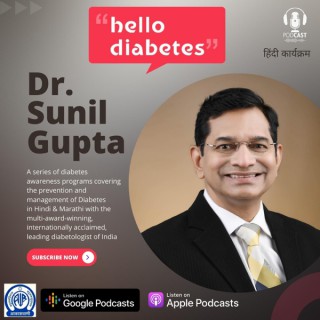
During the live phone-in programme “Hello Doctor” organized by the Diabetes Care Foundation of India, Dr. Sunil Gupta and Dr. Shlok Gupta discussed the growing burden of diabetes and the importance of early detection. They highlighted that nearly one in four adults may have either diabetes or prediabetes, making regular screening essential. The experts emphasized that diabetes often remains undiagnosed for several years because many individuals do not experience symptoms in the early stages. It was advised that everyone above 35 years of age, and those with a family history of diabetes from 30 years onward, to undergo annual blood sugar testing. The discussion explained the role of HbA1c, fasting blood sugar, and oral glucose tolerance tests in diagnosing diabetes and prediabetes. Special situations such as sickle cell disease, thalassemia, anemia, and pregnancy, where HbA1c may not be reliable, were also discussed. Dr. Shlok Gupta explained that very high blood sugar levels can temporarily exhaust insulin-producing beta cells, and short-term insulin therapy may help restore their function. The experts stressed the importance of individualized treatment, avoiding self-medication, preserving beta-cell function, maintaining a healthy lifestyle, and using modern technologies such as Continuous Glucose Monitoring (CGM) for better diabetes management. Expert- Dr Sunil Gupta & Dr Shlok Gupta Podcast: 11/05/2026 Anchor- Pranjali Baviskar Recorded at: Akashwani Nagpur

Africa speaks to David Harrison about the proposed alcohol tax increases and whether stronger liquor regulation can improve public health and economic outcomes. Presenter John Maytham is an actor and author-turned-talk radio veteran and seasoned journalist. His show serves a round-up of local and international news coupled with the latest in business, sport, traffic and weather. The host’s eclectic interests mean the program often surprises the audience with intriguing book reviews and inspiring interviews profiling artists. A daily highlight is Rapid Fire, just after 5:30pm. CapeTalk fans call in, to stump the presenter with their general knowledge questions. Another firm favourite is the humorous Thursday crossing with award-winning journalist Rebecca Davis, called “Plan B”. Thank you for listening to a podcast from Afternoon Drive with John Maytham Listen live on Primedia+ weekdays from 15:00 and 18:00 (SA Time) to Afternoon Drive with John Maytham broadcast on CapeTalk https://buff.ly/NnFM3Nk For more from the show go to https://buff.ly/BSFy4Cn or find all the catch-up podcasts here https://buff.ly/n8nWt4x Subscribe to the CapeTalk Daily and Weekly Newsletters https://buff.ly/sbvVZD5 Follow us on social media: CapeTalk on Facebook: https://www.facebook.com/CapeTalk CapeTalk on TikTok: https://www.tiktok.com/@capetalk CapeTalk on Instagram: https://www.instagram.com/ CapeTalk on X: https://x.com/CapeTalk CapeTalk on YouTube: https://www.youtube.com/@CapeTalk567 See omnystudio.com/listener for privacy information.

When evil showed up at a crowded In-N-Out Burger in Twin Falls, Idaho, two ordinary people made extraordinary decisions.In this episode of the Bearded Monkey Podcast, Cody Lanier, Police Lieutenant, firearms instructor, and owner of Bearded Monkey Tactical, sits down with his wife, Lasamoa and a special guest, to break down the tragic active shooter attack that shocked Idaho and the courageous response that likely prevented even greater loss of life.You'll learn:A timeline of the Twin Falls active shooter incidentWhat investigators know about the suspectThe background of the legally armed citizen who engaged the attackerThe actions of the off-duty Idaho State Trooper who also confronted the threatTactical lessons every responsibly armed citizen should understandWhy mindset, training, accuracy, and medical preparedness matter far more than gear aloneThis episode isn't about sensationalizing violence. It's about learning from real-world events so that ordinary people are better prepared to protect themselves and those they love.If you carry a firearm for self-defense, or are considering obtaining your concealed handgun permit, this is an episode you won't want to miss.The article we read from today was from the Associated Press.

What if pregnancy help ministries had a new window of time to reach women considering the abortion pill? In this episode of The ProLife Team Podcast, host Jacob Barr sits down with Pam Stenzel and Chaney Gooley to talk about the Women's Care Kit — an innovative tool that opens a one-hour, in-person consultation with a medical professional while providing medical education and supplies for women facing an abortion-pill decision.Pam and Chaney unpack how the kit works, why it matters for both medical and non-medical pregnancy centers, and how the pro-life movement can innovate while staying unified — building bridges instead of picking sides.

Hour 1 of the Friday Bob Rose Show, on last night's salute to local law enforcement and first responders at the SKY Valor reception. 22 stories honoring the heroism of 43 individuals that went above and beyond the call of duty to protect our communities. Plus, all of the morning's biggest new stories for 7-31-26.

Doctors are under-resourced and face unprecedented levels of stress. What if AI could step in?Charlotte Blease, researcher and author of Dr. Bot, joins The Last Word to discuss her study on AI and how it could emerge as one of the most reliable physicians in history. To hear the full chat, press 'PLAY' on this page!

On today's Flyover Conservatives Show, David and Stacy Whited sit down with Afghanistan combat veteran and Veteran Action founder Mark Lucas to expose the delays, loopholes, and bureaucratic barriers keeping veterans from timely care. America's veterans risked everything for our freedom, but too many are still forced to fight a broken system just to receive the healthcare they earned. Mark explains the Take Care of America's Veterans Act and how it could expand healthcare choice when the VA cannot provide treatment quickly enough. He also shares how viewers can contact their representatives in just a few minutes and help push Congress to act. This is more than a conversation—your voice could help change the system and potentially save a veteran's life.Tonight at 8:30pm CST, on the Flyover Conservatives show we are tackling the most important things going on RIGHT NOW from a Conservative Christian perspective! TO WATCH ALL FLYOVER CONTENT: www.theflyoverapp.com Follow and Subscribe on YouTube: https://www.youtube.com/@TheFlyoverConservativesShow To Schedule A Time To Talk To Dr. Dr. Kirk Elliott Go To ▶ https://flyovergold.comOr Call 720-605-3900 ► Receive your FREE 52 Date Night Ideas Playbook to make date night more exciting, go to www.prosperousmarriage.comMark Lucas X: https://x.com/MarkLucasUSAVeteran Action: https://www.veteranaction.orgMark Lucas is an Afghanistan combat veteran, former infantry officer in the Iowa Army National Guard, U.S. Army Ranger School graduate, and founder of Veteran Action. He earned the Combat Infantryman Badge and Bronze Star Medal while serving during one of the deadliest periods of Operation Enduring Freedom. As executive director of Concerned Veterans for America, Lucas worked with President Trump and Congress to help advance the VA Accountability and Whistleblower Protection Act and the VA MISSION Act. He has also led major national grassroots campaigns, including an effort that recruited more than 60,000 volunteers who contacted lawmakers over 250,000 times in support of Pete Hegseth and other cabinet nominees. Today, Lucas advocates for America First national-security policies, greater accountability within the VA, and expanded healthcare choice for the men and women who served our country. -------------------------------------------

Floods can have devastating impacts on rural communities, affecting families, farms, livestock, crops, and infrastructure. In this episode, Ellen Duysen of the Central States Center for Agricultural Safety and Health and Carolyn Sheridan of the Ag Health and Safety Alliance discuss lessons learned from the Midwest floods of 2019 and Iowa's historic flooding in 2024.The conversation highlights the importance of emergency planning, personal safety, recovery resources, and community support. Listeners will learn practical steps farmers and rural residents can take to prepare for future disasters and protect themselves, their families, and their livelihoods.Episode ResourcesFirst Aid Resources, GPCAH Topic PageFlood Information, Ready.govFlood Maps, FEMAPlan Ahead to Save Lives, Reduce Damage, Press Release by Ellen Duysen

Episode 239 - COVID IS A FRAUD, FAUCHI IS A FRAUD, Firefighters Save Lives Despite Maryland Moron Lawmakers, Reaching the Precipice of No MORE! Join Alpha Sierra 288, Bravo Golf 592, and Kilo Romeo for discussions regarding the #HardTurth about today's stories the lamestream won't talk about. (X): https://x.com/Signal50Podcast GETTR: Follow Bravo Golf 592 below: https://gettr.com/user/bravogolf592 Truth Social: Follow Bravo Golf 592: https://truthsocial.com/@BravoGolf592 Truth Social: Follow Alpha Sierra 288: https://truthsocial.com/@AlphaSierra288 GETTR: Follow Alpha Sierra 288 below: https://gettr.com/user/alphasierra288 Watch us on RUMBLE: https://rumble.com/c/Signal50Podcast Apple Podcast: Audio Only https://podcasts.apple.com/us/podcast/signal-50-podcast/id1533557486 Google Podcast: Audio Only https://www.google.com/podcasts?feed=aHR0cHM6Ly9mZWVkLnBvZGJlYW4uY29tL3NpZ25hbDUwcG9kY2FzdC9mZWVkLnhtbA%3D%3D Podbean: Audio Only https://signal50podcast.podbean.com Spotify: Audio Only https://open.spotify.com/show/6uO9fsmbEbhwfKaNYYAFYR Signal 50 on the web: www.signal50.com Email Alpha Sierra 288 and Bravo Golf 592 with your comments: Sig50podcast@protonmail.com

In This Hour:-- A powerful and dependable flashlight can save your life. Trevor Osterhof of Surefire runs down the best ways to use a tactical light.-- Why would anyone carry a .22 rimfire handgun for defense?-- Regular shooting sessions with friends is not only fun, but it can be great training.Gun Talk 07.26.26 Hour 3Become a supporter of this podcast: https://www.spreaker.com/podcast/gun-talk--6185159/support.

On this episode of Goalchat, host Debra Eckerling talks about creativity with intuitive artist Heather Eck (who has synesthesia - the ability to see color), content creator Holly Homer (founder of Pagewheel and Kids Activities Blog), and author/publisher Brenda Knight (Books that Save Lives aka BTSL). All three are featured in "52 Secrets for Goal-Setting and Goal-Getting" - a BTSL book, championed by Brenda. They are also champions of creativity, who constantly juggle multiple endeavors. Heather, Holly, and Brenda share their 52 Secrets secrets, their backstories, and the projects they are currently very excited about. They also discuss the impact of AI - hint, it will not replace people, as well as their favorite strategies for creating, cultivating, and enjoying the world around them. How to Get Unstuck - Brenda: Go for a walk - Holly: Stop stressing out about being stuck; let it rest - Heather: Movement, a vibration plate, go to a thrift store, create art with a lowercase a Goals - Holly: Baby steps, do something today, even for a minute, also do something you are terrible at - Brenda: Sit somewhere relaxing and write a new idea with your non-dominant hand - Heather: Go for a color walk, notice what color you are drawn to first and take pictures; that color is offering you a message (DM @HeatherEckArtist on Instagram if you want her to tell you what that message means Final Thoughts - Holly: Remember all creativity starts with play - Heather: Go back to what you loved doing as a kid - Brenda: Listen to your inner voice and believe in yourself Read the full recap and get the links discussed: https://thedebmethod.com/creative-heathereck-hollyhomer-brendaknight Learn More About Heather Eck: https://HeatherEck.com Holly Homer: https://HollyHomer.com Brenda Knight: https://BooksthatSaveLives.net Debra Eckerling: https://TheDEBMethod.com https://TheBookProposalExpert.com Learn more about your ad choices. Visit megaphone.fm/adchoices

As a society, and as an industrial complex, we've made health complicated…and expensive. But, epidemiology suggests that what we need to do to achieve and maintain personal health is really quite simple. Dr. Tom Frieden returns to the show to talk about the second half of his book, The Formula for Your Health. Through extensive research and review of hundreds of epidemiological studies, he distills the findings down to six basic things we need to be doing in order to be healthy. Dr. Frieden acknowledges that there is nuance, but he also affirms that history is clear. There are other societies in the world that were and are far healthier than the US population, and NOT because they had wearables, packaged food, home massagers, or Pelotons. Dr. Frieden is author of the book, The Formula for Better Health: How to Save Millions of Lives—Including Your Own. He is also the founder and CEO of Resolve to Save Lives, a global health organization that accelerates action against the world’s deadliest health threats. Resolve to Save Lives has worked with governments and other partners in more than 60 countries to save millions of lives. Dr. Frieden previously served as director of the U.S. Centers for Disease Control and Prevention (CDC) and New York City Health Commissioner, where he led efforts that increased life expectancy by 3 years and helped end major health crises including the largest US outbreak of multidrug-resistant tuberculosis, the 2014 West Africa Ebola epidemic, and responses to H1N1, Zika, and other threats.

In this informative episode Dr. Tom Frieden former CDC director for eight years for President Obama shares his journey in public health. Tom discusses his 'See, Believe, Create' formula for better health, and insights on how individuals can contribute to global health improvements. Kimberly and Tom disscus practical tips for longevity, the importance of trust in public health, and stories from his global experiences, including Ebola and COVID-19 responses. Tom speaks about his new book; The Formula for Better Health: How to Save Millions of Lives and Your Own. Chapters00:00 Introduction to Dr. Tom Frieden's Journey02:56 The Philosophy of Service and Health05:47 Understanding the Formula: See, Believe, Create09:04 Navigating Misinformation in Public Health11:55 Experiences in Global Health: Ebola and Beyond14:51 Reflections on COVID-19 and Lessons Learned17:10 The Importance of Belief in Public Health19:59 The Legacy of Smallpox Eradication21:17 Preventable Health Issues Today23:19 Key Factors for a Healthy Life26:36 The Power of Physical Activity27:54 Nutrition and Its Impact on Health29:21 Environmental Toxins and Health Risks30:57 Fertility Challenges in Modern Society33:21 Creating a Healthier Future37:37 The Call to Action for Global HealthEpisode Sponsor: ANIMA MUNDI OFFER: Anima Mundi is giving Feel Good Podcast listeners their largest discount of the year. It's a great opportunity to treat yourself or a friend to some soothing self-care by going to AnimaMundiHerbals.com and use the code: SOLLUNA20 for 20% off your purchase. USE LINK: AnimaMundiHerbals.com Code: SOLLUNA20 for 20% off your purchase.Dr. Tom Frieden Resources: Book: The Formula for Better Health: How to Save Millions of Lives—Including Your OwnWebsite: resolvetosavelives.orgSocial: X @drtomfriedenBio: Dr. Tom Frieden is a physician specializing in internal medicine, infectious diseases, public health, and epidemiology. He led New York City's control of multidrug-resistant tuberculosis and other health threats, directed the CDC during the Ebola epidemic, and helped start Mayor Michael Bloomberg's global health philanthropy, particularly the Bloomberg Initiative to Reduce Tobacco Use, which has helped countries implement measures that will prevent more than 35 million deaths. His work has appeared in medical journals including The New EnglandJournal of Medicine, JAMA, and The Lancet as well as media outlets including the New York Times, Washington Post, and The Wall Street Journal. Dr. Frieden is the founder and CEO of Resolve to Save Lives, a global health organization that accelerates action against the world's deadliest health threats. The organization has partnered with countries around the world to support implementation of programs that will prevent more than 9 million deaths.Dr. Frieden's forthcoming book, The Formula for Better Health: How to Save Millions of Lives—Including Your Own (MIT Press, September 2025), distills four decades of public health leadership into a clear, actionable framework to extend healthy lives. Drawing from real-world successes and failures, the book bridges the lethal gap between scientific knowledge and life-saving action.See Privacy Policy at https://art19.com/privacy and California Privacy Notice at https://art19.com/privacy#do-not-sell-my-info.

Ton Jones is known by many as the larger-than-life personality from Auction Hunters, but behind the television career, firearms expertise, and decades in the outdoor industry is a story shaped by loss, resilience, responsibility, and human connection.In this deeply personal conversation, Ton joins Michael Sodini and Kevin Berry to discuss the unexpected rabbit holes he discovered while listening to the Guns & Mental Health podcast, his concerns about how suicide prevention and firearm policy are approached, and why meaningful progress requires people from different communities to sit down and truly listen to one another.Ton shares a powerful story about supporting a suicidal veteran during a hunting trip, reflects on helping researchers better understand firearms at SHOT Show, and explains how his years working in Hollywood taught him to translate complicated and emotionally charged topics between people with very different perspectives.He also opens up about surviving on his own as a teenager, losing nearly everything when his home was robbed and burned down, the sudden death of his father, the loss of his grandfather, and the lessons that helped him rebuild rather than allow grief and anger to consume him.The conversation also explores responsible firearm ownership, the family traditions that shaped Ton's understanding of safety and secure storage, and the daily practices he now uses to protect his own mental wellness.This episode is ultimately about showing up: for family, for friends, for veterans, for people who are struggling, and even for those whose perspectives may be very different from our own.Because sometimes a conversation, a phone call, a shared campfire, or a simple question “How are you doing?” can help bring someone back to life.Send us Fan MailWalk the Talk America would like to thank our partners who make these conversations possible and would like to highlight our top two partner tiers below! Platinum Tier:RugerArmscorBleeker Street PublicationsGold Tier:NASGWLipsey'sDavidson's

When a disaster is prevented, it doesn't make the news and most don't hear about it; and that's exactly the problem. In this episode of the Public Health Insight Podcast with Dr. Barry Davis, biostatistician and author of The Preventioneers, we explore why prevention's biggest successes stay invisible. We discuss why climate warnings have gone unheeded for 170 years, why treatment beats prevention for the "popular vote," and how to rebuild trust with a public that distrusts experts. The answer isn't more data, but humility, storytelling, and trusted messengers.References for Our Discussion◼️[NEW BOOK] The Preventioneers: Diseases, Disasters, and the Discoveries That Changed Our World◼️An Ounce of Prevention: A Substack by Barry R. Davis Host◼️ Purva Mehta, BMSc, MScProducer◼️Gordon Thane, BMSc, MPH, PMP®Production Notes◼️ Music from Johnny Harris x Tom Fox: The Music RoomLeave Us Some FeedbackIf you enjoy our podcasts, be sure to subscribe and leave us a rating on Apple Podcast or Spotify, and spread the word to your friends to help us get discovered by more people. You can also interact directly with the podcast episodes on Spotify using the new “comment” feature! We'd love to hear what you think.Send us a Text Message to let us know what you think.

My guest today is Kris Johns, founder and CEO of AdGood, and somebody whose career sits right at the intersection of innovation, media, and impact. Kris has spent more than 15 years helping shape the streaming and ad tech world, building platforms and businesses that transformed how audiences discover content and how companies create growth. He helped scale AdPool into one of the world's largest CTV marketplaces, played a major role at World before its acquisition by AppLovin, and was part of the growth story at Maker Studios before Disney came calling. But what really grabbed my attention was what Kris decided to do next. After helping build businesses and scale technology, he looked at something most people barely noticed: unused advertising inventory and saw something entirely different. He saw potential, he saw opportunity, and he saw a way to turn empty ad space into something that could actually help change lives. Today, through AdGood, Kris is helping nonprofits across the power of connected TV and giving organizations that normally wouldn't have a seat at the table a much bigger voice.

In this episode of The Product Podcast by Product School, Carlos González de Villaumbrosia sits down with Jeff Kunins, Chief Product Officer and Chief Technology Officer at Axon, the company that created the Taser and the body cameras federal agencies wear. Axon ingests more video per year than YouTube, and with a market cap of approximately $32.9 billion and $2.78 billion in revenue, growing 33% year over year, it is one of the highest-growth companies in the S&P 500. What you'll learn:How law enforcement agencies are using AI inside body cameras and Tasers to save lives, not just hit metrics.Why Axon declared a public moratorium on facial recognition AI for six years and what finally changed.How Axon embeds external activists and researchers directly into product manager squads as a design input, not a compliance process.Building first-party AI models for real-time license plate detection while using foundation LLMs for everything else.Key takeaways:Axon created the Taser and the body cam, and now ingests more video per year than YouTube. Most people have never heard of them.Build only what you must to be differentiated. Everything else, license from the best available source.Ethics review is not a compliance burden. When embedded in the product lifecycle, external critics help you see around corners and design better products.Credits:Host: Carlos Gonzalez de VillaumbrosiaGuest: Jeff KuninsSocial Links:Find out more about Product School hereFollow our Podcast on TikTok hereFollow Product School on LinkedIn here

On the latest episode of Chesterfield Behind the Mic, we talk to Mary Bowman of the county's Emergency Communications Center (ECC) about not only how she came into that line of work but also the myriad ways staff in that department work 24/7 to ensure that first responders get the information necessary to save lives. Credits: Director: Martin Stith Executive Producer: Teresa Bonifas Producer/Writer/Host: Brad Franklin Director of Photography/Editor: Matt Boyce Producer/Camera Operator: Martin Stith and Matt Neese Graphics: Debbie Wrenn Promotions and Media: Joanna Heims, and Michael Senter Music: Hip Hop This by Seven Pounds Inspiring Electronic Rock by Alex Grohl Guest: Mary Bowman, Chief of Emergency Communications Recorded in-house by Communications and Media Chesterfield.gov/podcast Follow us on social media! On Facebook, like our page: Chesterfield Behind the Mic. On Twitter, you can find us at @ChesterfieldVa and on Instagram it's @ChesterfieldVirginia. And you can also watch the podcast on WCCT TV Thursday through Sunday at 7 p.m. as well as on weekends at noon on Comcast Channel 98 and Verizon Channel 28.

In this episode of American Potential, host David From sits down with retired police chief Brad Flynn to discuss a life-changing initiative that's helping first responders better serve individuals with sensory issues. Inspired by his son's autism diagnosis, Brad made it his mission to equip law enforcement, firefighters, and EMS with the tools to recognize and respond appropriately to people experiencing sensory overload. What began as a personal concern has grown into a nationwide effort—saving lives and transforming how emergency situations are handled. Brad shares powerful stories from the field, including moments where this training prevented tragedy, and explains how small changes—like reducing lights and noise—can make all the difference. This episode is a moving reminder that understanding, empathy, and the right training can turn potentially dangerous encounters into life-saving ones—and how one father's journey is changing the future for families everywhere.

Darryl Strawberry joins Jay Horwitz for one of his most personal interviews ever. The World Series champion reflects on his journey through addiction, recovery, faith and redemption, while sharing the powerful story of helping former teammate Lenny Dykstra find his way back. Darryl also discusses his new book Another Life, his prison ministry, visiting death row, the lasting bond of the 1986 Mets, and why helping others has become the greatest accomplishment of his life. From unforgettable baseball memories to deeply personal life lessons, this is a conversation about perseverance, purpose and second chances. Learn more about your ad choices. Visit megaphone.fm/adchoices

In the nearly half of Texas counties considered maternity care deserts, few health care workers are trained to handle a pregnancy emergency like maternal cardiac arrest. A simulation-based training program from an expert at UT San Antonio's Kate Marmion School of Public Health aims to change that, and reduce preventable deaths in the process.

According to the National Highway Traffic Safety Administration (NHTSA), formal driver education can reduce an individual's likelihood of being involved in a crash by as much as 40%. However, research also suggests that when formal driver education allows teens to obtain their licenses earlier through Graduated Driver Licensing (GDL) "time discounts," the overall number of crashes may not decline because more young drivers begin driving sooner. These findings underscore the importance of ensuring that driver education focuses not only on licensing but on developing lifelong safe driving habits. On this episode of Let's Have This Conversation, I sit down with Brad Coleman, CEO and Owner of SafeWay Driving, one of Texas' largest and most respected driver education companies. Before leading SafeWay Driving, Brad spent years competing as a professional race car driver, where he learned that while driving skill is essential, safety is what truly saves lives. Today, that lesson guides his mission: preventing the phone call that no family ever wants to receive. Brad shares how SafeWay Driving has spent more than 40 years helping over 200,000 teens, adults, seniors, and corporate drivers become safer behind the wheel through its proprietary SafeWay Driving System. We also explore how the company is transforming an industry traditionally dominated by small, independent driving schools by embracing technology, modern customer experiences, and a scalable franchise model that empowers entrepreneurs to make a meaningful impact in their communities. Throughout our conversation, we discuss why quality driver education matters, how innovation is reshaping the industry, the responsibilities that come with earning a driver's license, and what families can do to help create a new generation of confident, responsible drivers. Whether you're a parent preparing your teen to drive, an educator, a road safety advocate, or an entrepreneur interested in a purpose-driven business, this episode offers valuable insights into how education, technology, and leadership can work together to make our roads safer for everyone. For more information: https://www.safewaydriving.com/ LinkedIn: @BradColeman Learn more about your ad choices. Visit megaphone.fm/adchoices

Flooding kills more Americans each year than many storms that get far more headlines. Over 100 lives are lost annually, and most of those deaths follow the same predictable pattern. The water doesn't surprise us. Our decisions do. Today, we're talking about why. Flooding remains one of the deadliest weather hazards in the United States. Yet most flood deaths and some flood damages are preventable, if we take the right steps. Mentioned In This Episode:ReadyFam Preparedness AppSupport Practical Prepping72 Hour Prepping ChecklistDownload this episode If you find value in what we do, if you've learned something new, gotten an idea for something you need to do, been entertained, or just like Krista's Southern charm, would you be willing to give back a little?You can do that one of several ways. Go to our support page OR By starting your Amazon shopping from our website? ---> CLICK HERE (We earn from qualifying Amazon purchases)Contact us:Practical PreppingWebsiteOur Sponsors:Practical Prepping BooksProof Minimalist Wallets (Discount code PREPPER)ProLine Digital Group Website Email1791gunleather.com (Discount code: PREP15) SurfsharkPodcast music written and recorded by Krista LawleyWebsite design and hosting by ProLine Digital Group.Podcasts Copyright 2026, P3 Media Group, LLC, and Practical Prepping Podcast

In the U.K., the government developed a group tasked with “dreaming up psychological tricks to alter our behaviour” without the people being aware of it. The Behavioural Insights Team, known unofficially as the “Nudge Unit”, set the narrative for the COVID-19 fiasco. They were the team behind the infamous slogan, “Stay Home, Protect the NHS, Save Lives”, which was astroturfed into existence at the behest of 10 Downing. Thirty years earlier, Hollywood also “nudged” a generation of people to consume endlessly, seek disposable relationships, and build nothing during their time on Earth. The apathy of the Seinfeld characters towards premarital commitments prepped a generation to become a very comfortable, lonely, and sterile civilization. Social engineers seeking to lower population rates have continued to use television as a tool to adjust cultural norms and change behaviors without anyone noticing.---Macroaggressionswww.Macroaggressions.ioMerch StoreLink Tree Video ChannelsRumble | YouTube | BrighteonActivist PostNewsletter Sign UpAudiobooksHypocrazyThe Octopus of Global ControlSupport Our SponsorsReplace Your Mortgage: www.WipeOutYourMortgageNow.comGround Luxe Grounding MatsC60 Power | Promo Code: MACROChemical Free Body | Promo Code: MACROWise Wolf Gold & SilverLegalShield: www.DontGetPushedAround.comChristian Yordanov's Health ProgramThe Dollar VigilanteNesa's Hemp | Promo Code: MACROAugason Farms

Episode Summary: Can a business be both profitable and deeply purposeful?Anton Krecic thinks so. After witnessing the funding challenges facing pregnancy resource centers, he founded Seven Weeks Coffee, a mission-driven company that has donated more than $1.8 million to support life-affirming pregnancy resource centers nationwide.We discuss entrepreneurship, brand building, faith and work, leadership, profit, purpose, and why conviction may be one of the strongest competitive advantages in business.Along the way, Anton shares how a season in political fundraising and a commitment to serving others shaped his vision for business. His story offers a compelling case for entrepreneurs who want to build something bigger than themselves without sacrificing excellence, faithfulness, growth, or impact.Who is Disciple Nations Alliance (DNA)? Since 1997, DNA's mission has been to equip followers of Jesus around the globe with a biblical worldview, empowering them to build flourishing families, communities, and nations.

Can electric cars save lives? It may sound surprising, but that's exactly what our first story explores.In this episode of Kidacity, we uncover three inspiring stories united by a common theme: resilience. From China's electric vehicle revolution helping reduce air pollution and save lives, to France protecting vast stretches of forest for future generations, to one man in Agra helping workers and birds survive extreme heat through simple acts of kindness, each story demonstrates how people are finding solutions to today's challenges.Join us as we explore how innovation, environmental stewardship, and compassion are creating positive change around the world.Theme of the Day: ResilienceSources discussed:• China's electric vehicle adoption and public health benefits• France's major forest conservation initiative• Community efforts to combat heatwaves in Agra, IndiaTune in for your daily dose of good news and discover why the world isn't just facing problems—it's solving them too.Instagram: @samarthchittaTwitter: @samarthchittaEmail: samarth.chitta@gmail.com

GUEST: Ken Graham, Director of NOAA National Weather ServiceNational Weather Service Director Ken Graham visited The Weather Channel for a wide-ranging conversation with Jim Cantore about the future of weather forecasting and public safety.They will discuss ongoing efforts to modernize the National Weather Service, the challenges of maintaining critical infrastructure, the latest developments in forecasting technology and AI, and what improvements may be on the horizon for everything from hurricane forecasts to severe weather prediction. They also talk about staffing, observations, and the tools that help forecasters turn data into decisions when lives are on the line.And as he marks four years as Director, Jim will ask Ken to reflect on the experiences that shaped his career, the accomplishments he's most proud of, and what he wants the public to better understand about the work happening behind the scenes every day.Chapters00:00 Introduction and Guest Credibility00:59 Ken Graham's Ten and Progress Overview02:24 Reflecting on Achievements and Vision03:45 Staffing Challenges and Hiring Boom05:19 Reorganizing for the Future07:01 Modernizing Infrastructure and Cloud Transition08:20 Partnering with Emergency Managers08:59 Radars: Aging Systems and Next-Gen Plans10:29 Private Sector Collaboration on Radars12:48 Innovations in Data Collection: Drones and Balloons13:42 NWS Chat and Communication Tools14:17 Break 114:31 Communicating Strong El Nino and Hurricane Risks15:47 Aircraft and Data for Better Forecasts16:38 Improvements in Track and Intensity Forecasts17:19 AI and Machine Learning in Weather Models18:36 Future of High-Resolution and Rapid Refresh Models20:17 Balancing Over-Preparation and Real-Time Response21:28 Next-Generation Modeling and Cloud Computing22:50 Break 222:50 Vision for Year 10: Fully Cloud-Based, Well-Staffed NWS24:26 Memories of Weather Disasters and Motivation25:37 The Drive to Save Lives and Limit Damage26:30 Engagement with the President and Policy Support27:35 Office Culture and Workforce Changes28:49 Challenges of Modernization and Change Management29:23 Supporting NWS Staff and Future OutlookSee Privacy Policy at https://art19.com/privacy and California Privacy Notice at https://art19.com/privacy#do-not-sell-my-info.
John Maytham is joined by Dr Lindiwe Gumede, Senior Lecturer and Head of the Department of Medical Imaging and Radiation Sciences at the University of Johannesburg, whose research explores why these conversations are not happening and how bridging the gap between traditional and Western medicine could ultimately save lives. Presenter John Maytham is an actor and author-turned-talk radio veteran and seasoned journalist. His show serves a round-up of local and international news coupled with the latest in business, sport, traffic and weather. The host’s eclectic interests mean the program often surprises the audience with intriguing book reviews and inspiring interviews profiling artists. A daily highlight is Rapid Fire, just after 5:30pm. CapeTalk fans call in, to stump the presenter with their general knowledge questions. Another firm favourite is the humorous Thursday crossing with award-winning journalist Rebecca Davis, called “Plan B”. Thank you for listening to a podcast from Afternoon Drive with John Maytham Listen live on Primedia+ weekdays from 15:00 and 18:00 (SA Time) to Afternoon Drive with John Maytham broadcast on CapeTalk https://buff.ly/NnFM3Nk For more from the show go to https://buff.ly/BSFy4Cn or find all the catch-up podcasts here https://buff.ly/n8nWt4x Subscribe to the CapeTalk Daily and Weekly Newsletters https://buff.ly/sbvVZD5 Follow us on social media: CapeTalk on Facebook: https://www.facebook.com/CapeTalk CapeTalk on TikTok: https://www.tiktok.com/@capetalk CapeTalk on Instagram: https://www.instagram.com/ CapeTalk on X: https://x.com/CapeTalk CapeTalk on YouTube: https://www.youtube.com/@CapeTalk567 See omnystudio.com/listener for privacy information.

Narrator: A woman in England had a dog. One day, the dog smelled the woman's mouth. Her dog smelled it again and again!英國有一位女士養了隻狗。有一天,這隻狗不斷的聞她的嘴巴,聞了一次又一次! Click HERE for the full transcript!

In this Episode, I tackle one of the hardest topics to talk about: suicide. I discuss mental health, warning signs, the importance of checking in on people, and how a simple conversation can sometimes make a bigger difference than we realize. If you or someone you know is in immediate danger or considering self-harm, contact emergency services or a crisis hotline right away. In Canada, you can call or text 988 for suicide crisis support 24/7. The 988 Suicide Crisis Helpline! This Episode is Sponsored By: www.lesdeliceslafrenaie.com Montreal's Best Bakery/Pastry Shop with 7 locations! "Simply Delicious" IG: @deliceslafrenaie @lafrenaiebrossard @lafrenaiemagog @lafrenaiemontrealouest @lafrenaiesaintejulie @lafrenaiepointeclaire @lafrenaierosemere Win up to $100 in Freeplay! (Exclusive to Drive By Listeners) Spin To Win Now! Go to www.playground.ca/driveby GOOD LUCK! IG: @playgroundyul @playgroundpoker Playground is Canada's premier gaming and entertainment destination with over 1100 gaming machines, 65 poker tables, and three restaurants. Fans Choice: Voted- Best Poker Room in the world! The Drive By® Podcast is Brought to you by: www.ownspace.com *the views and opinions expressed on this podcast are of the speakers and do not necessarily reflect the views or positions of paid sponsors. The Drive By-Music-Intro/Extro https://open.spotify.com/track/2tAF0OfAhHdY76D9yCZ0T7?si=12de8dcd0d904211

They can keep medicine cool, power medical equipment, or charge a phone during power outages. Learn more at https://www.yaleclimateconnections.org/

Food allergies aren't just a dietary preference. For millions of people, they are a daily negotiation with risk, anxiety, and belonging. This week is Food Allergy Awareness Week, and for Day 3 of Eating at a Meeting LIVE, I'm sitting down with someone who has been in the trenches of this conversation for years — Lindiwe Lewis, allergy advocate and host of the Behind the Allergy podcast. Lindi has lived with severe, anaphylactic food allergies for over 30 years. She's had reactions to entire food groups. She's navigated dining rooms where staff didn't wash their hands and restaurants where she felt like an inconvenience for asking a question. She's also experienced the flip side — places like Hawksmoor in London, where staff handled her allergies with confidence, care, and genuine kindness. The difference? It's everything. Through Behind the Allergy, Lindi doesn't just talk about what she can't eat. She talks about the anxiety, the isolation, the relationships, the travel, the identity of living with a condition that can turn a meal into a medical emergency. Her platform is a lifeline for the food allergy community — and a wake-up call for the hospitality industry. For those of us who plan, design, and serve food at meetings and events, this conversation is not optional. It's essential. If you've ever wondered what your guests with severe allergies are actually thinking when they sit down at your event table — this episode will tell you. Join us LIVE, bring your questions, and let's talk about what it really means to make every guest feel seen, safe, and included.

The parents of a young man who died in a drugs related incident are backing a law change that they believe could have saved their son Jacob's life. The Drug Overdose (Assistance Protection) Legislation Bill is currently being considered by the Health Committee, with submissions closing on Tuesday 16 June. If passed into law, this bill would legally protect those who call 111 for help. That protection would apply to the caller, the person needing help and anyone who stays at the scene to help. According to the Drug Foundation, similar laws overseas have reduced opioid overdose deaths by 10-15%. In Aotearoa that could mean 19-28 lives saved every year. Jacob's mum Shelley O'Dwyer joins Jesse alongside Drug Foundation Executive Director Sarah Helm.
Some lower-income people are choosing between cooling and food. Learn more at https://www.yaleclimateconnections.org/

Michael traces an unexpected through line from his very first talk radio show in 1993 — centered on a papal encyclical — to Pope Leo XIV's new warning about artificial intelligence and modern warfare. The Pope argues AI could make war easier to wage and harder to control, while supporters say AI-driven targeting may actually reduce civilian casualties and battlefield mistakes. Michael explores the ethical tension between technological precision and moral responsibility, including the growing role of autonomous systems, Palantir, and algorithmic warfare. Is AI removing dangerous human emotion from combat — or making conflict dangerously impersonal? Hosted by Simplecast, an AdsWizz company. See https://pcm.adswizz.com for information about our collection and use of personal data for advertising.

What if the same symptoms we see in combat veterans — the broken sleep, the irritability, the brain fog — were already quietly spreading through the healthiest, highest-performing people you know?In this episode of Health Longevity Secrets, Robert Lufkin MD sits down with Neil Markey — a former US Army Special Operations captain from the 75th Ranger Regiment turned McKinsey consultant, now the co-founder and CEO of Beckley Retreats and a Harvard Chan School student researching psychedelic-assisted integrated health. Neil walks us through his own journey out of post-combat trauma, the neuroscience of why psilocybin opens a rare window of neuroplasticity in the adult brain, and why he believes this work belongs upstream as preventative medicine for the well.CHAPTERS:00:00 — Introduction02:34 — From Mathlete to 75th Ranger Regiment02:50 — Iraq, WMDs, and the Pretense of War03:16 — Two Afghanistan Tours as a Ranger Captain07:14 — How Meditation Reached Him First11:49 — The Peer Group Where Everyone Was Secretly Breaking12:25 — Why the Environment Always Wins15:15 — The Neuroplasticity Window Psychedelics Open17:18 — Amanda Feilding and the Beckley Foundation18:20 — Why Set and Setting Decide the Outcome20:58 — The Fresh Snowfall Metaphor for the Brain24:09 — Preventative Medicine for the Well, Not Just the Broken32:18 — The Real Safety Profile of Psilocybin33:27 — Beckley as a Public Benefit Corporation39:38 — Bringing Rigor at Harvard Chan40:12 — Jamaica, the Netherlands, and the US Legal Path45:04 — A Green Beret's Son Finally Came to Him46:34 — Why Awe Beats BurnoutKEY TAKEAWAYS:• Psilocybin opens a measurable window of neuroplasticity in the adult brain• Set, setting, and integration determine outcomes far more than the compound itself• Psilocybin is non-toxic with low incident rates when used in controlled environments• The "betterment of the well" use case may be as transformative as clinical treatment• Oregon and Colorado have legalized supervised use; New Mexico and Massachusetts are next• Chronic stress in high-performers replicates many PTSD-like symptoms• Awe, empathy, and connection are measurable outcomes — and they beat burnoutSTUDIES & SOURCES MENTIONED:• Neil Markey — Beckley Retreats (use code LUFKIN for 10% off)• Beckley Foundation — Amanda Feilding's psychedelic research institute• Dr. Robin Carhart-Harris — UCSF Psychedelics Division• Johns Hopkins Center for Psychedelic & Consciousness Research• Oregon Psilocybin Services — first US regulated program• JAMA Psychiatry meta-analysis on psilocybin for depression (2023)• Harvard T.H. Chan School of Public Health⭐ Enjoying the show? Please leave a 5-star review on Apple Podcasts — it takes 30 seconds and helps more people discover the science of health and longevity. Thank you!New episodes every Tuesday & Thursday. Subscribe so you don't miss one.Continue this conversation on Substack: https://robertlufkinmd.substack.comLies I Taught In Medical School — Free sample chapter: https://www.robertlufkinmd.com/lies/Web: https://www.robertlufkinmd.comYouTube: https://www.youtube.com/robertlufkinmdX: https://x.com/robertlufkinmdInstagram: https://www.instagram.com/robertlufkinmd/TikTok: https://www.tiktok.com/@robertlufkinLinkedIn: https://www.linkedin.com/in/robertlufkinmd/

Kgomotso Modise, standing in for Clement Manyathela, speaks to Diane Buron, the head of vaccines medical at Sanofi South Africa, to discuss the disease and how it affects children. You’re listening to The Clement Manyathela Show on 702. Clement Manyathela makes sense of the news of the day while sharing information to guide you through daily life. As your morning friend, he tackles both the serious and the light-hearted on your behalf. Thank you for listening. Listen live on Primedia+ weekdays from 9 am to 12 pm (South African time) on 702 https://buff.ly/gk3y0Kj For more from the show and catch-up podcasts, visit Primedia+ https://buff.ly/XijPLtJ Subscribe to the 702 Daily and Weekly Newsletters https://buff.ly/v5mfetc Keep the conversation going online: 702 on Facebook https://www.facebook.com/TalkRadio702 702 on TikTok https://www.tiktok.com/@talkradio702 702 on Instagram: https://www.instagram.com/talkradio702/ 702 on X: https://x.com/Radio702 702 on YouTube: https://www.youtube.com/@radio702 See omnystudio.com/listener for privacy information.
-- Who actually was behind the fight to throw out the leaders, replace board members, and redirect the NRA to its core values? Buz Mills, owner of the famous gunfighting school Gunsite, pulls back the curtain.-- Sometimes you want to conceal a handgun, and sometimes you don't. What goes into making a good holster to fit the particular need. Mike Barham explains the process they use at Galco Holsters.-- What really happens at a multi-day class in gunfighting?Gun Talk 05.10.26 Hour 3Become a supporter of this podcast: https://www.spreaker.com/podcast/gun-talk--6185159/support.

Sarah shares her powerful personal story and how it led to the creation of The RedShirt Foundation after losing her son Vincent in 2021. What started from tragedy has turned into a mission to ensure no family faces these struggles without support, tools, and hope. We also dive into LivingWorks ASIST (Applied Suicide Intervention Skills Training), a globally recognized, evidence-based program that teaches everyday people how to step in, have difficult conversations, and help someone stay safe in critical moments. In this episode, we cover: Why mental health can be harder to talk about in agriculture The “pull yourself up by your bootstraps” mindset—when it helps and when it hurts Real warning signs that often go unnoticed What “suicide first aid” actually means How ASIST equips everyday people—not just professionals—to intervene The importance of building a “network of safety” in rural communities Why open conversations reduce stigma and strengthen farms and families This episode isn't just about awareness—it's about action, tools, and creating stronger communities across agriculture. Want Farm4Profit Merch? Custom order your favorite items today!https://farmfocused.com/farm-4profit/ Don't forget to like the podcast on all platforms and leave a review where ever you listen! Website: www.Farm4Profit.comShareable episode link: https://intro-to-farm4profit.simplecast.comEmail address: Farm4profitllc@gmail.comCall/Text: 515.207.9640Subscribe to YouTube: https://www.youtube.com/channel/UCSR8c1BrCjNDDI_Acku5XqwFollow us on TikTok: https://www.tiktok.com/@farm4profitllc Connect with us on Facebook: https://www.facebook.com/Farm4ProfitLLC/Farm4Profit Media is not a financial, legal, or tax advisor. Content is provided for informational purposes only, and we serve solely as a platform for third-party opinions. Any actions taken based on this content are at your own risk. Hosted by Simplecast, an AdsWizz company. See pcm.adswizz.com for information about our collection and use of personal data for advertising.

View the Show Notes Page for This Episode Become a Member to Receive Exclusive Content Sign Up to Receive Peter's Weekly Newsletter In this episode, Peter takes a deep dive into prostate cancer screening, explaining why advanced and metastatic diagnoses continue to rise despite the availability of screening tools, and what can be done to reverse this trend. He breaks down what PSA actually measures and why it is far more informative when tracked over time rather than interpreted as a single value, and he explores how tools like MRI, PSA density, PSA velocity, and improved biopsy techniques can both reduce unnecessary procedures and improve the detection of aggressive cancers. Peter also discusses the role of active surveillance in avoiding overtreatment for low-risk cases, examines the flawed evidence that has historically been used to argue against PSA screening, and highlights how medications like finasteride can suppress PSA levels and potentially mask warning signs if not properly accounted for. Ultimately, he makes a compelling case for the importance of regular PSA testing as a key strategy in the effort to eliminate prostate cancer mortality. We discuss: The failure of current prostate cancer screening guidelines, and the rise in advanced disease despite available tools [2:30]; PSA screening fundamentals: benefits, harms, and the guideline shift driven by overdiagnosis concerns [5:30]; The impact of reduced PSA screening: rising rates of late-stage prostate cancer and worsening population-level outcomes [12:00]; How modern screening practices use PSA trends, MRI, and new imaging advances to improve accuracy and reduce unnecessary procedures [15:00]; Advances in prostate biopsy: transperineal approach improves safety and cancer detection [23:00]; Reducing overtreatment: Gleason scoring and active surveillance in modern prostate cancer care [25:30]; Reevaluating PSA screening guidelines: how flaws in the PLCO trial undermine the evidence used to argue against PSA screening [29:45]; Prostate cancer screening today: improved tools, flawed guidelines, and preventable mortality [33:45]; How finasteride and similar drugs suppress PSA levels and can lead to missed or delayed prostate cancer diagnoses if not properly accounted for [38:00]; The optimistic future of prostate cancer: modern screening advances and the potential to reduce mortality [43:15]; and More. Connect With Peter on Twitter, Instagram, Facebook and YouTube

For residents of Prek Touch, Cambodia — right on the banks of the Mekong River — flooding is a regular part of life. But as those floods worsen due to climate change, it's getting harder to adapt. Along with other flood-prone regions throughout Southeast Asia, government officials are facing an issue: how to deliver widespread weather warnings in a timely, effective way. One solution that's working for Prek Touch? Voicemails. Today on the show, NPR climate correspondent Rebecca Hersher explains how a simple phone alert can prompt preparation, increase evacuation, and save lives.Interested in more stories about natural disaster preparedness? Email us your question at shortwave@npr.org.Listen to every episode of Short Wave sponsor-free and support our work at NPR by signing up for Short Wave+ at plus.npr.org/shortwave.See pcm.adswizz.com for information about our collection and use of personal data for sponsorship and to manage your podcast sponsorship preferences.NPR Privacy Policy

Today, we're going to dive into the science of what your leg size and strength can tell you about your overall health. Your legs can be an important indicator of what's happening with your cardiovascular health, cognitive health, and more. Specifically, you're going to hear studies that back up the saying, “thick thighs save lives.” On this episode of The Model Health Show, we're diving into the science of how your thigh circumference and strength can influence your health outcomes. You're going to learn about the connection between thigh size and cardiovascular health, how having more leg power can help you live longer, and how your leg strength can predict cognitive aging. We're also going to cover four science backed tips you can use to build a stronger lower body, including specific exercises and nutrition tips you can implement into your existing routine. This episode is full of interesting studies and actionable tips. Click play and enjoy the show! In this episode you'll discover: The interesting link between thigh circumference and blood pressure. (0:57) How thigh fat and visceral fat differ. (3:52) Which muscles make up half of the muscle mass in your body. (4:40) How the strength of your quads can predict your longevity. (5:18) The connection between leg power and cognitive health. (6:40) What the largest skeletal muscle is. (10:23) The role your glutes play in glucose disposal and insulin sensitivity. (11:45) What your waist-to-hip ratio can tell you about your health. (14:33) The importance of training your lower body. (16:28) Specific exercises you can use to build lower body strength. (18:08) The link between adiponectin and metabolic health. (25:00) How to structure your macronutrients to build muscle. (32:06) Items mentioned in this episode include: WildPastures.com/model - Get 20% off every box plus an additional $15 off! Be sure you are subscribed to this podcast to automatically receive your episodes: Apple Podcasts Spotify Soundcloud Pandora YouTube This episode of The Model Health Show is brought to you by Wild Pastures. Get 100% grassfed and finished beef, pasture raised chicken, and other nutrient dense, regenerative meats. Sign up with my link to get 20% of for life, plus an additional $15 off your first box at wildpastures.com/model.
© 2020-2026 Ivy Podcast Discovery LLC

