
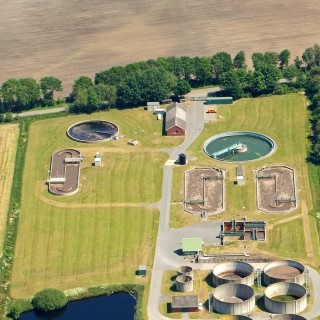
Converting wastewater into an effluent for return to the water cycle
POPULARITY

441 episodes with Wastewater treatment

26 episodes with Wastewater treatment

27 episodes with Wastewater treatment

12 episodes with Wastewater treatment

7 episodes with Wastewater treatment

4 episodes with Wastewater treatment

2 episodes with Wastewater treatment

6 episodes with Wastewater treatment

15 episodes with Wastewater treatment

6 episodes with Wastewater treatment

4 episodes with Wastewater treatment

4 episodes with Wastewater treatment

3 episodes with Wastewater treatment

2 episodes with Wastewater treatment

3 episodes with Wastewater treatment

2 episodes with Wastewater treatment

3 episodes with Wastewater treatment

4 episodes with Wastewater treatment
Residents in Kilkee say they're not giving up their fight against plans for a new wastewater treatment plant near the town's famous Cliff Walk, despite losing their High Court challenge earlier this summer. The Save Kilkee Cliff Walk campaign says the judgement has been devastating for the community and is now calling a public meeting this Friday to discuss where the campaign goes from here. Joining Alan Morrissey earlier were Joseph McCloskey and Tom Byrne, both members of the Save Kilkee Cliff Walk campaign to explain why they believe the fight isn't over. Photo (c) Visit Clare
FREE TOOL ➡️ Get your water tech pitch reviewed: https://app.leviathandata.io/pitch-deck-analyzerMore #water insights? Connect with me on Linkedin: https://www.linkedin.com/in/antoinewalter1/See how the Northumbrian Water Innovation Festival brings together creative minds in Newcastle for collaborative problem solving.Watch the energy of this unique event.This episode takes you inside the Northumbrian Water Innovation Festival to show how large groups tackle industry challenges through structured collaboration.You will see firsthand how participants move from concept to practical solutions using specific frameworks like sprint tents and the Crystal Ball method.Whether you are interested in corporate innovation or local Newcastle events, this footage highlights the collaborative process in action.It is designed for professionals and curious viewers who want to observe how collaborative problem-solving works in a real-world setting, moving beyond traditional meeting rooms to open, creative environments.If you enjoyed seeing how an Innovation Festival operates, subscribe for weekly industry event recaps, and let us know in the comments if you prefer structured workshops or free-form brainstorming sessions.#️⃣ All the Links Mentioned in this Video #️⃣Design Thinking with Lea im Obersteg: https://dww.show/who/lea-im-obersteg/

A significant response operation has been completed at Glenbeigh Wastewater Treatment Plant. Specialist operational and environmental teams and contractors have decontaminated the site and returned the plant to normal operations after a contaminate dot into the system. Jerry spoke to Ronán O'Shea of Uisce Éireann.

When mixed with oxygen, nitrogen in wastewater creates nitrous oxide, a powerful global warming gas. But there are ways to reduce the harm. Learn more at https://www.yaleclimateconnections.org/

A crowd gathered at the Milwaukee Metropolitan Sewerage District headquarters for a meeting about what company should run MMSD's two wastewater treatment facilities in 2028.
How did HG Ventures quietly become one of the most active water tech investors on the planet, without even calling itself a water VC?HG Ventures is the corporate venture capital arm of The Heritage Group, a 100-year-old, family-owned Indianapolis conglomerate active in asphalt, quarries, environmental services and specialty chemicals. With $350M in assets, the fund deploys around $50M a year across 41 portfolio companies and 7 sectors, and ranks 5th globally in water tech by deal count despite water being only 18% of its thesis.Ginger Rothrock holds a PhD in chemistry from UNC Chapel Hill, co-founded the NASDAQ-listed pharmaceutical company Liquidia, was promoted to Managing Director of HG Ventures in December 2025, and is a Global Corporate Venturing Rising Star and Kauffman Fellow with deep expertise in industrial water, industrial wastewater treatment, and corporate venture capital in cleantech.

What does it take to modernize the systems that keep water flowing, wastewater moving, and nine million New Yorkers served every day?In this episode, we sit down with Robert "Max" Maxfield, Chief Systems Architect at AITHERAS and the architect behind New York City's SCADA modernization efforts for the Bureau of Wastewater Treatment. Max takes us inside the world of critical infrastructure, where downtime isn't an inconvenience, it's a public risk. From managing decades-old industrial systems and balancing modernization against reliability, to defending essential services against cyber threats, Max shares what it really takes to operate technology that most people never think about until it fails.We also explore the realities of AI in critical infrastructure, the cybersecurity challenges facing utilities, the surprising longevity of legacy systems, and how Max's passion for motorcycles, racing, and building machines shapes his approach to engineering. It's a conversation about technology, risk, resilience, and why sometimes the most important systems are the ones nobody notices.Robert “Max” Maxfield is the Chief Systems Architect at AITHERAS, leading the SCADA Modernization Program for NYC's Bureau of Wastewater Treatment. In this role, Max designs and deploys the systems that keep critical water infrastructure operating for nine million New Yorkers. With 20+ years in industrial controls, 27 platform certifications, and prior architect roles on national operations centers and the Doyon Utilities Alaska modernization, Max specializes in the messy intersection of legacy industrial systems, modern SCADA, cybersecurity, and, increasingly, AI. He's been published in Forbes on industrial technology, runs his own GPU lab for local model fine-tuning, and spends his off-hours on custom motorcycles, off-road racing, and drag racing. Equal parts engineer, builder, and pragmatist, Max brings a field-tested perspective on what actually works when the stakes are critical infrastructure.

With one month left before the school summer break Minister for Education, John Cortes will be joining me in the studio to discuss recently announced changes to the school year. We'll be discussing education with the Minister as well as plans for a wastewater treatment plant having been confirmed at the DPC. On that we'll also hear from architect, Ruth Massias Greenberg, who will be joining Eco Waters Director, Carlito Buhagiar. CLIPWe'll have the latest sporting news and in boxing, the Montegriffo brothers, Kriss and Evan are launching a future champions programme at the Wellington Boxing Club. Hosted on Acast. See acast.com/privacy for more information.
The First Water Sector Unicorn Wants to IPO. But Wall Street kinda forgot how to buy water... Early-stage water tech funding quadrupled in seven years. Private equity's share of water M&A doubled in a decade, with a record 165 PE-led acquisitions in a single year. The bench of PE-owned water platforms grew from 42 companies in 2015 to nearly 600 in 2025. And the sector just minted its first twice-unicorn - Gradiant - with a Series E at a $2 billion valuation on Day 1 of the Global Water Summit 2026! So, will Gradiant IPO?Four all-time highs at once... but the fifth dimension - the public market - went the other way. IPOs in the 2020s are a pale echo of the 2010. So I flew to Madrid to ask the people building the machine (the VCs, the PE platforms, the strategics, the bankers, the entrepreneurs) a single question: is this closed-loop water-capital machine a feature of a mature sector, or a $300 billion pressure cooker about to crack?

Korrin Peterson shares how her two decades with the Buzzards Bay Coalition shaped her unconventional environmental law career, blending litigation, policy advocacy, grant management, and hands-on wastewater infrastructure work before transitioning into private practice at Bowditch & Dewey. She explains how environmental law extends far beyond statutes and regulations, requiring attorneys to understand science, engineering, public policy, and the financial realities facing municipalities and developers. With practical insight for attorneys across practice areas, Korrin discusses: Why environmental law requires lawyers to understand science, infrastructure, and public policy alongside legal analysis How climate change, aging infrastructure, and seasonal population surges are creating growing challenges for Massachusetts coastal communities Why wastewater and environmental infrastructure projects are often politically and financially difficult for municipalities to address What attorneys in real estate, probate, and family law should watch for when handling coastal or environmentally sensitive properties Why environmental issues frequently emerge in real estate transactions through contamination, wetlands restrictions, and permitting requirements Why bringing environmental counsel into a project early can save clients significant time, expense, and regulatory complications How legislative advocacy differs from traditional legal practice and why lawyers play an important role in shaping evolving environmental policy Throughout the conversation, Korrin emphasizes that environmental law is constantly evolving as communities adapt to changing environmental conditions, infrastructure limitations, and development pressures. She highlights the importance of long-term thinking, interdisciplinary problem-solving, and proactive legal strategy when navigating environmental challenges affecting businesses, municipalities, and property owners alike. Featured Guest Korrin Peterson — Environmental attorney at Bowditch & Dewey, Korrin advises clients on environmental permitting, wastewater infrastructure, brownfields redevelopment, compliance, and real estate matters. Prior to joining Bowditch, she spent more than 20 years as Chief Advocate for the Buzzards Bay Coalition, where she led litigation, policy initiatives, and environmental infrastructure projects across southeastern Massachusetts. Connect with us on social!Instagram: mcle.newenglandLinkedIn: Massachusetts Continuing Legal Education, Inc. (MCLE│New England)X (Formerly Twitter): MCLENewEnglandBluesky: mclenewengland.bsky.socialFacebook: MCLE New England Important Note:Massachusetts Continuing Legal Education, Inc. (MCLE) is a nonprofit 501(c)(3) organization dedicated to providing high-quality, practical continuing legal education for the legal community. As part of its educational mission, MCLE presents a wide range of viewpoints and instructional content intended solely for educational purposes.The views, thoughts, and opinions expressed by individual participants in this podcast are their own and do not necessarily reflect those of MCLE, its Board of Trustees, staff, or affiliated institutions. Inclusion of any material or commentary does not constitute an endorsement of any position on any issue by MCLE.
A 14-year employee at the Jones Island wastewater treatment facility shared concerns about the treatment of equipment and people there. It's the second whistleblower to speak out publicly about Veolia, the company that manages Milwaukee-area wastewater treatment.
Amy MacIver speaks to Cradle of Humankind World Heritage Site Association chairperson Trevor Brough about the worsening sewage and wastewater crisis in Mogale City and the growing environmental threat facing one of South Africa’s most important heritage sites. Presenter John Maytham is an actor and author-turned-talk radio veteran and seasoned journalist. His show serves a round-up of local and international news coupled with the latest in business, sport, traffic and weather. The host’s eclectic interests mean the program often surprises the audience with intriguing book reviews and inspiring interviews profiling artists. A daily highlight is Rapid Fire, just after 5:30pm. CapeTalk fans call in, to stump the presenter with their general knowledge questions. Another firm favourite is the humorous Thursday crossing with award-winning journalist Rebecca Davis, called “Plan B”. Thank you for listening to a podcast from Afternoon Drive with John Maytham Listen live on Primedia+ weekdays from 15:00 and 18:00 (SA Time) to Afternoon Drive with John Maytham broadcast on CapeTalk https://buff.ly/NnFM3Nk For more from the show go to https://buff.ly/BSFy4Cn or find all the catch-up podcasts here https://buff.ly/n8nWt4x Subscribe to the CapeTalk Daily and Weekly Newsletters https://buff.ly/sbvVZD5 Follow us on social media: CapeTalk on Facebook: https://www.facebook.com/CapeTalk CapeTalk on TikTok: https://www.tiktok.com/@capetalk CapeTalk on Instagram: https://www.instagram.com/ CapeTalk on X: https://x.com/CapeTalk CapeTalk on YouTube: https://www.youtube.com/@CapeTalk567 See omnystudio.com/listener for privacy information.
On April 30, 2026, CRH plc (NYSE: CRH) announced a $700 million agreement to acquire Axius Water from KKR and XPV Water Partners - instantly making the Irish-American building materials giant one of the largest water infrastructure players in North America. If CRH acquires Axius, what's next?Most investors missed it, so I thought I'd decode it! Here are the 10 things you need to see.So you got it, CRH acquires Axius. Here's the deal in 30 seconds: • Buyer: CRH plc - a $77B market cap building materials company most water investors don't track • Target: Axius Water - a wastewater treatment platform built by KKR and XPV Water Partners through a multi-year roll-up • Price: $700M (reported) • Sellers: KKR (Global Impact Fund) and XPV Water Partners • Strategic logic: bolts wastewater treatment onto CRH's existing water infrastructure portfolio (Hydro International, Oldcastle Infrastructure) What's actually new here - and why it matters for water investors: 00:00 - On your Bingo Card? 02:30 #1: The Cast07:35 #2: The Substance11:40 #3: The Number16:23 #4: The Timing20:54 #5: The Macro Reality24:40 #6: The Credibility28:26 #7: Inside the Platform32:28 #8: The Synergy Story35:17 #9: The Risks39:58 #10: The Sector Signal
Every analyst, every think tank, every consulting deck has an opinion on AI's water footprint (and overall on AI and Water)But nobody bothered to ask the people actually watching the videos, posting the comments, and shaping the narrative. You'd need to be mad to do that, right?So I read 2,540 of them.
Everyone says AI is drinking the planet dry, right? Well, the numbers say your morning coffee uses 29,600× more water than a ChatGPT prompt! In this episode, I sit down with Alex Passini to pressure-test the dominant narrative around AI's water footprint - and what we found completely flips the story the media is telling. Here's what most "AI water crisis" headlines miss: → A single ChatGPT prompt uses roughly 16 milliliters of water. One cup of coffee uses ~140 liters when you count the beans. That's a 29,600× gap. → Of the water a hyperscale data center consumes, ~75% isn't used by AI at all — it's used upstream for the energy that powers it. Blame the grid, not the GPU. → One banana = ~6,250 ChatGPT prompts. One almond = ~12 prompts. The water-per-prompt math is rounding-error territory next to your lunch. → Florida already reuses 800 million gallons/day of treated wastewater. Data centers aren't the threat - they're an accelerant for the water reuse capex the sector has been waiting twenty years for. If you're an investor trying to figure out whether AI's water story is a real thesis or a media artifact, this episode gives you the framework (and the numbers) to decide.
A group of residents in Kilkee are preparing to take a High Court challenge against plans for a new wastewater treatment plant proposed by Uisce Éireann. The development, which was previously refused by Clare County Council and recommended for refusal by an inspector from An Bord Pleanála, was ultimately approved — a decision that's sparked serious concern locally. Campaigners say the proposal could pose risks to Kilkee's beach, marine environment, and its well-known Cliff Walk, and they're now racing to raise funds ahead of a crucial court date on June 17th. Alan Morrissey spoke about this with Kilkee residents Ellie Byrne and Joanne Dillon, and Ellie began by highlighting the Cliff Walk and its importance to Kilkee. Image © Visit Clare
Who Buys the First Data Center Water Company? And When Does the Repricing Start? Data center water treatment is a $1.1 billion market growing nearly 15% per year, with 60% of spending recurring - generating an "infinite money glitch" for the righty designed water tech companies. So, strategic buyers, private equity sponsors, and VC-backed platforms are racing to consolidate water tech expertise. Meanwhile, hyperscalers spending $50 billion a year on infrastructure have made zero water acquisitions... for how long?
What Is the Real Water Problem Behind AI Data Centers - and Where Is the $1.3 Billion Opportunity? AI Water seems to concern everybody, while data center water treatment is the fastest-growing industrial water vertical in the world - $1.35 billion in 2025, growing at 13.3% per year. But the media is chasing the wrong story. The real problem isn't consumption volume — it's the concentrated industrial wastewater that cooling towers produce. This episode maps the opportunity most investors are missing. A
Why Did a Broke Football Club Owned by Gucci's Family Invest Millions in Water Reuse? Stade Rennais, the French football club owned by the Pinault family behind Kering (Gucci, Balenciaga, Bottega Veneta...), buried a €1.5 million closed-loop water system under its renovated La Piverdière training complex in February 2025. This investment, during French football's worst financial crisis, reveals a widening gap between what water costs and what water is truly worth - using water reuse as its vehicle.
How Much Does The USA Really Need to Fix Its Water Infrastructure? And Why Is Nobody Talking About the Real Number? (Hint: the US EPA has it wrong!)I built a bottom-up predictive model spanning 32 federal datasets, 433,000 water systems, and 15.1 million regulatory violations to determine the true cost of bringing US water infrastructure back to shape. The answer: $3.9 trillion over twenty years (that's three times the EPA's official estimate of $1.25 trillion)
Can Europe's Sewage Plants Replace Russian Gas? (aka: the €1.9 Billion Biomethane Opportunity) Europe's wastewater treatment plants are sitting on a massive untapped energy reserve. With the right upgrades, roughly 1,900 facilities across Europe could produce 13.4 billion cubic meters of biomethane per year — matching Russia's remaining pipeline gas deliveries in 2024. Let me break down the economics, the technology, and the investment landscape driving this shift.
How Did Pierre Côté Build Two Unicorn Water Technologies - and Why Is He Now Betting on Algae? Pierre Côté is arguably the most successful water technology inventor alive. With over 100 patents across four decades, he created ZeeWeed (the membrane that launched the $3.63 billion MBR market) and co-invented ZeeLung (anchoring the ~$500 million MABR market). Now in his seventies, he's co-founded AlgaFilm Technologies to tackle nutrient removal with algae biofilm.
Can 4 Volts of Electricity Replace 60 Bars of Pressure in Seawater Desalination? ilion Water Technologies is a 2025 spinout from the Physics Laboratory of the École Normale Supérieure in Paris. Their VIRO (Voltage-Induced Reverse Osmosis) technology claims to replace the high-pressure pump train in seawater desalination with an alternating electric field applied to engineered composite membranes, operating at atmospheric pressure.
The fallout continues from from the recent Musqueam agreement. Premier David Eby's own credibility is under fire too. The drama surrounding the North Vancouver Wastewater Treatment facility never seems to end. Guest: Vaughn Palmer Learn more about your ad choices. Visit megaphone.fm/adchoices

Congressman Nick Langworthy announces federal funding for the Town of Elma for their consolidated wastewater treatment plant full 351 Thu, 19 Feb 2026 18:30:00 +0000 qI0tEuYGHhiuedQcKRgEydFdyhgfMSBj news,wben,nick langworthy,elma WBEN Extras news,wben,nick langworthy,elma Congressman Nick Langworthy announces federal funding for the Town of Elma for their consolidated wastewater treatment plant Archive of various reports and news events 2024 © 2021 Audacy, Inc. News Fals
After 18 years of waiting, there's finally a major breakthrough for Kilmihil. A planning notice has confirmed that Uisce Éireann is progressing plans for a new wastewater treatment plant in the West Clare village. It follows years of delays and uncertainty around the long-promised upgrade — a project first earmarked under the National Recovery and Resilience Plan, with completion initially suggested for 2025, but later pushed back to the end of the decade. The issue has sparked political debate and local frustration, particularly after an EPA report identified Kilmihil as a priority area for upgrades. Now, however, there's cautious optimism. Retired businessman and Kilmihil resident Gerry Johnston has welcomed the development as a turning point for the village's future, while Rita McInerney, who has long campaigned on the issue, says the announcement is the result of sustained local pressure and persistence. Both joined Sally-Ann Barrett in studio to discuss what this latest step means for Kilmihil — and whether it finally puts the village on a firmer footing for growth and future generations. Image (c) Clare FM

Episode Intro:A few weeks ago, I recorded an interview with Margaret Lumley who is co-founder and CEO of a small startup called Roca Water. Roca was one of the top runners up for our Wilkes Climate Prize in 2025. They are driving an innovative technology to tackle two different but related problems – that of water pollution and how we currently make fertilizer for growing plants, for agriculture. Wastewater is a serious climate and pollution problem, but it doesn't get talked about a lot. Nutrients from human waste cause harmful algal blooms and generate nitrous oxide, a greenhouse gas much more potent than CO₂. At the same time, the way we produce fertilizer demands an incredible amount of carbon intensive energy to make ammonia, which is done using a chemical process invented before WWI – the Haber-Bosch process. It accounts for about 2 percent of global CO₂ emissions.Margaret Lumley's Roca is tackling these problems by seeing wastewater as an untapped resource. She believes their technology could reduce nitrous oxide emissions at wastewater plants and displace the energy-intensive Haber-Bosch process as the only method for producing ammonia. She thinks doing this could reduce gigatons of global CO₂ emissions each year, and it could be affordable – potentially a win for municipalities that want to reduce their wastewater emissions and a win for agricultural markets that need fertilizer. So, I hope you enjoy my conversation with Margaret Lumley. A transcript of our conversation and more is available on our website. wilkescenter.utah.edu/podcast Key Takeaways:1. Wastewater is a major but underappreciated climate and pollution problem: Nutrients from human waste drive harmful algal blooms and generate nitrous oxide, a greenhouse gas far more potent than CO₂.2. Current fertilizer production is highly carbon intensive: The century-old Haber–Bosch process dominates ammonia production and accounts for ~2% of global CO₂ emissions.3. Roca reframes wastewater as a resource: Instead of treating ammonium as waste, Roca Water recovers it and converts it into market-ready fertilizer.4. Electrochemistry enables selective, efficient nutrient capture: ROCA's battery-inspired electrodes selectively remove ammonium (>90% selectivity) even in complex wastewater.5. Durability is the core technical breakthrough: Roca's electrodes can operate for thousands of cycles (up to ~4 years), making commercialization feasible and cost-competitive.6. The technology offers dual climate benefits at scale: It simultaneously reduces nitrous oxide emissions from wastewater plants and displaces energy-intensive ammonia production, with potential gigaton-scale CO₂e impact.Episode webpage: wilkescenter.utah.edu/podcast/35-roca-water/

Wellington's Moa Point Wastewater Treatment Plant has been shut down and staff evacuated from the site.
Why Are Water Testing Methods Dangerously Outdated - And What's the Fix?Tired of stitching together Crunchbase, overpriced reports, and "a guy who knows a guy"? I built the fix. 50 Founder Seats. Join the waitlist: leviathandata.io

In this episode, Chris sits down with Troy Ellison of Cloacina to talk about what it takes to build infrastructure that works in the real world, not just on paper. Troy explains what membrane bioreactors (MBRs) are in a way that you and I can understand, then pulls back the curtain on why so many systems fail the people who have to run them.A big theme here is end-user experience. Troy makes the case that operators have been ignored for too long, and that designing systems around spreadsheets instead of humans is why so many projects struggle.We also get into scaling a manufacturing business, what it's really like growing from a handful of people to well over a hundred, and the highs and lows of being in business with your family.If you're building something meant to last, whether that's equipment, a team, or a company, there's a lot in here worth sitting with.In this episode, find out:What an MBR (membrane bioreactor) is, and why it's become Cloacina's core focus.Why Troy compares wastewater systems to race cars, and what happens when operators are handed something poorly designed.How prioritizing the operator changes everything from layout to long-term performance.What scaling a manufacturing business looks like when you're buying equipment, hiring people, and fixing problems nonstop.Why Cloacina stopped listening to voices that slowed progress and focused on building the right team.How taking on single-point responsibility removes friction instead of adding risk.Where Troy sees the future of MBRs heading.Enjoying the show? Please leave us a review here. Even one sentence helps. It's feedback from Manufacturing All-Stars like you that keeps us going!Tweetable Quotes:“The Cloacina difference is the end user experience. We're hyper focused on that. It's all we care about at the end of the day.”“We were essentially building the airplane as it was on fire and falling out of the sky for many, many years.”“We are on a relentless pursuit for the perfect MBR. But the reason it's relentless is we will never get there; we will never achieve perfection. Perfection is the process, it's not a destination.” Links & mentions:Cloacina - Troy Ellison's company, focused on membrane bioreactor (MBR) wastewater treatment systemsCloacina Rentals - Rental MBRs for immediate wastewater treatment solutionsMembrane Bioreactors (MBRs) - The core wastewater technology discussed throughout the episodeExtreme Ownership - Leadership principle referenced (popularized by Jocko Willink)Jocko's - The local bar that Troy referencesMake sure to visit http://manufacturinghappyhour.com for detailed show notes and a full list of resources mentioned in this episode. Stay Innovative, Stay Thirsty.Mentioned in this episode:Industrial Marketing Summit 2026

In this episode of the Pumps & Systems podcast, we're speaking with Brittany Baker, global product manager at ABB, who is going to tell us about real-time analyzers and their role in wastewater treatment. Tune in the first Wednesday of every month for new episodes of the podcast. Watch this episode on YouTube: https://youtu.be/KsirHBAPc0Q Pumps & Systems Podcast homepage: https://www.pumpsandsystems.com/podcast/ Pumps & Systems Magazine: http://www.pumpsandsystems.com Opening music: Know Myself - Patrick Patrikios Closing music: Freeling - Lauren Duski
How Did H2O Innovation Build a Water Empire Through 18+ Acquisitions (M&A) and What Happens Now Under Private Equity?More #water insights? Get my free mapping of 267 water investors here: https://investors.dww.show
How is Cycle H2O (a new Water VC) De-Risking Early Stage Water Tech Investment?More #water insights? Get my free mapping of 267 water investors here: https://investors.dww.show

Wastewater treatment is an overlooked lifesaver. While the medical advances of the last 100 years—penicillin, chemotherapy, and, more recently, mRNA vaccines—have transformed healthcare, keeping our water supplies free from pathogens like cholera and dysentery, has saved many more lives. The systems developed to treat wastewater are so successful that we can afford to flush and forget. But this is infrastructure we must not overlook. Growing populations, increased use by industry, and regulations that get tighter as we learn of new threats to human life and the environment, are putting wastewater treatment facilities under strain. Existing plants are often tucked away on constrained sites, and work as part of a sprawling network of sewage systems that make it extremely difficult for them to be relocated. This is very much the case at Ringsend in Dublin. Here, on a site bounded by other facilities and the sea, the waste produced by millions of Dubliners—and the city's industry and commerce—must be processed before being discharged into the Liffey Estuary. To update the plant, its owners had considered building a 9km pipe to discharge waste outside of the sensitive areas of the estuary. But a new solution was identified. By implementing a novel form of biological treatment, developed by Haskoning, Egis was able to ensure that the effluent discharged was so clean, it would be safe for wildlife. But installing this would take careful planning and scheduling, in order to complete the work in tight constraints, without any pause in plant operations. Guests Marisa Buyers-Basso, associate director, Haskoning Marcus Fagan, chartered engineer, Egis Partner Egis is a leading global architectural, consulting, engineering, operations and mobility services firm with 22,000 employees across more than 100 countries. The company designs and operates intelligent infrastructure and buildings that both respond to climate emergencies and contribute to balanced, sustainable and resilient development. Egis has operated in Ireland since 1994 and is the largest multi-disciplinary consultancy, engineering and operations firm in the country. Its current activities in Ireland include operating the Dublin Tunnel and the Jack Lynch Tunnel in Cork, overseeing 1,200km of Ireland's motorways. It is also active in the design and delivery of major transportation programmes, renewable energy and water and waste water projects. With over 600 staff in Ireland across 16 offices and sites nationwide, it is committed to enabling sustainable economic development and responding to the requirements of population growth while addressing climate change and reducing carbon emissions. The post #356 Making Space for Wastewater Treatment first appeared on Engineering Matters.
A Clare TD fears communities in dire need of housing could be dealt a "serious setback" if a proposal to speed up construction becomes bogged down in bureaucracy. Bodyke Fine Gael Deputy Joe Cooney is urging the Government and Uisce Éireann not to create a "technical jungle" when establishing planning guidance for a new scheme involving modular wastewater treatment systems. The scheme, which was proposed by Deputy Cooney in June, will see developers use modular units in areas where wastewater treatment plants are at capacity to facilitate housing delivery. He says excessive red tape must be avoided to ensure the practice is adopted in 2026.
What Wastewater Products Can You Actually Buy for Christmas?
How Will Ovivo Rebuild to Full Size in 10 Years After the Ecolab Deal?
How Is Aqua Membranes Scaling 3D-Printed Water Membranes Spacers from Garage Startup to 200,000 Square Foot Manufacturing Facility? Let's find out!More #water insights? Connect with me on Linkedin: https://www.linkedin.com/in/antoinewalter1/

Nov. 14, 2025 - Legislation in Albany would strictly regulate what happens to the byproducts of wastewater treatment, but some operators in the space argue this approach is a costly mistake. We consider the future of biosolids with Dan Rourke, executive director of the Saratoga County Sewer District, and Darcy Sachs, a project engineer with Carollo Engineers
Can Cloud Harvesting Revolutionize Water Production? A Deep Dive into AirHES Technology

James Browne, Minister for Housing, Local Government and Heritage, discusses the government's revamped housing policy which is due to be published next week.

City Quick Connect Podcast from the Municipal Association of South Carolina
The City of Walterboro won a 2025 Achievement Award for its expansion of its wastewater plant, which doubled its capacity ahead of future growth. Hear from Mayor Bill Young, City Manager Jeff Molinari and Utilities Director Wayne Crosby about the project. Learn more: https://www.masc.sc/achievement-award/2025/5001-10000-category-city-walterboro-walterboro-wastewater-treatment-plant
How Does Water-as-a-Service Drive Billion-Dollar Exits in Infrastructure Investment?
How Can We Afford to Remove PFAS from Our Environment When Treatment Costs Exceed Global GDP?
How Do 32+ Electrochemical Water Oxidation Technologies Compete for PFAS Destruction Market Share? Listen to this!More #water insights? Connect with me on Linkedin: https://www.linkedin.com/in/antoinewalter1/

We meet Stanford chemical engineer William Tarpeh, who was recently awarded a 2025 MacArthur “Genius” Fellowship. Tarpeh's work involves developing systems to extract nitrogen from waste streams to be used in fertilizer, cleaners and industrial chemical production. We talk to him about the environmental and public health benefits of his projects in Kenya and elsewhere, the role that California has played in his academic career and his plans for the fellowship. Guests: William Tarpeh, assistant professor of chemical engineering, Stanford University Learn more about your ad choices. Visit megaphone.fm/adchoices
What's to remember from WEFTEC 2025? Here are my 5 Water Tech picks, 3 Marketing Tips, the State of the Union on the Water/AI Nexus, and much more. Wanna get 3 Days at WEFTEC summarized in 70 Minutes? Listen to this!More #water insights? Connect with me on Linkedin: https://www.linkedin.com/in/antoinewalter1/

What happens after you flush? Most of us don't think about it—but maybe we should. In this eye-opening episode, we dive into one of the ocean's biggest but least discussed threats: wastewater pollution.Join us as we talk with Jos Hill, Program Director for The Nature Conservancy's Wastewater Pollution Program and creator of the groundbreaking podcast "waste(d)water." Jos reveals the shocking scale of this crisis: 80% of wastewater worldwide is inadequately treated, 58% of coral reefs are exposed to wastewater pollution, and wastewater accounts for a staggering 40% of coastal nutrient pollution—nearly as much as agriculture.Discover how even highly treated wastewater can devastate marine ecosystems, why coral disease outbreaks in the Florida Keys have been traced back to human gut pathogens, and how nutrient-rich wastewater is making coral reefs more vulnerable to marine heat waves and climate change.But this isn't just doom and gloom—Jos shares inspiring recovery stories from Kaneohe Bay in Hawaii and Tampa Bay in Florida, proving that when pollution is addressed, ecosystems can bounce back. Learn about innovative nature-based solutions, including treatment gardens that clean water while growing food for coastal communities.From the intersection of wastewater pollution and social justice to practical steps you can take in your own community, this conversation breaks the taboo around a topic that affects every person on the planet. As Jos reminds us: everyone goes to the toilet, so this issue is relevant to everyone.It's time to start talking about the dirty secret of ocean pollution—because we can't solve problems we won't discuss.Featured Guest: Jos Hill, Program Director, Wastewater Pollution Program, The Nature ConservancyLearn more: Check out the waste(d)water podcast and follow @wastedwaterpod wherever you listen to podcasts.
Welcome to “Water Break”, where we try to bridge the gap between Water Operators and Engineers! In today's episode, we are going to talk about “Operator Ethics and Why They Matter”. We would like to welcome back John Schwartz, who is the Senior Technical Support Representative/Technical Training Manager, and Loyd Rawlings, who is the Technical Training Manager for USA BlueBook. John brings over 40 years of water and wastewater experience to the training room, including roles as a water system operator, a lead/senior operator for both water treatment and distribution systems, and a water treatment and distribution system manager. He also served as a circuit rider, trainer and technical advisor for the California Rural Water Association. John is certified in Water Treatment and Distribution in California and Montana and holds a Utility Management Certification (UMC) for Water and Wastewater Management from NRWA's Water University. Loyd has over 30 yrs of experience and has worked for Missouri Department of Natural Resources as a certification trainer and compliance assistance operator. With Missouri Rural Water Association, he led EPA Water Quality Action Specialists (WQAS) trainings, worked as a USDA Wastewater Technician, served as a circuit rider, and taught numerous water and wastewater certification classes. Loyd holds certifications in Water Treatment, Wastewater Treatment and Distribution systems in Missouri. He holds a Utility Management Certification (UMC) from NRWA's Water University.

In this episode, Sawyer and Tork sit down with Travis and Torsten, the brains behind Livestock, Water, and Energy (LWE), to dive deep into a revolutionary approach to manure management on modern hog farms. If you've ever wondered about turning manure into profit, reducing hauling costs, recycling water, or making carbon credits actually work for farmers, this is the episode you've been waiting for.Over two years in the making, this conversation sheds light on the cutting-edge technology being implemented to separate manure in real time, transforming waste into dry, pathogen-free fertilizer, creating a new revenue stream with liquid nitrogen, and capturing valuable carbon credits—all without relying on government grants or tax credits. Sawyer and Tork share their own farm's experience as the test site for LWE's first agricultural system, revealing the nitty-gritty of what actually works, the value for everyday farmers, and why so many have failed at this before.Whether you're a livestock producer curious about the future of manure, a skeptic of the carbon credit market, or just interested in how innovation is changing the ag industry from the inside out, this lively and honest episode has you covered. Plus, hear about the challenges, breakthroughs, and the real-life impact on family farms looking to build a more sustainable and profitable future.So pull up a chair, grab a cup of coffee, and let's get into it—because today, everything that happens in the barn is coming out into the open.Use code BARNTALK for 10% OFF your next orderhttps://farmergrade.com/ Learn More About Our New Project
© 2020-2026 Ivy Podcast Discovery LLC
