
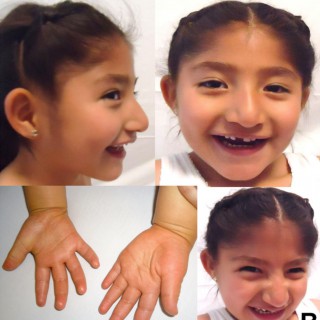
Genetic disorder caused by part of the mother's chromosome 15 being missing
POPULARITY

17 episodes with angelman

20 episodes with angelman

5 episodes with angelman

4 episodes with angelman

3 episodes with angelman

3 episodes with angelman

2 episodes with angelman

2 episodes with angelman

2 episodes with angelman

September has been a rough month already for Novo Nordisk, which canned two more late-stage trials of its embattled IL-6 inhibitor, and Novartis, which took Phase 3 hits in both cardiovascular and muscular dystrophy indications; Ultragenyx's big bet in Angelman syndrome failed to yield benefit in Phase 3 but Ionis' Pharmaceuticals nabbed the first targeted approval for Alexander disease; and on the business side, biopharma investment is back in a big way.

Good morning from Pharma Daily: the podcast that brings you the most important developments in the pharmaceutical and biotech world. Today, we delve into a series of pivotal advances and industry dynamics that are shaping the future of healthcare. The U.S. Food and Drug Administration has recently granted approval to Ionis Pharmaceuticals' Zanvastro, a breakthrough in treating Alexander disease. This condition, a rare neurodegenerative disorder caused by mutations in the glial fibrillary acidic protein gene, has historically posed significant treatment challenges. Zanvastro, an antisense oligonucleotide therapy, is notable for being the first of its kind to target this protein, marking a monumental step in precision medicine. The success of this therapy not only opens new avenues for treating Alexander disease but also highlights the potential of antisense technologies to address other rare genetic disorders. Ionis Pharmaceuticals is poised to further explore this innovative therapeutic approach in other neurodegenerative conditions like Angelman syndrome, reinforcing their leadership in targeting rare genetic diseases at the molecular level. Meanwhile, strategic partnerships continue to transform the metabolic disease treatment landscape. The Menarini Group's partnership with Gan & Lee Pharmaceuticals aims to bring the GLP-1 receptor agonist Bofanglutide to European markets. This collaboration underscores the growing emphasis on GLP-1 therapies for managing type 2 diabetes and obesity. With an investment of $72 million upfront and potential milestone payments reaching $771 million, this partnership illustrates the strategic importance of cross-border collaborations in accelerating drug availability and leveraging regional expertise. In parallel, Argo Biopharma has announced promising phase 2 results for its small interfering RNA therapy targeting plasma prekallikrein in hereditary angioedema. This innovative approach offers a prophylactic treatment option for a disease characterized by severe swelling attacks. By harnessing RNA interference mechanisms, Argo Biopharma joins a broader movement within biotech towards gene-silencing technologies that tackle previously challenging conditions. Further emphasizing innovation, Superluminal Medicines has raised $60 million to advance its AI-discovered MC4R-targeting drug for rare obesity conditions. This initiative highlights the transformative potential of artificial intelligence in drug discovery, enabling rapid identification of therapeutic candidates by analyzing extensive datasets and predicting molecular interactions. The focus on rare forms of obesity reflects a broader trend toward personalized medicine, where treatments are increasingly tailored to specific genetic profiles. Regulatory developments also feature prominently with Liquidia Corporation receiving FDA fast track designation for Yutrepia, an inhaled small molecule aimed at treating systemic sclerosis-related Raynaud's phenomenon. This designation will expedite the development and review process for Yutrepia, facilitating quicker access to this potentially life-enhancing treatment for those suffering from autoimmune complications. However, challenges persist within the industry. The FDA issued a warning letter to Fresenius Medical Care over deficiencies related to complaint handling and contamination inspections for sterile injectable products. This action underscores ongoing concerns regarding compliance with safety standards and highlights the critical need for rigorous quality control mechanisms to ensure patient safety. In exploring new therapeutic modalities, psilocybin has shown promise in managing neuropathic pain through preclinical studies. These findings add to the growing body of evidence supporting psychedelics' potential benefits beyond mental health applications, opening new avenues for pain management therapies that could revolutionize treatment protocols. The competitive landscape in weight management sees significant movement with Novo Nordisk's Wegovy pill and Eli Lilly's Foundayo vying for dominance in oral GLP-1 receptor agonists. As companies race to develop more patient-friendly formulations, these innovations promise to significantly boost adherence and outcomes in obesity management. Lastly, industry trends reveal an evolving marketing landscape where social media collaborations and strategic partnerships are becoming central to engaging patients and advocating medical conditions. For example, Novartis' partnership with a British Olympian aims to enhance multiple sclerosis advocacy by leveraging influential platforms for patient education and empowerment. These developments paint a picture of a dynamic pharmaceutical and biotech sector characterized by scientific innovation, strategic partnerships, regulatory vigilance, and data-driven approaches. As companies continue to navigate these complexities, their ability to leverage cutting-edge technologies and foster global collaborations will be crucial in delivering transformative health solutions. The industry's focus on precision medicine and novel therapeutic modalities promises significant advancements in patient care and disease management in the years ahead. Thank you for joining us at Pharma Daily—your source for the latest news shaping the world of pharmaceuticals and biotechnology.Support the show
Sunday, September 6, 2026 — Week 36
Good morning from Pharma Daily: the podcast that brings you the most important developments in the pharmaceutical and biotech world. Today, we're diving into a series of fascinating updates that are shaping the future of medicine and patient care. First on our agenda is uniQure's ambitious step toward accelerated U.S. marketing approval for AMT-130, a gene therapy targeting Huntington's disease. This move signifies a potential breakthrough in treating rare neurological disorders with genetic roots. The approval of AMT-130 would highlight gene therapy's transformative power, not just for Huntington's disease but also for a broader range of genetic conditions, offering hope to patients where traditional treatments have fallen short. In the realm of oncology, Summit Therapeutics, in collaboration with Akeso, has reported that their bispecific antibody ivonescimab has surpassed Merck's Keytruda in a Phase 3 trial for non-small cell lung cancer. The trial revealed superior overall survival and progression-free survival rates, marking a significant milestone in cancer treatment. Bispecific antibodies like ivonescimab open new avenues for targeting multiple pathways simultaneously, potentially leading to more effective therapies with reduced side effects. Collaboration continues to be a pivotal strategy in drug development. GSK and Hutchmed have formed a licensing agreement for HMPL-A830, an innovative cancer therapy. This partnership involves an upfront payment of $110 million, with the potential to reach $1.3 billion based on performance milestones. Such alliances highlight the importance of strategic partnerships in accelerating therapeutic advancements and expanding the arsenal of available cancer treatments. Moving to regulatory milestones, Samsung Bioepis has secured approval in Japan for its biosimilar ustekinumab, aimed at treating moderate-to-severe Crohn's disease by targeting IL-12/IL-23 pathways. This approval is part of a larger trend towards biosimilars as cost-effective alternatives to biologics, increasing access to essential treatments for autoimmune diseases. In cardiovascular health, Everest Medicines has received China NMPA approval for Cardamyst (etripamil), a self-administered nasal spray for paroxysmal supraventricular tachycardia. The approval underscores innovations in patient-centric drug delivery systems that offer easier administration methods and empower patients to manage their conditions effectively. On the business front, Fortrea has acquired Worldwide Clinical Trials' early-phase division for $45 million. This acquisition aims to bolster Fortrea's clinical research organization platform, reflecting the growing demand for comprehensive clinical pharmacology services that can accelerate drug development timelines. Meanwhile, Pfizer's divestment of its Seagen antibody-drug conjugate PF-08046031 to Medicus Pharma in a deal exceeding $1 billion exemplifies strategic realignments within large pharmaceutical companies. These transactions allow companies to streamline operations and focus on core therapeutic areas where they can make the most impact. Research advancements are also making headlines as Revolution Medicines reports promising Phase 1/2 data for Rasonque (daraxonrasib) in NSCLC patients with KRAS mutations. KRAS has been notoriously difficult to target, so these findings highlight Rasonque's potential as a breakthrough small molecule therapy addressing critical needs in oncology. Despite these strides forward, challenges remain evident. Ultragenyx's GTX-102 did not meet primary or secondary endpoints in its Phase 3 Angelman syndrome study. This setback highlights the complexities involved in developing effective treatments for rare neurological conditions and underscores the inherent risks in high-stakes clinical trials. Turning our attention back to regulatory dynamics, FDA deliberations over Replimune's melanoma treatment revealed nuanced decision-making processes balancing clinical evaluation with strategic considerations. Even amidst internal disagreements, FDA leadership endorsed an accelerated nod for Replimune's therapy—an illustration of how complex these processes can be. In terms of funding innovation, ARPA-H's substantial $125 million investment into personalized RNA-based drug production reflects a commitment to advancing RNA therapeutics despite recent challenges. The initiative could become a catalyst for new approaches in personalized medicine by leveraging RNA technologies to tailor treatments more precisely to individual profiles. Additionally, Roche is making headway in obesity treatment with its UCN2 analog, which shows promise in reducing weight without sacrificing lean muscle mass—an essential factor given obesity's global health implications. This development may introduce new mechanisms of action that could revolutionize existing therapies by overcoming metabolic challenges inherent in obesity treatment. Overall, these developments underscore a dynamic period within the pharmaceutical and biotech sectors characterized by rapid scientific progress and strategic realignments responding to evolving market demands. As companies navigate these changes, their ability to leverage new technologies and refine their strategic focus will be crucial in maintaining competitive advantage and driving future growth—all while aiming to improve patient outcomes globally.Support the show

What happens when the child you've dreamed of suddenly receives a diagnosis you've never even heard of? For Deborah, it was Angelman syndrome. In this episode of Inside the Children's Hospital Podcast, Katie Taylor sits down with Deborah Trejo, Art Therapist, to share the powerful story of her daughter Maya's journey to an Angelman syndrome diagnosis. After months of feeding difficulties, developmental delays, seizures, and countless unanswered questions, Deborah and her family finally received a diagnosis just one day after Maya's first birthday. Deborah opens up about the emotional realities of medical motherhood—from surviving the uncertainty of the diagnostic process to learning how grief and joy can exist together. She shares how finding community through the Angelman Syndrome Foundation, connecting with other parents, and embracing art as a tool for healing helped her navigate one of the most difficult seasons of her life. As both a mother and an art therapist, Deborah also reflects on maintaining her identity beyond caregiving, advocating fiercely for her daughter's needs, and celebrating every milestone along the way. Her story is an honest reminder that while a rare diagnosis may change the path a family expected, it can also reveal extraordinary resilience, purpose, and hope. Whether you're a parent navigating a rare diagnosis, caring for a child with complex medical needs, or a healthcare professional supporting families through uncertainty, this episode offers compassionate encouragement and a reminder that you are never alone. In This Episode, We Discuss: Deborah's journey from children's hospital volunteer to art therapist Maya's first year and the road to an Angelman syndrome diagnosis Early signs including feeding difficulties, developmental delays, and seizures The emotional experience of waiting for answers after neurological testing Receiving a rare diagnosis and processing grief as a family The importance of connecting with other parents and diagnosis-specific support organizations How art became a source of healing and resilience Balancing motherhood, career, and personal identity Becoming a strong advocate for a child with complex medical needs Finding joy while navigating the realities of medical parenting Episode Timestamps 00:00 Meet Deborah Trejo 01:30 Maya's first year and the journey to diagnosis 05:30 Birth during COVID and early medical concerns 08:00 Developmental delays, seizures, and meeting neurology 11:25 Receiving the Angelman syndrome diagnosis 13:00 Processing grief and surviving the unknown 19:15 Becoming an art therapist through lived experience 21:15 Holding onto identity beyond medical motherhood 24:00 The Angelman Syndrome Foundation and family support 26:50 Learning to ask for help 28:45 Advocacy, milestones, and celebrating progress 31:55 Maya's joy and final reflections Resources Mentioned Angelman Syndrome Foundation Angelman Syndrome Foundation (ASF) — this is the organization's official name. Foundation for Angelman Syndrome Therapeutics (FAST) — another major Angelman organization, particularly focused on research and therapeutics. First 100 Days Journey ASF Family Champions Clinical Care Toolkit NIH/NINDS Angelman syndrome information Connect with Us Instagram: @childlifeoncall + @insidethechildrenshospital Youtube: @childlifeoncall Subscribe: Never miss an episode on Apple Podcasts or Spotify. Visit insidethechildrenshospital.com to search stories and episodes easily Leave a Review: It helps other families find us and access our resources Medical information shared in this episode is not a substitute for professional medical advice. Please consult your healthcare team for guidance specific to your child and family. Keywords: Angelman syndrome, Angelman syndrome diagnosis, rare disease, rare genetic disorder, developmental delays, seizures in children, medical motherhood, caregiver support, parenting a child with disabilities, pediatric neurology, rare diagnosis, art therapy, family centered care, child life specialist, medically complex children, disability advocacy, parent support, pediatric healthcare, Inside the Children's Hospital Podcast
Angelcake Entertainment's Drew Angelman returned to The Jake's Take with Jacob Elyachar Podcast!Drew is the creator of Angelcake Entertainment! He has covered the popular MTV reality competition series, The Challenge, since Final Reckoning and many of its spin-offs, including The Challenge: All Stars, The Challenge: USA, and The Challenge: World Championship.Drew also gave fans crash courses on some of the show's top icons, including Derrick Kosinski, Jenna Compono, Johnny Bananas, Leroy Garrett, Tori Deal, Zach Nichols, and the late Diem Brown. He also delivered a three-part documentary on two-time champion Cara Maria Sorbello and a five-part documentary on five-time champion Chris “CT” Tamburello. He also addressed some of the franchise's biggest rumors, ranked the show's seasons, and dissected how Wes Bergmann and Kenny Santucci's legendary rivalry continues to impact the franchise.Drew also conducted interviews with cast members. Adam Larson, Alyssa Lopez, Brandon Nelson, Jonna Mannion, Josh Martinez, Dr. Kefla Hare, Kyland Young, Michele Fitzgerald, Nelson Thomas, Paulie Calafiore, Steve Meinke, and Troy Cullen are among the individuals who have visited his platform. Fans can watch and listen to their whole conversations on Drew's Patreon.On our LIVE episode, Drew spoke about his coverage of Survivor 50 & The Traitors and previewed The Challenge: Cutthroat.Become a supporter of this podcast: https://www.spreaker.com/podcast/jake-s-take-with-jacob-elyachar--4112003/support.

Novelist, Ian Rankin talks to Brendan about the story of his life through the prism of five songs that have a special meaning for him. He talks about his son who lives with Angelman's Syndrome, why he's glad he wasn't an overnight success story and the complex life of a writer being so absorbed in another fictional world.

There's a moment in caregiving that almost nobody says out loud, yet so many families recognize instantly. That's where my conversation with filmmaker Anthony Lucero begins and where his movie The Paper Bag Plan goes with honesty, tenderness, and a steady respect for dignity. If you're caring for aging parents, supporting a loved one with a disability, or quietly wondering what the future holds for your family, this story will feel painfully familiar in the best way. Anthony shares how the film is inspired by his mother, who cared for his brother with severe physical and cognitive disabilities, and by the loss of his sister, who left behind a daughter with Angelman syndrome. We talk about the emotional weight caregivers carry, the family dynamics that form around long-term care, and the question that keeps people up at night: who takes the next shift when the primary caregiver is gone? Along the way, we dig into purpose and identity, including why work and independence matter so much for people with disabilities. We also pull back the curtain on independent filmmaking. Anthony explains what a microbudget indie film (under $300,000) really requires, how he navigated casting, why he insisted on authentic disability casting, and how his wife stepped in to help finance and edit the project during the pandemic. You'll also hear where to rent The Paper Bag Plan, why reviews and word of mouth matter, and a reminder to stay through the credits. If this conversation hits home, subscribe, share it with someone you love, and leave a review so more caregivers can find it.Watch the trailer hereGet in touch with Anthony hereGet a copy of Amy's Best selling book: CANNONBALL! FEARLESSLY Facing Midlife and Beyond hereMake sure to share with friends and family and would love if you could leave a review. There are so many shows out there floating around and if you are finding value in the The Right Sized Life Podcast share it with the world – a review means so much.And sign up for the Radiant Woman Reset hereAnd don't forget to follow along on all the socials:http://instagram.com/theamy.schmidthttps://www.facebook.com/fearlesslyfacingfifty/https://www.linkedin.com/in/amy-schmidt-a5684412/
Tuesday, February 17, 2026 - Week 8 We are flat out, thank you to the team who work full-time on SYNGAP1: VM KAH LP PP & KF. CLINICAL TRIAL DESIGN We are Angelman-like. (Rett also) https://aesnet.org/abstractslisting/differentiating-key-symptoms-of-angelman-syndrome-as-and-syngap1-via-caregiver-reported-and-us-claims-data-to-understand-differences-between-how-providers-and-caregivers-view-impacts-on-patient-care Dravet or Angelman? Phase 1/2 is when we try it all. EEGs and NHS help with this effort. BIOSAMPLES & EEGs! Biorepository needs more samples. Check out the list and map here https://combinedbrain.org/roadshow/ and contribute both blood & EEGs. The data and research we do with these samples is invaluable. Let us know if you are going, email our CSO@curesyngap1.org. (Stay tuned for another exciting device study…) NATURAL HISTORY STUDY Sign up for Citizen Health cureSYNGAP1.org/Citizen and ProMMiS cureSYNGAP1.org/ProMMiS NHS Survey in English: https://curesyngap1.org/SurveyProMMiS & Spanish: https://curesyngap1.org/encuestaProMMiS Latest Pod on NHS: https://youtu.be/7W38uWKBIAw?si=lCrffwMXidmYWz7t FUNDRAISING - SPRINT4SYNGAP Sprint is April 25 - our calendar page - cureSYNGAP1.org/Sprint - has all the information in the following links: set up your team - cureSYNGAP1.org/Sprint26 resource guide for your event - cureSYNGAP1.org/S4SGuide webinar #99 to help get you started - cureSYNGAP1.org/S4S25 Also, May 28, San Francisco, CA: cureSYNGAP1.org/SF26 Scramble for Syngap - 5th annual on October 3 in S. Carolina cureSYNGAP1.org/Scramble26 PUBMED Pubmed 2026 is at 9! https://pubmed.ncbi.nlm.nih.gov/?term=syngap1&filter=years.2026-2026&sort=date (Remember we had 18 in all of ‘18) Cool connection to #PraderWilli Syndrome. https://www.linkedin.com/posts/graglia_syngap1-praderwilli-autism-share-7429579885985296385-zuIH ETC - More warriors cureSYNGAP1.org/Warrior - Dr. Donlin-Asp Press Release cureSYNGAP1.org/PR42 see talk here https://www.youtube.com/watch?v=lR8qcZK-9ro - Bravo Sara Driscol and GeneDx https://www.linkedin.com/posts/genedx_beyondawareforrare-ugcPost-7427763511235248129-QPPL?utm_source=share&utm_medium=member_desktop&rcm=ACoAAAAD8f4B7JC4TMss45Q8hrsq5kiceI0Z8HE SOCIAL MATTERS 4,686 LinkedIn. https://www.linkedin.com/company/curesyngap1 1,520 YouTube. https://www.youtube.com/@CureSYNGAP1 11.2k Twitter https://twitter.com/cureSYNGAP1 45k Insta https://www.instagram.com/curesyngap1 $CAMP stock is at $3.85 on 17 Feb. ‘26 https://www.google.com/finance/beta/quote/CAMP:NASDAQ Like and subscribe to this podcast wherever you listen. https://curesyngap1.org/podcasts/syngap10/ Episode 199 of #Syngap10 #CureSYNGAP1 #Podcast

Hoy comienza la huelga de médicos en todas las provincias andaluzas, también en Huelva, donde el Servicio Andaluz de Salud ha establecido servicios mínimos similares a un día festivo.También hoy lunes, se retoma la llegada de temporeras de Marruecos para la campaña de la recogida de la fresa. Los ferris, con unas 700 trabajadoras, comienzan a salir desde el puerto de Tarifa a primera hora hasta el próximo 20 de febrero.Efectivos de Salvamento Marítimo han rescatado a los tres tripulantes de un velero a 63 km de la costa onubense, que se encontraba a la deriva y con una vía de agua.En nuestro espacio de entrevista hoy hablamos con Domingo, el padre de Carla, una niña de Lepe que padece el síndrome de Angelman. Una enfermedad congénita que afecta a 500 mil personas en el mundo. En página cultural, La biblioteca municipal acoge la nueva exposición de Alberto Bouzón 'resiliencia es nombre de mujer'.Escuchar audio

Balancing caregiving and career, Elizabeth Jalazo, M.D. traces how her daughter Evelyn's early feeding challenges and later diagnosis of Angelman syndrome reshape her priorities and professional path. Jalazo describes barriers many families face in rare-disease diagnosis, including a “wait and see” approach, specialist access, and insurance denials, and she emphasizes the value of answers for community, care planning, and research access. At UNC Chapel Hill, Jalazo works as a pediatric geneticist and clinical trialist studying interventional therapies for neurodevelopmental and lysosomal storage disorders, and she serves as chief medical officer of the Angelman Syndrome Foundation. She also leads work on Early Check, an opt-in newborn sequencing program in North Carolina, and shares practical lessons about protecting sleep, building support, and saying no while holding space for hope and joy Series: "Autism Tree Project Annual Neuroscience Conference" [Health and Medicine] [Show ID: 41173]

Balancing caregiving and career, Elizabeth Jalazo, M.D. traces how her daughter Evelyn's early feeding challenges and later diagnosis of Angelman syndrome reshape her priorities and professional path. Jalazo describes barriers many families face in rare-disease diagnosis, including a “wait and see” approach, specialist access, and insurance denials, and she emphasizes the value of answers for community, care planning, and research access. At UNC Chapel Hill, Jalazo works as a pediatric geneticist and clinical trialist studying interventional therapies for neurodevelopmental and lysosomal storage disorders, and she serves as chief medical officer of the Angelman Syndrome Foundation. She also leads work on Early Check, an opt-in newborn sequencing program in North Carolina, and shares practical lessons about protecting sleep, building support, and saying no while holding space for hope and joy Series: "Autism Tree Project Annual Neuroscience Conference" [Health and Medicine] [Show ID: 41173]

Balancing caregiving and career, Elizabeth Jalazo, M.D. traces how her daughter Evelyn's early feeding challenges and later diagnosis of Angelman syndrome reshape her priorities and professional path. Jalazo describes barriers many families face in rare-disease diagnosis, including a “wait and see” approach, specialist access, and insurance denials, and she emphasizes the value of answers for community, care planning, and research access. At UNC Chapel Hill, Jalazo works as a pediatric geneticist and clinical trialist studying interventional therapies for neurodevelopmental and lysosomal storage disorders, and she serves as chief medical officer of the Angelman Syndrome Foundation. She also leads work on Early Check, an opt-in newborn sequencing program in North Carolina, and shares practical lessons about protecting sleep, building support, and saying no while holding space for hope and joy Series: "Autism Tree Project Annual Neuroscience Conference" [Health and Medicine] [Show ID: 41173]

In this special episode, recorded live at the 2025 Genomics England Research Summit, host Adam Clatworthy is joined by parents, clinicians and researchers to explore the long, uncertain and often emotional journey to a genetic diagnosis. Together, they go behind the science to share what it means to live with uncertainty, how results like variants of uncertain significance (VUS) are experienced by families, and why communication and support matter just as much as genomic testing and research. The panel discuss the challenges families face when a diagnosis remains out of reach, the role of research in refining and revisiting results over time, and how collaboration between researchers, clinicians and participants could help shorten diagnostic journeys in the future. Joining Adam Clatworthy, Vice-Chair for the Participant Panel, on this episode are: Emma Baple – Clinical geneticist and Medical Director, South West Genomic Laboratory Hub Jamie Ellingford – Lead genomic data scientist, Genomics England Jo Wright – Member of the Participant Panel and Parent Representative for SWAN UK Lisa Beaton - Member of the Participant Panel and Parent Representative for SWAN UK Linked below are the episodes mentioned in the episode: What is the diagnostic odyssey? What is a Variant of Uncertain Significance? Visit the Genomics England Research Summit website, to get your ticket to this years event. You can download the transcript, or read it below. Sharon: Hello, and welcome to Behind the Genes. My name is Sharon Jones and today we're bringing you a special episode recorded live from our Research Summit held in June this year. The episode features a panel conversation hosted by Adam Clatworthy, Vice-Chair of the Participant Panel. Our guests explore navigating the diagnostic odyssey, the often-complex journey to reaching a genetic diagnosis. If you'd like to know more about what the diagnostic odyssey is, check our bitesize explainer episode, ‘What is the Diagnostic Odyssey?' linked in the episode description. In today's episode you may hear our guests refer to ‘VUS' which stands for a variant of uncertain significance. This is when a genetic variant is identified, but its precise impact is not yet known. You can learn more about these in another one of our explainer episodes, “What is a Variant of Uncertain Significance?” And now over to Adam. -- Adam: Welcome, everyone, thanks for joining this session. I'm always really humbled by the lived experiences and the journeys behind the stories that we talk about at these conferences, so I'm really delighted to be hosting this panel session. It's taking us behind the science, it's really focusing on the people behind the data and the lived experiences of all the individuals and the families who are really navigating this system, trying to find answers and really aiming to get a diagnosis – that has to be the end goal. We know it's not the silver bullet, but it has to be the goal so that everyone can get that diagnosis and get that clarity and what this means for their medical care moving forwards. So, today we're really going to aim to demystify what this diagnostic odyssey is, challenging the way researchers and clinicians often discuss long diagnostic journeys, and we'll really talk about the vital importance of research in improving diagnoses, discussing the challenges that limit the impact of emerging research for families on this odyssey and the opportunities for progress. So, we've got an amazing panel here. Rather than me trying to introduce you, I think it's great if you could just introduce yourselves, and Lisa, I'll start with you. Lisa: Hi, I'm Lisa Beaton and I am the parent of a child with an unknown, thought to be neuromuscular, disease. I joined the patient Participant Panel 2 years ago now and I'm also a Parent Representative for SWAN UK, which stands of Syndromes Without A Name. I have 4 children who have all come with unique and wonderful bits and pieces, but it's our daughter who's the most complicated. Adam: Thank you. Over to you, Jo. Jo: Hi, I'm Jo Wright, I am the parent of a child with an undiagnosed genetic condition. So I've got an 11-year-old daughter. 100,000 Genomes gave us a VUS, which we're still trying to find the research for and sort of what I'll talk about in a bit. And I've also got a younger daughter. I joined the Participant Panel just back in December. I'm also a Parent Rep for SWAN UK, so Lisa and I have known each other for quite a while through that. Adam: Thank you, Jo. And, Jamie, you're going to be covering both the research and the clinician side and you kind of wear 2 hats, so, yeah, over to you. Jamie: Hi, everyone, so I'm Jamie Ellingford and, as Adam alluded to, I'm fortunate and I get to wear 2 hats. So, one of those hats is that I'm Lead Genomic Data Scientist for Rare Disease at Genomics England and so work as part of a really talented team of scientists and engineers to help develop our bioinformatic pipelines, so computational processes. I work as part of a team of scientists and software engineers to develop the computation pipelines that we apply at Genomics England as part of the National Health Service, so the Genomic Medicine Service that families get referred to and recruited to, and we try to develop and improve those. So that's one of my hats. And the second of those is I am a researcher, I'm an academic at the University of Manchester, and there I work really closely with some of the clinical teams in the North West to try and understand a little bit more about the functional impact of genomic variants on kind of how things happen in a cell. So, we can explore a little bit more about that but essentially, it's to provide a little bit more colour as to the impact that that genomic variant is having. Adam: Great, thank you, Jamie. Over to you, Emma. Emma: My name's Emma Baple, I'm an academic clinical geneticist in Exeter but I'm also the Medical Director of the South West genomic laboratory hub, so that's the Exeter and Bristol Genomics Laboratory. And I wear several other hats, including helping NHS England as the National Specialty Advisor for Genomics. Adam: Thank you all for being here. I think it's really important before we get into the questions just to ground ourselves in like those lived experiences that yourself and Jo and going through. So, Lisa, I'm going to start with you. The term ‘diagnostic odyssey' gets bandied around a lot, we hear about it so many times, but how does that reflect your experience that you've been through and what would you like researchers and clinicians to understand about this journey that you're on, essentially? Lisa: So I think ours is less an odyssey and more of a roller-coaster, and I say that because we sort of first started on a genetic journey, as it were, when my daughter was 9 weeks of age and she's now 16½ – the half's very important – and we still have no answers. And we've sort of come a bit backwards to this because when she was 6 months old Great Ormond Street Hospital felt very strongly that they knew exactly what was wrong with her and it was just a case of kind of confirmation by genetics. And then they sent off for a lot of different myasthenia panel genes, all of which came back negative, and so having been told, “Yes, it's definitely a myasthenia, we just need to know which one it is,” at 4 years of age that was removed and it was all of a sudden like, “Yeah, thanks, sorry.” And that was really hard actually because we felt we'd had somewhere to hang our hat and a cohort of people with very similar issues with their children, and then all of a sudden we were told, “No, no, that's not where you belong” and that was a really isolating experience. I can remember sort of saying to the neuromuscular team, “Well is it still neuromuscular in that case?” and there was a lot of shrugging of shoulders, and it just… We felt like not only had we only just got on board the life raft, then we'd been chucked out, and we didn't even have a floaty. And in many ways I think I have made peace with the fact that we don't have a genetic diagnosis for our daughter but it doesn't get easier in that she has her own questions and my older children – one getting married in August who's already sort of said to me, you know, “Does this have implications for when we have children?” And those are all questions I can't answer so that's really hard. Adam: Thank you, Lisa. Yourself, Jo, how would you describe the odyssey that you're currently experiencing? Jo: So my daughter was about one when I started really noticing that she was having regressions. They were kind of there beforehand but, I really noticed them when she was one, and that's when I went to the GP and then got referred to the paediatrician. So initially we had genetic tests for things like Rett syndrome and Angelman syndrome, which they were all negative, and then we got referred on to the tertiary hospital and then went into 100,000 Genomes. So we enrolled in 100,000 Genomes at the beginning of 2017, and we got our results in April of 2020, so obviously that was quite a fraught time. Getting our results was probably not as you would want to do it because it was kind of over the phone and then a random letter. So, what I was told in that letter was that a variant of uncertain significance had been identified and they wanted to do further research to see if it might be more significant. So we were to be enrolled into another research project called Splicing and Disease, which wasn't active at the time because everything had been put on hold for COVID, but eventually we went into that. So, I didn't know what the gene was at that point, when I eventually got the form for going to get her bloods done… So that went off and then that came back and the geneticist said, “That gives us some indication that it is significant.” So, since that point it's been trying to find more information and research to be able to make it a diagnosis. There have been 2 sort of key things that have happened towards that but we're still not there. So one of the things is that a research paper came out earlier this year so that's kind of a little bit more evidence, it's not going to give us a diagnosis but it kind of, you know, sits there. And the other thing is that my geneticist said, “Actually, yeah, it looks like it's an important change.” That's as far as we've got. So we've still got work to do to make it a diagnosis or not. Obviously if it is a diagnosis, it is still a one-of-a-kind diagnosis, so it doesn't give me a group to join or that kind of thing. But now I've got that research paper that I've read and read, and asked ChatGPT to verify that I've understood it right in some places, you know, with the faith that we put into ChatGPT (laughs), I've got a better understanding and I've got something now that I can look back on, the things that happened when my daughter was one, 2, 3, 4 and her development was all over the place and people thought that I was slightly crazy for the things I was saying, that “Actually, no, I can see what's happening.” So, it's like the picture's starting to come into focus but there's work to do. I haven't got a timeframe on that, I don't know when it's going to come together. And I always say that I'm a prolific stalker of the postman; ever since our first genetic tests you're just constantly waiting for the letters to drop through the door. So a diagnostic odyssey to me is just waiting for random events. Adam: I think what you've both kind of really clearly elaborated on is how you're the ones that are having to navigate this journey, you're the ones that are trying to piece this puzzle together, and the amount of time you're investing, all whilst navigating and looking after your child and trying to cope with the daily lived experience as well. And something you've both touched on that I'd love to draw out more is about how exactly was the information shared with you about the lack of diagnosis or the VUS or what's going on, because in our case you get this bit of paper through the post that has all these numbers and it's written in clinical speak and we had no conversation with the geneticist or the doctors. You see this bit of paper and you're reading it, scared for what the future will hold for your child, but I'd love to know like how were you communicated whilst all this is going on, how did you actually find out the next steps or any kind of future guidance. Lisa: So I think in our case we kept sort of going onto neuromuscular appointments, and I think for probably the first 5 years of my daughter's life I kind of had this very naïve thought that every time we turned up to an appointment it would be ‘the one' and then… I think it would've been really helpful actually in those initial stages if they had said to us, “Actually, we don't know when this is going to happen, if it's even going to happen, you need to kind of prepare yourself for that.” It sounds fairly obvious to say but you don't know what you don't know. And in some ways we were getting genetic test results back for some really quite horrible things and they would tell us, “Oh it's good news, this mitochondrial disorder hasn't come up,” and so part of you is like, “Yay!” but then another part of you is thinking, “Well if it's not that what is it?” And we've very much kind of danced around and still don't really have an answer to whether it's life-limiting. We know it's potentially life-threatening and we have certain protocols, but even that is tricky. We live in North Yorkshire, and our local hospital are amazing. Every time we go in, if it's anything gastro-related, they say to me, “What's the protocol from Great Ormond Street?” and I say, “We don't have one” (laughs) and that always causes some fun. We try to stay out of hospitals as much as we absolutely can and do what we can at home but, equally, there's a point where, you know, we have to be guided by where we're going with her, with the path, and lots of phone calls backwards and forwards, and then is it going to be a transfer down to Great Ormond Street to manage it. And actually the way I found out that nothing had been found from 100,000 Genomes was in a passing conversation when we had been transferred down to Great Ormond Street and we'd been an inpatient for about 6 weeks and the geneticist said to me, “So obviously with you not having a diagnosis from the 100,000 Genomes…” and I said, “Sorry? Sorry, what was that? You've had the information back?” And she said, “Well, yes, did nobody write to you?” and I said, “No, and clearly by my shock and surprise.” And she was a bit taken aback by that, but it happened yet again 2 years later (laughs) when she said, “Well you know everything's been reanalysed” and I said, “No.” (Laughs) And, so that's very much, it still feels an awful lot like I'm doing the heavy lifting because we're under lots of different teams and even when they're working at the same hospital they don't talk to each other. And I do understand that they're specialists within their own right, but nobody is really looking at my daughter holistically, and there are things that kind of interrelate across. And at one of the talks I attended this morning they were talking about the importance of quality of life, and I think that is something that has to be so much more focused on because it's hard enough living without a diagnosis, but when you're living with a bunch of symptoms that, I think the best way I can describe it is at the moment we've got the spokes of the umbrella but we don't have the wrapper, and we don't know where we're going with it. We can't answer her questions, we can't even necessarily know that we're using the most effective treatments and therapies for her, and she's frustrated by that now, being 16, in her own right, as well as we are. And I'm panicking about the navigation towards Adult Services as well because at the minute at least we have a clinical lead in our amazing local paediatrician but of course once we hit and move into that we won't even have him and that's a really scary place to be, I think. Adam: Jo, is there anything you wanted to add on that in terms of how you've been communicated to whilst all this is going on? Jo: Yeah, so I think part of what makes it difficult is if you're across different hospitals because they're not necessarily going to see the same information. So obviously it was a bit of a different time when I got our results, but I got our results on a virtual appointment with a neurologist in one hospital, in the tertiary hospital, and because he could see the screen because it was the same hospital as genetics, and he said, “Oh you've got this” and then the letter came through later. When I had my next appointment with the neurologist in our primary hospital, or secondary care, whatever it's called, in that hospital, he hadn't seen that, so I'm telling him the results, which isn't ideal, but it happens quite a lot. What I think is quite significant to me is the reaction to that VUS. I have to give it, the doctors that look after my daughter are brilliant, and I'm not criticising them in any way but their reaction to a VUS is “I'm so grateful for the persistence to get to a diagnosis.” Neurologists are a bit more like “Oh it's a VUS so it might be significant, it might be nothing.” Actually, as a patient, as in a parent, you actually want to know is it significant or not, “Do I look at it or not?” And, I mean, like I said, there were no research papers to look at before anyway until a few months ago so I didn't have anything to look at, but I didn't want to look at it either because you don't want to send yourself off down a path. But I think that collective sort of idea that once someone gets a VUS we need a pathway for it, “What do we do with it, what expectation do we set the patients up with and what is the pathway for actually researching further?” because this is where we really need the research. Adam: Thank you, Jo. So, Emma, over to you in terms of how best do you think clinicians can actually support patients at navigating this odyssey and what's the difference between an initial diagnosis and a final diagnosis and how do you then communicate that effectively to the patients and their family? Emma: So I think a key thing for me, and it's come up just now again, is that you need to remember as a doctor that the things you say at critical times in a patient's or parent's journeys they will remember – they'll remember it word for word even though you won't – and thinking about how to do that in the most sensitive, empathetic, calm, not rushed way is absolutely key. And there are some difficulties with that when you're in a very high-pressure environment but it is absolutely crucial, that when you are communicating information about test results, when you're talking about doing the test in the first place, you're consenting the family, you're explaining what you're trying to do and those conditions, you balance how much information you give people. So, you were talking earlier about “So you haven't got this diagnosis, you haven't got that diagnosis,” I often think it's… We're often testing for numerous different conditions at the same time, I couldn't even list them all to the parents of the children or the patient that I'm testing. It's key to try and provide enough information without overwhelming people with so much information and information on specific conditions you are just thinking about as a potential. Sometimes very low down your list actually but you can test for them. Because people go home and they use the internet and they look things up and they get very, very worried about things. So, for me it's trying to provide bite-sized amounts of information, give it the time it deserves, and support people through that journey, tell them honestly what you think the chance of finding a diagnosis is. If you think it's unlikely or you think you know, sharing that information with family is helpful. Around uncertainty, I find that a particular challenge. So, I think we've moved from a time when we used to, in this country, declare every variant we identified with an uncertain significance. Now, if we remember that we've all got 5 million variants in our genome, we've all got hundreds and hundreds… thousands and thousands, in fact, of variants of uncertain significance in our genetic code. And actually, unless you think a variant of uncertain significance genuinely does have a probability of being the cause of a child's or a patient's condition, sharing that information can be quite harmful to people. We did a really interesting survey once when we were writing the guidelines for reporting variants of uncertain significance a few years ago. We asked the laboratories about their view of variants of uncertain significance and we asked the clinicians, and the scientists said, “We report variants of uncertain significance because the clinicians want them” and the clinicians said, “If the labs put the variant of uncertain significance on the report it must be important.” And of course, if you're a parent, if the doctor's told you the variant is a variant of uncertain significance of course you think it's important. So, we should only be sharing that information, in my opinion, if it genuinely does have a high likelihood of being important and there are things that we can do. And taking people through that journey with you, with the degree of likelihood, the additional tests you need to do and explaining to them whether or not you think you will ever clarify that, is really, really key because it's very often that they become the diagnosis for the family. Did I cover everything you think's important, both of you? Lisa: I think the one thing I would say is that when you are patient- or parent-facing, the first time that you deliver that news to the parent… you may have delivered that piece of news multiple times and none of us sit there expecting you to kind of be overcome with emotion or anything like that but, in the same way that perhaps you would've had some nerves when, particularly if it was a diagnosis of something that was unpleasant, you know, to hold onto that kind of humanity and humility. Because for those patients and parents hearing that news, that is the only time they're ever hearing that, and the impact of that, and also, they're going on about with their day, you don't know what else they're doing, what they're juggling. We're not asking you all to be responsible for kind of, you know, parcelling us up and whatnot but the way information is imparted to us is literally that thing we are all hanging our hats on, and when we're in this kind of uncertainty, from my personal experience I'm uncomfortable, I like to be able to plan, I'm a planner, I'm a researcher, I like to sort of look it up to the nth degree and that, and sitting in a place without any of that is, it's quite a difficult place to be. And it's not necessarily good news for those parents when a test comes back negative, because if it's not that then what is it, and that also leaves you feeling floundering and very isolated at times. Adam: Yeah, and you touched upon the danger of like giving too much information or pushing families down a particular route, and then you have to pull them out of it when it's not that. You talked about the experience you had, you felt like you'd found your home and then it's like, “Well, no, no, sorry, actually we don't think it's that.” And you've invested all of your time and your emotion into being part of that group and then you're kind of taken away again. So it's to the point where you have to be really sure before you then communicate to the families, and obviously in the meantime the families are like, “We just need to know something, we need to know,” and it's that real fine line, isn't it? But, Jamie, over to you. Just thinking about the evolving nature of genomic diagnosis, what role does research play in refining or confirming a diagnosis over time? Jamie: So it's really, really difficult actually to be able to kind of pinpoint one or 2 things that we could do as a community of researchers to help that journey, but perhaps I could reflect on a couple of things that I've seen happen over time which we think will improve things. And one of that's going back to the discussion that we've just had about how we classify genetic variants. And so, behind that kind of variant of uncertain significance there is a huge amount of effort and emotion from a scientist's side as well because I think many of the scientists, if not all, realise what impact that's going to have on the families. And what we've tried to do as a community is to make sure that we are reproducible, and if you were to have your data analysed in the North West of England versus the South West that actually you'd come out with the same answer. And in order to do that we need guidance, we need recommendations, we need things that assist the scientists to actually classify those variants. And so, what we have at the moment is a 5 point scale which ranges from benign to likely benign, variant of uncertain significance, unlikely pathogenic variant and pathogenic variant. It's objective as to how we classify a variant into one of those groups and so it's not just a gut feeling from a scientist, it's kind of recordable measurable evidence that they can provide to assist that classification. So in many instances what that does is provide some uncertainty, as we've just heard, because it falls into that zone of variant of uncertain significance but what that also does is provide a framework in which we can generate more evidence to be able to classify it in one direction or another to become likely pathogenic or to become likely benign. And as a research community we're equipped with that understanding –– and not always with the tools but that's a developing area – to be able to do more about it. What that doesn't mean is that if we generate that evidence that it can translate back into the clinic, and actually that's perhaps an area that we should discuss more. But kind of just generating that evidence isn't always enough and being able to have those routes to be able to translate back that into the hands of the clinicians, the clinical scientists, etc, is another challenge. Adam: And how do you think we can drive progress in research to deliver these answers faster, to really try and shorten those diagnostic journeys, like what are the recommendations that you would say there? Jamie: So being able to use the Genomics England data that's in the National Genomic Reference Library, as well as kind of other resources, has really transformed what we can do as researchers because it enables teams across the UK, across the world to work with data that otherwise they wouldn't be able to work with. Behind that there's an infrastructure where if researchers find something which they think is of interest that can be reported back, it can be curated and analysed by teams at Genomics England and, where appropriate, kind of transferred to the clinical teams that have referred that family. And so having that pathway is great but there's still more that we can do about this. You know, it's reliant on things going through a very kind of fixed system and making sure that clinicians don't lose contact with families – you know, people move, they move locations, etc. And so, I think a lot of it is logistical and making sure that the right information can get to the right people, but it all falls under this kind of umbrella of being able to translate those research findings, where appropriate, into clinical reporting. Adam: Thank you. And, Emma, is there anything you would add in terms of like any key challenges that you think need to be overcome just to try and shorten the journeys as much as possible and find the answers to get a diagnosis? Emma: I think trying to bridge that gap between some of the new technologies and new approaches that we've got that we can access in a research context and bringing those into diagnostics is a key area to try to reduce that diagnostic odyssey, so I really want to see the NHS continuing to support those sorts of initiatives. We're very lucky, as Jamie said, the National Genomic Research Library has been fundamental for being able to reduce the diagnostic odyssey for large numbers of patients, not just in this country but around the world, and so trying to kind of look at how we might add additional data into the NGRL, use other research opportunities that we have in a more synergistic way with diagnostics I think is probably key to being able to do that. We are very lucky in this country with the infrastructure that we've got and the fact that everything is so joined up. We're able to provide different opportunities in genomics for patients with rare conditions that aren't so available elsewhere in the world. Adam: Great, thank you. I think we're it for time, so thank you very much to the panel. And I'd just say that if you do have any further questions for ourselves as participants then we're only too happy to pick those up. Thank you for lasting with us ‘til the end of the day and hope to see you soon. -- Sharon: A huge thank you to our panel, Adam Clatworthy, Emma Baple, Jo Wright, Lisa Beaton and Jamie Ellingford, for sharing their insights and experiences. Each year at the summit, the Behind the Genes stage hosts podcast style conversations, bringing together researchers, clinicians and participants to discuss key topics in genomics. If you're interested in attending a future Genomics England Research Summit, keep an eye out on our socials. If you'd like to hear more conversations like this, please like and subscribe to Behind the Genes on your favourite podcast app. Thank you for listening. I've been your host, Sharon Jones. The podcast was edited by Bill Griffin at Ventoux Digital and produced by Deanna Barac.

Tribes are among those expressing condolences to the family of 37-year-old Alex Pretti, who was fatally shot over the weekend by federal agents in Minneapolis. Tribes are also raising concerns for their citizens in the Twin Cities as the Trump administration's immigration actions continue in Minnesota. In a statement, the Mille Lacs Band of Ojibwe offered condolences and said it is standing in solidarity with its Band members and other Minneapolis residents. Tribal leaders are urging their members to carry tribal IDs and report any U.S. Immigration and Customs Enforcement (ICE) interactions to the tribe, as leaders meet with federal, state, and local officials. The Sprit Lake Nation, Crow Creek Sioux Tribe, Sisseton Wahpeton Oyate, Rose Bud Sioux Tribe, and Standing Rock Sioux Tribe issued a joint statement saying they stand in solidarity with communities in Minnesota, and expressed condolences to the family of Pretti. The tribes say recent federal actions in Minnesota include the taking of a Sisseton Wahpeton Oyate member, but they did not provide additional information. The tribes say leaders are in contact with federal agencies and are urging tribal citizens to prioritize safety. The First Mesa Elementary School was built on the site of the Polacca Day School on the Hopi reservation. (Courtesy First Mesa Elementary School / Facebook) A teacher who was convicted of sexually abusing Hopi boys for nearly a decade was recently denied parole after the tribe and the U.S. attorney for Arizona penned a letter opposing his release. John Boone was hired as a teacher in 1979 at a Hopi school run by the Bureau of Indian Affairs. In 1987, the FBI found photos and videotapes of 142 nude boys at his home, and Boone was sentenced to life in prison. “His name is still widely known on the reservation, even though it's been close to 40 years. We still continue to suffer to this day.” That's Hopi Chairman Lamar Keevama. “Unfortunately, we've lost some either to suicide or alcohol or substance abuse. Nothing will ever make up for what was done. It's an open wound that will never go away.” U.S. Attorney Timothy Courchaine has watched the case closely – even sending a letter to the U.S. Parole Commission in tandem with Hopi leadership. “And with the understanding that federal special trust responsibility doesn't end at the sentencing.” Courchaine also credits his tribal liaison Kiyoko Patterson (Navajo) and pays close attention. “She really stays on this for us.” The US agreed to pay $13 million to 58 victims. He says Boone broke the tribe's trust. “That creates a generational impact … But you've heard it from Attorney General [Pam] Bondi, you've heard it from Deputy Attorney General Todd Blanche, that this Department of Justice has to be ensuring sex offenders and those who prey on children are held accountable and prevented from reoffending at all.” Jaylynn Hicks sits on an old stretch of road at the badlands near Killdeer, N.D., on Thursday, October 16, 2025. (Photo: Chuck Miner) For the first time in 40 years, a Native person is wearing the crown as Miss Rodeo North Dakota. Brian Bull of Buffalo's Fire has the story. 24-year-old Jaylynn Hicks of Dunn Center scored highest in the categories of horsemanship, appearance, and personality. She competed twice before, but persevered and will now travel the rodeo circuit across the country. Hicks is one-quarter French Canadian Chippewa, of the Turtle Mountain Band. The last known Native rodeo queens were Janet Voight in 1986, and Audrey Hall, in 1954. Both were with the Three Affiliated Tribes Mandan, Hidatsa, and Arikara. Hicks says she's happy to continue this representation. “I love the fact that Native American culture has such a heavy influence on the Western industry. Whether you want to look at the horsemanship, the jewelry with we see such a huge influence. The leatherwork, the fringe we wear on our jackets. That's all from Native American culture.” Hicks was declared Miss Rodeo North Dakota last year, and was formally coronated earlier this month. Besides educating people about rodeo culture and the Western industry, Hicks will also promote awareness of Angelman syndrome, a genetic condition that affects her niece, Sissy. Get National Native News delivered to your inbox daily. Sign up for our daily newsletter today. Download our NV1 Android or iOs App for breaking news alerts. Check out the latest episode of Native America Calling Monday, January 26, 2026 – Federal officials take aim at tribal government contracts
This episode covers Angelman syndrome.Written notes can be found at https://zerotofinals.com/paediatrics/genetics/angelman/Questions can be found at https://members.zerotofinals.com/Books can be found at https://zerotofinals.com/books/The audio in the episode was expertly edited by Harry Watchman.

Most parents know what goes into raising children: the time spent changing diapers in inopportune places; the hours of worrying—about what to feed them, how to educate them, how to protect them and keep them healthy; the countless hours devoted to dance classes, summer camps, pediatricians, and piano lessons—all investments meant to give them the best chance in life. Most of us would do anything to help our kids become the most successful and happiest versions of themselves. But what if we could start earlier? At the molecular level. What if we could ensure our babies were healthier, smarter, and stronger, before they even took their first breath? Right now, several biotech companies are doing just that. They offer embryo screening for couples undergoing in vitro fertilization (IVF). These companies don't just score embryos for disease risk, which has become standard practice for anyone undergoing IVF—they go further. Nucleus Genomics promises “optimization” of traits like heart health and cancer resistance, as well as intelligence, longevity, body mass index, baldness, eye color, hair color, etc. It even suggests it may predict a predisposition to become an alcoholic. In the future, we may be able to more than just screen and select. We'll be able to make tweaks to our own embryos in order to “optimize” them. This isn't something out of Aldous Huxley's Brave New World. It's the very real, and near, future. Some would argue it's already here. It all creates profound and critical questions. So we hosted a debate: Is it ethical to design our unborn children? And are we morally obligated to do so when the risks of abstaining include serious diseases? Or does designing babies cross a line? Is it wrong to play God and manipulate humanity's genetic heritage? Arguing that designing babies is not only an ethical choice, but indeed a moral imperative, are Jamie Metzl and Dr. Allyson Berent. Jamie is a technology and healthcare futurist, who was a member of the World Health Organization Expert Advisory Committee on Human Genome Editing. He's also written several best-selling books on this subject, including Hacking Darwin: Genetic Engineering and the Future of Humanity. Allyson is a veterinarian who has become an incredible force for genetic research since her daughter, Quincy, was diagnosed with Angelman syndrome. She serves as chief science officer of the Foundation for Angelman Syndrome Therapeutics and chief development officer at a biotechnology company, where she helps accelerate gene therapy programs for Angelman syndrome. Arguing that designing babies is unethical are O. Carter Snead and Dr. Lydia Dugdale. Carter is a bioethicist and law professor at Notre Dame. He served as general counsel to the President's Council on Bioethics under George W. Bush and as an appointed member of UNESCO's International Bioethics Committee. He is also an appointed member of the Pontifical Academy for Life, which advises the pope on bioethics. Lydia is a physician, medical ethicist, and professor of medicine at Columbia University, where she serves as director of the Center for Clinical Medical Ethics. She is also Co-Director of Clinical Ethics at NewYork-Presbyterian Hospital/Columbia University Irving Medical Center. It's a critical debate you won't want to miss. The Free Press is honored to have partnered with the Foundation for Individual Rights and Expression to present this debate. Head to TheFire.org to learn more about this indispensable organization. Learn more about your ad choices. Visit megaphone.fm/adchoices

In this episode of On the Couch, I am joined by Jon Pilcher, the CEO of Neuren Pharma (NEU). We first chatted some three years ago, and NEU has delivered for investors since then. Good time for a catch-up as 2026 is going to be another big year.Jon joined Neuren in 2013 as CFO and was appointed CEO in May 2020.Neuren Pharmaceuticals (NEU) is developing new therapies for highly debilitating neurodevelopmental disorders that emerge in early childhood and are characterised by impaired connections and signalling between brain cells.Neuren's lead product trofinetide (also known as NNZ-2566) is licensed to Acadia Pharmaceuticals for North America, with Neuren retaining all rights outside North America and full access to all data generated by Acadia.Some of the points we cover:Talking Points.Neuren has gone from ‘pre-revenue option value' to a profitable company with royalties pouring in. What do you think the market still misunderstands most about Neuren today?”DAYBUE is now the first and only approved treatment for Rett syndrome, with strong real-world persistence. What does the ‘second phase' of growth look like as Acadia pushes deeper into community neurologists and global markets?How do you think about capital allocation now — offensive, defensive, or strategic optionality?” The share price peaked around A$25 but now sits closer to A$18 despite more data, more cash and less risk. What do you think drives that disconnect?NNZ-2591 looks like a true platform drug with multiple late-stage paths. If PMS, Pitt Hopkins and Angelman all succeed, how big could this franchise realistically become?Pitt Hopkins now has Fast Track, new patents, and an FDA meeting coming up. Could PTHS become your second registrational program — and how would that change Neuren's scale?One of the things investors love about Neuren is that you've been able to fund everything from internal cashflow. Under what circumstances would you ever raise equity again?With DAYBUE expanding globally and NNZ-2591 entering multiple late-stage programs, what does Neuren look like in 3–5 years? A royalty engine, a commercial business… or something much biggerDisclaimer: This is general advice only. It doesn't take your personal circumstances into account. Please speak to a licensed adviser before acting on anything in this episode.Looking for personal financial advice? Our friends at Clime Investment Management offer tailored advice and financial planning services across most states. Learn more: marcustoday.com.au/about-us/financial-planning-with-clime/Prefer someone to invest for you? The Marcus Today Managed Strategy Portfolio applies the same strategy we write about daily – but we manage it for you, using Australian-listed ETFs and a long-term growth approach. Find out more: marcustoday.com.au/managed-portfolios/Want to take control of your own investing? Start a free 14-day trial of the Marcus Today newsletter and get daily insights, analysis, and model portfolios designed for self-directed investors. Sign up here: marcustoday.com.au/trial-sign-up/

Cette semaine dans le podcast, le récit poignant de Nadia (nom d'emprunt), confrontée au diagnostic de son fils atteint du syndrome d'Angelman. Elle partage aussi une autre réalité douloureuse : le handicap peut parfois provoquer des réactions vives et cruelles de l'entourage. Alors que certains hommes restent aux côtés de leur femme et construisent une véritable équipe, d'autres ne sont pas au rendez-vous, un sujet rarement abordé mais essentiel à entendre.Pour préserver leur intimité, les noms et la voix ont été modifiés, mais le témoignage reste authentique et bouleversant.Un épisode sensible qui éclaire sur les complexités des relations familiales face au handicap.Bonne écoute !_________➡️ Ce podcast est réalisé (avec amour) par Mélanie Ciardi :Mon site Suis-moi sur Instagram Suis-moi sur LinkedIn ➡️ Infos si vous êtes concerné(e) par les violences conjugales
Our guest this week is Mark Reinfeld of Boulder, CO who is an award-winning chef, best-selling author and authority on plant-based cuisine. He is also the father of two young boys, including one with Angelman SyndromeMark and his wife, Ashley Boudet, have been married for 10 years and are the proud parents of two boys: River (7) and Sage (9) who has Angelman Syndrome. With more than two decades of experience, Chef Mark has written several acclaimed cookbooks, including The 30-Minute Vegan series, and has been recognized as a leader in the vegan and conscious cooking space. Mark is also founder of the Vegan Fusion Culinary Academy, where he trains the next generation of plant-based chefs. His work emphasizes flavor, nutrition, and compassion, making him a sought-after speaker, consultant, and culinary instructor around the world.Mark also leads or co-leads two dads groups of fathers raising children with special needs and is the author of the forthcoming book entitled: Islands Of Peace: Navigating The World Of Special Needs Parenting.We'll hear Mark's story on this episode of the SFN Dad to Dad Podcast.Show Notes - Phone – 808-652-5904 Email – info@chefmarkreinfeld.com LinkedIn – https://www.linkedin.com/in/mark-reinfeld-6921344/ Website - https://www.chefmarkreinfeld.com/ Website – https://www.ohanavitality.org/ Books – Healing The Vegan Way - https://tinyurl.com/vnauxsw7The Ultimate Age Defying Plan - https://tinyurl.com/h9b3u7u5Islands Of Peace: Navigating The World Of Special Needs ParentingSpecial Fathers Network -SFN is a dad to dad mentoring program for fathers raising children with special needs. Many of the 800+ SFN Mentor Fathers, who are raising kids with special needs, have said: "I wish there was something like this when we first received our child's diagnosis. I felt so isolated. There was no one within my family, at work, at church or within my friend group who understood or could relate to what I was going through."SFN Mentor Fathers share their experiences with younger dads closer to the beginning of their journey raising a child with the same or similar special needs. The SFN Mentor Fathers do NOT offer legal or medical advice, that is what lawyers and doctors do. They simply share their experiences and how they have made the most of challenging situations.Check out the 21CD YouTube Channel with dozens of videos on topics relevant to dads raising children with special needs - https://www.youtube.com/channel/UCzDFCvQimWNEb158ll6Q4cA/videosPlease support the SFN. Click here to donate: https://21stcenturydads.org/donate/Special Fathers Network: https://21stcenturydads.org/ SFN Mastermind Group - https://21stcenturydads.org/sfn-mastermind-group/
Tony (11, M) Story. Now we sleep with the alarm on every night. Elopement: involves leaving a safe or supervised area without permission. poses a risk to the individual's safety. can occur in various settings. is a common behavior in individuals with ASD. Virginie (10, M) Stories and Service Dog. Single Mom (9, M) heading to the judge and calls me asking for papers. Here you go… Let's note that Elopement was masked behind broader buckets and I think this is a miss. We need to name and discuss this very challenging behavior. FB Survey. 4 hours. 100+ votes, 100 comments. https://www.facebook.com/groups/syngap/posts/1734514154096968/ 76% of respondents eloped (35% F, 41% M) 24% didn't (17% F, 7% M) 11 F, no elopement at home - but sometimes tries to elope while at school. C ( has always been an eloper - kid has a sixth sense for when someone leaves the door unlocked C elopes and age 16 years old H 9 girl constantly running away B-7.5 years old Girl - 3 Fourteen. She doesn't anymore, but used to. Not to the degree that other families struggle, but we definitely had to keep an extra close eye/ear. Had bells on all our doors, etc. Did get a call from our neighbor once while I was making dinner saying that S had just walked into her house, that she was safe, and was helping to give their baby a bath. Thankfully they were very good friends and took it in stride. (S was about four at the time.) Boys age 7. He has for awhile Boy, age 8.5. Just started eloping more so recently, in the last year. 11, girl Boy age 15 13 year old girl Girl-3 Ty 10 elopes since he can walk. It's our biggest problem. Boy age 8 but has been doing it for a while Age 7, girl. Boy - 14y/o Boy age 9… he's a track star! Boy age 12, has eloped since he could walk/run. It probably peaked around age 6 and got better with meds. Elopement is less frequent now but scarier now that he's older and higher. Boy 10. Always has wandered and will still now run off knowing he's not suppose to Any chance he gets 13 My boy (22 y/o) always was and is now a master of escape, he can hear if I turn the key in the door, front door has an alarm fitted just in case Boy , 25 the risk is high because he looks typical 25 yo female, requiring alarms, cameras,and specialized door locks. In a state that says that these measures are unlawful restraint and invasion of privacy Frazier, 2025. Extremely High finding as a Symptom of SYNGAP1. See Table 2 of Quantifying neurobehavioral profiles across neurodevelopmental genetic syndromes and idiopathic neurodevelopmental disorders https://onlinelibrary.wiley.com/doi/10.1111/dmcn.16112 McKee, 2025. Notes the significantly heightened enrichment of Autistic Behavior and Behavioral Abnormality vs. Rett, Angelman or Epilepsy cohorts. See Figure 2B of Clinical signatures of SYNGAP1-related disorders through data integration. https://www.gimjournal.org/article/S1098-3600(25)00066-8/abstract Cunnanne, notes impulsivity (which is a euphemism for elopement if I have ever heard one) and has three quotes in Table 1 (see below), but also notes in Figure 2 that both ASD and lack of danger awareness came up in almost every interview. See SYNGAP1-Related Intellectual Disability: Meaningful Clinical Outcomes and Development of a Disease Concept Model Draft. https://papers.ssrn.com/sol3/papers.cfm?abstract_id=5098346 Impulsivity quotes: Runs toward streets - “He wouldn't stop himself from running into the road. He climbs things in that house that you're like‘oh my god, how are you going to get out of that?'” Jumps into pools - “He would walk into a pond. We were at the pool the other day…and he just walked off the edge and just fell into the water and was like… he would have just drowned.” Runs toward crowds - “She was a bolter. So that was always scary. We had a few scares where you look away for a moment, I mean, we always had somebody with her, but it could be a moment's time and it's like where'd you go, you thought she was right there.” FUNDRAISING 3 events in 3 states… https://mailchi.mp/curesyngap1.org/3-events-1-mission-support-syngap1-families-this-fall?e=e95ed9a1c4 Gala for SYNGAP1 August 22, 2025 - Farmingdale, NJ cureSYNGAP1.org/Gala5 Beacon of Hope September 12, 2025 - Boston, MA cureSYNGAP1.org/Beacon25 Scramble for SYNGAP October 4, 2025 - Greer, SC cureSYNGAP1.org/Scramble Also, Conference is in 107 Days https://curesyngap1.org/events/conferences/cure-syngap1-conference-2025-hosted-by-srf/ STUDIES - MATTER https://docs.google.com/presentation/d/1yRPHMRY3pXPgbOacDM9Sr906VejdJWsonUWvqRD9VVI/edit?usp=sharing Pubmed is at 37 (One a week!) https://pubmed.ncbi.nlm.nih.gov/?term=syngap1&filter=years.2025-2025&timeline=expanded&sort=date&sort_order=asc SHARE BLOOD TO THE SRF BIOBANK AT CB! Read here for more information: https://curesyngap1.org/blog/fueling-research-syngap1-combinedbrain-biorepository-roadshow/ VOLUNTEER Join us: https://curesyngap1.org/volunteer-with-srf/ SOCIAL MATTERS - 4,283 LinkedIn. https://www.linkedin.com/company/curesyngap1/ - 1,420 YouTube. https://www.youtube.com/@CureSYNGAP1 - 11,303 Twitter https://twitter.com/cureSYNGAP1 - 46k Insta https://www.instagram.com/curesyngap1/ NEWLY DIAGNOSED? Next New Family Webinar - Tuesday Sept. 9th, 2025, 5 PM Pacific scheduled! https://curesyngap1.org/resources/webinars/webinar-105-syngap-research-fund-quarterly-webinar-new-syngap1-family-orientation/ Resources https://curesyngap1.org/syngap1-resources-for-newly-diagnosed-families Podcasts, give all of these a five star review! https://cureSYNGAP1.org/SRFApple https://podcasts.apple.com/us/channel/syngap1-podcasts-by-srf/id6464522917 Episode 178 of #Syngap10 #Advocate #PatientAdvocacy #UnmetNeed #SYNGAP1 #SynGAP #SynGAProMMiS

En este 'Farol de la Solidaridad' conocemos a Joseba Antxustegi, que preside la Asociación Síndrome de Angelman (ASA) y van a andar en bici por toda Europa para visivilizar y recaudar fondos para la investigación de esta enfermedad.
I always enjoy welcoming my friend, Drew Angelman, as a guest on the Jake's Take with Jacob Elyachar Podcast. Drew is the creator of Angelcake Entertainment. He has covered the popular MTV reality competition series, The Challenge, since Final Reckoning and many of its spin-offs, including The Challenge: All Stars, The Challenge: USA, and The Challenge: World Championship. Drew also gave fans crash courses on some of the show's top icons, including Derrick Kosinski, Jenna Compono, Johnny Bananas, Leroy Garrett, Tori Deal, Zach Nichols, and the late Diem Brown. He also delivered a three-part documentary on two-time champion Cara Maria Sorbello and a five-part documentary on five-time champion Chris “CT” Tamburello.He also addressed some of the franchise's biggest rumors, ranked the show's seasons, and dissected how Wes Bergmann and Kenny Santucci's legendary rivalry continues to impact the franchise. Drew Angelman also conducted interviews with cast members. Adam Larson, Alyssa Lopez, Brandon Nelson, Jonna Mannion, Josh Martinez, Dr. Kefla Hare, Kyland Young, Michele Fitzgerald, Paulie Calafiore, Steve Meinke, and Troy Cullen are among the individuals who have visited his platform. Fans can watch and listen to their whole conversations on Drew's Patreon.On this special episode of The Jake's Take with Jacob Elyachar Podcast, Drew Angelman spoke about The Challenge: Battle of the Eras winners, The Challenge All-Stars 5: Rivals, and his five-part CT documentary.We also previewed the show's forty-first season, The Challenge: Vets & New Threats, as we revealed our draft teams.Become a supporter of this podcast: https://www.spreaker.com/podcast/jake-s-take-with-jacob-elyachar--4112003/support.

En este episodio de Más Que Raras, tenemos el privilegio de conversar con el Dr. Carlos Bacino, un referente internacional en genética molecular y humana. Con una sólida formación académica y décadas de experiencia, el Dr. Bacino ha dedicado su carrera al diagnóstico y tratamiento de enfermedades genéticas raras. Actualmente dirige la Clínica del Síndrome de Angelman y el laboratorio de citogenética en Baylor Genetics, desde donde lidera esfuerzos pioneros en investigación clínica y atención personalizada. En esta entrevista, nos habla de los avances científicos en su campo, su compromiso con las familias afectadas y la importancia de construir puentes entre la ciencia y la comunidad. Una conversación profunda y esperanzadora que no se pueden perder. Más información: El proyecto Texome: https://www.texome.org/ Centro de Enfermedades No Diagnosticadas en Baylor College of Medicine: https://www.bcm.edu/research/research-centers/undiagnosed-diseases-center Fundación para la terapéutica del síndrome de Angelman (FAST LATAM) https://cureangelman.lat/ En Catalyst Pharmaceuticals, una empresa biofarmacéutica comprometida a mejorar las vidas de los pacientes con enfermedades poco frecuentes, entendemos los desafíos únicos de afecciones como la Distrofia Muscular de Duchenne y el Síndrome Miasténico de Lambert-Eaton (LEMS). Guiados por nuestro compromiso profundo hacia el cuidado del paciente, priorizamos la accesibilidad, al brindar un paquete integral de servicios de apoyo diseñados para acceso ininterrumpido y asistencia continua. Reconocemos que cada proceso es personal y puede ser difícil. Por eso es que nos dedicamos a brindar mucho más que tratamiento: estamos a su lado para apoyarlo a cada paso del camino. Para obtener más información, visite catalystpharma.com Connect with BloodStream Media: BloodStreamMedia.com BloodStream on Facebook BloodStream on Twitter
Good morning from Pharma and Biotech daily: the podcast that gives you only what's important to hear in Pharma and Biotech world.AstraZeneca has recently made a significant investment of up to $1 billion in cell therapy through the acquisition of esobiotec. This move is part of AstraZeneca's larger strategy to expand in the cell therapy space, positioning itself to be a major player in the market. Dyne is also looking to file for accelerated approval for its Duchenne exon skipping oligomer, while Taiho Pharmaceutical has acquired ADC partner Araris for up to $1.1 billion. Alnylam is expected to enter the transthyretin amyloid cardiomyopathy market, which is projected to reach $11.2 billion by 2030.Sino Biological has developed reagents for the 2025-2026 influenza vaccine strains, offering a range of recombinant proteins for vaccine development. The pharmaceutical industry is seeing significant activity in various therapy areas, with companies making strategic investments and advancements in research and development.Alnylam is awaiting approval for their drug Amvuttra in the transthyretin amyloid cardiomyopathy market, which is currently dominated by Pfizer and BridgeBio. The obesity drug market is becoming increasingly competitive, with companies focusing on overall health benefits rather than just weight loss. Biopharma companies are now exploring the use of CAR T cell therapies for autoimmune disorders, with several readouts expected this year. Ionis and Ultragenyx are competing to develop treatments for Angelman syndrome, while Neuren is trying to catch up.Overall health outcomes are becoming more important in the obesity drug market, with successful studies in therapeutic areas like cardiovascular and sleep apnea providing a market advantage. Other news includes flu vaccine recommendations from the FDA and updates on drugs for alcohol use disorder, plaque psoriasis, breast cancer, and weight loss. The biopharma industry continues to evolve, with readers encouraged to provide suggestions for future coverage topics.
It is a privilege to welcome back for the fifth time onto The Jake's Take with Jacob Elyachar Podcast – the one and only Drew Angelman. Drew is the creator and founder of Angelcake Entertainment! Since he last visited the podcast, Drew covered several Challenge spin-offs – The Challenge: World Championship, The Challenge USA: Season Two, and The Challenge All-Stars: Season Four. He also covered The Challenge: Battle for a New Champion and the current season – The Challenge: Battle of the Eras. He also created top moments of the show's iconic champions, tackling some of the franchise's biggest rumors, and broke down how Wes Bergmann and Kenny Santucci's legendary rivalry still impacted the franchise. He also made a two-part documentary covering show icon Cara Maria Sorbello's time on the long-running MTV Reality TV show. He also conducted several interviews with cast members. Brandon Nelson, Dr. Kefla Hare, Kyland Young, and Troy Cullen are some of the people who visited Drew Angelman's platform. Fans can also see Drew sit down with The Challenge 40 cast members on his Patreon. On this edition of The Jake's Take with Jacob Elyachar Podcast, Drew Angelman gave his take on Battle of the Eras and his thoughts on the social media drama and previewing The Challenge: All-Stars' fifth season.Let's connect on social media! Visit my channels on:A) Facebook: https://www.facebook.com/JacobElyachar/B) Instagram: https://www.instagram.com/jacobelyachar/C) Threads: https://www.threads.net/@jacobelyacharD) TikTok: https://www.tiktok.com/@therealjacobelyacE) YouTube: https://www.youtube.com/@JacobElyacharBecome a supporter of this podcast: https://www.spreaker.com/podcast/jake-s-take-with-jacob-elyachar--4112003/support.

Un reto solidario por Martina suma 550 kilómetros que deben ayudar a recaudar fondos para tratar a esta niña turolense de 8 años con síndrome de Angelman. Además, en Ayerbe están recogiendo setas en sus archifamosas jornadas micológicas.
Tuesday, October 22, 2024 First Principles Genetic disease means that gene broken since conception. Novel medicines are possible ways to fix the gene - Genetic Therapies (ASO &/or AAV), this is recent, before now, kids with these diseases were a “go home and love them” situation. These are delivered via spinal tap or directly to the brain in leading medical centers. First though, regulators must approve. Our job Develop medicines or get industry to - This is happening see Pipeline Get regulators to approve trials Get medical centers up to speed on SYNGAP1-Related Disorders (SRD) What we are building on CHOP ENDD funded externally (see #S10e92) and replicating what was built for STXBP1, check last week's webinar https://curesyngap1.org/resources/webinars/93-endd-chop-2024-syngap1/ Rare-X platform for PRO collection Regulatory pathway being made clearer every day by Stoke (Dravet), Praxis (SCN2A), Ionis (many) all of whom are working on SYNGAP1 as well. What we are asking for We need to raise at least $500k (3rd site), preferably $1.13M (ProMMiS) Make your largest gift ever to SRF Fundraise with friends and family ACES is now ProMMiS, who knew ACE meant Adverse Childhood Event, not us. Key slides: S1 Path to Treatment | 2024 (09.27.24) 1. Why Now? Why is it time to go from bench to bedside (research to clinical)? At least 10 companies on our pipeline not to mention multiple small molecule efforts We have limited resources – so the focus has to transition, clinical funding first. CHOP Gift is 1 year down… 2. Why NHS?Understand SYNGAP1 better, go beyond Vlaskamp 2019 and Wiltrout 2024, see #S10e105 FYI at CHOP, as I shared in #S10e151, at year 1, we are at – 86 (Visits) + 10 (new scheduled) + 19 (2nd) + 4 (3rd) + 22 (follow up) Learn what to measure in clinical trials for SRD, remember our seizures are challenging Ideally we develop a Synthetic Control Arm if we use GCP Why top shelf? We need institutions the FDA will take seriously and our children are very complex requiring experienced clinicians. 3. Why Multidisciplinary. Neuro, Psych, Genetics, PT, ST, OT, GI, Sleep, ENT, Ortho. Beyond the sheer burden of getting our kids out and about for multiple appointments the coordination by a parent is almost impossible. 4. Why Multisite/3 sites?Replicable/scalable required by regulators Accessibility (not primary reason) Establish more locations where trials will be managed Laying a foundation for a national self-sustaining network 3 is the minimum, look at STARR or Angelman, both had/ve 4. 5. How and why so fast? Because we can. Time is Brain. Following a well trodden path SMA, Rett, Angelman, Dravet, but we are moving FASTER. 6. Does the industry really care? We are next there are so so many behind us, eager to take the resources we have access to today. Market size (Per our Census 425 US/1500 global is tip of iceberg) Multiple players reassuring each other Relatively strong amount of scientific and clinical research Haploinsufficiency (like Dravet – STOKE) – so relatively easy 7. Expensive? No. Clinical Research is more expensive than basic scientific research. Leveraging CHOP and Rare-X, setting up required networks to prepare for clinical trials. It's time. 8. Why Bother/Help? Now is the time for SYNGAP1, we miss it at our peril. Sure, once in these places we will still see our patients, but the study, the support and the focus may pass. Our kids don't die, regardless of patient age, what we are doing can change their future and that of their loved ones and caregivers. If not us, then who? It is a rare exception when a non-family member gives a gift, and it is always because a family member asked. We must ask. 9. What can I do? Donate to, share, join our Coast2Coast Clinics Challenge – two SYNGAP1 Squads in West and East – it's critical $500k goal by end of 2024; more than $1M needed just for the SYNGAP1ProMMiS. So far, donations from $25 to $25,000 – each and every contribution matters. This requires our entire S1 network to solicit family, friends, work colleagues, companies, etc. to contribute. Many causes out there – why not ours? Syngap.Fund/C2C https://Syngap.Fund/C2C > https://secure.givelively.org/donate/syngap-research-fund-incorporated/coast2coast-clinics-challenge Two teams: https://Syngap.Fund/West & https://Syngap.Fund/East

00:25 Genová terapie Angelmanova syndromu04:44 Testování léku na Angelmanův syndrom na myších09:00 Korunní komora v Katedrále svatého Víta13:04 Nemoci srdce a oboukomorové stimulátory17:07 Rozhovor s místopředsedou české kardiologické společnosti, Alešem Linhartem20:55 Rozhovor s regionálním vedoucím ATLS kurzů Jorgenem Jorgensenem
Recapping Episode 5 with Drew Angelman!!!-Devin/Michele-Michele/Laurel-Laurel/Cara Maria-And much more!Twitter: @ChallengeFanPodInstagram: @challenge_fanatics_podcast
This week, Rachel and Chris interview the superstar members of the “Stepping Into AAC” project - Carole Zangari, Tabi Jones-Wohleber, Rachel Langley, and Michaela Ball! The “Stepping Into AAC” team shares about the core mission of the project: to introduce people to AAC, to guide them through the early months of using these new communication tools and strategies, and to offer resources to engage school teams and other caregivers. The program is divided into 20 parts with the intention to complete one part a week, making it more manageable! Before the interview, Chris and Rachel share about their experience over the summer meeting up in Virginia! Chris also shares about Jennifer Wexton, a congresswoman with progressive supranuclear palsy who recently became the first person to use AAC on the floor of the House of Representatives! Key Ideas This Episode: Family-Centered AAC Education and Support: The “Stepping Into AAC" project focuses on helping families understand and implement AAC through accessible training materials. These materials include videos, hands-on activities, and newsletters designed to empower families of individuals with Angelman syndrome and other AAC users by offering practical tools for communication development. Habit Formation as Key to AAC Success: The “Stepping Into AAC” project emphasizes the importance of habit formation for long-term success with AAC. By breaking AAC learning into manageable steps and activities spread over 100 days, the program encourages families to develop habits that integrate AAC into daily life, making it more natural and sustainable over time. Building Community Around AAC: The project recognizes the need for community, not just around the individual AAC learner but also for families. This includes support from other families on the AAC journey, professionals, and local communities, creating a sense of shared experience and providing much-needed encouragement and credibility to families advocating for their loved ones. Links from This Episode: Stepping Into AAC: https://www.angelman.org/stepping-into-aac/ Eleven Labs: https://elevenlabs.io/
Good morning from Pharma and Biotech Daily: the podcast that gives you only what's important to hear in Pharma and Biotech world.Florida has awarded additional Medicaid contracts to CVS, UnitedHealth, and Molina, after they were excluded from the first round of contracts in April. Meanwhile, Steward Health failed to attract qualified bidders during the first round of hospital sales. In other news, CMS has tightened rules for ACA brokers to prevent unauthorized plan switching. Commure is set to acquire AI scribe Augmedix in a $139 million deal to expand its documentation products. The healthcare industry is increasingly using AI to transform unstructured data and improve patient care. Additionally, online tools are being utilized to address gaps in mental healthcare services. AI and machine learning are also playing a crucial role in improving clinical trials by retaining participants, enhancing key performance indicators, and boosting query quality.The text discusses various updates in the medical technology industry on July 22, 2024. The FDA sent warning letters to Chinese syringe manufacturers, Embecta, a diabetes device firm, is considering a sale, Truvian raised $74 million for a blood test instrument, and a CrowdStrike outage affected US hospitals. Medtronic executive Stacey Churchwell spoke about the use of artificial intelligence in reducing false positives in cardiac monitors. Intuitive's Da Vinci 5 robot launch exceeded Wall Street expectations. The text also includes information on real-time vital signs data, Biden's healthcare legacy, and suggestions for further reading.Private biotech M&A activity has increased significantly, with acquisitions of private biotechs outpacing public offerings. Ionis is moving forward with plans for an Angelman drug that Biogen passed on, with a late-stage study set to begin next year. Meanwhile, J&J is seeking expanded approval for its antidepressant Spravato. The advanced therapeutic medicinal product (ATMP) sector is at the forefront of personalized medicine, with over 1,000 trials in development and potential disruption through manufacturing automation. In the oncology research space, there is fierce competition in the GLP-1 drug race as companies vie for a share of the obesity treatment market expected to surpass $100 billion by the end of the decade.Innovent's Phase III trial for their diabetes drug in China has been successful, bringing them closer to potential approval in the country. The drug, Mazdutide, is also being developed for weight management. Meanwhile, Lilly has received approval in China for their drug Tirzepatide for obesity, following Novo's approval for Semaglutide. Samsung Bioepis has received FDA approval for a biosimilar to AstraZeneca's Soliris. Novo and Lilly are looking to expand their GLP-1 pipelines beyond treating diabetes and obesity. Other news in the biopharma industry includes startups competing in the obesity space, GSK plotting Blenrep's return to market, and a procurement deal between IGA and the US government.Researchers in China conducted a small study using an "off the shelf" CAR-T cell therapy to treat patients with autoimmune diseases. The therapy, made with engineered cells from a healthy donor, resulted in deep remission of immune diseases and a reversal of inflammation and fibrosis in three patients after six months. This study marks a potential breakthrough in allogeneic CAR-T cell therapy for autoimmune diseases, offering a potentially cheaper and easier-to-manufacture alternative to approved autologous therapies. However, despite this progress, payment barriers need to be addressed to make these therapies accessible to patients. The study highlights the need for outside support to overcome barriers in the development and commercialization of cell and gene therapies. Additionally, the research landscape for cancer treatments continues to grow, with oncology being a significant area of growth for pharma drug development. The stud
Stephanie Azout Chaki es la presidenta de FAST Latam, organización dedicada a la terapéutica del síndrome de Angelman en Latinoamérica. Stephanie es diseñadora de profesión y reside en Bogotá, Colombia, junto a su esposo y sus tres hijos. Michelle, su segunda hija, fue diagnosticada con Angelman hace 11 años. Desde entonces Stephanie y su familia han sido activos en la comunidad Angelman y en FAST. En este episodio, conversamos con Stephanie y aprendemos más sobre este grupo dedicado a Latinoamérica, y ella nos cuenta de los programas de apoyo y guía que están desarrollando, así como su trabajo en sentar las bases para futuros ensayos clínicos del síndrome de Angelman en Latinoamérica. Más información: FAST Latam: https://cureangelman.lat/ Congreso Síndrome de Angelman Latinoamérica / Bogota 2024: https://cureangelman.lat/congreso-sindrome-de-angelman/ Show Notes: Subscribe: Mas Que Raras Podcast Connect with BloodStream Media: BloodStreamMedia.com BloodStream on Facebook BloodStream on Twitter

Summary In this episode of the Young Dad Podcast, Jey interviews Harry the Gorillagician, a gorilla who performs magic and is also a dad to a son with Angelman syndrome. They discuss the unique challenges and joys of parenting a child with special needs, the importance of mental health for everyone, and the need for understanding and support from others. They also touch on the role of high expectations in parenting and the importance of enjoying the process of watching children learn and grow. The conversation covers the importance of being a coach and a supportive parent in children's sports activities. It emphasizes the role of parents in creating bonding moments and celebrating their children's accomplishments. The challenges of co-parenting and raising a special needs child in different states are also discussed. The conversation concludes with some fun magic tricks and the advice to set high standards for children and instill in them their true worth. Takeaways Parenting a child with special needs comes with unique challenges and joys. Mental health is important for everyone, including children and parents. Understanding and support from others is crucial for parents of children with special needs. Setting high expectations for children can help them rise to the challenge and achieve more. Parents should sit back, relax, and enjoy the process of watching their children learn and grow. Being a coach and a supportive parent in children's sports activities is important for their development and bonding. Parents should create bonding moments and celebrate their children's accomplishments. Co-parenting and raising a special needs child in different states present unique challenges. Setting high standards for children and instilling in them their true worth is crucial. Magic tricks can be a fun way to engage with children and create memorable experiences. Chapters 00:00 Introduction and Welcome 08:00 The Gorilla Perspective 27:05 Setting Expectations 35:08 The Benefits of Team Sports 45:50 Challenges of Co-Parenting and Raising a Special Needs Child 53:49 Setting High Standards for Your Children 01:00:19 The Best Revenge is to Live Well Support the Pod! Subscribe to the Newsletter and find all the deals, specials, promos and partners of Young Dad Podcast on our Link.Tree- https://linktr.ee/ballboyblog Joon App: Discount code: YNGDAD Listener Link: joonapp.io/youngdad Make sure to like, follow, subscribe, leave a review and show your support --- Support this podcast: https://podcasters.spotify.com/pod/show/youngdadpod/support
This week, Chris interviews Caroline Woeber! Caroline is an SLP specializing in AAC at Children's Hospital Colorado, including working at their Angelman/Chromosome 15 Disorder clinic. Caroline shares all about supporting communication and AAC in the hospital environment, training parents and caregivers about AAC, identifying next steps when teaching people with Angelman syndrome to use AAC, and more! Before the interview, Chris and Rachel answer a fascinating listener question about a complex communicator at their school whose parents want the student to use sign language instead of AAC. However, the school is pushing for AAC only. Chris and Rachel unpack this question, noting that it is often best for complex communicators to have multiple familiar communication modalities available. Key Ideas this Episode:
Drew Angelman stops by the Microdose to talk about his most anticipated movies of 2024s 2nd Quarter with Kush Hayes!Music by IAmSoLocoFind more from IAmSoLocoon Twitteron Facebookon SpotifyFollow Drew on Twitter @DrewAngelmanMore Drew at: Angelcake EntertainmentFollow Kush on BlueSky: @KushHayesSubscribe to the Microdose on:iTunes & Apple PodcastsSpotify© 2024 TheBosNet Family All Rights Reserved
Drew Angelman stops by the Microdose to talk about the results of the 2024 Academy Awards with Kush Hayes!Music by IAmSoLocoFind more from IAmSoLocoon Twitteron Facebookon SpotifyFollow Drew on Twitter @DrewAngelmanMore Drew at: Angelcake EntertainmentFollow Kush on BlueSky: @KushHayesSubscribe to the Microdose on:iTunes & Apple PodcastsSpotify© 2024 TheBosNet Family All Rights Reserved

Today City Hall in Cork lights up blue for Angelman Day between 9pm and 10pm. To help mark the day, here is the podcast of Cork mum Judit Bodor who spoke to PJ in December 2022 about her lad Christopher. Check out Judit's posts here Hosted on Acast. See acast.com/privacy for more information.

ONCE UPON A GENE - EPISODE 217 Uniting Science and Hope - COMBINEDBrain and its Quest to Transform Research and Treatment for Rare Genetic Neurodevelopmental Disorders with Terry Jo Bichell Terry Jo Bichell is a rare mom, neuroscientist and the founder of COMBINEDBrain, a nonprofit organization revolutionizing the approach to clinical treatments for rare genetic neurodevelopmental disorders by pooling efforts, studies and data. EPISODE HIGHLIGHTS Can you share a little bit about yourself and how you came into the rare disease space? I am a mom of five grown kids and my youngest is 24 years old and has a diagnosis of Angelman syndrome. With that, everything that was interesting to me wasn't interesting anymore and I turned my attention to neurological, genetic and developmental things. I worked as a nurse and midwife before my youngest son was born and I took a particular interest in research. Research felt like it was taking forever and I had the innocent notion that I could push things faster if I only had the right science degree, so I went back to school and got a PhD in molecular neuroscience. What inspired you to form your organization, COMBINEDBrain? While I was working on my PhD, scientists figured out treatments for Angelman syndrome and a way to measure if the compounds were working was needed. I was drafted to work on the Angelman Biomarkers and Outcome Measures Alliance (A-BOM) and learned I could take what I knew about Angelman and apply it to a lot of other similar disorders. I started COMBINEDBrain to take the lessons from A-BOM and expand it to as many other disorders as possible. What are COMBINEDBrain's key services and programs? The biorepository has over 900 individuals represented and we collect all samples to be used for biomarker studies for use in stem cells. We have a COMBINEDBrain registry that any disorder member can use for free and transfer data into their own portal. Project FIND-OUT has a goal of facilitating early diagnosis of rare genetic neurodevelopmental disorders in infants based on 7 symptom categories. In the future, we'll also expand this offering to adults. Can you tell us about the COMBINEDBrain Roadshow? Many of our participating member organizations are having conferences this year across the country. We have asked each organization to open their conference to other member organizations so we can collect COMBINEDBrain member samples at those sites. This allows us to meet local families and opens up an opportunity to stop by the conference and submit their donation. We can also send a mobile phlebotomist to patient homes to collect and submit samples. LINKS AND RESOURCES MENTIONED COMBINEDBrain https://combinedbrain.org/ Angelman Syndrome Foundation https://www.angelman.org/ The Foundation for Angelman Syndrome Therapeutics https://cureangelman.org/ Simons Searchlight https://www.simonssearchlight.org/ Rare-X https://rare-x.org/ Probably Genetic https://www.probablygenetic.com/ AmbitCare https://ambitcare.com/geneticseizures/ Project FIND-OUT https://projectfindout.org/ CONNECT WITH EFFIE PARKS Website https://effieparks.com/ Twitter https://twitter.com/OnceUponAGene Instagram https://www.instagram.com/onceuponagene.podcast/?hl=en Built Ford Tough Facebook Group https://www.facebook.com/groups/1877643259173346/
The nominations for 2024s 96th annual Academy Awards dropped the other day inspiring Drew Angleman and Kush Hayes to make 1st speculations on what Best Pictures theyve seen to date. Music by IAmSoLocoFind more from IAmSoLocoon Twitteron Facebookon SpotifyFollow Drew on Twitter @DrewAngelmanMore Drew at: Angelcake EntertainmentFollow Kush on BlueSky: @KushHayesSubscribe to the Microdose on:iTunes & Apple PodcastsSpotify© 2024 TheBosNet Family All Rights Reserved
Drew Angelman stops by the Microdose to talk with Kush about his most anticipated movies of 2024! Music by IAmSoLocoFind more from IAmSoLocoon Twitteron Facebookon SpotifyFollow Drew on Twitter @DrewAngelmanMore Drew at: Angelcake EntertainmentFollow Kush on BlueSky: @KushHayesSubscribe to the Microdose on:iTunes & Apple PodcastsSpotify© 2024 TheBosNet Family All Rights Reserved
Drew Angelman stops by the Microdose to talk with Kush about his favorite movies of 2023.Music by IAmSoLocoFind more from IAmSoLocoon Twitteron Facebookon SpotifyFollow Drew on Twitter @DrewAngelmanMore Drew at: Angelcake EntertainmentFollow Kush on BlueSky: @KushHayesSubscribe to the Microdose on:iTunes & Apple PodcastsSpotify© 2023 TheBosNet Family All Rights Reserved
Three Todos: 1 - Come to the #SRFconf and be sure to buy dinner tickets! https://www.syngapresearchfund.org/professionals/syngap1-roundtable-2023-syngap-research-fund 2 - DC Families, go to this 11/14 event EAN matters: https://shoutout.wix.com/so/c7OkLF5nz 3 - Sign up for NET Study, email KHuba@jcu.edu check out #S10e122 and the #SRFFrazier Release if you are not up to date. (14 so far, ½ returning) https://www.eurekalert.org/news-releases/1006753 EEGS MATTER To get an EEG Biomarker, you need to collect EEGs. Not simple. This eg from Angelman in 2021. (Syndrome defined in 1965, UBE3A in 1997) https://www.sciencedirect.com/science/article/pii/S2667174321000380 Check out this 2023 example for SCN2A (gene 1989, patient 2001) https://www.medrxiv.org/content/10.1101/2023.10.24.23296360v1 SYNGAP1 (gene 1998 Huganir, patient 2009 Michaud) Where's our paper? Beacon Biosignals is a company we know: https://beacon.bio/ You are entitled to a copy of your medical records under HIPAA and they have 30 days to get it to you. https://www.hhs.gov/hipaa/for-professionals/faq/right-to-access-and-research/index.html EEGs (in .edf format) are much bigger than the rest of your medical records (pdf and images). Check out Tony's https://drive.google.com/drive/folders/1vUMRMtnvTJJi7WEwcSrDSLArGL3vzFxH?usp=sharing Give all three of our podcasts 5 stars everywhere. https://podcasts.apple.com/us/channel/syngap1-podcasts-by-srf/id6464522917 This is a podcast subscribe! https://podcasts.apple.com/us/podcast/syngap10-weekly-10-minute-updates-on-syngap1/id1560389818 Episode 123 of #Syngap10 - November 3, 2023 #epilepsy #autism #intellectualdisability #id #anxiety #raredisease #epilepsyawareness #autismawareness #rarediseaseresearch #SynGAPResearchFund #CareAboutRare #PatientAdvocacy #GCchat #Neurology #GeneChat

"We didn't call the police right away." Those are the electric first words of this extraordinary novel about a biracial Korean American family in Virginia whose lives are upended when their beloved father and husband goes missing. Mia, the irreverent, hyperanalytical twenty-year-old daughter, has an explanation for everything--which is why she isn't initially concerned when her father and younger brother Eugene don't return from a walk in a nearby park. They must have lost their phone. Or stopped for an errand somewhere. But by the time Mia's brother runs through the front door bloody and alone, it becomes clear that the father in this tight-knit family is missing and the only witness is Eugene, who has the rare genetic condition Angelman syndrome and cannot speak. What follows is both a ticking-clock investigation into the whereabouts of a father and an emotionally rich portrait of a family whose most personal secrets just may be at the heart of his disappearance. Full of shocking twists and fascinating questions of love, language, and human connection, Happiness Falls (Hogarth Press, 2023) is a mystery, a family drama, and a novel of profound philosophical inquiry. Happiness Falls was an instant New York Times bestseller. Angie's debut novel, Miracle Creek, won the Edgar Award, the ITW Thriller Award, the Strand Critics' Award, and the Pinckley Prize and was named one of the hundred best mysteries and thrillers of all time by Time, The Washington Post, Kirkus, and the Today show. One of Variety Magazine's inaugural “10 Storytellers to Watch,” Angie has written for The New York Times Book Review, The Washington Post, Vogue, Glamour, and numerous literary journals. She lives in northern Virginia with her family. Recommended Books: Kazuo Ishiguro, Never Let Me Go Naoki Higashida, The Reason I Jump Daniel Mason, North Woods Hang Kan, Greek Lessons Chris Holmes is Chair of Literatures in English and Associate Professor at Ithaca College. He writes criticism on contemporary global literatures. His book, Kazuo Ishiguro as World Literature, is under contract with Bloomsbury Publishing. He is the co-director of The New Voices Festival, a celebration of work in poetry, prose, and playwriting by up-and-coming young writers. Learn more about your ad choices. Visit podcastchoices.com/adchoices

"We didn't call the police right away." Those are the electric first words of this extraordinary novel about a biracial Korean American family in Virginia whose lives are upended when their beloved father and husband goes missing. Mia, the irreverent, hyperanalytical twenty-year-old daughter, has an explanation for everything--which is why she isn't initially concerned when her father and younger brother Eugene don't return from a walk in a nearby park. They must have lost their phone. Or stopped for an errand somewhere. But by the time Mia's brother runs through the front door bloody and alone, it becomes clear that the father in this tight-knit family is missing and the only witness is Eugene, who has the rare genetic condition Angelman syndrome and cannot speak. What follows is both a ticking-clock investigation into the whereabouts of a father and an emotionally rich portrait of a family whose most personal secrets just may be at the heart of his disappearance. Full of shocking twists and fascinating questions of love, language, and human connection, Happiness Falls (Hogarth Press, 2023) is a mystery, a family drama, and a novel of profound philosophical inquiry. Happiness Falls was an instant New York Times bestseller. Angie's debut novel, Miracle Creek, won the Edgar Award, the ITW Thriller Award, the Strand Critics' Award, and the Pinckley Prize and was named one of the hundred best mysteries and thrillers of all time by Time, The Washington Post, Kirkus, and the Today show. One of Variety Magazine's inaugural “10 Storytellers to Watch,” Angie has written for The New York Times Book Review, The Washington Post, Vogue, Glamour, and numerous literary journals. She lives in northern Virginia with her family. Recommended Books: Kazuo Ishiguro, Never Let Me Go Naoki Higashida, The Reason I Jump Daniel Mason, North Woods Hang Kan, Greek Lessons Chris Holmes is Chair of Literatures in English and Associate Professor at Ithaca College. He writes criticism on contemporary global literatures. His book, Kazuo Ishiguro as World Literature, is under contract with Bloomsbury Publishing. He is the co-director of The New Voices Festival, a celebration of work in poetry, prose, and playwriting by up-and-coming young writers. Learn more about your ad choices. Visit podcastchoices.com/adchoices Support our show by becoming a premium member! https://newbooksnetwork.supportingcast.fm/new-books-network

"We didn't call the police right away." Those are the electric first words of this extraordinary novel about a biracial Korean American family in Virginia whose lives are upended when their beloved father and husband goes missing. Mia, the irreverent, hyperanalytical twenty-year-old daughter, has an explanation for everything--which is why she isn't initially concerned when her father and younger brother Eugene don't return from a walk in a nearby park. They must have lost their phone. Or stopped for an errand somewhere. But by the time Mia's brother runs through the front door bloody and alone, it becomes clear that the father in this tight-knit family is missing and the only witness is Eugene, who has the rare genetic condition Angelman syndrome and cannot speak. What follows is both a ticking-clock investigation into the whereabouts of a father and an emotionally rich portrait of a family whose most personal secrets just may be at the heart of his disappearance. Full of shocking twists and fascinating questions of love, language, and human connection, Happiness Falls (Hogarth Press, 2023) is a mystery, a family drama, and a novel of profound philosophical inquiry. Happiness Falls was an instant New York Times bestseller. Angie's debut novel, Miracle Creek, won the Edgar Award, the ITW Thriller Award, the Strand Critics' Award, and the Pinckley Prize and was named one of the hundred best mysteries and thrillers of all time by Time, The Washington Post, Kirkus, and the Today show. One of Variety Magazine's inaugural “10 Storytellers to Watch,” Angie has written for The New York Times Book Review, The Washington Post, Vogue, Glamour, and numerous literary journals. She lives in northern Virginia with her family. Recommended Books: Kazuo Ishiguro, Never Let Me Go Naoki Higashida, The Reason I Jump Daniel Mason, North Woods Hang Kan, Greek Lessons Chris Holmes is Chair of Literatures in English and Associate Professor at Ithaca College. He writes criticism on contemporary global literatures. His book, Kazuo Ishiguro as World Literature, is under contract with Bloomsbury Publishing. He is the co-director of The New Voices Festival, a celebration of work in poetry, prose, and playwriting by up-and-coming young writers. Learn more about your ad choices. Visit podcastchoices.com/adchoices Support our show by becoming a premium member! https://newbooksnetwork.supportingcast.fm/literature

Episode 151 brings author Angie Kim back to the podcast with her sophomore novel, Happiness Falls. Angie is carving out her niche with literary mysteries featuring children with disabilities or illnesses, drawing inspiration from her own family's encounters. I broke my own rules for podcast guests because Happiness Falls is now in the running for my #1 book of 2023 and it's the smartest book I've read all year! This post contains affiliate links through which I make a small commission when you make a purchase (at no cost to you!). CLICK HERE for full episode Show Notes on the blog. Highlights Angie shares a spoiler-free summary of Happiness Falls. Angie's own life experiences that shape her stories. How Angie's move as a pre-teen to the United States from South Korea influenced the happiness experiments in this novel. Angie's expectations going into her sophomore book release. How long Angie had been ideating and writing Happiness Falls. The differences in Angie's approach to writing this novel compared to her debut. How Angie discovered Angelman's Syndrome and decided to include it in her novel. The differences in perspectives between a parent of a child with disabilities and and the sibling of a child with disabilities as portrayed in Miracle Creek and Happiness Falls. Angie gives a small teaser about her next book! Angie's Book Recommendations [40:34] Two OLD Books She Loves Swamplandia! by Karen Russell | Amazon | Bookshop.org [40:45] Chemistry by Weike Wang | Amazon | Bookshop.org [42:48] Other Books Mentioned: Joan Is Okay by Weike Wang [44:47] Two NEW Books She Loves Greek Lessons by Han Kang | Amazon | Bookshop.org [45:10] Hestia Strikes a Match by Christine Grillo | Amazon | Bookshop.org [48:05] Other Books Mentioned: The Vegetarian by Han Kang [45:27] One Book She Didn't Love The Godfather by Mario Puzo | Amazon | Bookshop.org [50:48] NEW RELEASE She's Excited About Same Bed Different Dreams by Ed Park (November 7, 2023) | Amazon | Bookshop.org [53:05] Other Books Mentioned: Cloud Atlas by David Mitchell [54:09] Last 5-Star Book Angie Read Tomorrow, and Tomorrow, and Tomorrow by Gabrielle Zevin | Amazon | Bookshop.org [54:24] Other Links Ep. 22: Angie Kim (Author of Miracle Creek)

Angie Kim joins Carol Fitzgerald to talk about her new novel, HAPPINESS FALLS, which packs so much between its pages. It's a family story with a mystery woven through. And much of the book revolves around the young son, Eugene, who has Angelman syndrome --- and what he may know about the disappearance of their father/husband. Angie talks about how long this story was in her head --- more than a decade --- and why she felt that this was the right time to tell it. She notes that she aimed to look at the impact of someone who is verbally disabled on the entire family. And she wanted to address how those who are different may be in jeopardy when being looked at by law enforcement as they would not be attuned to things like Eugene's jumping to calm himself or the verbal noises he makes. These cues could keep someone who is disabled from protecting themselves. She also discusses her creative writing work with students who have issues with oral communication and shares how the person who performs Eugene's part for the audiobook was hand-selected by her from among this group. Book discussed in this episode: HAPPINESS FALLS by Angie Kim https://www.bookreporter.com/reviews/happiness-falls Latest “Bookreporter Talks To” Interviews: Melanie Benjamin: https://youtu.be/Vl-uEWGAnn4 Shari Lapena: https://youtu.be/zCT_Z1nJPT0 Tracey Lange: https://youtu.be/NvMLQsooDvQ Naomi Hirahara: https://youtu.be/pwvkwqt2No Liz Nugent: https://youtu.be/pH2HEvvyiAo Alli Frank and Asha Youmans: https://youtu.be/d02mLanJV8g Carolyn Mackler: https://youtu.be/L4M-w9BeaTk Adrienne Brodeur: https://youtu.be/6U7kf2KVtco Lisa See: https://youtu.be/D8XYEYI60Ww Nancy Horan: https://youtu.be/49bdiHbIUmY Linwood Barclay: https://youtu.be/pkDG90y9FN0 Alice Elliott Dark: https://youtu.be/9AAk-lLDRbc Check out our past “Bookaccino Live” Book Group events: Nita Prose: https://youtu.be/f_Ev0KN8z2M Chamaine Wilkerson: https://youtu.be/0DluxmfXGoI Marie Benedict and Victoria Christopher Murray: https://youtu.be/rYelwWiTJbE Janet Skeslien Charles: https://youtu.be/47Sx9DtcAkA Miranda Cowley Heller: https://youtu.be/gVlKvApDO8M Sign up for newsletters from Bookreporter and Reading Group Guides here: https://tbrnetwork.com/newsletters/ FOLLOW US on Facebook: https://www.facebook.com/bookreporter Website: https://www.bookreporter.com Art Credit: Tom Fitzgerald Edited by Jordan Redd Productions

Let's define happiness! Angie Kim, the author of Happiness Falls, joins us live from the BOTM office to talk about her new novel, the meaning of happiness, and how BOTM members broke her Instagram. Mia is hyper analytical and has an explanation for everything, so when her father and younger brother Eugene don't return from a walk in a nearby park, she is not concerned. But when Mia's brother runs through the front door bloody and alone, it becomes clear that the father is missing and the only witness is Eugene, who has Angelman syndrome and cannot speak. Full of twists and questions of love, language, and human connection, Happiness Falls is a novel of profound philosophical inquiry. Get Happiness Falls at bookofthemonth.com. New members get their first book for just $9.99 with code VBT at checkout. Learn more about Virtual Book Tour at virtualbooktour.com.
We break down the new cast of The Challenge USA 2 with Drew Angelman (Angelcake Entertainment on Youtube)-Paulie's return and being on a team with Bananas and Josh!?!-Cory is back after a short break-Amanda and Wes leading what we feel is the strongest team!-The lack of love for the Amazing Racers-And so much more!Instagram: @challenge_fanatics_podcastTwitter: @ChallengeFanPodLook at Drew's latest video on his YouTube breaking down the trailer shot for shot:https://www.youtube.com/watch?v=-jibVEqYwNMThis show is part of the Spreaker Prime Network, if you are interested in advertising on this podcast, contact us at https://www.spreaker.com/show/4574073/advertisement
© 2020-2026 Ivy Podcast Discovery LLC
