
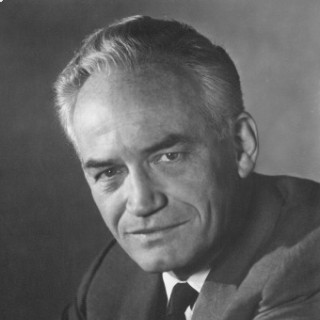
Republican nominee for President, 1964; U.S. Senator from Arizona
POPULARITY

27 episodes with goldwater

28 episodes with goldwater

18 episodes with goldwater

8 episodes with goldwater

15 episodes with goldwater

4 episodes with goldwater

6 episodes with goldwater

3 episodes with goldwater

2 episodes with goldwater

3 episodes with goldwater

6 episodes with goldwater

5 episodes with goldwater

4 episodes with goldwater

10 episodes with goldwater

3 episodes with goldwater

5 episodes with goldwater

3 episodes with goldwater

2 episodes with goldwater

Barry Goldwater is often reduced to a caricature. Austin Petersen revisits Goldwater's record on desegregation, civil rights, constitutional limits, and the case for reviving his strain of Republicanism. Judge Andrew Napolitano joins to discuss meeting Goldwater and Ronald Reagan, then explains how ICE uses administrative subpoenas to identify online critics and where the legal limits stand. Tom Pappert of The Tennessee Star details the three-year court fight over the Covenant School records and the institutional failures those files may expose. Follow Wake Up America on Apple Podcasts or Spotify so every new audio edition lands in your feed. Watch the full video.

FAN MAIL--We would love YOUR feedback--Send us a Text MessageThey told Richard Nixon his career was over. Then they told him again. He proved them wrong twice and, for a moment, he looked unstoppable. I walk through Nixon's political exile after 1960 and 1962, then his return to win the presidency in 1968 and dominate in 1972. The point isn't nostalgia or hero worship. It's a hard look at how comebacks really happen when political elites rush to declare a leader finished, but the “lunch bucket” voters still show up, still work, and still vote. Along the way, I draw a modern parallel to Donald Trump's 2024 comeback after years of investigations, prosecutions, civil suits, and impeachment fights, and why many Americans see that era through the lens of “lawfare” and institutional trust. To understand the country that produced Nixon's return, we go straight to a defining source: Theodore H. White's Pulitzer-winning The Making of a President 1960. White helped invent modern campaign journalism, writing scenes that capture Kennedy's discipline, Nixon's exhaustion, and the first truly television-driven presidential race where looking presidential mattered as much as sounding presidential. We also lay out the pivotal election sequence of 1960, 1964, 1968, and 1972, including how Barry Goldwater's loss plants seeds that later power Nixon and Reagan. Finally, we face the hinge point: Watergate. I explain why White's series couldn't survive Nixon's resignation, why he turns to Breach of Faith, and where we go next with a deeper Watergate dive through Geoff Shepard's trilogy and the argument that scandals can become tools used against future presidents. Key Points from the Episode: • Nixon's two political “deaths” and the mechanics of a real comeback • why the Trump 2024 return fuels comparisons about elites, voters and “lawfare” • Theodore White's The Making of a President 1960 and what it changed in political journalism • the first TV-era presidential campaign and why “looking presidential” becomes decisive • how 1960, 1964, 1968 and 1972 map the conservative movement's rise from Goldwater to Nixon to Reagan • “order” as a winning message for an exhausted country • Watergate as the turning point that breaks White's series and reshapes trust in institutions • preview of the upcoming Geoff Shepard's Watergate trilogy coverage and the claim that scandal becomes a political weapon Other goodnessAmerica's pivotal election series: https://www.teammojoacademy.com/mm342-pivotal-tuesdays-series-the-election-of-1968-part-1/https://www.teammojoacademy.com/mm343-pivotal-tuesdays-series-the-election-of-1968-part-2/We are building and have built out a whole library of book briefs, just one pager's five-minute read over at the Mojo Book Academy on Substack, mojoacademy.substack.com. Keep fighting the good fight!

────────────────────────────────────────[00:02:34]Federal Time Control Is Based on the Commerce Clause — the Same Justification Used for the Drug WarThey couldn't prohibit alcohol without a constitutional amendment but wave the commerce clause at everything else; the 10th Amendment was put there to close that loophole.────────────────────────────────────────[00:14:18]Gas Prices Back Above Four Dollars — White House Claims They'll Plummet Once Iran Is DegradedThey said the same thing months ago about Iran having no missiles left; Maria Bartiromo is still bewildered attacks keep happening after Trump declared victory.────────────────────────────────────────[00:19:29]CIA Director Woolsey Laughs on Fox About Rigging Foreign Elections — He Also Played the President in Dark WinterHe admits the CIA rigs elections "for a good cause"; he's the same man who played Trump's role in the pandemic rehearsal two decades before COVID.────────────────────────────────────────[00:43:44]CDC Paid Pfizer $1.2 Billion for More mRNA Shots — the Same Amount Trump Wants for His Entire AI Manhattan Project$600M per year; more goes to pediatric doses than adult; Knight: the same people targeting children with everything else have made kids the primary vaccine target.────────────────────────────────────────[00:57:30]Tamoxifen for Breast Cancer Can Cause Uterine Cancer — Fluoroquinolones Can Cause Permanent Nerve DamageNeither pharmacists nor physicians warn patients; when Lance was damaged by fluoroquinolones, a doctor in their Bible study didn't even know it carried a black box label.────────────────────────────────────────[01:20:47]Pentagon Lied — US Military Casualties in the Iran War Have Risen to Nearly 100Three earlier attacks were never disclosed; Iran's mid-flight speed-changing missiles defeat trajectory-based defense systems; Iran blinded the billion-dollar radar array first.────────────────────────────────────────[01:25:26]Israel Approved a Settlement That Would Destroy 11,000 Predominantly Christian Homes Near BethlehemThe mayor says Christians get under 50 liters of water daily while settlers get over 400; 80% of their land has been taken; he needs permission to visit the Church of the Holy Sepulchre.────────────────────────────────────────[01:38:43]Barry Goldwater in the 1970s: "When Israel Gives a Command, Congress Jumps" — He Called for Cutting All AidOn a Buchanan firing-line segment, every participant agreed Israel was running America; Goldwater said cut the $3B if necessary.────────────────────────────────────────[01:51:37]Houthis Now Threatening a Maritime Embargo on Saudi Arabia — the Last Relief Valve for Global Oil MarketsSaudis redirected millions of barrels through a Red Sea pipeline to bypass Hormuz; blocking it would compound the disruption; two more tankers exploded this week.────────────────────────────────────────[01:57:45]Flock Camera Network Expanded Nationwide Through Secret NDAs With Town CouncilsErin Brockovich found tech companies placed city council members under non-disclosure agreements across the country; residents woke up to surveillance construction with no warning and no vote. ──────────────────────────────────────── Money should have intrinsic value AND transactional privacy: Go to https://davidknight.gold/ for great deals on physical gold/silver For 10% off Gerald Celente's prescient Trends Journal, go to https://trendsjournal.com/ and enter the code “KNIGHT” For high quality made in America products go to HomeSteadProducts.shop and use promo code “Knight” for 10% off your purchases Find out more about the show and where you can watch it at TheDavidKnightShow.com If you would like to support the show and our family please consider subscribing monthly here: SubscribeStar https://www.subscribestar.com/the-david-knight-show Or you can send a donation throughMail: David Knight POB 994 Kodak, TN 37764Zelle: @DavidKnightShow@protonmail.comCash App at: $davidknightshowBTC to: bc1qkuec29hkuye4xse9unh7nptvu3y9qmv24vanh7Become a supporter of this podcast: https://www.spreaker.com/podcast/the-david-knight-show--2653468/support.

────────────────────────────────────────[00:02:34]Federal Time Control Is Based on the Commerce Clause — the Same Justification Used for the Drug WarThey couldn't prohibit alcohol without a constitutional amendment but wave the commerce clause at everything else; the 10th Amendment was put there to close that loophole.────────────────────────────────────────[00:14:18]Gas Prices Back Above Four Dollars — White House Claims They'll Plummet Once Iran Is DegradedThey said the same thing months ago about Iran having no missiles left; Maria Bartiromo is still bewildered attacks keep happening after Trump declared victory.────────────────────────────────────────[00:19:29]CIA Director Woolsey Laughs on Fox About Rigging Foreign Elections — He Also Played the President in Dark WinterHe admits the CIA rigs elections "for a good cause"; he's the same man who played Trump's role in the pandemic rehearsal two decades before COVID.────────────────────────────────────────[00:43:44]CDC Paid Pfizer $1.2 Billion for More mRNA Shots — the Same Amount Trump Wants for His Entire AI Manhattan Project$600M per year; more goes to pediatric doses than adult; Knight: the same people targeting children with everything else have made kids the primary vaccine target.────────────────────────────────────────[00:57:30]Tamoxifen for Breast Cancer Can Cause Uterine Cancer — Fluoroquinolones Can Cause Permanent Nerve DamageNeither pharmacists nor physicians warn patients; when Lance was damaged by fluoroquinolones, a doctor in their Bible study didn't even know it carried a black box label.────────────────────────────────────────[01:20:47]Pentagon Lied — US Military Casualties in the Iran War Have Risen to Nearly 100Three earlier attacks were never disclosed; Iran's mid-flight speed-changing missiles defeat trajectory-based defense systems; Iran blinded the billion-dollar radar array first.────────────────────────────────────────[01:25:26]Israel Approved a Settlement That Would Destroy 11,000 Predominantly Christian Homes Near BethlehemThe mayor says Christians get under 50 liters of water daily while settlers get over 400; 80% of their land has been taken; he needs permission to visit the Church of the Holy Sepulchre.────────────────────────────────────────[01:38:43]Barry Goldwater in the 1970s: "When Israel Gives a Command, Congress Jumps" — He Called for Cutting All AidOn a Buchanan firing-line segment, every participant agreed Israel was running America; Goldwater said cut the $3B if necessary.────────────────────────────────────────[01:51:37]Houthis Now Threatening a Maritime Embargo on Saudi Arabia — the Last Relief Valve for Global Oil MarketsSaudis redirected millions of barrels through a Red Sea pipeline to bypass Hormuz; blocking it would compound the disruption; two more tankers exploded this week.────────────────────────────────────────[01:57:45]Flock Camera Network Expanded Nationwide Through Secret NDAs With Town CouncilsErin Brockovich found tech companies placed city council members under non-disclosure agreements across the country; residents woke up to surveillance construction with no warning and no vote. ──────────────────────────────────────── Money should have intrinsic value AND transactional privacy: Go to https://davidknight.gold/ for great deals on physical gold/silver For 10% off Gerald Celente's prescient Trends Journal, go to https://trendsjournal.com/ and enter the code “KNIGHT” For high quality made in America products go to HomeSteadProducts.shop and use promo code “Knight” for 10% off your purchases Find out more about the show and where you can watch it at TheDavidKnightShow.com If you would like to support the show and our family please consider subscribing monthly here: SubscribeStar https://www.subscribestar.com/the-david-knight-show Or you can send a donation throughMail: David Knight POB 994 Kodak, TN 37764Zelle: @DavidKnightShow@protonmail.comCash App at: $davidknightshowBTC to: bc1qkuec29hkuye4xse9unh7nptvu3y9qmv24vanh7Become a supporter of this podcast: https://www.spreaker.com/podcast/the-real-david-knight-show--5282736/support.
This week on the Mark Levin Show, Senator Lindsey Graham, a loyal friend and loyal ally to democratic and peace-loving countries around the world, has passed away. He was a friend to Israel, Ukraine, Taiwan, and others. He was a counterbalance to naive Woke Reich isolationists who talk about American sovereignty but don't realize you have to fight for it. Graham had a lot in common in national security matters with Ronald Reagan. Not even a nation as powerful as the United States can go it alone, and Graham understood we have alliances for a reason. The left and Woke Reich isolationists wasted no time attacking him, but he was popular in South Carolina and all over the world. He and his sound advice will be truly missed. Then, the infiltration of America by Islamists and jihadis is really in full force, and no one seems to be doing anything about it. Michigan Democratic Senate candidate Abdul El-Sayed's father-in-law, Jukaku Tayeb, is a top donor to his super PAC and a longtime leader on ISNA's founding committee and CAIR Michigan president—both groups are co-conspirators in the Holy Land Foundation terror-financing trial that funneled millions to Hamas, tied to the Muslim Brotherhood mothership responsible for groups like Al Qaeda, ISIS, and Hamas, and funded by Qatar and Turkey. Why do Democrats tolerate these ties? Democratic Socialists of America (DSA) seeks to eliminate the U.S. Senate and Electoral College to advance their agenda, though both require constitutional amendments. These institutions exist to protect smaller, less-populated states, ensuring they have a meaningful say in government so they would join the Union during independence. Similarly, the Electoral College ensures smaller states influence presidential elections, countering domination by a handful of large, populous Democrat metropolitan states and cities. Removing these safeguards would enable mob rule, open borders, non-citizen influence, and a centralized Marxist government. Later, the 2028 Republican presidential primary must be competitive and vibrant, with no coronations. The Republican Party needs to be rooted in the principles of Jefferson, Washington, Madison, Reagan, Buckley, Goldwater, and Milton Friedman's free markets—not Democrat-lite nationalism or populism that dismisses history—and we should demand articulate candidates who boldly contrast conservative beliefs with the left. No, we don't want a bold government, which is what the socialists and Marxists desire. We want an effective limited government confined to its constitutional powers, a bold private sector, and individual sovereignty. Learn more about your ad choices. Visit podcastchoices.com/adchoices

Live July 18, 2026(The Yaron & Nikos Dialogues, Episode 8)Ronald Reagan -- GOAT or Overhyped? | Yaron & Nikos DialoguesReagan Built the Modern Right—But Was He America's Greatest President or the Beginning of Today's Conservative Crisis?Was Ronald Reagan America's greatest modern president—or is his legacy far more complicated than conservatives admit?In Episode 8 of The Yaron & Nikos Dialogues, Yaron Brook and Nikos Sotirakopoulos dive deep into Reagan's life, philosophy, presidency, and enduring influence. They examine everything from Reaganomics, tax cuts, deregulation, the Cold War, and the Soviet collapse to his relationship with Ayn Rand, religion, foreign policy, and the modern Republican Party.Along the way they debate one of the biggest political questions of our time:Was Reagan the GOAT...or is he vastly overrated?The conversation expands into sports, art, culture, classic films, 70s and 80s music, and an extended audience Q&A covering Ayn Rand's criticism of Reagan, Trump comparisons, Ben Shapiro, JD Vance, military duty, Silicon Valley, capitalism, and much more.Watch now: https://youtube.com/live/XkWHWROlbxoMain Topic Timestamps00:00 Introduction00:41 Opening remarks & The Yaron & Nikos Dialogues01:07 Weekend football, finals & celebrations02:13 Sports and art—what do they have in common?02:45 England's strategic mistakes04:00 The Odyssey review & conservative reactions05:27 Reagan: GOAT or Overhyped?07:09 Reagan's personality, leadership & communication10:20 Reagan's early life & political transformation14:55 WWII service & Hollywood career16:04 Union leadership & becoming a national speaker20:34 The Goldwater speech & Medicare debate24:11 Reagan, Ayn Rand & national prominence27:11 California governor: taxes, welfare, abortion & environment31:08 Nixon, Ford & Reagan's presidential ambitions35:38 America in 198041:31 Reaganomics: tax cuts, deregulation & growth49:28 Social Security reform & free trade55:25 Religion, foreign policy & the Cold War1:00:07 Star Wars Initiative & nuclear negotiations1:05:49 Reagan and the fall of the Soviet Union1:12:41 Dissidents, Israel, Lebanon & Afghanistan1:21:30 Reagan and the Religious Right1:24:39 Music review: Simple Minds1:27:27 Favorite music discussion1:30:11 Christopher Burke concert storyLive Audience Questions1:34:39 Why did Ayn Rand oppose Reagan?1:51:51 Mysticism inside the Reagan administration?1:55:39 Nikos reviews The Odyssey1:59:23 Can investors really profit from Trump's Truth Social posts?2:01:55 Was Reagan ultimately a positive or negative legacy?2:02:44 Why doesn't Yaron like The Breakfast Club?2:04:16 Was America healthier during Reagan's era?2:08:06 Reagan vs. Trump—how big is the difference?2:09:39 Ben Shapiro, JD Vance & the new Right2:11:43 AI videos, Messi, Milei & optimism in Argentina2:17:36 Is military duty morally justified?2:19:48 Are you an Urban Achiever?2:20:20 The connection between sports and art2:25:17 Campaign messaging: optimism vs. aggression2:25:19 Heroes, producers & The Odyssey2:34:10 Yaron's favorite songs of the 60s & 70s2:36:04 Joel Osteen discussion2:36:17 Peggy Noonan's Reagan legacy2:36:29 Does The Odyssey celebrate reason?2:37:36 Would Silicon Valley exist without Reagan?2:38:54 Why do New York and California still outperform?More from Nikos Sotirakopoulos: https://www.nikos.org/Support Nikos: https://www.youtube.com/@nikos_1717
On Thursday's Mark Levin Show, the 2028 Republican presidential primary must be competitive and vibrant, with no coronations. The Republican Party needs to be rooted in the principles of Jefferson, Washington, Madison, Reagan, Buckley, Goldwater, and Milton Friedman's free markets—not Democrat-lite nationalism or populism that dismisses history—and we should demand articulate candidates who boldly contrast conservative beliefs with the left. No, we don't want a bold government, which is what the socialists and Marxists desire. We want an effective limited government confined to its constitutional powers, a bold private sector, and individual sovereignty. Also, Sen John Fetterman expressed his long-term concern as a Democrat that his party might back away and turn its back on Israel, declaring that if it ever officially becomes the anti-Israel party, he would leave because it represents moral clarity for him. Young Democrats in Pennsylvania largely do not like Fetterman, though blue-collar Democrats—including cops, firefighters, and miners—do support him in a state with the highest percentage of union households in the country. Fetterman sounds more conservative on Israel than some of the Woke Reich neo-fascists. Later, President Trump is set to reveal in his presidential address bombshell evidence that China interfered in the 2020 election to help Joe Biden win, including hacking into state voter registration databases and stealing information on tens of thousands of voters to manufacture mail-in ballots, based on declassified FBI, CIA, and ODNI documents. The speech will also highlight over 100,000 non-citizens, including illegal immigrants, on voter rolls nationwide. Democrat states refuse to clean their voter rolls of dead people, duplicates, and unvetted individuals in violation of federal law because they want to enable corruption and fraud. Afterward, the left and the media carry water for or enemies like Communist China by hindering U.S. progress in this critical AI race. AI development is essential for surpassing human knowledge generation in military, medical, and other fields, and halting it would let China and Russia dominate; data centers must be prioritized nationally and supported by innovations like miniature nuclear plants, despite leftist opposition akin to past fearmongering against fracking. Finally, there is no evidence of an Israeli influence campaign. The Israeli Foreign Ministry pushed back against a defamatory Time magazine article, clarifying that all activities are transparent, lawful under U.S. law, and involve no interference in U.S. policy; they lawfully contracted a digital agency to combat hatred against Jews and strengthen the U.S.-Israel alliance. JD Vance and Joe Rogan must apologize for smearing Israel. Learn more about your ad choices. Visit podcastchoices.com/adchoices

LEXINGTON, Ky. (July 9, 2026) – THIS IS AN ENCORE EPISODE. Schyler Simpson, PhD, is no stranger to the University of Kentucky. A three-degree UK alum, she has spent years serving students in a variety of roles across campus, including teaching, advising, recruiting, and retention and engagement work in the College of Communication and Information. In her new role as director of Nationally Competitive Awards, she now helps students explore prestigious opportunities such as the Rhodes, Fulbright, Goldwater, Marshall and Truman awards. The University of Kentucky's Office of Nationally Competitive Awards helps students pursue major scholarships, fellowships and study-abroad opportunities that can shape academic careers and open doors around the world. Despite the large amount of national competition, Simpson believes UK students are just as prepared and motivated to achieve these opportunities, saying, "students should not think that maybe they're not prepared enough or not ready enough, because this office is definitely proof that they can compete on a national level and win." On this episode of 'Behind the Blue', Simpson reflects on the path that brought her to the role, explains how her office works directly with students on everything from identifying opportunities to refining essays and application materials, and discusses the life-changing impact these awards can have on students and why building awareness of those opportunities across campus is a major priority. 'Behind the Blue' is available via a variety of podcast providers, including Apple Podcasts, YouTube and Spotify. Subscribe to receive new episodes each week, featuring UK's latest medical breakthroughs, research, artists, writers and the most important news impacting the university. 'Behind the Blue' is a production of the University of Kentucky. Transcripts for most episodes are now embedded in the audio file and can be accessed in many podcast apps during playback. Transcripts for older episodes remain available on the show's blog page. To discover how the University of Kentucky is advancing our Commonwealth, click here. This interview has been edited for time and clarity.
George Black, guest author, introduces two central protagonists, Manus Campbell and Chuck Searcy, who arrived in Vietnam in June 1967. Campbell, a young Marine from New Jersey, was driven by a desire to prove himself to his demanding father and joined the elite Marines to become a hero. He was assigned to the first battalion of the fourth Marines and deployed to I Corps, the most dangerous combat zone in the country. Conversely, Searcy, a former Goldwater supporter from Georgia, enlisted in military intelligence to avoid the frontline combat he dreaded. While Campbell faced the brutal reality of the A Shau Valley—a strategic North Vietnamese stronghold that was never recovered by the US—Searcy was stationed in Saigon. In Saigon, Searcy began to see the war's disconnect from reality, observing that intelligence reporting was often manipulated to provide the "rosy face" demanded by politicians and generals. The A Shau Valley remained critical because its difficult, fog-shrouded terrain provided a bastion for the North to launch attacks on cities like Hue during the upcoming Tet Offensive. Both men arrived as the war reached a stalemate, forcing both sides to change their tactics. The Long Reckoning (3)

This week on Breaking Battlegrounds, hosts Chuck Warren and Sam Stone dive into the biggest political and cultural fights shaping the country. First, Chuck and Sam discuss the controversy surrounding Major League Baseball's Pride Night events, including questions over whether players on California teams were properly told they would be expected to wear special Pride-themed caps and uniforms. They argue that most sports fans, including many gay fans, are not looking for political messaging at the ballpark and simply want to watch the game. The conversation then turns to low voter turnout in recent New York elections, how DSA-backed candidates successfully targeted younger voters, and why traditional Democratic turnout operations may be changing. Chuck and Sam also examine FIFA's decision involving rainbow flags at an upcoming Iran vs. Egypt match in Seattle, progressive contradictions on human rights, and broader concerns about radicalism, Sharia law, and national security. Then, B brings another edition of B's Crime Corner with the tragic case of Officer Isaiah Cordero, who was fatally shot during a traffic stop on December 29, 2022, by repeat offender William McKay. The case sparked a massive police manhunt and raises serious questions about bail practices, repeat offenders, and public safety. Next, Tony Napolitano, Senior Attorney at the Goldwater Institute, joins the show to break down two major legal battles. He explains the Supreme Court's decision striking down Hawaii's restriction on lawful firearm carriers bringing guns onto private property open to the public without explicit permission. He also discusses Goldwater's lawsuit against Phoenix over what the group calls an illegal land giveaway in Roosevelt Row, where the city plans to sell property appraised at $4.8 million for just $1.5 million, potentially costing taxpayers $3.3 million. Learn more about the case at the Goldwater Institute: goldwaterinstitute.org Finally, Susan Crabtree, National Correspondent for RealClearPolitics, 2024 Dao Prize winner, author of Fool's Gold, and contributor to the California Post and City Journal, joins the show to discuss her investigation into Gavin Newsom, Jennifer Siebel Newsom, and nonprofit influence in California. Susan details concerns involving corporate donations, school film screenings, taxpayer-funded nonprofit programs, homeless housing projects, illegal immigration services, and weak oversight in California's nonprofit sector. Follow Susan Crabtree and find more of her work on X: @susancrabtree Listen now to Breaking Battlegrounds, the radio show covering Arizona politics, campus unrest, election integrity, national campaigns, and the true crime cases everyone is talking about. Catch Breaking Battlegrounds live on 960 AM in Phoenix every Saturday at 9:00 AM, with full episodes and exclusive podcast-only segments dropping every Friday wherever you get your podcasts or watch on Youtube. Stay connected with Breaking Battlegrounds: • Substack: https://substack.com/@breakingbattlegrounds • Website: https://breakingbattlegrounds.vote • News: https://breakingbattlegrounds.news • X: https://x.com/breaking_battle • Instagram: @breakingbattlegrounds • Facebook: Breaking Battlegrounds If you enjoy the show, please leave us a 5-star review and share it with a friend. Your support helps keep the podcast growing. Breaking Battlegrounds is one of the top 2.5% most popular shows out of 3,779,399 podcasts globally. We interview policymakers, elected officials, and nationally and world-recognized reporters about the opportunities and hurdles the United States faces.

A new Goldwater constitutional amendment is now protecting military families. We talked to Goldwater's Director of Education, Matt Beienberg about why some opponents are pushing back.

Victor Riches, President and CEO of the Goldwater Institute, joins Chris Clements and Sean Noble for a timely discussion on the growing battle over water policy, economic development, and the future of Arizona. With state budget negotiations still stalled and critical policy decisions hanging in the balance, the conversation turns to Governor Katie Hobbs' ongoing opposition to budget proposals that would maintain conformity with the federal tax code—potentially impacting more than 700,000 Arizona small businesses, workers benefiting from the elimination of taxes on tips, and Social Security recipients. Chris, Sean, and Victor also examine how water policy is increasingly being used as a tool to restrict development across the state, including major economic opportunities such as data centers, advanced manufacturing, and other job-creating investments. They discuss the rise of NIMBY politics, the challenges facing Arizona's long-term growth, and what policymakers should be doing to balance responsible water stewardship with economic prosperity. As one of Arizona's leading advocates for limited government, individual liberty, and free enterprise, Victor provides a thoughtful and fact-based perspective on the policy choices that will shape the state's future. We are proud to have Goldwater as a Primary Partner of our efforts at LBDM. A must-listen conversation for anyone interested in Arizona politics, economic development, water policy, and the principles of Faith, Freedom, and Free Enterprise. #Arizona #GoldwaterInstitute #VictorRiches #WaterPolicy #EconomicDevelopment #SmallBusiness #FaithFreedomFreeEnterprise Subscribe for weekly conversations on Faith, Freedom & Free Enterprise with Sean Noble and Chris Clements. Light Beer Dark Money Website: lightbeerdarkmoney.com Facebook: https://www.facebook.com/LightBeerDarkMoney/ Instagram: https://www.instagram.com/lightbeerdarkmoney/ Twitter: https://twitter.com/lbdmpodcast?lang=en LinkedIn: https://www.linkedin.com/company/light-beer-dark-money/ Blog: https://lightbeerdarkmoney.com/hypocrisy-and-the-aoc-oh-sandy/ #PrattPodcasting

Send us a text and chime in!The City of Prescott Recreation Services Department is notifying the public of upcoming temporary closures at Goldwater Lake due to roadway improvement work. Goldwater Lake will be fully closed Monday, June 15, 2026, through Friday, June 26, 2026, to allow for repaving of the entrance and exit roads to the park. In preparation for the project, Goldwater Lake will also be temporarily closed on Tuesday, May 26, 2026, from 6 a.m. to 12 p.m. For questions or additional information, please contact the Recreation Services Administration Division at 928-777-1121. Catch up with more Local News Stories on Signals A Z.com. Subscribe and... For the written story, read here >> https://www.signalsaz.com/articles/prescott-announces-goldwater-lake-closures/ Check out the CAST11.com Website at: https://CAST11.com Follow the CAST11 Podcast Network on Facebook at: https://Facebook.com/CAST11AZFollow Cast11 Instagram at: https://www.instagram.com/cast11_podcast_network

1964: The Breaking Point...How a Texas President Helped Reshape American Politics Forever There are years in American history that feel less like moments… and more like fault lines. 1964 was one of them. It was the year the old political order began to crack. Not overnight.Not all at once.But in ways we are still living with today. And at the center of it all stood a Texan. Lyndon B. Johnson Growing up in Texas, Lyndon Johnson was never just another historical figure to some families. People remembered him. In my own family, my great-aunts grew up around Johnson City during the years when Lyndon Johnson was still simply “Lyndon.” Before the presidency. Before Vietnam. Before history turned him into something larger and far more complicated. And that's important to remember. Because Johnson understood Texas.He understood the South.And perhaps more than anyone else in Washington, he understood political power. Especially how to use it. By 1964, America was already under enormous strain. The images coming across television screens were becoming impossible to ignore. Black students being screamed at while trying to attend school.Peaceful protesters attacked with dogs and fire hoses.Freedom Riders beaten.Church bombings.Demonstrations erupting across the South. For many Americans, the Civil Rights Movement was becoming not just a regional issue but a moral one. And television changed everything. For the first time in American history, millions of people could witness these confrontations in their living rooms almost as they happened. The country was being forced to look at itself. John F. Kennedy had moved cautiously on civil rights during his presidency. But after Kennedy's assassination in November of 1963, Lyndon Johnson inherited not only the presidency… but the unfinished battle over civil rights legislation. And Johnson knew something many younger Americans today may not fully appreciate: The bill would not pass simply because it was morally right. It would pass only if someone could force it through Congress. And Lyndon Johnson knew Congress better than almost anyone alive. Before becoming president, Johnson had served as Senate Majority Leader. He understood personalities, pressure, favors, intimidation, timing, all the invisible machinery of power. Historians would later call it “The Johnson Treatment.” He could flatter you.Threaten you.Charm you.Corner you.Convince you. Sometimes all within the same conversation. And in 1964, Johnson unleashed that political machinery behind what became the: Civil Rights Act Today, most Americans remember the Civil Rights Act as inevitable. It wasn't. The legislation faced fierce opposition, especially from Southern Democrats who viewed it as federal overreach into state affairs and Southern society. For decades, many Southern politicians had held enormous power in Congress. Committee chairmanships. Senate influence. Institutional seniority. But the country was changing. And Johnson understood that history was moving whether Congress wanted it to or not. So he pushed. Hard. The Civil Rights Act of 1964 outlawed segregation in public accommodations and prohibited discrimination based on race, color, religion, sex, or national origin. Supporters viewed it as one of the most important moral and constitutional advances in modern American history. Opponents viewed it as a dangerous expansion of federal authority. And beneath the political arguments, something deeper was beginning to happen. The old Democratic coalition, the one that had held together since the days of Franklin D. Roosevelt, was beginning to fracture. Then came the election of 1964. And this is where the political story becomes truly fascinating. The Republican nominee that year was: Barry Goldwater Goldwater was a conservative from Arizona. He opposed the Civil Rights Act, not necessarily because he supported segregation, but because he argued parts of the law violated constitutional limits on federal power. That distinction mattered to Goldwater. But politically, something much larger was unfolding. Goldwater lost the election badly nationwide. Lyndon Johnson crushed him at the national level. But then something unexpected happened. Goldwater carried several Deep South states. States that had been Democratic strongholds for generations. For many observers at the time, it looked strange. Temporary, even. But in hindsight, historians now recognize it as one of the first major warning signs that the political map of the South was beginning to change. Slowly. Unevenly. But undeniably. Now, none of this happened in a single election. The South did not suddenly wake up Republican in 1964. That transformation would take decades. Many Southern Democrats remained loyal to the party well into the 1970s and even the 1980s. Local courthouse politics, state offices, and regional traditions still mattered enormously. But the foundation had shifted. The old alliances were weakening. And the issues reshaping American politics were no longer simply economic. Increasingly, they were becoming cultural. Constitutional. Regional. Moral. And perhaps no one understood the price of what had happened better than Lyndon Johnson himself. According to one famous account, after signing the Civil Rights Act, Johnson reportedly told an aide: “We have lost the South for a generation.” Whether the quote is perfectly remembered or not, the political reality behind it proved remarkably accurate. The transformation had begun. In the next chapter of this story, we move into one of the most chaotic years in modern American history: Assassinations.Protests.Riots.The Democratic Convention in Chicago.And the rise of a new political message that would reshape conservative politics for decades to come: “Law and order.” And once again… Texas and the South would stand near the center of the storm. Join me on BlueSky or Instagram Talk to me

Year(s) Discussed: 1960-1975 In a landscape where Confederate flags, Lincoln quotes, and Civil War symbols are woven into modern politics, how did history become a tool for political identity and culture wars? Historian Tim Galsworthy uncovers for us the surprising ways Civil War memory has shaped the Republican Party and American politics from 1960 through the first half of the 1970s - from Eisenhower's cautious leadership to Goldwater's subtle references and the strategic use of Lincoln's legacy. Discover in our conversation in this episode how these historical narratives influence today's polarization, racial dynamics, and campaign strategies. More information can be found at https://www.presidenciespodcast.com. Learn more about your ad choices. Visit megaphone.fm/adchoices

Episode: 1556 In which we run out of manual arts teachers for our schools. Today, let's work with our hands.

“His ultimate failure is not simply losing. It's his failure to stop Trumpism from being such a dominant force in America.” — Julian ZelizerOn this Easter Sunday, can we resurrect Joe Biden's reputation? Perhaps not — according to Julian Zelizer, the Princeton historian and editor of The Presidency of Joseph R. Biden, a collection of essays about the historical significance of the Biden Presidency.Zelizer argues that Biden's legislative record was more robust than most Americans remember — climate investments, semiconductor plants, diversity integrated into government programmes. Rather than policy, the problem was the politics. Biden didn't build a coalition that would last long enough for his ambitious programmes to mature. He is the last of an era: a New Deal Democrat who believed in big government, that the Republicans could be brought back to the centre, that politics could still work the way it used to. Joe Biden promised to save the soul of America from the Charlottesville moment. Instead, his administration was bookended by a President who saw “good people” on both sides of the Charlottesville neo-Nazi violence.Zelizer makes an unusual comparison: Biden as Barry Goldwater. Goldwater lost catastrophically in 1964. Decades later, his anti-New Deal ideas colonised the modern Republican Party. Zelizer suggests that Biden's domestic agenda — affordability, industrial policy, bringing jobs home — may follow the same trajectory. Victory on the heels of defeat. A resurrection of sorts. Maybe not such a tragedy after all. Five Takeaways• Biden May Be the Last New Deal President: He is a product of mid-twentieth-century Democratic politics — big government, big federal programs, the belief that Washington can help middle-class Americans. His formative period was the era of LBJ and the Great Society. The next round of Democrats will not make his mistakes. The style of politics he represents may be over.• His Legislative Record Was More Robust Than Anyone Remembers: Climate investments, semiconductor plants, diversity integrated into government programs, jobs brought back to the United States. The problem wasn't that the programmes were broken. The problem was political: he didn't build a coalition that would last long enough for them to mature. Even the New Deal wasn't up and running within a year.• He Promised to Save the Soul of America. He Couldn't: Biden's candidacy was a response to the neo-Nazi rally in Charlottesville. His promise was that Trumpism would not be at the centre of American power. His ultimate failure is not simply losing. It's that his administration is followed by a much more radical Trump Two that undoes everything he put on the books and goes further.• Biden as Barry Goldwater: Goldwater lost by one of the worst margins on record in 1964. Decades later, his ideas were at the core of the modern Republican Party. Zelizer argues Biden's domestic agenda — affordability, industrial policy, semiconductor investment — may follow the same trajectory. The ideas may outlast the man.• Bookended by Trump: There is no way to talk about Biden without talking about Trump. His candidacy was about what he was not going to allow to define America. The fact that he is followed by a more radical and destructive second Trump administration will always be at the centre of the conversation. Trump is the defining voice of this entire period. About the GuestJulian Zelizer is a professor of history and public affairs at Princeton University. He is the author of Burning Down the House: Newt Gingrich and the Rise of the New Republican Party and editor of the presidential assessment series including volumes on Bush, Obama, Trump, and Biden.References:• The Presidency of Joseph R. Biden: A First Historical Assessment edited by Julian Zelizer — the book under discussion.• Episode 2859: Stop, Don't Do That — Peter Edelman on Bobby Kennedy. The progressive populism Biden couldn't resurrect.About Keen On AmericaNobody asks more awkward questions than the Anglo-American writer and filmmaker Andrew Keen. In Keen On America, Andrew brings his pointed Transatlantic wit to making sense of the United States — hosting daily interviews about the history and future of this now venerable Republic. With nearly 2,800 episodes since the show launched on TechCrunch in 2010, Keen On America is the most prolific intellectual interview show in the history of podcasting.WebsiteSubstackYouTubeApple PodcastsSpotify Chapters:(00:31) - Introduction: Easter Sunday and the resurrection of Joseph R. Biden (02:21) - Zhou Enlai and Kissinger: is it too early to tell? (04:34) - The historians were eager to participate (06:16) - A traditional president analysed in a traditional format (07:20) - Divided We Stand: Newt Gingrich and the pathetic quality of the Democrats (09:48) - Gramsci's interregnum: frozen between the past and the future (11:35) - The soul of America: Biden's promise and ultimate failure (14:18) - An unlikely person: plagiarism, alliances with segregationists, and luck (16:04) - Lincoln's widow at the theatre: why did anyone fancy this guy? (18:54) - No ideological coherence: the compromise candidate (21:13) - The CHIPS Act looked great on paper (23:38) - Who was running the show? (25:30) - The debate: clearly at best out to lunch (28:26) - Biden as Barry Goldwater: ideas that outlast the man (30:38) - Kamala Harris and backward momentum for female candidates (34:38) - Foreign policy: the irony of his supposed strength (38:25) - The Hoover comparison: the end of a chapter in American history

April 2, 2026Trump invokes the right-wing vision of the Goldwater era, Trump's 2027 budget plan about to be released and will shape the Republican argument for the mid term elections, Administration is under pressure to fund domestic programs, Reporting shows that DHS has used special agents in immigration sweeps, resulting in use of force and deaths, Trump addresses nation, but does not make any significant announcement about the Iran war, Tension in Defense Department results in firings, Trump fires Attorney General Pam Bondi, angry about her handling of the Epstein files and that she has not adequately punished his enemies.Watch today's recording here: https://www.youtube.com/live/g9TUa1Rwd6U?si=T8_KKcHQZElhpnZ-Get full, free access to Letters from an American here: https://heathercoxrichardson.substack.com/subscribeYou can also find me:Bluesky: https://bsky.app/profile/hcrichardson.bsky.socialInstagram: https://www.instagram.com/heathercoxrichardson/?hl=enFacebook: https://www.facebook.com/heathercoxrichardson/YouTube: https://www.youtube.com/@heathercoxrichardson Get full access to Letters from an American at heathercoxrichardson.substack.com/subscribe

Wake Up March Madness Thursday! Cesar Chavez craziness. Tucson murder spike! NY Post roasting Nanos hard. David Schweikert in the 2nd hour. Goldwater's Tim Minella on DEI sneaks at the U of A Honors College plus Tucson Association of Realtors CEO Romeo Arrieta and Deputy Chief Economist of the National Assoc. of Realtors Dr. Jessica Lautz make their debut on the Live The Dream Media Network!
Big Wednesday is in full force! Wake Up + Inside Track! Americans for Prosperity Arizona talking the current state of energy in the US. Goldwater's Matt Beinburg corrects the record that News 12 Phoenix got wrong on ESAs. Barney Brenner co-hosts plus David Slavin comes on in the 3rd hour to with Tony Kishman of the world's best Paul McCartney tribute singers. Bruce Ash and Eb coming on strong at 9am on Inside Track. Only on the Live The Dream Media.
LEXINGTON, Ky. (March 12, 2026) – Schyler Simpson, PhD, is no stranger to the University of Kentucky. A three-degree UK alum, she has spent years serving students in a variety of roles across campus, including teaching, advising, recruiting, and retention and engagement work in the College of Communication and Information. In her new role as director of Nationally Competitive Awards, she now helps students explore prestigious opportunities such as the Rhodes, Fulbright, Goldwater, Marshall and Truman awards. The University of Kentucky's Office of Nationally Competitive Awards helps students pursue major scholarships, fellowships and study-abroad opportunities that can shape academic careers and open doors around the world. Despite the large amount of national competition, Simpson believes UK students are just as prepared and motivated to achieve these opportunities, saying, "students should not think that maybe they're not prepared enough or not ready enough, because this office is definitely proof that they can compete on a national level and win." On this episode of 'Behind the Blue', Simpson reflects on the path that brought her to the role, explains how her office works directly with students on everything from identifying opportunities to refining essays and application materials, and discusses the life-changing impact these awards can have on students and why building awareness of those opportunities across campus is a major priority. 'Behind the Blue' is available via a variety of podcast providers, including Apple Podcasts, YouTube and Spotify. Subscribe to receive new episodes each week, featuring UK's latest medical breakthroughs, research, artists, writers and the most important news impacting the university. 'Behind the Blue' is a production of the University of Kentucky. Transcripts for most episodes are now embedded in the audio file and can be accessed in many podcast apps during playback. Transcripts for older episodes remain available on the show's blog page. To discover how the University of Kentucky is advancing our Commonwealth, click here. This interview has been edited for time and clarity.

This is a free preview of a paid episode. To hear more, visit andrewsullivan.substack.comSally is a journalist, columnist, TV commentator, author, wife to Ben Bradlee, and legendary DC hostess. Who better to talk to about the implosion of The Washington Post? She also founded the Post's religion website, “On Faith.” She's the author of six books, including the spiritual memoir Finding Magic, and We're Going to Make You a Star — about her time at “CBS Morning News.” Her latest novel is Silent Retreat, and she's now working on a memoir called Never Invite Sally Quinn. Her energy at 84 is, well, humbling. We had a blast.For two clips of our convo — on Sally's initial impression of Bezos, and the time Bill Clinton called her the b-word — head to our YouTube page.Other topics: born in Savannah, GA, and learning voodoo as a kid; moving as an Army brat; her general dad who captured Göring and helped create the CIA; at Smith College wanting to be an actress; rebelling against Vietnam and the wishes of her dad by marrying Bradlee; the Georgetown party circuit and how it's grown more partisan; throwing a pajama party for Goldwater; dating Hunter S. Thompson; Watergate and Woodstein; the Grahams; Tom Stoppard; Hitchens; Howell Raines; Newt's revolution; Bill's womanizing; Hillary defending her cheater; the Monica frenzy; Obama rising on merit; Barack the introvert; Jerry Brown; the catastrophe of Biden running in 2024; Dr. Jill's complicity and cruelty; Jon Meacham; Maureen Dowd; David Ignatius; Bradlee's dementia; declining trust in journalism; Bezos nixing the Harris endorsement; his life with Lauren Sanchez; sucking up to Trump; the Will Lewis debacle; Sally's spiritual life; silent retreats; Zen meditation; the humor in Buddhism; the denial of death; debating the the Golden Rule; children in Gaza; and the need more than ever for in-person gatherings.Browse the Dishcast archive for an episode you might enjoy. Coming up: Jeffrey Toobin on the pardon power, Michael Pollan on consciousness, Derek Thompson on abundance, Matt Goodwin on the UK political earthquake, Jonah Goldberg on the state of conservatism, Tom Holland on the Christian roots of liberalism, Tiffany Jenkins on privacy, Adrian Wooldridge on “the lost genius of liberalism,” and Kathryn Paige Harden on the genetics of vice. As always, please send any guest recs, dissents, and other comments to dish@andrewsullivan.com. A listener writes:Thanks for all these good episodes. Is Vivek still planning to be a guest soon? I have been looking forward to that episode.He got cold feet. Too bad. On the other hand, I tend to avoid active politicians. Because they're rarely as candid as I'd like a guest to be. Oh well.A fan of last week's pod who lives near Atlanta writes, “The longtime Dishheads on the Mableton cul-de-sac definitely approve of your interview with homegrown talent Zaid Jilani”:I agree with his description of Mableton as a bit like the United Nations; I see that diversity in our grocery stores and local restaurants. He mentioned how he was often the only Pakistani and thus perceived as a nonthreatening minority. It makes me wonder how much the diversity mix affects how people perceive immigration? If a large group from one country arrives, does that seem more like an invasion? If a similar number arrives but from a wide range of locations, does that seem more like the normal American melting pot?After 30 years of living in Mableton, this may partly explain why I am not bothered by immigration in the way that you are, Andrew. I expect to see and hear all sorts of people wherever I go in my neighborhood. Today the teller at the bank spoke accented English. There are regular clerks at my grocery store who are immigrants. Our new HVAC was installed by immigrants. As an Atlanta suburb, there are many people descended from African slaves. European ancestry is merely one possibility off the long colorful menu around here.I think pace and numbers matter. A slower pace and fewer — with no massive homogenous populations arriving at once. And a new emphasis on Americanization over “multiculturalism”.From a listener who wants to “Make Democrats Great Again”:Great conversation with Zaid Jilani last week. I am very concerned that hardly any Democrats are being at all introspective, trying to figure out where they went wrong and how to become a party that can actually win elections — maybe even hearts and minds. They are only defined as anti-Trump, and their only hope is for Trump to go down in flames — which he very well might, but all they aspire to is winning as the least-worst party.The policy directions for reclaiming sanity and moderate voters are obvious (to me, at least). Here are my top three issues:1. AffordabilityThe longest lever to affect affordability is housing. Democrats have been complete failures in this regard, with strongholds like California and NYC being the least affordable places. When they talk about “affordable housing,” they only mean housing that is forced below market rate for the few poor people lucky enough to get it. They offer no solutions for the middle class or young people.The solution is obvious: build more. Plough through the various restrictions that are preventing housing from being built. There is no reason housing can't be cheap, except for NIMBY politics. Scott Weiner in California has been doing great work on this.Health care is the second-longest affordability lever. Obamacare made some progress, but not nearly enough, especially in terms of keeping costs down. But I'm not sure we're ready for another push on this; I say focus on housing.2. ImmigrationObviously there should be some immigration, and obviously we have structured our economy such that many jobs are only done by immigrants. But the Democrats' policy of simply not enforcing immigration law is untenable, especially for a group asking to be put in charge of law enforcement. We need those migrant workers, so find a way for them be here legally. Not through amnesty, but through some sort of bureaucratic process: have the employers fill out a form; have the prospective worker fill out a form in some office in Mexico; have someone process the form; and give them a green card.This is simple stuff! And yes, it would be helpful to admit that open borders, sanctuary cities, and subverting the law were not good ideas.3. CultureEnd wokeness. America is not a country consumed by white supremacy, and the people who voted for Trump are not racists. There are hardly any racists! And drop the other insanities, like the trans stuff.The message needs to be, “We are the Democrats and we want to help anybody from any state who needs help.” Hard to convince struggling white people in the South that you're going to help them when you seem to despise them. Love your brother, for crying out loud. And naturally, today's woke Democrats would be much more accepting of this message if it came from a racial minority candidate.Another wanted to hear more:I wish you had asked Zaid about Josh Shapiro. Also, when Zaid talked about affordability, he never mentioned housing — which is why there are so many ex-Californians in his home state of Georgia and elsewhere. “Build Baby Build” should be the slogan of the Democratic Party, rather than gaslighting Americans into believing housing prices will come down because we are getting rid of immigrants (Vance).Here's a dissent:About 20:30 into your interview with Zaid Jilani, he said that the root of all the Abrahamic faiths is that the meek have rights. You replied that this applied more to Christianity and Islam than to Judaism. I say this neither rhetorically nor to admonish you, but how much do you know about Judaism? Your comment is completely mistaken. Just what do you think Judaism says about the meek?Another has examples:In Genesis, you find that all humans were created b'tzelem Elohim (in the image of God). Moreover, Jewish texts consistently frame care for the poor as a legal obligation and moral imperative, not mere charity. Every Jewish child learns that promoting economic justice is mandated. It is called tzedakah.This religious mandate has manifested itself in the real world. Jews have been disproportionately represented in social justice movements aimed at promoting human equality. It wasn't an accident that two of three civil rights movement activists murdered in Neshoba County, Mississippi by the Ku Klux Klan were Jewish.Points taken. Big generalizations in a chat can be dumb. My quarrel may be semantic: the meek is not merely the weak. It's about the quiet people, those easily trampled upon. Like many of Jesus' innovations, it takes a Jewish idea further.Another listener on the Zaid pod:I wonder if you ever play the game of “which time would you like to go back to”? I do! And only half-jokingly, I often say 1994 in DC. Something about, for example, Christopher Hitchens on CSPAN in a dreary suit jacket discussing such *trivial* aspects of politics in a serious way. How perfect! When I listened to your episode with Zaid Jilani about how the left can win, it seemed dated to about this period in the early ‘90s.Ah yes, the Nineties. They were heady times and I think we all kinda realized it at the time. The economy was booming, crime was plummeting, Annie Leibovitz took my picture, and we had the luxury of an impeachment over a b*****b. Good times.On another episode, a listener says I have a “rose-colored view of President Obama”:In your conversation with Jason Willick, you said that Obama was a stickler for proper procedure and doing things the right way. I might instance, on the other side:* Evading the constitutional requirements on treaties in pursuit of the Iran deal (an evasion that the Republicans were stupid enough to go along with)* Encouraging the regulatory gambit of “sue and settle”* The “Dear Colleague” letter* “I've got a pen and a phone”Points taken. Especially the DACA move. But compared to Biden and Trump? Much better. One more listener email:I've been following you for years, but more recently I became a subscriber, and it's a decision I don't regret! I usually listen to the Dishcast over the weekend, and I always find it extremely stimulating, but there is also something relaxing about the length and scope of your conversations.I want to respond to something you said in your Claire Berlinski episode on the subject of Ukraine. Although I appreciate your position in defence of international law, you implied that Russia's claim to Ukrainian land is somehow “historically legitimate.” This is not only problematic from a logical standpoint (does Sweden have a historically legitimate claim to Finland and Norway, or does the UK have a claim to the Republic of Ireland, the US, and all its former colonies?), but also not based on historical reality.Unfortunately, this is not the first time your comments on Ukraine seem come through the prism of a Russian lens. I am sure it's not intentional; perhaps that's not a subject you have invested much time in, which is legitimate. However, I find it a bit surprising that, as we approach the fifth year of Russia's full-scale invasion, you still don't seem to have had the curiosity to explore this and invite any specialist on Ukraine. If Timothy Snyder is too political these days, I would recommend Serhii Plokhy — possibly the most eminent historian of Ukraine — or Yaroslav Hrytsak. They would each be a very interesting conversation.The Dishcast has featured many guests with expertise on the Ukraine war, including Anne Applebaum (twice), John Mearsheimer, Samuel Ramani (twice), Edward Luttwak, Fiona Hill (twice), Robert Wright, Robert Kaplan, Fareed Zakaria, Douglas Murray, Edward Luce, and Niall Ferguson.A reader responds to last week's column, “The President Of The 0.00001 Percent”:Like you, I'm not against people getting rich. A lot of good is done by a few people who have enough money to seed research and the arts, and pursue things that ordinary worker bees would never have the margin of time or resources to pursue. Good so far.But all strong forces need regulation and/or protective barriers, whether it's the weather, sex, patriotism, or capitalism. What's going on now is obscene. Progressive taxation is a social good: it doesn't stop anyone from getting richer and richer; it doesn't remove the positive motivators for success; it just means that the farther they get, the higher their proportionate contribution to the system that lets them get there. There are various ways to tweak the dials, but there is nothing philosophically wrong with tweaking them in a way the sets some outer limit. Let it be very high, but let it not be infinite.Here's a familiar dissent:You were right to torch the nihilism of the .00001 class. You were right to call out moral evasions. But when you referred to “the IDF's massacre of children in Gaza,” you collapsed a morally and legally distinct reality into a slogan. Words matter. “Massacre” implies intent. It suggests that the deliberate killing of children is policy rather than tragic consequence. That is a serious charge, and it deserves serious evidence.The governing reality in Gaza is not that Israel woke up one morning and decided to target children.
Wake up Tuesday! Danny Sawaya from Tucson Strength plus Matt Beinburg of Goldwater talking the state of education in the state of AZ. Stories today: Nanos shoots his mouth off to the GV News. Visualizing The Changing Political Affiliation By Generation In The U.S. Only on the Live The Dream Media network!
Big Wednesday is on! Nano's accidental honesty. Goldwater's Bill Beard at 6:30am on data centers. David Schweikert at 7am. Cochise County Supervisor Frank Antenori at 7:30am. plus the SAVE act is popular with 71% of Democrats except Chucky Schumer. Ending with campaign talk with Anna Clark.

Senator Barry Goldwater, the Republican nominee for President in 1964, was in no way a virulent racist, like others in his era, including Bull Connor, George Wallace or Strom Thurmond. But he reached a higher plateau in American politics and his views on ‘freedom’ were in direct contrast with those of Martin Luther King, Jr., who felt that until human and economic rights were secured for all, it did not exist in full form in America. Goldwater felt that freedom was in trouble because the federal government was usurping states’ rights and the rugged individualism, he espoused with his Western frontier approach to government. They embodied a modern clash of the civil rights movement and the conservative movement as they both gained momentum. Clearly, in the short run, Martin Luther King, Jr’s. vision won out in 1964 when the Civil Rights bill was passed and Goldwater lost in emphatic fashion to Lyndon Johnson, winning only five states. However, their differences have been embodied in our politics to this day.

In this double-feature episode of the podcast, veteran journalist Jason Zengerle joins to unpack his new book 'Hated by All the Right People: Tucker Carlson and the Unraveling of the Conservative Mind.' We dive deep into Tucker's early days as a sharp, contrarian writer at The Weekly Standard, his pivot at the Daily Caller for traffic over facts, the lessons from Breitbart, his rise at Fox News, and how he mastered anti-liberal outrage to influence policy and the right's direction.Then, author Daniel Flynn discusses 'The Man Who Invented Conservatism: The Unlikely Life of Frank S. Meyer' – the former Communist turned fusionism pioneer whose ideas united traditionalists and libertarians, powering Goldwater, Reagan, and the post-war right. From MI5 files to living next to Bob Dylan, Meyer's wild life shaped conservatism in ways few remember.Buy the books:Hated by All the Right People by Jason Zengerle: https://www.amazon.com/Hated-All-Right-People-conservative-ebook/dp/B0CYHTV6H9The Man Who Invented Conservatism by Daniel J. Flynn: https://www.amazon.com/Man-Who-Invented-Conservatism-Unlikely/dp/1641774495Subscribe to Matt Lewis on Substack: https://mattklewis.substack.com/Support Matt Lewis at Patreon: https://www.patreon.com/mattlewisFacebook: https://www.facebook.com/MattLewisDCTwitter: https://twitter.com/mattklewisInstagram: https://www.instagram.com/mattlewisreels/YouTube: https://www.youtube.com/channel/UCVhSMpjOzydlnxm5TDcYn0A– Who is Matt Lewis? –Matt K. Lewis is a political commentator and the author of Filthy Rich Politicians.Buy Matt's books: FILTHY RICH POLITICIANS: https://www.amazon.com/Filthy-Rich-Politicians-Creatures-Ruling-Class/dp/1546004416TOO DUMB TO FAIL: https://www.amazon.com/Too-Dumb-Fail-Revolution-Conservative/dp/0316383937#tuckercarlson #Conservatism #FrankMeyer #JasonZengerle #DanielFlynn #NeverTrump #PoliticalPodcast #ConservativeHistoryCopyright © 2026, BBL & BWL, LLC
Titanic Tuesday with Bruce Ash today! Captain Robert Wells talking the 2026 US Defense Strategy. Goldwater's Jon Riches VP of Litigation updates on some of their top cases PLUS AZ Police Association condemns Kris Mayes, Cost of Living in CA, and the elected who lie about it. Only on the Live The Dream Media Network.

Wir Bayern kennen uns ja aus mit Staatenlenkern, deren Zurechnungsfähigkeit zweifelhaft erscheint. "Kini" Ludwig II. war so ein bedauerlicher Fall. Donald Trump entzieht sich unserer Zuständigkeit. Aber für Außenstehende wirkt Trump nicht immer voll auf der Höhe. Man fragt sich zudem, ob das ansteckend sein könnte.

In honor of MLK Day, we sit down with historian Nicholas Buccola, author of One Man's Freedom, to re-examine the concept of "freedom" by comparing the legacies of Reverend Martin Luther King Jr. and conservative politician Barry Goldwater. In our conversation, Buccola reveals the profound gulf between Goldwater's abstract view of freedom and King's focus on the daily fight for dignity and individual liberty– and he helps us understand what this historical battle can teach us about the fight for freedom today.Learn more about sponsor message choices: podcastchoices.com/adchoicesNPR Privacy Policy
THE SHIFT TO CONSERVATISM AND THE GOVERNOR'S MANSION Colleague Max Boot. Boot traces Reagan's political evolution from New Deal Democrat to conservative icon while hosting General Electric Theater. He covers Reagan's breakout 1964 speech for Goldwater, his election as California governor, his confrontational handling of student protests, and his complex relationship with President Nixon before the Watergate scandal. NUMBER 4 1952
Timothy Minella (Goldwaterinstitue.org) is a Senior Constitutionalism Fellow, Van Sittert Center for Constitutional Advocacy at the Goldwater Institute. He shares what he's unearthed in the peer review controversy at the American Political Science Review.

In this episode of the Chuck ToddCast, Chuck examines the sweeping global and domestic implications of Trump’s increasingly personal, transactional approach to foreign policy. He breaks down how the administration has abandoned the post–Cold War order, embraced nationalist movements, sidelined democracy promotion, and even signaled security guarantees in exchange for favors — all while crafting a national security strategy full of dangerous gaps and warmly received by the Kremlin. Chuck then turns to the explosive revelations around Trump’s pattern of selling pardons for loyalty, spotlighting the Henry Cuellar episode as a case study in this mob-style political culture. The conversation also touches on Marjorie Taylor Greene’s recent media tirades and her emerging position as a potential “true MAGA” contender in 2028, before wrapping with a look at the historically low approval of all four congressional leaders and why a dramatic leadership reshuffling by 2029 wouldn’t be surprising. Then, Chuck sits down with Jared Bernstein — veteran economic adviser to both the Obama and Clinton administrations — for a sweeping, candid breakdown of the American economy, why the data and national mood feel so misaligned, and how technological change is reshaping the labor market. Bernstein explains how the White House approached economic tradeoffs, from inflation and tariffs to the stubborn low-hire, low-fire job market. He and Chuck dig into the uncertainty surrounding AI-driven job displacement, why Americans are more skeptical of AI than peers abroad, and how policymakers failed to build guardrails around the harms of social media. Bernstein argues that a federal jobs guarantee would be far more effective than universal basic income, and that political candidates will increasingly need to get tough on tech as the power of the “Magnificent Seven” distorts markets and discourages regulation. The conversation then turns to the structural failures of America’s healthcare system — from inelastic demand to weak cost controls — and why “Medicare for more” could be a practical starting point for reform. Bernstein outlines the entrenched inefficiencies of employer-based coverage, the rise of contract work, and the political salience but poor targeting of policies like “no tax on tips.” He also discusses the missed opportunity to protect the expanded child tax credit, the flaws in Trump’s proposed baby bond program, and the broader need for progressive taxation rather than philanthropy by billionaires. Finally, Chuck and Jared confront the realities of the national debt in an era of higher interest rates, the feasibility of reviving a robust child tax credit, and whether new supports — like credits for childcare or elder care — could help families navigate an affordability crisis that shows no sign of easing. Finally, Chuck hops into the ToddCast Time Machine to revisit the history of the United States relationship with China and the unintended consequences that came with it. He also answers listeners’ questions in the “Ask Chuck” segment and recaps the college football playoff selection. Get your wardrobe sorted and your gift list handled with Quince. Don't wait! Go to https://Quince.com/CHUCK for free shipping on your order and 365-day returns. Now available in Canada, too! Go to https://getsoul.com & enter code TODDCAST for 30% off your first order. Got injured in an accident? You could be one click away from a claim worth millions. Just visit https://www.forthepeople.com/TODDCAST to start your claim now with Morgan & Morgan without leaving your couch. Remember, it's free unless you win! Protect your family with life insurance from Ethos. Get up to $3 million in coverage in as little as 10 minutes at https://ethos.com/chuck. Application times may vary. Rates may vary. Timeline: (Timestamps may vary based on advertisements) 00:00 Chuck Todd’s introduction 05:00 Trump doesn’t want the U.S. to be the leader of the free world 06:15 Administration rejects post cold war world order 07:30 Foreign policy will be subjective based on Trump’s personal relationships 08:15 There is no more value judgement on who the US does business with 09:15 Administration is proving to be very anti-EU 10:00 Administration signals support for other nationalist movements 12:30 Trump has never believed U.S. should promote democracy 13:30 There are plenty of holes in the national security strategy 14:15 Qatari plane bribe led to NATO like security guarantee 15:30 American presidents should believe in democracy 16:45 Trump’s retreat from the world will create generational damage 17:45 The new security memo was loved by the Kremlin 18:30 Trump mad at Henry Cueller for not changing parties after pardon 19:15 Trump is clearly selling pardons in exchange for money or support 21:15 Trump’s primary complaint with Cueller was “lack of loyalty” 23:00 Trump seemingly thought pardon was in exchange for something 25:30 There should be far more outrage over the weekly sale of pardons 26:30 Marjorie Taylor-Greene blasts GOP lawmakers in 60 minutes interview 27:30 MTG believed the BS & is now finally realizing it’s BS 28:30 MTG could become the “true MAGA” candidate in 2028 29:00 All 4 congressional leaders are incredibly unpopular 30:30 Congressional GOP could use a leadership shakeup 31:15 Schumer & Jeffries are looking over their shoulders 33:15 It wouldn’t be surprising if all four leaders are gone by 2029 41:00 Jared Bernstein joins the Chuck ToddCast 41:30 Jared worked for both the Obama & Clinton administrations 43:15 Drafting economic policy that has the most upside, least downside 44:15 The economic data doesn’t match the vibe of the country 45:15 The Biden WH talked past the electorate but didn’t lie about economy 46:45 Biden thought the job market was most important economic indicator 49:30 Inflation has been stubborn, how long did you assume we’d have it? 51:15 Tariffs have contributed to about half a point of inflation 52:00 Inflation during Covid was a combo of low supply & high demand 53:45 Should the fed be focusing on inflation or the jobs market? 55:30 AI isn’t causing mass layoffs yet, but it has frozen hiring 56:30 We’re stuck in a low hire, low fire jobs market 57:45 Technology displaces the most workers during economic downturns 59:45 How can we avoid job displacement destruction from AI? 1:01:15 Americans are far more negative on AI than other western nations 1:02:30 Politicians failed to create guardrails for the harms of social media 1:03:15 We don’t know the extent of how AI will displace jobs 1:04:15 Government should offer a federal jobs guarantee for AI displaced jobs 1:05:30 Universal basic income pales in comparison to a jobs guarantee 1:07:15 Getting tough on tech will be critical to successful political candidates 1:08:30 Tech companies threaten regulators with exiting the country 1:09:30 Breaking up tech’s power has appeal on both sides of the aisle 1:10:00 Market cap of the magnificent 7 is 22 trillion dollars 1:12:00 The S&P 500 minus the magnificent 7 is basically flat 1:13:45 Non-profit hospital systems make more money than for profit ones 1:14:30 Leaving healthcare to the free market doesn’t work well & is expensive 1:15:15 Healthcare isn’t shoppable and demand is inelastic 1:16:45 The only healthcare solution from congress is subsidizing insurance 1:17:30 The ACA did a lot to control healthcare spending, but not enough 1:18:15 We have very few cost controls in our healthcare system 1:19:00 “Medicare for more” would be a great place to start fixing the system 1:20:15 Competition in the health insurance market has been insufficient 1:21:00 Health insurers don’t want to compete with government, will fight hard 1:22:00 Medicare won’t be free but considerably cheaper than private market 1:22:45 Will a shorter work week be realized in the age of AI? 1:23:45 Social welfare is too often correlated to GDP 1:24:30 A shorter work week isn’t feasible during an affordability crisis 1:26:15 Employer based healthcare system is deeply rooted, but inefficient 1:27:30 Companies have pivoted to contract work to avoid paying benefits 1:28:30 The salience of the “No Tax On Tips” policy 1:30:45 No tax on tips is poorly targeted and inefficient, but will be hard to repeal 1:31:30 Biden should have “died on the hill” protecting the child tax credit 1:33:30 Trump’s baby bond program is poorly targeted & exacerbates inequality 1:35:30 Government shouldn’t rely on philanthropy by billionaires & tax progressively 1:37:15 Raising the corporate tax was always a nonstarter in administration meetings 1:38:15 We’re at a dangerously unsustainable level of national debt 1:39:15 Higher interest rates are making the debt much harder to sustain 1:40:00 A child tax credit is feasible, but needs a pay for 1:41:00 The childcare industry is very responsive to demand 1:41:45 Could we see a “home care” credit for both kids or seniors 1:45:45 ToddCast Time Machine December 1978, 2001, 2025 1:46:30 Jimmy Carter announce normalization of relations with China 1:47:30 Kissinger praised bringing Beijing closer, Goldwater was furious 1:48:15 Business community was ecstatic 1:49:30 In 2001, China joins the WTO: hinge moment of globalization 1:50:30 Democrats & Republicans agreed on China in 2001 1:52:15 Consumers & business loved cheaper good from China 1:53:00 Bush & Gore both had the same view of China 1:53:45 Populists warned of job losses and economic pain 1:54:30 What if US had blocked China’s entry to the WTO? 1:56:15 China is now viewed as a permanent strategic rival 1:57:30 US made a bet they could promote reform in Beijing and failed 1:58:15 Bets on China reshaped the U.S. more than China 1:59:00 Ask Chuck 1:59:15 Why don’t national democrats want to be in Iowa? 2:02:15 How did Obama hurt the DNC beyond endorsing Hillary? 2:06:30 Which member of each branch would be better in another branch? 2:12:00 Could lack of a primary in 2024 lead to broader election reforms? 2:14:30 College football roundupSee omnystudio.com/listener for privacy information.
In this episode of the Chuck ToddCast, Chuck examines the sweeping global and domestic implications of Trump’s increasingly personal, transactional approach to foreign policy. He breaks down how the administration has abandoned the post–Cold War order, embraced nationalist movements, sidelined democracy promotion, and even signaled security guarantees in exchange for favors — all while crafting a national security strategy full of dangerous gaps and warmly received by the Kremlin. Chuck then turns to the explosive revelations around Trump’s pattern of selling pardons for loyalty, spotlighting the Henry Cuellar episode as a case study in this mob-style political culture. The conversation also touches on Marjorie Taylor Greene’s recent media tirades and her emerging position as a potential “true MAGA” contender in 2028, before wrapping with a look at the historically low approval of all four congressional leaders and why a dramatic leadership reshuffling by 2029 wouldn’t be surprising. Finally, Chuck hops into the ToddCast Time Machine to revisit the history of the United States relationship with China and the unintended consequences that came with it. He also answers listeners’ questions in the “Ask Chuck” segment and recaps the college football playoff selection. Get your wardrobe sorted and your gift list handled with Quince. Don't wait! Go to https://Quince.com/CHUCK for free shipping on your order and 365-day returns. Now available in Canada, too! Go to https://getsoul.com & enter code TODDCAST for 30% off your first order. Got injured in an accident? You could be one click away from a claim worth millions. Just visit https://www.forthepeople.com/TODDCAST to start your claim now with Morgan & Morgan without leaving your couch. Remember, it's free unless you win! Protect your family with life insurance from Ethos. Get up to $3 million in coverage in as little as 10 minutes at https://ethos.com/chuck. Application times may vary. Rates may vary. Timeline: (Timestamps may vary based on advertisements) 00:00 Chuck Todd’s introduction 04:00 Trump doesn’t want the U.S. to be the leader of the free world 05:15 Administration rejects post cold war world order 06:30 Foreign policy will be subjective based on Trump’s personal relationships 07:15 There is no more value judgement on who the US does business with 08:15 Administration is proving to be very anti-EU 09:00 Administration signals support for other nationalist movements 11:30 Trump has never believed U.S. should promote democracy 12:30 There are plenty of holes in the national security strategy 13:15 Qatari plane bribe led to NATO like security guarantee 14:30 American presidents should believe in democracy 15:45 Trump’s retreat from the world will create generational damage 16:45 The new security memo was loved by the Kremlin 17:30 Trump mad at Henry Cueller for not changing parties after pardon 18:15 Trump is clearly selling pardons in exchange for money or support 20:15 Trump’s primary complaint with Cueller was “lack of loyalty” 22:00 Trump seemingly thought pardon was in exchange for something 24:30 There should be far more outrage over the weekly sale of pardons 25:30 Marjorie Taylor-Greene blasts GOP lawmakers in 60 minutes interview 26:30 MTG believed the BS & is now finally realizing it’s BS 27:30 MTG could become the “true MAGA” candidate in 2028 28:00 All 4 congressional leaders are incredibly unpopular 29:30 Congressional GOP could use a leadership shakeup 30:15 Schumer & Jeffries are looking over their shoulders 32:15 It wouldn’t be surprising if all four leaders are gone by 2029 38:45 ToddCast Time Machine December 1978, 2001, 2025 39:30 Jimmy Carter announce normalization of relations with China 40:30 Kissinger praised bringing Beijing closer, Goldwater was furious 41:15 Business community was ecstatic 42:30 In 2001, China joins the WTO: hinge moment of globalization 43:30 Democrats & Republicans agreed on China in 2001 45:15 Consumers & business loved cheaper good from China 46:00 Bush & Gore both had the same view of China 46:45 Populists warned of job losses and economic pain 47:30 What if US had blocked China’s entry to the WTO? 49:15 China is now viewed as a permanent strategic rival 50:30 US made a bet they could promote reform in Beijing and failed 51:15 Bets on China reshaped the U.S. more than China 52:00 Ask Chuck 52:15 Why don’t national democrats want to be in Iowa? 55:15 How did Obama hurt the DNC beyond endorsing Hillary? 59:30 Which member of each branch would be better in another branch? 1:05:00 Could lack of a primary in 2024 lead to broader election reforms? 1:07:30 College football roundupSee omnystudio.com/listener for privacy information.
The Goldwater Institute is fighting for government transparency at the Arizona Supreme Court level, what happened in court? We talked to VP of Litigation at Goldwater, Jon Riches all about the case.
From the acclaimed author of The Fire Is upon Us, the dramatic untold story of Barry Goldwater and Martin Luther King Jr.'s decade-long clash over the meaning of freedom--and how their conflicting visions still divide American politics In the mid-1950s, Barry Goldwater and Martin Luther King Jr. emerged as the leaders of two diametrically opposed freedom movements that changed the course of American history--and still divide American politics. King mobilized civil rights activists under the banner of "freedom now," insisting that true freedom would not be realized until all people--regardless of race--were empowered politically, economically, and socially. Goldwater rallied conservatives to the cause of "extremism in defense of liberty," advocating radical individualism. In One Man's Freedom, Nicholas Buccola tells the compelling story of Goldwater and King's dramatic decade-long debate over the meaning of an all-important American ideal. Part dual biography, part history, One Man's Freedom: Goldwater, King, and the Struggle Over an American Ideal (Princeton UP, 2025) traces the actions and words of Goldwater and King over a crucial and eventful decade, from their dizzying rise through 1964, which ended with Goldwater's landslide defeat in the presidential election and King's Nobel Peace Prize. The book chronicles why Goldwater and King, who never met in person, came to view each other as perhaps the greatest threat to freedom in America. It explains how their ideas of freedom could be so vastly different, yet both so deeply rooted in American history and their times. And it shows how their disagreement continues to shape and explain politics today, when the bitter divisions between Republicans and Democrats often come down to the question of what kind of freedom Americans want--the one defined by Goldwater or by King? Learn more about your ad choices. Visit megaphone.fm/adchoices Support our show by becoming a premium member! https://newbooksnetwork.supportingcast.fm/new-books-network
From the acclaimed author of The Fire Is upon Us, the dramatic untold story of Barry Goldwater and Martin Luther King Jr.'s decade-long clash over the meaning of freedom--and how their conflicting visions still divide American politics In the mid-1950s, Barry Goldwater and Martin Luther King Jr. emerged as the leaders of two diametrically opposed freedom movements that changed the course of American history--and still divide American politics. King mobilized civil rights activists under the banner of "freedom now," insisting that true freedom would not be realized until all people--regardless of race--were empowered politically, economically, and socially. Goldwater rallied conservatives to the cause of "extremism in defense of liberty," advocating radical individualism. In One Man's Freedom, Nicholas Buccola tells the compelling story of Goldwater and King's dramatic decade-long debate over the meaning of an all-important American ideal. Part dual biography, part history, One Man's Freedom: Goldwater, King, and the Struggle Over an American Ideal (Princeton UP, 2025) traces the actions and words of Goldwater and King over a crucial and eventful decade, from their dizzying rise through 1964, which ended with Goldwater's landslide defeat in the presidential election and King's Nobel Peace Prize. The book chronicles why Goldwater and King, who never met in person, came to view each other as perhaps the greatest threat to freedom in America. It explains how their ideas of freedom could be so vastly different, yet both so deeply rooted in American history and their times. And it shows how their disagreement continues to shape and explain politics today, when the bitter divisions between Republicans and Democrats often come down to the question of what kind of freedom Americans want--the one defined by Goldwater or by King? Learn more about your ad choices. Visit megaphone.fm/adchoices Support our show by becoming a premium member! https://newbooksnetwork.supportingcast.fm/political-science
From the acclaimed author of The Fire Is upon Us, the dramatic untold story of Barry Goldwater and Martin Luther King Jr.'s decade-long clash over the meaning of freedom--and how their conflicting visions still divide American politics In the mid-1950s, Barry Goldwater and Martin Luther King Jr. emerged as the leaders of two diametrically opposed freedom movements that changed the course of American history--and still divide American politics. King mobilized civil rights activists under the banner of "freedom now," insisting that true freedom would not be realized until all people--regardless of race--were empowered politically, economically, and socially. Goldwater rallied conservatives to the cause of "extremism in defense of liberty," advocating radical individualism. In One Man's Freedom, Nicholas Buccola tells the compelling story of Goldwater and King's dramatic decade-long debate over the meaning of an all-important American ideal. Part dual biography, part history, One Man's Freedom: Goldwater, King, and the Struggle Over an American Ideal (Princeton UP, 2025) traces the actions and words of Goldwater and King over a crucial and eventful decade, from their dizzying rise through 1964, which ended with Goldwater's landslide defeat in the presidential election and King's Nobel Peace Prize. The book chronicles why Goldwater and King, who never met in person, came to view each other as perhaps the greatest threat to freedom in America. It explains how their ideas of freedom could be so vastly different, yet both so deeply rooted in American history and their times. And it shows how their disagreement continues to shape and explain politics today, when the bitter divisions between Republicans and Democrats often come down to the question of what kind of freedom Americans want--the one defined by Goldwater or by King? Learn more about your ad choices. Visit megaphone.fm/adchoices Support our show by becoming a premium member! https://newbooksnetwork.supportingcast.fm/american-studies

From the acclaimed author of The Fire Is upon Us, the dramatic untold story of Barry Goldwater and Martin Luther King Jr.'s decade-long clash over the meaning of freedom--and how their conflicting visions still divide American politics In the mid-1950s, Barry Goldwater and Martin Luther King Jr. emerged as the leaders of two diametrically opposed freedom movements that changed the course of American history--and still divide American politics. King mobilized civil rights activists under the banner of "freedom now," insisting that true freedom would not be realized until all people--regardless of race--were empowered politically, economically, and socially. Goldwater rallied conservatives to the cause of "extremism in defense of liberty," advocating radical individualism. In One Man's Freedom, Nicholas Buccola tells the compelling story of Goldwater and King's dramatic decade-long debate over the meaning of an all-important American ideal. Part dual biography, part history, One Man's Freedom: Goldwater, King, and the Struggle Over an American Ideal (Princeton UP, 2025) traces the actions and words of Goldwater and King over a crucial and eventful decade, from their dizzying rise through 1964, which ended with Goldwater's landslide defeat in the presidential election and King's Nobel Peace Prize. The book chronicles why Goldwater and King, who never met in person, came to view each other as perhaps the greatest threat to freedom in America. It explains how their ideas of freedom could be so vastly different, yet both so deeply rooted in American history and their times. And it shows how their disagreement continues to shape and explain politics today, when the bitter divisions between Republicans and Democrats often come down to the question of what kind of freedom Americans want--the one defined by Goldwater or by King?
Throwback Thursday (or the more things change, the more they stay the same). Goldwater lead attorney Tim Sandefur talks about the City of Tucson losing again in court about vagrant drug squatters. US Congressman David Schweikert talks about yesterday's vote to reopen the government plus Tiane Kennedy updates the crew on some cool things going on at GAP Ministries! Bonus: Adelita Grijalva's first vote attempts to starve people.

How does one man whose formative years are largely defined by five “s's” – sex, satanism, suicide, secret agents, and Stalinism – somehow wind up as a defining intellectual behind the rise of America's conservative movement? Daniel Flynn, a Hoover visiting fellow and author of The Man Who Invented Conservatism: The Unlikely Life of Frank S. Meyer, takes us through an improbable journey that involves Princeton and Oxford, deportation, socialism, capitalism and Hayek, William F. Buckley and the founding of The National Review, Goldwater, Nixon and Reagan, plus a few unexpected cameos along the way (Bob Dylan, Joan Didion and the Berlin Wall's architect, to name a few).
The Road to Goldwater: Ronald Reagan's Conservative Conversion via General Electric and His Confrontational Governorship. Max Boot discusses how Ronald Reagan found great success in television, hosting the General Electric Theater and earning substantial income while mixing with corporate leadership in the 1950s and early 1960s. Reagan transitioned politically from being an avid New Dealer and FDR supporter to supporting the early Republican conservative movement, particularly Barry Goldwater. Boot argues that Reagan changed, not the Democratic Party, as his transformation began in World War II when he resented paying income taxes at a 90% rate. His political shift was completed in the 1950s during his time as a spokesman for General Electric, where he used long train rides to read conservative literature. In 1964, Reagan's debut on the national political stage came when the Goldwater campaign bought half an hour of air time for Reagan to deliver "A Time for Choosing," which became known simply as "the speech." In 1966, Reagan decided to run for governor against incumbent Pat Brown. During his tenure, particularly the People's Park demonstrations in 1969, Reagan adopted a confrontational stance, using hardline rhetoric and giving student radicals the confrontation they desired, though this approach was politically successful. Reagan was a devoted supporter of Richard Nixon, even backing him during Watergate, though Nixon held little respect for Reagan. Reagan ran hard for the presidency in 1976 and 1980.

Join the #McConnellCenter as we welcome Nicholas Buccola, PhD for the Capt. Daniel H. Utley Memorial Lecture, a talk entitled "One Man's Freedom: Goldwater, King and the Struggle over an American Ideal." Nicholas Buccola is a writer, lecturer, and teacher who specializes in the area of American political thought. He is the author of One Man's Freedom: Goldwater, King, and the Struggle over an American Ideal, which will be published by Princeton University Press in October 2025. His previous books include The Fire Is upon Us: James Baldwin, William F. Buckley Jr., and the Debate over Race in America (Princeton University Press, 2019) and The Political Thought of Frederick Douglass: In Pursuit of American Liberty (New York University Press, 2012). He is the editor of The Essential Douglass: Writings and Speeches (Hackett, 2016) and Abraham Lincoln and Liberal Democracy (University Press of Kansas, 2016). Nicholas is the Dr. Jules K. Whitehill Professor of Humanism and Ethics in the Department of Government at Claremont McKenna College. His essays have appeared in scholarly journals including The Review of Politics and American Political Thought as well as popular outlets such as The New York Times, Salon, The Baltimore Sun, and Dissent. Stay Connected Visit us at McConnellcenter.org Subscribe to our newsletter Facebook: @mcconnellcenter Instagram: @ulmcenter Twitter: @ULmCenter This podcast is a production of the McConnell Center
What unites America, it used to be said, is a common commitment to “freedom”. But in our disunited times, it's worth remembering that two incompatible versions of freedom have actually divided rather than brought the United States together. As the historian Nicholas Buccola notes in his intriguing new book One Man's Freedom, these competing freedoms are represented in the thinking of the two icons of modern American conservatism and liberalism: Barry Goldwater and Martin Luther King. For Goldwater, freedom meant liberation from government interference—the right to be left alone to pursue economic success without federal meddling. For King, it meant empowerment—ensuring people had genuine capacity to participate fully in society. And as Buccola demonstrates, these competing visions persist in today's debates over everything from healthcare to voting rights. When conservatives champion ‘medical freedom' to refuse vaccines while liberals demand ‘reproductive freedom' through government-protected abortion access, they're not just disagreeing on policy—they're wielding incompatible definitions of freedom itself. When some see voter ID laws as protecting electoral freedom while others view them as destroying it, they're replaying the Goldwater-King divide: Is freedom merely the absence of federal interference, or does it require active measures to ensure everyone can meaningfully participate? Two freedoms, two Americas—no wonder the United States now feels so bitterly divided. 1. Freedom Isn't One ThingGoldwater championed “negative freedom” (freedom from government interference), while King advocated “positive freedom” (empowerment to actually participate in society). Both men claimed to seek “authentic liberalism,” but their visions were fundamentally incompatible. You can't just say you're “for freedom” without specifying which kind.2. Goldwater's Consequential SilenceThroughout his career, Goldwater had numerous opportunities to speak out on civil rights from his libertarian perspective but repeatedly chose silence. His refusal to use what King called “the moral power” of leadership to support racial justice—even while claiming personal opposition to segregation—helped set a pattern for the modern conservative movement's approach to race.3. The 1964 Pivot PointThe 1964 Republican Convention was a watershed moment when race and “extremism” tore the party apart. When Goldwater sided with the far right and voted against the Civil Rights Act in the name of “freedom,” it drove Black Republicans like George Parker from the party and reshaped American political coalitions in ways that persist today.4. Economics Was Central to the DivideKing saw Goldwater's economic philosophy as almost as dangerous as his stance on civil rights. While Goldwater focused on protecting economic freedom from “big government,” King advocated for an economic bill of rights that would address inequality across racial lines. This wasn't just about race—it was about whether economic empowerment is necessary for genuine freedom.5. These Divisions Persist in 2025The Goldwater-King debate isn't historical trivia. Today's arguments about the role of government, economic inequality, and racial justice still break along these same philosophical lines. When politicians invoke “freedom,” they're usually choosing sides in this 60-year-old debate without acknowledging that their opponents are using the same word to mean something entirely different.Keen On America is a reader-supported publication. To receive new posts and support my work, consider becoming a free or paid subscriber. This is a public episode. If you'd like to discuss this with other subscribers or get access to bonus episodes, visit keenon.substack.com/subscribe

Today, in 2025, there are numerous mental health professionals on television and streaming podcasts who talk openly about the state of President Trump's mental health. They don't pull any punches, given the ample evidence from his public appearances and his frequent online diatribes. They say he has a personality disorder, that he's an antisocial malignant narcissist who's in serious cognitive and physical decline. The irony is that, back when I recorded this interview with forensic psychiatrist Dr. Bandy X. Lee, she and the other 27 contributors to their 2017 book The Dangerous Case of Donald Trump knew that they would be accused of violating the American Psychiatric Association's "Goldwater Rule." This principle states that psychiatrists are prohibited from offering opinions on the mental state of individuals that they have not personally evaluated. This rule was created after, in 1964, Fact magazine published a survey asking psychiatrist to state whether they thought presidential candidate Barry Goldwater was psychologically fit to be President. The survey's results led to widespread ethical concerns and public outcry, prompting the APA to develop a formal set of ethics rules for its members. However, in her book and in the part of our conversation that was unfortunately edited out, Dr. Lee asserted that if a mental health professional saw someone publicly and repeatedly displaying behavior that gave her or him cause for concern, they have every right to sound the alarm, even ask the authorities to put the person in a 72-hr involuntary hold for evaluation. But Yale Medical School and the courts did not agree with her, and she was shown the door. That was just 3 years ago. And yet, as I stated up front, mental health professionals are publicly calling out Trump's mental health problems and not suffering any consequences. As you listen to Dr. Lee, I think you'll agree that she and the other writers correctly described and predicted the how problematic it would be if Trump were put in power.
A cowboy hat-wearing Goldwater conservative named Dave Foreman got religion and then founded the most radical environmental group of recent memory, Earth First! They dreamed of a ‘deep ecology' that recognized the inherent value of nature, and they committed to protecting that nature at almost any cost. Yet, in putting the earth first, did Dave Foreman relegate humanity to a distant second place? This is the third episode of Cited Podcast's new season, Green Dreams. Green Dreams tells stories of radical environmental thinkers and their dreams for our green future. Should we make those dreams reality, or are they actually nightmares? For the rest of the episodes, visit the series page, and subscribe today (Apple, Spotify, RSS). Plus: Live in Toronto? Come out to our live event, October 2nd. Learn more about your ad choices. Visit megaphone.fm/adchoices Support our show by becoming a premium member! https://newbooksnetwork.supportingcast.fm/new-books-network

A cowboy hat-wearing Goldwater conservative named Dave Foreman got religion and then founded the most radical environmental group of recent memory, Earth First! They dreamed of a ‘deep ecology' that recognized the inherent value of nature, and they committed to protecting that nature at almost any cost. Yet, in putting the earth first, did Dave Foreman relegate humanity to a distant second place? This is the third episode of Cited Podcast's new season, Green Dreams. Green Dreams tells stories of radical environmental thinkers and their dreams for our green future. Should we make those dreams reality, or are they actually nightmares? For the rest of the episodes, visit the series page, and subscribe today (Apple, Spotify, RSS). Plus: Live in Toronto? Come out to our live event, October 2nd. Learn more about your ad choices. Visit megaphone.fm/adchoices Support our show by becoming a premium member! https://newbooksnetwork.supportingcast.fm/intellectual-history

Jace Whit joins me from the Right to Work group. Unions defending workers fired for glorifying the Charlie Kirk murder. Later John Thorpe from the Goldwater institute updaes his case repping an Oregon Vape shop owner b4 the supreme court. (Free Speech)

Most people in the C2 world who would acknowledge the Goldwater Nichols reforms of the US military as one of the big muscle movements in command and control over the last 75 years. It provided the framework for how the US would run wars after 1986 and has had mixed success. But in organising the world of conflict along geographic lines, in prioritising the fights of today over preparing for the conflicts of tomorrow, and in – perhaps – ceding strategy to the military, there is a growing urgency in the need to rethink this structure and some of the organisational principles that US C2 is founded on. Eliot Cohen, doyen of US strategy and history, shares his views on why the reforms of 1986 came about and where the system needs amending.

Send us a textKen Fong and I unpack the life and legacy of Dr. James Dobson, who just recently passed away. For many of us, Dobson's voice was a constant presence in American evangelical homes. He was the trusted “family counselor” who seemed to offer simple, practical guidance about raising children, strengthening marriages, and protecting the home. His books—Dare to Discipline, Bringing Up Boys, Bringing Up Girls—were bestsellers, and his radio program reached countless millions. They shaped how countless parents understood what it meant to raise a family in a “Christian” way. On the surface, it all seemed non-political, even innocent.But as the years progressed, it became clear that Dobson was building something much bigger than a parenting movement. He founded Focus on the Family, moved his empire to Colorado Springs, and began to insert himself more directly into politics. Along the way, he inspired children's programming and homeschooling curriculum. He trained thousands of young people in “Biblical World View.” He became an outspoken promoter of Donald Trump. He engineered the identification of white evangelicalism with the Religious Right, commandeering the Republican Party into an unrelenting culture war. Ken Fong shares his research on the roots of Dobson's work in the discredited “science” of eugenics and names his mentor in psychology, the famed eugenicist and atheist Paul Popenoe.As Senator Barry Goldwater warned back in 1980, when religious leaders gain control of a political party, it creates a dangerous situation. Goldwater said, “These people believe they're acting in the name of God, so they can't and won't compromise.” Dobson embodied that posture - NO COMPROMISE.For those of us who grew up under his influence, the costs were real. His insistence on “breaking the spirit” of children, corporal punishment, his crusade against the LGBTQ+ community — fighting same-sex marriage in California's Prop 8 campaign, promoting conversion therapy, framing homosexuality as a threat to children—all of these left deep wounds. Add to all that, he applauded and facilitated the election of this current wrecking-ball administration. As we remember his legacy, we must not ignore his undeniable contribution to the rancorous Us-versus-Them culture in our perilously divided nation. In this episode, Ken Fong and I peel back the layers of Dobson's legacy. His death may close a chapter, but the impact of his divisive ideology continues to shape families, churches, and American politics.SHOW NOTESSupport the showBecome a Patron - Click on the link to learn how you can become a Patron of the show. Thank you! Ken's Substack Page The Podcast Official Site: TheBeachedWhiteMale.com
This is a free preview of a paid episode. To hear more, visit andrewsullivan.substack.comSam is a biographer, historian, and journalist. He used to be the editor of the New York Times Book Review, a features writer for Vanity Fair, and a writer for Prospect magazine. He's currently a contributing writer for the Washington Post. His many books include The Death of Conservatism and Whittaker Chambers: A Biography, and his new one is Buckley: The Life and the Revolution That Changed America.It's a huge tome — almost 1,000 pages! — but fascinating, with new and startling revelations, and a breeze to read. It's crack to me, of course, and we went long — a Rogan-worthy three hours. But I loved it, and hope you do too. It's not just about Buckley; it's about now, and how Buckleyism is more similar to Trumpism than I initially understood. It's about American conservatism as a whole.For three clips of our convo — Buckley as a humane segregationist, his isolationism even after Pearl Harbor, and getting gay-baited by Gore Vidal — head to our YouTube page.Other topics: me dragging Sam to a drag show in Ptown; the elite upbringing of Buckley during the Depression; his bigoted but charitable dad who struck rich with oil; his Southern mom who birthed a dozen kids; why the polyglot Buckley didn't learn English until age 7; aspiring to be a priest or a pianist; a middle child craving the approval of dad; a poor student at first; his pranks and recklessness; being the big man on campus at Yale; leading the Yale Daily News; skewering liberal profs; his deep Catholicism; God and Man at Yale; Skull and Bones; his stint in the Army; Charles Lindbergh and America First; defending Joe McCarthy until the bitter end and beyond; launching National Review; Joan Didion; Birchers; Brown v. Board; Albert Jay Nock; Evelyn Waugh; Whittaker Chambers; Brent Bozell; Willmoore Kendall; James Burnham; Orwell; Hitchens; Russell Kirk; not liking Ike; underestimating Goldwater; Nixon and the Southern Strategy; Buckley's ties to Watergate; getting snubbed by Reagan; Julian Bond and John Lewis on Firing Line; the epic debate with James Baldwin; George Will; Michael Lind; David Brooks and David Frum; Rick Hertzberg; Buckley's wife a fag hag who raised money for AIDS; Roy Cohn; Bill Rusher; Scott Bessent; how Buckley was a forerunner for Trump; and much more. It's a Rogan-length pod.Browse the Dishcast archive for an episode you might enjoy (the first 102 are free in their entirety — subscribe to get everything else). Coming up: Jake Tapper and Alex Thompson on the Biden cover-up, Walter Isaacson on Ben Franklin, Robert Merry on President McKinley, Tara Zahra on the last revolt against globalization after WWI, N.S. Lyons on the Trump era, Arthur C. Brooks on the science of happiness, and Paul Elie on crypto-religion in ‘80s pop culture. Please send any guest recs, dissents, and other comments to dish@andrewsullivan.com.
© 2020-2026 Ivy Podcast Discovery LLC
