
POPULARITY
Categories

129 episodes with Blue Cross

32 episodes with Blue Cross

15 episodes with Blue Cross

13 episodes with Blue Cross

27 episodes with Blue Cross

25 episodes with Blue Cross

14 episodes with Blue Cross

13 episodes with Blue Cross

28 episodes with Blue Cross

20 episodes with Blue Cross

12 episodes with Blue Cross

9 episodes with Blue Cross

7 episodes with Blue Cross

7 episodes with Blue Cross

5 episodes with Blue Cross

5 episodes with Blue Cross

6 episodes with Blue Cross

4 episodes with Blue Cross

5 episodes with Blue Cross

4 episodes with Blue Cross

5 episodes with Blue Cross

4 episodes with Blue Cross

4 episodes with Blue Cross

3 episodes with Blue Cross

2 episodes with Blue Cross

13 episodes with Blue Cross

6 episodes with Blue Cross

Better Business Better Life! Helping you live your Ideal Entrepreneurial Life through EOS & Experts
Brenden is the founder of MasterTalk, a coaching business he started to help ambitious executives & business owners become TOP 1% communicators in their industries so that they can accelerate their success in the workplace & companies.He also hosts a successful YouTube channel by the same name with over 11,000 subscribers.He has coached many executives from companies like Salesforce, Amazon, IBM, Morgan Stanley, Blue Cross, J. Walter Thompson, Deloitte, Verizon and the list goes on."HOST'S DETAILS:___________________________________________►Debra Chantry-Taylor is a Professional EOS Implementer | Entrepreneurial Leadership & Business Coach | Business Owner►See how she can help you: https://www.businessaction.com.au/____________________________________________GUESTS DETAILS:____________________________________________►Website: https://www.rockstarcommunicator.com/

In this Vet Times Extra podcast, supported by Animal Friends Pet Insurance, Paul Manktelow, veterinary services director at Blue Cross, discusses the vital role of long-term supporters, equine welfare, and strategies for navigating and relieving the impacts of the ongoing cost-of-living crisis across the veterinary sector. The podcast episode highlights the multi-year support provided by Animal Friends Pet Insurance. The pet insurance provider, founded in 1998 to support animal welfare, has donated more than £10 million to help support more than 830 animal welfare charities in the last 28 years*. The episode also explores how funding helps to empower charities to deliver essential services for UK pet owners, expand volunteer networks, and relieve pressure on veterinary teams. At the core of the discussion is the critical need for accessible veterinary care. Paul explains how Blue Cross supports vets through initiatives like the Veterinary Care Fund, which now engages approximately 1,500 practices across 92% of the UK to help owners who cannot afford immediate treatment. He also addresses the introduction of discounted fees at Blue Cross hospitals to ensure long-term service sustainability, alongside the expanded role of the Pet Loss Support line in assisting owners through pet relinquishment, loss and financial strain. For more details on the charity's work and services, visit: https://www.bluecross.org.uk/ Paul Manktello has worked in the veterinary sector for 25 years, predominantly within the charity field alongside ongoing engagement in private practice. Having previously worked with the PDSA, he now serves as veterinary services director at Blue Cross. In his role, Paul oversees hospital operations and strategic planning to address evolving societal and industry challenges – notably driving initiatives around contextualised care, affordable treatment models, and equine rehoming expansion. *The charitable work undertaken by Animal Friends Insurance is not regulated by the Financial Conduct Authority. Podcast music: “Funky Chunk” Kevin MacLeod (incompetech.com), licensed under Creative Commons: By Attribution 4.0 License http://creativecommons.org/licenses/by/4.0/

August 31, 2026 ~ Chris Renwick and Lloyd Jackson speak with Crain's Detroit Business, Managing Editor, Mike Lee, about the new era for Feiger Law; Comerica going away and how Blue Cross is changing how it pays for your care. Hosted by Simplecast, an AdsWizz company. See https://pcm.adswizz.com for information about our collection and use of personal data for advertising.
NebraskaBlue's Heather Rollins is a ICHRA Plan Specialist and in this, our second show on the topic of ICHRA, we open up the discussion with all the details on Blue Cross and Blue Shield of Nebraska‘s defined contribution medical plan and how it can help control costs, reduce administrative burden and still offer employees a lot more choice. If you are a business owner, CEO/CFO, HR Director, or anyone in business or industry with cost concerns and/or a complex workforce, even if you have workers outside of Nebraska… you'll find today's show a must watch! Even though the information concerns employers in Nebraska, I think it's very helpful; to anyone in any location to identify and seek these amazing health benefits, plans and approaches. Learn more: http://nebraskablue.com/getaquote This is season 22, episode 27 of America's Healthcare Advocate. I'm Cary Hall. Need help or have something to share? Send me a message. Contact Cary Hall, America's Healthcare Advocate: https://www.americashealthcareadvocate.com/contact-us For advertising options, email us at advertise@hianetwork.com For in-show SageonRQ mentions, go to: SageonRQ.ai or https://app.sageonrq.ai/

St. Vincent hospitals, Blue Cross at impasse over reimbursement rates; Conway County's burn ban continues; Hale donates scholarship funds for Conway County students to attend UA; Chamber to host two business development events; WST celebrates past and present drivers with two million accident-free miles; ATU ranked top for access and earning opportunities; MHS Volleyball gets win over Clarksville; MHS football starts in two days.

Psychiatrists in Montana say a major insurance company is shortchanging them through a practice called “downcoding.” Psychiatric associations have filed two complaints with state regulators.
My guests from Blue KC are Barron Roberts, the director of small Group and individual and Drew Hatten, the vice president of underwriting. There's some very interesting things going on with Blue Cross and Blue Shield of Kansas City, Blue KC, right now as we move into the fourth quarter of next year. • For our broker partners in the market: how we can drive additional value, to the small group space in the Kansas City market. • Blue Select plus reporting, including Heatmaps to help our broker partners understand where members live in regard to the Spira Care locations. • Incentives to drive and reward. • Additional work and education support provided when they introduce Spira Care and Blue Select Plus. • We'll discuss Curve Underwriting and advanced reporting for level funded ASO customers. Spira Care is at 80,000 members and was built on the belief that advanced primary care and the primary care component of health care being the front door of health care, would drive better outcomes, better outcomes for patients, better outcomes from a cost perspective with which then made affordability more achievable. And we're now up to nine care centers. This is season 22, episode 26 of America's Healthcare Advocate. I'm Cary Hall. Learn more about the information on today's show and more by calling 816-467-2145, or visit: https://bluekc.com/sgvalue Need help or have something to share? Send me a message. Contact Cary Hall, America's Healthcare Advocate: https://www.americashealthcareadvocate.com/contact-us

Healthcare industry: medical transportation, medical billing, homecare business
July was a month about proof, and the providers who can document clean trips are pulling ahead. This month's Genie Journal Recap covers the regulatory, financial, and operational shifts shaping medical transportation, plus what each one means for providers.In this episode:Ohio SB 315 makes GPS-confirmed pickup, transport, and drop-off a condition of payment for NEMT, phasing in over 18 monthsIowa stands up a Medicaid Fraud Elimination Task Force with EVV in focus and a strategy due in 120 daysFederal officials defer more than $1 billion in Medicaid payments to California and Minnesota while documentation is verified (deferrals, not cuts)California raises its managed care tax to backfill Medi-Cal money, and Oregon weighs a broad spending adjustment while NEMT stays a mandatory benefitIllinois and Texas Blue Cross Medicaid plans move from Modivcare to MTM Health on October 1, plus leadership shuffles at both brokersThe FTA opens roughly $12 million in coordination funding at up to an 80% federal share, due September 9A DC robotaxi bill never mentions wheelchairs, and why that gap is a moat for accessible providersDeep Read: a Michigan State University study finds unreliable transportation a stronger predictor of missed care than illness itselfRouteGenie product news: passenger language support across 15 languages, and smarter per-position multi-load pricingChapters0:00 Intro0:22 July's theme: proof0:29 Ohio SB 315 and GPS-confirmed payment0:59 Iowa's Medicaid Fraud Elimination Task Force1:28 $1B+ in Medicaid deferrals (California, Minnesota)1:55 California's managed care tax and HR One2:19 Oregon's Medicaid gap2:49 Blue Cross drops Modivcare for MTM (IL and TX)3:23 MTM and Modivcare leadership moves3:49 FTA opens $12M in coordination funding4:31 The DC robotaxi bill and the accessibility gap5:06 Deep Read: transportation insecurity study5:50 Blog: 10 NEMT conferences worth attending in 20266:15 RouteGenie at NEMTAC Transform, Booth 2286:32 Product news: 15-language passenger support6:54 Product news: smarter multi-load pricing7:20 Wrap-upFull breakdown and source links: The RouteGenie Journal → https://go.routegenie.com/newsletterBlog mentioned: https://routegenie.com/blog/nemt-conferencesSee us in person: RouteGenie at Booth 228, NEMTAC Transform, August 16–19, JW Marriott Orlando Grande LakesSources this month: Ohio and Iowa governors' offices, Axios, the Associated Press, Mercury News, Oregon Public Broadcasting, Blue Cross Blue Shield of Illinois, Newswire, Business Wire, Tech Times, Electrek, and a Michigan State University study in the journal Sustainability.

While the podcast team is taking a Radical Sabbatical, Kim is interviewing authors of the books that have had a big impact on her in the past two years. In this episode, Kim speaks with Rob Lalka, the author of The Venture Alchemists - How Big Tech Turned Profits Into Power. In this episode of Radical Sabbatical, Kim sits down with Rob Lalka, author of Venture Alchemist, to study what the founders of Facebook, Google, and the “PayPal Mafia” were saying and writing before anyone was paying attention to them. They explore what separates the leaders who stayed grounded from the ones who didn't. They ask a hard question: does it matter if a leader got corrupted by too much money and power or if they started out bad to the bone? Every leader (indeed, every one of us) has good and bad inside. The one that wins is usually the one that gets fed. The question is whether the venture capital model feeds the good — or does it feed the bad, setting founders up to be corrupted by their own success? Kim and Rob explore the contrasting origins of major tech companies like Facebook and Google. They discuss the implications of Mark Zuckerberg's early actions (for example, an IM while in college with a friend who asked him how he got access to people's personal information and he replied “they trusted me, the dumb f–ks;”). What does it mean that Google's founders started out thinking Google would have to be a non-profit so that advertising wouldn't bias information but wound up selling trillions of ads? The conversation also delves into the impact of the PayPal Mafia and the controversial book by Thiel and Sachs, The Diversity Myth. Rob discusses the complexities of free speech and the implications of outlier behavior. He emphasizes the importance of moral leadership in corporate culture and critiques the philosophical influences of figures like Ayn Rand and Milton Friedman on business ethics. Rob expresses hope for the future, particularly through the potential of his students to create positive change in society. Books & Articles mention by Rob: George Packer - article in The Atlantic - The Venture-Capital Populist https://www.theatlantic.com/magazine/2026/06/david-sacks-crypto-ai-venture-capital/686941/ Max Chafkin - The Contrarian: Peter Thiel and the Rise of the Silicon Valley Oligarchs https://elmstreetbooks.com/book/9781984878557 Jimi Soni - The Founders: The Story of Paypal and the Entrepreneurs Who Shaped Silicon Valley https://www.amazon.com/dp/1501197266?lv=shuf&channelId=500&plpRedirect=mhFallback Guest Background: Rob Lalka is the author of The Venture Alchemists - How Big Tech Turned Profits Into Power. He is also the Albert R. Lepage Professor in Business and executive director of the Albert Lepage Center for Entrepreneurship and Innovation at Tulane University. He is on the board of directors of Blue Cross and Blue Shield of Louisiana, Public Democracy, Inc., and Venture For America in New Orleans. Previously, he served on the U.S. Secretary of State's policy planning staff and in the State Department's Office of Global Partnerships, was a director at Village Capital, and was a senior advisor at the Howard G. Buffett Foundation. CHAPTERS (00:40) Introduction to Alchemy and Venture Capital (03:04) The Power Dynamics in Business Models (05:33) Zuckerberg's Origin Story and Its Implications (07:40) The Contrast with Google's Founding Philosophy (09:47) The Role of Advertising in Business Models (12:43) The Historical Context of Business Practices (14:59) The Golden Spike and Economic Inequality (14:59) The Impact of the PayPal Mafia and Diversity Myth (22:00) The Controversy of Free Speech and Homophobia (25:07) Outlier Behavior and Its Implications (28:03) The Rape Issue and Its Consequences (30:27) Moral Leadership and Corporate Culture (33:08) Philosophical Influences on Business Ethics (40:30) Hope for the Future and the Role of Education Connect with the Radical Candor team: Website LinkedIn YouTube Keywords venture capital, alchemy, business models, Zuckerberg, Google, advertising, economic inequality, PayPal Mafia, diversity myth, entrepreneurship free speech, outlier behavior, corporate culture, moral leadership, business ethics, philosophy, education, AI Learn more about your ad choices. Visit megaphone.fm/adchoices

Mike Travisano brings more than 35 years of mindfulness practice and teaching into his work with clients, teams, and organizations. An ordained Buddhist teacher (Oshō) in south-central Pennsylvania, Mike's approach is grounded, personal, and refreshingly real. He specializes in helping people recognize and work with unhelpful thoughts and emotions in real time—offering mindful strategies for creating movement, hope, and healing. Mike's post-grad work in organizational psychology at Penn State informs much of his work with teams. Mike's experience spans corporate leadership and contemplative practice. He has worked with IBM, the United Nations, and Blue Cross organizations, and currently serves as a Contemplative Practitioner for Charlie Health's intensive mental health programs. He's also a member of Charlie Health's Clinical Content Advisory Council.His book, Refuge in Small Things, was released in 2024 and explores everyday practices for living with intention and presence. Mike's writing has also been featured by Psychology Today, Tricycle Magazine, The Dewdrop, and others.

Deacon Thady opens with a testimony from Bridey, who asked Our Lady to help her quit smoking at Blue Cross mountain in Medjugorje — and her remarkable experience coming down the hill. The episode then takes the Mayo All-Ireland win as a text on the spirituality of sport: what their manager's instruction “don't be afraid […] L'articolo RM Breakfast Show – The Spirituality of Sport – Deacon Thady O'Connor proviene da Radio Maria.

Lindsey Graham's funeral, AIPAC Uglifies Michigan, Oil Companies' Record Profits In this episode: • Gretchen Whitmer takes Blue Cross cash — and buries Medicare for All • One GOP senator holds Todd Blanche's AG confirmation hostage • Netanyahu talked Trump into an Iran bombing that's already collapsing • The Strait of Hormuz, OPEC, and why "drill baby drill" never meant cheap gas for YOU • Big Oil's best quarter in years — paid for with YOUR money and someone else's blood • Operation Southern Spear: more cocaine flowing in, executions without trial • Halliburton, Carlisle Group, West Exec — the men who profit every time America goes to war • "No money, no war" — Congress has the power. It refuses to use it. Key figures covered: Gretchen Whitmer, Todd Blanche, John Cornyn, Benjamin Netanyahu, Dick Cheney, David Rubenstein, Anthony Blinken, Haley Stevens, Pete Hegseth, Donald Trump, Lindsey Graham, Barack Obama, Nancy Pelosi

State Treasurer Brad Briner and Plan Executive Administrator Thomas Friedman join us this week to recap the State Health Plan Board of Trustees meeting and explain major changes: a premium increase, a new three-tier provider network (preferred, access, non-preferred), and the decision to return Blue Cross Blue Shield of North Carolina as the third-party administrator and pharmacy benefit manager in 2028. They discuss why the changes are needed to control costs, how tiers work for members across urban and rural areas, protections for patients in active treatment, and next steps for implementation and member engagement.
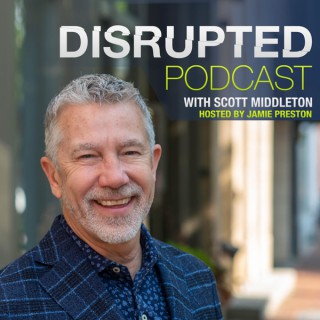
What if the patient you discharged three years ago is still costing you money today? In this episode of The Disrupted Podcast, Scott Middleton pulls back the curtain on the mechanics of value-based care most providers never see — and the merger bringing it all into focus. With the July 15th closing date approaching, Scott walks through what the merger of Your Health with TCPA and Providence Care actually means on the ground: new contracts, new provider numbers, a reimbursement model built on RAF scores and revenue rather than guesswork, and a technology stack — from the Clini app to QR-coded patient wristbands — designed to capture what was previously left on the table. In this episode: Why patient attribution under value-based contracts follows you for years — and what hospice discharges are really costing the organization How the new bonus structure ties pay to billing, RAF scores, and quality measures (and why you can never be paid to put someone on hospice) The difference between care management, facilitated visits, and what providers have been under-billing all along How skilled nursing facilities became the highest-leverage opportunity in the entire model Why advanced care plans aren't just clinical — they're a 30% income increase hiding in plain sight If you've ever wondered why the "why" behind a process matters more than the process itself, this episode is the answer. Press play. www.YourHealth.Org

Hour 2 begins with Gene on the Rochester Red Wings. Could Rex Ryan be back in Buffalo or NFL? Gene shoots on FIFA World Cup soccer news. Plus Terrible Time Timmy's Terrible Take.

What a week for the Minnesota Gophers! Both Mark Coyle and Dawn Plitzuweit have new contract extensions. The Gophers have finally scheduled games with St. Thomas in both men's and woman's basketball. Williams Arena, at least by name, is no more. Welcome to “The Barn by Blue Cross and Blue Shield of Minnesota”. Ross Brendel and Manny Hill are back for Gophers 101!See Privacy Policy at https://art19.com/privacy and California Privacy Notice at https://art19.com/privacy#do-not-sell-my-info.

Vent Line on SKOR North - for Vikings and Minnesota sports fans
What a week for the Minnesota Gophers! Both Mark Coyle and Dawn Plitzuweit have new contract extensions. The Gophers have finally scheduled games with St. Thomas in both men's and woman's basketball. Williams Arena, at least by name, is no more. Welcome to “The Barn by Blue Cross and Blue Shield of Minnesota”. Ross Brendel and Manny Hill are back for Gophers 101!See Privacy Policy at https://art19.com/privacy and California Privacy Notice at https://art19.com/privacy#do-not-sell-my-info.

Michigan Medicine, Blue Cross reach insurance coverage deal Short-term rental disputes could reshape Michigan housing, tourism Capital gains tax hit could shock more home sellers in Michigan

In this episode, we explore how Blue Cross Blue Shield of Michigan is partnering with major health systems and providers to transform the way health care is delivered and paid for in Michigan. By working collaboratively with Corewell Health, Henry Ford Health, and a broad network of providers, Blue Cross is shifting away from the traditional fee-for-service model—which pays for the volume of care provided—and moving toward value-based care that rewards better patient outcomes. This approach aims to improve the quality of care, reduce unnecessary or duplicative services, and make health care more affordable in the long run. Achieving true affordability requires close alignment and cooperation not only between insurers and providers, but also with employers who share in the goal of accessible, high-quality care for all.Guests:Tricia KeithBrian PetersRob CasalouTina Freese DeckerTodd Van Tol
On today's episode of the America's Work Force Union Podcast, we are covering a massive amount of ground—from the halls of the Ohio Statehouse to the structural healthcare barriers facing union moms across the country. Segment 1: Ohio Labor Under Fire with Melissa Cropper Melissa Cropper, President of the Ohio Federation of Teachers (OFT) and Secretary-Treasurer of the Ohio AFL-CIO, joins the show to unpack three simultaneous attacks on Ohio workers and the democratic process: The Midnight Pension Raid: How a 1 a.m. budget amendment stripped elected educators of control over the State Teachers Retirement System (STRS) board, and the legal battle (plus House Bill 719) fighting to reverse it. HB 698 & Higher Ed Restrictions: How this compliance mechanism is weaponizing state funding to restrict collective bargaining and aggressively police DEI roles. Union Busting in the Stacks: A look at the Columbus Metropolitan Library administration's aggressive anti-union campaign ahead of a critical mid-June election—and details on the June 7 community rally at Franklin Park. Segment 2: Breaking the Silence on Perinatal Mental Health For Mental Health Awareness Month, we sit down with Merrilee Logue, Executive Director of the Blue Cross and Blue Shield's National Labor Office, and Arin McClune, Clinical Quality Senior Program Manager with the Blue Cross Blue Shield Association National, to tackle the leading cause of pregnancy-related deaths in America: maternal mental health disorders. The Stark Reality: Up to 20% of women experience these disorders, yet fewer than 20% are ever screened. The Racial Equity Gap: Why women of color are twice as likely to suffer from maternal mental health challenges but only half as likely to receive care. The Union Solution: With 68% of mothers with young children in the workforce, find out how labor leaders can advocate for remote work, flexible scheduling, and integrated mental health benefits to build a culture of solidarity and support. Go Behind the Scenes of the Labor Movement: Every victory starts with workers standing together. Subscribe to the America's Work Force Union Podcast to get the latest interviews with the leaders, organizers, and advocates building true worker power. If you or someone you know is struggling with mental health or in crisis, help is available. Call or text 988 to reach the Suicide & Crisis Lifeline.

The California governor 2026 race is the most crowded gubernatorial primary in state history, and most of the candidates getting the airtime are the ones writing the biggest checks. On this episode of Purple Political Breakdown, host Radell Lewis sits down with Reza Safarnejad, an independent (No Party Preference) candidate for governor of California whose ballot designation is Small Business Owner and whose path into politics started the day the Palisades fire burned his entire neighborhood to ashes. Reza is not a career politician, but he is also not new to how government works. He is an immigrant, a working family man, and a University of Maryland graduate who spent twenty years in leadership roles on large scale federal, state, and local government programs before running for office. From 2006 to 2014 he worked at the National Institutes of Health on national level programs, including the National Cancer Institute's cancer.gov platform that helps doctors and patients find the best treatment options, and large scale virus and genomic research collaboration systems. Since 2014 he has worked in criminal forensics with crime labs and crime scene units across the country (including with the Ohio State Crime Labs), building unbiased, transparent platforms that serve victims and the wrongly accused. He is also the author of the book Veiled Souls and has written and spoken widely on civic issues. After the Palisades fire, Reza spent a year trying to work through California's local and state politicians and help new candidates, and what he found was systemic corruption baked into the party system itself. That is what pushed him from advocate to candidate. In this conversation we cover: the affordability squeeze on working California families, the homelessness factory that no amount of spending seems to fix, the billionaire tax loopholes that quietly hand sixty five percent Airbnb write-offs to the wealthy while regular Californians pay the bill, and the monopolies (Uber, Kroger and Albertsons, PG&E, Blue Cross, DoorDash, the pharma bros pushing ketamine and fentanyl) that he says are draining the state. We get into the Gavin Newsom critique without it becoming a Newsom episode, push back on the framing of the so-called billionaires' tax that excludes real estate moguls and Wall Street, dig into the Palisades fire accountability question, and talk through what California can actually do to push back when a Trump administration starts pulling federal funding and sending in the National Guard. This is a long-form, fact-checking, solutions-focused conversation with one of the lower-name candidates on the June 2 primary ballot. Whether Reza Safarnejad ends up in your top two or not, the conversation maps the issues every California voter should be testing every gubernatorial candidate against: affordability, monopoly power, homelessness, drug enforcement, tax fairness, and what it actually takes to be a governor for the people instead of the donors. Topics covered: California governor 2026 primary, independent candidate California, Palisades fire accountability, California affordability crisis, breaking up monopolies, California wealth tax, billionaire tax loopholes, Airbnb tax write-offs, California homelessness crisis, drug enforcement and marijuana legalization, federal funding fights, Newsom legacy, June 2 primary preview. Visit purplepoliticalbreakdown.com for episode notes, position statements, and the Research on a Dime archive. Subscribe, rate five stars, and share with a friend who's tired of toxic politics and ready for political solutions without political bias.Standard Resource Links & RecommendationsThe following organizations and platforms represent valuable resources for balanced political discourse and democratic participation: PODCAST NETWORKCheck Out the Podcast Website: www.purplepoliticalbreakdown.comALIVE Podcast Network - Check out the ALIVE Network where you can catch a lot of great podcasts like my own, led by amazing Black voices. Link: https://alivepodcastnetwork.com/ CONVERSATION PLATFORMSHeadOn - A platform for contentious yet productive conversations. It's a place for hosted and unguided conversations where you can grow a following and enhance your conversations with AI features. Link: https://app.headon.ai/Living Room Conversations - Building bridges through meaningful dialogue across political divides. Link: https://livingroomconversations.org/ UNITY MOVEMENTSUs United - A movement for unity that challenges Americans to step out of their bubbles and connect across differences. Take the Unity Pledge, join monthly "30 For US" conversation calls, wear purple (the color of unity), and participate in National Unity Day every second Saturday in December. Their programs include the Sheriff Unity Network and Unity Seats at sports events, proving that shared values are stronger than our differences. Link: https://www.us-united.org/ BALANCED NEWS & INFORMATIONOtherWeb - An AI-based platform that filters news without paywalls, clickbait, or junk, helping you access diverse, unbiased content. Link: https://otherweb.com/ VOTING REFORM & DEMOCRACYEqual Vote Coalition & STAR Voting - Advocating for voting methods that ensure every vote counts equally, eliminating wasted votes and strategic voting. Link: https://www.equal.vote/starFuture is Now Coalition (FiNC) - A grassroots movement working to restore democracy through transparency, accountability, and innovative technology while empowering citizens and transforming American political discourse. Link: https://futureis.org/ POLITICAL ENGAGEMENTIndependent Center - Resources for independent political thinking and civic engagement. Link: https://www.independentcenter.org/ GET DAILY NEWSText 844-406-INFO (844-406-4636) with code "purple" to receive quick, unbiased, factual news delivered to your phone every morning via Informed (https://informed.now)Check Out the Unfuck America Tour & National Ground Game: https://www.nationalgroundgame.com/Check Out the CIVICS App to Know More About Your Politicians: https://www.civicpolitics.com ALL LINKShttps://linktr.ee/purplepoliticalbreakdownThe Purple Political Breakdown is committed to fostering productive political dialogue that transcends partisan divides. We believe in the power of conversation, balanced information, and democratic participation to build a stronger society. Our mission: "Political solutions without political bias."Subscribe, rate, and share if you believe in purple politics - where we find common ground in the middle! Also if you want to be apart of the community and the conversation make sure to Join the Discord: https://discord.gg/ptPAsZtHC9
In this episode, Dr. Tunde Sotunde, President and CEO of Blue Cross and Blue Shield of North Carolina & CuraCor Solutions, discusses the drivers of rising healthcare costs, the importance of value-based care and whole-person health, and how innovative programs and partnerships are improving access, affordability, and outcomes across the state.

367: Activate Good - Leading with Fearlessness and Purpose (Marjorie Maas)Episode SummaryNonprofit leaders carry the weight of the next grant, the next major gift, the next board meeting - and that constant worry doesn't make the work more productive, it just makes it heavier. In Episode #367, Patton talks with Marjorie Maas, CEO of Share Good, based in Omaha, NE, about what it actually looks like to lead with fearlessness when stakes are high and resources are tight. Marjorie leads a national technology and community-building nonprofit that helps cities position generosity in one place - now active in nine markets from Charlotte to Detroit to Omaha and beyond - and she shares the mindset shifts that have shaped both her organization's growth and her own “patchwork quilt” career path. She unpacks the difference between scarcity thinking and an abundance mindset rooted in logical thinking rather than blind faith, why emerging leaders shouldn't talk themselves out of their passion, and why governance fluency is something professionals should be building early — not waiting for an executive seat to learn. Listeners will walk away with a practical framework for leading through uncertainty, language for coaching the next generation of nonprofit professionals, and a clearer sense of how to keep moving forward when fear shows up.About MarjorieMarjorie Maas is the CEO of Share Good, a national technology and community-building nonprofit that connects passion to action in hyperlocal communities by giving nonprofits a shared megaphone to tell donors and volunteers what they need. She leads the growth and expansion of Share Good's national footprint and supports the SHARE Family of community partners across the country. Before joining Share Good in December 2022, Marjorie launched and directed SHARE Omaha, building a platform that promotes more than 700 nonprofits across the Greater Omaha and Council Bluffs metro, and earlier created and implemented the corporate social responsibility strategy for Blue Cross and Blue Shield of Nebraska, redesigning their corporate giving and volunteerism programs. Her 20-plus-year career spans arts marketing, statewide grantmaking, and CSR — a winding path she calls a “patchwork quilt” and credits as the very thing that prepared her for the work she does now.ResourcesConnect with Marjorie on LinkedInLearn more about Share Good at ShareGoodUSA.org — visit the About Us page for community case studies and video testimonialsConcept referenced: Ikigai — the Japanese framework for the overlap of mission, vocation, profession, and passionBook recommendation: The Dip by Seth Godin — a quick, essential read on knowing when to push through a setback and when to walk awayAlso mentioned: Mindset by Carol Dweck (Patton's reference on growth vs. fixed mindset)Follow Your Path to Nonprofit Leadership — and please leave a review!Learn more about the leadership resources at Armstrong McGuire — ArmstrongMcGuire.com
In this episode, Dr. Tunde Sotunde, President and CEO of Blue Cross and Blue Shield of North Carolina & CuraCor Solutions, discusses the drivers of rising healthcare costs, the importance of value-based care and whole-person health, and how innovative programs and partnerships are improving access, affordability, and outcomes across the state.

This hour we're going to be talking with Beth Roberts, the CEO of Vermont's largest private insurance company, Blue Cross Blue Shield of Vermont. This is a rebroadcast of a show from early February. We wanted to replay it in light of some updates.Last month, BlueCross reported a net operating gain of 53 million dollars in 2025. This is significant because it's the first time in 2020 that the company did not lose money. Blue Cross has more than 200,000 members. That means about a third of Vermonters rely on the nonprofit company for health insurance. Blue Cross's tenuous financial state had a lot of ripple effects. The Green Mountain Care Board aggressively cut hospital budgets. State lawmakers capped certain prices. All of this was with the goal of limiting the cost of health care. Because Blue Cross said, we're not going to be able to cover all these claims.Now, the company says it's on a path to financial recovery. It's even been able to pay off a 30 million dollar loan it took out last year from its affiliate, Blue Cross Blue Shield of Michigan.

What if the healthcare system your loved one relies on doesn't even know they need help until it's too late — and what would it look like if it did? In this Q1 2026 episode, Jamie Preston sits down with Matt Staub, CEO of Your Health, for a candid and wide-ranging look at how one of the country's largest home-based care providers is navigating the evolving landscape of value-based care, population health, and the human experience at the center of it all. Matt brings his characteristic clarity and heart to a conversation that is equal parts strategy, story, and honest reckoning with what the system still gets wrong. Key topics covered: Why 11% of patients account for 67% of all healthcare spending — and why most of them don't know they're in an ACO The evolution of value-based care: from quality-over-cost to outcomes + patient experience over total costs How Your Health is becoming proactive — not reactive — about falls, readmissions, and high-needs patients The quiet crisis of patient trust: down from 71% in 2020 to just 33% today, and what the correlation means for hospitalizations Real stories: a 79-year-old patient who went from barely existing to living fully — and Matt's own mom, who hasn't fallen since leaving the hospital after her stroke If you work in healthcare, advocate for someone in the system, or simply believe that better is possible — this episode will change the way you see what care can be.

This episode opens with Daniel and Adam in their characteristic loosely-structured warm-up mode — microphone technique, drive-thru misgendering, and the mechanics of speaking in a low voice — before pivoting to Daniel's running update. With the Walt Disney World Springtime Surprise 10-miler two weeks out, he recaps a disrupted training week: a rainy, post-birthday Sunday led to a schedule shift (Monday/Wednesday/Friday instead of the usual Sunday anchor run), costing him his long run. He now owes himself an 8-miler and a 9-miler on back-to-back Sundays, with Adam's upcoming Florida visit landing squarely in the middle of that ramp-up.The lion's share of the episode is Daniel's birthday recap, and it's dense with Disney granularity. The evening moved from the Enchanted Rose lounge at the Grand Floridian, to a standout dinner at Citrico's (filet, rare, Cabernet demiglace, a non-committal Canadian waitress, and a woman whose perfume forced Darwin out of the dining room entirely), to a prime Main Street viewing of Happily Ever After. Daniel catalogues the fireworks show's 3D shaped pyrotechnics with the fluency of a man who has seen it "a thousand million times." The night capped with a minor maritime adventure: a young cast member had to dock a free-floating ferry in choppy, wind-driven conditions, missed on the first attempt, nailed it on the second, and received a full-boat standing ovation. Adam's contribution to the birthday segment is that he spent the same weekend navigating a three-call odyssey through Blue Cross to pay $20 for new health insurance he obtained through healthcare.gov — a saga involving wrong department routing, an unhelpful Walmart insurance rep, and a voice IVR he openly argued with.The back half of the episode covers two pop culture tangents. First, Jeopardy: Daniel watched a YouTube-only celebrity episode featuring Rebecca Black, Monet X Change, and comedian/Dungeon Master Brendan Lee Mulligan, whom Daniel evangelizes with obvious enthusiasm. Mulligan missed Final Jeopardy and still won by $6,000. This detours into both hosts airing their longstanding grievances with Wheel of Fortune strategy (vowel buyers, puzzle solvers who won't commit letters). Second, a listener phone call from Tony in Illinois delivers a Little Rascals/Buckwheat "dictate" joke, which prompts a good-faith but inconclusive on-air debate about whether the joke is racist. The episode closes with logistics: no show next week (Adam is in Florida), a possible Level 13 bonus drop during the visit, and the race weekend show returning the Friday after.Email: Contact@MixMinusPodcast.comVoice/SMS: 707-613-3284

Doc Reed has worn many hats in his time as a business owner. From being one of the founders of HUK adn NOMAD hunting and fishing apparel, where he took these brands to more than $50 million in sales in just four years, to to being an auditor for Blue Cross and Blue Shield to his current venture as president of Marsh Hen Mill out of Edisto Island, SC. Marsh Hen Mill is revitalizing the old trade of stone ground grits and heirloom rice in the low country of South Carolina. Doc shares with us the challenges of the appareal business and his transition into Marsh Hen Mill as President. He goes on to share how his faith has been instrimental to his companies and their success.
Crain's contributing reporter Jon Asplund joins host Amy Guth to discuss the latest local health care news, including Baxter's new CEO getting a cool $29.8 million pay package in 2025, eight Chicago-area hospitals that could soon exit Blue Cross's network and local surgical center rankings. Plus: FAA seeks deeper-than-expected flight cuts at O'Hare, federal railroad agency eyes HQ move to LaSalle Street, Signature Bank acquired by New York-based Esquire for $348.4 million and Morningstar inks $5M tech partnership with U of I to secure talent pipeline. Hosted by Simplecast, an AdsWizz company. See pcm.adswizz.com for information about our collection and use of personal data for advertising.

Episode Topic: Bridging Gaps, Empowering CommunitiesAI holds immense promise, yet Ketan Paranjape warns the “last mile” remains a formidable barrier. From rural Indiana to India, infrastructure gaps and cultural nuances challenge the scalability of digital health. Explore how we can bridge this divide by prioritizing human kinship and ethical innovation over mere algorithmic speed. Featured Speakers:Dr. Ketan Paranjape, Bioscope AIBukata Hayes, Blue Cross and Blue Shield of MinnesotaEmily Ho, NorthwesternErwin Tan, AARPShelley Kendrick '10 MNA, EcumenRead this episode's recap over on the University of Notre Dame's open online learning community platform, ThinkND: https://go.nd.edu/418575.This podcast is a part of the ThinkND Series titled The Rural Health Revolution. Thanks for listening! The ThinkND Podcast is brought to you by ThinkND, the University of Notre Dame's online learning community. We connect you with videos, podcasts, articles, courses, and other resources to inspire minds and spark conversations on topics that matter to you — everything from faith and politics, to science, technology, and your career. Learn more about ThinkND and register for upcoming live events at think.nd.edu. Join our LinkedIn community for updates, episode clips, and more.
March 11, 2026 ~ Chris Renwick and Lloyd Jackson spoke with Jamie Edmonds and Luanne Thomas-Ewald, COO of Michigan Medicine's Ann Arbor Hospitals, about ongoing contract negotiations between Michigan Medicine and Blue Cross Blue Shield of Michigan. Hosted by Simplecast, an AdsWizz company. See https://pcm.adswizz.com for information about our collection and use of personal data for advertising.

Today's guest is Carey Smith, Former President and CIO of XcelerateHealth and Chief Technology Innovation Officer (CTIO) of Blue Cross and Blue Shield of Minnesota. XcelerateHealth is a health-tech startup and business unit of Blue Cross and Blue Shield of Minnesota, focused on AI-driven digital products to transform healthcare insurance experiences. Carey joins Emerj's Nick Gertsch to discuss how leaders can structure talent and workforce AI so decisions are consistent, reviewable, and aligned with organizational controls. Smith also shares practical steps for tightening decision rights, improving data readiness, and designing workflows where AI accelerates hiring and mobility without increasing risk. This episode is sponsored by Eightfold AI. Learn how brands work with Emerj and other Emerj Media options at go.emerj.com/partner Want to share your AI adoption story with executive peers? Click emerj.com/expert for more information and to be a potential future guest on the 'AI in Business' podcast!
Blue Cross, Michigan Medicine dispute puts 300K patients in limbo $6,000 senior tax deduction for federal returns has plenty of rules Off-grid Yooper runs hidden hot dog stand in the woods

Oral Arguments for the Court of Appeals for the Federal Circuit
Blue Cross and Blue Shield of Kansas City Welfare v. United States

As the opening of my podcast informs you, I do not live in Minneapolis, but across the country in Sonoma County, CA. I've been thinking a lot about voices lately. Not the loud ones. Not the ones on cable news. The steady ones. The voice that explains something complicated and suddenly you can breathe again. The voice on stage that reminds you who you are. The voice that says, "You're not alone." For almost forty years, Teri Parker Brown has been that voice in Minneapolis. She's stood on the stages of Chanhassen, The Ordway Center for the Performing Arts, and History Theatre in Saint Paul. She's narrated for Blue Cross,American Express, 3M and many other name brands. She's guided people through healthcare modules, commercials, and stories. Her voice is described as warm. Smart. Inviting. Like a best friend. And yet… she lives in Minneapolis; a place that has known beauty — and tension. Community — and conflict. Immigration enforcement activity has increased and as a result, protests fill the streets. But today isn't about headlines. It's about what it feels like to love a place —and stay with it when things feel complicated. With deep respect, I'll be speaking with Teri about her career and what happens when the place that shaped your voice becomes unsettled and uncertain? It's also my chance to meet a fellow Door Builder in the Building Doors VO campaign. Created by fellow voiceactor, Christy Harst, Building Doors advocates for equal opportunities in the voice-over industry, for both men and women, the campaign aims to foster industry-wide equity. Following is list of organizations who are doing grassroots work to help the residents of Minnesota that are in need of legal aid and other assistance: Immigrant Law Center of Minnesota: https://www.ilcm.org/ LaVina church https://iglesiavina.org/ Legal Aid Minnesota https://mylegalaid.org/ Second Harvest Heartland: https://secure.2harvest.org/ Stand with Minnesota: https://www.standwithminnesota.com/ The Open Door Pantry: https://theopendoorpantry.org/ Book that Teri referenced during our interview: The Neutrality Trap by Jaqueline Font-Guzman If you enjoyed this episode, make sure to follow 19 Stories wherever you listen to your favorite podcasts. It would be greatly appreciated if you gave a nice review and shared this episode well :-) To give feedback or a story idea: 19stories@soundsatchelstudios.com To listen to my demos: https://www.cherylholling.com/ To contact me for voiceover work, or to host your podcast, reach out to me at: cheryl@cherylholling.com Follow me on Instagram: @cherylhollingvo Theme Song Credit: 'Together' by For King & Country Outro song excerpt: 'Let's Go Crazy' by Prince and the Revolution © 1984 All Rights Reserved Proverbs 23:18 "Surely there is a future, and your Hope will not be cut off."

In Episode 54 of Supervision Simplified, Dr. Amy Parks speaks with Arizona group practice owner and supervisor Brianna Reinhold about what happens when insurance companies begin reshaping clinical authority, supervision structures, and access to care.After being placed under investigation by Blue Cross, Brianna shares how shifting associate billing policies, supervision restrictions, and audit pressures are impacting rural access, training pipelines, and ethical leadership in private practice. Together, they explore what this moment means for supervisors, practice owners, and the future of mental health care.This conversation goes beyond billing challenges. It asks a bigger question: Who gets to define quality care — clinicians or insurance companies?If you supervise, lead, or work within an insurance-based system, this episode will give you language for what many in the field are feeling — and practical insight into what may come next.Sponsor: Clinical Supervision Directory www.clinicalsupervisiondirectory.comGuest: Brianna Reinhold, LPC www.northernlightstherapyaz.com

In this episode of The Pet Loss Journals, I'm joined by Diane James, Head of People's Services including Pet Loss Support at Blue Cross UK, for a deeply moving and honest conversation about pet loss and anticipatory grief. Diane shares personal stories about Ron the guinea pig and Chester the dog, including creating a bucket list and memory box, and we talk about how veterinary and after-death care for pets has evolved over the years. We also explore the ongoing frustration around how poorly pet loss is still understood in workplaces, often leaving people feeling they have to lie to take time off, as well as the increasing need for Blue Cross pet food banks and the importance of pet loss education for anyone working with animals. Blue Cross offers free, compassionate pet loss support, and you can find help and listen for support here: https://www.bluecross.org.uk/pet-loss-supportBuy my Book The Pet Loss Journals (UK) https://amzn.eu/d/gt1T2sjBuy my Book The Pet Loss Journals (US) https://a.co/d/b8URs3GJournal Prompts: FREE Journal Prompts Guide Website: https://www.lightafterloss.ie/E-mail: info@lightafterloss.ie Instagram: _lightafterlossJoin my Patreon Here for Bonus Episodes If you haven't yet, please consider leaving a 5 star rating or a review for this episode if you enjoyed it!Louise x

Oral Arguments for the Court of Appeals for the Seventh Circuit
C.B. v. Blue Cross and Blue Shield of

Whoo BOY! This week's episode is packed with info and stats. How did the US healthcare system get so expensive and complicated? Is it still better than some form of universal care? Throwing a lot of history and stats at you today, and comparing our model to the healthcare models of some other countries to show that there are other ways. Ways far cheaper for the average citizen that work as well as ours. So... why don't we change? Merch and more: www.badmagicproductions.com Timesuck Discord! https://discord.gg/tqzH89vWant to join the Cult of the Curious PrivateFacebook Group? Go directly to Facebook and search for "Cult of the Curious" to locate whatever happens to be our most current page :)For all merch-related questions/problems: store@badmagicproductions.com (copy and paste)Please rate and subscribe on Apple Podcasts and elsewhere and follow the suck on social media!! @timesuckpodcast on IG and http://www.facebook.com/timesuckpodcastWanna become a Space Lizard? Click here: https://www.patreon.com/timesuckpodcast.Sign up through Patreon, and for $5 a month, you get access to the entire Secret Suck catalog (295 episodes) PLUS the entire catalog of Timesuck, AD FREE. You'll also get 20% off of all regular Timesuck merch PLUS access to exclusive Space Lizard merch. Hosted by Simplecast, an AdsWizz company. See pcm.adswizz.com for information about our collection and use of personal data for advertising.

On this episode host Fred Goldstein invites Janna Evans, Director of Pharmacy Sales Support at Blue Cross and Blue Shield of Texas, as they continue their rare disease series with a focus on hemophilia and the substantial clinical, financial, and psychosocial burdens it places on patients and families. We discuss how health plans manage high-cost therapies, balance individualized patient needs with access requirements, and navigate prior authorization and step-therapy processes. Janna also highlights the need for better patient-reported outcomes, the day-to-day impact of the disease, and the broader considerations for employers and caregivers within managed care. This activity is supported by an independent medical education grant from Genentech Inc., and Pfizer Inc. AMCP offers CPE for this podcast through December 31, 2026. For additional information and to claim credit, please visit: The Power of Partnership: Bridging Patients and Payers in Hemophilia Management. Find all of our network podcasts on your favorite podcast platforms and be sure to subscribe and like us. Learn more at www.healthcarenowradio.com/listen/

Healthcare premiums keep rising, but plan quality often stays the same (or gets worse). In this conversation, Shaun Enders sits down with Donovan Pyle—CEO of Health Compass and author of Fixing Healthcare—to unpack why the employer-sponsored healthcare market functions the way it does. Donovan explains the "hidden supply chain" behind your healthcare spend, why broker incentives often conflict with employer outcomes, and how CEOs can start reclaiming wasted dollars by getting unbiased, fiduciary-aligned guidance and improving visibility into unit pricing. Key Topics Covered Why employer healthcare spend feels unstoppable, and why that belief is "trained" The healthcare supply chain and how lack of transparency drives waste How brokers were historically designed to function (and why incentives matter) Why networks can hide prices and distort the price/quality relationship The "discount off infinity" problem behind EOBs (Explanation of Benefits) Regulatory capture and why some states limit small-business options Certificate of Need ("CON") laws and how they restrict competition The shift toward fiduciary models (similar to what happened in retirement plans) Practical steps for CEOs: visibility, vendor stack, and unbiased advisory support Chapters / Timestamps (YouTube-style) 00:01 – Welcome + why this topic matters to Shaun (20 years of premium increases) 01:17 – The big numbers: employer-sponsored coverage, $1.3T spend, and the "waste" claim 02:03 – Why finance/HR teams aren't set up to understand healthcare procurement 03:54 – The broker dilemma: "the only voice you have" vs. conflicts of interest 05:29 – Why Donovan focuses on the employer-sponsored market (not Medicare/Medicaid) 07:27 – The origin story: the first U.S. insurance plan (1929) and what became Blue Cross 09:26 – Brokers as "retail distribution" and why costs rising helps the sell-side 11:59 – ACA, cost-plus dynamics, and why vertical integration changed the game 14:52 – Reframing healthcare: not one line item—a supply chain 16:31 – Shaun's parallel: higher education costs and "cracks in the veneer" 19:14 – The strategy universe expands once you get unbiased advice 21:21 – Cash pricing: why individuals sometimes get better pricing than big insurers 23:34 – Shaun's billing experience: allowed vs billed, even in integrated systems 25:35 – EOBs as marketing: "Island Speak" and the illusion of savings 29:40 – Small business reality in CA/NY/WA: limited options and why 34:50 – Certificate of Need ("CON") laws: regulating supply and blocking competition 42:07 – ACA subsidies: what's expiring and what the market may revert to 46:31 – The most practical step: get unbiased, fiduciary-aligned advice 51:16 – Parallels to financial services: commissions → fee-based fiduciary models 57:14 – Real example: PBM RFP leading to multi-million-dollar savings 59:18 – Bringing it back to purpose: time, meaning, and what drives Donovan 01:05:29 – Where to find Donovan + free executive summary roadmap https://assessment.healthcompassconsulting.com/tba Watch on YouTube: https://youtu.be/9vEdj0XBOyI Connect with Shaun: www.CallTSG.com www.BusinessFinanceAndSoul.com https://www.linkedin.com/in/shaunenders/ People / Organizations Mentioned Donovan Pyle – CEO, Health Compass; author of Fixing Healthcare Validation Institute – referenced as a place to find fiduciary-based firms RAND Corporation (2021 study referenced) – cash pricing / employer pricing dynamics David Goldhill – author of Catastrophic Care (chapter: "Island Speak") Harris Rosen – Rosen Hotels (Orlando), example of long-term employer healthcare strategy Resources Mentioned Free executive summary + roadmap: FixingHealthcare.com Book: Fixing Healthcare (Donovan Pyle) Book: Catastrophic Care (David Goldhill) Disclaimer This episode discusses healthcare financing and benefits strategy from an employer perspective. It is not medical, legal, or financial advice.
The SEANC View podcast addresses listener questions on state employee and retiree concerns, including the absent budget, the loss of retirement health insurance for hires after 2021, early December pay changes, and the $3.3 billion surplus. We discuss staffing and retention issues, why COLAs aren't being issued despite strong investment returns, the role of EMPAC endorsements, Aetna vs. Blue Cross transitions, and potential future coverage for GLP-1 drugs. Plus: a light-hearted round on favorite Christmas songs.
www.DogCastRadio.comDr Paul Manktelow, Chief Vet at national pet charity Blue Cross, has the advice you need to keep your dog happy and healthy at Christmas. With guests coming and going, food and drink posing hazards to dogs, decorations just asking to be chewed, and us all distracted by having fun, it's easy for things to go wrong. But there are easy steps you can take to protect your pets.
Dallas real estate CEO Robert “Bob” Lovell was ordered this week to pay $5.7 million in damages and fees after a judge determined he repeatedly forced a former employee to perform sex acts and then retaliated against her when she refused. In other news, some Texans are finding out from their doctor's offices that Blue Cross and Blue Shield of Texas insurance plan would no longer be considered in-network; the Texas Rangers are not interested in trading Corey Seager. The Red Sox, Yankees, and Braves have all expressed interest though; and for years, officials at the highest level of Dallas city government knew crime was a problem at Roseland, a public housing complex in Old East Dallas. In twenty eighteen, the city entered into a special agreement with Dallas Housing Authority to keep crime in check. That arrangement was different from what was at the time a new, aggressive plan to protect the public at high-crime private properties. Police reports show that since the agreement was signed, at least seven people have been killed at Roseland, including a nine-year-old girl. Twenty others were wounded by gunfire. A Dallas Morning News investigation shows that over the following seven years, the agreement was never fully followed, and the violent crime at Roseland persisted. The News found numerous ways in which D-H-A and the city fell short in addressing crime and protecting residents, including failures to follow their own agreement. See the full investigation dallasnews.com. Learn more about your ad choices. Visit podcastchoices.com/adchoices

The Matt McNeil Show - AM950 The Progressive Voice of Minnesota
Today’s not a good day for Republicans; Tennessee special election; Jeff Stein joins the show for his weekly appearance; Mike Lindell officially running for governor; other new candidates for governor; Blue Cross dropping Sliver Sneakers program;
The Matt McNeil Show - AM950 The Progressive Voice of Minnesota
Woman thought to be dead wakes up right before scheduled cremation; Trump administration escalates against Democrats accused of telling the military not to violate illegal orders; another anti-vaxxer nominated for HHS post; the cruelty of the GOP as we aooriach Thanksgiving; Blue Cross ending gym subsidies for seniors; Patrick Coolican returns; Michael Brodkorb previews the…

Harley Schlanger, a historian and national spokesman with expertise in the financial industry since the 1980s, offers insights through The LaRouche Organization, where followers can access his analyses on geopolitics and economics. The recent government shutdown, orchestrated by Senate Democrats in a bid to extend Obamacare subsidies set to expire, brutally exposed the fragility of their socialist welfare empire, with SNAP benefits for millions of low-income Americans abruptly halted as leverage in the standoff. Critics highlighted how Democrat-controlled states exploit loopholes in the Affordable Care Act to divert federal funds toward healthcare for undocumented immigrants, turning taxpayer dollars into a slush fund for illegal border crossers while insurance giants like Blue Cross rake in billions in subsidies. This cynical tactic, which risked starving families reliant on food stamps just past Election Day, underscored the Ponzi-like nature of these programs, where Democrats prioritized bailing out their failing healthcare scheme over essential services, forcing Republicans to vote repeatedly for full funding that was repeatedly blocked. NATO and EU leaders are accelerating Europe's slide toward direct conflict with Russia through unprecedented military pacts, including France and Britain's coordination of nuclear forces and missile systems, framing the continent as a militarized frontline in a broader anti-Russian strategy. Russian Foreign Minister Sergey Lavrov has accused the alliance of already declaring war via Ukraine proxies, with NATO's creeping expansion into the Arctic and Pacific designed to isolate Moscow and provoke escalation, echoing long-suspected Western plots dating back to 1993 documents advocating offensive operations against Russia using Eastern European buffers. As EU elites dismiss peace talks as "more dangerous than war" and ramp up hybrid defenses against perceived Russian threats, voices warn that this desperation masks internal failures on debt and energy, pushing the bloc into a suicidal confrontation that could doom the continent.

This week on The Modern Customer podcast, Michael Gerrish, Chief Marketing and Experience Officer at Blue Cross Blue Shield of Kansas, shares the strategy that transformed their organization. The key? Aligning Marketing and Experience to accelerate growth. Michael outlines how the unified CMXO role is responsible for making sure the brand's promises match the actual customer experience, driving maximum ROI. The Results: ✅ $120 Million in annual revenue ✅ 93% industry-leading customer retention rate Learn how they achieved this with the "Insights to Action" model, eliminating silos and leveraging AI to simplify complex healthcare needs. Listen to the full episode now! Blake Morgan is a customer experience futurist, keynote speaker, and author of three books on customer experience. Her new book is called The 8 Laws of Customer-Focused Leadership: The New Rules for Building A Business Around Today's Customer. Follow Blake Morgan on LinkedIn For regular updates on customer experience, sign up for her weekly newsletter here.
This episode features Colleen Briggs, President of the Blue Cross NC Foundation and Vice President of Corporate Responsibility at Blue Cross NC. She discusses the Feed Your Health initiative, how food-based interventions are improving outcomes for members with diabetes, and what it takes to move these programs from pilot to sustainable, systemwide solutions.

Football is back. Our 2025 Football Season Opening Show from the Blue Cross, Blue Shield Performance Studio features Bears legend and Score Analyst Olin Kreutz.
© 2020-2026 Ivy Podcast Discovery LLC
