
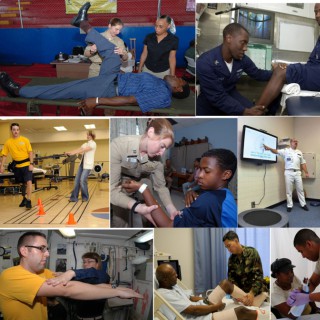
A health profession that aims to address the illnesses or injuries that limit a person's physical abilities to function in everyday life
POPULARITY
Categories

246 episodes with physiotherapists

180 episodes with physiotherapists

168 episodes with physiotherapists

131 episodes with physiotherapists

30 episodes with physiotherapists

30 episodes with physiotherapists

28 episodes with physiotherapists

37 episodes with physiotherapists

26 episodes with physiotherapists

29 episodes with physiotherapists

18 episodes with physiotherapists

33 episodes with physiotherapists

21 episodes with physiotherapists

37 episodes with physiotherapists

14 episodes with physiotherapists

27 episodes with physiotherapists

11 episodes with physiotherapists

13 episodes with physiotherapists

12 episodes with physiotherapists

10 episodes with physiotherapists

22 episodes with physiotherapists

13 episodes with physiotherapists

9 episodes with physiotherapists

9 episodes with physiotherapists

7 episodes with physiotherapists

9 episodes with physiotherapists

16 episodes with physiotherapists

12 episodes with physiotherapists

9 episodes with physiotherapists

7 episodes with physiotherapists

8 episodes with physiotherapists

8 episodes with physiotherapists

9 episodes with physiotherapists

9 episodes with physiotherapists

7 episodes with physiotherapists

11 episodes with physiotherapists

14 episodes with physiotherapists

5 episodes with physiotherapists

4 episodes with physiotherapists

12 episodes with physiotherapists

12 episodes with physiotherapists

6 episodes with physiotherapists

9 episodes with physiotherapists

7 episodes with physiotherapists

4 episodes with physiotherapists

5 episodes with physiotherapists

4 episodes with physiotherapists

3 episodes with physiotherapists

3 episodes with physiotherapists

5 episodes with physiotherapists

5 episodes with physiotherapists

8 episodes with physiotherapists

13 episodes with physiotherapists

4 episodes with physiotherapists

Women's Health Week 2026 is running this week, with a packed programme of events taking place across Clare until October 4th. This year's theme is “Strong at Every Age – Strong Bones, Strong Hearts, Strong Minds”, with activities focusing on physical health, mental wellbeing, nutrition, exercise and healthy ageing. Alan Morrissey was joined by Aideen Coates-Farrell, Physiotherapist from Youtheirapies, and Rachel Akers, World Masters Champion in Hammer Throw. Photo (c) Clare FM
Episode 461: Birth Prep for Physios - What to Ask Your Prenatal ClientsIn today's episode, Anita is talking to physiotherapists who work with pregnant clients, or want to, and are ready to make their assessments more efficient and confident by asking the right questions from day one. Starting the birth prep conversation early, right from that very first session, sets you up with huge insight into how to support your client's birth prep, wherever they are in their pregnancy._________________________________________________________________________________________________________________If you liked this episode of To Birth and Beyond, tell your friends! Find us on iTunes and Spotify to rate/review/subscribe to the show.Want more? Visit www.ToBirthAndBeyond.com, join our Facebook group (To Birth and Beyond Podcast), and follow us on Instagram @tobirthandbeyondpodcast! Thanks for listening and joining the conversation!_________________________________________________________________________________________________________________Resources and ReferencesAnita's 1:1 virtual mentorship for physiotherapistsLabour and Birth Preparation for Clinical Practice — Live Online Course co-taught by AnitaClinic Birth Prep Resource Package for Physiotherapists to use with ClientsShow Notes 00:00 - Anita introduces us to today's topic!02:13 - Questions to ask if your client has given birth before (birth history)04:55 - Questions to ask everyone exploring their awareness around birth, and where they are in their birth prep journey, this time (birth prep)08:37 - Questions to ask about birth preferences (birth preferences)12:50 - Clearly explain your own role in the birth prep of your clients, and all the things you can do if they choose14:27 - Share physical and mental prep around the client birthing goals17:10 - Birthing partner preparation!18:54 - Where does all of this fit in the overall assessment?19:39 - Anita summarizes and wraps up the episode (with a couple of offers)

Crying After Stroke: What Bobby Chaggar’s Recovery Taught Him About Grief and Strength The night his stroke happened, Ramandeep “Bobby” Chaggar didn’t feel what he expected to feel. No pins and needles. No dramatic collapse. Just a left arm that wouldn’t answer him anymore. He limped to the kitchen anyway, poured a glass of water, and brought one back for his wife because that’s what you do, even when your body has just stopped taking instructions from half of itself. It wasn’t until the ambulance service ran him through the BFAST test over the phone that the word “stroke” entered the room. A right ischaemic pontine stroke, in December 2023. He was, by his own account, in the best health of his life at the time: no blood pressure issues, no diabetes, cycling a hundred kilometres most weekends. Growing Up Believing a Stroke Meant You Were Gone Bobby grew up in an era and a family where a stroke wasn’t something you researched; it was something you heard about secondhand. “That particular cousin’s father’s grandfather had a stroke, and he’s gone,” is how the news used to travel. Nobody around him distinguished a stroke in the brain from a stroke in the heart. There was no internet to check, only the flat, final verdict that passed between relatives: he’s done for. It’s a belief he carried into his own stroke, even as his medical training Bobby spent years as a veterinary surgeon in India before qualifying in Australia told him something else was happening. That veterinary background is exactly why he recognised what was going on in his own body faster than most people would. It didn’t make the belief disappear. It just meant he was fighting it from the inside while everyone around him was still catching up. Why His Arm Seemed to Move Then Stopped In those first disorienting hours, Bobby was convinced his arm had started moving again. He filmed it and sent the video to his sister as proof, he thought, that he was already turning a corner. By morning, the movement was gone. “It was like a bad dream,” he says. “I was like, what was that?” What he was seeing wasn’t recovery. Doctors later explained that in the earliest hours after a stroke, the body can still fire off remnant spinal reflexes old movement patterns held in the spinal cord that can briefly activate on their own, independent of the brain damage that’s actually occurred. It’s a strange, almost cruel mechanism: the body offering a flicker of hope before the real work of recovery has even started. The Physio Who Promised Him He’d Walk Again Bobby spent 45 days in rehabilitation at Parkville, six months in a wheelchair overall, and credits one moment above almost everything else: his first physiotherapist he calls her Hannah sitting on the floor, moving his foot, and telling him he would walk again. It mattered enough that his book was originally going to be titled Walking with Hannah, before privacy considerations changed the plan. His son, who narrates the audiobook, still opens the acknowledgements by thanking her directly. Learning to Cry Again This is the part of Bobby’s story that speaks most directly to what so many stroke survivors go through and rarely say out loud. In his culture, and in his family, showing emotion, especially for the men expected to be providers and caretakers, wasn’t really an option. When his father died in 1997, he was told to be strong for his mother and sister. When his mother died in 2013, he was told the same thing again. “I’ve been told that stroke is a part of grief, and you should not suppress your feelings.” It took his brother-in-law showing up every day to help him with basic care showering, dressing, the things that felt hardest to accept before something shifted. His own psychologist eventually gave him the instruction that reframed everything: put on your own life jacket first, before you try to save anyone else. It’s advice Bobby now extends to every caregiver he talks to: the person supporting a stroke survivor needs their own support too, or they burn out trying to hold everything together. He isn’t alone in this. Bill has spoken openly on the podcast about his own experience with unexpected, involuntary crying after a neurological injury, and how much energy goes into reassuring the people around you that the tears don’t mean something is wrong. For Bobby, permission to cry didn’t erase the culture he was raised in. It just meant he stopped fighting it. A New Normal, On His Own Terms Bobby’s recovery is full of small, deliberate acts of reclaiming identity. He got his first tattoo not long after his stroke, partly, he says, because people notice ink before they notice a limp. He’s spent years slowly making peace with not tying a turban the way he used to, calling himself, with real affection, a recovering “turbanator.” He built his own incline-and-decline walking circuit near his home and quietly upped the difficulty every fortnight, the same instinct that now has him choosing stairs over the lift at the allied health course he’s completing. Running, he says flatly, is overrated. He can’t do it anymore, and he’s decided that’s fine. It’s the same acceptance that let him and his family move to Perth just one month after his stroke, and then move back again when isolation made the recovery harder than the geography ever was. None of it looks like the version of recovery he grew up believing in, the one where a stroke simply meant a story was over. Bobby’s version has a motorbike with a sidecar he now rides himself, a book he wrote one voice note at a time because typing with one hand wasn’t fast enough, and a fairly simple message for anyone who asked him to just think positively: some things are still hard, and that’s allowed to be true at the same time as everything else. If you’re navigating your own recovery or supporting someone who is, Bill’s book, The Unexpected Way That A Stroke Became The Best Thing That Happened (recoveryafterstroke.com/book), walks through ten practical tools for rebuilding after a stroke. And if trauma has made your world feel smaller than it used to be, Bill’s newest book, Your World Doesn’t Have to Stay This Small, is written for exactly that. If this episode helped you, you can support the show directly at patreon.com/recoveryafterstroke. This blog is for informational purposes only and does not constitute medical advice. Please consult your doctor before making any changes to your health or recovery plan. Bobby Chaggar: Learning to Cry After Stroke (Interview) He was taught a stroke meant you were gone. Bobby Chaggar’s story proves otherwise and shows why crying after a stroke is nothing to hide. Highlights: 00:00 Introduction 02:00 Life Before the Stroke 09:28 Rehabilitation Journey 12:00 Crying After Stroke 14:52 Reflections on Recovery and Growth 26:33 The Promise of Recovery and Writing a Book 29:37 Cultural Identity and Personal Beliefs 37:28 Relocation and Its Challenges 41:44 The Importance of Caregiver Self-Care 44:10 Adjusting to a New Normal 51:09 The Journey of Riding Again 57:09 Bobby’s Journey of Unlearning and Grief Transcript: Introduction – Crying after stroke Ramandeep (bobby) chaggar (00:00) I realized that I was having a stroke. because it was not their usual pins and needles and there was no sensation. I couldn’t move my arm. I managed to limp. I went all the way to the kitchen. I trudged a little to the kitchen. I had a glass of water, brought a glass for my wife. in the hospital, I thought my arm started moving. And the doctors, and when I got up in the morning, it was like a bad dream. No, it was not moving again. So I was like, what was that? Bill Gasiamis (00:19) Welcome back to Recovery After Stroke. I’m Bill Gasiamis and today I’m talking with Bobby Chaggar, a veterinary surgeon originally from India, now living in Melbourne, who survived a right ischemic pontain stroke in December 2023. Bobby’s story covers a lot of ground, the cultural belief he grew up with, that a stroke simply meant you were gone. The strange confusion of a spinal reflex that made his arm move before it didn’t. Physiotherapist whose promise changed the course of recovery and what it actually took for him as a man raised to be the strong one to let himself cry. Before we get into it, if trauma has made your world feel smaller than it used to be, my new book, Your World Doesn’t Have to Stay This Small, is exactly what it’s about. Search for it on Amazon or tap the link in the show notes to grab your copy today. And one more thing, this show exists because listeners decide it’s worth keeping going. There’s no other funding behind it. If an episode like this one has ever helped you or helped someone you love, even a few dollars a month on Patreon is what keeps these conversations free for the next person who finds themselves Googling this stuff alone at two in the morning, scared, looking for someone who’s actually been through it. That’s all. patreon.com/recoveryafterstroke.. A small amount every month makes a massive difference. But now let’s get into it. Here’s my conversation with Bobby. Bill Gasiamis (01:56) Bobby Chaggar. Welcome to the podcast. Ramandeep (bobby) chaggar (01:58) Thank you very much. Thank you. Thank you, Bill. Life Before the Stroke Bill Gasiamis (02:00) So you grew up in a house with 22 dogs, three cats and a trilingual parrot as well, right? So what’s the situation there? You’re living with pets. Were you important in your family or Ramandeep (bobby) chaggar (02:10) Ha ha. Bill Gasiamis (02:11) did the animals come first? Ramandeep (bobby) chaggar (02:14) the animals definitely did come first. my mother was also a teacher, but she decided to stay at home and be a stay you know, stay a worker from home mom for for the for the kids. And my parents never used to say no to any patient. So they used to admit everything and anything. And in India also it’s quite common to rehome pets and a lot of times they don’t get proper homes. So we used to say yes to everything. So I I specifically remember this number because my mom had fallen and broken her shoulder once while walking in Labrador. So that day we counted the animals and we said, okay, no, after this, no more. That’s it. And the parrot was trilingual because the kids would play with him, so he wouldn’t know nursery rhymes, he would know the whistles, and then my grandmom’s dialect was Punjabi, so he could he could swear in Punjabi, and he could swear in Hindi because my mom was Hindi. So that’s why trilingual. Bill Gasiamis (03:08) I love that. That’s an awesome way to grow up. Ramandeep (bobby) chaggar (03:09) Yep. Yep, yep. Bill Gasiamis (03:12) Tell me about this bike though. So this Royal Enfield motorbike, what was the deal with that? Why was it coming to Australia? Why was it a big deal on that day? Ramandeep (bobby) chaggar (03:22) it was gifted to me by it was restored and gifted to me by my wife on my fortieth. And this time on my fiftieth, the guy who had restored it, he’s a friend of mine, he decided to build this sidecar and ship it to me. And it’s a vintage, it’s a nineteen seventy three. So I’ve literally grown up on motorcycles, drive riding them, and I was quite excited about the whole thing. And I was so excited because my son’s school was only five minutes away. So I was always looking forward that I’m gonna drop him off in school in the sidecar. It’s gonna be such a big thing for him. So it was quite cool. So that’s the reason we were expecting it. It took almost two months for it to come via ship. And you know, once a ship leaves the country, there’s no way of live tracking it. There they must must be ways for the guys who are doing it, but for the clients, they have no way. They have no clue. They just talk to the customer care. And you have no idea what’s happening. And suddenly one day it just pops up and they say, Yeah, it’s in customs. Here you go and you have to do this, this and this and come and pick it up. So that’s the excitement. Bill Gasiamis (04:23) So you get that phone call and that’s it. You’re on the bikes here. We’re going to go and get it. Ramandeep (bobby) chaggar (04:26) Yep, yep, yep. We were just looking forward for the bike. Yep. Bill Gasiamis (04:29) I love it. In your book, you wrote about your culture that when somebody Ramandeep (bobby) chaggar (04:34) Mm-hmm. Bill Gasiamis (04:35) has a stroke, most people believe that you’re gone, right? And it seems like you also believe that where does a belief like that come from? And what did you do in the first few hours? Ramandeep (bobby) chaggar (04:47) You know the first because it’s it’s it’s not I mean in the era I’ve grown up there was not a lot of internet. They were only encyclopedias. So getting information was a little challenge. So as as kids when we were growing up, we were just here that that particular cousin’s father’s grandfather had a stroke and he’s gone. That particular person’s family member has has had a stroke and he’s done for. So you know a few things like that. But there are families who’ve been through stroke. Now I’ve realized and also met them. So they know stroke one could recover from the stroke and one also forgets about it over time. I’ve heard that. But mostly the thought process was because it was not too kind of a disease. And we also did not know what is a stroke in the heart. Some would someone would say he had a stroke in the heart, someone would say he had a stroke in the brain. So we had no idea what that meant. We could just as kids, as growing up people, we just knew that he had a stroke and he’s done for, he’s gone. That’s one. And because of my medical background, my veterinary background, I realized that I was having a stroke. because it was not their usual pins and needles and there was no sensation. I couldn’t move my arm. I managed to limp. I went all the way to the kitchen. I trudged a little to the kitchen. I had a glass of water, brought a glass for my wife. And I’ve also realized, learnt from doctors here that there are remnant spinal reflexes which work for some time. So those reflexes help you I think, navigate the initial few hours. It’s just that’s how we are made. Because I, you know, in the hospital, I thought my arm started moving. And the doctors, and when I got up in the morning, it was like a bad dream. No, it was not moving again. So I was like, what was that? And I have a video of that. I was sending it to my sister. Look, my arm is started to move. Wow, I’m so happy. So they told me that was just a part of the spinal reflex. So maybe that’s what made me go to the kitchen and back. So we called the Ambos and they did the BFAST test. It was FAST initially, but now the acronym has changed to BFAST. so they did that over the phone and they confirmed it was a stroke. And they were they said they’ll be at my place in two minutes. And then we made the second phone call to my brother in law who works with neurointerventional surgeons all over Australia. He’s also vet by education. So I thought he might be the best person to give me advice. And he always used to share his stories of patients, aneurysms, brain things, strokes. So I thought that, you know, he he will fix me, man. So we called Bill Gasiamis (07:10) Yeah. Ramandeep (bobby) chaggar (07:11) him and he said, Come straight to Royal Melbourne and th that’s where I was. And and the Amus asked me, he they said, Your catchment is northern, but where do you want to go? I said, Please take me to Northern because my brother’s gonna be there. So they drove me to Royal Melbourne and that’s where my journey started. Yep. Bill Gasiamis (07:27) Yeah. My journey started at the Austin hospital, ended up at the Royal Melbourne as well. And I had my surgery there and I learned to walk again at the Royal Melbourne hospital and at their Parkville facility where the rehab was done. Ramandeep (bobby) chaggar (07:42) Yeah, that’s where I was. Yep. Bill Gasiamis (07:43) Yeah, good experience. Really helpful. So you are also a vet. Okay. A surgeon as well. Are all Ramandeep (bobby) chaggar (07:52) Yes. Bill Gasiamis (07:53) vets surgeons? Do they all operate on animals? Ramandeep (bobby) chaggar (07:56) So in primitive times, the veterin surgery education is made around five types of animals, which is a canine, which is dogs, that that species, filine, which is cats, equines, which is horses, bovines, which is cattle, and one animal from wildlife, and one random fish, including birds. So we have to compare them in all aspects. So when we technically pass out, or rather I would say, When we used to technically pass out in those years, we were supposed to take take care of everything surgeries, medicine, prevention for all these species throughout. And obviously it was a it was a big experience learning practically as we went. Because when my father became a vet, my my grandparents were like, I don’t know whether anybody’s gonna get married to him or not. They they got worried. It was looked so down upon though that profession, you know. So he bought clamor to it. He showed everybody that passion. Can happen. It can happen in bed science also. In India. It must be good in other countries, but that’s all I know about India. Only the rich class had the dogs. The Britishers, they’re the people who were connected to the Britishers when they had gone, when they had left the country. Only that rich class was able to afford dogs because you know it was a poor country. So that’s where he started. Yep, yep. Yep. And now you have specializations Bill Gasiamis (09:05) Yeah, understood. Understood. Ramandeep (bobby) chaggar (09:08) on around everything. Now you can be a surgeon, you can be a bone surgeon. There’s a friend of mine, he’s a he’s a animal onko oncologist. So things like that. Yep. Bill Gasiamis (09:17) amazing how far things have come. So Ramandeep (bobby) chaggar (09:19) yes, definitely. Yeah. Rehabilitation Journey Bill Gasiamis (09:20) the fact that you were kind of a surgeon, even if it was in veterinary surgery, Ramandeep (bobby) chaggar (09:28) Yep, yep, yep. Bill Gasiamis (09:30) does that kind of medical knowledge that you have make it harder to face what you’re going through? Do you apply those kind of medical skills onto your own condition? Ramandeep (bobby) chaggar (09:42) I would say it definitely helps in doing research and digging out evidence based study because that’s how we’ve been trained, right? So we have to we have been trained to look for specific information in a specific way. So I thought I think that is what probably helps a little bit extra when someone is from that background. So most of the medical jargon we understand because it’s same. Every all animals are same, mostly, except the ruminants which have four stomachs. So Bill Gasiamis (10:06) Mm-hmm. Ramandeep (bobby) chaggar (10:07) so So the single stomach animals are mostly similar, and how the physiology of the body works, how the brain works, how the conduction works, all the diseases, they have things like MS, they have things like diabetes. We used to treat them all the time. So yeah, yes, it helps. It does. Yeah. Bill Gasiamis (10:22) Yeah, that’s fascinating. I love it. so give me a little bit of an idea of you’ve gone to hospital. you realize that your arm is moving and now it’s no longer moving. And then how long were you in hospital for? And what was that, experience like what, what was your hospital stay like? Ramandeep (bobby) chaggar (10:43) I remember I was very emotional. Even now I’m very emotional. If I talk about nice things, I end up crying sometimes. Or I laugh more, I cry more. But I was really worried at that point. I didn’t know what’s gonna happen. My cousins used to call me, my friends used to call me, doctors used to go past and they would tell me that you’ll be fine, man. And you know, that was you’ll be fine was was kind of unbelievable because nothing’s moving. I mean I I don’t know how that’s gonna happen. Bill Gasiamis (11:09) your left side your whole left side was gone. Ramandeep (bobby) chaggar (11:11) Yeah, I was on the wheelchair for about six months and I was in the same rehab as you just mentioned at Parkwell for 45 days. Bill Gasiamis (11:18) Hmm. Ramandeep (bobby) chaggar (11:18) And if we must have been to the chapel, which is just behind the Parkville camp campus. So I used to go there every day. My son used to wheel me there. Yeah. So it was it was quite overwhelming for me because I didn’t know what was going on. I had heard that there are these injections which which are given within the golden period. Crying After Stroke And they can just reverse the stroke instantly. But I did not know the concept. So those injections basically work and dissolve the clot which is in the brain. But if if if the stroke is of a bleeder’s type, it can also kill the person. So we were waiting for the MRI. We are waiting for the MRI when’s that gonna happen. And it was unfortunately a Saturday night, Sunday morning. So everything were lined up. You know how the systems are in Melbourne. So all the emergency patients who are dying are first, people who are not dying are second, people who just Got normal things, they’re third. So things like that. So probably that took a little while. So I had my MRI on Monday. So I was in the hospital till Monday. I just had nurses coming in assessing me if I could stand, if I could step forward, step backwards. I mean, obviously they were doing my cognition tests and everything. I got tested for a drug which was is which is called clopedrogel, I think. that is the one which dissolves clots. So they give that as an oral thing to you and they test the blood in the body that whether it responds to that or not. So they are ready for it. As soon as they have the result, they just shoot you with injections. But it was unfortunate that I got diagnosed only in about twenty four hours. And then they moved me to the rehab. I was lucky to get a room and this amazing partner in my room, and that’s that’s when my rehab started. Bill Gasiamis (12:47) What was the cause of the stroke? Ramandeep (bobby) chaggar (12:48) Nobody knows. I was pr absolutely healthy. I don’t have blood pressure. I don’t have diabetes. I don’t have anything with I was cycling hundred kilometers on the weekend. I was walking my dog twice a day. I was very, very active. Even now I’m very active. I was I was when I was in rehab, obviously I started eating I was eating the same and I was obviously not exercising. So my weight went up to 120 kilos, for example, because my activity was so high. People were literally telling me that you’re eating like a Labrador, man. What happened? What’s happening? I was just like this. And the food in Royal Melbourne rehab is really good. They come to you with a menu and they ask you what you want. And so I was ordering everything I loved. So and I was hearing in one of your podcasts before, it it was literally like that. I had the I’ve had the best time of life in the last two years. Different realization, it’s changed me, and I’ve just had the best time. I always liked exercising. I’ve exercised Bill Gasiamis (13:39) Yeah. Ramandeep (bobby) chaggar (13:42) exercised so much at the last two years, it’s not even funny. I think he must be listening that I want to exercise. He said, Okay, go for it, man. Bill Gasiamis (13:51) You got to, you, you sounds like you were given, this like massive learning opportunity, but also a scary learning opportunity. Things were really difficult. at one point, but things have kind of progressed. Well, things are going well and that’s awesome. you’ve taken it, you’ve taken it away where this is an opportunity to grow, to learn, to try new things. but what was it like on your on the day that you noticed some movement, like in rehab, I think was that on day 28 or something like that, there was a little bit of, first Ramandeep (bobby) chaggar (14:26) I think it was twenty five it was I think. Bill Gasiamis (14:28) voluntary voluntary movement first, first, yeah. Ramandeep (bobby) chaggar (14:30) Yeah, correct, correct. I still have that video. I remember there was this friend of mine who used to come to the hospital and she used to massage my arm. So that is also called I think it’s called passive passive stretching. And she would really press my arm and she will caught cause me pain. And I’ve been told that I’ve got a good pain threshold. Maybe that’s because of my martial arts training when I was younger. Reflections on Recovery and Growth Bill Gasiamis (14:52) Okay. Ramandeep (bobby) chaggar (14:53) So she used to press my arm and it was really painful. And I remember my roommate, he he had a problem with his arm, and they had to give him Botox injections to paralyze those muscles. So he could move and the muscles could be pain free. So that’s a that’s a routine thing which they do. So Botox is basically bottleneum toxin, which causes paralysis. and they give it in the muscle which is spas spas which is spasming for the person and it it releases the muscle and they feel better. So I was fortunate that she was there and I remember after her Three, four weeks of massaging my hand, and my wife used to be sitting beside my bed and she used to be pressing on my left leg, I remember. So that particular day I could see my foot move a little like this, b which I could. So that was that was a big one for me. I just cried and I didn’t know what to what to expect. my God. Yep. Bill Gasiamis (15:41) tears of relief. Yeah. that is all often a very good sign. And then, a lot of people kind of built from that. Ramandeep (bobby) chaggar (15:52) Yeah. Bill Gasiamis (15:53) but were you, were you near the diabetic ward as well? Were you watching people, have amputations walking out after a few days and getting down about that, that they, why are they getting out so quick? Ramandeep (bobby) chaggar (16:06) So, you know, the the building which is opposite to the rehab facility on Parkville Road on the other side is the diabetic ward. Bill Gasiamis (16:11) Yep. Right. Ramandeep (bobby) chaggar (16:13) So those patients after their surgeries, after their treatments are shifted into rehab. And I could see that these guys are coming in and because initially I was a little curious that what’s happening here. This guy, you know, he’s he’s got an amputation and he’s just gone. After three days, four days, they would go away. So then they would new new patients come in, they would learn how to walk, then three, four, five days they’ll go away again. So I had no clue what was going on. But then over time I realized there was a diabetic ward. So those were guys was ob obviously coming in because of their neuropathies. They’ve lost some limbs. Some people were lucky, they only lost fingers, some people unlucky, they lost legs, arms sometimes. But it can be it can be quite challenging for them also, you know, certainly because it’s too quick. I I think stroke is still slow. It gets you ready, it gets you going, but it’s it’s slow paced. And now I’m an expert, I know what is gonna work. So I’m still completing three years in December. So With an exercise, I I know the stress and I know the difficulty and and and I can feel it. I can feel it that this will work. So in their in their case they don’t have time. They just lose a limb and they just have to learn in three, four days. Fortunately their brain is okay, so they are more you know, neuroplastic, I would say, but as compared to us. Bill Gasiamis (17:17) So was playing on your mind a little bit, seeing this difference in the way people were rehabilitating after an amputation compared to a stroke survivor. Ramandeep (bobby) chaggar (17:26) Yes, hundred percent. And considering that one of my family people, my uncles, cousins, far cousin, he had passed on because of this particular problem. And it because of the way the medicines and the medical system is in India, so I saw that he ha also had to be his one of his toes had to be amputated. and he had a neuropathy and then he lost his foot and he eventually died because of kidney problems. So this does happen in diabetic patients, very common. So it I kept thinking of those those days, you know, when I would I would hear of him, we would go and visit him in hospital. So it’s very different. They are Bill Gasiamis (18:02) Hmm. Ramandeep (bobby) chaggar (18:03) more conservative, they try to save the limb. Here they are more aggressive. They say that we if there’s a the there’s gangrene here, we want to cut from here and we want to make sure that you’re safe. Your life is safe. So they they are more aggressive here. Over there, they say, We’ll try to save this, we’ll try to save this, we’ll try to save this. So it’s it’s different. We have Bill Gasiamis (18:18) Yeah. So I’m to make a few huge assumptions. You’re a male, you’re Indian and your culture probably makes it difficult to accept care, especially when it comes to physical care. you know, being treated as stroke survivor in a rehabilitation hospital, when your left side’s not working means that people have to shower you and, help you at the bathroom and all that kind of stuff. What was that like for you? Ramandeep (bobby) chaggar (18:47) It was hard. Then that was another time when I was really crying. Maybe it happens to everyone, you know. I’m not special. But I I was I was quite emotional and it took me a couple of days to get used to my brother in law coming in, and he said, I’ll do it for you, man. And he’s he’s a champ. And he would come every day. So it’s in our culture, it’s it’s I think it’s maybe egoistic or maybe it’s how we are. That the elder people or the boys are more looked from a perspective of as providers and caretakers. So I remember when my father passed on in 97, I was told that be strong for your mom, be strong for your sister. And then when my mom passed on in 2013, I was told the same thing: be strong for your sister. But there was one of my friends, one of my uncles, who told me that, you know, you need to do something, you need to have a couple of drinks, go to a corner and just cry it out, man. It’s important. So now I know that grief is important. and I was I’ve been told that stroke is a part of a grief and you should not suppress your feelings. Like I can do with that box of tissues right now. I can go all out. No problem. Yeah, yeah, yeah. Bill Gasiamis (19:50) Yeah, man. I’m the same. was just talking about my situation a few days ago. This happened to me in 2013. Brain surgery was in 2014 and I cry all the time. It’s not really like it’s strange. Have you heard of the super pseudo bulb affect? Ramandeep (bobby) chaggar (20:06) Which one is that? No, so no, I’ve Bill Gasiamis (20:07) It’s a condition. It’s a condition where people who with neurological injuries tend to cry, or laugh Ramandeep (bobby) chaggar (20:14) More. Bill Gasiamis (20:15) more and out of the blue suddenly. And often at the beginning, it’s a very difficult to control. And then later it gets better. But then for me, I, you know, a couple of years ago, I was told to go and do a presentation for the Royal Melbourne hospital neurosciences, gala ball to, to tell them what stroke, sorry, what neurosurgery meant to me, you know, like, I’m only standing there because of neurosurgery without it, I wouldn’t be standing there. My surgeon was in the room. It was 400 people in the room. And I got up and I didn’t make it to the front lectern before I started crying. And then when I got up to say the speech, I was holding on to the lectern, just waiting for the crying to stop just so that I can start the speech. And then through the speech, I had to stop a couple of times. Now I wasn’t upset. I wasn’t sad. was, I was excited, but the 400 people and the, situation talking about me, my family, et cetera, and having to describe what neurosurgery meant to me made it impossible to get through that speech. I got through it, but it was, Ramandeep (bobby) chaggar (21:16) Yep, yep, yep, yep. Bill Gasiamis (21:20) but it was interesting to go through that, you know, 13 years, you know, 12, 13 years later, like it was, yeah, crazy. So, Ramandeep (bobby) chaggar (21:25) Two thirty news, huh? So Bill Gasiamis (21:28) It’s not uncommon, very, very common. Ramandeep (bobby) chaggar (21:30) So tell me something, is it easy for you to have a poker face? Bill Gasiamis (21:34) If the, not in a, not in a situation where I have to talk about something that’s emotional, that’s about me, my experience. And if my family involved, forget about it. can’t stay out kind of the poker face. No way. Yeah. But I can in a poker game when we’re trying to take somebody else’s money. Ramandeep (bobby) chaggar (21:52) I think same, same. So it’s similar. I can I can cry on animations also. And my son says that he’s crying, you it’s on animation also. It’s a good movie. Good movie story. And that’s you’re done. Bill Gasiamis (21:59) Yeah. Yeah, I used to cry with the cat tripping over or something Ramandeep (bobby) chaggar (22:05) Ha ha ha. Bill Gasiamis (22:06) silly, know, crazy stuff. And my wife would be going, what are you crying about now? I don’t know. I’m just crying. Ramandeep (bobby) chaggar (22:12) Short short. Bill Gasiamis (22:15) And the difficult part is not me. It’s the people around me thinking that I’m sad or thinking that there’s something wrong. And that’s reeducating them so that they know that’s not what’s happening. what’s today today we’re recording on Saturday on Thursday night. I was in Melbourne at Marvel stadium. there was an electronic dance music festival, 60,000 people in a stadium for a DJ. It Ramandeep (bobby) chaggar (22:39) wow. Bill Gasiamis (22:39) was a most amazing electronic dance laser show. It was sensational. Now my wife didn’t see because it was too dark and she was focusing on the show, but you know, I had about three or four moments where I cried. But it wasn’t big cries, it was just tears and excitement and something else happening that made me cry. And I was moved by the fact that I was A, at the event, B, it was such an amazing event that all the people there were having a great time. Like, it was moving rather than sad or upsetting or, Ramandeep (bobby) chaggar (23:14) I understand. Bill Gasiamis (23:16) and telling, kind of trying to bring people into understanding that that’s what’s happening. That was the hard part because you know, we’re from a Greek family. They see you cry. Everything’s terrible. Everything’s bad. You know, they don’t know. They don’t know how to deal with it. You know, so you’ve got to reeducate people. That was the hardest part of that experience for me. That’s all it was. Ramandeep (bobby) chaggar (23:37) No, because I keep thinking that since I was always in sales and I enjoyed my sales, I don’t know if that’s gonna settle down ever with me, my emotions. Bill Gasiamis (23:47) will, it will settle down and then sometimes it will just come out of nowhere and you won’t, you wouldn’t have expected it. Yeah. It changes for a lot of people. remember interviewing one gentleman. can’t remember his name now. And on the, on his wedding day, he told me that he was almost dehydrated from crying so much, you know, and he needed to continue, continue his fluids so that he doesn’t dehydrate. It was. We laughed about it like you and I are laughing. Cause that’s he’s got to that stage where it’s like, wow, you know, it is what it is. Like no big deal. He was totally moved by the fact that he was a alive, able to be at the wedding, get married to the person that he loved. and then, and then later on they had a kid and it was down all downhill again from there, you know, more tears, more crazy stuff. Ramandeep (bobby) chaggar (24:33) Yeah. Bill Gasiamis (24:34) It’s, it’s, it’s involuntary. And I think it’s actually very helpful for me. It’s helpful to just get it out. Like what your mate said, you know, just go into the corner and have a cry, get it out, and this whole thing, you know, our culture is the same and many cultures are the same. It’s like, you know, the men are not supposed to show emotion. You’re supposed to toughen up, you know, be stronger for everybody else. And nobody checks in with you to say, you know, okay, how are you doing now? That’s That’s just how it is. Many cultures are like that. So who’s Hannah? Ramandeep (bobby) chaggar (25:05) So Hannah was my first physio who was, you know, it’s it was quite moving for me from that perspective as well. Because I I always thank and thank my stars that I got unwell in Australia. Because there are so many systems here which help younger people like NDIS and got all kinds of help. And and the medical is top-notch. The medicine is top-notch. The first day that I remember they took me to the physio room. I had this pretty girl. I c we couldn’t see them because you know it was post COVID so everybody was still using masks. But I could just see the eyes. And she was so beautiful. So she sat on the floor and she was moving my foot. So it was quite moving for me, even now. Sorry for that. Bill Gasiamis (25:41) Yeah. Yeah. Ramandeep (bobby) chaggar (25:42) So that was Hannah. Initially, my book was supposed to be called Walking with Hannah. So, but one of my advisors told me that look, if the book becomes really popular, then she is gonna benefit more. Change the name, man. Change it. And there are different privacy laws in Australia. So just to make sure that you are around the privacy laws, don’t put anybody’s name on it. Bill Gasiamis (26:03) Like you’re on the ground. She’s moving your leg or your foot and she makes you a promise that you would walk again. Now that’s a pretty big deal to hear that from somebody who’s in the rehabilitation space trying to help you to recover. And I think at the same time, that’s kind of when you had the realization that you should write a book. how did that come about? What was the, why did that carry so much weight that situation? The Promise of Recovery and Writing a Book Ramandeep (bobby) chaggar (26:33) Should I be ready with our tissues? Have you had people who really, really break down badly on a show? Is it okay? Bill Gasiamis (26:39) Yeah, yeah, yeah. yeah, it’s okay. And yes, they have. Yeah. Ramandeep (bobby) chaggar (26:43) So I think in that situation For me, only that one promise coming from a physio was a big deal. I wanted to share with my friends, I wanted to share with my clients. I’ve got a lot of good people in my book, and vice versa. So I I wanted to share with all of them what I’m going through. So I was constantly taking pictures, recording voice notes. I was not so good at typing because you know I just had gone from two hands to one hand. So I just couldn’t type. So I was I was doing a lot of voice to text notes, I was writing notes, I was taking pictures, I was taking videos. We are very audiovisual. I am very audiovisual rather. So I was really doing a lot. And then I also have a habit of listening to audiobooks. And I was doing prayers and I was listening to audiobooks. I don’t even remember what book I was listening to. maybe I think it was Andrea Gossi the one. I was listening to that one. Moving story. Good story. So I thought, hey, why why don’t why can’t I convert all this what I’m writing into a book? So and I had ample time. So I thought Bill Gasiamis (27:41) Yeah. Ramandeep (bobby) chaggar (27:42) I was like, yeah, let’s do it. It was not it was not a business model. It was not Bill Gasiamis (27:45) Yeah. Ramandeep (bobby) chaggar (27:45) something which will actually make money. There was no thought around it. I just Bill Gasiamis (27:48) Yeah. Ramandeep (bobby) chaggar (27:48) wanted to write a book. I was just emotionally wanted to write a book. I was just compulsive. I wanted to write a book. That’s it. Done. Yep, yep, yep. Bill Gasiamis (27:55) I love it. I know that I know that feeling like same same here when I wrote the first book, Ramandeep (bobby) chaggar (28:01) Yes go. Bill Gasiamis (28:01) the unexpected way this joke became the best thing that happened. It was like, I’ve learned all of this stuff. And I kind of don’t want to forget it. I want to have it in one space. I want to capture the moment as well. Like it’s like a time in history, a snapshot Ramandeep (bobby) chaggar (28:14) Yeah, yeah. Bill Gasiamis (28:14) of history, you know, that book. And if I can just put everything in a book, then I could well, I could have a book, but then if people want to buy it and it helps them. then that would be a bonus. So it was the idea was about that. And then, of course, when you have a book, you may as well have the best book, and you may as well sell as many copies as possible. Well, what’s the point of having a book otherwise, you know, you want to make sure that it gets sold. So I really relate to what you’re saying about that. My book idea came in hospital as well. So no, the podcast came in hospital as well. I was getting wheeled transferred from the Royal Melbourne. to Parkville and I was waiting in the transit lounge and that is when I had the idea to start the podcast, but I was never going to do it. I don’t think I was going to do it. A friend of mine put the idea in my head later on again. And because of that, the podcast emerged. I had the idea, he reinforced it. And then I went ahead and did it. And the book again was an idea from another friend. You’ve learned all this stuff, know, you know, how, are you going to do with it? You how are you going to… tell other people about it. The podcast was one way and then the book was another way. And of course, then it’s not just about me, it’s about other people as well. Now, if I understood correctly, are you from the religion, the Sikh religion? Did you seek right? Cultural Identity and Personal Beliefs Ramandeep (bobby) chaggar (29:37) Yes, I’ve yep, yep. Bill Gasiamis (29:40) And in the religion turban is quite important. How was that? How is dealing with that situation where your left side doesn’t work and the use or the need to have a turban on your head, do you kind of deal with that? Ramandeep (bobby) chaggar (29:57) So I’ve been through times in my life when I was without a turban for a couple of months because I had a ac I had a small unfortunate accident with my Jeep. So I had to cut off a little bit of hair, so I just didn’t bother p going back to the turban initially. So and and I was I’m not very religious, religious. So And I was very proud of my turban because people used to tell me that your turban looks fantastic, man. You’re the best looking Sikh we’ve we’ve seen around, you know. So I was quite proud of it. And I was I used to feel on top of the world with my turban. So every every trip of mine, every travel of mine, I had to pack a couple of turbans and and I’m I think I am O C D. So I used to match it with my shirt. Sometimes I used to match it with my ties. It should should be the same color. Sometimes I’ll match it with my jeans. So you know it was it was quite a task. Every time I’m traveling. But I loved it. Having said that, I decided that my son is not gonna be a turbanator. I called myself a turbanator because of the same reason. I said that’s one thing less to take care of. It’s not that I don’t w want him to be a Sikh. He he realizes he’s a Sikh. He’s a good Sikh. He does what I do in the Sikh Sikh temple as well, which is serve. But from a religious perspective, he’s okay. He you don’t have to have a turban on your head to be that religion. You know, you can be a good person from that religion perspective also. So I was very proud of it and not being able to do it initially was a big blow to my ego or my you know image in my own brain. I lost I lost my identity, I I thought, and and my my prayer consisted of that that you know I hope I can go back to tying a turban. Even you can see I still don’t dye a turban. A lot of my friends tell me that I look good like this. The man bun suits me. But you know, I’m like, okay, go with the flow. Well, let’s see, let’s see. Bill Gasiamis (31:37) Yeah. Ramandeep (bobby) chaggar (31:38) Yep, yep, yep. Bill Gasiamis (31:39) so it’s challenging for people, right? Like if somebody is wearing a turban for their entire lives, then they have a stroke and then they can wear a turban because they can’t tie a turban. Then you can understand why that would be impactful in another way, you know, to their identity, to, their beliefs, to all the things that are associated to a turban. Ramandeep (bobby) chaggar (32:00) You know, it was it was more like a shame. It was more like Bill Gasiamis (32:03) Uh-huh. Ramandeep (bobby) chaggar (32:03) a shame of an uncovered head, nothing on the Bill Gasiamis (32:06) Uh-huh. Ramandeep (bobby) chaggar (32:06) head. Because whenever my father would get up in the morning, he’ll make sure that he just wraps around a cloth around his head. When I would whenever I would get up in the morning, I’ll put something on my head, then I’ll go out. So, you know, we had a smaller version, we had a bigger version, which was a formal more formal thing. So we were always used to having something on the head. So it’s what which was more shame shameful, you know? Yep, yep, yep. Bill Gasiamis (32:25) Yeah. Is it personal shame or is it or back in the day was a shame within the community from other people? Ramandeep (bobby) chaggar (32:33) I think we were we were brought up both ways. So personal shame number one, and a lot of times when we had gone to temples with a cap on my head, for example, some elder would come up to me and they were this is a very conservative community also in those times. You know, they would tell Why you wearing a cap? Just take it off. If you like wearing a cap, you can just cut your hair. Or if you know, Sikhs and smoking don’t go together. So it’s not that the religion says that you can’t smoke. Since they are warriors, they’re supposed to be a warrior race. It was just said that you don’t do any kind of bad thing to your body, just take care of yourself, be healthy. So if if if someone saw a Sikh smoking in public, they will definitely go up to them and tell them that if you are a Sikh, why you smoking, man? You should cut your hair. Just take it easy. So things like Bill Gasiamis (33:10) Uh-huh. Ramandeep (bobby) chaggar (33:10) that. It was a very conservative society and it was a taboo. Smoking was a taboo, for example. So that’s how we grew up. So that’s the turban part. But I was I was more more spiritual and I was just more Personally ashamed of not being able to do it. Bill Gasiamis (33:23) Yeah. Ramandeep (bobby) chaggar (33:24) But I think it’s it’s it’s worked well. So I’m I’m kind of in a in a gray area now. You know, I’ve come back to hair. So I I will I will I’m open to tying it again. I want to do it, but I’m not rushing it. I know it’ll Bill Gasiamis (33:34) Yeah. Yeah. Ramandeep (bobby) chaggar (33:36) happen. It’ll happen one day, 100%. But I’m not Bill Gasiamis (33:38) Yeah. Ramandeep (bobby) chaggar (33:39) too eager. Yep, yep. Bill Gasiamis (33:40) a lot of stroke survivors get tattoos. Did you get a few? Ramandeep (bobby) chaggar (33:43) yes. This one for example And it’s got my son’s name here. is it? It’s here. That’s Raj, Raj, yeah, that’s his name. So Bill Gasiamis (33:55) Uh-huh. Is that the impact that arm that, the arm that was impacted by the stroke? Ramandeep (bobby) chaggar (34:00) It’s it’s very funny you asked that because you know we were not very pro tattoo. I mean, to to risk due respect to everybody who’s got a tattoo. It’s not it’s nothing negative. But we we were not very inclined to color our bodies in any r any way, right? When we grew up. So, but but there’s a friend of mine who was visiting me in hospital. He had a few, and he was in New Zealand for a long time. So he was he had that Kiwi influence, he had a Kiwi wife. my first nurse who sat with me and she told me that, you know, you’ll be fine. And she held my hand. So she had a few. So maybe that had my had an effect. And then my brother in law said, he said, just don’t worry, man. When he’s when he saw me upset, he just told me, he You don’t have to be upset, you’re alive. Just just get okay, get a few tattoos, just travel around the world, do that. So, you know, that was that’s just got stuck in me. That okay, I want to do this. So I did it. Got it done. Yeah, yeah, yeah. Bill Gasiamis (34:52) Was it like also, I Ramandeep (bobby) chaggar (34:54) Mm. Bill Gasiamis (34:54) think you mentioned in your book, it was like a bit of a protection. Is this some, is was a way to change the conversation? what other role did it serve? Ramandeep (bobby) chaggar (35:03) So, you know, at that point I got it done specifically at that point because of the same reason. So I wanted to get it done, but I didn’t know when. So I just thought of it. I remember one day I was walking past someone and he was coming to that table and he sat down and people asked him about his tattoo, which is that which he had on his leg. So I was like, hey. So people are just noticing that. He’s such a gorgeous looking guy, man. He’s well dressed and look at his specks, what he’s wearing. Look at the car, he’s come in. So he was quite polished. So and still he had tattoos. So the it broke the s the usual stereotype, you know? Everything that’s stereotypical. So I thought, yeah, I think this is the right time for me if I want to do it, because people will not notice my little limp. Because I was still limping and I was in a bad way for for at least a year. I was quite negative in my mind. I mean, and especially when I was 120 kilos, I don’t know what to do about do about it because I could not exercise, I could not cycle. Just didn’t know what to do about it. And I could not fast at that time because I I was having so many medicines morning and evening. So it it would call a cause acidity. So I was quite negative end of the spectrum. But that’s the time when I realized when I then I thought that I don’t care about anybody else. I am just doing this, man. So I looked up a few people and this lovely girl who used to come to drive for me, she took me around we were in Perth at that time. So she took me around my house and we went we visited a few places and then there was this lovely gentleman who was coming to Perth and he was apparently from Melbourne. So that was my turning point. So this happened in December. I booked him for for my appointment for for my tattoo in Perth. But then he told me that he he said, look, if you want to move back, if you are moving back eventually, because I had that in my mind. I wanted to move back. So he said if you’re moving back, I’m based out of Melbourne, just come to me there. So that’s when it happened. That was my new year gift to myself. And everybody was so, you know, amazed with my the the thing which I had done on one leg. And they were like, Wow, that’s a good one. Man, where do you do it? I was like, there’s a special guy who does this. So I was just end up talking of that and not of anything else. I was so happy. I think, Bill Gasiamis (37:00) I love it. Ramandeep (bobby) chaggar (37:00) yeah, that helped that helped in my recovery for sure. Yeah, yeah, yeah, yeah, yeah, yeah, yeah. Yeah. Relocation and Its Challenges Bill Gasiamis (37:02) Great distraction, great distraction. Yeah. That’s a great idea. So one of the things my wife says to me every so often, she says, we should go live in a different location for a little bit, know, try the beach or whatever. And I’m thinking, well, you know, that sounds like a great idea. But in my immediately in my mind and in my body, I tense up and I just find that thinking about moving. emptying a house, filling another house, doing all that stuff just fills me with like dread. And I don’t know why it’s her idea is a great idea, but I just feel kind of comfortable or whatever. But I wouldn’t think of moving. You moved your family back to Perth. And what was that like? Because. I can’t imagine leaving Melbourne and going to Perth and packing up the whole family, the whole house and all that kind of stuff and doing that. Not because I can’t do them. I can’t live in another location because I can’t do all the work that comes with that before and all the work after. It feels like it’s going to take up way too much of my attention, time, energy. What was the move like for you? Ramandeep (bobby) chaggar (38:10) So imagine if you can say that ten, fifteen years into your stroke after recovering so much. So for for even that far recovery is difficult for them. So doing it one year into the stroke, or I would say one month into the stroke and moving everybody lock, stock, and barrel. I think that was the silliest idea I had. But my family supported me and we did it together and we did it. But it was pretty lonely for me. I was pretty lonely. We had no friends, we had no support system there. Although we were in a very good place, we were very central as compared to the country here. Because we were st always struggling to get physios in, OTs in. So it was, you know, a constant struggle. So over there we were central, so everything was okay, we’ll do this. It was just bang on. And I spent a good time just learning I mean, getting myself stronger, walking every day in the morning. So that was the positive. But I was quite negative, in here. Physically I was positive, but mentally I was quite I was a goner. Bill Gasiamis (39:03) Isolated, Ramandeep (bobby) chaggar (39:03) But Bill Gasiamis (39:04) you isolated yourself Ramandeep (bobby) chaggar (39:06) Yep, yep, yep. Bill Gasiamis (39:07) unwittingly. Like you didn’t expect that that would happen. Is it just something that happened later? You, realized later. Ramandeep (bobby) chaggar (39:14) And plus, you know, I my my job, I my job questioned me that why should we not terminate your thing? Because we don’t have much in Perth. So if even if you become okay, why should we not Not let you come back. I mean, so we had the discussion and they almost fired me, but they were happy to take me back when I was back in Melbourne, but they still let go of me. So I don’t know where what happened. I don’t have a job. Bill Gasiamis (39:36) Yeah. Ramandeep (bobby) chaggar (39:36) So yep. So I think that was a very silly decision. But that whole year I spent like that in December, I moved for my son’s holidays to my sister’s house in Melbourne. She’s also in Melbourne, and we were there for about two months. she’s in the Bay side. So after spending that quality time with family and people who were familiar, I had friends visiting me, I had people visiting me, I had so many doctors, I had these doctors’ support system from RMH. supportive stride strides workshop, which was happening, things like that. So it was it just helped me recover. And I thought that this is it, man, that this is what I should do. And and then I was, you know, I was still talking to my psychologist over the phone, and she in the book by mistake, I I just wrote a he. I think I missed the S because of this bloody autocorrect. She told me that look, you need to wear your seat your life jacket first. You know, that was one statement. Ha ha. made me calculate and rethink. So that’s when we decided, okay, let’s come back. So twice, twice in here. Yep, Bill Gasiamis (40:38) Well then. Ramandeep (bobby) chaggar (40:39) yep, yep. Bill Gasiamis (40:40) You need to wear your life jacket first. That’s Ramandeep (bobby) chaggar (40:42) Yep, yep, yep. Bill Gasiamis (40:44) such an amazing statement. And also, it’s really important for caregivers to remember that that they need to wear their own life jacket first. Because caregivers go through this with their loved ones, whoever they’re caring for that had a stroke, and they put themselves second. And then they suffer, they suffer because they haven’t got time to themselves because they get on well. And often with people who are very kind of motivated to help their loved one. Often they end up becoming sick and passing away before the stroke survivor. So everyone needs to put on their life raft, their own life jacket first. Once they’re stable and everything is okay, then they need to assess what they can do for the other person. I love that. Such a profound statement. I can see why it moved you so much. Often stroke survivors also complain, not complain, but they mention when somebody says, just think positively. what was it like for you to hear that? Just think positively Ramandeep (bobby) chaggar (41:43) Okay. The Importance of Caregiver Self-Care Bill Gasiamis (41:44) statement. Ramandeep (bobby) chaggar (41:44) I think my an analyzing people was out of the window. I was not analyz analysing anyone. I’m I’m not even judgmental as a person. So I don’t easily judge. I trust people at the first instance. Sorry. So it was quite common to hear that all the time. And I wouldn’t even tell anybody that I’ve had a stroke. I wouldn’t tell them. I will just talk to them. I will try to hide my walk. I don’t know, I was a little shameful. I don’t know why. For example, I’m reskilling to be an allied health assistant at the moment in Boxhill Institute. So it took me about six months before I disclosed to my class that, you know, I walk funny sometimes because of my stroke. Because I just didn’t want to tell anybody. I was a little apprehensive. And when I warmed up when everybody got to know me and I was I’m like probably the friendliest in the class. So everybody likes me. So then I told everybody, they’re friends. I said this is this is what has happened, that’s my book. Please read it. See if it helps someone. And I don’t know if this book is gonna actually help someone or not. I don’t know if there’s no scientific information in that. There’s no medical information. But what is gonna help in that book, I’m not sure. But the idea was just if even it can help one person. Bill Gasiamis (42:46) Yeah, that’s the thing. That’s interesting. I put podcast episodes out all the time. I I’ve got no idea which part will help, but somebody will reach out and they’ll pick an obscure part of the podcast episode. I’ll say that really helped me hearing that really helped me. And I was like, okay. Cool. We’ve, we’ve, we’ve achieved our outcome. It helped you. I’m happy that it helped you. And because everyone is in a different position and they’re looking for different types of information and you know, what’s, the timeline that they’re in in their recovery, whether it’s emotional, mental or physical is unique to them. So that one word might be overlooked by you and me, but then somebody else goes, that’s just the word I needed to hear. And that’s why 400 episodes of the podcast are really good because there’s something in at least one of those episodes for everybody, you know, so it will, it will help. It will make it so that people maybe even if they just realized that they can write a book, maybe if they realize that they could just share their story, that’s all, that’s good enough. Adjusting to a New Normal So, how about this whole new normal statement? Now some people are told that they have to adjust to their new normal. And I kind of, I see why people say that it helps with acceptance in some situations when you have to let go of how you went about the past, how you did your life previously. when you were more physically able-bodied or more cognitively able. So how did you handle the new normal comment statement? Ramandeep (bobby) chaggar (44:20) I obviously didn’t like it initially. But then, you know, the whole religious part and how we’ve been brought up, it’s with a lot of acceptance. So which is, I think, important for a child sitting next to someone who’s a nobody, or for a child who’s sitting next to someone who’s super duper rich. Maybe he’s a prime minister of the country, but they are sitting on the same level and having food, for example, on the floor. Someone who’s sitting next to you who’s who cleans houses on the floor. They’re humans. So I think that probably got me ready for the acceptance. I mean, that that primed me for the level of expect acceptance we had. I had to work less towards accepting things. and yeah, for example, I can’t run at the moment. But then what I say to people about that, that it’s overrated, I don’t care. You know, for example, so that’s it. That’s my acceptance. That’s what I do. Make a joke of it, man. That’s it. You can’t do it, you can’t do it. What do you do? Bill Gasiamis (45:11) Dude, it is overrated. That’s the I’m going to use that now as well. Ramandeep (bobby) chaggar (45:16) Yep, yep, yep. Bill Gasiamis (45:18) In a couple of weeks, I’m going to go and spend some time away with a friend of mine. I’ve got a really amazing friend. We grew up together. He used to work at the Royal Melbourne hospital when I was there. He was a radiographer and he would come and see me when I was admitted. He would do my scans. Amazing. Like I’ve known this guy my entire life since I was about four years old. And we’re going to go and spend eight days just away from the whole family, the wives, everybody. We’re just going to go to Hawaii for a little bit. Ramandeep (bobby) chaggar (45:46) Are you going running? Bill Gasiamis (45:46) He said to me, I wake up in the morning and I go for a run. I said, fantastic. I’m going to wake up in the morning and go for a walk. You go for a run. Ramandeep (bobby) chaggar (45:52) Yeah. Bill Gasiamis (45:53) I’m not running. I can’t run. Ramandeep (bobby) chaggar (45:55) You can run either, huh? Yep, yep. Bill Gasiamis (45:56) Not anymore. No. My left leg, my left leg goes down a little bit differently from my right leg. And because I have proprioception issues and the feeling is not correct, I never know when it’s exactly in the right position. And I risk injuring my knee because sometimes I can overextend, hyper extend. And, and Ramandeep (bobby) chaggar (46:15) Yep, yep, yep, yep. I know exactly what he’s saying, yep, yep. Bill Gasiamis (46:17) I’m really concerned. And also my ankle, I’m not comfortable with my the foot going down and my ankle being solid. So I don’t want to run. I can run across the road to make sure that I’m safe and there’s no car coming too fast or injuring me, but I’m not running two kilometers or a marathon or anything like that. Ramandeep (bobby) chaggar (46:37) I think walking is better. Yep, yep, yep. Bill Gasiamis (46:38) Yeah, I have to think about it too much as well. And it makes it more fatiguing, more exhausting. Ramandeep (bobby) chaggar
Speakers: Leanne Loranger and Sean FitzGerald The designation of physiotherapists as custodians under the Health Information Act is a significant development for registrants of the College of Physiotherapists of Alberta. This bonus episode repurposes the information shared at a recent "ask us anything" webinar, including information about: · Roles under the HIA and the concept of the circle of care. · Discussion of safeguards, and the duty to identify risks to the privacy and security of health information, before moving on to a discussion of electronic medical records and considerations for EMR use. (~09:30) · Common questions related to PIA requirements and implications for physiotherapists. (~17:30) · Discussion of HIA considerations if using email to transmit health information. (~22:30) · Implications of the transition to being designated a custodian under the HIA for school-based physiotherapists. (~25:30) · Discussion of implications of the HIA for solo practitioners. (~36:15) · The deadline for compliance with the requirements. (~36:45) · The resources available on the CPTA website to enable this transition. (~37:30) Listen on as Sean and Leanne address the questions submitted by the audience during the live webinar, including questions regarding · Different practice scenarios and the roles physiotherapists may have within their practice settings. (~38:00) · A physiotherapist's roles and responsibilities if they designate another healthcare professional as their affiliate. (~42:00) · Navigating information management in school settings. (43:30) · Further discussion of PIA requirements. (~45:30) · Can a corporation be a custodian? (~54:00) · Can a PT hire help to write their PIA? (~58:00) · Further discussion of school-related physiotherapist considerations. (58:30) · Discussion of disclosure of health information between custodians. (1:02:00) We close the episode by answering the overarching question: Why did we move to physiotherapists being custodians under the HIA? (1:04:00) Resources: · HIA Privacy Resources
Dr. Karen Litzy speaks with Dr. Osman Ahmed about how concussion care has evolved for paraathletes, why standard tools often fall short, and what the new ParaScat 6 tools aim to fix. They also discuss the Concussion in Parasport Group, the importance of athlete input in research, and why clinicians should think differently about baseline function in athletes with impairments. Key Topics · In this episode, Dr. Osman Ahmed explains what paraathletes are and why the term matters when discussing concussion care. · We discuss why paraathletes were historically left out of concussion research and how that gap reflected broader patterns in sports medicine. · Osman breaks down why standard tools like the SCAT can be difficult to apply to athletes with amputations, visual impairments, spinal cord injuries, or wheelchair use. · He shares how baseline symptoms such as blurred vision, headaches, or light sensitivity can be normal for some paraathletes and should not be assumed to indicate concussion without context. · We talk about the creation of the Concussion in Parasport Group and the first position statement that helped guide clinicians on assessment, management, and return to play. · Osman describes how the position statement used a practical color coding approach for tests: o green for appropriate o yellow for use with caution or modification o red for not appropriate · We discuss the research and clinical gaps that led to the development of ParaScat 6 tools for wheelchair users and athletes with visual impairment. · Osman shares how athlete lived experience shaped the design, testing, and refinement of the new tools in real time. · He explains why the biggest shift for clinicians is to think carefully about baselines before doing post injury concussion assessments. · Osman also previews his presentation at the Sixth World Congress of Sports Physiotherapy in Bern and encourages clinicians to engage with paraathletes humbly and proactively. Timestamps: 00:00 - Welcome back and why this concussion conversation matters 01:04 - What counts as a paraathlete 02:34 - Why paraathletes were left behind in concussion research 03:32 - Why SCAT testing often does not fit paraathletes 04:27 - How the first position statement came together during lockdown 05:19 - What changed after the position statement was published 06:53 - Why standard concussion tests can break down for amputees, wheelchair users, and visually impaired athletes 08:42 - Common clinician mistakes when applying standard tools 09:57 - How the Concussion in Parasport Group formed 11:59 - The assessment, management, and return to play domains 13:25 - The position statement's biggest contribution: awareness 14:41 - Why para sports research still struggles with funding and scale 16:34 - Introducing ParaScat 6 WC and ParaScat 6 VI 17:31 - Why athlete lived experience was built into the tool development 18:58 - Preparing the tools for wider use ahead of LA 2028 23:03 - How the tools were developed with wheelchair users and visually impaired athletes 24:56 - Why athlete partnership improves research and clinical tools 25:54 - Expanding the tools beyond the Paralympics 26:50 - The next frontier for other impairment groups in parasport 27:35 - The single biggest shift clinicians should make: think baselines 28:24 - What Osman will present at the World Congress of Sports Physiotherapy 30:01 - Why paraathletes need more clinicians and researchers involved 31:04 - How to overcome imposter syndrome in parasport work 32:28 - What Osman wishes he knew earlier in his career 33:10 - The sports medicine book that shaped his development 34:22 - Advice for physiotherapy students and early career clinicians 35:09 - What he is most looking forward to in Bern 36:03 - Staying healthy after knee surgery with strength and conditioning 36:42 - Where to find Osman Ahmed online 37:40 - Why the World Congress of Sports Physiotherapy is worth attending 38:30 - Closing thoughts and final thanks More about Dr. Ahmed: Dr Osman Ahmed is the Player Health Lead for Para Football at the Football Association (England) and a Physiotherapist at University Hospitals Dorset NHS Foundation Trust (England). He trained as a Physiotherapist at the University of Nottingham (England), before undertaking his Postgraduate Diploma in Sports Physiotherapy and subsequently his PhD at the University of Otago (New Zealand) on the topic of concussion in sport. He is an Associate Editor at British Journal of Sports Medicine, Deputy Editor at BMJ Open Sport & Exercise Medicine, Visiting Senior Lecturer at the University of Portsmouth (England), and Co-Chair of the Concussion in Para Sport Group Resources from this Episode: Dr. Ahmed's Website Dr. Ahmed on LinkedIn Para athlete concussion care following the Amsterdam 2022 International Consensus Statement on Concussion in Sport: an urgent need for inclusivity within concussion research Consensus statement on concussion in sport: the 6th International Conference on Concussion in Sport-Amsterdam, October 2022 Concussion in para sport: the first position statement of the Concussion in Para Sport (CIPS) Group Jane Sponsorship Information: Book a one-on-one demo here Mention the code LITZY1MO for a free month Follow Dr. Karen Litzy on Social Media: Karen's Instagram Karen's LinkedIn Follow Dr. Karen Litzy on Social Media: Karen's Twitter Karen's Instagram Karen's LinkedIn Subscribe to Healthy, Wealthy & Smart: YouTube Website Apple Podcast Spotify SoundCloud Stitcher iHeart Radio
In this episode, we have a discussion with Germaine Tan and Dr Briana Clifford to discuss the topic of cancer rehabilitation. We explore:What does cancer rehabilitation involveDEEDs framework of classificationAspects of cancer rehabilitation in musculoskeletal PhysiotherapyTranslating rehab evidence into the clinicCancer related fatigue and peripheral neuropathyDosage and intensity with cancer rehabilitationLinks between exercise and cancer survivalImproving referral pathways for cancer patientsKey barriers for rehabilitationWant to learn more about Cancer Rehabilitation? Germaine Tan recently did a brilliant Masterclass with us called “Cancer Rehabilitation Essentials: A Practical Guide for Physiotherapists” where she goes into further depth on this topic.

PJ talks to Sarah Slattery, Physiotherapist with Cork Stroke Support Group who says strength is important Hosted on Acast. See acast.com/privacy for more information.

Gugs Mhlungu speaks to Lebogang Masondo, a physiotherapist, about some of the common causes of hip pain after running, from friction and inadequate stretching to uncomfortable or unsuitable footwear. They discuss how the location and nature of the pain can help indicate whether it is something to be concerned about, what runners can do to prevent hip pain, and when it may be time to consult a doctor or physiotherapist. Gugs Mhlungu is your weekend companion for thoughtful conversations on lifestyle, health, culture, books, food, and everything happening around 702Land. Thanks for listening. Catch the 702 Weekend Breakfast with Gugs Mhlungu live on 702 every weekend morning from 6 am to 10 am (SA time). Find more from the show and catch-up podcasts on the Primedia+ app https://buff.ly/gk3y0Kj Subscribe to the 702 newsletters for more https://buff.ly/v5mfetc Let’s keep the conversation going online: 702 on Facebook: https://www.facebook.com/TalkRadio702 702 on TikTok: https://www.tiktok.com/@talkradio702 702 on Instagram: https://www.instagram.com/talkradio702/ 702 on X: https://x.com/Radio702 702 on YouTube: https://www.youtube.com/@radio702 See omnystudio.com/listener for privacy information.

Suzanne Rath's journey is anything but ordinary. From working as a physiotherapist and treating athletes to surviving a life-changing bicycle accident, building an award-winning healthcare company, becoming an ultra runner, and coaching leaders on sustainable high performance, Suzanne has learned what it really takes to keep going without burning out.On this episode of The Tiberius Show, Suzanne talks with Tiberius about physiotherapy, sports injuries, recovery, sleep, burnout, leadership, accountability, integrity, and why success is often built through small, consistent improvements rather than one giant change.She also shares how her own recovery changed the way she approaches healthcare, why athletes cannot push at maximum intensity all the time, the importance of rest and boundaries, and how endurance sports can teach us valuable lessons about leadership and life.Plus, Suzanne joins Tiberius for Math Corners to solve an ultra-running problem and shares her thoughts on what integrity really means.In this episode, you'll learn:● What physiotherapists do and how they help people recover● Why athletes get injured when they constantly push themselves● What Suzanne learned from running 272 kilometers● Why scans don't always tell the complete story● How your morning habits can affect your sleep● Why checking your phone first thing can impact your day● What burnout actually means● Healthy ways to recharge and avoid constant stress● Why intentional breaks can improve productivity● What makes someone a great leader● A different way to think about accountability● Why leaders need strong boundaries● How endurance athletes develop resilience and accountability● Why success comes from small improvements over time● The importance of integrity and doing the right thing even when no one is watchingJoin Tiberius as he learns from Suzanne Rath about health, endurance, leadership, accountability, and how to achieve more without sacrificing your well-being.Subscribe to The Tiberius Show and join us for more conversations with incredible guests, fun learning, Math Corners, and lessons about living with the Heart of a Lion.Become a supporter of this podcast: https://www.spreaker.com/podcast/the-tiberius-show--3352195/support.

Runeasi - Gait Analysis Made Easy: Learn more at: https://runeasi.ai/ Book a free demo with PhD CEO Kurt Shütte: https://calendly.com/runeasi/30min In the call, he will explain the following topics depending on your primary interests: -How Runeasi can provide you with objective data to analyze walking and running gait patterns -How Runeasi can become your decision-making support tool and reduce uncertainty in clinical reasoning -How the Runeasi experience can motivate your clients and patients -How Runeasi testing protocols and client reports can be used to generate business and maximize ROI -Pricing options and how you can team up with Runeasi -------- Dr Kurt Heinrich Schutte has a PhD in Biomedical Sciences (KU Leuven) and Sports Sciences (Stellenbosch University). His PhD is on novel biomechanical metrics in the real-world using wearable technology. He is passionately committed to building decision-support tools in the health and sports technology sectors using a multidisciplinary cocktail of research, innovation, data science, and entrepreneurship.

The Lonely Triathlete - triathlon training and motivation for the masses
I don't want to leave any stone unturned for my turn at the World Championships. I need a professional that can help me spot weaknesses before they cause a problem. So, who does that type of work? Finding them has proven a bit of a challenge.TRANSCRIPTTHE LONELY TRIATHLETEEpisode: Finding the Right Athletic TherapistThere's a funny thing I've discovered about being a triathlete as I get older.I'm becoming increasingly interested in things that have absolutely nothing to do with going faster.Well... that's not entirely true.I'm becoming increasingly interested in things that will allow me to go faster without breaking myself in the process.And that has led me down a bit of a rabbit hole lately.I've been trying to find an athletic therapist—or physiotherapist, or whatever the appropriate professional is—who can look at me and say:"Okay, Todd. You're 58. You're doing all this swimming, cycling and running. Here's what you're doing well, here's what you're doing badly, here's what's missing, and here's what I'd change."Not because I have an injury.I don't.And that's actually the point.I'm looking for somebody who can help me be proactive about my strength and conditioning and injury prevention.And I've discovered that finding that person is apparently harder than I thought.So let me tell you about my first attempt.THE ASSIGNMENTI went looking for a physiotherapist because I figured physiotherapists know bodies.They understand movement. They understand injuries. They understand rehabilitation.And I thought, surely there are physiotherapists who also work with athletes who aren't injured.That's what I wanted.I wasn't looking for somebody to tell me how to recover from a torn Achilles.I wanted somebody to look at my current strength program and say:"Does this make sense for a triathlete?"Because I've spent a fair amount of time developing my strength routine.I'm not interested in becoming a bodybuilder.I'm not trying to see how much I can deadlift.I want the minimum necessary strength stimulus that produces the maximum possible benefit for triathlon performance, while minimizing the risk of injury.That's the sweet spot I'm looking for.And I wanted somebody with enough expertise to tell me whether I've actually found it.Maybe I'm missing something obvious.Maybe I'm doing an exercise that provides almost no benefit for triathlon.Maybe I'm doing too much.Maybe I'm not doing enough.Maybe there's some glaring imbalance in my mobility or strength that I'm completely unaware of.That's the kind of professional eye I wanted.And I also wanted to talk about my injury history and perhaps get some advice about injury prevention.And, somewhat optimistically, I was also hoping to have somebody look at my supplements.Not necessarily prescribe anything—just look at what I'm taking and say:"Yeah, that makes sense."Or:"Why on earth are you taking that?"Because there's an awful lot of nonsense in the supplement world, and I'd rather have an informed professional challenge some of my assumptions.So that's what I thought I was going to get.WHAT I ACTUALLY GOTI went to see this physiotherapist.We did an intake.We talked about my history. We talked about injuries. We talked about what I was looking for.And then...I squatted.And squatted.And squatted some more.And at some point I found myself wondering:How many squats are we doing here?[Laugh]And then there was some walking around the office.And some twisting.And some questions about whether I felt tight here or tight there."Does that feel tight?""Does that feel different?""How about when you rotate?"And I'm thinking...Okay.I'm not a physiotherapist.I don't pretend to know what an appropriate physical assessment should look like.But this didn't feel particularly objective to me.It felt very cursory.Very rudimentary.And I didn't come away thinking:"Wow. This person has identified three things about my body that I never would have known."Instead, I was thinking:"I just did a lot of squats."[Laugh]And then things took a turn that I wasn't really expecting.I ended up on the massage table.And he performed something called visceral massage.Now, I'm going to be careful here because I'm not interested in turning this into a podcast episode about something I don't fully understand.There are people who believe visceral manipulation or visceral massage can have therapeutic benefits.Fine.But it wasn't what I had come looking for.And what really confused me was the explanation I was given for how problems with your internal organs could potentially contribute to pain elsewhere in your body.The basic idea, as it was explained to me, was that inflammation or tension involving your organs could somehow contribute to systemic inflammation and ultimately manifest itself as things like back or neck pain.And I remember sitting there thinking:Okay...[Laugh]I'm going to need a little more evidence before I'm signing up for a regular organ massage program.And again, maybe there's something to it.I'm not qualified to say there isn't.But that's another important distinction I've learned through this whole process.I don't necessarily want somebody who believes the same things I believe.I want somebody who can explain to me what they believe, what the evidence says, and how confident they are that it applies to me.That's a very different thing.AND THEN... NOTHINGAt the end of the appointment, we talked about potentially working together.He said he could help me with massage.He said we'd talk about my exercise program.He said we'd talk about my supplements.He even mentioned hydrogen water.And I thought:Okay. Maybe this is going somewhere.And then...Nothing.I never heard from him again.No email.No follow-up.Nothing.And I was disappointed.But after thinking about it, I don't actually think the lesson is:"That physiotherapist was terrible."Maybe he wasn't.Maybe he would be fantastic for somebody with a completely different set of needs.Maybe his approach works very well for some people.Maybe I just wasn't his ideal client.And maybe—and this is important—I didn't do a particularly good job of explaining what I wanted.Because I think I had this idea in my head that when I said:"I want a performance-oriented assessment of my strength and conditioning program, with injury prevention as a secondary goal..."that would be self-explanatory.Maybe it wasn't.WHAT AM I ACTUALLY LOOKING FOR?So I started doing some research.And I've spent a surprising amount of time trying to figure out what the hell I'm actually looking for.Because I think I've realized that I'm not really looking for a conventional physiotherapy appointment.I'm not injured.I don't need rehabilitation.I'm looking for somebody who understands endurance athletes.Ideally somebody who understands triathlon.And even better, somebody who understands the particular problems that come with being a middle-aged—or, apparently, officially an older—triathlete.[Laugh]Because the questions I'm asking aren't necessarily:"Why does my knee hurt?"They're more like:"Is my right side weaker than my left?""Is there something about my hip mobility that could eventually cause a problem?""Is my strength program addressing the things that matter most for swimming, cycling and running?""Am I wasting time doing exercises that aren't giving me much return?""Is there something I'm neglecting?""Does my strength program complement my endurance training—or is it interfering with it?"Those are the questions I want answered.And perhaps most importantly:Is there something about me that I can't see because I'm too close to the problem?That's where I think a good professional can be incredibly valuable.TRY NUMBER TWOSo I've gone back to the drawing board.I've been looking at physiotherapists in the Victoria area, and I've found somebody at the University of Victoria who seems much more closely aligned with what I'm looking for.She has experience working with endurance athletes—triathletes, cyclists, runners, rowers.And she has connections to the triathlon world as well.So suddenly I'm seeing some green flags.And I'm about to make another appointment.And I'm going into this one with a much clearer idea of what I want.I'm not looking for a massage.I'm not looking for somebody to tell me that something feels tight.I'm not looking for a treatment plan because I'm injured.I want an assessment.I want somebody to look at me from the perspective of an endurance athlete and identify anything that's potentially limiting my performance or increasing my injury risk.And then I want them to look at my strength program.Here's what I'm doing.Here's how often I'm doing it.Here's what I'm trying to accomplish.Does it make sense?Is there anything missing?Is there anything unnecessary?And is there anything that you would change based on what you've seen in the physical assessment?That's it.I don't think that's an unreasonable request.AND MAYBE I'VE BEEN THINKING ABOUT THIS BACKWARDSThere's another thing I've realized through this.I've always thought of physiotherapists as people you go see when something goes wrong.You hurt your shoulder.You hurt your knee.Your back is killing you.You go to the physiotherapist.They fix you.You go home.But maybe that's a little too simplistic.Maybe as I get older, having a good physiotherapist or athletic therapist in my toolbox is actually part of being a responsible athlete.Not because I expect to get injured.Quite the opposite.Because I don't want to get injured.And if somebody who understands endurance sports can spend an hour looking at me and identify something that I haven't noticed, that could potentially save me months of frustration down the road.And it might improve my performance today.That's a pretty good return on investment.THE BIGGER LESSONI think the bigger lesson for me is that the right professional is just as important as the profession."Physiotherapist" is a pretty broad label.There are physiotherapists who specialize in post-surgical rehabilitation.There are physiotherapists who work with chronic pain.There are physiotherapists who work with professional athletes.There are physiotherapists who are experts in pelvic health.There are physiotherapists who are fantastic manual therapists.And there are people who specialize in performance.Those aren't necessarily interchangeable.So if you're an athlete looking for this kind of help, I think you need to be very specific about what you're asking for.Don't just say:"I want to see a physiotherapist."Say:"I'm an endurance athlete. I'm not currently injured. I'm looking for a performance-oriented assessment. I want somebody to evaluate movement, strength, mobility and asymmetries, and then review my strength and conditioning program with an emphasis on performance and injury prevention."That's a much better description of what I'm looking for.And that's what I'm going to ask for this time.I'LL LET YOU KNOW HOW IT GOESSo...Attempt number one: not a great success.Attempt number two: coming up.And I'm actually quite interested to see what happens.Because maybe the answer is:"Todd, your strength program is actually pretty good. Don't change much."That would be great.Maybe she'll find something obvious that I've completely missed.That would also be great.And maybe she'll tell me:"You don't need to be doing half the stuff you're doing."Honestly?That might be the best outcome of all.Because one of the things I'm increasingly conscious of as I get older is that more training isn't necessarily better training.I want every piece of my training program to have a purpose.Swimming has a purpose.Cycling has a purpose.Running has a purpose.Strength training has a purpose.Recovery has a purpose.And if I'm going to spend 30 or 40 minutes in the gym, I want to know that those 30 or 40 minutes are actually making me a better triathlete.So that's the experiment.I'm going to find somebody who understands the athlete I'm trying to become—not just the body I happen to have today.And we'll see what she says.I'll report back.Because if I finally find the person I've been looking for, I suspect there are a lot of other aging triathletes who would like to know about them too.And maybe that's the real lesson here.Sometimes the hardest part of injury prevention isn't doing the exercises.It's finding somebody who can tell you which exercises you should actually be doing in the first place.
I don't want to leave any stone unturned for my turn at the World Championships. I need a professional that can help me spot weaknesses before they cause a problem. So, who does that type of work? Finding them has proven a bit of a challenge.Come join the fun at www.patreon.com/thelonelytriathleteTRANSCRIPTTHE LONELY TRIATHLETEEpisode: Finding the Right Athletic TherapistThere's a funny thing I've discovered about being a triathlete as I get older.I'm becoming increasingly interested in things that have absolutely nothing to do with going faster.Well... that's not entirely true.I'm becoming increasingly interested in things that will allow me to go faster without breaking myself in the process.And that has led me down a bit of a rabbit hole lately.I've been trying to find an athletic therapist—or physiotherapist, or whatever the appropriate professional is—who can look at me and say:"Okay, Todd. You're 58. You're doing all this swimming, cycling and running. Here's what you're doing well, here's what you're doing badly, here's what's missing, and here's what I'd change."Not because I have an injury.I don't.And that's actually the point.I'm looking for somebody who can help me be proactive about my strength and conditioning and injury prevention.And I've discovered that finding that person is apparently harder than I thought.So let me tell you about my first attempt.THE ASSIGNMENTI went looking for a physiotherapist because I figured physiotherapists know bodies.They understand movement. They understand injuries. They understand rehabilitation.And I thought, surely there are physiotherapists who also work with athletes who aren't injured.That's what I wanted.I wasn't looking for somebody to tell me how to recover from a torn Achilles.I wanted somebody to look at my current strength program and say:"Does this make sense for a triathlete?"Because I've spent a fair amount of time developing my strength routine.I'm not interested in becoming a bodybuilder.I'm not trying to see how much I can deadlift.I want the minimum necessary strength stimulus that produces the maximum possible benefit for triathlon performance, while minimizing the risk of injury.That's the sweet spot I'm looking for.And I wanted somebody with enough expertise to tell me whether I've actually found it.Maybe I'm missing something obvious.Maybe I'm doing an exercise that provides almost no benefit for triathlon.Maybe I'm doing too much.Maybe I'm not doing enough.Maybe there's some glaring imbalance in my mobility or strength that I'm completely unaware of.That's the kind of professional eye I wanted.And I also wanted to talk about my injury history and perhaps get some advice about injury prevention.And, somewhat optimistically, I was also hoping to have somebody look at my supplements.Not necessarily prescribe anything—just look at what I'm taking and say:"Yeah, that makes sense."Or:"Why on earth are you taking that?"Because there's an awful lot of nonsense in the supplement world, and I'd rather have an informed professional challenge some of my assumptions.So that's what I thought I was going to get.WHAT I ACTUALLY GOTI went to see this physiotherapist.We did an intake.We talked about my history. We talked about injuries. We talked about what I was looking for.And then...I squatted.And squatted.And squatted some more.And at some point I found myself wondering:How many squats are we doing here?[Laugh]And then there was some walking around the office.And some twisting.And some questions about whether I felt tight here or tight there."Does that feel tight?""Does that feel different?""How about when you rotate?"And I'm thinking...Okay.I'm not a physiotherapist.I don't pretend to know what an appropriate physical assessment should look like.But this didn't feel particularly objective to me.It felt very cursory.Very rudimentary.And I didn't come away thinking:"Wow. This person has identified three things about my body that I never would have known."Instead, I was thinking:"I just did a lot of squats."[Laugh]And then things took a turn that I wasn't really expecting.I ended up on the massage table.And he performed something called visceral massage.Now, I'm going to be careful here because I'm not interested in turning this into a podcast episode about something I don't fully understand.There are people who believe visceral manipulation or visceral massage can have therapeutic benefits.Fine.But it wasn't what I had come looking for.And what really confused me was the explanation I was given for how problems with your internal organs could potentially contribute to pain elsewhere in your body.The basic idea, as it was explained to me, was that inflammation or tension involving your organs could somehow contribute to systemic inflammation and ultimately manifest itself as things like back or neck pain.And I remember sitting there thinking:Okay...[Laugh]I'm going to need a little more evidence before I'm signing up for a regular organ massage program.And again, maybe there's something to it.I'm not qualified to say there isn't.But that's another important distinction I've learned through this whole process.I don't necessarily want somebody who believes the same things I believe.I want somebody who can explain to me what they believe, what the evidence says, and how confident they are that it applies to me.That's a very different thing.AND THEN... NOTHINGAt the end of the appointment, we talked about potentially working together.He said he could help me with massage.He said we'd talk about my exercise program.He said we'd talk about my supplements.He even mentioned hydrogen water.And I thought:Okay. Maybe this is going somewhere.And then...Nothing.I never heard from him again.No email.No follow-up.Nothing.And I was disappointed.But after thinking about it, I don't actually think the lesson is:"That physiotherapist was terrible."Maybe he wasn't.Maybe he would be fantastic for somebody with a completely different set of needs.Maybe his approach works very well for some people.Maybe I just wasn't his ideal client.And maybe—and this is important—I didn't do a particularly good job of explaining what I wanted.Because I think I had this idea in my head that when I said:"I want a performance-oriented assessment of my strength and conditioning program, with injury prevention as a secondary goal..."that would be self-explanatory.Maybe it wasn't.WHAT AM I ACTUALLY LOOKING FOR?So I started doing some research.And I've spent a surprising amount of time trying to figure out what the hell I'm actually looking for.Because I think I've realized that I'm not really looking for a conventional physiotherapy appointment.I'm not injured.I don't need rehabilitation.I'm looking for somebody who understands endurance athletes.Ideally somebody who understands triathlon.And even better, somebody who understands the particular problems that come with being a middle-aged—or, apparently, officially an older—triathlete.[Laugh]Because the questions I'm asking aren't necessarily:"Why does my knee hurt?"They're more like:"Is my right side weaker than my left?""Is there something about my hip mobility that could eventually cause a problem?""Is my strength program addressing the things that matter most for swimming, cycling and running?""Am I wasting time doing exercises that aren't giving me much return?""Is there something I'm neglecting?""Does my strength program complement my endurance training—or is it interfering with it?"Those are the questions I want answered.And perhaps most importantly:Is there something about me that I can't see because I'm too close to the problem?That's where I think a good professional can be incredibly valuable.TRY NUMBER TWOSo I've gone back to the drawing board.I've been looking at physiotherapists in the Victoria area, and I've found somebody at the University of Victoria who seems much more closely aligned with what I'm looking for.She has experience working with endurance athletes—triathletes, cyclists, runners, rowers.And she has connections to the triathlon world as well.So suddenly I'm seeing some green flags.And I'm about to make another appointment.And I'm going into this one with a much clearer idea of what I want.I'm not looking for a massage.I'm not looking for somebody to tell me that something feels tight.I'm not looking for a treatment plan because I'm injured.I want an assessment.I want somebody to look at me from the perspective of an endurance athlete and identify anything that's potentially limiting my performance or increasing my injury risk.And then I want them to look at my strength program.Here's what I'm doing.Here's how often I'm doing it.Here's what I'm trying to accomplish.Does it make sense?Is there anything missing?Is there anything unnecessary?And is there anything that you would change based on what you've seen in the physical assessment?That's it.I don't think that's an unreasonable request.AND MAYBE I'VE BEEN THINKING ABOUT THIS BACKWARDSThere's another thing I've realized through this.I've always thought of physiotherapists as people you go see when something goes wrong.You hurt your shoulder.You hurt your knee.Your back is killing you.You go to the physiotherapist.They fix you.You go home.But maybe that's a little too simplistic.Maybe as I get older, having a good physiotherapist or athletic therapist in my toolbox is actually part of being a responsible athlete.Not because I expect to get injured.Quite the opposite.Because I don't want to get injured.And if somebody who understands endurance sports can spend an hour looking at me and identify something that I haven't noticed, that could potentially save me months of frustration down the road.And it might improve my performance today.That's a pretty good return on investment.THE BIGGER LESSONI think the bigger lesson for me is that the right professional is just as important as the profession."Physiotherapist" is a pretty broad label.There are physiotherapists who specialize in post-surgical rehabilitation.There are physiotherapists who work with chronic pain.There are physiotherapists who work with professional athletes.There are physiotherapists who are experts in pelvic health.There are physiotherapists who are fantastic manual therapists.And there are people who specialize in performance.Those aren't necessarily interchangeable.So if you're an athlete looking for this kind of help, I think you need to be very specific about what you're asking for.Don't just say:"I want to see a physiotherapist."Say:"I'm an endurance athlete. I'm not currently injured. I'm looking for a performance-oriented assessment. I want somebody to evaluate movement, strength, mobility and asymmetries, and then review my strength and conditioning program with an emphasis on performance and injury prevention."That's a much better description of what I'm looking for.And that's what I'm going to ask for this time.I'LL LET YOU KNOW HOW IT GOESSo...Attempt number one: not a great success.Attempt number two: coming up.And I'm actually quite interested to see what happens.Because maybe the answer is:"Todd, your strength program is actually pretty good. Don't change much."That would be great.Maybe she'll find something obvious that I've completely missed.That would also be great.And maybe she'll tell me:"You don't need to be doing half the stuff you're doing."Honestly?That might be the best outcome of all.Because one of the things I'm increasingly conscious of as I get older is that more training isn't necessarily better training.I want every piece of my training program to have a purpose.Swimming has a purpose.Cycling has a purpose.Running has a purpose.Strength training has a purpose.Recovery has a purpose.And if I'm going to spend 30 or 40 minutes in the gym, I want to know that those 30 or 40 minutes are actually making me a better triathlete.So that's the experiment.I'm going to find somebody who understands the athlete I'm trying to become—not just the body I happen to have today.And we'll see what she says.I'll report back.Because if I finally find the person I've been looking for, I suspect there are a lot of other aging triathletes who would like to know about them too.And maybe that's the real lesson here.Sometimes the hardest part of injury prevention isn't doing the exercises.It's finding somebody who can tell you which exercises you should actually be doing in the first place.
Gugs Mhlungu speaks to Lesley Meyer, Physiotherapist & extraordinary lecturer at University of Pretoria, about the importance of core strength and how to train it effectively. They discuss the best exercises for strengthening the core, the importance of proper form, and the risks of overtraining, including restricted mobility and difficulty breathing. Gugs Mhlungu gets you ready for the weekend each Saturday and Sunday morning on 702. She is your weekend wake-up companion, with all you need to know for your weekend. The topics Gugs covers range from lifestyle, family, health, and fitness to books, motoring, cooking, culture, and what is happening on the weekend in 702land. Thank you for listening to a podcast from 702 Weekend Breakfast with Gugs Mhlungu. Listen live on Primedia+ on Saturdays and Sundays from 06:00 and 10:00 (SA Time) to Weekend Breakfast with Gugs Mhlungu broadcast on 702 https://buff.ly/gk3y0Kj For more from the show go to https://buff.ly/u3Sf7Zy or find all the catch-up podcasts here https://buff.ly/BIXS7AL Subscribe to the 702 daily and weekly newsletters https://buff.ly/v5mfetc Follow us on social media: 702 on Facebook: https://www.facebook.com/TalkRadio702 702 on TikTok: https://www.tiktok.com/@talkradio702 702 on Instagram: https://www.instagram.com/talkradio702/ 702 on X: https://x.com/Radio702 702 on YouTube: https://www.youtube.com/@radio702See omnystudio.com/listener for privacy information.

Chronic back pain that no scan explains? Dimple Jangda sits down with Prof. Dr. Ali Irani — the first sports physiotherapist in the Indian subcontinent and physiotherapist to the Indian cricket team from 1987 to 1997 — to unpack why pain persists, why vitamin deficiencies are so widely missed, and what actually supports a long, mobile life.In this episode, Dimple shares her own diagnosis publicly for the first time: eight episodes of being bedridden with sciatica-like pain, MRIs, X-rays and blood tests that explained nothing — until one question from Dr. Irani led to an HLA-B27 diagnosis and ankylosing spondylitis.WHAT YOU'LL LEARN▪ The one question that changes a pain diagnosis: if pain is worst in the evening it's usually mechanical; if it's worst on waking and eases as you move, it points to something pathological.▪ Why vitamin D and B12 deficiency is so common — Dr. Irani estimates over half of Indians are deficient — and why sunlight alone isn't enough. In a study of eight Mumbai football teams training 3–4 hours daily in the sun, almost all players were still deficient.▪ The missing mineral: without enough magnesium, your body can't hold on to vitamin D3 and B12. Pumpkin seeds and roasted chana are traditional sources.▪ Why standard blood panels don't include D3 and B12 — you have to ask for them.▪ Swimming for spinal conditions, why extension exercises undo a day spent bending forward, and the posture problem behind widespread neck pain.▪ Brain mapping and the five states of mind — delta, theta, alpha, beta, gamma. Athletes recalling their best games measured in alpha; those recalling their worst measured in beta or gamma. Why chanting Om and echo sounds shift you into alpha.▪ Lung capacity and lifespan: why breathing rate correlates with longevity across species, and what pranayama does to vital capacity.▪ Grounding and earthing — why two-pin phone chargers have no earth, and what that means for your nervous system.▪ Flat feet, foot arches and why insoles change posture, knees and spine.▪ Colon health and medication absorption — why cleaning the gut can matter more than increasing a dose.▪ Ice versus heat, cold plunges, pelvic floor health, Indian versus Western toilets and hip replacement rates.▪ Dr. Irani's 40-day no-gossip challenge, and why he believes your relationship with your parents predicts your success.ABOUT DR. ALI IRANIHead of Department, Physiotherapy and Sports Medicine & Rehabilitation Centre, Nanavati Max Super Speciality Hospital, Mumbai. Physiotherapist to the Indian cricket team 1987–1997. Two PhDs, in Sports Medicine and in Anatomy of Body Movement and Dance. Chairperson (International Affairs), Indian Association of Physiotherapists.ABOUT DIMPLE JANGDAAyurvedic health coach, author of Heal Your Gut, Mind & Emotions, and founder of Prana by Dimple. Trained at Harvard in Lifestyle Medicine and at Stanford in Gut Health and the Microbiome.

What if pelvic health is far more central to our overall wellbeing than we've ever been told? And why aren't we being told that sex can be good for our pelvic health too?Our pelvic bowl holds our birth stories, our sexual experiences, our emotions, and even the ways we've learnt to hold ourselves together. And if we haven't been listening to our bodies or connecting with our pelvis, menopause and midlife have a way of getting our attention.In this episode, I'm joined by pelvic and sexual health physiotherapist and educator Lisa Fitzpatrick, author of the upcoming book Sexy Menopause: The New Science and Soul of Midlife Desire, for a fascinating conversation about what our pelvic health can tell us in midlife, and why this might be the time to stop holding on and learn to let go.In this episode, we explore:• Why pelvic health is connected to our overall health, sexual health and wellbeing• What happens to our pelvic tissues through perimenopause and menopause• Why sex, pleasure and self-pleasure can play a role in supporting pelvic health• Why strengthening your pelvic floor can be harmful• What constantly sucking in your tummy can do to your breathing and pelvic floor• Pelvic organ prolapse, changes in vaginal tissue and some of the signs our bodies may be asking us to pay attention to• How our pelvis can hold our birth stories, sexual experiences, emotions and trauma• Finding the right pelvic health professionals and why you don't need to stay with a practitioner who isn't listening to you• How sex and pleasure can change throughout our lives • Why midlife can invite us to let things go rather than continually adding moreLisa has spent more than three decades working as a physiotherapist and brings together pelvic and sexual health, menopause, pleasure and the deeper emotional stories held within our bodies.Her book, Sexy Menopause: The New Science and Soul of Midlife Desire, launches on 27 October 2026.Pelvic Health ResourcesLisa refers during our conversation to the anatomy of the pelvic bowl and the use of pessaries to support pelvic organ prolapse. If you'd like to see what we're talking about, these visual resources may help:Female pelvic cavity anatomyhttps://fity.club/lists/dp/pelvic-cavity-organs-female/Types of pessaries – Mayo Clinichttps://www.mayoclinic.org/diseases-conditions/urinary-incontinence/multimedia/pessary-use/img-20006056What Are Vaginal Pessaries? – WebMDhttps://www.webmd.com/urinary-incontinence-oab/what-are-vaginal-pessariesLisa has generously shared two free resources:Is It an Oestrogen Issue? – A free hormone checklist10 Truths Every Woman Needs to Know About Sex After 50Find them here:https://femininebodyspeaks.substack.com/Pre-order Sexy Menopausehttps://www.sexymenopause.com/Lisa Fitzpatrickhttps://www.lisafitzpatrick.com.au/Instagram – Sexy Menopausehttps://www.instagram.com/sexy.menopause/Instagram – Lisa Fitzpatrickhttps://www.instagram.com/thelisafitzpatrick/LinkedInhttps://www.linkedin.com/in/lisa-fitzpatrick-writes/Facebook – The New Feminine Leaderhttps://www.facebook.com/thenewfeminineleader/YouTubehttps://www.youtube.com/@thelisafitzpatrickSubstack – The Feminine Shifthttps://femininebodyspeaks.substack.com/TikTok@sexy.menopauseI'd love to hear what this episode sparked for you. Come and continue the conversation with me on Instagram, or explore more of my work and ways to connect on my website.Instagram: @pennyvandersluysWebsite: pennyvandersluys.comAnd if you know another woman who would benefit from this conversation, please share the episode with her. Leaving a rating, review or comment wherever you listen also helps more women discover the podcast and the wisdom my guests so generously share.

Physiotherapist, nutritionist, and The Proof is in the Plants author Simon Hill joins Dotsie and Alexandra to trace how a single terrifying moment reshaped his entire career, and what the evidence really says about eating for a long, healthy life. When Simon was 15, he watched his father, just 41 years old with no prior health issues, suffer a heart attack right in front of him on a remote Sunday afternoon. That day, combined with a growing frustration over the "bro science" he was fed while working with elite AFL and VFL athletes, sent him back to school for a master's in nutrition science and set him on a lifelong, evidence-based mission. In this conversation, Simon explains why our genes load the gun but our lifestyle pulls the trigger when it comes to chronic diseases like heart disease, type 2 diabetes, and dementia. He unpacks the gut microbiome and why anyone coming off a low-fiber Western diet should ramp up plants gradually, treating fiber like a gym program rather than going gung-ho overnight. Dotsie and Simon trade practical, failure-proof tips for making beans and legumes easier to digest, and Simon delivers a masterclass in "lectinology," dismantling the fear-based claims of The Plant Paradox with a clear look at what the science actually shows. What we discuss: Why heart disease runs in families, and how much of it is actually within your control How your daily choices determine whether disease-linked genes get expressed Why a disrupted microbiome makes healthy foods feel uncomfortable at first The step-by-step way to add fiber without the bloat and gas Simple tricks for prepping beans and legumes so they're easier on your gut Why the lectin scare is a case study in cherry-picked science What the world's longest-living people eat every single day Resources: https://theproof.com/ https://www.instagram.com/simonhill/ https://www.youtube.com/c/TheProofWithSimonHill Click the link below to learn about the FISCAL Act (S. 222) https://switch4good.org/fiscal-act/ Share the website and get your resources here https://kidsandmilk.org/ Dairy-Free Swaps Guide: Easy Anti-Inflammatory Meals, Recipes, and Tips https://switch4good.org/dairy-free-swaps-guide SUPPORT SWITCH4GOOD https://switch4good.org/support-us/ ★☆★ JOIN OUR PRIVATE FACEBOOK GROUP ★☆★ https://www.facebook.com/groups/podcastchat ★☆★ SWITCH4GOOD WEBSITE ★☆★ https://switch4good.org/ ★☆★ ONLINE STORE ★☆★ https://shop.switch4good.org/shop/ ★☆★ FOLLOW US ON INSTAGRAM ★☆★ https://www.instagram.com/Switch4Good/ ★☆★ LIKE US ON FACEBOOK ★☆★ https://www.facebook.com/Switch4Good/ ★☆★ SUBSTACK ★☆★ https://dotsiebausch.substack.com/ ★☆★ AMAZON STORE ★☆★ https://www.amazon.com/shop/switch4good

I read somewhere, "May your coffee, pelvic floor, intuition and self appreciation stay strong!" Cannot describe this episode better. This episode discusses pelvic floor issues early postpartum and the common concerns regarding postpartum health with Pelvic Health Physiotherapist Melissa Dessaulles who has an extensive postgraduate training in both male and female pelvic health with a special interest in perinatal health. She is the founder of MommyBerries (http://www.mommyberries.com) , Podcast Host and a mom of 2 who through her postpartum journey recognized the lack of support and guidance for new moms experiencing life changing, embarrassing symptoms. Here we discuss1) How to approach the embarrassing symptoms like leaking urine and poop postpartum.2) What is normal and a lot of it is, and when to seek help?3) Why we should bring forward the stories of improved Core and Pelvic Floor health?And we go the length and breadth of what are kegels? What is Pelvic Floor? What should you know and how to individualize care, know yourself better!!Tune in to know more!Support the showSign up for Childbirth Preparation Programs! visit https://birthagni.com/services#childbirth-preparation-programshttps://birthagni.com/copy-of-services#breastfeeding-preparation-programThis episode is supported and made possible by podcast recording and hosting tool Zencastr, it is impeccably made! Use my link : https://zen.ai/vxmuJUgYKKGTF3JuTuFQ0g to sign up and record flawless remote podcast , USE my code : BIRTHAGNISupport the show:https://birthagni.com/birthagnipodcast#donateIf you like what you hear, leave us a rating on Spotify app and answer the question at each episode!a review on Apple podcasts. Share on Whatsapp/Insta/FBShare on Instagram and tag us @divyakapoorvoxSupport the pro...

Every major osteoarthritis guideline in the world lists weight management as core care. Ben Steele-Turner's scoping review pulled together 79 records on what physiotherapists do, and the picture is messy. Clinician surveys have 60 to 94 per cent of physios saying they include weight management. Notes audits and patient interviews put it closer to 8 to 22 per cent. Ben is a physiotherapist and PhD candidate at the University of Portsmouth, and he joins me to talk through why that gap exists and what to do about it. We get into scope of practice and why so many clinicians find the conversation awkward.We also cover the part I've always struggled with. Osteoarthritis is a whole system condition, inflammatory, metabolic, psychological, and yet the mechanical side is the bit I know how to do. Sets, reps, load, progression.. Ben and I dig into whether the lifestyle side actually outperforms what we're already doing, what someone can be offered for faster relief in the first few weeks, and where taping, footwear, orthoses and injections sit.Then there's the steroid question. If a knee is angry and inflamed we know what that environment does to cartilage, but the drug that settles it is itself chondrotoxic. Do we steer people away from it or put it on the table and let them decide? And can we really blame someone for wanting the pain gone now, when most of us wouldn't accept "just live with it" for our own injuries either.Ben finishes with how he selects exercise for someone with knee OA, whether he starts local or zooms out, and the one thing he wants every patient to walk away understanding about their knee.Papers discussed:Steele-Turner B, Gonçalves AC, Shepherd AI, Drummond H, Allison K, Bennell KL, Exell TA. Physiotherapist-led weight management for people with osteoarthritis: A scoping review. Osteoarthritis and Cartilage 2026;34:121-138. https://pubmed.ncbi.nlm.nih.gov/41276008/Moseng T, Vliet Vlieland TPM, Battista S, et al. EULAR recommendations for the non-pharmacological core management of hip and knee osteoarthritis: 2023 update. Ann Rheum Dis 2024;83:730-740. https://pubmed.ncbi.nlm.nih.gov/38212040/

Guest: Nkateko Baloyi, Physiotherapist.

This first Feldenkrais Method ATM lesson launched here on podbean on 3 October 2008, a mere 18 years ago !! Turning the Body around the Head, a starter Feldenkrais Method Awareness Through Movement Lesson. You need to be able to lie on the floor, alternately front & then back. This lesson was recorded at home in Reading, Berkshire by Jill Wigmore-Welsh, and HPC registered Physiotherapist who is also a Certified Feldenkrais Method Practitioner. With her typical English accent, and soft voice, take care to stay awake during the processes
Speakers: Sean FitzGerald and Leanne Loranger In this episode, Leanne and Sean revisit the rules for use of title and why those rules are important for physiotherapists, patients, and the public. The conversation explains who may use protected titles such as Physiotherapist, Physical Therapist, Physiotherapist Intern, and PT, and highlights why a physiotherapist's registration status matters—whether a registrant is entering practice, on leave, or retiring. They also discuss how physiotherapists should list academic credentials and additional training in a way that is accurate, transparent, and meaningful to patients. The episode reviews common questions about terms such as Clinical Specialist, acupuncturist, osteopath, doctor, clinical Pilates, and advanced practice, highlighting the importance of avoiding language that misleads or implies a credential or specialization the physiotherapist does not hold. Listeners are reminded to use their protected title, place it before other credentials, and explain their additional training clearly and transparently. Most of all physiotherapists are encouraged to be proud of the professional title they worked hard to earn. Resources · Titles, Credentials and Specialty Designations · Getting Titles Right Infographic

Most of us treat pain as something to eliminate, but what if it's actually trying to protect you? Physiotherapist and MSK health expert Jessie Podolak breaks down the difference between acute and chronic pain, why the brain plays a surprising role in how we feel it, and why walking may be the most underrated medicine we have. A practical, hopeful, and insightful discussion for anyone living with pain.See Privacy Policy at https://art19.com/privacy and California Privacy Notice at https://art19.com/privacy#do-not-sell-my-info.
On the phone-in: Physiotherapist Laura Lundquist gives advice to listeners who are experiencing pain or are recovering from injuries. And off the top of the show, we hear from Geoff Ball of Lower Blomidon who was arrested during yesterday's protest at Acadia University during the Premier's visit.
Why is female bladder outlet obstruction so often overlooked? Join Abisola Oliyide, Said Yaiesh, and Tariq Al‑Shaiji as they explore the diagnosis, causes and management of female BOO, sharing practical insights on investigations, key differential diagnoses, treatment considerations, and future developments in the field. ICS PodcastThrough its annual meeting and journal, the International Continence Society (ICS) has been advancing multidisciplinary continence research and education worldwide since 1971.Over 3,000 Urologists, Uro-gynaecologists, Physiotherapists, Nurses and Research Scientists make up ICS, a thriving society dedicated to incontinence and pelvic floor disorders. The Society is growing every day and welcomes you to join us. If you join today, you'll enjoy substantial discounts on ICS Annual Meeting registrations and free journal submissions.Joining ICS is like being welcomed into a big family. Get to know the members and become involved in a vibrant, supportive community of healthcare professionals, dedicated to making a real difference to the lives of people with incontinence.

Supporting someone with MS can be rewarding, but it also brings challenges. In this episode of Living Well with MS, Geoff Allix speaks with physiotherapist, mindfulness teacher, coach and Overcoming MS Program Facilitator-in-training Susan Czyzo about supporting people living with multiple sclerosis while also looking after your own wellbeing. Drawing on both her professional experience and her personal perspective as a family supporter, Susan explores why sustainable lifestyle habits matter, how coaching can help people make lasting changes, and why movement, mindfulness and self-compassion all have a place in living well with MS. They also discuss the growing evidence for lifestyle approaches alongside MS treatment, the importance of personalised care, and why healthcare professionals should remain open to conversations about healthy lifestyle choices. Whether you're living with MS yourself or supporting someone who is, this episode offers thoughtful, practical insights into building resilience, hope and wellbeing over the long term. Watch this episode on YouTube. Keep reading for the topics, timestamps, and our guest's bio. 01:49 Meet Susan and her holistic approach to wellbeing 06:25 Why the Overcoming MS programme stood out 08:29 Lessons from becoming an Overcoming MS Program Facilitator 11:16 Lifestyle, evidence and conversations with healthcare professionals 12:21 Moving beyond fixing towards empowering people 16:15 How coaching helps people create lasting healthy habits 19:50 Supporting a loved one through an MS diagnosis 23:09 What living well with MS really means 27:50 Looking ahead as part of the Overcoming MS community Listen to Stories of Hope from the Overcoming MS community New to Overcoming MS? Learn why lifestyle matters in MS - begin your journey at our 'Get started' page Connect with others following Overcoming MS on the Live Well Hub Visit the Overcoming MS website Follow us on social media: Facebook Instagram YouTube Pinterest Don't miss out: Subscribe to this podcast and never miss an episode. Listen to our archive of Living Well with MS here. Make sure you sign up to our newsletter to hear our latest tips and news about living a full and happy life with MS. Support us: If you enjoy this podcast and want to help us continue creating future podcasts, please leave a donation here. Feel free to share your comments and suggestions for future guests and episode topics by emailing podcast@overcomingms.org. If you like Living Well with MS, please leave a 5-star review.

Physiotherapist-led treatment for femoroacetabular impingement syndrome (the PhysioFIRST study): an assessor-blinded, limited disclosure randomised controlled trial Kemp JL, Scholes MJ, Smith AJ, et al. Br J Sports Med. Published online May 4, 2026. doi:10.1136/bjsports-2025-110986 Due to copyright laws, unless the article is open source we cannot legally post the PDF on the website for the world to download at will. Brought to you by our sponsors at: CSMi – https://www.humacnorm.com/ptinquest VALD MoveHealth - https://movehealth.me/ Learn more about/purchase our courses: The Science PT | Dungeons & Dynamometers Support us on the Patreons! Music for PT Inquest: "The Science of Selling Yourself Short" by Less Than Jake Used by Permission Other Music by Kevin MacLeod – incompetech.com: MidRoll Promo – Mining by Moonlight Koal Challenge – Sam Roux
In this episode, host Gisela Assis (Nurse, Brazil) is joined by Kristine Talley (Nurse, United States) and Janie Thompson (Nurse, Australia) to discuss a recent review of evidence into lifestyle and behavioral interventions for urinary incontinence in frail older adults. It is based on an article in the Continence journal Volume 13 2025. New research, clinical guidelines or clinical trials were considered since the 7th International Consultation on Incontinence (ICI). It was found that the evidence remains limited in this population group despite the significant impact of urinary incontinence on the frail older adults: https://www.sciencedirect.com/science/article/pii/S2772973725000062 Together, the panel explores the current state of evidence in this important area, highlighting that, despite the significant impact of urinary incontinence on frail older adults, evidence for effective interventions in this population remains limited. The discussion also reflects on implications for clinical practice and future research priorities. ICS PodcastThrough its annual meeting and journal, the International Continence Society (ICS) has been advancing multidisciplinary continence research and education worldwide since 1971.Over 3,000 Urologists, Uro-gynaecologists, Physiotherapists, Nurses and Research Scientists make up ICS, a thriving society dedicated to incontinence and pelvic floor disorders. The Society is growing every day and welcomes you to join us. If you join today, you'll enjoy substantial discounts on ICS Annual Meeting registrations and free journal submissions.Joining ICS is like being welcomed into a big family. Get to know the members and become involved in a vibrant, supportive community of healthcare professionals, dedicated to making a real difference to the lives of people with incontinence.

In this episode, Alexa is joined once again by physiotherapist Emer Tully to explore the jaw. They unpack why jaw tension isn't always about the jaw itself, how posture, breathing, hypermobility and stress all play a role, and what singers and teachers can do to improve jaw health and function. Whether you struggle with clenching, clicking, or simply want to better understand the biomechanics behind a free and efficient voice, this conversation is packed with practical insights you'll be able to apply straight away. WHAT'S IN THIS PODCAST? 2:11 How do we know when the jaw is functioning well? 3:32 Hypermobility P1 6:55 Assessing opening and closing of the jaw 14:21 Release vs strengthening 28:34 Biomechanics vs aesthetics 31:52 Hypermobility P2 33:41 Acupuncture and the jaw 36:01 Jaw red flags 36:54 Clicking jaw & TMJ 42:39 Three things to look after your jaw health About the presenter HERE RELEVANT MENTIONS & LINKS Singing Teachers Talk - Ep.241 Is Your Pelvic Floor Affecting Your Voice? A Deep Dive with Physiotherapist Emer Tully Singing Teachers Talk - Ep.110 Articulation and Singing: Assessing Jaw Behaviour With Chris Johnson Singing Teachers Talk - Ep.201 Working with Hypermobile Singers with Sarah Algoet Evolve Bone Prop ABOUT THE GUEST Emer Tully is a physiotherapist specialising in hypermobility, TMJ dysfunction, breathing mechanics, and vocal health. She works closely with singers, performers, and individuals with complex chronic symptoms, exploring how the jaw, airway, voice, and whole-body movement patterns influence health and performance. Her clinical approach focuses on connecting the dots between biomechanics, breathing, the nervous system, and long-term symptom management. Based in Blackheath, South East London. Website Instagram: @core_points

What is a physiotherapist? Strip away the hands, the exercises, the modalities, what's left? In this episode I argue that the "fixer" identity, the clinician who finds what's broken and corrects it, isn't where our profession came from. It's something that was selected into us through a century of professional politics and reductionist thinking. Drawing on the history of physiotherapy, Newell's constraints framework, self-determination theory, and Gopnik's gardener, I make the case for a different identity: the clinician who sets the conditions for an active, adaptive person to recover and even flourish. Register for the complete shoulder online course Register for The Complete Clinician Mentorship Connect with Jared: Jared on Instagram: @shoulder_physio Jared on X: @jaredpowell12 See our Disclaimer here: The Shoulder Physio - Disclaimer
In this ICS podcast, Dr Said Yaiesh is joined by Dr Wayne Kuang, Professor Craig Comiter, and Dr Shannon Wallace for a thought-provoking discussion on the evolving understanding of male LUTS. The panel explores the limitations of a purely prostate-centric approach, the growing role of bladder-focused thinking, the importance of phenotyping and selective advanced diagnostics, and how concepts from female LUTS may help shape future research and management strategies in men. The discussion balances emerging ideas with practical clinical decision making and real-world patient care. ICS PodcastThrough its annual meeting and journal, the International Continence Society (ICS) has been advancing multidisciplinary continence research and education worldwide since 1971.Over 3,000 Urologists, Uro-gynaecologists, Physiotherapists, Nurses and Research Scientists make up ICS, a thriving society dedicated to incontinence and pelvic floor disorders. The Society is growing every day and welcomes you to join us. If you join today, you'll enjoy substantial discounts on ICS Annual Meeting registrations and free journal submissions.Joining ICS is like being welcomed into a big family. Get to know the members and become involved in a vibrant, supportive community of healthcare professionals, dedicated to making a real difference to the lives of people with incontinence.

Physiotherapist Tim Buckley returns in this Spotlight Series episode to break down the most common dance injuries, how to spot the difference between normal soreness and actual injury, and why consistent training matters more than you think. From ankle sprains to shoulder issues, he explains what shows up most in different disciplines and shares prevention strategies that go beyond just "warm up better." If you've ever wondered when soreness crosses into injury territory, this one's for you. A full transcript of the podcast is available here: https://www.acrobaticarts.com/blog/ep-135-spotlight-series-common-dance-injuries-with-tim-buckley About Tim Tim Buckley is a Physiotherapist from Melbourne, Australia. He has worked exclusively with elite ballet dancers, circus artists and orchestral musicians during his 19 year career and has spoken twice at IADMS conferences in Australia and the USA.He was one of two full time physios with The Australian Ballet from 2006-2008 and toured Australia, China, England and France. He joined Cirque du Soleil in 2009 and toured Japan, South America and North America with ‘Corteo' and ‘Quidam', before settling in Montréal to work at Cirque's international headquarters as the Supervisor of Performance Medicine.Tim then toured again as the Head Physiotherapist on Cirque du Soleil's production, ‘Kurios – Cabinet of Curiosities' in 2014-15, before moving back to Melbourne in 2016. After another year at The Australian Ballet and completing a Masters of Sports Physiotherapy, Tim re-joined Cirque du Soleil where he worked as a ‘fly-in' Head Physiotherapist on several touring shows including Amaluna, Volta, Crystal and Twas The Night Before, as well as in Montreal on various creation projects.Tim is currently the Senior Advisor of Performance Medicine Operations for Cirque du Soleil, providing clinical support to the physical therapy teams on Cirque's global touring shows. Tim is a consultant Physiotherapist for Acrobatic Arts Inc, providing input on the continuing development of their syllabus and programs.Tim also co-owns The Academy, a circus training center in London Ontario, with his wife Meaghan Wegg.www.theacademycircus.comFacebook: The Academy CircusInstagram: @theacademycircus Previous Acrobatic Arts Podcast Episodes: Ep 7 Acrobatic Arts Australia, New Zealand and Asia Division Managers Meaghan Wegg and Tim Buckley - https://youtu.be/_npmTPXgEtU Ep Ep 28 Physiotherapist Tim Buckley - Dance Injuries, Pt 1 - https://youtu.be/IsaiS8OmebIEp 29 Physiotherapist Tim Buckley - Listener Questions, Pt 2 - https://youtu.be/e9OPbP9LhXgEp 71 Student vs Professional Training with Tim Buckley & Meaghan Wegg - https://youtu.be/C4nuWxfBrTo Connect with Acrobatic Arts on your favourite social media platform: Instagram: https://www.instagram.com/acrobaticarts/ Facebook: https://www.facebook.com/Acroarts Twitter: https://twitter.com/acrobatic_arts/ YouTube: https://www.youtube.com/c/AcrobaticartsCa Learn more and register for our programs at AcrobaticArts.com

Host : Dr. Mario Vaz and Fr. Juventius Andrade, C.Ss.R. along with our host Mrs. Gila Pereira and our special guest Dr. Anuja ChandranaAs we grow old, our physical mobility becomes a challenge. Yet we know that it is important to have a balanced amount of physical activity and exercise as a daily routine. (Physiotherapist, Neurological Clinical Specialist) speak about the need and challenges that the elderly face, and some helpful tips in this regard.

Send Us A Message or Ask Us A Question? TRE and the Power of Spontaneous Shaking: Richmond Heath on Somatic Stress RecoverySavia Rocks welcomes physiotherapist and TRE Australia founder Richmond Heath to season seven of The Us People Podcast to discuss spontaneous shaking/trembling as an overlooked, positive human recovery reflex. Richmond shares growing up on a farm in Victoria, later developing chronic pain and stress, and experiencing spontaneous movement during Vipassana meditation that shifted his understanding of tension and healing. He explains TRE (Tension/Trauma Release Exercises) as a trauma-informed method that uses simple muscle fatigue to deliberately evoke and regulate tremors, reframing shaking from a symptom of anxiety, shock, or weakness into a mechanism that discharges stress and adrenaline. The conversation covers somatics, polyvagal theory, trauma as immobilization, cultural suppression of shaking, examples from animals and traditional societies, and practical supports like breathwork, mindfulness, exercise, community, and purpose, plus Richmond's TRE online course (trecourse.com) and its global reach.00:00 Welcome to the Podcast02:27 Richmond Heath's Backstory03:35 Pain to Breakthrough10:01 Discovering TRE Purpose14:06 What Is TRE22:26 Shaking and Anxiety31:38 Somatic Explained39:10 Trauma Origins and Inheritance41:34 Practical Stress Tools44:39 Happiness Through Service46:47 Why TRE Calms Fast48:18 Beyond Mindfulness Limits49:40 COVID Shift to Online54:05 Polyvagal Science Basics56:22 Freeze Response Explained01:01:25 Everyday Trauma Example01:04:33 Why Adults Suppress Shaking01:06:54 Authenticity and Reawakening01:14:12 Key Takeaways and Utero Movement01:19:11 How to Learn TRE01:23:14 Closing Thanks and Outro01:25:51 End Credits and Final ReflectionThank you so much Richmond for teaching us that Trauma show be shown freely in order to heal ourselves - Savia RocksWebsite: https://www.treaustralia.com/Facebook: https://www.facebook.com/people/TRE-Australia/100057615902736/Instagram: https://www.instagram.com/tre_australia/?hl=enLinkedin: https://www.linkedin.com/in/richmond-heath-08719326/Support the show

Knee injuries among young people are on the rise as social media 'runfluencers' wheel out generic training programmes. Physiotherapists are warning that these training programmes are pushing beginners too hard…So, how do you prevent knee injuries when running?To answer this, Shane is joined by Clinical Specialist Musculoskeletal Physiotherapist and Health Contributor for the Journal.ie Stephen O'Rourke…

Physiotherapist and dance medicine specialist Erika Mayall, founder of Allegro Performance + Wellness in Vancouver, BC, joins us to share expert guidance on managing and preventing injuries during a dancer's busiest seasons.Erika breaks down why high-stakes periods like auditions, competitions, and intensives carry such elevated injury risk, and what dancers can do to protect themselves physically, mentally, and emotionally. She walks us through how to build a smarter annual training calendar, how fatigue directly increases injury risk, and practical strategies for recovery even when a full night's sleep isn't realistic.Key "Pointes" from this Episode: Why auditions, competitions, and intensives are the highest-risk times of year for dancers. The physical and emotional/mental aspect of dance injuries. Warning signs that a dancer may be heading toward injury. How to tell the difference between normal muscle soreness and an injury. What a well-structured dance season should look like and when to prioritize strength and flexibility vs. rest and recovery. The science behind fatigue and injury risk. Practical tips for recovery when getting more sleep isn't possible.Connect with Erika:Follow Erika on Instagram: https://www.instagram.com/dancephysioerika/Allegro Performance's Website: https://www.allegroperformance.com/Listen to The Dance Physio Podcast: https://www.allegroperformance.com/podcastLinks and Resources:BRANDLLET: https://www.brandllet.com/Complimentary Career Mentoring Consultation: https://www.thebrainyballerina.com/career-mentoringLet's connect!MY WEBSITE: thebrainyballerina.comINSTAGRAM: instagram.com/thebrainyballerinaSchedule your complimentary career consultation: https://www.thebrainyballerina.com/career-mentoringQuestions/comments? Email me at caitlin@thebrainyballerina.comThis episode was brought to you by the Pivot Ball Change Network.
In this episode, hosts Shannon Wallace and Cyrille Guillot-Tantay are joined by Howard Goldman and Sandip Vasavada to explore the challenges of mid-urethral sling revision surgery. The discussion covers practical decision-making around complications including mesh exposure, pain, infection, and voiding dysfunction, with a focus on when to manage conservatively and when surgical intervention is needed. ICS PodcastThrough its annual meeting and journal, the International Continence Society (ICS) has been advancing multidisciplinary continence research and education worldwide since 1971.Over 3,000 Urologists, Uro-gynaecologists, Physiotherapists, Nurses and Research Scientists make up ICS, a thriving society dedicated to incontinence and pelvic floor disorders. The Society is growing every day and welcomes you to join us. If you join today, you'll enjoy substantial discounts on ICS Annual Meeting registrations and free journal submissions.Joining ICS is like being welcomed into a big family. Get to know the members and become involved in a vibrant, supportive community of healthcare professionals, dedicated to making a real difference to the lives of people with incontinence.

Ricardo is a physiotherapist living & working just south of Santiago, Chile. When people get injured in sports or daily life, he helps them recover & get back to 100%. He uses classic techniques in his therapy practice as well as incorporating functional movements. This is his story.
In this episode with Daniel Elias, we discuss treating youth athletes. We explore:· Differences between treating youth vs adults· Rehabilitating youth athletes from ACL injury· Importance of milestones in ACL rehabilitation· High training loads in youth athletes· Exercise prescription for this population· Role of social media with adolescents
In this episode of the Better with Running podcast, hosts Chris Armstrong and Zacca Newman open the show by breaking down their recent performances at the Albert Park 5km. Zacca celebrates a successful return to the racing scene with a sharp 16:25, while Chris reflects on a consistent string of improvements. Despite a 5:00 AM start and a chaotic, aggressive opening 400 meters, Chris clocked a 17:45—a significant jump from his recent outings in Albury and Bendigo. The spotlight then shifts to the newest addition to the Run2PB coaching ranks, Nikki Curry. With a background as a Physiotherapist and a mother of two, Nikki brings a unique blend of clinical expertise and lived experience to the team. She shares her journey of growing up in a running-centric household and later rediscovering her passion for the sport after starting a family. Her recent results speak for themselves, highlighted by a massive performance leap that saw her move from a 2:54 marathoner to an elite 2:41 personal best, culminating in a 6th-place finish at the 2025 Melbourne Marathon.As a coach, Nikki details how her elite-level experience and medical background allow her to communicate effectively with athletes facing setbacks or injuries. Nikki's philosophy is rooted in helping runners of all levels unlock their potential through structured coaching, a journey she knows firsthand is made easier with the right support system and a bit of fun along the way.The episode wraps up with a signature quick-fire round, offering a lighter look at Nikki's life outside of the sport. From her current shoe rotation and"soundtrack of her life" plus her preferred way to eat a potato, listeners get a full picture of the person behind the 2:41 marathon time. Whether you are a parent balancing training with a career or a runner looking to shave minutes off your PB, this episode provides a blueprint for finding balance and high performance in equal measure.For more Coaching details: https://www.run2pb.co/coach-nikki
In today's episode of the To Birth and Beyond podcast, Anita is talking about birth prep handouts as the missing piece in physiotherapist client sessions. If you offer birth prep - or are considering doing so - listen in for a framework and things to consider (including questions to ask) while developing your birth prep handout, to help your clients prepare themselves for an empowered birth.- - - - - - - - -If you liked this episode of To Birth and Beyond, tell your friends! Find us on iTunes and Spotify to rate/review/subscribe to the show.Want more? Visit www.ToBirthAndBeyond.com, join our Facebook group (To Birth and Beyond Podcast), and follow us on Instagram @tobirthandbeyondpodcast! Thanks for listening and joining the conversation!Resources and References Clinical Birth Prep Resource PackageBirth Prep for Clinical Practice Online Course (Live with recordings)How to Structure a Partner Labour Prep Session in Clinic Workshop (Live with recording)Episode 429: How To Approach Birth Prep with Clients as a Physiotherapist or Physical TherapistEpisode 413: Can You Work with Pregnant and Postpartum Clients as a Physiotherapist Before Having Kids?Episode 350: How to Structure a Partner Birth Prep Session in Clinical PracticeEpisode 383: Birth Prep for Your Physiotherapy PracticeEmbodia app (referenced as a tool used by Anita in her practice)Show Notes 0:59 - Anita introduces what we'll be talking about today2:05 - Anita reviews what birth prep can look like in clinic, along with topics of discussion8:04 - Anita shares what can be helpful to include when offering something to clients during or after your birth prep session9:57 - Anita lists ways you can use a birth prep handout during your session, and the benefits12:24 - Anita shares how she has used birth prep handouts over the years14:18 - Anita shares additional resources and brings the episode to a close

In this episode of the Optimal Body Podcast, Doc Jen and Doctor Dom, both doctors of physical therapy, welcome physiotherapist Will Harlow, who specializes in helping people over 50 maintain independence and achieve movement longevity. Will shares his journey from sports physiotherapy to focusing on older adults and introduces his four pillars of independence: mobility, strength, balance, and skeletal health—all essential for movement longevity. He offers practical advice, including strength training, "balance snacks," and bone-strengthening exercises, emphasizing how these habits contribute to movement longevity. Will also highlights the importance of diet, quality sleep, and social connection for longevity, while addressing common concerns about osteoporosis and arthritis pain. He promotes his new book, "Independence for Life". Lifting for Longevity: Check out our NEW movement longevity course -> Lifting for Longevity! Build your Strength, Mobility, Power, Balance and more regardless of what stage or age you're at! Podcast listeners get a bonus discount with code OPTIMAL20 Needed Discount: Jen trusted Needed Supplements for fertility, pregnancy, and beyond! Support men and women's health with vitamins, Omega-3, and more. Used by 6,000+ pros. Use code OPTIMAL for 20% off at checkout! Will's Resources: Will's Website Will on IG Will on FB Will on YouTube Free 7-Day Roadmap We Think You'll Love: Lifting for Longevity Jen's Instagram Dom's Instagram YouTube Channel Go HERE for full show notes. What You'll Learn: 4:29 Will describes his career path, leaving pro sports, and discovering his calling in helping people over 50. 9:51 Will shares about working for... Hosted by Simplecast, an AdsWizz company. See pcm.adswizz.com for information about our collection and use of personal data for advertising.
In this episode of the ICS Podcast, we explore how botulinum toxin (BoNT‑A) injection techniques for overactive bladder (OAB) are evolving—and why injection location, depth, and template may matter more than ever.Hosted by Juan Peñafiel and Shannon Wallace, the discussion brings together two internationally recognised experts: Benoit Peyronnet (Urologist) and Michael Kennelly (Neurourologist). Together, they examine the growing evidence behind trigonal and trigone‑sparing injection strategies, challenging long‑held dogmas around reflux risk and urinary retention.Key topics include:Why and when to consider trigonal or predominantly trigonal injection templatesHow injection depth, volume, and number of sites influence outcomesStrategies to reduce the risk of urinary retention while maintaining efficacyDifferences in approach for idiopathic vs neurogenic OABPractical tips for training, technique, and tailoring treatment to individual patientsThe conversation also reflects on gaps in the current evidence base, what future trials are still needed, and how clinicians can safely adapt their practice today. ICS PodcastThrough its annual meeting and journal, the International Continence Society (ICS) has been advancing multidisciplinary continence research and education worldwide since 1971.Over 3,000 Urologists, Uro-gynaecologists, Physiotherapists, Nurses and Research Scientists make up ICS, a thriving society dedicated to incontinence and pelvic floor disorders. The Society is growing every day and welcomes you to join us. If you join today, you'll enjoy substantial discounts on ICS Annual Meeting registrations and free journal submissions.Joining ICS is like being welcomed into a big family. Get to know the members and become involved in a vibrant, supportive community of healthcare professionals, dedicated to making a real difference to the lives of people with incontinence.
In this episode with Cliff, we discuss the use of shockwave therapy for treatment of tendinopathies. We discuss:Different treatment modalities for tendinopathyRole of shockwave in treatment of tendinopathy and plantar fasciitisAchilles Insertional Tendinopathy vs Mid-portion Tendinopathy
In this episode with Tim Retchford we discuss his recent experience of working with the athletes at the 2026 Winter Olympics. We discuss:Key Roles of the Physiotherapist in this environmentWorking with Olympic athletes in the lead up to the Olympic Games Working in a Multidisciplinary EnvironmentHow a Physiotherapist can enhance team rapport and dynamicsWhat you can do to help break into working with elite sport
In this episode, I discuss with fellow physiotherapist Carina SiracusaExplanation of our body's bowel and bladder function At what level Parkinson's, Multiple Sclerosis and Stroke affect these systemsMedication considerations and side effectsHow is the pelvic floor related and how it is NOTHow we can help as physiotherapists How patients can advocate for themselvesDr. Carina Siracusa has been a practicing physical therapist since she graduated from Ohio University with her doctorate in physical therapy in 2005. She has practiced in the areas of pediatric, neurologic, oncologic, and pelvic floor physical therapy in her tenure as a physical therapist. She currently works in the neurologic rehab department at OhioHealth in Columbus, Ohio, seeing patients of all ages and abilities with pelvic floor dysfunction. She also serves as the oncology rehabilitation coordinator and the wheelchair clinic coordinator in this hospital system. She has been teaching for the Academy of Pelvic Health Physical Therapy since 2010 in the pelvic health series. She has also taught as adjunct clinical faculty at several universities. She has given multiple presentations all over the world on the topics of neurologic and pediatric pelvic health. She also teaches several two-day courses on the subjects of pediatric and neurologic pelvic health.Instagram: @carinadptMentoring available through Carina: @SynapsePTMentoringTHANK YOU TO THIS EPISODE SPONSORSRC Health: Use the link below for a discount at checkout!https://srchealth.com/?ref=PELVICFLOORPROJECTThanks for joining me! Here is where you can find out how to work with me: www.pelvicfloorprojectspace.com/mel@pelvicfloorprojectspace.comSupport the show

On The Pilates Lounge Podcast, Katie Crane sits down with neurological physiotherapist and clinical researcher Haseel Bhatt for a powerful conversation about Parkinson's disease, neurological rehabilitation, and the critical role movement professionals can play in supporting people living with neurological conditions. Haseel is the founder of Neurology Rehab, a dedicated physiotherapy clinic focused on helping people living with Parkinson's and other movement disorders improve mobility, independence, and quality of life through evidence-informed rehabilitation. He is also an Adjunct Lecturer at the University of Toronto, a published researcher, and a passionate educator helping clinicians translate neurological research into practical movement strategies. Together, Katie and Haseel explore what Parkinson's actually is, how it affects the brain and body, and why movement professionals — including Pilates teachers — play a far more important role in neurological care than many realize. The conversation also highlights a major shift in the Parkinson's field: where exercise was once considered optional, it is now widely recognized as one of the most powerful tools for maintaining function, mobility, and independence. This episode provides both clarity and practical insights for movement professionals working with neurological conditions. Because people living with Parkinson's are not fragile. They are capable of movement, adaptation, and progress — when supported with the right strategies. We Explore What Parkinson's disease actually is and how dopamine loss affects movement The four cardinal symptoms of Parkinson's: tremor, rigidity, slowed movement, and postural instability Why anxiety, fatigue, and other non-motor symptoms play a major role in the condition The phenomenon of freezing of gait — when the brain temporarily "loses" the ability to step Why simple visual cues like lines on the floor can help bypass faulty movement signals in the brain How large-amplitude movement training can recalibrate movement patterns Why exercise and physiotherapy are now considered essential treatments The difference between symptom management and disease progression Why movement professionals must tailor exercise based on each individual's symptom pattern This Episode Is For Pilates teachers working with clients living with Parkinson's Movement professionals curious about neurological rehabilitation Studio owners seeing more clients with complex health conditions Physiotherapists and trainers wanting to better understand Parkinson's movement patterns Anyone interested in the evolving relationship between exercise, neuroscience, and rehabilitation A Moment That Landed "If you've met one person with Parkinson's… you've met one person with Parkinson's." One of the most important themes in this episode is that Parkinson's is highly individual. Two people may share the same diagnosis — but their symptoms, progression, and daily challenges can look completely different. That's why Haseel emphasizes the importance of what he calls a "fingerprint assessment." Movement professionals must look beyond the diagnosis itself and instead understand: How symptoms present in that individual How those symptoms affect daily life What movement strategies will best support function and independence The goal is not simply exercise. The goal is helping people live well with Parkinson's. Key Takeaway for Movement Professionals If you work with clients living with Parkinson's: Movement matters. But precision matters even more. Haseel outlines a framework for supporting clients with neurological conditions: Awareness – understanding how much someone is actually moving Assessment – identifying each person's unique symptom pattern Precision rehabilitation – targeting exercises to specific movement challenges Environment – creating supportive systems and routines Self-management – empowering the person to take an active role in their care For movement professionals, this means your role goes far beyond teaching exercises. You become part of a team helping someone maintain mobility, confidence, and independence. Connect with Haseel Bhatt Haseel Bhatt is a neurological physiotherapist, clinical researcher, and founder of Neurology Rehab, a clinic focused on improving access to specialized rehabilitation for people living with Parkinson's and other movement disorders. Through his clinical work, teaching, and educational programs, he helps clinicians and movement professionals translate neuroscience into practical rehabilitation strategies.

Do you suffer from back and neck pain after sitting at your desk all day? How you set up your workstation, whether at work or in the office, can really help reduce or remove that niggling pain.Joining guest host Fionnuala Jones to discuss is Theresa Flynn, Senior Physiotherapist in Ergonomics at St Vincent's University Hospital, and member of the Chartered Society of Physiotherapists.

Can you open a jar or do you have to ask someone? Do you carry heavy bags easily or do you expect other people to do the heavy lifting? How physically strong are you? That's a very important question for women in mid and later life, because the stronger you are, the better your health will be on a number of different levels. The evidence base is clear – people who lift heavy weights have a much lower risk of the various chronic health issues that we need to take seriously as we get a bit older. The great news is that it's never too late to start, and today's episode very much champions this notion – I'm chatting to physiotherapist, author and strength expert Chris Tiley, who's the founder of Never Too Old To Lift, a fabulous website and podcast full of excellent resources. With a background in British ParaSnowSport, Chris has built on his expertise to create Never Too Old To Lift to introduce strength training to people who never thought they'd be able to do it and to inspire them to take their first steps on their journey to strength. It's an empowering and insightful chat and I guarantee it'll make you want to get started! And if you want to make sure you're fuelling yourself correctly at the same time, the 14-day energy booster programme in my book The Happy Menopause Guide to Energy will get you on the right track for your strength programme. It's available in all the usual places. If you've found this episode helpful, please do share it with a friend who might benefit. And if you enjoy The Happy Menopause podcast, I'd be so grateful if you could leave a five-star rating and a quick review on Apple Podcasts — or wherever you listen.Don't forget to subscribe so you don't miss future episodes. These small steps make a big difference and help more women find the show.After all, every woman deserves a happy menopause.Check out the full Show Notes for this episode on my website www.well-well-well.co.uk/podcast, where you'll find all the relevant links and references for each guest. Learn how to build your own menopause diet to manage your symptoms with my book The Happy Menopause: Smart Nutrition to Help You Flourish. And if you're tired of feeling tired and grappling with brain fog, check out my new book: The Happy Menopause Guide to Energy; Nutrition to Rejuvenate Your Brain & Body. It's available in all the usual places.

Guests: Kyra Klein, Physiotherapist & Shamanic Healer | Matthew Johnson, Somatic Therapist Business: Body Language | Squamish, BC | trainbodylanguage.com What if the pain you feel in your body is actually the voice of something your mind hasn't found words for yet? In this episode, hosts Harmony Slater and Russell Case sit down with two extraordinary healers—Kyra Klein and Matthew Johnson, co-creators of Body Language in Squamish, British Columbia—to explore what it really means to heal the whole human system. Kyra is Harmony's cousin, reunited through Ancestry.com in one of the most unexpected family stories you'll ever hear. A trained physiotherapist, yoga teacher, and shamanic practitioner, Kyra has spent over a decade learning to read the body's deepest stories through touch, intuition, and energy work. Her partner Matt came to healing through a radically different path—as a nationally ranked sport climbing coach who suppressed his emotions with elite precision, until a family loss and near-death illness shattered everything he thought he knew. Together, Kyra and Matt have built a practice that bridges physiotherapy, somatic therapy, breathwork, shamanic ceremony, and psychedelic integration—because they've learned that no single modality can heal the whole person. In this conversation, you'll discover: Why the body stores emotional and traumatic history in physical form How Matt's three-month health crisis—where he lost a third of his body weight and negotiated with death itself—became his initiation into healing What somatic therapy offers that traditional talk therapy cannot How Kyra reads the emotional story underneath physical symptoms through touch The difference between caring for someone and carrying them Why breathwork ceremony can be as powerful as psychedelic medicine What the Pacha Mesa shamanic tradition teaches about reconnecting to the natural world How integration is the missing piece in most healing journeys Why the West is finally waking up to what indigenous and Eastern traditions have always known This conversation is rich, tender, occasionally hilarious, and deeply grounded in the lived experience of two people who chose to turn toward their own healing—and built a business helping others do the same. ⭐ Want to go deeper? The full conversation about Harmony and Russell's personal journeys with Kyra and Matt—including their integration experiences—is available exclusively inside the Finding Harmony Community: community-harmonyslater.com Timestamps [00:00] Welcome to Finding Harmony [01:00] Introducing Today's Theme: Whole Human Healing [03:00] Meet Kyra Klein & Matthew Johnson: Body Language, Squamish BC [06:00] The Ancestry.com Discovery: How Harmony Found Her Cousin [09:00] Soul Collision: How Kyra and Matt Met on Hinge and Knew Immediately [12:00] What It Means to Build a Relationship Around Healing [14:00] Matt's Background: Canadian National Sport Climbing Coach [15:30] The Moment Everything Broke: A Family Loss and a Health Crisis [18:00] Three Months Without Food: Negotiating with Death [21:00] Cashews, Consciousness, and Coming Back [24:00] Kyra's Spiritual Awakening: Spirits in Her Bedroom as a Child [28:00] From High-Performance Sport to Physiotherapy: The Body as Teacher [32:00] Kyra's Approach: Reading the Emotional Story Beneath Physical Symptoms [38:00] The Mind-Body Split: What Western Medicine Got Wrong [40:00] Somatic Therapy: Getting Out of the Story and Back into the Body [44:00] Why Intense Practice Can Be a Way to Avoid Feeling [47:00] Body Language: Learning to Understand What Your Body Is Saying [52:00] How Healing Happens in Stillness [56:00] Matt's Spiritual Awakening Through Meditation [59:00] Kyra's First Psilocybin Journey and the Birth of Something New [01:01:00] Integration: Why Openings Without Integration Don't Stick [01:04:00] The Pacha Mesa Shamanic Tradition: Earth-Honoring Philosophy [01:09:00] Cultural Appropriation and Sacred Transmission [01:11:00] Ceremony, Ritual, and What We've Lost as a Culture [01:14:00] How Kyra and Matt Set Sacred Space for Breathwork Ceremonies [01:18:00] The Power of Collective Healing [01:19:00] Where to Find Body Language Connect with Kyra & Matt Website: trainbodylanguage.com Instagram: @trainbodylanguage Somatic therapy & psychedelic integration support available virtually (sliding scale pricing) Physiotherapy, shamanic therapy, and holistic sessions in Squamish, BC Resources Mentioned Gabor Maté – Compassionate Inquiry Professional Training Pacha Mesa Tradition teachers: Robin and Darcy Heart of the Healer tradition How to Change Your Mind – Michael Pollan Ancestry.com Key Takeaways The body stores emotional and traumatic history as physical pattern Healing is a lifelong path—you either turn toward yourself or you don't Somatic therapy gets you out of your story and back into felt experience Integration is the missing piece in most spiritual and healing journeys Breathwork ceremony can occasion mystical experience without plant medicine You can become addicted to anything—even spiritual practice—as a way to avoid feeling Genuine spiritual connection to the natural world is what the West is hungry for Your outer healer helps clear the path; the healing intelligence lives inside you
© 2020-2026 Ivy Podcast Discovery LLC
