
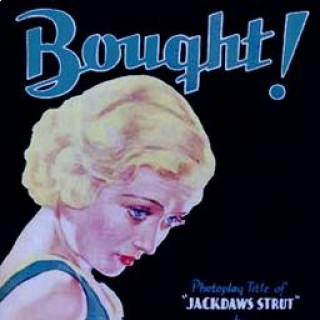
1931 film by Archie Mayo
POPULARITY
Categories

129 episodes with Bought

70 episodes with Bought

51 episodes with Bought

58 episodes with Bought

43 episodes with Bought

42 episodes with Bought

28 episodes with Bought

27 episodes with Bought

42 episodes with Bought

28 episodes with Bought

25 episodes with Bought

69 episodes with Bought

13 episodes with Bought

14 episodes with Bought

62 episodes with Bought

24 episodes with Bought

14 episodes with Bought

20 episodes with Bought

18 episodes with Bought

20 episodes with Bought

22 episodes with Bought

15 episodes with Bought

18 episodes with Bought

34 episodes with Bought

18 episodes with Bought

58 episodes with Bought

14 episodes with Bought

21 episodes with Bought

21 episodes with Bought

30 episodes with Bought

22 episodes with Bought

20 episodes with Bought

15 episodes with Bought

33 episodes with Bought

18 episodes with Bought

15 episodes with Bought

17 episodes with Bought

13 episodes with Bought

13 episodes with Bought

11 episodes with Bought

12 episodes with Bought

14 episodes with Bought

17 episodes with Bought

18 episodes with Bought

40 episodes with Bought

12 episodes with Bought

14 episodes with Bought

10 episodes with Bought

14 episodes with Bought

13 episodes with Bought

10 episodes with Bought

12 episodes with Bought

7 episodes with Bought

7 episodes with Bought

The Chicago Bears wide receivers' dedication to blocking helped create explosive plays in their season-opening win over the Carolina Panthers. Here's why the Bears bought into head coach Ben Johnson's "no block, no rock" mentality and how it's led to success.Become a supporter of this podcast: https://www.spreaker.com/podcast/shaw-local-s-bears-insider-podcast--3098936/support.This episode includes AI-generated content.

Joseph Sargo is a New York based entrepreneur and real estate investor with 25+ years in the film and television vehicle supply business. He has expanded into commercial real estate investing and development, recently completing his first industrial flex space project. Joseph became part of Rod Khleif's Warrior Group in January 2025 and is actively pursuing new commercial opportunities across multiple markets. Here's some of the topics we covered: Joseph Sargo's background in film and TV and his 20-year real estate journey The 20,000-square-foot industrial flex development in Branson, Missouri Why Joseph chose Branson and how his broker helped uncover the opportunity Building the right team and gaining confidence to develop out of state Leasing strategy, marketing, and targeting small businesses for the flex space Financing, construction timeline, and navigating local development approvals Taking action, overcoming analysis paralysis, and Joseph's plans for future flex space projects If you'd like to apply to the warrior program and do deals with other rockstars in this business: Text crush to 72345 and we'll be speaking soon. For more about Rod and his real estate investing journey go to www.rodkhleif.com

Investor Fuel Real Estate Investing Mastermind - Audio Version
Rodrigo Avanzo shares his journey from Brazil to the US real estate market, focusing on tax deed auctions, building a mobile operation, and scaling through strategic partnerships and marketing. Discover actionable insights on sourcing deals, managing operations, and expanding in a shifting market. Professional Real Estate Investors - How we can help you: Investor Fuel Mastermind: Learn more about the Investor Fuel Mastermind, including 100% deal financing, massive discounts from vendors and sponsors you're already using, our world class community of over 150 members, and SO much more here: http://www.investorfuel.com/apply Investor Machine Marketing Partnership: Are you looking for consistent, high quality lead generation? Investor Machine is America's #1 lead generation service professional investors. Investor Machine provides true 'white glove' support to help you build the perfect marketing plan, then we'll execute it for you…talking and working together on an ongoing basis to help you hit YOUR goals! Learn more here: http://www.investormachine.com Coaching with Mike Hambright: Interested in 1 on 1 coaching with Mike Hambright? Mike coaches entrepreneurs looking to level up, build coaching or service based businesses (Mike runs multiple 7 and 8 figure a year businesses), building a coaching program and more. Learn more here: https://investorfuel.com/coachingwithmike Attend a Vacation/Mastermind Retreat with Mike Hambright: Interested in joining a "mini-mastermind" with Mike and his private clients on an upcoming "Retreat", either at locations like Cabo San Lucas, Napa, Park City ski trip, Yellowstone, or even at Mike's East Texas "Big H Ranch"? Learn more here: http://www.investorfuel.com/retreat Property Insurance: Join the largest and most investor friendly property insurance provider in 2 minutes. Free to join, and insure all your flips and rentals within minutes! There is NO easier insurance provider on the planet (turn insurance on or off in 1 minute without talking to anyone!), and there's no 15-30% agent mark up through this platform! Register here: https://myinvestorinsurance.com/ New Real Estate Investors - How we can work together: Investor Fuel Club (Coaching and Deal Partner Community): Looking to kickstart your real estate investing career? Join our one of a kind Coaching Community, Investor Fuel Club, where you'll get trained by some of the best real estate investors in America, and partner with them on deals! You don't need $ for deals…we'll partner with you and hold your hand along the way! Learn More here: http://www.investorfuel.com/club —--------------------

With less than 50 days until the midterm elections, major battles are already underway over voting rights, election rules, redistricting, and how Americans vote.Katie Couric sits down with Marc Elias, a leading election lawyer, founder of Democracy Docket, and founder of Elias Law Group, to discuss the legal fights shaping the 2026 midterms.They discuss the Supreme Court's recent rulings on mail-in voting, rapidly changing congressional maps, voter rolls, election security, and what could happen if election results are challenged after Election Day. Hosted on Acast. See acast.com/privacy for more information.

Tom Brown didn't grow up farming. After studying anthropology and horticulture at Kansas State, he spent roughly 15 years living and working in Pakistan and Afghanistan, where he gained experience in agribusiness development, seed production, horticulture, and helping farmers improve their operations. When he eventually returned to the United States, the desire to build a farm of his own was still there.Instead of starting with what he wanted to grow, Tom started by asking potential customers what they wanted to buy. The answer was fresh, pick-your-own peaches. He intentionally searched within a 30-minute drive of Wichita and purchased 80 acres in 2010 for $225,000.00. Today, Meadowlark includes roughly 18 acres of peaches, 17–18 acres of apples, two acres of strawberries, two acres of pumpkins, and a hard cider business. Tom explains how agritourism changes the way a farmer thinks about everything from orchard layout and parking to crop selection and customer experience. Feedback from families helped drive Meadowlark's expansion into apples, while fallen fruit that could have become waste created an additional opportunity through hard cider. The result is a business built around multiple revenue streams rather than production alone. The conversation also gets into the numbers. Tom uses Ambrook to help track the finances of a complicated operation with multiple enterprises and direct costs. As the orchard approaches its physical production limits, he sees future growth coming primarily from cider sales and on-farm experiences, which he believes could significantly increase gross revenue over the next five years. His biggest lesson applies well beyond specialty crops: farming changes slowly, mistakes are expensive, and “every lesson takes a year.” Want Farm4Profit Merch? Custom order your favorite items today!https://farmfocused.com/farm-4profit/ Don't forget to like the podcast on all platforms and leave a review where ever you listen! Website: www.Farm4Profit.comShareable episode link: https://intro-to-farm4profit.simplecast.comEmail address: Farm4profitllc@gmail.comCall/Text: 515.207.9640Subscribe to YouTube: https://www.youtube.com/channel/UCSR8c1BrCjNDDI_Acku5XqwFollow us on TikTok: https://www.tiktok.com/@farm4profitllc Connect with us on Facebook: https://www.facebook.com/Farm4ProfitLLC/Farm4Profit Media is not a financial, legal, or tax advisor. Content is provided for informational purposes only, and we serve solely as a platform for third-party opinions. Any actions taken based on this content are at your own risk. Hosted by Simplecast, an AdsWizz company. See pcm.adswizz.com for information about our collection and use of personal data for advertising.
As the holiday season approaches, it's easy to get caught up in the excitement and start thinking about Christmas gifts. But are you one of those people who likes to get a head start on holiday shopping, or do you prefer to wait until the last minute? See omnystudio.com/listener for privacy information.

What if I told you that you could stop buying laundry detergent forever? No pods. No liquid detergent. No searching for the "cleanest" brand. No deciphering ingredient labels. Just water and oxygen. Sounds a little too good to be true, right? That was my question too: But does it actually clean the clothes? This week, I'm joined by Marissa from O3 Waterworks to explore aqueous ozone, or O3, and how their Smart Laundry System uses water and oxygen to create a cleaning solution directly within your washing cycle. We get into the questions that actually matter: What about odors? Stains? Bacteria? Detergent residue and buildup? What happens inside your washing machine? Why does the system use cold water? And how is aqueous ozone different from the gaseous ozone you may have heard warnings about? Marissa also walks us through potential long-term savings, the Smart Laundry System's boost mode, and their sanitizing spray bottle, which creates aqueous ozone using tap water. I'm personally bringing this system into my own home, so I wanted to understand exactly what it does, if it has limitations, and whether laundry detergent could really become one less product we have to buy. Could a machine on your laundry-room wall make detergent a thing of the past? Listen to find out! ✴️ Connect with O3 Waterworks on Instagram or TikTok

Greetings and welcome! This is our daily devotional for September 16, 2026. Today, we continue our series on Exodus in Chapter 4, where we find one of the most difficult passages in Exodus. However, despite the difficulty, God's Word has so many practical lessons for His people. Thanks for joining us!

See omnystudio.com/listener for privacy information.

It's payday once again, and you know what that means - it's time to put some money into our Stocks and Shares ISAs, and make some investments.If you found this episode helpful, please share it with someone who'd benefit from hearing it. It's a simple way to help a friend or family member feel more confident about the world of finance.Thank you!
See omnystudio.com/listener for privacy information.

We needed a palate cleanser. After a stretch of some pretty intense, deep-diving episodes the last few months, I put Chris back on the mic for a lil break room energy. Rapid-fire questions, zombie apocalypse survival predictions, an impression battle, and a big life update we haven't formally announced anywhere else yet- Chris is officially the new owner-operator of Kollective's North Austin location - huge, and I'm so proud of him. We played "translate the other person," debated beige flags, ranked the most useless thing I own, and somehow ended up talking about Cheerios, grape jelly sandwiches, and why Chris's emotional world is a lot deeper than his deadpan delivery lets on. If you've been with me through the heavier identity and mindset episodes lately, this one's your breather. Fun, a little chaotic, genuinely funny, and a real look at the relationship dynamic I talk about on the show but rarely let you actually hear in real time. Stick around for the end… Chris drops a really sincere piece of perspective that hit harder than either of us expected. - Fitness, health, and holistic wellness for $22/month Interested in a luxury 1:1 online health coaching experience? Look no further than FENIX ATHLETICA, where we fuse science and soul for life-long transformation (inside AND out). LMNT is LMNT is a DELICIOUS, science-based electrolyte drink mix with everything you need and nothing you don't. No sugar. No coloring. No artificial ingredients. No gluten. No fillers. No BS. Head to drinklmnt.com/emdunc to get a FREE variety pack with your purchase! Follow me on Instagram Follow EMBody Radio on Instagram

In this week's Stansberry Investor Hour, Dan welcomes Bryan Beach back to the show. Bryan is the senior analyst for Whitney Tilson's Ultimate Upside and a senior analyst on Stansberry's Investment Advisory. Bryan kicks things off by discussing what's new in the Whitney Tilson's Ultimate Upside newsletter (previously Venture Value). Both Bryan and Whitney have teamed up to develop a new system built upon the proprietary Stansberry Score that further helps subscribers find overlooked, high-value stocks that have room to grow. The three newest recommendations that their new system discovered are already performing well. And Bryan warns of the belief that a stock is cheaply valued when it returns so little. (0:00) Next, Bryan shares how peer groups aren't as easy to identify as many folks believe, especially in technology or consulting companies. While a business might offer a product that competes with another company, its other services might not be related at all. And with small caps, it's even harder to find a true peer due to differing business practices. So Bryan and Whitney look at historical valuations to compare them instead. Bryan then shares how his views on the utilization of technology, such as the Stansberry Score, in investing have changed after finding one company he wouldn't have considered without it. (23:29) Finally, Bryan mentions how Whitney's connections help provide an edge in learning more about a company and to gain wisdom that has been built up over decades of experience. One lesson that Bryan learned is that you don't need to be completely rigid in your philosophies. Near the beginning of the Russia-Ukraine conflict, he thought it might be best to recommend energy stocks in Venture Value to hedge against that , despite the fact that they weren't value stocks. And Bryan expanded upon Whitney's idea for the Ultimate Upside. (38:41)
Investor Fuel Real Estate Investing Mastermind - Audio Version
Eric Martel shares his journey from a young entrepreneur to a successful real estate investor and mentor. He discusses strategies for passive income, the importance of networking, and insights on market trends and AI integration. Professional Real Estate Investors - How we can help you: Investor Fuel Mastermind: Learn more about the Investor Fuel Mastermind, including 100% deal financing, massive discounts from vendors and sponsors you're already using, our world class community of over 150 members, and SO much more here: http://www.investorfuel.com/apply Investor Machine Marketing Partnership: Are you looking for consistent, high quality lead generation? Investor Machine is America's #1 lead generation service professional investors. Investor Machine provides true 'white glove' support to help you build the perfect marketing plan, then we'll execute it for you…talking and working together on an ongoing basis to help you hit YOUR goals! Learn more here: http://www.investormachine.com Coaching with Mike Hambright: Interested in 1 on 1 coaching with Mike Hambright? Mike coaches entrepreneurs looking to level up, build coaching or service based businesses (Mike runs multiple 7 and 8 figure a year businesses), building a coaching program and more. Learn more here: https://investorfuel.com/coachingwithmike Attend a Vacation/Mastermind Retreat with Mike Hambright: Interested in joining a "mini-mastermind" with Mike and his private clients on an upcoming "Retreat", either at locations like Cabo San Lucas, Napa, Park City ski trip, Yellowstone, or even at Mike's East Texas "Big H Ranch"? Learn more here: http://www.investorfuel.com/retreat Property Insurance: Join the largest and most investor friendly property insurance provider in 2 minutes. Free to join, and insure all your flips and rentals within minutes! There is NO easier insurance provider on the planet (turn insurance on or off in 1 minute without talking to anyone!), and there's no 15-30% agent mark up through this platform! Register here: https://myinvestorinsurance.com/ New Real Estate Investors - How we can work together: Investor Fuel Club (Coaching and Deal Partner Community): Looking to kickstart your real estate investing career? Join our one of a kind Coaching Community, Investor Fuel Club, where you'll get trained by some of the best real estate investors in America, and partner with them on deals! You don't need $ for deals…we'll partner with you and hold your hand along the way! Learn More here: http://www.investorfuel.com/club —--------------------

GEAR FROM THIS VIDEOSome links below are affiliate links, which means I may earn a commission if you make a purchase through them at no additional cost to you. As an Amazon Associate I earn from qualifying purchases.

The Three Hours That Bought Back Two YearsFor two years, one executive Allison coached worked weekends just trying to keep up.The problem wasn't simply the amount of work on his plate. Every decision of real weight still came back to him. Even when work had been delegated, his team was waiting for him to approve, redirect, or make the final call.The underlying issue was clarity: no one knew which decisions they actually had the authority to make.In this episode of The Deliberate Leaders Podcast, Allison breaks down the three-hour exercise that changed that pattern and introduces a practical framework leaders can begin using with their teams immediately.The Four Levels of Decision AuthorityLevel 1: ActMake the decision and move forward. There's no need to report back.Level 2: Act and InformMake the decision and act on it, then let the leader know what you decided.Level 3: RecommendResearch the options, develop a recommendation, and bring it forward so the decision can be made together.Level 4: EscalateBring the relevant data and context to the leader, who makes the final call.Allison also discusses:Why delegating tasks without delegating decision rights keeps leaders stuckHow unclear authority creates unnecessary dependence on the leaderWhy a decision problem may actually be a clarity problemHow to determine which decisions genuinely require your involvementWhy developing independent thinkers can initially feel slowerHow to use questions instead of immediately providing answersA practical script for changing the dynamic in your next one-on-oneHow clearly communicating decision authority creates capacity for both the leader and the teamTry This This WeekFor every decision someone brings you, pause before answering and ask:Which level does this decision actually belong at?Then say the level out loud when you hand the decision back.The goal isn't to remove yourself from every decision. It's to become deliberate about which decisions actually require you and which ones your team is ready to own.Think first. Lead deliberately. Think First

Fathom said that it has over 400,000 monthly active users. Also, Glass Imaging was founded by a pair of former Apple engineers who previously led the team that developed Apple's Portrait Mode. And Cornelis, a company creating networking technology to help AI chips communicate more effectively, announced Monday that it has raised $205 million. Learn more about your ad choices. Visit podcastchoices.com/adchoices

In this week's Stansberry Investor Hour, Dan welcomes Bryan Beach back to the show. Bryan is the senior analyst for Whitney Tilson's Ultimate Upside and a senior analyst on Stansberry's Investment Advisory. Bryan kicks things off by discussing what's new in the Whitney Tilson's Ultimate Upside newsletter (previously Venture Value). Both Bryan and Whitney have teamed up to develop a new system built upon the proprietary Stansberry Score that further helps subscribers find overlooked, high-value stocks that have room to grow. The three newest recommendations that their new system discovered are already performing well. And Bryan warns of the belief that a stock is cheaply valued when it returns so little. (0:00) Next, Bryan shares how peer groups aren't as easy to identify as many folks believe, especially in technology or consulting companies. While a business might offer a product that competes with another company, its other services might not be related at all. And with small caps, it's even harder to find a true peer due to differing business practices. So Bryan and Whitney look at historical valuations to compare them instead. Bryan then shares how his views on the utilization of technology, such as the Stansberry Score, in investing have changed after finding one company he wouldn't have considered without it. (23:29) Finally, Bryan mentions how Whitney's connections help provide an edge in learning more about a company and to gain wisdom that has been built up over decades of experience. One lesson that Bryan learned is that you don't need to be completely rigid in your philosophies. Near the beginning of the Russia-Ukraine conflict, he thought it might be best to recommend energy stocks in Venture Value to hedge against that , despite the fact that they weren't value stocks. And Bryan expanded upon Whitney's idea for the Ultimate Upside. (38:41)

Thanks for listening friends, and boy... do we have a fun storytime for y'all today.My new friend Randi had been trying to get into Cocodona for years.Then, one January morning, a friend sent her a screenshot of something called Burrito League.Fifteen minutes later she had her shoes on.Several months, a pile of new friendships (like me!) and a ridiculously questionable number of repeated Strava segments later…Randi found herself standing at the start of the Bigfoot 200 wondering what, exactly, she had gotten herself into.Spoiler: she finished.

Bought to you by mainstream media. Is the reaction the same as the resource. Are you reacting because youdon't like the results? Do you know the truth of what happened.

Czabe welcomes PAUL CHARCHIAN and hits him up with a new business proposition. Baker Mayfield gets paid. But once again, QB prices seem to reflect the cost of NOT having one who is any good. The Rams and Niners engage in a fascinating experiment in sleep and time zone travel. Czabe would go shark diving. Charch's miracle iPad recovery from Delta. Apple's foldable phone. Cybercabs and the future. MORE.....Our Sponsors:* Check out Ethos and use my code ethos.com/czabe for a great deal: https://www.ethoslife.comAdvertising Inquiries: https://redcircle.com/brandsPrivacy & Opt-Out: https://redcircle.com/privacy
Link Up w/The Morning Sickness Digitally All Over:Instagram: @hms_98_official, @bosskupd, @bretvesely, @dickToledoX/Twitter: @HMSon98, @DickToledo, @bretveselyFacebook: @HMSKUPDYouTube: @hmspodcast9320, @98kupdRequest/Call in/Wakeup Song line:(IN AZ) 602.585.9800More HMS: www.holmbergpodcast.com, www.98kupd.comEmail: dtoledo@98kupd.com, bvesely@98kupd.com, bbogen@98kupd.comSee Privacy Policy at https://art19.com/privacy and California Privacy Notice at https://art19.com/privacy#do-not-sell-my-info.

Matt Spiegel and Laurence Holmes listened and reacted to Bears cornerback Jaylon Johnson explain why he has bought into head coach Ben Johnson's message in 2026.
In the final hour, Matt Spiegel and Laurence Holmes listened and reacted to Bears cornerback Jaylon Johnson explain why he has bought into head coach Ben Johnson's message in 2026. After that, the guys reacted to Rams veteran defensive tackle Aaron Donald not going to Australia for the team's season opener after he came out of retirement.

Send us Fan MailGrow your course revenue up to 30% in 7 days - no paid ads, no sales calls

Real Estate Institute of Victoria chief executive Toby Balazs joined Ross Stevenson and Russel Howcroft to discuss the reason behind this and what it might mean for home owners, prospective buyers and the market in general.See omnystudio.com/listener for privacy information.

Check out Lodgify claim your exclusive discount: https://www.lodgify.com/behind-the-stays/ — In just a moment you'll meet Austin Allison — co-founder and CEO of Pacaso, the co-ownership platform that's reimagining how people buy, use, and think about second homes. Austin's dad was a carpenter. They lived paycheck to paycheck in a home with unfinished plywood floors because they couldn't afford carpet. Austin started working job sites with his dad at six or seven years old, and the thing it taught him wasn't carpentry — it was that you can build anything if you decide to. By 17, he'd saved up four thousand dollars, bought a bank foreclosure, and watched the listing agent walk away from the closing table with a check that changed how he thought about money. A week after turning 18, he was enrolled in real estate school. That trajectory led to Dot Loop — a platform Austin built while simultaneously attending law school that went on to power more than half of all digital real estate transactions in the US — and eventually a sale to Zillow, where he worked alongside Spencer Rascoff and the founding team. But the Pacaso idea actually started earlier, back in 2013, when Austin bought a second home in Lake Tahoe and realized he hadn't just purchased a piece of real estate. He'd purchased a second life. In this conversation, Austin walks us through the full arc — from selling birdhouses as a kid to building a unicorn in five months, what it felt like to lay off nearly 300 people when the market turned, and why the six months after selling Dot Loop were some of the lowest of his life. We get into the mechanics of co-ownership, how it's fundamentally different from timeshares, and this new product called Infinity that's unlocking the 80% of luxury second homes around the world that sit empty because owners don't want renters — but would happily swap with other owners. And he makes this point that I keep coming back to — that the people stuck on the hamster wheel aren't the ones who can't afford the life they want. They're the ones who haven't made the decision yet. — Behind the Stays is brought to you by Journey — a first-of-its-kind loyalty program that brings together an alliance of the world's top independently owned and operated stays and allows travelers to earn points and perks on boutique hotels, vacation rentals, treehouses, ski chalets, glamping experiences and so much more. Your host is Zach Busekrus, Head of Growth at Journey. If you are a hospitality entrepreneur who has a stay, or a collection of stays with soul, we'd love for you to apply to join our Alliance at journey.com/alliance.

A podcast by Trinity Fellowship. Join us every week Monday through Thursday for The Biblecast! On The Biblecast we take a deeper dive into God's word. We also love to pray for each other. If you would like to submit a prayer you can do so at Biblecast@tfc.org from wherever you are listening! So I want to encourage you - be ready to grab your hot coffee, grab your hot tea, and let's dive in together to God's Word.

Kyle Kargis sits down with Ellen Layton to talk about how she went from stay-at-home mom to SubTo member, Top Tier TC, and creative real estate investor. Ellen shares the story of finding her own family home through Creative Listing, building trust with the seller, and closing a subject-to deal despite title issues, missing signatures, and last-minute closing challenges. She also explains how that experience gave her the confidence to become a transaction coordinator and pursue future investing goals, including co-living in Texas. Follow Ellen Layton: https://www.facebook.com/itsellenlayton/ https://www.instagram.com/itsellenlayton/ https://precisiontcgroup.com/ ► Join The SubTo Community & Learn Creative Finance Directly from Pace Morby: https://subto.sjv.io/X42Y94 ► Learn How to Make Money on Other People's Deals - Join the FREE Live Training: https://gator.sjv.io/n4WL6o ► Turn Real Estate Transactions Into a Real Career. Learn How to Become a Top Tier Transaction Coordinator - Start Here: https://toptiertc.pxf.io/OYyrdz

How does a small, struggling hemp company pull off the "heist of the year" in the supplement industry? In this video, I'm breaking down the mind-blowing M&A transaction between cbdMD and the legendary legacy supplement brand Twinlab. Drowning in a staggering $148 million of debt, Twinlab was completely insolvent. But instead of entering a standard federal Chapter 11 bankruptcy, they used a rare, state-level legal maneuver called an Assignment for the Benefit of Creditors (ABC). Enter cbdMD. Facing its own regulatory existential crisis in the hemp industry, cbdMD used this legal shield to scoop up Twinlab's entire $30 million operating business for less than $4 million (completely leaving behind that massive mountain of liability). Is this a textbook distressed corporate raid masterclass that will save cbdMD, or will the cost of digesting a broken giant drag them under? Let's look under the hood of the deal.

Finance PhD Dr. Boyce Watkins explains why an NBA player bought a bank. He also talks about the importance of banking institutions in the Black community as a vehicle for building Black wealth.Dr. Boyce Watkins is a finance professor at Morehouse College and also the founder of the Black Business School. He is also the author of the best-selling book "The Ten Commandments of Black Economic Power."To learn more, please visit BoyceWatkins.com.

WWW.ADVENTUREFREAKSSS.COM Find your Ideal Destination Here: https://adventurefreaksss.com/ideal-destination-finder/ ================================= How to work with me: =================================

Dave turned 40 this week, one day before they hit record, and he wants it understood that he has been looking forward to this. Thirty was a bummer. Forty is different. He expects his forties to be a decade of proficiency instead of a decade of learning how to do everything for the first time: better father, better disciplinarian, better coach, better husband, better at the farm. A decade of potency, he called it, which Adam immediately took in the least charitable direction available and turned into a bit about donating blood and testosterone at the same time. Before that, though, there was a real moment. Adam asked how his spiritual life was and Dave told the truth. He has been in a down recently, the kind where things you have always known to be sinful start to look not that bad, and the only thing that held the line was habit. Intellectual habit, built over years, doing exactly what habit is supposed to do when feeling has gone quiet. Then the piglets. Adam has been building a pig pen since last fall, thinking it through all winter, and Dave finally called to say his sow's litter was ready. Adam ran hot wire that morning, got everything set, and had the sense to put just one pig in first to see what would happen. The pig touched the hot wire, did not get shocked, backed up four steps, ran, and cleared the boards. Twenty seconds. It landed close enough that Adam caught it by a back leg. Welcome to the swine herd community.Sponsor: Amen app (from the Augustine Institute) Free, no paywall, no subscription. It is how Adam and Dave get their kids ready to receive the Gospel before Mass even starts, plus free access to Divine Mercy in My Soul and True Devotion to Mary. Download the Amen app.Sponsor: Select International Tours When Adam and Dave went looking for help leading their first pilgrimage, everyone they asked pointed to the same name: Select International Tours. Having used them, the guys can vouch for it. Wherever in the world you want to go, whether leading a pilgrimage or joining one, head to selectinternationaltours.com and see what they have ready for you.The pour is Pabst Blue Ribbon, which won a blue ribbon at some point a long time ago and has been telling everyone about it ever since. Adam will defend it. Not as a great beer, but as a beer that belongs in the category of things you can hand a man who walks into your house without apologizing. Oklahoma has been over 100 degrees for something like seventy straight days, all of July and all of August, and on a day like that PBR is exactly right.Then the main topic. Wendell Berry died August 31 at home in Port Royal, Kentucky, at 92. Kentucky farmer, novelist, poet, essayist, five generations on the same ground his family had worked since the early 1800s. He took degrees from the University of Kentucky, went off to the city to be a writer, got everything a young writer is supposed to want, and decided quickly that it was not what he wanted. So he went home. He farmed with horses long after he could afford a tractor. His writing cabin, 16 by 20 feet on stilts over the Kentucky River, had no electric light. He never owned a television or a computer and never sent an email in his life. He answered his mail by hand, including letters from strangers, at length, signing every one "your friend, Wendell Berry."Dave once told Adam that Berry is his favorite person to read with whom he disagrees, and that line has stuck. Dave is not a pacifist. There are foundational places where he and Berry part ways. But reading Berry sharpened his own thinking precisely because the case on the other side was so well made, so obviously pondered and re-pondered over decades. Not rookie opinions. Not virgin thoughts. Which raises a question worth sitting with: who do you read that you disagree with? Most men cannot answer it, and that is the problem.Berry's own account of what the land taught him: patience, because the crop keeps its own schedule and will not wait for you. Consequence, because there is no control-Z on a hillside. He plowed and dug a pond on sloping Kentucky ground and then watched it wash out, taking with it topsoil that had taken a thousand years to accumulate a millimeter at a time. Scale, because the land you keep is known intimately by you and nobody else, which spots bloom first, which die first, and holding that in your head is closer to a virtue than a skill. The body as a means of knowing, because the health of the mind proves itself in physical work. And fidelity to one place over time. Asked by NPR in 1998 what he would tell young people, he said stop some place and stay there, and learn the history of it, the names of the plants and the animals and your neighbors.Adam brought in Josef Pieper to name what that is. Working hard is not the opposite of sloth. The opposite of sloth is the glad acceptance of your own life. A man can be busy at every hour of the day and still be a slothful man, because the busyness is a way of refusing the life he actually has.Dave read The World-Ending Fire on Adam's recommendation and could not get past a passage early on about the difference between a path and a road. A path is submissive to the terrain. It yields to creation, goes through the trees, puts you in nature instead of over it. A path is almost a virtue, a habit of travel, a memory you relive, an inheritance you walk because others walked it first. A road does violence to it. You level the ground and go through instead of being part of it.Which sets up the essay. In 1987 Berry published "Why I Am Not Going to Buy a Computer," and it went on to become the most reprinted thing he ever wrote, which is its own joke. He gave nine standards a new tool ought to meet: cheaper than what it replaces, no bigger in scale, demonstrably better at the work, less energy, ideally powered by something like the body, repairable by a person of ordinary intelligence with ordinary tools, purchasable and repairable near home, sold by a small shop that will take it back, and the hard one, number nine: it should not replace or disrupt anything good that already exists, including family and community relationships. We have almost entirely stopped asking that one. We look at output and never at cost, and technology almost always charges its cost in person-to-person contact.His three reasons were dependence, household, and self-deception. Dependence on strip-mined Kentucky coal to run the thing. Household, because the model being discarded was his wife, Tanya, his editor, his critic, his closest reader and fellow worker, and going up to date as a writer would have meant sacrificing an association he treasured and depended on. That reason is what critics went after hardest, feminism being what it was in 1987, and he answered them in print. Self-deception last, and best: he simply did not believe anyone writes better with a computer than with a pencil. Show him work demonstrably better than Dante's, demonstrably attributable to the machine, and he would speak of computers in a more respectful tone of voice, though he still would not buy one.The guys are fair to it and to themselves. Dante is not a fair standard, since nobody in the 300 years before the computer wrote as well as Dante either. But the point underneath it holds. Berry wrote in pencil because when you cross out a word and write another above it, the path you traveled is still visible in front of you, the way a footpath is. And there is something sacramental about it. The pencil hitting the paper is the incarnation of a thought. The labor is not an obstacle to the writing. The labor is the writing, and the satisfaction of finally getting a sentence to say what you actually meant is only available to the man who did the wrestling.Which is where AI comes in, one week after the guys spent a whole episode on it. You do not appreciate a well-kept lawn until you have kept one. You do not appreciate a tomato until you have grown one. You do not appreciate writing until you have done it. Hand the wrestling to a word-guessing machine and the sentence still arrives, but it is sterile, generic, recognizable on sight to anyone who has ever fought for a line. AI is contraceptive language. There is no fecundity in it. The guys expect a backlash, the same pullback that is already happening with social media among the young, once enough people notice what got traded away. Berry's whole vocation was to turn our minds back toward the ground. Which, as Dave pointed out, is where the first man got both his name and his job: adam from adamah, formed out of the earth and made for the earth, a husband to the soil before there was ever any sin to explain it. That is not nostalgia. That is the job. Go read him. You will not agree with everything. Neither do they. Protect the labor. Provide something you actually made. Establish a place and stay in it. May the mad farmer rest with the eternal farmer. Raise your glass.TOPICS COVEREDWhether a man actually gets wiser as he gets older, and why a sinful life makes him dumber insteadDave turning 40 and why he was looking forward to it in a way he never looked forward to 30The forties as a decade of proficiency and self-mastery instead of learning everything for the first timeA spiritual down, and relying on intellectual habit when things you know to be sinful start looking not that badAdam's two piglets from Dave's sow, and a pig pen contemplated since last fallA piglet clearing the boards twenty seconds after being let in, and getting caught by a back legBeer of the week: Pabst Blue Ribbon, and the case for beer that

Keeping it Real Podcast • Chicago REALTORS ® • Interviews With Real Estate Brokers and Agents
Megan Walters breaks down how she built a seven‑figure real estate business without buying leads or cold calling. She shares her people-first approach – working from coffee shops, leveraging FSBO/expireds with value-packed drop-offs, and running four open houses every weekend. Next, Megan explains her daily 4 a.m. routine, CRM systems, and strict financial discipline, plus how consistent short-form video and personal branding drive 90% of her business and fuel a 50+ door investment portfolio. If you'd prefer to watch this interview, click here to view on YouTube! Megan Walters can be reached at megan@thewalters.team. This episode is brought to you by RealGeeks and Courted.io.

TeamClearCoat - An Automotive Enthusiast Podcast by Two Car Nerds
It will make sense, we promise. Oh, and we get wet with our chief Waymo antagonist too! We love you!

What happens when a successful automotive executive leaves the car business and jumps into body sculpting AND nails? In this episode of the Franchise Fit Podcast, Lance Graulich sits down with Uli DiMartino, franchisee of The TOX and incoming franchisee of The Shade, to talk about his move from automotive retail into the rapidly growing beauty, wellness, and aesthetics space.

Thu, 03 Sep 2026 14:51:00 GMT http://relay.fm/penaddict/732 http://relay.fm/penaddict/732 I Went Ahead and Bought a Bunch of Pens 732 Brad Dowdy and Myke Hurley There are new pens and products to be seen and discussed this week, but will you see any of them at your local Pelikan Hub? Who can say. There are new pens and products to be seen and discussed this week, but will you see any of them at your local Pelikan Hub? Who can say. clean 4234 There are new pens and products to be seen and discussed this week, but will you see any of them at your local Pelikan Hub? Who can say. This episode of The Pen Addict is sponsored by: Factor: Healthy, fully-prepared food delivered to your door. Use code penaddict50off Enigma Stationery: Unique items, top brands and hard-to-find imports. Get $10 off. Links and Show Notes: Support The Pen Addict with a Relay Membership Submit Feedback

The DMD is here! Plus we chat about a doctor who had a bat trying to crawl in her mouth! Plus we chat about Taryn splurging on Seahawks home opener tickets!

Today Nemo spends his hard earned power points and coins to buy the set of buffies for the Ghost station trio and the Mexican Entertainers trio. He also buys a bunch of cosmetics from the shop, and then tests out new bugs and broken brawlers from the new update. He then ends the episode by opening the whole previous brawl pass and getting alien 3 fame. Make sure to leave a 5 star review on Spotify and leave a comment to be featured in a future episodeYT- nemoBSEmail- eternalbrawlpodcast@gmail.com Main Club- Eternal Legion | #2UGJVQJVV2nd Club- Eternal Army | #R9YJCUVU

Thu, 03 Sep 2026 14:51:00 GMT http://relay.fm/penaddict/732 http://relay.fm/penaddict/732 Brad Dowdy and Myke Hurley There are new pens and products to be seen and discussed this week, but will you see any of them at your local Pelikan Hub? Who can say. There are new pens and products to be seen and discussed this week, but will you see any of them at your local Pelikan Hub? Who can say. clean 4234 There are new pens and products to be seen and discussed this week, but will you see any of them at your local Pelikan Hub? Who can say. This episode of The Pen Addict is sponsored by: Factor: Healthy, fully-prepared food delivered to your door. Use code penaddict50off Enigma Stationery: Unique items, top brands and hard-to-find imports. Get $10 off. Links and Show Notes: Support The Pen Addict with a Relay Membership Submit Feedback

Today's Sports Daily covers the first NFL Survivor Contest show coming tomorrow, the Angels have a new owner and he's a good one, and Tony Romo speaks for the first time since his OWI arrest last month. Music written by Bill Conti & Allee Willis (Casablanca Records/Universal Music Group) Hosted by Simplecast, an AdsWizz company. See pcm.adswizz.com for information about our collection and use of personal data for advertising.
Check out Lodgify claim your exclusive discount: https://www.lodgify.com/behind-the-stays/ — In just a moment you'll meet Lauren Blanford from Lost Woods — a glamping retreat and event property built on 160 acres of northern Michigan that started with two bell tents, a porta potty, and homemade bagels hand-delivered at sunrise. Lauren and her husband Jason were living in Chicago's Lincoln Square neighborhood, raising young kids, feeling like two ships passing in the night. They put their condo up for sale, found a property they wanted to buy, and were ready to make the leap. Then COVID hit — the exact week the world shut down. The condo had already sold. The other deal fell through. Everything they owned was in storage. They had no home and no plan B. So they started over. The original vision had been an event barn, but gatherings weren't happening anymore. They shifted gears, came up to northern Michigan on vacation, and found 160 acres of land with views that took their breath away. They bought it and started building something from scratch — slowly, deliberately, with whatever resources they had left. What's happened since is one of the more compelling small-scale hospitality stories I've come across. Lauren walks us through how guest feedback reshaped her entire business model — from glamping stays to themed retreats that now drive almost everything. Reading retreats that sell out instantly. A romance novel retreat built around a bookstore that opened in their tiny town. Mother-daughter camps that filled in a day. A perimenopause retreat that was born from a literal conversation at the dinner table during a previous retreat. We talk about the decision to close the business Monday through Thursday this summer so she could actually be present with her kids, how she went from fully dependent on Airbnb to 95% direct bookings and what that did for her cash flow and her sanity, and this idea she keeps coming back to — that the real growth opportunity for operators like her isn't more units. It's more reasons for people to show up. — Behind the Stays is brought to you by Journey — a first-of-its-kind loyalty program that brings together an alliance of the world's top independently owned and operated stays and allows travelers to earn points and perks on boutique hotels, vacation rentals, treehouses, ski chalets, glamping experiences and so much more. Your host is Zach Busekrus, Head of Growth at Journey. If you are a hospitality entrepreneur who has a stay, or a collection of stays with soul, we'd love for you to apply to join our Alliance at journey.com/alliance.

Former Saints Super Bowl-winning LB Scott Shanle joined Sports Talk. Shanle shared his thoughts on the Saints' young players, Brandon Staley's defense, and New Orleans' special teams unit. He also evaluated second-year LB Danny Stutsman and previewed the Saints' early-season schedule.

Silicon Valley didn't suddenly fall in love with podcasts because everyone discovered the joys of long-form conversation. They figured out something much more valuable: if you control the pipe, you can shape the narrative. In Episode 351, Chris traces that playbook from Hearst and Murdoch to Rogan, Musk, a16z, OpenAI and TBPN—and asks the uncomfortable question behind the new media boom: are you watching an independent show, or a very expensive communications strategy with better lighting? The money can buy reach, access and influence. What it still can't buy is trust.

LOCK IN YOUR EARLY BIRD PRICE DISCOUNT FOR THOUGHTFUL MONEY'S FALL ONLINE CONFERENCE (OCT 17TH) at https://www.thoughtfulmoney.com/conferenceSo, yes, after 55 years on this Earth, I've finally become a homeowner for the first time!Many of you have asked me to share the "why?" behind my decision as well as what the process has been like for me, and if I've learned any valuable lessons to pass along to potential homebuyers.Housing analyst Melody Wright turns the table in this video and interviews me to reveal those answers.To hear it all, watch this video.#homebuying #realestatetips #housingmarket _____________________________________________ Thoughtful Money LLC is a Registered Investment Advisor Promoter.We produce educational content geared for the individual investor. It's important to note that this content is NOT investment advice, individual or otherwise, nor should be construed as such.We recommend that most investors, especially if inexperienced, should consider benefiting from the direction and guidance of a qualified financial advisor registered with the U.S. Securities and Exchange Commission (SEC) or state securities regulators who can develop & implement a personalized financial plan based on a customer's unique goals, needs & risk tolerance.All the details on Thoughtful Money's relationship with the financial advisors it endorses, many of whom regularly appear on this program, can be found in the following documents. We highly recommend you review these documents as they cover the terms that will apply should you choose to work with one of these firms at any time after watching this video.Thoughtful Money Disclosure Document: https://thoughtfulmoney.com/disclosureThoughtful Money Agreement: https://thoughtfulmoney.com/agreementIMPORTANT NOTE: There are risks associated with investing in securities.Investing in stocks, bonds, exchange traded funds, mutual funds, money market funds, and other types of securities involve risk of loss. Loss of principal is possible. Some high risk investments may use leverage, which will accentuate gains & losses. Foreign investing involves special risks, including a greater volatility and political, economic and currency risks and differences in accounting methods.A security's or a firm's past investment performance is not a guarantee or predictor of future investment performance.Thoughtful Money and the Thoughtful Money logo are trademarks of Thoughtful Money LLC.Copyright © 2026 Thoughtful Money LLC. All rights reserved.

Join WWA 12 week program: https://oliviatati.com/wwaGet my Free Masterclass: Fund Your Freedom - How to Buy properties that pay for your Life: https://www.oliviatati.com/freeclassGet House Hacking to Freedom Course: https://www.oliviatati.com/househack1Join Leap Year Mastermind: https://www.oliviatati.com/leapyearJoin Substack: https://oliviatati.substack.com/?utm_campaign=profile_chipsFollow me on Instagram: https://www.instagram.com/theoliviatatiYou already bought the property. You proved to yourself that you can do it. So why are you still playing small?Maybe you're holding yourself back because you're afraid of debt. Maybe you're scared of failing publicly, waiting for someone to give you permission, or convincing yourself that you just need to “save a little more” before you make your next move.

This week, we are diving into why so many experienced female real estate investors hit a wall after their third or fourth property—and exactly how to move past it. We talk about what happens when the numbers stop penciling, even though you know real estate works because it's already worked for you. We're breaking down the biggest reasons you're feeling stuck, including: Why not having a true buy box (with real metrics, not vibes) keeps you in analysis paralysis How “Is this a good deal?” is the wrong question—and what to ask instead The trap of trying to eliminate all risk and how that kills every deal on your spreadsheet Why waiting for a “home run” deal is keeping you from building long-term wealth How your next best deal might already be in your portfolio through refinancing, restrategizing, or selling The power of a sanity check and surrounding yourself with other women investors who get it If you're a woman on deals 4–10 who's tired of spinning your wheels alone, this episode will help you see what's really holding you back and give you practical ways to start making confident offers again. Resources: Get on the waitlist for the WIIRE Community Grab our SOP Templates Simplify how you manage your rentals with TurboTenant Make sure your name is on the list to secure your spot in The WIIRE Community Leave us a review on Apple Podcasts Leave us a review on Spotify Join our private Facebook Community Connect with us on Instagram
© 2020-2026 Ivy Podcast Discovery LLC
