
POPULARITY

7 episodes with climate progress

5 episodes with climate progress

3 episodes with climate progress

2 episodes with climate progress

2 episodes with climate progress

2 episodes with climate progress

2 episodes with climate progress

2 episodes with climate progress

2 episodes with climate progress

In this episode, host Ben Perfitt speaks with Gus Majed, Founder and CEO of Paratus, and Adele Gale, Managing Director of Paratus Services Guernsey. The discussion explores the role of insurance in managing energy price volatility and supporting investment in renewable energy. Together, they examine how risk management solutions can help stabilise revenues, improve financing conditions and support the transition to a lower-carbon energy system.Learn more about Paratus here Connect with Ben on LinkedIn hereConnect with Gus on LinkedIn hereConnect with Adele on LinkedIn hereConnect with Guernsey Finance on LinkedIn

More dirty gas and coal plants could be turned on to generate the electricity that powers AI growth, polluting the air and harming the climate. Learn more at https://www.yaleclimateconnections.org/

The Hidden Labor Gap In Modern FamiliesEven as dual-income households become more of the norm across America, women often still shoulder more of the work at home. We explore why this imbalance persists and what real equity moving forward could look like.Host: Gary Price Producer: Amirah Zaveri Guest: Kate Mangino, gender expert, author of Equal Partners: Improving Gender Equality at Home. Locked Out Of Work: Women, Criminal Records & The Will To RebuildA criminal record can follow someone for years, or even decades, by chronically limiting job options and career paths at every turn. As Illinois moves forward with a new Clean Slate law, we examine how these barriers shape lives nationwide, disproportionately affect formerly incarcerated women and what record-clearing policies could change for the tens of millions of Americans stuck in limbo. Host: Marty PetersonProducer: Amirah Zaveri Guests: Chanell Burnette, writer, advocate, former prisoner; Marlon Chamberlain, founder, executive director, Illinois Coalition to End Permanent Punishments, former prisoner; Colette Payne, director, Reclamation Project, Women's Justice Institute, former prisoner. Viewpoints Explained: A Global Threat That's Slowly FadingWe focus on highlighting more positive news, we cover how one global problem is moving in the right direction and how this positive change didn't happen by accident but required global cooperation. Host: Ebony McMorris. Producer: Amirah Zaveri Culture Crash: Guillermo Del Toro Finally Meets “Frankenstein”Acclaimed Mexican filmmaker and director Guillermo del Toro's long-awaited “Frankenstein” arrives at last. We review the new film now streaming on Netflix. Host: Evan RookProducer: Evan Rook Hosted by Simplecast, an AdsWizz company. See pcm.adswizz.com for information about our collection and use of personal data for advertising.

Despite rising temperatures and changing weather patterns, important climate progress was made in 2025, including renewable energy becoming the source of electricity across the globe. Dr Ruth Freeman Director of Research for Society for Research Ireland joined Pat Kenny on the show for this week's green scene.
It's been ten years since Pope Francis issued his landmark encyclical on climate and caring for our common home, Laudato Si'. With the election of the new Pope Leo XIV, many are hopeful he will follow in Francis' path. Three-quarters of the global population follow a major religion. And the Catholic Church is far from alone among religious institutions in its directives to care for creation. A few years after Laudato Si, Muslim leaders issued Al-Mizan, which restates principles from the Quran on protecting nature in terms of meeting current challenges. Organizations like Interfaith Power and Light, the Jewish group Dayenu, the Hindu Bhumi Project, and the Buddhist Climate Action Network demonstrate the universality of creation care as central to religions worldwide. Especially at a time when governments are failing to take meaningful action on climate progress, can faith traditions provide new paths forward? Guests: Celia Deane-Drummond, Director, Laudato Si' Research Institute; Senior Research Fellow in Theology at Campion Hall, University of Oxford Rabbi Jennie Rosenn, Founder & CEO, Dayenu Iyad Abumoghli, Founder, Former Director, Faith for Earth Coalition, United Nations Environment Programme (UNEP); Founder and Chair, Al-Mizan For show notes and related links, visit ClimateOne.org. Highlights: 00:00 – Intro 00:10 – Quick update on COP30 conclusions 03:40 – Celia Deane-Drummond explains importance of Laudato Si' 08:15 – Will Pope Leo continue Pope Leo's environmental legacy? 11:00 – Role of religion and ethics in climate conversations 17:45 – Rabbi Jennie Rosenn explains Jewish concept of Dayenu 20:30 – What religious leaders can do that political leaders can't 26:30 – Rosenn on deregulatory agenda of EPA Administrator Lee Zeldin 37:45 – Iyad Abumoghli on how religion shapes human actions 40:30 – Al-Mizan's origins and approach 51:00 – Faith and political leaders meeting to discuss the role of faith and values in facing climate change and climate justice 54:40 – Climate One More Thing ******** Support Climate One by going ad-free! By subscribing to Climate One on Patreon, you'll receive exclusive access to all future episodes free of ads, opportunities to connect with fellow Climate One listeners, and access to the Climate One Discord. Sign up today. Ad sales by Multitude. Contact them for ad inquiries at multitude.productions/ads Learn more about your ad choices. Visit megaphone.fm/adchoices
It's been ten years since Pope Francis issued his landmark encyclical on climate and caring for our common home, Laudato Si'. With the election of the new Pope Leo XIV, many are hopeful he will follow in Francis' path. Three-quarters of the global population follow a major religion. And the Catholic Church is far from alone among religious institutions in its directives to care for creation. A few years after Laudato Si, Muslim leaders issued Al-Mizan, which restates principles from the Quran on protecting nature in terms of meeting current challenges. Organizations like Interfaith Power and Light, the Jewish group Dayenu, the Hindu Bhumi Project, and the Buddhist Climate Action Network demonstrate the universality of creation care as central to religions worldwide. Especially at a time when governments are failing to take meaningful action on climate progress, can faith traditions provide new paths forward? Guests: Celia Deane-Drummond, Director, Laudato Si' Research Institute; Senior Research Fellow in Theology at Campion Hall, University of Oxford Rabbi Jennie Rosenn, Founder & CEO, Dayenu Iyad Abumoghli, Founder, Former Director, Faith for Earth Coalition, United Nations Environment Programme (UNEP); Founder and Chair, Al-Mizan For show notes and related links, visit ClimateOne.org. Highlights: 00:00 – Intro 00:10 – Quick update on COP30 conclusions 03:40 – Celia Deane-Drummond explains importance of Laudato Si' 08:15 – Will Pope Leo continue Pope Leo's environmental legacy? 11:00 – Role of religion and ethics in climate conversations 17:45 – Rabbi Jennie Rosenn explains Jewish concept of Dayenu 20:30 – What religious leaders can do that political leaders can't 26:30 – Rosenn on deregulatory agenda of EPA Administrator Lee Zeldin 37:45 – Iyad Abumoghli on how religion shapes human actions 40:30 – Al-Mizan's origins and approach 51:00 – Faith and political leaders meeting to discuss the role of faith and values in facing climate change and climate justice 54:40 – Climate One More Thing ******** Support Climate One by going ad-free! By subscribing to Climate One on Patreon, you'll receive exclusive access to all future episodes free of ads, opportunities to connect with fellow Climate One listeners, and access to the Climate One Discord. Sign up today. Ad sales by Multitude. Contact them for ad inquiries at multitude.productions/ads Learn more about your ad choices. Visit megaphone.fm/adchoices
Tuesday, October 21, 2025Sliced: Trump Sinks Global Climate Progress, AgainIn this edition of we look at how the Trump administration once again sank global climate progress. Six months after we wrote about the IMO's plan to price global shipping emissions, that progress has been blown off course. U.S.-led opposition just delayed the world's first global carbon levy - another year lost while CO2 hits record highs.--Sliced is a weekly short-form dispatch released every Tuesday that features original thought pieces from our team members with the goal of slicing apart the various complex aspects of climate finance. If you want to check out the written version of Sliced, click here. And if you want to receive Sliced to your inbox, click here. Sliced is produced by Gordian Knot Strategies. It is written, narrated, and edited by Jay Tipton. Visit us at www.gordianknotstrategies.com. Music is by Coma-Media.

In this critical episode of Climate Change with Matt Mattern, we dissect Trump's "One Big Beautiful Bill" and its far-reaching implications for America's climate future. We're joined by a powerhouse panel featuring climate economist Dr. Gernot Wagner, policy expert Lucero Marquez, and clean energy reporter Dan Gearino to explore how this legislation threatens renewable energy projects, environmental protections, and public health. Whether you're concerned about rising energy costs, environmental justice, or climate policy, this discussion reveals the economic and health impacts of rolling back clean energy progress while offering insights into how communities can mobilize to protect climate action gains. Want to boast to your friends about trees named after you? Help us plant 30k trees? Only a few trees left! Visit aclimatechange.com/trees to learn more. Subscribe now on Apple, Spotify, or wherever you get podcasts. Watch the full conversation: https://www.youtube.com/@aclimatechange/?sub_confirmation=1

In this episode of "Building Tomorrow," we delve into New York State's ambitious climate goals and the pivotal role buildings play in achieving them. New data analysis from Urban Green Council reveals that one-third of all large buildings in the state exist outside of New York City, but we know little about their energy use. Listen in as Danielle Manley, Associate Director of Policy at Urban Green Council, makes the case for why statewide benchmarking is a crucial first step towards empowering large building owners with energy insights that can guide building upgrades, and drive market demand for efficiency.Guest: Danielle Manley, Associate Director of Policy at Urban Green CouncilDanielle is responsible for advocacy, analysis and collaboration on Urban Green's policy initiatives in New York City and State. She previously worked at the Center for Climate Systems Research at Columbia University's Earth Institute researching and communicating local climate risk information for stakeholders in global cities and ecosystems, and served as project manager for the Third New York City Panel on Climate Change Report. Danielle also worked for nonprofits in Buffalo on environmental education and advocacy. She holds a Master's Degree in Climate and Society from Columbia University and a Bachelor of Science in Environmental Studies from the University at Buffalo.Host: Ellen Honigstock, Senior Director, Education, Urban Green Council. Ellen oversees the development of Urban Green's Public Programs. She is also responsible for developing the curriculum for Urban Green's signature programs, including GPRO and Crushing the Code. Ellen has 28 years of experience as an architect and volunteered for Urban Green for several years before joining the staff, where she served as the first Residential Green Building Advocate for Urban Green Council, working to increase green building and LEED for Homes certification in the New York residential marketplace, and as a committee chair of the Green Codes Task Force. ResourcesThe Case for Statewide Benchmarking, May 21, 2025, Urban Green CouncilDataTrends: Benchmarking and Energy Savings, US EPAEnergy Benchmarking and Transparency Benefits, IMTIntegrated Energy Data Resource (IEDR) Program, NYSERDAIf you enjoyed this episode, please consider becoming a member of Urban Green, and subscribing to our podcast for more insightful conversations on building a sustainable future.We'd like to thank Carrier for sponsoring the event and podcast.#ClimateGoals #BuildingDecarbonization #EnergyEfficiency

Hotel CEOs say the U.S. is missing out on its tourism potential due to visa processing delays and lack of investment in tourism infrastructure, while also focusing expansion efforts on international markets like India and the Middle East. Meanwhile, IATA's Willie Walsh criticizes governments and fuel producers, particularly in the EU, for slowing progress on sustainable aviation fuel production, though producers argue they have increased output and lowered costs. Lastly, Starwood Hotels founder Barry Sternlicht warns that independent hotel brands are challenging established chains, emphasizing the need for differentiation and strong service, as he revives the Starwood Hotels name for his new venture. Connect with Skift LinkedIn: https://www.linkedin.com/company/skift/ WhatsApp: https://whatsapp.com/channel/0029VaAL375LikgIXmNPYQ0L/ Facebook: https://facebook.com/skiftnews Instagram: https://www.instagram.com/skiftnews/ Threads: https://www.threads.net/@skiftnews Bluesky: https://bsky.app/profile/skiftnews.bsky.social X: https://twitter.com/skift Subscribe to @SkiftNews and never miss an update from the travel industry.

Kayleigh Houde is an Associate Principal and Global Computational Projects Lead at Buro Happold, where she is responsible for the harmonized development of new technologies within the open-source coding platform BHoM. Her leadership extends to chairing the MEP 2040 Commitment, participating in the ECHO Project and ASHRAE Center of Excellence for Building Decarbonization. She is also a lecturer at the University of Pennsylvania, where she teaches Parametric Life Cycle Assessment. We spoke with Kayleigh soon after the MEP 2040 and Carbon Leadership Forum had released The Beginner's Guide to MEP Embodied Carbon, a critical resource that was eagerly awaited in the community. Naturally, we spoke with her about that effort and about the broader question of why embodied carbon is important for MEP practitioners. “We have coalesced a lot of data to to bridge gaps for the MEP disciplines and provide clarity about the MEP impact,” she says.Kayleigh's technical leadership is paralleled by her deep commitment to collaboration across disciplines, evidenced in many ways, including her work on the ECHO effort to harmonize data across disciplines and certification programs. “Computers aren't the thing,” Kayleigh says of the potential of computation in climate work and the built environment. “They are the thing that gets you to the thing. Really, what computations helps you to solve are some of issues that we have in human collaboration. Sometimes we think we're connecting but we are not really speaking the same language. Getting people to talk and collaborate is a big part of the solution in the computational work.”

In this episode, we unpack powerful insights from Episode 157 of Entrepreneurial Thinkers, featuring Matt Petersen, CEO of LACI (Los Angeles Cleantech Incubator). But this isn't just a recap—it's a passionate, real-world call to action about why cities are the true drivers of climate progress, how the transition to a clean green economy is not just idealistic—but economically inevitable, and why taking responsibility in your own community truly matters.From the grassroots to city halls, from personal anecdotes to political realities, this conversation goes beyond headlines. Uncle Rob ties together the threads of innovation, civic action, and climate urgency—with a dose of hope and a nudge to step up.

Many worry that the clean energy transition will be derailed by the Trump administration. But there's reason to believe otherwise. Listen to Explain It to Me ad-free by becoming a Vox Member: vox.com/members. Call in your question at 1-800-618-8545. This episode was produced by Avishay Artsy, edited by Miranda Kennedy, fact checked by Melissa Hirsch and engineered by Matthew Billy. Photo of wind turbines in a storm in western Iowa by Jim West/UCG/Universal Images Group via Getty Images. Learn more about your ad choices. Visit podcastchoices.com/adchoices

Many worry that the clean energy transition will be derailed by the Trump administration. But there's reason to believe otherwise. Listen to Explain It to Me ad-free by becoming a Vox Member: vox.com/members. Call in your question at 1-800-618-8545. This episode was produced by Avishay Artsy, edited by Miranda Kennedy, fact checked by Melissa Hirsch and engineered by Matthew Billy. Photo of wind turbines in a storm in western Iowa by Jim West/UCG/Universal Images Group via Getty Images. Learn more about your ad choices. Visit podcastchoices.com/adchoices

This week's headlines:Trump's Tariff's and the climate fall outSoaring commodity prices and what to doJust Stop Oil to disband - victory or retreat?PLUS: Our how-to segment tackles a question many of you have asked: how to run a board meeting that secures sustainability buy in.Got a question for the next ‘How-To' segment? Join and drop us a message in the State of Sustainability Community: https://altruistiq.com/state-of-sustainability/community

“Action is the antidote to despair.” On this episode we look at how to move forward on climate when it feels like our federal government is determined to push us backward. Learn about actions you can take right now, right here in Wisconsin to defend progress. And hear from climate advocate and Wisconsin farmer Chelsea Chandler on climate strategy in the age of "drill baby drill." Host: Amy Barrilleaux Guest: Chelsea Chandler Resources for you: Clean Wisconsin Take Action Analysis: Solar farms produce 100 times more energy per acrea than corn ethanol Threats to federal funding for pollution cleanup, clean energy initiatives spark anger in Wisconsin communities PSC approves most powerful solar project in Wisconsin history

Just a few short years ago, sustainable finance and sustainable investing were all the rage. The Glasgow Financial Alliance For Net Zero (GFANZ) boasted financial players controlling $140 trillion. Things have not been quite as smooth since: There's been extensive pushback, starting from the red states in the US, but spreading from there against ESG. And of course, sustainable finance and sustainable investing are firmly in the crosshairs of the new Trump administration. David Blood is the co-founder and senior partner at Generation Investment Management, and he's been a driver behind a number of the most substantial sustainable finance initiatives. He's built a very substantial asset management firm around the concept that sustainable investing will not just do the right thing for the planet and its people, but also provide superior returns. David joins Michael on Cleaning Up to argue the case for sustainable investing in 2025 and explain why there's been such a backlash to it. Leadership Circle Cleaning Up is supported by the Leadership Circle, and its founding members: Actis, Alcazar Energy, Division Kempner, EcoPragma Capital, EDP of Portugal, Eurelectric, the Gilardini Foundation, KKR, National Grid, Octopus Energy, Quadrature Climate Foundation, SDCL and Wärtsilä. For more information on the Leadership Circle, please visit https://www.cleaningup.live. Links and more Generation Investment Management WebsiteInside the World's Biggest Investor - Ep138: Carine Smith Ihenacho How China Became a Green Finance Superpower - Ep160: Dr. Ma Jun
The second Trump administration has hit the ground running. The president has signed a flurry of executive orders targeting everything from birthright citizenship to pulling out of the Paris Climate Accords. This is a far different moment from the first Trump term. The president is more focused, his team is more focused, and energy policy is at the top of their action list. However, the renewable energy market is also much more mature, and the transition away from fossil fuels has been accelerated by three major climate-related bills passed during the Biden years. In this new political and economic landscape, how do climate advocates need to think and act differently to sustain progress? Guests: Dana R. Fisher, Director of the Center for Environment, Community, and Equity, School of International Service, American University Nathaniel Stinnett, Founder and Executive Director, Environmental Voter Project Arnab Datta, Director of Infrastructure Policy, Institute for Progress On February 25, internationally recognized environmental and civil rights activist Catherine Coleman Flowers will join Climate One for a live conversation about the future of environmental justice. Join us at noon in San Francisco for a can't-miss show. Tickets are on sale now through our website. Support Climate One by going ad-free! By subscribing to Climate One on Patreon, you'll receive exclusive access to all future episodes free of ads, opportunities to connect with fellow Climate One listeners, and access to the Climate One Discord. Sign up today for just $5/month. For show notes and related links, visit our website. Ad sales by Multitude. Contact them for ad inquiries at multitude.productions/ads Learn more about your ad choices. Visit megaphone.fm/adchoices
The second Trump administration has hit the ground running. The president has signed a flurry of executive orders targeting everything from birthright citizenship to pulling out of the Paris Climate Accords. This is a far different moment from the first Trump term. The president is more focused, his team is more focused, and energy policy is at the top of their action list. However, the renewable energy market is also much more mature, and the transition away from fossil fuels has been accelerated by three major climate-related bills passed during the Biden years. In this new political and economic landscape, how do climate advocates need to think and act differently to sustain progress? Guests: Dana R. Fisher, Director of the Center for Environment, Community, and Equity, School of International Service, American University Nathaniel Stinnett, Founder and Executive Director, Environmental Voter Project Arnab Datta, Director of Infrastructure Policy, Institute for Progress On February 25, internationally recognized environmental and civil rights activist Catherine Coleman Flowers will join Climate One for a live conversation about the future of environmental justice. Join us at noon in San Francisco for a can't-miss show. Tickets are on sale now through our website. Support Climate One by going ad-free! By subscribing to Climate One on Patreon, you'll receive exclusive access to all future episodes free of ads, opportunities to connect with fellow Climate One listeners, and access to the Climate One Discord. Sign up today for just $5/month. For show notes and related links, visit our website. Ad sales by Multitude. Contact them for ad inquiries at multitude.productions/ads Learn more about your ad choices. Visit megaphone.fm/adchoices

Fighting climate change is much like long-distance running: a complex journey filled with obstacles, fast-changing conditions and the need for constant adaptation. Drawing on his own experience as an ultramarathon runner, energy expert Greg de Temmerman charts a path for climate action that balances difficult choices and imperfect solutions with the need for urgent progress. Hosted on Acast. See acast.com/privacy for more information.

Fighting climate change is much like long-distance running: a complex journey filled with obstacles, fast-changing conditions and the need for constant adaptation. Drawing on his own experience as an ultramarathon runner, energy expert Greg de Temmerman charts a path for climate action that balances difficult choices and imperfect solutions with the need for urgent progress.

Fighting climate change is much like long-distance running: a complex journey filled with obstacles, fast-changing conditions and the need for constant adaptation. Drawing on his own experience as an ultramarathon runner, energy expert Greg de Temmerman charts a path for climate action that balances difficult choices and imperfect solutions with the need for urgent progress.

Could President-elect Trump's policies lower greenhouse gas emissions? How much influence does the president have over U.S. emissions? This week, Joseph and Quill discuss opportunities for climate progress in the coming years with Robin Millican of Breakthrough Energy and Lisa Friedman of the New York Times.

Todd Stern, former U.S. Climate Envoy, joins Li Shuo, Director of the China Climate Hub at Asia Society Policy Institute, and Rorry Daniels, Managing Director of ASPI, to discuss their takeaways from attending COP29, Stern's new book “Landing the Paris Agreement”, and the future of climate progress.Asia Inside Out brings together our team and special guests to take you beyond the latest policy headlines and provide an insider's view on regional and global affairs. Each month we'll deliver an interview with informed experts, analysts, and decision-makers from across the Asia-Pacific region. If you want to dig into the details of how policy works, this is the podcast for you. This podcast is produced by the Asia Society Policy Institute, a “think-and-do tank” working on the cutting edge of current policy trends by incorporating the best ideas from our experts and contributors into recommendations for policy makers to put these plans into practice.

The marquee feature in Sunday’s Seattle Times documented the enormous power requirements of the data centers in this state being used by Artificial Intelligence services. The story implied that, at some point, we could be asked to turn off our air conditioners so that AI doesn’t go brain-dead.

While the Public Service Commission (PSC) and the New York State Energy Research and Development Authority (NYSERDA) have taken considerable steps in planning for NYS's transition to renewable energy, they must take stronger action to meet the state's clean energy goals, according to an audit by the NYS Comptroller. The audit found inadequate planning, monitoring and assessment of risks and challenges in the PSC's efforts to help the state meet the Climate Leadership and Community Protection Act's (Climate Act) targets, which seek 70% renewably sourced electricity by 2030 and net-zero emissions by 2040. Tina Kim, State Comptroller for State Government Accountability, talks about the audit with Mark Dunlea for Hudson Mohawk Magazine.

While researching a presentation to open the NZGBC 2024 Housing Summit, I looked into the climate initiatives of Europe and the US. In Europe, over €83b has been recently been committed by the European Parliament as part of the Energy Performance of Buildings Directive. The ultimate goal is that the building sector will be climate neutral by 2050. Importantly, there are interim goals for 2030 and 2040, which encompass both new buildings and retrofitting existing buildings. https://energy.ec.europa.eu/topics/energy-efficiency/energy-efficient-buildings/energy-performance-buildings-directive_en Over in the US, there is the Inflation Reduction Act which will see a staggering $783b invested into energy security and climate change initiatives. https://www.whitehouse.gov/cleanenergy/inflation-reduction-act-guidebook/ Back here in Aotearoa, aside from recently updating H1 Energy Efficiency in our building code, MBIE has laid out a programme called Building for Climate Change. https://www.building.govt.nz/getting-started/building-for-climate-change The implementation plan for BfCC has reporting requirements suggested for 2025.

Carbon credit markets are a key market-based solution for accelerating global climate progress while restoring nature and creating a more just world. The Nature Conservancy (TNC) supports effective carbon pricing across the global economy; however, it will take years to build political support in countries across the world. Yet, to meet global climate goals, the Intergovernmental Panel on Climate Change (IPCC) calls for urgent progress today. The goal is a 45% reduction in global emissions by 2030, which is equivalent to eliminating the annual emissions of the United Kingdom every week for the next seven years. In response, companies and governments are ramping up action in a race toward net-zero emissions by 2050. There is a massive ambition gap between the current pace of decarbonization and the pace needed to reach net zero by 2050. While carbon markets are a key tool in helping close this ambition gap, they have also been subject to criticism. In this session, TNC Managing Director of Carbon Markets Cam Moore will discuss why carbon credit markets are essential to closing the ambition gap, the urgent need to build a carbon markets Version 2.0; and the potential for this enhanced approach to create a cleaner, greener, and more just world. Speakers Campbell Moore, The Nature Conservancy, Managing Director, Global Carbon Markets Sofia Leon, The Nature Conservancy , Climate Innovation & Fundraising Lead

Hub Headlines features audio versions of the best commentaries and analysis published daily in The Hub. Enjoy listening to original and provocative takes on the issues that matter while you are on the go. 0:18 - Climate activists are holding back climate progress, by Joe McKinnon 6:37 - Don't overthink it, Canada—we need natural gas now more than ever, by Heather Exner-Pirot If you enjoy The Hub's podcasts consider subscribing to our weekly email newsletter featuring our best insights and analysis. Free. Cancel anytime. Sign up now at https://thehub.ca/free-member-sign-up/. Hosted on Acast. See acast.com/privacy for more information.
Please note that this is an audio recording of a webinar containing slides and presentations. To view the video recording, click here. On 12th March, Innovation Forum and Nestlé hosted a webinar sharing Nestlé's 2023 climate progress update Nestlé has pledged to reduce absolute emissions by 20% by 2025, and by 50% by 2030. This live virtual event featured updates of its progress in 2023, with case studies illustrating how transformative action is taking place on the ground. In particular they discussed: The importance of transparency in climate disclosures, particularly on progress across scopes and different GHGs Evolutions in target setting, including Nestlé's SBTi approved FLAG objectives. The critical role of nature-based solutions in driving emissions reductions in agricultural supply chains (via two impactful case studies) The panel: Florence Henry, global head of sustainability nutrition, Nestlé Benjamin Ware, global head of climate and sustainable sourcing, Nestlé Sukumaran Karuthara, head of agriculture services, coffee and tea, Nestlé India Barbara Sollero, sustainable agriculture manager, Nestlé Brazil Charlotte Podeur, strategy and ESG manager, Nestlé Coffee Brands Alexandre Berndt, researcher, The Brazilian Agricultural Research Corporate (Embrapa) Moderator: Ian Welsh, publishing director, Innovation Forum This webinar was hosted in partnership with Nestlé. See here for more on Nestlé's 2023 Creating Shared Value and Sustainability Report.
Innovation Forum's Ian Welsh talks about free-to-join webinars coming up, including a discussion on soil health and carbon farming on Tuesday 5th March at 2pm CET, supported by Bayer Crop Science. Join the conversation alongside representatives from RAGT Seeds, the French ministry of agriculture, a farmer and Bayer Crop Science. And then on Tuesday 12th March, Innovation Forum will host in partnership with Nestlé a webinar to present an update on the company's progress on its climate pledges in 2023. Hear from experts across Nestlé, with case studies illustrating their progress at 3pm CET. If you would like to join, you can register here. Plus: Innovation Forum's Hannah Oborne shares updates and highlights some key discussions to take place at the future of food and beverage conference in Amsterdam on 14th-15th May. Click here to join us and to discuss how to deliver a sustainable, resilient and regenerative food systems.

The Herle Burly was created by Air Quotes Media with support from our presenting sponsor TELUS, as well as CN Rail.Greetings, you curiouser and curiouser Herle Burly-ites, we have an official “friend of the pod” on the show today. John Stackhouse is here, making his 4th appearance on The Herle Burly. He's a bestselling author. One of Canada's leading voices on innovation and economic disruption. A former Editor-in-Chief of the Globe and Mail and Editor of Report on Business. A senior fellow at the C.D. Howe Institute and the Munk School of Global Affairs and Public Policy.Today, John is a Senior Vice-President, office of the CEO, at the Royal Bank of Canada, leading the bank's research and thought leadership on economic, technological, and social change. In December, he attended COP 28 – the “Conference of the Parties” UN Climate Conference in Dubai. He and his team at the bank have just published a new report on the state of Canada's climate progress: “Climate Action 2024 – Double or Trouble.”There are very cool things happening in clean energy here and around the world. But, as the title suggests … too little … and too slowly.Thank you for joining us on #TheHerleBurly podcast. Please take a moment to give us a rating and review on iTunes, Spotify, Stitcher, Google Podcasts or your favourite podcast app.Watch episodes of The Herle Burly via Air Quotes Media on YouTube.

Kate Gordon most recently served as Senior Advisor to the US Secretary of Energy, Jennifer Granholm, where she led initiatives to help drive a more sustainable and inclusive energy transition. Prior to her time in Washington, she served as Senior Climate Policy Advisor to Governor Gavin Newsom and helped develop some of the most forward looking policies at the state level. She is now a visiting scholar at the UC Berkeley's HAAS School of Business, and is writing a book about place-based policy and investment approaches to the US energy transition. In this episode we cover... [1:20] Kate's unique regional development and why climate change is felt locally [4:05] The importance of place-based initiatives and understanding communities [8:14] Positive Feedback Loops [10:00] Kate's work at the state level on the Climate Catalyst Fund [13:50] The Community Economic Resilience Fund [16:24 ] The historic nature of the current federal climate funding [18:55] How to turn historic funding into meaningful climate progress [21:23] The Secretary of Energy, Jennifer Granholm's, key experiences [23:25] The Community Benefits Plans Criteria [28:45] CBP Success Stories [32:45] The importance of repurposing America's current infrastructure [34:35] Tangible examples of where we can repurpose energy infrastructure [38:44] The biggest underinvested opportunities in climate [42:10] A fun fact about Kate Connect with us: Instagram | LinkedIn | X Episode recorded on January 19, 2024
Nick and Albert Wenger, Managing Partner at Union Square Ventures (and a preeminent investor in general), discuss the state of climate, climate and energy work in general, and climate venture capital in 2024 and beyond. Specifically, Nick and Albert dive deep on:How our collective response to climate change so far has been a bit ‘meh'The ‘low energy' trap and what we stand to gain if we reverse itThe prognosis for climate tech venture capital in 2024 and beyondDon't miss out on this podcast if you're interested in learning more about the state of climate tech, climate tech venture capital, electrification, and more! Subscribe on Spotify, Apple, Google, or your favorite podcast platform to catch all the latest episodes.Timestamps:00:02:06 - Reflecting on 2023's Climate Crisis00:04:52 - Where we're at: Climate Progress and Challenges00:05:14 - The Reality of Climate Action Progress00:08:12 - The Low Energy Trap00:13:03 - Funding Challenges for Climate Companies00:17:03 - The Benefits of a War-Like Climate Action Mode00:23:10 - The Need for Comprehensive Climate Action00:30:01 - The Climate Venture Capital Landscape in 202400:31:10 - The Impact of Interest Rates on Climate Work00:36:12 - The Importance of Writing for Idea CrystallizationRead Albert and others' blog posts on USV's website: https://www.usv.com/writing/If you love listening to The Keep Cool Show, please leave me a 5-star review on Rate My Podcast: https://ratethispodcast.com/keepcoolThank you so much! Plus, stay up-to-date on all things Keep Cool here: https://keepcool.co/ and follow Albert on Twitter: https://twitter.com/Albertvanosdol and LinkedIn: https://www.linkedin.com/in/nicholasvanosdol/
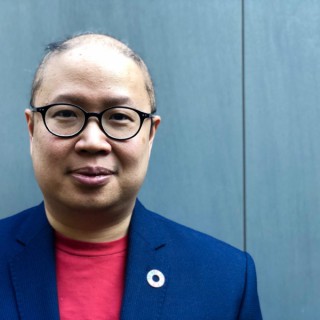
In this in-depth conversation, data scientist and researcher Hannah Ritchie delves into key insights from her new book 'Not The End of The World', which challenges the pervasive idea that human society is doomed due to environmental degradation. She explores various environmental problems, including climate change and plastic pollution, and emphasizes the potential for progress in tackling these critical issues. Hannah also discusses the essential role of technology and outlines the importance of lifting people out of poverty as a measure against climate change. Her argument centers around the balance of environmental change and human impact in achieving a sustainable planet. Furthermore, she provides advice on dealing with climate anxiety, career progression, and essential work ethics. Link to transcript, video and more here: www.thendobetter.com/arts/2024/1/26/hannah-ritchie-sustainability-progress-not-the-end-of-the-world-podcast Approach: Hannah's work is primarily driven by data, focusing on the interplay between sustainability, climate change, and patterns of global development. Her new book, "Not the End of the World," addresses one of the most significant challenges of our time - environmental sustainability. In the book, Hannah dispels a range of myths associated with environmental issues. She counters the prevailing narrative which claims we are doomed and there's nothing left to do about our environmental crisis. Instead, she believes we can change the narrative and become the first generation to build a sustainable planet. Tackling Climate Change: Hannah's optimism for combating climate change stems from the significant strides made in technology, especially renewable energy technologies. These technologies are no longer mere futuristic imaginings. They are realistic, economical, and deployable on a large scale. However, she acknowledges the difficulty of the task at hand. The world is on track for 2 and a half to 3 degrees of warming which puts us in challenging terrain. We need rapid technological change coupled with significant societal transformation to alter our trajectory. Addressing Biodiversity Loss: Biodiversity loss, according to Hannah, is among the most challenging problems explored in her book. The manifestation of this crisis is nuanced as it involves intricate geo-political and economic dynamics. While technology can help, solving the biodiversity crisis will require simultaneous action on many fronts, from controlling deforestation to addressing climate change and overfishing.

What do you think of when you think about advertising and its role in climate change? I'll confess the first thing that comes to mind is the fossil fuel industry's multi-billion dollar campaign to discredit climate science, deliberately confuse the public, and delay climate action. But, of course, like every industry, advertising has a role to play in accelerating climate progress. Advertising creatives have storytelling skills that can help distill complex information, shift attitudes, and accelerate the adoption of climate solutions. At a more basic level, the narratives that capture our attention and gain currency in our collecting thinking play a powerful role in influencing corporate agenda, policymaking, and voters. So don't count advertising out. Today, I'm joined by Blake Harrop, President of Wieden+Kennedy Amsterdam. Whether or not you know it, you're familiar with Wieden+Kennedy's work. They're a small creative firm with a big reputation, and they've been doing some genuinely interesting climate-related work. In our conversation, we talk big picture about the advertising industry and how it needs to evolve, and also what we can all learn from European countries' effective climate communication. We also get specific and talk about some of Wieden+Kennedy's recent projects and how they demonstrate advertising's potential as a climate ally. Lot's to learn about and ponder if you listen with an open mind. Here we go. In today's episode, we cover:[3:19] Wieden+Kennedy history & what it's known for[4:32] Why does advertising matter?[7:22] Should we be lauding the ad industry?[8:55] How the ad industry rewards success & opportunity to change perception[10:28] Wieden+Kennedy as a B Corp & what it means for their commitment to climate[13:06] Would Wieden+Kennedy work with fossil fuel companies in the future?[15:10] Working with Fortescue Future Industries & Google in Germany[19:16] Working with Orsted (Fmr. DONG Energy) & Corona[25:31] The pros & cons of sustainability as a selling point[30:10] Lessons on communicating climate change[33:23] The importance & urgency of climate action[36:22] Nuclear energy as a dream campaign from a climate perspective[39:43] A role for all of us to be advertisers for climate engagementResources MentionedWieden+KennedyB LabClean Creatives PledgeW+K & Fortescue Future Industries: The Power of NowW+K & Google DE: Every Decision CountsW+K & Ørsted: The Power of WindW+K & Ørsted: Hello to a Better FutureW+K & Corona: Oceans WeekW+K & Corona: The FishAn Inconvenient TruthYale Program on...
“Arkansas Traveler” is an old-time song of folk humor that tells of a well-heeled dandy who gets lost while travelling across the Ozark Mountains. He comes upon a backwoods farmer and shouts out: “Hey farmer, where does this road go?” Not missing a beat, the farmer says: “I've lived here all my life, stranger, and it ain't gone nowhere, yet.”A corny joke, yet the current US Congress has traveled that same nowhere road all year long in a fruitless attempt to reach agreement on a rewrite of America's basic Farm Bill. This failure is a very big deal and wholly irresponsible. The bill is a five-year, $700 billion package that not only doles out federal crop subsidies (which have largely gone to huge agribusiness operations), but it also provides food stamps for millions of poor families, money for vital ag conservation programs, and economic development work in thousands of rural counties.So why the dead end? It's caused by the same plutocratic/theocratic nuttiness of Republican lawmakers who put their extremist right-wing ideology and corporate servitude above all the other needs of regular people and our country. Because of their internal chaos and political grandstanding, the old status quo Farm Bill had to be extended for another year. Yet, that's not all bad news, for a whole new constituency has begun rallying to write a truly innovative, forward-looking farm-food-labor climate bill that fosters the Common Good above the exploitative greed of today's monopolistic, narrow-minded agribusiness complex.Let's turn the dead-end year into a positive opportunity to build public support in 2024 for fundamental democratic change in America's food direction. The way to get there is not through more back-room Washington deals, but by going straight to the people, mobilizing family farmers, food workers, consumers, climate activists, and others behind a revitalized system that works for us.Photo by Aurora Borealis on UnsplashDo somethingTo learn more about the Farm Bill, we recommend Farm Aid's Farm Bill 101 guide, and their regular updates. (They'll also give you actions to take when it's time!)We're also fans of RuralOrganizing.org for getting involved in rural support all over the country— after all, the Farm Bill is not just a food bill, it's a rural infrastructure bill. Enjoyed this post? Please consider sharing with friends and on social media!Jim Hightower's Lowdown is a reader-supported publication. To receive new posts and support my work, consider becoming a free or paid subscriber. This is a public episode. If you'd like to discuss this with other subscribers or get access to bonus episodes, visit jimhightower.substack.com/subscribe
“Arkansas Traveler” is an old-time song of folk humor that tells of a well-heeled dandy who gets lost while travelling across the Ozark Mountains. He comes upon a backwoods farmer and shouts out: “Hey farmer, where does this road go?” Not missing a beat, the farmer says: “I’ve lived here all my life, stranger, and it ain’t gone nowhere, yet.”
According to a new report by the World Resources Institute, the world is making progress on climate, but the progress is not fast enough. The report looked at 37 indicators of climate progress towards the goals set forth by the Paris Agreement. In some areas, the progress has been substantial, but in six areas, the […]
Former US Vice President Al Gore has been going to COP summits since the beginning. But he's much more than a COP-goer. Many of today's climate activists say that Gore's climate documentary An Inconvenient Truth was the reason they became activists. The movie won an Academy Award in 2007 and also bagged him that year's Nobel Peace Prize alongside the Intergovernmental Panel on Climate Change. Gore has become the de facto spokesman for climate change. In recent years and especially before COP28, he's become much more vocal in calling out the villains. He has castigated the role of petrostates and oil companies who shape the COP agenda, saying they've “taken the disguise off” and are not good faith partners. Bloomberg Green senior reporter Akshat Rathi spoke with Al Gore at the Bloomberg Green Summit at COP28 in Dubai to ask him how to break the stranglehold petrostates have over COP, why tackling climate change solves many other major problems, and why big emitters can no longer hide. Read more: Al Gore Wants to Weaken Petrostates' Power Over Global Climate Decisions — Bloomberg Akshat Rathi's book of essays about climate activists inspired by Al Gore Sign up to the Green newsletter Fill out Bloomberg Green's climate anxiety survey Zero is a production of Bloomberg Green. Our producer is Oscar Boyd and our senior producer is Christine Driscoll. Special thanks to Kira Bindrim. Email us at zeropod@bloomberg.net. For more coverage of climate change and solutions, visit https://www.bloomberg.com/green.See omnystudio.com/listener for privacy information.

Australia's ambitious climate goals: On the Vverge of COP28 As we gear up for COP28, Australia has made notable climate strides that can't go unnoticed. Under Prime Minister Anthony Albanese, the country has set ambitious goals to reduce emissions by 43% by 2030, a significant leap from the previous 28% target. At COP28, Energy Minister Chris Bowen will present a report indicating that Australia is on track for a 37% reduction with existing programs while aiming for 42%. Here are just a few bold steps Australia has taken on climate action: Safeguard mechanism in heavy industry: A groundbreaking policy compels industrial facilities emitting over 100,000 metric tons of CO2e annually to cut emissions. This policy includes mining and oil and gas production facilities, marking a significant step towards reducing emissions.Electric vehicle (EV) strategy: Despite the absence of a new fuel efficiency standard, Australia's EV strategy is promising, focusing on infrastructure and charging access. The federal push is encouraging more EV brands to enter the market, signifying a shift in the supply-demand balance.Rapid adoption of rooftop solar: Australia is the fastest-growing rooftop solar market globally, reflecting the community's strong desire for an energy transition. Policies at federal, state, and council levels support renewable home energy, though affordability remains a challenge. Community's role in climate action The climate policy in Australia is not just top-down; community involvement is pivotal. This week, climate activists organized a protest in Newcastle, arresting 109 people for blocking coal shipping and emphasizing the public's demand for swifter climate action. The protest, including diverse participants like retired coal miners and high school students, underscores a collective push for a just and swift transition away from fossil fuels. Australia's climate action, backed by government policies and community activism, is a beacon of hope. As we witness these developments, it's clear that a sustainable future is not just a vision but can be an achievable reality.

Welcome to another episode of "Redefining Energy Tech," hosted by Michael Barnard. Today, we have the pleasure of having Dr. Joseph Romm, a Senior Research Fellow at the University of Pennsylvania Center for Science, Sustainability, and the Media. Dr. Romm, with a rich background in physics and public policy, has significantly contributed to our understanding of climate solutions, especially in areas like direct air capture and offsets.Dr. Romm shared about his journey, recounting his time working closely with Amory Lovins at the Rocky Mountain Institute, and his role as the Deputy Assistant Secretary at the Department of Energy. Post his tenure at the Department, he dedicated himself to climate communication, contributing to the Climate Progress blog until its unfortunate closure. Following this, he took up his current position at the Center under the leadership of Michael Mann, where he is actively involved in research and is in the process of writing three papers focusing on bioenergy carbon capture and storage (BECCS), direct air capture (DAC), and carbon offsets as potential climate solutions.The discussion started with the concept of carbon offsets, their limitations, and their role in the broader climate change mitigation strategy. Dr. Romm highlighted the concerning trend of organizations opting to pay for projects in places like Brazil or investing in tree planting and deforestation prevention as a means to offset their own emissions. He emphasized the distinction between voluntary market offsets and regulated offsets, pointing out the lack of oversight in the voluntary market which has led to a decrease in price and quality, and the more robust, yet expensive and complex nature of regulated offsets under agreements like the Paris Accord.The conversation touched upon the 2015 Paris Agreement, its goals, and the challenges in achieving them, specifically addressing the complexities of trading and offsets. They discussed the developments since the agreement, including the introduction of authorized offsets in November 2021, and the concept of corresponding adjustments to prevent double counting of emission reductions. The example of Brazil was highlighted, demonstrating how countries could sell offset credits while maintaining their official emission levels through corresponding adjustments. However, this practice raises concerns about the future, especially for poorer countries that might find themselves at a disadvantage, potentially being pushed out of these markets.The first half of the discussion concluded with the importance of genuine emission reductions, the challenges associated with offsets and corresponding adjustments, and the need for careful consideration to ensure that the mechanisms in place truly contribute to global emission reduction efforts without exploiting poorer nations.Read Dr. Romm's paper on offsets, bioenergy and carbon capture and direct air capture to prepare for COP28. They are available from the University of Pennsylvania.LInk to Joe Romm publications: https://web.sas.upenn.edu/pcssm/publications/

More companies have set sustainability goals than ever. But many will struggle to meet those goals. Baker McKenzie's Alyssa Auberger shares insights from a special survey that reveals business leader worries and the blindspots that some might overlook. As the global law firm's first-ever Chief Sustainability Officer, she also shares her unique journey to the role -- from pianist to lawyer to her current position -- and how the discipline and creativity required in music shapes how she works even today. To read the survey, click here: The Race to Net-Zero: Is the global business community on course to beat the clock?, To learn more about Baker McKenzie's approach to navigating risks, check out its podcast Solutions for a Connected World sharing advice on driving growth that is both sustainable – and inclusive.

More companies have set sustainability goals than ever. But many will struggle to meet those goals. Baker McKenzie's Alyssa Auberger shares insights from a special survey that reveals business leader worries and the blindspots that some might overlook. As the global law firm's first-ever Chief Sustainability Officer, she also shares her unique journey to the role -- from pianist to lawyer to her current position -- and how the discipline and creativity required in music shapes how she works even today. To read the survey, click here: The Race to Net-Zero: Is the global business community on course to beat the clock?: https://www.bakermckenzie.com/en/newsroom/2022/11/new-report-finds-barriers-to-net-zero-transition To learn more about Baker McKenzie's approach to navigating risks, check out its podcast Solutions for a Connected World sharing advice on driving growth that is both sustainable – and inclusive: https://www.bakermckenzie.com/en/expertise/solutions-connected-world Hosted on Acast. See acast.com/privacy for more information.

Contents - Part 1 (of 3): [Support this channel by joing via https://patreon.com/genncc or https://www.youtube.com/@NickBreeze/videos] Download Joes Paper here. 1 - A license to pollute 2 - Offsets relationship to “net zero” 3 - “Carbon neutral” claims = greenwash 4 - Pay to pollute 5 - 94% of offsets are worthless 6 - Quantifying deforestation is tricky 7 - 2 types of lawsuit 8 - Disputing claims of carbon neutrality 9 - Unregulated markets 10 - Solving the climate problem for a few bucks a tonne (?) 11 - European Carbon Trading System 12 - Unregulated Markets In this first of three part interview with Dr Joe Romm, we discuss how dodgy off-sets and double accounting are plaguing climate progress at a time when the world urgently needs to get serious about climate change. Joe Romm was the acting assistant secretary for energy efficiency and renewables in the US Department of Energy, back in the 1990's and also the founder of the now ceased Climate Progress blog. Today Joe is a senior research fellow at the University of Pennsylvania Centre for Science, Sustainability and Media. Part 1 focuses on the how offsets are misused by big brand names and nations in unregulated markets to peddle lies to the public. In Part 2 we discuss how this impacts the NDC accounting systems that underpin the Paris Agreement and expose much less well off countries to yet another form of what Joe calls Climate Imperialism. In Part 3 we discuss how COP28 does not bode well having an oil boss as the president and how all these strands come together to reinforce the notion that the UNFCCC process is set-up to fail.

Princeton University researchers have launched a global survey aimed at spotting and eliminating practical barriers to a net-zero carbon future. Description Much work needs to be done, very quickly, if if a net-zero carbon economy is to become reality by the middle of this century. Yet, the fact is that the current rate of investment in clean energy technology and today's pace of clean infrastructure deployment lag well behind what will be needed to reach the mid-century goal, and limit climate change impacts. On the podcast, two researchers from Princeton University discuss their work to identify key bottlenecks to the acceleration of the energy transition in the areas of finance, workforce mobilization, and related challenges through a recently launched global survey into barriers to achieving net-zero. They also take a deep dive into a series of critical shifts that, if they take place, hold the promise of delivering an accelerated rate of decarbonization toward the 2050 goal. Elke Weber is a Professor of Psychology and Public Affairs, and Professor of Energy and Environment at Princeton University's Andlinger Center for Energy and the Environment. Chris Grieg is a Senior Research Scientist at the Andlinger Center and former energy industry executive. Related Content Accelerating Climate Action https://kleinmanenergy.upenn.edu/podcast/accelerating-climate-action/ The Net-Zero Governance Conveyor Belt https://kleinmanenergy.upenn.edu/research/publications/the-net-zero-governance-conveyor-belt/ Ammonia's Role in a Net-Zero Hydrogen Economy https://kleinmanenergy.upenn.edu/research/publications/ammonias-role-in-a-net-zero-hydrogen-economy/ Energy Policy Now is produced by The Kleinman Center for Energy Policy at the University of Pennsylvania. For all things energy policy, visit kleinmanenergy.upenn.eduSee omnystudio.com/listener for privacy information.
When Sultan Al Jaber was made president of COP28, the year's biggest climate summit, there was outrage. How can the head of a giant oil company Abu Dhabi National Oil Co. – think Exxon and BP combined – convince the world to cut emissions faster? But Al Jaber isn't an oil boss cut from the same mold. He spent a decade as a renewables executive. This week on Zero, Bloomberg Green Executive Editor Aaron Rutkoff talks to Senior Reporter Akshat Rathi about his new in-depth profile of Al Jaber exploring a world of contradictions. You can read the full article “The Oil Sheikh's Climate Fixer”. Read a transcript of this episode, here. Zero is a production of Bloomberg Green. Our producer is Oscar Boyd and our senior producer is Christine Driscoll. Special thanks this week to Gilda Di Carli, Stacey Wong, and Kira Bindrim. Thoughts or suggestions? Email us at zeropod@bloomberg.net. For more coverage of climate change and solutions, visit https://www.bloomberg.com/greenSee omnystudio.com/listener for privacy information.

The fashion industry has an outsized carbon footprint. But many fashion brands have been making promising statements about their carbon emissions reduction or carbon neutrality goals. How does the actual progress and supply chain action match up to these goals, though? It can, frankly, be difficult to discern. But in today's episode, we're going to unravel the tangled web of confusing greenwashing and claims and dig into the nitty gritty of where fashion actually stands on climate action today. I (Elizabeth here!) spoke with Rachel and Erdene of the climate and environmental advocacy organization Stand.Earth. The team at Stand just released their 2023 Fossil Free Fashion Scorecard, ranking 43 influential fashion brands on their progress towards decarbonization in their supply chain.In this episode, we talk about this scorecard, discuss where fashion stands now on climate action, and what brands need to do in order to reach their climate goals.***THIS EPISODE WAS BROUGHT TO YOU BY... Passion LilieFair trade fashion brand Passion Lilie partners with 5 different artisan groups in India to create their beautifully printed dresses, jumpsuits, and a variety of other clothing and accessories. As a Fair Trade Federation member, Passion Lilie ensures that their partners are paying living wages to their makers, offering a safe and healthy work environment, and are investing in the overall wellbeing of the artisans. The brand also uses durable natural fibers and non-toxic dyes for their collections.***Conscious Fashion Collective Job BoardWant to start or grow a career in sustainable fashion? Find your next career opportunity on Conscious Fashion Collective's Job Board. (Or if you are hiring, submit your job opening!)You can also sign up for the Conscious Fashion Collective job newsletter to get career opportunities delivered to your inbox, plus upcoming events.***SHOW NOTEShttps://www.consciouslifeandstyle.com/stand-earth-fossil-free-fashion***TRANCRIPT:https://conscious-style-podcast.simplecast.com/episodes/80-where-does-fashion-stand-on-climate-progress-rachel-erdene-of-standearth ***CONNECT WITH STAND.EARTH:

The war in Ukraine has led to soaring energy prices, political enmity and instability. Can the meeting of global leaders re-focus the world's attention on the climate catastrophe?. Help support our independent journalism at theguardian.com/infocus

Maya K. van Rossum is the Founder of Green Amendments For the Generations, a grassroots non-profit organization inspiring a nationwide movement to secure constitutional recognition and protection of environmental rights in every state and ultimately at the federal level. Maya is the author of The Green Amendment: Securing Our Right to a Healthy Environment, and the follow up book The Green Amendment: The People's Fight for a Clean, Safe, and Healthy Environment, which will be released in November 2022. Continue reading Maya's bio at ASustainableMind.com/100 Today's Sponsors: Wren helps you calculate your carbon footprint and then go carbon neutral by investing in environmental projects across the globe. Sign up and take the carbon footprint quiz at Wren.co/ASM and get 10 extra trees planted in your name! Brooklyn Candle Studio specializes in hand-crafted eco-friendly luxury candles. Get 20% off with the promo code SUSTAINABLE20 at BrooklynCandleStudio.com! In this episode, Marjorie and Maya discuss: Is our environment actually protected under current legislation? States that are getting environmental protection right and why The one thing you should always do when speaking to local and state officials about the importance of environmental protections…hint: it involves the Constitution! Maya's new book! Resources mentioned in today's episode: Maya's first book: The Green Amendment: Securing Our Right to a Healthy Environment Maya's first ASM appearance: ASustainableMind.com/026 TerraCycle, global leader in recycling hard-to-recycle materials: TerraCycle.com TerraCycle founder Tom Szaky on ASM: ASustainableMind.com/027 Book: The Last Train to London: A Novel by Meg Waite Clayton, purchase at JewishBookCouncil.org Book: Ishmael by Daniel Quinn, purchase at Ishmael.org Last Child In the Woods by Richard Louv, purchase at RichardLouv.com Connect with Maya and The Green Amendment Team: Website: ForTheGenerations.org/the-green-amendment/ Website: DelawareRiverkeeper.org LinkedIn: Linkedin.com/in/maya-van-rossum-21803114/ Twitter: @GreenAmendments Instagram: @GreenAmendments Connect with Marjorie Alexander: Instagram: Instagram.com/asustainablemind/ Twitter: Twitter.com/SustainableMind Facebook: Facebook.com/asustainablemind/ Website: ASustainableMind.com Interested in sponsoring or supporting A Sustainable Mind? Visit our sponsorship page at ASustainableMind.com/sponsor!
© 2020-2026 Ivy Podcast Discovery LLC
