
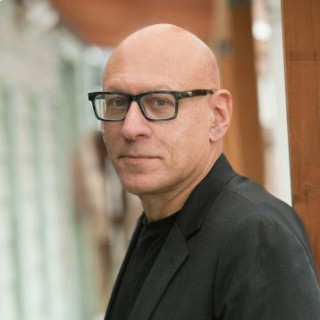
American author and film director
POPULARITY

7 episodes with David Shields

6 episodes with David Shields

8 episodes with David Shields

5 episodes with David Shields

3 episodes with David Shields

3 episodes with David Shields

5 episodes with David Shields

5 episodes with David Shields
8 episodes with David Shields

With every growing season, the South is in danger of losing an ingredient that's shaped our state's flavor, history, and culture. This week, we will be talking with Chef Kevin Mitchell and food historian David Shields, hosts of the SCETV and PBS series The Savers of Flavor about their ongoing search for the vanishing ingredients of Southern cuisine. Over the course of four episodes David and Kevin embark on a quest to seek out and rescue those ingredients before they are lost forever.

Join David (@dgofman.bsky.social), Lucas (@theprospectprof) and Greg (@greghoogkamp) as they break down the surprising sale of the Angels to Kroenke Sports and Entertainment, the most recent CBA proposal from the MLB and spend the bulk of the podcast discussing the top performances in MiLB for the month of August.Players Discussed: Rainiel Rodriguez, Franklin Primera, Carson Tinney, Tony Blanco Jr., Josiah Hartshorn, Carson DeMartini, Daniel Dickinson, Caleb Bonemer, Echedry Vargas, Seaver King, Mitch Voit, Brandon Compton, Avery Owusu-Asiedo, Enddy Azocar, Angeibel Gomez, Coleman Crow, Tyler Bremner, Luis Serna, Justin West, David Shields

Ted Lasso Season 4 is coming, when do we think we’ll retire, women and the Kalshi prediction markets, and Information Sickness with David Shields are the texts we’re using to generate conversation this week. Questions for the Reader: Stories Bill Read or Watched the Week of July 27, 2026 “Information Sickness” by David Shields “Jason … Continue reading "Ted Lasso Season 4 is Coming, When to Retire, Women and Kalshi, and Information Sickness with David Shields"

How do you write about the most painful experiences of your life without being overwhelmed by them? How can timed writing and a braided story help you untangle your hardest stories? With Nicole Walker. In the intro, Self-Publishing Pop Up Books [Self-Publishing with ALLi]; New in KU [BookBub]; The solar sail theory of indie publishing [ProductiveIndieFictionWriter]; Bones of the Deep; Selfie Awards Shortlist 2026. This episode is sponsored by Publisher Rocket, which will help you get your book in front of more Amazon readers so you can spend less time marketing and more time writing. I use Publisher Rocket for researching book titles, categories, and keywords — for new books and for updating my backlist. Check it out at www.PublisherRocket.com This show is also supported by my Patrons. Join my Community at Patreon.com/thecreativepenn Nicole Walker is a nonfiction author, essayist, poet, and editor, as well as a creative writing teacher. Her latest book is Writing the Hard Stuff: Turning Difficult Subjects into Meaningful Prose. You can listen above or on your favorite podcast app or read the notes and links below. Here are the highlights and the full transcript is below. Show Notes Why writing helps us understand “the puzzles of the universe” — and when to trust that intuition The braided essay: alternating between trauma and an everyday obsession to unlock the hard stuff How two-minute timed writing lets you go deep and then safely step back Rooting pain in the body, using the senses, scene, and dialogue instead of words like “trauma” Truth in memoir, big T versus little t, and the emerging genre of speculative nonfiction What actually sells books: pairing up on book tour and getting readers back out into the world You can find Nicole and NikWalk.com. Transcript of the interview with Nicole Walker Jo: Nicole Walker is a nonfiction author, essayist, poet, and editor, as well as a creative writing teacher. Her latest book is Writing the Hard Stuff: Turning Difficult Subjects into Meaningful Prose. So welcome to the show, Nicole. Nicole: Hi, Joanna. It's so nice to be here. Jo: I've lots to talk about, but first up— Tell us a bit more about you and your journey into writing and publishing. Nicole: I was always a writer. As all writers say, I've been writing since I was five. I kept little journals and things like that, and I was on the high school literary magazine. I was an English major in college, but that was always tempered with some serious commitment to the sciences, to English literature, to German, to Spanish. I had a wide variety of interests, but there was always something that tugged at me about writing that made me feel like, this is where I feel most at home. This is the way I like to understand the puzzles of the universe. This is how I make sense of the world—through writing. So even though I got my BA in English at Reed College in Portland, Oregon, I stuck around Portland for a few years because I loved it. I worked for various non-profits, and that was great. At some point I said, “I really want to take this seriously.” So I went ahead and applied to graduate school, and ended up in the University of Utah's PhD programme, where I stayed for eight very lovely years. I always recommend to my own students: never graduate. Stay in graduate school forever, because it's such a beautiful place where people support your writing. You have professors who support it, but more importantly, you have your cohort. To this day, I have so many great friends. You make a lot of friends if you stick around for eight years. That sort of community-building is, I think, the other part of why I became a writer. Writing by myself is obviously a lonely business, and there's a lot of internal struggle that happens with that. I have found a literary community, both at the University of Utah and then growing from there, serving as president of the NonfictioNOW Conference, teaching my own graduate students, serving as the series editor for Crux, the imprint at the University of Georgia Press. I feel like my world has expanded because of my writing. So that's been a true gift. Jo: Oh, I love that. I love that you said you understand the puzzles of the universe through writing, and that this tugged at you. Could talk about that a bit more? Because a lot of listeners, I think, sometimes mistrust that feeling. They think, “Oh, maybe I shouldn't necessarily lean into that intuition.” It feels like you leaned very strongly into an intuition that this was the way. Nicole: Yes, and this book in particular, Writing the Hard Stuff, takes that to heart. I think about writing the hard stuff as writing all kinds of tricky things—things that are really hard to communicate. The book begins revolving around personal trauma. Things that happened in my childhood, as well as difficult subjects that happen to us when we're growing up. It also includes things like environmental issues and political issues: things that are really hard to talk about, that are philosophically difficult to express, that can be controversial, and that you can put people off by talking about. One of the goals of the book—one of my own philosophies—is that by looking deeply into the knotted ball of string that is a kind of trauma or a kind of difficulty, and beginning to pull those strings out, that's where you start to not only make meaning out of what happened to you, or what this particular problem is, but those strings themselves become connections. I talk about Donna Haraway's book Staying with the Trouble. It's primarily about how we can overcome our political differences regarding climate change, and one of her examples is to change the way we think about narrative. In Western thought, we often think there's a beginning, a middle, and an end, and she brings up the Navajo game that we all know as cat's cradle. So if you think of that ball of knots—your trauma, your difficult subject—you start pulling out the strings, and then you start playing with it. With cat's cradle, you make one design with your hands, and then a friend pulls it around and turns it into another design. To me, that's how reading and writing work. We share, and we build on each other's ideas, but we're always connected by those strings. So if you have this difficult subject and you're shying away from it, you're losing, I think, some of the opportunity to make connections and to make sense of what that nest of string sitting in your stomach actually is. Jo: I love that metaphor. I think it's brilliant. I've never heard it described that way, and I think it's fantastic. What's interesting is that some people don't have a mind's eye—I know several listeners who don't. So while in my mind I'm picturing the ball of string and then the cat's cradle, some people won't be able to do that, which is also fascinating in terms of how people's brains work. In terms of how you'd recommend people think about it: this ball of string that we want to turn into a design like a cat's cradle is a total mess. So where do we even start? How do we know where to start pulling on the threads? Because it might just feel like it's out of control. Nicole: Oh, I deeply appreciate both the idea that some people don't have that mind's eye, or just think differently. We all have different ways of imagining what we call our trauma, this nest of problems, this ball of string. Of course a metaphor does oversimplify in some ways. I say, “Well, you just take one of the ends of the string and start pulling.” But practically, what does that really mean to do? There are a couple of things I suggest in the book and offer at workshops. One is an exercise I call writing the braided essay. I ask the writer to sit down and think about a scene that was difficult in their life—something that had a lot of tension, that they're really still struggling with, that they don't love thinking about. I'm going to ask them to go there for just a couple of minutes. Then there's the other side of the braided essay: I ask them to think about something completely different, completely off-topic. Perhaps a walk they took in the aspen grove, or what they were making for dinner last night, or perhaps they're deeply invested in the networks of the blood in the human body—anything they're fascinated and obsessed with. I say, “Okay, I want you to write about your difficult subject for two minutes, but then I'm going to give you a break, and you're going to pop over and talk about how you spent all day weeding your garden, and yet there are still weeds.” Then I'm going to ask people to go back and talk about their difficult subject, and then go back and talk about their obsession with weeds. They write about each of these things for two minutes. What happens—which I think is a pretty compelling experiment, from my point of view and from theirs—is that they write back and forth, and they're able to take a break from the hard thing. They're also tempted to go back to it once they've had that break in their research. The other thing that happens—and, you know, every book in nonfiction has to have a colon, so of course it's called Writing the Hard Stuff: Turning Difficult Subjects into Meaningful Prose—is that by going back and forth, you'll see the connections these writers make. They make connections with word choice, with verbs, with colours and different kinds of imagery. They start to make meaning between those two ideas. What happens to the writer then—and to me, when I'm doing it—is that I now have something that is constructed. So it's not just this knot in my stomach. It's not just my interest in research. Now I've put these things together, and then I get to play. We get to the cat's cradle part of the metaphor, where I really start thinking about craft issues. Why did I happen to bring these two ideas together? What might they have in common? What does it mean that I'm telling the story of my parents' divorce and my personal trauma, and in the research part I'm talking about weeds? Well, maybe I felt in the weeds. You come up with some sort of overarching understanding of why you chose that research story, and it lets you go deeper into that personal trauma, now with some of the techniques of craft, which I think help shield you from some of the trauma and pain of that original hard story. Jo: Again, I really love that idea. Do you also think the timed writing actually helps people go deep and then withdraw a bit, which psychologically may help them write about these difficult subjects? People are like, “I need to sit down for two hours and write about this deeply traumatic thing,” which of course feels like it's going to be too hard. So perhaps that two-minute process actually releases people from that. Nicole: Oh, absolutely. What a great way to think about it. It is prohibitive to sit down and think, “Okay, I'm going to go into the worst thing that ever happened to me and sit with it for two hours.” Going back and forth, you create energy and tension. But also, nobody wants to sit with something by themselves for two hours. If you think of research as your companion—”I'm coming in there with you, buddy”—you have something to rely on, this other side of the story, and it gives you that space. The timed writing, the two minutes, two minutes, two minutes, also reminds you that you don't have to write for two hours straight any day. I have a goal where I write 500 words a day, which is mostly true, unless I'm really in the weeds. We'll use two metaphors today: we'll use string, and now we'll be using weeds. But when I'm really in the weeds teaching, or going around the country talking about books, I really do write 500 words a day. I often try not to write too much more, because sometimes it loses freshness, and it can be overwhelming. So I really appreciate you saying that having that timed writing is important, but also that having that balance of deep emotional investigation with this more cerebral, informational crutch can really help you get into the subject and go deeper. Jo: Yes, and perhaps it anchors the writing in something concrete. Because with memoir particularly—having also written one—it can be too easy to lean on big words like “pain” or “trauma,” but that's actually meaningless in a book. So why is it so important to be specific and concrete in our writing in order to convey these bigger topics? Nicole: I think we know our own trauma. We know how it feels in our bodies, and we've been living with it for a long time. So it's pretty hard to communicate it to others. Why does it matter to other people? Of course it matters to you, but how are you going to convey the breadth of that trouble with words that aren't rooted in the physical world? The nice thing about rooting things in the physical world is that every one of us has a body. We have different bodies, but we share that in common. So it's the old trope of using your senses first. What did it feel like? If you can't think of what part of your body it particularly hurts in, you have the availability of metaphor to describe how that might have felt. You have the opportunity to create scene. This is particularly difficult for memoir writers, I think, because we imagine it's the fiction folks who have to use dialogue, who have to have a setting, who have to put their bodies in a place. Thatt's one of my mantras when I teach: we need to be able to see where you are. We need to see what is physically happening, how the interactions work. Dialogue, I think, is one of the best ways to literally get your body on the page—and to get your other characters, or subjects, on the page—because to speak, you have to have a body. Once you start having dialogue, you can picture the way the speaker's face moves, the way they cross their legs. You can even picture the colour of the paint behind them, or the kind of chair they're sitting in. So dialogue is one of the first ways you can say, “All right, I must have a scene here.” I can't go on just telling people, “It was so traumatic. I suffered so much. It was terrible. I felt so much pain.” You can say that sometimes, that's totally fair, but you have to pair it with that physical, concrete imagery, so other people can begin to understand what it felt like for you in your body, so they can feel it in their body. Jo: Interesting that you bring up dialogue because one of the issues with memoir is—I've had people compare it to truth with a small “t” and truth with a big “T.” So you're telling some kind of big truth about your life. If you're writing dialogue about something that actually happened to you, in memory, it's very unlikely that it actually happened in that way, so it's not necessarily small-“t” true. So on a practical note, what are your thoughts and tips on truth. How do we tell our own story even if others don't see it that way? Nicole: This is a subject I'm deeply invested in right now. When I first started teaching creative nonfiction, it was at the height of the John D'Agata and David Shields questions. What is truth? Big T, little t? What am I obligated to do as a creative nonfiction writer? I had a great friend, Angie Truong, who came to teach one of my classes, and she said, “Nonfiction is a pretty big spectrum. You have journalism on one end, and then you have the lyric essay on the other end.” You imagine the lyric essay is full of metaphors and things like that, so you can approach truth. You're saying, “This is what it felt like. This is what it seemed like.” Check out my newest favourite thing. It's called speculative nonfiction, and I use a little bit of this in my book How to Plant a Billion Trees, which Writing the Hard Stuff is somewhat based on. I wrote them in tandem, which was a very strange and interesting and fun thing to do. But in How to Plant a Billion Trees I use this thing called speculative nonfiction, which goes even further along the spectrum, past the lyric essay, to this opportunity to use language like “perhaps,” “maybe,” “I imagined.” So I have sections in my book where I can't remember the dialogue exactly, but I know that the dialogue in some sense matters—that what might have been said will do much more to convey what was happening than my exposition over the matter. By using those turns of phrase, you're alerting your reader: “Dear reader, this definitely is not exactly what happened, but this is how I recall it.” Then you're being not only honest to the story and honest to your reader, but you're also conveying the feeling and the mood of the event—that other kind of truth that memoir is really trying to get at. It was like this for me, which is why I think this way now. It's a fledgling genre. I just read a book by Laraine Herring called A Constellation of Ghosts: A Speculative Memoir with Ravens. It's brilliant. It's an amazing book that pairs her actual colonoscopy and discovery of colon cancer with the story of her dad, who has passed already and comes back as a raven and helps her through it. So you're pulling on some of the tools of fiction, which creative nonfiction already has been doing. But it does so in this bright and, I feel, incredibly ethical way. You're alerting your reader, “My dad is not really a raven.” But you're also saying, “Oh my gosh, I sensed he was with me. I sensed every time a raven approached that I had somebody's hand on my shoulder.” That, to me, has been a lot of fun—a much more imaginative way of creating some of those scenes than doing something like, “Well, I don't remember the dialogue.” Or, even worse—and we know people have been unethical in their approach—recreating the dialogue as if they'd had a tape recorder with them when they were 17 years old. Jo: Mm. Nicole: So I offer that as an option to your listeners, as something to experiment with. Allow yourself to have that imaginative opportunity to show the reader what it might have been like. Jo: I love that. It's interesting, you talk there about the spectrum of nonfiction, which is ridiculously big, as is fiction. Obviously these are very big. But I wonder if we do get hemmed in by genre. I love the idea of a speculative memoir. I'm going to have to go read that book because I can't even imagine what that really means. I feel hemmed in by my expectations of a memoir. But then, from a business and marketing perspective—because we're all trying to sell our books— Do we risk not meeting the expectations of a reader of a genre that way? Nicole: Right. One of the good and bad things about my literary career is that I've spanned a lot of genres. My PhD is actually in poetry. Nobody expects the full truth from poetry. One of my poetry professors once said she wrote this really sad poem about her father's death, and the audience was moved, and then her real father stood up and said, “Good job, daughter.” And someone in the audience was just shocked: “You just read a poem about your dead dad, and here he is!” We have absolute expectations of genre, and expectations of truth, in everything we read. If you label it fiction, you're kind of off the hook—even though, of course, fiction uses so many elements of nonfiction: so much research, so much information, so much personal memory to create those fantastic landscapes. So when I think about how one sells one's memoir, I do think you also have to acknowledge what you expect your audience to be. With Laraine Herring's A Constellation of Ghosts, by putting “colon, a speculative memoir,” you're alerting your reader to that possibility. And because it's a pretty far-out way of thinking right now, it probably does curtail some of the sales. On the other hand, think of memoirs that are written for celebrities, and how many of them are ghostwritten—or written with other people, where the ghostwriter's not even part of the thing—but it comes across as the most legit of all memoirs, because it's a celebrity and we know them. We associate their lives with their story, and their story must therefore be true. So I think, with all levels of creative nonfiction, it's incumbent upon the writer to suggest right off the bat what kind of nonfiction they're reading. Are they reading journalism? Are they reading lyric essays? Are they reading speculative nonfiction? I think a lot, too—as an editor for a literary series for nonfiction books—about what I look for in memoir. It's something that takes the personal story and connects it into the larger conversation. Even if the larger conversation is directly about what the main subject is about, to me it's still about the crux of the matter. Why does your story make an impact on the world in this bigger way? How do you let the world inform your story? How does your past and your trauma, or your difficulties, connect to a larger world? Jo: Mm. Nicole: To me, that's something some memoirs are capable of doing. Some memoirs are truly invested only in that personal story, which I think is totally legitimate too, because I love learning how people think. I love understanding. This is just how my brain works. But in terms of sales? I don't know. Again, as the series editor and as the seller of my own books, I think you can't determine it in advance. So you should probably write what you want to write, what feels right to you, using as many craft techniques as you can hone. But the market, to me, feels very non-negotiable. You never know exactly how things are going to turn out. So I deeply believe: write the best, most well-crafted book you can, and I do think your readers will find you. Jo: We'll come back to marketing in a minute, but just returning to your own writing practice. I've got your book page up in front of me, and you've written all kinds of things: your essays, your memoirs, some fiction, and some poetry, as you mentioned. So I wondered: when you're researching something, or you've got a feeling about wanting to write, how do you choose the type of book you turn it into—or a poem, or an essay? Or do you pitch it as some kind of external work, or turn it into a workshop? How do you turn an idea into what it will eventually be? Nicole: I love that question because it's somewhat of a mystery to me, but I think I'm getting close to understanding. It really is in those first few words, that first sentence, that I think, “Okay, I know which direction this is going.” For example, the other day I woke up in the morning and thought, “All right, I'm writing this poem about how man took over for God, and that's how the planet ended up being such a mess.” So I started writing it, and it was pretty lyrical at the beginning. But then I started making full sentences, and explaining things a little bit more, and I thought, “Okay, this is not a poem. It's going to be an essay.” When I start writing fiction, I pull on something a little further, a little more distant from my experience, and then I pull it back into something more character-driven. For example, in a novel I'm writing, I begin with this whole story about McDonald's and ravens, and then I pull it back into the character. If I were to diagram the sentences between a poem, the nonfiction, and the fiction, I think I'd see fundamental differences between the three. Jo: Do you work on multiple projects at the same time, or once you commit to something, is that what you finish? Personally, I have lots of little things happening, and then a moment comes and I commit to a book, and I won't stop until I've finished that book—the rest will have to wait. It's that decision moment. How does it work for you? Nicole: My process is pretty similar to yours. I have a number of ongoing projects, percolating here and there. Some days I'll think, “All right, today feels like a fiction day.” But for the most part, you're absolutely right. There's a bunch of little things I'm writing, or things I'm dabbling in, but once there's a critical mass—which I'd say is around 20,000 words or something—I'm all in, and I've got to focus on this project. Even though I think I can do whatever multitasking, really it's important to try to maintain some sort of through-line in whatever project I'm working on. If I do that with too many projects, I lose that through-line. I also worry sometimes that the projects start to sound too similar. So say I'm writing a nonfiction collection and a novel—if I go back and forth every other day, those sentence differences I'm talking about might start to collapse, and they become too similar. Then what the heck would I be writing? I don't even know. Jo: It's interesting because you span academic publishing and, I guess, trade publishing—whatever you want to call it—where more non-academics read books. I'm just finishing up a master's myself at the moment, and writing academic stuff is completely different to writing my other books. So when you're deciding on these books, are you aiming for a specific publication market—as in, you want an academic publisher, or you want a trade publisher? How do you think about publishing in the process? Nicole: As much as I once really wanted to find some ground as a scholarly and academic writer—and I really do love to write reviews of other people's books, and Writing the Hard Stuff is a textbook that relies tremendously on so many other people's books. That is really important to me because that goes back to how one both creates and thanks one's community for creating the literary world we live in—I feel like there's a smaller audience for that sort of academic writing. But it's something we should do. As generous as you are here, for example, reaching out to other people about other people's books is probably the kindest thing you can do. So I hope to continue to take time to do that and make it part of my repertoire. It's not as fun, I'd say, as the imaginative elements of writing creative nonfiction, or fiction, or poetry. That's when I really love to groove and get into that mode of, “Oh, the words are coming. Oh, I never thought about it that way.” With academic writing, I feel I sometimes write in a slightly more stilted voice. My friend Ander Monson, who teaches at the University of Arizona, has done a really great job of writing—whether it's his personal essays or his critical essays—where he maintains the same voice. He doesn't move into that super-formal academic speak. He'll literally say things like, “You know,” or, “That's a banger of a sentence,” in the middle of an academic essay, and I really admire him for that. I feel like maybe if academic writing were more receptive to people writing in their unique voices, then maybe more people would read it. Jo: Yes. One of the pieces of feedback on one of my earlier essays in my master's year was around my sentence structure—that it would be far more appropriate in a novel than in an academic essay. I was saying to my husband, “I can't believe this, but I'm just going to have to change my style.” It's very interesting. We're almost out of time, and I also wanted to ask you: you have a recent blog post on how to try to get your forthcoming book attention in 4,231 simple steps, which made me laugh. We all find book marketing a challenge, so what have you found works best for you? I should tell the listeners—there are not 4,000 steps in your blog post. Although I think people would want them. Nicole: Exactly. I stopped at 72, but I can go on. That was sort of the pre-publishing process. There have been so many great things that have happened, but a lot of them have been driven by me. I have a publicist, but he works on a lot of other books, and I have a marketing person at Bloomsbury. They have to juggle a lot. The only person who is really, really, really committed to your book is you. So I've written companion essays. I haven't had any luck publishing them, which hasn't been true in the past, so I wonder what's going on there. I'll write something for the Huffington Post or Newsweek that's tangentially related to my book. I also might just write too much in essay voice instead of popular-magazine voice. As we were just talking about, academic voice versus novelistic voice. So that might be part of the problem too. Reaching out to people who might invite me onto podcasts has been really rewarding, and very, very kind. I think the best thing I did was to put myself on book tour and to pair myself with someone in that community. I've gone on book tour before by myself, and there have been occasions where there were two to three people in the audience, which can be really disheartening. The problem wasn't so much the bookstore's fault or my book's fault—it's just that if you go to a bookstore in a town where nobody knows you, they're not going to put a lot of effort into making the date happen, unless you're super famous. So what I did was find somebody in a community—a friend of mine—who would go with me and be part of the conversation. Even if their book was a couple of years old, we'd still go and have a conversation about each of our books. This has worked tremendously well. People will come to see their friend, and then they'll be introduced to you, and they'll ask you questions and buy your book. You create new connections and new friends thanks to that friend and that place. So that's my number one recommendation for how to get the word out in the world. I also did all the social media stuff. It doesn't work as well as it used to. It's kind of a strange time. But because of my suggestion about going to bookstores with people you know… I think we're coming out of our COVID time, where we got so used to doing everything on our computers and just staying in our electronic universe. People are hungry to get out. So one thing I want to do, and haven't done yet, is throw a big party. Go to weird places where you don't even do readings—you just offer people snacks and a glass of wine and say, “Hey, here's a book if you want to buy it.” To have these more informal gatherings that bring people together because I do think there's a hankering for people to get out into the world again. Jo: And just on that—you've got these two books coming at the same time: How to Plant a Billion Trees, which is the memoir, and Writing the Hard Stuff, the how-to book for writers. When you do these events, are you choosing one or the other depending on the audience? Or are you selling both at the same time? Because they're obviously very different. Nicole: Yes, I'm definitely selling both at the same time. Although I probably push How to Plant a Billion Trees first, because most of the people I'm pairing with are also writers of nonfiction or memoir. The other thing is, I can talk about How to Plant a Billion Trees, and if people have a really deep question about, “Well, how did you write this section?” I can say, “Well, if you refer to this book, Writing the Hard Stuff, you'll see.” So it's an easier segue. I think people aren't used to going to book events for craft books. But in the interview world—where people are reviewing books or interviewing me—Writing the Hard Stuff has definitely been the primary book I've been approached to speak about because people really do want techniques. So it depends on the context as to which book gets the spotlight, but it's been really fun to be able to talk about both in tandem. I don't know if they're competing against each other or supporting each other. That's my hope, that people think, “Oh, I read this one book, I might as well read the other one.” But that's asking a lot of people, to buy two books, so I try not to overstate that hope. Jo: They are very different, and I love the idea of doing that. Absolutely. So where can people find you and your books online? Nicole: You can find me at my Substack, which is substack.nikwalk.com—N-I-K-W-A-L-K. Or my website, which is the same: nikwalk.com. I might just start going as Nik Walk in the world, so people can find me more easily. I also really love to support Bloomsbury. They have really good deals, especially on the audiobook for How to Plant a Billion Trees, and they also have good deals if you buy both books, you get free shipping. So Bloomsbury is probably the number one place to get the books, but of course they're also available on Bookshop.org and Amazon.com, and on Amazon in the UK as well. Jo: Brilliant. Well, thanks so much for your time, Nicole. That was great. Nicole: Oh, it was so fun to talk with you, Joanna. Thank you again so much for this opportunity.The post Writing The Hard Stuff: Turning Difficult Subjects Into Meaningful Prose With Nicole Walker first appeared on The Creative Penn.

On this final epsiode of the 2-part food special, we welcome back Dr. David Shields, known as "The Flavor Saver," as he shares even more interesting food stories.Follow us on Take on the South socials!https://linktr.ee/sostatuscGo checkout the Savers orf Flavor show! (Available now)https://www.pbs.org/show/the-savers-of-flavor/#podcast #food #corn #history

Which prospects had the biggest breakout performances in Week 11 of the 2026 MiLB season?In this solo episode, Tim Kanak (@FantasyAceball) breaks down his Top 10 MLB Prospects of the Week, highlighting the hottest hitters, most dominant pitching performances, and the prospects making the strongest case to climb prospect rankings across baseball.From future stars knocking on the door of the majors to under-the-radar arms exploding onto the scene, this week's list features a mix of elite talent, breakout performances, and names dynasty baseball managers need to know.The 2025 first overall pick continues to impress. Willits posted six extra-base hits, four home runs, and three stolen bases while showing the advanced hit tool, plate discipline, and all-around game that make him one of baseball's premier teenage prospects.Rodriguez is forcing Cincinnati's hand. The AAA outfielder launched four homers and seven extra-base hits this week while continuing to demonstrate the hit/power combination that could make him an impact bat in the Reds lineup sooner rather than later.One of the youngest players at AAA, Lombard delivered seven extra-base hits, two home runs, and two steals while continuing to flash premium athleticism, advanced plate discipline, and everyday shortstop upside.The former Golden Spikes winner erupted for five home runs this week as he continues adjusting to upper-level pitching and showing the elite raw power that made him one of the most feared hitters in amateur baseball.One of the week's most dominant pitching performances. Shields struck out 10 hitters while allowing just one hit and one earned run, showcasing elite command and one of the better slider profiles in the minors.Hardin turned in a masterclass, posting 11 strikeouts without issuing a walk. The Brewers continue to develop another intriguing pitching prospect with strong command and a deep arsenal.A breakout arm in the Tampa Bay system. Morgan recorded 15 strikeouts over two starts while flashing elite swing-and-miss ability with a unique mix of fastball, cutter, sweeper, and changeup.Curtis continues his rapid ascent through the Pirates organization. Across AA and AAA action, he piled up strikeouts while showing a deep arsenal headlined by a rising fastball and devastating split-change.One of the most fascinating young arms in the minors. Castro struck out 12 while allowing no runs, leaning heavily on a sinker with some of the most unique movement profiles in professional baseball.After an up-and-down start to 2026, Mathews is beginning to look like himself again. The Cardinals left-hander has piled up strikeouts over his last several outings and appears close to a major league debut.⚾ Top MiLB performers from Week 11⚾ Dynasty baseball risers and fallers⚾ MLB-ready prospects nearing promotion⚾ Pitching prospects dominating the upper minors⚾ Under-the-radar breakout candidates⚾ Statcast and scouting report analysis⚾ Future fantasy baseball impact players⚾ Updated long-term prospect outlooksWhether you're a dynasty baseball manager, prospect enthusiast, fantasy baseball player, or simply looking for the next wave of MLB stars, this episode provides everything you need to know across Minor League Baseball.
On this episode, we welcome back Dr. David Shields, known as "The Flavor Saver," as they discuss some cherry stories as well as some grocery store produce changes over the last century. #podcast #history #cherry #food Follow us on Take on the South socials!https://linktr.ee/sostatuscGo checkout the Savers orf Flavor show! (Available now)https://www.pbs.org/show/the-savers-of-flavor/
The Dynasty Team plays Start, Sit and Cut for the three oldest active MLB stadiums: Fenway Park, Wrigley Field and Dodger Stadium. They dig into the injury news around the league and discusses what might be actionable in your leagues and draft and provide analysis the best players in the minors under the age of 20.Players Discussed: Nathan Flewelling, Ethan Salas, Rainiel Rodriguez, JoJo Parker, Xavier Neyens, Juan Sanchez, Josh Hammond, Cooper Flemming, Taitn Gray, Leo De Vries, Dax Kilby, Jesus Made, Josuar Gonzalez, Luis Pena, Jhonny Level, Kevin Alvarez, Angeibel Gomez, Justin Gonzales, Edward Florentino, Braylon Payne, Eric Hartman, Josiah Hartshorn, Nate George, Francisco Renteria, Elian Pena, Eli Willits, Luis Hernandez, Kendry Chourio, Argenis Cayama, Miguel Sime Jr., Johnny King, David Shields, Kevin DeFrank, Seth Hernandez, Cam Caminiti, Landon Harmon
On this episode, Mark sits down with Dr. David Shields, known as "The Flavor Saver," as they discuss his attempts at preserving some of the most endangered fruits and vegetables in the country. They also discuss his new PBS series, "The Savers of Flavor," a series that expands on his efforts.Go checkout the first episode! (Available now)https://www.pbs.org/show/the-savers-of-flavor/Follow us on Take on the South socials!https://linktr.ee/sostatusc#history #podcast #food #agriculture

! Turn On - Choon In - Zig Zag ! - ! What's Past - Is Prologue ! ! ! Callin' ALL The Boom Booms & The Zoom Zooms ! ! . . . GROUND DOWN TO THE REAL UNDERGROUND . . . * * * GROOVIN' BLUE 26 - 01 * * * Groovin' Blue is dedicated to Sunny "Sweet Daddy Fonk" Wong. 1. (4:33) WAGRadio GB 26 - 01 Intro - Produced by WAGRadio Vinyl Librarian William "Fats Is Back" Reiter (formerly CKLG-FM 96.9 Boss Jock - 'Bill Reiter - The All-Niter') 2. (6:43) "I Shall Not Be Moved (DJZigZag EdiT of the DJSpen & Gary Hudgins Stand Still Remix)" - UNDERGROUND MINISTRIES, KENNY BOBIEN, DJ SPEN, GARY HUDGINS [Quantize Recordings] 2020 3. (2:52) "I Dey For You (DJZigZag EdiT)" - KOFI BLACK [The Feature Presentation Studios] 4. (4:03) "Goin Higher (DJZigZag Get Up Off EdiT)" - VAY [Steller Beats] 5. ( :18) DJZigZag Sheet Id 6. (4:29) "Fly Rob Fly (DJZigZag Re-Dress EdiT)" - TONY DISCO [Discoweey] 7. (7:00) "Games" - BOBBY WOMACK [Beverly Glen Music Lp No. BG 10000 "The Poet"]1981 Prod./Arr. Bobby Womack Exec. Prod. Otis Smith - James Gadson (dm), Bobby Womack, David T. Walker (gtr), Dorothy Ashby (hrp), Dale Ramsey, Patrick Moten (kybds), Eddie Bongo Brown, Paulinho De Costa (perc), David Shields, Nathan East (bs) 8. (3:17) "Black Latin (DJZigZag EdiT of the Kev Cee Latin Vamp Mix)" -SHINO BLACKK, KEVIN O, COREY HOLMES [New Generation] 9. (2:27) "Watermelon Man" - MONGO SANTAMARIA [Battle Lp No. BM 6120] 1963 10.( :18) "He's Got Vinyl In His Room" Segue 11.(2:52) "But Officer" - SONNY KNIGHT [Aladdin Records 45rpm No. 45-3357] 1957 12.( :15) WAGRadio Uni Fit Sex 2016 Music Id 13.(3:35) "L'Amour A La Plage" - TARA MISU [Djbuzz] France 14.(5:08) "Distant Planet (DJZigZag EdiT)" - FAM Disco [Groove Culture] 15.(3:36) "Help Me Find My Drawls" - TONIO ARMANI [Death Row] 16.(3:11) No More Doggin'" - ROSCOE GORDON [Vee Jay Records 45 rpm No. VJ316] 1959 17.( :23) WAGRadio 2015 Music Segue 12A 18.(4:48) "Deh Yeh (DJZigZag Kum Ko Rek Bunny Air Snipped EdiT)" - GYPTIAN, COLLIE BUDDZ, RICKY BLAZE [Incoming Promos] 2020 19.( :42) WAGRadio 2015 Ratchet Co. Id 5 20.(3:25) "Take Over Town" - BUNJI GARLIN [Trinidad Tobago Carnival] 2015 Trinidad Tobago 21.(5:16) "I Wanna Know (DJZigZag EdiT of the Kaida Tatham Remix)" - ALEX ATTIAS, GEORGIA ANNE MULDROW, KID K. [Visions] 22.(4:18) "Those Funky Visions (DJZigZag EdiT of The Streaming Mix)" - VITOLINO BELLISARIO [Irma Records] 23.(7:28) "Momma Groove (Jimpsters Hip Replacement Mix)" - OSUNLADE [Freerange] 24.( :07) GB Nu End

This week, the guys discuss the two top 100 prospects by Baseball America in our system, and how there's one on the outside looking in. Kendry Chourio and David Shields are set to be household names in prospect circles. Deep dive on Salvy's playing time, and what we should expect in 2026. We're in one year deal territory now, as we look to who could help this squad off the bench, since that big bat is seemingly not coming. Matt once again pleads that we cannot rely on Jac Caglianone and Carter Jensen only in 2026. It's playoffs or bust and it seems you're running back with the same squad. We chat Carlos Beltran going to the Hall of Fame, and then end it with America's favorite segment: Drop the Ball!

The 1990s NBA wasn't just about basketball — it was a cultural turning point. In this episode of the Hoopsology Podcast, we're joined by acclaimed author and filmmaker David Shields to discuss his influential book Black Planet: Facing Race During an NBA Season and the lasting impact of the Seattle SuperSonics on basketball culture. Shields takes us back to the 1994–95 NBA season, exploring the volatile, fascinating dynamics between Gary Payton, Shawn Kemp, and head coach George Karl, and how the Sonics became a powerful symbol for larger conversations about race, power, masculinity, and media in American sports. This conversation dives into: Why the Seattle SuperSonics were one of the most important teams in NBA history How race and identity shaped coverage of the 90s NBA Trash talk, player expression, and cultural backlash The rise of athlete empowerment and control over narrative Connections between the NBA, hip-hop culture, and American politics How modern athletes navigate media and social platforms differently today From Rodney King and O.J. Simpson to Players Tribune and athlete podcasts, this episode connects past and present, showing how the NBA continues to reflect broader American culture.
Nicolás Maduro y Cilia Flores comparecieron por primera vez ante el Tribunal Federal de Manhattan. Lo que en un inicio se vendió como una cruzada democrática, hoy se revela como una reconfiguración energética masiva. Trump ha sido claro: el objetivo es el control de las reservas venezolanas. David Shields, periodista y analista de la industria energética, nos habla al respecto. En otros temas: Auditorías previas ya habían advertido sobre riesgos en el tramo accidentado del Tren Interoceánico en Oaxaca a finales del año pasado, que dejó 14 personas muertas y 98 heridos / Hoy se celebra el Día de Reyes con la tradicional rosca, un pan que reúne familias, amigos y risas alrededor de la mesa, pero... ¿cuál es su origen?
It's time for our year-end Virtual Memories Show tradition, now celebrating its thirteenth anniversary: The Guest List! I reached out to 2025's pod-guests and asked them about the favorite book(s) they read in the past year, as well as the books or authors they're hoping to read in 2026! Twenty-six guests responded with wonderful, idiosyncratic, and illuminating book recommendations: Jonathan Ames, Kayla E., Dan Goldman, Dean Haspiel, Jennifer Hayden, Rian Hughes, Paul Karasik, Glenn Kurtz, David Leopold, Seth Lorinczi, Sacha Mardou, Kate Maruyama, Whitney Matheson, Josh Neufeld, Lance Richardson, Ari Richter, ML Rio, Dmitry Samarov, Jonathan Sandler, Damion Searls, David Shields, Peter Stothard, Tom Tomorrow, Peter Trachtenberg, Cecile Wajsbrot, and Mia Wolff (and me)! This annnual episode of The Virtual Memories Show offers up a huge list of books that you're going to want to read in the new year!
Join Darren (@doceisenhauer), Kyle (@sonny_108) and Greg (@greghoogkamp) as they suggest changes MLB should make as we lead up to a possible work stoppage after the 2026 season, discuss the hot stove as it starts to warm up with some trades and the new pricing structure at PLive. The guys spend the majority of the episode on the Reds and Royals and their dynasty outlooks.Reds players discussed: Elly De La Cruz, Matt McLain, Ke'Bryan Hayes, Spencer Steer, Noelvi Marte, TJ Friedl, Sal Stewart, Alfredo Duno, Steele Hall, Tyson Lewis, Cam Collier, Hunter Greene, Nick Lodolo, Andrew Abbott, Chase Burns, Rhett Lowder, Brady Singer, Zach Maxwell, Luis Mey, Chase Petty, Mason MorrisRoyals players discussed: Bobby Witt Jr., Maikel Garcia, Vinnie Pasquantino, Sal Perez, Carter Jensen, Jac Caglianone, Gavin Cross, Blake Mitchell, Josh Hammond, Sean Gamble, Ramon Ramirez, Carson Roccaforte, Cole Ragans, Kris Bubic, Noah Cameron, Michael Wacha, Carlos Estevez, Lucas Erceg, Luinder Avila, David Shields, Drew Beam, Ben Kurdrna

The Kauffman Corner Podcast welcomes J.J. Cooper, the Editor-in-Chiefs for Baseball America to update where the Royals Farm System currently sits.Rany Jazayerli (Co-Founder Baseball Prospectus/@Jazayerli) and Soren Petro (Sports Radio 810-WHB, 810whb.com/@SorenPetro) ask Cooper about… - How the Royals system has progressed?- The 2025 Draft's high ceiling.- What to make of Jac Caglianone now?- Is Carter Jensen as good as his first look?- Outlook for Kendry Chourio and David Shields.- The difficult job JJ Picollo has navigated.⁃ Is Blake Mitchell still a top prospect?

Ben and Carlos talk about MLB's new mandated dead period for scouting domestic players and then talk about the Nationals GM search and the state of the organization. After that the two talk about a number of 2025 draftees who are off to slow starts in their pro debuts—plus a handful of strong debuts—then briefly talk about some of the more impressive minor league seasons.—Time Stamps(0:00) Intro(5:00) MLB's Dead Period For Draft-Eligible Players(23:00) The state of the Nationals(37:30) 2025 debut results(39:00) Ethan Holliday(43:00) Tate Southisene(45:00) Kayson Cunningham(49:30) Eli Willits(52:30) Ike Irish(55:10) Aiva Arquette(57:50) Dax Kilby(1:00:20) Brendan Summerhill(1:03:00) Andrew Fischer(1:05:30) Kane Kepley(1:08:00) Devin Taylor(1:11:08) Konnor Griffin, Kevin McGonigle(1:20:00) Cam Caminiti(1:24:00) David Shields(1:27:55) Kendry Chourio(1:31:30) Rainiel RodriguezDo you have feedback for the show or want to ask us a question? Email us: futureprojection@baseballamerica.com.Ben's Twitter: @BenBadlerCarlos's Newsletter: Fringe AverageBaseball America WebsiteSupport this podcast at — https://redcircle.com/future-projection-a-baseball-america-podcast/donationsAdvertising Inquiries: https://redcircle.com/brandsPrivacy & Opt-Out: https://redcircle.com/privacy

Send us a textAfter a triumphant run at Nottingham Playhouse and at the Young Vic, Alec Boaden is returning to 'Punch' for it's West End run at the Apollo Theatre. In the show, Alec multi-roles several characters opposite a cast that includes Julie Hesmondhalgh, Tony Hirst and David Shields as Jacob Dunne. The show tells the extraordinary true story of Jacob Dunne, a regular lad from Nottingham whose impulsive punch led to fatal consequences. When he leaves prison, Jacob meets with Joan and David – the parents of his victim James – a meeting that would profoundly change both of them. Since the show premiered, Jacob's story has rippled worldwide with audiences deeply touched by his successful rehabilitation.In this brand new interview with Alec Boaden, he tells us about his journey from Television Workshop to training at one of the world's leading drama schools to making his professional stage debut in a five-star rated James Graham play. We hear him talk about his affection for his Nottingham roots and how that's shaped him into the actor he is today. During our conversation, he also reveals that he'll be understudying David Shields in the lead role. After concluding Punch's run at the Young Vic, Alec took on the role of Jude in Regent's Park Open Air Theatre's revival of Noughts & Crosses, an adaptation of Malorie Blackman's bestselling novel. Alec won praise from critics and audiences for his dark portrayal of one of the show's central characters and he tells us about the important responsibility of humanising these darker characters. It's an endearing conversation where he also shares his love for his class at Guildhall as he also tells us about his hopes for his career moving forwards.Punch runs at the Apollo Theatre, London from 22 October - 29 November with tickets on sale NOW!Support the show
Did the Royals do enough to realistically think they are still in the hunt for a playoff spot in the American League?Rany Jazayerli (Co-Founder Baseball Prospectus/@Jazayerli) and Soren Petro (Sports Radio 810-WHB, 810whb.com/@SorenPetro) take a look back at the 9 games against sub .500 teams and determine whether it was good enough to think the Royals can still get into the 2025 MLB Playoffs and much more…- Was (6-3) in the last nine good enough?- What's wrong with Seth Lugo?- How does the schedule shape up moving forward?- Is Ryan Bergert turning into Cole Ragans 2.0?- Early returns on the other trade acquisitions?- Time for Jac Caglianone to return to the big leagues?- What do the Royals have in David Shields and Kendry Chourio?- This week, Rangers and Tigers… what's success look like?

✦ Have you ever watched Ferris Bueller's Day Off or The Wizard of Oz and thought, "Where are all the Black characters?" Dad's Garage is answering that burning question in their show "Blackground," which is on stage through September 27. WABE arts reporter Summer Evans sat down with Jon Carr, the artistic director of Dad's Garage and one of the show's participants to learn more. ✦ City Lights Collective members Jasmine Hentschel and EC Flamming, the creatives behind Atlanta's visual art print magazine, "GULCH", want you to get out and engage with the city's art scene. Each week, they spotlight five standout happenings, and today their mix includes: SCAD in 4D with Atlanta Photography Group, Trees Atlanta, and Lost in the Letters collaborating to bring us stories of Atlanta's canopy, and a global group show at ABV's headquarters in East Atlanta. ✦ WABE's Sounds Like ATL documentary series explores the vibrant Atlanta music scene. Each week, it either introduces or reintroduces you to a local artist, sharing their creative process and a few live performances. You can watch, dance, and sing along to new episodes every Wednesday on the YouTube channel, @WABE ATL. Here's a preview featuring Rex Evans. ✦ Originating over 50 years ago in Mexico City, Circus Vazquez has presented death-defying acts and mesmerizing entertainment since 1969. Their all-human cast of performers has come together from locations around the globe, including Italy, Africa, and even Ukraine. The Circus is returning to Atlanta on August 22, and they'll be pitching their tent at Plaza Fiesta on Buford Highway through August 24. When City Lights Collective co-host Kim Drobes caught up with ringmaster and performer Yan Vazquez, and aerialist Valeria Koshova, Yan began by explaining why his grandfather originated the Circus over 5 decades ago. ✦ When you think of iconic Georgia foods, pecan pie, peach cobbler, or boiled peanuts might come to mind. But a deeper dive into the state's culinary history reveals a much richer—and sometimes surprising—story. Taste the State: A Culinary Journey Through Georgia offers just that. Co-authors Dr. David Shields and Chef Kevin Mitchell take readers on a delicious trip through the state's food history—one recipe, one story at a time. City Lights Collective producer Josh Thane spoke with the duo about the dishes that define Georgia and the deeper stories they tell.See omnystudio.com/listener for privacy information.

The origins of our food and foodways are usually not well known and can sometimes be hard to track down. After all, how do you figure out the origins of something that's been around for centuries? On this week's show, we learn the history behind dishes that define our American cuisine and the traditions surrounding them. We begin with Dr. David Shields of the University of South Carolina. His book, "The Culinarians" explores the lives and careers of those who had a hand in creating the first age of American fine dining. Then, we find out whether whiskey is bourbon or bourbon whiskey? We're joined by author and spirits historian Fred Minnick. He answers that question for us as well as who really taught Jack Daniel to distill. Next, we speak with Gabrielle Langholtz, author of "America: The Cookbook." Gabrielle's encyclopedic tome explores our nation's identity through the immigrant stories and recipes that created American food as we know it. Finally, we learn the history of Chinese restaurants in the U.S. with U.C. Irvine professor, Yong Chen. Chen's book, "Chop Suey, USA," follows the history of Chinese cuisine in America – from the first four restaurants in California during the Gold Rush, to the nearly 50 thousand Chinese restaurants found across the country today. For more of all things Louisiana Eats, be sure to visit us at PoppyTooker.com.

The origins of our food and foodways are usually not well known and can sometimes be hard to track down. After all, how do you figure out the origins of something that's been around for centuries? On this week's show, we learn the history behind dishes that define our American cuisine and the traditions surrounding them. We begin with Dr. David Shields of the University of South Carolina. His book, "The Culinarians" explores the lives and careers of those who had a hand in creating the first age of American fine dining. Then, we find out whether whiskey is bourbon or bourbon whiskey? We're joined by author and spirits historian Fred Minnick. He answers that question for us as well as who really taught Jack Daniel to distill. Next, we speak with Gabrielle Langholtz, author of "America: The Cookbook." Gabrielle's encyclopedic tome explores our nation's identity through the immigrant stories and recipes that created American food as we know it. Finally, we learn the history of Chinese restaurants in the U.S. with U.C. Irvine professor, Yong Chen. Chen's book, "Chop Suey, USA," follows the history of Chinese cuisine in America – from the first four restaurants in California during the Gold Rush, to the nearly 50 thousand Chinese restaurants found across the country today. For more of all things Louisiana Eats, be sure to visit us at PoppyTooker.com.

For this special guest episode we are excited to have a great supporter of the show, David Shields, who has taken us to 2006 historical drama The Last King of Scotland. We arrived here through leaper Forest Whitaker who was chosen by our last guest Pete Kelly during or Rogue One episode.
Author David Shields returns to the show for a conversation about his new documentary, HOW WE GOT HERE, and the companion book, HOW WE GOT HERE: Melville plus Nietzsche divided by the square root of Allan Bloom times Žižek squared = Bannon (Sublation Media). We get into how the world moved from the death of God to the death of essence to the death of truth, and how deconstruction, once the province of left-wing academia, was weaponized by right-wing authoritarians for political aims. We talk about how much blame he bears for all this with his 2010 book Reality Hunger, how it feels to be a radical with deep skepticism of radicals' language, his affinity for Werner Herzog's notion of the ecstatic truth in documentary films, what he learned from interviewing nonfiction writers about the nature of truth, and how he feels about going to his first WWE event. We also discuss nonlinear warfare and the endless deconstruction of reality, how writing can "build a bridge across the abyss of human loneliness" (per DFW), what he's learned from the collaboration of making documentaries, his fixation on hamartia (the tragic flaw), Walter Benjamin's notion of pursuing the truth even if we'll never reach it, bringing the public, social and personal worlds together in his writing, and a lot more. More info at our site • Support The Virtual Memories Show via Stripe, Patreon, or Paypal, and subscribe to our e-newsletter
David Shields, author of "How We Got Here," returns to discuss how Trump has destroyed our reality and how our sensemaking institutions are in crisis. How can we educate ourselves and get a grip on the world if everything is FAKE NEWS?Get a copy of Shield's book "How We Got Here"https://sublationmedia.com/product/how-we-got-here-melville-plus-nietzsche-divided-by-the-square-root-of-allan-bloom-times-zizek-squared-equals-bannon-by-david-shields/Support Sublation Mediahttps://patreon.com/dietsoap

David Shields (best-selling author / filmmaker) joins us to dissect the brutal reality of politics as performance. We dive into Trump's media mastery, Luigi Mangione's provocative symbolism, and why the Democrats are stuck playing an obsolete game. Be sure to check out David's latest work, How We Got Here, a film and book companion. This is DoubleThink, conversations inspired by the themes of This Is Propaganda. If you haven't yet, please listen to the Webby Award season one of the pod. — BRINK media group is re-imagining how brands, causes and artists compete in the oversaturated attention marketplace through original productions and branded entertainment. Website: thisispropaganda.show Instagram: instagram.com/thisispropagandashow Email: propaganda@brink.com — Cohosts: Josh Belhumeur and Malcolm Critcher

Freud - Jenseits des Glaubens Originaltitel: Freud's Last Session Kinostart in Deutschland: 19.12.2024 Laufzeit: 1h 50m Produktion: Sony Pictures Classics, Fís Éireann / Screen Ireland, West End Films, 14 Sunset, Media Finance Capital, Golden Horde Entertainment, Global Screen Fund, Lipsync Productions, M.Y.R.A. Entertainment Verleih: X-Verleih Regie: Matthew Brown Drehbuch: Mark St. Germain, Matthew Brown, Armand M. Nicholi Jr. Besetzung: Anthony Hopkins, Matthew Goode, Liv Lisa Fries, Jodi Balfour, Jeremy Northam, Orla Brady, Stephen Campbell Moore, David Shields, Anna Amalie Blomeyer Offizielle Webseite: X-Verleih Inhalt London, 3. September 1939. Soeben ist der Zweite Weltkrieg ausgebrochen. Sigmund Freud (ANTHONY HOPKINS) ist mit seiner Tochter Anna Freud (LIV LISA FRIES) vor dem Nazi-Regime aus Wien geflohen. Anna, selbst Psychoanalytikerin, unterstützt ihren Vater bedingungslos, kämpft aber auch um die Anerkennung ihrer eigenen Bedürfnisse. Wenige Tage vor seinem Tod stattet ein Gelehrter vom College der University of Oxford Freud einen Besuch ab: C.S. Lewis (MATTHEW GOODE), der später mit „Die Chroniken von Narnia“ Weltruhm erlangen wird. An diesem Tag liefern sich zwei große Denker des zwanzigsten Jahrhunderts einen kontroversen Diskurs über Liebe, den Glauben, die Zukunft der Menschheit und die für sie alles entscheidende Frage: Gibt es einen Gott? Basierend auf einem fiktiven Treffen zweier großer Denker verwebt FREUD – JENSEITS DES GLAUBENS Vergangenheit, Gegenwart und Fantasie und bricht aus der Enge von Freuds Arbeitszimmer auf zu einer dynamischen Reise mit Gesprächen über das Diesseits und das Jenseits. Aus dem historischen Moment des Films heraus spiegeln sich auch aktuelle Konflikte wider. Zwei berühmte Intellektuelle versuchen, den freien Willen, den Glauben und di Freud - Jenseits des Glaubens - ist ein fiktives Historiendrama, das auf dem Theaterstück "Freud's Last Session" basiert. Es zeigt ein imaginäres Gespräch zwischen Sigmund Freud (Anthony Hopkins) und C.S. Lewis (Matthew Goode) am 3. September 1939 in London. Die beiden diskutieren über Themen wie Liebe, Glauben und die Existenz Gottes, während Freud an Krebs leidet und Lewis den Krieg überwindet. Der Film konzentriert sich auf die intellektuellen Auseinandersetzungen und die schauspielerischen Leistungen der Hauptdarsteller. Kraven - The Hunter ist ein Action-Abenteuerfilm, der die Geschichte von Sergei Kravinoff erzählt, einem ehemaligen Jäger, der sich in die Welt der Superhelden und Superschurken verstrickt. Die Hauptrolle spielt Aaron Taylor-Johnson („Bullet Train“). An seiner Seite zu sehen sind Ariana DeBose („Argylle“), Fred Hechinger („The Woman in the Window“), Alessandro Nivola („The Many Saints of Newark“), Christopher Abbott („Poor Things“) und Russell Crowe („The Pope's Exorcist“) u.v.m. Carry-on ist ein Mystery-Thriller von Jaume Collet-Serra. Der Actionfilm mit Taron Egerton, Jason Bateman, Sofia Carson und Danielle Deadwyler in den Hauptrollen wurde Mitte Dezember 2024 in das Programm von Netflix aufgenommen. Für den Mitarbeiter der Flugsicherheit ist plötzlich alles anders, als ein mysteriöser Fremder ihn zu seiner Marionette machen und ihn dazu zwingen will, ein gefährliches Paket die Sicherheitskontrolle passieren zu lassen. Um seiner Forderung Nachdruck zu verleihen, droht der Unbekannte damit, seine Freundin zu ermorden, sollte Ethan nicht tun, was er ihm sagt. Ethan steht vor einem Dilemma: schreitet er nicht ein, werden viele Unschuldige sterben. Tut er nichts, wird Nora das Opfer des Attentäters werden. Außerdem sprechen wir über die wichtigsten Serien Neustarts der Woche und losen den/die Gewinner/in von unserem Gewinnspiel zum 2. Advent aus. Timecodes: 00:00:00 Einleitung 00:02:12 Freud - Jenseits des Glaubens 00:16:11 Tipps für die nächste Sneak 00:18:28 Kraven - The Hunter 00:29:38 Kinocharts und Neustarts 00:36:45 Carry-on 00:46:38 Serien Neustarts 00:48:21 Auslosung Gewinnspiel 2. Advent 00:51:03 Musiktipps

Notes and Links to Rus Bradburd's Work Rus Bradburd's latest book is the satirical novel, “Big Time.” Rus attended Chicago Public Schools for eleven years before graduating from North Park College. After coaching basketball for fourteen seasons at UTEP and New Mexico State University, he left the game to study with Robert Boswell and Antonya Nelson—and pursue a life in writing. His five books focus on the intersections of sport, social progress, politics, and race. Rus has remained connected to the game through his acclaimed Basketball in the Barrio summer program in El Paso, as well as serving as NMSU's television “color analyst.” He was awarded a Fulbright fellowship to return to Ireland to work on his next book about refugees in Belfast, “Almost Like Belonging.” An accomplished fiddle player, he lives in Chicago, Belfast, and New Mexico. Buy Big Time Rus Bradburd's Website At about 2:00, Rus gives background on his fiddle playing and his time as color commentator for New México State University At about 3:40, Rus talks about Big Time as his first work of fiction, as well as its nice timing, and he details how he worked on the book for many years At about 5:40, Rus outlines some of the book's exposition and plot, and talks about the current Colorado Football connections At about 6:40, Rus talks about Univ of Chicago's 1939 dropping of football and other stimuli for the book's genesis, including Rick Russo's work, and Dave Meggyesy's book At about 8:40, Rus talks about satire and fiction and ideas of how fiction often gets at truth so well At about 10:00, Rus gives more background on committee workloads and how the proliferation of committees and on particular example worked their ways into his book At about 12:25, Rus talks about normalization of budget imbalance in universities At about 13:30, Pete and Rus discuss the book's epigraph, and Ruis talks about how the book satirizes college athletics, while he's “knee-deep” in sports still At about 15:30, Pete details a compare and contrast lesson that he teaches At about 17:00, Rus responds to Pete's question about the book's opening and main characters Mooney and Braverman, history professors, working concessions at football games At about 18:40, Rus gives background on “pop poet” Layla, and the ways in which she and the two history professors work together; Rus connects today's conversations around student protests and protests in the book At about 20:30, Rus talks about the downfall of the Coors State English Department in the book At about 22:00, Rus cites the Missouri Football protest in fodder for a similar situation in his book At about 23:00, Rus speaks about rich owners often asking taxpayers to finance big building projects At about 24:20, Pete asks Rus about any inspirations for Layla, and he expands upon how the character evolved in his writing At about 27:50, Pete charts the roles and importance of some characters in the book At about 28:35, Rus discusses the financial costs and gains of big sport universities, and argues that the sporting program is taking away from education and educators At about 33:00, Rus talks about a flawed system that puts so much work and so little compensation for adjunct instructors and showcases much hypocrisy At about 35:00, Pete points out links between Braverman and Mooney's activism and civil rights movements, and Rus connects to the push and pull that governs his own thoughts with regards to activism At about 38:00, Rus talks about how the book's events are in many ways reminiscent of fractures on the political Left At about 40:25, Pete and Rus talk about NlL and how it relates to topics covered n the book, and whether/how NIL affected Rus' writing At about 44:00, Rus cites Dagoberto Gilb as an example of a writer who is successful while not being preachy, and how through satire, one can be a “little more message-heavy” At about 45:50, Rus responds to Pete's questions about satire and hyperbole and highlights how his writing the book made him love his characters At about 48:45, Pete asks Rus about doing dystopia in The Age of Trump, and Rus cites David Shields and a tantalizing book idea that is now obsolete At about 51:10, Pete wonders about Rus' thoughts on the frenzied rise of legalized sports gambling, and Rus talks about further normalization of formerly-”sacreligious” things like beer sales at college games At about 53:20, Rus cites Billy Lynn's Long Halftime Walk as an influence on his book and talks about using a real beer company's name At about 54:45, Pete compliments Rus' use of stream of consciousness At about 56:30, Rus shares out information on readings and book events coming up, including one with Beto O'Rourke, and contact and book buying information You can now subscribe to the podcast on Apple Podcasts, and leave me a five-star review. You can also ask for the podcast by name using Alexa, and find the pod on Stitcher, Spotify, and on Amazon Music. Follow me on IG, where I'm @chillsatwillpodcast, or on Twitter, where I'm @chillsatwillpo1. You can watch this and other episodes on YouTube-watch and subscribe to The Chills at Will Podcast Channel. Please subscribe to both my YouTube Channel and my podcast while you're checking out this episode. I am very excited to have one or two podcast episodes per month featured on the website of Chicago Review of Books. The audio will be posted, along with a written interview culled from the audio. A big thanks to Rachel León and Michael Welch at Chicago Review. Sign up now for The Chills at Will Podcast Patreon: it can be found at patreon.com/chillsatwillpodcastpeterriehl Check out the page that describes the benefits of a Patreon membership, including cool swag and bonus episodes. Thanks in advance for supporting my one-man show, my DIY podcast and my extensive reading, research, editing, and promoting to keep this independent podcast pumping out high-quality content! This month's Patreon bonus episode features segments from conversations with Jeff Pearlman, Matt Bell, F. Douglas Brown, Jorge Lacera, Jean Guererro, Rachel Yoder, and more, as they reflect on chill-inducing writers who have inspired their own work. I have added a $1 a month tier for “Well-Wishers” and Cheerleaders of the Show. This is a passion project of mine, a DIY operation, and I'd love for your help in promoting what I'm convinced is a unique and spirited look at an often-ignored art form. The intro song for The Chills at Will Podcast is “Wind Down” (Instrumental Version), and the other song played on this episode was “Hoops” (Instrumental)” by Matt Weidauer, and both songs are used through ArchesAudio.com. Please tune in for Episode 263 with Fernanda Trías, award-winning author of three novels and the short story collection No soñarás flores; awarded the National Uruguayan Literary Prize, The Critics' Choice Award Bartolomé Hidalgo, and Sor Juana Inés de la Cruz International Prize in Mexico for Pink Slime/Mugre Rosa. The episode goes live on November 26. Lastly, please go to ceasefiretoday.com, which features 10+ actions to help bring about Ceasefire in Gaza.
In seven days, America will choose between Fascism and Joy, but how do we know which is which? David Shields joins Douglas Lain and Ashley Frawley to discuss how the Democrats are making their closing arguments against Trump. (And we introduce the return of Sublation Magazine on its own website.)Watch the second hour on Patreonhttps://www.patreon.com/posts/parroting-chaos-114941879Support Sublation Mediahttps://patreon.com/dietsoap
What does it mean that JD Vance did or did not make love to a couch? Is Kamala Harris mentally impaired? Will Donald Trump be an American dictator? Are the pets of Springfield safe? David Shields, author of "How We Got Here," evaluates the US presidential election.Purchase "How We Got Here" https://sublationmedia.com/product/how-we-got-here-melville-plus-nietzsche-divided-by-the-square-root-of-allan-bloom-times-zizek-squared-equals-bannon-by-david-shields/(discount code: howwegotherediscount)Support Us on Patreonhttps://patreon.com/dietsoap
A new 'Craftwork' episode about the art of literary collage. My guest is David Shields, author of How We Got Here: Melville Plus Nietzsche Divided by the Square Root of (Allan) Bloom Times Zizek (Squared) Equals Bannon and A Christian Existentialist and a Psychoanalytic Atheist Walk Into a Trump Rally, both of which are available from Sublation Media. Shields also wrote and directed a documentary film called How We Got Here, based on his book and available now on Prime and other platforms. ***Note: Here is a list of some of David's favorite works of literary collage. Shields is the internationally bestselling author of twenty-five books, including Reality Hunger (which, in 2020, Lit Hub named one of the most important books of the past decade), The Thing About Life Is That One Day You'll Be Dead (New York Timesbestseller), Black Planet: Facing Race During an NBA Season (finalist for the National Book Critics Circle Award and PEN USA Award), Remote: Reflections on Life in the Shadow of Celebrity (PEN/Revson Award), and Other People: Takes & Mistakes (NYTBR Editors' Choice). The Very Last Interview was published by New York Review Books in 2022. The recipient of a Guggenheim fellowship, two NEA fellowships, and a New York Foundation for the Arts fellowship, Shields--a senior contributing editor of Conjunctions--has published essays and stories in New York Times Magazine, Harper's, Esquire, Yale Review, Salon, Slate, Tin House, A Public Space, McSweeney's, Believer, Huffington Post, Los Angeles Review of Books, and Best American Essays. His work has been translated into two dozen languages. The film adaptation of I Think You're Totally Wrong: A Quarrel, which Shields co-wrote and co-stars in, was released in 2017 and is now available as a DVD on Prime Video. Shields wrote, produced, and directed Lynch: A History, a 2019 documentary about Marshawn Lynch's use of silence, echo, and mimicry as key tools of resistance (streaming on Prime, Peacock, AMC, Sundance, Apple, and many other platforms). I'll Show You Mine, a feature film that Shields co-wrote and was produced by Mark and Jay Duplass, was released in 2023 and is now available on Prime and several other platforms. A new film, How We Got Here, which Shields wrote and directed and which argues that Melville plus Nietzsche divided by the square root of (Allan) Bloom times Zizek (squared) equals Bannon, is streaming now on Prime and several other platforms; the companion volume is forthcoming in September 2024. *** Otherppl with Brad Listi is a weekly literary podcast featuring in-depth interviews with today's leading writers. Available where podcasts are available: Apple Podcasts, Spotify, YouTube, etc. Subscribe to Brad Listi's email newsletter. Support the show on Patreon Merch Twitter Instagram TikTok Bluesky Email the show: letters [at] otherppl [dot] com The podcast is a proud affiliate partner of Bookshop, working to support local, independent bookstores. Learn more about your ad choices. Visit megaphone.fm/adchoices

An amazing conversation about the book and documentary HOW WE GOT HERE - Melville Plus Nietzsche Divided by the Square Root of (Allan) Bloom Times Žižek (Squared) Equals Bannon, by David Shields! Get a copy today! Let us know what you think. https://sublationmedia.com/product/how-we-got-here-melville-plus-nietzsche-divided-by-the-square-root-of-allan-bloom-times-zizek-squared-equals-bannon-by-david-shields/ ABOUT Theory Underground is a research, publishing, and lecture institute. TU exists to develop the concept of timenergy in the context of critical social theory (CST). To get basically situated in this field you will have to know a handful of important figures from a bunch of areas of the humanities and social sciences. That would be a lot of work for you if not for the fact that Dave, Ann, and Mikey are consolidating hundreds of thousands of hours of effort into a pirate TV-radio-press that goes on tours and throws conferences and stuff. Enjoy a ton of its content here for free or get involved to access courses and the ongoing research seminars. GET INVOLVED or SUPPORT Join live sessions and unlock past courses and forums on the TU Discord by becoming a member via the monthly subscription! It's the hands-down best way to get the most out of the content if you are excited to learn the field and become a thinker in the milieu: https://theoryunderground.com/products/tu-subscription-tiers Pledge support to the production of the free content on YouTube and Podcast https://www.patreon.com/TheoryUnderground Fund the publishing work via the TU Substack, where original works by the TU writers is featured alongside original works by Slavoj Zizek, Todd McGowan, Chris Cutrone, Nina Power, Alenka Zupancic, et al. https://theoryunderground.substack.com/ Get TU books at a discount: https://theoryunderground.com/publications CREDITS / LINKS Missed a course at Theory Underground? Wrong! Courses at Theory Underground are available after the fact on demand via the membership. https://theoryunderground.com/courses If you want to help TU in a totally gratuitous way, or support, here is a way to buy something concrete and immediately useful https://www.amazon.com/hz/wishlist/ls/2MAWFYUJQIM58? Buy Dave and Ann a coffee date: https://www.venmo.com/u/Theorypleeb https://paypal.me/theorypleeb If Theory Underground has helped you see that text-to-speech technologies are a useful way of supplementing one's reading while living a busy life, if you want to be able to listen to PDFs for yourself, then Speechify is recommended. Use the link below and Theory Underground gets credit! https://share.speechify.com/mzwBHEB Follow Theory Underground on Duolingo: https://invite.duolingo.com/BDHTZTB5CWWKTP747NSNMAOYEI See Theory Underground memes and get occasional updates or thoughts via the Instagram : https://www.instagram.com/theory_underground MUSIC CREDITS Logo sequence music by https://olliebeanz.com/music https://creativecommons.org/licenses/by-nc-sa/4.0/legalcode Mike Chino, Demigods https://youtu.be/M6wruxDngOk

Internationally best-selling author David wrote a book (and made a film) called How We Got Here, which traces the gradual path in the history of ideas from the ancients through various forms of perspectivism, relativism, and post-modernism to the post-truth discourse that authoritarians and wanna-be authoritarians engage in. Some improv scenes are inserted awkwardly into the discussion. Mark philosophizes at partiallyexaminedlife.com. Bill improvises (and teaches) at chicagoimprovstudio.com. See us live Wed. 8/21, 6pm at iO Theater, Chicago. Hear more at philosophyimprov.com. Support the podcast to get all our post-game discussions, a video version of the podcast, and other bonus stuff. Sponsor: Try online therapy at betterhelp.com/improv.

On his daily First 10 podcast, Post-Gazette sports columnist Jason Mackey recaps the MLB draft. Was Konnor Griffin the right pick for the Pirates at No. 9 overall? What about Levi Sterling in the compensatory round? Or Wyatt Sanford in the second round? And what awaits Mars High School product J.J. Wetherholt with the St. Louis Cardinals and Mt. Lebanon product David Shields with the Kansas City Royals? Jason tackles those questions, previews the week at the All-Star game for Pirates representatives Paul Skenes and Bryan Reynolds and reacts to the weekend sweep of the White Sox in Chicago.

In this episode Scott talks with authors David Shields and Josh Rosenblatt about the cultural politics of the WNBA. Much has been made of the coverage of two of the WNBA's prominent stars: Caitlin Clark and Angel Reese. What are the racial and political implications of the coverage of these two athletes? What do they tell us about wider American culture as a whole in a tense election season? Special Guests: David Shields and Josh Rosenblatt.

This episode was originally released on September 15, 2023.A while back, Ross Gay was trying to write a book that was going to make him an expert. It was a book that would, as he put it, “get him on the shows.” It wasn't very fun. And then he read David Shields' How Literature Saved My Life, where Shields wonders about himself and literature through short, playful entries. Reading that book gave Ross permission “to be writing stuff that felt fascinating not only because it was interesting subject matter, but because it was the unfolding understanding of who I might be” (and, by extension, who any of us might be.This week on Inner States, Ross Gay and I talk about his latest book, The Book of (More) Delights – it drops on Tuesday! – about his relationship to that most basic unit of writing – the sentence – about digression, and how part of being an adult is accepting that people don't always understand why they do things. Ourselves included.Inner States is produced and edited by me, Alex Chambers, with support from Eoban Binder, Jillian Blackburn, Mark Chilla, Avi Forrest, LuAnn Johnson, Sam Schemenauer, Payton Whaley, and Kayte Young. Our Executive Producer is Eric Bolstridge.Our theme song is by Amy Oelsner and Justin Vollmar. We have additional music from the artists at Universal Production Music.

In this episode, hosts Michael Klein, Lesley Dixon, and Dr. Steve Linscombe delve into rice farming in South Carolina, from the 1700s to today. They cover rice's role in shaping the character of the American South, the unique requirements of farming rice in an east coast tidal region, and the recent resurgence of Carolina Gold. Guests from White House Farms, Clemson University, and the University of South Carolina provide insights into both historical and modern-day farming techniques in the Low Country. With special guests: Brian Ward, President, Carolina Gold Rice Foundation; Assistant Professor, Clemson University, David Shields, Chairman, Carolina Gold Rice Foundation; Professor, University of South Carolina; Author, and Don Quattlebaum, South Carolina rice farmer and owner of White House Farms Hosted by: Michael Klein, Lesley Dixon, and Dr. Steve Linscombe
Ashley Frawley and Douglas Lain discuss how postmodernism lingers on in a political form, and how the remnants of the socialist left might find its way back to politics. Topics included: David Shields' documentary, the 2024 US election and Trump, the Strange Death of the American Creed, and can we feel good when things are this bad? Join Us for a Second Hour on Patreonhttps://www.patreon.com/posts/more-fake-101568924Support Us on Patreonhttps://patreon.com/dietsoap
David Shields's upcoming book "How We Got Here" explores how we've lost sight of the concept of the truth. It walks the reader through the history of Western Epistemology. This video offers up Columbo as one of remaining cultural icons that still stands for truth, even after the postmodern turn.Support Sublation Media on Patreon?https://patreon.com/dietsoap
A while back, Ross Gay was trying to write a book that was going to make him an expert. It was a book that would, as he put it, “get him on the shows.” It wasn't very fun. And then he read David Shields' How Literature Saved My Life, where Shields wonders about himself and literature through short, playful entries. Reading that book gave Ross permission “to be writing stuff that felt fascinating not only because it was interesting subject matter, but because it was the unfolding understanding of who I might be” (and, by extension, who any of us might be. This week on Inner States, Ross Gay and I talk about his latest book, The Book of (More) Delights – it drops on Tuesday! – about his relationship to that most basic unit of writing – the sentence – about digression, and how part of being an adult is accepting that people don't always understand why they do things. Ourselves included. Inner States is produced and edited by me, Alex Chambers, with support from Violet Baron, Eoban Binder, Jillian Blackburn, Mark Chilla, Avi Forrest, LuAnn Johnson, Sam Schemenauer, Jay Upshaw, Payton Whaley, and Kayte Young. Our Executive Producer is Eric Bolstridge. Our theme song is by Amy Oelsner and Justin Vollmar. We have additional music from the artists at Universal Production Music.
Why are historical foodstuffs important? And what might they have to offer to us living now about some of the biggest issues we're facing? Glenn Roberts of Anson Mills and AM Research in Columbia, SC is on a journey to address these questions through interacting with the foods themselves: finding the seed, growing them out, and working with his team and a host of others around the world to test and apply the results in a climates that are rapidly changing. I spoke with Glenn a few years ago, along with Dr. David Shields, about the Carolina Gold Rice Foundation, and many of you will associate Glenn with that iconic Southern grain. But he's now applying creative thinking to the companion plants and the ecosystems of the rice, and it's leading him to new questions about salt tolerance, growing cycles, and even which parts of the plant we harvest for food. Now, I'm intellectually flying by the seat of my pants in this conversation, but there's lots of good humor amid the scientific ideas, and Glenn provides us hope for the future of food by looking to the past.

Join David Shields, Museum Director at the National Museum of the Pacific War in Fredericksburg, TX for a conversation with correspondent Tom Wilmer.

Michael talks with Andrew Bomback about writing on the morning train, life as an academic doctor, his path to reading and writing literature, specializing in kidneys, the influence of David Shields and Amy Fusselman, his Object Lessons book Doctor, the artifice of medicine, his new book Long Days, Short Years, struggles with three-year-olds and anger, the role of rehearsal in parenting, communicating with kids about our failures, and much more. Andrew Bomback is the author of Long Days, Short Years: A Cultural History of Modern Parenting (MIT Press, 2022). He's also the author of Doctor (Bloomsbury Academic, 2018). An Associate Professor of Medicine at Columbia University Irving Medical Center, his essays have appeared in the Atlantic, Los Angeles Review of Books, McSweeney's, and elsewhere.Podcast theme: DJ Garlik & Bertholet's "Special Sause" used with permission from Bertholet.

Welcome to JazzPianoSkills; I'm Dr. Bob Lawrence. It's time to Discover, Learn, and Play jazz piano!I am happy to share my interview with jazz pianist and professional tennis coach David Shields.David has combined a love of music and sport, tennis in particular, that has taken him worldwide. He studied piano from an early age, mainly classical works, but jazz was never far away. At the same time, he was working on his tennis game and went on to play through college, with a stint in the Army thrown in.Teaching tennis became a primary focus for the next few decades. He received an offer to teach and play in France and spent four years there. The piano was always there off the court, and the studies continued.David has lived in Australia for nearly 40 years, with the past 20 years spent producing and presenting jazz programs on Melbourne radio. He is looking forward to a never-ending journey at the keyboard.Now, It is my great pleasure and honor to welcome to JazzPianoSkills, Mr. David Shields.Support the show
Michael talks with David Shields about THE VERY LAST INTERVIEW, the consequence of choosing art over life, the link between humor and hopelessness, the plots underneath his collage or "plotless" work, books that are about what they're about, a new co-written film I'LL SHOW YOU MINE, the beauty and inevitable failure of an interview, new projects, and more.David Shields is the author of The Very Last Interview (NYRB, 2022) and over twenty previous books, including Reality Hunger and How Literature Saved My Life. He's also the director of the film Lynch: A History and cowriter of the film I'll Show You Mine.Podcast theme: DJ Garlik & Bertholet's "Special Sause" used with permission from Bertholet.

This week Maureen Taylor, The Photo Detective, is joined by David Shields, Carolina Distinguished Professor at the University of South Carolina. The two discuss his work with cabinet cards, Motion Picture Photography, and the history of stars of the silver screen as told through images. Related Episodes:Episode 169: How to Spot a Daguerreotype Copy Episode 166: Picturing Frederick DouglassLinks:David Shield collection on PinterestSign up for my newsletter.Watch my YouTube Channel.Like the Photo Detective Facebook Page so you get notified of my Facebook Live videos.Need help organizing your photos? Check out the Essential Photo Organizing Video Course.Need help identifying family photos? Check out the Identifying Family Photographs Online Course.Have a photo you need help identifying? Sign up for photo consultation.About My Guest:David Shields is the Carolina Distinguished Professor at the University of South Carolina. He is a scholar in three fields: Food Studies, Early American Literary Culture, and Photographic History. He is the author of STILL: American Silent Motion Picture Photography and creator of the Broadway Photographs website: broadway.cas.sc.edu. He is currently the Ritchie Distinguished Research Fellow at the Huntington Library completing a biography of Napoleon Sarony, America's greatest portrait photographer in the 19th century.He is also a collector of photographs and is airing portions of his cabinet card and CDV collection on Pinterest. About Maureen Taylor:Maureen is a frequent keynote speaker on photo identification, photograph preservation, and family history at historical and genealogical societies, museums, conferences, libraries, and other organizations across the U.S., London, and Canada. She's the author of several books and hundreds of articles and her television appearances include The View and The Today Show (where she researched and presented a complete family tree for host Meredith Vieira). She's been featured in The Wall Street Journal, Better Homes and Gardens, The Boston Globe, Martha Stewart Living, Germany's top newspaper Der Spiegel, American Spirit, and The New York Times. Maureen was recently a spokesperson and photograph expert for MyHeritage.com, an internationally known family history website, and also writes guidebooks, scholarly articles, and online columns for such media as Smithsonian.com. Learn more at Maureentaylor.comSupport the show (https://www.patreon.com/photodetective)

David Shields is always looking to push the form forward, whether it's by way of his writing, his filmmaking or his thinking. Using collage-style prose and film techniques to help draw connections, David intrigued Marc with what his art says about the world and our place in it. So the two of them had a talk about some of David's recent work exploring war, journalism, race, masculinity, Donald Trump, and football player Marshawn Lynch. Both David and Marc try to find the connections, in the work and in their separate lives. This episode is sponsored by Squarespace, NHTSA, and Ben & Jerry's. See acast.com/privacy for privacy and opt-out information. Sign up here for WTF+ to get the full show archives and weekly bonus material! https://plus.acast.com/s/wtf-with-marc-maron-podcast.
© 2020-2026 Ivy Podcast Discovery LLC
