
Public university in Carbondale, Illinois, USA; flagship of the SIU system

POPULARITY

13 episodes with Southern Illinois University Carbondale

10 episodes with Southern Illinois University Carbondale

4 episodes with Southern Illinois University Carbondale

5 episodes with Southern Illinois University Carbondale

2 episodes with Southern Illinois University Carbondale

2 episodes with Southern Illinois University Carbondale

2 episodes with Southern Illinois University Carbondale

2 episodes with Southern Illinois University Carbondale

2 episodes with Southern Illinois University Carbondale

For this episode we welcomed Professor Douglas Haynes into the studio at WDRT in Viroqua to discuss his beautiful new book Teaching Toward Slow Hope: Place-Based Learning in College and Beyond, published this spring by Johns Hopkins University Press. Douglas teaches English at the University of Wisconsin-Oshkosh and also hosts the Monday sessions of "A Public Affair" on Madison's community radio station, WORT-FM.Teaching Toward Slow Hope traces how students and educators across the Upper Midwest are remaking college into a place for connection, meaning, and collective resilience. In the book, Douglas talks about his own teaching experiences at a regional public university and also shares four inspiring examples of place-based education at different colleges and universities in Wisconsin and Michigan, three of them public institutions. These stories and Douglas' reflections about the role of higher education in the lives of young people today make this book both moving and highly practical for anyone working on the revitalization of higher education, whether they are inside an existing organization or starting something new.Douglas Haynes is a nonfiction writer, poet, and teacher. In addition to Teaching Towards Slow Hope, his 2017 nonfiction book Every Day We Live Is the Future: Surviving in a City of Disasters is a cautionary tale of urban inequality and the climate crisis that recounts two Nicaraguan families' quests to reinvent their lives in Managua, one of the world's most disaster-prone cities. Douglas's essays and journalism have appeared in Orion, Longreads, Michigan Quarterly Review, Virginia Quarterly Review, The Progressive, Civil Eats, Boston Review, North American Review and dozens of other publications.Douglas grew up in Iowa and Illinois and studied at the University of Wisconsin-Madison and Southern Illinois University Carbondale. He went on to study literature and languages in Germany, Ireland, and Guatemala while working as a dishwasher, farmhand, freelance writer, and English teacher. He returned to WI to teach English at the University of Wisconsin-Oshkosh, as well as creative writing and environmental humanities.Teaching Toward Slow Hope - https://www.press.jhu.edu/books/title/53868/teaching-toward-slow-hope"A Public Affair" on WORT-FM - https://www.wortfm.org/tag/douglas-haynes/Douglas' Personal Website - https://www.douglas-haynes.com/Jacob Hundt & Grace Greenwald about microcolleges on WORT - https://rss.com/podcasts/thoreaucollege/2599918/Driftless Field School on WORT - https://www.wortfm.org/teaching-eco-literacy-in-the-driftless-bioregion/Northland Collaborative - https://northlandcollaborative.org/

What if the future of higher education depends less on old systems and more on curiosity? I speak with John Frost, vice president of marketing and enrollment management at Doane University, about his path from basketball dreams and local news to student recruitment and educational leadership. John shares how storytelling, liberal arts education, strong relationships, and applied learning can turn natural talent into career skills. We also explore AI in education, college costs, financial aid, trade schools, and why higher education is changing rather than fading away. You will find a hopeful look at student success, lifelong learning, and the human support that helps people become unstoppable. Highlights: 04:58 - Why student opportunity matters more than campus image. 12:22 - How one conversation can change a student's future. 16:51 - Why respectful disagreement keeps curiosity alive. 24:55 - How applying knowledge creates real impact. 36:28 - Why AI should support learning, not replace it. 55:12 - How higher education will keep shaping future leaders. About the Guest: How one storyteller–turned–strategist is transforming the way America thinks about college. Meet JOHN FROST, the enrollment innovator on a mission to rebuild faith in higher education. As Vice President of Enrollment Management and Marketing at Doane University, a four-year public university, John is rewriting the playbook on how colleges attract, inspire, and serve the next generation of learners. Before he led campuses, John led with a camera, as a reporter, editor, and photojournalist covering real human stories that shaped communities. That same instinct for truth and connection now drives his work in education, where he helps institutions move beyond numbers and focus on what really matters: student purpose and success. With nearly two decades of experience across Metropolitan Community College, Southern Illinois University Carbondale, and Doane University, John has guided organizations through shifting markets, declining enrollments, and cultural change. His leadership has sparked bold conversations around student engagement, workforce readiness, and the evolving value of a college degree. John's voice bridges two worlds, media and academia, helping audiences understand not just why college is changing, but how it can thrive again. Ways to connect with John**:** - Facebook link: https://www.facebook.com/DoaneUniversity/ - Instagram link: https://www.instagram.com/doaneuniversity/ - LinkedIn link: linkedin.com/school/doane-university/ - X link: https://x.com/DoaneUniversity - YouTube link: https://www.youtube.com/user/DoaneCollegeNE - Website link: https://www.doane.edu/ About the Host: Michael Hingson is a New York Times best-selling author, international lecturer, and Chief Vision Officer for accessiBe. Michael, blind since birth, survived the 9/11 attacks with the help of his guide dog Roselle. This story is the subject of his best-selling book, Thunder Dog. Michael gives over 100 presentations around the world each year speaking to influential groups such as Exxon Mobile, AT&T, Federal Express, Scripps College, Rutgers University, Children's Hospital, and the American Red Cross just to name a few. He is Ambassador for the National Braille Literacy Campaign for the National Federation of the Blind and also serves as Ambassador for the American Humane Association's 2012 Hero Dog Awards. https://michaelhingson.com https://www.facebook.com/michael.hingson.author.speaker/ https://twitter.com/mhingson https://www.youtube.com/user/mhingson https://www.linkedin.com/in/michaelhingson/ Thanks for listening! Thanks so much for listening to our podcast! If you enjoyed this episode and think that others could benefit from listening, please share it using the social media buttons on this page. Do you have some feedback or questions about this episode? Leave a comment in the section below! Subscribe to the podcast If you would like to get automatic updates of new podcast episodes, you can subscribe to the podcast on Apple Podcasts or Stitcher. You can subscribe in your favorite podcast app. You can also support our podcast through our tip jar https://tips.pinecast.com/jar/unstoppable-mindset . Leave us an Apple Podcasts review Ratings and reviews from our listeners are extremely valuable to us and greatly appreciated. They help our podcast rank higher on Apple Podcasts, which exposes our show to more awesome listeners like you. If you have a minute, please leave an honest review on Apple Podcasts. Transcription Notes: Michael Hingson 00:04 What if the biggest thing holding you back isn't what's in front of you, but rather what you believe? Welcome to Unstoppable Mindset, where inclusion, diversity, and the unexpected meet. I'm your host, Michael Hingston, speaker, author, and advocate for inclusion and possibilities. This podcast explores how the beliefs we carry shape the way we live, lead, and connect with others. Each week, I talk with people who challenge assumptions, face adversity head-on, and show what's possible when we choose curiosity over fear. Together, we focus on mindset, resilience, and the small shifts that lead to meaningful change. Let's get started. Well, hello everyone, and welcome to another episode of Unstoppable Mindset. Today we're going to have a lot of fun. Today we're going to talk to John Frost. John is an interesting kind of guy. He's a higher education strategist. He is the vice president of marketing and enrollment management at Doane University in Crete, Nebraska. And before we started, we were just talking about the weather. We're recording this on the 10th of March, and he said he's in the about 60. We're 60-eight, going up to 70-three here, so maybe spring is finally coming. We can hope. I remember once when we were still living in New Jersey. It was May of 2001. We thought the spring was here, and we got a bunch of snow one afternoon or one evening in New Jersey. Yeah. Well, the next morning, so where I I took the dogs out when we lived in New Jersey, we had to I had to actually walk down a hill, and the next morning, some of the snow started to melt, and that night the whole hillside was as slick as glass because the ice there the snow froze, so it was ice. John Frost 02:10 Oh my goodness! Michael Hingson 02:12 And so what I did was not walk down the hill. I went. I put my snow boots on, and I and I made it down once and came back up. I said I'm not doing that anymore. I had a long flex leash, and I put the long leash on each dog separately, and let them go down the hill. And I stayed at the top to make sure that they didn't slide. John Frost 02:30 It sounds, hey, I like that. It sounds like you're a great strategic person because you came up with a game plan to allow them to go down up and down the hill. Michael Hingson 02:39 Yeah, I certainly wasn't going to go down that hill with him anymore because that was too scary. John Frost 02:43 Yeah, that's dangerous. Michael Hingson 02:45 Well, John, welcome to Unstoppable Mindset. We're glad you're John Frost 02:49 here. Hey, I'm happy to be here, and thank you for allowing me to be on your platform and taking time out of your day. And I'm looking forward to the great discussion that we're going to have. Michael Hingson 02:57 Well, and taking the time out of your day, we appreciate that too. So it's it's 2o'clock there. So by the time we're done, it's going to be time for the afternoon coffee break. John Frost 03:06 Hey, hey, good call, great call. Michael Hingson 03:10 Well, tell us kind of about the early chon growing up. Yeah, that's fun to start there. John Frost 03:15 Yeah, that's a great question. So one of the things I always like to share with people is that when I was a young man, I wasn't planning to go to college to work at a college. That wasn't the game plan. If anything, just like a lot of young, especially young boys growing up in North Carolina, we want to grow up and play basketball. And I thought I was going to go to the NBA, and we all know the greatest basketball player of all time is Michael Jordan. He's from North Carolina, so we all dreamed of that dream. But you know, I played sports growing up. I was fortunate enough to to get an athletic scholarship to go to college, and went to college. Didn't really know exactly what I was going to do already. Well, I finished at Wayne State College, and got my bachelor's degree there. But you know, while I was there, I figured out like, okay, I'm not going to the NBA. What I'm going to do, and so somebody, somebody was like, hey, you know, John, you don't mind, you know, connecting with people, having conversations. You don't, you're not, you're not afraid to talk in public. Maybe you should think about going into broadcasting, and so that's what I started to study. And so I was fortunate enough to get a communications degree, and then I was from that point I went and worked in local news for about four years. So I was able to be a reporter and a photojournalist and an editor, and was able to connect with a lot of people and tell a lot of stories, but the unique thing about doing news is that the only opportunity you have with the story is just to share it. Right? You can't really impact it. And so, one of the things that I appreciate about higher education is that when I transitioned to higher education after four years in local news, I realized. I had the ability to impact the story, so it wasn't just about sharing the story of the individuals that I serve. It was about making their stories a little bit better through education, and so I started my career in higher education as a recruiter, worked my way up, worked at you know for profits and private schools and state schools, colleges and universities, and and now I'm fortunate enough to be the vice president at Doan University, and I've been here for about three years. So that's kind of like a little snapshot of my story. Michael Hingson 05:28 How long were you in broadcasting? John Frost 05:30 For about four years. About four years, Michael Hingson 05:33 sir. And then you went to the schools, huh? John Frost 05:35 Yes, sir. Yes, sir. Michael Hingson 05:36 Wow. So you went. So where did you where did you start, and what kind of colleges did you did you go to all over the country, or what? John Frost 05:46 Yeah. So what's funny is when I started my career in higher education, I started out as a recruiter, and I was working for a for-profit institution. And here's a unique thing: the school that I worked at was in a strip mall, so you could go to Sears and look at a lawnmower, and you can go to Verizon and get a phone, and you can go to the Slurpee shop and get you a slushie, and then you come talk to me about about college. And one of the things that taught me about working at a college in a strip mall was you really had to get to understand the students, and it wasn't about all the glitz and glamor that you may think about a traditional college. It was still about the opportunity. It was about the dream, and that's what I learned when I first started out as a recruiter: is being able to help somebody to make their dream into a reality and having those great conversations. Michael Hingson 06:38 How did you learn the art of storytelling? What what is it that that caused that to happen? Because it sounds like it's kind of natural for you, but did you learn it growing up or what? John Frost 06:49 Well, you know what? That's a great question. One of the things I like to share with people is the art of dialog, right? Just discussion, engagement, and growing up as a kid in North Carolina, we didn't have too much, but we always was able to run our mouths. Right, we was always able to talk. We was always able to talk about what we did or what we didn't do because, as you know, back in the day, we didn't have camera phones. We didn't. We didn't have all this technology that captured everything that we did. And so, when you would when you would you know get somebody's attention, you had to hold it. You couldn't just say, "Hey, I played basketball and it was fun. It would be like, "Hey, I played basketball and I did this move, and this guy tried to guard me, and I blocked the shot and I did this. Or even if you went down the street because your mom wanted you to go get a you know a gallon of milk or a carton of eggs, that was the story behind it because you got chased by a dog and and or whatever. So I think the the the art of storytelling is just something that's natural to the human spirit. But then also not just talking about your story, but being able to understand somebody else's and and being able to connect with them because if you talk to people long enough, you'll find a connection. Michael Hingson 08:02 Yeah, did did your parents encourage storytelling, or did they think about that at all? John Frost 08:07 You know, that's a great question. My dad was probably one of the greatest storytellers I ever met. He was, I mean, the stories that he would tell me about how he grew up, the things that he experienced. I mean, even though he may not had a photo, even though he may not have had like video, he can get you to where he was at, and you could and you could see it. I mean, my dad was a was a guy that could tell you a story, and he'll tell you about hey, because he grew up around a bakery, and he would tell you how the bread smelled. So no matter what the story meant, he would always start off well. You know, I grew up by a bakery, and this is what it smelled like. And and and you would get yourself to that point. And so I would say, if I if if my ability to tell the story, I would say I got that from my dad. Michael Hingson 08:54 Yeah. So it it was something that you learned. Now, are there other kids in your family, or just you? John Frost 09:00 No. So I'm fortunate enough to have. I'm the youngest out of four, so I have an older brother. I had an older sister, and I have another older sister. But unfortunately, she passed away probably like 16 years ago. So, yep. But so it's just three of us now. But but yeah, you know, I was the youngest, so I was the one that's always causing trouble. Michael Hingson 09:24 Well, gives you something to do in your free time. Yeah, exactly. Did did the other two also grow up to tell stories and and appreciate John Frost 09:35 it? Yeah, they was they grew up to tell stories. They couldn't tell them as good as I could, though. But no, my brother he he spent 25 years in the military in the Air Force, and was a Persian linguist, and so he has some really cool stories about his travels in the military. He still works for the military right now as a civilian, and my sister. She works in behavior science. She helps with social work and things like that. And my oldest sister, she helped run her own business before she passed away. Michael Hingson 10:10 Now you were in the military for 24 years. John Frost 10:12 No, my my brother. My brother was okay. I wasn't Michael Hingson 10:15 sure. Okay, great. Yeah, my brother. That makes more sense. Time. Yeah, yeah. No, John Frost 10:18 no. He he decided to take that route. I didn't. Michael Hingson 10:20 Cool. Well, but you're going to claim credit for being the best of the three in storytelling. John Frost 10:26 Absolutely. There you go. Michael Hingson 10:29 And and how would they react if they heard us talking about that? John Frost 10:32 It don't matter. They're not on the call, so it's all good. Michael Hingson 10:37 Good point. Can't can't argue with that. So you. you, so you were in broadcasting for four years, and then you went into to different things in higher education. Why did you end up going into higher education? You know, why didn't you continue in broadcasting, or what happened? John Frost 10:57 Well, you know, I love broadcasting. Don't get me wrong, and it was it was. But I always say broadcasting is a is a very unique career path. You always running and gunning, and I worked here in Lincoln, Nebraska. So you know you doing snow stories, you doing Husker football, you doing things about the budget, things about whatever the government the governor is saying, and at some point, I know for me personally, it was a guy that I ran into who who done what I did when I was in news for 30 years, and one of the things that he had shared with me was don't get jaded, don't go to a story and it's just another story. Don't forget the the human approach. Don't forget the people that you're talking about. And he said the mistake that he made was again he did this for 30 years. He said he he got he stayed in the business too long, that it was just another day. It was just a job. And when he shared it with me, that made me have a lot of time for reflection and thinking about okay, so what is it that I really want to do? Even though I love the broadcasting field, it was always on the go, which I loved to do. I said, "Is there something else for me to to do? And I didn't know anything about higher education, you know. To be honest with you, sir, I did not. Other than I went to college, that's about good as it was. I didn't understand the business. Yeah, yeah. I didn't know the business of higher education and things like that. But anyway, you know, I remember back in the day, I just was curious and looking at some different options, and I happened to apply for a recruiter job. And when I went in for the interview, they said, "Hey, you know, your job is to have conversations with people and try to get them enrolled in school. I was like, "Well, that's simple enough. I don't have to be out in the cold, you know, covering snow stories anymore. And I'm from North Carolina, so I don't have to worry about covering Husker football no more. And then, you know, I get to really make an impact. So that's all it was. It was just, you know, I was still a young man. I was still looking to find my way, and I was fortunate to find higher education. Michael Hingson 13:04 So, when you did recruiting, what what's a favorite story and success that you had at recruiting? John Frost 13:10 Oh, thank you! I love when people ask me this question. So, I always share in my colleague Andrew's in the room with me, helping me do this podcast, and he's probably heard this story like 13,000 times, but you know, Michael, the best story that I like to share is the story when I was a first, and I started out as a recruiter, not really knowing what I was doing. But I had a conversation with a young lady. She was a single mom, and she was a single mom, and we went through the whole process of talking about her goals and her dreams and how we can help, but then as we was kind of finishing up, you know, kind of getting towards the end of the process of the conversation, started getting teary-eyed, and so my first thing is like, oh my goodness, what's going on? Why is she getting teary-eyed? Like, what did I say? What did I do wrong? And then you know, I paused there, and she looked at me, and she said, "You know, you're the first person ever tell me that I can accomplish this goal. You're the first person ever tell me I can do this. And right then and there, sir, that's when I realized what the opportunity I had in front of me is that she went on to get her degree and went and get a master's degree, but with whatever was going on in her life, that was a that was a game changer, and I was happy and fortunate enough to be a part of that. And so that's when I realized what I get to do for recruitment, and I never forgot about that. And and when people ask about why we're successful in doing the things that we're doing, I think you never forget that that it's not just a job. It's an honor. It's a privilege to get to change people's lives through education. Michael Hingson 14:47 You know, going back to what your your friend in the the media for 30 years said, I I agree with that. I have been a speaker now for 24 years, and my belief is it's it's. Never about me. It's about what I can do to be involved and enhance what goes on at an event where I'm invited to come and speak. And I I spend time asking the event organizers what kind of messaging do you want? What can I do? How can I best be of of help to you in making this event as successful as possible because I know there are so many speakers who think it's all about them and and it's not it's it certainly isn't for me so I hear what you say about him saying don't ever let yourself get jaded because that I can see how it could happen, but but I've always just believed that's that's not the way to go. You know, we've got a lot of things going on in the media, and in in our country today, and I talk to so many people who say I don't even watch the news anymore because it just upsets me and so on, and and I say, look, one of my basic philosophies is: don't worry about what you can't control. Focus on what you can. That doesn't mean you're not aware of the other stuff going on, but you don't have to let it affect you because you're not going to be in a position to really control it. Actually, you can once every four years, and that's at the ballot box. But John Frost 16:16 yeah, Michael Hingson 16:17 but but the bottom line is, you can you can still watch the news, but you can choose not to let it affect you and drive you crazy, and and I think that's so important. And you know, all of the all of the presidents lately have all done things that were productive, and they've done things that weren't productive. And you know, we can't. I I I love to say I'm an equal opportunity abuser, which is why we don't talk about politics much on the podcast. But you know I remember so much when the when Barack Obama was about to be inaugurated as president, and I was watching the Letterman show one night, and and Letterman was bemoaning the fact that it's going to get boring around here. We're not going to have a president to pick on anymore. We got a good guy coming in, so you know you knew where he stood. But you know we can't we can't tell the jokes. Well, you know that didn't last very long, but that's okay. But we have control over what we let affect us. It doesn't mean that we don't need to be aware, but we can control whether we allow it to affect us and bother us or not. And I think that's part of the whole art of conversation because we're in a world where people don't want to talk to each other. If you don't believe what I believe, then you're wrong, and and that's just not the way to do John Frost 17:39 it. No, I agree 100% and that and that's one of the things I like to tell people about the how important a college campus is. It's one of the few places still on the planet and in our country where you can agree to disagree, and it's okay. It's called class, right? Yeah. And so, and and you can have different conversations. You can you can share different perspective. The one thing about I think sometimes when we leave college that we forget is that we forget the ability to still be curious, right, and still want to learn and still want to understand. It's not about being right; it's about getting it right. And so I think that's one of the most powerful things that happens on a college campus is that you still are somewhat not forced, but you encourage to engage with people from different walks of life for different perspectives and things like that. So, really good point, and I think it just feeds into what we do here on a college campus. Michael Hingson 18:36 Do you find that that's true across colleges that people are still able to to participate in the art of conversation? John Frost 18:44 Yes, one of the things that one of the things that I've been fortunate enough to do, especially in my role, and I've done it at every school that I worked at, is that I like to sit in the classroom. I like to go to the classes to see what's going on, and I'm telling you, and it never fails. I mean, there's a lot of opinions and thoughts about the future and about the current generation and the future generations, but man, their thought patterns, their ability to kind of have different discussions and conversations. I mean, it's 10 times better than it was when I was that age because they do have access to so much information, so they they can construct a really great argument. One of the things that you see in the classroom is them being able to know how to learn how to deal with disagreement, and so that's been taking place. But yeah, I think the art of conversation is still profound, and I think it's still being encouraged in our classrooms by our faculty members. Michael Hingson 19:44 Isn't it great when you're in a classroom or you're either involved or observing a conversation, and someone just comes up with something incredibly-and I don't mean this in a bad way-but unusual or profound that you never thought of, and maybe the other people hadn't thought of. That's the whole issue with thought patterns, and people just come up with unique things that make you go off in different directions. John Frost 20:07 Yes, yes, it's a beautiful thing. Michael Hingson 20:09 Fun, yeah, John Frost 20:10 fun. It's a beautiful thing. That's what I say. It's a beautiful mind, right? I mean, it's it's that's what we should be doing, right? I always say we're not here to to do this on our own. We're here to to do it together in different ways by conversation, by engagement, by agreeing to disagreeing. Sometimes when somebody disagrees with you, it challenges you to think a little different to make sure what you're saying is: Do you really believe that, or you just saying what you think you know, right? And so I think it's a beautiful thing, Michael Hingson 20:40 and I think it's great when professors contribute to that and make you think in different directions, and you don't even need to know what what they actually think about whatever. Although I'm sure that that usually comes out as as time goes by. But still, if they make people think, then that's a good thing. John Frost 20:59 Yes, yes, Michael Hingson 21:01 it's so important to do, and I think it's important that that all of us do that. I know I had an academic advisor who spent lots of time with me. He was the dean of physical sciences, actually. So I'm not quite sure why I got Dr. Rhinos. He was the discoverer of the neutrino, but I did, and and he he and I had a lot of interesting conversations, and I hope I challenged him too. But he certainly challenged me in terms of some of the ways that that I thought about things, and sometimes we agreed, and sometimes we didn't necessarily agree. But what a what a neat guy, and and it's so great to have people that that basically are in their own way philosophers in whatever they do. John Frost 21:47 Absolutely. Speaker 1 21:51 If you enjoy Unstoppable Mindset and would like to help us continue bringing these conversations to you each week, we've created a way for you to support the show, your contribution helps us cover production costs and continue sharing stories, insights, and ideas that inspire people to live with purpose and possibility. If supporting the podcast feels right for you, you'll find the link in the show notes. Thank you for being part of the Unstoppable Mindset Community. Michael Hingson 22:24 So, what did you do after recruiting? How long did you recruit, and what did you do after that? John Frost 22:30 Well, I mean, I was fortunate enough to to always get promoted and move up, but I'm always recruiting. I always tell people I'm always selling because we're always selling the opportunity of education. I don't, whatever role that I may have, if it's a director or if it's a assistant director or vice president, I feel like the most important role that I have is being an educational advocate. At the end of the day, I know a lot of people have their opinions about higher education or about education in general, but the one thing that I always challenge them with is that education is one of the still one of the real resources that still can change people's lives. It's it's still one of those things. People say, "Well, well, why should I do this and why should I do that? Because it works. You're looking at it. If I mean, if it wasn't for higher education, I probably wouldn't be here. I don't know what I would have done, but because of higher education, just like I mentioned at the beginning of our conversation, it provoked me to think differently about my own skill set beyond just athletics. It was about some of those soft skills, and and hey, John, you naturally don't mind conversating with people and and and talking. Like I didn't know you can get paid to talk. You know what I mean? Like I didn't know that was an option. That wasn't on the bingo card. So, but if it wasn't for education and having those conversations, as we as we talked about, I wouldn't have known that that was an option. And so, at the end of the day, I mean, I'm just a country kid from East Winston, North Carolina, who wanted to be a basketball player. Instead, I turned out to be a guy that's an educational advocate that probably did more in this role than I ever would have done by shooting a basketball. Michael Hingson 24:15 Couldn't get Michael Jordan to come and give you a few pointers, huh? John Frost 24:18 Nah, he he didn't have time for me. You know, maybe he can do that to my sons or somebody, but now he ain't have time for me. Michael Hingson 24:24 Well, you know, that's that's okay. You could have always you could have always gone off and tried to get Magic Johnson or Larry Bird. John Frost 24:31 Yeah, that's true. That's true. But I'm a Mike guy. I'm a Mike guy. Michael Hingson 24:34 Yeah, yeah, yeah, and whatever. That's that that works well. So you you've always been promoted. You said you've been at Doane for three years. Where were you before that? John Frost 24:47 Yeah, so I was fortunate enough to work at College of St. Mary, which is the the undergrad program was for all females, and the graduate program was inclusive of everybody. So I worked there for a few years, and then before. There, I was at Southern Illinois University in Carbondale, in Illinois, and that was a great experience as well. And then several other places, like I said, I worked in community colleges, and and then also some private schools throughout the Midwest. And so, been a lot of different places, learned a lot. Every school is different, but they also the same. That's why I tell people because they're the same because they all are trying to do the same things and trying to help people get their educational credentials and opportunities. But they're different in how they go about it. They all have their own character. They all have their features and benefits, and they all have all have their own unique stories. And so, again, it it it ties into our discussion about stories because every person that walks one of those university halls are going to be able to have be part of that overall story of that university. Michael Hingson 26:01 I like one of the things that you said. You learned a lot. You you are always learning, and I think that's so important because the reality is you never know when a new nugget of knowledge will come and be profound and hit you right in the head, and you take it and run with it. But learning a lot is so important. John Frost 26:18 Yes, yes, and and I will piggyback on that is, you know, and something that I try to tell the people I serve and also my kids, you know, information is power. It's power, but information with application allows you to have impact, and so it's great to have the information, but if you're not applying it, then it's not going to be useful, right? Yeah. So even though we all are learners, once you learn something, the question would be, how will you use it moving forward? Michael Hingson 26:49 Yeah, and that's and that's an important part of it. It isn't enough to let it build up inside of you and have all this information if you're not doing something with it. What good John Frost 26:58 is it? Absolutely. Michael Hingson 27:00 And and information and knowledge changes over times. Things that maybe 30 and 40 years ago people studied are so commonplace today because there's so many new things that you know we we evolve. John Frost 27:14 Yes, yes. I always tell people, you know, 40 years ago they used to smoke in airplanes, right? Yeah. At some point, somebody figured out that wasn't a good idea because they got new information. Right. So I agree 100% to what you said. Michael Hingson 27:30 I think one of my best best examples of information is for years the movie Airplane wasn't shown on airplanes, and I flew on a flight once, and then they showed it. I was going, I can't believe it, but they're showing airplane on an airplane. That was great things people do, but but yeah, I hear what you're saying. Yeah, for for years people smoked on airplanes. They had a non-smoking section where I always sat, but still, it's great that there's not smoking. Although they still haven't totally done away with liquor on airplanes, and I've I've seen some people who've gotten pretty exposed to having a number of drinks on an airplane. I was on a flight with one guy. It was a morning flight, actually. We're flying from Ontario to Dallas, and I had gotten upgraded, so I was sitting next to this guy. He ordered a double vodka tonic, and he had nine of them. But by the time we got to Dallas, John Frost 28:26 oh wow! Michael Hingson 28:27 And I'm oh wow, my gosh! I don't know how he got off the plane, but he did. But I'm just, I guess the body adjusts. But I didn't even have one, you know. I'm whatever. Oh John Frost 28:39 my goodness! He must. He must be either either really excited or really nervous, one of the two. Michael Hingson 28:43 I don't know, one of those something, but it was pretty fascinating because he just kept ordering them, and and the other part about it was they kept bringing them. So, wow, yeah, ah, well, the world is a funny place. John Frost 28:58 It is. Michael Hingson 28:58 So tell me a little bit about Doane College, and and I know it's a liberal arts college. So tell me about that. But tell me about Doane. John Frost 29:05 Yeah, Doane University. Doane University. Michael Hingson 29:08 I said college. I'm sorry. John Frost 29:09 No, no worries, no worries. We've been around for 153 years. You don't. You don't Michael Hingson 29:14 sound that old. John Frost 29:15 That's a good one. And we have undergraduate programs. Have about 30-five undergraduate programs. Education was what was built on, was built on again educating the community, educating future leaders, and that's one of the things with our president of the university is that we build leaders. That's one of our mantras that we that we stand on. At the same time, we have opportunities for online, in person, hybrid. So we have a lot of different modalities. We also have graduate programs within business and education, leadership. In addition to that, we have Open Learning Academy. Which that that platform is built for students that may even go to other schools that are looking to take additional courses to get into medical school or some type of additional schooling, but they may not have the the right classes or skills yet, so they take those courses with Open Learning Academy, and we have a lot of non degree seeking opportunities, certifications. So Doane is just is one of those schools that's a leader in building the future. It's a leader in trying to think differently. It's it's a organization that's that's embracing the things that are changing in our society. We don't run from those things. We run we don't run from them. We run to them because we want to be the the leaders in making the world a better place, but also being able to solve problems, be able to have innovation and enhancement to the human experience, and that's what we do. So I can go on and on, but Darwin University is a wonderful place. We have the Crete campus here, which is our main campus, and then we also have class offerings in Lincoln, Nebraska, and also in the Omaha metro area. And then, as I mentioned, online. Michael Hingson 31:12 Where is Crete? John Frost 31:14 Crete is about 40-five minutes away from the state capital of Lincoln, Nebraska. Lincoln. Michael Hingson 31:19 Okay. John Frost 31:20 Yep, and it's about an hour away from the the largest city in Nebraska of Omaha. So that's where it's about at. So it's it's more on the eastern side of the state, but it's a great place to come and and get your education. Michael Hingson 31:35 So it's a liberal arts college. What does that mean exactly? John Frost 31:39 Oh, that's a great question. So the one of the things about the liberal arts is that it's a holistic view of the human experience, right? It's not just hey, I'm learning something just to learn it. It's not just focus on a physical or medical perspective. It's a overall leader, I would say, human experience, so you're not just going to come to school and focus on just your program. You're going to come to school here and get an education in the classroom and outside of the classroom. You're going to study some different things. You're going to do some worldly things. It's going to be hands-on. So the liberal arts is really big because we feel like that's what's missing. I mean, unfortunately, in higher education, sometimes people just want to get the degree and go on with their lives. We want to make sure you understand the degree that you have and how you can utilize it in a multiple of ways beyond just whatever the whatever the program was that you got your degree in. Michael Hingson 32:39 I had the pleasure last September 11th of speaking at the Massachusetts College of Liberal Arts, and I had never actually heard of MCLA, but until they they reached out to me, but it was it was kind of fun and and very enjoyable. And people asked really good, well-rounded questions when we had some Q and A sessions, which I always really appreciate. It's it's good to really get people who are are thinking, and so it was a lot of fun. John Frost 33:06 Awesome, yeah, that sounds great. Michael Hingson 33:08 Yeah, they wanted to do something around September 11th, and we did. So John Frost 33:13 yes, Michael Hingson 33:13 I I can't complain about that at all. It was um a it was a little bit of a challenge to get to, because it was the the nearest airport is Albany, and it was like, well, about an well an hour hour and 20 minutes away. But but we got there, so it worked out. So I I but I enjoy the the whole concept of what liberal arts colleges are about. I think it's important to deal with your degree, but I think it's important to also, as as you say, get a more rounded understanding and learn how to use the degree and learn to use the skills that you get. John Frost 33:48 Absolutely, absolutely. Michael Hingson 33:51 Which I think is so. What sets Doane apart? What makes Doane unique? Maybe from a lot of other places. John Frost 33:58 You know, I get that question a lot of what separates Don, and I think it's it's beholden to the individual that I'm talking to. The one thing about Don is I think that separates us from everybody else. It's not about telling somebody what they can't do. It's about figuring out how they can do it, and that's what Don does with us being a small liberal arts college. We're very hands-on, and I know a lot of colleges say that, but we're about relationships. We're not about being order takers. We're about being dream makers, and that's just as simple as I can make it. If you come to Doane University, you're not just coming just to go through the process and and go through the ups and downs of being a college student. We're trying to make sure that you understand what it is that. Because here's the thing: majority of the students that start sometimes don't know exactly what they want to do. I mean, we have a lot of students that start college and they're undecided, and so what. We like to make sure that we do is build that relationship, understand that particular student, and then come up with a game plan to get them to where they want to be. And I feel like that's what we do. We're not just going to say, "Hey, I'm interested in criminal justice, or "I'm interested in nursing, or "and we just say you go, yeah, go ahead. We have that good luck. God bless. We're going to say, hey, you know what? Tell me more about that. Why are you interested in in nursing? And again, one of the things I used to always use when people say they're interested in nursing, I'll ask these three questions. I ask these three questions. First question: Are you afraid of blood? Right. Michael Hingson 35:35 Good point. John Frost 35:36 Second question: What would you do if I vomited right now? Would you be the person that run, or would you be the person that help? And the last question: How do you feel being on your feet for 12 hours a day? Michael Hingson 35:46 Yeah, John Frost 35:47 right. So by the time I get through those questions, I kind of have a good understanding exactly if they are want to be a nurse or not. But then the follow-up question, which is the most important question, Michael, is tell me why do you want to be a nurse? Well, I want to help people, and so, granted, sometimes just like I mentioned about my story, sometimes you're limited on what your options are. So even though somebody wanted to be a nurse because they want to help people, but they may not be a good fit. However, we can show them, hey, there's a variety of ways that you can help people. It may not be nursing, but here's some other options that we can look into, and that's what separate us. That's what we do. We have a conversation, and we don't rush that conversation. It's just like what we're doing right now. We get to know each other, and we get to help. For by the time they walk across that stage, they're excited about that degree they have in their hand. Michael Hingson 36:37 That's great. I every every year I I just always make it a habit to get a physical, and there usually blood draws as part of it. And it's so fun to go in and when I sit down and they're getting the needle and everything ready to do the blood test, I say, now I just have to ask, what are you going to do if I can't stand the sight of blood? I've had a couple who fall into the trap, and then they finally figure out. Oh, this guy's blind. What's he talking about? Oh gosh. But you know, I guess I'd probably be a good nurse. I can I can answer those three questions. But you know, things things happen, and you know, you got to do what you got to do. Well, absolutely. So right now, higher education, like I think so many things are, is going through some some major changes. We're seeing so many technological advances. So higher education is being challenged to adapt faster because so many things are happening. We haven't even talked about AI, but how is Doane responding to all the the new and sometimes innovative ways of of dealing with education and and helping students progress. John Frost 37:51 Yeah, it's just like I mentioned. We embracing all the new changes. I mean, one of the things that Doan is doing is really embracing AI, looking out, looking at how do you teach the future about AI? How do you utilize it? How do you harness it in a way that it makes it something that it's a resource? It's not a shortcut, and and and use it as a prompt to again, as we talked about earlier, to to create curiosity, and it's just like I mentioned before, you know, yeah. There's conversations about higher education, but as I mentioned, I would put higher education up against any other industry about how it changed society. Like I said, it works; it changes people's lives. You have people that come from all over the world to get a college education, right? Because they know it's something that they need to have to be able to move forward in their life, and also to amplify and enhance their abilities that they have. The one thing that I say about college is that it takes those natural talents and make it into a marketable skill set, and so that's what we're doing with the rhetoric and the conversation about higher education, is it worth it? Should people still do it? The one thing that I've always said is like maybe you may not be the student that starts college right out of high school, but at some point in time, you're going to have to get some additional training. At some point in time you're going to have to go get some additional post-secondary education just to be able to progress in life, because as we all said, you know, with AI, different things with technology, different ways of thoughts, being able to work with different people-that that's what a college does, and and that's what you are investing in. That's probably going to be one of the best investments that you're going to have in your life. Michael Hingson 39:40 Do you find that there are some people who still do, or who just do treat AI as as a shortcut and try to use it to circumvent doing the real work that they need to do? John Frost 39:53 Absolutely, but I think that tells more about that person than AI. Yeah. Right. Michael Hingson 39:57 Oh, I agree. I agree. One of one of. My favorite comments about AI is back in I think it was 2022 around Christmas time. I was at a family gathering and there were a couple people there who were complaining about AI, and then teachers are so frustrated because students just write their papers using AI and you don't know that they're learning anything and. and I I popped up and I said, "You're approaching this all wrong. Let if a student wants to use AI to write their paper, let them write their paper. But what the teacher should do is collect all the papers and then take one period and call each student up to the front of the class, right in front of everybody, and give them a minute to defend their paper. John Frost 40:44 Yes, without the paper, Michael Hingson 40:46 you know either they know it or they don't, and you're going to find out very quickly who really did the work and and who didn't, and people who didn't are going to catch on pretty quickly that that doesn't work. John Frost 40:57 Yes, and isn't it funny that when you think about education, when you think about the philosophers from back in the day, you know you had some philosophers who thought writing was the wrong thing to do, right? Because they they they they would get up and just have these lone soliloquies about what they know and and challenge things. So I think it's funny that with AI allowing us to write, it's going to make us be more verbal and have to articulate our stance and perspectives on things a little bit more. So I think it's fascinating how there's a full circle approach because when you first start thinking about education and those things, it wasn't about writing long solitarys about things. It was about being able to get up and and articulate it, and so I think to your point, I think that's what is going to somewhat force us to do is people be able to get up and to defend what they're sharing with other people. Michael Hingson 41:54 Yeah, and if they're and if they're smart, they'll do it right. Yes, I've I've used AI in writing articles. I'll I'll even ask it several times to write an article about something, and then I read through them. And when I find an idea or something that I think is great, I'll incorporate it into what I write Speaker 2 42:11 to to Michael Hingson 42:12 create the article. Well, I think AI is a great tool as far as it goes, but it is a tool. Yes, and it's never going to be as smart as I am, John Frost 42:21 no, and I don't mean Michael Hingson 42:22 that in an egotistical way. It just isn't. John Frost 42:24 No, and AI can only do what we teach it, right? Michael Hingson 42:27 Right. John Frost 42:27 I mean that's the thing. And and what's fascinating is that if you look at electricity, electricity was criticized when it first came out. You know what is this going to do? When you looked at the news, well, there was that Michael Hingson 42:39 that dumb guy who sent his kite up in the air and finally shocked himself. Yeah, exactly, John Frost 42:43 Benjamin Franklin. Yeah, so I mean, throughout history, every new thing has been challenged, and it has been told that it was the beginning of the end of the world. And but you know, 1000s years later, we're still here. Michael Hingson 42:55 Yeah, but as we all know, the Earth is flat. There is still a flat Earth society out there, and they come up with pretty creative things to try to convince people the world is flat. So there you go. Yes. Ah, well, but you know, I think it's a great tool, and people will find ways to use it and use it effectively, and that's what should happen. What about higher education in general, why is, to some degree, it declining, and how do we deal with that? John Frost 43:26 And that's a great question. I'm not sure when people say that. I'm not sure if higher education is declining. I just think people are, aren't doing the normal trend of just coming to higher education straight out of high school. I think that's where the. I think most people are doing education. They're just doing it a different way. I mean, are people going to trade schools? Yes, but everybody's not going to be able to be a plumber or electrician or anything like that. I think it's not declining. I just think it's changing. To be honest with you, I just think people are looking at it from a different perspective and utilizing it, and and that's what it should do. I mean, it should not stay the same forever. And so that's why I'm fortunate enough to be in this industry because I get to be part of that conversation and process of what it's going to look like for my kids, what it's going to look like for my grandkids. To be honest, if we're doing the same things they did when I was in college, we're doing something wrong. Yeah. And so I think it's changing. I think humans are changing, and I think that's what's so exciting about what's happening in higher education right now. Michael Hingson 44:28 One of the big problems, of course, though, with higher education, and I'm I'm assuming I may be wrong, but more now than somewhat in the past is is the cost. It's getting more and more expensive to do, and I don't know whether that's a relative thing or an absolute percentage-wise. You can prove that it's more expensive, but still, how do you deal with with the people who say it's just so much more expensive to go? John Frost 44:51 Yeah, no, that's a great one. And and I think it depends on what are you looking for, right? I mean, everybody is. Looking to go to X Y Z University. I never Michael Hingson 45:03 go to X Y Z anyway. John Frost 45:05 I mean X Y Z because A B C is probably better. Yeah, exactly. But the the thing is, is understanding what is your. It's just like anything. It's an investment, and if it's an investment, it's what is your financial ability to to work towards that investment, and that again goes back to our conversations with the students that we serve, is them understanding what does it cost to come to Doane University, what does it mean to invest in Doane University, and how does that return looks like once you're done here at Doan University? The one thing that I always would tell people, I can't guarantee anything, but what I can guarantee is that you're going to do a lot better with a degree than without it, because you're going to provide yourself an abundance of options that wouldn't be available if you did not have that degree. In which, because if you have those options, that's going to allow you to be able to create revenue for yourself, that then allows you to have additional options that wouldn't have been that you wouldn't have been to have if you didn't make that initial investment up front by investing in college. But like I said, with ever since I've been in this industry, the one thing that I've always stressed to the people that I serve is, you know, understanding your financial responsibility, understanding scholarships, understanding your ability to get scholarships, understanding financial aid, understanding grants, understanding there's a variety of ways that you can get support to support you to finance college, and so that's the main thing is being able to understand those options and knowing how to move forward with those. Michael Hingson 46:38 Do you think there are some people who are better off not going to a four-year college, or rather, let's just say higher education in general. They're more technical, and they should just do a trade school. Or do you think everyone should get a a full bachelor's degree at least in college? John Frost 46:56 Yeah, and as I mentioned, I think everybody deserves the opportunity for some post-secondary education. Not does everybody need to go to a four-year school or two-year school? No. If you put me in a trade school right now, I probably flunk out. That's just not my skill set, right? Me too. Yeah. So, but I do. That's one of the Michael Hingson 47:14 reasons I never go to X, Y, Z. But yeah, John Frost 47:16 you may be more of an A, B, C. You know, yeah, and so, but that's the see, but that's the that's the uniqueness and the joy that I get in what I get to do, is that I get to help qualify what are some of the best options for the individual that I'm working with and serving, and and being able to tell them, hey, I think this is may maybe a better option, or have you thought about these particular things? Because no, I don't think everybody needs to go to Harvard or everybody needs to come to Doane. But I do think if you do decide to go to Doane, you're going to have a wonderful experience, and you're going to be able to do some really great things. But no, I think at the end of the day, is what's best fit for you, and being able to understand those post-secondary education options. Michael Hingson 48:06 How does college, or how should college, work to help people not only prepare for that first career, but for careers, especially those that perhaps we haven't even thought of yet? And how do you do that? John Frost 48:19 Yeah, I think it comes down to like we talked about the curiosity. What are you naturally good at? I think the one thing that I've seen that I guess I I wouldn't say I've been disappointed, but I've seen a decline, is that I don't I don't see a lot of people who are dreaming or curious about what they're good at. It's almost like they're waiting for somebody to tell them what it is. I don't know if that's an online thing or what have you. But even even when I was a recruiter and I would work with young people, they would say, "Well, I don't know what I want to do. And I always say, "I don't care what it is. Take the top 10 things that you dislike. I don't. It could be basketball. It can be writing. It can be candy. It can be whatever. It can be great shoes, whatever, and take the top 10 things. And we have this thing called Google. I don't know if you heard about it, but and just plug those things in there. Hey, I love candy. Is there a career in candy? I love you know looking at shoes and and understanding shoes. Is there a career? I mean the the the uniqueness of information that we have now than we had 30 years ago is amazing, and so I I think that's what I've I've seen a decline. And the way colleges can help prepare people is to to allow them to be courageous and being curious, and and Michael Hingson 49:44 oh, go ahead. No, John Frost 49:46 and I think that's the thing that we want to do. But go ahead, I'm sorry. Michael Hingson 49:48 Do you think that there's so much access to so many things online? You mentioned Google, but just the whole concept of smartphones and and everything else. Do you think that that's. Sort of helping people do less real dreaming and imagination because they just expect everything to be spelled out right in front of them. John Frost 50:09 And I think it's to the eye of the beholder. You know, smartphones are not good for dumb people, right? So, but I think smartphones for curious people are a powerful thing. I can honestly say, and this is kind of off topic, but I wouldn't consider myself a cook about 1012, years ago. But if it wasn't for the internet, if it wasn't for YouTube, I wouldn't have learned how to smoke meat and do barbecue, right? Yeah. Because that wasn't something I did when I was a kid. It wasn't something I was even thinking about, but because I had a curiosity and I and I love barbecuing and I love smoked meats and I love grilling and things like that, I I learned because of my smartphone how to do all those things, how to prep the meat and how to marinate things and how to be curious about recipes and how to develop flavor profiles and all those things that I did not know about. If it wasn't for the the advent of having a smartphone to just look it up, like, hey, how do you how do you make pulled pork? You know what I mean, and just taking it from there. So I think I think again, smartphones are not good for dumb people. I'm not saying people are dumb, but I think it's powerful for curious people. And as long as you're curious, I think it can be a really great asset for you if you utilize it right. Michael Hingson 51:31 And I think that's absolutely true. I think it all comes down again to curiosity. It's great to have a technology so that you can look things up and and satisfy your curiosity, but what we what we do need to do is to try to work as best we can at encouraging curiosity at all levels and encouraging more people to be curious. And that's where I think the real challenge is because people think you don't have to really be curious because you can look things up, they they don't get John Frost 52:03 it. Yes, no, I agree 100, and that's why I say it depends on the type of person you are, right? I mean, if I mean, I don't spend a lot of time on my phone if I don't have to, but when I am curious about certain things, I can go to it and learn more about it and say, "Oh, this is what I need to do. And but if you was a person that was going to cut a corner or do shortcuts, you was going to figure out a way to do that anyway. It's not the it's not the resources you Michael Hingson 52:29 right, and the the time is going to come when you're going to regret taking those shortcuts because you didn't really imagine very well. And I, I always regarded the internet, dark web notwithstanding, as as a as a treasure trove, yes. Of course, I'm I'm waiting for someone since the Department of Justice and the Attorney General back in I think 2022 said that the internet is a true place of business, and so it falls under the ADA, and all websites have to be accessible. I'm just waiting for somebody to go off and challenge one of the dark web sites. That's probably not accessible. I'm waiting for that to happen. Take that before a judge, you know. But but still, but I I think that the internet and and so many things and ChatGPT and all the other large language model technologies are great because they really give you the ability to exercise curiosity, and I think that's so fun. John Frost 53:32 Yes, sir. Yes, sir. Michael Hingson 53:34 So, what's an example that you can talk about? Let's say from Doane about how industry and the college have collaborated to help in terms of education and showing people what they can really do. John Frost 53:49 You know, that's a good question. It happens every day. It happens every day. It happens every day when the first day of school to the last day of graduation. You're looking at the the ultimate collaborative effort of maybe hundreds of people for that individual to walk across that stage. Even though it's one name on that degree, it might have taken 100 people to get them there, from the advisors, from the faculty members, from the friends that they meet, from the from the from the from the coaches, from all types of different people that that one individual encountered to keep them encouraged, to keep them going. Always tell people, especially being here in Nebraska, when you go to school in Nebraska, one day you're gonna have a class that's at 8o'clock in the morning, and you're gonna wake up, and you're gonna walk out there. You're gonna feel negative 10 degree weather, and you're gonna first thing you're gonna think about is I can go right back in and go lay back down. But it's that encouragement of your friends. It's the encouragement of the folks that that are behind you that's gonna tell you you can make it to class. You can make it to class, and that's all it takes. And so I think the the culmination of all those things is what it is that we do. I mean, when that individual walk across that stage and they see grandma or mama or daddy or whomever screaming their name and yelling and all that, they went to class. They didn't turn back around and go. They lay back down. They stood up, and that's why they walk across that stage. So that's the greatest example I can give you, because that's what Dome does. And like I said, we've been doing it for 153 years. So it's not going to be too many places. It's not going to be too many things where you're not going to see a Dome graduate that's doing great things, not necessarily just for themselves, but for the organizations that they serve and and the people that they serve, and then for the greater good of the world. Michael Hingson 55:42 I don't know. For me, I had classes almost every day at eight in the morning. But the other part about it was, if I had a schedule for whatever reason where I didn't have a class at eight in the morning, I felt funny. I was so used to having classes then. I didn't know what you know. I I I I I did figure out I could go study and I could do things and and did, but still I love those early morning classes. That was me. But yeah, I didn't like those John Frost 56:10 early morning classes. No, I didn't like them. Michael Hingson 56:12 You didn't like them, huh? No, that was when Michael Jordan was looking for you to do basketball stuff. Where were you? But yeah, I I hear you. Well, tell me what's next? What's next for the whole future of higher education? Where is it going, or what do you see happening in the future? John Frost 56:30 We're just going to get better. We're just going to get better. That's all. That's that's that's what's happening. I mean, the unique thing about any college campus is that you you have the future in your hands with the people, the people that's going to be running corporations, the people that's going to be finding cures for certain illnesses or things like that, the people that's going to be teaching the youth, future business people, politicians-they're on our campus and they're going to leave their mark because that's one thing that I've always said. I mean, it's not too many discoveries. It's not too many great things that's happening in our society that's not oriented with a college campus. And so the future is that a college campus is just. It may look different. It may feel different. We may do things a little different. But at the end of the day, it's still going to be part of our future. It's still going to be getting better. It's still going to be helping humanity. I always tell the folks that I serve that I don't care what title you have. The first title, the most important title is being a human, and so that's what the future of higher education is going to look like. It's just going to get better. Like I said, it's going to be different. I mean, you got to think when higher education first started. You know, women couldn't go to school, minorities couldn't go to school, and there were so many different things that you couldn't do. Now look at it. I mean, if you talk to the forefathers or the presidents of some of these universities, if you told them that that you and I would even be doing this, they'd be thinking they would throw you an insane asylum, right? That you'll be able to talk to somebody in California and you're in Nebraska, but this this is what this is what curiosity, this is what higher education provokes, Michael Hingson 58:10 as it should be. It's so cool, and I know it's only going to continue, and it will continue to get better. If people want to reach out to you and pick your brain, or just talk with you about Doan, or just talk with you about education, or whatever. How do they do that? John Frost 58:26 Yeah, of course. Feel free to email me at johnfrost@done.edu. So J J O H N dot frost frost at don d o a n e at.edu and then also follow us on social media. Just put us on any social media platform and put don.edu. You can find us, and then if you want to just connect with us, just look us up on our website doane.edu. That's our website. We'd love to learn more about you. If you're thinking about coming to college or looking more into lea

Artspeak Radio, Wednesday, April 22, 2026, 9am -10am CST, 90.1fm KKFI Kansas City Community Radio, streaming live audio www.kkfi.org Producer/host Maria Vasquez Boyd welcomes artists GK Callahan & Laura White, Consuelo Cruz Belger Arts, & Cody Joliff Powell Gardens CEO, Director Teisha M. Bankston & Artistic Director Unicorn Theater Ernie Nolan. GK CALLAHAN & LAURA WHITE- Englewood Art Center presents Laura White- In Full Bloom, a solo exhibition by KC blind artist Laura White. On view from March 20 through May 16, 2026, with an opening reception on Friday, March 20 at 6:00 PM.“You have never seen anything like this — neither have I.” —White In Full Bloom is an immersive, cheeky, tactile exhibition featuring beaded quilts and sculptural works created from beads and found materials. Inspired by the artist's love of gardening and nature, the work draws from her favorite flowers- flowers she can no longer see, but continues to engage with through memory and touch. White's practice expands the tradition of American quilt-making into a richly textured visual and sensory language, expressed through bold, large- scale works. Drawing on her background in graphic design, White constructs her quilts through a monumental reinterpretation of fused beading toys, resulting in surfaces that pulse with color, pattern, labor, and intention. The imagery within each work emerges from White's visual memory, formed before she lost her eyesight due to retinitis pigmentosa and usher syndrome. Because of her limited vision, White often collaborates with friends and family in selecting colors, embedding each piece with a communal authorship that mirrors the social histories of traditional quilts. The result is work that is at once deeply personal and collective. Art reentered White's life in 2016 through a collaborative project that reignited her studio practice and led to local recognition. Her work has since been exhibited in the KC area and at institutions, including the Nelson-Atkins Museum of Art. In Full Bloom marks a significant moment in White's artistic journey — not a return, but a flourishing. The exhibition invites viewers to slow down, to experience art through touch, memory, and presence, and to reconsider long-held assumptions about vision, access, and who art is for. About Englewood Arts: Englewood Arts Center is dedicated to assisting the community through development of residential and commercial incentives, public art, art events, art programs, philanthropy and community outreach solutions, which result in a thriving community with engagement and pride. Englewood Arts is located at 10901E. Winner Rd. Independence, MO www.englewoodarts.art TEISHA M. BANKSTON, Director & ERNIE NOLAN, Artistic Director of Unicorn Theatre Don't Touch My Hair By Douglas Lyons May 6 – 24, 2026 Unicorn Theatre | Levin Stage Directed by Teisha M. Bankston About the Show: Don't Touch My Hair Written by Douglas Lyons | Directed by Teisha M. Bankston Don't Touch My Hair is an exploration of Black womanhood, identity, and cultural ownership, with a sharp comedic wit. The play follows lifelong best friends Eemani and Jade, who, during a casual afternoon together, are launched into a surreal hallucination. It's a journey that transports them through time to confront historical and cultural oppressors. Through humor, imagination, and sharp dialogue, the two women confront the past to reclaim their power. The play is filled with satire and social commentary, using comedy as a lens for examining serious social issues. Rather than centering pain, Don't Touch My Hair creates space for laughter, reflection, and conversation. Why It Matters Don't Touch My Hair's power comes from shifting the conversation about racial injustice and confronting it through humor and the joyful bond of women. It invites audiences to engage with complex issues in a way that is thought-provoking and deeply human. Key Themes & Takeaways Black Identity At its core, the play examines the significance of Blackness as both a personal and political expression. It challenges audiences to consider who “owns” culture and what it means to reclaim it. Boundaries “Don't touch my hair” represents the right to personal space, respect, and self-definition. The play highlights how Black women's bodies and identities are open for commentary, and pushes back against that norm. The “Angry Black Woman” Stereotype The story interrogates the societal expectation that Black women must shrink themselves to be accepted. It confronts stereotypes that label assertiveness as anger, and instead presents characters who are expressive, complex, and unapologetically themselves. Comedy as a Tool for Confrontation Rather than approaching racism solely through trauma, the play uses humor to disarm and engage. By making audiences laugh, it opens the door for deeper reflection on difficult topics without centering harm done to Black people. Friendship & Joy Eemani and Jade's relationship is a common thread throughout the story. Their bond reflects the importance of safe spaces where Black women can exist fully, speak freely, and find joy while navigating challenges. Eemani and Jade light up to unwind, but their blunt is laced with more than weed. A wild hallucination gives them superpowers to confront the past in a hilarious, eye-opening journey. This electrifying play celebrates Black womanhood and self-discovery. Unicorn Theater is located at 3828 Main St. KCMO www.unicorntheatre.org CONSUELO CRUZ, Vice President Marketing & Community Engagement Belger Arts & CODY JOLIFF Powell Gardens CEO POWELL GARDENS AND BELGER ARTS DEBUT COLLABORATIVE GLASS FOUNTAIN INSTALLATION On view during Painted Garden (May 2-June 21, 2026) in the Conservatory Powell Gardens, Kansas City's botanical garden, announces the Fountain Project, a one-of-a-kind glass installation created in collaboration with Belger Arts by a collective of glass artists. The installation will be on view May 2 through June 21, 2026, in the Conservatory at Powell Gardens. The piece created as part of the Fountain Project, titled Teaming with Life, will launch the Gardens' spring art-focused event, Painted Garden. Selected through a national call for artists, the Fountain Project brings together an eight-person collective of glassmakers from across the United States: Abigail Amundson, Michael Carson, Keegan O'Brien, Jacqueline Polofka, Ori Shir, Lauryl Sidwell, Brandon Smith, and Tyler Suter. The team includes three lead gaffers and six assistants who worked collaboratively to fabricate and install the large-scale piece. The artists gathered at the Belger Glass Annex to create the fountain's intricate functional and decorative components using traditional glassblowing techniques before assembling the installation onsite at Powell Gardens. Their work transforms the Conservatory into a tranquil retreat inspired by the landscapes of the Midwest prairie. At the center of the space, the fountain is adorned with luminous blown-glass forms that echo the shapes and colors of prairie blossoms. Soft golds, lavender tones, and prairie blues shimmer in the light, creating a peaceful atmosphere where visitors are invited to slow down, sit in a rocking chair, and enjoy the interplay of glass, water, and spring blooms. The result is a serene environment where art, nature, and heritage come together in quiet harmony. About the Artists • Abigail Amundson is an emerging multimedia artist based in Corning, New York, whose work explores the intersection of nature and spirituality. She recently graduated from Bowling Green State University and works with the Corning Museum of Glass Hot Glass team. • Michael Carson, originally from Indiana, focuses on functional blown glass inspired by historical Venetian techniques. He has worked with studios across the Midwest and with the Corning Museum of Glass Hot Glass team. • Keegan O'Brien, based in Kansas City, earned his BFA from Bowling Green State University. His sculptural glasswork explores light and material, and he currently works as a gaffer at Monarch Glass Studio. • Jacqueline Polofka is the artist behind Double Dipped Studios on Kelleys Island, Ohio. A graduate of Bowling Green State University, she specializes in blown glass and previously worked at institutions including the Corning Museum of Glass and Chrysler Museum of Art. • Ori Shir is co-owner of Shir Glassworks in Greenfield, Massachusetts. His nature-inspired glasswork ranges from functional to sculptural and is exhibited nationwide. • Lauryl Sidwell is a Kansas City-based artist who transitioned from stained glass to hot glass in 2023 and continues to expand her practice through studio work and classes. • Brandon Smith is a glass and mixed-media artist, blacksmith, and educator based in Pennsylvania. He holds an MFA from Southern Illinois University Carbondale and leads the glass program at Keystone College. • Tyler Suter is a resident artist at Belger Arts Center in Kansas City whose sculptures in glass and ceramics are inspired by organic forms and the natural world. Powell Gardens 1609 NW US Hwy 50 Kingsville, MO 816.697.2600 www.powellgardens.org The Fountain Project installation is on view daily from May 2 through June 21, 2026 in the Conservatory at Powell Gardens. For more information about Painted Garden and upcoming events, visit powellgardens.org. May 2: Unveiling of the Belger Arts-Powell Gardens Fountain Project at Powell Gardens. Nine artists from across the country were selected from an open call to create a blown glass fountain. They arrive in Kansas City on April 23. • Gallery Collections: Here Comes the Sun (April 3 - May 30); Dog Days (June 5 – August 1) • June 6: Exhibition Openings for Annual Resident Artist Exhibition; Beat the Heat • June 29-August 7: Kids and Teen Camp • Ongoing ceramics and glass classes Our programs this year are in partnership with Handwork: Celebrating American Craft 2026, a nationwide semi quincentennial initiative to showcase the importance of the handmade throughout history and in contemporary life.

What does the day-to-day work of a university chancellor actually involve? In this episode, Dr. Austin Lane, Chancellor of Southern Illinois University Carbondale, joins the HigherEdJobs Podcast to discuss the responsibilities and realities of leading a major public institution.With more than three decades of experience in higher education, Dr. Lane reflects on his journey from student-facing counseling roles to executive leadership. He discusses the duties of the role, including engaging with students, faculty, staff, boards, and community stakeholders, while balancing the personal and professional demands of senior leadership. He also shares perspectives for professionals aspiring to, or already serving in, leadership roles on staying grounded in a student-centered mission while guiding an institution forward.
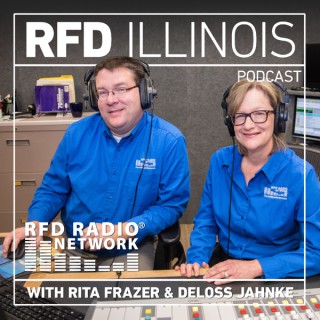
Washington correspondent Matt Kaye reports as more than 70 biofuel and farm groups renewed their call on Congress to pass year-round nationwide E15 legislation.Levi Siebert talks about the founding and work of the Live Like Lincoln Foundation.Dr. Karla Gage, Southern Illinois University Carbondale, talks about cover crops to control weed growth in the latest Weeds with Karla segment.Scott Sims, region manager of a Western Grain Marketing facility, talks about some new corn demand.Meteorologist Paul Otto provides a regular update on the weather.

Scott Sims, Western Region Manager at Western Grain Marketing, talks market analysis and outlooks.Dr. Karla Gage, Southern Illinois University Carbondale, describes how crop rotation can be used to suppress weeds in the latest Weeds with Karla segment.

About the Guest Ben Blair was raised in Sparta, Illinois, where he grew up helping on his family's corn, soy, wheat, and farrow-to-finish farm. He always enjoyed the numbers behind how things worked, which led him to study engineering at Southern Illinois University Carbondale. After finishing his engineering degree, he felt the pull back toward animal health and entered the University of Illinois College of Veterinary Medicine. Following a short time in clinical practice, he returned to Illinois to complete a PhD with Dr. Jim Lowe. His work focused on the cull sow marketing network and strengthened his interest in advanced analytics, machine learning, and applying AI to livestock systems. He then spent two years at the University of Minnesota as a researcher while also running a consulting business centered on data and AI projects in agriculture. In 2023 Blair returned to the University of Illinois, where he now serves as an assistant professor in Livestock Health. His research combines infectious disease modeling with practical applications of AI in veterinary medicine and modern farming. He lives in Villa Grove, Illinois, with his wife Cathy and their three children, Charlie, Liz, and Lincoln. What can you expect to learn from this episode of Popular Pig? How AI really works — breaking down machine learning, computer vision, and language models in everyday terms. Why the swine industry needs “homegrown” AI solutions that understand how farms truly operate. The biggest challenges holding back AI adoption in ag — from messy data to slow decision-making. How “crawl, walk, run” thinking can help farms start small with AI before chasing advanced automation. Ben's “golden nugget.”

On this episode of The Vitamin Professor Podcast, Professor Gene Bruno talks to Lara Niemann of Gelita.Lara's 30 plus-year marketing career is centered on improving quality of life. She is passionate about spreading joy and confidence through VERISOL® bioactive collagen peptides and its benefits on hair, skin and nails. She joined GELITA in 2003 and was at the forefront of creating markets based on the health benefits of bioactive collagen peptides. Lara lives on her fifth-generation family farm in Nebraska (USA) with her husband and three teenage children. She holds bachelor's and master's degrees in business administration from Nebraska Wesleyan University and from Southern Illinois University-Carbondale, respectively.This podcast is brought to you in partnership with VRM Media and Nutraland USA, Inc.For more information about our host and guest, please see the below information.https://www.linkedin.com/in/laraniemann/gelita.com/enhttps://www.gelita.com/en/products-brands/collagen-peptides/verisollinkedin.com/in/gene-bruno-ms-mhs-rh-ahg-2ab0508/www.vrmmedia.com@hnvirtual, #hnvirtual, #laraniemann, #genebruno, #thevitaminprofessor, #VERISOL®, #GelitaFind our podcast on your favorite platform:podcasts.apple.com/us/podcast/the-vitamin-professor-podcast/id1746137375youtube.com/channel/UCxeQ-IuqCRmq0YLc7jQNMKAmusic.amazon.com/podcasts/a8a96593-b93c-48cf-9fe9-2891c4035dad/the-vitamin-professor-podcastiheart.com/podcast/269-the-vitamin-professor-podc-175888136/

In this episode, Ed Schott, superintendent of Meramec State Park, joins Sean Rost to discuss Fisher Cave and Meramec State Park. Episode Image: Stalactites in Fisher Cave, date unknown [John F. Bradbury, Jr. Postcard Collection (R1551), SHSMO] About the Guest: Ed Schott is the superintendent of Meramec State Park. Prior to this position, he worked at Route 66 State Park, Hawn State Park, and Onondaga Cave State Park. He holds a bachelor's degree in forestry from Southern Illinois University-Carbondale.

In this episode of the GovDiscovery AI Podcast, host Mike Shanley, CEO of GovDiscovery AI, speaks with Mike Derrios, former Deputy Assistant Secretary for Acquisition and Senior Procurement Executive at the U.S. Department of State. Derrios shares insights from his tenure at State. The conversation explores the America First Global Health Strategy, State's ongoing reorganization, and broader federal acquisition reforms, offering valuable perspective for implementers, contractors, and NGOs navigating these shifts. BIO: Mike Derrios is a strategic leader and expert in government acquisition with 30 years of federal, military, and private sector experience. He currently serves as Deputy Assistant Secretary for Acquisition and Senior Procurement Executive for the U.S. Department of State (DOS), where he oversees all global procurement and grant operations for America's foreign diplomacy and national security mission, managing an annual spend of $15 billion and a workforce of 1500 across 270 embassies and consulates. Previously, Mike served as the Head of Contracting for the United States Coast Guard where he led a $3.5 billion annual portfolio to recapitalize assets and leveraged policy to grant extraordinary contractual relief to salvage production facilities for the $10 billion Offshore Patrol Cutter program after a Level 5 hurricane decimated shipyard facilities. A plank holder for the Transportation Security Administration, Mike led the nationwide deployment of passenger and carry-on baggage screening equipment, valued at $5 billion, across 429 U.S. airports. He also served as the program director for expansion of TSA PreCheck®, launching a program that enrolls millions of Americans for expedited airport screening through a public-private partnership model. As a senior business consultant at CACI, Mike helped to replace legacy contract writing systems for 20,000 procurement professionals across the Department of Defense. He started his career in the United States Air Force. Mike holds a Master of Business Administration degree from George Mason University (GMU) and a Bachelor of Science degree in Workforce Education & Development from Southern Illinois University Carbondale. He is a member of the Board of Advisors for the Baroni Center for Government Contracting at GMU. Mike is passionate about delivering value through procurement, optimizing performance, and galvanizing teams to maximize opportunities. LEARN MORE: Thank you for tuning into this episode of the GovDiscovery AI Podcast with Mike Shanley. You can learn more about working with the U.S. Government by visiting our homepage: Konektid International and GovDiscovery AI. To connect with our team directly, message the host Mike Shanley on LinkedIn. https://www.govdiscoveryai.com/ https://www.konektid.com/
Generations born into technology -- so-called "digital natives" -- have grown up with a world view shaped by digital interaction. They're considering how it has shaped their lives in a student-led forum at Southern Illinois University Carbondale tonight. Franklin Kimmell, a fourth year doctoral student and Assistant Introductory Course Coordinator for the school of communication studies is organizing the discussion.
John Shaw, Director of the Paul Simon Public Policy Institute at Southern Illinois University Carbondale, joins Megan Lynch ahead of an event this week that will address changes in funding, demographics, and the AI revolution in higher education. He points to a recent assignment where his students 'aggressively' used AI.

At the Glass Art Society's (GAS) 2025 conference, Trailblazing New Traditions, held in May in Arlington and Fort Worth, Texas, Zachary Layhew and Hoseok Youn presented a unique collaborative glassblowing demonstration where Youn's Venetian fantasy vessels intersected with the baroque, cubist influences of Layhew's practice. The artists shared their unique approaches to traditional techniques and designs, both makers transforming the context of tradition through the lens of their original personalities. The result was a figurative sculpture constructed from historical goblets and decorative stemware, combined with the line patterns of cane. Goblets and cane are common and popular in the glass tradition, but this demonstration showed the community a creative and innovative way to elevate those methods to new frontiers while paying respect to their origins. Layhew started his glass career at the age of 14 by taking an introductory intensive at the Pittsburgh Glass Center (PGC) called Teen Bootcamp. He quickly fell in love with the material and the community surrounding it. Through the years, the artist has focused on his technical skills in glass and developing his personal voice through sculpture. His work revolves around a combination of glassblowing, cold working, and then further reheating, manipulating, and assembling the pieces. Working as an artist and instructor at PGC, Layhew assists other Pittsburgh artists in his spare time. He will teach Lines, Rings, and Patterned Things at Foci, the Minnesota Center for Glass Arts, from November 12 through 16. In December, the artist has a residency at Keystone College, Factoryville, Pennsylvania, and through the rest of 2025 and 2026, he will teach eight-week classes at PGC. Additionally, Layhew creates production work that is sold online and in person. A South Korean glass artist specializing in glassblowing, Youn holds a BFA degree in glass and ceramics from Namseoul University, Cheon Ahn, Korea, and earned an MFA in glass from Southern Illinois University Carbondale, Illinois. He has taught at Bowling Green State University as an adjunct professor, was a studio artist at Toledo Museum of Art and a studio lead at Belger Arts in Kansas City, Missouri. Youn's artistic practice focuses on Venetian traditional glass, figurative sculptures, and photography. He is inspired by heroes and villains based on pop culture and toys. His work reflects the image of his ideal successful self, combining crystal clear glass, elaborate vessel forms, intricate stemware, and abundant details. In 2026, he will teach a workshop at Pilchuck Glass School, session 7. Click this link for details https://www.pilchuck.org/programs/sessions/lost-and-found Enjoy this conversation with Layhew and Youn about their individual work in glass as well as their groundbreaking collaborative demo at the 2025 GAS conference.
John Shaw, Director of the Paul Simon Public Institute at Southern Illinois University Carbondale joins Megan Lynch to talk about a new effort to take politics out of legislative redistricting.

On this episode of Getting to Aha!, host Darshan Mehta talks with Jeff Harmon, Chief Marketing and Communications Officer at Southern Illinois University Carbondale, about the transformation of higher education marketing. Jeff unpacks how universities can effectively use platforms like TikTok, apply data-driven messaging, and integrate both traditional and digital strategies to reach Gen Z. He shares frameworks for authentic storytelling, building enrollment pipelines, and engaging local communities. Listeners will gain actionable insights into balancing innovation with institutional integrity, crafting relatable narratives, and staying competitive in a rapidly evolving academic landscape. A must-listen for anyone in education marketing today.

Narrating Irish Female Development, 1916-2018 (Edinburgh UP, 2024) studies narratives of Irish female and feminized development, arguing that these postmodern narratives present Irish female maturation as disordered and often deliberately disorderly. The first full-length study of the Irish female coming of age story, the book develops a feminist psychoanalytic narratology, derived from the belated oedipalization of Joyce's bildungsheld, to read these stories. This study argues that all Irish maturation stories are shaped by the uneven and belated maturation story of the Irish republic itself, which took as its avatar the Irish woman, whose citizenship in that republic was unrealized, as indeed was her citizenship in an Irish republic of letters. Dougherty takes the writing of Irish women as seriously as other critics have taken Joyce's work. Discusses texts by James Joyce, John McGahern, Hannah Lynch, Kate O'Brien, Lady Gregory, Maud Gonne, Mary Colum, Elizabeth Bowen, Edna O'Brien, Dervla Murphy, Clare Boylan, Nuala O'Faolain, Eavan Boland, Anne Enright, Claire Keegan, Eimear McBride, Éilís ní Dhuibhne, Melatu Uche Okorie, and Soula Emmanuel Examines the form, narration, and content of fictional, non-fictional, and national narratives Develops a feminist psychoanalytic narratology Synthesizes historical, sociojuridical, feminist, post-colonial, and literary historical narratives of Irish development Jane Elizabeth Dougherty is Professor in the School of Literature, Writing and Digital Humanities and affiliate faculty in the School of Africana and Multicultural Studies at Southern Illinois University Carbondale. Helen Penet is a lecturer in English and Irish Studies at Université de Lille (France). Learn more about your ad choices. Visit megaphone.fm/adchoices Support our show by becoming a premium member! https://newbooksnetwork.supportingcast.fm/psychoanalysis

Narrating Irish Female Development, 1916-2018 (Edinburgh UP, 2024) studies narratives of Irish female and feminized development, arguing that these postmodern narratives present Irish female maturation as disordered and often deliberately disorderly. The first full-length study of the Irish female coming of age story, the book develops a feminist psychoanalytic narratology, derived from the belated oedipalization of Joyce's bildungsheld, to read these stories. This study argues that all Irish maturation stories are shaped by the uneven and belated maturation story of the Irish republic itself, which took as its avatar the Irish woman, whose citizenship in that republic was unrealized, as indeed was her citizenship in an Irish republic of letters. Dougherty takes the writing of Irish women as seriously as other critics have taken Joyce's work. Discusses texts by James Joyce, John McGahern, Hannah Lynch, Kate O'Brien, Lady Gregory, Maud Gonne, Mary Colum, Elizabeth Bowen, Edna O'Brien, Dervla Murphy, Clare Boylan, Nuala O'Faolain, Eavan Boland, Anne Enright, Claire Keegan, Eimear McBride, Éilís ní Dhuibhne, Melatu Uche Okorie, and Soula Emmanuel Examines the form, narration, and content of fictional, non-fictional, and national narratives Develops a feminist psychoanalytic narratology Synthesizes historical, sociojuridical, feminist, post-colonial, and literary historical narratives of Irish development Jane Elizabeth Dougherty is Professor in the School of Literature, Writing and Digital Humanities and affiliate faculty in the School of Africana and Multicultural Studies at Southern Illinois University Carbondale. Helen Penet is a lecturer in English and Irish Studies at Université de Lille (France). Learn more about your ad choices. Visit megaphone.fm/adchoices Support our show by becoming a premium member! https://newbooksnetwork.supportingcast.fm/new-books-network

Narrating Irish Female Development, 1916-2018 (Edinburgh UP, 2024) studies narratives of Irish female and feminized development, arguing that these postmodern narratives present Irish female maturation as disordered and often deliberately disorderly. The first full-length study of the Irish female coming of age story, the book develops a feminist psychoanalytic narratology, derived from the belated oedipalization of Joyce's bildungsheld, to read these stories. This study argues that all Irish maturation stories are shaped by the uneven and belated maturation story of the Irish republic itself, which took as its avatar the Irish woman, whose citizenship in that republic was unrealized, as indeed was her citizenship in an Irish republic of letters. Dougherty takes the writing of Irish women as seriously as other critics have taken Joyce's work. Discusses texts by James Joyce, John McGahern, Hannah Lynch, Kate O'Brien, Lady Gregory, Maud Gonne, Mary Colum, Elizabeth Bowen, Edna O'Brien, Dervla Murphy, Clare Boylan, Nuala O'Faolain, Eavan Boland, Anne Enright, Claire Keegan, Eimear McBride, Éilís ní Dhuibhne, Melatu Uche Okorie, and Soula Emmanuel Examines the form, narration, and content of fictional, non-fictional, and national narratives Develops a feminist psychoanalytic narratology Synthesizes historical, sociojuridical, feminist, post-colonial, and literary historical narratives of Irish development Jane Elizabeth Dougherty is Professor in the School of Literature, Writing and Digital Humanities and affiliate faculty in the School of Africana and Multicultural Studies at Southern Illinois University Carbondale. Helen Penet is a lecturer in English and Irish Studies at Université de Lille (France). Learn more about your ad choices. Visit megaphone.fm/adchoices Support our show by becoming a premium member! https://newbooksnetwork.supportingcast.fm/gender-studies

Narrating Irish Female Development, 1916-2018 (Edinburgh UP, 2024) studies narratives of Irish female and feminized development, arguing that these postmodern narratives present Irish female maturation as disordered and often deliberately disorderly. The first full-length study of the Irish female coming of age story, the book develops a feminist psychoanalytic narratology, derived from the belated oedipalization of Joyce's bildungsheld, to read these stories. This study argues that all Irish maturation stories are shaped by the uneven and belated maturation story of the Irish republic itself, which took as its avatar the Irish woman, whose citizenship in that republic was unrealized, as indeed was her citizenship in an Irish republic of letters. Dougherty takes the writing of Irish women as seriously as other critics have taken Joyce's work. Discusses texts by James Joyce, John McGahern, Hannah Lynch, Kate O'Brien, Lady Gregory, Maud Gonne, Mary Colum, Elizabeth Bowen, Edna O'Brien, Dervla Murphy, Clare Boylan, Nuala O'Faolain, Eavan Boland, Anne Enright, Claire Keegan, Eimear McBride, Éilís ní Dhuibhne, Melatu Uche Okorie, and Soula Emmanuel Examines the form, narration, and content of fictional, non-fictional, and national narratives Develops a feminist psychoanalytic narratology Synthesizes historical, sociojuridical, feminist, post-colonial, and literary historical narratives of Irish development Jane Elizabeth Dougherty is Professor in the School of Literature, Writing and Digital Humanities and affiliate faculty in the School of Africana and Multicultural Studies at Southern Illinois University Carbondale. Helen Penet is a lecturer in English and Irish Studies at Université de Lille (France). Learn more about your ad choices. Visit megaphone.fm/adchoices Support our show by becoming a premium member! https://newbooksnetwork.supportingcast.fm/literary-studies

Narrating Irish Female Development, 1916-2018 (Edinburgh UP, 2024) studies narratives of Irish female and feminized development, arguing that these postmodern narratives present Irish female maturation as disordered and often deliberately disorderly. The first full-length study of the Irish female coming of age story, the book develops a feminist psychoanalytic narratology, derived from the belated oedipalization of Joyce's bildungsheld, to read these stories. This study argues that all Irish maturation stories are shaped by the uneven and belated maturation story of the Irish republic itself, which took as its avatar the Irish woman, whose citizenship in that republic was unrealized, as indeed was her citizenship in an Irish republic of letters. Dougherty takes the writing of Irish women as seriously as other critics have taken Joyce's work. Discusses texts by James Joyce, John McGahern, Hannah Lynch, Kate O'Brien, Lady Gregory, Maud Gonne, Mary Colum, Elizabeth Bowen, Edna O'Brien, Dervla Murphy, Clare Boylan, Nuala O'Faolain, Eavan Boland, Anne Enright, Claire Keegan, Eimear McBride, Éilís ní Dhuibhne, Melatu Uche Okorie, and Soula Emmanuel Examines the form, narration, and content of fictional, non-fictional, and national narratives Develops a feminist psychoanalytic narratology Synthesizes historical, sociojuridical, feminist, post-colonial, and literary historical narratives of Irish development Jane Elizabeth Dougherty is Professor in the School of Literature, Writing and Digital Humanities and affiliate faculty in the School of Africana and Multicultural Studies at Southern Illinois University Carbondale. Helen Penet is a lecturer in English and Irish Studies at Université de Lille (France). Learn more about your ad choices. Visit megaphone.fm/adchoices

Narrating Irish Female Development, 1916-2018 (Edinburgh UP, 2024) studies narratives of Irish female and feminized development, arguing that these postmodern narratives present Irish female maturation as disordered and often deliberately disorderly. The first full-length study of the Irish female coming of age story, the book develops a feminist psychoanalytic narratology, derived from the belated oedipalization of Joyce's bildungsheld, to read these stories. This study argues that all Irish maturation stories are shaped by the uneven and belated maturation story of the Irish republic itself, which took as its avatar the Irish woman, whose citizenship in that republic was unrealized, as indeed was her citizenship in an Irish republic of letters. Dougherty takes the writing of Irish women as seriously as other critics have taken Joyce's work. Discusses texts by James Joyce, John McGahern, Hannah Lynch, Kate O'Brien, Lady Gregory, Maud Gonne, Mary Colum, Elizabeth Bowen, Edna O'Brien, Dervla Murphy, Clare Boylan, Nuala O'Faolain, Eavan Boland, Anne Enright, Claire Keegan, Eimear McBride, Éilís ní Dhuibhne, Melatu Uche Okorie, and Soula Emmanuel Examines the form, narration, and content of fictional, non-fictional, and national narratives Develops a feminist psychoanalytic narratology Synthesizes historical, sociojuridical, feminist, post-colonial, and literary historical narratives of Irish development Jane Elizabeth Dougherty is Professor in the School of Literature, Writing and Digital Humanities and affiliate faculty in the School of Africana and Multicultural Studies at Southern Illinois University Carbondale. Helen Penet is a lecturer in English and Irish Studies at Université de Lille (France). Learn more about your ad choices. Visit megaphone.fm/adchoices
Google Ads are a proven, powerful tool for practice owners to reach more new patients. Google does not sit still with its Ads platform. There are new features regularly. My guest today runs a marketing agency that specializes in Google Ads, and he'll tell us what's new in the platform.Jim Bilello is President of US Marketing, a Google Ads agency that has specialized in Google Ads for well over a decade. Jim has over 20 years of sales and marketing experience and has represented key Hollywood Studios, e.g. Paramount, Fox, New Line, Disney, Miramax, Lions Gate for ancillary distribution to colleges and universities, started a college cinema cable network, Account Executive for Clear Channel Entertainment / Live Nation and represented Latin Grammy artists for Hispanic marketing for the Texas Rangers, the Arizona Diamondbacks, Verizon Wireless and Chase Bank. He has a Masters in Education and Marketing from Southern Illinois University - Carbondale and a Northwestern University Kellogg Graduate School of Business Executive Certificate in New Product Development.In this episode Carl White and Jim Bilello discuss:Local Service Ads (LSAs)Changes with cookiesPromax CampaignsWant to be a guest on PracticeCare®?Have an experience with a business issue you think others will benefit from? Come on PracticeCare® and tell the world! Here's the link where you can get the process started.Connect with Jim Bilellowww.usmarketing.bzhttps://www.linkedin.com/in/jimbilello/https://www.facebook.com/USMarketingChicagohttps://goo.gl/maps/emxGbx4NWt4njHZs7Connect with Carl WhiteWebsite: http://www.marketvisorygroup.comEmail: whitec@marketvisorygroup.comFacebook: https://www.facebook.com/marketvisorygroupYouTube: https://www.youtube.com/channel/UCD9BLCu_i2ezBj1ktUHVmigLinkedIn: http://www.linkedin.com/in/healthcaremktg
Bob Baer is Associate Scientist in the School of Physics and Applied Physics at Southern Illinois University Carbondale joins Megan Lynch as the "Blood Moon" Lunar eclipse is set for overnight.
A frequent guest of Total Information AM is traveling to New York this week to talk about his new book on diplomacy at the UN Bookshop. John Shaw is Director of the Paul Simon Public Police Institute at Southern Illinois University Carbondale. He joined Megan Lynch to disucss his book -- “The Education of a Statesman: How Global Leaders Can Repair a Fractured World”

Get ready for a wild ride in the studio with ceramic artist Pattie Chalmers! In this episode of our Fluxed Up series, we dive into the precarious world of ceramics filled with personal stories, studio mishaps, and the ever-elusive perfect glaze. Join us as Pattie shares a mishap with clay formulation, as well as how she teaches her students at Southern Illinois University Carbondale to be resourceful in the glaze lab. Tune in for a dose of humor, technical tips, and a behind-the-scenes look at the life of a ceramic artist. Got questions or need advice? Drop us a line at ForFluxSakePodcast@gmail.com This week's episode features the following topics: Wollastonite, material shortage, clay formula, terracotta, earthenware, sgraffito Today's episode is brought to you by Cornell Studio Supply and the Rosenfield Collection of Ceramic Art.

Walter Metz is a Full Professor in the School of Media Arts at Southern Illinois University Carbondale. He earned a Ph.D. in Radio/Television/Film at the University of Texas at Austin in 1996, and holds an S.B. degree in Materials Science and Engineering from MIT (1989). He is the author of three books: Engaging Film Criticism: Film History and Contemporary American Cinema, published by P. Lang, and two titles published by Wayne State University Press, Bewitched, and Gilligan's Island. He is also the author of sixty refereed journal articles and book chapters about the intertextual relationships between film, television, novels, and theatre. His work roves across disciplines, grappling with the importance of audio-visual productions for understanding such disparate subjects as gender, comedy, poetry, opera, the Cold War, the Holocaust, science, and animals. His latest book is Gilligan's Island, part of Wayne State University Press TV Milestones Series. https://wsupress.wayne.edu/9780814333723/

As Illinois puts up a half-billion dollars in its bid to make Chicago a world capital for quantum computing, Crain's technology reporter John Pletz joins host Amy Guth to look at some local players in the emerging space.Plus: South suburban towns get crushed by the weight of heavy property taxes; big South Loop apartment development up for sale; Southern Illinois University Carbondale sees enrollment gains, bucking trends; and target for the O'Hare terminal revamp quietly slips to 2034.

This episode is all about Aaron Mallory's innovative approach to mental health services and organizational efficiency; he demonstrates his commitment to both community support and business growth. By establishing his organization as a nonprofit, he leverages grants to fund comprehensive wraparound services, including a clinical workforce program combining therapy with work experience. His focus on delegation and infrastructure investment has driven significant growth. With an entrepreneurial and analytical mindset, Aaron balances business processes with client-centered care. His venture, "My Freedom VA," addresses the need for quality virtual support, employing assistants from Nigeria to enhance economic sustainability and bridge gaps in mental health services, particularly for underserved communities. Meet Aaron Mallory: Aaron Mallory is the founder and Chief Executive Officer of GRO Community. Aaron founded GRO Community to assist males, particularly males of color, who are often misunderstood and outcasted within our society. Aaron has over ten years in the field, working with specifically African American males with diverse behavior challenges. Aaron has provided direct service work at UCAN within their transitional living shelter for young adult males, HRDI as a child and adolescent therapist, and Youth Advocate as an advocate. Aaron has served in leadership roles at HRDI as the Clinical Supervisor within the Child and Adolescent Department and Clinical Director at Heartland Alliance, READI initiative. Aaron obtained his bachelor's degree in Electrical Engineering at Southern Illinois University Carbondale and a Masters's in Social Work from the University of Chicago. Aaron is also a licensed clinical social worker under the state of Illinois regulatory board. Resources Mentioned In This Episode: Read the full show notes here Use the promo code "GORDON" to get 2 months of Therapy Notes free Start Consulting with Gordon The PsychCraft Network The Practice of Therapy Community Mental Health Wear Aaron on LinkedIn My Freedom VA My Freedom Podcast Gro Community Gro Community on Facebook Gro Community on LinkedIn
Stephen Farnsworth (Political science professor, University of Mary Washington; @drsfarnsworth) John Shaw (Director of Paul Simon Public Policy Institute, Southern Illinois University-Carbondale; @PSimonInstitute) David Orr (Good Government Illinois; @goodgovillinois) Ray Long (Investigative reporter, Chicago Tribune; @RayLong)
John Shaw Director of the Paul Simon Public Policy Institute at Southern Illinois University Carbondale joins Megan Lynch and Tom Ackerman discussing the Republicans in Illinois who will support Democrat Vice President Kamala Harris in her run for President. Credit: © Jasper Colt, Jasper Colt / USA TODAY NETWORK

On this episode Philip is joined by Jeff Harmon, Chief Marketing & Communications Officer at Southern Illinois University, Carbondale. They talked about Jeff's career, Southern Illinois University, HigherEd marketing strategies, increased competition in the HigherEd sector, getting branding right, using data to make better decisions and the future of higher education and much more!

Meet Dr. Jessica Butler, Associate Professor of Practice, Low Brass & Music History at Southern Illinois University Carbondale. You will learn about Littin Trombones and the Littin Trombone Quartet Competition. There are so many neat things happening in the world of trombone from performing and teaching to superb craftsmanship. Maybe you are a student looking for a great place to start your undergraduate degree, well take a listen and get to know Dr. Butler, she is a great teacher and trombonist and definitely will lead you on the right path through your degree. If you are in the market for a new horn, try out one of these trombones next week at the International Trombone Festival and if you have a trombone quartet formed compete in the competition. The final round and festival will be held in Germany in early fall with first round applications due in the summer. Websites: Littin - https://www.littin-musik.de/trombones/?lang=en Jessica Butler - https://www.jessicatrombone.com/bioandcontact

#thriveaftersports #lifeaftersports #fresnostate #studentathlete Watch the full video on YouTube here: https://youtu.be/J07LlmqgpQE Check out all links (Apple Podcasts, Spotify, etc) to the "Thrive After Sports" podcast here: https://www.podpage.com/thrive-after-sports-w-taj-dashaun/ Carlie Corrigan joined the Fresno State Department of Athletics in May 2019 as an athletic academic advisor, learning specialist/tutor and mentor coordinator, and was appointed the department's Director of Student-Athlete Development in November 2021. In this role, Corrigan oversees Fresno State's Bulldog Built program, focusing on student-athlete development initiatives in the areas of character formation, professional development, and community engagement. She will also serve as the department's advisor to Fresno State's Student-Athlete Advisory Committee (SAAC). Previously, Corrigan advised multiple sport programs and monitors academic progress and success, while also managing the daily operations of the academic mentor and tutor programs ensuring compliance with Student-Athlete Services, NCAA and university guidelines. Prior to working at Fresno State, Corrigan was an assistant athletic academic counselor in the Center for Athletic Academic Services (CAAS) at the University of Memphis from Aug. 2017 to May 2019, and also served as an academic coaching intern at Memphis from Jan. 2019 to May 2019. Corrigan is a native of Chicago and former women's basketball student athlete at Southern Illinois University Carbondale from 2013-17 (captain 2014-17). She was a participant in the 2019 NCAA Emerging Leaders Seminar. Corrigan earned a bachelor of science in sport administration from SIU-Carbondale in May 2017 and a master of science in leadership and policy studies with a concentration in student personnel from Memphis in May 2019. Connect with Carlie on LinkedIn here: https://www.linkedin.com/in/carlie-corrigan/ Thanks for tuning in! Connect with me at https://www.tajdashaun.com/ Order my books here! https://tinyurl.com/TajDashaunBooks Instagram: https://www.instagram.com/tajdashaun/ LinkedIn: https://www.linkedin.com/in/tajdashaun/ #NCAA #life #career #entrepreneurship #transformation #passion #mindfulness #purpose #sports #football #basketball #business #coaching #transition #lifeaftersports #thriveaftersports #student #athlete #mentalhealth #adapt #identity #formerathlete #SupportForAthletes #EmpowerAthletes #AthleteWellness #athletementalhealth #fresnostate

Text, Email, Support the old guy!Current Work· President, ReasonIO – public speaking, philosophical counseling, tutorials, online classes, consulting· Editor, Stoicism Today 2016-2022, and team member of the Modern Stoicism organization· Adjunct Professor in Philosophy and Humanities, Milwaukee Institute of Art and Design· Content producer in my main YouTube channel – 3,000+ videos on thinkers, texts, and topics in philosophy – supported by crowdfunding through PatreonPast Work and Accomplishments of Interest:· Taught Philosophy, Religious Studies, Humanities, and Critical Thinking courses for 25 years, at Marquette University, Milwaukee Area Technical College, Milwaukee Institute of Art and Design, Marist College, Fayetteville State University, Ball State University, among others. Includes some teaching in maximum and medium security prisons· Public speaker – 300+ invited lectures and workshops at venues including universities and colleges, conventions, business organizations, companies, libraries, churches...· Philosophical counseling, tutorial, and consulting work – clients include corporate executives and leaders, CEOs of smaller and start-up companies, psychotherapists, psychologists, medical professionals, professors, lifelong learners, and students· Author of one book, editor of two books, dozens of academic articles, book chapters, and encyclopedia entries, many popular online writings· Videos in main YouTube channel have been viewed over 14.5 million times, for over 2 million hours (over 225 years) of timeEducational Background:· B.A. in Philosophy and Mathematics from Lakeland University (1994)· M.A. and Ph.D. from Southern Illinois University Carbondale (1997, 2002)· Faculty Fellowship, Erasmus Institute, Notre Dame University (2005)· Charles Chesnutt Library Fellowship (2009-2010)· Philosophical Counseling Training and Certification, American Philosophical Practitioners Association (2013)Visiting Scholar, European Graduate School, Saas-Fee Campus, Switzerland (2014)· Summer Research Residency, Institute for Saint Anselm Studies (2015)· LEAP Institute for Non-Profit Leaders, Kacmarcik Center for Human Performance (2023)Other Items of Note· Grew up in Wales, Delafield, and Waukesha, in Wisconsin in the 1970s and 1980s· Married to Andi Sciacca, who he met in high school. Has two children· Plays banjo and bass guitar· Reads classic Greek, Latin, German, and French and translates French and Latin works· Was a combat engineer in the US ArmyImportant Websites to Mention or Link To: · ReasonIO - https://reasonio.wordpress.com/ – my business · My main YouTube channel – https://www.youtube.com/user/gbisadler · Sadler's Lectures podcast - https://soundcloud.com/gregorybsadler · My Facebook author page – https://www.facebook.com/drgbsadler · My Twitter profile – https://twitter.com/philosopher70 · My Patreon site – https://www.patreon.com/sadler · My Substack - https://gregorybsadler.substack.com/Support the Show.Typically 7 hours are devoted to an episode. The research required to support some Conversations has included extensive reading.Please stay in touch, (I enjoy your emails and suggestions) recommend the podcast to others and support the show with a financial contribution.save.these.stories @gmail.comRecommend the podcast to others! Cheers!
Roupu Li is Associate professor of geography and environmental resources in the School of Earth Systems and Sustainability at Southern Illinois University Carbondale and joins Megan Lynch to talk about using social media geotagged data to track eclipse visitors. (Photo credit - Jeremy_Hogan/iStock / Getty Images Plus)

Cynthia Sims, Ed.D. is President of Sims Intercultural Management Solutions LLC (S.I.M.S.). She is also Adjunct Faculty at Northeastern Illinois University, where she holds a joint appointment in the Department of Literacy, Leadership, & Development and Women, Gender, & Sexuality Studies. Dr. Sims is a diversity, equity, inclusion, and belonging (DEIB) expert with over 25 years of teaching and training experience. She has developed and facilitated numerous national and international workshops and presentations regarding workplace diversity, implicit bias, unearned privilege, gender discrimination, physical appearance discrimination, and employee empowerment. She also works closely with organizations to design diversity initiatives and policies that ensure an inclusive work environment exists for their staff, leaders, students, and clients. Dr. Sims is an author of numerous publications, including books, book chapters, and articles, mostly on diversity and workforce development topics. She has traveled to Asia, Africa, South America, and the Caribbean to interview women regarding their experiences with appearance discrimination in pre-employment stages and within the workplace. After 30 years in higher education, Dr. Sims retired in July 2021 as an Associate Vice President of Academic Affairs at College of DuPage. Prior to this role, Dr. Sims was Professor of Workforce Diversity at Southern Illinois University Carbondale from 2005 to 2019, where she also served as Associate Dean of the School of Education (formerly the College of Education and Human Services) and Chair of the Department of Workforce Education and Development. From 1995 to 2018, she was Visiting Faculty for the School of Continuing and Professional Studies (formerly School for New Learning) at DePaul University. Dr. Sims received her Bachelor of Science in Business Administration from the University of Louisville, a Master of Science in Public Service Management from DePaul University, a Master of Arts in Social Work from the University of Chicago, and a Doctor of Education from Northern Illinois University. Please push the like button, share, subscribe, follow, and support. If you want to support Ms V The Storyteller Podcast, please email me at valisonelliot@gmail.com or visit my website @msvthestoryteller.co. You can follow me on Facebook, Instagram, Twitter, YouTube & LinkedIn at Ms. V The Storyteller or visit my website @ msvthestoryteller.co. Thanks for listening! Cynthia info: Website: www.simsllc.org LinkedIn: https://www.linkedin.com/in/cynthia-sims-ed-d-85b9721b/
Bridget Lescelius, Associate lecturer- Southern Illinois University Carbondale's School of Journalism and Advertising joins Megan and Debbie talking about the impact the Super Bowl can have and how many people are expected to tune in. (Photo by Patrick Smith/Getty Images)

Your books and accounting have a rhythm to it that dramatically affects the taxes you pay. There are things you can and shouldn't do to change the beat of the drum when it comes to what you claim or write off on your taxes. In this episode, Scott Carson talks with CPA and tax strategist, Ronnie Goode, about how he helps business owners and entrepreneurs with the "rhythm" of their numbers.Ronnie Goode is a Certified Public Accountant (CPA) and Tax Strategist who serves clients virtually all across the world. Through his company, Rhythm Accounting, he helps business owners, real estate investors, and high-income individuals use the tax code to build wealth! He received his B.S. in Accounting from Shaw University and his MBA from Southern Illinois University Carbondale. Ronnie's training and experience came from working for one of the largest accounting firms in the world, a Fortune 500 corporation, and the Federal government. He's able to utilize this diverse experience to better serve entrepreneurs, business owners and real estate investors. Ronnie's ultimate goal is to help people become financially independent by saving money on taxes while building wealth.Connect with Ronnie HERE!Watch the original episode HERE!Love the show? Subscribe, rate, review, and share!Here's How »Join the Note Closers Show community today:WeCloseNotes.comThe Note Closers Show FacebookThe Note Closers Show TwitterScott Carson LinkedInThe Note Closers Show YouTubeThe Note Closers Show VimeoThe Note Closers Show InstagramWe Close Notes Pinterest
John Shaw, Director of the Paul Simon Public Policy Institute at Southern Illinois University Carbondale joins Tom and Debbie discussing Ron DeSantis decision to suspend his presidential campaign and endorse Trump.
John Shaw, Director of the Paul Simon Public Policy Institute at Southern Illinois University Carbondale joins Megan and Tom previewing the Iowa Caucus and the record that it has predicting the eventual winner. Credit: © Samantha Laurey / Argus Leader / USA TODAY NETWORK

Use ChatGPT to earn paid speaking gigs. Host Michelle Thames speaks with Katherine A. Young about how she used ChatGPT to grow her business and generate more income. Katherine A. Young is a Growth Advocate who loves to see lives changed for the better. As a multi-passionate entrepreneur of Keen Young Solutions, she uses her wealth of experience to keenly assess the greatness within others. An alumna of Southern Illinois University Carbondale, Katherine is an urban education expert, diverse author, momentous encourager, creative Think Tank, and former eagle eye editor. Katherine's mission is to empower you to unlock your full potential by providing you with the tools and knowledge to grow in all areas of life.Katherine shares her expertise and encouragement on her YouTube channel Grow and Glow with Katherine as well as through her blog and books Praise While You're Pregnant: Connecting with God Through the Womb, and her latest, Shoot Your Shot: You Have What It Takes to Win! --Katherine's websiteFollow Katherine on InstagramCatch up on other podcast episodes on Apple and SpotifyWatch the Social Media Decoded Podcast on YouTubeFollow Michelle on InstagramJoin Michelle's Cashflow Queens Facebook groupLeave a review for Social Media Decoded Support the show

Have you been thinking about starting a private practice so that you can provide more personalized care for your ideal clients and have more work-life balance? You're going to love this episode of Private Practice Success Stories! I sat down with Lexey Pruitt, a Start and Grow Your Private Practice student who started her private practice on the side when living in St. Louis and then moved to Houston and has been building it from there.In this episode, she talks about establishing new connections and marketing herself in a new city, how she receives a lot of referrals through a directory associated with a certification program, and the benefits of being an in-home mobile therapist, which often allows for more personalized care and time for parent coaching. Lexey Pruitt is a certified speech language pathologist, founder of Leading Little Language, LLC, and an NLA-trained clinician. Lexey specializes in early language development and Gestalt Language Processing. After graduating from Southern Illinois University Carbondale, Lexey worked in the school system in southern Illinois, where she found her love for early language and working with non-speaking and Autistic children. She initially opened her private practice as a part-time practice by driving to clients' homes and daycares in St. Louis, MO, and the southern Illinois area, after school hours and on summer breaks. Following a move to Houston, TX, Lexey reopened her business as a full-time venture and enjoyed its growth over the last year!In Today's Episode, We Discuss:The moment Lexey knew she wanted to pursue private practiceWhat it's like to start a private practice in a new area The marketing activities Lexey did to grow her practiceThe types of clients that Lexey gets to work with in her private practiceHow Lexey became trained in Gestalt language processingHow having a private practice enabled Lexey to provide coaching to parentsLexey's goals for growth in the next 6-12 months in her businessHow you can get out of the day-to-day activities by hiring helpHow life-changing the income from your private practice can be I hope you loved this conversation with Lexey! Her story is so inspiring. She is a perfect example of someone who had a goal and made it happen. If you would like to know more about our Programs and how we help support SLPs and OTs - just like Lexey - and you want our help to start and grow your private practice, please visit https://independentclinician.com/learn-with-jena/.Whether you want to start a private practice or grow your existing private practice, I can help you get the freedom, flexibility, fulfillment, and financial abundance that you deserve. Visit my website www.independentclinician.com to learn more.Resources Mentioned: Follow Lexey on Instagram: https://www.instagram.com/leadinglittlelanguage/Follow Lexey on Facebook: https://www.facebook.com/leadinglittlelanguageNLA-trained clinician registry: https://www.meaningfulspeechregistry.com/Where We Can Connect: Follow the Podcast:

Dr. Karla Gage is Assistant Professor of Weed Science and Plant Biology at Southern Illinois University Carbondale, where she received her Ph.D. in Plant Biology with a focus in Weed Ecology in 2013. In short, Karla is a weed expert, but not in the weed you smoke, but rather the weeds you pull. Her research focuses on using Integrated Weed Management to control and suppress weeds in midwestern US rotational crops, including corn, soybean, wheat, sorghum, and now hemp. During our conversation we discussed: What negative effects weeds can have on hemp Which weed species are threatening to hemp Herbicides that are approved for hemp and the threat of herbicide resistance Integrated weed management strategies, such as, crop rotation, cover crops, and chaff lining, plastic coverings, and more How ferral hemp varieties may have traits to help breed more resistant hemp varieties Thanks to this Episode's Sponsor: Rare Earth Genomics Rare Earth Genomics Texas is a partnership formed to accelerate hemp research and produce critical tools for the farmer. REG's mission is to increase likelihood of a successful harvest through genetic analysis and rigorous environmental testing of vigorous cultivars. Reliable datasets, analytic tools and stable germplasm are core to the program. Success of the farmer is the goal! Learn more at rareearthgenomics.com

Leaders are crunched right now. Many are valiantly trying to adopt empathetic and Compassionate Leadership models to adapt to what employees on the market demand new models of leadership that are more human, but some still struggle to balance that with making tough business decisions, setting boundaries, and achieving high-performance standards - serendipitously, the subject of my next book. Today, Dr. Rebecca Eldredge, a licensed psychologist who supports socially conscious leaders, changemakers, and organizations shares how leaders can identify signs of overwhelm and burnout in their lives and respond to compassionate fatigue. We discussed the huge financial costs to your organization of ignoring mental health, or pushing through when others are counting on you. We also talked about why allowing emotions at work is key to psychological safety, and how leaders who might be reluctant can get more comfortable making space and time for emotions in the workplace to increase engagement, performance, and retention. Take a deep breath and take a listen. To access the episode transcript, please click on the episode title at www.TheEmpathyEdge.com Key Takeaways:The more familiar you are with the state of relaxation in yourself, the easier you will recognize when burnout begins and you are not in that state of calm. You don't have to have days or weeks of calm to draw on, it can be even a moment of peace to recognize those calm, nervous system queues. Being empathetic doesn't mean you don't do the hard things, it means you're deliberate and thoughtful when communicating and making those hard decisions. With the skyrocketing costs of healthcare (often as a direct result of stress and burnout), we cannot afford to not take care of our mental and emotional health. "You're much more equipped to make solid decisions when you are connected and when you are in an empathetic and compassionate role with others - and also with yourself." — Dr. Rebecca EldredgeAbout Dr. Rebecca Eldredge: For the past 20 years, Dr. Rebecca Eldredge has used her commitment to mental health, cultural competence, and social justice to support individuals and organizations to cultivate compassion for themselves as they bring compassion and justice to their organizations and communities. She has been honored to work with corporations, university departments, and refugee resettlement agencies as well as hundreds of diverse clients. Dr. Eldredge completed both her M.A. and her Ph.D. in Counseling Psychology from Southern Illinois University-Carbondale and has taught adjunct in the University of Houston's and Our Lady of the Lake's graduate psychology programs. She is also a Step into Your Moxie® Certified Facilitator.Connect with Dr. Rebecca Eldredge: Website: https://rebeccaephd.com/ LinkedIn: https://www.linkedin.com/in/rebecca-a-eldredge-phd/ Instagram: https://www.instagram.com/dr.rebecca_feel_deeply Chrysalis: https://rebeccaephd.com/chrysalis-small-groupSpeaking: https://rebeccaephd.com/speakingFacilitations/Trainings: https://rebeccaephd.com/facilitationJoin the tribe, download your free guide! Discover what empathy can do for you: http://red-slice.com/business-benefits-empathy Connect with Maria: Get the podcast and book: TheEmpathyEdge.comLearn more about Maria and her work: Red-Slice.comHire Maria to speak at your next event: Red-Slice.com/Speaker-Maria-RossTake my LinkedIn Learning Course! Leading with EmpathyLinkedIn: Maria RossInstagram: @redslicemariaX: @redsliceFacebook: Red SliceThreads: @redslicemaria

For the past 20 years, Dr. Rebecca Eldredge has supported organizations, individual clients, and graduate students to use a lens that integrates mental health, cultural competence, and social justice so they can cultivate compassion for themselves as they bring compassion to others. She has been honored to work with corporations, university departments, and refugee resettlement agencies as well as hundreds of diverse clients. Rebecca completed both her M.A. and her Ph.D. in Counseling Psychology from Southern Illinois University-Carbondale and has taught adjunct in the University of Houston's and Our Lady of the Lake's graduate psychology programs. Dr. Rebecca Eldredge, PhD, delves into a powerful technique: slowing down your exhale. This practice sends reassuring signals to your brain, offering stress relief and improved focus. Rebecca shares a treasure trove of valuable insights throughout our conversation. Connect with Dr. Rebecca Eldredge here: https://rebeccaephd.com https://rebeccaephd.com/innercalm https://www.linkedin.com/in/rebecca-a-eldredge-phd/ This episode is sponsored by: DirectSuggest: https://www.directsuggest.com/subscribe.php?id=6992 Use Promo Code: HumanHR CultureBot: https://getculturebot.com/humanhr Namely: namely.com/humanhr Connect with Traci here: https://linktr.ee/HRTraci Don't forget to rate this podcast 5 stars, leave a review, and subscribe! Disclaimer: Thoughts, opinions, and statements made on this podcast are not a reflection of the thoughts, opinions, and statements of the Company Traci Chernoff is actively employed by. --- Send in a voice message: https://podcasters.spotify.com/pod/show/hrtraci/message Support this podcast: https://podcasters.spotify.com/pod/show/hrtraci/support
Joan's guests today are: - Chris Bury, DePaul's senior journalist in residence - Michael Kharfen, director of the Division of Policy and Data, HIV/AIDS Bureau - Kate Lincoln-Goldfinch, Texas immigration attorney - John Shaw, director of the Paul Simon Public Policy Institute at Southern Illinois University-Carbondale

It took a while to figure out the cause of milk sickness. One woman often gets credit for solving the mystery, but does that story hold up? Research: Allen, John W. “It Happened in Southern Illinois: The Legend of Dr. Anna Bigsby.” The Daily Register. Harrisburg, IL. 1957. Allen, John W. “It Happened in Southern Illinois.” Southern Illinois University. 1968. “Disease in Ohio, Ascribed to Some Deleterious Quality in Milk of Cows.” The Medical Repository May-July 1811: Vol 3. Daly, Walter J. “'The "Slows': The Torment of Milk Sickness on the Midwest Frontier. Indiana Magazine of History , MARCH 2006, Vol. 102, No. 1 (MARCH 2006). Via JSTOR. https://www.jstor.org/stable/27792690 Furbee, Louanna and Dr. Wiliam D. Snively Jr. “Milk Sickness, 1811-1966: A Bibliography.” Journal of the History of Medicine and Allied Sciences , July, 1968, Vol. 23, No. 3 (July, 1968). https://www.jstor.org/stable/24621944 Hall, Elihu N. “Anna's War Against the River Pirates and Cave Bandits of John A. Murrell's Northern Drive.” Special Collections Research Center, Southern Illinois University Carbondale. Hardin County (Ill.). Historical Committee for the Centennial. “History of Hardin County, Illinois.” 1939. https://archive.org/details/historyofhardinc00hard Jordan, Philip D. “The Death of Nancy Hanks Lincoln.” Indiana Magazine of History , JUNE, 1944, Vol. 40, No. 2 (JUNE, 1944). Via JSTOR. https://www.jstor.org/stable/27787425. Letter, W. D. Snively Jr. to Lowell Dearinger, with correspondence by Norman Ferrell, June 12, 1967. John W. Allen Papers, Special Collections Research Center, Southern Illinois University Carbondale. “Lowell A. Dearinger.” https://www.choisser.org/illinois/lowell.html McCarthy, Will. “How an 1800s Midwife Solved a Poisonous Mystery.” Smithsonian. July/August 2023. https://www.smithsonianmag.com/innovation/how-1800s-midwife-solved-poisionous-mystery-180982343/ Rodman, Adam. “Episode 67: Fever on the Frontier.” Bedside Rounds. Podcast. 3/20/2022. http://bedside-rounds.org/episode-67-fever-on-the-frontier/ A.W. “Reviewed Work: Ballads from the Bluffs by Elihu Nicholas Hall.” Journal of the Illinois State Historical Society (1908-1984), Vol. 42, No. 1 (Mar., 1949). https://www.jstor.org/stable/40188361. Scientific American. “Milk Sickness—Its Cause and Cure.” 4/17/1858. https://www.scientificamerican.com/article/milk-sicknessits-cause-and-cure/ Shawnee Tribe. “History of the People.” https://www.shawnee-nsn.gov/history Smithsonian National Museum of the American Indian. “Shawnee Nation Case Study.” https://americanindian.si.edu/nk360/removal-six-nations/shawnee/treaty.cshtml Snively, William D. Jr. and Louanna Furbee. “Discoverer of the Cause of Milk Sickness.” JAMA. June 20, 1966. Snively, William D. Jr. and Louanna Furbee. “Researching a Historical Book.” JAMA. April 7, 1969. Waggoner, F.R. “Milk Sickness: Its Etiology, Pathology, Diagnosis, and Treatment.” Atlanta Medical and Surgical Journal. March 1859. Walker, J.W. “Milk-Sickness.” Science, Vol. 8, No. 199 (Nov. 26, 1886). Via JSTOR. https://www.jstor.org/stable/1760447 William I. Christensen. “Milk Sickness: A Review of the Literature.” Economic Botany, vol. 19, no. 3, 1965, pp. 293–300. JSTOR, http://www.jstor.org/stable/4252612. Accessed 19 July 2023. Wood, Curtis W. “Milk Sickness.” NCPedia. 2006. https://www.ncpedia.org/milk-sickness See omnystudio.com/listener for privacy information.

In this mini-series, we explore different health professions to get a better understanding of the variety of team members involved in patient care. For this episode, we chatted with occupational therapist Jayne Phoenix about her journey to becoming a medical dosimetrist and the integrated team approach to treating cancer patients. Jayne Phoenix, RT(R)(T), CMD is a Certified Medical Dosimetrist working at the Fred Hutchinson Cancer Center in Seattle, Washington. She completed her education at Southern Illinois University Carbondale and Rush University Medical Center in Chicago, IL. Find out more about the career of medical dosimetry and how to become a medical dosimetrist at the following links: Medical Dosimetrist Certification Board: https://mdcb.org/ American Association of Medical Dosimetrists: https://www.medicaldosimetry.org/ “What is a Medical Dosimetrist?” by AAMD: https://www.medicaldosimetry.org/about/medical-dosimetrist/ Episode produced by: Rasa Valiauga Episode recording date: 5/19/23 www.medicuspodcast.com | medicuspodcast@gmail.com | Donate: http://bit.ly/MedicusDonate --- Send in a voice message: https://podcasters.spotify.com/pod/show/medicus/message

In this episode, we invite Nic Skovgaard. Nic Skovgaard is the founder of AlterEgo Marketing, a full-service creative agency with clients spanning seven states. He graduated from Southern Illinois University Carbondale with a degree in Public Relations. What you will learn: - Nic's company AlterEgo Marketing - What is Nic's ‘why' - Nic's tips to tell your story - Finding your mentor - Nic's story of dealing with imposter syndrome - Paying it forward and serving people - Nic's favorite quote - The best way to connect with Nic Mic Drop Moments:

In the 1970s and 1980s, four women who attended Southern Illinois University-Carbondale were brutally murdered. The police, the media and the citizens think a serial killer is on the loose. But things aren't exactly as they appear...
© 2020-2026 Ivy Podcast Discovery LLC
