POPULARITY
Categories

244 episodes with Evacuation

149 episodes with Evacuation

140 episodes with Evacuation

54 episodes with Evacuation

40 episodes with Evacuation

28 episodes with Evacuation

38 episodes with Evacuation

52 episodes with Evacuation

19 episodes with Evacuation

26 episodes with Evacuation

32 episodes with Evacuation

20 episodes with Evacuation

32 episodes with Evacuation

10 episodes with Evacuation

16 episodes with Evacuation

16 episodes with Evacuation

18 episodes with Evacuation

18 episodes with Evacuation

20 episodes with Evacuation

36 episodes with Evacuation

17 episodes with Evacuation

16 episodes with Evacuation

13 episodes with Evacuation

16 episodes with Evacuation

10 episodes with Evacuation

8 episodes with Evacuation

12 episodes with Evacuation

8 episodes with Evacuation

11 episodes with Evacuation

14 episodes with Evacuation

8 episodes with Evacuation

9 episodes with Evacuation

10 episodes with Evacuation

10 episodes with Evacuation

8 episodes with Evacuation

10 episodes with Evacuation

12 episodes with Evacuation

14 episodes with Evacuation

14 episodes with Evacuation

16 episodes with Evacuation

6 episodes with Evacuation

8 episodes with Evacuation

8 episodes with Evacuation

10 episodes with Evacuation

10 episodes with Evacuation

9 episodes with Evacuation

7 episodes with Evacuation

6 episodes with Evacuation

10 episodes with Evacuation

10 episodes with Evacuation

6 episodes with Evacuation

5 episodes with Evacuation

3 episodes with Evacuation

7 episodes with Evacuation

11 episodes with Evacuation

12 episodes with Evacuation

5 episodes with Evacuation

6 episodes with Evacuation

10 episodes with Evacuation

6 episodes with Evacuation

7 episodes with Evacuation

6 episodes with Evacuation

9 episodes with Evacuation

3 episodes with Evacuation

5 episodes with Evacuation

5 episodes with Evacuation

8 episodes with Evacuation

9 episodes with Evacuation

6 episodes with Evacuation

6 episodes with Evacuation

6 episodes with Evacuation

4 episodes with Evacuation

5 episodes with Evacuation

6 episodes with Evacuation

9 episodes with Evacuation

7 episodes with Evacuation

13 episodes with Evacuation

4 episodes with Evacuation

6 episodes with Evacuation

4 episodes with Evacuation

7 episodes with Evacuation

10 episodes with Evacuation

7 episodes with Evacuation

7 episodes with Evacuation

7 episodes with Evacuation

3 episodes with Evacuation

7 episodes with Evacuation

7 episodes with Evacuation

6 episodes with Evacuation

6 episodes with Evacuation

5 episodes with Evacuation

4 episodes with Evacuation

4 episodes with Evacuation

5 episodes with Evacuation

6 episodes with Evacuation

8 episodes with Evacuation

5 episodes with Evacuation

6 episodes with Evacuation

8 episodes with Evacuation

5 episodes with Evacuation

3 episodes with Evacuation

2 episodes with Evacuation

5 episodes with Evacuation

4 episodes with Evacuation

3 episodes with Evacuation

3 episodes with Evacuation

4 episodes with Evacuation

5 episodes with Evacuation

7 episodes with Evacuation

7 episodes with Evacuation

4 episodes with Evacuation

5 episodes with Evacuation

3 episodes with Evacuation

6 episodes with Evacuation

4 episodes with Evacuation

9 episodes with Evacuation

5 episodes with Evacuation

3 episodes with Evacuation

8 episodes with Evacuation

4 episodes with Evacuation

4 episodes with Evacuation

3 episodes with Evacuation

5 episodes with Evacuation

4 episodes with Evacuation

2 episodes with Evacuation

6 episodes with Evacuation

8 episodes with Evacuation

2 episodes with Evacuation

5 episodes with Evacuation

2 episodes with Evacuation

5 episodes with Evacuation

2 episodes with Evacuation

8 episodes with Evacuation

6 episodes with Evacuation

6 episodes with Evacuation

2 episodes with Evacuation

4 episodes with Evacuation

5 episodes with Evacuation

3 episodes with Evacuation

5 episodes with Evacuation

4 episodes with Evacuation

3 episodes with Evacuation

2 episodes with Evacuation

2 episodes with Evacuation

Last time we spoke about the battle of Nanchang. After securing Hainan and targeting Zhejiang–Jiangxi Railway corridors, Japan's 11th Army, backed by armor, air power, and riverine operations, sought a rapid, surgical seizure of Nanchang to sever eastern Chinese logistics and coerce Chongqing. China, reorganizing under Chiang Kai-shek, concentrated over 200,000 troops across 52 divisions in the Ninth and Third War Zones, with Xue Yue commanding the 9th War Zone in defense of Wuhan-Nanchang corridors. The fighting began with German-style, combined-arms river operations along the Xiushui and Gan rivers, including feints, river crossings, and heavy artillery, sometimes using poison gas. From March 20–23, Japanese forces established a beachhead and advanced into Fengxin, Shengmi, and later Nanchang, despite stiff Chinese resistance and bridges being destroyed. Chiang's strategic shift toward attrition pushed for broader offensives to disrupt railways and rear areas, though Chinese plans for a counteroffensive repeatedly stalled due to logistics and coordination issues. By early May, Japanese forces encircled and captured Nanchang, albeit at heavy cost, with Chinese casualties surpassing 43,000 dead and Japanese losses over 2,200 dead. #187 The Battle of Suixian–Zaoyang-Shatow Welcome to the Fall and Rise of China Podcast, I am your dutiful host Craig Watson. But, before we start I want to also remind you this podcast is only made possible through the efforts of Kings and Generals over at Youtube. Perhaps you want to learn more about the history of Asia? Kings and Generals have an assortment of episodes on history of asia and much more so go give them a look over on Youtube. So please subscribe to Kings and Generals over at Youtube and to continue helping us produce this content please check out www.patreon.com/kingsandgenerals. If you are still hungry for some more history related content, over on my channel, the Pacific War Channel where I cover the history of China and Japan from the 19th century until the end of the Pacific War. Having seized Wuhan in a brutal offensive the previous year, the Japanese sought not just to hold their ground but to solidify their grip on this vital hub. Wuhan, a bustling metropolis at the confluence of the Yangtze and Han Rivers, had become a linchpin in their strategy, a base from which they could project power across central China. Yet, the city was far from secure, Chinese troops in northern Hubei and southern Henan, perched above the mighty Yangtze, posed an unrelenting threat. To relieve the mounting pressure on their newfound stronghold, the Japanese high command orchestrated a bold offensive against the towns of Suixian and Zaoyang. They aimed to annihilate the main force of the Chinese 5th War Zone, a move that would crush the Nationalist resistance in the region and secure their flanks. This theater of war, freshly designated as the 5th War Zone after the grueling Battle of Wuhan, encompassed a vast expanse west of Shashi in the upper Yangtze basin. It stretched across northern Hubei, southern Henan, and the rugged Dabie Mountains in eastern Anhui, forming a strategic bulwark that guarded the eastern approaches to Sichuan, the very heartland of the Nationalist government's central institutions. Historian Rana Mitter in Forgotten Ally described this zone as "a gateway of immense importance, a natural fortress that could either serve as a launchpad for offensives against Japanese-held territories or a defensive redoubt protecting the rear areas of Sichuan and Shaanxi". The terrain itself was a defender's dream and an attacker's nightmare: to the east rose the imposing Dabie Mountains, their peaks cloaked in mist and folklore; the Tongbai Mountains sliced across the north like a jagged spine; the Jing Mountains guarded the west; the Yangtze River snaked southward, its waters a formidable barrier; the Dahong Mountains dominated the center, offering hidden valleys for ambushes; and the Han River (also known as the Xiang River) carved a north-south path through it all. Two critical transport arteries—the Hanyi Road linking Hankou to Yichang in Hubei, and the Xianghua Road connecting Xiangyang to Huayuan near Hankou—crisscrossed this landscape, integrating the war zone into a web of mobility. From here, Chinese forces could menace the vital Pinghan Railway, that iron lifeline running from Beiping (modern Beijing) to Hankou, while also threatening the Wuhan region itself. In retreat, it provided a sanctuary to shield the Nationalist heartlands. As military strategist Sun Tzu might have appreciated, this area had long been a magnet for generals, its contours shaping the fates of empires since ancient times. Despite the 5th War Zone's intricate troop deployments, marked by units of varying combat prowess and a glaring shortage of heavy weapons, the Chinese forces made masterful use of the terrain to harass their invaders. Drawing from accounts in Li Zongren's memoirs, he noted how these defenders, often outgunned but never outmaneuvered, turned hills into fortresses and rivers into moats. In early April 1939, as spring rains turned paths to mud, Chinese troops ramped up their disruptions along the southern stretches of the Pinghan Railway, striking from both eastern and western flanks with guerrilla precision. What truly rattled the Japanese garrison in Wuhan was the arrival of reinforcements: six full divisions redeployed to Zaoyang, bolstering the Chinese capacity to launch flanking assaults that could unravel Japanese supply lines. Alarmed by this buildup, the Japanese 11th Army, ensconced in the Wuhan area under the command of General Yasuji Okamura, a figure whose tactical acumen would later earn him notoriety in the Pacific War, devised a daring plan. They intended to plunge deep into the 5th War Zone, smashing the core of the Chinese forces and rendering them impotent, thereby neutralizing the northwestern threat to Wuhan once and for all. From April onward, the Japanese mobilized with meticulous preparation, amassing troops equipped with formidable artillery, rumbling tanks, and squadrons of aircraft that darkened the skies. Historians estimate they committed roughly three and a half divisions to this endeavor, as detailed in Edward J. Drea's In the Service of the Emperor: Essays on the Imperial Japanese Army. Employing a classic pincer movement, a two-flank encirclement coupled with a central breakthrough, they aimed for a swift, decisive strike to obliterate the main Chinese force in the narrow Suixian-Zaoyang corridor, squeezed between the Tongbai and Dahong Mountains. The offensive erupted in full fury on May 1, 1939, as Japanese columns surged forward like a tidal wave, their engines roaring and banners fluttering in the dust-choked air. General Li Zongren, the commander of the 5th War Zone, a man whose leadership had already shone in earlier campaigns like the defense of Tai'erzhuang in 1938, issued urgent orders to cease offensive actions against the Japanese and pivot to a defensive stance. Based on intelligence about the enemy's dispositions, Li orchestrated a comprehensive campaign structure, assigning precise defensive roles and battle plans to each unit. This was no haphazard scramble; it was a symphony of strategy, as Li himself recounted in his memoirs, emphasizing the need to exploit the terrain's natural advantages. While various Chinese war zones executed the "April Offensive" from late April to mid-May, actively harrying and containing Japanese forces, the 5th War Zone focused its energies on the southern segment of the Pinghan Railway, assaulting it from both sides in a bid to disrupt logistics. The main force of the 31st Army Group, under the command of Tang Enbo, a general known for his aggressive tactics and later criticized for corruption, shifted from elsewhere in Hubei to Zaoyang, fortifying the zone and posing a dire threat to the Japanese flanks and rear areas. To counter this peril and safeguard transportation along the Wuhan-Pinghan Railway, the Japanese, led by the formidable Okamura, unleashed their assault from the line stretching through Xinyang, Yingshan, and Zhongxiang. Mobilizing the 3rd, 13th, and 16th Divisions alongside the 2nd and 4th Cavalry Brigades, they charged toward the Suixian-Zaoyang region in western Hubei, intent on eradicating the Chinese main force and alleviating the siege-like pressure on Wuhan. In a masterful reorganization, Li Zongren divided his forces into two army groups, the left and right, plus a dedicated river defense army. His strategy was a blend of attrition and opportunism: harnessing the Tongbai and Dahong Mountains, clinging to key towns like lifelines, and grinding down the Japanese through prolonged warfare while biding time for a counterstroke. This approach echoed the Fabian tactics of ancient Rome, wearing the enemy thin before delivering the coup de grâce. The storm broke at dawn on May 1, when the main contingents of the Japanese 16th and 13th Divisions, bolstered by the 4th Cavalry Brigade from their bases in Zhongxiang and Jingshan, hurled themselves against the Chinese 37th and 180th Divisions of the Right Army Group. Supported by droning aircraft that strafed from above and tanks that churned the earth below, the Japanese advanced with mechanical precision. By May 4, they had shattered the defensive lines flanking Changshoudian, then surged along the east bank of the Xiang River toward Zaoyang in a massive offensive. Fierce combat raged through May 5, as described in Japanese war diaries compiled in Senshi Sōsho (the official Japanese war history series), where soldiers recounted the relentless Chinese resistance amid the smoke and clamor. The Japanese finally breached the defenses, turning their fury on the 122nd Division of the 41st Army. In a heroic stand, the 180th Division clung to Changshoudian, providing cover for the main force's retreat along the east-west Huangqi'an line. The 37th Division fell back to the Yaojiahe line, while elements of the 38th Division repositioned into Liushuigou. On May 6, the Japanese seized Changshoudian, punched through Huangqi'an, and drove northward, unleashing a devastating assault on the 122nd Division's positions near Wenjiamiao. Undeterred, Chinese defenders executed daring flanking maneuvers in the Fenglehe, Yaojiahe, Liushuihe, Shuanghe, and Zhangjiaji areas, turning the landscape into a labyrinth of ambushes. May 7 saw the Japanese pressing on, capturing Zhangjiaji and Shuanghe. By May 8, they assaulted Maozifan and Xinji, where ferocious battles erupted, soldiers clashing in hand-to-hand combat amid the ruins. By May 10, the Japanese had overrun Huyang Town and Xinye, advancing toward Tanghe and the northeastern fringes of Zaoyang. Yet, the Tanghe River front witnessed partial Chinese recoveries: remnants of the Right Army Group, alongside troops from east of the Xianghe, reclaimed Xinye. The 122nd and 180th Divisions withdrew north of Tanghe and Fancheng, while the 37th, 38th, and 132nd Divisions steadfastly held the east bank of the Xianghe River. Concurrently, the main force of the Japanese 3rd Division launched from Yingshan against the 84th and 13th Armies of the 11th Group Army in the Suixian sector. After a whirlwind of combat, the Chinese 84th Army retreated to the Taerwan position. On May 2, the 3rd Division targeted the Gaocheng position of the 13th Army within the 31st Group Army; the ensuing clashes in Taerwan and Gaocheng were a maelstrom of fire, with the Taerwan position exchanging hands multiple times like a deadly game of tug-of-war. By May 4, in a grim escalation, Japanese forces deployed poison gas, a violation of international norms that drew condemnation and is documented in Allied reports from the era, inflicting horrific casualties and compelling the Chinese to relinquish Gaocheng, which fell into enemy hands. On May 5, backed by aerial bombardments, tank charges, and artillery barrages, the Japanese renewed their onslaught along the Gaocheng River and the Lishan-Jiangjiahe line. By May 6, the beleaguered Chinese were forced back to the Tianhekou and Gaocheng line. Suixian succumbed on May 7. On May 8, the Japanese shattered the second line of the 84th Army, capturing Zaoyang and advancing on the Jiangtoudian position of the 85th Army. To evade encirclement, the defenders mounted a valiant resistance before withdrawing from Jiangtoudian; the 84th Army relocated to the Tanghe and Baihe areas, while the 39th Army embedded itself in the Dahongshan for guerrilla operations—a tactic that would bleed the Japanese through hit-and-run warfare, as noted in guerrilla warfare studies by Mao Zedong himself. By May 10, the bulk of the 31st Army Group maneuvered toward Tanghe, reaching north of Biyang by May 15. From Xinyang, Japanese forces struck at Tongbai on May 8; by May 10, elements from Zaoyang advanced to Zhangdian Town and Shangtun Town. In response, the 68th Army of the 1st War Zone dispatched the 143rd Division to defend Queshan and Minggang, and the 119th Division to hold Tongbai. After staunchly blocking the Japanese, they withdrew on May 11 to positions northwest and southwest of Tongbai, shielding the retreat of 5th War Zone units. The Japanese 4th Cavalry Brigade drove toward Tanghe, seizing Tanghe County on May 12. But the tide was turning. In a brilliant reversal, the Fifth War Zone commanded the 31st Army Group, in concert with the 2nd Army Group from the 1st War Zone, to advance from southwestern Henan. Their mission: encircle the bulk of Japanese forces on the Xiangdong Plain and deliver a crushing blow. The main force of the 33rd Army Group targeted Zaoyang, while other units pinned down Japanese rear guards in Zhongxiang. The Chinese counteroffensive erupted with swift successes, Tanghe County was recaptured on May 14, and Tongbai liberated on May 16, shattering the Japanese encirclement scheme. On May 19, after four grueling days of combat, Chinese forces mauled the retreating Japanese, reclaiming Zaoyang and leaving the fields strewn with enemy dead. The 39th Army of the Left Army Group dispersed into the mountains for guerrilla warfare, a shadowy campaign of sabotage and surprise. Forces of the Right Army Group east of the river, along with river defense units, conducted relentless raids on Japanese rears and supply lines over multiple days, sowing chaos before withdrawing to the west bank of the Xiang River on May 21. On May 22, they pressed toward Suixian, recapturing it on May 23. The Japanese, battered and depleted, retreated to their original garrisons in Zhongxiang and Yingshan, restoring the pre-war lines as the battle drew to a close. Throughout this clash, the Chinese held a marked superiority in manpower and coordination, though their deployments lacked full flexibility, briefly placing them on the defensive. After protracted, blood-soaked fighting, they restored the original equilibrium. Despite grievous losses, the Chinese thwarted the Japanese encirclement and exacted a heavy toll, reports from the time, corroborated by Japanese records in Senshi Sōsho, indicate over 13,000 Japanese killed or wounded, with more than 5,000 corpses abandoned on the battlefield. This fulfilled the strategic goal of containing and eroding Japanese strength. Chinese casualties surpassed 25,000, a testament to the ferocity of the struggle. The 5th War Zone seized the initiative in advances and retreats, deftly shifting to outer lines and maintaining positional advantages. As Japanese forces withdrew, Chinese pursuers harried and obstructed them, yielding substantial victories. The Battle of Suizao spanned less than three weeks. The Japanese main force pierced defenses on the east bank of the Han River, advancing to encircle one flank as planned. However, the other two formations met fierce opposition near Suixian and northward, stalling their progress. Adapting to the battlefield's ebb and flow, the Fifth War Zone transformed its tactics: the main force escaped encirclement, maneuvered to outer lines for offensives, and exploited terrain to hammer the Japanese. The pivotal order to flip from defense to offense doomed the encirclement; with the counterattack triumphant, the Japanese declined to hold and retreated. The Chinese pursued with unyielding vigor. By May 24, they had reclaimed Zaoyang, Tongbai, and other locales. Save for Suixian County, the Japanese had fallen back to pre-war positions, reinstating the regional status quo. Thus, the battle concluded, a chapter of resilience etched into the chronicles of China's defiance. In the sweltering heat of southern China, where the humid air clung to every breath like a persistent fog, the Japanese General Staff basked in what they called a triumphant offensive and defensive campaign in Guangdong. But victory, as history so often teaches, is a double-edged sword. By early 1939, the strain was palpable. Their secret supply line snaking from the British colony of Hong Kong to the Chinese mainland was under constant disruption, raids by shadowy guerrilla bands, opportunistic smugglers, and the sheer unpredictability of wartime logistics turning what should have been a lifeline into a leaky sieve. Blockading the entire coastline? A pipe dream, given the vast, jagged shores of Guangdong, dotted with hidden coves and fishing villages that had evaded imperial edicts for centuries. Yet, the General Staff's priorities were unyielding, laser-focused on strangling the Nationalist capital of Chongqing through a relentless blockade. This meant the 21st Army, that workhorse of the Japanese invasion force, had to stay in the fight—no rest for the weary. Drawing from historical records like the Senshi Sōsho (War History Series) compiled by Japan's National Institute for Defense Studies, we know that after the 21st Army reported severing what they dubbed the "secret transport line" at Xinhui, a gritty, hard-fought skirmish that left the local landscape scarred with craters and abandoned supply crates, the General Staff circled back to the idea of a full coastal blockade. It was a classic case of military opportunism: staff officers, poring over maps in dimly lit war rooms in Tokyo, suddenly "discovered" Shantou as a major port. Not just any port, mind you, but a bustling hub tied to the heartstrings of Guangdong's overseas Chinese communities. Shantou and nearby Chao'an weren't mere dots on a map; they were the ancestral hometowns of countless Chaoshan people who had ventured abroad to Southeast Asia, sending back remittances that flowed like lifeblood into the region. Historical economic studies, such as those in The Overseas Chinese in the People's Republic of China by Stephen Fitzgerald, highlight how these funds from the Chaoshan diaspora, often funneled through family networks in places like Singapore and Thailand, were substantial, indirectly fueling China's war effort by sustaining local economies and even purchasing arms on the black market. The Chao-Shao Highway, that dusty artery running near Shantou, was pinpointed as a critical vein connecting Hong Kong's ports to the mainland's interior. So, in early June 1939, the die was cast: Army Order No. 310 thundered from headquarters, commanding the 21st Army to seize Shantou. The Chief of the General Staff himself provided the strategic blueprint, a personal touch that underscored the operation's gravity. The Army Department christened the Chaoshan push "Operation Hua," a nod perhaps to the flowery illusions of easy conquest, while instructing the Navy Department to tag along for the ride. In naval parlance, it became "Operation J," a cryptic label that masked the sheer scale unfolding. Under the Headquarters' watchful eye, what started as a modest blockade morphed into a massive amphibious assault, conjured seemingly out of thin air like a magician's trick, but one with deadly props. The 5th Fleet's orders mobilized an impressive lineup: the 9th Squadron for heavy hitting, the 5th Mine Boat Squadron to clear watery hazards, the 12th and 21st Sweeper Squadrons sweeping for mines like diligent janitors of the sea, the 45th Destroyer Squadron adding destroyer muscle, and air power from the 3rd Combined Air Group (boasting 24 land-based attack aircraft and 9 reconnaissance planes that could spot a fishing boat from miles away). Then there was the Chiyoda Air Group with its 9 reconnaissance aircraft, the Guangdong Air Group contributing a quirky airship and one more recon plane, the 9th Special Landing Squadron from Sasebo trained for beach assaults, and a flotilla of special ships for logistics. On the ground, the 21st Army threw in the 132nd Brigade from the 104th Division, beefed up with the 76th Infantry Battalion, two mountain artillery battalions for lobbing shells over rugged terrain, two engineer battalions to bridge rivers and clear paths, a light armored vehicle platoon rumbling with mechanized menace, and a river-crossing supplies company to keep the troops fed and armed. All under the command of Brigade Commander Juro Goto, a stern officer whose tactical acumen was forged in earlier Manchurian campaigns. The convoy's size demanded rehearsals; the 132nd Brigade trained for boat transfers at Magong in the Penghu Islands, practicing the precarious dance of loading men and gear onto rocking vessels under simulated fire. Secrecy shrouded the whole affair, many officers and soldiers, boarding ships in the dead of night, whispered among themselves that they were finally heading home to Japan, a cruel ruse to maintain operational security. For extra punch, the 21st Army tacked on the 31st Air Squadron for air support, their planes droning like angry hornets ready to sting. This overkill didn't sit well with everyone. Lieutenant General Ando Rikichi, the pragmatic commander overseeing Japanese forces in the region, must have fumed in his Guangzhou headquarters. His intelligence staff, drawing from intercepted radio chatter and local spies as noted in postwar analyses like The Japanese Army in World War II by Gordon L. Rottman, reported that the Chongqing forces in Chaozhou were laughably thin: just the 9th Independent Brigade, a couple of security regiments, and ragtag "self-defense groups" of armed civilians. Why unleash such a sledgehammer on a fly? The mobilization's magnitude even forced a reshuffling of defenses around Guangzhou, pulling resources from the 12th Army's front lines and overburdening the already stretched 18th Division. It was bureaucratic overreach at its finest, a testament to the Imperial Staff's penchant for grand gestures over tactical efficiency. Meanwhile, on the Nationalist side, the winds of war carried whispers of impending doom. The National Revolutionary Army's war histories, such as those compiled in the Zhongguo Kangri Zhanzheng Shi (History of China's War of Resistance Against Japan), note that Chiang Kai-shek's Military Commission had snagged intelligence as early as February 1939 about Japan's plans for a large-scale invasion of Shantou. The efficiency of the Military Command's Second Bureau and the Military Intelligence Bureau was nothing short of astonishing, networks of agents, double agents, and radio intercepts piercing the veil of Japanese secrecy. Even as the convoy slipped out of Penghu, a detailed report outlining operational orders landed on Commander Zhang Fakui's desk, the ink still fresh. Zhang, a battle-hardened strategist whose career spanned the Northern Expedition and beyond , had four months to prepare for what would be dubbed the decisive battle of Chaoshan. Yet, in a move that baffled some contemporaries, he chose not to fortify and defend it tooth and nail. After the Fourth War Zone submitted its opinions, likely heated debates in smoke-filled command posts, Chiang Kai-shek greenlit the plan. By March, the Military Commission issued its strategic policy: when the enemy hit Chaoshan, a sliver of regular troops would team up with civilian armed forces for mobile and guerrilla warfare, grinding down the invaders like sandpaper on steel. The orders specified guerrilla zones in Chaozhou, Jiaxing, and Huizhou, unifying local militias under a banner of "extensive guerrilla warfare" to coordinate with regular army maneuvers, gradually eroding the Japanese thrust. In essence, the 4th War Zone wasn't tasked with holding Chao'an and Shantou at all costs; instead, they'd strike hard during the landing, then let guerrillas harry the occupiers post-capture. It was a doctrine of attrition in a "confined battlefield," honing skills through maneuver and ambush. Remarkably, the fall of these cities was preordained by the Military Commission three months before the Japanese even issued their orders, a strategic feint that echoed ancient Sun Tzu tactics of yielding ground to preserve strength. To execute this, the 4th War Zone birthed the Chao-Jia-Hui Guerrilla Command after meticulous preparation, with General Zou Hong, head of Guangdong's Security Bureau and a no-nonsense administrator known for his anti-smuggling campaigns, taking the helm. In just three months, Zhang Fakui scraped together the Independent 9th Brigade, the 2nd, 4th, and 5th Guangdong Provincial Security Regiments, and the Security Training Regiment. Even with the 9th Army Group lurking nearby, he handed the reins of the Chao-Shan operation to the 12th Army Group's planners. Their March guidelines sketched three lines of resistance from the coast to the mountains, a staged withdrawal that allowed frontline defenders to melt away like ghosts. This blueprint mirrored Chiang Kai-shek's post-Wuhan reassessment, where the loss of that key city in 1938 prompted a shift to protracted warfare. A Xinhua News Agency columnist later summed it up scathingly: "The Chongqing government, having lost its will to resist, colludes with the Japanese and seeks to eliminate the Communists, adopting a policy of passive resistance." This narrative, propagated by Communist sources, dogged Chiang and the National Revolutionary Army for decades, painting them as defeatists even as they bled the Japanese dry through attrition. February 1939 saw Commander Zhang kicking off a reorganization of the 12th Army Group, transforming it from a patchwork force into something resembling a modern army. He could have hunkered down, assigning troops to a desperate defense of Chaoshan, but that would have handed the initiative to the overcautious Japanese General Staff, whose activism often bordered on paranoia. Zhang, with the wisdom of a seasoned general who had navigated the treacherous politics of pre-war China, weighed the scales carefully. His vision? Forge the 12th Army Group into a nimble field army, not squander tens of thousands on a secondary port. Japan's naval and air dominance—evident in the devastation of Shanghai in 1937, meant Guangdong's forces could be pulverized in Shantou just as easily. Losing Chaozhou and Shantou? Acceptable, if it preserved core strength for the long haul. Post-Xinhui, Zhang doubled down on resistance, channeling efforts into live-fire exercises for the 12th Army, turning green recruits into battle-ready soldiers amid the Guangdong hills. The war's trajectory after 1939 would vindicate him: his forces became pivotal in later counteroffensives, proving that a living army trumped dead cities. Opting out of a static defense, Zhang pivoted to guerrilla warfare to bleed the Japanese while clutching strategic initiative. He ordered local governments to whip up coastal guerrilla forces from Chao'an to Huizhou—melding militias, national guards, police, and private armed groups into official folds. These weren't elite shock troops, but in wartime's chaos, they controlled locales effectively, disrupting supply lines and gathering intel. For surprises, he unleashed two mobile units: the 9th Independent Brigade and the 20th Independent Brigade. Formed fresh after the War of Resistance erupted, these brigades shone for their efficiency within the cumbersome Guangdong Army structure. Division-level units were too bulky for spotty communications, so Yu Hanmou's command birthed these independent outfits, staffed with crack officers. The 9th, packing direct-fire artillery for punch, and the 20th, dubbed semi-mechanized for its truck-borne speed, prowled the Chaoshan–Huizhou coast from 1939. Zhang retained their three-regiment setup, naming Hua Zhenzhong and Zhang Shou as commanders, granting them autonomy to command in the field like roving wolves. As the 9th Independent Brigade shifted to Shantou, its 627th Regiment was still reorganizing in Heyuan, a logistical hiccup amid the scramble. Hua Zhenzhong, a commander noted for his tactical flexibility in regional annals, deployed the 625th Regiment and 5th Security Regiment along the coast, with the 626th as reserve in Chao'an. Though the Fourth War Zone had written off Chaoshan, Zhang yearned to showcase Guangdong grit before the pullback. Dawn broke on June 21, 1939, at 4:30 a.m., with Japanese reconnaissance planes slicing through the fog over Shantou, Anbu, and Nanbeigang, ghostly silhouettes against the gray sky. By 5:30, the mist lifted, revealing a nightmare armada: over 40 destroyers and 70–80 landing craft churning toward the coast on multiple vectors, their hulls cutting the waves like knives. The 626th Regiment's 3rd Battalion at Donghushan met the first wave with a hail of fire from six light machine guns, repelling the initial boats in a frenzy of splashes and shouts. But the brigade's long-range guns couldn't stem the tide; Hua focused on key chokepoints, aiming to bloody the invaders rather than obliterate them. By morning, the 3rd Battalion of the 625th Regiment charged into Shantou City, joined by the local police corps digging in amid urban sprawl. Combat raged at Xinjin Port and the airport's fringes, where Nationalist troops traded shots with advancing Japanese under the absent shadow of a Chinese navy. Japanese naval guns, massed offshore, pounded the outskirts like thunder gods in fury. By 2:00 a.m. on the 22nd, Shantou crumpled as defenders' ammo ran dry, the city falling in a haze of smoke and echoes. Before the loss, Hua had positioned the 1st Battalion of the 5th Security Regiment at Anbu, guarding the road to Chao'an. Local lore, preserved in oral histories collected by the Chaozhou Historical Society, recalls Battalion Commander Du Ruo leading from the front, rifle in hand, but Japanese barrages, bolstered by superior firepower—forced a retreat. Post-capture, Tokyo's forces paused to consolidate, unleashing massacres on fleeing civilians in the outskirts. A flotilla of civilian boats, intercepted at sea, became a grim training ground for bayonet drills, a barbarity echoed in survivor testimonies compiled in The Rape of Nanking and Beyond extensions to Guangdong atrocities. With Shantou gone, Hua pivoted to flank defense, orchestrating night raids on Japanese positions around Anbu and Meixi. On June 24th, Major Du Ruo spearheaded an assault into Anbu but fell gravely wounded amid the chaos. Later, the 2nd Battalion of the 626th overran spots near Meixi. A Japanese sea-flanking maneuver targeted Anbu, but Nationalists held at Liulong, sparking nocturnal clashes, grenade volleys, bayonet charges, and hand-to-hand brawls that drained both sides like a slow bleed. June 26th saw the 132nd Brigade lumber toward Chao'an. Hua weighed options: all-out assault or guerrilla fade? He chose to dig in on the outskirts, reserving two companies of the 625th and a special ops battalion in the city. The 27th brought a day-long Japanese onslaught, culminating in Chao'an's fall after fierce rear-guard actions by the 9th Independent Brigade. Evacuations preceded the collapse, with Japanese propaganda banners fluttering falsely, claiming Nationalists had abandoned defense. Yet Hua's call preserved his brigade for future fights; the Japanese claimed an empty prize. I would like to take this time to remind you all that this podcast is only made possible through the efforts of Kings and Generals over at Youtube. Please go subscribe to Kings and Generals over at Youtube and to continue helping us produce this content please check out www.patreon.com/kingsandgenerals. If you are still hungry after that, give my personal channel a look over at The Pacific War Channel at Youtube, it would mean a lot to me. The Japanese operations had yet again plugged up supply leaks into Nationalist China. The fall of Suixian, Zaoyang and Shantou were heavy losses for the Chinese war effort. However the Chinese were also able to exact heavy casualties on the invaders and thwarted their encirclement attempts. China was still in the fight for her life.

"Prepare for a Disaster, and You'll Never Experience One." - Disaster Patrick In this episode of The Secure Family Podcast, host Andy is joined by Disaster Patrick, an emergency preparedness expert, to discuss family disaster preparedness. They talk about the importance of involving all family members in preparedness, the innovative projects Patrick is working on, such as building the first FEMA-rated hurricane shelter from Lego blocks, and practical strategies like using a disaster backpack instead of traditional written plans. Patrick emphasizes the significance of treating preparedness as a fun and empowering activity for everyone, including children. Key topics include making evacuation decisions, psychological preparedness, and the philosophy that proper preparation can prevent experiencing a disaster. He also introduces the 30-day challenge for families to prepare their disaster backpacks step-by-step. For more from Patrick, check out: https://disasterpatrick.com/ Take control of your data with DeleteMe. Because they sponsor the podcast you can get 20% off a privacy plan from DeleteMe with promo code: DAD. Connect

Welcome to episode 86 of The Longest Turn Board Gaming Podcast! It has been awhile, but we are back talking about board games. We talk about games we've been playing lately, favorite new to us games in 2025, and games we're excited about in 2026.00:00:00 - IntroGames Played Lately:00:04:34 - Orleans: The Plague00:14:42 - Ticket to Ride: Northern Lights00:22:43 - Alibis00:27:57 - Clank!: Catacombs - Underworld00:35:29 - Thunder Road: Vendetta00:40:29 Best New to us games in 2025:00:41:22 - Kevin's #5 - Railroad Tiles00:44:10 - Tyler's #5 - Marrakesh00:46:48 - Kevin's #4 - Hot Streak00:48:47 - Tyler's #4 - Fellowship of the Ring: The Trick Taking Game00:50:07 - Kevin's #3 - The Lord of the Rings: Duel for Middle-earth00:52:51 - Tyler's #3 - Railroad Tiles00:55:05 - Kevin's #2 - Moon Colony Bloodbath00:58:28 - Tyler's #2 - Moon Colony Bloodbath00:59:05 - Kevin's #1 - Star Trek: Captain's Chair01:05:42 - Tyler's #1 - Magical Athlete01:11:09 - Honorable MentionsResafa, Evacuation, Aldebaran Duel, Etherstone, Evenfall, Regicide Legacy, Fishing01:17:44. - Excited for in 2026:Star Trek: Captain's Chair - To Boldly Go, 2nd ContactScythe/Expeditions - Expansion & Duel gameBrass: PittsburghAscension: LegendsOrlojHorror on the Orient ExpressRevenantAndromeda's Edge: Genesis01:39:20 - OuttakesJoin our Discord: https://discord.gg/F4kX3Faxxf Other links : https://linktr.ee/LongestturnAffiliate codes: GameNerdz Support us on Buy Me a Coffee!
Your daily news in under three minutes. At Al Jazeera Podcasts, we want to hear from you, our listeners. So, please head to https://www.aljazeera.com/survey and tell us your thoughts about this show and other Al Jazeera podcasts. It only takes a few minutes! Connect with us: @AJEPodcasts on Twitter, Instagram, Facebook, and YouTube

SpaceTime with Stuart Gary | Astronomy, Space & Science News
SpaceTime with Stuart Gary Gary - Series 29 Episode 8In this episode of SpaceTime, we investigate the surprising ways Mars influences Earth's climate, hear about the safe return of Crew 11 following the first emergency medical evacuation from the International Space Station, and explore a cosmic clock that reveals insights into Australia's geological history.Mars: A Climate InfluencerA new study has unveiled that the orbit of Mars can significantly impact Earth's climate, even triggering ice ages. Researchers from the University of California Riverside utilized computer simulations to demonstrate how Mars' gravitational pull alters Earth's orbit and affects long-term climatic cycles. The findings challenge previous assumptions about Mars' minimal influence and highlight the planet's role in shaping Earth's climatic patterns over millions of years.Crew 11's Safe ReturnNASA's SpaceX Crew 11 has successfully splashed down in the North Pacific Ocean after a historic emergency medical evacuation from the ISS. The crew's return, which occurred a month earlier than planned due to medical concerns, was marked by a brilliant display in the night sky as they descended. This marks a significant event in the history of human spaceflight, emphasizing the importance of health monitoring aboard the space station.Unveiling Australia's Geological HistoryScientists have discovered that the rare gas krypton can be used to unlock the secrets of Earth's ancient landscapes. By examining tiny zircon crystals found in ancient beach sands, researchers can gauge how long these minerals have been exposed at the surface, providing insights into erosion rates and potential mineral deposits. This groundbreaking research not only sheds light on the past but also has implications for future resource exploration in Australia.www.spacetimewithstuartgary.com✍️ Episode ReferencesJournal of the Proceedings of the National Academy of SciencesAstronomical Society of the PacificNASA ReportsBecome a supporter of this podcast: https://www.spreaker.com/podcast/spacetime-your-guide-to-space-astronomy--2458531/support.(00:00:00) New study shows how the orbit of Mars can affect climate here on Earth(00:05:52) NASA's SpaceX crew 11 safely returned to Earth after medical evacuation(00:08:17) SpaceX and NASA astronauts splashdown after 167 days in space(00:09:00) The crew were returning a month early due to medical concerns(00:10:46) Scientists use rare gas called krypton to study ancient Earth landscapes(00:23:05) New data from NASA shows 2025 was the second hottest year since records began(00:24:38) Some AI chatbots are reporting abuse and fear following interactions with humans
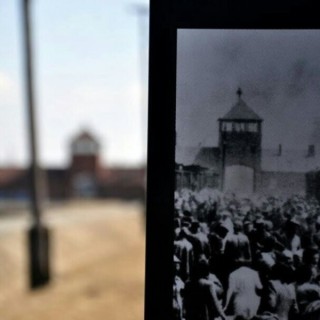
On 17 January 1945, the SS began evacuating the Auschwitz camp. Around 56,000 men and women, prisoners under the escort of armed SS men, marched out from various parts ofthe camp complex in the direction of Wodzisław Śląski and Gliwice. Several thousand people were killed during these so-called Death Marches. In this episode of the “On Auschwitz” podcast, we quote fragments of eyewitness accounts relating to these events.=====Illustration:Zbigniew Otfinowski, Marsz ewakuacyjny [Evacuation march] (1946). Auschwitz-Birkenau State Museum Collections===== Excerpts from accounts read by narrators (Therese McLaughlin & Mike Skagerlind) come from the Auschwitz-Birkenau State Museum Archives: Teofil Balcarek, APMA-B, Zespół Oświadczenia [Statements],t. 115, k. 204-205.Israel Berkowski, APMA-B, Zespół Oświadczenia [Statements], t. 35, k. 29.Wanda Bienioszek, APMA-B, Zespół Oświadczenia [Statements], t. 116, s. 176.Wanda Błachowska-Tarasiewicz, APMAB, Zespół Wspomnienia [Memories], t. 1, k. 19-20.Józef Ciepły, APMA-B, Zespół Oświadczenia [Statements], t.86, k. 48, 127-128.Jan Dziopek, APMA-B, Zespół Oświadczenia [Statements], t.10, k. 29.Jan Dziopek, APMA-B, Zespół Wspomnienia [Memories], t. 50, k. 138-143Róża Dryjańska, APMA-B, Zespół Wspomnienia [Memories], t.88, k. 211, 233.Ilona Engelova, APMA-B, Zespół Oświadczenia [Statements], t. 80, k. 171.Abraham Dawid Feffer, APMA-B, Zespół Oświadczenia [Statements], t. 16, k. 54.Jan Gabryś, APMA-B, Zespół Oświadczenia [Statements], t.104, k. 138-140.Janina Hinczowa, APMA-B, Zespół Wspomnienia [Memories], t. 62, k. 60.Irena Konieczna, APMAB. Zespół Oświadczenia [Statements],t. 113, k. 130.Wanda Koprowska, APMA-B, Zespół Wspomnienia [Memories], t. 13, k. 66-68. Eulalia Kurdej, APMA-B, Zespół Oświadczenia [Statements], t.66, k. 142.Erwin Olszówka, APMA-B, Zespół Oświadczenia [Statements], t. 72, k. 138.Antonina Piątkowska, APMA-B, Zespół Wspomnienia [Memories], t. 85, k. 45Franciszka Pieczka, APMA-B, Zespół Oświadczenia [Statements], t. 88b, k. 133.Ilona Strusińska, APMA-B, Zespół Oświadczenia [Statements],t. 80, k. 170. Marii Śleziona, APMAB. Inne Zespoły [Others] (IZ) – 27/3.Maria Ślisz, APMA-B, Zespół Oświadczenia [Statements], t.61, k. 134.Zofia Stępień-Bator, APMAB, Zespół Wspomnienia [Memories], t. 74, k. 167.Maria Świderska, APMA-B, Zespół Wspomnienia [Memories], t. 21, k. 85, 88.Józef Tabaczyński, APMAB, Zespół Oświadczenia [Statements], t. 44, k. 60-63.Anna Tytoniak, APMA-B, Zespół Oświadczenia [Statements], t.12a, k. 198Jan Wawrosz, APMA-B, Zespół Wspomnienia [Memories]t. 1, k. 59.Franciszek Wieszała, APMA-B, Zespół Oświadczenia [Statements], t. 16, k. 81.Helena Włodarska, APMA-B, Zespół Wspomnienia [Memories], t. 66, k. 78.Jadwiga Zając, APMA-B, Zespół Oświadczenia [Statements], t. 139, k. 13-15.Leszek Zienc, APMA-B, Zespół Wspomnienia [Memories], t. 2, k. 226.Natan Żelechower, „Siedem obozów”, [in:] Zespół Wspomnienia [Memories], t. 83, k. 68-72, APMA-B.Maria Żumańska, APMA-B, Zespół Oświadczenia [Statements], t. 4, k. 420.

This is maybe one of the episodes of GIRLS that shocked viewers when it originally aired, but how does it hold up? Before we answer that, we discuss internet trends and the Golden Globes. And then we discuss it all - Hannah's pregnancy reveal, Jessa and Adam's support systems, Marnie and Desi's final scene (perhaps?), and the Ray of it all. Take a listen!To support Shortcomings, visit us at patreon.com/shortcomingspodcast

Exploring Mars Oceans, Fastest Asteroids, and ISS EvacuationsIn this captivating episode of Space Nuts, hosts Andrew Dunkley and Professor Fred Watson delve into the latest astronomical discoveries and intriguing space news. Join them as they explore new evidence suggesting that Mars once boasted vast oceans, the astonishing characteristics of the fastest spinning asteroid ever recorded, and the unprecedented evacuation of the International Space Station due to a medical issue.Episode Highlights:- Mars' Ancient Oceans: Andrew and Fred discuss groundbreaking research revealing that Mars may have once had oceans comparable in size to Earth's Arctic Ocean. They explore the implications of this discovery and what it means for the search for life on the Red Planet.- The Fastest Spinning Asteroid: The hosts introduce the asteroid 2025 MN45, which spins at an incredible rate of one rotation every 1 minute and 53 seconds. They discuss the significance of this finding and what it reveals about the asteroid's composition and history.- ISS Medical Evacuation: Andrew and Fred provide insights into the first-ever crew evacuation from the International Space Station, prompted by a medical issue. They discuss the implications of this event and the protocols in place for astronaut safety.For more Space Nuts, including our continuously updating newsfeed and to listen to all our episodes, visit our website. Follow us on social media at SpaceNutsPod on Facebook, X, YouTube Music Music, Tumblr, Instagram, and TikTok. We love engaging with our community, so be sure to drop us a message or comment on your favorite platform.If you'd like to help support Space Nuts and join our growing family of insiders for commercial-free episodes and more, visit spacenutspodcast.com/about.Stay curious, keep looking up, and join us next time for more stellar insights and cosmic wonders. Until then, clear skies and happy stargazing.Become a supporter of this podcast: https://www.spreaker.com/podcast/space-nuts-astronomy-insights-cosmic-discoveries--2631155/support.

Robach and Holmes cover the latest news headlines and entertainment updates and give perspective on current events in their daily “Morning Run.”See omnystudio.com/listener for privacy information.

Robach and Holmes cover the latest news headlines and entertainment updates and give perspective on current events in their daily “Morning Run.”See omnystudio.com/listener for privacy information.

Robach and Holmes cover the latest news headlines and entertainment updates and give perspective on current events in their daily “Morning Run.”See omnystudio.com/listener for privacy information.

Robach and Holmes cover the latest news headlines and entertainment updates and give perspective on current events in their daily “Morning Run.”See omnystudio.com/listener for privacy information.
NASA says an astronaut is doing well after an emergency medical return. The AP's Jennifer King reports.
In this episode of The PDB Afternoon Bulletin: Diplomacy with Iran appears to be breaking down, as U.S. personnel and civilians are urged to leave key locations amid mounting warnings that a military confrontation may be approaching. The United States launches a new wave of airstrikes in Somalia, targeting ISIS and al-Shabab positions as Washington steps up counterterror operations alongside Somali forces. To listen to the show ad-free, become a premium member of The President's Daily Brief by visiting https://PDBPremium.com. Please remember to subscribe if you enjoyed this episode of The President's Daily Brief. YouTube: youtube.com/@presidentsdailybrief CBDistillery: Visit https://CBDistillery.com and use promo code PDB for 25% off your entire order! Glorify: Feel closer to God this year with Glorify—get full access for just $29.99 when you download the app now at https://glorify-app.com/PDB Learn more about your ad choices. Visit megaphone.fm/adchoices
January 14, 1943. In a turning point in World War II, the Japanese begin their retreat from the Pacific island of Guadalcanal. Support the show! Join Into History for ad-free listening and more. History Daily is a co-production of Airship and Noiser.Go to HistoryDaily.com for more history, daily.
President Donald Trump says anything less than the US' control of Greenland is “unacceptable.” An American military base is being evacuated as tensions between the US and Iran continue to escalate. The federal government's immigration enforcement in Minnesota is being tested in court today. Trump's tariffs haven't stopped China from reporting a record trade surplus. Plus, the FBI seizes computers and a phone from a journalist's home. Learn more about your ad choices. Visit podcastchoices.com/adchoices
SpaceTime with Stuart Gary | Astronomy, Space & Science News
Sponsor Link:This episode of SpaceTime is brought to you with the support of Squarespace. When it's time to get a presence online, go with the folks who support us...and build the best websites easily. No hassles. You can check out their special offer for SpaceTime listeners by visiting our special URL....Click HereIn this episode of SpaceTime, we uncover new evidence suggesting that dark matter may interact with neutrinos, a revelation that could reshape our understanding of the universe. We also discuss a serious medical issue that has forced one of the crews aboard the International Space Station to return home early, and learn about the remarkable discovery that galaxies spin like clockwork.Dark Matter and Neutrinos: A Possible InteractionScientists are challenging the long-standing standard model of particle physics with new findings indicating that dark matter and neutrinos may interact. This groundbreaking research, reported in Nature Astronomy, provides a rare glimpse into the universe's hidden components. By analyzing data from both the early and late universe, researchers suggest that these elusive cosmic entities could influence the formation of galaxies and other structures, potentially addressing discrepancies observed in cosmological measurements.Medical Emergency Forces ISS Crew to Return EarlyNASA's SpaceX Crew 11 is returning to Earth ahead of schedule due to a medical concern involving one of the astronauts. While the situation is stable and not classified as an emergency, the decision was made to ensure the crew member receives comprehensive medical evaluation on the ground. This marks a historic moment, as it is the first time in 26 years of ISS operations that a medical issue has necessitated an early return.Galaxies Spin Like ClockworkRecent studies have confirmed that galaxies rotate approximately once every billion years, regardless of their size. This research, published in the Monthly Notices of the Royal Astronomical Society, reveals a consistent rotational pattern across different types of galaxies, enhancing our understanding of their mechanics and structure. The findings indicate that older stars exist even at the edges of galaxies, providing valuable insights into galactic formation and evolution.www.spacetimewithstuartgary.com✍️ Episode ReferencesNature AstronomyMonthly Notices of the Royal Astronomical SocietyBritish Medical JournalBecome a supporter of this podcast: https://www.spreaker.com/podcast/spacetime-your-guide-to-space-astronomy--2458531/support.

Southwest Michigan's Morning News podcast is prepared and delivered by the WSJM Newsroom. For these stories and more, visit https://www.wsjm.com and follow us for updates on Facebook. See omnystudio.com/listener for privacy information.
In addition, NASA's Hubble Space Telescope is examining a newly discovered cloud of gas and dark matter that may represent a long-predicted but never-before-observed “failed” galaxy Learn more about your ad choices. Visit podcastchoices.com/adchoices
World news in 7 minutes. Friday 9th January 2026.Today : US ICE shooting. Colombia visit. Syria evacuations. India water. China BYD. Gambia shipwreck. Algeria apology. Switzerland evidence. Bosnia floods. Ukraine no heat. France Germany US condemnation. Germany sheep flock to supermarket.SEND7 is supported by our amazing listeners like you.Our supporters get access to the transcripts and vocabulary list written by us every day.Our supporters get access to an English worksheet made by us once per week.Our supporters get access to our weekly news quiz made by us once per week.We give 10% of our profit to Effective Altruism charities. You can become a supporter at send7.org/supportWith Stephen DevincenziContact us at podcast@send7.org or send an audio message at speakpipe.com/send7Please leave a rating on Apple podcasts or Spotify.We don't use AI! Every word is written and recorded by us!Since 2020, SEND7 (Simple English News Daily in 7 minutes) has been telling the most important world news stories in intermediate English. Every day, listen to the most important stories from every part of the world in slow, clear English. Whether you are an intermediate learner trying to improve your advanced, technical and business English, or if you are a native speaker who just wants to hear a summary of world news as fast as possible, join Stephen Devincenzi, Juliet Martin and Niall Moore every morning. Transcripts, vocabulary lists, worksheets and our weekly world news quiz are available for our amazing supporters at send7.org. Simple English News Daily is the perfect way to start your day, by practising your listening skills and understanding complicated daily news in a simple way. It is also highly valuable for IELTS and TOEFL students. Students, teachers, TEFL teachers, and people with English as a second language, tell us that they use SEND7 because they can learn English through hard topics, but simple grammar. We believe that the best way to improve your spoken English is to immerse yourself in real-life content, such as what our podcast provides. SEND7 covers all news including politics, business, natural events and human rights. Whether it is happening in Europe, Africa, Asia, the Americas or Oceania, you will hear it on SEND7, and you will understand it.Get your daily news and improve your English listening in the time it takes to make a coffee.For more information visit send7.org/contact or send an email to podcast@send7.org
Rain is still in the forecast, but the upcoming storms are minor compared to the past few weeks. About 325,000 Californians will have to replace their REAL IDs. Also food and culture writer Gab Chabrán predicts this years food trends. Support The L.A. Report by donating at LAist.com/join and by visiting https://laist.com Visit www.preppi.com/LAist to receive a FREE Preppi Emergency Kit (with any purchase over $100) and be prepared for the next wildfire, earthquake or emergency!Support the show: https://laist.com
Evacuations warnings go in effect as another stormy holiday comes to SoCal. There's a mystery at Mount Baldy following the deaths of three hikers. How to celebrate New Year's Eve in SoCal. Plus, more from Morning Edition. Support The L.A. Report by donating at LAist.com/join and by visiting https://laist.com Visit www.preppi.com/LAist to receive a FREE Preppi Emergency Kit (with any purchase over $100) and be prepared for the next wildfire, earthquake or emergency!Support the show: https://laist.com

Once the Russian invasion of Ukraine started, people with disabilities suffered tremendously. And amid the panic and chaos that followed the invasion, many were unable to evacuate from their homes. This left people trapped in the crossfire without access to bomb shelters. In the first episode of the second season of Europe Talks Back, host Juli Simond tells the story of Tetyana Herasymova, who is one of the approximately 2.7 million Ukrainians with disabilities. Tanya is one of those who managed to flee. Ever since, she's been helping fellow Ukrainians with disabilities stuck near the frontlines of the war in Ukraine. As the director of the Ukrainian NGO, Fight for Right, Tanya is committed to championing the needs and rights of disabled individuals, particularly during times of conflict. Drawing from her own experiences as a person with a disability navigating the challenges of war, Tetyana's dedication to promoting inclusivity and equality is unwavering and deeply impactful.We need to change and nobody will make these changes without us. - Tetyana HerasymovaKey moments00:00:01 - Evacuation,00:04:21 - Disability during war,00:09:20 - Advocacy and recovery,00:14:25 - Inclusion in Ukrainian politics,00:20:32 - Challenges faced by disabled Ukrainians,00:21:06 - Conclusion.ResourcesDonate to Fight for Right's GoFundMe campaign to support their work with disabled individuals in Ukraine.Credits and staff The second season of Europe Talks Back is produced in partnership with Sphera Network, the first network of independent media in Europe to reinvent the media space and paint a new picture of the continent through impactful, unbiased, raw and authentic stories.The producer of Europe Talks Back is Maria Dios. The host and narrator of Europe Talks Back is Juli Simond. Sound editing and mixing is by Jeremy Bocquet. Reporting for this story by Anna Romandash.The executive producer of Europe Talks Back is Alexander Damiano Ricci.Social Mediahttps://www.linkedin.com/linkedin.com/company/bulle-media/https://www.twitter.com/twitter.com/europodpodcastshttps://www.europod.eu/ Hosted on Acast. See acast.com/privacy for more information.
A powerful storm carrying a strong atmospheric river is laying siege to California. Evacuations have been issued amid the risk of life-threatening flooding and debris flows. According to the Weather Prediction Center, a Level 4 of 4 “high” risk of flooding rain is in place for Southern California on Wednesday, affecting more than 7 million people across parts of Los Angeles and surrounding counties.A tragedy in eastern Pennsylvania: an explosion at a nursing home near Philadelphia claimed at least two lives and injured 20 others. The blast collapsed part of the building, sent flames shooting out, and left residents trapped inside.Christians from around the world are preparing to celebrate Christmas in Bethlehem for the first time since the Israel-Hamas war began two years ago. Meanwhile, Ukrainian President Volodymyr Zelenskyy says the United States and Ukraine have reached consensus on several key issues aimed at ending the war, though sensitive matters remain unresolved.
(December 24, 2025) Heather Brooker joins Bill for Handel on the News. Evacuation warnings, Evacuation warnings, orders in place as atmospheric river eyes Southland. Gov. Newson declares state of emergency for 6 severe weather events this year. Mother of Melodee Buzzard, 9, arrested in child’s killing. Alleged member sof extremist group indicted in suspected SoCal New Years Eve bombing plot.See omnystudio.com/listener for privacy information.
(December 24, 2025) Evacuation warnings, orders in place as atmospheric river eyes Southland. Latest Epstein files dump. What’s up for space for 2026? Rod Pyle joins the show to talk U.S. vs China’s race to the moon, SpaceX launching more rockets than the rest of the world combined, and what’s on tap for 2026. After this week’s power outage debacle in San Francisco, everyone wants to know how Waymos would do in an earthquake.See omnystudio.com/listener for privacy information.
Flash flooding and mudslide risks continue in Northern California and will rise in Southern California through Christmas Day as heavy snow blocks Sierra Nevada roads. Just days after deadly flooding struck Redding, California, the state is now bracing for a new round of rain, resulting in evacuations that last through Christmas Day. Learn more about your ad choices. Visit podcastchoices.com/adchoices
(December 23,2025) Amy King joins Bill for Handel on the News. Evacuation warnings issued for Los Angeles burn areas ahead of holiday storm. Justice Department releases additional documents from Epstein files. Paramount’s new offer for Warner Bros. is not sufficient, major investor says. Crash on Los Angeles-area highway claims life of Call of Duty co-creator.See omnystudio.com/listener for privacy information.
Evacuation orders go out ahead of holiday storm. Southern Californians are expected to travel in record numbers this year. Santa Monica gets a new music festival. Plus, more from Evening Edition. Support The L.A. Report by donating at LAist.com/join and by visiting https://laist.comThis LAist podcast is supported by Amazon Autos. Buying a car used to be a whole day affair. Now, at Amazon Autos, you can shop for a new, used, or certified pre-owned car whenever, wherever. You can browse hundreds of vehicles from top local dealers, all in one place. Amazon.com/autosVisit www.preppi.com/LAist to receive a FREE Preppi Emergency Kit (with any purchase over $100) and be prepared for the next wildfire, earthquake or emergency! Support the show: https://laist.com
Severe weather from the Pacific Ocean is causing havoc in California. An atmospheric river is bringing more downpours throughout the state this week. Evacuation warnings are in effect Tuesdays for area with burn scars from recent wildfires. State and local officials are reminding residents to be extra cautious behind the wheel, with the National Weather Service expecting up to five inches of rain across the northern Sierra by mid-week.The Department of Education says it's reviewing safety at Brown University following the shooting on campus that killed two students. The department says officials are investigating whether school officials violated federal campus safety and security requirements. In addition, Brown University's president placed the campus police chief on leave. A former chief of the Providence Police Department will replace him. Brown's president said the University is “deeply committed” to campus safety and security.President Trump unveiled plans on Monday to build a new class of battleships as part of his vision to strengthen the military. The so-called 'Trump-class' ships will be part of the administration's vision for a 'golden fleet,' aimed at deterring U-S adversaries like communist China. He says the new warships will be the largest, with one hundred times the force. President Trump made the announcement at his Mar-a-Lago residence in Palm Beach, Florida. The U.S. hasn't built any battleships since World War II, with the last American battleship retiring in 1992.

Today - A mid-afternoon construction mishap forced evacuations and street closures in Wenatchee this week, after a gas line was struck near downtown — briefly disrupting traffic and daily routines before crews brought the situation under control.Support the show: https://www.wenatcheeworld.com/site/forms/subscription_services/See omnystudio.com/listener for privacy information.

Skagit County has been hit by multiple waves of catastrophic flooding over the past week. Amid the devastation, there is a bright spot: A floodwall in Mount Vernon successfully held off the Skagit River as it rose to a record 37.7 feet. That floodwall only exists because it sits in an area determined by the Federal Emergency Management Agency to be at highest risk of flooding. Many residents of Skagit county might be unaware of the current flooding risk to their homes or businesses – because, according to The Seattle Times, Skagit County’s flood maps haven’t been updated in 40 years. We'll hear from Lulu Ramadan, who reported on these flood maps, before turning to Kristiana de Leon, who had to evacuate malamutes amid flooding along the Puyallup River last week. GUESTS: Lulu Ramadan, an investigative reporter at The Seattle Times Kristiana de Leon of the Washington Alaskan Malamute Adoption League RELATED LINKS: Skagit County flood maps showing high-risk areas are 40 years old | The Seattle Times Washington Alaskan Malamute Adoption League – We pull for them Thank you to the supporters of KUOW, you help make this show possible! If you want to help out, go to kuow.org/donate/soundsidenotes Soundside is a production of KUOW in Seattle, a proud member of the NPR Network.See omnystudio.com/listener for privacy information.
3pm: I Was Thinking: The answer to affordable Housing // Video Guest – Steve Hickey AKA PHOTOGSTEVE81 Live from Pacific // WA floods: Levee failure prompts evacuation along White River in Pacific // Apparently we should be washing our Christmas trees
Newly obtained video footage reveals more information on the Brown University shooter. The new jobs report casts a worrying economic outlook. Parts of Washington state are facing evacuation orders after more heavy rain. President Donald Trump's chief of staff has given an explosive interview with Vanity Fair. Plus, several Republicans are criticizing Trump's comments in the wake of Rob Reiner's death. Learn more about your ad choices. Visit podcastchoices.com/adchoices

Massive rainfall has triggered dangerous flooding across Washington State, breaching a levee and forcing evacuations in parts of Seattle. Greg and Holly go live to Washinton State with James Lynch from KIRO NewsRadio in Seattle, to get the latest on the downfall, flooding and the status of evacuations.
Today - A Washington town is cut off as landslides and flooding force evacuations and raise new concerns for recovery.Support the show: https://www.wenatcheeworld.com/site/forms/subscription_services/See omnystudio.com/listener for privacy information.
Approximately 10,000 people are still under evacuation notice after multiple levee failures across Western Washington. In King County: flood controls have breached in the last 48 hours. As of this morning, residents in the city of Pacific, east of Tacoma, are under a "go now" evacuation order after a flood control breach on the nearby White River. A levee was breached yesterday in Tukwila and Kent, the evacuation order for the area is no longer in effect. Guests: Casey Martin, KUOW reporter Josh Baldi, water and land resources division director for King County Department of Natural Resources and Parks Relevant Links: KUOW live updates See omnystudio.com/listener for privacy information.
The Strategic Failure of Abandoning Bagram for HKIA: Colleagues Jerry Dunleavy and James Hasson discuss the catastrophic decision to shutter Bagram Air Base, forcing an evacuation through an indefensible civilian airport in Kabul, describing the immediate collapse of security, the release of terrorists from prisons, and the desperate measures US troops took to maintain order during the evacuation. 1910 PESHAWAR
Visa Failures and the Refusal to Plan a NEO: Colleagues Jerry Dunleavy and James Hasson explain that the refusal to address Special Immigrant Visa bottlenecks or declare a Non-combatant Evacuation Operation early forced a chaotic evacuation surrounded by the Taliban, noting that despite military warnings, the State Department halted visa processing for health protocols, ignoring the imminent collapse of the Afghan government. 1910 KABUL-DARUM TRAMWAY
4pm: Video Guest – Relationship Coach, author and John’s first ex-wife, Paula Grooms // Relationship coach at CoachPaulaGrooms.com and author of “Why Won’t He Commit: How a Man Decides to Make You the One” // What Your Holiday Gift is Telegraphing to Your Love Interest: How to Avoid the Mistletoe Missteps // Trump approves WA’s emergency declaration as 100,000 face evacuations

In the early morning hours of January 8, the Eaton Fire raced closer to the MonteCedro retirement community in Altadena, California. Nearly 200 of the facility’s residents were evacuated, but two women were left behind, raising serious questions. In this episode of Imperfect Paradise, LAist Health and Housing Reporter Aaron Schrank looks at what went wrong, who should be held accountable, and what it reveals systemically about emergency preparedness. You can read more of Aaron’s reporting for his Left Behind series at LAist.com. This LAist podcast is supported by Amazon Autos. Buying a car used to be a whole day affair. Now, at Amazon Autos, you can shop for a new, used, or certified pre-owned car whenever, wherever. You can browse hundreds of vehicles from top local dealers, all in one place. Amazon.com/autos Grow your business no matter what stage you’re in. Sign up for a one-dollar-per-month trial period at SHOPIFY.COM/paradise Visit www.preppi.com/LAist to receive a FREE Preppi Emergency Kit (with any purchase over $100) and be prepared for the next wildfire, earthquake or emergency!

In the early morning hours of January 8, the Eaton Fire raced closer to the MonteCedro retirement community in Altadena, California. Nearly 200 of the facility’s residents were evacuated, but two women were left behind, raising serious questions. In this episode of Imperfect Paradise, LAist Health and Housing Reporter Aaron Schrank looks at what went wrong, who should be held accountable, and what it reveals systemically about emergency preparedness. You can read more of Aaron’s reporting for his Left Behind series at LAist.com. This LAist podcast is supported by Amazon Autos. Buying a car used to be a whole day affair. Now, at Amazon Autos, you can shop for a new, used, or certified pre-owned car whenever, wherever. You can browse hundreds of vehicles from top local dealers, all in one place. Amazon.com/autos Grow your business no matter what stage you’re in. Sign up for a one-dollar-per-month trial period at SHOPIFY.COM/paradise Visit www.preppi.com/LAist to receive a FREE Preppi Emergency Kit (with any purchase over $100) and be prepared for the next wildfire, earthquake or emergency!

In the early morning hours of January 8, the Eaton Fire raced closer to the MonteCedro retirement community in Altadena, California. Nearly 200 of the facility’s residents were evacuated, but two women were left behind, raising serious questions. In this episode of Imperfect Paradise, LAist Health and Housing Reporter Aaron Schrank looks at what went wrong, who should be held accountable, and what it reveals systemically about emergency preparedness. You can read more of Aaron’s reporting for his Left Behind series at LAist.com. This LAist podcast is supported by Amazon Autos. Buying a car used to be a whole day affair. Now, at Amazon Autos, you can shop for a new, used, or certified pre-owned car whenever, wherever. You can browse hundreds of vehicles from top local dealers, all in one place. Amazon.com/autos Grow your business no matter what stage you’re in. Sign up for a one-dollar-per-month trial period at SHOPIFY.COM/paradise Visit www.preppi.com/LAist to receive a FREE Preppi Emergency Kit (with any purchase over $100) and be prepared for the next wildfire, earthquake or emergency!

In the early morning hours of January 8, the Eaton Fire raced closer to the MonteCedro retirement community in Altadena, California. Nearly 200 of the facility’s residents were evacuated, but two women were left behind, raising serious questions. In this episode of Imperfect Paradise, LAist Health and Housing Reporter Aaron Schrank looks at what went wrong, who should be held accountable, and what it reveals systemically about emergency preparedness. You can read more of Aaron’s reporting for his Left Behind series at LAist.com. This LAist podcast is supported by Amazon Autos. Buying a car used to be a whole day affair. Now, at Amazon Autos, you can shop for a new, used, or certified pre-owned car whenever, wherever. You can browse hundreds of vehicles from top local dealers, all in one place. Amazon.com/autos Grow your business no matter what stage you’re in. Sign up for a one-dollar-per-month trial period at SHOPIFY.COM/paradise Visit www.preppi.com/LAist to receive a FREE Preppi Emergency Kit (with any purchase over $100) and be prepared for the next wildfire, earthquake or emergency!Support LAist Today: https://LAist.com/join

In the early morning hours of January 8, the Eaton Fire raced closer to the MonteCedro retirement community in Altadena, California. Nearly 200 of the facility’s residents were evacuated, but two women were left behind, raising serious questions. In this episode of Imperfect Paradise, LAist Health and Housing Reporter Aaron Schrank looks at what went wrong, who should be held accountable, and what it reveals systemically about emergency preparedness. You can read more of Aaron’s reporting for his Left Behind series at LAist.com. This LAist podcast is supported by Amazon Autos. Buying a car used to be a whole day affair. Now, at Amazon Autos, you can shop for a new, used, or certified pre-owned car whenever, wherever. You can browse hundreds of vehicles from top local dealers, all in one place. Amazon.com/autos Grow your business no matter what stage you’re in. Sign up for a one-dollar-per-month trial period at SHOPIFY.COM/paradise Visit www.preppi.com/LAist to receive a FREE Preppi Emergency Kit (with any purchase over $100) and be prepared for the next wildfire, earthquake or emergency!

In the early morning hours of January 8, the Eaton Fire raced closer to the MonteCedro retirement community in Altadena, California. Nearly 200 of the facility’s residents were evacuated, but two women were left behind, raising serious questions. In this episode of Imperfect Paradise, LAist Health and Housing Reporter Aaron Schrank looks at what went wrong, who should be held accountable, and what it reveals systemically about emergency preparedness. You can read more of Aaron’s reporting for his Left Behind series at LAist.com. This LAist podcast is supported by Amazon Autos. Buying a car used to be a whole day affair. Now, at Amazon Autos, you can shop for a new, used, or certified pre-owned car whenever, wherever. You can browse hundreds of vehicles from top local dealers, all in one place. Amazon.com/autos Grow your business no matter what stage you’re in. Sign up for a one-dollar-per-month trial period at SHOPIFY.COM/paradise Visit www.preppi.com/LAist to receive a FREE Preppi Emergency Kit (with any purchase over $100) and be prepared for the next wildfire, earthquake or emergency!

Evacuation orders have been issue in Mount Vernon. Seattle says the ‘Pride Match’ between Iran and Egypt at next year’s World Cup will go on as planned. A new report says that the GOP was actively trying to encourage Jasmine Crockett to run for Senate. Albuquerque retains their soft-on-crime mayor and Republicans are closing to finally overcoming a Democrat block on Trump nominees. // LongForm: GUEST: Seattle Police Officer Guild President Mike Solan on SPD contract approval, and says they’re going to war with Rob Saka. // Quick Hit: Marco Rubio bans Calibri font, returns to Times New Roman.

Clef and Tim go through a little disc golf and food before getting to talking some recent board game plays including Taverns of Tiefenthal, Horseless Carriage, Evacuation, and Tumblin' Dice! We also discuss offensive themes in board games and how they make us feel. Board games: 29:30 Join the discord at discord.gg/s8hYtWkMS3 and visit punchboardparadise.com for more info on PPCon 2026!
Cyclone Fenina Headed for Darwin Jeremy Zakis Cyclone Fenina, described as a one-in-twenty-year monster with 160 mph winds and a 200-mile width, is tracking toward Darwin, Northern Territory. Evacuation advice has been issued but not a mandatory order. After hitting the coast, it is expected to dissipate rapidly over the sparse interior. This weather system is pushing hot, humid, stormy air down Australia's east coast, including New South Wales. 1915 DARWIN
Iran says water supplies in Tehran will suffer scheduled cuts, as the country struggles with severe shortages. The announcement came after President Masoud Pezeshkian warned of rationing and suggested the capital might have to be evacuated if there's no rainfall in the next two weeks. Also: Bolivia and the United States agree to restore diplomatic relations - at ambassador level - after a 17-year break; a storm bearing down on the Philippines has intensified to a super typhoon; and Saudi Arabia's plans to attract 150 million tourists a year.The Global News Podcast brings you the breaking news you need to hear, as it happens. Listen for the latest headlines and current affairs from around the world. Politics, economics, climate, business, technology, health – we cover it all with expert analysis and insight. Get the news that matters, delivered twice a day on weekdays and daily at weekends, plus special bonus episodes reacting to urgent breaking stories. Follow or subscribe now and never miss a moment. Get in touch: globalpodcast@bbc.co.uk
© 2020-2026 Ivy Podcast Discovery LLC